
Common Thread Collective is an ecommerce growth agency, helping DTC brands that are doing 7-9 figures in annual online revenue.
Joined April 2015
- Tweets 4,249
- Following 254
- Followers 9,496
- Likes 8,829
1,461 Photos and videos
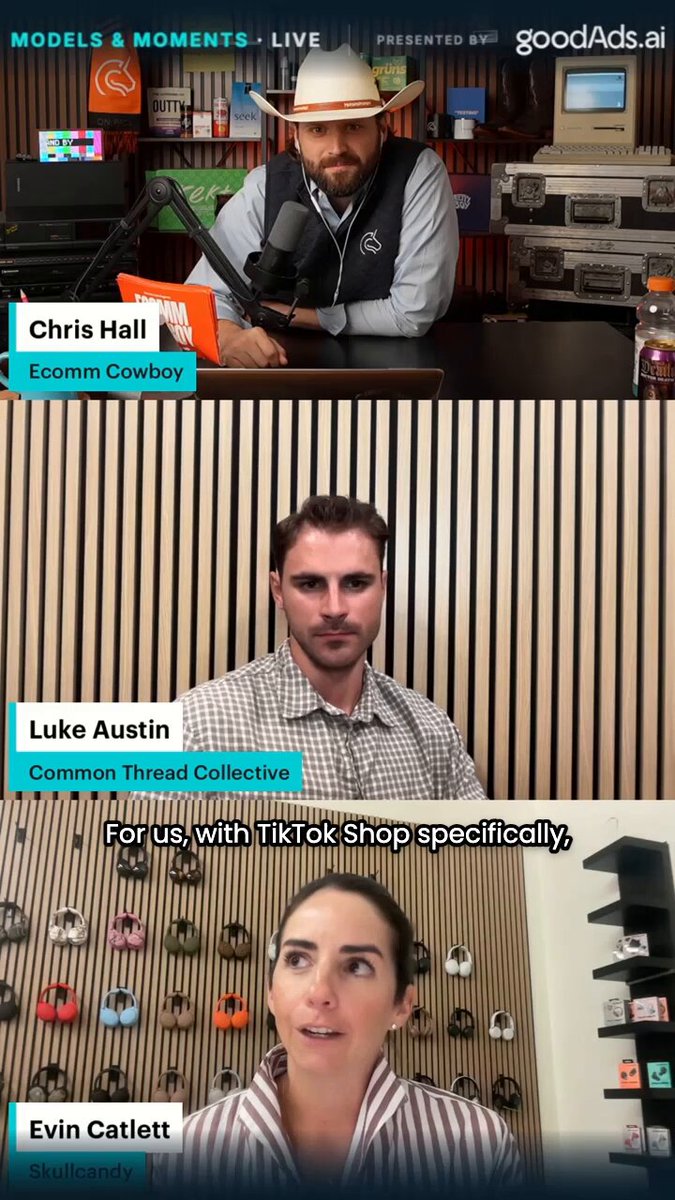
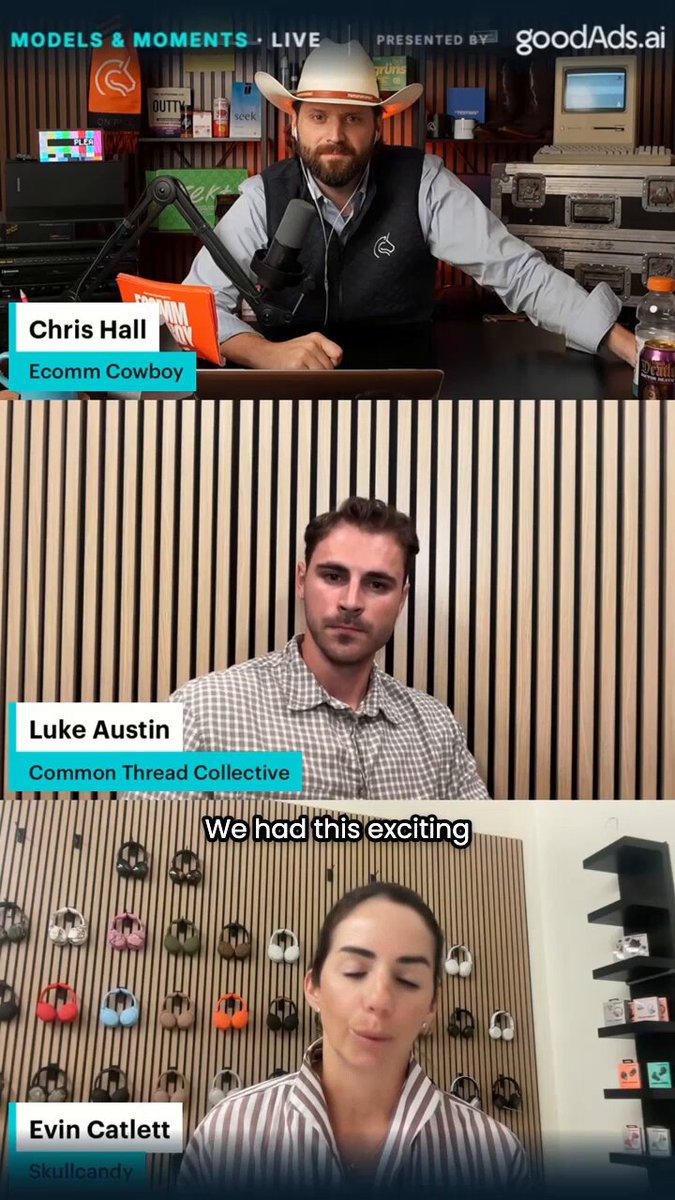
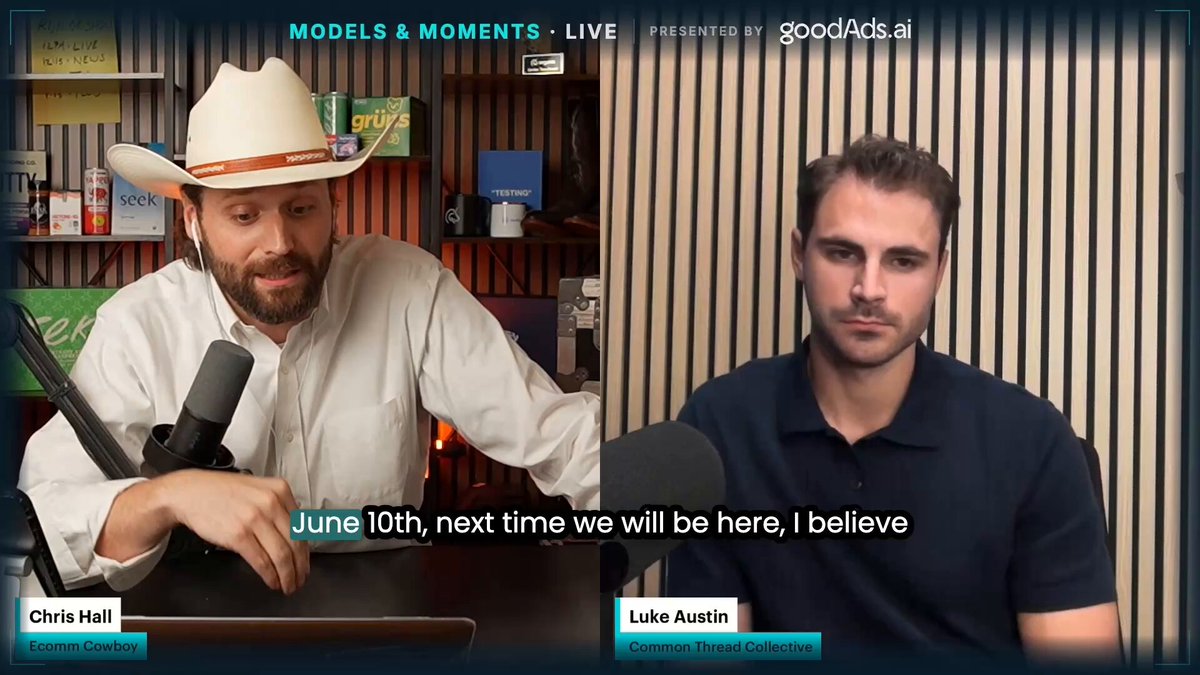










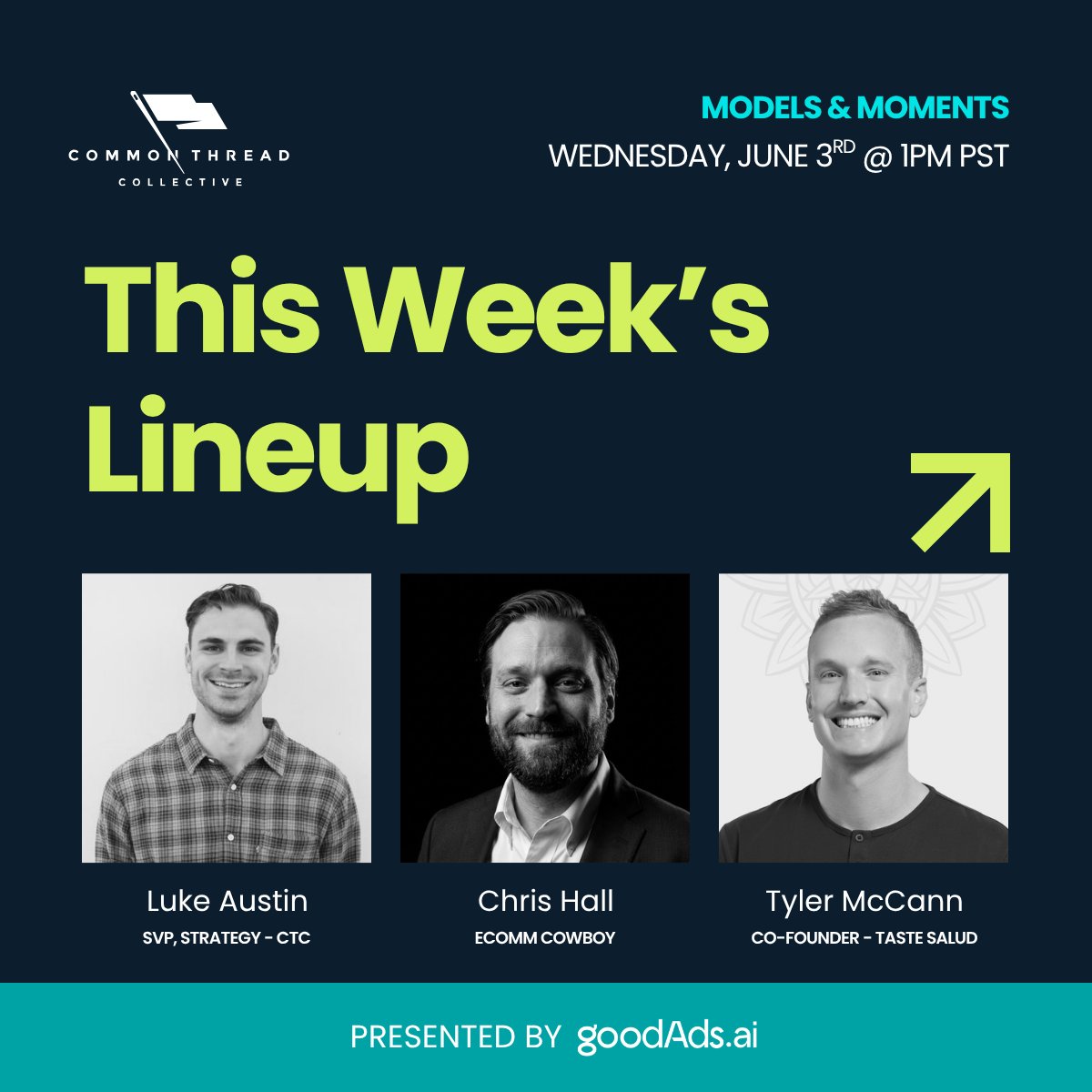


Every ecommerce brand wants a "repeatable system" for TikTok Shop. Skullcandy actually built one. The secret? They removed sales from the objective entirely. When your KPI is creator relationships and content volume, you build infrastructure. When your KPI is revenue, you build campaigns that die the moment you stop spending.
210
Common Thread Collective retweeted

Jun 12
Good morning Austin! 🤠
@CommerceRound Retention Roadshow show #4 kicks off in 1 hour.
Thompson Hotel Downtown (floor 4)
Expecting a packed room for our final event!
4
20
32
3,114
Skullcandy launched TikTok Shop with no model. No benchmark. No agency.
They built it in-house. Scrappy.
The turning point? They stopped treating it like a marketplace and started treating it like a content engine.
That shift took it from virtually nothing to a meaningful revenue channel that now fuels their entire business.
Evan Catlett, VP of E-commerce & Growth at Skullcandy, breaks it all down on Models & Moments
3
1
18
2,795
Common Thread Collective retweeted

3 cities down. 1 to go. 🔥
NYC, Miami, and LA each brought together 75-100 retention marketers from the brands and agencies actually moving the needle.
Tactical sessions you can apply tomorrow and live Q&A where attendees workshop their biggest retention problems with experts in the room.
Austin closes it out tomorrow with just 2 seats left.
Grab yours: commerceroundtable.com/roads…

10
13
742
We published the framework behind every growth plateau diagnosis we make.
If your brand grew fast, hit a wall, and more creative isn't moving the needle, the problem is almost always offer-market fit.
Facebook's auction gets harder as you scale. At higher spend levels, your competitors can afford a CAC higher than your AOV. No amount of creative fixes that math.
The full breakdown: AOV-to-CAC framework, the conversion rate log curve, why statics beat video when the offer is right, and how Marketing Moments finds the unlock.
commonthreadco.com/blogs/coa…
1
135
If you're a 7-figure brand stuck at a growth plateau, @JoySharma_11 can tell you what's wrong without looking at your ad account.
The answer is almost never creative. It's almost never ad structure. It's almost never a new platform.
It's offer-market fit. And it changes at every spend level.
When you were spending $500/day, you competed against businesses that didn't understand their own unit economics. At $5,000/day, you're competing against brands who can bid more per customer than your entire AOV.
You can't out-creative that.
New episode breaks down the framework → youtu.be/RmXJMrEq7E8
1
2
4
274
We're live with @skullcandy right now 📹
Tune in and register to win a pair of Method 360 ANCs: commonthreadco.com/pages/mod…

Models & Moments - Skullcandy x.com/i/broadcasts/1AxRnnzDN…
1
221
Models & Moments - Skullcandy x.com/i/broadcasts/1AxRnnzDN…
3
748
Only 1 in 20 ads you make will actually work.
New episode of the Ecommerce Playbook breaks down the system for beating those odds. 👇
youtu.be/P_x7pjB2U6k?si=UHA9…
2
288
That was one full day, and it happens every single day.
The operating loop follows three questions: What is happening (plot actual vs. plan). So what (diagnose root cause). Now what (concrete action, owner, next check-in).
Traditional agencies report variance. Profit Engineers act on variance. The difference is who owns the outcome and how fast the team can course-correct when the plan breaks.
For 8 and 9-figure brands tired of split ownership across vendors, channels, and meetings, this is what unified accountability looks like. [link]
1
168
4:30 PM. The day does not end with a status report.
The Profit Engineer closes with tomorrow's risk list: which metric must be checked first, which campaign needs more time, which creative launch is blocked, which client decision is required, which data issue could cause the wrong action.
The trail is decisions, not activity.
That is one day. Every day. Forecast, media, creative, measurement, client, execution, and risk, all connected by one operator.
135
3:30 PM. The PE updates the spend plan, briefs the media owner, moves approved creative toward launch, asks the client for the missing asset, escalates a data issue, checks the product page, confirms the promo code, and tells the team what changed and why.
The person making the recommendation is close enough to execution to make it happen. There is no project manager layer, no coordinator bottleneck, no "I'll follow up with the team" delay.
The handoff tax between strategy and execution kills more growth than bad creative or poor media buying.
179
2:30 PM. The PE asks questions a channel specialist may never consider.
Is inventory sufficient if spend scales? Is subscriber churn outpacing new acquisition? Does the finance team agree with revenue and margin definitions? Are returns, shipping, discounts, and COGS treated consistently across reporting systems?
The ad account can look excellent while the business loses money. The PE's job is to make the business work, and that means operating at the intersection of marketing and finance where most agency relationships have a blind spot.
1
129
1:00 PM. The weekly client meeting starts.
The Profit Engineer walks in already knowing where the business is pacing, which input is creating variance, what has been done, what still needs client input, and which decisions cannot wait another week.
The sequence: business pacing, forecast variance, channel diagnosis, creative readiness, measurement updates, calendar moments, decisions needed, owners, deadlines.
When the PE has communicated daily updates all week, nobody is learning the numbers for the first time. The entire meeting becomes strategy and next actions.
1
2
153
11:30 AM. Platform ROAS is not the final truth.
The Profit Engineer uses incrementality studies, holdout testing, business outcomes, and P&L performance to determine whether a channel deserves more capital.
This is why the PE may recommend spend restraint even when platform performance improves. A channel earns scale only when the business signal, measurement signal, and forecast need all align.
The gap between what the platform says is working and what the business can prove is profitable is where the real decisions happen.
157
10:00 AM. Creative is not "we need better ads."
The Profit Engineer treats creative as demand planning. If the month requires a certain spend level, the account needs enough creative diversity to support it.
How many ads are needed this week? Which products need coverage? Which concepts are fatiguing? Which moments require dedicated assets? Which approvals are blocking launch?
Creative supply is a growth constraint. The PE manages it like one.
155
9:00 AM. The first client update goes out.
It does not look like a recap. There are no decorative charts. The PE names the variance, separates the diagnosis from noise, and tells the client what happens next.
"Revenue is behind because volume is soft, not because efficiency has broken. Meta acquisition is below spend target while Google is stabilizing after a structure change. The plan is to loosen caps slightly, keep Google stable, pull forward approved creative, and check again tomorrow."
That is what operating clarity sounds like. Every day, before lunch.
1
144
8:15 AM. The Profit Engineer opens the ad platforms.
But every channel is judged by business outcomes, not platform metrics. Meta, Google, YouTube, TikTok, AppLovin are all evaluated against the same question: is this channel doing the job the forecast assigned it?
Google brand and non-brand are separated before any decision is made. Acquisition and retention are read differently because their incrementality differs. Promising first-week performance is validated against business-level weighted CAC before scaling.
The PE does not optimize channels. They operate a business through channels.
341
6:45 AM. A day in the life of a Profit Engineer.
Before checking a single ad platform, the PE opens the business cockpit: contribution margin, revenue, spend, MER, new customer acquisition, returning revenue, AOV, orders, and forecast variance.
Every number is read against expectation. If revenue is down and spend is down, the issue might be volume. If spend is on target and revenue is soft, the issue might be efficiency. If Meta looks healthy and the business is flat, the platform report is not enough.
The day starts with the same question the founder has: are we on plan?
Follow along today. We're showing you the full day, hour by hour.
152
ROAS is the most overused metric in ecommerce. And it's costing brands real money.
A 4x ROAS on a product with 40% gross margins means something completely different than a 4x ROAS on a product with 70% gross margins. One is profitable. The other might be losing money after fulfillment, payment processing, and returns.
The metric that actually matters is contribution margin after ad spend. How much cash does each order put back into the business after every variable cost is accounted for?
We track this daily across 170 brands in the Prophit Engine, and the patterns are consistent:
Brands that optimize for ROAS
→ Scale spend until efficiency drops
→ Can't explain why revenue went up but cash didn't
→ Make budget decisions based on a number that doesn't include half their costs
Brands that optimize for contribution margin
→ Know exactly how much profit each channel generates daily
→ Can model what happens when they shift spend between Meta, Google, and emerging channels
→ Make allocation decisions based on actual dollars returned to the business
The shift from ROAS to contribution margin sounds simple. In practice, it requires ingesting your full P&L, modeling costs at the order level, and updating it continuously as your business changes.
That's what the Prophit Engine does. It turns your data into a daily operating system that tells you where every dollar is working and where it isn't.
If you're running an 8 or 9-figure brand and you're still making spend decisions based on platform-reported ROAS, you're flying with instruments that can't see half the sky.
1
1
5
1,238