
Faith/Family/Business. Former Equities/Options/Futures Trader. Forever student of the markets. For education purposes only, not financial advice
Joined February 2009
- Tweets 7,795
- Following 748
- Followers 923
- Likes 3,259
196 Photos and videos






Concise Investor retweeted

Jun 13
I’ve had a number of conversations with folks inside and outside government about the current situation with Anthropic, and here is what I believe to be true:
— As we know, Anthropic publicly released its Mythos class models earlier this week under the commercial name Fable.
— Fable is Mythos with guardrails. But if those guardrails fail, then you’ve exposed Mythos and its advanced cyber capabilities to people who shouldn’t have them. (Keep in mind that Anthropic itself widely promoted the idea that Mythos was a cyberweapon and needed to be regulated as such. They asked for government regulation of Mythos and championed the guardrails on Fable. If there is a vulnerability — big or small — it is Anthropic’s responsibility to patch.)
— A highly credible trusted partner of both Anthropic and the USG who was testing Fable came forward with a jailbreak of those guardrails. The Admin asked Dario to fix the jailbreak or de-deploy the model. Dario refused.
— In their blog post, Anthropic defended its decision by saying the jailbreak isn’t serious. That is not what the trusted partner and the USG believe; nor is that kind of minimizing language consistent with Anthropic’s brand as the AI safety company. It’s difficult to fathom how they could claim a jailbreak allowing operability of a cyber weapon could be defined as not “serious.”
— In the past, Anthropic has always said that safety must be top priority and taken super seriously. In this case, Anthropic prioritized the continued offering of the consumer model over safety.
— In reaction, the Admin issued the export control. The Admin did this reluctantly. It’s been very surprised that Anthropic hasn’t wanted to cooperate with a reasonable safety request (ie fixing the jailbreak issue). Anthropic’s reaction is very much at odds with their branding and ethos as a safe AI research community.
— The Admin’s hope now is that Anthropic remediates the safety issue, the export control is lifted, and Fable goes back into general release. The Admin wants all of this to happen as soon as possible. It is frankly bewildered that Anthropic hasn’t wanted to comply with safety requests that it previously said were its highest priority.
— Those trying to misdirect and tie this action to the prior DoW/Anthropic issues are wrong. The Admin values Anthropic’s technical capabilities and feels that this issue, while serious, should be easily resolved. The ball is in Anthropic’s court.
2,200
3,241
25,399
7,724,953
Concise Investor retweeted

Jun 13
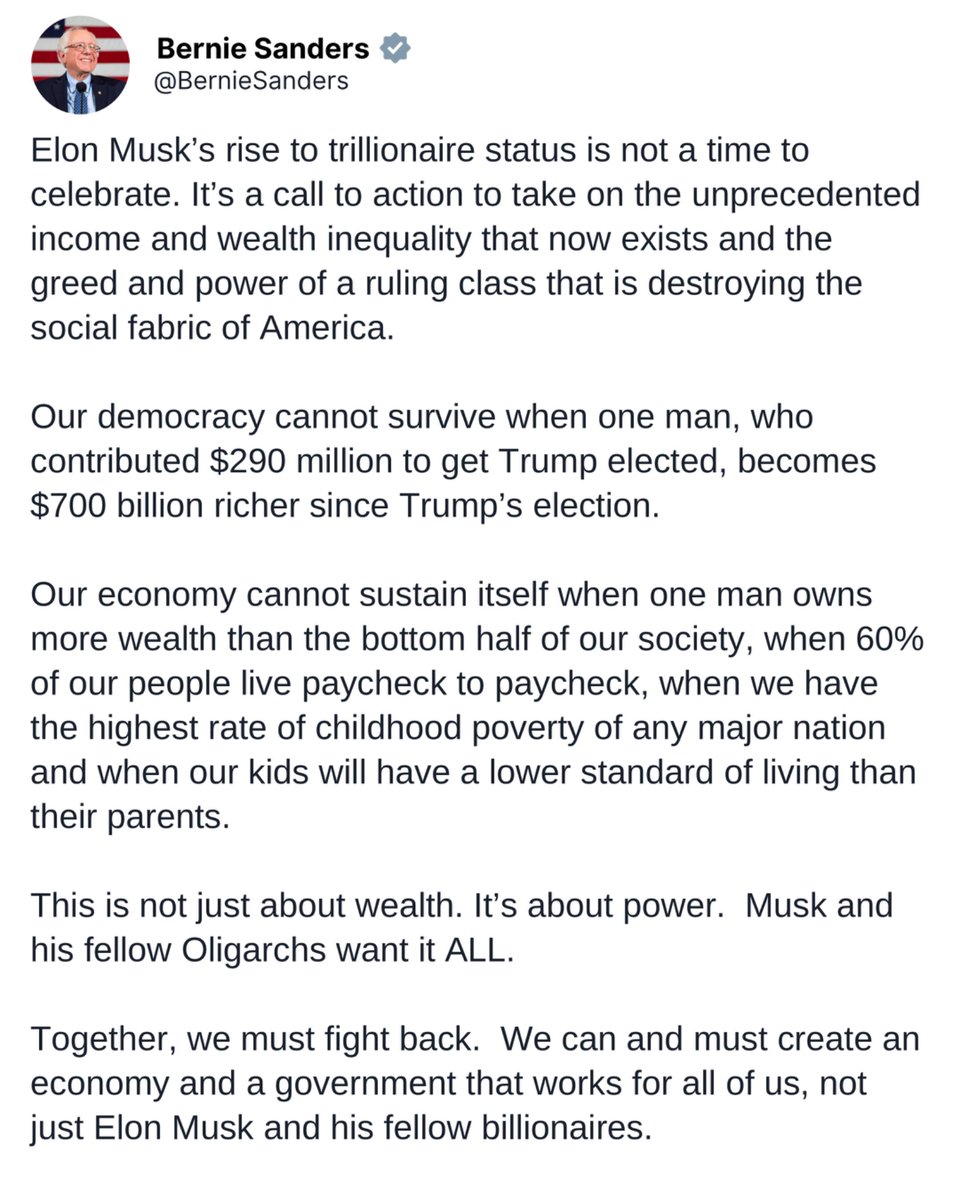
.@BernieSanders , it is a time to celebrate. @elonmusk has created enormous value for society by building @SpaceX, driving down the cost of rocket launches and creating a global satellite communication network that has brought high speed, low-cost internet and communication access to hundreds of millions and eventually billions of people along with critical advantages for our military and our nation’s defense.
SpaceX and its technologies will cause an acceleration in the growth of wages and wealth creation globally, including in some of the poorest communities in the U.S. and around the world.
Access to low-cost, high speed communications everywhere will allow children around the world to be educated, families to build businesses, and life-saving medical knowledge and care to be available everywhere.
SpaceX will materially bring down the cost of compute, advancing AI and humanity.
Meanwhile, 4,000 SpaceX employees yesterday became millionaires, including hourly wage employees who you claim you are trying to help.
The Elon Musks of the world drive growth, global GDP, and provide access to goods and services at lower cost that would otherwise not exist.
Elon’s nominal trillionaire status is due to his ownership of SpaceX, Tesla, Neuralink, the Boring Company and his other initiatives that have brought new technologies that improve our everyday lives.
Elon is not sitting on a trillion dollar pile of cash, jewelry and gold. He is using his controlling stakes in his companies to advance mankind. Elon’s companies don’t pay dividends. They reinvest all of their capital to accelerate innovation and value creation.
Elon is working 24/7 for all of us. He deserves respect and appreciation, not smears.
Bernie, your socialism would never allow a SpaceX to be built. Socialism has only proven to impoverish mankind and lead to death and destruction.
We need to create the conditions for more SpaceXs to be built, not attack the great entrepreneurs who are helping to advance our country.
Jun 12

3,746
9,399
49,264
2,733,622
Concise Investor retweeted

Jun 13
Love it 🇺🇸🇺🇸🇺🇸

82
620
6,725
109,222
Concise Investor retweeted

Jun 11
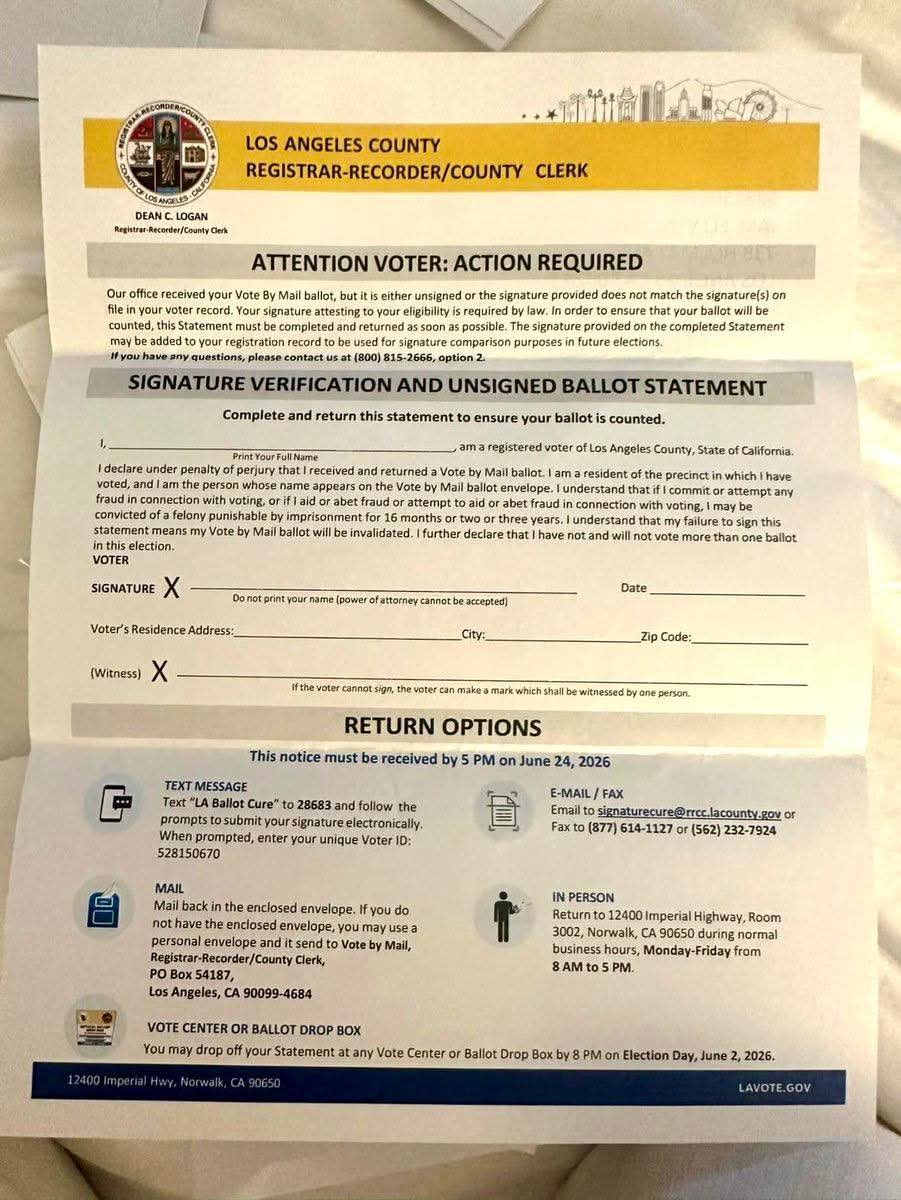
🚨 BREAKING NEWS: Tens of thousands of Spencer Pratt voters are now receiving rejection letters from the county clerk saying that their ballots were not counted due to signature irregularities. Yet, Governor Gavin Newsom just passed legislation that would make it illegal for anyone conducting oversight, to contest signatures that they deemed fraudulent. Democrats allow ballots to be signed with an X, a -, or a 🙂 to pass and count, but all of a sudden, only Republican signatures are being flagged for irregularities, rejected, and not counted. 🤔 One of these California Republican voters said that his signature has been on file for over 20 years and there has never been an issue until he voted for Spencer Pratt. Nithya Ramen has beaten Spencer Pratt by less than 3000 votes. There are at least 18,000 Pratt voters who received this letter saying their votes were rejected.
5,300
35,979
83,477
3,772,481
Concise Investor retweeted

Jun 11
New Report Claims Homeless People on Skid Row Were Paid to Vote Specifically for Karen Bass or Nithya Raman for Mayor of LA (VIDEO)
READ: thegatewaypundit.com/2026/06…

35
164
339
8,124
Concise Investor retweeted

11 Nov 2024
EXCLUSIVE:
🚨Senator John Thune’s daughter was the Director of a PAC that gave money to anti-Trump and radical leftist Democrats🚨
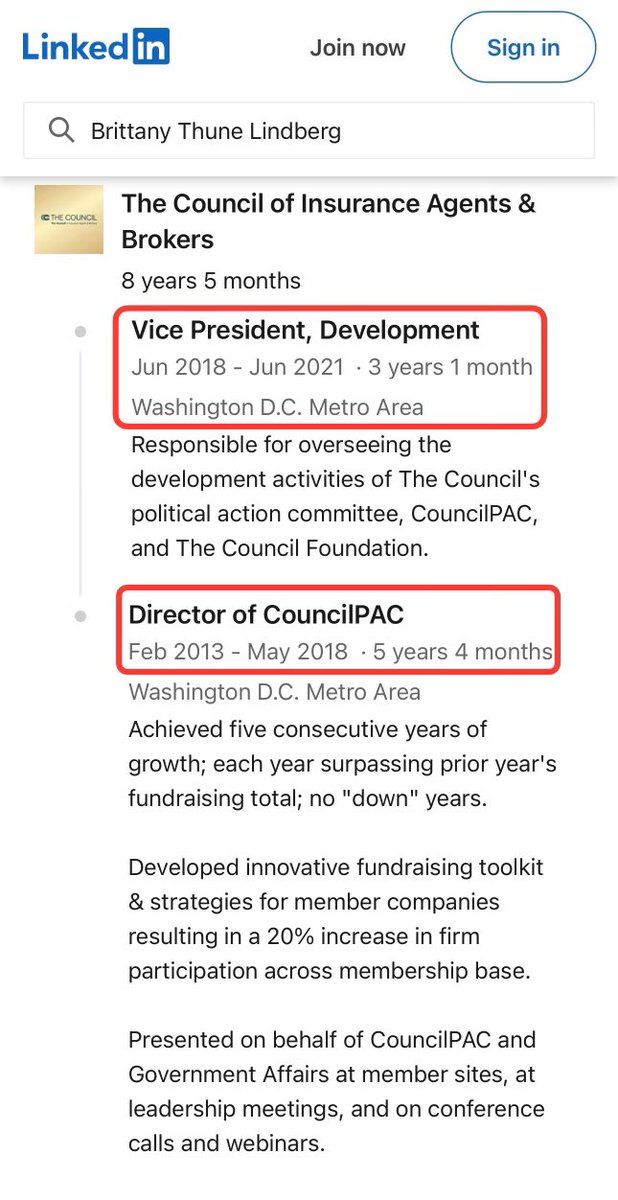
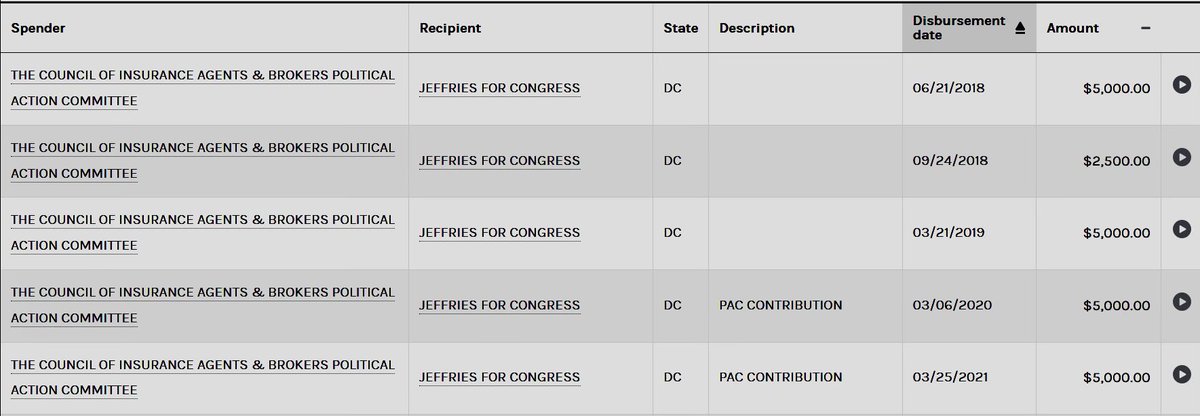
Senator John Thune’s @SenJohnThune daughter Brittany Thune Lindberg served as Director and vice president of The Council of Insurance Agents & Brokers PAC, aka Council PAC from February 2013 - June 2021.
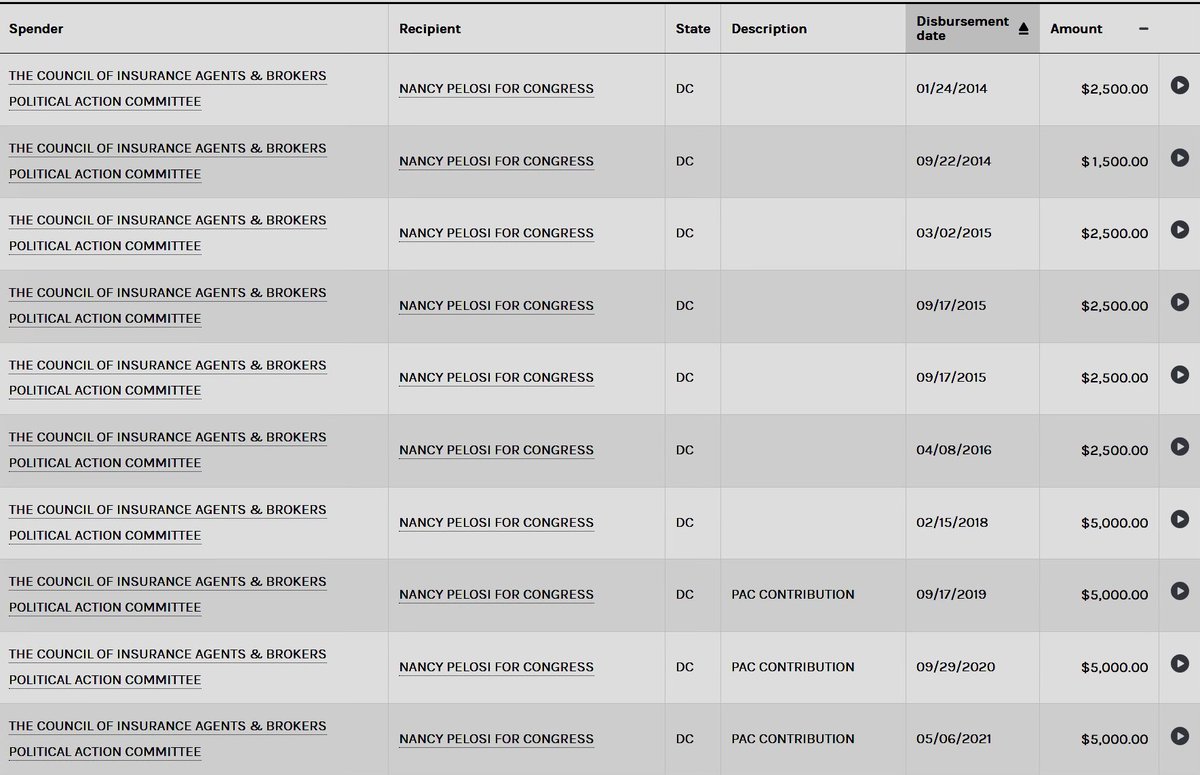
During Brittany Thune-Lindberg’s tenure at the PAC, multiple anti-Trump radical leftists were rewarded with generous monetary contributions, including:
Nancy Pelosi
Mikie Sherrill
Hakeem Jeffries
Jamie Raskin
Jon Tester
Katherine Clark
Sherrod Brown
How can Thune be trusted as the Senate GOP leader, a position that would allow him to have control over Senate funds, when his own daughter, who he referred to as “gifted” and “an accomplished professional” on X, gave money to the same people who tried to destroy Trump and jail him?
I’m sure Brittany enjoys a lot of political benefits from her father being a top ranking RINO senator. I wouldn’t trust the Senate GOP leader if his daughter was tied to PACS funding the nastiest Anti-Trump Democrats in our country.
It’s worth noting that Senator Thune has never condemned his daughters’ anti-Trump and pro Democrat political activities.
Disqualifying conflict of interest for anyone trying to assume the role of Senate GOP leader.
RECEIPTS 👇🏻cc: @CcpSkipTracer
@SenRickScott @SenateGOP

4,145
46,393
75,395
2,658,390
Concise Investor retweeted

Jun 9
Amazing how greedy and uninventive Apple became.
701
3,349
24,811
257,770

The level of fraud here is mind-blowing
Jun 8

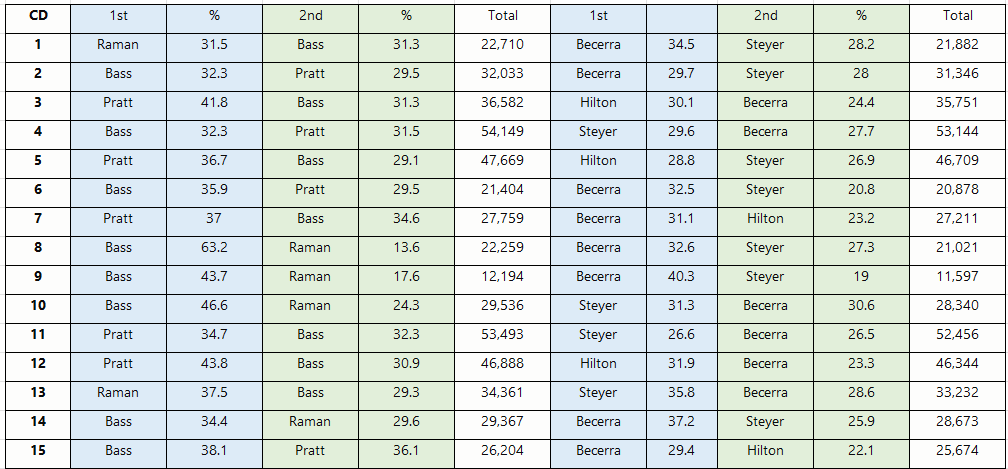
Nithya Raman even LOST her own district (CD-4) to Spencer Pratt and Karan Bass, but you expect us to believe she beat them BOTH by winning 40% of the vote in the rest of the city by mail-in ballots? 🧐
8,869
56,833
241,504
12,016,795


Concise Investor retweeted

Jun 4
I believe the majority still doesn't understand the momentous threshold humanity is facing.
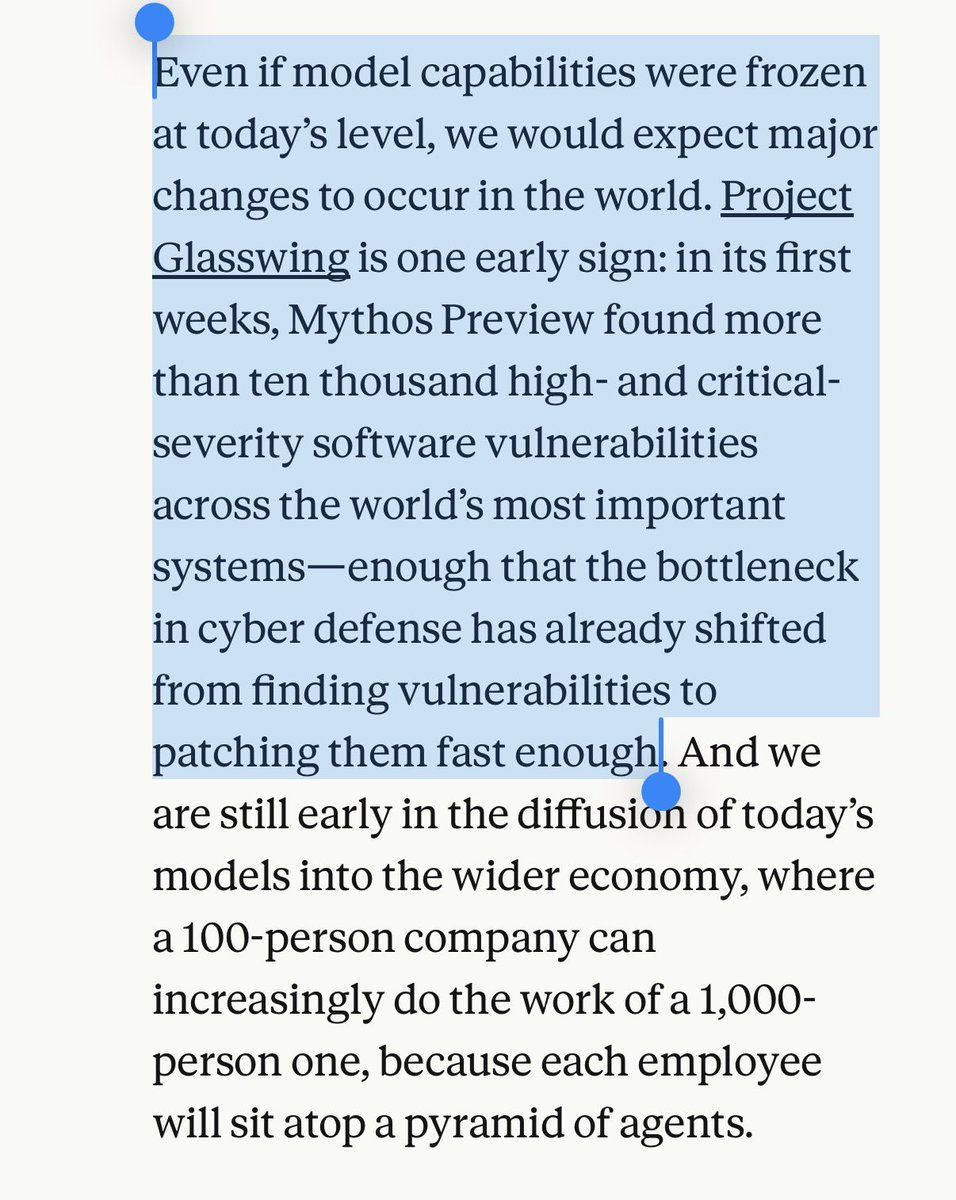
Anthropic itself states quite clearly that even if development ceased entirely, if all development were frozen, they would still witness massive societal changes:
"Even if model capabilities were frozen at today’s level, we would expect major changes to occur in the world. (...) And we are still early in the diffusion of today’s models into the wider economy, where a 100-person company can increasingly do the work of a 1,000-person one, because each employee will sit atop a pyramid of agents."
But there's no question of stagnation. Anthropic itself still maintains that development has exceeded its own internal assumptions. Take that statement seriously for a second and consider it. Although Anthropic models internally and assumes exponential development, even this trajectory lags behind actual development, which is even faster.
"It's happening faster than we thought, and the implications deserve greater attention."
and
"The rate at which AI models improve is accelerating. The length of tasks that they can reliably complete on their own has been doubling roughly every four months, up from an earlier trend of doubling every seven months. In March 2024, Claude Opus 3 could complete software tasks that take humans about four minutes to complete. A year later, Claude Sonnet 3.7 managed tasks that took about an hour and a half. A year after that, Claude Opus 4.6 managed 12-hour tasks.1 If this trend holds, tasks that take a skilled person days could come into range this year.
So again: there can be no question of standing still.
The models are not only getting better, they can also work autonomously for longer. Certainly numerous breakthroughs are still needed, context window is still a problem. But the most likely direction is that the models themselves will find the solutions to the underlying problems. This opens up unforeseen possibilities, and Demis Hassabi's statement that the golden age of science is not a dream, not a utopia, but a purposeful reality, is now confirmed.
And finally, it's not just Anthropic, but also OpenAI, that sees this development, considers it feasible, and is moving forward.
Most people don't know what's coming. But one thing is certain: it's coming even faster than expected. And it will be even bigger.
Myth was just the beginning.
Jun 4

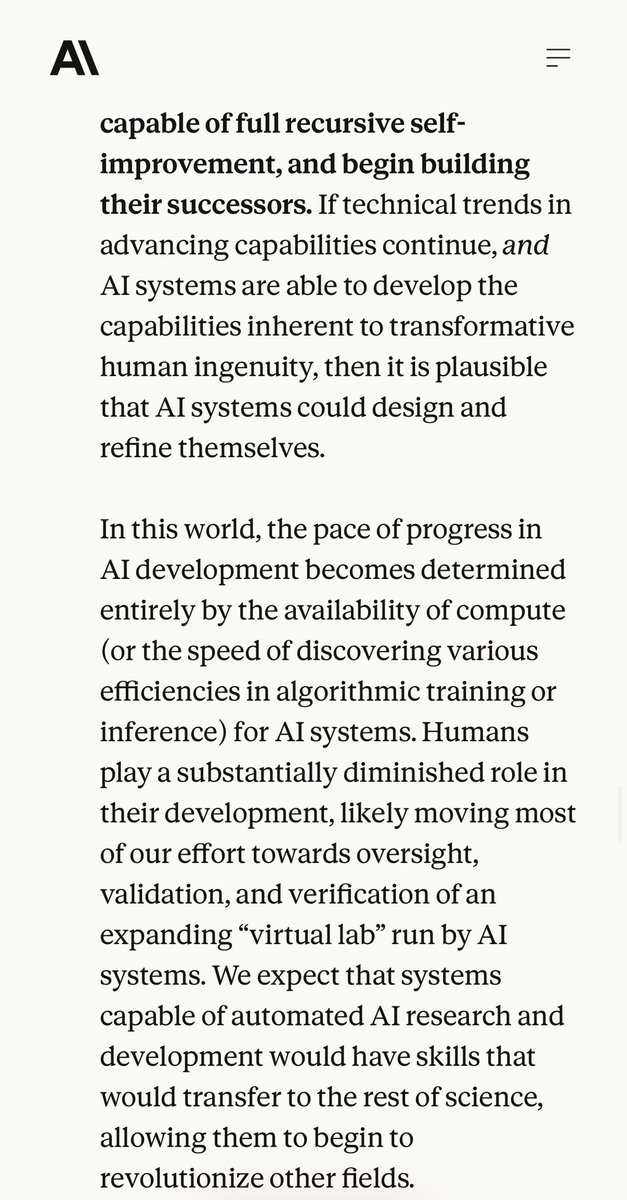
Holy moly, Anthropic is getting very serious about recursive self-improvement!
One word: acceleration.
Insane blog article.
Tl;dr:
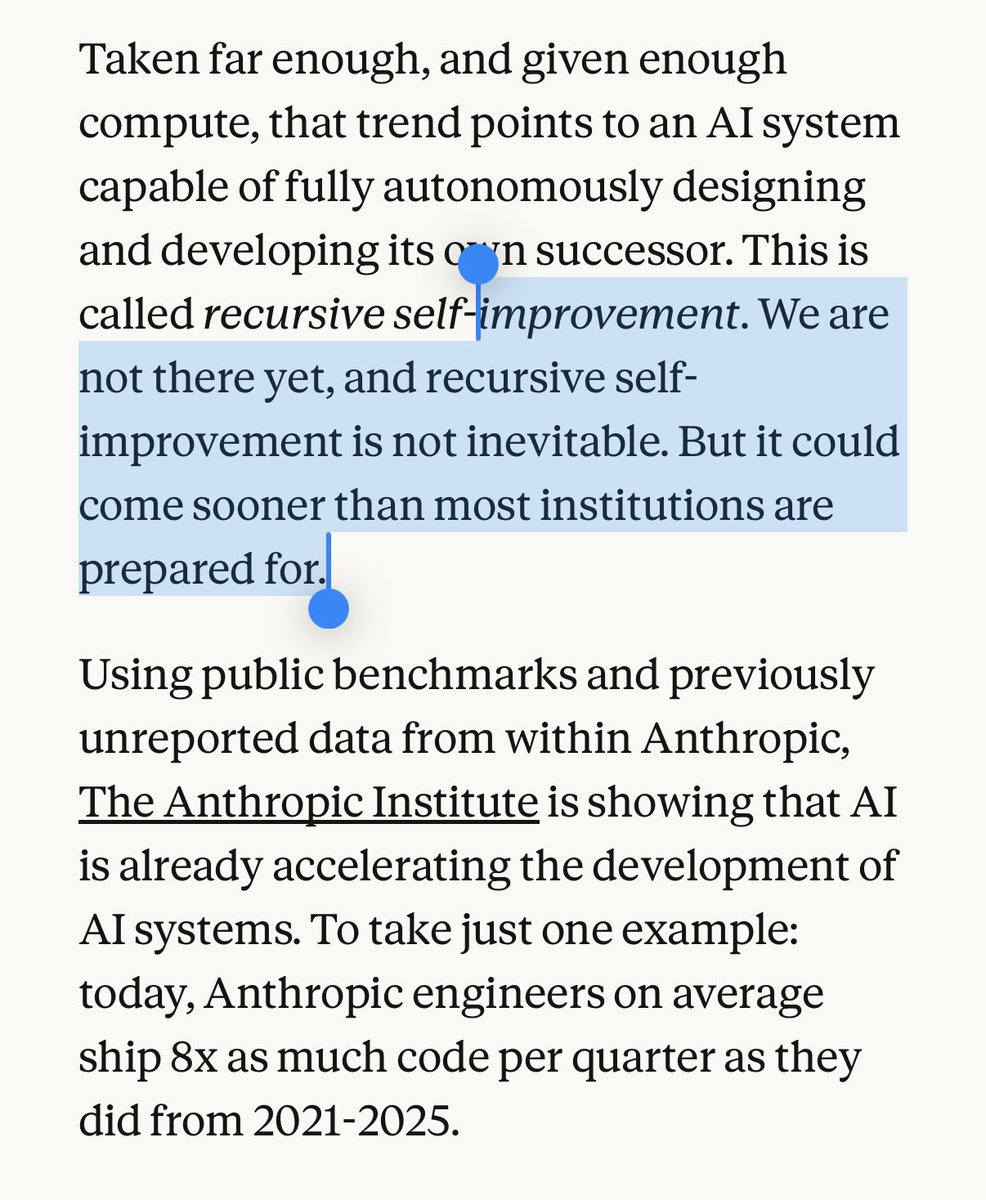
•We are close to an AI capable of fully autonomously designing and building its own successor
•They stress this isn’t here yet and isn’t inevitable, but could arrive sooner than most institutions are ready for
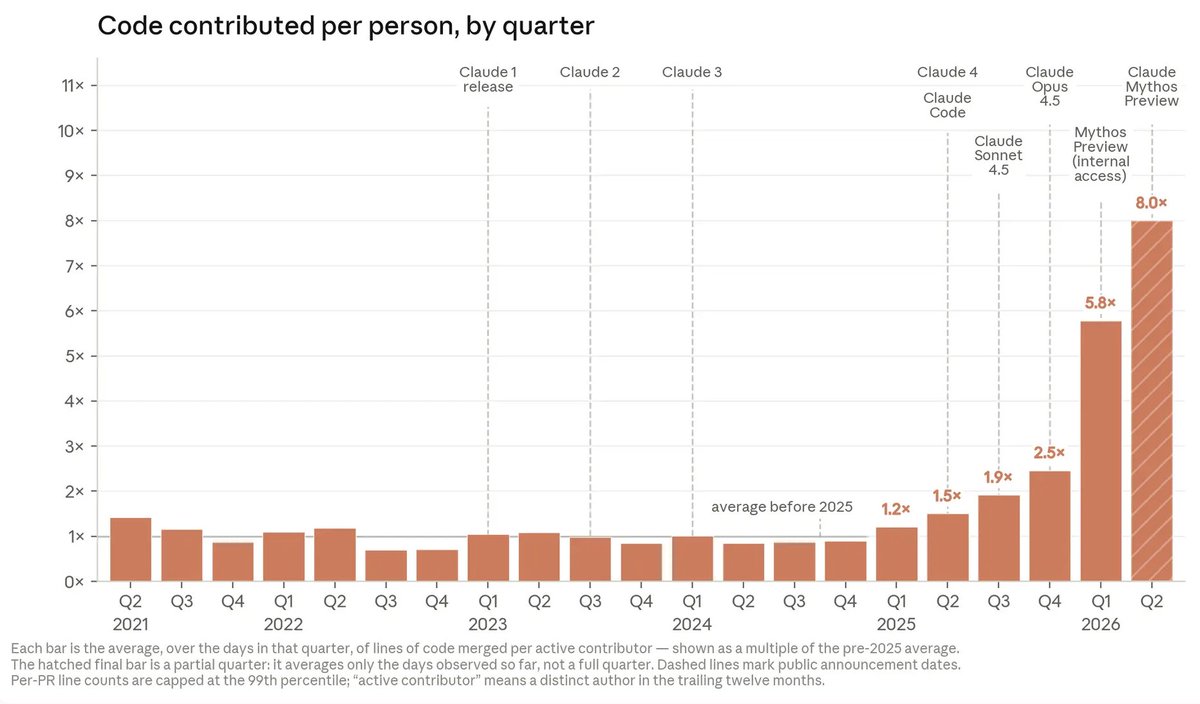
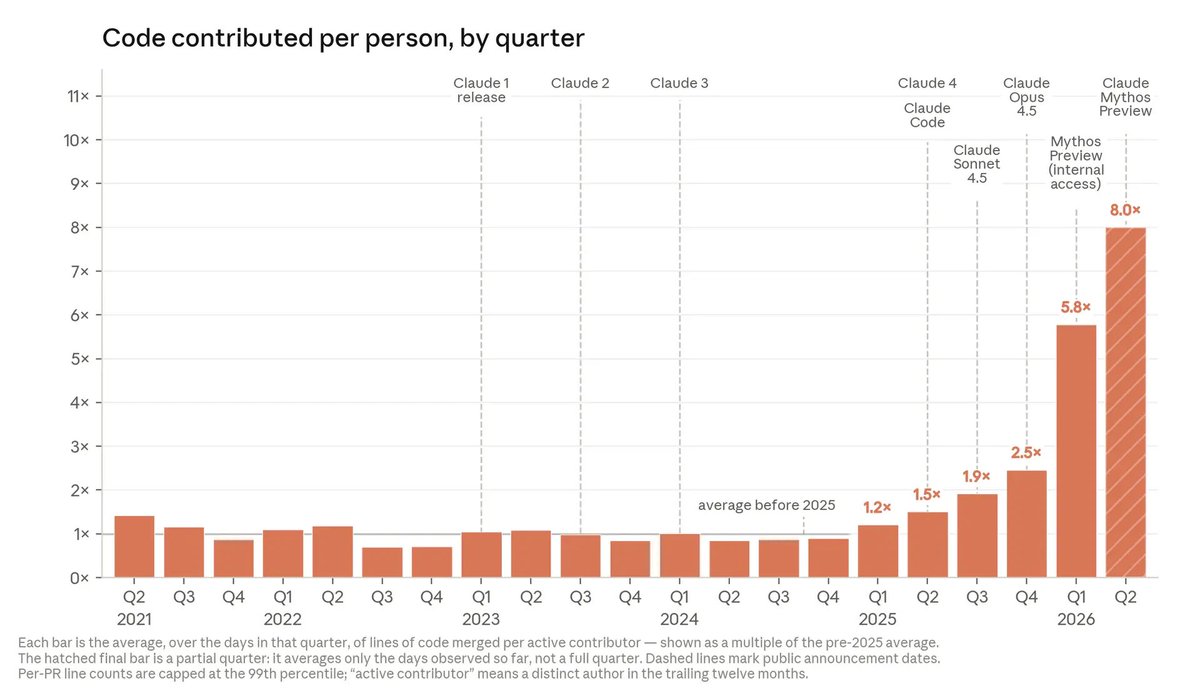
•Anthropic engineers now ship on average 8x as much code per quarter as they did in 2021–2025
•Task length AI can reliably complete is doubling roughly every 4 months (up from every 7 months)
•Opus 3 (Mar 2024) handled ~4-minute tasks; Sonnet 3.7 (a year later) ~90-minute tasks; Opus 4.6 (a year after that) 12-hour tasks
•SWE-bench went from low single digits to saturated in two years; CORE-bench (research reproduction) went ~20% to saturated in 15 months
•METR found Claude Mythos Preview could work “at least” 16 hours, at the top of what they can currently measure
•As of May 2026, Claude authored 80% of code merged into Anthropic’s codebase (low single digits before Claude Code launched in Feb 2025)
•A March 2026 poll of 130 research staff: median respondent estimated ~4x output with Mythos Preview
•One April 2026 example: Claude shipped 800 fixes cutting a class of API errors 1,000x, work an engineer estimated would have taken a human four years
•Claude-written code quality: worse than human in late 2025, roughly at parity now, expected to be strictly better within the year
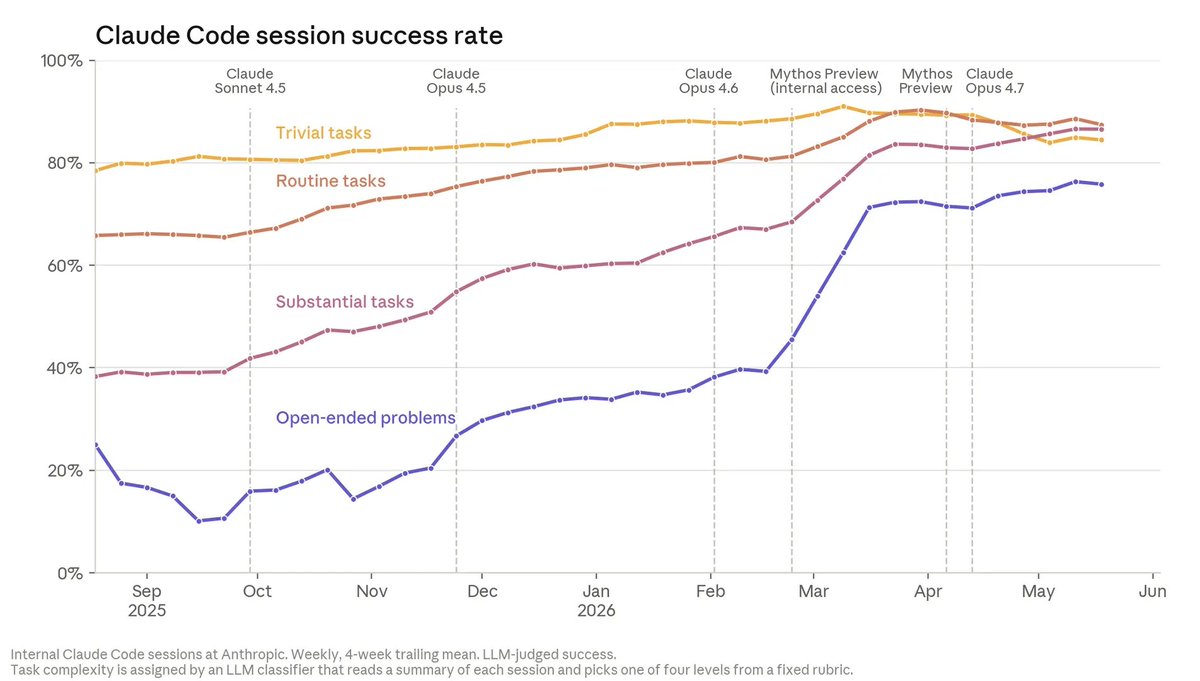
•On the hardest open-ended tasks, Claude’s success rate hit 76% in May 2026, up 50 points in six months
•Code-speedup test: Opus 4 averaged ~3x speedup (May 2025), Mythos Preview ~52x (April 2026); a skilled human needs 4–8 hours to hit 4x
•In an AI-safety research project, Claude agents recovered 97% of a performance gap (vs ~23% for two human researchers in a week), over 800 compute-hours and ~$18K
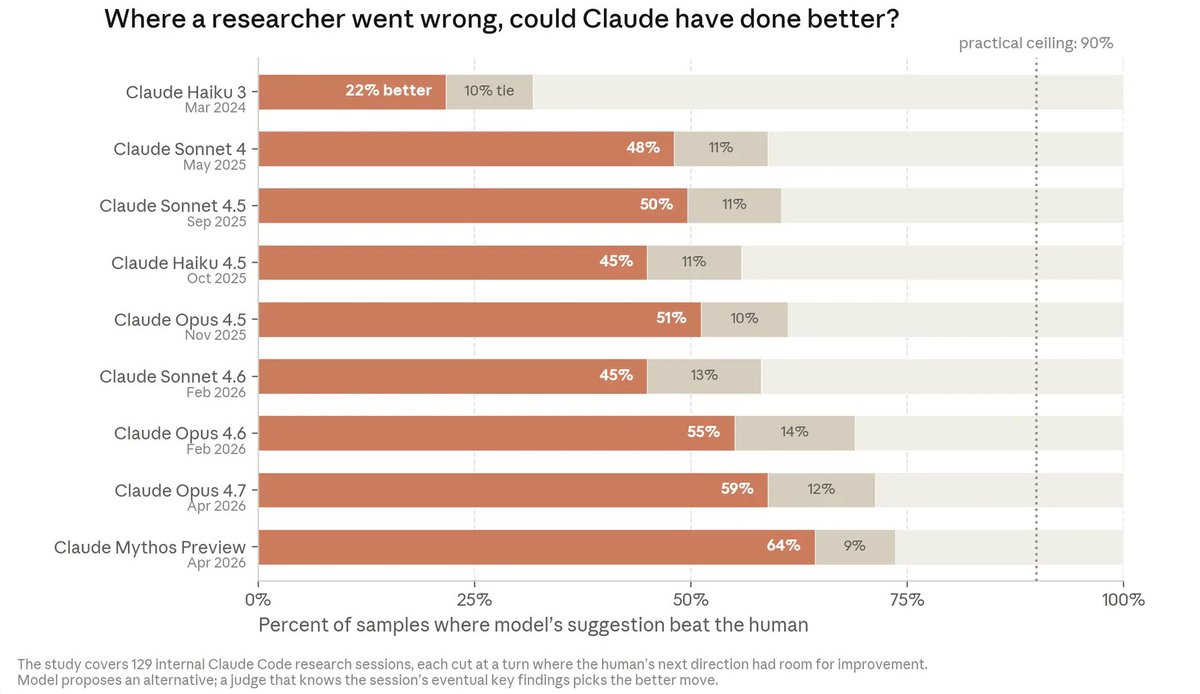
•On picking the better “next step” in research sessions, the best model beat the human choice 51% (Nov 2025, Opus 4.5) rising to 64% (April 2026, Mythos Preview)
•Human comparative advantage, for now: research taste and judgment, i.e. choosing which problems matter and when an approach is a dead end
Three possible futures
•The trend stalls (S-curve), but today’s capabilities still diffuse widely; they consider this least likely
•Compounding efficiency gains, with humans still setting direction; 100-person firms doing the work of 10,000 ; they think this is the likely path
•Full recursive self-improvement, where AI builds its successors and pace is set by compute; the alignment outcome here is what they’re least certain about
83
100
917
166,642
Concise Investor retweeted

Jun 6
Chicago lost the Bears this week. A team that's been in the city since 1921.
They didn't lose them to a bigger market or a better deal. The Bears decided they'd rather be a tenant in Indiana than deal with Illinois for one more year.
Think about how badly you have to run a place for that to be the smart move.
They lost them for two reasons.
The people running Illinois would rather villainize a builder than keep one. And they're bad at their jobs.
In 2021 the Bears spent $197M on the old Arlington Park racetrack.
Before they could break ground, Cook County valued the empty lot at $192M (Bears said $60M). They were salivating at the chance to extort a building that didn't even exist yet.
That fight dragged on for years.
The Bears were ready to put $2B into the stadium. All they wanted was a promise the county wouldn't reassess them into oblivion, plus $855M for infrastructure everyone uses. Roads, transit, utilities. A $3B project, two thirds of it private money pouring into Illinois.
Springfield had since 2021 to get this done. They dragged it to the final night of session, passed it through the Senate at 3:39AM, and the House went home without voting.
So now it's all gone.
The funniest part? This started because Cook County tried to grab the tax early. They knew a built stadium would pay $53M a year. Now they get under $4M on a vacant lot. No jobs, no buildout, no new anything.
Congrats on fighting for scraps and losing the whole prize.
Pritzker: they're "an $8.5B valued business" that doesn't need propping up.
But be smart for a second. Almost every NFL city throws in public money for a stadium. Not charity. The return is real. Tourism, hotels, restaurants, jobs, game days, property tax on a huge development. The math works.
Indiana did the math. While Illinois sat on it for years, Indiana passed a bill in months, put up $1B, and took the team.
And the Bears took a worse deal to get there. In Illinois they were going to own their stadium. In Indiana they rent it from the state. A team that wanted to build its own home gave up ownership just to escape Chicago.
Nobody won but Indiana. The Bears lost their stadium. Illinois lost the team, the $2B, and $53M a year in taxes.
Pritzker after they left: "I wasn't willing to give up billions of dollars of taxpayer money to give it to a billionaire-owned family or team."
There it is. "Billionaire-owned."
That's how Democrats talk about any business right before they run it out of town. Call them a billionaire, act like you're saving working families, take a victory lap while the tax base drives across the state line.
Meanwhile they're running the whole state into the ground. And you already know how this ends. You're living in it.
Pensions are $143B in the hole, worst in the country and not close. You pay $6,285 a year in property taxes, double the $2,969 national average, for a city that's $1.15B in the red. The mayor called its finances "the point of no return."
When you run things this badly, you sell what's left.
They leased the parking meters for 75 years to Morgan Stanley and a sovereign wealth fund in Abu Dhabi. Took $1.15B and burned through it in two years. The investors already made it all back, with 58 years left to collect.
Sold the Skyway. Sold the downtown garages. Every asset that made money, gone for one check.
But a fixed property tax rate for a team that's been here 106 years? That's "propping up billionaires."
Companies are leaving. Boeing for Virginia. Caterpillar for Texas. Citadel for Miami. In 2023 alone Illinois lost 56,000 people and $6B in income to other states. The ones who left earned a third more than the ones who moved in.
Indiana didn't outbid anyone. AAA credit, 16 years straight. A $676M surplus. Fourth-lowest debt per person in the country. They just weren't a disaster.
Illinois could have collected $53M a year. It chose zero. Ignore all the bad management but make sure to stick it to those evil, pesky billionaires.
1,395
5,876
27,746
2,370,452
Concise Investor retweeted

Jun 3
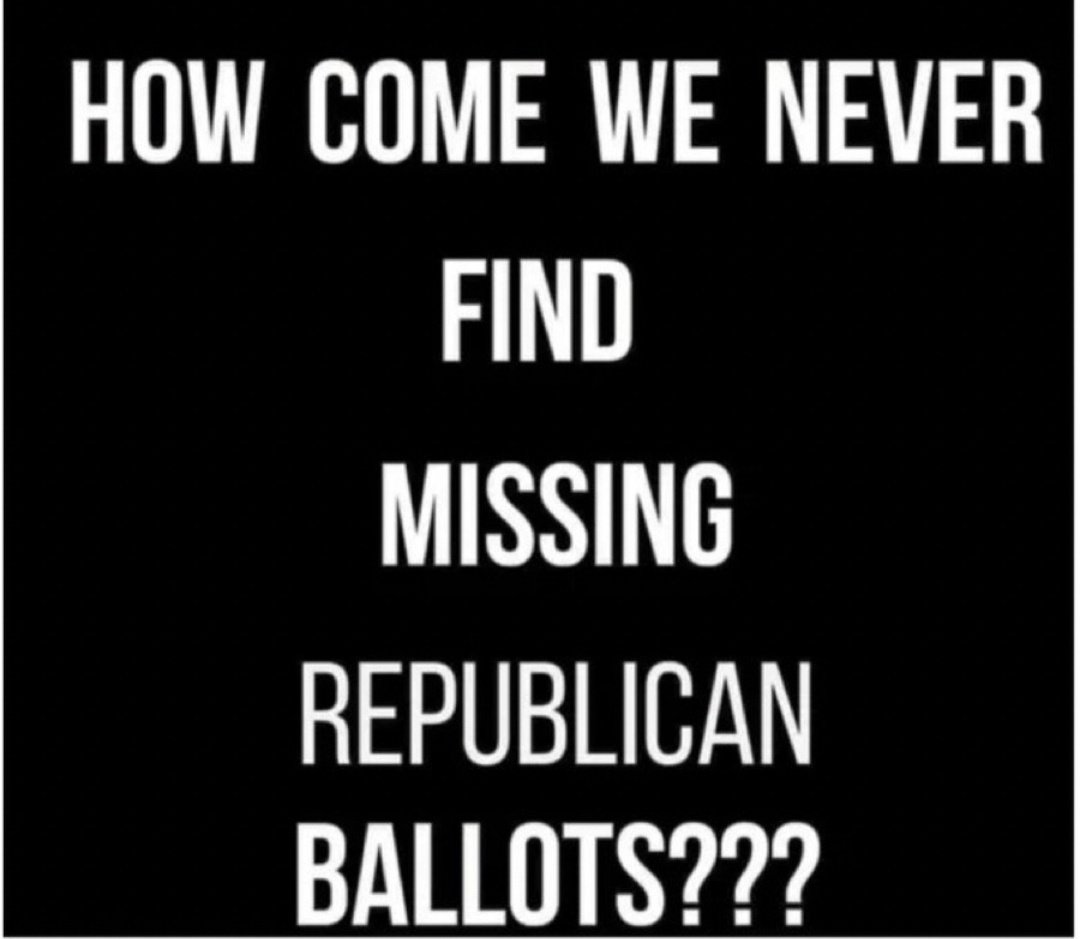
California will let us know the election results as soon as the Democrats are in the lead..
6
66
882
47,311
Concise Investor retweeted

Jun 3
Time to get election results:
🇧🇷 Brazil: 2 hours (124M ballots)
🇫🇷 France: 4 hours (34M ballots)
🇮🇳 India: 24 hours (640M ballots)
🇩🇪 Germany: 8 hours (51M ballots)
🇦🇷 Argentina: 6 hours (25M ballots)
🇺🇸 California: 37 DAYS (10M ballots)
965
10,870
61,410
3,398,544
Concise Investor retweeted

Jun 3
🚨 OMG. SEC. SCOTT BESSENT JUST WENT THERE 🔥
SEN WYDEN (D): We don't want ramblings about the most corrupt regime in history, we want facts
BESSENT: "And we'd like to hear what Adam Wyden and Jeffrey EPSTEIN talked about. Your son's largest investment position was Rick's Cabaret. So, did your son and Jeffrey Epstein talk about pole dancing as he begged him for money using your limited credibility?"
ASSASSIN.
2,489
16,224
74,858
1,923,855
Concise Investor retweeted
The Los Angeles County Sheriff's Department used helicopters to fly in ballots from vote centers across the region
“They're picking up ballots from 8 cities including Lancaster, Santa Clarita, Palmdale, Lakewood, Santa Monica, Van Nuys, Pomona, and Torrance. Once they arrive, the ballots are securely transferred inside where election workers are receiving and processing millions of ballots”
The reason they do this is because LA is huge, over 4,700 miles big
There are 5.8 million registered voters that has a single Ballot Processing Center in the City of Industry
All ballots from vote centers across the vast county are brought here for counting after polls close. Driving from remote areas like the Antelope Valley, Lancaster, Palmdale takes hours, so helicopters get ballots in faster, reducing delays in reporting and minimizing time ballots sit in transit
What I find interesting is this seems like the perfect opportunity to introduce as many mail in ballots as needed without any questions
This also use one processing center. This means they wouldn’t have to coordinate rigging elections across multiple offices. If could be one easy to control operation at this one facility
We need a federal audit of California elections
If there’s no fraud, great. But I think we all know there’s massive fraud
1,826
10,692
26,033
1,078,772
Concise Investor retweeted
Former CIA operations officer Gary Berntsen says elections are being stolen in America with electronic voting machines
He describes there are teams of statisticians, mathematicians and hackers who map out every county and identify where percentages of votes can be quietly adjusted
Different techniques are used in each location so nothing matches in a recount. When a 70-30 county becomes 68-32, nobody notices. But when you add up these differences across an entire state, those tiny amounts of fraud decide outcomes
Both former CIA operations officer Gary Berntsen and author Ralph Pezzullo explain the strategy. They explain they don't flip the big blue cities. Instead they shave votes in the places no one ever audits
Elections are being stolen all over the country and the CIA is confirming it
“They know where they can find the dead people... Mm-hmm.”
“They plan this, It's meticulous. It's meticulous. These guys are experts at this. It's not just a few guys in a back room. You're talking about hundreds of statisticians and engineers, and they work it, you know, for a year to plan and mathematicians and hackers.”
“We had a map out of Colorado when we were talking to our engineers, the guys that designed it, that stole the elections.
— We just go to every one place where Trump wins 70-30 and — Shaved it off.
We shave in every other place. We don't go near a Democratic place, because when they wanna do recounts, they're gonna go to the Democratic places. They don't realize we shaved in every other committee. We know every other county.
We know how to do this. And then in each of those things where they shave, they shave with a different technique in each one of those. So if you found something in one county, there's no continuity around the state that way.
So this is why the Republicans are so much at fault, because they have the power and the ability to show in their areas they can allow access to the machines, they can allow access to the source code”
People need to go to prison. Democrats are stealing elections nationwide in every county, in every state of America
- Ban Mail in ballots
- Ban electronic voting machines
- Mandatory voter ID
- Same day voting and counting
- Mandatory proof of citizenship
It’s all common sense
267
4,938
7,966
90,799

The only thing that stops violent men from raping you and your society are other men who are equally willing to be violent in stopping the rapists. The West has decided that the highest virtue is to quietly comply with the destruction of your civilization because to do otherwise is bigoted toward the rapists. It really is that simple.
4,123
31,266
138,632
37,617,196
Concise Investor retweeted

Jun 1
This confirms what I always suspected: the distribution of saline shots versus hot shots was deliberately planned to target military, law-enforcement, and conservatives in general.
Media got something watered down.
And politicians got water. Saline water.
May 31

🔻OGNI LOTTO DI VACCINO AVEVA UNA FORMULA DIVERSA. I NUMERI DI LOTTO LO PROVAVANO.
Non una teoria.
Non un'interpretazione.
Un set di dati. 12.000 numeri di lotto. Incrociati con i rapporti di eventi avversi del VAERS. La correlazione è assoluta.
Un team di ricercatori - 4 statistici, 2 farmacologi, 1 ex regolatore della FDA - ha pubblicato i loro risultati su un server decentralizzato mercoledì. Il documento è di 147 pagine. La revisione paritaria era impossibile perché nessuna rivista l'avrebbe accettata. Così l'hanno rilasciato direttamente al pubblico.
La scoperta: specifici numeri di lotto hanno prodotto eventi avversi 4.000% in più rispetto ad altri.
Non variazione casuale.
Non incoerenza di produzione.
Un modello deliberato e sistematico.
Numeri di lotto che terminano con 20A fino a 20F: eventi avversi quasi nulli. Soluzione salina. Placebo. Acqua con un'etichetta.
Numeri di lotto che terminano con 21K fino a 21X: eventi avversi moderati. Stanchezza. Miocardite. Coaguli di sangue. Tassi di ospedalizzazione del 300% sopra la linea di base.
Numeri di lotto che terminano con 22R fino a 22Z: catastrofici. Ictus. Arresto cardiaco. Danni neurologici. Tassi di mortalità dell'8.100% sopra la norma statistica per qualsiasi prodotto farmaceutico nella storia.
Tre livelli. Tre formule. Distribuiti in un modello che assicurava che nessun singolo ospedale, nessuna singola città, nessuna singola demografia ricevesse abbastanza dosi catastrofiche da innescare un segnale statistico evidente.
Hanno definito i danni come "effetti collaterali rari". Ma non erano rari. Erano mirati.
Il modello di distribuzione non era casuale. I lotti catastrofici sono stati inviati in modo sproporzionato a specifici codici postali. Codici postali con alte concentrazioni di veterani militari. Primi soccorritori. Proprietari di imprese indipendenti. Comunità con una conformità storicamente bassa ai mandati federali.
Le persone più propense a resistere hanno ricevuto le dosi più pericolose.
I lotti moderati sono andati ai centri urbani con un elevato consumo di media - popolazioni che avrebbero segnalato sintomi lievi, avrebbero sentito che era "normale" e sarebbero tornate per i richiami senza esitazioni.
I lotti placebo sono andati a politici, personaggi dei media e dirigenti farmaceutici. Le persone che lo promuovevano in televisione. Le persone che ti dicevano che era "sicuro ed efficace" mentre ricevevano la soluzione salina.
Hanno preso lo stesso vaccino in televisione. Non hanno preso la stessa formula.
I 12.000 numeri di lotto sono ora mappati. Ogni lotto.
Ogni destinazione. Ogni risultato. I dati sono sulla blockchain. Non possono essere ritirati. Non possono essere cancellati dalla memoria. Non possono essere verificati fino all'oblio.
L'ex regolatore della FDA del team ha presentato il set di dati al tribunale militare con una singola dichiarazione: "Questa non è stata negligenza. Questo era un protocollo di dispiegamento di armi mascherato da sanità pubblica."
Il tribunale ha accettato come prova giovedì mattina. Numero di caso: GT-2026-0441.
Ogni numero di lotto è un'impronta digitale.
Ogni evento avverso è un testimone. Ogni certificato di morte è un'accusa.
CODICE: LOT-NUMBERS / 3-TIERS / ZIP-TARGETED / GT-2026-0441
Non hanno dato a tutti la stessa dose. Hanno dato a tutti la dose assegnata.
Ora la lista delle assegnazioni è una prova.
- M-B Technology

266
3,719
6,931
343,881
Concise Investor retweeted

May 30
The media is an absolute joke
Spencer Pratt is explaining how his priorities with fixing Los Angeles
After every statement NBC makes it about Trump
No matter what Spencer says, the NBC asks another Trump question. There is nothing he can say that doesn’t prompt another “Trump” response from the media
Spencer gets frustrated because NBC won’t shut up about Trump, he says “This conversation is what's destroyed local elections”
And he’s right because the media makes everything about tribalism and not about doing what’s best for everyone in a city
No matter how many times Spencer says he’s only focusing on LA, it’s brought back to Trump by the media
We need to restore the Smith-Mundt Act and end mainstream media propaganda
871
5,440
23,910
385,176

May 31
America - here are your choices:
1. Vote Dem and become France/Europe
2. Vote anyone BUT Dem and remain America
Socialist/communist politicians 100% guaranteed will do this to our country. It’s already happening. NY, LA, Chicago, Seattle, all of CA, Minnesota… Wake TF up
May 31

🚨 FRANCE DESCENDS INTO CHAOS: Rioters torched businesses, looted stores, and left parts of the city in ruins as unrest spiraled out of control.
Import the Third World, become the Third World.
h/t @RadioGenoa
6