
Royal Society University Research Fellow. ☢️ Actinides, 🌈 f-elements, 🥦 herbivore, 🐈 cats, ⚗️ chemistry. 🏳️🌈🇪🇺 Views mine. He/him. Also @GoodwinRadChem.
Joined June 2010
- Tweets 22,824
- Following 1,049
- Followers 2,958
- Likes 12,519
2,259 Photos and videos




Pinned Tweet

5 Sep 2024
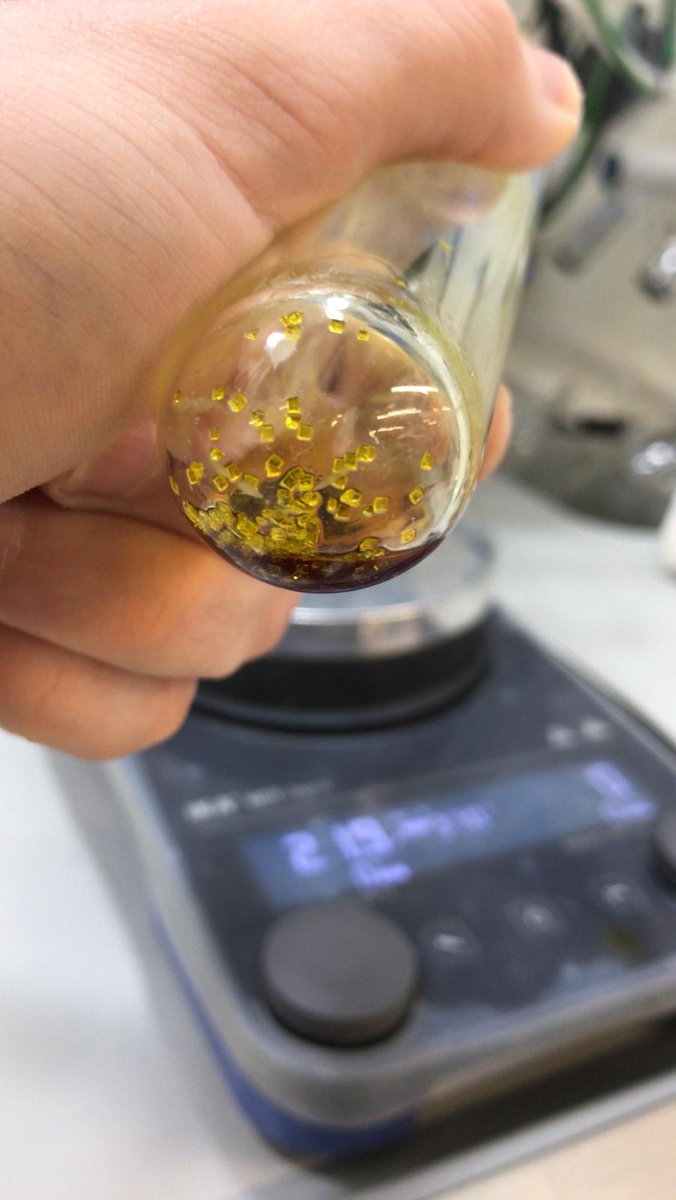
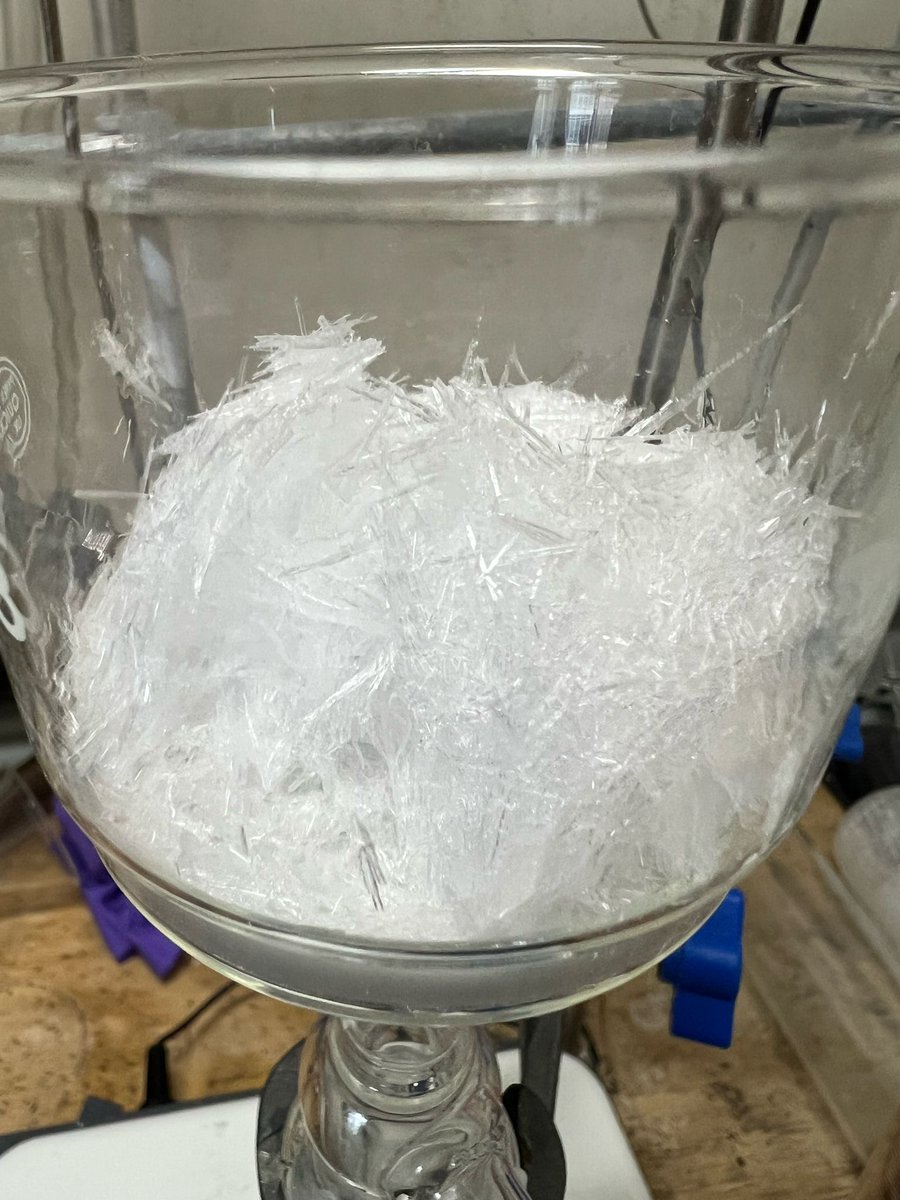
Very good news for the Goodwin group! We've been awarded ERC StG to expand our f-element research in new directions. Big thanks to reviewers and panel, and the group - keep growing crystals!
I can't thank the people that helped make this a reality enough!
#ERCStG @ERC_Research
5 Sep 2024

📣 The latest ERC Starting Grant competition results are out! 📣
494 bright minds awarded €780 million to fund research ideas at the frontiers of science.
Find out who, where & why 👉 europa.eu/!hrxyBp
🇪🇺 #EUfunded #FrontierResearch #ERCStG @HorizonEU @EUScienceInnov
22
2
158
10,885
Dr Conrad Goodwin retweeted

12 Nov 2024
“If somebody doesn't help me, I'm going to die," she recalls wailing, watching doctors and nurses pass her by.
"Somebody said to me, 'I don't know what you expect me to do,'" she said. "'You're a healthy 21-year-old young female.'"
This is exactly what happened to me at 24… 🧵
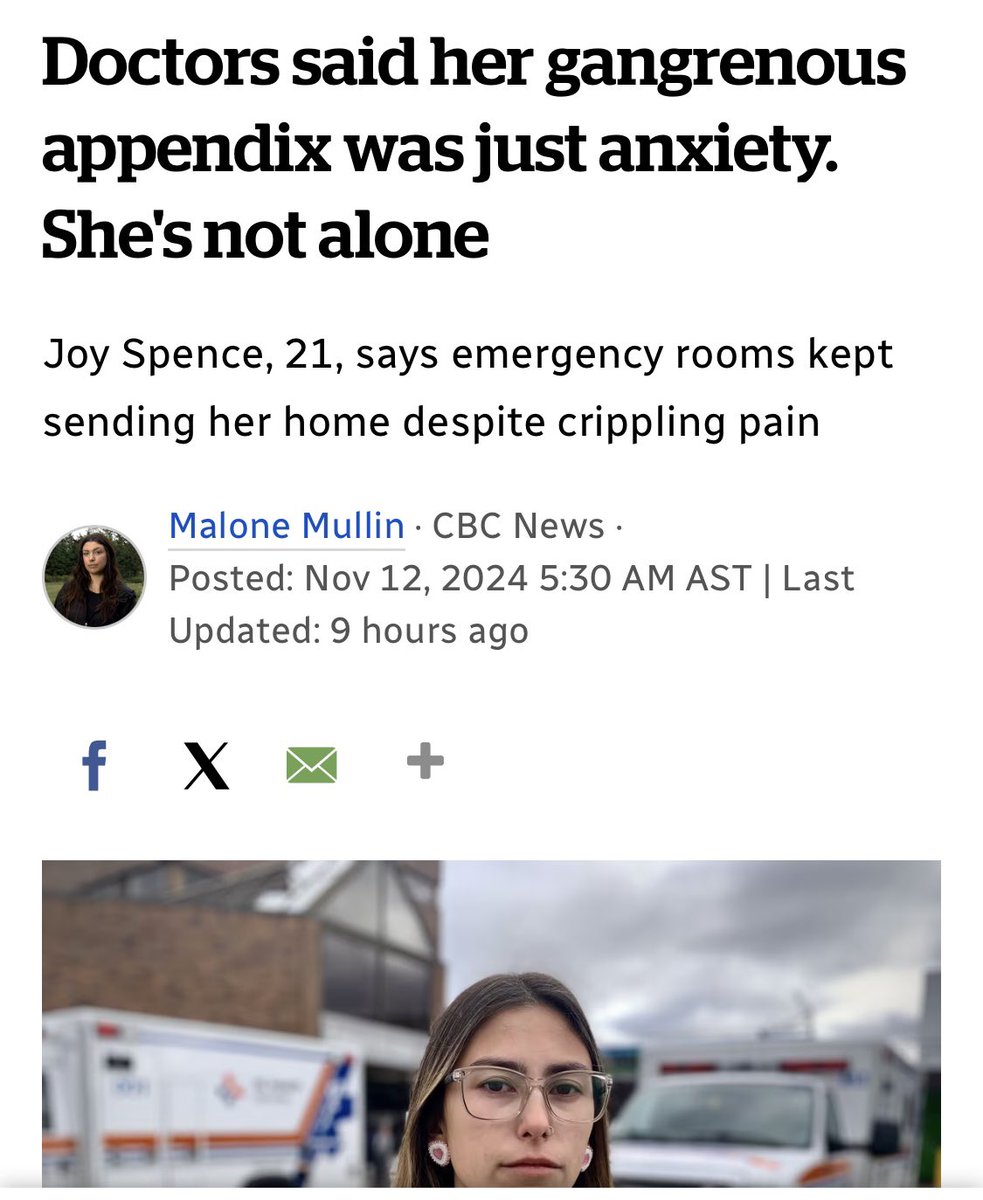
ALT Screenshot of an article from the cbc that shows a photo of a young woman in glasses standing outside a hospital with two ambulances behind her. Text reads Doctors said her gangrenous appendix was just anxiety. She's not alone Joy Spence, 21, says emergency rooms kept sending her home despite crippling pain Malone Mullin • CBC News • Posted: Nov 12, 2024 5:30 AM AST | Last Updated: 9 hours ago
414
6,956
52,810
2,683,143
Dr Conrad Goodwin retweeted
24 Oct 2024
Looking to begin an academic career? Enjoy the rain? Good news!
The Department of Chemistry @OfficialUoM are seeking applications to fill a new academic lectureship position in the inorganic chemistry team.
Please see here: jobs.ac.uk/job/DKI752/lectur…
#ChemJobs
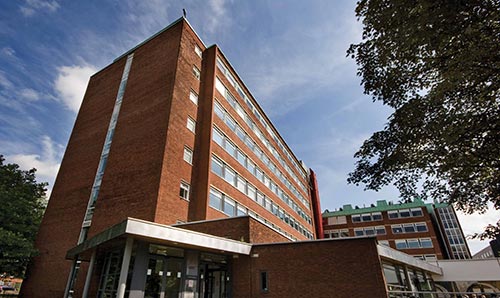
ALT The chemistry building, but it's not raining.
2
11
17
4,175
26 Oct 2024
Democracy doesn’t die in darkness, it dies under billionaires.
25 Oct 2024

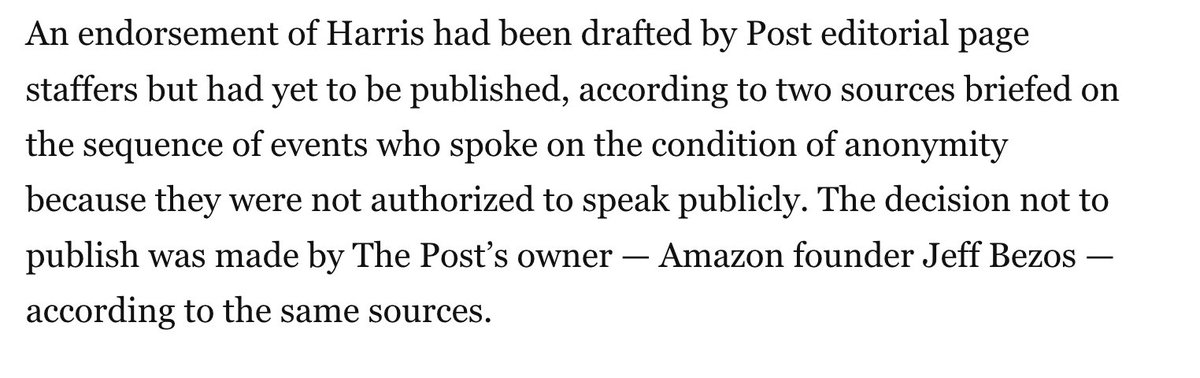
A WaPo endorsement for president had been written and was ready to publish before Jeff Bezos decided the paper would not endorse.
1
1
675
Dr Conrad Goodwin retweeted

18 Oct 2024
I am beyond excited to share some more research with @MunzDominik! Our recent contribution on a Pb(II) substituted triplet carbene was accepted in @J_A_C_S. Read e.g. below how it teaches toluene some gymnastics! 🤸🥇
Thanks a lot(!!) to the whole team!
pubs.acs.org/doi/10.1021/jac…
4
13
136
9,143
Dr Conrad Goodwin retweeted

8 Oct 2024
In @J_A_C_S now!
In this national tour-de-force of collaboration, we expand the #mechanochemistry syntheis of Room-temperature Stable Electride (RoSE) to Ca! @FabOrtu @clairemcmullin @jad5888
pubs.acs.org/doi/10.1021/jac…
1
27
119
11,193
Dr Conrad Goodwin retweeted

8 Oct 2024
We are looking for a PDRA to join our team at the Centre for Radiochemistry Research @UoMChemistry on a @RollsRoyce funded collaborative industrial project. Please RT, and if you meet the person spec in the advert below and are interested please email me. jobs.manchester.ac.uk/Job/Jo…
36
74
8,919
Dr Conrad Goodwin retweeted

3 Oct 2024
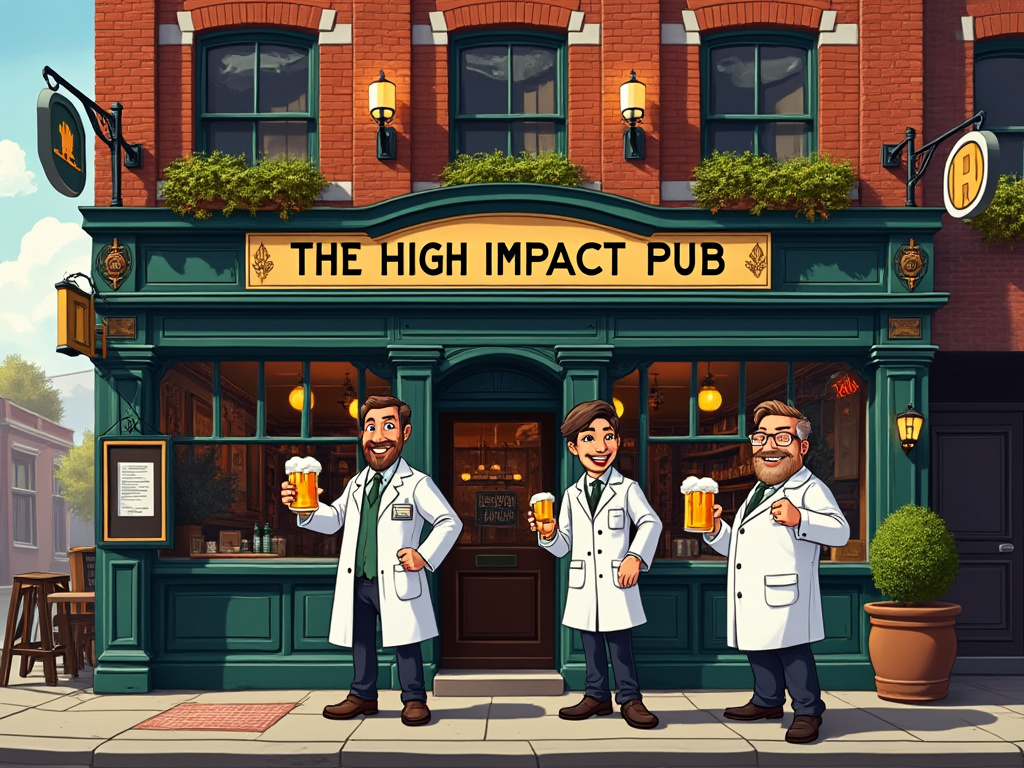
Goal: To open a bar and call it "The High Impact Pub"
4
2
43
4,338
Dr Conrad Goodwin retweeted

1 Oct 2024
📢𝗦𝗰𝗵𝗹𝗲𝗻𝗸 𝗟𝗶𝗻𝗲 𝗖𝗼𝗺𝗺𝘂𝗻𝗶𝘁𝘆 𝗦𝘂𝗿𝘃𝗲𝘆📢
I am running a survey to understand Schlenk line design preferences and to gather information about techniques/training.
Please do take some time to complete the survey and share with others!
smartsurvey.co.uk/s/Schlenk/
1
30
45
12,171

14 Aug 2024
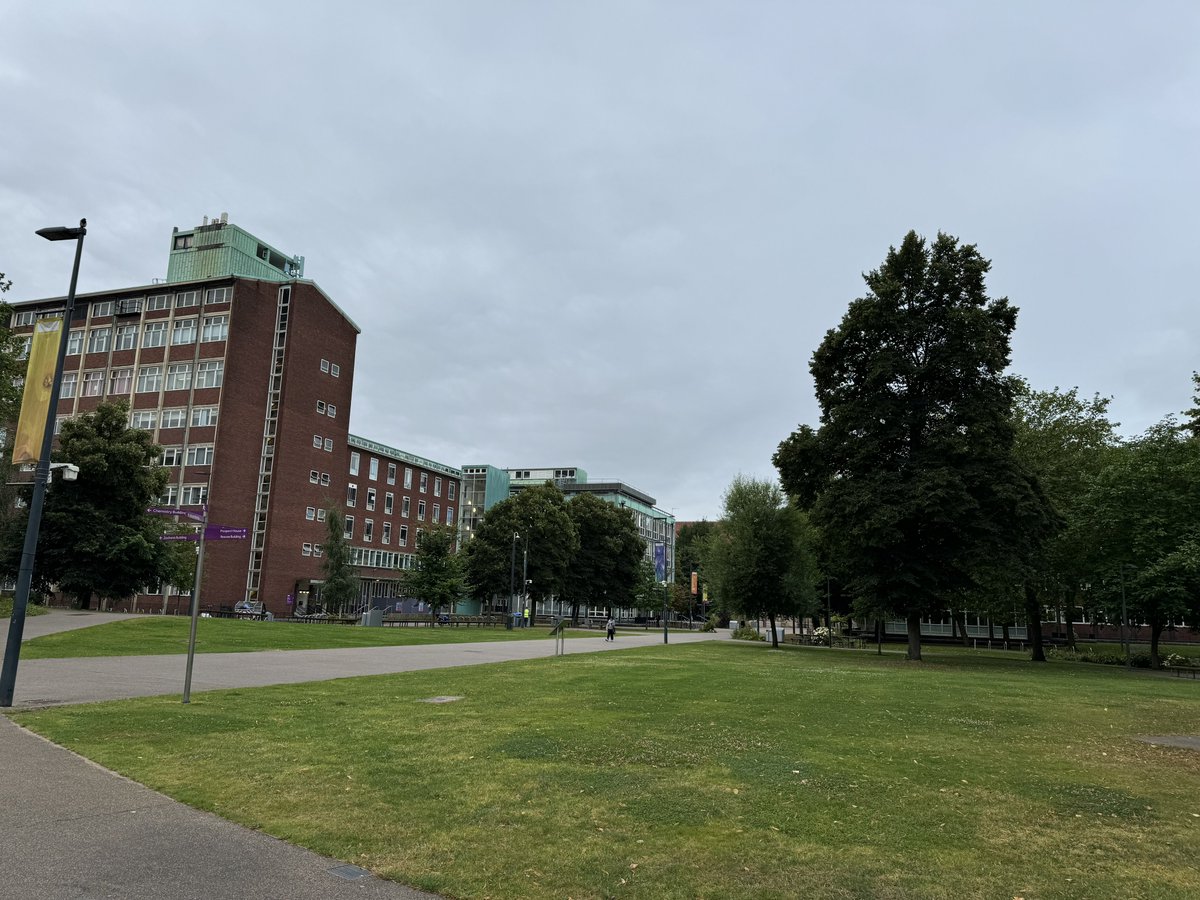
No-one was expecting a sunny day for this Manchester-based meeting, right?
13 Aug 2024

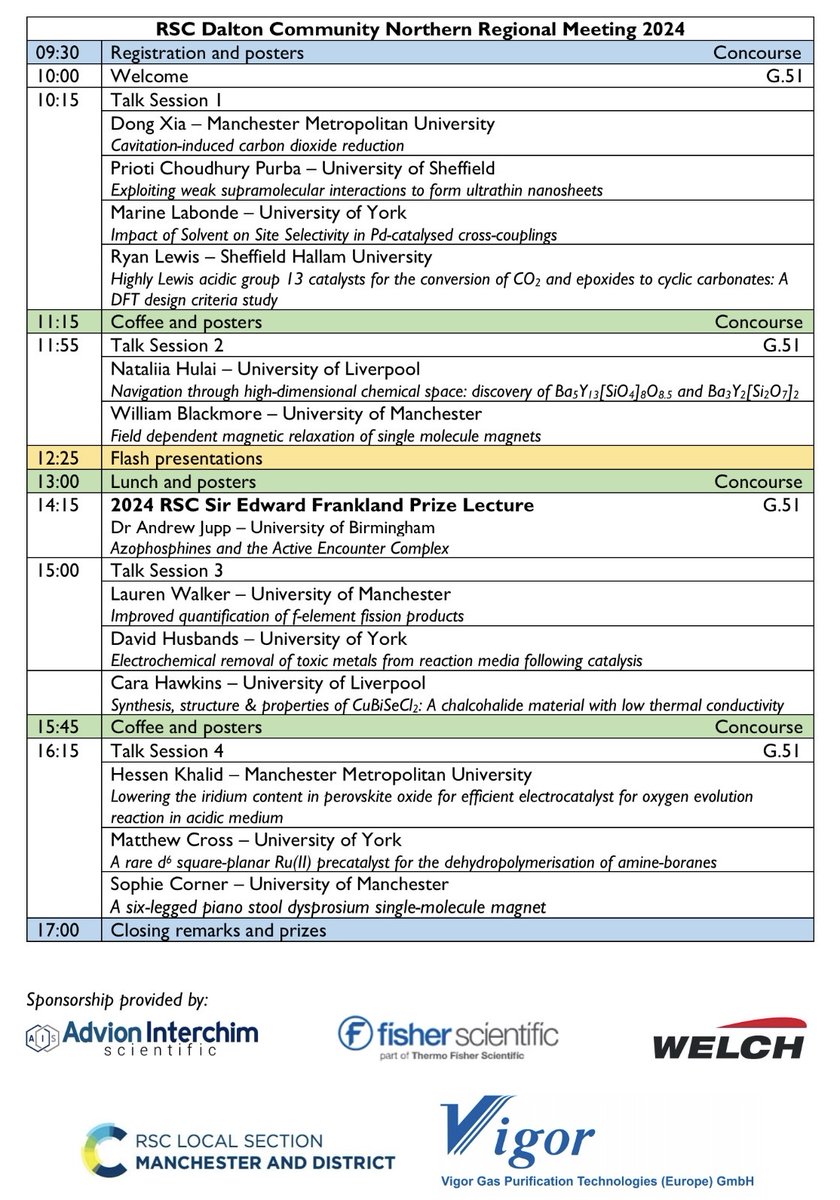
Chemistry @OfficialUoM look forward to hosting the @RoySocChem Dalton Community Northern Regional Meeting 2024 tomorrow – 14/08.
We've got an excellent lineup of speakers, posters, and are hosting @JuppLab for the 2024 Edward Frankland Prize Lecture. Schedule below.
2
9
1,474
Dr Conrad Goodwin retweeted

13 Aug 2024
To celebrate the 200th anniversary of @OfficialUoM, we've brought together a special collection highlighting research from @UoMChemistry!
Read the full collection here 👉 buff.ly/3SLjidE
Learn more about the bicentenary celebrations here 👉 buff.ly/3yyiH8p
2
11
15
4,533
13 Aug 2024
Chemistry @OfficialUoM look forward to hosting the @RoySocChem Dalton Community Northern Regional Meeting 2024 tomorrow – 14/08.
We've got an excellent lineup of speakers, posters, and are hosting @JuppLab for the 2024 Edward Frankland Prize Lecture. Schedule below.
5
20
3,511
13 Aug 2024
Update:
ORCA 6 ran the frequency calculations just fine. ORCA 5.0.4 ran out of memory.
12 Aug 2024
Blown away by the performance improvements in geometry optimisation in @faccts_orca ORCA 6.
Same 157-atom U(IV) complex, same server architecture, same settings (SlowConv, NoTRAH). 9hrs.
ORCA 6 = 47 cycles and done.
ORCA 5.0.4 = 3 cycles.
#CompChem
1
1
31
2,526
12 Aug 2024
Blown away by the performance improvements in geometry optimisation in @faccts_orca ORCA 6.
Same 157-atom U(IV) complex, same server architecture, same settings (SlowConv, NoTRAH). 9hrs.
ORCA 6 = 47 cycles and done.
ORCA 5.0.4 = 3 cycles.
#CompChem
3
1
40
7,460
Dr Conrad Goodwin retweeted

7 Aug 2024
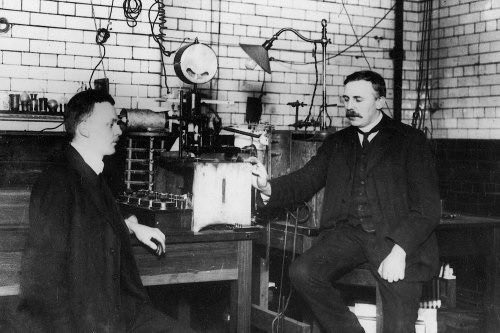
You can visit this very room at @OfficialUoM in the Rutherford building. Very cool to stand in the place where the atom was split! It's still got the same tiles!
7 Aug 2024

In 1909, Ernest Rutherford and his assistants, Hans Geiger and Ernest Marsden, conducted a series of experiments at the University of Manchester, where they fired a beam of alpha particles at a thin gold foil. They surrounded the foil with a fluorescent zinc sulphide screen to detect the deflection of the alpha particles. As each alpha particle struck the screen, it produced a burst of light called a scintillation, which was visible through a viewing microscope.
To their surprise, they observed that most of the alpha particles passed through the foil, but some were deflected at large angles, and a very few even bounced back toward the source. This was contrary to the plum pudding model, which predicted that the alpha particles would only experience slight deflections due to the diffuse positive charge of the atom. Rutherford later said that this result was
"as if you fired a 15-inch shell at a piece of tissue paper and it came back and hit you"
He realized that this phenomenon could only be explained if the atom had a small, dense, positively charged core called a nucleus, in which nearly all the mass was concentrated, and that the rest of the atom was mostly empty space with electrons orbiting around the nucleus. He calculated that the nucleus was about 1/100,000ᵗʰ the size of the atom, and that it contained most of the positive charge and mass of the atom. He also proposed that the nucleus was composed of smaller particles called protons, which had a positive charge equal to that of an electron but opposite in sign.
Rutherford’s experiment was a major breakthrough in understanding the structure and nature of atoms. It also paved the way for further discoveries such as neutrons, isotopes, nuclear fission, and nuclear fusion. It is considered one of the most important experiments in the history of physics and Rutherford is considered as 'the father of nuclear physics'.
[Lab image courtesy Science and Society Picture Library]
3
2
20
1,976
Dr Conrad Goodwin retweeted

5 Aug 2024
Congratulations to Prof. Eric Schelter of @PennChemistry on receiving a 2024 Cottrell SEED Award for New Research Directions from @RCSA1! 👏 👏 bit.ly/4fAzSGQ @Penn @SchelterGroup
6
26
2,797
Dr Conrad Goodwin retweeted

1 Aug 2024
📢Are you attending @Iccc2024? Don't forget to visit our Executive and Deputy Editors at the @RoySocChem stand in the “Never No Summer” room👀
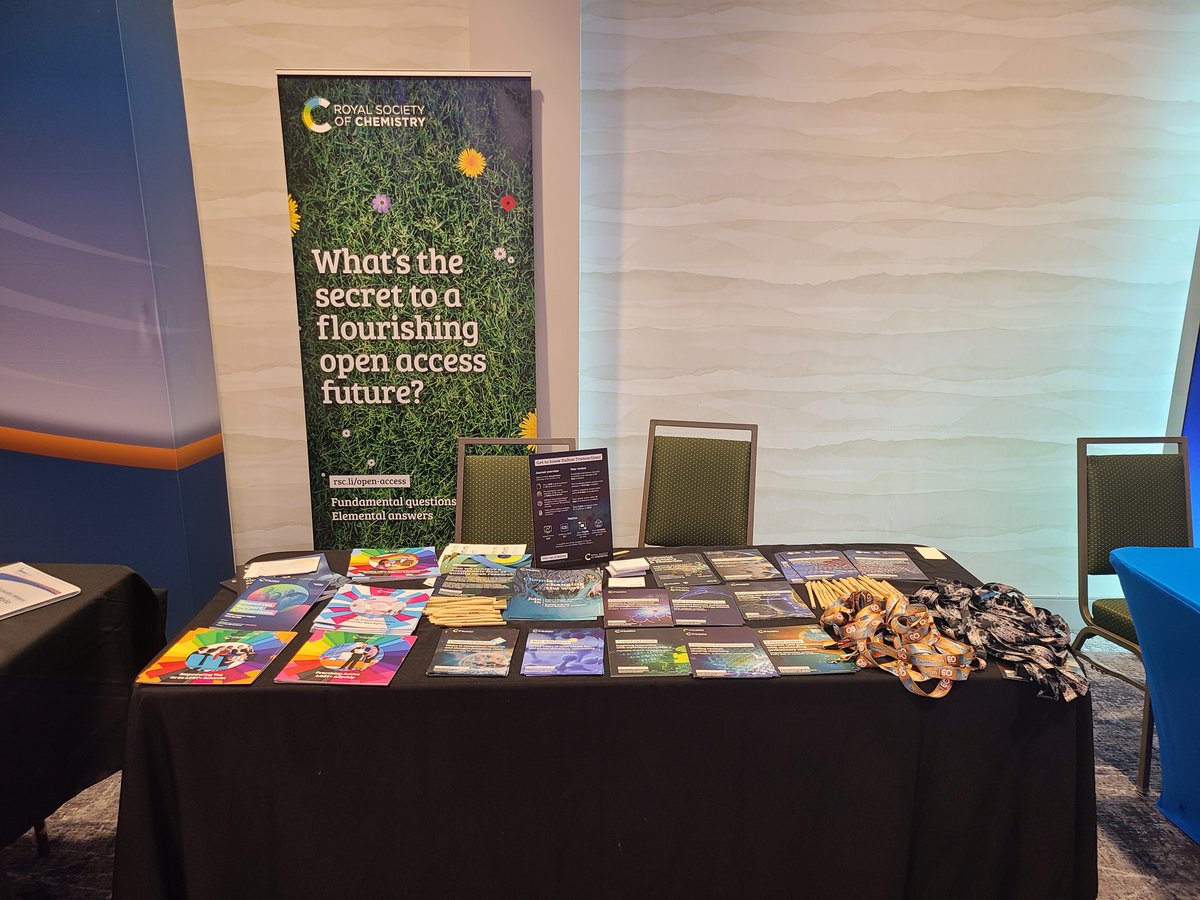
ALT Photo of RSC exhibition stand at ICCC24.
2
5
946
Dr Conrad Goodwin retweeted

1 Aug 2024
We are super pleased to share our latest research, where we present M4,5-edge RIXS as a new method for probing actinide-ligand bond covalency!
Check it out here!
pubs.acs.org/doi/10.1021/jac…
#actinides #felements #RIXS #synchrotrons
4
14
32
3,824