A lyrical nomad in ₿itcoin space. | cosmocrixter.substack.com | #npub1dxu6lr6yyzt3dtaplknmk96kn8p9g7c7jdklqjcft7rgnxyk700qt0vdqv
Joined April 2021
- Tweets 24,617
- Following 6,563
- Followers 3,689
- Likes 52,956
2,621 Photos and videos






Pinned Tweet

1 Jan 2025
Happy New Year, Bitcoiners!
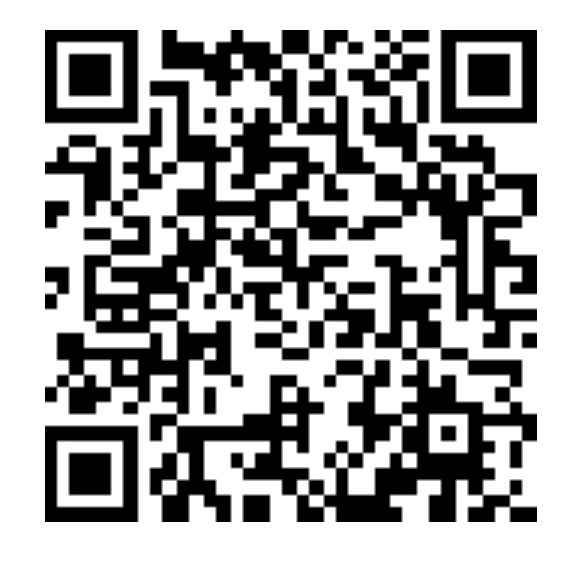
I’ve made a wallet with a little over 50,000 satoshis in it for whoever finds it in 2025.
I made it using brainwalletdotio with a few lines from a text about a fantastic creature invented by J.R.R. Tolkien.
Happy hunting!
🙏
10
1
44
5,723
Cosmo Crixter 🟠 retweeted

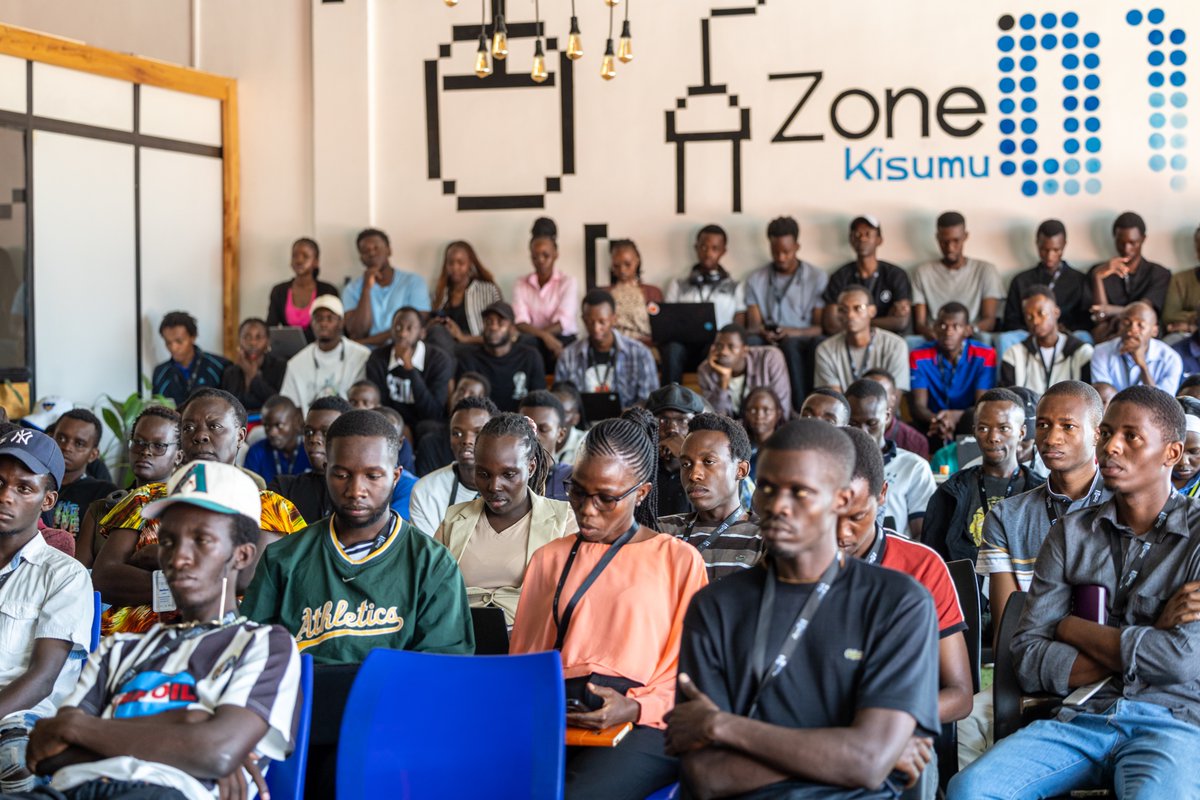
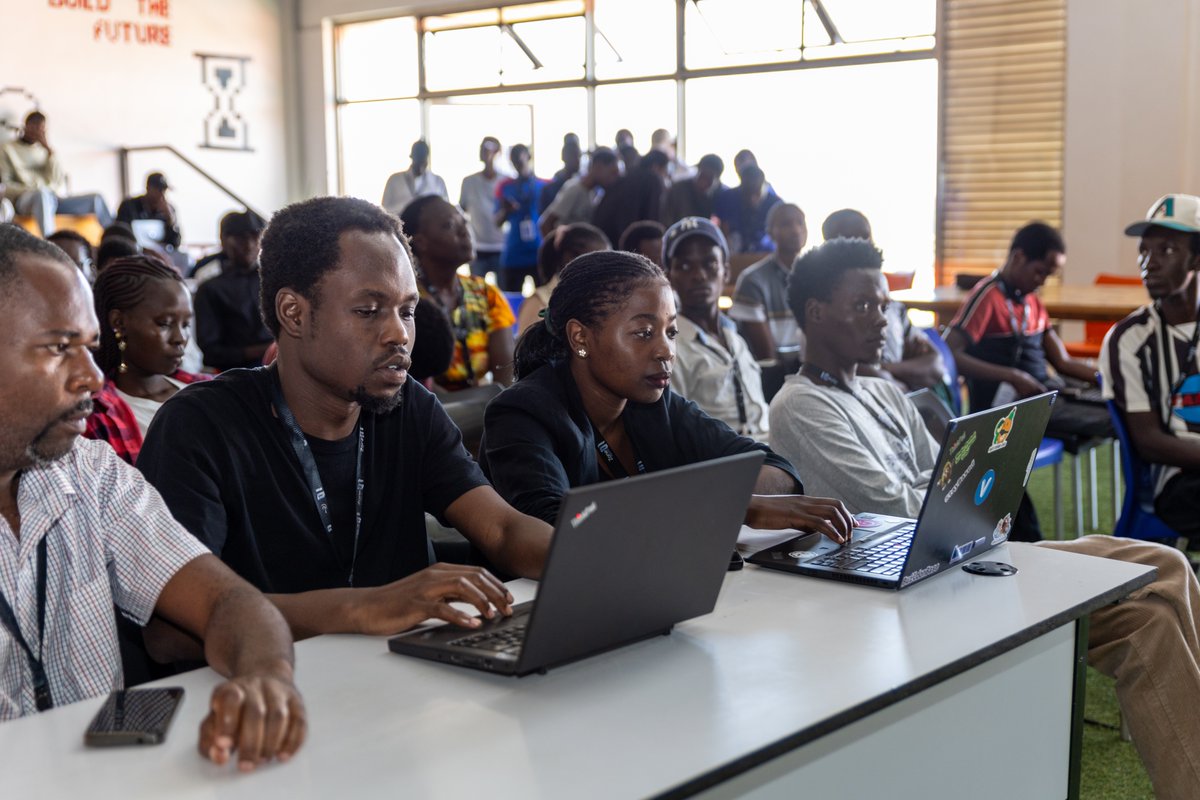
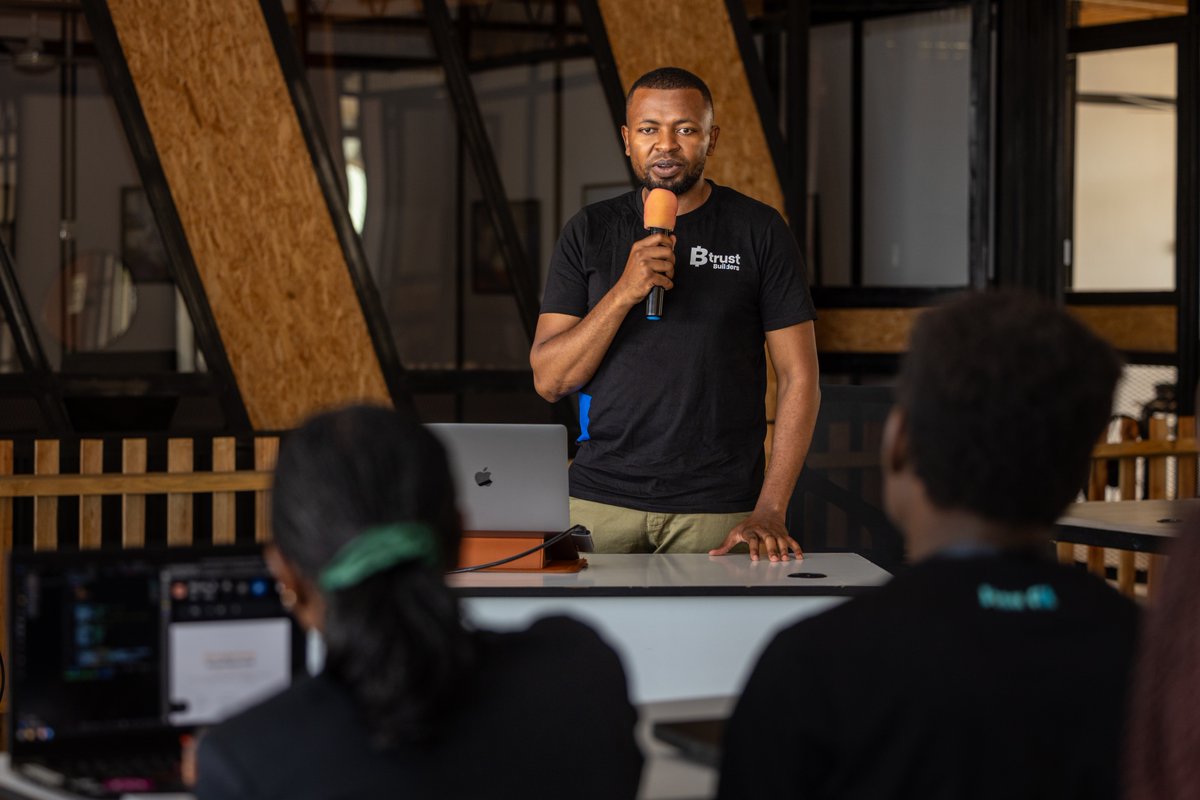
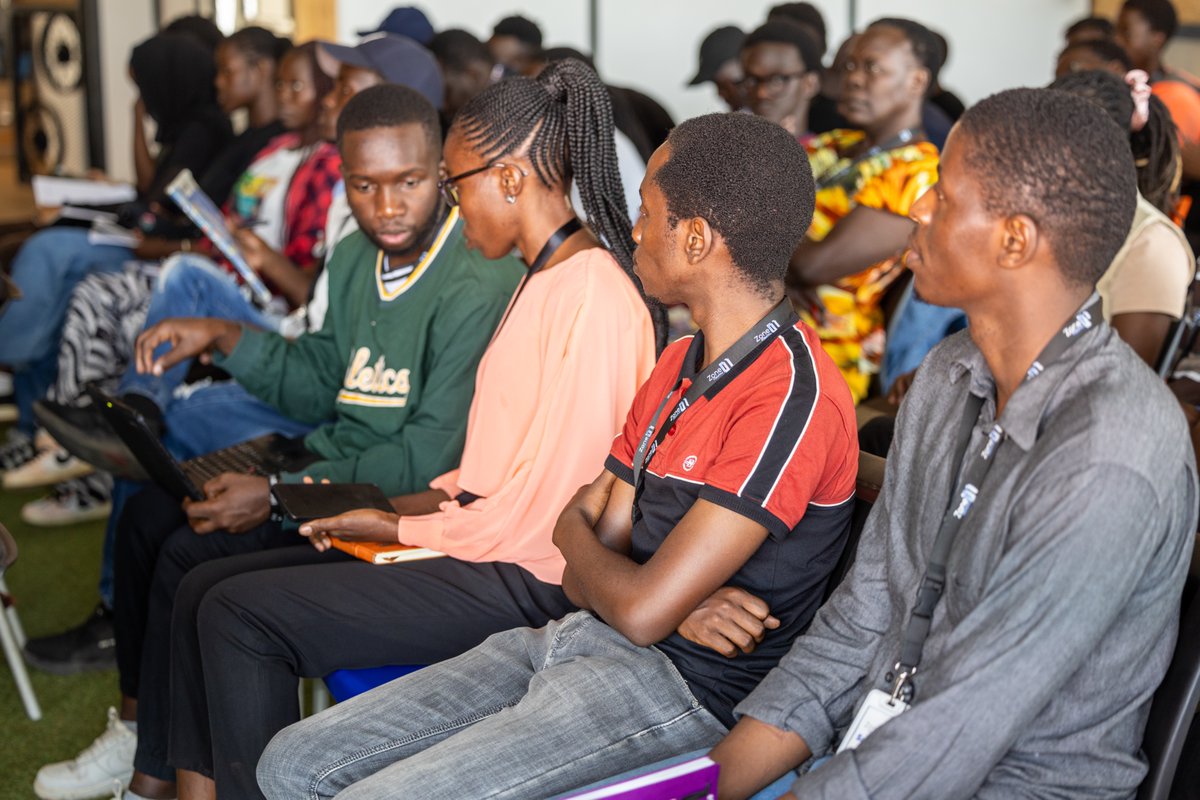
✅ Day 1 of our Lightning Developer Bootcamp in Kisumu, Kenya.
What an incredible start! We welcomed a record breaking 90 participants, making this one of the largest bootcamps we've hosted to date.
As always, we started with the fundamentals, exploring the history and properties of money, the problems Bitcoin solves, and why it matters. Participants then got hands on experience interacting with their own Bitcoin Core nodes, taking their first steps toward becoming Bitcoin and Lightning developers.
Special shoutout to @dzeg5 for leading an engaging and insightful first day.
A huge thank you to @Zone01Kisumu for hosting us and helping make this possible.
And of course, thank you to our sponsors, @btrustteam, @HRF, @Tether_Africa, @afribitcoiners, and @planb_network for supporting the next generation of Bitcoin builders across Africa. 🚀
2
16
67
2,309
Cosmo Crixter 🟠 retweeted

Jun 9
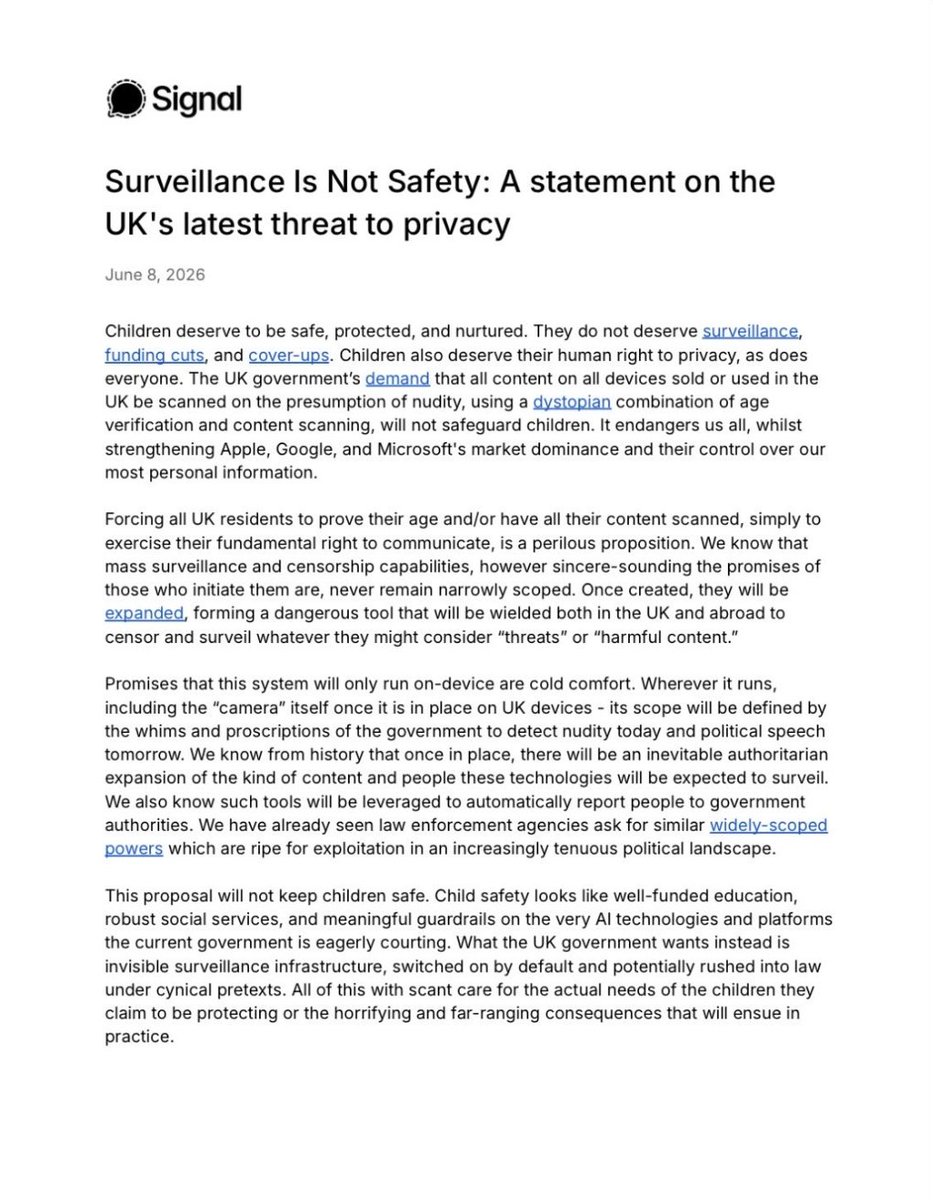
Surveillance is not safety. And mission creep means that once the door is open, surveillance of everything you do will only get worse and worse.
Protect yourself right now before these plans come into force.

8
60
289
9,998
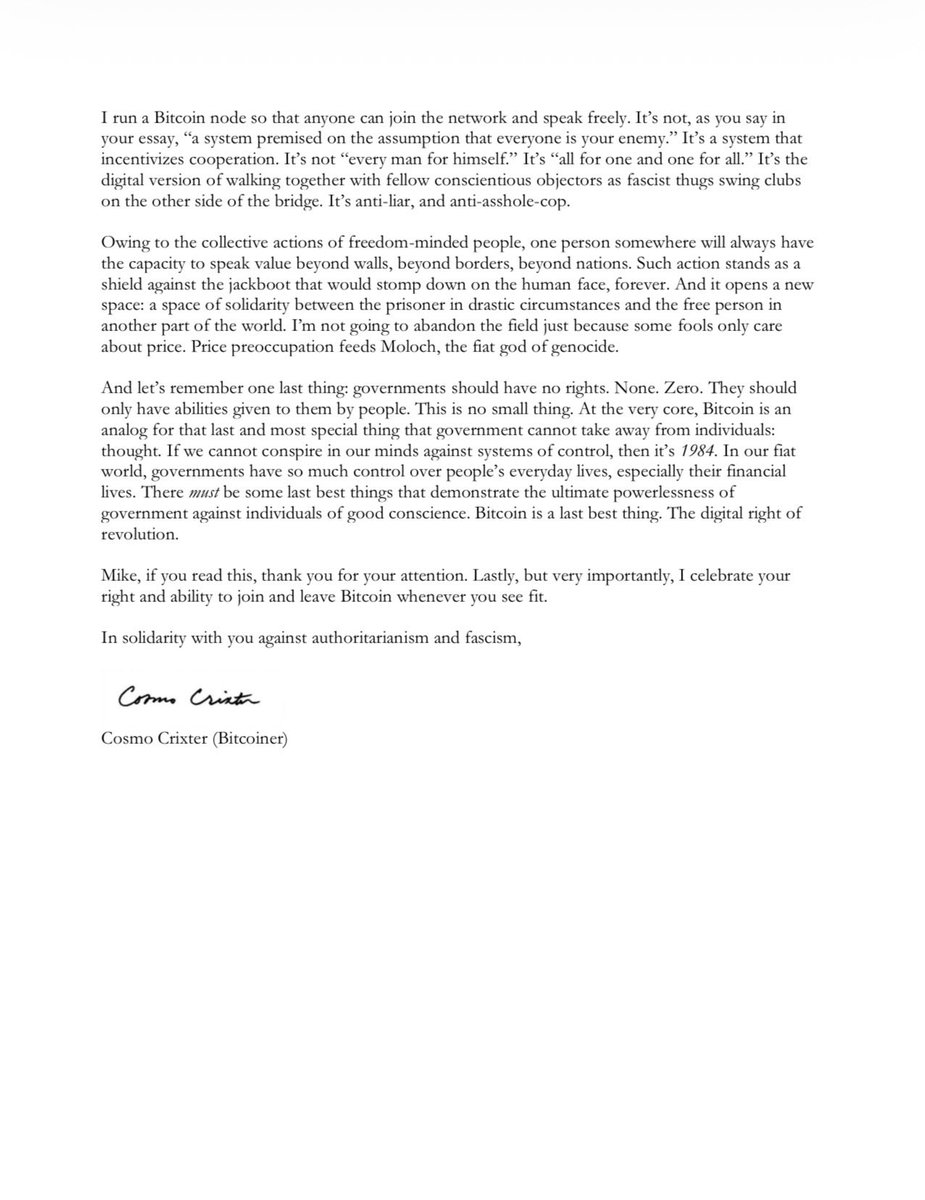
Also readable on my Substack:
cosmocrixter.substack.com/p/… x.com/cosmocrixter/status/20…
2
183
Cosmo Crixter 🟠 retweeted

I love a market down turn because it reveals who was here for the accumulation of wealth and who was here for the freedom tech.
8
5
49
1,704
Cosmo Crixter 🟠 retweeted

We had a takedown request from Munich court for a nos_tr post accessed via njump. Being that the event is pulled locally from relays by the event ID passed in the url, I dont think we will comply. It's like blaming a browser for the website you accessed. Happy to go the distance.
13
42
272
11,735
To any dithering newbs selling their bitcoin right now, be advised:
You’re selling to whales and psychopath HODLRS.
Thanks for coming to my Ted Talk.
3
97
Cosmo Crixter 🟠 retweeted

A Stanford neuroscientist warns high cortisol wrecks memory, enlarges your fear center, and make your brain feel broken.
If I wanted to fix it naturally, I'd do these 8 things every day:
1. Walk barefoot on grass for 5–7 minutes.
223
3,489
25,078
4,640,565
May 28
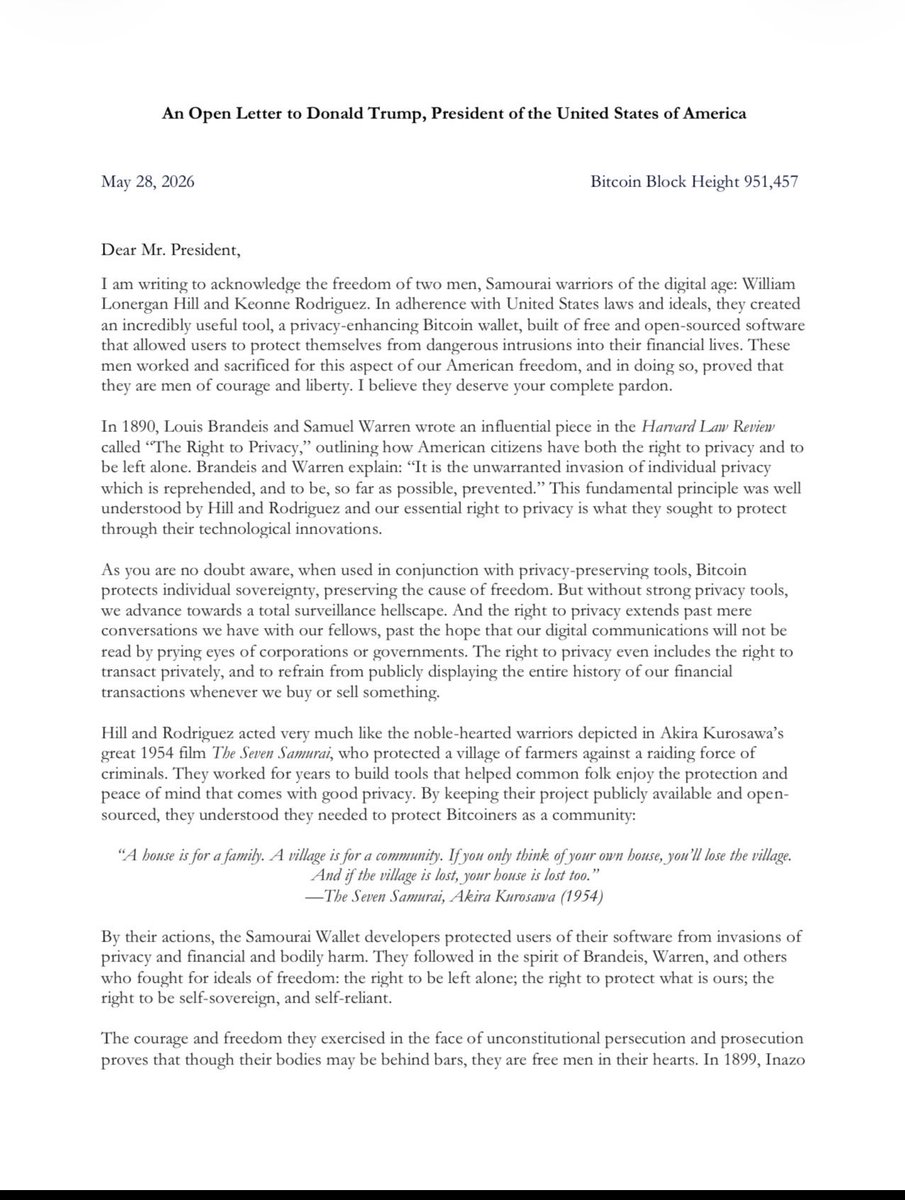
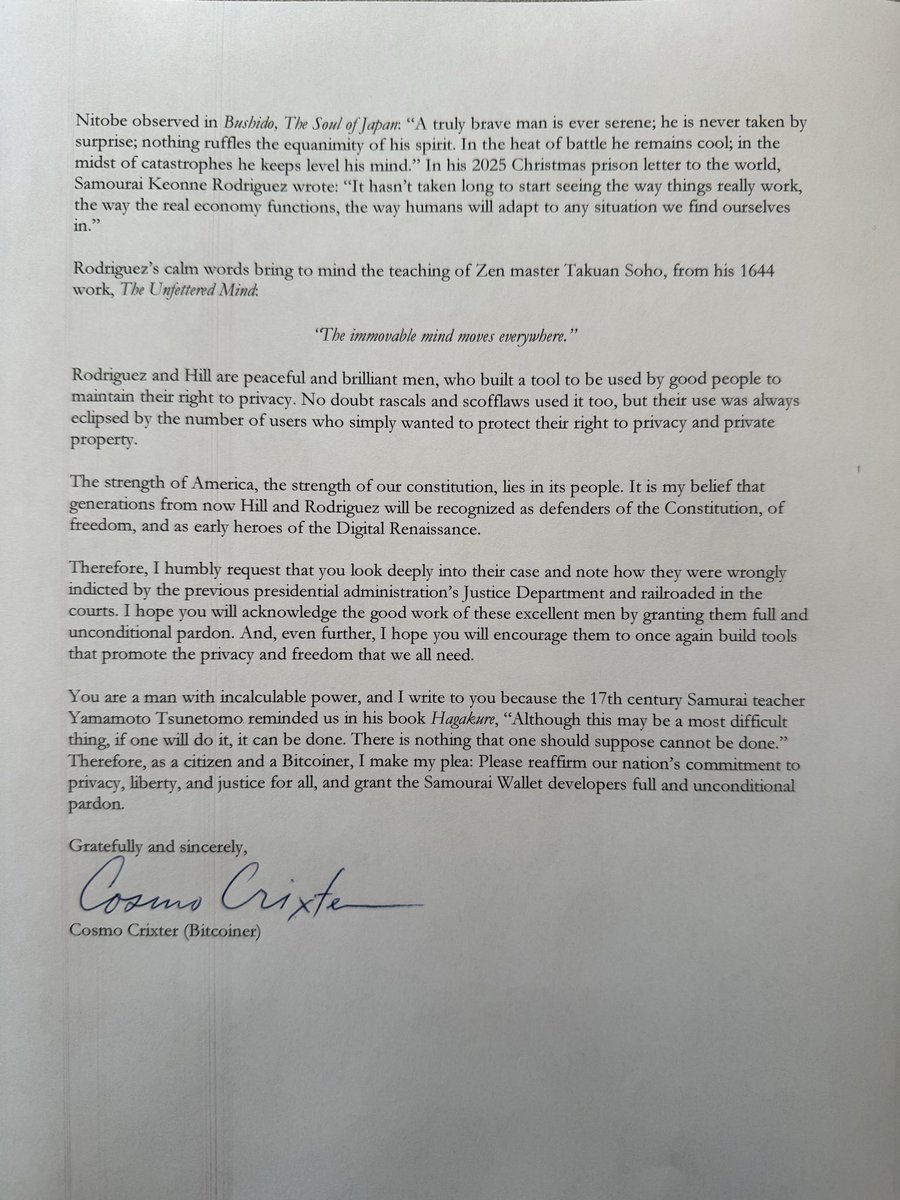
An Open Letter to President Trump (@realDonaldTrump) on Privacy, Freedom and freeing the Samourai Bitcoin Wallet Developers.
#freesamourai #pardonsamourai
7
16
62
4,381
May 23
“Study Bitcoin,” they said.
And I did.
“Run a node,” they said.
And I did.
“Verify your own transactions,” they said.
And I did.
“Buy paper IOU bitcoin in an ETF wrapper and trust the company and the government,” they said.
“Hell no,” I said… because I studied Bitcoin.
4
4
15
934
Cosmo Crixter 🟠 retweeted
May 21
« Un pour tous, tous pour un. »
— Marguerite Duras, sur la poésie des nodes Bitcoin.
1
2
143

Cosmo Crixter 🟠 retweeted

May 21
The polls are open 24 hours a day ...
A vote for #fiat is a vote to continue to make #war affordable.
A vote for #bitcoin is a vote to make war unaffordable.
Vote your conscience!
🔗: bitcoingus.com/#post-696E7D

1
4
60
Cosmo Crixter 🟠 retweeted

May 19
The Prime Trust estate is attempting to claw back an existential amount of money from multiple Bitcoin exchanges who built on them. You should be sure to self custody your coins, or at a minimum keep them with a custodian who built their own custody and has proof of reserves.
22
34
443
38,574
Cosmo Crixter 🟠 retweeted

May 18
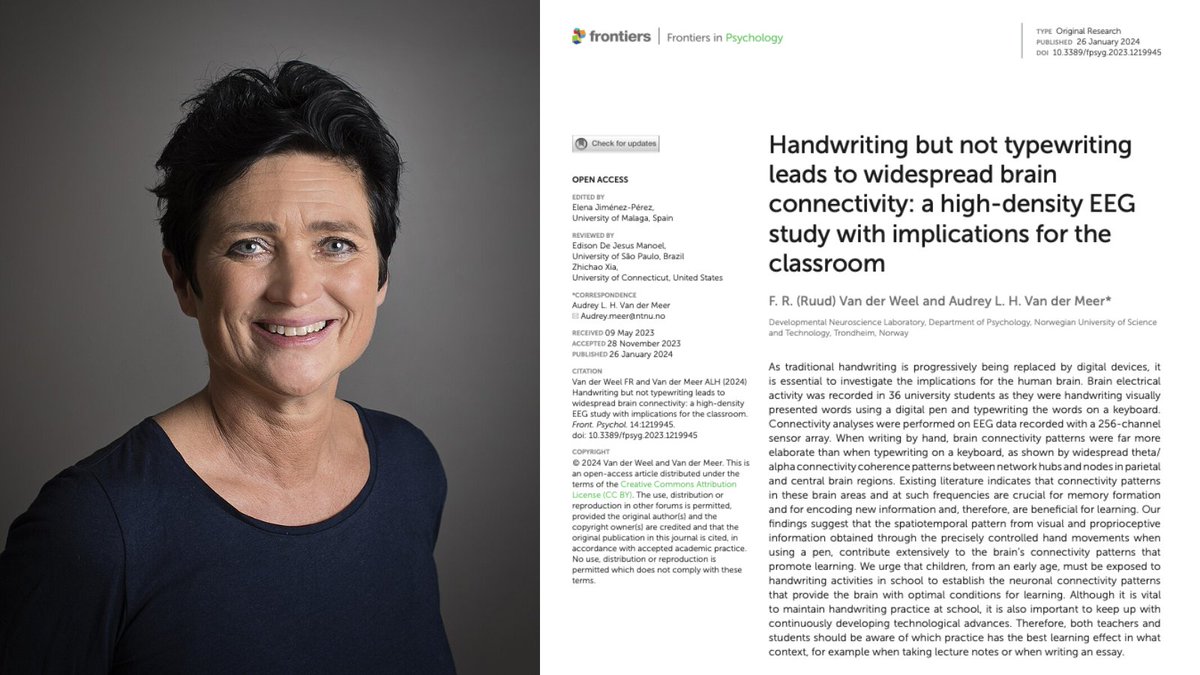
A Norwegian neuroscientist spent 20 years proving that the act of writing by hand changes the human brain in ways typing physically cannot, and almost nobody outside her field has read the paper.
Her name is Audrey van der Meer.
She runs a brain research lab in Trondheim, and the paper that closed the argument was published in 2024 in a journal called Frontiers in Psychology. The finding is brutal enough that it should have changed every classroom on Earth.
The experiment was simple. She recruited 36 university students and put each one in a cap with 256 sensors pressed against their scalp to record brain activity. Words flashed on a screen one at a time.
Sometimes the students wrote the word by hand on a touchscreen using a digital pen, and sometimes they typed the same word on a keyboard. Every neural response was recorded for the full five seconds the word stayed on screen.
Then her team looked at the part of the data most researchers had ignored for years, which is how different parts of the brain were communicating with each other during the task.
When the students wrote by hand, the brain lit up everywhere at once.
The regions responsible for memory, sensory integration, and the encoding of new information were all firing together in a coordinated pattern that spread across the entire cortex. The whole network was awake and connected.
When the same students typed the same word, that pattern collapsed almost completely.
Most of the brain went quiet, and the connections between regions that had been alive seconds earlier were nowhere to be found on the EEG.
Same word, same brain, same person, and two completely different neurological events.
The reason turned out to be something nobody had really paid attention to before her work. Writing by hand is not one motion but a sequence of thousands of tiny micro-movements coordinated with your eyes in real time, where each letter is a different shape that requires the brain to solve a slightly different spatial problem.
Your fingers, wrist, vision, and the parts of your brain that track position in space are all working together to produce one letter, then the next, then the next.
Typing throws all of that away. Every key on a keyboard requires the exact same finger motion regardless of which letter you are pressing, which means the brain has almost nothing to integrate and almost no problem to solve.
Van der Meer said it plainly in her interviews.
Pressing the same key with the same finger over and over does not stimulate the brain in any meaningful way, and she pointed out something that should scare every parent who handed their kid an iPad.
Children who learn to read and write on tablets often cannot tell letters like b and d apart, because they have never physically felt with their bodies what it takes to actually produce those letters on a page.
A decade before her, two researchers at Princeton ran the same fight using a completely different method and ended up at the same answer. Pam Mueller and Daniel Oppenheimer tested 327 students across three experiments, where half took notes on laptops with the internet disabled and half took notes by hand, before testing everyone on what they actually understood from the lectures they had watched.
The handwriting group won by a wide margin on every question that required real understanding rather than surface recall.
The reason was hiding in the transcripts of what the two groups had actually written down.
The laptop students typed almost word for word, capturing more total content but processing almost none of it as they went, while the handwriting students physically could not write fast enough to transcribe a lecture in real time, which forced them to listen carefully, decide what actually mattered, and put it in their own words on the page.
That single act of choosing what to keep was the learning itself, and the keyboard had quietly skipped the choosing and skipped the learning along with it.
Two studies. Two countries. Same answer.
Handwriting makes the brain work. Typing lets it coast.
Every note you have ever typed instead of written went into your brain through a thinner pipe. Every meeting, every book highlight, every idea you captured on your phone instead of on paper was processed at half depth.
You did not forget those things because your memory is bad. You forgot them because typing never woke the part of the brain that would have made them stick.
The fix is the thing your grandmother already knew.
Pick up a pen. Write the thing down. The slower road is the faster one.
2,472
44,654
120,868
10,360,696