
NFTs & other fuzzy things 🤩
Joined May 2019
- Tweets 31,545
- Following 6,231
- Followers 1,659
- Likes 24,143
3,072 Photos and videos











Study calculus.
not because exams exist.
because reality moves.
• derivatives → how things change
• integrals → how change accumulates
• limits → what happens at the edge
• gradients → where systems want to go
• differential equations → how nature evolves
motion, heat, fluids, control, optimization, robotics, ML.
all of it speaks calculus.
without it, you see outputs.
with it, you see dynamics.

53
621
3,788
121,796
Crypto Fuzzy ✊ retweeted

Jun 13
Team update: MCV is proud to welcome @md_codes as our Lead MML Architect.
MD will be working alongside @0xIamdev to help us create richer, better, more ambitious experiences in Otherside.
He brings 20 years of development experience, first explored crypto back in 2010 while studying in IT, and has believed in the potential of Otherside since mint.
Since launch, he’s been fully locked in on @ApeChainHUB and Otherside. Not just watching the space, but building in it, supporting other builders, and pushing things forward.
That’s exactly the kind of energy we want around MCV as we continue expanding what’s possible inside @OthersideMeta.
Welcome to the team MD.
Let’s build. 😼🚀

21
16
76
5,112

Linus Torvalds could have been richer than Elon Musk. He chose not to be.
In 2005 his team lost access to the tool they used to manage Linux code overnight. A developer had reverse-engineered it and the company behind it cut them off without warning.
Thousands of developers. No way to collaborate. No backup plan.
Torvalds did not panic. He sat down and built his own version control system from scratch.
In 10 days.
He called it Git. On day one it was already tracking its own source code. Within weeks it was managing the entire Linux project. By end of 2005 Git 1.0 was officially released.
Then he gave it away for free. Open source. No company. No patents. No monetization.
He handed the project off after a few months and went back to working on Linux like nothing happened.
Other people saw what he left on the table.
GitHub built on top of it. 100 million developers. Microsoft bought it in 2018 for $7.5 billion. GitLab went public in 2021 at nearly $12 billion. Today Git controls over 85% of the version control market.
Every app on your phone. Every website you visit. Built using Git.
Torvalds made $0 from any of it.
He built the most used developer tool in history because he was annoyed.
Then gave it away because he believed it should be free for everyone.
And he has never once said he regrets it.


18
81
587
43,826
Crypto Fuzzy ✊ retweeted

Jun 2
⚔️ M A S K U P ⚔️
🔥 Our Style is Timeless
🐉 Our Vibes are Unmatched
🧿 Our Vision is Groundbreaking
🪷 Our Possibilities are Endless
Join The Dojo. Be The Ninja!
2
10
22
532

May 31
Just collected "The 369 Journey Map" from "369" on @OpenPageHQ! Thx to @abpmoon and all the team guys 3⃣6⃣9⃣ 💪🔝
Check it out: openpage.fun/collectibles/14…
1
5
41
Crypto Fuzzy ✊ retweeted
May 27
⚔️🎮 THE DOJO MEANS ACTION 🎨⚔️
When you own your Ninja, it's MORE than just a RAD collectible, it's DYNAMIC:
🎮 FULLY rigged & integrated gaming avatar of your DK for @niftyisland & @OthersideMeta
🎨 VIBRANT 3D assets to animate & create with via @Blender
⚔️ M A S K U P ⚔️

6
15
34
463
Crypto Fuzzy ✊ retweeted

May 22
Roger Penrose, Nobel Prize-winning physicist and mathematician, explains why we should stop calling it AI and start calling it "artificial cleverness":
He believes the entire field is mislabelled, and the label itself is doing damage.
His objection is simple but cuts deep:
"The name is wrong. It's not artificial intelligence. It's not intelligence. Intelligence would involve consciousness. Well, if it's a machine, it's not conscious."
For Penrose, people have confused raw computing power with genuine understanding.
"People have lost the plot. They've lost it in the power of computing. The thing is that computers have got so powerful that they've lost the thread of what they're doing. But I think consciousness is something different. It's not computational."
He believes the term itself has hypnotized people into a category error:
"People are so hypnotized. The trouble is that AI is a bad term. It means artificial intelligence. Now intelligence in my view is conscious. That's what intelligence is about."
So he proposes a rename. Artificial Cleverness. AC instead of AI.
To illustrate the distinction, Penrose draws on his experience teaching mathematics:
"You have mathematics students. Some of them understand what they're doing. Some are just clever. They can repeat what they've learned. They know how to do it very cleverly. They can calculate very well, but they don't necessarily understand what they're doing."
That gap, between calculating well and actually understanding, is the gap Penrose sees between today's machines and genuine intelligence.
Cleverness can be manufactured. Consciousness, in his view, cannot.
So the question worth sitting with: when we call a system "intelligent," are we describing what it does, or quietly assuming something about what it is?
211
527
1,542
116,279
Crypto Fuzzy ✊ retweeted

May 22
🚨 A mathematician created an entire field of science in one paper. His work made computers, the internet, and every digital device possible. Then he spent years building machines that juggled and solved mazes... just because he was curious.
Claude Shannon invented information theory in 1948. Before him, "information" was a vague concept. After him, it was a precise, measurable quantity with laws as rigorous as physics.
But Shannon's real genius wasn't the math. It was how he thought about problems.
He simplified ruthlessly. He played constantly. He built physical models of abstract ideas. He found connections between problems nobody else saw were related.
I turned Shannon's problem-solving methods into 10 Claude prompts.
You describe any complex problem... and it applies his frameworks for simplification, creativity, and finding solutions others miss.
Here are all 10:

16
27
87
7,449

Crypto Fuzzy ✊ retweeted

May 21
Richard Feynman ganó el Nobel de Física y dijo algo que dejó huella:
"La mayoría de personas saben muchas cosas. Pero no saben pensar."
Feynman dio una clase magistral de 1 hora sobre física e imaginación.
Sus 12 lecciones de vida:
1. La imaginación le gana al conocimiento
76
1,668
6,851
621,656
Crypto Fuzzy ✊ retweeted

HBD, James Gosling! We owe much to you for creating Java in the early 1990s. Java helped popularize a powerful idea: programs shouldn’t have to be rewritten for every system they run on. Its approach made portability practical and laid the groundwork for the modern internet.
2
29
76
4,446
Crypto Fuzzy ✊ retweeted

May 19
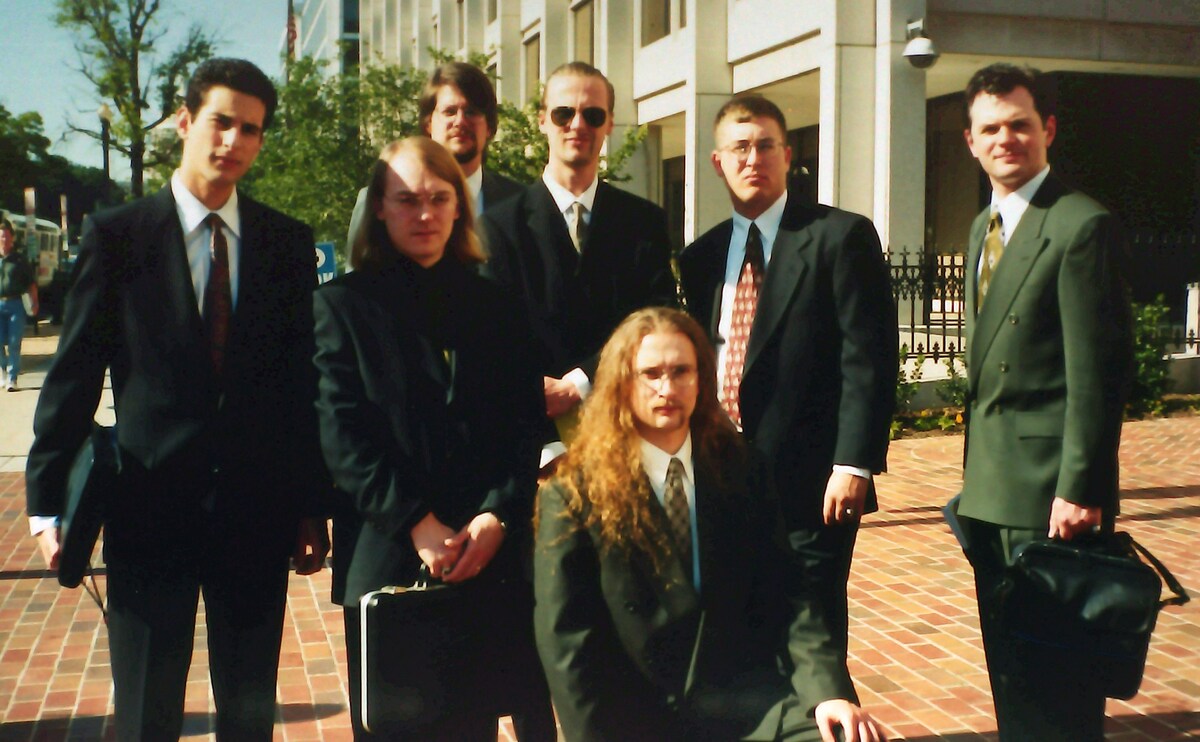
28 years ago today, 7 members of the hacking group @L0phtHeavyInd told the U.S. Senate they could "shut down the internet in 30 minutes."
50
143
838
52,074
Crypto Fuzzy ✊ retweeted

May 19
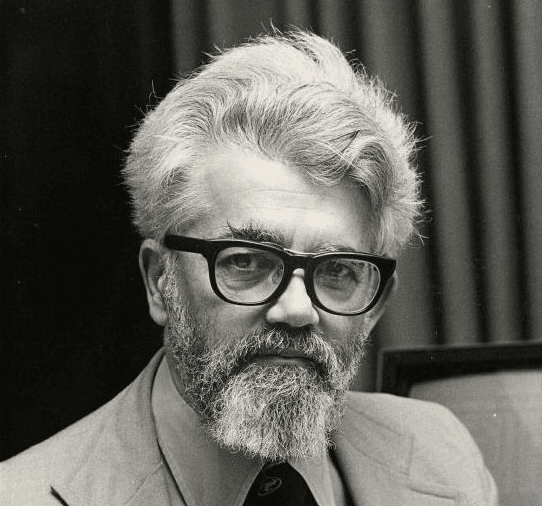
- Meet John McCarthy
- father of Artificial intelligence
- struggled financially during the Great Depression
- was insanely good at math from a young age
- taught himself advanced mathematics using college textbooks while still a kid
- In 1955, he introduced the term: "Artificial Intelligence”
- A phrase that later reshape the entire world.
- Invented LISP programming languages built specifically for AI research.
- Created time-sharing systems allowing multiple people to use the same computer simultaneously
- Spent years teaching at Stanford University Where he helped build one of the world’s top AI research labs.
Back then, people thought intelligent machines sounded impossible.
Today AI writes code, answers questions, creates videos, drives cars, and powers billion-dollar companies.
And it all traces back to one man’s vision.
Absolute Legend 🔥

4
13
65
2,760
Crypto Fuzzy ✊ retweeted

May 18
🚨Convincing Scam Alert: Not All Google Sites Are Legit🚨
Scammers are using Google Sites (an intuitive website builder from Google) to host scam pages under what appears to be a “legit” Google domain…
> Scammers spoof emails pretending to be Google
> Immediate panic because it looks like someone successfully added a foreign recovery contact email, which can feel like your account has been hacked
> The user does not look closely at the link and clicks it because it looks like a legit Google notice
> User lands on a phishing website and enter their login credentials into a fake sign-in page
> The scammer now has access to the email account
Anyone can use Google Sites to create a website and host it on the Google Sites domain. Scammers are exploiting this and using Google’s own tools to impersonate Google with fake recovery emails, “unauthorized login” alerts, fake subpoena requests, “attempted login” notices, and prompts to sign in to verify, among others…
The security rule of thumb is to NEVER click a link in an email. Instead, go to the source of truth, in this case directly in your email or Google account.
Stay Safe & Stay Vigilant
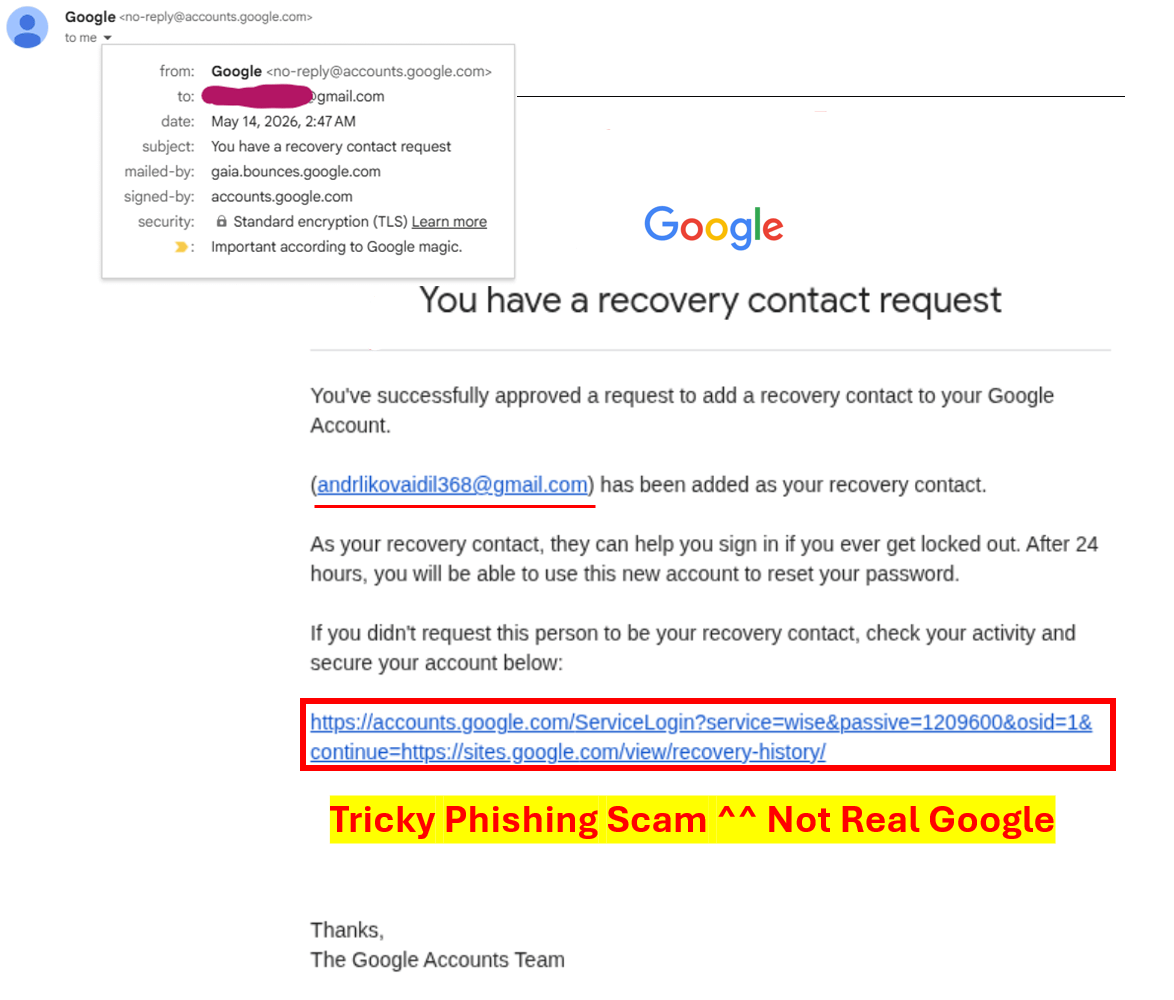
ALT Image from google search, inspired by post, https://x.com/lopp/status/2055966810600853681
17
32
117
19,238

Creator of C , Bjarne Stroustrup:
AI-generated code isn't ready — it generates more bugs, more bloat, more security holes, and is nearly impossible to validate
"senior developers are already retiring rather than deal with it"
The problem is that even a small prompt change can shift the entire codebase in unpredictable ways
618
1,947
10,566
1,743,763