
Learn to not get left behind when AI takes over
Joined August 2024
- Tweets 1,187
- Following 6
- Followers 15,092
- Likes 600
956 Photos and videos

Pinned Tweet

Jan 18
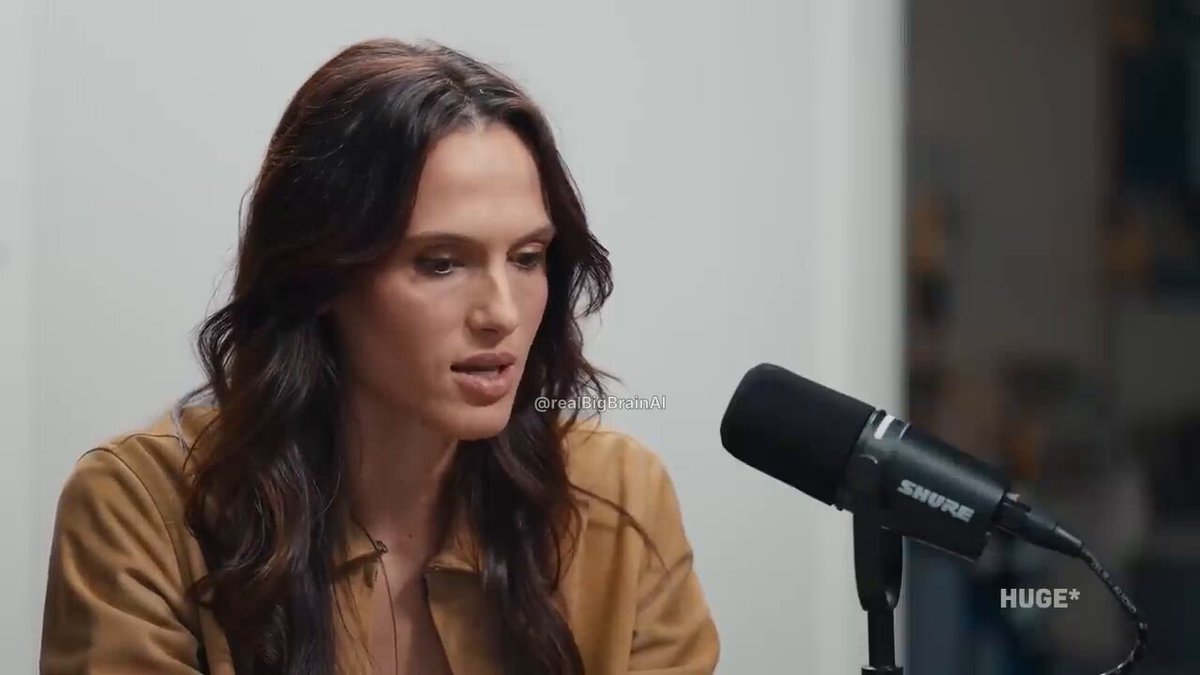
Jonathan Ross, Founder and CEO of AI chip company Groq, offers a contrarian view: AI won't destroy jobs, it will create a labour shortage.
He outlines three things that will happen because of AI:
First, massive deflationary pressure.
"This cup of coffee is going to cost less. Your housing is going to cost less. Everything is going to cost less."
He explains this will happen through robots farming coffee more efficiently and better supply chain management, meaning people will need less money.
Second, people will opt out of the economy.
"They're going to work fewer hours. They're going to work fewer days a week, and they're going to work fewer years. They're going to retire earlier because they're going to be able to support their lifestyle working less."
Third, entirely new jobs and industries will emerge.
Jonathan points to history as evidence:
"Think about 100 years ago. 98% of the workforce in the United States was in agriculture. When we were able to reduce that to 2%, we found things for those other 98% of the population to do."
He continues:
"The jobs that are going to exist 100 years from now, we can't even contemplate."
Software developers didn't exist a century ago. In another century, they won't exist either, "because everyone's going to be vibe coding."
The same applies to influencers, a career that would have been unthinkable 100 years ago but now earns people millions.
His conclusion: deflationary pressure, workforce opt-outs, and new industries we can't yet imagine will combine to create one outcome...
"We're not going to have enough people."
760
1,120
5,830
1,382,189
Big Brain AI retweeted

Jun 12

Jeff Bezos just bet $12 billion that you'll be able to support your whole family on a single paycheck again.
his reasoning: AI will let companies make more stuff with fewer people and less money.
and when something gets cheaper and easier to produce, and lots of companies can do it, they compete and the price drops.
it's why a flatscreen TV that cost $2,000 a decade ago is $300 today.
bezos thinks AI will do that to almost everything you buy.
in his words, it raises "the basket of goods people can afford."
your paycheck buys more without anyone handing you a raise.
the problem: look at which prices have actually dropped.
so far, AI has only made *digital* things cheap, like code and content.
but the stuff that really eats your paycheck is *physical*.
rent, cars, medicine. cheaper code doesn't lower your rent.
that's exactly what bezos just spent $12B on.
Prometheus, his new company, is building AI tools that help engineers design and manufacture physical products faster
things like cars, machines, and medicine.
the goal is to make building physical things as fast and cheap as writing software.
if it works, 1 income starts covering what used to take 2.
which is when his prediction kicks in:
"perhaps one of those earners will choose not to be in the job market, so they'll become a one-earner household." or "some people who are working overtime will stop working overtime, because they don't want to."
one paycheck covering a whole family again, like the 1950s.
5
15
1,429
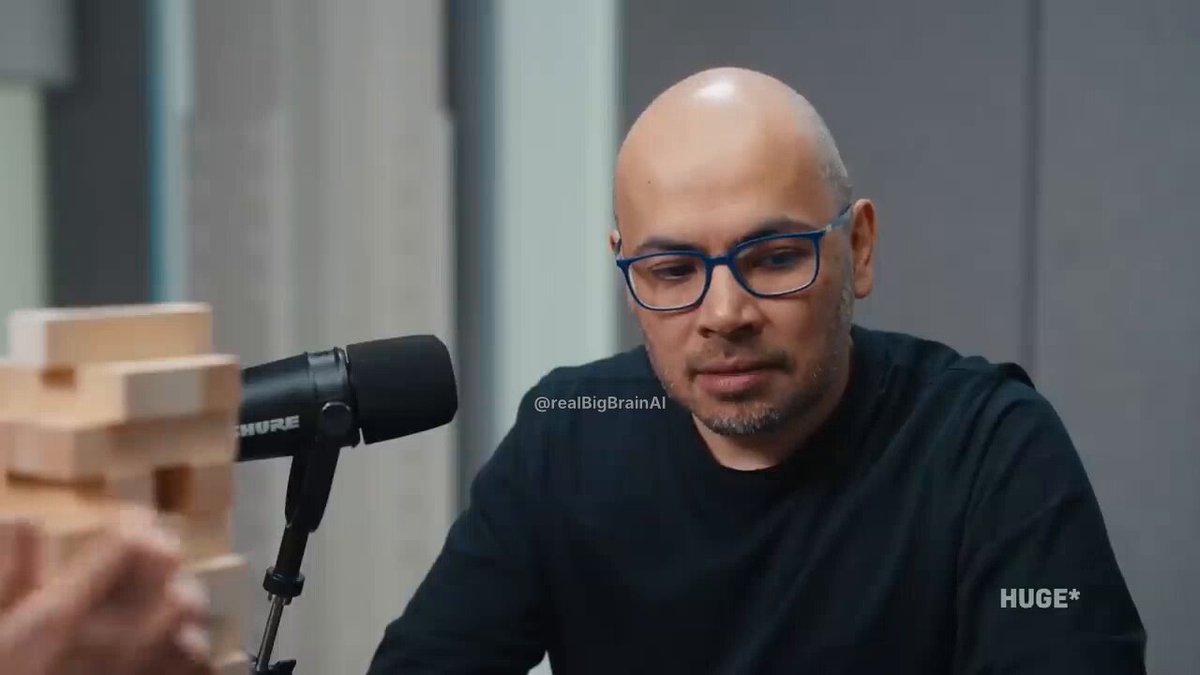
Google DeepMind CEO Demis Hassabis explains how governments could deliver incredible good for citizens by applying AI at scale:
Asked what he'd hope governments would use AI for if he could wave a magic wand, Hassabis points to the foundations of public life—health, education, and the basic machinery of administration.
"I think governments should be using AI," he says, adding that he wants "to support all sort of democratically elected governments."
His priorities are clear:
"The things I would love to see them use it for and what we're trying to build our systems to be good for is things like improving public health, education. I mean, all of these things need to be rethought."
For @demishassabis, the upside is transformative:
"The efficiency gains and the amount of good we can do with it, governments could do with it for their citizens could be incredible."
He notes that this isn't hypothetical. Some governments are already moving in this direction: "some countries are doing it like Singapore and UAE I think are leaning into these types of use cases."
Energy is another area he highlights, and here he draws on DeepMind's own experience:
"I would love to see it being used for things like energy like optimizing energy grids. We did that with our data centers and save 30% of the energy used for the cooling systems."
The throughline of his argument is scale:
"I think there's enormous societal gain from applying AI at scale to these types of areas."
But Hassabis doesn't end on pure optimism. He acknowledges the harder reality surrounding the technology:
"The geopolitics of the world is very complicated right now and these are dual-purpose technologies."
5
15
26
2,926
In 2008, SpaceX had $200K left and one launch from shutting down. Yesterday, Elon Musk became the world's first trillionaire as SpaceX raised $75B — the largest IPO in history.
1
18
71
4,289
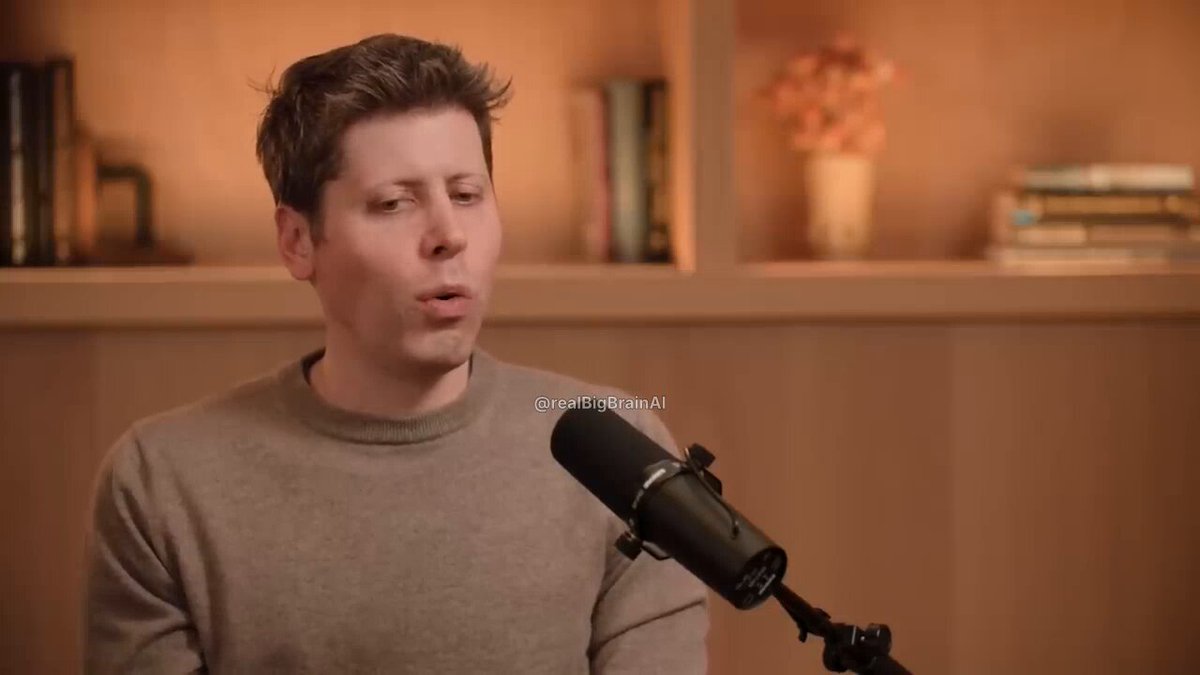
OpenAI CEO Sam Altman on why AI models are learning to slow down and "think" before they answer:
Altman explains that one of the earliest surprises with GPT models was how a simple instruction changed everything:
"One of the things that got people really excited in the early days of the GPT models was you could get better performance by telling the model, let's think step by step and it would then just output text that was thinking step by step and get a better answer."
He says reasoning models take that idea much further. By breaking a question into pieces, the model can spend more time on each part.
To explain how this works, Altman compares it to his own thought process:
"When you ask me a question, if it's a really easy question, I might just fire back like almost on reflex with the answer. But if it's a harder question, I might think in my head and have like my internal monologue go and say, 'Well, I could do this or that or maybe, you know, this will be clearer. I'm not sure about that.' And I could like backtrack and retrace my steps."
Only after that internal deliberation does he deliver a clean answer:
"When I finish thinking and I've, you know, been thinking in English, I can then make some bullet points and then kind of like output an answer to you in English."
@sama shares an observation from using the app himself—asking a deep research question and watching it keep working even after he's locked his screen.
He recalls another company's approach to measuring this:
"I heard somebody, another company... I think it was Anthropic, said, 'Hey, this model actually spent like 15 minutes or 30 minutes or whatever length of time to think about a thing,' which is a good metric, but it needs to actually give you the right answer."
This led to a realisation that went against his every instinct:
"All of my instincts have been the instant response is the thing that matters and users hate to wait. And for a lot of stuff, that's true. But for hard problems with a really good answer, people are quite willing to wait."
7
12
35
4,752
How do you teach an AI to be good? Amanda Askell, Anthropic's philosopher, models Claude's character on the conduct of an ideal person.
9
22
48
4,855
This solo developer built what once required teams, budgets, and years of training, and the most striking part is that it costs nothing.
May 31

Shipped a pretty big update to Image Extender, my open-source AI studio for 2D game art.
Sprite Studio now supports 5 body types:
🧍 Humanoid
🐺 Quadruped
🐍 Serpent / Fish
🦅 Flyer / Bird
🟢 Blob
Each one has its own pose-guide rig, animation set, and starter creatures. I also improved the alignment logic so run cycles stay more consistent instead of splitting into high and low rows.
Props Studio now exports cleaner filenames too, like lantern.png instead of prop_001.png.
Also added support for GPT Image 2 and refreshed the README. Just a heads-up: GPT Image 2 is noticeably slower by nature, so generations may take a bit longer.
The app still needs more polish, but it’s getting better with every update.
Try it → github.com/boona13/image-ext…
#gamedev #indiegame
1
11
14
1,731
Jun 12
Google DeepMind CEO Demis Hassabis on why young people should make themselves "superpowered" with AI tools:
When Hassabis gives talks at universities and schools, his core piece of advice is simple:
Lean all the way into where technology is heading.
"You've got to just go with the flow of the direction," he says. "I would immerse myself in every tool available and just become almost like superpowered with those tools and those capabilities."
His reasoning comes from what he sees inside the frontier labs themselves.
So much effort goes into simply building the next versions of these models that even the people making them can't keep up with everything those models could do.
"Even at the frontier labs, there's so much work that has to go into just making the next versions of these frontier models and then all the adjacent models. So for us, like Veo and Nano Banana and Gemini, even we can only explore a fraction of the applied things you could do with it, the applications you could make with it."
And that gap, @demishassabis explains, is widening:
"I think that gap's getting bigger and bigger, in terms of the overhang of the capabilities, all the cool stuff on the latest models. And the release schedules are getting faster and faster."
This is where Hassabis sees the opportunity.
The people positioned to win aren't necessarily the ones building the models, they're the ones who master the tools and point them at something new.
"The opportunity space is getting huge for people who are really expert at using those tools and then apply it to some new domain."
He puts it in stark terms:
"A kid these days could probably start a multi-billion dollar business in some ways, using these tools in some new way that no one had thought about."
15
36
139
9,304
Jun 12
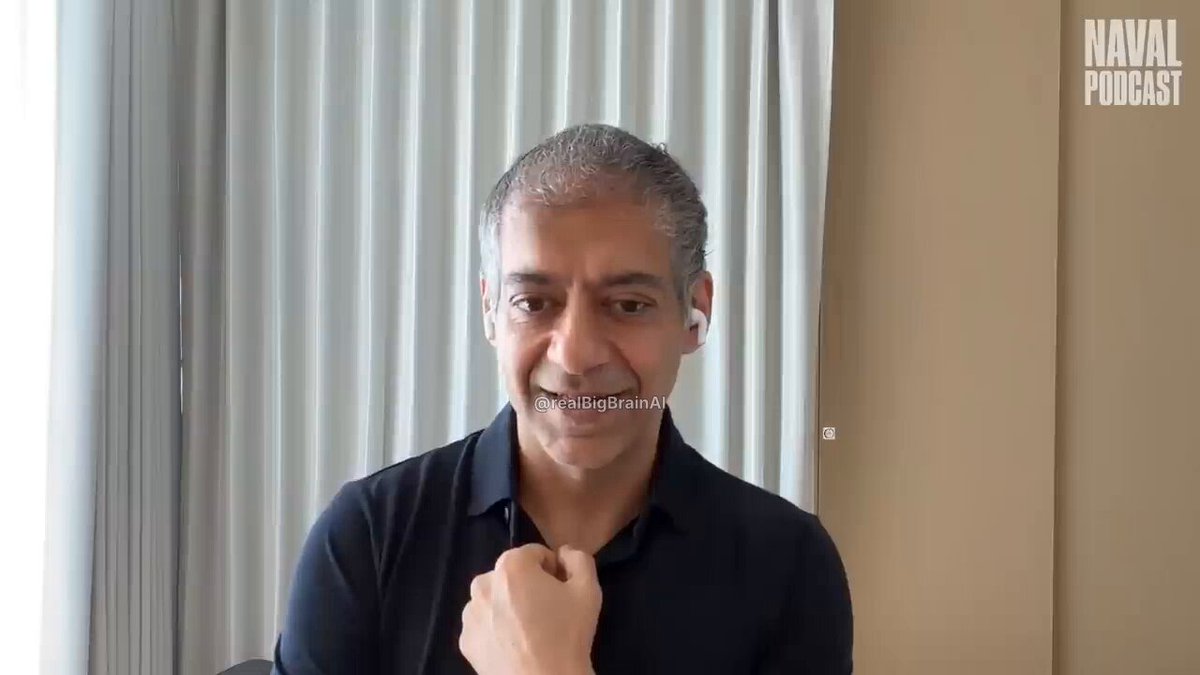
AngelList co-founder Naval Ravikant's advice for surviving the automation wave: stop doing repetitive work and start creating.
6
17
38
2,952
Jun 12
Google DeepMind CEO Demis Hassabis on the central question of his life: what can humans do that AI never will?
Asked about the limits of artificial intelligence, Hassabis doesn't hesitate to say this is the question that drives him: "Yes, it is."
His starting point is one of his heroes, Alan Turing.
He explains that Turing described theoretical constructs—Turing machines—that underpin all modern computers, machines "that are able to compute anything that's computable… anything that can be described as an algorithm."
The provocative leap comes when Hassabis turns that lens on biology. The AI systems his teams build are Turing machines, and he suspects the brain may be one too:
"A lot of neuroscientists including me think that maybe the brain… a good model for the brain is an approximate Turing machine."
He's careful to note this isn't settled. Some of his peers see it differently, including physicist Roger Penrose:
"Friends of mine like Roger Penrose… believe there might be some quantum effect in the brain."
But Hassabis points to where the evidence currently stands:
"So far neuroscience hasn't found any quantum effects in the brain… people have looked quite carefully and we haven't found any."
His conclusion from that absence is striking. If the brain runs on ordinary computation, then there may be no hard ceiling on what AI can eventually match:
"It looks like most of what's going on in the brain is kind of classical computation… so therefore it's not clear what the limit would be in terms of eventually what an AI system could do and could mimic."
For @demishassabis, building intelligence is a mirror held up to ourselves, not only a feat of engineering.
He describes the project as a kind of experiment that reveals what we are:
"I think we'll have almost like a control study comparison to the human mind. And then I think we'll see in this journey what are the differences and what's unique about the mind."
He stays genuinely open about what that comparison might expose. Some things, he suspects, may never transfer:
"There could be unique things and certainly unique connections between humans that will never be replicated by these AI systems."
But the capabilities we tend to treat as distinctly human, he believes, are within reach:
"A lot of things that we currently are not in reach, like long-term planning and reasoning and maybe some forms of creativity... I think eventually AI systems will be able to do."
30
34
164
44,277
Jun 12
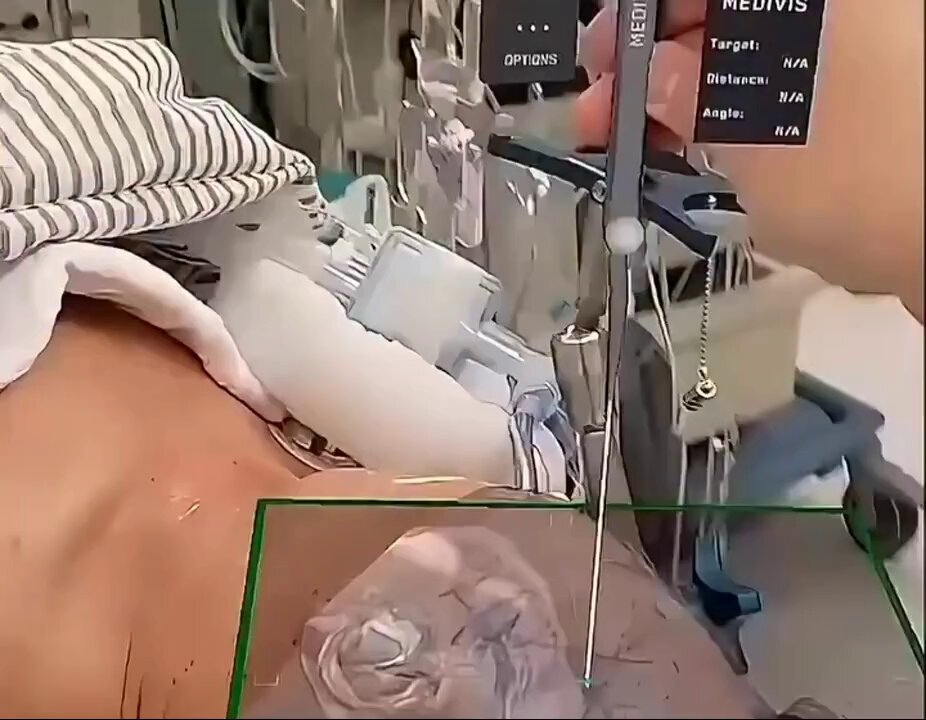
Medivis built a system that turns MRI and CT scans into holographic guides surgeons navigate with sub-millimeter accuracy:
2
33
145
15,143
Jun 12
Elon Musk personally recruited Andrej Karpathy from OpenAI, telling engineer Jim Keller he was "arguably the number two guy in the world in computer vision after Ilya Sutskever."
14
113
1,645
278,882
Jun 11
Sam Altman on what to tell a 25-year-old trying to figure out what to build their life around:
Asked what advice he'd give to someone in their mid-twenties today, Sam splits his answer into the obvious tactical layer and the deeper one most people miss.
He starts with the tactical: "Learn how to use AI tools."
Then he points out how quickly that advice itself has shifted:
"It's funny how quickly the world went from telling the average 20 year old to 25 year old, learn to program, to programming doesn't matter. Learn to use AI tools. I wonder what will be next. But of course there will be something next."
That's the catch. Whatever specific tool you learn today will get replaced. Which is why he doesn't stop there.
On the broader front, @sama argues the real edge comes from a set of skills people usually treat as innate personality traits:
"I believe that skills like resilience, adaptability, creativity, figuring out what other people want — I think these are all surprisingly learnable. And it's not as easy as, say, like go practice using ChatGPT, but it is doable. And those are the kind of skills that I think will pay off a lot in the next couple of decades."
The framing is worth sitting with:
Most people assume resilience and creativity are things you either have or you don't. Sam is saying the opposite: they're trainable, they just don't come with a tutorial. There's no ChatGPT prompt for getting better at reading what other people actually need.
Asked whether the same advice applies to a 45-year-old, his answer is short — learn to use it in your role now.
And when pressed on whether OpenAI will employ more or fewer people once AGI arrives, Sam doesn't hesitate: "More."
Then he expands:
"There will be more people, but each of them will do vastly more than what one person did in the pre-AGI times."
3
6
19
2,670