
Builder & creator 👷 Created IP. Sold a company 💰 Father of 2 turned law student ⚖️ Tech, art & storytelling 📖 Onto the next chapter 👉 Follow along
Joined May 2019
- Tweets 18,418
- Following 4,276
- Followers 6,448
- Likes 68,233
2,685 Photos and videos

















Jun 13
Every frontier AI model has researchers with access
Would not be surprised if we will see more "leaks" of these models in the future after todays US stunt
8
10
241
Jun 13
Waarom is Wilders de enige Nederlandse politicus die zich hier over uitspreekt?
Dit had jaren geleden al een agendapunt moeten zijn
Jun 13

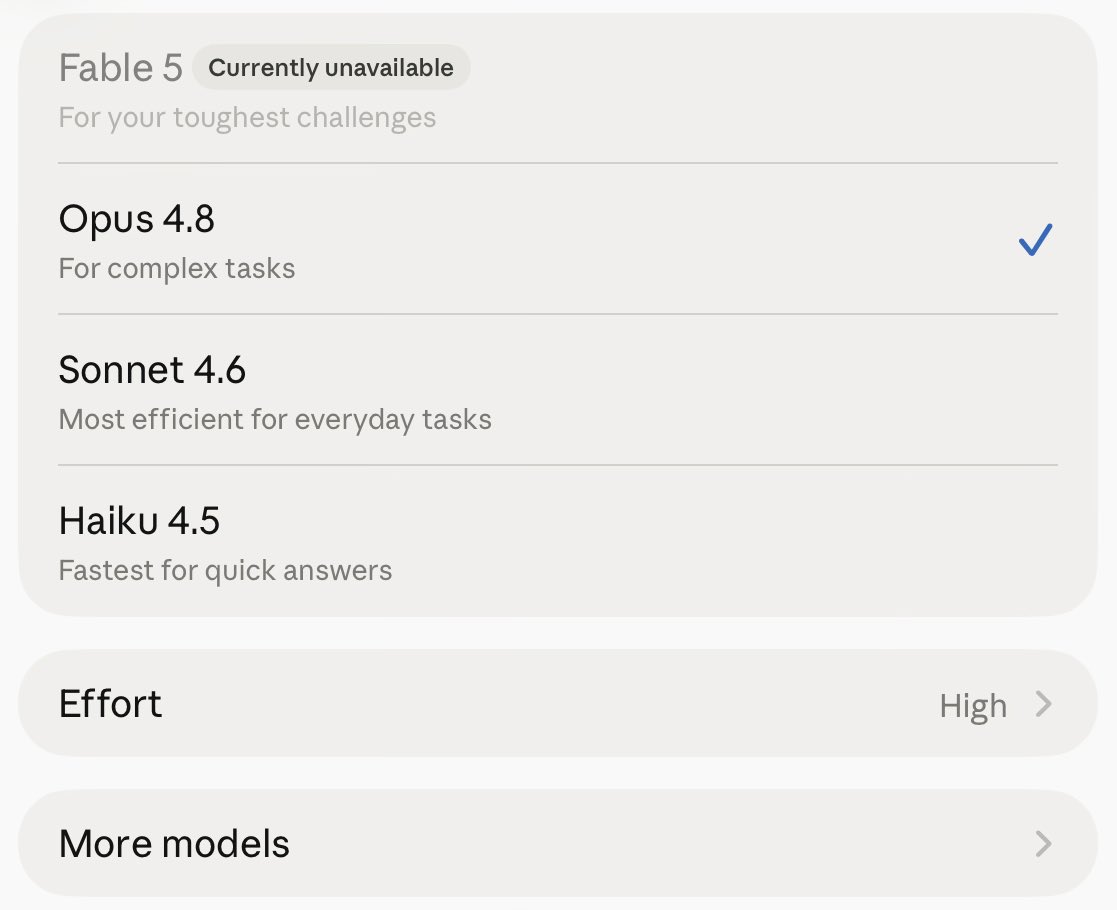
I want my #Anthropic Claude Fable 5 back!
We must excellerate building our own.
AI is more and more national sovereignty.
5
10
340
Jun 13
Here we go
Restricting access to frontier models based on nationality and geography
This will probably just be the start of the AI inequality
We really need to step it up in the EU if we want to stay relevant @NXT4EU
Jun 13

JUST IN: 🇺🇸 US government orders Anthropic to suspend foreign access to Mythos Fable 5 AI model, citing national security concerns.
Anthropic has disabled access for all users worldwide.


2
3
721
Jun 3
Everyone always complaining about being priced out of BTC and wishing they could’ve had a lower entry
And now the timeline is filled with dread
14
14
172
May 29
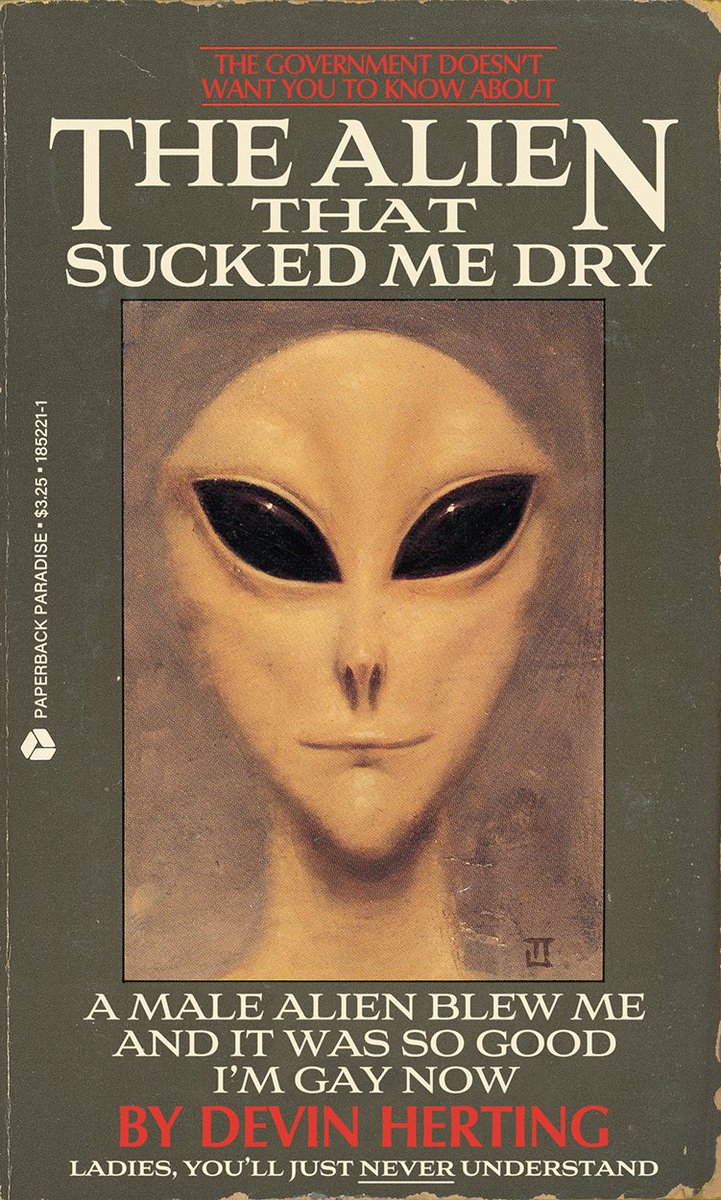
I saw this
So you have to see it too
😹💀


5
11
340
May 23
Not bad for a second fight Verhoeven
👏
May 23

Oleksandr Usyk stops Rico Verhoeven
One of the worst stoppages ever?
With the HW title on the line
What the hell man #UsykRico x.com/fightclipz34/status/20…
6
9
452
May 20
For some reason
The Netherlands seems to very quickly be turning into a dystopia
where private property and freedom are quickly eroding
May 19

I think not many people is aware of the insanity of exit taxes in Europe. You think you are free? Of course not. Let me share more about NL exit tax.
The Netherlands has an “exit tax” for entrepreneurs.
But calling it a tax is misleading.
It’s closer to a financial exit visa.
Here’s how it works in practice:
Imagine you spent 5 years building a company in Amsterdam.
You took the risk.
You worked nights and weekends.
You paid corporate taxes, payroll taxes, VAT, income tax.
Eventually your consulting/AI firm reaches:
€5M annual revenue
€1.2M profit
€3M cash in the bank
You own the shares through a Dutch holding BV.
Now imagine you decide to leave the country.
Not sell the company.
Not IPO.
Not cash out.
Just leave.
Maybe you want:
lower taxes
better weather
geopolitical diversification
to raise your children elsewhere
or simply freedom of movement
The moment you emigrate, the Dutch state pretends you SOLD your company.
Even though you didn’t.
This is called the “conserverende aanslag.”
A fictional sale.
On fictional gains.
Generating a very real tax assessment.
And the numbers get absurd very quickly.
Example:
Your company:
generates €1M yearly cash flow
has €3M sitting in the bank
gets valued at ~€6M by the tax authority
The Netherlands then calculates:
“Okay, your shares increased by €6M.
You owe Box 2 tax on that.”
Current rates:
24.5%
then 31%
Result?
You can receive a tax assessment approaching €2 MILLION…
…despite not selling a single share.
Read that again carefully.
No liquidity event.
No acquisition.
No money in your pocket.
You simply changed residency.
Defenders of the system immediately say:
“Yes, but payment is deferred.”
This is where things become psychologically fascinating.
Because the state effectively says:
“We won’t collect immediately.
But we now have a permanent claim attached to your company.”
A kind of invisible mortgage on your future.
And it can remain there indefinitely.
Then come the triggers.
If later:
you distribute dividends
you restructure
you sell shares
you liquidate
you violate compliance conditions
…the Dutch tax authority can activate collection.
Meaning:
even after you leave,
the Dutch state still shadows the future of your company.
Now let’s talk about the truly dystopian part:
GOODWILL.
For founder-led consulting firms, the value often IS the founder.
The relationships.
The expertise.
The reputation.
The intellectual network.
The ability to close clients.
In many cases, if the founder disappears, much of the business disappears too.
Yet the tax authority can still argue:
“No, no. The company itself has transferable enterprise value.”
So now you enter a surreal negotiation where bureaucrats attempt to price:
your future reputation
your future relationships
your future earning power
your future client trust
The state literally tries to quantify your human capital before allowing you to leave.
And this is not fringe theory.
Dutch valuation teams use:
DCF models
EBITDA multiples
goodwill assumptions
future cash flow projections
…to estimate what your company might be worth.
Not what you sold it for.
What they THINK it is worth.
Imagine explaining this to an American entrepreneur:
“You can leave the country, but first we calculate a hypothetical sale of your startup and issue a multimillion-euro tax claim based on unrealized gains.”
They would think you are describing the Soviet Union.
And before people scream:
“but all countries tax!”
No.
This is different.
This is taxation attached to MOVEMENT.
That distinction matters.
A normal tax says:
“You earned money.”
An exit tax says:
“You are attempting to leave.”
That changes the philosophical nature of the relationship between citizen and state.
At some point it stops resembling taxation and starts resembling permissioned mobility.
Especially because the system creates behavioral lock-in.
Founders begin asking:
Should I leave before growth accelerates?
Should I suppress valuation?
Should I avoid accumulating cash?
Should I avoid long-term contracts?
Should I move BEFORE success?
Think about how insane that is.
The tax system starts influencing:
where founders live
how companies are structured
when growth is pursued
whether capital stays in the country
And Europe wonders why founders eventually relocate to:
Dubai
Singapore
Switzerland
Miami
Cyprus
The real irony?
Politicians claim they want:
innovation
entrepreneurship
AI leadership
startup ecosystems
But the moment a founder becomes globally mobile and valuable, the state says:
“Not so fast.”
Build in Europe.
Scale globally.
But if you leave, we’ll first calculate your hypothetical future and attach a tax claim to it.
That is not a free market. We are not free.
6
17
916
May 16
Country loses Songfestival to Bulgaria
and prime minister is forced to step down
Bangaranga
May 16

NEW: Keir Starmer says that he intends to step down as Prime Minister of the UK.

7
11
552
May 15
“Detroid speed rap”
Clankers be clanking

7
11
325
May 15
One day
I’ll be this good at rage baiting
another banger 😹
May 15

My wife slept at her boyfriend's place and came back with a black eye
"What happened?!" I asked
"Omar hit me. I want to call the police" she said crying
I hugged her
"No need to bother police officers" I said calmly
She looked at me, shaking
"Omar is North African. That’s just how their men are, passionate and dominant" I said
"But he really hurt me" she said
"Sweetheart, you chose a real man. You told me you loved how rough he gets and how he takes control"
"Yes, but..."
"You can’t impose your Western feminist standards on him. Don’t take it personally, baby"
I kissed her forehead, she still smelled like his sweat
Of course violence is bad, but we can’t judge other cultures by our Western standards
4
6
228
May 13
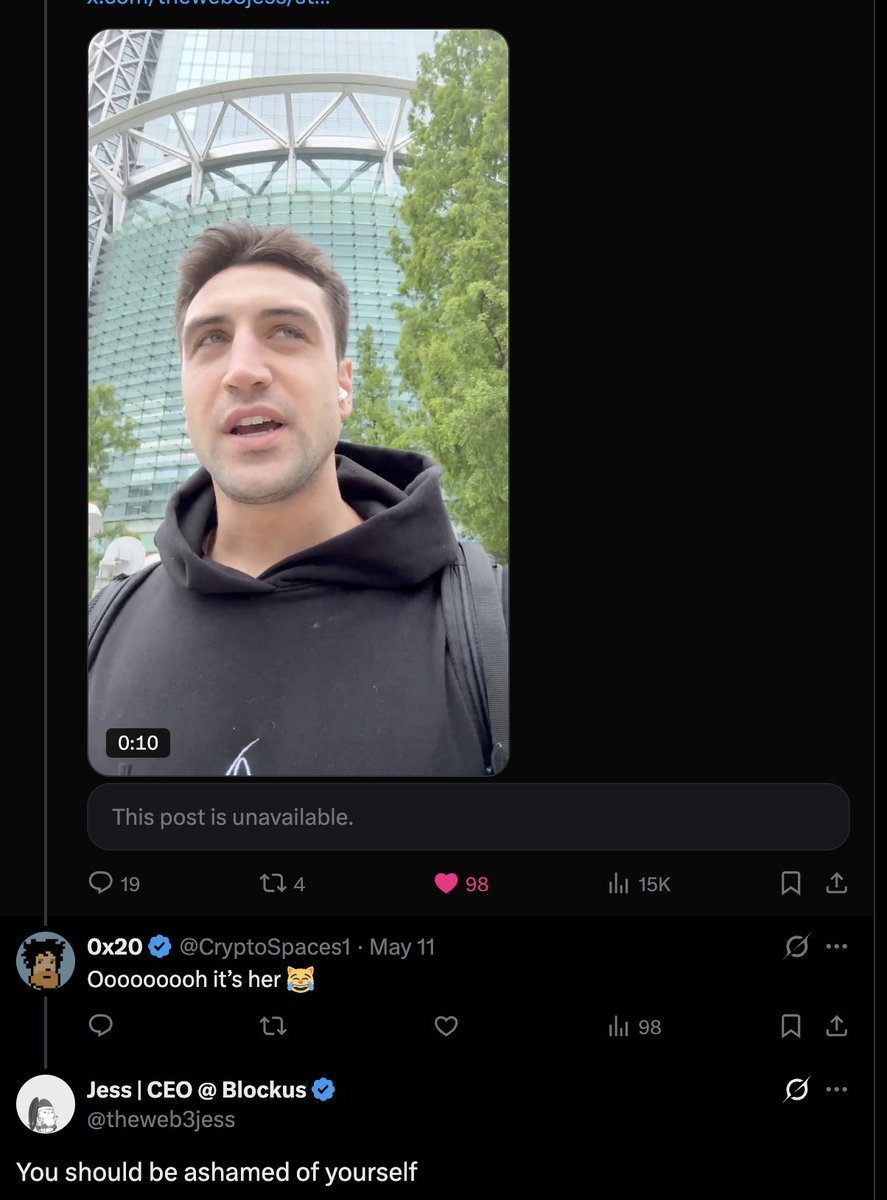
I think I understand
why she is the CEO of Blockus
She just block us
Just because I said "oooh it's her"
@ibuprod
6
8
234
May 11
Of course…
For some reason the hospital staff didn’t handle the lab material correctly
We’re seriously living in a simulation

Twaalf medewerkers van het Nijmeegse Radboudumc hebben een kans dat ze besmet zijn geraakt met het hantavirus. Het ziekenhuis is niet volgens de voorschriften omgegaan met het bloed en de urine van de patiënt van het cruiseschip Hondius, die sinds donderdag in Nijmegen is opgenomen. ad.nl/binnenland/live-hantav…
6
12
592
May 10
Wow this was a really fun short
Well done Mx Shell, whoever you are!

3
11
1,551
May 10
Been longer in crypto than I have been on X 😹
Thanks X for creating these cringe posts
Do you remember when you joined X? #MyXAnniversary

2
8
257
May 9
This is my kind of yacht club
Less strip joint
More class

“The more money you make
The less blue haired people you meet” 🇮🇹💙

4
10
443
May 8
This is really impressive and cool to see
Also something I didn't know until I was like 30 or something, is that women are actually physiologically far better equipped for endurance sports

🚨HISTORY MADE!
Rachel Entrekin just won the Cocodona 250 outright — first woman ever to take the OVERALL title!
The 250-mile race from Phoenix to Flagstaff was an absolute beast, and she crushed it in 56:09:48, smashing the previous course record by over 2 hours.
13 minute mile pace for 56 hours!
She only slept 3 times the entire race (one 5-min nap two 7-min naps) and still dropped the entire elite men's field. Absolute legend!
2
3
267
May 8
Pandemic Anime?
Yes please!
Would make the next lock down at least somewhat bearable

3
3
199
May 8
Mogen we al aannemen dat de KLM stewardess besmet is met het Hantavirus?
Dat zou nu toch wel bekend moeten zijn
Men zou denken dat wanneer het geen hanta zou zijn, dat dat van de daken geschreeuwd zou worden
May 7

Wat deze hele hantavirus-toestand wel goed aantoont is hoe buitenlandse media meer informatie verschaffen dan NL media. Deze hele toestand komt doordat Leo en Mirjam Schilperoord vogels gingen observeren op een vuilnisbelt vol ratten in Zuid-Argentinië. dailymail.com/news/article-1…
2
3
572
May 7
Meanwhile
This infected person was at the airport and on board of this flight
Potentially infecting everyone she got in contact with
Maybe used the bathroom on board of the plane before she was sent off?
Then that plane landed in Amsterdam Schiphol
and everyone on that plane went on their way like nothing happened…
Een overleden Nederlandse hantapatiënt zat op 25 april in een KLM-vliegtuig. Voordat het toestel vertrok, besloot de crew de passagier niet mee te nemen en in Johannesburg achter te laten. Even later is de persoon overleden in de Zuid-Afrikaanse stad.
ad.nl/buitenland/overleden-n…
7
7
939