
Joined February 2015
- Tweets 7,587
- Following 982
- Followers 17,106
- Likes 29,697
675 Photos and videos










Jan 21
Rumblings of AI szn 2.0 are starting to emerge.
Two coins with the highest potential:
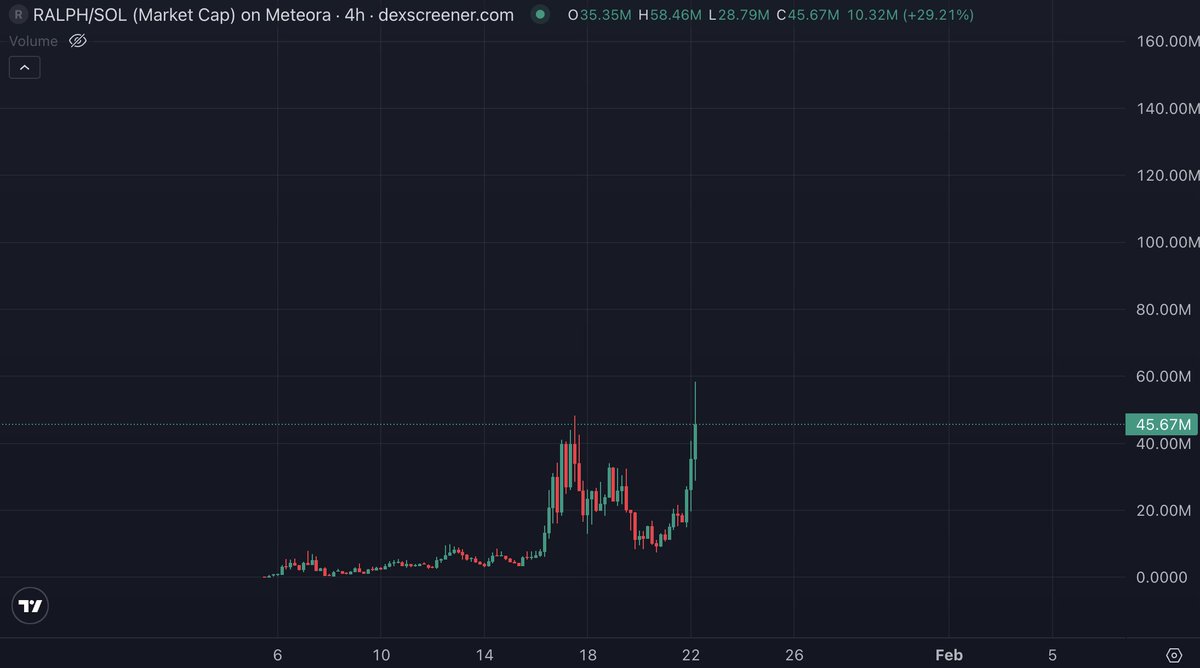
$RALPH
A looping agent that repeatedly runs the model until a task is successfully completed. It feeds Claude’s full output, including errors and test results back into a fresh prompt each iteration. Using a brute force loop continues until a defined success condition is met.
Unlike complex orchestrators, Ralph is intentionally simple, it uses bash scripts or wrappers to relaunch Claude with updated context each time. This avoids prompt degradation and token overflow by resetting the context window per loop. It excels at automating error prone tasks like debugging, test driven development and recursive code refinement, especially when the goal is clear and human oversight is minimal.
Ralph’s like a quant that loops through iterations until it reaches a specific outcome. It excels at tasks where the goal is deterministic and testable, such as building trading strategies, fixing bugs or refining outputs until a pass condition is met. The strength lies in persistence, not planning. Meaning it’s better suited to more experienced developers as you’ll need to have your requirements doc very well thought out.
The roadmap is building loom which is essentially a swarm style framework that just multiples it's loops. @GeoffreyHuntley started building pieces of this future stack (custom source control, sandboxed execution environments, telemetry feedback loops etc) to enable AI weaver agents to not only write code in loops but also coordinate, deploy and self correct on a larger scale.
This would be the end goal and northern star for agents to reach as it combines persistence with orchestration.
This represents the north star for autonomous agents: combining Ralph’s brute force persistence with multi agent orchestration, unlocking full cycle AI development with minimal human oversight.
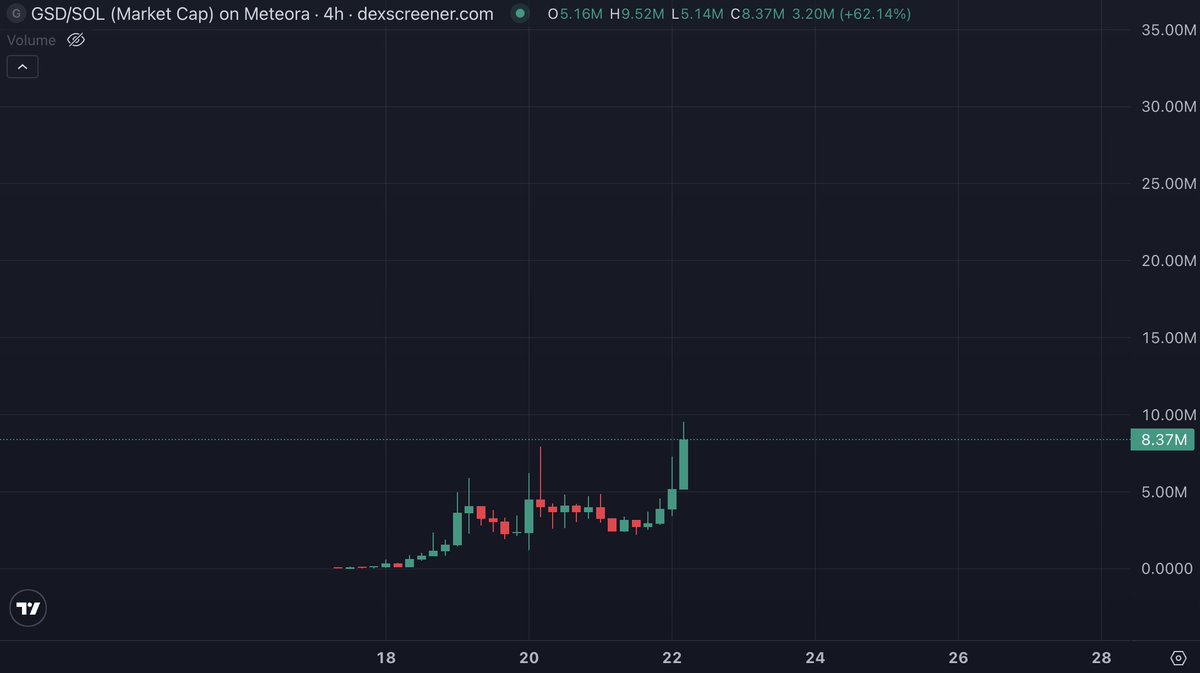
$GSD
What makes GSD (Get Shit Done) special is its structured validation loop, no plan is executed until a verifier agent confirms it's complete and sound. If a task fails to meet the goal, GSD automatically invokes debugger and planner agents to diagnose and fix the issue, repeating this loop until it passes. This persistence mirrors the Ralph Wiggum “loop until success” model, but with a more disciplined architecture.
Unlike Ralph, which relies on long prompt chains that can run into context window limits, GSD isolates each task into a fresh Claude context, reducing token bloat and avoiding prompt degradation.
While Gas Town uses complex multi agent orchestration, based off a Kubernetes approach, GSD finds a middle ground, coordinating small, validated agent loops that build toward large outcomes without overwhelming infrastructure. It prioritizes clean context reuse, structured planning and token efficient execution while maintaining user control at each phase.
Which is why I like GSD and @official_taches so much. As it works with you in the planning stage to carefully set your requirements and ends up providing a much more accurate result. I really like Ralph as a concept and it opens peoples minds to the possibility of agents which can run fully autonomously.
However, if I’m being specific with my code base and requirements doc, GSD acts more like a senior engineer. Asking all the right questions, making sure there’s logic and cohesion in the code and what databases you’re connected to etc. Throughout the build, it’ll come back to check in, ensuring the current outputs are correct and the system is being built as intended. If I’m a developer or trying to build something with unique customization, this is a massive positive for me.
Both tools are great and are a breath of fresh air. This is the most interesting development we’ve had in a long time. Many are missing the forest for the trees and I’d be paying much more attention if you’re tapped out.
The fact we've got multiple viral dev frameworks to convert over to crypto is really good signs that innovation will be rewarded and the meta continued with the right aptitude towards building.
Covered both of these tokens at 2 mil mcap in my telegram. However I think they go much higher and we’re on the cusp of a large move.
57
16
140
24,265
5 Nov 2025
Why does Robotics need a token?
The short (traders) answer: speculation.
Take ai16z for example. Never even had token utility and it became the most used product because of the depth and plugins of its Eliza toolkit.
I believe token utility isn't as important as building infra which is actually usable by outside devs. Eliza was the most used github repo at one point and had devs from all industries coming to test it. This should be the goal for anyone building in both AI and robotics.
Speculation drove mania -> volatility due to the belief of future utility and demonstrated how impactful it is as a fundamental. Profitable traders understand the asymmetric value of this.
We know token utility is beneficial, especially in the right circumstances though.
Virtuals took a more crypto native flywheel approach to the launchpad framework, attaching all forms of commerce and distribution to their token.
Virtuals and ai16z topped at $3 bil and $2.6 bil mcaps respectively. One housed the strongest flywheel we’ve seen since DeFi szn and the other a global framework which proved far more successful regarding developer usage and majority of teams building on Virtuals tooling eventually had to move over because they were being restricted so much.
It is interesting watching $VIRTUAL lead the way for robotics atm, taking a standardized approach to incentivising data provisioning funding new start ups.
They introduced Unicorn, which is their new launchpad model. Replacing Virtuals older points system with direct token stakes and rewards. They’ve gone back to a more traditional launchpad route where each new Unicorn startup (a robotics project on Virtuals) starts at a low valuation and acts more like a bonding curve. The founding team’s funding is vested and only unlocked as the project grows, forcing builders to deliver results.
They also launched SeeSaw, crowdsourcing rich spatial datasets (humans recording first person videos of tasks so robots can learn from real world experiences. Packaged as a fun mobile app that crowdsources human interaction videos to train AI and robot agents. This “middle way” focuses on cloud data infrastructure and funding.
There’s no question that high quality real world data is crucial for embodied AI. Especially in the foundational phase, robotics benefits from large volumes of varied environmental input. Data like this is the fuel early models need to learn and generalize. Virtual's approach helps bootstrap this layer effectively and has its place in setting the floor for capabilities.
But over time, this value plateaus. As more data protocols emerge, the volume of available real world data increases, while the number of end users who can meaningfully absorb and use this data doesn’t scale linearly. Which means the returns become more concentrated, mostly benefiting teams building large foundational models. These models will still matter and be profitable, but the edge starts to shift elsewhere.
What starts to matter more is giving users the ability to collect and use their own custom data.
Custom data pipelines are where I see more value accruing, tools that allow a store owner, a warehouse team, or a household to quickly gather and fine tune robots to their specific environments.
That kind of data won’t be bundled in any dataset marketplace. As we’ve seen with LLM’s, most users don’t care about the training rituals behind GPT. They care about how to feed it their own docs. The long term opportunity is in making that collection and integration loop simple.
While Virtuals is going for data (fuel for AI models) and a marketplace to fund and share in robot ventures, I believe the biggest impact will come from those who remove the most abstractions from complexities of robotics development.
Hardware, software and data need a unified toolkit which gives individual devs a chance to experiment without needing to build a custom framework, which is what sparked AI szn this time last year.
Data is important and real world data is significantly more important for robotics than AI, especially in the early innings to set the foundations. But I don’t believe this is where the biggest value layer occurs in the long term.
What we need is better abstraction of tooling, giving developers faster iteration loops going from A -> B. Data is only one of the inputs in a very large hardware and software stack.
Robotics is far too deep of a sector to throw a crypto incentive layer over and needs to be looked at from a holistic view.
Data -> Perception -> Planning & Reasoning -> Control & Actuation -> Feedback Integration.
Due to this depth, there won’t be any single crypto company which will build a monolithic stack covering each of these areas (full stack humanoid for example), if they were they would have raised 8/9 figs in web2 and wouldn’t bother with crypto.
The most impactful token utility will come from supporting tooling that gives devs incentives to grow out an open source library of new plugins/attachments with flexibility. Something which rewards devs for contributing mapping software for specific motors, sensors, cameras etc, alongside leading foundational models that then plugs in to any robot.
On top of this, whoever builds the most successful task marketplace will be akin to unlocking custom games on Roblox or Fortnite.
Humanoids are still like toddlers, they need to be taught (tasks) which improve their feedback to environmental scenarios, slowly turning them into functioning adults.
This won’t be possible without global coordination as there isn’t large amounts of quality real world data yet, and more importantly, tooling which can help abstract this entire iteration flow.
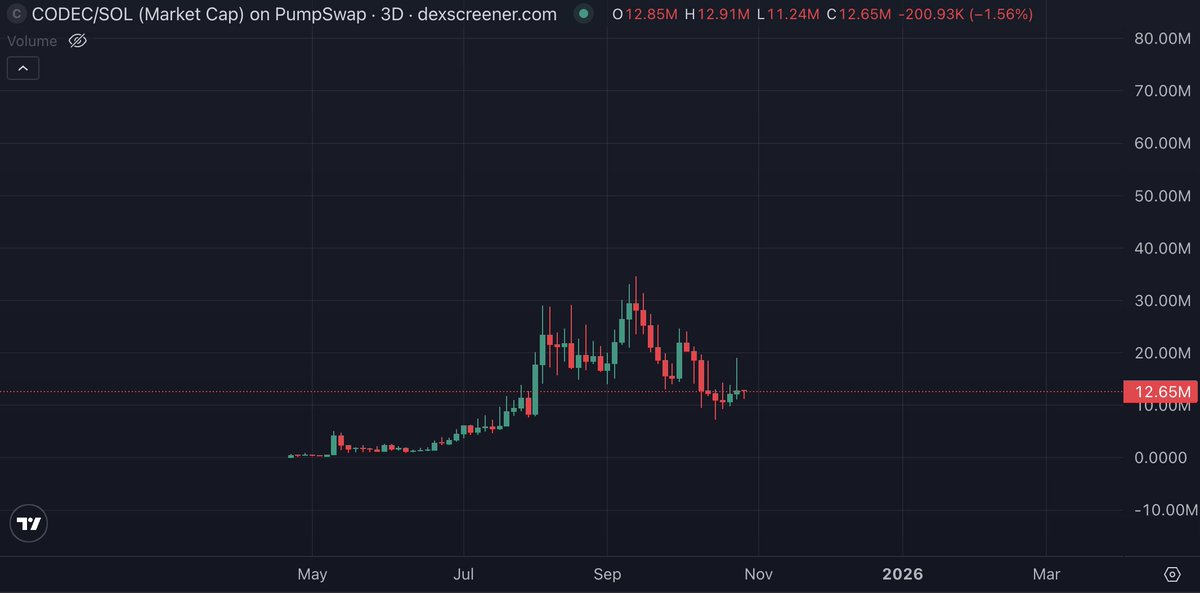
Which is why I’m so bullish on $CODEC as it’s essentially creating a new robotics middleware from scratch, whereas Virtuals leverages existing AI models and focuses on aggregating resources around them.
Codec’s architecture might enable faster iteration on actual robot tasks (since it provides a framework to quickly deploy and share new behaviors), whereas Virtuals architecture aims to accelerate the inputs and support for those tasks (data funding).
The core idea is to replace fragile, hard coded automation scripts with adaptive AI “Operators” which are very aligned with leading VLA architecture from companies like Deepmind etc.
Finding a way to attach token utility (incentives for mapping and abstraction of iteration loops) is where we’ll see the biggest impact. The majority of robotic foundation models are already going open source and this isn’t a decentralized crypto pipe dream psyop we try to spin on other narratives.
Hardest and most important part is acquiring real users/devs, then you add the flywheel on top to supercharge the ecosystem.
Imagine if ai16z had Virtuals flywheel.
65
15
133
12,780
2 Nov 2025
The fact we’ve speed ran the axiom trading style into the ground is EV for the space.
To bring life back onchain, we need runners and success stories.
The only way you get this is by traders dumping at typical resistance levels and the coins never give another pullback, going vertical in a straight line.
You only win if you’re a believer.
Opposingly, everyone’s trading style has been based on wallet tracking and volume the past 12-18 months, other than AI szn and ICM (utility).
I spend a lot of time pondering where onchain might be heading but feel I’ve never really gave it deep concise thought. While I’ve given many macro ideologies of how ICM might evolve, they felt more broad in concept.
Tbh I think you could consider onchain and alts to have been in a bear market since Trump coin. OTHERS chart confirms this for the first 7 months going from January to July with a -50% drawdown, while we did have decent performance from July to November, it still doesn’t really feel like we’ve had any form of consistent narratives due to rotations.
Even in the 22/23 bear market, we’d still get multi week narratives which were typically a safe buy and hold for several days. The axiom trading style has speed ran this into the ground as deployers squeezed every bit of juice out from multi walleting new launches.
There’s clearly demand for fundamental assets, look at the stock market. What’s killing onchain and crypto traders is the fact we’ve entered some of the strongest liquidity injections seen since covid stimulus. But our “digital hedges” have basically been flat or down when looking at the BTC/SPX chart for the past 160 days and OTHERS/SPX for 270 days.
Crypto has always been the most positively skewed sector to new liquidity injections, which is a strong reason we haven’t seen any traders be consistently right over the past year as we’ve never really traded in this type of environment.
So what do we need for onchain and alts to revive?
@goodalexander had a really interesting “conspiracy” on his recent @notthreadguy stream which I ascribe to.
Tldr: inflations spinning out of control, only way to stop government debt is buying treasuries to offset the constant printing. Who are some of the biggest treasury holders? Stablecoins.
Stablecoins need to be backed 1:1 in collateral with treasuries. So by increasing stablecoin adoption you can potentially offset inflation through holding treasuries as collateral. How do you increase stablecoin adoption? Onchain stocks.
If you go deeper into the bills they’ve been submitting, they’re heavily inclined to set up legal frameworks for stocks to live and trade onchain. As more stocks come onchain, their value needs to be pegged to traditional markets, meaning that more liquidity (stablecoins) needs to become available, thus doing more treasury buybacks.
Right now there’s something like 28 billion a quarter in stablecoin growth and we need to be doing 83 billion per quarter (almost 4x) to hit the deficit target to reduce inflation. People holding their assets in stocks offchain doesn’t give any value to the government when trying to offset debt.
Rather than increase taxes, they want to turn capital markets into a casino (speculation on crypto rails = more stablecoin demand = funding the debt deficit).
That’s the macro picture. I’m not saying this will be right and goodalexander has been wrong before, although I think it’s a very well thought out thesis where there’s a lot of evidence pointing to this being the direction it plays out in.
So say we get this grand idea of onchain stocks increasing heavily from stablecoin adoption, then we can almost see crypto acting as a pre market to stock “IPO’s” and companies joining S&P 500 etc.
This is where the ICM thesis comes in for real businesses/products coming onchain. There’s going to be extreme incentivization for businesses to start onchain and I believe we’ll eventually not only see stocks coming onchain but crypto projects turning to stocks (being available for boomers to buy). This will be the ultimate speculative bridge which looks to be the Trump’s multi year game plan based on legalisation bills.
Memecoins will always exist in some format (you could argue polymarket predictions are a form of memecoin), although the stock market has existed for hundreds of years. If you’re betting on speculative future outcomes, it’s quite safe to bet on the idea of stocks and businesses coming onchain instead of betting on attention (memecoins and derivatives) to revive our industry.
Which all loops back to my original idea of why it’s good axiom style trading gets washed out. If we’re to see a return to utility and fundamentals coming onchain, wallet tracking will have its perks although it’s not going to be where the bulk of the money is made. Everyone knows there chances of beating new deployers is second to none.
Well formulated theses and multi week/month time horizons on industry shifts (conviction) will once again return to the throne as the highest EV trading style. It’s already proven itself with stocks.
Now we’re expecting speculation to shift from tradfi and stocks to crypto as the ultimate rail to offset inflation.
If true, then you value trades like Hyperliquids HIP3 very highly.
27
3
124
8,712
30 Oct 2025
Robotics szn is here.
These largest raises in web2 and software which has the most likely carry over for crypto speculation.
@Figure_robot - $1 billion
Figure is building full stack humanoids, powered by their control software platform called Helix. Their focus is towards scaling production and doubling down on the Helix AI platform and simulation infrastructure that gives the robot its brain.
@AppliedInt - $600 million
Applied Intuition provides a software platform for developing, testing and deploying autonomous systems. Investor interest is from its autonomous vehicle and robotics simulation technology. Applied’s tools help engineers simulate and validate self driving cars, trucks and other “moving machines” and the company has expanded into defense applications as well. Also with a goal on to scale any defense use case requiring at scale simulation and validation of robot/autonomous fleet behavior.
@SkildAI - $500 million
Skild is developing a “Skild Brain” which is a general purpose AI model designed to control a wide range of robots with a single system. The platform has been shown working across humanoid robots, quadrupeds (robot dogs) and robotic arms on tasks such as dishwashing to climbing stairs. Their focus is on providing a unified AI “brain” for any robotic form factor.
@physical_int - $400 million
Phyiscal Intelligence (π0) is building a universal “robotic brain”, foundational software that can run on any robot, removing the need to write task specific code. It’s AI platform has been demonstrated on household tasks like folding laundry, bagging groceries and retrieving toast from a toaster. Personally this is the one I find most interesting on the list and where I see the most mindshare accruing to general purpose service robots.
@shieldaitech - $240 million
Shield AI is a defense technology company focusing on AI software for robotic aircraft and drones. It’s “Hivemind” software enables military drones and even fighter jets to fly autonomously in high threat combat environments. They develop some hardware while their core IP is the autonomy software, where they’re scaling defense OEMs and primarily have government customers.
Takeaways:
All these high profile robotics startups share a software focused “brain” architecture and a broad value proposition. Rather than building single purpose machines, they focus on universal AI control platforms, essentially foundation models or operating systems for robots.
A common technical approach is heavy use of simulation, large scale AI training and continuous learning loops. These platforms train their models on simulated scenarios and human demonstration videos, then fine tune on real world robot data, creating a “shared brain” that improves as more units are deployed.
Which is aiming to solve the data scarcity in robotics by aggregating experience from every robot into the central model. Figure’s Helix and others invest in massive simulation infrastructure and GPU compute to accelerate learning and testing in virtual environments.
By decoupling intelligent control from specific hardware, these companies can target multiple verticals with one platform, much like what my favorite crypto robotics project is doing. New capabilities learned in one context can quickly transfer to robots in another industry, accelerating deployment of features across different industries without starting from scratch.
Everyone’s racing towards general purpose robots. The hardware and mechanics itself are advanced to the point where the software or “AI brain” is the main component missing from turning these metal toddlers into fully efficient adults that enter the workforce.
The real value is in how we reach that point.
Where the opportunity for vertical integration across specific robotics applications will generate the most leverage imo.
41
8
85
8,596
29 Oct 2025
What I’ve been working on this past month with the $CODEC team:
- Researching the entire Robotics sector and technical architecture from a birds eye perspective with @unmoyai (latest developments, best practices etc)
- Understanding where and how Codec’s product positions in every single one of them (addressing the pain points)
- What specific use cases and narratives this unlocks
- The biggest value layer for the tooling and where major capital is flowing
- Comparing web2 tooling and what led to the success of AI szn (Virtuals & ai16z) - what are the core components to spark developer activity?
- Tokenomic flywheels and utility
The team has done a great job with technical articles, although I still believe they’re only brushing the surface of explaining how important their tooling really is.
My aim is to help build frameworks and processes to capture the narratives more succinctly while highlighting the true features the SDK unlocks.
As it stands, there’s still nothing even in web2 which offers the same type of abstraction that Codec is working towards.
Open source contribution is the way forward and leading foundation models like Nvidia’s Issac Gr00t are already building with this in mind as data and task training is still so early on. You can’t use AI text strings to train robots, there’s no “internet of robotics”.
Each of these humanoids and robots you’re seeing are built with full stack monolithic architecture, there’s no carry over for task training or ways to add new components (extra sensor or camera to the back of the head) without having to rewrite the entire codebase.
Instead of building data pipelines and simulations for singular monolithic architecture, they’re taking a modular approach where instead of building tasks for whole systems, It breaks each part of the robot down into core components (motors, sensors, actuators, eyes etc). Meaning it can easily plug into any type of robot/humanoid no matter its system and instruct it to carry out requirements based on individual parts.
Similar to what we saw with Eliza and Virtuals, devs didn’t need to code their entire framework and had GPT models with all the plug-ins (twitter, news feed, dexscreener API’s etc) at their finger tips. All they needed was personal context for their Agents inputs, then it was purely a matter of fine tuning.
The goal for Codec is very similar, a developer hub where devs don’t need to worry about building their own “game engine”, the SDK toolkit is what Unreal Engine/Unity is to game development.
Myself and @0xdetweiler have been doing a lot of hidden work in the background to help achieve this. This work has taken a significant amount of my time away from trading and why you haven’t seen me writing as frequently on Twitter or Telegram.
For those who’ve read my content, you know how big I am on not sacrificing trading time as all it takes is one good trade to change your trajectory. The potential, narrative and market share Codec is going for is so large it convinced me to sacrifice my time as the pay off could be the next ai16z.
The tech alone isn’t enough, the reason I’m writing this is due to how important it is to build in public and have constant communication about direction and core positioning (what my 30 page masterdoc consists of).
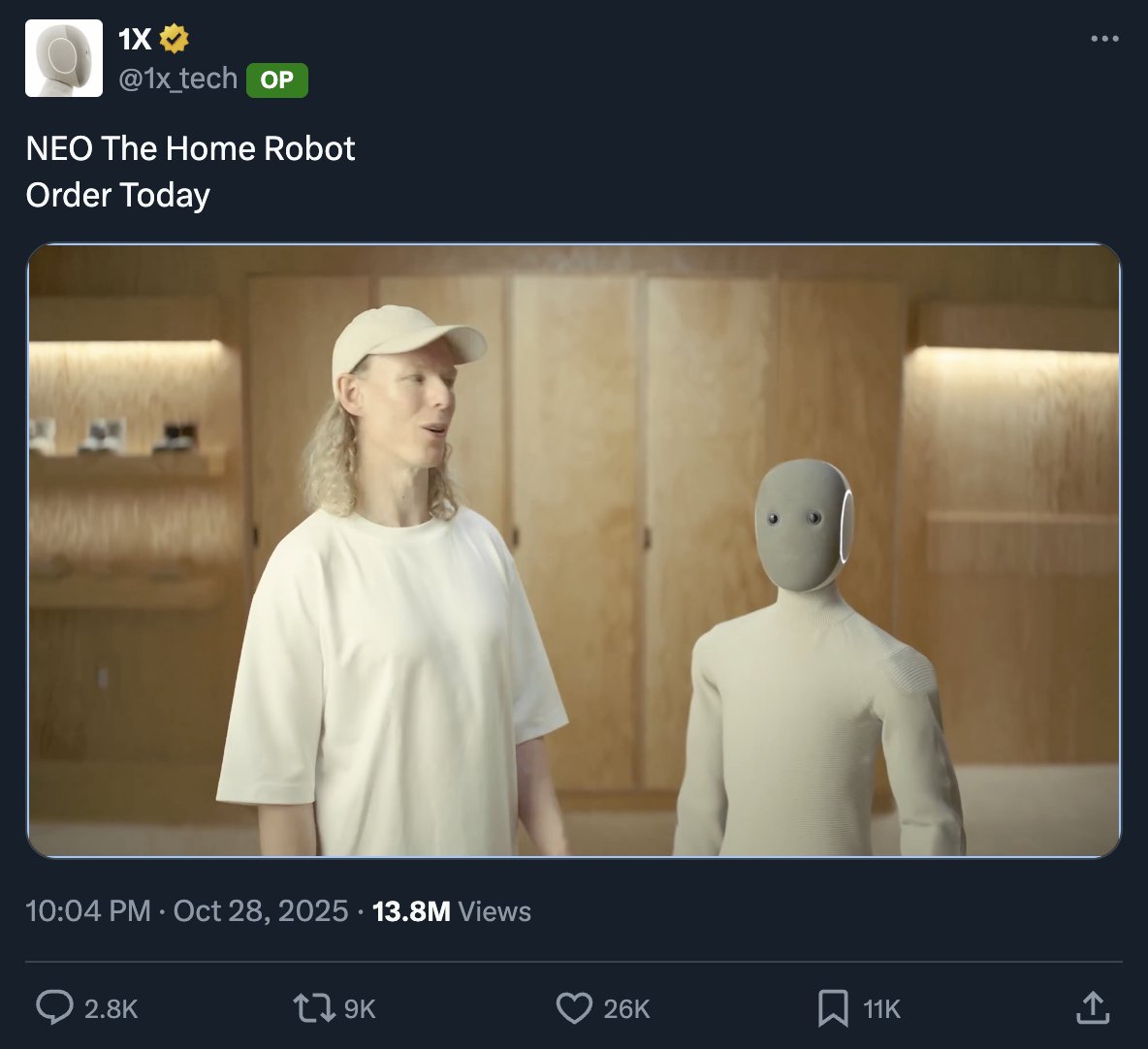
Today we saw the tip of the ice berg for Humanoids with the 1X release, this is only going to accelerate with more teams releasing their robots onto the market over the next couple months.
Robotics will have the largest encapsulation, growth and mindshare of any narrative we’ve ever seen.
Don’t bet against the future.
27
13
112
9,957
29 Oct 2025
Have you seen how viral this has gone?
The types of emotions its sparked from people?
Everyone’s gone from “humanoids are a thing 5 years into the future” to “oh fuck they’re here”.
Encapsulation for novelty and growth is the biggest defining components when producing narratives and you simply can’t get anything more encapsulation than human sized robots running around society, taking a piece of the $42 Trillion dollar global GDP for the labour market.
This is just the start, there’s only going to be dozens more coming onto the market and doing so very soon.
These companies know whoever wins the Robotics race will quite likely be one of, if not the largest company in the world 1-2 decades from now.
Robotics won’t slow down, won’t go away and is going to steam roll our entire economy.
You all know how I’m playing the trade.
33
7
78
6,417
28 Oct 2025
The most exciting ICM/utility coin is very undervalued at these levels.
Our industry's biggest ever ICO, largest revenue generating app and highest user count is about to show you the tip of the iceberg for its new direction.
There’s one specific utility coin on their platform which has refused to die. One that's accumulated 6 months of survival where the core holders only get more bullish by the day.
This is the first time since 3 mil mcap I’ve added to my position.
- Amazon replacing over half a million workers with robots, pushing to automate 75% of it’s workforce
- $VIRTUAL pivoting their entire platform to Robotics
- x402 is unlocking how Agents will be able to interact with commerce; Operators are the next stage which will be able to freely roam the internet and carry out economic tasks, this sets the foundation to robotic/humanoid assistants as well (VLA's)
This technology is going to be the single biggest economic shift we’ve ever had.
AI hasn’t been able to progress because it’s stuck inside a window. It’s dealt with text strings its entire life, how is it meant to progress into human capability when it doesn’t have a physical body to experience our same depth of reality?
Maybe the unlock to AGI isn’t better GPT models but a body for AI brains to develop "consciousness" in.
AI didn’t make sense until devs had public tooling to build their own GPT models with personal context (Virtuals & ai16z/Eliza).
Robotics doesn’t make sense as there’s no plug and play optionality for individual devs. Large teams have walled access to the best data, brains and hardware specs.
What happens when someone creates the Eliza of Robotics?
$CODEC coded.
27
13
106
17,239
23 Oct 2025
Profit Taking Models
Since we’ve recently gone through one of the worst liquidation in our industries history, I thought I’d share a couple profit taking models to try and help those making their comeback arc or looking to survive for longer.
These will be off the basis of portfolio valuation and using 50k, 100k, 200k & 500k for easy maths.
You can scale these numbers to whatever suits your personal circumstances and portfolio.
Model #1: Withdrawing percentages at milestones (my favourite)
Linear:
20% @ 50k = 10k
20% @ 100k = 20k
20% @ 200k = 40k
20% @ 500k = 100k
Dynamic:
10% @ 50k = 5k
20% @ 100k = 20k
30% @ 200k = 60k
40% @ 500k = 200k
Personally I prefer a more dynamic approach as in the early innings, capital is vital to your scaling and you don’t want to be pulling big chucks out early on if it’s not crucial for your lifestyle. The idea is to guarantee your future while getting there as fast as possible.
Model #2: Twapping at milestones (weekly withdrawals)
Linear:
Port >50k = 2% withdrawal per week = 1000 per week
>100k = 2% withdrawal per week = 2000 per week
>200k = 2% withdrawal per week = 4000 per week
>500k = 2% withdrawal per week = 10000 per week
Dynamic:
>50k = 1% withdrawal per week = 500 per week
>100k = 2% withdrawal per week = 2000 per week
>200k = 4% withdrawal per week = 8000 per week
>500k = 8% withdrawal per week = 40000 per week
Chances are if you’ve made a significant amount of money onchain, most of those gains would have been from one or a few high conviction trades in a short time span. For myself, this method feels too slow as when you reach large milestones they come and go very quick. You want to put money in the bank as soon as you reach them.
If you don’t have a lot of responsibilities or family to take care of, something which I believe is critical to trade better is having 2 years of living expenses in the bank.
When stabling, you should be very mindful of the percentages going to your bank and what's going back into shitcoins.
Until you do that, I’d highly advise against buying new cars, watches or anything which would bring short term satisfaction that takes scaling power away from your port.
I remember reading a tweet from jacknuked along the lines of “getting low to mid 6 figs is the most defining part of a traders career, why would you go blow half of it on a BMW M4?”. Which couldn’t be truer.
2 years living expenses seems like the perfect amount where you’re secure enough if shit hits the fan and gives you ample time to find a way to make it back.
Peace of mind is and always should be #1 priority. I’ve been in the spot multiple times where I’ve had a few weeks rent to my name and trust me, it takes years off you. My worst nightmare is having to leave this space due to being zero’d out.
Despite decreasing opportunities for some time now for onchain and alts, show up with high work ethic each day and eventually that one trade will fall on your lap.
25
6
95
5,640
22 Oct 2025
MetaDAO vs ICM Run
Two of the most recent uprisers in the ICM debate and have gained considerable mindshare, especially when comparing to Launchcoin.
$META
They’ve gone for the futarchy governance model which almost acts like a prediction market in a way.
If a project wants to spend treasury funds or change a parameter, traders bet on whether the decision will raise or lower the token’s price and the market’s verdict dictates if the proposal passes.
One concern I do have for this model is the hostile positioning large investors can take to try and influence poor decisions. We’ve seen this in the past with DeFi and Uniswap votes.
MetaDAO uses a price:band treasury: part of the raised funds and tokens automatically go into a smart contract that buys tokens if the price falls below the ICO price and sells if it rises above. Increasing stability for the beginning of launches so they don’t spike or crash uncontrollably.
A feature I do like is pay for performance unlocks, where teams only vest their reserved tokens when the market price hits certain multiples (2x, 4x etc) of the launch price. Teams should be rewarded and inclined to appreciate token price, granted it’s not in a damaging short term way, partly countered by the futarchy model since voters can have more direction in the model of the business.
Essentially you’re dampening volatility and creating a model where holding for >48 hours becomes EV and aiming for a slow grind up on token price (returning to a holders market).
It monetizes token launches from fees on its own Futarchy AMM fees on a single sided LP position on Meteora. Fees are 0.25% per trade which accrue to META holders.
We’ve already seen the investor protection model play out where holders voted to dissolve the fund of mtnCapital after they raised $5.7 mil, eventually underperforming and investors voting for a refund on remaining balance.
It’s telling that the Solana foundation/Colessum is supporting MetaDAO considerably more than launchcoin since pasternak fumbled extremely hard.
Also with backing from Paradigm and research support from Delphi.
$ICM
ICM takes a more classic start up approach, acting as mentors and incubators for projects coming into their eco.
They recruit promising teams which they mentor and guide before and through their token launch. Projects apply, a panel of mentors votes on which to accept and accepted teams commit 1-5% of their future token supply to the ICM RUN DAO treasury.
The aim is to eliminate teams rushing to market and to consider all angles of marketing, product, tokenomics, roadmap etc to be taken into consideration.
ICM will only issue a token when its token has a viable product or at least a solid roadmap. When ready, they’ll help the team choose the best launch venue for their token (which could be MetaDAO or another platform).
At the end of an incubation cycle, the treasury’s holdings of project tokens are distributed to ICM token holders proportional to their holdings.
An ICM holder gets a diversified stake in a portfolio of Sol startups vetted and guided by the platforms team. If some of those projects do well (becomes a hit dApp), ICM holders share in that upside by receiving those project tokens.
Which strongly incentivizes mentors and contributors as their upside (via the ICM tokens they hold) grows only if the incubated projects do well.
So essentially, you’re betting on the quality of the ICM team to incubate and vet new projects coming onboard.
Who is this team you might ask? They consist of the Zynga’s co founder and Luca Netz as an advisor, also rumours of Alon advising but not sure where this is coming from, just random tweets I found.
Final Thoughts:
MetaDAO focuses on the mechanics of a fair, self correcting token launch, while ICM RUN focuses on nurturing the team and product behind the token.
Stability is key for real businesses wanting to come onchain and more importantly, onto a launchpad. Having an ecosystem token fluctuate 50% on a singular day can be very damaging for the longevity of onchain businesses, which could be its own write up.
Due to the bad actors, it seems we’ve had to resort to models like futarchy since founders/teams can’t be trusted. I don’t believe the end game to ICM and bringing real businesses onchain is tying founders/teams to a leash and we decide when they’re allowed to go outside for a run.
ICM Runs approach doesn’t feel as scalable since it ultimately requires them to find a S tier team which is going to outperform the equivalent of 5-10 good projects on another platform. Maybe I’m missing something but as someone who’s been an advisor and builder, time gets chewed up extremely quickly and you really don’t have excess time for more than one project.
A large part of price discovery on tokens comes from teams silently building new products or verticals which is unknown to the public market. Often pivoting models or finding a novel mechanism which hasn’t been done before.
Adding a futarchy model will inevitably act as a pre market for pivots and new product updates. While we haven’t seen this idea mature yet, I’m very confident this is not in the best interests for nor the team or token holders long term.
Speculation is the purest form of asymmetry and reaction to time based events. Remove this and you remove core fundamentals of trading.
Needless to say, both teams are pushing the envelope and trialling new models. My criticism is a reflection of what might go wrong and considerations to take when entering the trade or ecosystem.
I’m rooting for anyone trying to bring more businesses onchain and experimenting with models to bring a holder's market back.
30
9
155
12,209
20 Oct 2025
In the early days of the internet and web development, everything was hand written in raw JavaScript or HTML.
Each web app was its own silo. As they grew more complex, the community invented tools like Webpack and Vite which are module bundlers and build systems that automatically handle different file types and assets.
Meaning a developer could import an image, font or a TypeScript file into their project and the bundler’s loaders would know how to process it (convert TS to JS, inline the image etc).
The browser itself only understands HTML/CSS/JS but these toolkits encode/decode other formats into browser friendly output.
Even though this was a small tweak to how data was formatted, it revolutionized web development.
Since it unlocked faster iteration loops and better experimentation, you could use higher level languages (like TypeScript or frameworks) because the build tools would translate them for you.
Which resulted in an explosion of web apps and a much denser ecosystem, since developers weren’t wasting time reinventing build pipelines for each project.
Similarly, Robotics is in a pre Webpack stage where many teams still “hand code” their data pipelines.
A toolkit like $CODEC for Robotics would do for robot data what Webpack did for web assets.
This is the vision @unmoyai has and is the raw definition of “codec”.
It would allow robotics developers to more easily incorporate new data sources or formats without months of custom engineering.
Leading to much faster iteration cycles. What used to take a team 6 months could shrink to a few weeks or less.
When you compress the idea to experiment timeframe by an order of magnitude, you enable far more innovation. Developers can try new ideas without the huge upfront cost, allowing them to also fail and learn quickly.
We’ve already seen how faster iteration has transformed software with vibe coding. If you told developers a few years ago you'd be able to tell a prompt window to code you a super app in a single message prompt, they would have spat in your face. Now that’s become a reality.
The same friction is currently sitting with physical AI. Roboticist's are busy dealing with hardware:software compatibility instead of working towards the bigger problem set of more effective humanoids.
Once the repetitive grunt work is abstracted away, the focus can then turn towards design behaviours and fine tuning AI brains.
Until then, there’s a massive value pie for the team that unlocks these data pipelines, enabling developers to create without constraint.
18
11
74
9,762
16 Oct 2025
It’s strange how listing fees are being treated like a new controversy when exchanges have been doing it since as long as crypto’s existed.
You think CZ is one of the richest people in the world while being in a small industry and Binance has complete CEX dominance from their good faith?
This is speaking as someone who was the CMO for a S tier launch in 2024 and had first hand experience dealing with Binance and the rest of the liquidation samaritans.
The playbook is:
Work your ass off for 2 years -> build a massive network and good will through an innovative product green flag comms -> create so much engagement, statistics and hype that Binance/tier 1 exchanges approach you right before launch and ask you to fuck over everyone that’s helped you along the way.
- Kick out your entire seed round which was the foundation that bootstrapped your initial growth and funded your idea.
- Remove any token unlocks for investors, KOLs, community, public sale etc.
- Give an insane amount of supply and also pay a massive USD listing fee (you’re usually low on runway because you’ve allocated so much to the product marketing to get yourself in a position for a hyped launch
This can be partially avoided if your team has god like credibility and high 8 to low 9 figs in funding with leads from paradigm, sequoia, a16z etc. You skip a lot of this process.
Since mid 2024, hyped launches with billions in FDV got phased out as everyone caught onto the game. Pumpfun revolutionized the business model and reduced friction for going from idea to market.
Launching on CEXs is a liquidity event for the team where they usually transfer 1-5% of tokens to market makers who use a culmination of different liquidation methods (European/American based options, rolling liquidations etc).
The big projects know their time is limited so they instruct MM’s to sell at aggressive rates to fund their treasury and pockets as much as possible (which is why you see every new launch going -70% within weeks). High volume is the only way they can extract 8/9 figs, so they sell heavy into their launch phase.
Price appreciation of new CEX launches essentially boils down to how greedy the team is. It’s generally not the other way around. Reason why I prefer to play onchain as it’s more visible.
If you thought VC’s were bad, CEX’s are much worse for this space. Perps is where the volume is so it’s a game everyone has to continue playing.
You won’t find anyone else talking about this due to “don’t shit where you eat” mentality. Everyones too scared to speak up as it might ruin their chances with future funding or exchange listings.
19
6
72
3,409
15 Oct 2025
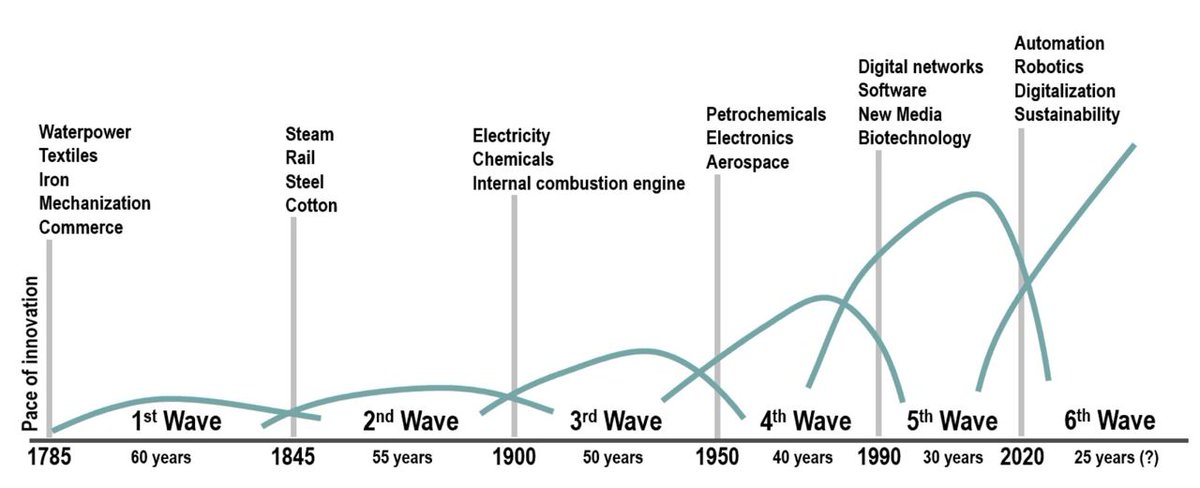
Robotics is the next industrial revolution.
The first industrial revolution (steam to mechanization) grew global GDP by roughly 10x between 1820-1910.
Robotics will do the same in reverse, machines will now mechanize labor itself. Instead of one person running one machine, one person (or no person) will oversee thousands of autonomous machines networked together.
The steam engine era took nearly a century to replace human and animal labor. Humanoids can scale exponentially faster, once a functional blue collar brain is trained, it can be cloned infinitely through software and cheap hardware replication.
The industrial revolution created roughly $30T of modern GDP adjusted for today’s dollars. It’s estimated robotics and automation could add $15-25T annually to global output by 2035, compressing >100 years of GDP in a decade.
Birth rates are collapsing across every developed economy. A baby takes 18 years to reach the workforce, a humanoid takes under one.
Japan already has more robots than newborns each year. By 2030, humanoids will outnumber construction workers in multiple countries.
Steam took 60 years to reach 50 mil people, electricity 40, the internet 10. Robotics and AI will reach billions through connected fleets and software updates almost instantly. When one robot learns, the entire sector learns overnight.
Railroads in the 19th century consumed over half of global investment capital. They facilitated the backbone of commerce and became the defining wealth engine of the industrial age.
Over 50% of global corporate CapEx goes into digital and automation infrastructure. Robotics and AI are today’s equivalent, only now the rails are made of data, chips, and humanoid manufacturing lines.
The steam engine multiplied human strength. The microchip multiplied human thought. Robotics will multiply human presence.
Think bigger.
20
13
123
8,760
14 Oct 2025
A feature of $CODEC and quite a big one is taking current monolith systems and breaking them down into individual components.
Robotics suffer from fragmented hardware and monolithic systems, where each robot or device often requires custom, complex code.
In current formats, many hardware components aren’t compatible out of the box, forcing developers to reinvent the wheel for each new robot or sensor.
Teaching robots even a single new behavior has typically meant hours of programming or thousands of demonstrations, an effort that becomes prohibitively expensive at scale.
Codec’s SDK is treating each part of a robot as an independent, plug and play component. Motors, sensors, AI, actuators, even peripherals like a “mouse” interface operate as separate modules that communicate through a unified framework.
This means an AI vision module, for instance, can be swapped or upgraded without overhauling the entire system, meaning a motor controller or gripper can be integrated as a standalone component.
By abstracting subsystems, Codec streamlines robotics development, a developer no longer needs deep specialty in every sub domain to add a new feature or piece of hardware. The SDK handles the interoperability, so you can combine diverse components without needing specialized code for each one.
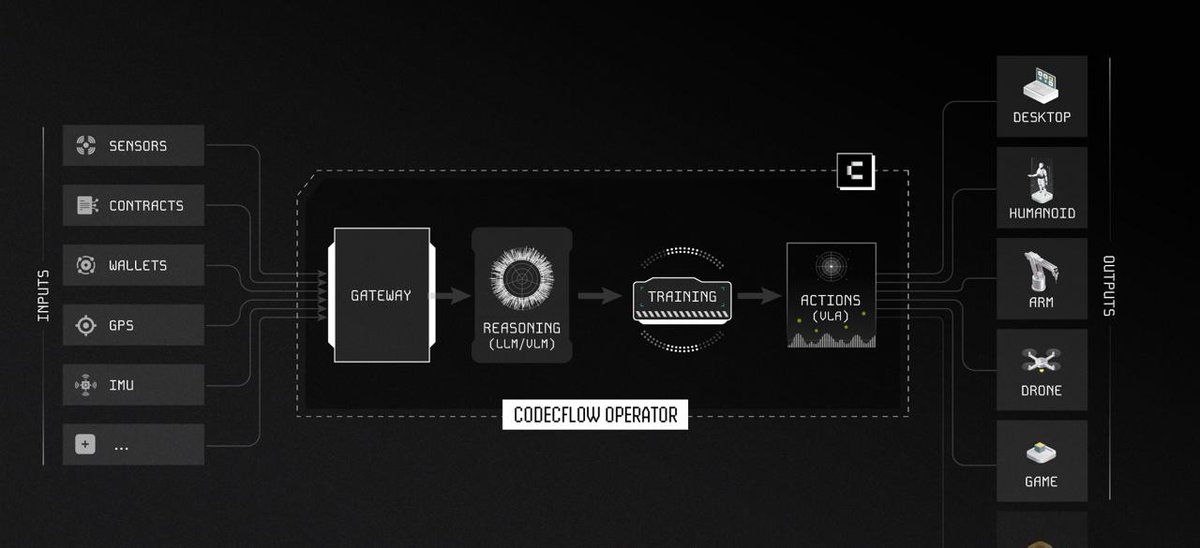
Codec’s architecture unifies diverse inputs and outputs through a central “operator” framework. Inputs like cameras, sensors, contracts, GPS, or even crypto wallets feed into a unified gateway and AI reasoning module. Using large models (LLMs/VLMs) to interpret goals and Vision-Language-Action (VLA) models to execute on them.
On the output side, the same “brain” can control a wide range of endpoints, from desktop software to physical robots (humanoids, robotic arms, drones) or even simulated environments. Which is where the “glue” aspect comes from as the SDK binds different components and platforms, allowing a uniform agent to handle multiple devices seamlessly.
The logic that drives a web automation or game AI can also drive a physical robot via Codec, a massive simplification compared to writing completely separate codebases for each context. By breaking functionality into modular blocks, scaling up doesn’t mean redoing everything from scratch. Adding a new robot or component is more like plugging in a new device on a network, rather than rebuilding the entire code base.
Because Codec treats every subsystem as a component, it naturally creates streams of data from each part: camera feeds, motors, environment sensors etc. All this data can be recorded through the SDK.
Which is hugely valuable, since with proper storage and labeling, these data streams can be used to train AI models that give the robots new capabilities. Codec’s design is to make robots not just consumers of fixed algorithms, but continual learners.
A robot could record a few video clips of a new object or task and then improve its behavior through few shot learning, without needing thousands of examples.
New techniques are allowing robots to gain skills from minimal data (as seen in Figure’s Helix model, where new skills that once took hundreds of demonstrations could be obtained instantly just by talking to the robot).
Beyond improving the robots own intelligence, these deep datasets open up a compelling business angle: data monetization.
The idea is that the data robots collect (images, videos, force readings, usage patterns) could be extremely valuable to third parties.
Codec could aggregate and anonymize this data and create a marketplace for it. We’ve seen previous models in the AI such as $KLED allowing users to sell their data (photos, videos etc) to AI companies, rewarding them in tokens.
A future Codec data marketplace might do the same for robotics data, letting robot owners/operators earn revenue from the terabytes of sensor data their machines gather.
This is a future possibility and not a core product they’re building just yet, but it signals how a widely adopted SDK like Codec can become an ecosystem not just for robotics control, but for data value exchange.
18
15
78
8,151
13 Oct 2025
One thing that’s become clear to myself is the ability to think beyond today in the present moment is how you differentiate yourself from 99% of other traders.
What’s more interesting is the fact that we’ve moved from a very fundamental world to shorter pace emotions and virtue.
Society ran on word and a firm handshake for businesses pre 2000’s. Lots of law and order, act out of place and have your door broken down by those you did dirty.
With the acceleration of the internet, we’ve become climatized to the fact that repercussions can often be avoided from hiding behind screens which enhances the inauthentic behaviour for most humans.
I’m not telling you anything you don’t already know with this, except this ties into my first point quite specifically.
We’ve moved to a point where those who can “predict” the future and take action on their ideologies are rewarded the most, although you’re predicting something which is becoming increasingly unstable.
The most obvious aspect of this movement is betting on infrastructure over the underlying app or product. NVDA, the largest stock in the world, is a bet on power, output and the unpredictable nature of where AI and Robotics is taking us.
Same can be said for social media and the fact that people rather invest and dedicate more value to the global search engine Google than any one specific product or app which is causing the highest growth or mindshare for user behaviour.
So what am I getting at?
This strange feeling that something is off about how we’re being rewarded for being “right” in the market. By “right,” I mean predicting a narrative correctly or betting on the winning hype. It feels off because often the reward comes not from sound logic, but from essentially out guessing collective mood swings.
It’s like fundamentals take a back seat whenever a loud enough voice enters the room and shifts the crowd’s emotions.
A fearful, addicted, or constantly intrigued population is unpredictable, yes, but also highly engaged, even through fear, is power in our current world. You could argue that a certain degree of chaos and uncertainty keeps people glued to their screens and less focused on questioning the larger power structures.
A lot of this boils down to the macro thesis I have, which is an article I need to dedicate some time to, along with the fact that the world’s economy fluctuates off whatever Trump decides to start screaming about.
It’s no surprise that governments aren’t trying to put restrictions on any of the advancements we’re seeing with socials, AI and robotics as it’s development heightens human fear due to the uncertainty that comes with their complexity and addictiveness.
Meaning the best trades are the ones which can engulf human emotion sporadically with a lack of fundamental reasoning or logic. We’re seeing less emphasis on pure tech and numbers, and more on optics, essentially how does this stock or asset make people feel, and how intensely?
If something can capture the public’s imagination or fear in a big way, it can rally far beyond what any discounted cash flow model would tell you. The market has become a voting machine for narratives in the short term (though as the saying goes, it remains a weighing machine in the long term once the hype disappears).
The best traders sense which way the crowd’s emotional pendulum is about to swing. But it’s a thin line, you’re predicting something that is inherently unpredictable and unstable, because it hinges on constantly shifting public sentiment.
Meme stocks
Crypto and prediction markets
Sports betting
Roblox and metaverse
Ai companions (goon bots)
Game skins and collectibles
Robotics
We’ve essentially financialized emotions. The more a technology or sector can plug into a deep human emotional inclination (greed, fear, nostalgia, social approval or escapism), the more likely it is to see its stocks or tokens shoot up, even if traditional metrics say that it’s overvalued. Bonus points for those who can attach a flywheel to this, often adding several multiples to their perceived value.
How do you form a trading or investment thesis in such an unpredictable and emotionally driven environment?
For myself, the answer circles back to the very first thing I said: thinking beyond the present moment. You have to be in tune with human psychology and intuition as much as you do software architecture or number crunching.
You need to gauge mood shifts, emerging narratives which are one catalyst away from having global mindshare and technological innovations which can spark uncertainty causing mania and fear, leading to overallocation or oversold assets.
Why this becomes so lucrative is there’s no specific framework you can follow or construct to have a consistent edge. Like I said, the edge comes from intuition of showing up every day and experimenting with different styles and research.
Your goal is to ride the wave of emotion for long enough to capture the upside but have the intuition which signals this can’t get much more extreme than it currently is.
Being “right” in this market often means simply being on the right side of an irrational swing. But until things change, that’s the game we’re playing.
The winners aren’t necessarily the most innovative, they’re the ones who understand how to package instability and make it feel like inevitability.
7
2
55
3,388
10 Oct 2025
Was great to finally meet the @codecopenflow team, @0xdetweiler & some friends the other night.
After being able to talk in person it’s clarified my position that Codec is the most advanced Robotics infra in our industry.
What they’re building is a toolkit that’s currently non existent even in web2 and its arrival will fill a massive hole for data streams.
It would have been very easy for me to stay in the comfort of my home and continue to regularly bull post and trade.
Although with the tech they’re building, this is genuinely the chance to be at the ground floor for the most obvious narrative and industry that will 100x from here.
They’ve got the tech, the vision and direct input from Hugging Face LeRobot team to validate and shape the usability of their toolkit for real world use cases.
So what am I doing?
We’re all well aware that crypto is just as much of a marketing and optics game as it is tech.
My focus is going to be on the growth, positioning, content, flywheel, ponzinomics, UI and that sprinkle of Shawmakesmagic we saw from AI szn.
Think Eliza GitHub repo of Robotics, with a dash of Virtuals ponzinomics and a front end that doesn’t require you to be a proficient coder to even understand what’s going on.
It’s a matter of time before robotics has its “chatgpt” moment and I don’t think we’re too far away.
The fact we’re so early with a product as developed as it is direct input from some of the best Robotics labs in the world is quite insane.
4 Oct 2025

Flew to Dubai to work with the $CODEC team in person.
Robotics is going to be too big of a sector not to go all in on.
Study working for your bags.

20
12
105
19,850
10 Oct 2025
p.s im not an “official” team member
simply an advisor and bag worker willing to get my hands dirty for a few hours each day while I continue my other writing and trading endeavours
anything i tweet or say from personal channels is not a representation of the team or company
18
934
5 Oct 2025
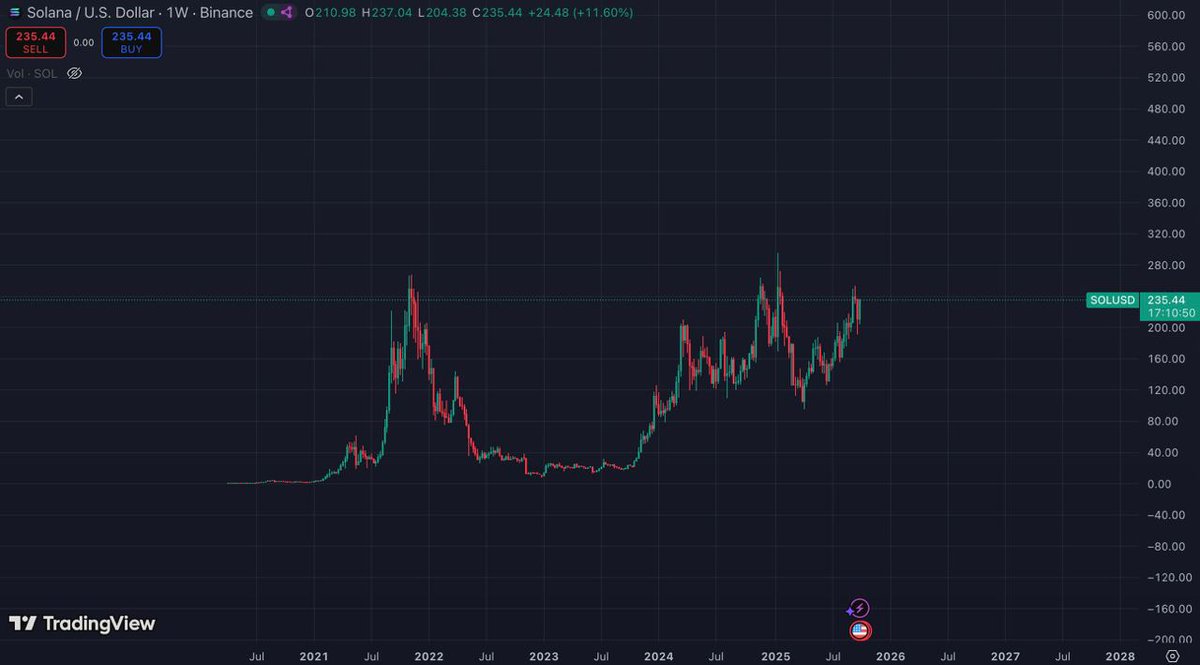
SOL goes on a god rally soon imo.
While ETHs outperformance since May was due to institutional flows, home to 90% of stablecoins (circle IPO), robhinhood building, everyone writing it off as a trade etc. We’re starting to see the narrative become more matured as positioning becomes heavier.
This doesn’t mean ETH won’t perform (I’m confident it will). I’m just saying SOL will be the fastest horse by a larger margin.
SOL’s positioning feels much lighter even as it approaches ATHs, with its backdrop being much stronger. We’re seeing real institutional adoption, such as Forward Industries raising $1.65 B, putting some of the biggest brains in our industry like Kyle Samani in charge, who I’d much rather back over Tom Lee.
Along with this it’s becoming a primary settlement layer where even Visa is using it for their upcoming stablecoin pilot. It’s clear the Solana foundation is going heavy after onchain stocks as well which will be one of the largest liquidity drivers for our eco.
ETH ran because of flows and positioning; people forget SOL’s rise was due to being a better product and new gen builders flocking to it. Yes trading on it has been hell for the last 9 months due to the jeetery of every new coin and narrative.
Nothing fundamentally has changed. It’s still the only chain where new builders are actively onboarding and experimenting with novel ideas, which will eventually fuel a larger narrative once goldilocks conditions are met. Solana’s edge is in user experience and reduced friction. That’s why we’ve seen the whole Internet Capital Markets narrative and onchain stocks find a home.
Solana basically achieved an onchain Nasdaq level of performance in speed, enabling a global decentralized capital market anyone online can tap into. Users aren’t concerned with the consensus mechanism of their perps or stablecoins, they just want it to work fast and cheap. I expect stablecoin adoption on Sol to keep growing as the settlement layer and payments use cases ramp up (the team is pushing hard here).
Every other chain and ecosystem has horrible UX by comparison. You can buy users short term with influence and incentives, but you can’t buy culture. Solana has culture.
12
6
64
4,946
4 Oct 2025
Flew to Dubai to work with the $CODEC team in person.
Robotics is going to be too big of a sector not to go all in on.
Study working for your bags.
29
5
150
25,171
3 Oct 2025
The importance of a cloud based SDK for robotics might not sound flashy, but it’s absolutely crucial for advancing the sector.
If you’re in tech circles you’ll hear about cloud platforms daily, which rarely spark the imagination.
Yet for humanoid robots and operators in the physical world, a cloud simulation toolkit is a core necessity for any developer trying to scale their training.
Accurate virtual world simulations are one of the highest sought after commodities in robotics right now. Researchers are running endless experiments to determine which combinations of real and synthetic data generate the most precise outcomes for training tasks
Yes companies like Tesla have a massive head start thanks to the neural network data they’ve gathered from their fleets, although this data is simply raw information until it’s put into practice through realistic training simulations.
For everyone else, acquiring that level of data or even the hardware to power it just isn’t an option unless you’re a massively funded company.
This is where cloud simulation comes in. By moving robot training and testing into cloud based virtual environments, anyone can access the needed compute and scale. A cloud platform can centralize the sharing of those simulations, results and data.
You’re essentially abstracting away the closed door access these billion dollar companies have access to, the extensive hardware components used in labs and bringing datasets into public light where open source contributions become an overall EV to innovation.
This business model is already proving itself with Hugging Face’s LeRobot (open source initiative) partnering with Nvidia to connect their frameworks so researchers can share models, datasets and simulation environments on the cloud.
The end goal is to create a data flywheel, as people contribute simulation data and trained policies to open repos, it accelerates others progress, in turn generating more globally accessible data.
A lot of work is being funneled into this through closing the “sim to real” gap. Simulators often fell short of reality, robots would learn behaviors in a virtual world that didn’t transfer to the real world, because the physics or visuals weren’t accurate enough. That gap is now closing fast due to better simulation fidelity and hybrid training approaches.
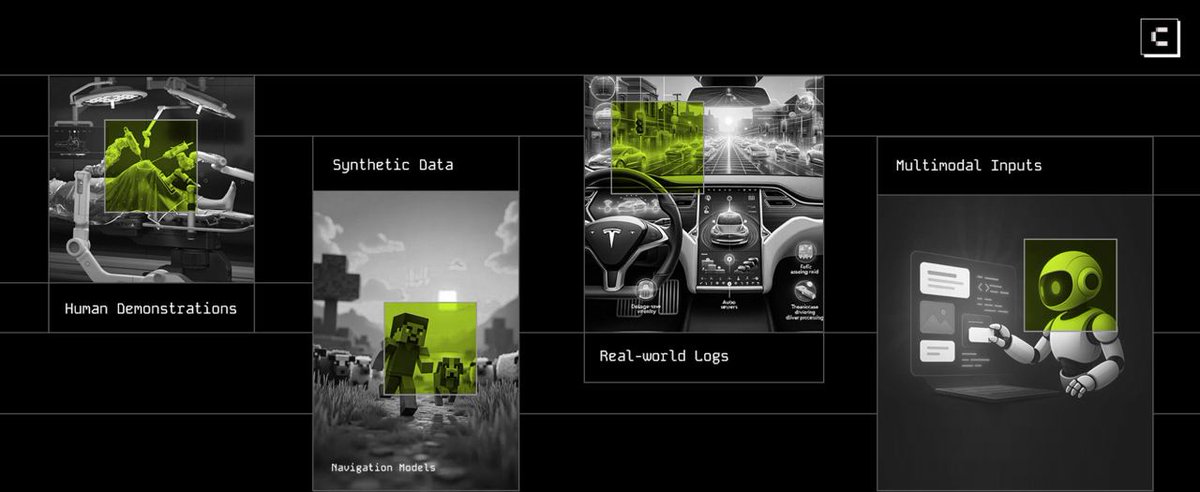
Most of the latest foundation models in robotics (like NVIDIA’s Isaac GROOT and Figure’s Helix VLA) use a dual system architecture that mimics human cognition. The same applies to how they’re training data in world sims. One part of the model is trained on human demonstration data from the real world, while another part is trained on a massive amount of synthetic data generated via high fidelity simulators.
By combining physical and simulated training, the model learns accurate skills which generalize better. Real data provides truth in AI, while simulated data provides the scale and variety that's impractical to gather in the physical world. Developers can even fine tune or post train models with additional real or synthetic data for specific tasks, making the training pipeline extremely flexible.
Figures Helix VLA which uses the System 1/System 2 approach is trained on only hundreds of teleoperated hours (augmented by simulation and smart labeling), Helix can handle new household tasks through natural language without custom coding. Demonstrating how multimodal models and synthetic training cut data needs dramatically.
@codecopenflow is applying the same principle with Octo, an open VLA integrated into its Optr SDK, enabling multi camera perception and language guided control with far smaller datasets and lower compute.
World simulation platforms are now generating huge volumes of varied training data that simply weren’t accessible before. Nvidia’s Isaac Sim (part of Isaac Lab) can take a single human demonstration of a task and spin it up into thousands of simulated variations using parallel cloud instances.
Imagine showing a robot how to pick up one box in reality and then the simulator creates countless scenarios with different boxes, lighting conditions and slight physics tweaks all producing training experiences the robot can learn from. A vision @unmoyai is working very hard towards.
By the time that skill is deployed on a physical robot, it’s been proven in mass quantities of virtual trials. Combining these rich synthetic datasets with just enough real world calibration data produces far more accurate and resilient robot brains.
This is what Codec’s cloud SDK is positioned for by letting users both pull from and contribute to large open source datasets (for example, interfacing with Hugging Face’s LeRobot hub). Every simulation run in the cloud could become new training data that sharpens a global model of how robots interact with the world.
All the pieces suggest that humanoid and robots in general are approaching an “App Store moment.” Robot hardware will be useless without a library of skills.
Optr provides a unified API so that an autonomous agent controlling a web app, a robot arm or a simulated avatar all use the same core framework and logic. This abstraction is dynamic, as developers could prototype a task in a game like sim environment, then deploy the very same logic to a real robot with minimal changes.
By being cloud based and open, the Optr SDK can act as the foundation for a robotics marketplace. Developers can build a new skill without owning a robot (thanks to cloud sim), test it safely in virtual environments, and then publish it for others. Those who need the skill, like a robotics startup or an individual with a home robot could pull it from the library and run it on their machines.
This kind of open marketplace and incentive model is the fuse for the robotics developer economy. It lowers the barrier to entry (no expensive hardware or labs needed due to cloud tools), it encourages collaboration since contributions improve the shared datasets and models and provides financial motivation for individuals to solve niche problems.
There’s many downstream economic flywheel possibilities which spawn from this (which you can see from recent partnerships) but I'll save that for a separate write up.
2 Oct 2025
There's a coin with virtually zero competition, abstracting away the most complex tasks in what may be the fastest growing sector we'll ever see.
Where the team behind it is even getting direct input from Hugging Face's LeRobot team to build an open SDK for world simulations. In other words, they're working with open source AI leaders to make their development kit as efficient as possible for simulating reality.
This vertical is crucial because humanoid robots don’t deal in text or code, they operate in the atoms and physical objects. An AI agent can analyze text, but a humanoid needs to perceive and manipulate the 3D world in front of it.
One reason why Tesla has a head start with its Optimus humanoid, the wealth of real world neural network data gathered by Tesla’s fleet. Tesla’s cars collectively log around 50 billion miles per year, feeding a near infinite dataset to train vision and control AI.
Yet training robots in the real world remains painfully slow and resource intensive. Progress has been limited because no one has fully cracked synthetic data for humanoids, the “sim to real” gap. It can take hundreds of hours of physical training to teach a robot a simple task and simulations often fall short of reality.
All the pieces are there, humanoid bodies are approaching human level capability, but the missing link is the brain, the software that tells these robots how to do things. A robot may have arms and legs, but without intelligent code, it can't even cook your dinner while you watch Netflix.
Just like smartphones were useless until app stores unlocked third party apps, humanoids will be useless without a library of high quality skills. The biggest value will come from whoever builds the infrastructure that lets developers easily create new “apps” (tasks) for robots. The platform that makes programming robot behavior easy will become the “app store” of the robotics era.
Individual devs are struggling because they often lack the compute power and hardware to train robotic tasks at home (as seen in the Hugging Face robotics community discord). This is why an open platform with cloud simulation is much needed.
We’re already beginning to see releases which highlight developers having the capabilities to run full robot simulations on remote servers, so anyone can train and test complex tasks without specialized hardware on hand.
Multi modal models now tie vision and language together, a robot can ‘see’ through multiple cameras and act on natural commands. This makes fine tuning new skills possible with smaller datasets and lighter compute. Much like what we’ve seen with Figure’s Helix VLA model.
I’ll give you one guess who this might be.
8
13
57
38,180
2 Oct 2025
Twitter vs Telegram Channel
As a “KOL”, this was always a massive debate and still one I constantly think about on a day to day basis for where I spend my time.
Whether you post your thoughts on either platform really boils down to your content style imo.
For example, I use Twitter for higher quality thoughts/execution, broader narratives, and big picture ideas. I don’t enjoy being the guy who posts the 5 most interesting things that pop up on CT each day. To me, that feels like shallow level posting. If people see my name in their notifications, I want their subconscious reaction to be “oh damn Trissy posted, I wonder what interesting take he has now” instead of “oh he’s just slop posting again.”
That’s just my personal view though. It’s clear that the people who get the most engagement are those who post multiple times a day with consistent quality or entertaining takes. If you do it well, you typically rise to main character status.
When I first grew my account during the ‘23 bear market, I kept my branding and tone fairly professional because I wanted to be taken seriously as someone who produced high quality research. Props to @LouisCooper_ who really led the way on this and set a standard for how “serious” researchers should be positioning themselves.
I still carry some of that over today and I’d rather not post for two months than share a bunch of low effort takes.
It’s funny because my irl personality almost completely contradicts that style, although my goal with content was to stand out as unique. CT has always been unserious and unprofessional, so I saw that contrast as an easy edge over other creators.
My Telegram channel on the other hand, is where I share more personal reflections, my day to day thoughts on markets and my personal approach to trading & life. Ideally, it would be great to post many of those thoughts on Twitter too, because I think my mindset, energy distribution and niche takes are fairly unique.
The reason I don’t is because Twitter feels like it forces you to chase engagement. Sometimes you end up not saying exactly what’s on your mind because you want to stay relevant or “popular” in certain circles.
A good example is @real_y22 channel. He posts very openly about his progress and trading challenges, sometimes overly emotional or personal. He eventually had to disable comments because people used that accessibility to try and rip him down, clowning on his success whenever they saw the slightest weakness. That’s the kind of distraction you don’t need when you’re trying to complete an extremely difficult trading challenge that already requires deep internal focus.
One thing to note is that if you’re planning on doing both, it can be draining to consistently post quality content on Twitter and Telegram, especially if you also spend significant time actively trading and monitoring markets. At the end of the day, it can leave you feeling very flat and impact the quality of your trading execution.
My advice: focus on Twitter first. If you struggle to produce good content there already, adding a Telegram channel won’t fix that. However, if your posting style is similar to mine, where you keep narrow branding and curated content on Twitter, then a Telegram is a great addition. It gives you space to express thoughts you might not feel comfortable posting on Twitter (weird concept, but it really does make a difference to my writing style as you can probably tell).
One important factor that keeps me posting on Twitter is the social profile that comes with it. Yes, it’s great to grow an audience on Telegram, but Telegram is extremely niche. Unless you’re constantly adjusting to the market, it’s nowhere near as scalable or transferable.
Think about where you might be in 2 years. If you want to move into venture capital, AI, robotics or another field, a Telegram community won’t look nearly as impressive as a highly engaged Twitter account. A strong Twitter opens doors, helps you cross disciplines and gives you both an audience and the experience of building one.
Tl;dr I’m really glad I opened a Telegram channel. My writing style and frequency make it hard to express all my opinions while keeping a certain image on Twitter.
Yes, it’s draining to manage both, however writing comes very naturally for me and brings a great deal of satisfaction when I’m on the ball. It’s been my best form of meditation for this 24/7 casino and undoubtedly one of the biggest steps forward in my career.
4
32
2,262