
Elon Musk enthusiast.
Joined March 2023
- Tweets 686
- Following 464
- Followers 188
- Likes 4,737
41 Photos and videos








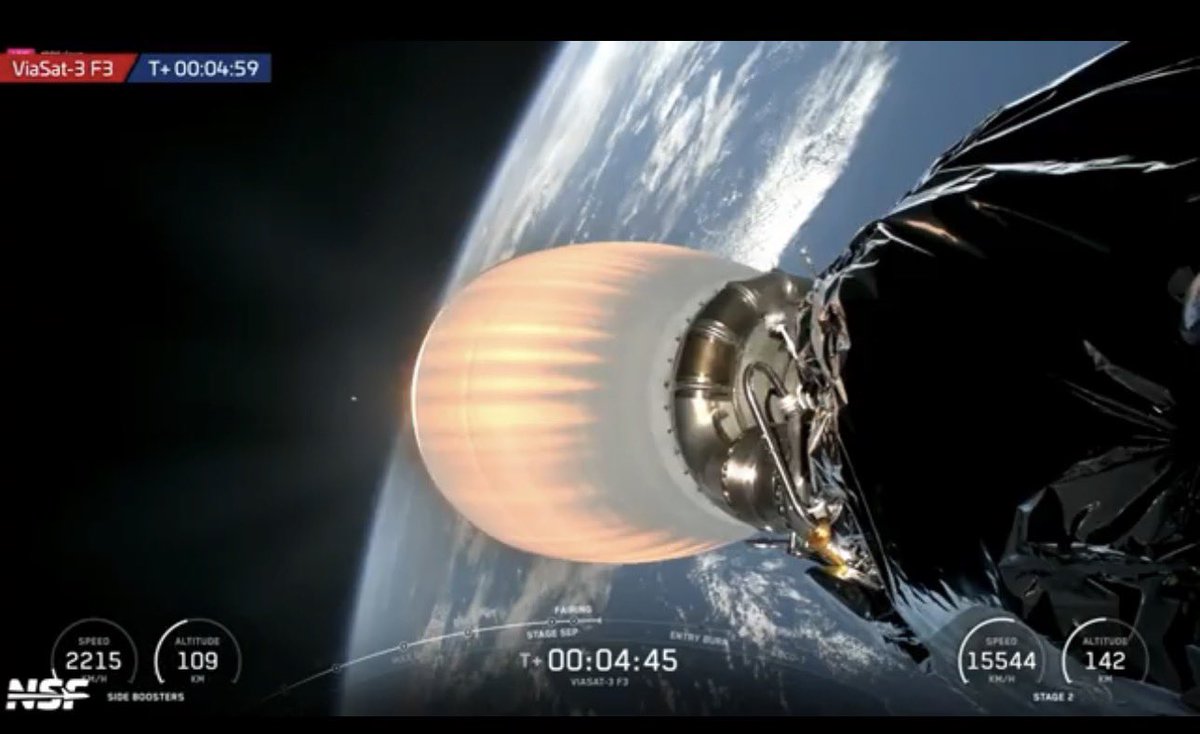







I love Space X and support Elon 💯 but there is no way in hell I could buy $SPCX at this price. I had pre-IPO exposure and sold on Friday for a nice pop. I will be patient and enter at a lower PT
58

Jun 15
World Cup & UFC at The White House 🇺🇸 It’s great to see some patriotism in this Country again. We finally have something to get behind and be proud of 🫡
55
Jun 14
I think Elon is one of, if not THE, greatest minds of our time. Society as a whole has no idea how remarkable this man is and how he will be engraved in history books for future generations.
6
2
154
Jun 14
If you post about X payday and how the algo changes have caused you to lose $, you’re not here to interact with likeminded people, you’re here for you. Point blank period.
1
39
Jun 14
No one is perfect and without flaw. There are so many accounts I follow that are like minded on Elon as I am but do not interact with their followers and ONLY post Elon positive content. I’m seeing that more and more and I’m disappointed in those who do that. I don’t want to follow you if that’s you. Further, if you post, positive Tesla / Space X / Elon content, just to get views so you can get paid $ from X, I don’t want to follow you, either. If you’re in it for $, at least say it and have self-respect.
1
32
Jun 14
Now, I also want to add some thoughts related to Elon and Tesla / Space X accounts here on X. I follow many Pro Tesla and Pro Space X accounts. It’s what I consider my “Community”. I believe as you believe. I’d be remiss, however, if I didn’t mention something I’ve noticed and have not wanted to say…..
1
27
Jun 14
I wanted to state that without additional content because I truly believe that and I wanted that to have its own appreciation.
1
17
Jun 14
This country needs more old school Alpha males who protect Women & Children.
13
Jun 14
If you don’t shut your bitch ass up with that 🤡 shit. As a Californian, we are tired of your bullshit and how much you fucked this state up.
Jun 12

Americans are struggling to pay for groceries and gas while Elon Musk becomes a TRILLIONAIRE.
When the federal government is for sale, the rich get richer and everyone else gets shafted.
The system is rigged.
1
1
42
CyberChuckX retweeted

Jun 12
Congratulations @ElonMusk.
Thanks to SpaceX's IPO, he's the first Trillionaire.
He didn't TAKE money from anyone. He CREATED wealth.
He launched satellites that connect even the poorest, most remote parts of the world.
Our world needs more MAKERS like Musk; fewer TAKERS like:
1,432
9,470
60,882
1,102,763
CyberChuckX retweeted

May 25
@elonmusk
Elon,
My husband Ted and I share this X account, and we’ve posted together many times. But today I wanted to write to you personally, from my own heart.
I want to thank you for creating tools that help me learn something new every single day, that make my life better, and that actually make me excited to live longer — because your inventions keep getting more amazing.
I was born in 1942 in Normandy, France, under German occupation. In 1946, my family moved to the coast along the English Channel. So many towns and villages had been damaged or destroyed. As children, we played among the old bunkers and in cemeteries. Later in life, I married an American airman, moved to the United States with him, earned a doctorate in education, and spent my career teaching languages.
Now I’m 84 years old, retired, and living in Alaska with my husband of 64 years. Not long ago I discovered you and your work. We recently bought a Cyberbeast, and I love everything about it — the comfort, the incredible technology, and especially FSD, which we use every day. We even installed a Starlink dish on our roof so we have reliable internet everywhere in Alaska.
I use Grok every single day. Thanks to you, I’m now learning about AI itself — at 84! I also use X daily because it lets me see what’s really happening in the world, without media filters or propaganda, and connect with people from every corner of the globe.
Instead of living in the past and reminiscing about the “good old days,” I wake up every morning excited to see what new invention or breakthrough you’re working on and what the future will bring.
Thank you, Elon, from the bottom of my old heart.
You’ve made this 84-year-old woman feel young and hopeful again. ❤️
Françoise
Here we are with our new Cyberbeast !

302
713
4,727
130,849
CyberChuckX retweeted

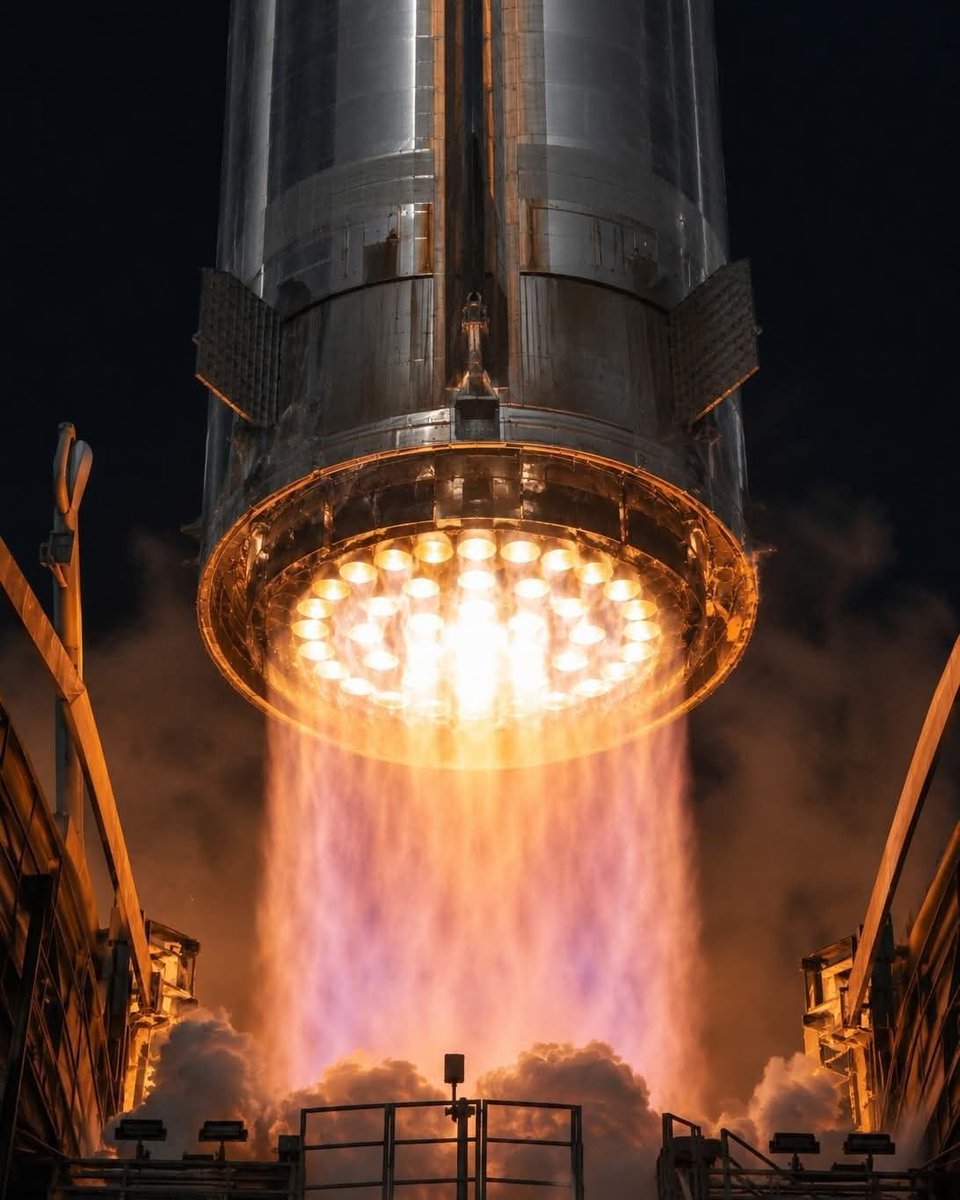
33 Raptor engines.
The moment they ignite, they unleash more power than any rocket system ever built by humanity. 🚀🔥
This engine section alone is responsible for lifting a 124-meter-tall machine capable of carrying over 100,000 kg to orbit.
And during Flight 12, it wasn’t just launching.
While these engines pushed Starship through the atmosphere at nearly 17,000 mph, the vehicle deployed 22 Starlink simulators — while two specially modified satellites scanned the heat shield mid-flight to prepare the ship for rapid reuse. 🛰️
Think about that.
A flying skyscraper.
Moving faster than a bullet.
Running engineering experiments on itself in real time.
This is no longer “just a rocket launch.”
This is humanity building the machinery for another world.
3
12
40
1,243
CyberChuckX retweeted

May 24
Neuralink's Breakthrough: Mind-Controlled Computing and Restoring Sight to the Blind Elon called it a game-changer.
Here’s the actual Translation Stack making these advances real:
Signal Acquisition (The Interface Layer)
The foundational layer involves capturing the electrical activity (action potentials or "spikes") generated by neurons when a person thinks or intends to move. To do this, companies use various electrode interfaces:
Intracortical Microelectrodes: Neuralink uses 1,024 electrodes distributed across 64 flexible polymer threads each thinner than a human hair that are surgically inserted directly into the brain's cortex to capture high-resolution, single-neuron signals.
Paradromics is developing an even higher-bandwidth implant capable of recording from thousands of channels simultaneously using metal and ceramic microwires.
Endovascular Electrodes: Synchron uses a stent-like device (the Stentrode) delivered through the jugular vein to sit inside a blood vessel over the motor cortex, providing a less invasive way to capture broader neural signals.
Amplification and Digitization (The Hardware Layer)
Neural signals are incredibly weak often less than 10 microvolts. The next layer of the stack relies on high-performance Application-Specific Integrated Circuits (ASICs) embedded within the implant.
These custom chips must instantly amplify the faint signals, filter out background biological noise, and digitize the analog electrical impulses into a binary code that computers can understand.
This hardware must operate with extremely low power to prevent generating heat that could damage brain tissue.
AI and Neural Decoding (The Software Layer)
This is the most computationally demanding layer of the stack, where raw digital data is translated into actual human intent.
Machine Learning Algorithms: Systems use algorithms like Recurrent Neural Networks (RNNs) to recognize complex patterns in neural activity. For instance, when a paralyzed patient attempts to speak, the RNN analyzes the neural signals associated with the intent to form specific sounds (phonemes).
Large Language Models (LLMs): To achieve rapid communication speeds, decoded phonemes or keystrokes are often fed into language models. Similar to a smartphone's autocomplete feature, these models predict the intended word or phrase, vastly reducing the error rate and the amount of neural training required.
Output Execution (The Application Layer)
The final layer of the stack transmits the decoded intent wirelessly to an external device, translating the thought into a real-world action.
Digital Control: Users can intuitively move computer cursors, browse the internet, or play complex video games like Civilization VI and Mario Kart at speeds exceeding 8 to 10 bits-per-second, rivaling the speed of able-bodied mouse users.
Speech Synthesis: For patients who have lost their voice to ALS or stroke, the decoded neural intent to speak can be routed through an AI voice generator to produce audible, synthesized speech in real-time, with targets aiming for conversational speeds of 140 words per minute.
Robotic Manipulation: The signals can also be routed to physical prosthetics, enabling a user to manipulate a robotic arm to feed themselves or grasp objects.
In short, the "Translation Stack" is the monumental engineering feat of bridging the biological constraints of the human brain with external digital ecosystems, turning the abstract firing of neurons into seamless, real-time autonomy.

Neuralink is a much bigger breakthrough than most people realize.
Enabling people to control a computer with their mind and the completely blind to see are Jesus-level miracles.
1
11
48
3,400

There will also ultimately be >100k V3/V4/V5 satellites for Starlink broadband and direct to cellphone connectivity.
If growth continues, Starlink will one day carry the majority of Internet traffic. At that point, it is the Internet and everything else just connects to Starlink.
911
1,089
10,582
994,847

CyberChuckX retweeted

May 24
Every single @SpaceX Starship Launch 1-12
We are living in the greatest timeline.
12
65
386
16,028
CyberChuckX retweeted

May 24
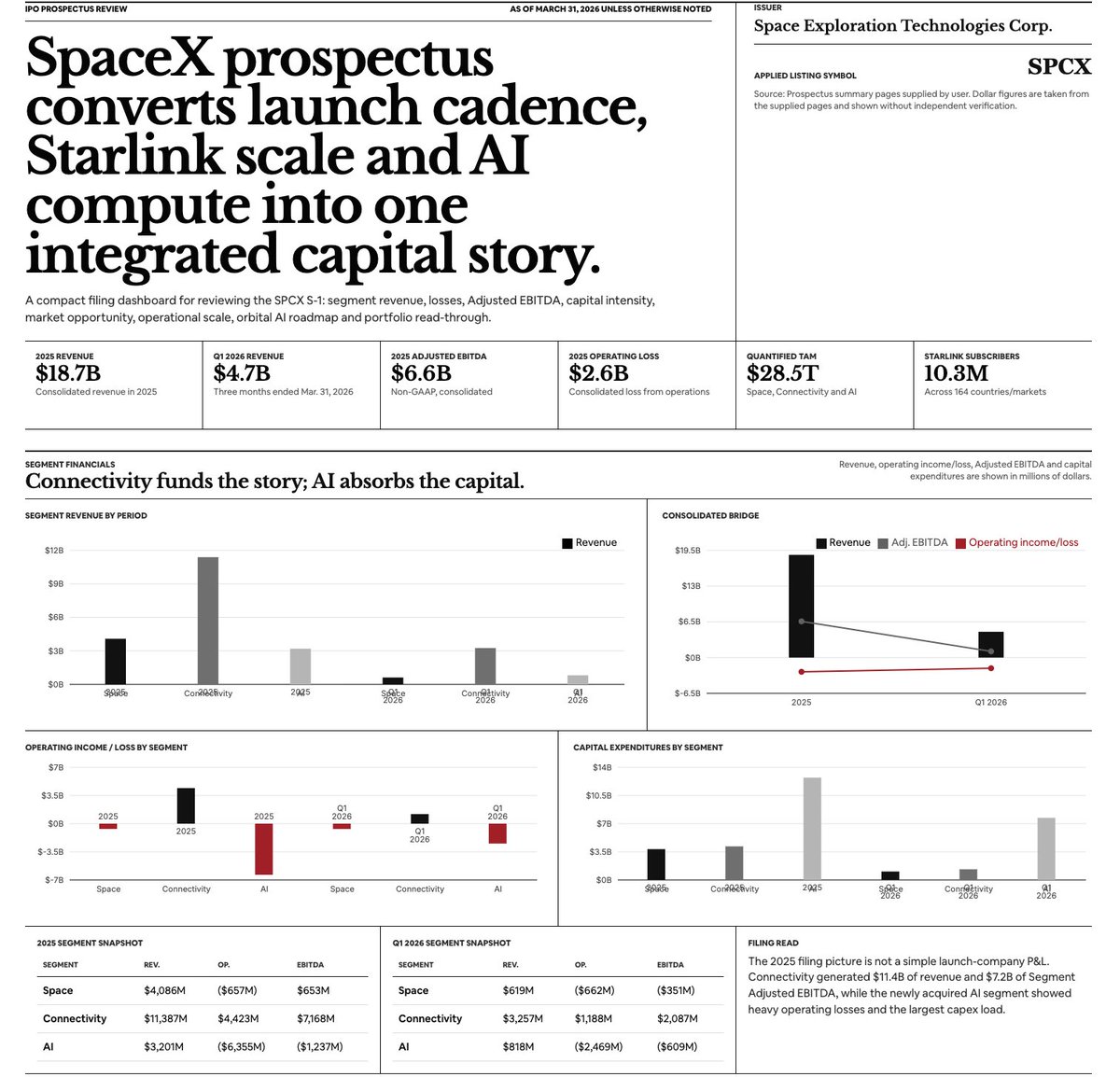
I just created a custom dashboard for the SpaceX $SPCX IPO
Still working on it a little, but it summarizes the info from the S-1 pretty well right now
Here is the link to the dashboard ... there is a bunch more info
⬇️⬇️⬇️
rallies.ai/dashboards/spacex…
If you have your portfolio connected on @ralliesai the dashboard will customize to your portfolio
20
12
154
49,821
CyberChuckX retweeted

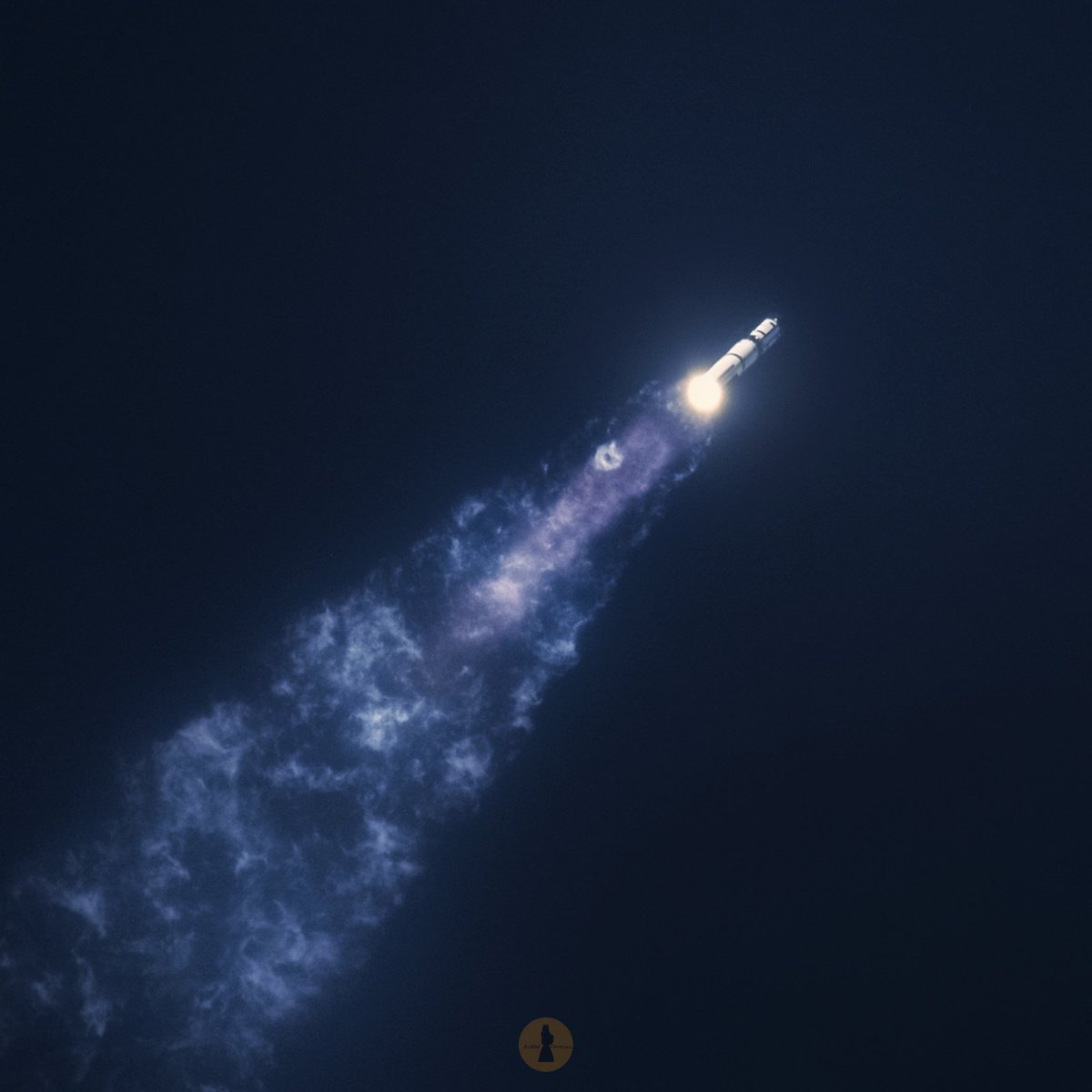
Starship passing through Max-Q
2
34
355
3,742
CyberChuckX retweeted

May 24
"When your Education limits your Imagination, it is called Indoctrination."
— Nikola Tesla

3
14
38
1,023
CyberChuckX retweeted
May 24
Nothing on Earth is like Starship nothing comes close.
Built for complete reusability and Mars-scale missions, it has no equivalent in payload capacity, flight cadence, or overall philosophy.
This first-principles architecture is the only one positioned to make humanity multiplanetary.
18
32
141
3,547