
Creator of proprietary long-range methods 🌦 Weather: Long Range Forecasting 📈 Markets: Bitcoin • Metals •
Joined December 2011
- Tweets 16,057
- Following 469
- Followers 6,002
- Likes 13,299
5,480 Photos and videos






The 7 Hermetic Principles: Ancient Wisdom or Timeless Truth?
For thousands of years, philosophers, mystics and scholars have explored the hidden laws believed to govern our reality. The 7 Hermetic Principles offer a fascinating framework for understanding the world around us—and perhaps ourselves.
📜 The 7 Principles
1️⃣ Mentalism – The universe begins in the mind.
2️⃣ Correspondence – “As above, so below.” Patterns repeat across scales.
3️⃣ Vibration – Everything moves. Everything vibrates.
4️⃣ Polarity – Opposites are two extremes of the same thing.
5️⃣ Rhythm – Life moves in cycles and seasons.
6️⃣ Cause & Effect – Every action produces a reaction.
7️⃣ Gender – Creative masculine and feminine energies exist throughout nature.
Whether viewed as philosophy, spirituality, psychology, or simply a lens through which to observe the world, these principles continue to influence thinkers, researchers, entrepreneurs, and seekers alike.
Perhaps the most intriguing question is:
❓Do these principles merely describe reality, or do they actively shape it?
Which of the 7 principles resonates most with you and why?
#HermeticPrinciples #Philosophy #AncientWisdom #Consciousness #Mindset #Spirituality #UniversalLaws #PersonalGrowth #Knowledge #Wisdom
1
317
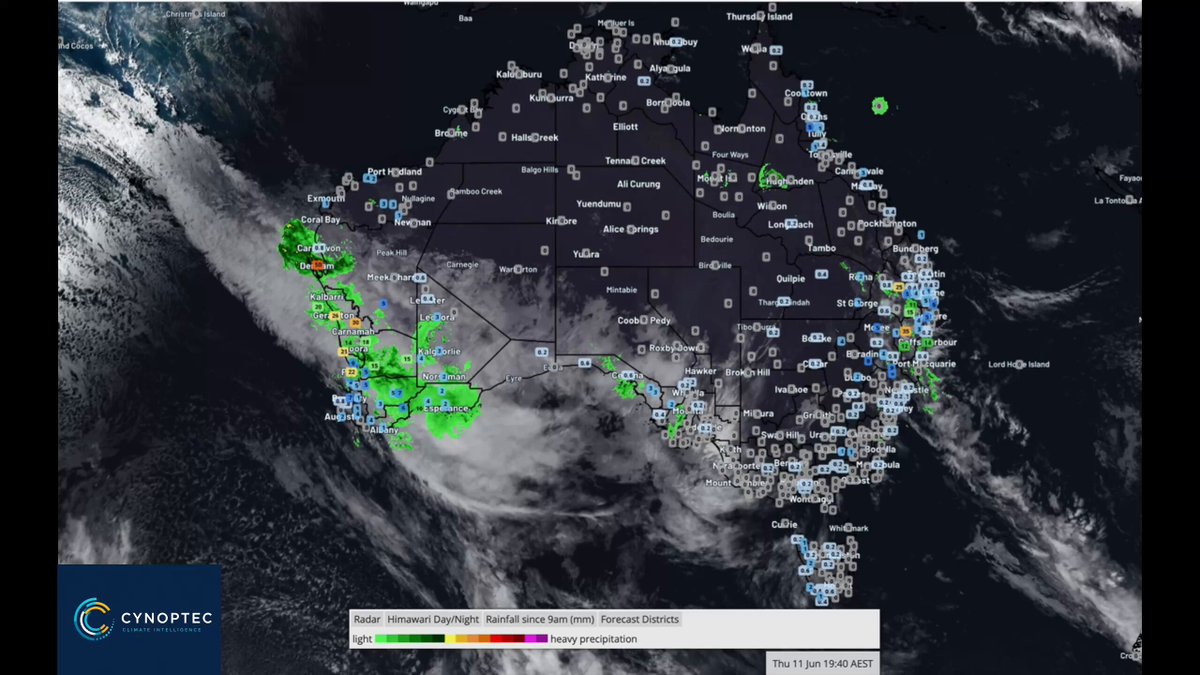
The northwest cloud band season is well and truly underway.
A series of rainfall-producing systems are now forecast to persist through the remainder of June, with multiple weather models showing widespread moisture transport and national rainfall extending deep into the northern tropical interior.
This period is expected to represent one of the two major rainfall peaks of the 2026 southern growing and winter season, with a second significant rainfall maximum currently projected during Week 4 of July.
Confidence continues to increase as model agreement strengthens across much of the nation.
At the same time, solar activity is expected to gradually increase over the next 7–14 days, with additional coronal holes and solar flare activity developing during the period.
Monitor closely as the atmosphere continues to respond to a highly active pattern heading into the second half of winter.
🌧️ June Rainfall Peak Underway
🌧️ July Rainfall Peak Expected Week 4
☀️ Solar Activity Increasing
🗺️ Long-range forecasts extend to December 2026
ozindustriesforecasting.com
3
4
16
2,319

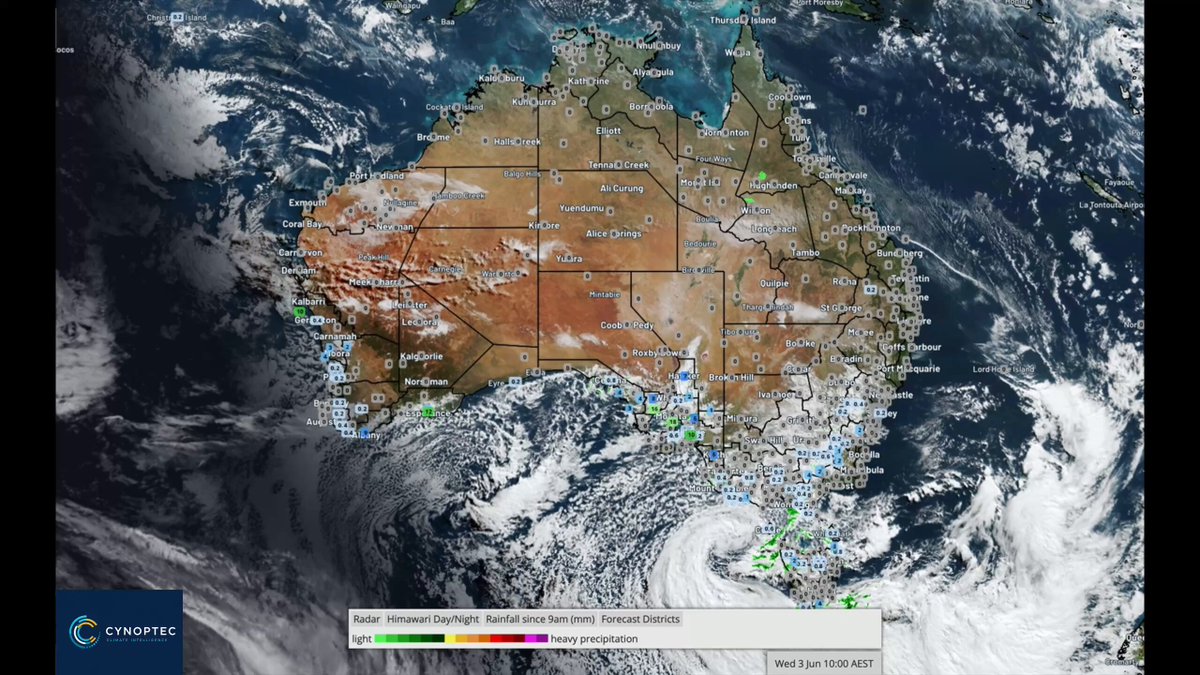
The major June cycle is delivering. A northwest cloud band has already dropped 30 to 100mm through the west, and a broad inland system is now tracking toward the southeast.
> 30 to 100mm corridors through the Pilbara, Midwest and Gascoyne
> Rain pushing across South Australia, Victoria and Tasmania
> A Vanuatu low an important feature for NE Qld
> A cold, frosty start to July behind it
Everything is on track with the long-range forecast, and there is plenty of rain ahead.
Full forecast maps and regional detail are in the member portal.
ozindustriesforecasting.com/…
Know the Future™
1
1
8
750
The major June cycle is delivering. A northwest cloud band has already dropped 30 to 100mm through the west, and a broad inland system is now tracking toward the southeast.
> 30 to 100mm corridors through the Pilbara, Midwest and Gascoyne
> Rain pushing across South Australia, Victoria and Tasmania
> A Vanuatu low an important feature for NE Qld
> A cold, frosty start to July behind it
Everything is on track with the long-range forecast, and there is plenty of rain ahead.
Full forecast maps and regional detail are in the member portal.
ozindustriesforecasting.com/…
Know the Future™
1
394
Cynoptec retweeted

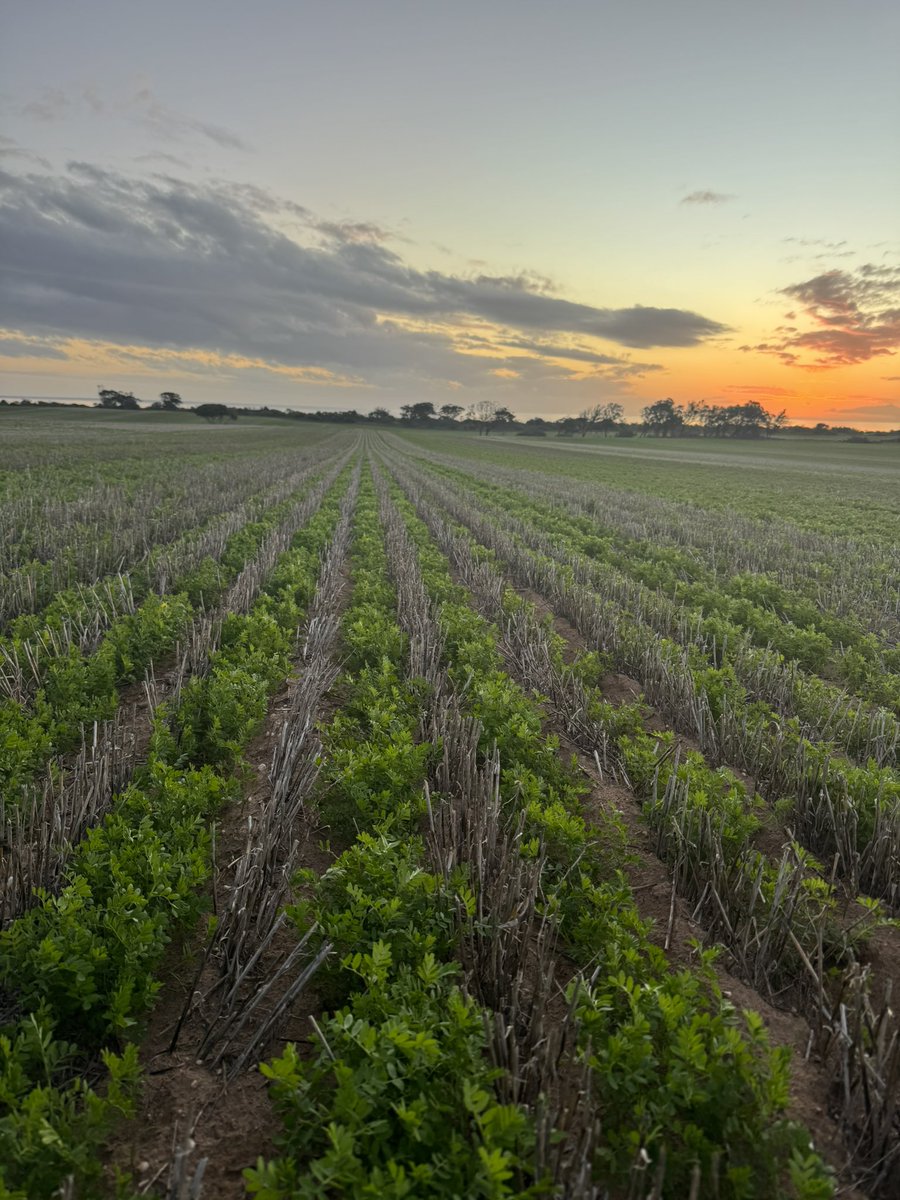
The last two seasons we’ve barely had a crop out of the ground by the 10th June.
April sown lentils starting to stretch their legs under Almost Perfect conditions 🌱 🌧️ ☀️
4
3
84
4,625
JUNE WEATHER PEAK CONTINUES TO BUILD
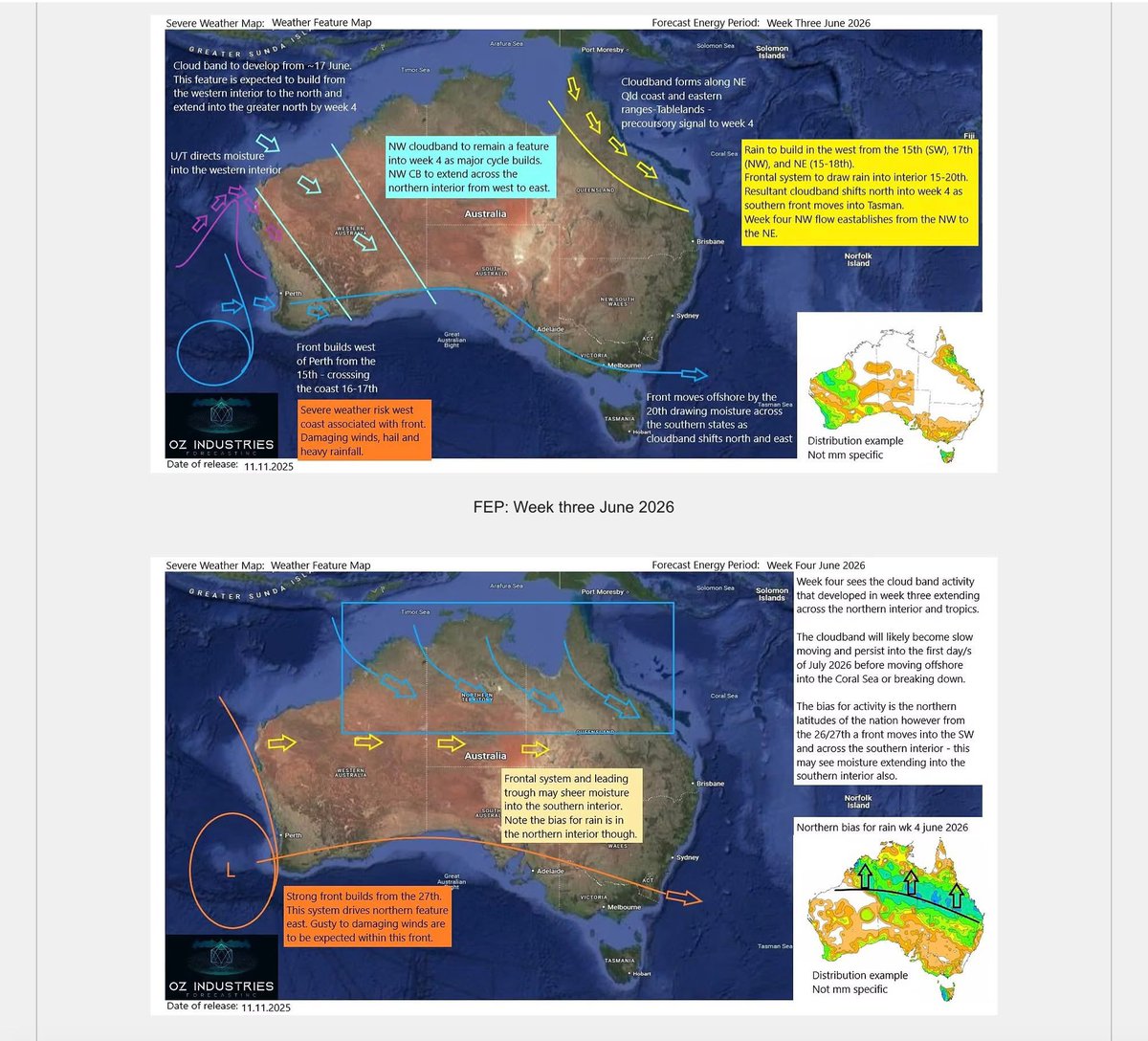
The latest guidance continues to align well with the June forecast issued in November 2025.
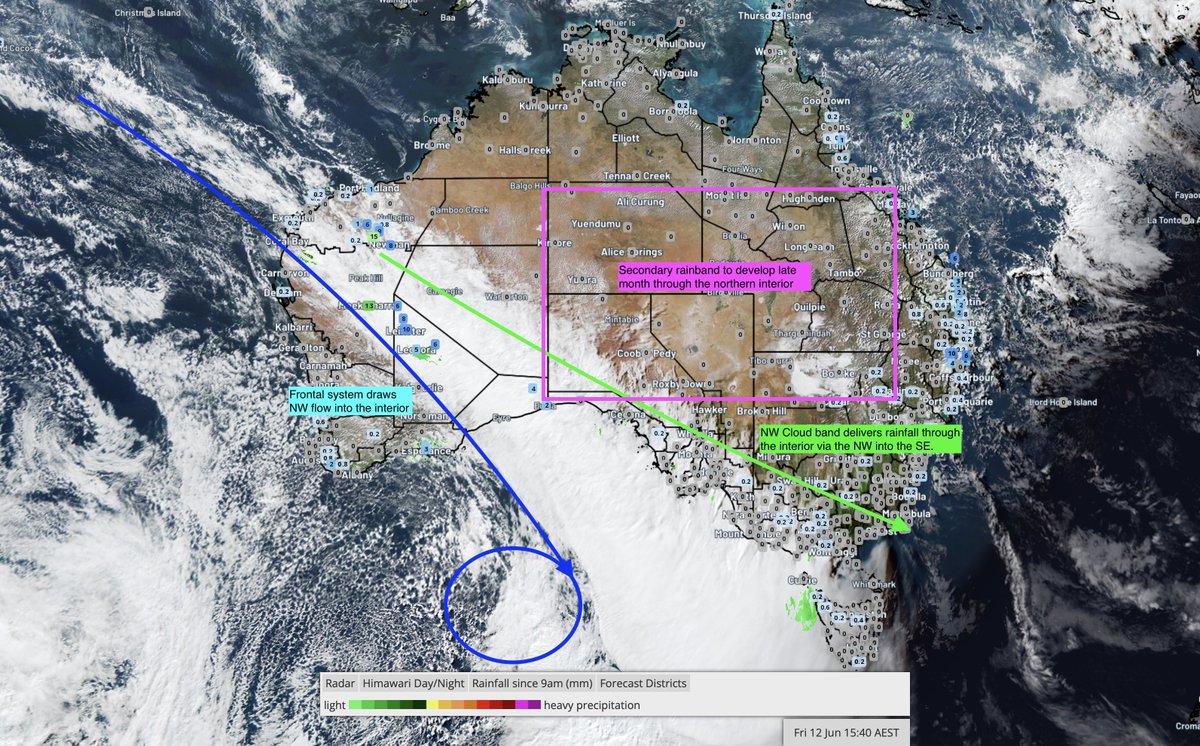
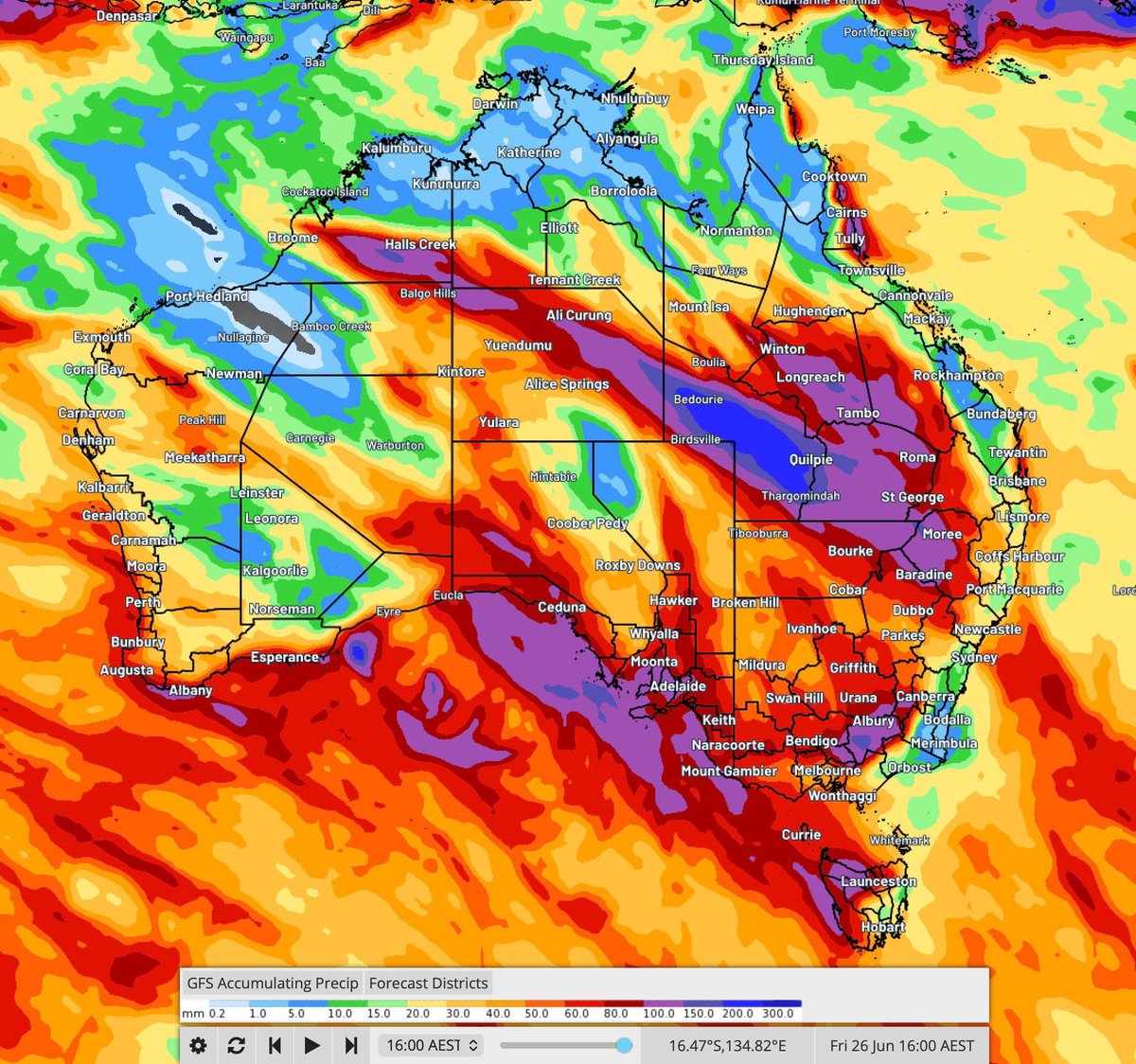
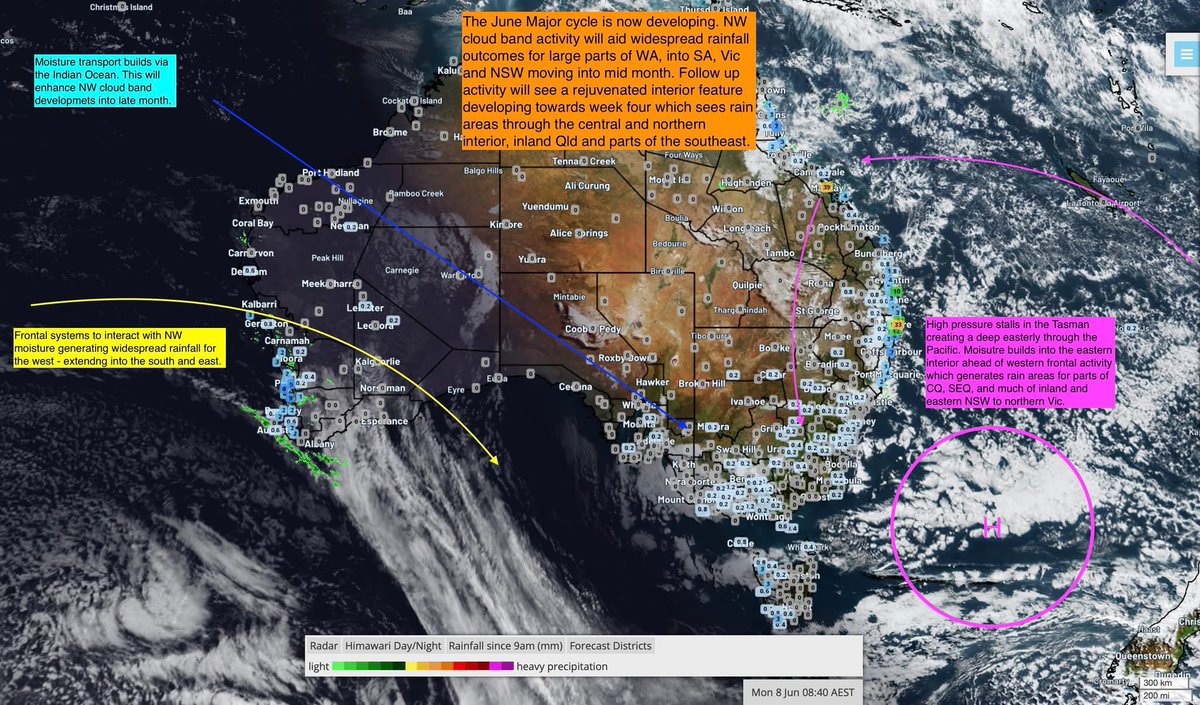
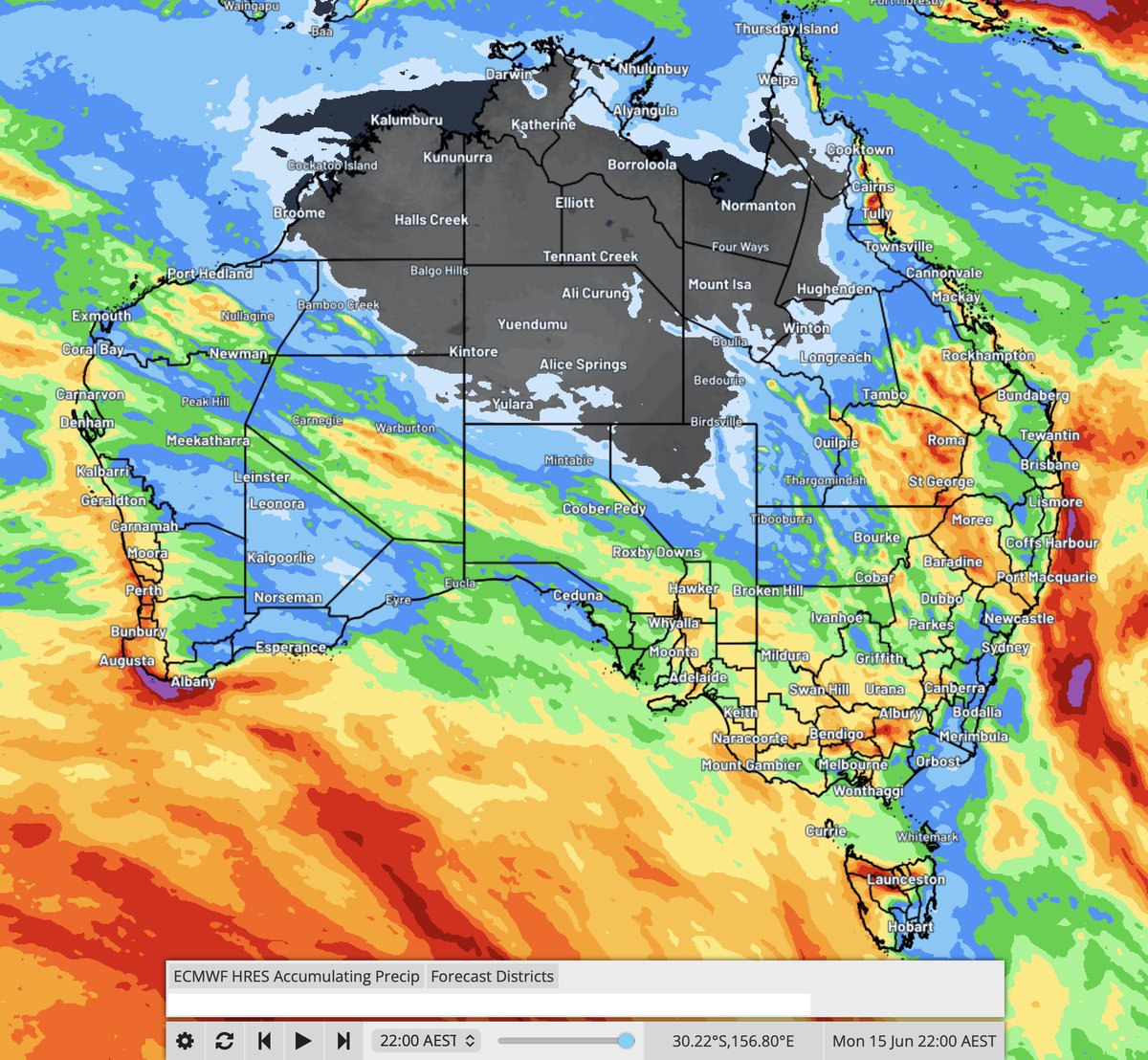
An initial northwest-to-southeast moisture flow is now becoming established from Western Australia through the interior and into the southeast, supporting the development of a broad inland rainfall corridor through the second half of June.
As we move deeper into late June, cloudband activity is expected to reinvigorate across the northern interior, extending from WA through the NT and into QLD before interacting with frontal systems moving across southern Australia.
This interaction remains a key feature of the forecast and may allow northern moisture to be sheared south and east into central and southern regions of the nation during the latter part of week four.
Current accumulating precipitation guidance shows a rainfall distribution remarkably similar to the broad-scale pattern highlighted seven months ago, with activity extending from the northwest through the interior and into large parts of SA, NSW, VIC and TAS.
Key points:
• Northwest cloudband now developing through the interior
• Moisture corridor extending WA → NT → QLD → Southeast
• Follow-up cloudband activity expected late June
• Deep frontal activity remains a risk during week four
• Rainfall opportunities continue across southern agricultural regions and inland Australia
• Distribution remains more important than exact rainfall totals at this lead time
Important: Use accumulating precipitation maps as a guide to rainfall distribution and potential ranges, not as deterministic rainfall outcomes. Exact totals, locations and timing will continue to evolve as the event approaches.
Long-range forecasts now extend through to December 2026.
🌦️ Know the Future™
Cynoptec Climate Intelligence
4
8
879
Cynoptec retweeted

Jun 10
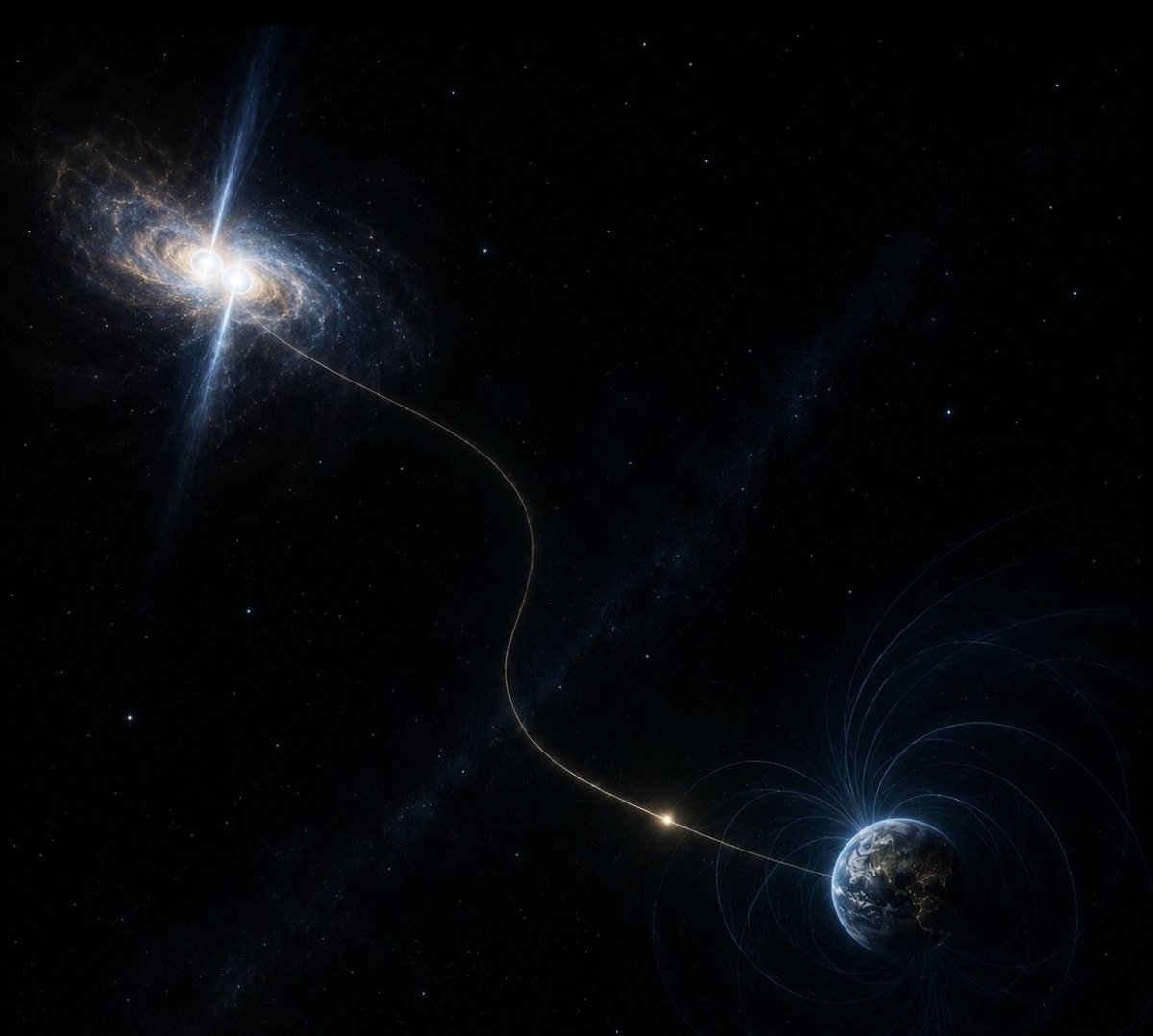
The Amaterasu particle is one of the most energetic cosmic rays ever detected. It was recorded by the Telescope Array in Utah in 2021 with an estimated energy of about 240 exa-electron volts, placing it in the same extreme category as the famous “Oh-My-God particle” detected in 1991.
The problem is that its apparent arrival direction pointed toward a cosmic void, a region where there is no obvious astrophysical source powerful enough to accelerate a particle to such an enormous energy. That made it difficult to explain both where it came from and what kind of particle it actually was.
New research suggests that the answer may be that some of the highest-energy cosmic rays are not protons, and not even ordinary heavier nuclei such as iron, but ultraheavy atomic nuclei, meaning nuclei heavier than iron. This matters because different particles lose energy in different ways as they travel through intergalactic space.
Protons and lighter nuclei interact with background radiation fields and tend to lose energy more quickly over cosmic distances.
According to the simulations, ultraheavy nuclei can retain their energy more efficiently at the extreme energies involved, especially below roughly 300 EeV, making it more plausible that they could travel from distant sources and still reach Earth with energies like that of the Amaterasu particle.
This does not mean that every ultrahigh-energy cosmic ray is ultraheavy. The proposal is more careful than that: if some of the most extreme events are ultraheavy nuclei, then their propagation through space, their magnetic deflection and their possible sources would need to be interpreted differently.
Ultraheavy nuclei carry more electric charge than protons, so magnetic fields can bend their trajectories more strongly. That could help explain why the arrival direction of a particle like Amaterasu does not point neatly back to an obvious source. Its true origin may be elsewhere, with its path distorted during the journey.
The most plausible production sites would be some of the most violent environments in the Universe: collapsing massive stars that form black holes, strongly magnetized neutron stars, and mergers of neutron stars. These are environments already associated with extreme particle acceleration, gravitational waves and, in some cases, gamma-ray bursts.
The study also suggests that if ultraheavy nuclei really contribute significantly at the highest energies, future observatories should detect signs that the composition of the most energetic cosmic rays is heavier than iron. That would be a direct observational test of the idea.
The result is important because it gives a physically plausible way to reduce the mystery around particles like Amaterasu. Instead of requiring a nearby, obvious and extremely powerful source in the direction from which the particle appeared to arrive, the ultraheavy-nucleus scenario allows for a more complex picture: a particle born in a violent cosmic explosion, retaining more of its energy than expected during its journey, and arriving at Earth from a direction that may have been substantially altered by magnetic fields.
It is not a final solution, but it gives researchers a concrete and testable framework for one of the oldest problems in high-energy astrophysics: where the most energetic particles in the Universe come from.
👉 share.google/rniyptKpv6YwQ2V…
13
63
358
8,821
LONG-RANGE FORECASTS VS SHORT-RANGE GUIDANCE
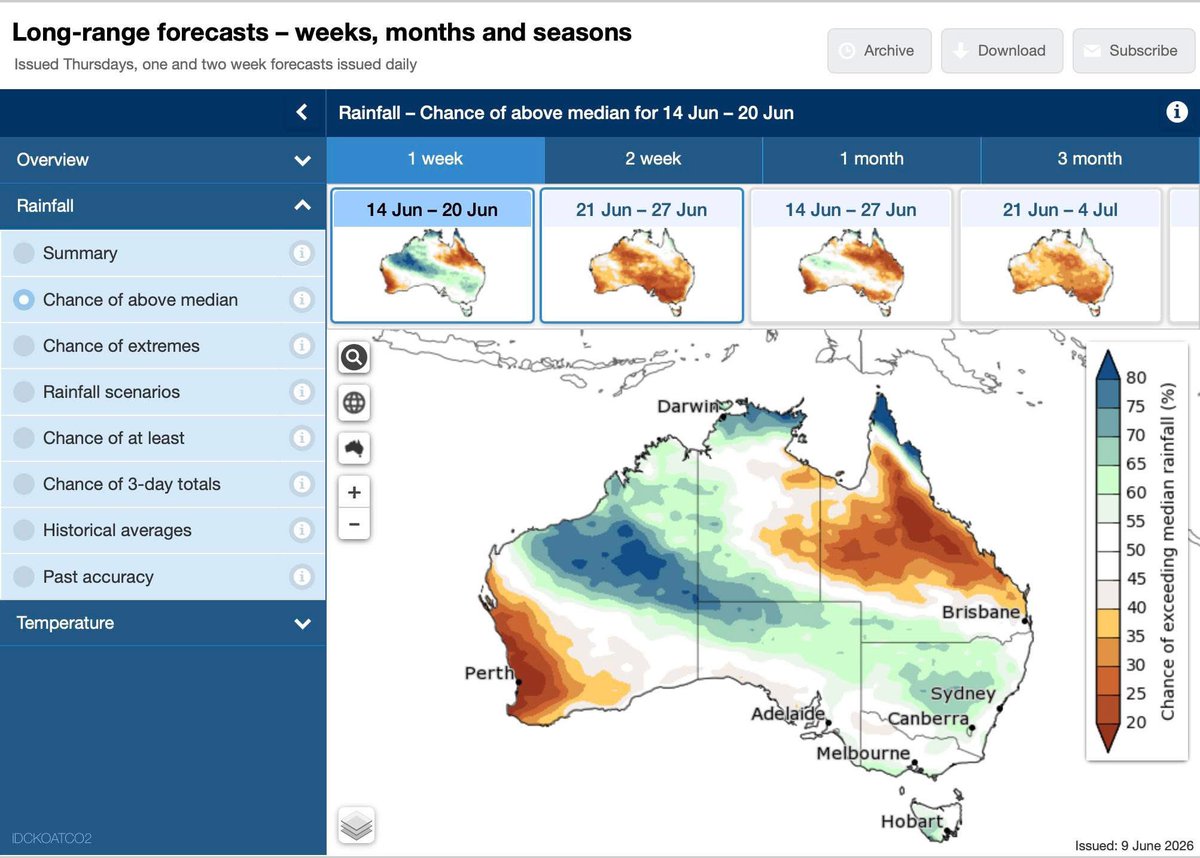
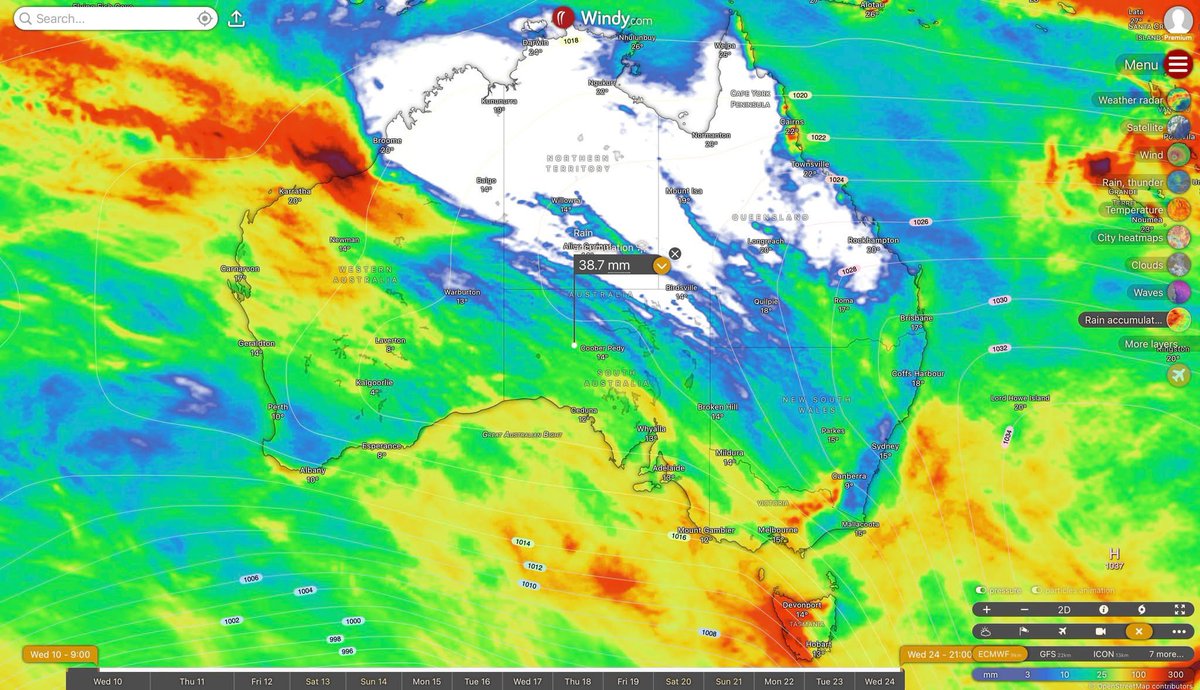
The latest Bureau rainfall outlook has now shifted toward the development of a northwest cloudband and inland rainfall corridor through mid to late June.
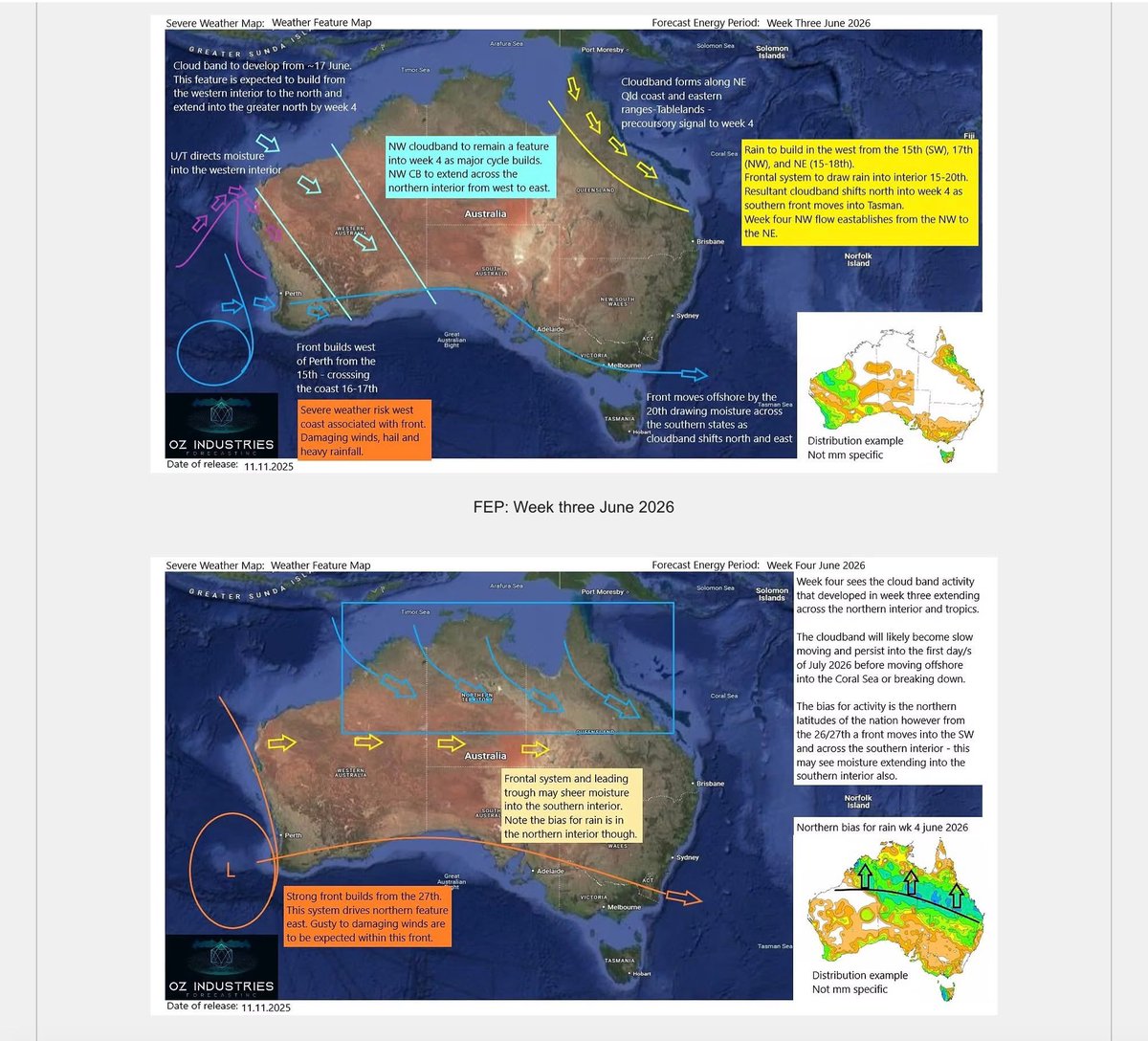
What makes this particularly interesting is that these are the same broad weather features highlighted in our long-range forecast released seven months ago in November 2025.
While short-range models are only now beginning to resolve the event within the 1–2 week forecasting window, our forecast identified:
-Northwest cloudband development from mid June
-Moisture transport from the northwest into the interior
-Frontal interaction across southern Australia
-Rainfall extending from WA through the interior toward SA, NSW and QLD
-Ongoing cloudband activity into late June
The current satellite, model and rainfall guidance now shows that pattern unfolding across the nation.
A broad northwest-to-southeast moisture corridor is developing through the western and central interior, with frontal systems crossing southern Australia and interacting with inland moisture to generate widespread rainfall opportunities.
This is the difference between weather forecasting and long-range forecasting.
Weather models excel at identifying the finer details once an event moves into range.
Long-range forecasting focuses on identifying the larger atmospheric cycles and weather periods months in advance before conventional guidance is able to resolve the specifics.
As June progresses, attention now turns toward the continuation of this moisture corridor through late June, with further cloudband activity remaining a feature of the national outlook during late July.
BOM Outlook: ~1 week lead time
Cynoptec Long-Range Forecast: ~7 months lead time
The atmosphere is now beginning to deliver what was outlined back in November 2025.
🌧️ Australia's next major national weather period is underway.
🌐 Forecasts extending through to December 2026 are available via Cynoptec.
Know the Future™
1
1
4
1,275
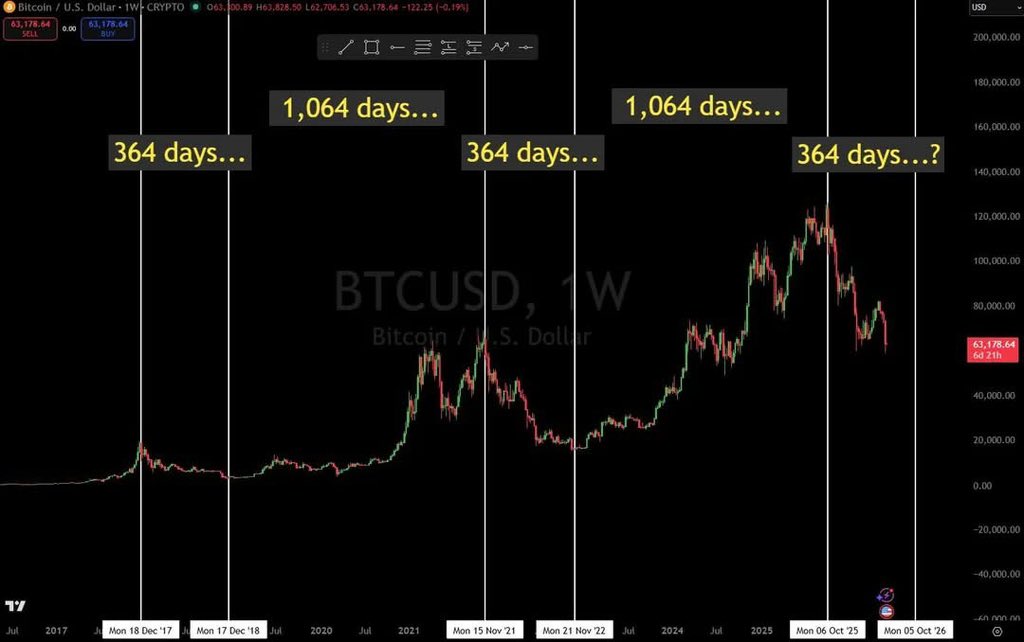
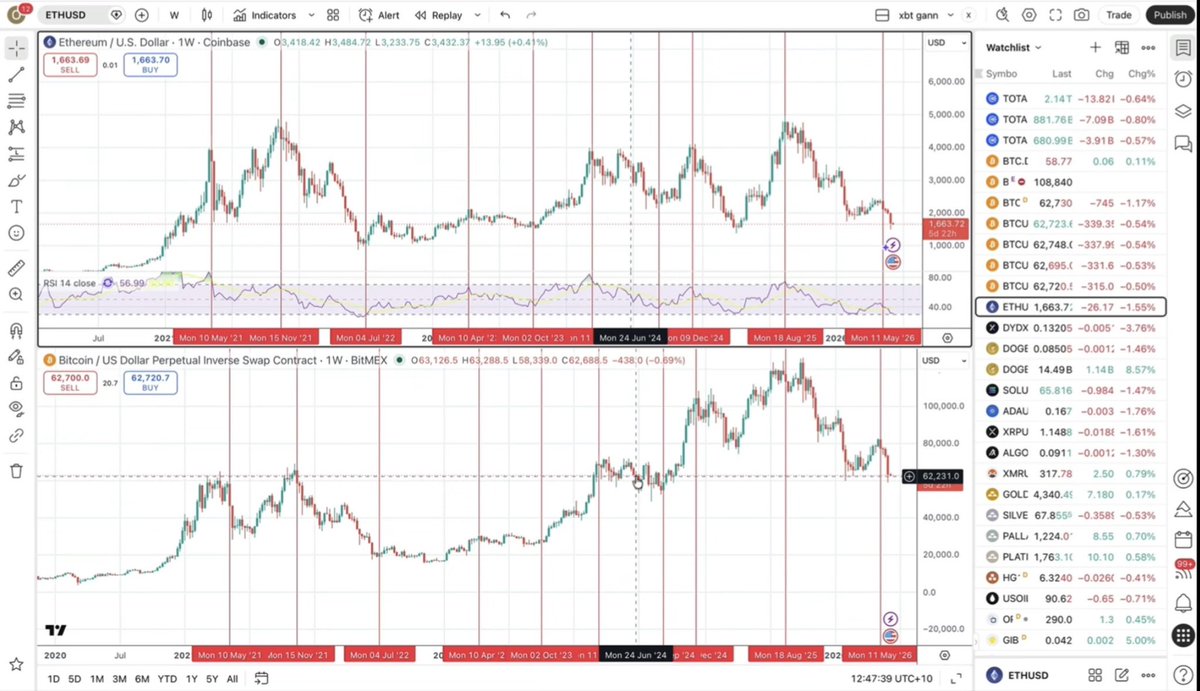
Bitcoin just slipped back under $60,000, an important level of both 2024 and 2021.
The headlines say "crash." The cycle sees it differently.
→ The four-year rhythm, and why we are in the down year
→ A target band as low as $30K
→ Watch levels for ETH, XRP, SOL, ADA and DOGE
→ The one bottoming signal worth waiting for
Full update:
ozindustriesforecasting.com/…
Know the Future™
1
347
Cynoptec retweeted

Jun 8
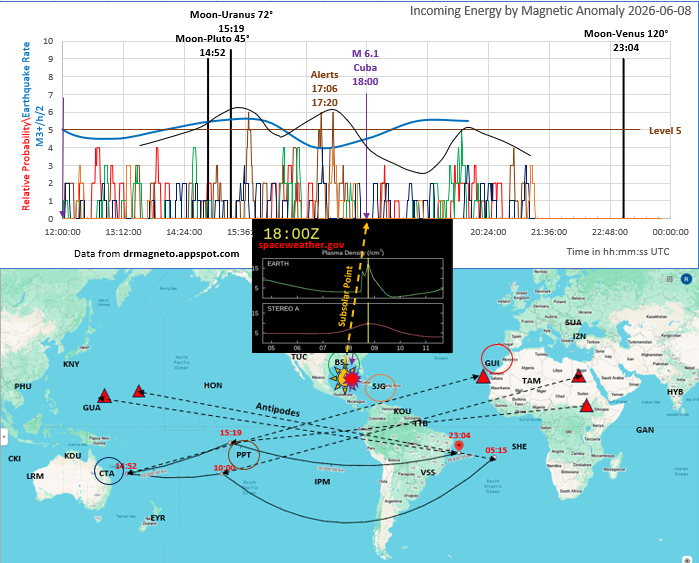
⚠️Is there ANYONE who cannot see that the peak plasma arrival at 18:00 UTC from a coronal mass ejection (CME) triggered the M 6.1 earthquake at Cuba. The Sun was directly over the epicenter ( /- 0.1° latitude), and within 20 minutes of zenith longitude. @StefanBurnsGeo . (@USGS - can you see?)
28
96
519
34,030
THE QUIET SOUTH IS ENDING, and the timing couldn't be better.
That frosty, settled week just gone was the calm before the build. There's a frontal sequence firing in Western Australia right now, an inland trough loading up in the east, and all three major models are on the same page. The peak rainfall phase of winter is locked in.
The part most people will miss is the direction. This one comes from the WEST, not the southeast, and that changes who actually gets the rain.
› Coastal and central-west WA lead off, accumulating toward 100 mm
› The Gascoyne in for its best rain since the summer cyclones
› Eastern inland trough fires mid-week, Maranoa down to northeast Victoria
› Northwest cloud band carries through SA and into the southeast
› Western Tasmania well in the mix
› The Northern Territory mostly sits this one out - for now!!
And it doesn't just clear away afterwards. Signals redevelop mid-month and builds again into the final week of June.
The full district-level outlook, model comparison, solar weather alignment, and a first look at our brand new rainfall model.
MEMBERS: make sure you're LOGGED IN at the top right before clicking through.
Clicking the link won't log you in automatically.
ozindustriesforecasting.com/…
One more thing. Oz Industries Forecasting is becoming CYNOPTEC. Add info@cynoptec.com to your safe senders so you don't miss the switch.
Don't guess the weather. Know the Future™
7
836
Cynoptec retweeted
Jun 8
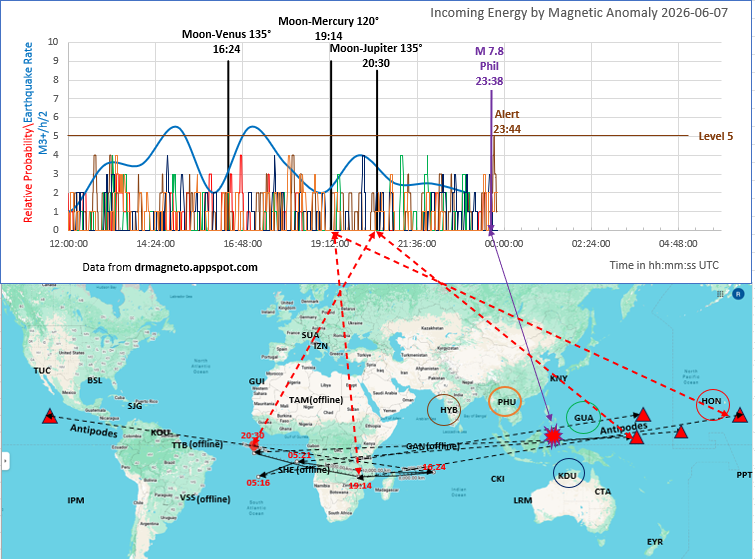
⚠️What a way to end the day! The M 7.8 earthquake at Mindanao, Philippines came as a surprise in that, although I expected Jupiter to push his influence angle out 1° or 2° (2 to 4 hours), I did not see any magnetic level 5 precursors. It turns out the the precursors for such a large quake somehow jumped over the nearby stations, landing at farther stations to the East and West. Since the fault line ran North-South, the preferred direction of the precursors was East-West. Brief checking showed a magnetic level 7 precursor at Pamatai, Tahiti (PPT), 1 h 2 min before the quake.
13
43
194
17,079
Cynoptec retweeted
Jun 7
⚠️Here is more evidence confirming what Matthew is saying about "been way too quiet" especially in the realm of M 5 earthquakes which seem to be a favorite of Moon-Planet alignments: Notice the declining success rate (trend line) that has occurred when forecasting M 5 earthquakes from Moon-Planet aspects. The quakes just have not been happening. However we may now be starting an upswing.
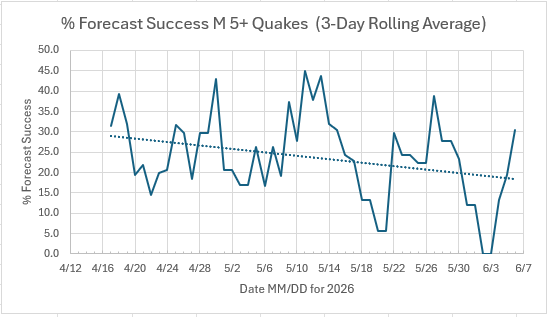

Seems like we're in a "charging" phase. It's been way too quiet even with low Magnitude events.
What will buck the lull?
A burst of M5's
An overdue M7
I have my areas of concern so for now it's a waiting game!
4
19
2,263