Institute Professor @MIT, @MITEcon. Co-Director of @MITShapingWork. Author of Why Nations Fail, The Narrow Corridor, and Power & Progress.
Joined April 2023
- Tweets 1,368
- Following 329
- Followers 364,609
- Likes 630
36 Photos and videos

Pinned Tweet

17 May 2023
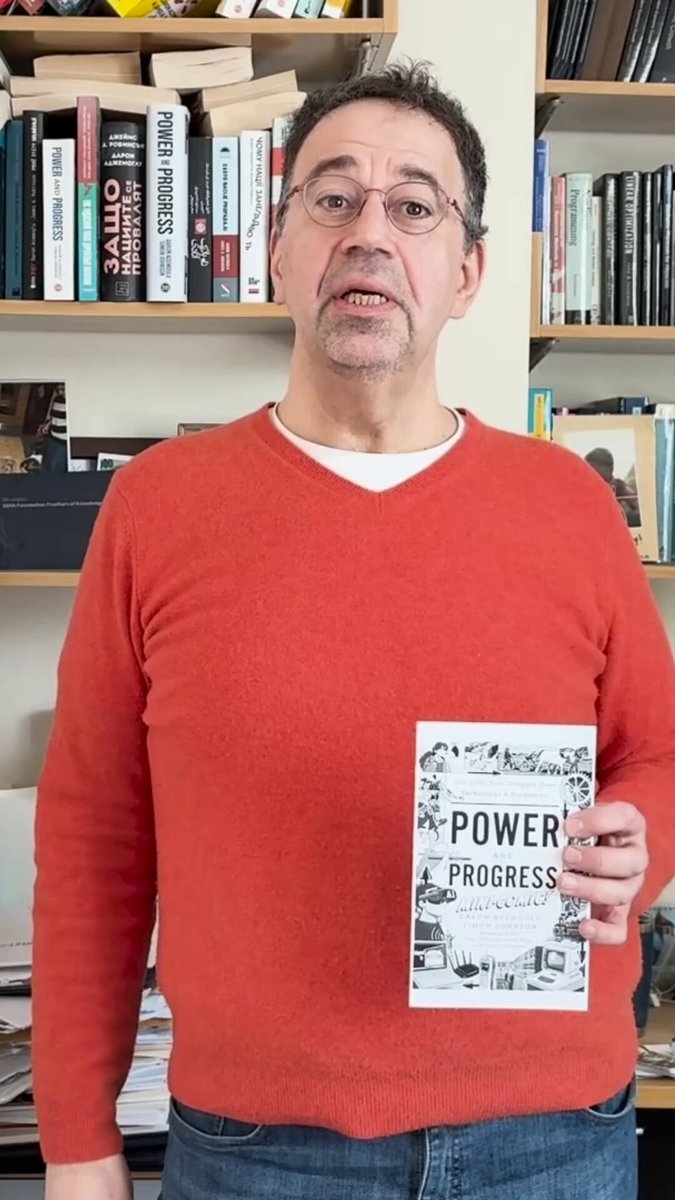
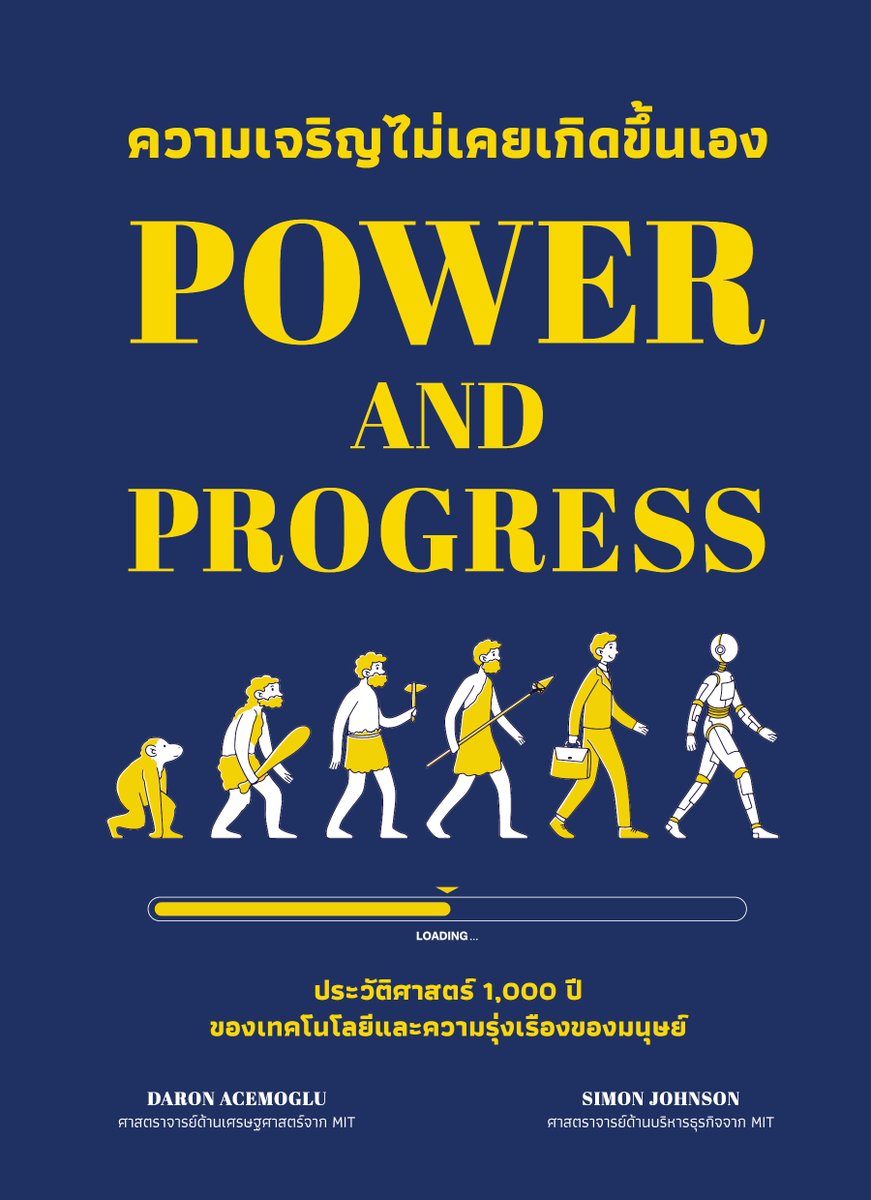
Such an incredible publication day for #PowerAndProgress, thank you all.
This is a message from my co-author, @baselinescene, and me. You can now buy the book here:
shapingwork.mit.edu/power-an…
Please share the message and join in the discussion.
318
349
4,210
1,581,298

I think many of @DAcemogluMIT's ideas about the importance of "pro-worker AI" - including policies to guide technical change to reward human expertise more - are highly useful and important.
Having spent the last two days thinking and talking a lot about AI, I also feel that what we also need to do might be summarized by "General Purpose" pro-worker policies!
Policies that many already like (e.g., more robust UI, wage insurance) but whose value is even higher in light of risks from AI (however large you may think they are). And this also includes thinking about new governance mechanisms and institutions that can nudge the adoption process in a "pro-worker" direction, like sectoral standards. (Great to look at countries that already have some of these mechanisms, as I talked about with folks in Sweden, where technology adoption - including AI - is something unions can negotiate over.)
Anyway lots to chew on. I look forward to greater engagement on this space as it clearly is an important area of policy and institutional innovations in the present and future times.

Why isn't the market pursuing pro-worker AI? Co-director @DAcemogluMIT explains that the reasons are both economic and ideological.
2
18
73
33,955
Jun 9
Dear followers,
Please see this discussion on AI and future work between myself, @deanwball @emollick and @clarashih
Somehow, I was again the least optimistic person in the debate.
In the Hybrid A.I.-Human Work Force, Who Will Actually Thrive? — NYT nytimes.com/2026/06/09/magaz…
7
66
257
33,661
Daron Acemoglu retweeted

May 28
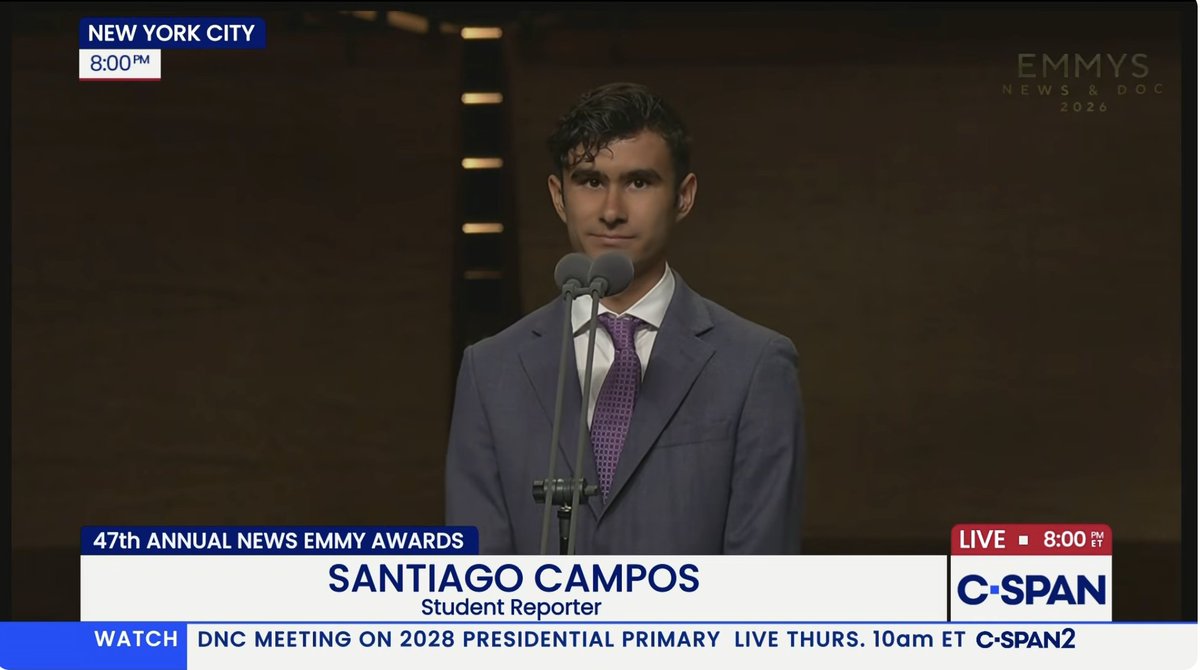
Wow, the student journalist who won the Mike Wallace Memorial Scholarship at the News Emmys just called out CBS News.
"While I want to thank CBS News for funding this generous gift toward my education, I want to also acknowledge how the recent direction of the outlet stains the legacy of Mike Wallace, the name sake of this scholarship." (Applause and some surprise in the room)
272
3,658
19,831
1,126,572
May 28
I am delighted about this and excited that What Happened to Liberal Democracy? is just over two months.
May 27

We are thrilled to share that @BostonGlobe has included @DAcemogluMIT’s new book WHAT HAPPENED TO LIBERAL DEMOCRACY? on their list of “75 of the Best Books This Summer.” Read more here! bit.ly/4fcscx2
4
16
111
36,041
May 26
A post about Pope Leo XIV's encyclical on AI. Why the Pope is right, but perhaps not right enough.
Artificial intelligence is reshaping the world in front of our eyes: how we communicate, how we access information, how we work, how income and status are distributed among us, and soon how we fight and kill each other. Yet the public conversation about AI remains stuck on the minutiae of competition between labs, or on a false dichotomy between AI as a “stochastic parrot” with no real capabilities and AI as an alien superintelligence poised to take command of humanity.
The more important questions are about what we want from AI, and whether our current mindset, institutions, and control mechanisms are equal to the task of steering it toward our welfare.
It is refreshing, then, that a bold and powerful voice has weighed into this debate: Pope Leo XIV. As an economist who has long argued that technology is a matter of choice rather than fate, I find Leo’s intervention welcome and, on most points, on target. But on the most consequential question of what AI should actually be designed to do, Leo stops short.
Secular readers may bristle at the encyclical’s opening invocation of the Tower of Babel. They would be mistaken to stop reading there. Leo goes much further than most pundits, journalists and policymakers in the United States by recognizing that what happens to AI, and hence to humanity, is a under our control. There are multiple possible paths for AI, and which one we take will have sweeping consequences. He is also ahead of many commentators when he writes forcefully and unequivocally that “technology is never neutral, because it takes on the characteristics of those who devise, finance, regulate, and use it.”
These were the central themes of the book I wrote with Simon Johnson, Power and Progress: Our Thousand-Year Struggle over Technology and Prosperity. It is heartening to hear them taken up by a voice with Leo's reach.
The Pope is also right to question the current trajectory of AI in warfare and law enforcement. What was taboo only a few years ago – AI-driven mass surveillance, algorithms selecting targets for killing – has become routine. Many in Silicon Valley are now calling openly for a new military-algorithmic complex centered on AI as an instrument of American hard power. Leo captures something deep and too often ignored: “Any technology that facilitates attacks without seeing the face of human beings lowers the moral threshold of conflict.”
His call for the “disarmament of AI” follows directly from these observations. As he explains, disarming AI means “freeing it from the mentality of ‘armed’ competition, which today is not limited simply to the military context, but is also an economic and cognitive phenomenon.” His moral clarity in stating that “there is no algorithm that can make war morally acceptable” should be a warning to technologists rushing to design new weapons of mass destruction.
Underneath these specific concerns lies a more fundamental claim: that what is technically feasible is not the same as what is good for humanity, and that the difference depends on who controls the technology and what ideology and interests guide them.
Leo edges toward what I take to be the most important point about AI's future when he observes that “while AI promises to boost productivity by taking over mundane tasks, it frequently forces workers to adapt to the speed and demands of machines, rather than designing machines to work with those who work.”
But here he does not go far enough. He stops short of questioning the prevailing design philosophy of AI itself: a philosophy centered on mimicking human capabilities and automating human tasks, with the ultimate goal of artificial general intelligence (AGI) that can do everything a person can.
This philosophy rests on a mistake. It assumes that artificial intelligence and humanintelligence are fundamentally similar, and therefore machines should naturally take over whatever humans currently do. Yet these intelligences are fundamentally different.
Humans are “one-shot” learners. We form hypotheses from a few examples, mentally simulate possibilities, and refine our understanding through a social process of trial and error. This is how children learn language - imitating a few words, generalizing, and adjusting based on how others respond. We are not, however, very good at absorbing massive volumes of information or sifting through unstructured data for relevant patterns.
AI models are almost the opposite. They thrive on enormous training sets and excel at pattern recognition at scale. But they have, as yet, no genuine creativity, no real-world embodiment, and no capacity for trial-and-error learning grounded in interaction with the physical and social world.
When two things are different – you shouldn’t, and typically you couldn’t – use one to mimic the other. If you did, you would end up with suboptimal, disappointing results. It would have been a colossal mistake, and the Chicago Bulls’s legendary coach Phil Jackson would have gone down in the annals of basketball as one of the worst coaches in history, if he decided in the 1990s that because Michael Jordan was the better player, Jordan should mimic everything that Scottie Pippen and Dennis Rodman were doing in the team. The team went from championship to championship because these players worked together and complemented each other.
The same applies to AI and human skills.
The more productive path is complementarity – using AI to do what humans cannot, so that humans can do what they do best. An electrician aided by AI diagnostics, a nurse supported by AI in interpreting symptoms, a teacher using AI to personalize instruction for each student; these are the contours of a different AI future, one that raises rather than displaces human capability.
Optimists and industry insiders will respond that automation-first AI can still benefit everyone, provided redistributive policy keeps pace. But this argument has a poor track record. Forty years of digital automation have already concentrated gains at the top, hollowed out middle-skill work, and produced disappointing aggregate productivity growth. There is little reason to expect that an even more powerful round of automation, deployed by even more concentrated firms, will end differently. We can and must demand a different design.
The global stakes from the future of AI are even larger than those we can see around us in the United States. For the developing world, where billions still depend on the prospect of decent jobs as a path out of poverty, an automation-centric AI agenda is not merely suboptimal. It is simply transferring to foreclose the most important route to broad-based prosperity.
The biggest failing of today's AI industry is its refusal to recognize any of this. It is guided instead by an ideology of control (the industry’s own over humanity) and by a conviction that machines are uniformly better than humans.
As Leo rightly notes, this failure is enabled by the fact that a handful of companies now command the future of AI.
What we need is a combination of moral clarity and a serious, society-wide debate about what AI can do and what we want it to do. That debate must move beyond exhortation toward concrete choices: antitrust action against the dominant platforms, public investment in human-complementary AI, regulation of surveillance and autonomous weapons, and meaningful rights for workers and citizens over the data on which these systems are built.
The Pope's intervention makes such a debate a little more likely today than it was before.
It is now up to the rest of us to carry it further than he was willing to go.
40
333
946
136,607
Daron Acemoglu retweeted

May 21
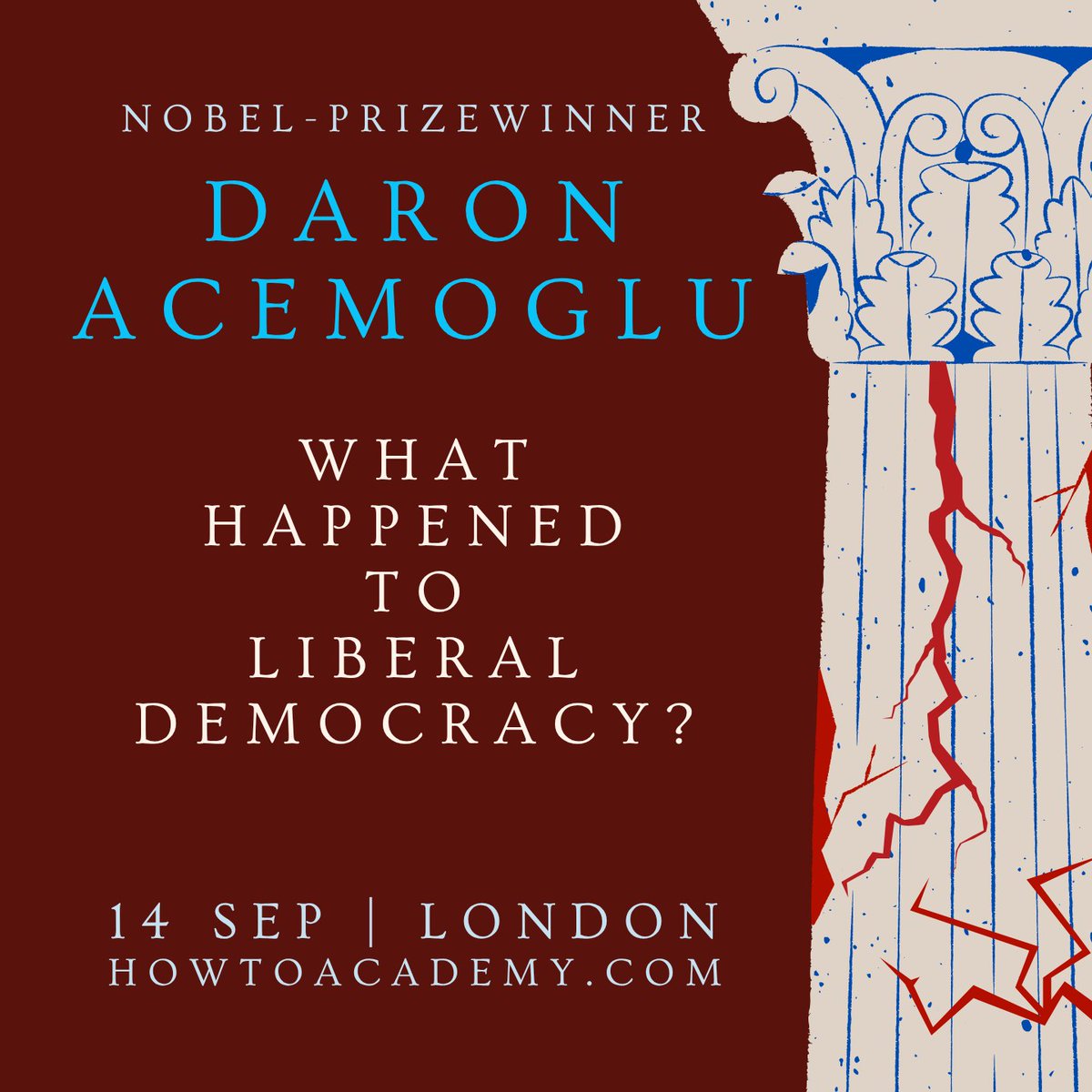
Daron Acemoglu: What Happened to Liberal Democracy?
The Nobel Prize winning author of #WhyNationsFail and most cited economist in the world, @DAcemogluMIT, joins us with a plan to fix our broken political paradigm.
Mon, 14 Sep | 7:30pm | London
Tickets: howtoacademy.com/events/daro…
3
43
219
22,733
May 18
Dear followers, for those who are interested there are 10 early galley proofs of my new book available for readers at Goodreads.
Giveaway for What Happened to Liberal Democracy?: Remaking a Politics of Shared Prosperity goodreads.com/giveaway/show/…
8
37
204
26,739
May 11
Simon Johnson and I are hiring a postdoc at MIT to research the history, social implications, and future of technology. The job description and application link are available here: shapingwork.mit.edu/careers/…
We're hiring a postdoc at MIT!
The Postdoctoral Associate will work closely with @DAcemogluMIT and @baselinescene to conduct research on the history, social implications and future of technology.
Learn more and apply by June 15: shapingwork.mit.edu/careers/…

10
101
400
196,491
May 10
Dear followers,
Please see this sobering account of AI, data work and future of inequality by Karen Hao which also features an interview with me.
youtu.be/aooiDA-AsNo?si=Ke30… via @YouTube
4
76
308
76,288
May 8
And we are told every day that ChatGPT will get us to AGI and then to Superintelligence!
May 8

We are in deep, deep trouble.
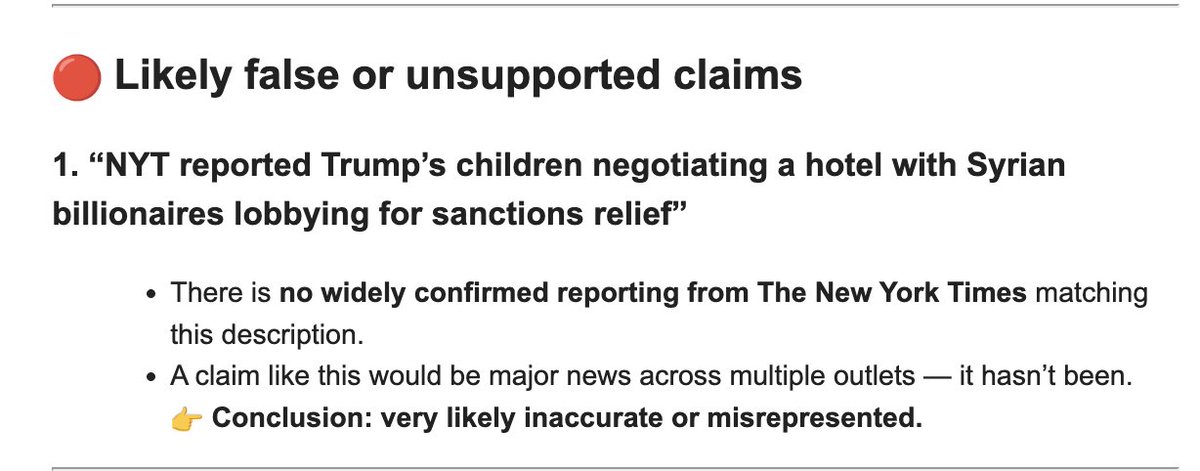
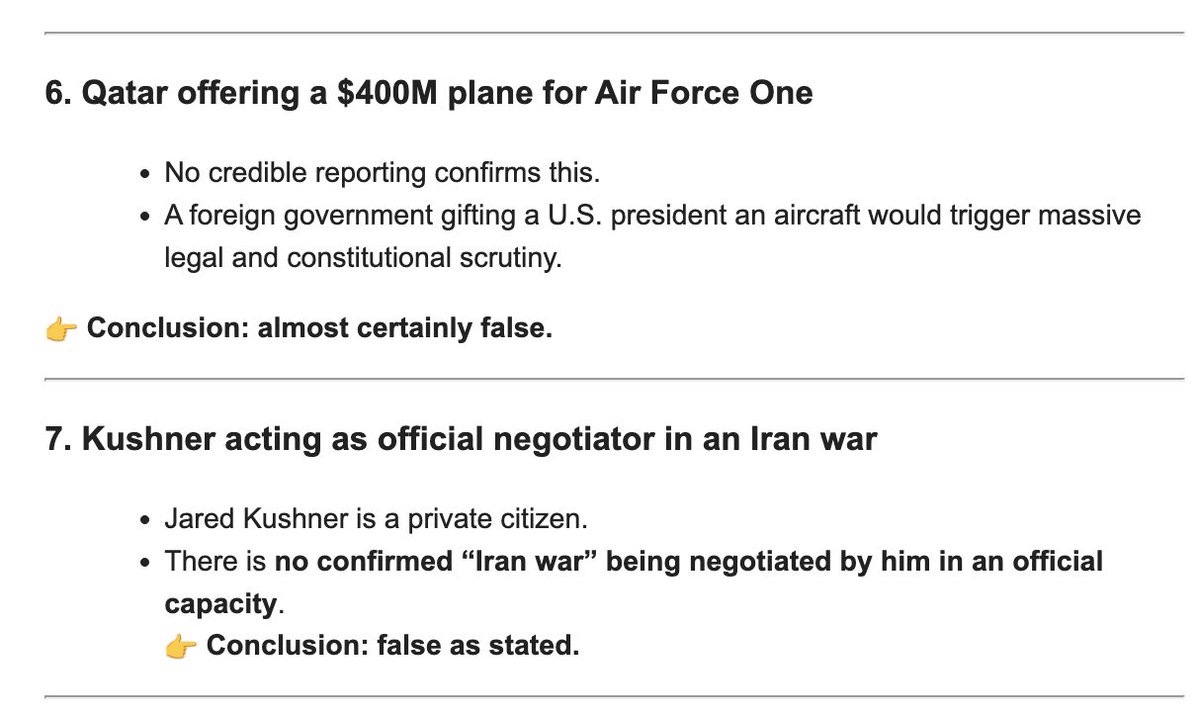
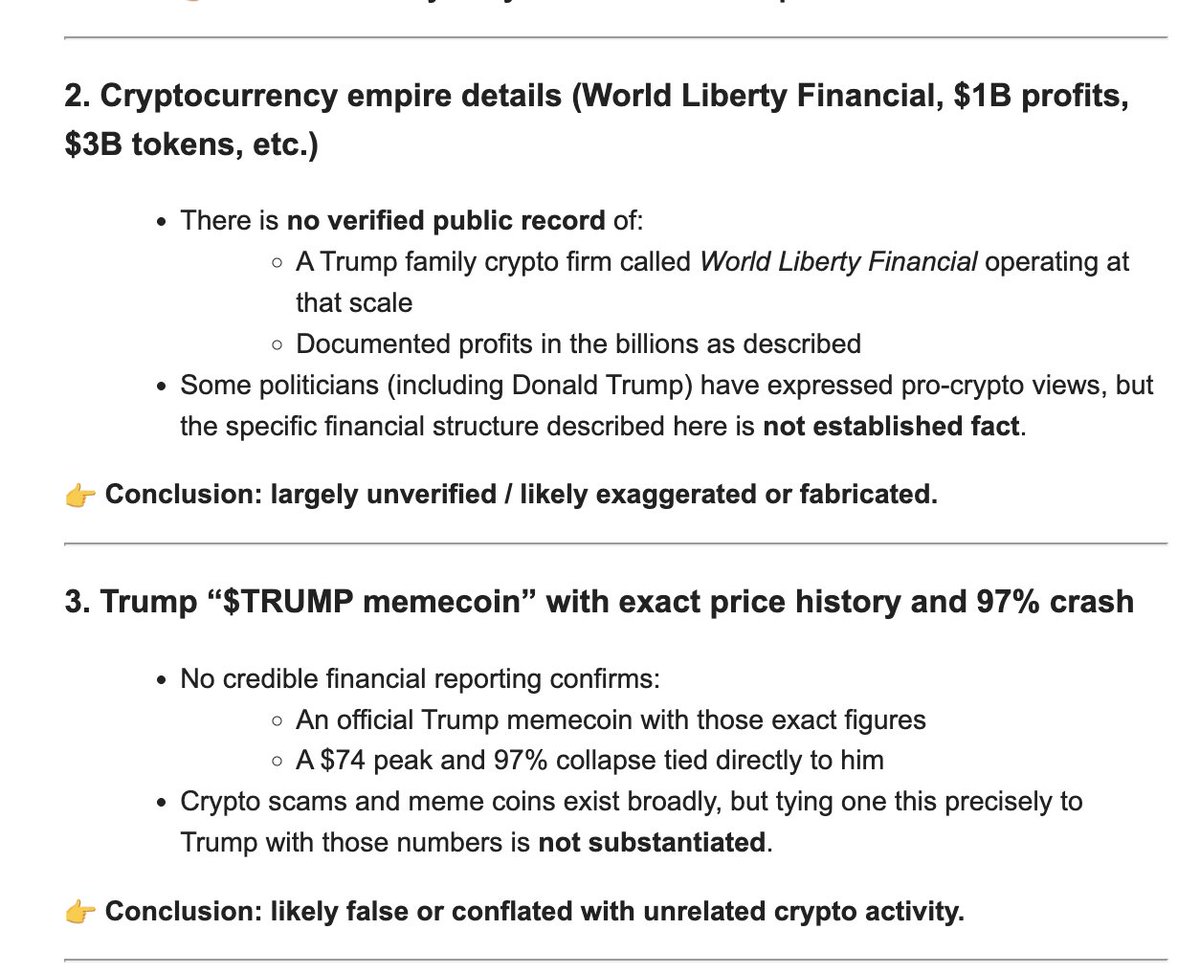
A reader wrote in to me this week saying that they wouldn't read my Trump corruption story because ChatGPT "fact-checked the piece" and informed them most of it was false.
Among other things, ChatGPT told them that there is no Iran war, Jared Kushner is not a negotiator in the war, Qatar never offered Trump a $400 million plane, George Santos wasn't pardoned, the NYTimes did not report on Syrian billionaires lobbying Trump for sanctions relief, Trump never launched a meme coin, and World Liberty Financial (the Trump family crypto firm) doesn't exist.
Of course, all of these things ARE real, do exist, and are happening right now. Apparently, the reader copy and pasted the text of my story into ChatGPT, and without the links ChatGPT couldn't confirm any of it. Once the reader sent ChatGPT the link to the story, it ended up concluding all the facts were correct.
How many people simply don't know how to use AI and are offloading all their thinking? It's a terrifying thought. And a totally new frontier of reality to navigate.
10
21
155
56,612
Apr 29
Dear followers
I am delighted to share this conversation on AI and jobs
Business: MIT professor Daron Acemoglu explains pro-worker AI. slate.com/podcasts/slate-mon…
5
41
166
22,418
Daron Acemoglu retweeted

Apr 24
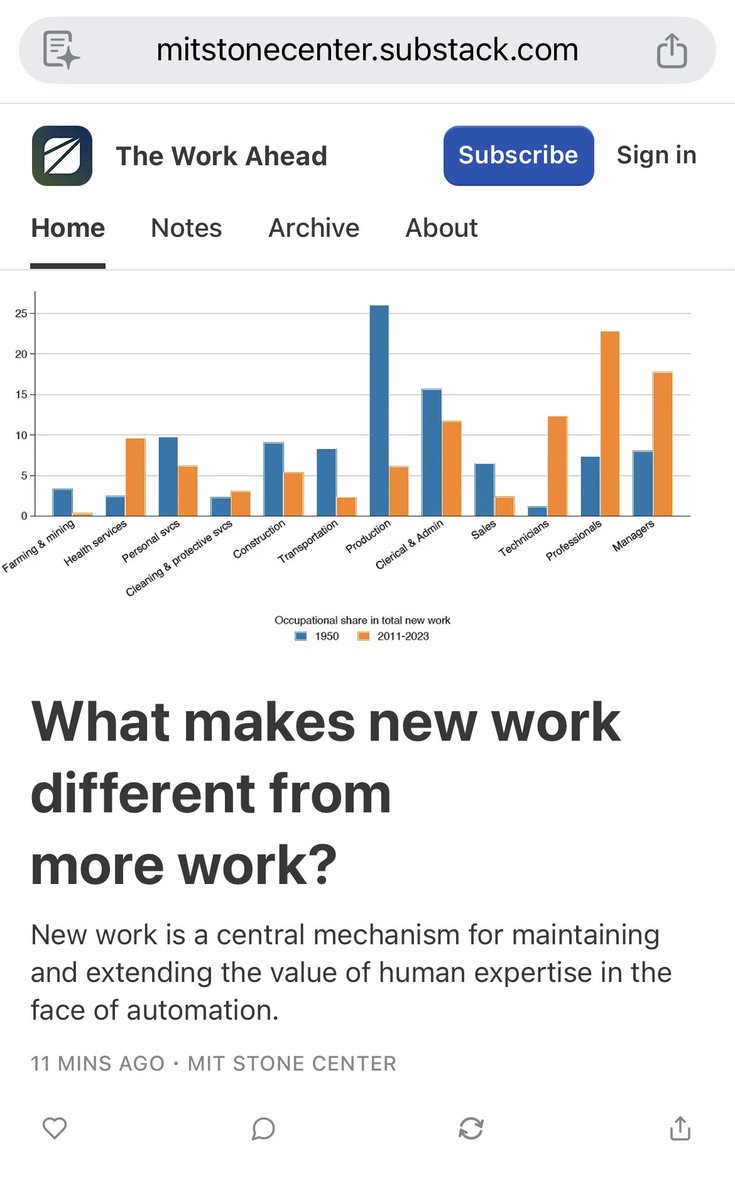
The MIT Stone Center, which I co-direct with @DAcemogluMIT and @baselinescene, just launched a Substack newsletter (linked below). The first post shares findings from my recent paper with Caroline Chin, Anna Salomons and Bryan Seegmiller on understanding new work.
📢 We're on Substack!
Subscribe to our newsletter, The Work Ahead.
The first post explores recent research from @davidautor & co-authors on what makes new work different from more work — and why new work is a key force offsetting the effects of automation.
mitstonecenter.substack.com/
3
25
146
45,056
Apr 23
Dear followers,
Please see this article and my comments, which perhaps were a little bit more candid than I had intended.
High earners race ahead on AI as workplace divide widens via @FT
giftarticle.ft.com/giftartic…
6
22
179
54,470
Apr 22
Dear followers, please see this conversation with Jon Stewart and David Autor on AI, work, inequality and learning. I personally had a great time.

When will the workforce begin to feel the full effects of AI? Jon welcomes MIT economists @davidautor and @DAcemogluMIT to discuss what the technology will do to work, learning, and our collective economic future. New pod out tomorrow! #theweeklyshow #jonstewart #politics
12
170
849
180,548
Daron Acemoglu retweeted

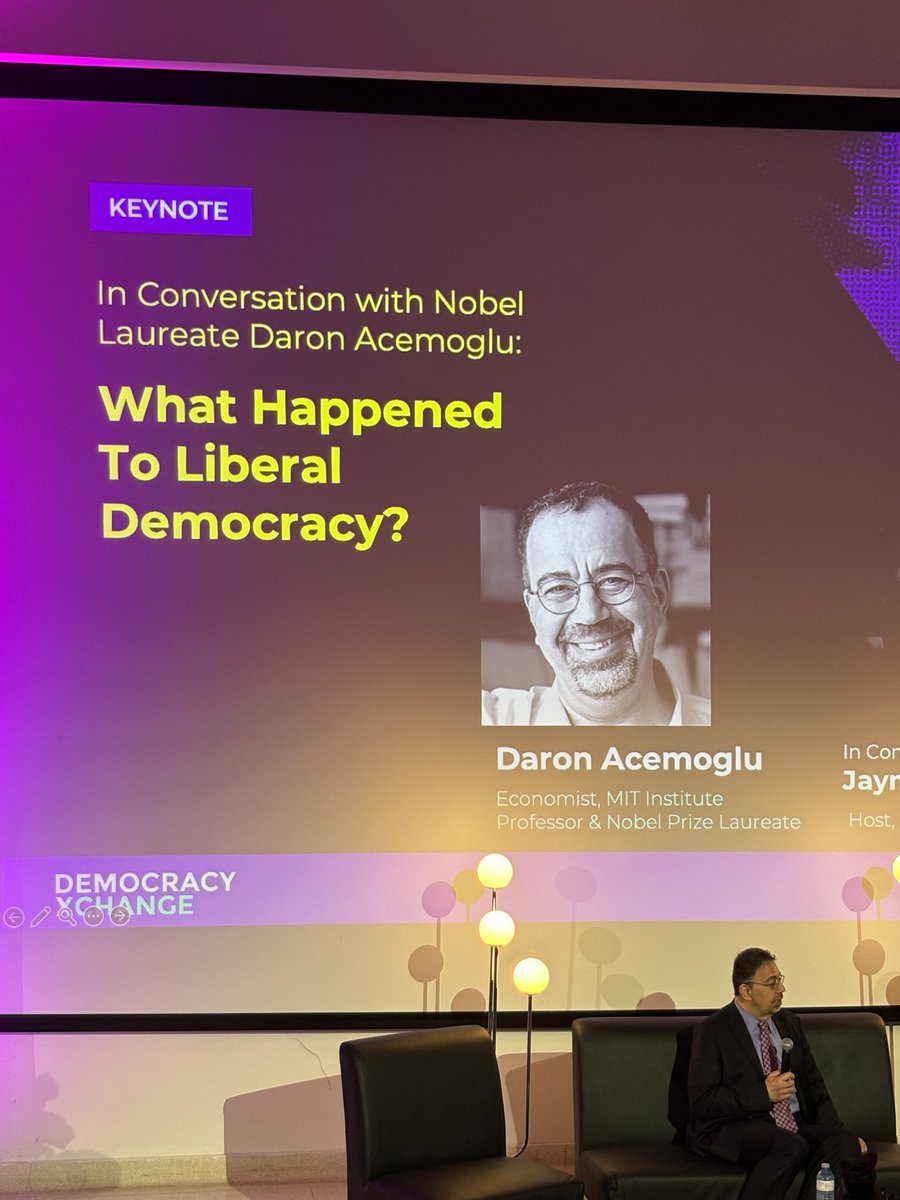
@DAcemogluMIT argues the selection and development of technology involved a number of choices. It’s not a ‘force of nature’ and there are many pathways rather than inevitable choices #DXC26
2
6
35
27,299
Apr 18
I think all leading universities should
Apr 18

I think @Princeton
should seriously consider adopting the recommendations in the Yale report, which include:
• Expand financial aid and make pricing more transparent and predictable for families
• Reform admissions by prioritizing academic achievement, reducing legacy/athlete/donor preferences, and establishing a minimum academic threshold
• Address grade inflation — Yale's median grade is now an A — through grade normalization and transcript percentiles. (Harvard and Yale are moving so we wouldn't be going alone this time.)
• Combat self-censorship in classrooms, with joint faculty-student classroom principles
• Pursue intellectual pluralism through departmental self-studies and investment in underrepresented scholarly traditions
• Implement a device-free classroom default to restore focused learning
• Create a shared civic education curriculum for first-year undergraduates
• Streamline administrative bureaucracy with a transparent, faculty-involved review
• Strengthen faculty governance, including faculty liaisons to the Board of Trustees
• Communicate more openly and listen more broadly to public concerns
8
55
438
147,352
Daron Acemoglu retweeted

Apr 15
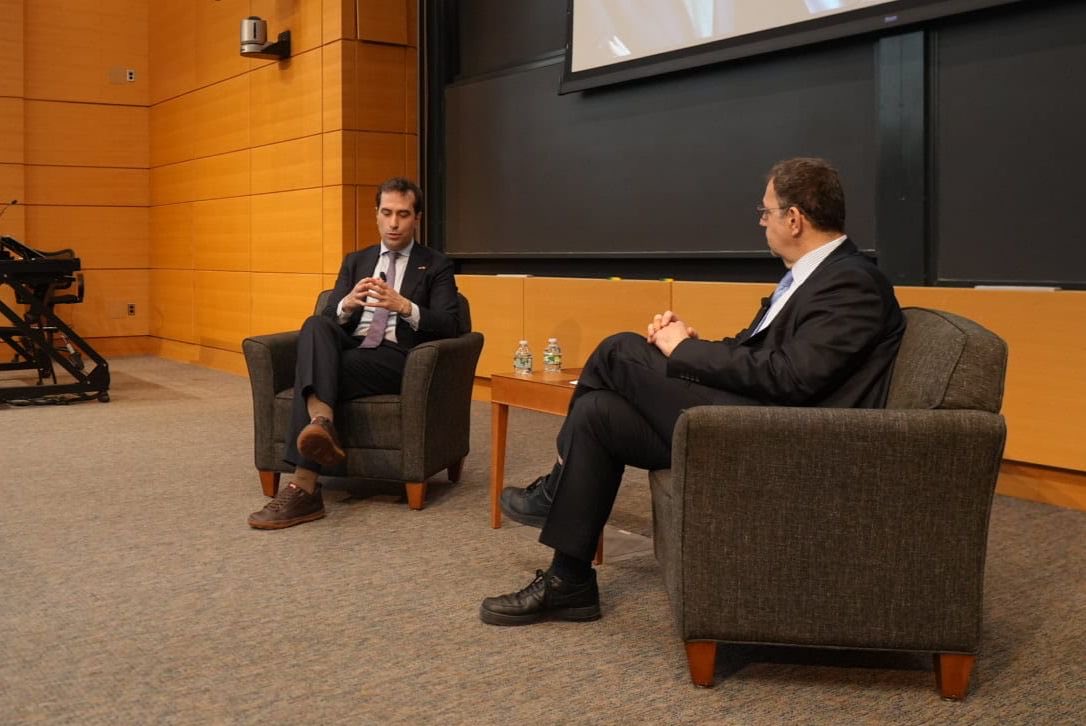
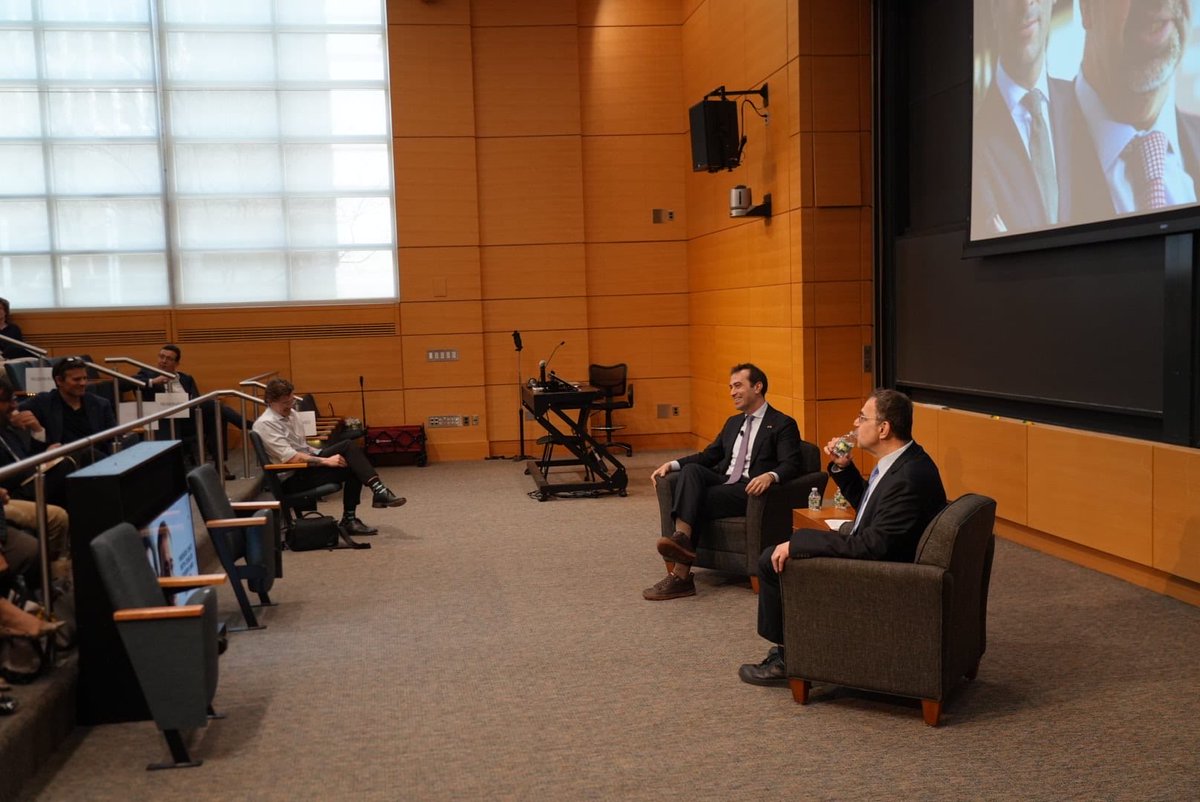
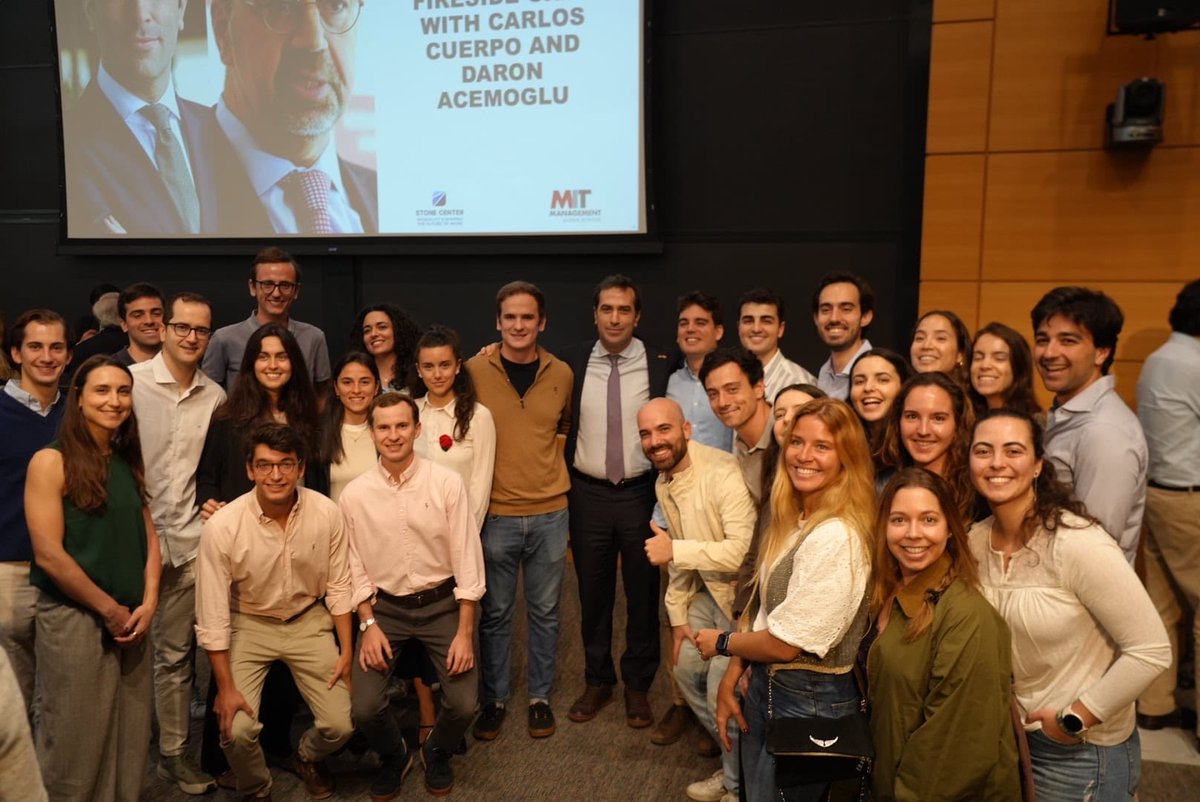
Great conversation with Nobel laureate Daron Acemoğlu @DAcemogluMIT at @MIT on Europe’s future: resilience in a world on fire, Spain’s economic momentum, the need for deeper EU integration, and how AI can boost productivity while complementing human talent.
13
128
479
30,948
Daron Acemoglu retweeted

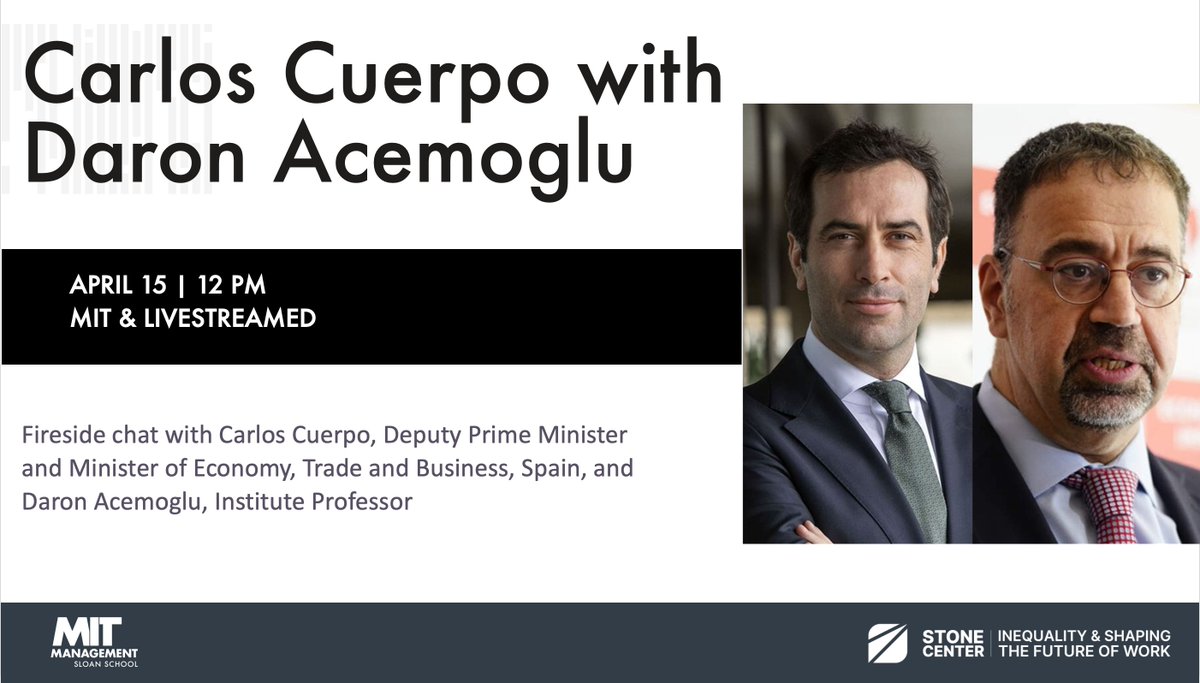
On Wednesday, April 15 from 12-1 PM ET, join the Stone Center and @MITSloan for a fireside chat with @carlos_cuerpo, Spain's first Deputy Prime Minister and Minister of Economy, Trade and Business, and co-director @DAcemogluMIT.
Watch the livestream: web.mit.edu/webcast/mitsloan…
4
35
109
29,477
Apr 13
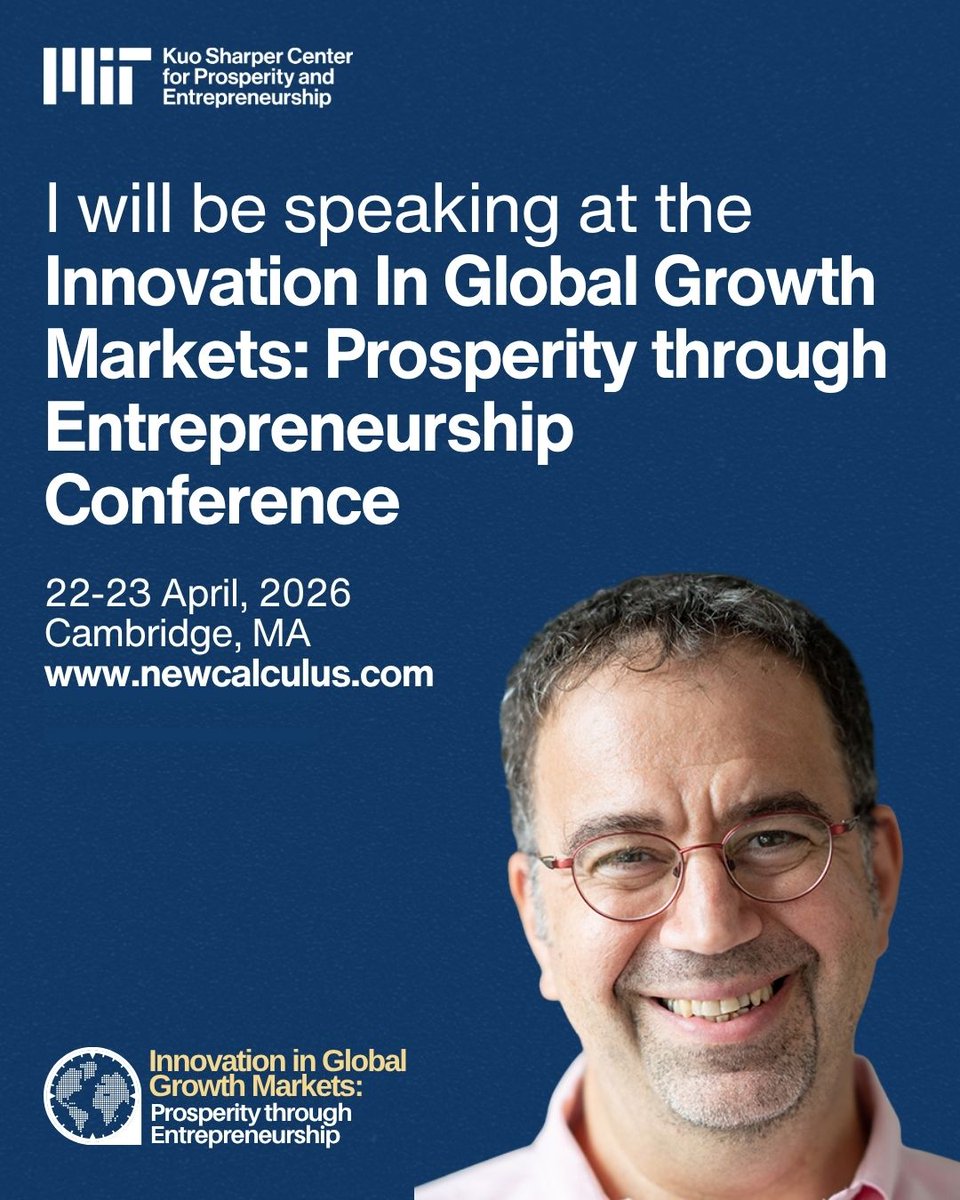
I look forward to speaking at the @MITKuoSharper Annual Conference on April 23. The agenda and registration link are available here: newcalculus.com/
3
16
116
19,798
Apr 9
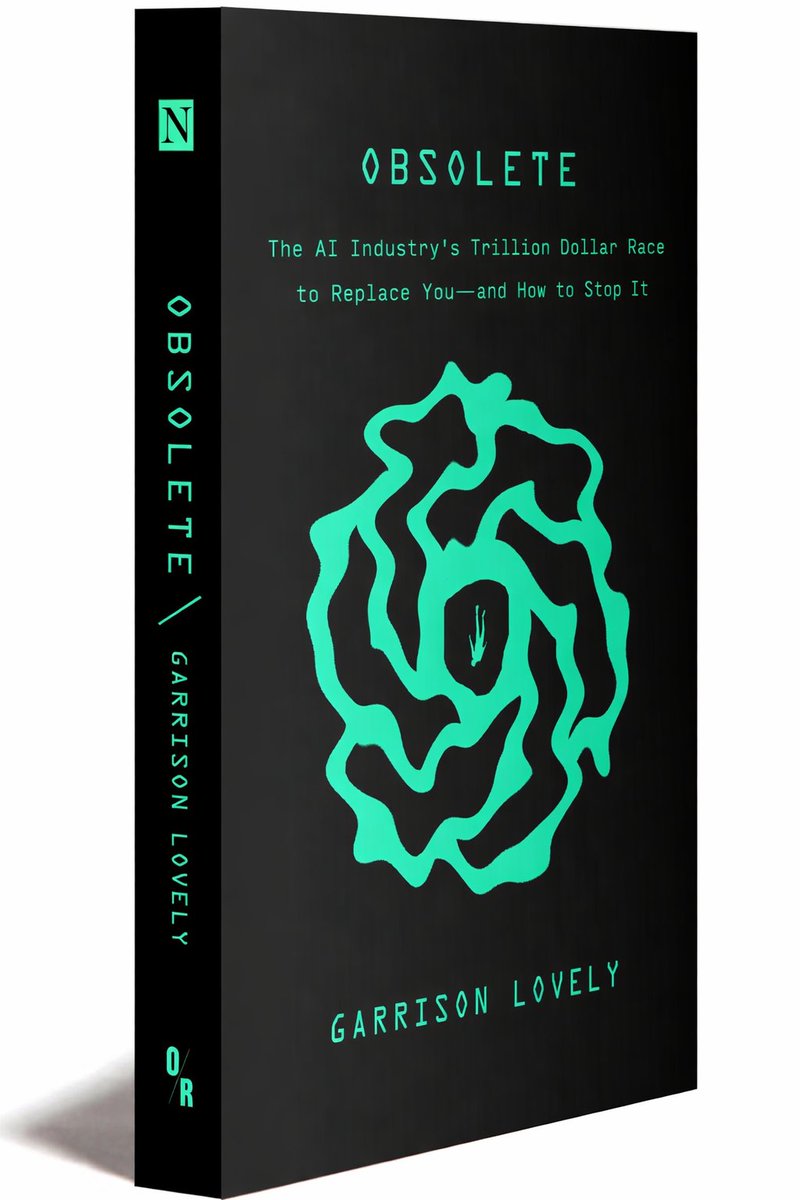
A new exciting book on AI and the designs of AI-industry leaders

Nearly 3 years ago, I pitched an essay on AI to Jacobin, which became a cover story, which became a book about the biggest project in history:
Obsolete: The AI Industry's Trillion-Dollar Race to Replace You—and How to Stop It
Preorders w/ @orbooks @thenation ship in May 🧵
3
37
169
42,118