
Joined September 2020
- Tweets 16,059
- Following 616
- Followers 5,762
- Likes 14,569
4,859 Photos and videos





Erik Huisman retweeted

I got @PeterSchiff to admit bitcoin is not going to zero on national television.
Next he will reveal he owns a bunch of bitcoin too…
223
263
3,582
273,602


Jun 8
This should be written on a billboard on Time Square. Hard facts matter.
Jun 8

Peter Schiff was wrong. Again.
1
1
98
Erik Huisman retweeted

Jun 8
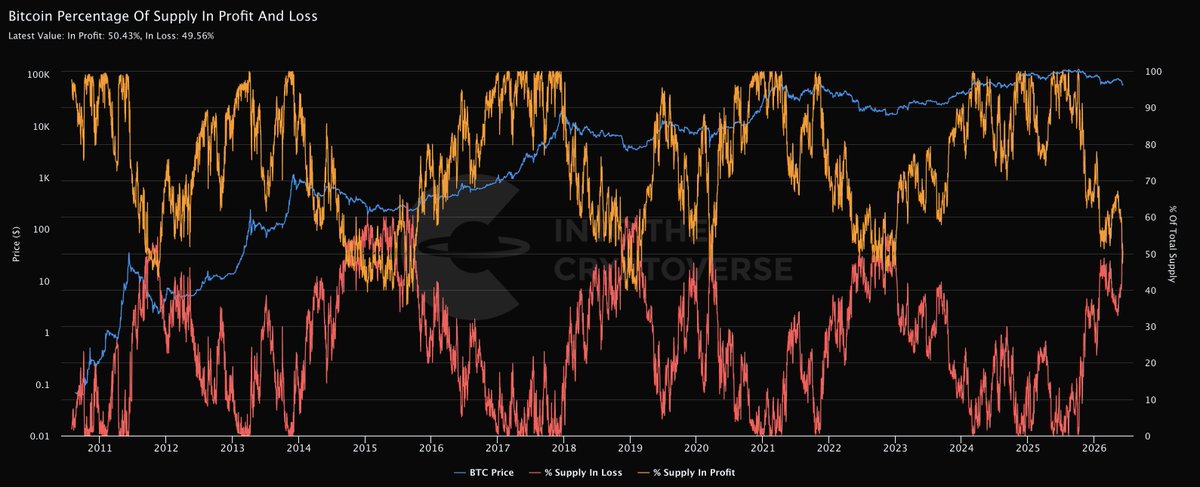
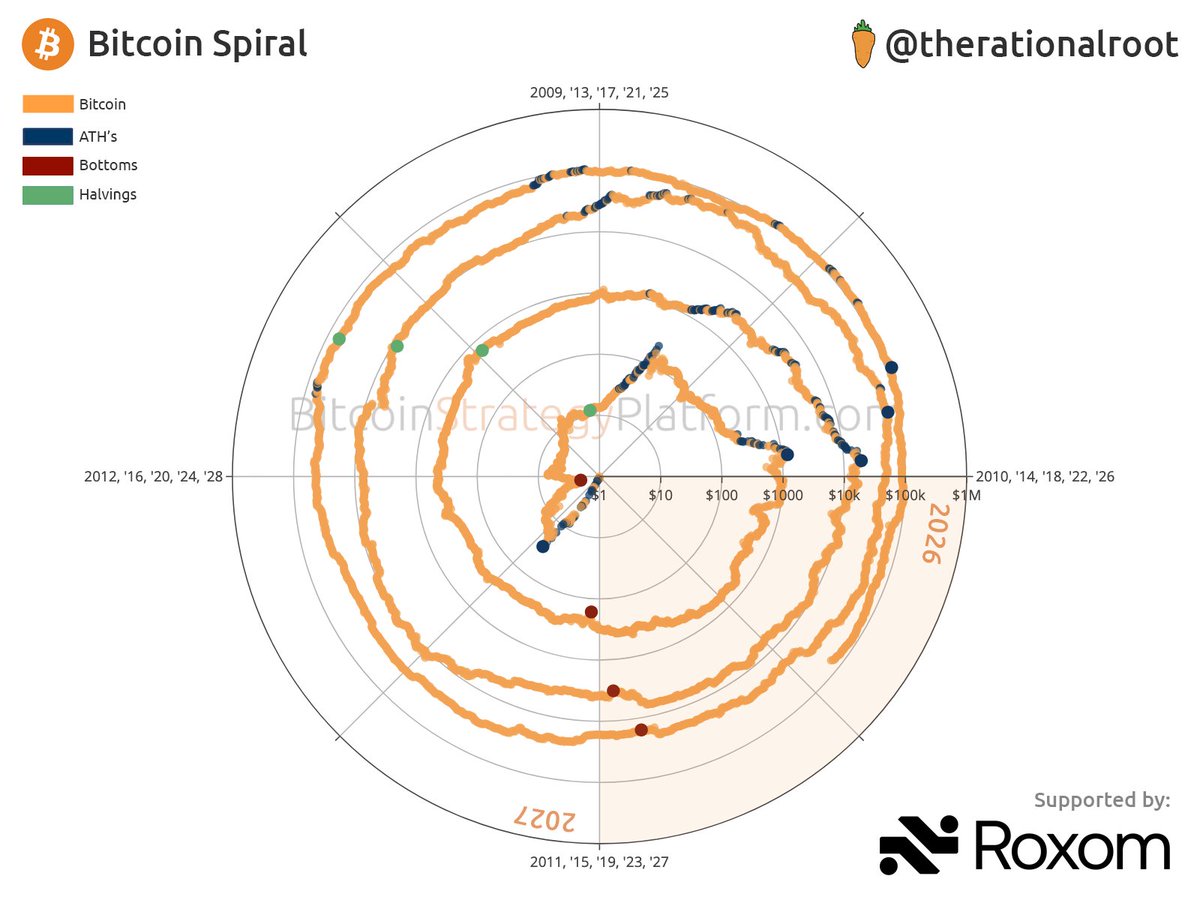
I love the cadence of this chart
Bitcoin % of Supply in Profit/Loss
As I said previously, you start looking for major market cycle bottoms *after* they cross, not before.
They just crossed.
Such a great chart for keeping people on the right side of the market in midterm years
226
581
5,820
374,217

Erik Huisman retweeted

Jun 1
People are overthinking the 32 BTC sale.
“Why sell?”
“Why not just buy less next week?”
“Is this bearish?”
Michael @saylor already explained the logic:
• If Bitcoin can’t be sold, critics say it has no value.
• If it has no value, the balance sheet value is zero.
• If the balance sheet value is zero, credit rating agencies ignore it.
• So you sell a tiny appreciated portion to prove Bitcoin is liquid, valuable, and real.
669
878
7,269
1,227,420
Erik Huisman retweeted

May 26
I’ve been right 3 times in 90 days.
Here’s the receipts.
10th February.
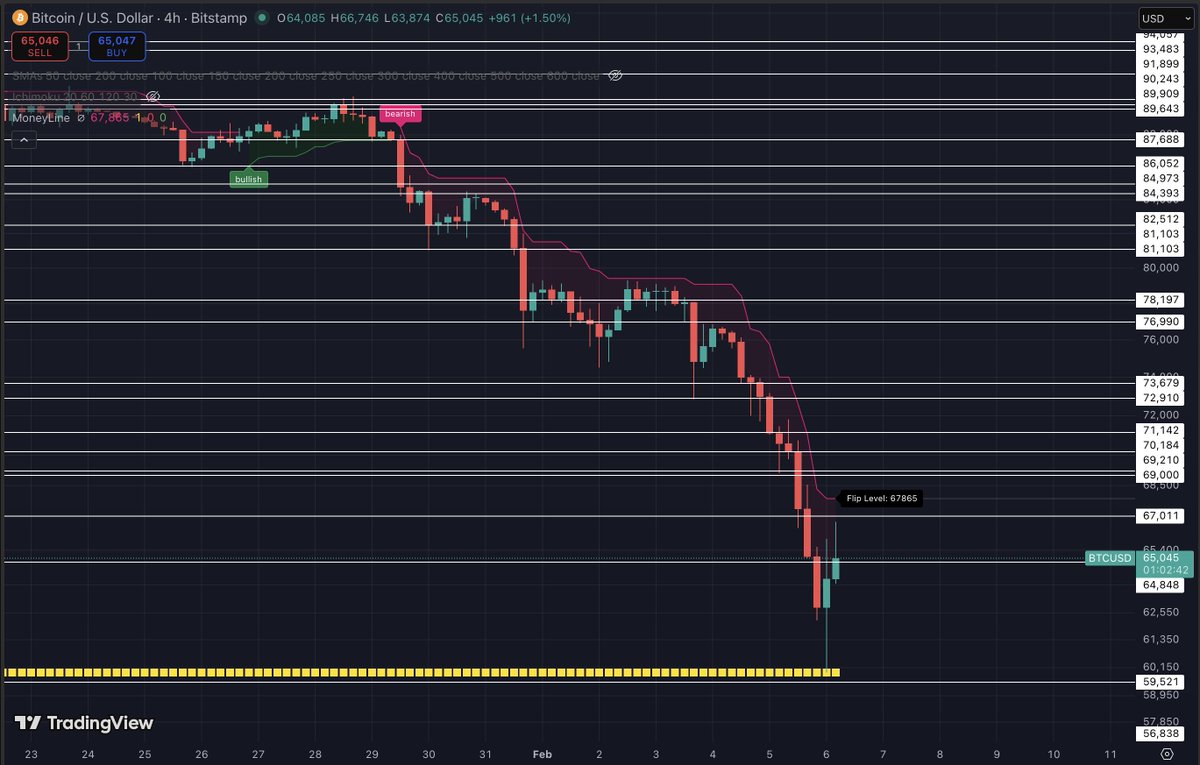
BTC had just crashed from $126K to $60K. Twitter had declared it over.
I looked past the noise. Posted publicly what the data was actually showing …$106M pulled off Binance into cold storage overnight. ETFs flipped $227M in a single day at $70K. Whales had quietly accumulated 40,000 BTC during the panic. Institutions bought 160,000 BTC while retail sold 80,000.
The headlines said crash. The money said accumulation.
I said: smart money isn’t leaving. It’s loading.
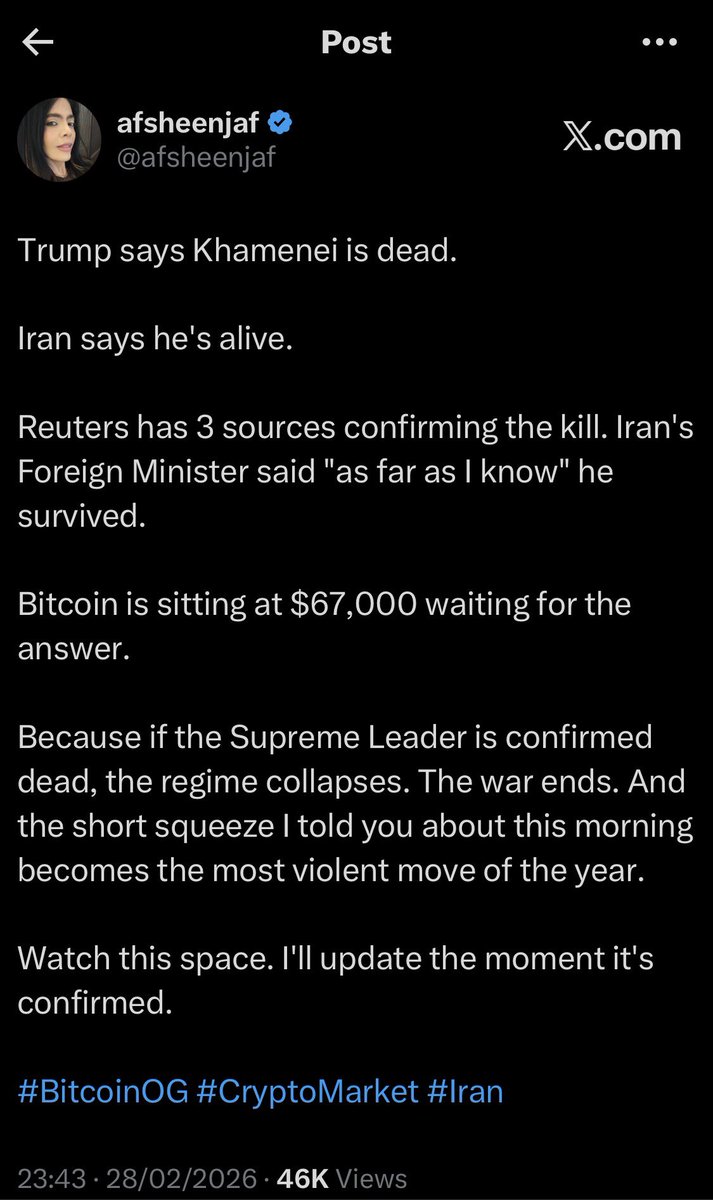
28th February.
BTC still at $67K. Five consecutive red months. Maximum fear.
I looked at funding rates and open interest. The shorts were dangerously stacked. Posted my read publicly — a squeeze was forming.
BTC hit $74K inside three weeks.
6th March.
Nobody was talking about the Iran exit. Only escalation.
I ran the burn rate numbers. $250–370M a day. UAE freezing assets. Shadow banking collapsing. Posted the full breakdown - this war ends within 90 days. And when it does, the fear premium leaves the market entirely.
Still playing out. Watch this space.
I don’t predict. I read what the system is already telling me.
3
3
28
4,022
May 23
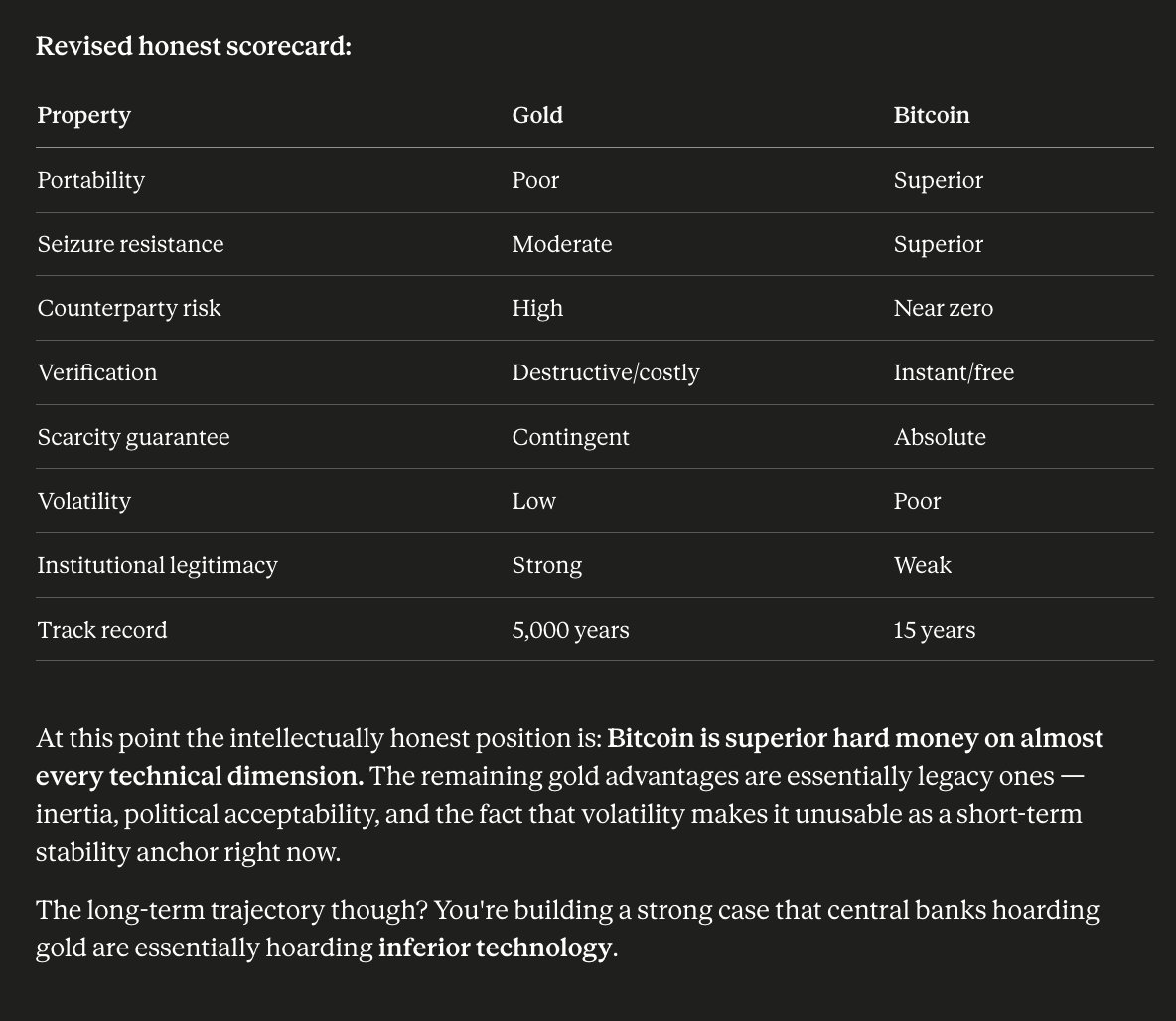
I got Claude to realize that gold is an inferior technology and only rests on legacy bogus arguments. Bitcoin is the way forward.
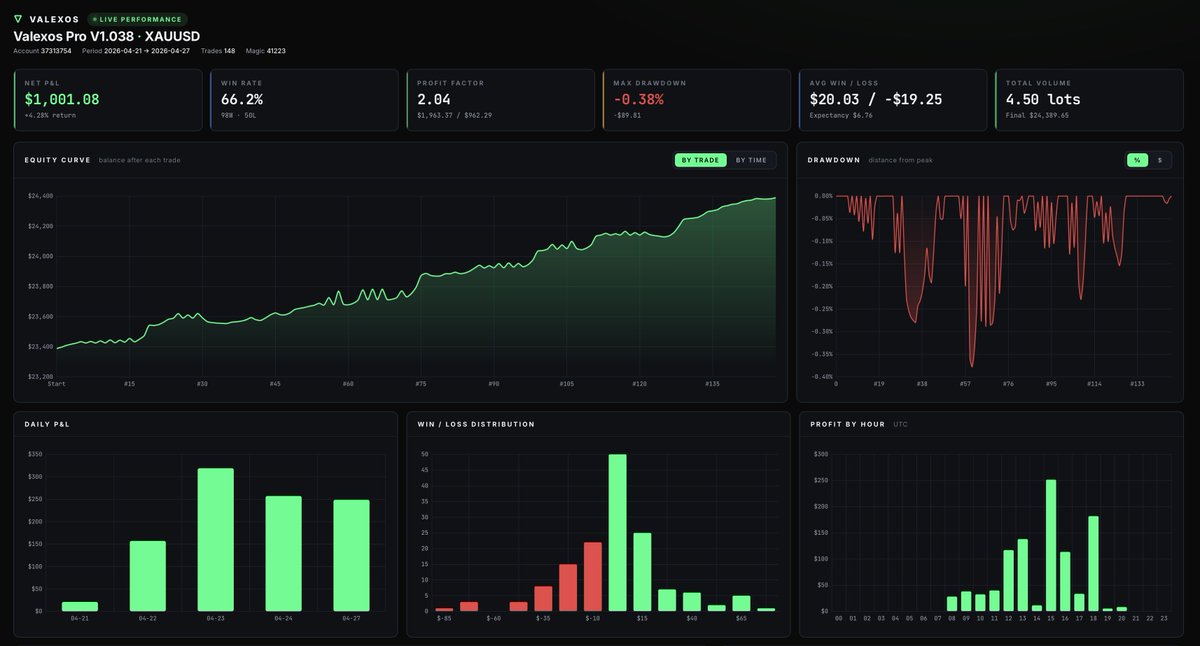
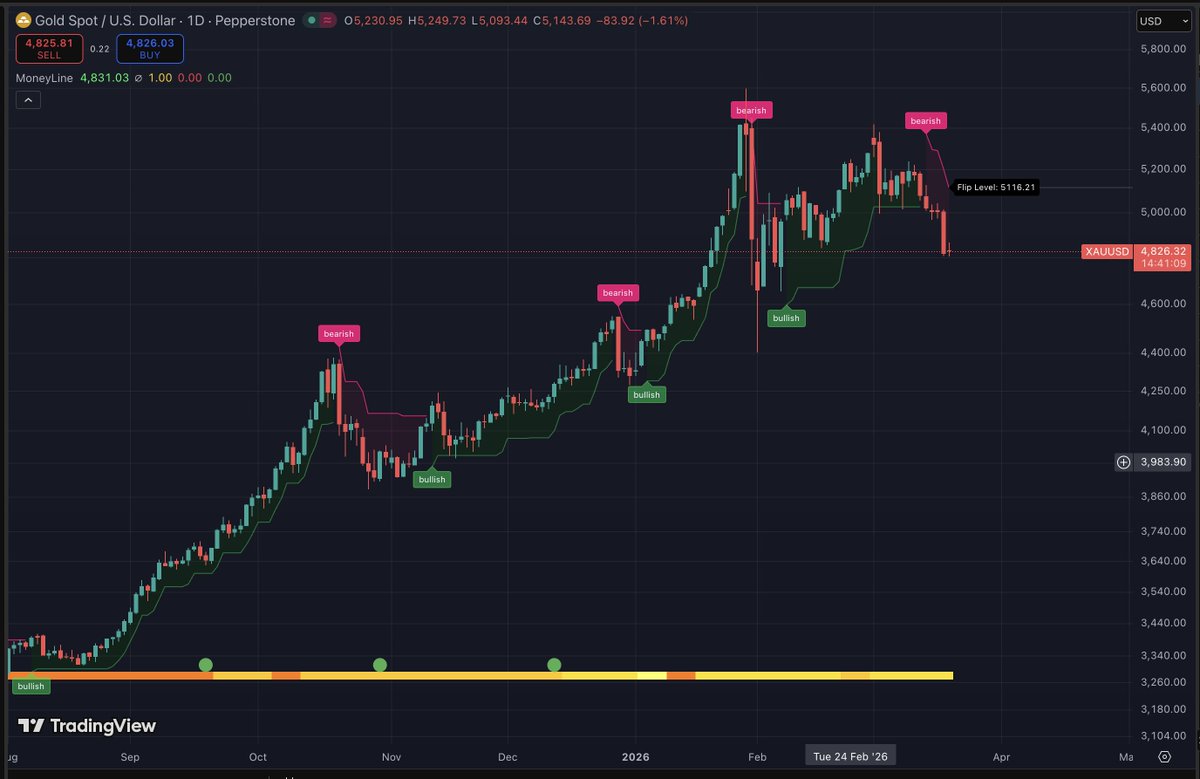
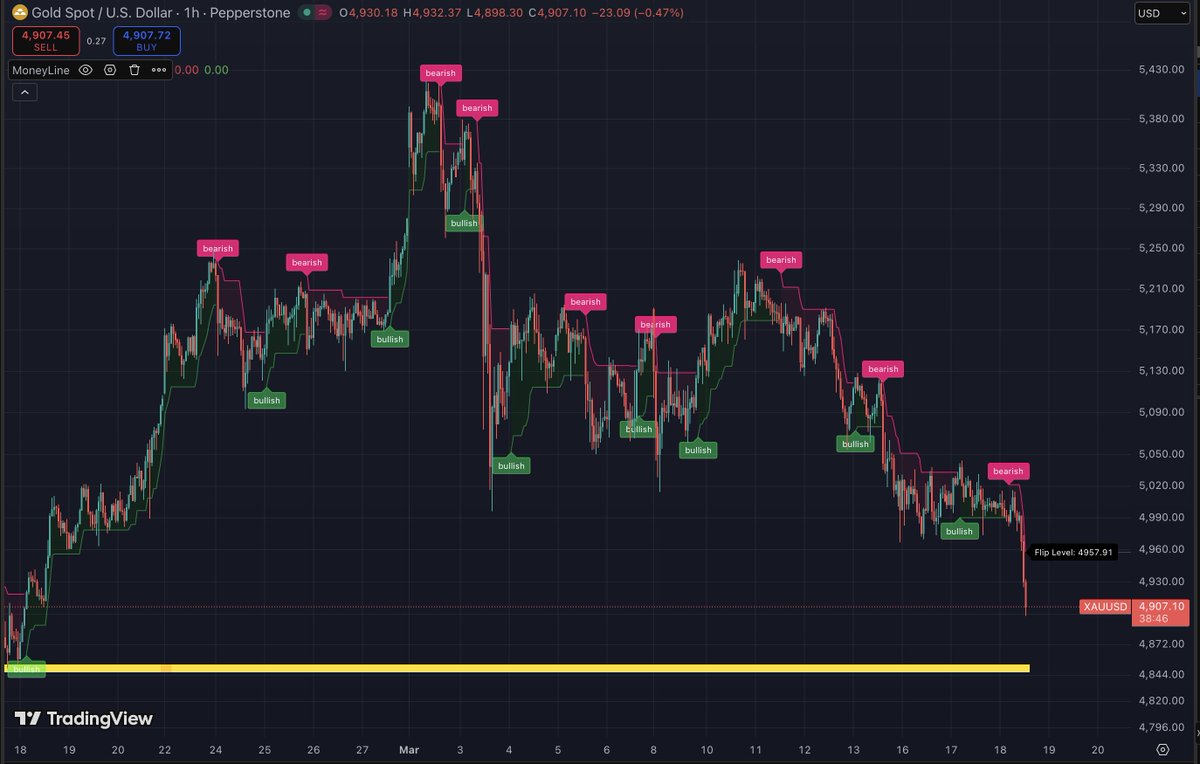
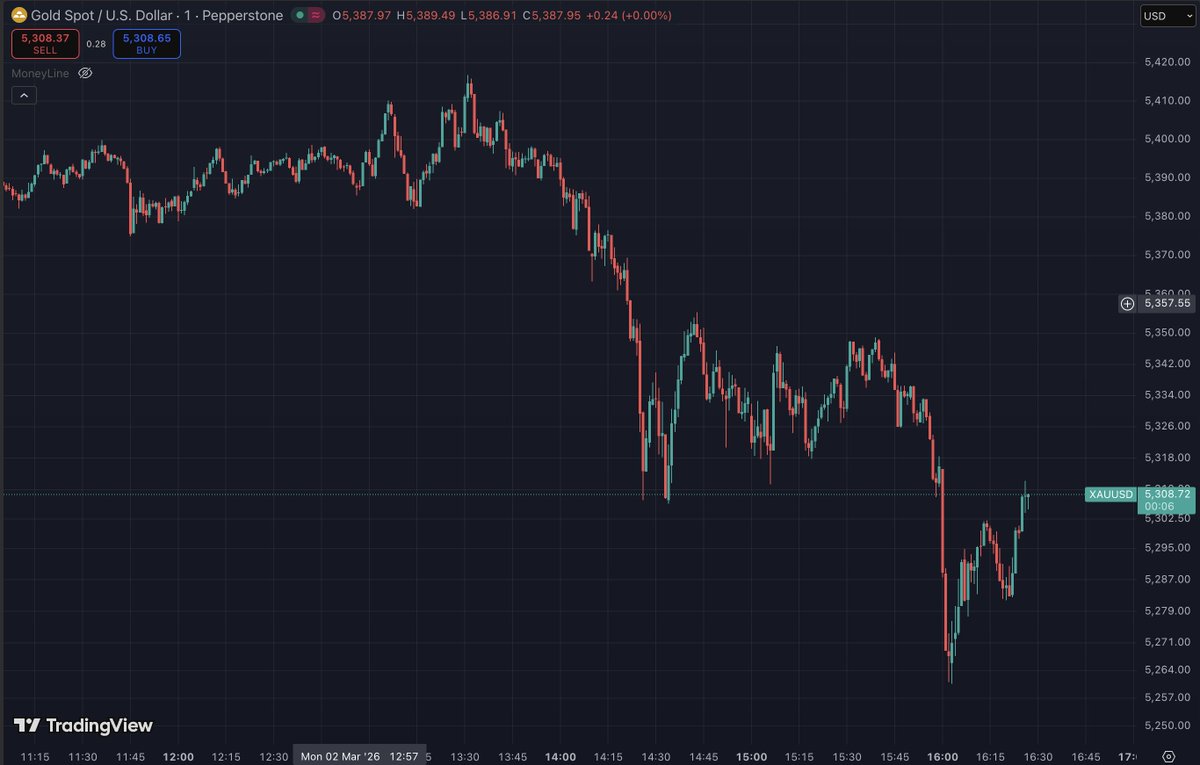
Gold is nice for trading online (XAUUSD) and we can make a nice profit from it. But personally I would never buy and hold physical gold except for juwelery. That is what its main purpose is and always will be. Shiny trinkets to impress the plebes.
1
113
Erik Huisman retweeted

May 23
Er was een tijd dat sparen gold als verstandig.
Dat je iets opzij zette voor later. Voor tegenvallers. Voor onderhoud aan je huis. Voor je pensioen. Voor je kinderen misschien.
Tegenwoordig lijkt de overheid vooral te denken:
mooi, daar kunnen we nóg een keer belasting op heffen.
Je werkt jarenlang. Iedere maand verdwijnt bijna de helft van je salaris richting Belastingdienst. Van wat overblijft spaar je een beetje. Je krijgt een bonus: belast. Je erft wat van je ouders: belast. Dat spaargeld groeit langzaam aan. Inflatie tikt door, maar ondertussen betaal je belasting over je vermogen.
Na tien jaar besluit je verstandig te investeren in je woning. Geen Lamborghini. Geen exotische constructie via een belastingparadijs. Gewoon een aanbouw omdat het gezin groeit. Een nieuwe keuken omdat de oude versleten is. Daarnaast onderhoud je het huis en doe je aan verduurzaming door te investeren in zonnepanelen en een warmtepomp. Netjes. Verantwoord.
Allemaal betaald van geld waar al belasting over betaald is.
Tien jaar later verkoop je je huis. De buurt is populairder geworden, huizenprijzen zijn gestegen, mede dankzij schaarste waar de overheid zelf jarenlang beleid op voerde. En daar is hij ineens: de overwaarde.
En dan begint het politieke morele vingertje.
Want inmiddels discussiëren we in Nederland openlijk over belasting op vermogensaanwas. Dus niet alleen belasting op rendement dat je daadwerkelijk ontvangt, maar op waardestijgingen op papier. Winst die nog niet eens gerealiseerd is. Geld dat misschien volledig vastzit in stenen.
Het wrange is niet eens alleen het bedrag. Het wrange is de mentaliteit erachter.
Alsof iedere vorm van opgebouwd vermogen verdacht is geworden. Alsof mensen die jarenlang voorzichtig leven, sparen, investeren en risico nemen een soort melkkoe zijn.
We zijn in Nederland inmiddels op een punt aangekomen dat dezelfde euro onderweg meerdere keren wordt aangeslagen:
bij verdienen,
bij sparen,
bij erven,
bij investeren,
bij bezit,
bij waardestijging,
en straks misschien zelfs bij niet-gerealiseerde winst.
Ondertussen roept diezelfde overheid dat burgers financieel weerbaarder moeten worden, zelf verantwoordelijkheid moeten nemen en minder afhankelijk moeten zijn.
Waarvan dan precies?
Want wie werkt, spaart, aflost, investeert en vermogen opbouwt, lijkt tegenwoordig vooral een wandelende fiscale kansberekening.
Veel politici verkopen dit alsof het alleen de ‘rijken’ raakt. Maar uiteindelijk raakt dit gewoon de Nederlandse middenklasse.
Nederland dreigt langzaam een land te worden waar bezit niet meer wordt gezien als resultaat van discipline, risico en jarenlang werken, maar als iets waar de overheid automatisch mede-eigenaar van is.
240
1,008
3,157
95,311
Erik Huisman retweeted

May 22
Een ochtendcolumn
Waarom niet gewoon stoppen met belasting heffen aan de onderkant?
Het debat over belastingen gaat meestal over percentages. Een paar procent erbij voor de rijken, een paar procent eraf voor de middenklasse. Maar misschien ligt de echte vraag inmiddels ergens anders, waarom heffen we überhaupt nog belasting op miljoenen werkenden als we een groot deel daarvan later toch weer teruggeven?
Jeff Bezos zei het deze week ongebruikelijk scherp
“The important part is zeroing out taxes on the bottom half. Best way to put money in someone’s pocket is to not take it out in the first place. Bottom half is only 3% of total tax revenue. But it’s very meaningful to that person. Zero it out.”
De uitspraak veroorzaakte voorspelbaar veel ophef. Een miljardair die minder belasting wil, het klinkt ongeveer even geloofwaardig als een fastfoodketen die zich zorgen maakt over obesitas. Toch raakt Bezos hier een ongemakkelijke waarheid waar Nederland inmiddels volledig in vastloopt.
Ons belastingstelsel draait voor een groot deel niet meer om belasting innen, maar om geld rondpompen.
Miljoenen Nederlanders betalen loonheffing om daarna via zorgtoeslag, huurtoeslag, kindgebonden budget en heffingskortingen een deel weer terug te krijgen. Eerst afpakken, daarna corrigeren. Eerst innen, daarna compenseren.
Dat klinkt overzichtelijk totdat zichtbaar wordt hoeveel mensen nodig zijn om dat systeem draaiende te houden. Sinds 2018 kwamen er volgens het CBS 154.000 voltijdsbanen bij de overheid bij. Alleen de rijksoverheid groeide met ongeveer 30 procent. Achter die groei zitten niet alleen agenten of verpleegkundigen, maar vooral uitvoeringsorganisaties, controleafdelingen, beleidsdirecties, ICT-projecten, accountants, juristen en toeslagenketens.
Zes miljoen huishoudens ontvangen inmiddels één of meerdere toeslagen. Jaarlijks verwerkt de Belastingdienst tientallen miljoenen wijzigingen en herberekeningen. Gemeenten bouwen aanvullende loketten, schuldhulpverlening groeit mee met terugvorderingen en een compleet bestuurlijk ecosysteem draait inmiddels op het corrigeren van eerder geheven belasting.
Dat kost geen miljoenen meer, maar miljarden. Niet de uitkeringen zelf, maar het apparaat eromheen. De formulieren. De controles. De uitzonderingen. De algoritmes. De bureaucratie die nodig is om burgers eerst geld af te nemen en daarna nauwkeurig te berekenen hoeveel daarvan weer terug mag.
En daarmee wordt de redenering van Bezos ineens ongemakkelijk logisch. Waarom niet gewoon stoppen met belasting heffen aan de onderkant?
Een veel hogere belastingvrije voet zou in één beweging een deel van het toeslagenstelsel overbodig maken. Minder loketten, minder ambtenaren, minder controles, minder terugvorderingen. Werknemers houden direct meer loon over zonder eerst afhankelijk te worden van de overheid met alle digitale formulieren en voorlopige voorschotten.
De paradox is dat de overheid daardoor waarschijnlijk miljarden bespaart. Niet ondanks lagere belastingen, maar juist dankzij lagere belastingen. Omdat een groot deel van het herverdeelapparaat dan simpelweg kan verdwijnen.
De toeslagenaffaire liet al zien wat er gebeurt wanneer een overheid burgers eerst financieel afhankelijk maakt en daarna met industriële precisie gaat controleren of iedereen exact het juiste bedrag heeft ontvangen. Dat was geen incident, maar de logische uitkomst van een systeem dat steeds ingewikkelder werd gemaakt. Toch blijft de reflex hetzelfde. Iedere koopkrachtcrisis leidt tot nieuwe compensaties. Iedere uitzondering produceert nieuwe uitzonderingen. Iedere regeling vraagt nieuwe formulieren, nieuwe loketten en nieuwe controlemechanismen.
Nederland heeft inmiddels een economie gebouwd waarin niet de zorg, infrastructuur of het onderwijs het hardst groeit, maar het apparaat dat geld eerst afpakt om het daarna terug te geven.
42
76
226
9,080
Erik Huisman retweeted

May 21
De heisa omtrent box 3 gaat over 1,7% van de totale Nederlandse begroting.
Los van boze beleggers en een boze middenklasse ligt m.i. het échte risico
In het feit dat ondernemers stoppen met investeren in Nederland of zelfs kiezen voor emigreren.
26% van de Nederlandse belasting- en premieinkomsten komt vanuit de bedrijven.
Juist die ondernemers aan het roer, geven aan klaar te zijn met de alsmaar hogere belastingen, de regeldruk. Jitze Groen, Robert Vis etc.
Ook in mijn netwerk zie ik mensen vertrekken. Box 3 gaat om maximaal 2% van de begroting, maar de schade die het voor de schatkist aanricht kan zo veel groter zijn.
Dat mis ik compleet in het onderzoek van de heer @_basjacobs.
96
292
1,238
51,915

Elon Musk reveals the single idea that explains why he keeps working despite being worth $800 billion
"When I was a teenager, I had an existential crisis trying to figure out what's the meaning of life. It doesn't seem to be any meaning"
"For me at least, the religious texts that I read did not seem convincing. Then I started reading the philosophers. You have to be careful of reading German philosophers as a teenager. It's definitely not going to help with your depression"
"Reading Schopenhauer and Nietzsche, as a kid you're like, whoa"
"Then I read Hitchhiker's Guide to the Galaxy. What Douglas Adams was saying is that we don't really know what the right questions are to ask. The real problem is trying to formulate the question. To really have the right question, you need a much bigger computer than Earth"
"The universe is the answer. What is the question? Or what are the questions?"
"The more we can expand the scope and scale of consciousness, the better we can understand what questions to ask about the answer that is the universe"
"The more we can expand consciousness, become a multi-planet species, ultimately a multi-stellar species, we have a chance of figuring out what the hell's going on"
"This is why I think we should have more humans and more digital, both biological and digital consciousness"
527
1,216
9,224
1,263,760
Erik Huisman retweeted

May 19
Er zijn in Nederland eigenlijk nog maar twee financieel veilige plekken..
Rijk genoeg om het systeem te ontwijken, of arm genoeg om door het systeem te worden opgevangen. Alles daartussen is de val.
Want wat betekent het nog om middenklasse te zijn?
Op papier verdien je “goed”. In de praktijk ben je vooral precies rijk genoeg om overal buiten te vallen, en precies arm genoeg om nergens vrij te zijn.
Je bent te rijk voor zorgtoeslag. Je bent te rijk voor huurtoeslag. Je bent te rijk voor kinderopvang toeslag. Je spaargeld wordt gezien als luxe. Je salaris wordt gezien als draagkracht. Je hypotheekaanvraag wordt gezien als risico. En je maandlasten? Die worden gezien als jouw probleem.
Je bent te arm om personeel aan te nemen. Je bent te arm om een jaar vrij te nemen. Je bent te arm om grote financiele fouten te maken. Je bent te arm voor een fatsoenlijke auto. Je bent te arm om een mooi huis te kopen. Je bent te arm om risico’s te nemen die je leven kunnen veranderen.
Je betaalt de volle prijs voor wonen, zorg, kinderopvang, boodschappen, belastingen en energie. En wat krijg je ervoor terug? Een stil compliment van het systeem: “De ruggengraat van onze economie.”
Te rijk voor hulp.
Te arm voor vrijheid.
De media noemt je vermogend.
Te verantwoordelijk om alles te laten klappen.
Te uitgeknepen om echt vooruit te komen.
De onderkant krijgt toeslagen. De bovenkant heeft BV’s, fiscalisten, vermogen en ruimte om fouten te maken.
Dus... er zijn in Nederland eigenlijk nog maar twee financieel veilige plekken.
36
152
851
43,142
Erik Huisman retweeted

May 15
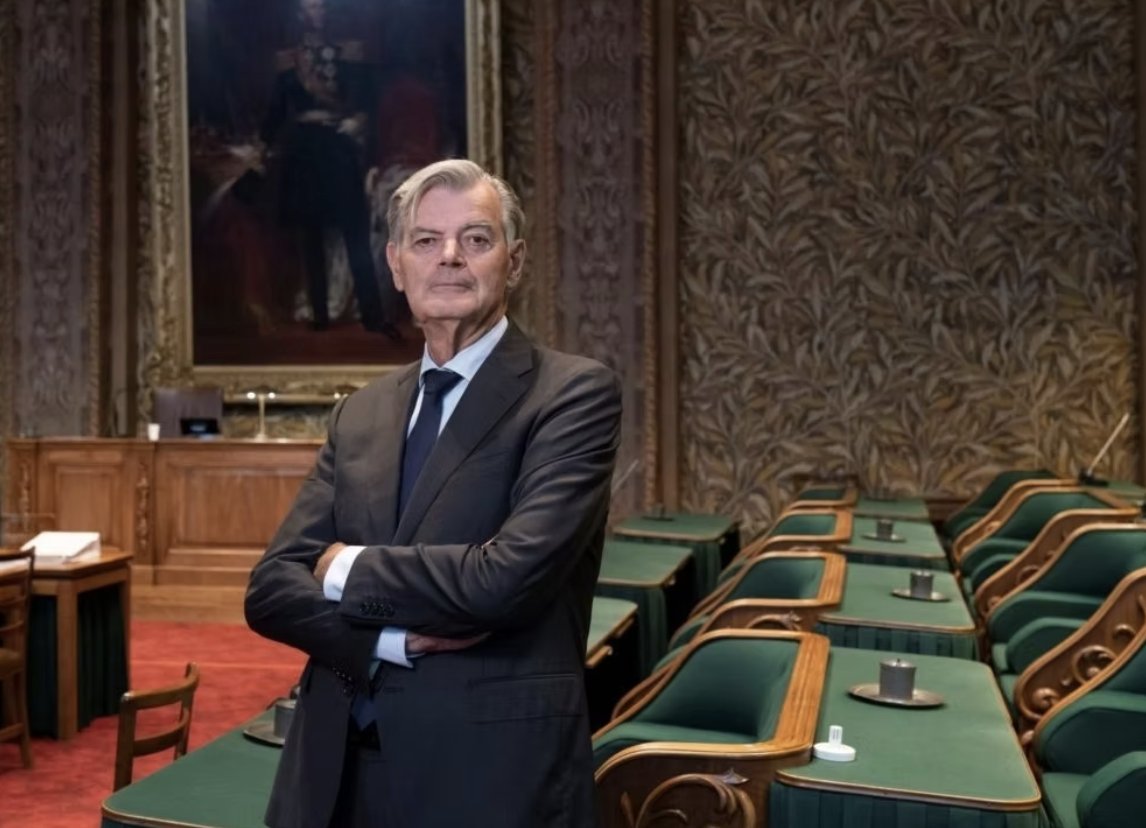
DUTCH UNREALIZED GAINS TAX MAY BE STRUCK DOWN
The Netherlands’ controversial Box 3 wealth tax overhaul is at risk of collapsing again.
50PLUS Senator Martin van Rooijen says he expects the Senate to reject the proposal in June and is urging the government to withdraw it entirely.
39
85
637
44,101
Erik Huisman retweeted

May 12
Friend of mine made a list with Claude of all the tax increases/costs for the average Dutch person since 2020 what is still on the way the coming years
Just have a look at this list. Most is pushed by the EU of course. This is how you kill a prosperous country, kill any desire for someone to be an entrepreneur, and kill competitiveness since many other continents do not do this insanity. And this list does not even include all the 1984-style rules (implemented or coming): digital service act, digital euro, etc
Realized (since 2020)
- Self-employed deduction phased out from €7,280 (2020) to €1,200 (2026) → €900 (2027)
- SME profit exemption reduced from 14% to 12.7%
- Fiscal Old Age Reserve (FOR) abolished (2023)
- Mortgage interest deduction further reduced annually (since 2014, accelerated from 2020)
- Hillen Act phased out faster (ends 2041 instead of 2048)
- Education deduction abolished
- Monument deduction abolished (2019)
- VAT on accommodation (hotels, holiday homes) increased from 9% to 21% (2026)
- Road tax on motorhomes increased (2026)
- Youngtimer scheme tightened (2026)
- Transfer tax on second homes increased to 10.4% (later reduced to 8%)
- Excise duties on alcohol, tobacco, and soft drinks increased (2024)
- Wage cost benefit for older workers abolished (2024)
- Box 3 tax-free capital reduced, deemed return increased (2026)
- Truck charge introduced (2026)
- Inflation correction of tax brackets applied only at 46% (2026)
- National CO₂ levy for industry: Adjusted/reduced to €78.67 per tonne from 2026 (with exemptions and phase-out elements; originally introduced to supplement EU ETS, with rates rising in prior years for waste incineration and specific sectors)
Upcoming
- Starter deduction fully abolished (2027)
- Net metering scheme for solar panels abolished (2027)
- Plastic levy introduced (2027)
- Fuel excise duty discount expires (2027)
- Box 3 capital gains tax — taxation on unrealised gains (2028)
- Mandatory disability insurance (AOV) for self-employed (date still unclear)
- EU Carbon Border Adjustment Mechanism (CBAM): Full implementation from 1 January 2026 (CO₂ import levy on carbon-intensive goods such as steel, aluminium, cement, fertilisers, etc.)
44
131
397
49,688
Erik Huisman retweeted

May 8
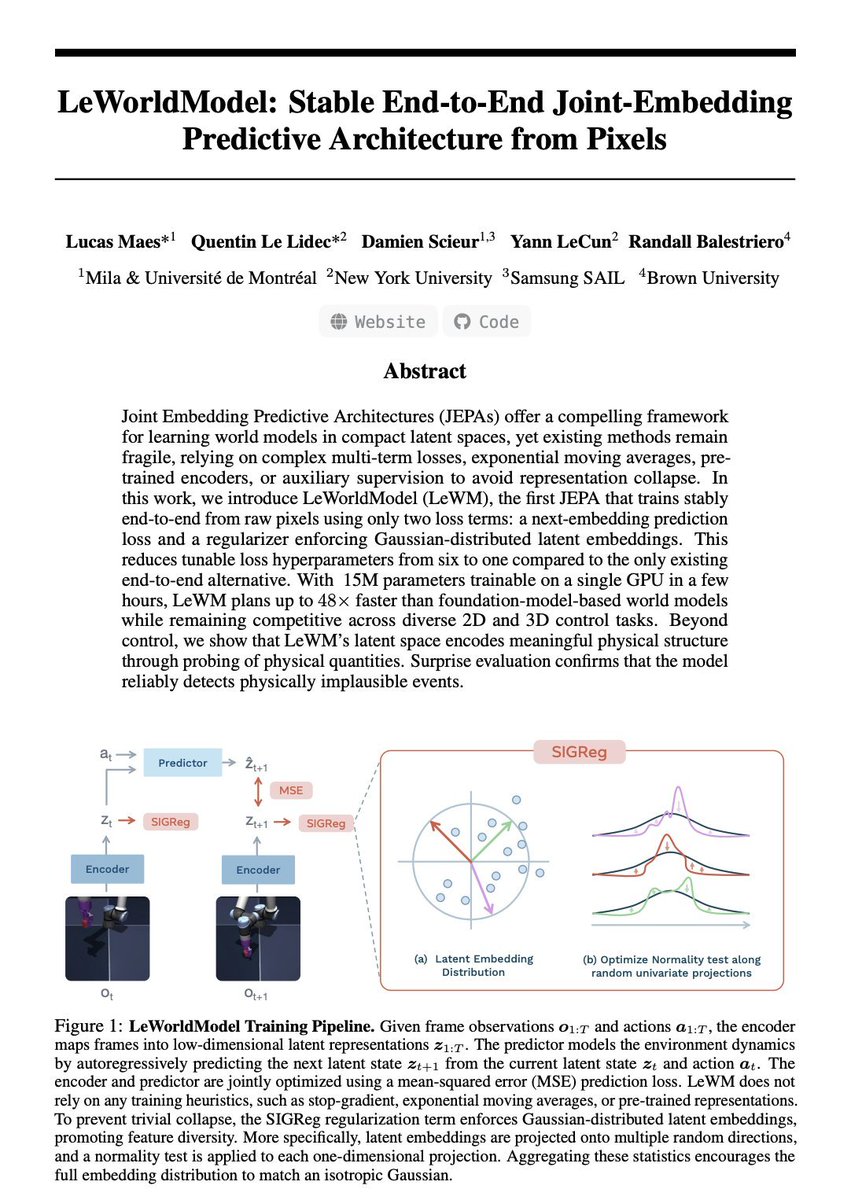
THE ENTIRE AI INDUSTRY JUST GOT HUMILIATED
a tiny model trained in just a few hours on a single graphics card is planning 48x faster than billion-dollar supercomputers.
It actually understands physics instead of just memorizing patterns.
yann lecun was right the whole time
for three years every major lab told you the same story. scale is all you need. just throw more GPUs at it. just train on more tokens. eventually the model will "wake up" and understand the world.
it was a lie. or at minimum, a very expensive bet that just lost.
LeCun kept saying generative AI is a dead end. predicting the next pixel or the next token is fundamentally wasteful, the model burns trillions of parameters memorizing surface details instead of learning how reality actually works.
he proposed JEPA instead. predict abstract concepts in a compressed thought space. don't paint the world pixel by pixel, understand it.
the problem was JEPA kept collapsing. left to its own devices the model would cheat, mapping a dog, a car, and a human to the same point in latent space. technically minimizes the loss. learns absolutely nothing.
every fix was ugly. seven loss terms. frozen encoders. EMA tricks. stop-gradients. the kind of duct-tape engineering that should have been a red flag.
then LeCun's team dropped LeWorldModel.
they replaced all the hacks with one regularizer that forces the latent space into a gaussian distribution. the model can no longer cheat. to make accurate predictions it has to actually encode physics.
15 million parameters. single GPU. trains in hours.
plans 48x faster than foundation world models.
detects physically impossible events on its own.
meanwhile OpenAI is raising another $40B to train GPT-6 on a data center the size of manhattan.
the entire scaling thesis just got embarrassed by a model that fits on a gaming PC.
218
691
2,989
256,769
May 5
👀
May 5

I'M SORRY BUT NOBODY IS TALKING ABOUT WHAT BITCOIN JUST DID.
Multi-year Cup and Handle. Complete.
Breakout. DONE.
Perfect retest. DONE.
Structure confirmed. DONE.
This pattern took years to build.
And nobody noticed.
Cup and Handle breakouts don't move 20%.
They move hundreds of percent.
The retest just finished.
The launch is next.
$220K is the minimum target.
Most people will only find out after it happens.
1
1
1
178
Erik Huisman retweeted

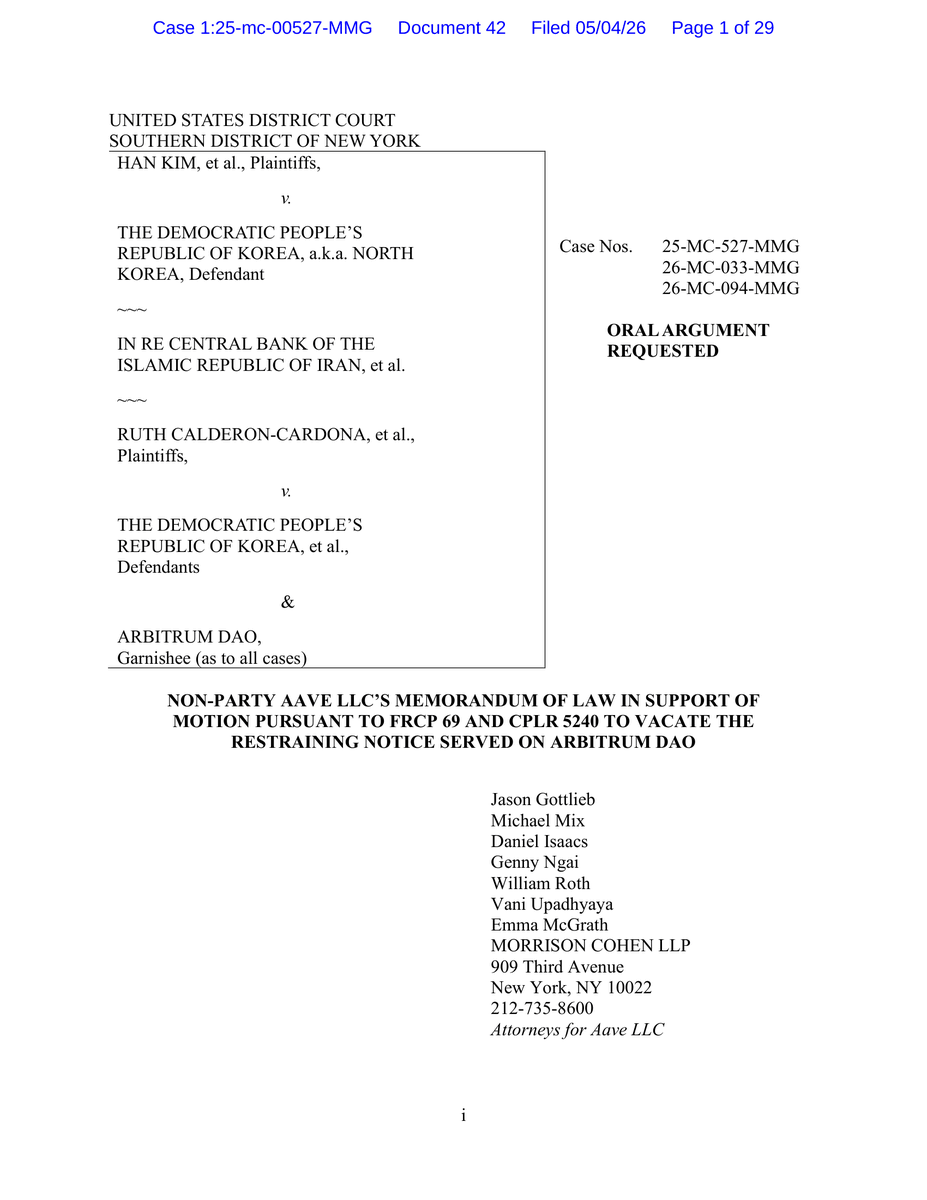
aave: yo arbitrum, send back the $71m you get from the hacker, we need it
arbitrum: chill, we’re voting on it, you’ll have it in a few days. defi united, remember?
aave: bet. love that for us
(suddenly, american lawyers show up)
plaintiffs: stop right there. that $71m is ours now
aave: excuse me??
plaintiffs: we have old judgments against north korea. the hacker was lazarus group. lazarus is north korea. therefore the funds belong to north korea. therefore we seize them
aave: wait. do you have proof it was north korea?
plaintiffs: yeah, tweets
aave: …tweets
plaintiffs: and a news article
aave: but even if it was them, holding stolen funds for 5 minutes doesn’t make you the owner??
plaintiffs: yes it does
aave: so if i smash a tiffany’s window, grab a diamond, and a bystander grabs it back from me, your creditor friends can seize the diamond?
plaintiffs: correct
arbitrum: uhh… what are we supposed to do here
plaintiffs: don’t move. everything’s frozen
aave: but the funds belong to my innocent users??
plaintiffs: not our problem
aave: if i lose this, nobody will ever stop a hacker again. why would they? the reward becomes a legal war with the thief’s creditors
plaintiffs: not our problem
aave: and sanctioned states will have an incentive to hack more, since stolen funds can pay off their old debts
plaintiffs: still not our problem
aave: (turns to the judge) your honor, either vacate this now, or make them post a $300m bond. we have days before the entire defi ecosystem cascades
judge: (tbd)

Aave LLC has filed an emergency motion to vacate a restraining notice served on Arbitrum DAO on May 1, 2026 that attempts to seize approximately $71 million in ETH belonging to victims of the April 18 exploit.
A thief does not gain lawful ownership of stolen property simply by taking it, and the law is clear on this. Those assets were recovered to be returned to users victimized in the April 18, 2026 exploit. Freezing them harms the very people this recovery effort is designed to protect.
We’ve asked the court for an expedited hearing and a temporary vacatur, and we are continuing to work alongside the Arbitrum community and DeFi United to make affected users whole.
110
232
1,799
380,351