
Lecturer - Testing and measurement & Strength and conditioning.
Joined February 2014
- Tweets 139
- Following 1,176
- Followers 503
- Likes 1,281
3 Photos and videos


Dean Norris retweeted

May 9
I’m pleased to share that my new article titled “Towards High-Accuracy Athletic Injury Predictions Using a First-Principles Modelling Approach: Theory to (Future) Practice” has just been published in @SportsMedicineJ .
It was a deliberate decision to publish this article alongside my recent paper on defining athletic injury, as these two papers are intended to sit together. This article represents the fourth of five works that I consider to be my core conceptual contributions on injury (one more to come). The other two so far are my injury framework in JSAMS and my 2024 article on causality also published in Sports Medicine, “Athletic injury research: frameworks, models and the need for causal knowledge.”
Across the sports science and sports medicine literature, the inability to accurately predict injuries is commonly attributed to their multifactorial and complex nature, which has led to increasing emphasis on complex systems modelling approaches. In this article, we outline that accurate prediction does not require modelling entire causal systems, as formalised within the Causal Markov Condition. We argue that this is the case for injury as well, with injury prediction being more a measurement problem, that is, obtaining accurate measurements of the variables that matter.
This article is intended to provide an explicit framework for predicting both gradual onset injuries and a range of tissue failure injuries as well. Within the discussion section of this article, my co-authors and I outline three potential directions for researchers to pursue using the approach presented here. It is my intention to dedicate my career to pursuing some of these paths, particularly those that I believe have the highest chance of making a major impact on this problem. Accordingly, I will be launching the “Kalkhoven and Norris Injury Research Lab” at Western Sydney University with my colleague at WSU and co-author Dr @DNorrisSC. Moving forward, we will be dedicating ourselves to innovation in this space.
We will also be partnering with Assoc. Prof. @edwardswb and Dr @cfirminger who I consider to be among the world leaders in injury research, and who form part of the extraordinary Edwards Group at the University of Calgary. We have a number of exciting projects in this space that we will be collaborating on.
Finally, I would like to say that I truly believe there are real solutions to the problem of injury prediction. I would not be working so extensively to specify this problem if I did not believe that meaningful progress is possible. While this is an extremely difficult problem, this article outlines that it is in fact solvable, and we are committed to doing everything we can to make significant strides in this area.
I hope you all enjoy the article.
Thank you to my co-authors @DNorrisSC, @francoimpell, and @edwardswb, and to the reviewers of this article.
link.springer.com/article/10…
1
7
55
4,467
Dean Norris retweeted
May 3
I’m delighted to share that my new article titled “Developing a Fundamental Theoretical Definition for Athletic Injury: Metaphysics, Logic, and Mathematics” has just been published in @SportsMedicineJ
There are many motivations behind this article, and it is difficult to list them all. However, I will briefly highlight the main ones.
Progress in modelling and predicting athletic injury has been limited, and a major reason for this, in my view, is a lack of conceptual and logical clarity surrounding what an injury actually is. This may seem strange, but I have faced an extraordinary amount of resistance on this topic across numerous debates and review processes.
With this article, I want to emphasise that the approach does not rely on an appeal to authority or a purely stipulative definition, but instead focuses on the underlying logical structure required for a concept to function as a coherent and scientifically useful explanandum. In this context, there is an underlying logical structure to how injuries can be defined, modelled, and ultimately predicted, including time-loss injury, and if that structure is not respected, we will likely never see meaningful progress in this area.
I would also like to highlight that this article is not just about developing a definition, but examines the role of philosophy of science, language, logic, and mathematics in establishing coherent and falsifiable foundations for scientific research. I see similar debates around definitions and semantics occurring in other fields, and I hope that the methods explored throughout this article may also be utilised in those areas. I am considering writing a similar article for the field of pain science, which also has major issues with definition and falsifiability.
I would like to thank @francoimpell , @edwardswb, and Mark Watsford for their mentorship and support. I would also like to thank @DNorrisSC and @scotmorrsn for deep debates and valuable discussions on this topic that contributed enormously to this article. I also thank the reviewers for the considerable time and effort they put into reviewing the manuscript.
I hope that you enjoy reading it. It is a precursor to another article on predicting athletic injuries that will come out in the next few weeks.
link.springer.com/article/10…
1
7
20
2,101

15 Jul 2025
🎓 New PhD opportunity! $41,900 stipend, jointly funded by Athletes Authority & WSU
✅ Performance optimization & return-to-play focus ✅ Real-world impact in Australia's leading private training facility
Apps close 31 Aug 2025 , see below for more information
1
1
5
648
15 Jul 2025
This opportunity is currently open to Australian domestic candidates only and will be supervised by myself and Dr Judd Kalkhoven @KalkhovenJudd. See the below link for eligibility criteria and how to apply.
westernsydney.edu.au/schools…
93
Dean Norris retweeted

9 Nov 2024
Great opportunity to join our High Performance Department @GWSGIANTS
Neuromechanical Assessment of Athlete Mechanics and Tissue Function in Elite AFL | Western Sydney University westernsydney.edu.au/schools…
5
7
2,601
Dean Norris retweeted
1 Nov 2024
PhD Opportunity with the GWS Giants & Western Sydney University: Focus on Physiotherapy, Tissue Mechanics, and Athletic Injury
westernsydney.edu.au/schools…
1
3
4
557
Dean Norris retweeted

Now ahead of print: Can We Just Play? Internal Validity of Assessing Physiological State With a Semistandardized Kicking Drill in Professional Australian Football by A. Arguedas-Soley, @shushan_tzlil, A. Murphy, N. Poulos, @ric_lovell , @DNorrisSC journals.humankinetics.com/v…
5
6
1,216
Dean Norris retweeted

13 Jul 2024
Latest publication from our team in the @IJSPP
Authors: @DNorrisSC @shushan_tzlil @ric_lovell @PoulosNick @Andy_Murphy93
See below 👇📈
aus01.safelinks.protection.o…
2
7
13
2,178
Dean Norris retweeted

4 Dec 2023
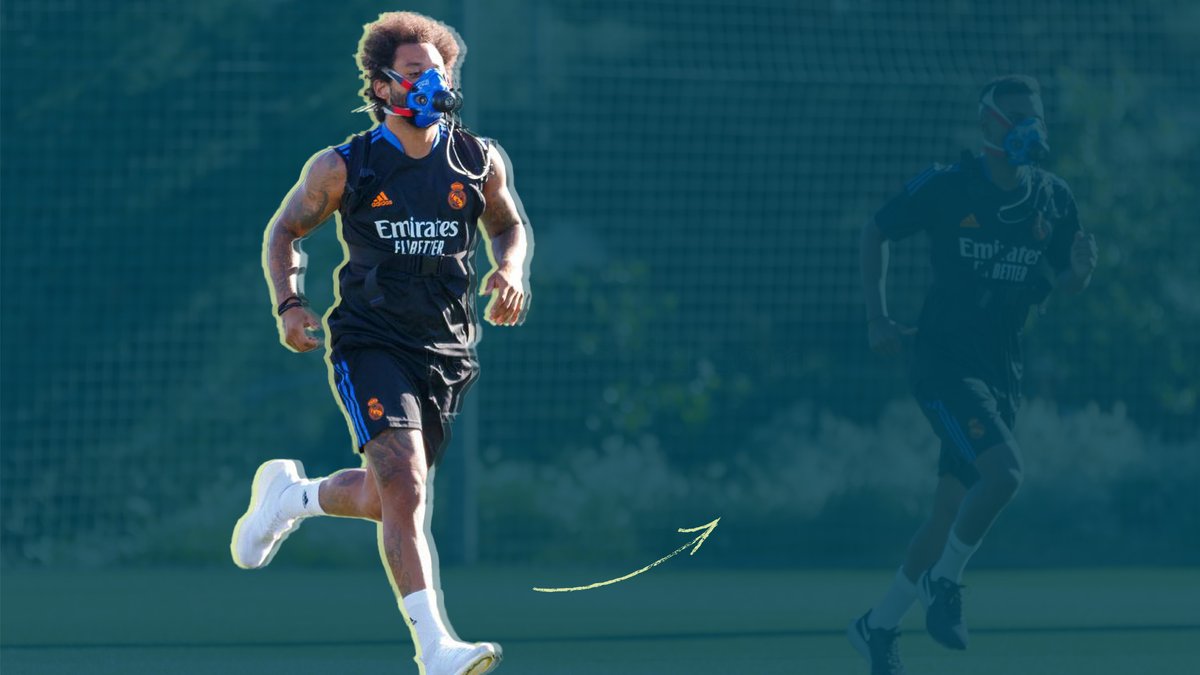
A few years of work into a-20 minute read 🫀🏃♀️
Thanks @SportsmithHQ for the invitation
4 Dec 2023

New to Sportsmith...
Using submaximal fitness tests to understand fitness and fatigue
@shushan_tzlil
"Exercise assessments are key, but the busy team sports landscape challenges routine testing. Submax fitness tests offers a time-efficient solution"
sportsmith.co/articles/using…
1
9
22
3,684
Dean Norris retweeted

26 Aug 2023
EXCITING NEW RESEARCH ROLES. Earlier this year @WashSpirit owner Michele Kang said “We are not going to borrow a manual from the men’s soccer team. We want to understand women’s physiology and biology and train our athletes according to that.” nytimes.com/2023/06/23/sport…).
2
14
40
4,709
Dean Norris retweeted
22 May 2023
Exploring the current practices and perceptions of submaximal fitness tests in team sports ⚽️🏈🏃🏀🏉🏃♀️
LINK TO 📄 @IJSPPjournal @Human_Kinetics
journals.humankinetics.com/v…
@ric_lovell @DNorrisSC @Shaun_McLaren1 @mart1buch @TannathScott @SteveBarrett5 @DelloAntonio
🪡👇 1/11
1
14
42
11,314
Dean Norris retweeted
25 Mar 2023
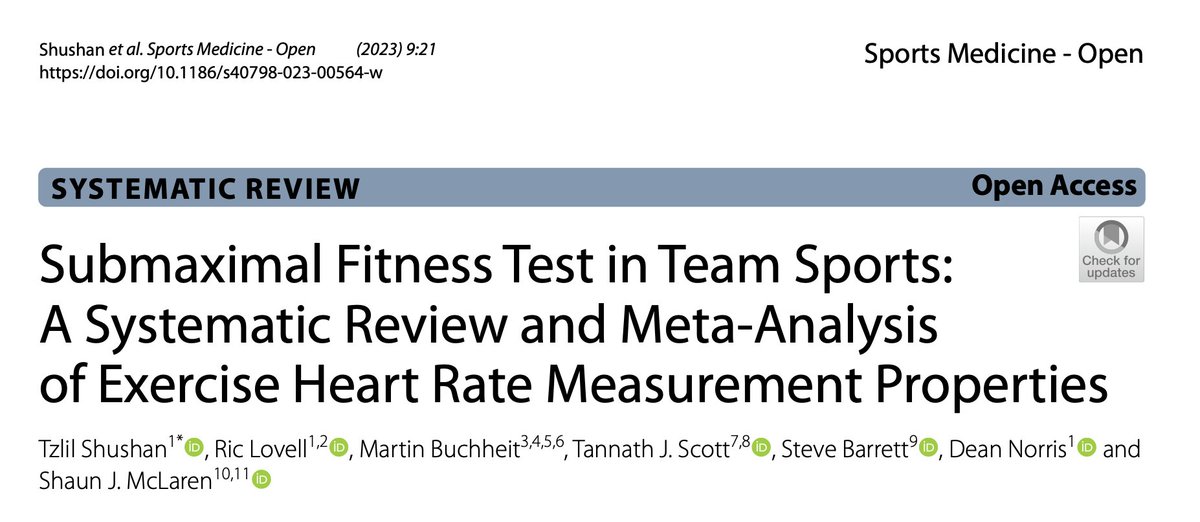
Finally published 🔓
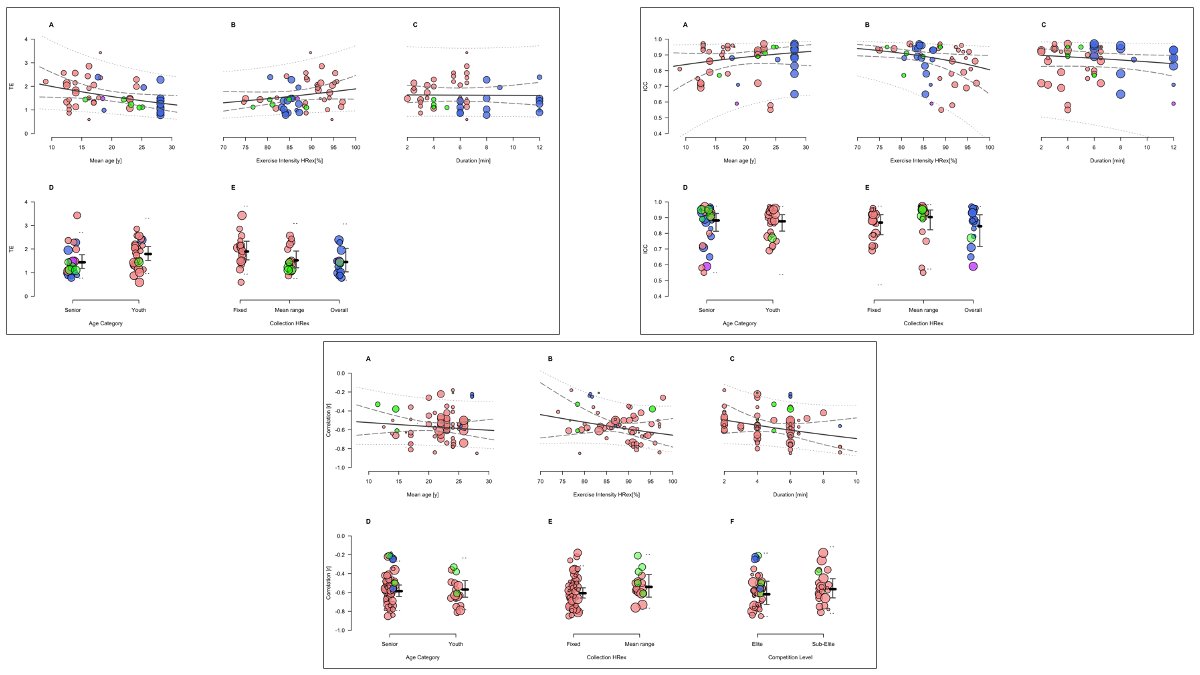
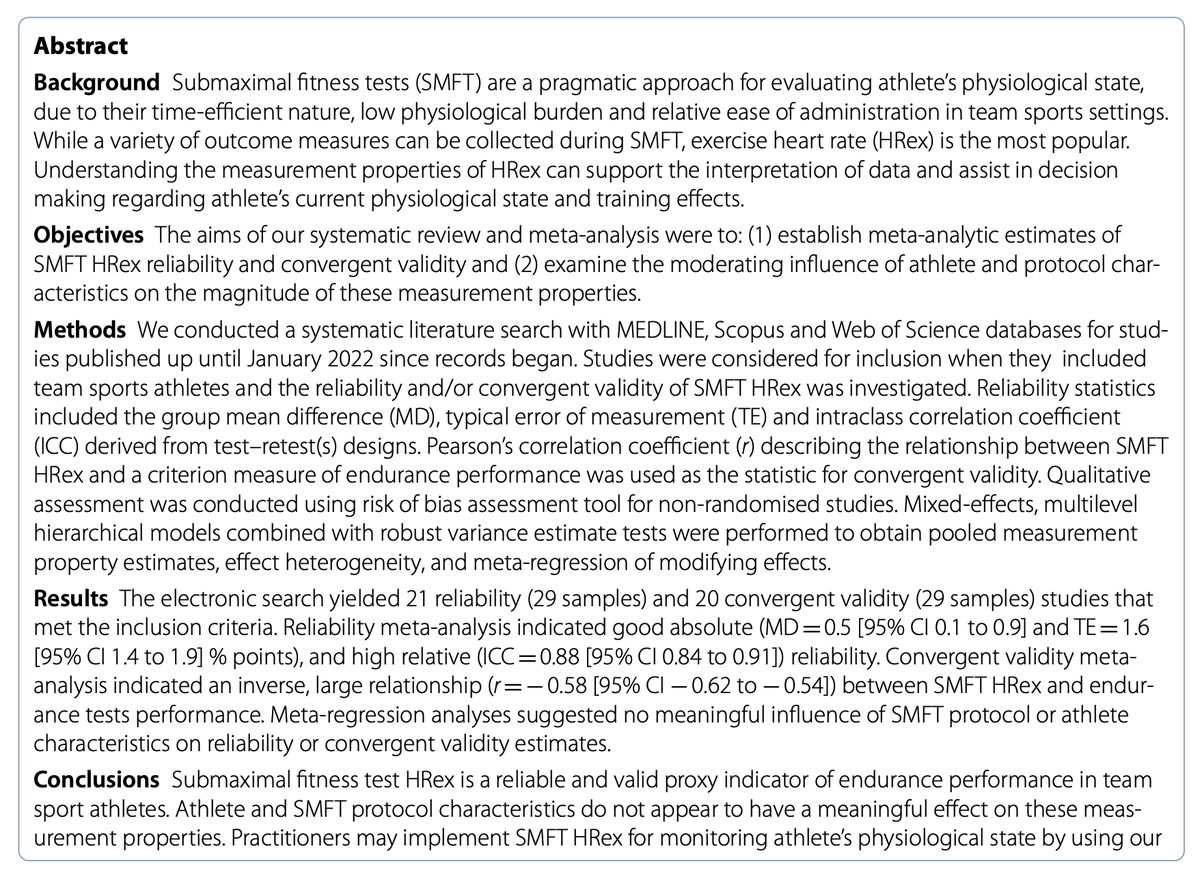
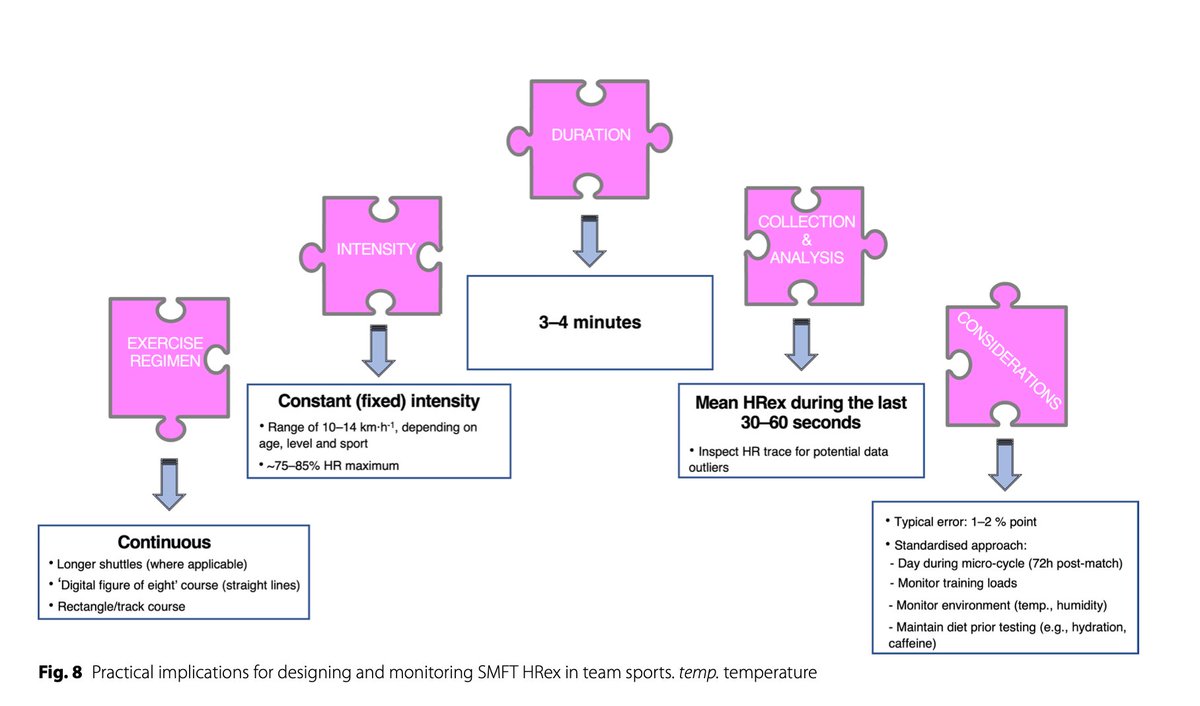
Interested in monitoring exercise heart rate during submaximal fitness tests 🏃♂️🫀
This is for you 📄😊👇
Full text: rdcu.be/c8p8o
You can also watch our short video of the main findings & practical applications 🎬🧩
youtu.be/B_i9IuhpkT4
24
77
16,282
Dean Norris retweeted
4 Mar 2022
Very happy I will be moving to the most beautiful city in the world (Sydney) again! I will be joining @westernsydneyu & @GWSGIANTS in researching athletic performance status in professional AFL
Thank you @ric_lovell @PoulosNick & @DNorrisSC for trusting me with this position #PhD

5
4
59
Dean Norris retweeted

9 Nov 2021
🗣️2/2
#2: Identifying Actionable Insights from Performance Analytics in Australian Rules Football
🏉📉📚🎓
Details: bit.ly/3mRqTrr
Team: humanperformancesciences.com
Criteria ⬇️

13
10
Dean Norris retweeted
9 Nov 2021
🗣️1/2
2 x new PhD Scholarships available in partnership with @GWSGIANTS
🏉📉🎓🏃
#1: Monitoring Athletic Performance Status in Australian Rules Football: Evaluating Pragmatic and Unobtrusive Techniques
Details:bit.ly/3mSX4a5
Team: humanperformancesciences.com
Criteria ⬇️

1
26
40
Dean Norris retweeted
21 Sep 2021
🚨New International PhD Scholarship in partnership with @FIFAcom & @ORRECO1:
⚽️📉🏃♀️🎓
Monitoring the Menstrual Cycle in Women’s Football (Soccer): Implications for Female Health and Performance
Details: bit.ly/3lI4P0N
Team: humanperformancesciences.com…
Criteria: ⬇️

1
71
141


Dean Norris retweeted

3 Oct 2019
#rdatatable 1.12.4 is now on CRAN
225 PRs by 24 people
177 issues closed
29 new features
46 bugs fixed
github.com/Rdatatable/data.t…
26
102
454
Dean Norris retweeted

13 Jun 2019
I know many of you #brms #rstan #bayes freaks have been waiting with bated breath for the release of the second edition of Gelman and Hill (2006). Word on the street is the first volume will be out later this year.
Here’s an early review.
lesslikely.com/statistics/re… via @dailyzad
5
36
187
Dean Norris retweeted
19 Apr 2019
The update to "Statistical Rethinking with brms, ggplot2, and the tidyverse" is live bookdown.org/connect/#/apps/…!
Some of the major changes include:
Refitting all models with #brms 2.8.0
Adopting the seed argument in all brm() models
Updated workflow for the WAIC and LOO
1/n
13
130
579