A father. A servant. An Engineer.
Joined April 2015
- Tweets 1,835
- Following 215
- Followers 70
- Likes 1,851
23 Photos and videos













May 23
Psalm 77:7-9 NIV
“Will the Lord reject forever? Will he never show his favor again? Has his unfailing love vanished forever? Has his promise failed for all time? Has God forgotten to be merciful? Has he in anger withheld his compassion?”
Powerful Rhetorical Questions (77:7–9)
“Will the Lord reject forever?” In speaking of the rhetorical questions that Yahweh fires at Job in response to his complaint, John Eaton writes, “Questions are the most arresting form of address and here bring home the full the weight of the theme.” Precisely the same effect is at work here in Psalm 77:7–9, except that it is the psalmist’s self-interrogation that brings home the full weight of realization. Singing psalms of praise, with all their creedal statements about the faithfulness of Yahweh and the fact that his steadfast love endures forever, triggers a train of thought that is inescapable for the speaker in this psalm. “Will the Lord reject forever? Will he never show his favor again? Has his unfailing love vanished forever? Has God forgotten to be merciful?”
The rhetorical questions speak for themselves and lead the psalmist to a conclusion grounded in faith that belies the difficulties of his present circumstances. The whole point of “unfailing love” is that it is unfailing! God’s promise never fails, and, even at the time of Israel’s great rebellion in worshiping the golden calf, Yahweh reveals himself to be slow to anger and abounding in steadfast love (Exod 34:6–7). The psalmist is asking questions to which he already knows the answer. The songs he sang in the night reminded him of what he already knew—the faithfulness of God never fails. The pray-er focuses on attributes of God that are inextricably linked with his good character—his favor (ratsah), his covenantal love (hesed), his promise (’omer), his grace (hinnen), and his mercy (raham). These key terms are intimately linked with God’s unchanging faithfulness toward his people based on the binding promise between him and them. These attributes are non-negotiables of Yahweh’s character. He can no more deny these characteristics of his being and his sworn means of relationship with his people than deny his own existence. This self-interrogation reminds the speaker of what he knows about his God and, once again, this reminder brings remarkable transformation
Jamie A. Grant, “Psalms 73–89,” in Psalms, ed. Terry Muck, vol. 2, The NIV Application Commentary (Grand Rapids, MI: Zondervan, 2018), 125–126.
3
25

PhileoAgpao retweeted

25 Nov 2025
I never get tired of hearing the gospel preached. Enjoy✝️🫶🏼
19
215
618
12,554
PhileoAgpao retweeted

14 Jul 2025
As our brother John MacArthur prepares to enter glory, hear this perfectly succinct and yet profound presentation of the gospel.
x.com/RudyCerda/status/15531…
59
1,214
5,259
229,718

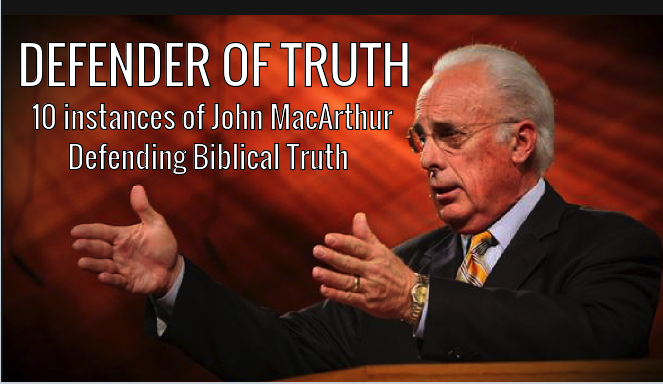
🧵In John MacArthur's 56 years of ministry, he has been a defender of Biblical truth.
He often swam against the current of mainstream evangelicalism due to his stances.
Below is a 🧵 on 10 instances of John MacArthur defending Biblical truth...
138
665
4,800
484,908

🎉 GIVEAWAY! 🎉
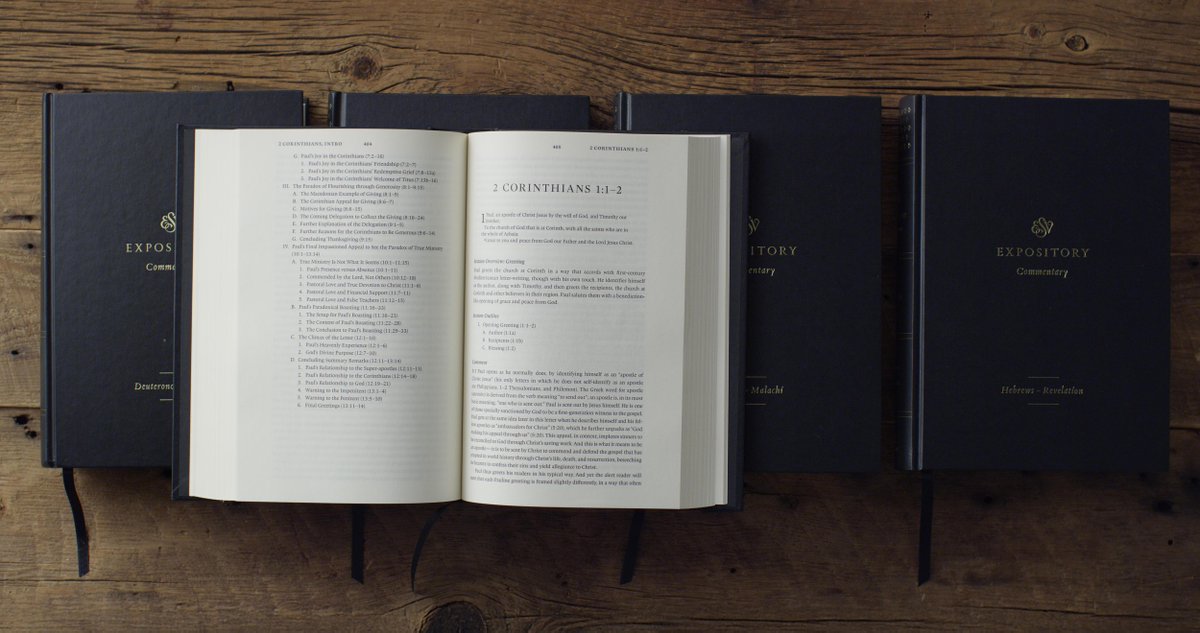
To celebrate the release of the "ESV Expository Commentary (12-Volume Set)," we’re giving away one complete set!
How to enter:
• Repost this post
• Follow @Crossway
• Tag a friend in the comments
Winner announced Thursday, July 3!
Open to U.S. residents with a postal address in the contiguous United States.
📚 Learn more about the Commentary Set: Crossway.org/esvexpositoryco…
583
587
422
53,305
20 Jun 2025
Whew. Just survived my two root canal procedure. Wasn't scary as I thought it would be.
48
10 May 2025
I heard someone say that he heard the sermon of C.H. Spurgeon. Is it true?
76
PhileoAgpao retweeted

16 Apr 2025
How to distinguish Asian languages
141
1,794
15,247
768,527
PhileoAgpao retweeted

25 Mar 2025
He will cover you with His pinions, And under His wings you may seek refuge; His faithfulness is a shield and bulwark. (Psalms 91:4)
33
722
5,093
153,182
PhileoAgpao retweeted

22 Mar 2025
The state of emergency was based on a lie, claiming the death rate is 3.4%.
10
61
243
68,812
22 Mar 2025
There are a lot of difference between content creators and journalists. But there are also similarities in how they do their content.
First and most important of all, is their fundamental right of free speech. They can say whatever they want, without fear of repurcussion. But they also must be responsible to what they say, because ultimately, they can influence others by what they post.
Second, they can also spew out lies, all of them. I have read some journalist who said things that are blatantly false and just echoing what others have told them, much the same as the content creators.
Third, all of them can be made to push the narrative of the persons they are promoting.
Fourth, they can be telling the truth, or promulgating lies as well, they are humans with fallen sinful nature, regardless of what profession they hold to.
Fifth, with the power that they have, all of them can have influence on the people's thinking and psyche.
What we need for all of them basically is to have discernment, a sense of responsibility, common sense and adherence to actual facts that can be searched easily.
55
PhileoAgpao retweeted

16 Mar 2025
Our amazing system from small satellites to the huge Sun
9
166
719
104,668
PhileoAgpao retweeted

11 Mar 2025
The meaning of the Cross of Christ. — Paul Washer, R.C. Sproul and Voddie Baucham
5
162
613
20,456
PhileoAgpao retweeted

11 Mar 2025
“You will just have to kill me.” – Police arrested Former Philippine President Rodrigo Duterte on a plane upon landing in Manila.
The ICC wants Duterte over his so-called “war on drugs,” which rights groups say left 30,000 people dead. Here’s a quick look back at his reign. 🧵
11
135
452
34,164