
Simple Country Radiologist
Joined September 2008
- Tweets 24,970
- Following 1,469
- Followers 830
- Likes 26,377
1,478 Photos and videos














May 24
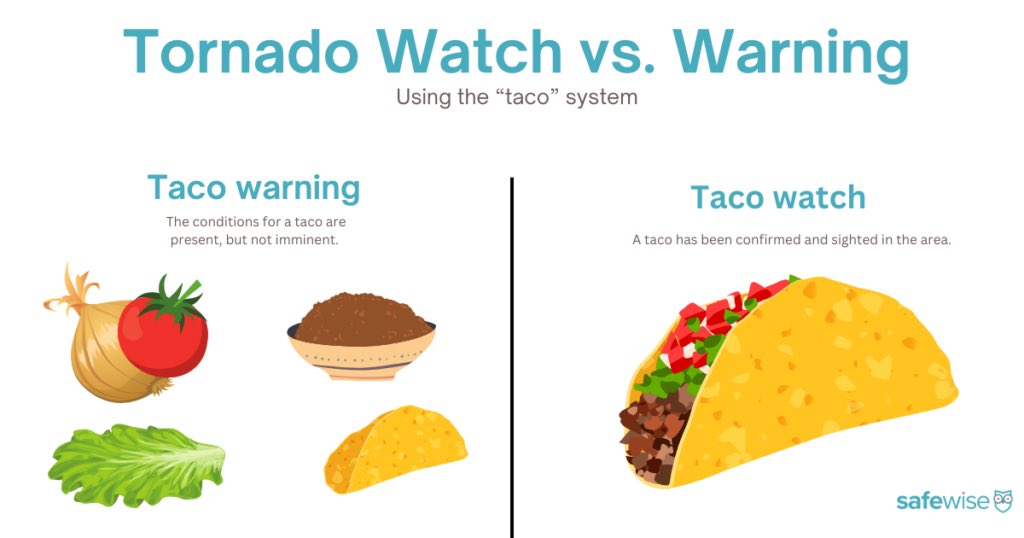
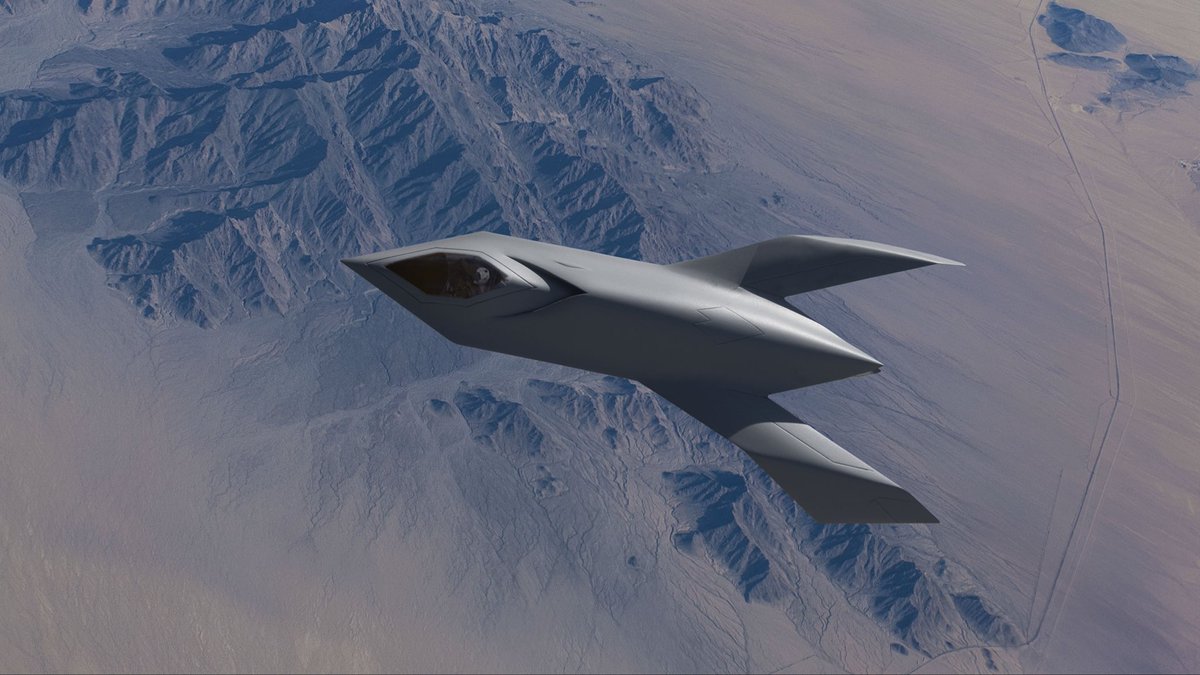
What if aliens have been among us for years and all they wanted from Earth was 10mm socket heads?
It would explain a few things.
3
1
10
259
May 10
The one resource US healthcare is oriented to save is time.

Another midwit healthcare take.
Other countries have better life expectancy than the US. That is not the same as better healthcare outcomes.
Life expectancy is primarily affected by things that kill the young. In the US, that is violent crime, car accients, overdose, and suicide. You can argue that healthcare might be able to influence the last two, but only minimally. Those things are driven by lifestyle choices. Add in our obesity rate, which is also only marginally mitigated by proper healthcare, and you see why our life expectancy is lower than the rest of the OECD.
We are fat, violent, depressed, and like driving on freeways.
Now, if you acutally get sick, there's nowhere else you'd rather be. We have some of the best outcomes in cancer, stroke, heart attack, and trauma. The wealthy from around the globe travel to our hospitals for care. There are entire wings at some prominent hospitals for ultra rich international patients. They aren't going to the NHS for their care.
We excel at coverage for actue care. 98% of Americans are within 90 mintues of a cardiologist who can open up the arteries in your heart in the middle of a heart attack. Meanwhile, in canada, that number is around 80%. They have 10x worse access to acute coronary care than the US.
If you're going to have a heart attack, you want to have it in the US.
If you're going to have any health issue requiring high specialty care, you want to be in the US.
3
145
May 8
When you go to the game, you wear the shirt.
Everybody gets shirts.
(Insert ancient ace.mu.nu Paul Anka reference here)

2
1
95
May 8
Also it seems to be a requirement that every bald white guy has to wear a white headband like Alex Caruso.
74
May 8
Game hasn’t even started and my Apple Watch is giving me ‘Loud Environment’ warnings.
45
Apr 25
Back in the day, people offered sacrifices to the sky/storm gods to affect the weather.
Apparently some people still believe this cause-effect mechanism, with the abstraction of federal funding as sacrifice and federal agencies as the deities.
Don’t be like Art.
Apr 24

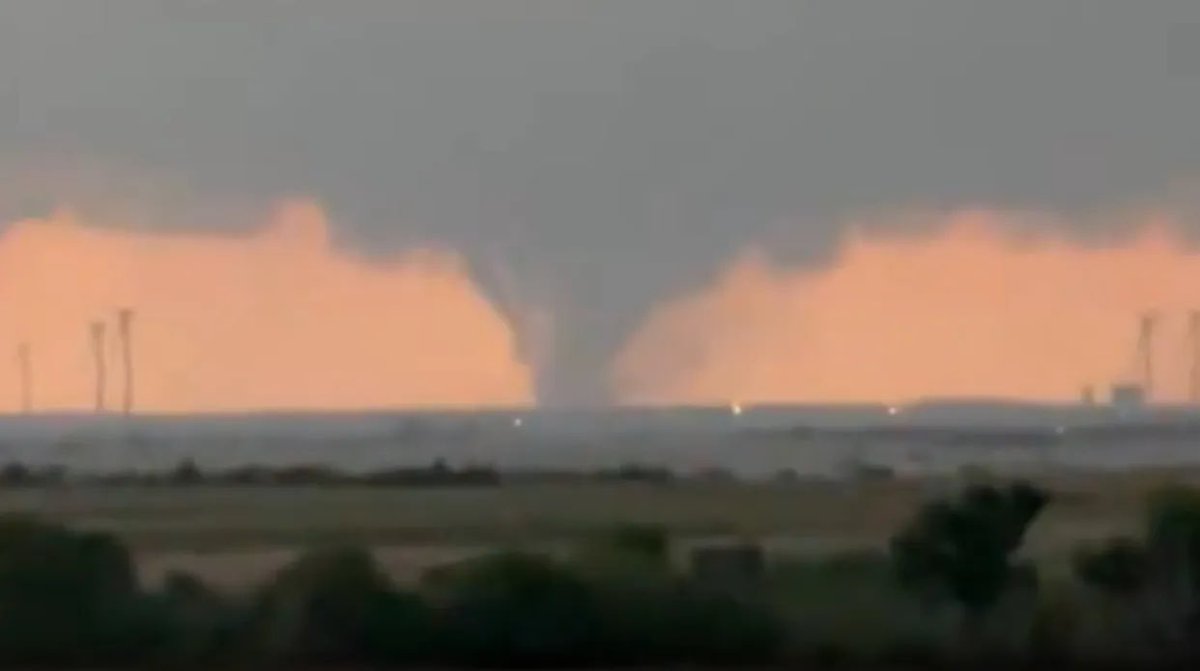
Vance Air Force Base (not named after Shillbilly Vance) is closed until further notice after sustaining tornado damage in Enid, Oklahoma.
Still pretty symbolic after JD Vance, Donald Trump, and DOGE cut funding for the National Weather Service.
This administration is a disaster.
1
1
140
Apr 24
I for one will not stand here and listen to one of the greatest seasonal beverages be erased in this fashion.
Begun, the Nog Wars have.
(It’s only April, I need at least a couple more months to stretch and warm up)

Apr 24

Nothing in the the English language starts with an N and ends with a G.
1
91
DarkAdapted retweeted

Apr 24
Nothing in the the English language starts with an N and ends with a G.
2,641
1,374
21,304
12,703,740
Apr 17
Retired from the Navy, Pete Mitchell is married to Penny and the CEO and Chief Pilot of Maverick Flight Solutions, a contractor providing air combat training services to the US military and allied nations with 3rd and 4th generation fighter aircraft that he, Hondo and a team of maintainers restore and fly. F-4 Phantom II, Mirage, F-16 and Legacy Hornets make up their fleet. Company motto: “It’s Not The Plane, It’s The Pilot”.
🧵/1


2
3
32
8,058
Apr 17
They are met at the airport and taken to a five-star resort, the crown prince of the country is a trainee pilot.
(Penny: “Best base housing ever.”)
First scene is a lecture by Maverick about what the goals are for the training. His pilots look a little older, they wear polo shirts and ball caps, have longer hair, etc. Local pilots are crisp and a little intimidated but they think they got this.
/4
1
9
583
Apr 17
Main Plot: Maverick has to coach the Crown Prince through the conflict with his father.
Subplot: training exercise goes sideways, local pilots with new aircraft get messed up when their new jets are electronically attacked, Maverick Flight Solutions’ jets are hastily rewired for combat, they are the only jets that Friendly Country can use. Maverick has to win the fight to get his people home.
13
484
Apr 13
Just had one of my favorite, but increasingly rare interactions as a radiologist, got a call from a colleague for a recommendation for patient management.
The amount of radiology training in other disciplines is exquisitely low — this makes sense, given the increasing complexity of all of the medical disciplines.
For instance, you don’t want me reading your EKG. I can identify that it is an EKG, I can look for gross things that need to be shocked, I am good at estimating distances visually, so I can guess about arrythmia, but anything subtle will get past me. You don’t want me looking at that mole you are worried about, or the rash your child has. Everybody has gaps.
Imaging costs, a lot. Properly used, it shortens the list of possible issues and focuses clinical attention to the more significant probable causes of the clinical problem. It can detect unexpected things, and occasionally mess up the signal to noise ratio of what is and is not important. That adrenal lesion is almost assuredly a benign, nonfunctional adenoma — almost.
But despite the ability to drill down into what the anatomy is and how pathophysiology of different diseases affect the anatomy, leading to more and less likely diagnoses, the complexity of imaging is largely beyond people who don’t practice it every day. Every modality has differing strengths and weaknesses, knowing the question you are asking makes a big difference as to what type of imaging is requested, and the training of nonradiologists in imaging is often an afterthought.
And so the best modality for the wisest (and sadly often only the oldest) clinicians is the telephone. Call the radiologist, discuss the case for 3 minutes and the radiologist can lay out what imaging can and cannot do, and often the least expensive options to focus on the most likely process that is causing problems for the patient. It’s not billable time but it’s time I am more than happy to spend, it’s still my value-add as an imaging specialist.
Medicine is big and complex. It’s always useful to consult the specialist when there is a specific question to answer.
1
94
Apr 7
The Government of Canada is apparently now outsourcing MAID to save costs, starting with retired police officers.
Kind of a two-fer, don’t have to pay a doctor and lowers police pension costs, so…

🚨Report: Canada is considering going door-to-door to start the collection of prohibited firearms
Canada may turn to retired police officers to carry out a door-to-door confiscation of firearms
March 31 was the deadline for gun-owning Canadians to “declare” and “register” for the government's forced buyback

140
Apr 5
Not our greatest military success, no.
But a success nonetheless. Zero fatalities, mission accomplished. Net cost was less than the fraud from daycares and autism treatment centers in Minneapolis for the last few months.
And yes, it cost us some equipment.
This is what we are willing to do to bring them home. This is what our people demand — if our service members are in harm’s way we will support them with whatever it takes. We ask them to do hard things, and we support them. And when it works out that everyone goes home and there is some burned wreckage in the desert — yes we call that a win, proudly and unapologetically.
I feel bad for people that scoff at this, or fail to understand what brotherhood means.

Lose all this to rescue 1 pilot and call it your greatest military success of all time.
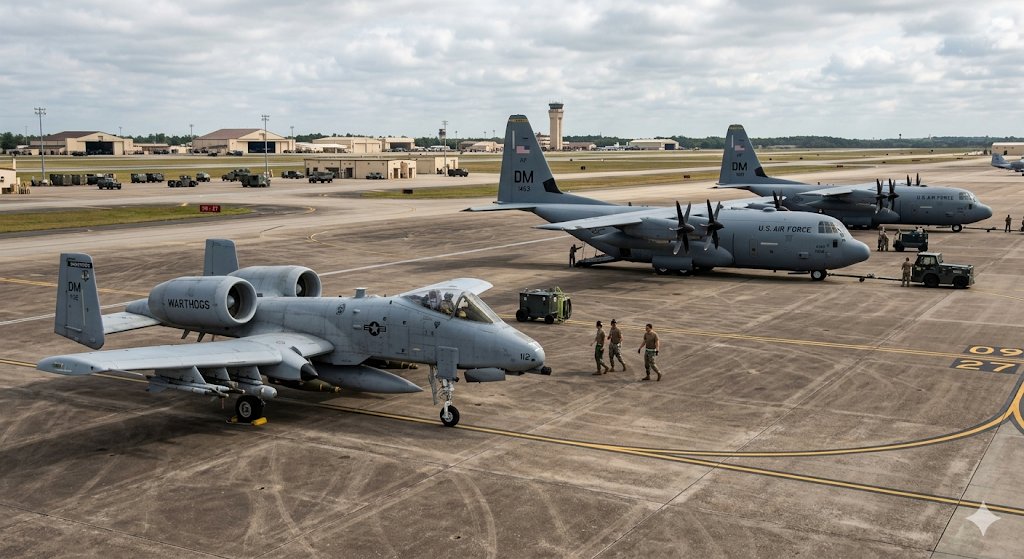
2
2
8
268
Mar 26
Cool, we could use an operational test of the AARGM-ER.
It not only figures out where you were transmitting from, it deduces the GPS coordinates, then looks for you on the way in with millimeter-wave radar, and then snaps a selfie of you and transmits it back right before it detonates a 150lb blast-fragmentation warhead. It even has an external speaker that shouts “WORLDSTAR!” right before it explodes.
I might be wrong about that last bit, but the rest of it is 100% accurate.
We can launch them off of multiple aircraft types including P-8 Poseidons. AARGM-ER has a 150 mile range, meaning there is a nonzero chance a 737 will be taking SAM crew scalps.
Good luck, comrades.
Mar 25

The War Soup just got thicker.
RUSSIA GAVE IRAN FOUR S-400 AIR DEFENSE SYSTEM BATTALIONS.
Now, every $100 million, Israeli & US F-35 Stealth Bomber Jet can be tracked in real time. They’re no longer invisible.
These complete S-400 battalions come with 8 launchers, each with 4 missile canisters, and 512 assorted missile types.
1
396
Mar 22
So about those long-range missiles:
1. Any nation with an orbital satellite launch capability has the capacity to create an intermediate range ballistic missile. They can build an airframe and control systems capable of accelerating X kg of payload to 17,000 mph, enough to achieve orbital speed. Direct that airframe into a ballistic trajectory and you basically have an IRBM. There are some fiddly bits about the reentry vehicle design and construction but really, that is not that difficult if you can read academic papers and do some precision machining.
Iran demonstrated orbital launch capability in 2008. Don’t look about in slack-jawed surprise as if it is shocking that they have a missile designed to reach 4000 km. It’s just physics.
2. People whose job it is to keep up with the capabilities of potential opponents realized the above more than 2 decades ago, which is why there are not one but two fully operational Aegis radar and battle management systems in Eastern Europe, attached to a couple of banks each of Mk41 VLS modules loaded with SM-3 ballistic missile interceptors. You’re welcome, Western Europe, and thank you Romania and Poland for stepping up.
3. Anyone who acts surprised by point 1 (above) and tries to sell you on this being a “game changer” without mentioning point 2 (above) is selling FUD and does not belong on your timeline.
4. As far as what to do about this demonstrates capability, opinions obviously vary. The pro-IRGC people will probably tell you that this is proof that European nations shouldn’t get involved as they can’t possibly intercept an IRBM (we can) and they should not put their capitals at risk (they already were, is the implication). The message being sent is meant to threaten stability and back down potential US allies, and it might work that way on them.
Attempting to send such a message to a people with a Jacksonian bent will likely produce a very different response.
As one of the parties involved in the original SRBM/IRBM/ICBM tech tree race, we know that it is simply a matter of time and budget until Iran will be capable of threatening the mainland US with nuclear-tipped ICBMs. As a result, your demonstration of this capability will lead to the killing or capture of everyone we can find involved with the production and design of the recently-demonstrated IRBM. Whether it worked or not, the intent was clear, and Jacksonians tend to have a “never leave an enemy alive behind you” mindset when it comes to credible threats.
Another way to say this is, “When you strike at a king, you must kill him.” Taking a shot at Diego Garcia with a not-before-demonstrated system was an epic mistake. Our interest in finding and destroying ANY other examples of that system in particular, as well as the tooling used to make it and the people who know how to make it, just increased by an order of magnitude.
(Continued after mandatory DJ Khaled reference)
1
2
149
Mar 22
5. So now the question becomes, “What dumbass just sentenced every Iranian industrial and military site to a full body cavity search by bunker-buster high explosives?”
Options:
A) sanctioned by the highest (remaining( level of the IRI/IRGC.
Using what level of command and control remains, someone decided to use one of the Iranian military wunderwaffen to target Diego Garcia, believing this would somehow dissuade European allies and back off further aggression.
ROFL, as they say. Oh buddy…was that ever a miscalculation.
Likelihood: low.
B) the unit commander in charge of these weapons, lacking orders to the contrary or in a use-it-or-lose-it situation , launched the missiles based on preplanned targeting. IRI and IRGC leadership had no idea this was happening because their bosses who knew the plan are ashes and meat paste since three weeks back.
Kind of stupid, as whatever recon assets we have at high altitude or in orbit will have backtracked to the launch site and now knows where to look and what to look for. Best case scenario, a couple of Sneaky Blackhawks land at night and some hard dudes that might as well be Adeptus Astartes as far as you are concerned snatch your ass at night, while a few more destroy everything that looks like a missile in your vicinity.
Worst case: we let Grandpa Buff and his friends erase entire grid squares where you are.
Likelihood: I think this is actually the most likely. IRI didn’t order the strike, but it was a contingency and nobody can keep up with all the units scattered all over Iran.
C) some faction of the IRI-IRGC had enough control to order a launch, without the knowledge of the rest of the government, for clout and internal political maneuvering.
Likelihood: fair.
However you slice it, launching those weapons was about as bad a decision as possible.
1
102
Mar 3
They are also systematically destroying the current government’s ability to coordinate the kind of response that killed 35,000 protesters over the last couple months.
The US and Israelis in fact do not want to negotiate with the current Iranian government. They want to negotiate with a different government, which is why they are working their way down the org chart until the locals can handle whatever is left.

BREAKING: Israel just struck the Assembly of Experts building in Qom.
This is not a military target. This is the 88-member clerical body constitutionally responsible for selecting Iran’s next Supreme Leader. Reports indicate the building was hit while members were casting ballots to choose Khamenei’s successor.
Read that again. They bombed the election.
Not the military. Not the nuclear programme. Not the IRGC command structure. The constitutional process for selecting the one person who could theoretically unify the regime, negotiate on its behalf, and sign a ceasefire.
Three days ago I wrote that the market’s four-week timeline depends on a negotiated ending. A negotiated ending requires a counterparty. A counterparty requires a legitimate leader. A legitimate leader requires a selection process. That selection process was happening inside the building that just got hit with heavy-tonnage bombs.
Follow the chain.
The Supreme Leader is dead. His replacement Defense Minister is dead. The acting replacement is reportedly dead. The only mediator in the region, Oman, is being bombed by the regime it was trying to help. The IRGC has fragmented into indiscriminate retaliation. And now the 88 clerics tasked with reconstituting legitimate authority have had their building destroyed mid-vote.
Every link in the chain that leads from “war” to “ceasefire” to “de-escalation” to “insurance reinstatement” has been severed. Not by accident. By design. The US-Israeli targeting doctrine is not just degrading Iran’s military capability. It is systematically destroying the institutional architecture required for the war to end through negotiation.
Reinsurers do not reinstate coverage into a regime that cannot reconstitute its own leadership. The actuarial blockade timeline just extended again.
There is no one to negotiate with. And now there is no process to produce one.
open.substack.com/pub/shanak…
254