
Helping executives navigate the SaaSpocalypse. Advisor on AI Policy & Sovereign Infrastructure. Focused on AI Governance & the Agentic Trust Layer.
Joined November 2016
- Tweets 163
- Following 1,721
- Followers 585
- Likes 1
17 Photos and videos





May 7
Anthropic just changed the AI agent game.
Claude Managed Agents — fully hosted runtime, no infra to build.
So I tried it. Built a working agent in 30 minutes. No code.
Full walkthrough 👇
x.com/DataSavant/status/2052…

99
Apr 8
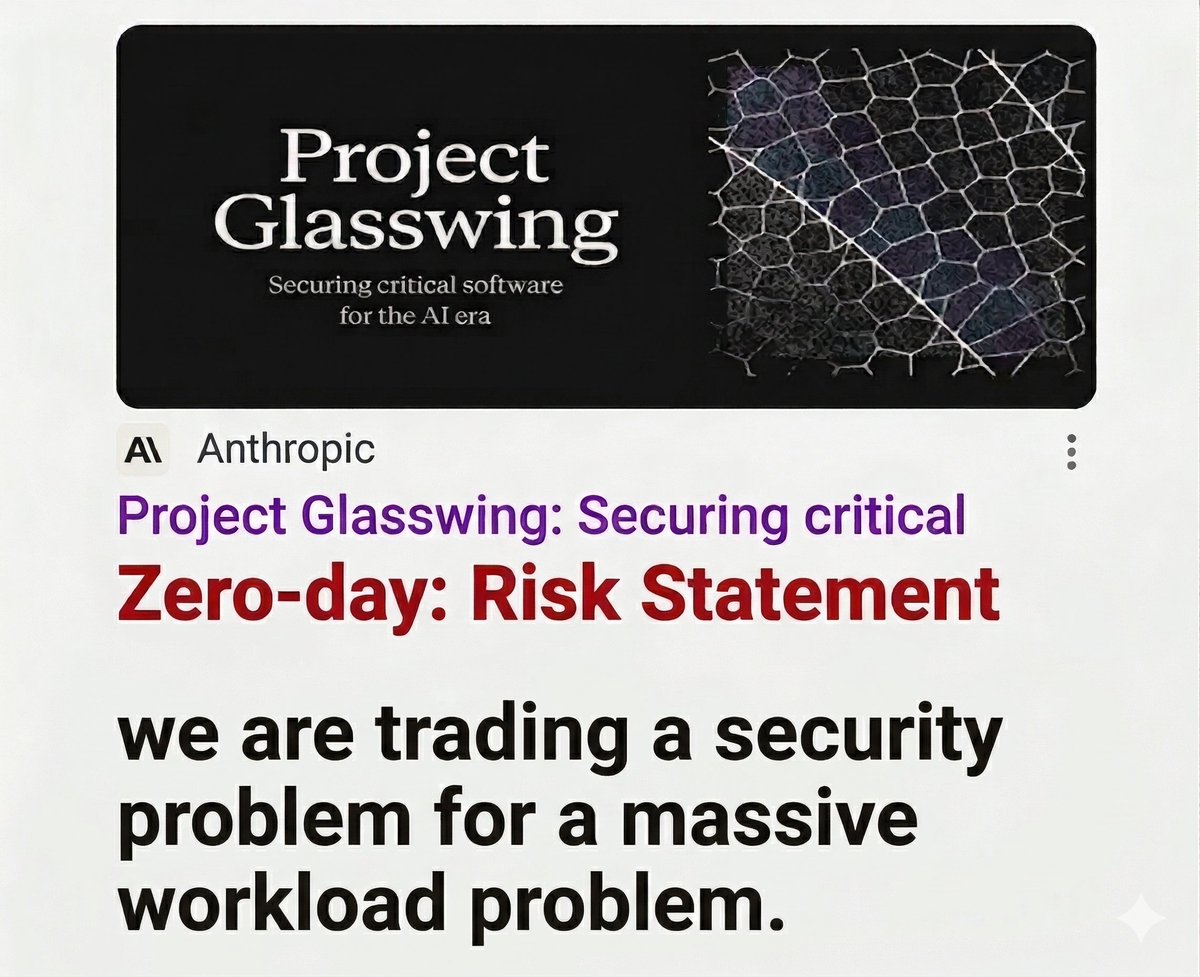
Anthropic just built an AI that finds zero-day security holes while we sleep.
The catch? We’re trading a security problem for a massive workload problem.
Finding 1,000 bugs is easy for AI, but fixing them without breaking the system is the hard part. We don’t need more alarms; we need better filters.
1
20
Apr 8
Two old rules of tech just died:
- Hacking takes weeks.
- Everyone has a fair shot.
Anthropic is now finding 20-year-old flaws in minutes. But if we rely on a single AI model to protect our banks and power grids, we’ve created a massive single point of failure.
What happens when someone tricks the guard dog?
14
Mar 27
Most AI ROI decks say "our devs save N hours/week." That's not ROI. That's a cost input.
The solo coder era is ending — and if your hiring rubrics haven't changed, you're paying 2026 salaries for 2015 skills.
aisovereignstack.substack.co…
13
Mar 21
You’re putting enterprise data into models you can’t name.
And calling it “AI strategy.”
A $30B AI unicorn just made that visible.
Not via a press release. Not via a regulator.
Through developers watching API traffic.
1
1
41
Mar 21
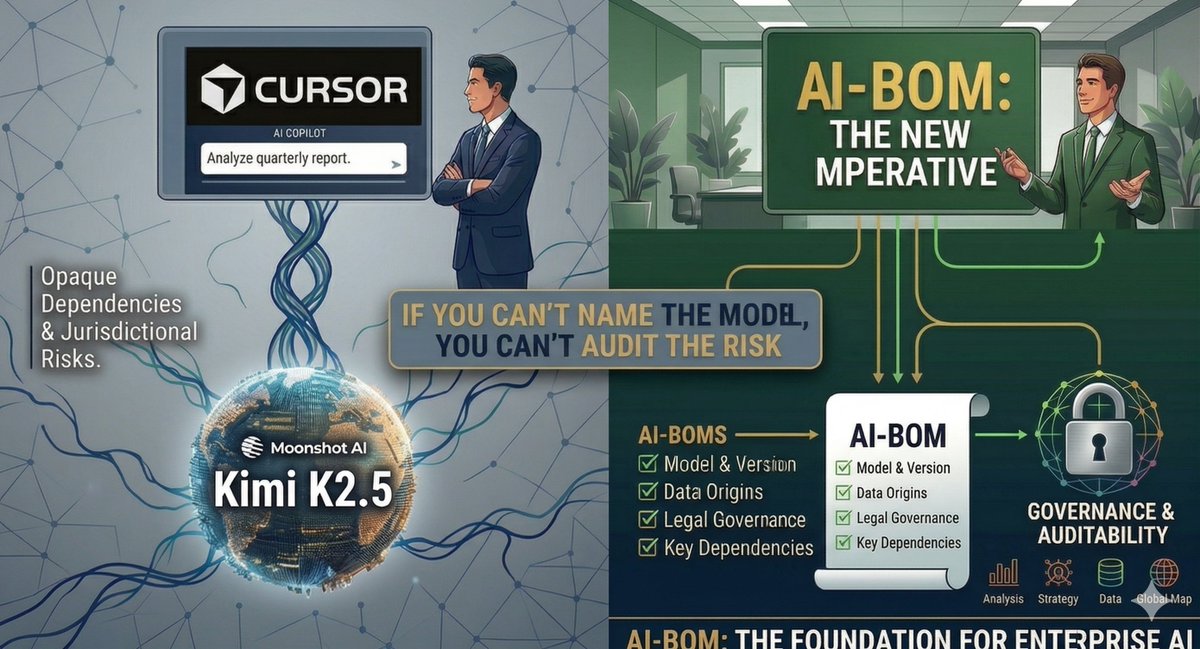
What they found: Cursor’s “proprietary” engine looks a lot like Kimi K2.5 from Moonshot AI in Beijing.
Cursor acknowledged it and said their edge is:
- pretraining
- RL
- orchestration
Fair. But let’s be precise: most “AI platforms” today aren’t model companies. They’re access layers.
1
1
26
Mar 21
So the real risk:
- prompts leaving your environment
- routed through opaque orchestration
- hitting models you didn’t pick
- under jurisdictions you didn’t approve
If you can’t name the model, you can’t audit the risk.
No AI‑BOM → no deal.
1
10
Mar 12
Check out the latest article in my newsletter: Your AI Vendor Is Now a Political Liability linkedin.com/pulse/your-ai-v… via @LinkedIn
1
1
59
Mar 9
@salesforce- Agentforce works—but the meter is wrong.
Salesforce is taxing human seats while AI agents do more of the work. The longer that gap persists, the bigger the ROI paradox gets: a credible AI efficiency story is also a seat-compression story. Read the full breakdown
x.com/DataSavant/status/2031…
@Benioff @johnkucera
1
12
Mar 9
In an agentic enterprise, the human seat is no longer the atomic unit of value.
The true SaaS moat is provable governance and immutable decision lineage. Vendors risk under-monetizing the sovereign record of agentic decisions. Here is why the economics must shift
1
15
Mar 9
How does SaaS monetization survive AI?
By moving up the stack. Vendors must look beyond headcount and transition to pricing governed decisions and risk-bearing outcomes. The vendor that owns the governance meter will own the customer.
9
Mar 7
Amodei’s Economist interview wasn’t damage control.
It exposed a deeper issue: when an AI vendor insists on keeping a say in how its model is used, it stops being just a supplier.
It becomes a co-governor of the system.
That changes the risk equation.
1
35
Mar 7
AI supply-chain risk now includes vendors whose policies or values can override enterprise or state intent.
Once AI sits inside critical workflows, shared governance stops looking like responsibility…
…and starts looking like a control vulnerability.
1
5
Mar 7
Design rule for the AI era:
Don’t build a stack where one vendor can strand your roadmap by changing their acceptable-use policy.
Board question for 2026:
Where are we so dependent on a single AI vendor that they could block a business-critical use case overnight?
9
Feb 26
@OpenAI just launched the "Frontier Alliance."
A multi-year power move with four global consulting leaders.
At the same time, @Salesforce is partnering with @Anthropic.
The message is clear:
The tickets to the future have been bought.
Access is now a commodity.
Accountability is the new differentiator.
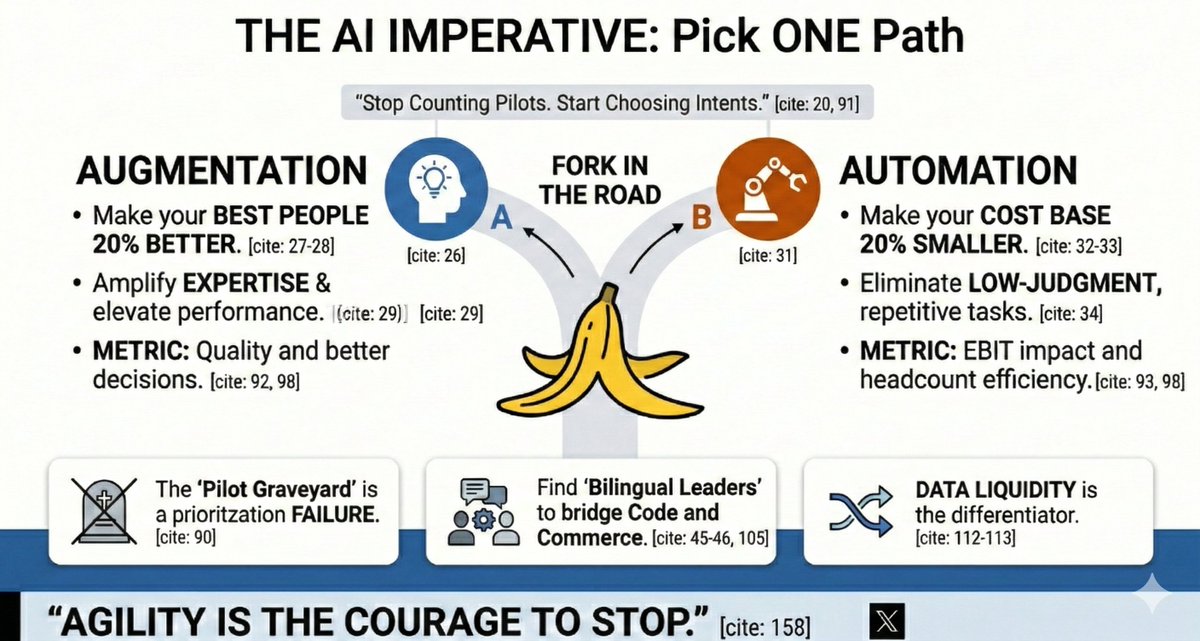
Most AI pilots are heading for a graveyard.
It is not a technology failure.
It is a leadership failure.
The C-Suite is stuck in a "multi-pilot" loop because they refuse to choose:
➡️ Choice A: Augmentation
Using AI to make your best people 20% better.
➡️ Choice B: Automation
Using AI to make your cost base 20% smaller.
You cannot do both at once.
They require different data, different cultures, and different metrics.
If you do not choose, you end up with "innovation theater."
Lots of demos. Zero dollars.
The real winners this year will do three things:
🔵 Name the primary intent (Augment or Automate).
🔵 Identify "Translators" who bridge the gap between code and commerce.
🔵 Build the "Courage to Stop" failing projects early.
Agility is not doing everything quickly.
Agility is knowing what to stop.
AI will not make these decisions for you.
It will only amplify the consequences of the ones you avoid.
I broke down the full leadership framework in my newsletter.
Are you building better humans or cheaper processes?
Let’s talk in the comments.
1
47
Feb 24
India AI Summit 2026: Sam Altman just issued a warning in Delhi.
It was for nations, but it applies to your boardroom.
"Centralization of AI in one company could lead to significant disruption."
If your entire AI strategy relies on one vendor, you are vulnerable.
Here is the 3-step playbook for CEOs to de-risk:
The "Bet the Farm" Audit
List your top 10 AI use cases.
Identify the 3 that impact your margins the most.
🔹 Pricing algorithms
🔹 Customer data processing
🔹 Regulatory compliance
If that vendor doubles prices or goes offline, what is your Plan B?
The 90-Day Upgrade Rhythm
AI ages faster than any software in history.
A "state-of-the-art" model today is average by next year.
Pick 2 workflows and commit to a quarterly upgrade:
→ Sales proposals: From drafting to autonomous agents.
→ Fraud detection: From simple flags to active blocks.
→ Contract review: From summaries to negotiation.
Aim for a 20% reduction in cycle time every 90 days.
The Productivity Double
Altman says democratization ensures humanity flourishes.
In your company, AI makes your top 20% of talent 40% more valuable.
📍 Audit their secrets: What tools and prompts are they using?
📍 Reallocate budget: Give it to the teams changing how they work.
📍 The Target: 1.5x revenue per employee by 2027.
One final rule:
Use big models for hard problems.
Use small models for everything else.
Small models are 10x cheaper and keep your data private.
The 3 questions for your next board meeting:
Which 3 workloads cannot stay single-vendor?
Which 2 workflows must we upgrade every quarter?
How do we 2x our average worker's output?
The disruption is coming.
Don't be the one caught centralizing.
👇 Check out my newsletter from the comment for the flushed out version.
1
66
Feb 20
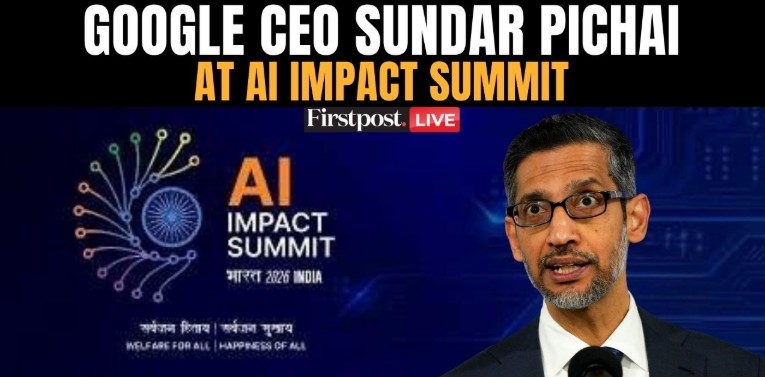
India AI Summit: Sundar Pichai just dropped a $15B reality check.
In 2026, treating AI as a pilot project means you are already behind. The era of Opex AI is over; it is now a Capex infrastructure play. Stop trusting Pilot Math that promises 70% savings—real-world busy roads deliver 30%.
Your 3-point Board playbook:
🔴 1. Own your compute. Rented intelligence is a margin trap. Secure fixed-price contracts or dedicated capacity for mission-critical workloads.
🔴 2. Solve the Busy Roads. Stop funding vanity AI. Pick 2 high-friction processes and target a 20% error rate reduction.
🔴 3. Bridge the talent bottleneck. Models are a commodity; AI-literate workers are not. Incentivize augmentation and track your AI-native workforce %.
The goal isn't more spend—it's deciding which costs you are willing to own.
➤ Identify top 3 workloads.
➤ Map the busy roads.
➤ Incentivize adoption.
Check out my newsletter from the comment for the fleshed-out version.
♻️ Repost if you found this playbook helpful.
#AI2026 #SundarPichai #BoardStrategy
1
126