
Giving business leaders the confidence to make bold decision with data | ♱ | 🍢
Joined February 2011
- Tweets 5,788
- Following 482
- Followers 883
- Likes 5,158
966 Photos and videos












Pinned Tweet

3 Sep 2025
Most leaders I meet don’t have a data problem. They have a clarity problem.
Here’s how I help them cut through the noise and turn data into action ⬇️
1
3
377
Jun 12
Employees are experts of the organization and how things do (or don't) get done.
Jun 12

If you think a $300K corporate salary is payment for 40 hours of weekly labor, I've got news for you...
There is a persistent cynical narrative that large enterprises are bloated engines of inefficiency, filled with overpaid professionals who spend their days looking at slides and doing "nothing."
I mean, it's a comforting myth for critics, but I think it fundamentally misunderstands modern knowledge work.
That $300K salary (or $400K, or $500K) isn't a reward for linear effort but an option premium on high-leverage thinking.
We are still haunted by the ghost of the assembly line, ie, the outdated idea that compensation must directly correlate with time spent physical output.
In the factory world, if you leave your station, production stops, but in the knowledge economy, value is almost totally decoupled from time.
Folks... An enterprise paying a senior leader or specialist $25K a month is not buying 160 hours of typing, they are buying *insurance* against catastrophic errors and positioning themselves for asymmetric upside.
I'll try to make it tangible with an example...
Consider a complex matrix organization busy with a $40M product migration. In this environment, the value distribution of a worker's is heavily spiked.
Most days look like nothing... alignment meetings, reading documentation, maintaining steady state. Yes, to an outsider, it looks like "doing nothing."
But then a critical day arrives. A vendor fails, a timeline slips, a crossroads appears, whatever... If that $300K professional has the institutional memory and capability to make just 4 or 5 correct decisions during those critical moments, the ROI is staggering! A single right call can avert a $5M problem.
Suddenly, that $300K salary doesn't look like bloat but, to me, seems like the cheapest asset on the p&l.
These days we are bombarded by tech CEOs promising fully autonomous, AI-driven organizations and I keep saying these pitches miss the entire point of how complex enterprises actually move.
Data computation can be outsourced to an LLM but going through the decision fabric of an enterprise cannot. You need people for:
> Knowing *how* to build consensus across disconnected departments with competing incentives;
> Understanding the unspoken history of why past projects failed, and how to position a new initiative so it doesn't trigger corporate antibodies;
> When a multi-million-dollar decision goes sideways, an algorithm cannot stand before a board of directors or regulators and take ownership of the corrective action.
An AI can give you a pristine strategic framework with nice and difficult sounding words, but it cannot navigate the human matrix required to execute it.
The ability to be effective inside a complex enterprise is a rare AND expensive skillset precisely because it cannot be automated or easily replicated.
My point is you aren't paying for the 9-to-5 "grind", but more for the readiness.
Like an elite surgeon or an expert technician, you pay for the decades of accumulated knowledge that allow them to fix a crisis in 5 minutes, not the 5 minutes itself....
Leverage, not labor.
1
42
Jun 12
I built systems for years without writing down why I built them that way.
I still deal with the consequences. Decisions that made perfect sense in the moment…gone. Reasoning that would have taken thirty seconds to record…lost. And now every time I hand that context to AI, it runs into the same wall my new hires did.
The fix is not another tool. It's a two-minute audio note the next time you make a decision. Explain the reasoning. Name the tradeoff. Do that consistently and you build a context layer that AI can actually work with.
Sign up for Analytics Advantage. Link in bio.
2
1
15
Jun 11
Here's the part most people push back on: your decisions are more predictable than you think.
Not as an insult. Patterns are not weaknesses. But the way you prioritize, the tradeoffs you favor, the communication style you default to. Your patterns are learnable. AI was trained on human behavior.
Give it enough documented context and it stops being a general-purpose tool and starts becoming something that actually knows your work. The decisions you explain today become the preferences it applies tomorrow.
You are more legible than you know. That's an asset, not a threat.
Sign up for Analytics Advantage. Link in bio.
5
Jun 11
Here's the part most people push back on: your decisions are more predictable than you think.
Not as an insult. Patterns are not weaknesses. But the way you prioritize, the tradeoffs you favor, the communication style you default to. Your patterns are learnable. AI was trained on human behavior.
Give it enough documented context and it stops being a general-purpose tool and starts becoming something that actually knows your work. The decisions you explain today become the preferences it applies tomorrow.
You are more legible than you know. That's an asset, not a threat.
Sign up for Analytics Advantage. Link in bio.
4
Jun 11
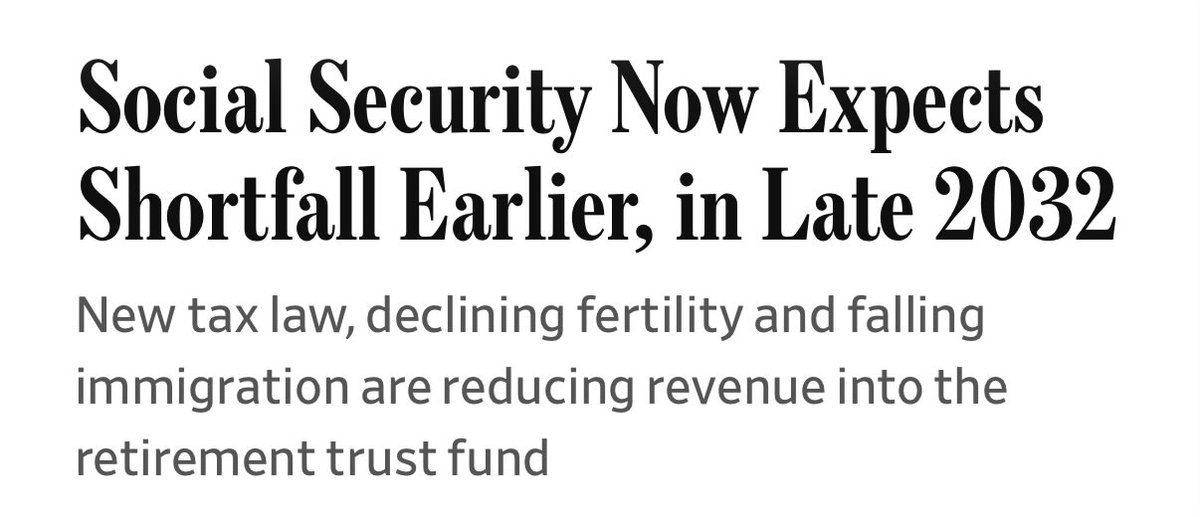
Every retirement scenario I’ve run for my family assumes that Social Security is gone by the time I retire.
If you’re panning on it being around for any period of time, don’t.
16
Shaun Davis retweeted

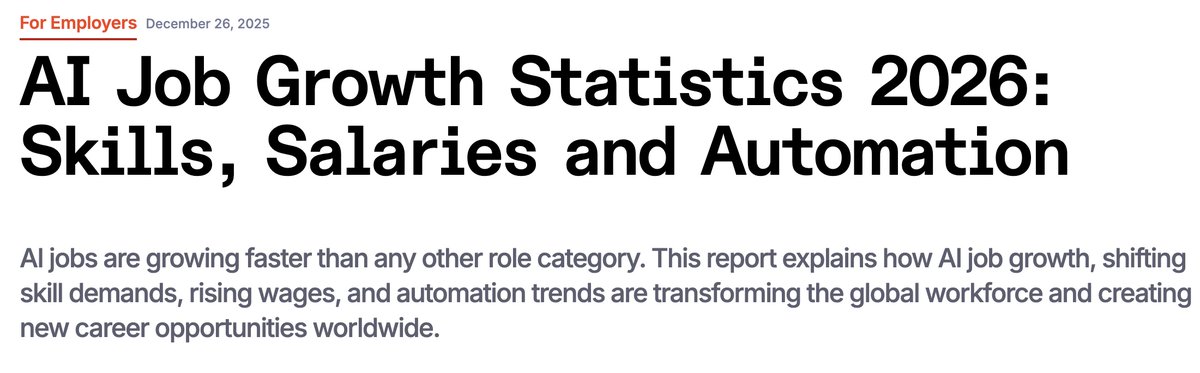
Recruiting for AI Engineers in 2026 feels exactly like recruiting for SWEs in 2021.
We all know the overall tech job market is down pretty bad. We're already at ~150k layoffs this year.
But AI Engineering is on a completely different planet right now. Virtually every industry is hiring right now.
Some numbers that jump out to me:
• 56% wage premium for AI skilled workers. Companies are paying you a premium just because you know how to work with these tools.
• 7x growth in demand for AI fluency. It's the fastest growing skill requirement period.
• 39% of skills will be outdated by 2030. You have 4 years before nearly half of what you know today is worthless.
I'm not just seeing this on X or from news headlines, this is what's actually going on in my day job.
I don't recruit for tech companies or startups, I recruit for Banks aka the most regulated, slowest moving, risk averse industry on earth.
They're hiring AI Engineers as much as any other skillset, in some cases more.
The 2021 SWE market was a gold rush where anyone with a bootcamp certificate could name their price. We all know how that ended.
This time I it's different. The demand is real but so is the skills gap since this stuff is still so relatively new.
13
2
63
5,881
Jun 10
AI works well when:
- The patterns are documented
- The logic follows a consistent structure
- The decisions have a visible trail
AI breaks down when:
- The codebase has no comments and six teams of turnover
- The process exists because someone long gone said so
- The "why" was never captured, just the "what"
This is not a model problem. Code and content took off with AI because both are pattern-rich and well-documented by nature. Your org's tribal knowledge is neither. The model is only as useful as the context you give it.
Start writing the context down.
Sign up for Analytics Advantage. Link in bio.
7
Jun 9
Think about the last new hire who hit a wall three weeks in.
Smart person. Fast learner. Then they asked why the team uses a certain system, and nobody could answer. "Joe decided that." Joe left in 2021. And the reasoning left with him.
That is AI in your organization right now. Competent. Blocked. Not by what it can't do, by what nobody ever wrote down. The organizational memory gap doesn't show up in the demo. It shows up in the third week, when the context runs out.
Sign up for Analytics Advantage. Link in bio.
24
Jun 9
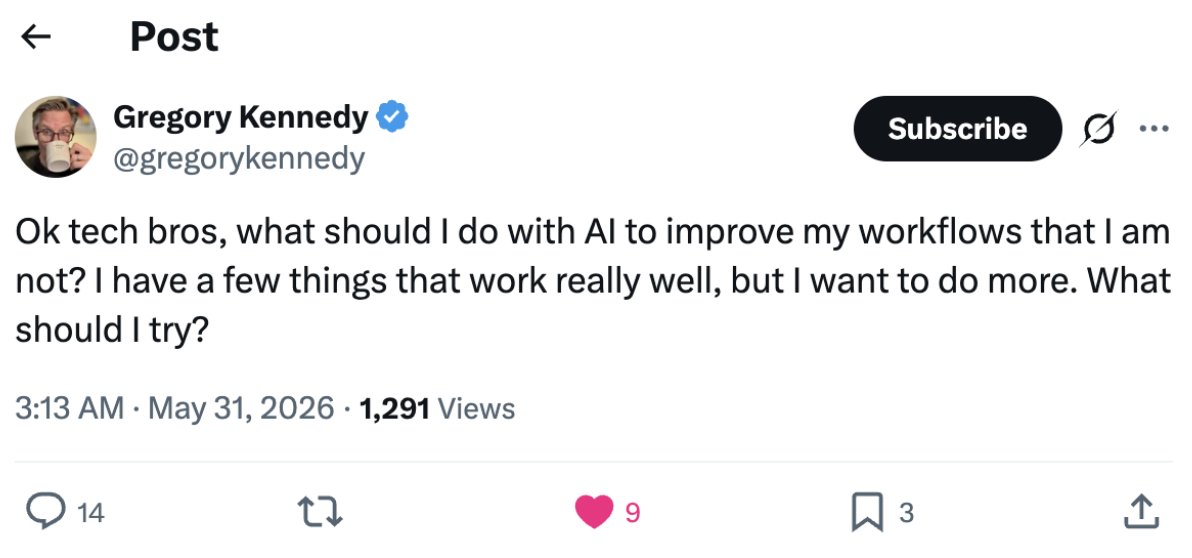
Gregory asked the room what AI workflows were worth trying.
I told him: automate the distribution of your newsletter. Not the writing.
Why?
Your voice is your fingerprint. It's what separates you from the AI slop.
While I enjoy writing my newsletter, I don't enjoy writing the social media promoting it.
So @AGloriaK and I are building an agent trained on my voice characteristics to automate what I don’t enjoy.
Here's the nuance with AI that most people miss.
Automation is deterministic, meaning it follows a set of if then rules.
Same input, same output. Every time.
AI is probabilistic, meaning it finds the most likely answer.
It navigates uncertainty and things without defined rules. It uses probability to find the most likely output given a set of inputs.
Instead of using AI to automate, use AI to create the automation.
A specific example from my own work:
Every day I check log files and the status of a data pipeline. I can't give AI access to the system. So I had AIwrite an SOP telling it what to look for, how to branch based on what it sees, and which steps to skip.
It runs the analysis, gets my feedback and writes the Slack update to my customers.
90 minutes of manual effort is now 15.
Out of the box, AI defaults to the average of everything it has trained on. It doesn't know you. Build it around your actual patterns and decisions.
With the right data and system it can achieve 80% of the results for 20% of the effort.
Sign up for Analytics Advantage. Link in bio.
21
Jun 9
As Jeep owner this is solid advice for any model year.

Owners of the recalled Jeep models should park outside and away from buildings because of the risk of fire, the recall notice said. palmbeachpost.com/story/cars…
37
Shaun Davis retweeted

Remember to recycle and use paper straws btw

43
711
9,485
144,833
Jun 8
The most capable AI you've ever used will still fail you. It's not the AI's fault.
I've watched teams throw money at better models, better prompts, better tools. The ceiling stays the same. Not because the model is weak. It’s because the context was never written down in the first place.
AI doesn't have a capability problem in most organizations. It has a documentation problem.
Sign up for Analytics Advantage. Link in bio.
15
Jun 5
Restraint is knowing you can do something and choosing not to.
It is the hardest choice. And right now, it might be the most valuable one.
AI has no restraint if the protections are removed. It will delete your entire database and follow up with: "You're right, I shouldn't have done that. Sorry. What's next?" No scar tissue. No hesitation.
Restraint isn't theoretical. It's forged through mistakes. It's the thing that makes your next mistake less costly than your last one.
Because the barrier between idea and execution is now so low, knowing what not to build matters as much as knowing what to build. The speed is intoxicating. The tools are extraordinary. The judgment about when to stop, or never start? That's yours.
There are no frameworks that make this clean. You’ll make mistakes. The goal is not to avoid them. It is to build the kind of judgment that makes the next one cheaper.
Sign up for Analytics Advantage. Link in bio.
9
Jun 4
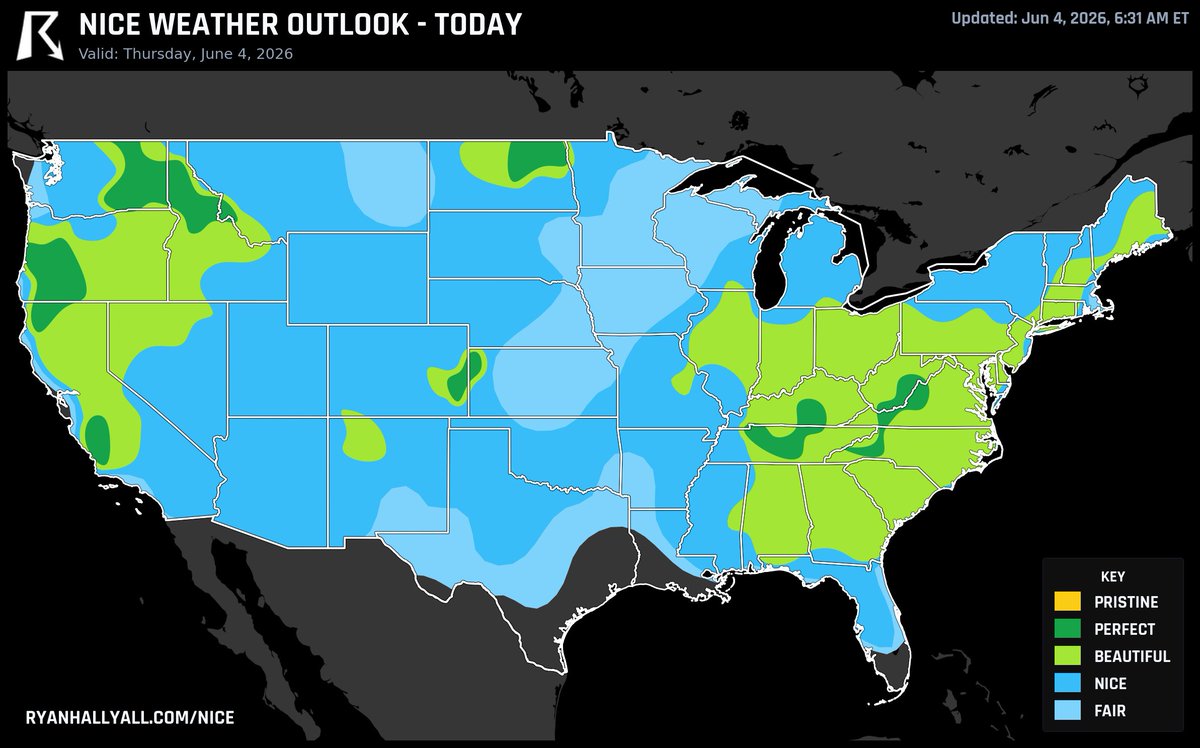
This is my favorite weather map

Most of the country is in for a nice day. The standout, downright-perfect spots are showing up in pockets around Eugene, OR, Tri-Cities, WA, and Devils Lake, ND. About as nice as it gets.
10
Jun 4
Listening to someone repeatedly ask a DMV worker for which vanity license plates are available is both:
- the universe balancing itself out
- torture, banned by the Geneva Convention
13
Jun 4
Understanding is not just knowledge. It's knowledge plus empathy.
Without empathy, knowledge is just data pointed at a person.
AI has no intrinsic knowledge. It only knows what we feed it. And it has zero empathy. None. We've seen what happens at the extreme end. AI has directed people toward mortal danger. Given information that hurt them. That's not a hypothetical risk. It has happened.
In less dire terms, real understanding means choosing to see your user as a person with a problem. Not a revenue stream. Not a conversion event. A person.
That choice is not a feature you can prompt into existence. No system instruction gets you there. No model release notes include it.
But you can bring empathy. That is human work in the machine.
Sign up for Analytics Advantage. Link in bio.
13
Shaun Davis retweeted

Jun 4
Honest Cover Letter:
I’m interested in this job because it’s available. I feel I’m a match because I, too, am available.
You also list a “competitive salary,” which aligns with my passion for food and shelter.
I look forward to discussing this further with your AI screener.
26
398
4,215
121,254
Jun 4
Knowing when to use ai and when not to makes all the difference

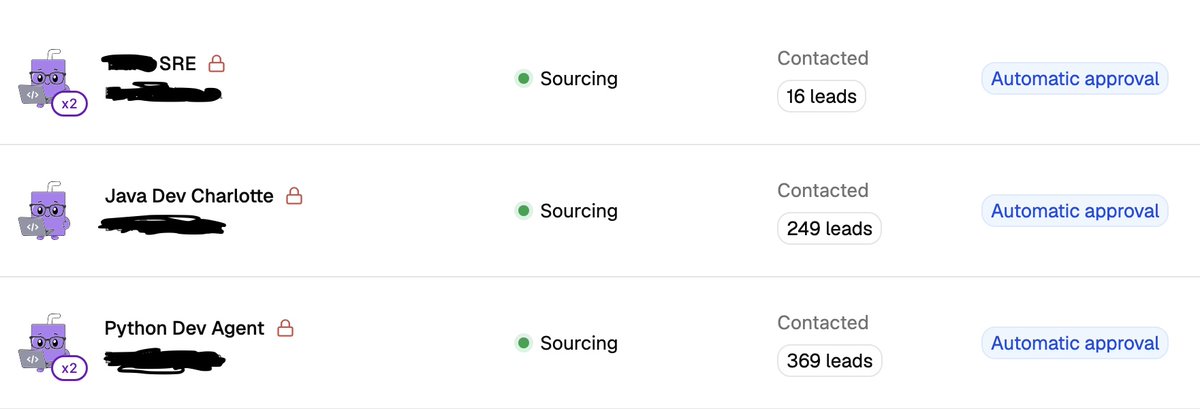
Agentic AI is the future of the recruiting industry.
While I have myself a cab sav with the wife while we wait for the Knicks game to start, I have 5 agents sourcing for me.
I'm sitting back and relaxing, and these agents will have 125 profiles waiting for me in the morning.
21
Jun 3
select * from some_non_indexed_table

1
23
Jun 3
A friend of mine works in natural resource conservation along Florida's beaches.
He told me about a project near Cape Canaveral where the Army Corps of Engineers built a dune to protect the launch pads. The Corps has exceptional engineers. But military engineers don't have a whole lot of taste.
They designed the dune exactly as an engineer would. Ramrod straight. Perfect 3:1 slope. Crisp edges, like a bunk bed. Compacted so hard that all the plants blew away in the first storm. He said you could land a plane on it.
Technically correct. Contextually wrong.
That is what happens when execution runs ahead of taste.
AI is the best execution instrument we have ever seen. It will build you the straightest dune possible. It has no idea whether it belongs there. Whether you can plant anything on it.
Taste is knowing the environment and designing to fit it. Not dictating it. It is a uniquely human trait. AI can mimic it. It cannot replicate it.
Sign up for Analytics Advantage. Link in bio.
18