A social impact organisation providing data access, insights and resourcing the data ecosystem. Data Journalism @dataphyte Data Collection @GolokaAnalytics
Joined October 2019
- Tweets 2,209
- Following 126
- Followers 1,747
- Likes 1,123
538 Photos and videos




Happening Today!
Join Dataphyte Academy's Election Data Lab 1.0 and learn how to understand and interpret election results, voter turnout, margins of victory, and election trends ahead of the 2027 General Elections.
📷 10:00 AM
📷 Zoom
Register: bit.ly/eds1
#ElectionDataLab #DataphyteAcademy #Nigeria2027 #DataForDemocracy
1
5
80
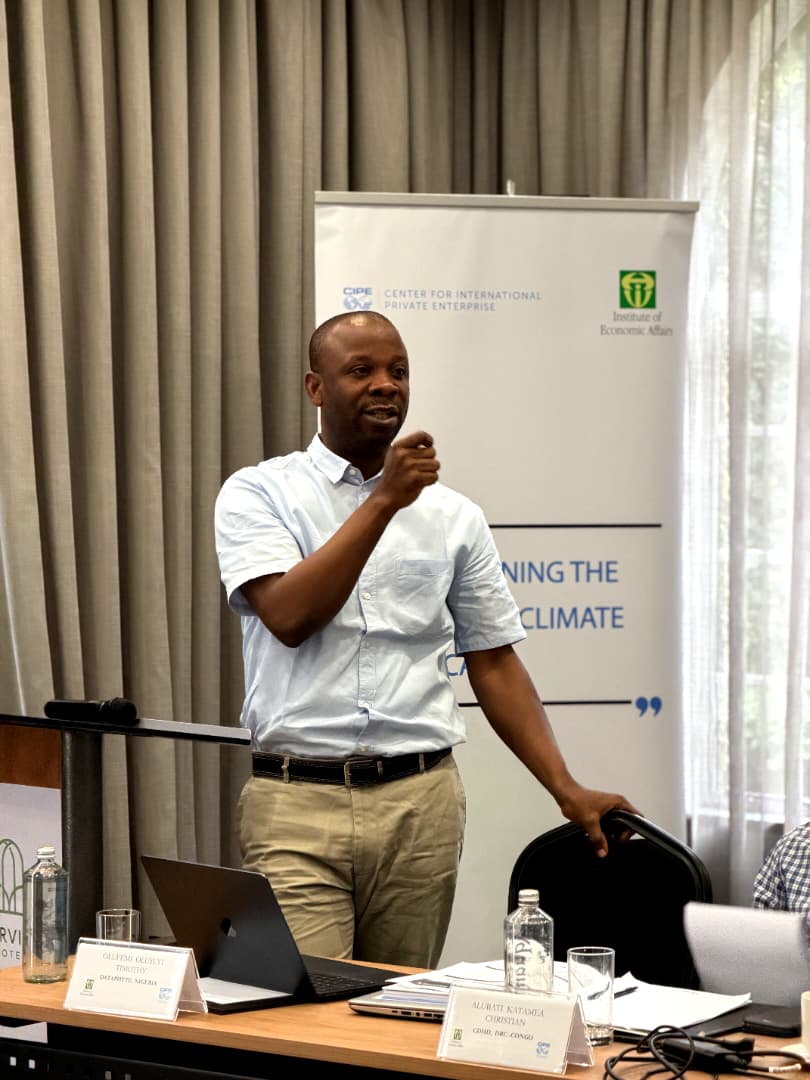
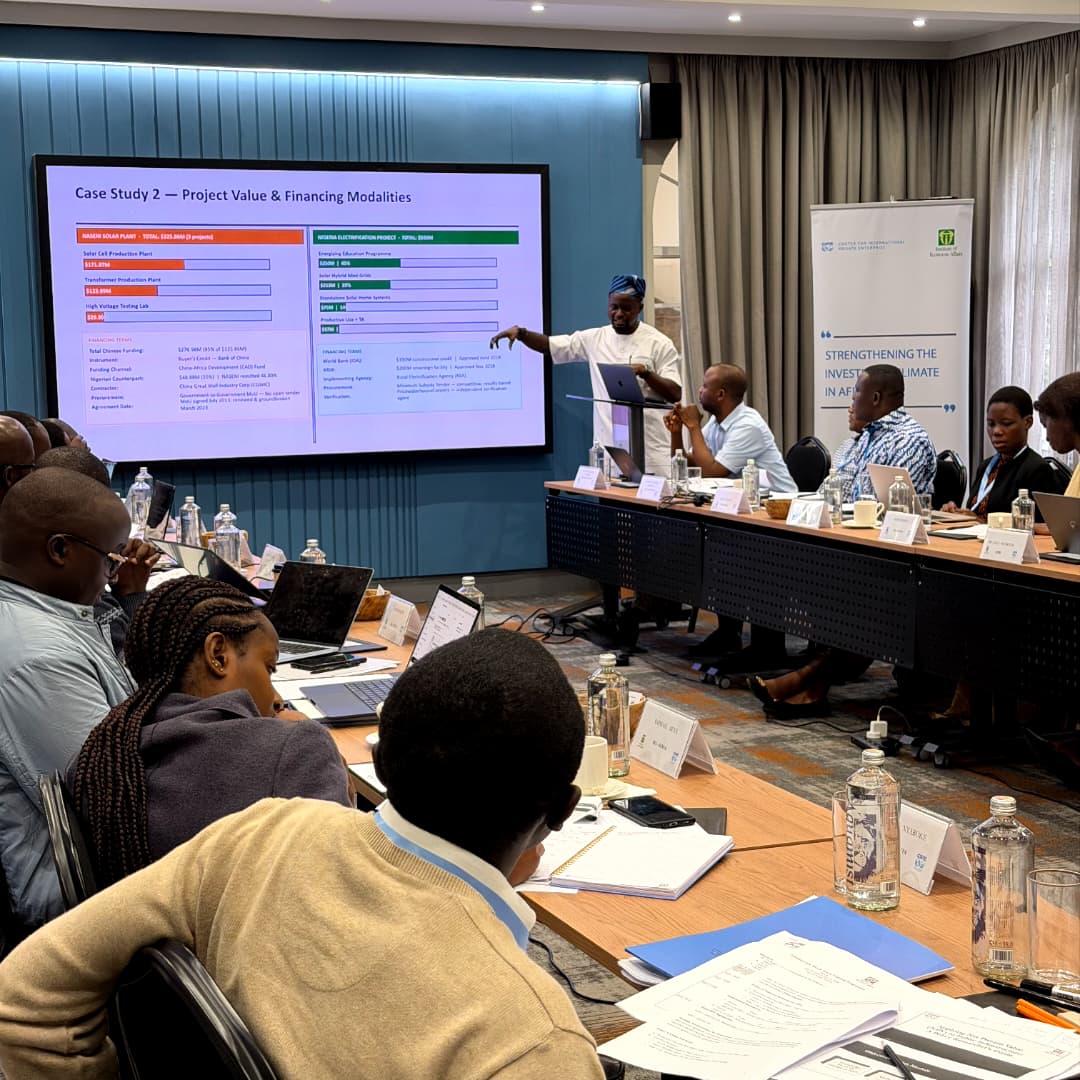
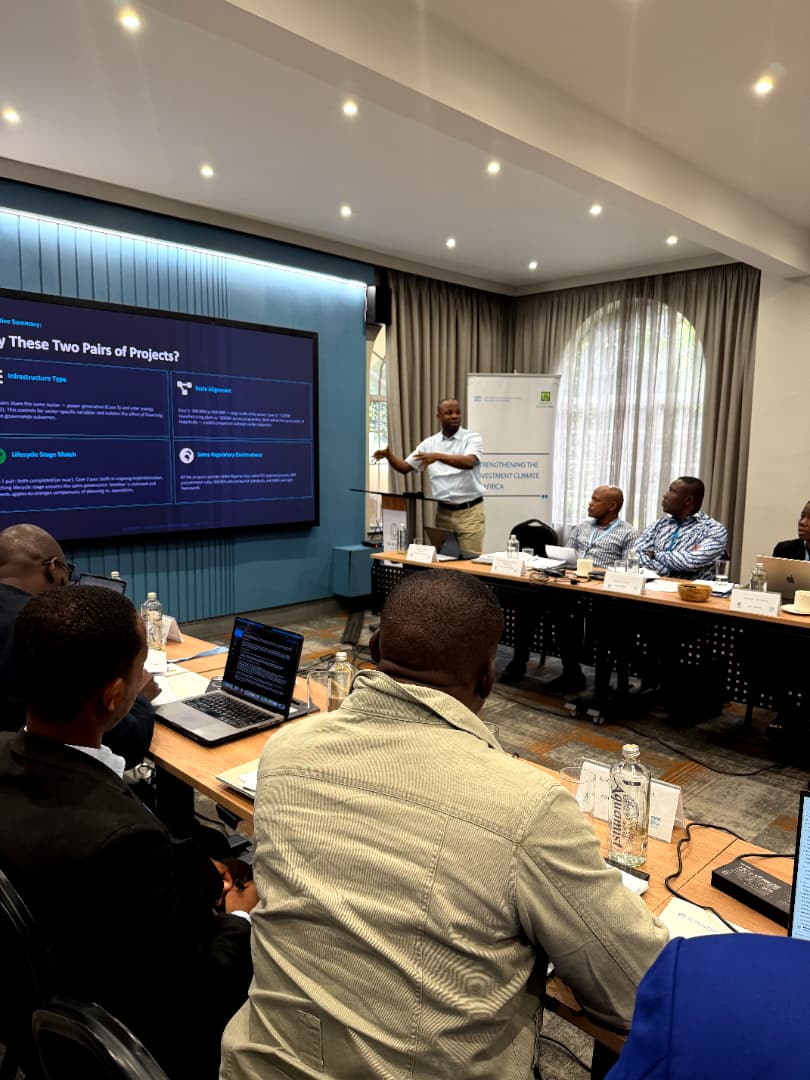
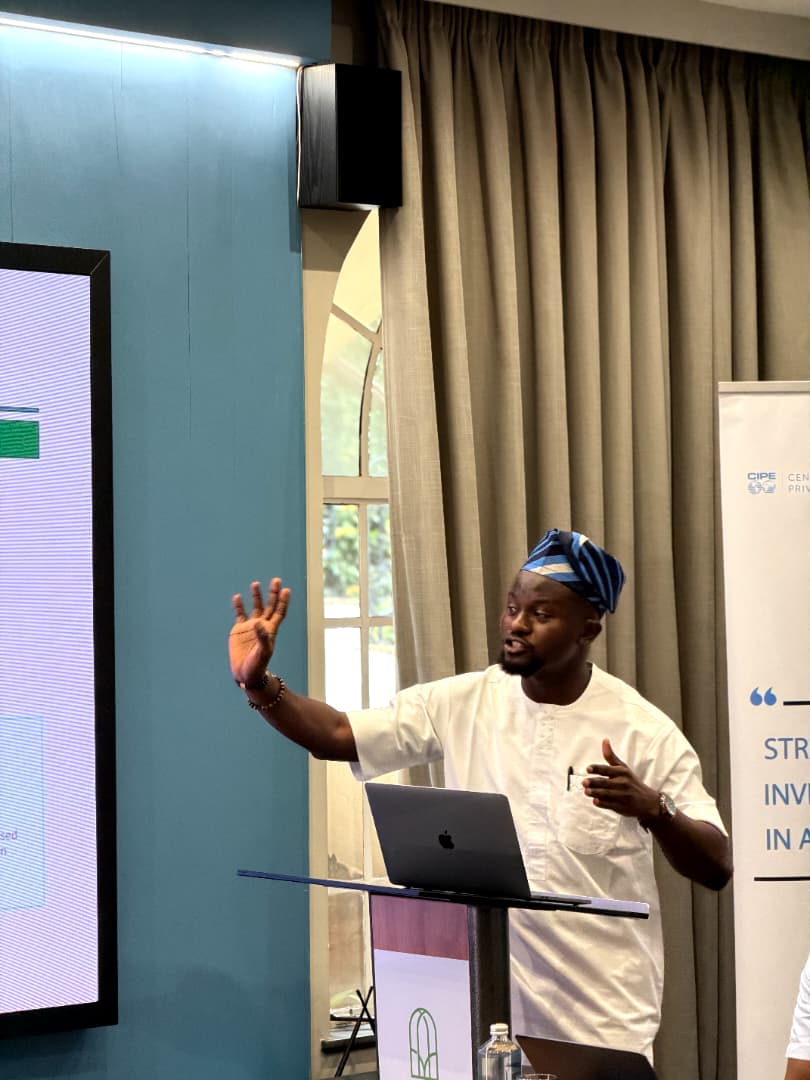
Last week, on the invitation of IEA Kenya and with support from CIPE, our team was in Kenya to participate in the co-design of the Infra Watch Africa methodology guide in assessing the transparency, accountability and governance risk of foreign-funded infrastructure projects in Africa.
As the Nigerian partner, Dataphyte Foundation’s Infra Watch project would strengthen infrastructure accountability and governance in Nigeria, particularly analysing the foreign-funded infrastructure projects, documenting comparative evidence on its accountability gaps and governance risks using CoST data standards and BRI, as well as empowering stakeholders through insights dissemination, capacity building, and advocacy dialogue to promote
transparency, accountability, and fair competition.
During his presentation on the proposed Infra Watch Project for comparative case studies, Dataphyte Foundation Country Director, Oluseyi Olufemi, highlighted the funding modalities and major sources of foreign-funded infrastructure in Nigeria, as well as how these funding streams shape investments across various sectors.
Additionally, Dataphyte Foundation Programme Manager, Adebayo Abdulahi, presented to partners an overview of the socio-economic profile of Nigeria and the rationale for the project's case study selection. He emphasised the timeliness of these initiatives and how they will help enhance value for money in the infrastructure sector, especially as Nigeria’s debt profile rapidly increases with limited correlation to enhanced development.
@CIPEglobal @IEAKenya
3
6
109
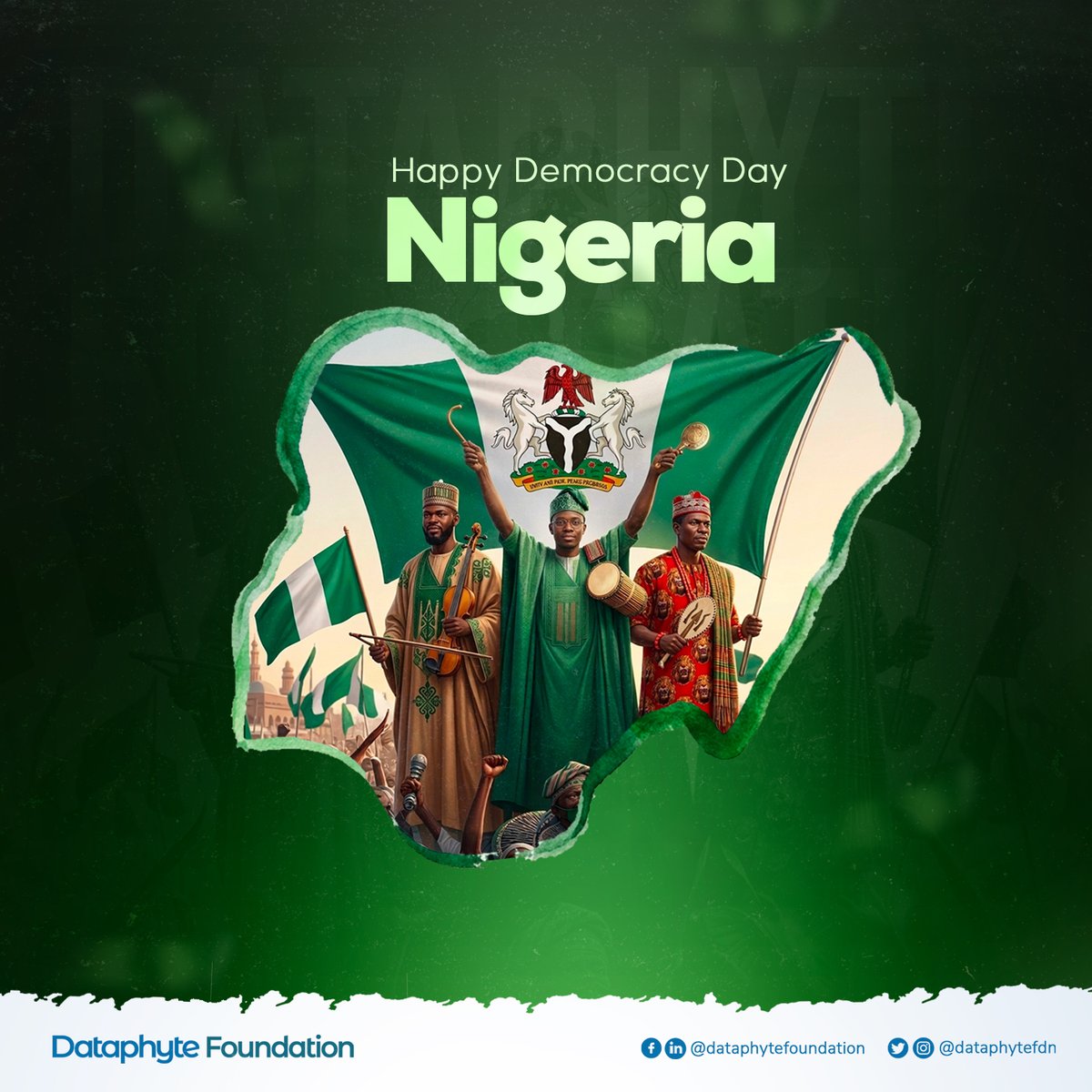
Democracy is often measured in elections, institutions, and laws. But its true strength lies in the ability of people to ask questions, seek answers, and participate in shaping the society they live.
As Nigeria celebrate 27 years of uninterrupted Democracy today, we celebrate not just a system of government, but the everyday actions that sustain it, including citizens demanding accountability, communities raising their voices, journalists pursuing facts, and institutions working in the public interest.
A reminder that Democracy is stronger when information is accessible, when participation is meaningful, and when no one is left out of the conversation.
As we mark this day, we are reminded that democracy is not a destination we arrive at. It is a responsibility we share.
Happy Democracy Day, Nigeria.
1
4
57
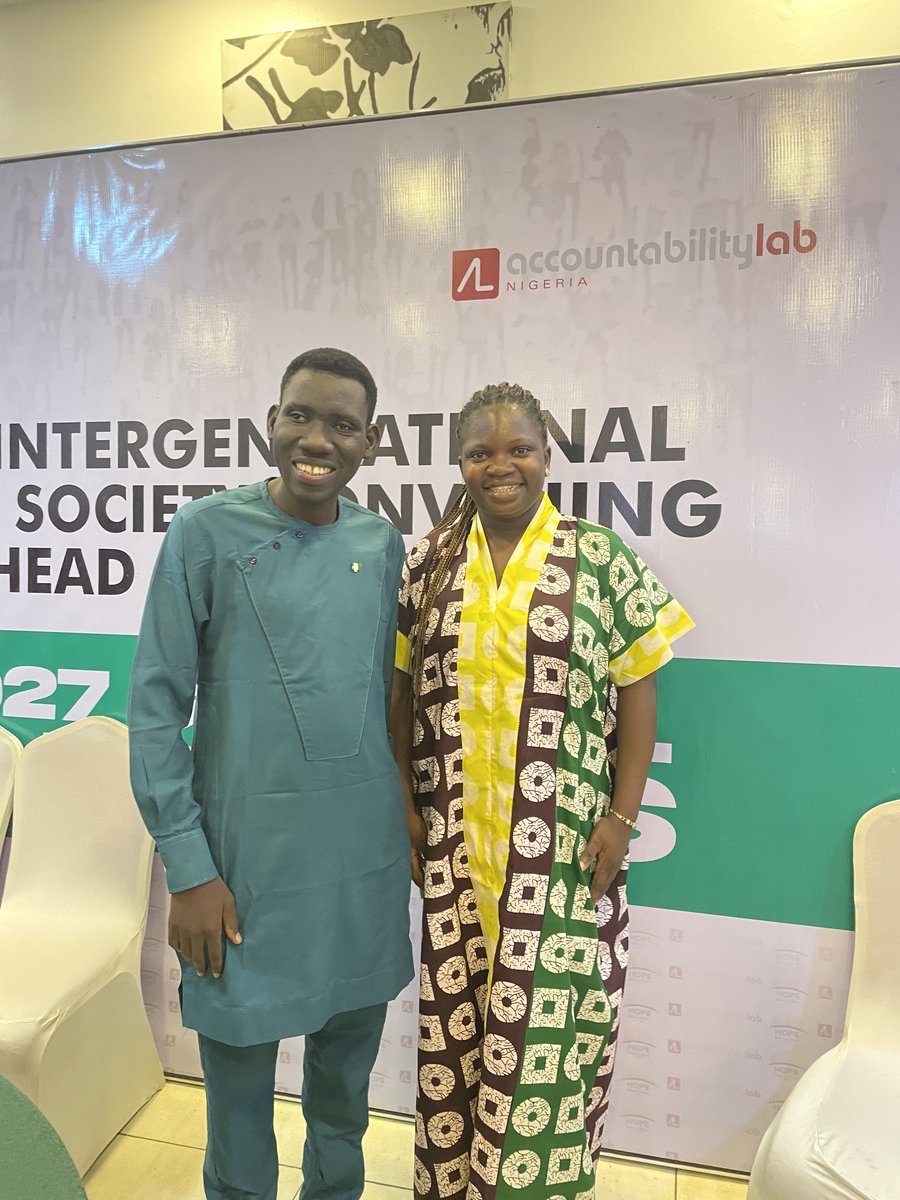
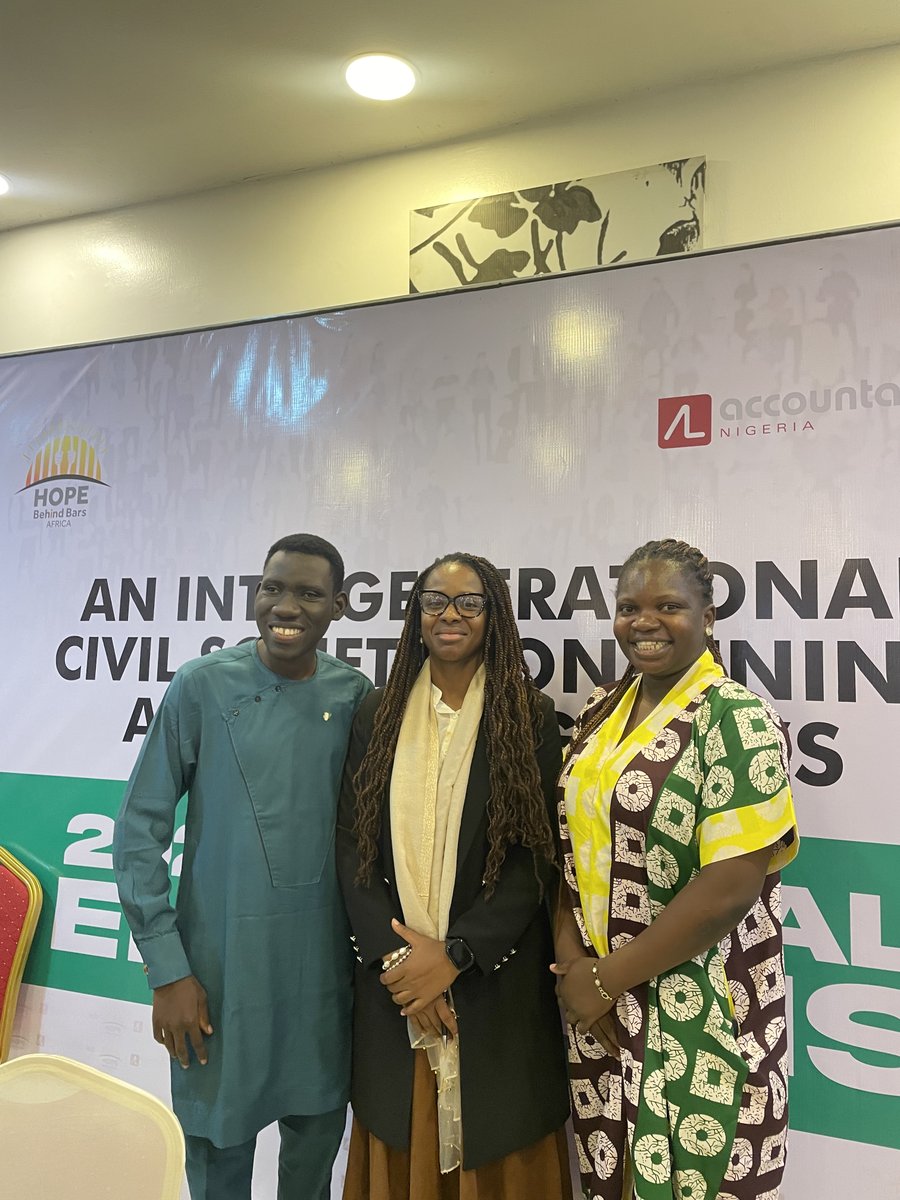
Earlier today, Dataphyte Foundation participated in the Intergenerational Civil Society Convening on Rethinking Civic Space and Democratic Coordination Ahead of 2027 organised by @hopebehindbar and @accountlabng.
The dialogue brought together intergeneration stakeholders across civil society organisations, government institutions, and student groups to reflect on how civic participation and citizen engagement have evolved over time. Discussions drew lessons from some of Nigeria's most significant social movements and civic actions, including the June 12 struggle of 1993, the Occupy Nigeria protest in 2012, the #EndSARS movement in 2020, and the #EndBadGovernance protests in 2024.
Participants noted that some of the factors that contributed to the effectiveness of previous social movements in Nigeria were strong strategy, a unified voice, clear leadership structures, and coordinated action. They also emphasised that democratic development is a continuous process and there may never be a point where all the positive changes citizens envision for the country are fully realised.
As such, participants stressed the need for citizens and civil society actors to remain actively engaged in civic processes by holding public institutions accountable, demanding transparency, asking critical questions on governance issues, and participating in policy dialogues and decision-making processes that shape national development.
The convening provided an opportunity for cross-generational learning and reflection on how civic actors can increase civic education, adapt to emerging challenges, and build a more inclusive democratic space ahead of the 2027 elections.
1
3
9
174
As Nigeria prepares for the 2027 General Elections, understanding election data has never been more important.
This Saturday, Dataphyte Academy launches its new monthly series, Election Data Lab 1.0, designed to equip citizens, journalists, researchers, and democracy advocates with the skills to make sense of election results and statistics.
Topic: Understanding and Interpreting Election Results and Statistics
Learn how to analyse vote totals, percentages, voter turnout rates, margins of victory, and election trends to draw accurate, data-driven conclusions.
Date: 13 June 2026
Time: 10:00 AM
Venue: Zoom
Register now: bit.ly/eds1
Join us as we explore the numbers behind elections and strengthen data-driven civic engagement ahead of 2027.
#ElectionDataLab #DataphyteAcademy #ElectionData #Nigeria2027 #DataForDemocracy #CivicEngagement
5
9
179
Dataphyte Foundation alongside partner organisations, engaged the Inspector-General of Police, Tunji Disu, on the future of state policing, accountability, and citizen-centred security reforms. The dialogue revealed the need for trust, transparency, and community participation in building a safer Nigeria.
Read more:dataphyte.org/blogs/security…
1
5
23
319
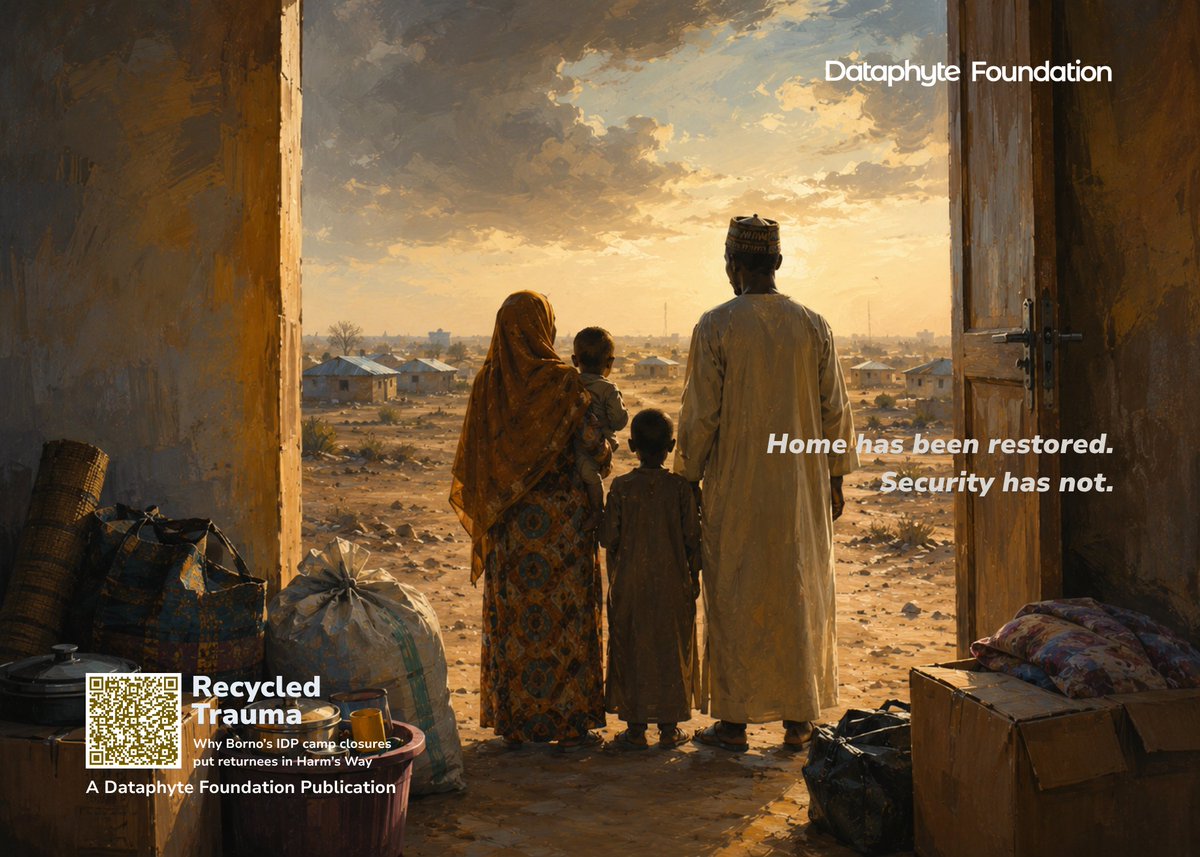
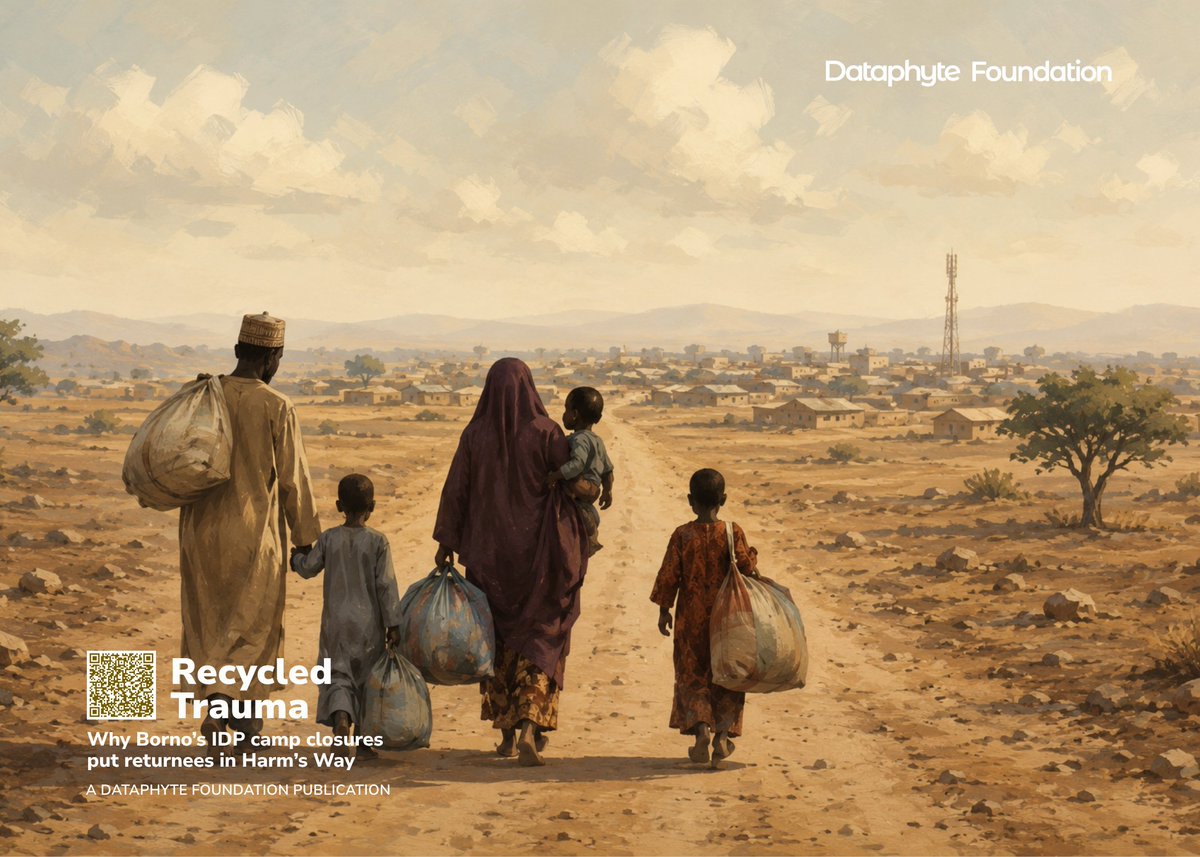
In its IDP return and resettlement policy, Borno State plans to close all formal IDP camps in 2026, yet the return and resettlement strategy defies the standards of voluntariness, safety, transparency, and sustainable livelihoods as required in the Kampala Convention and Nigeria’s National IDP Policy.
Former IDPs who have returned to communities that have been declared "safe" face targeted attacks from terrorists, who often exploit the service vulnerabilities of the people created by the government's static protection strategy under its return policy.
In September, Boko Haram attacked Darul Jamal in Bama LGA, home to residents recently resettled from an IDP camp. Sixty (60) people were killed, and several homes were burnt. This creates a recurring cycle of trauma and subjects returnees to secondary displacement.
Download our latest policy brief to read more.
Link: dataphyte.org/article/public…
@UKinNigeria @USAID @EUinNigeria @WorldBankAfrica @AfDB_Group @BornoGovt
4
7
201
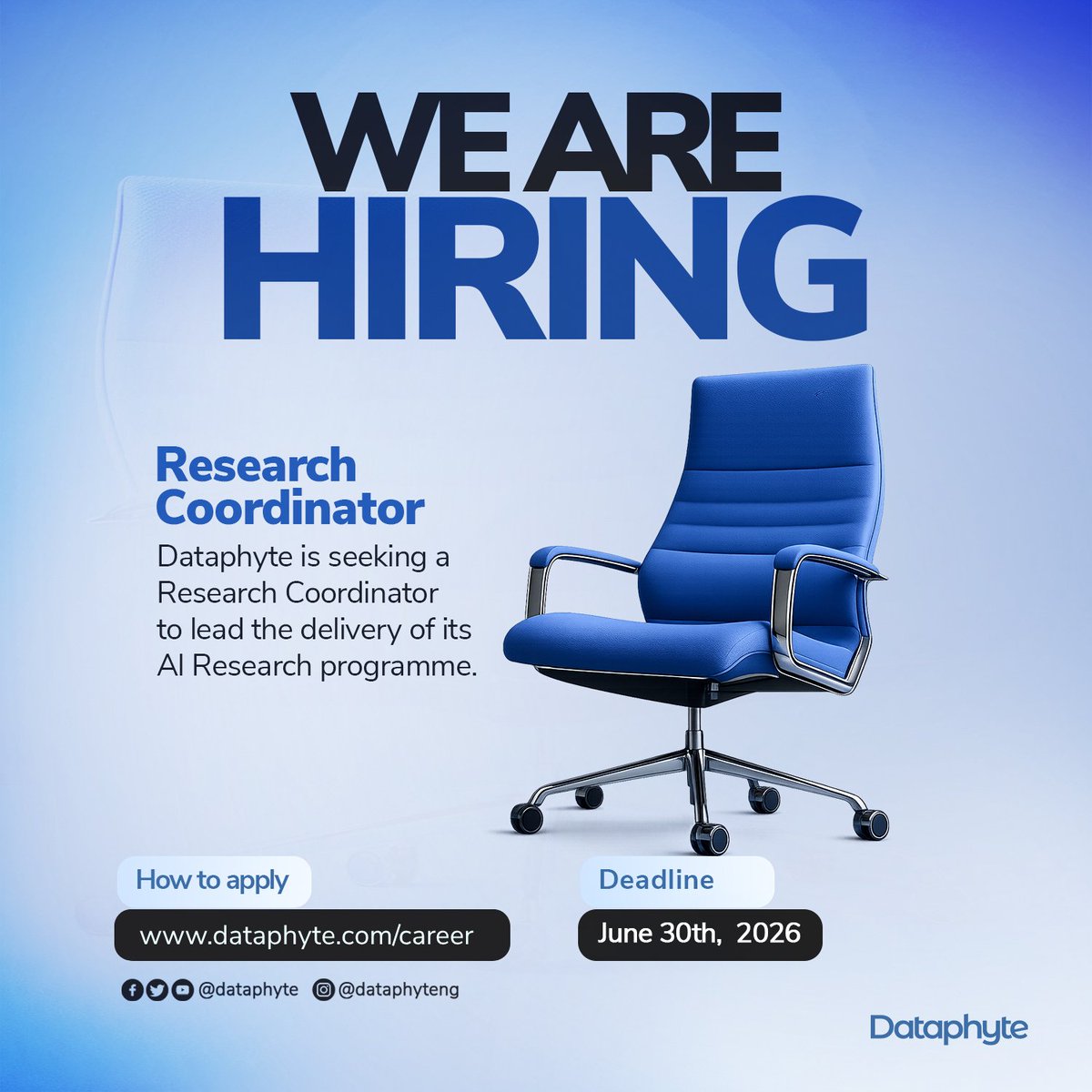
Dataphyte is seeking a Research Coordinator to lead the delivery of its AI Research programme.
Apply now or share this with someone in your network who would be a perfect fit. Click here to view the full qualifications and submit your application: dataphyte.com/career
Deadline: June 30th, 2026
1
5
10
234
More than 1.8 million people remain displaced in Borno, Adamawa and Yobe (BAY) States, with Borno hosting the majority.
Yet, the Borno State government’s policy of closing over 60 IDP camps in the state is putting already displaced people through another cycle of secondary displacement. What happens when already displaced families return to communities where insecurity, movement restrictions, and attacks persist or where access to food, healthcare and education for children is not guaranteed?
Dataphyte’s latest policy brief; Recycle Trauma: Why Borno’s IDP camp closures put returnees in Harm’s Way,” examines the human cost of return without long-term protection.
Download and read.
dataphyte.org/article/public…
@BornoGovt @ProfZulum @nemanigeria @OfficialNCFRMI @NigeriaGov @unhcrnigeria
@Refugees @OCHANigeria
1
2
7
144
Happy World Environment Day 2026...
For decades, scientists warned that a warming planet would reshape lives and livelihoods.
Today, those warnings are showing up in the data, and in people's daily realities. Floods in Nigeria. Drought in the Sahel. Heat stress across urban cities.
The pattern is consistent, and accelerating.
So the question is not whether climate change is real, it is whether action is matching the scale of the crisis.
World Environment Day 2026 is a reminder that we are not short of information. We are short of urgency aligned with evidence.
Now for climate. Because the numbers are already warning us.
3
8
164
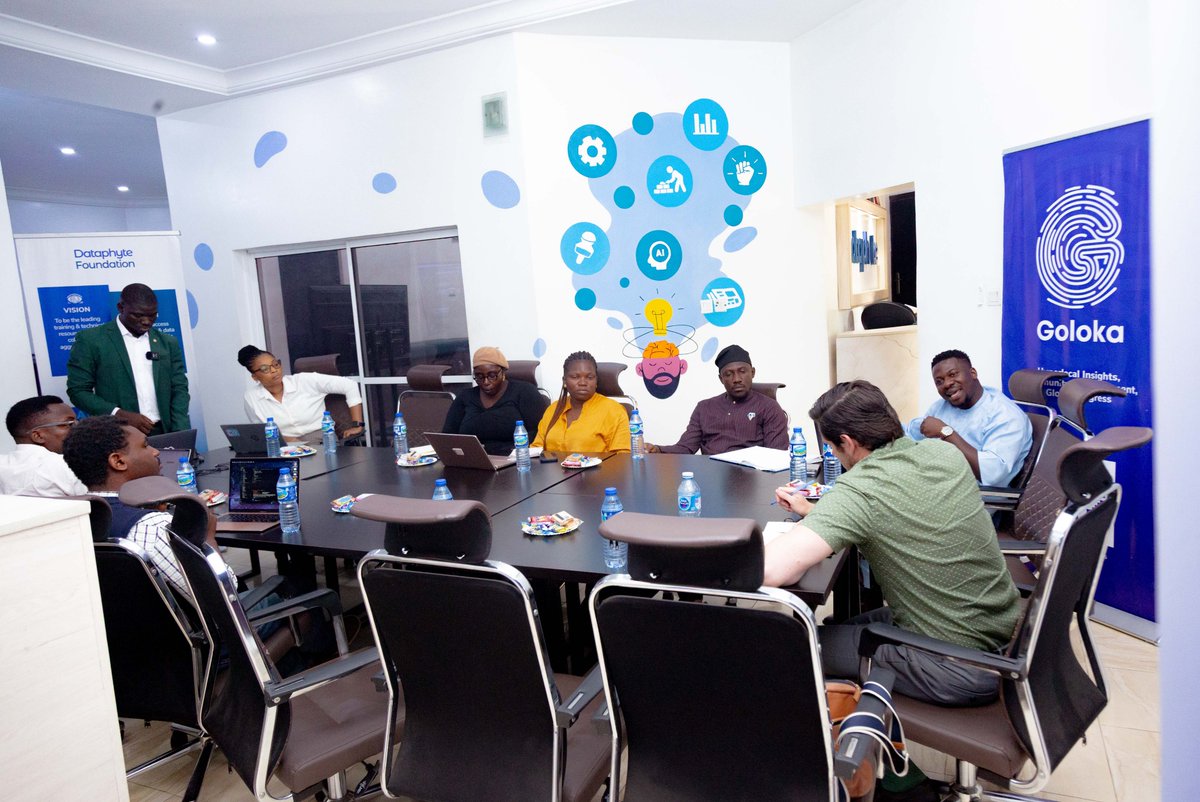
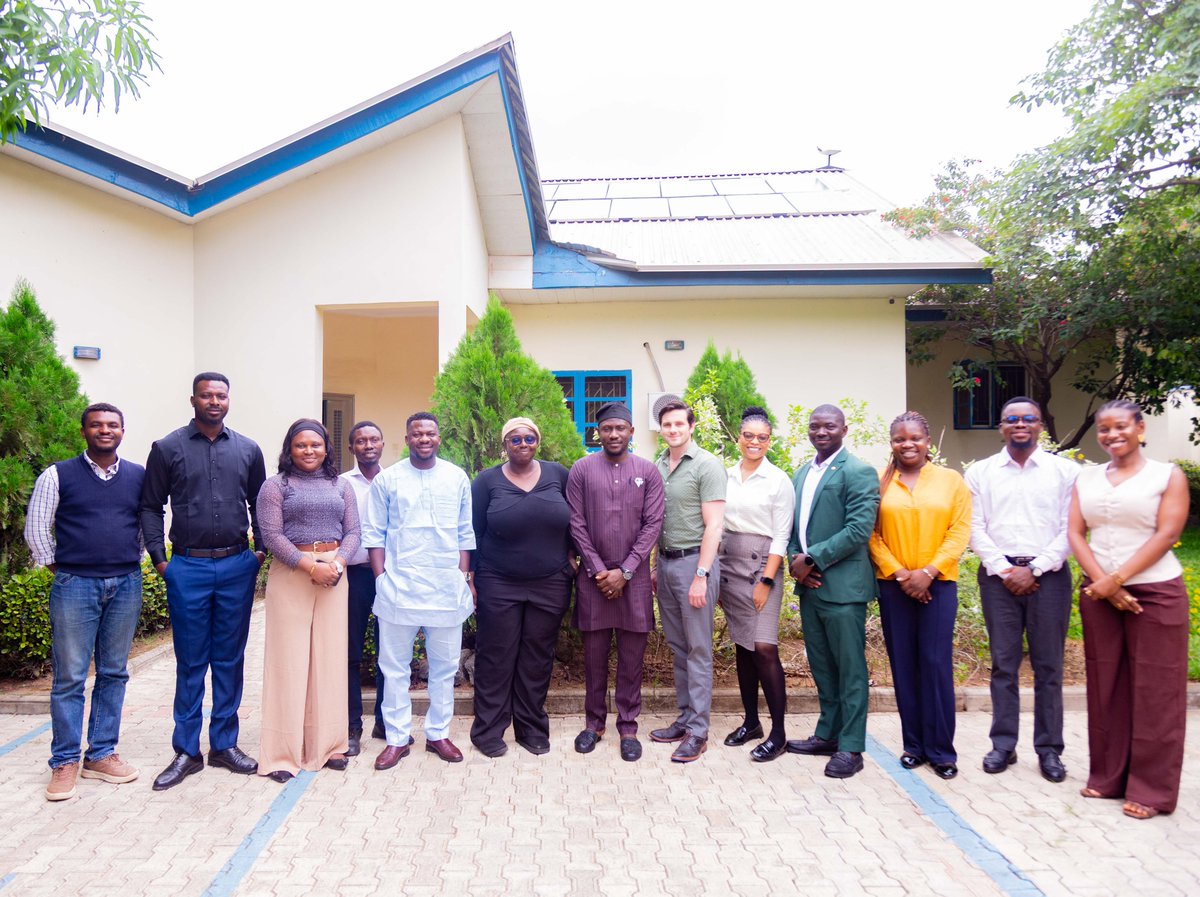
Yesterday, Dataphyte Foundation hosted the NED team and a consortium of CSOs, including the Centre for Journalism Innovation and Development (@CJIDAfrica), BudgIT/CivicHive (@BudgITng), YIAGA Africa and the DEAN Initiative to strengthened collaboration and coordinated efforts towards enhancing electoral integrity, transparency, and democratic accountability.
During the meeting, stakeholders highlighted the persisting gaps from previous election cycles, including fragmented data systems, limited interoperability, misinformation risks, and limited civic coordination efforts on election processes and result monitoring.
Additionally, they also explored the opportunity of collaborating as a consortium and co-design collective approach that would enhances real-time data sharing, improves civic engagement, and strengthens the use of technology for a transparent and accountable electioneering process and reporting in 2027 and beyond.
A key highlight of the session was the demonstration of the Election/Nubia-AI platform, which showcased its capacity for real-time election data and intelligence collection, analysis, and coordinated reporting across participating organisations.
The meeting concluded with a shared commitment to formalise collaboration structures and build a unified framework for more transparent, credible, and evidence-driven electoral processes in future elections.


1
3
12
173
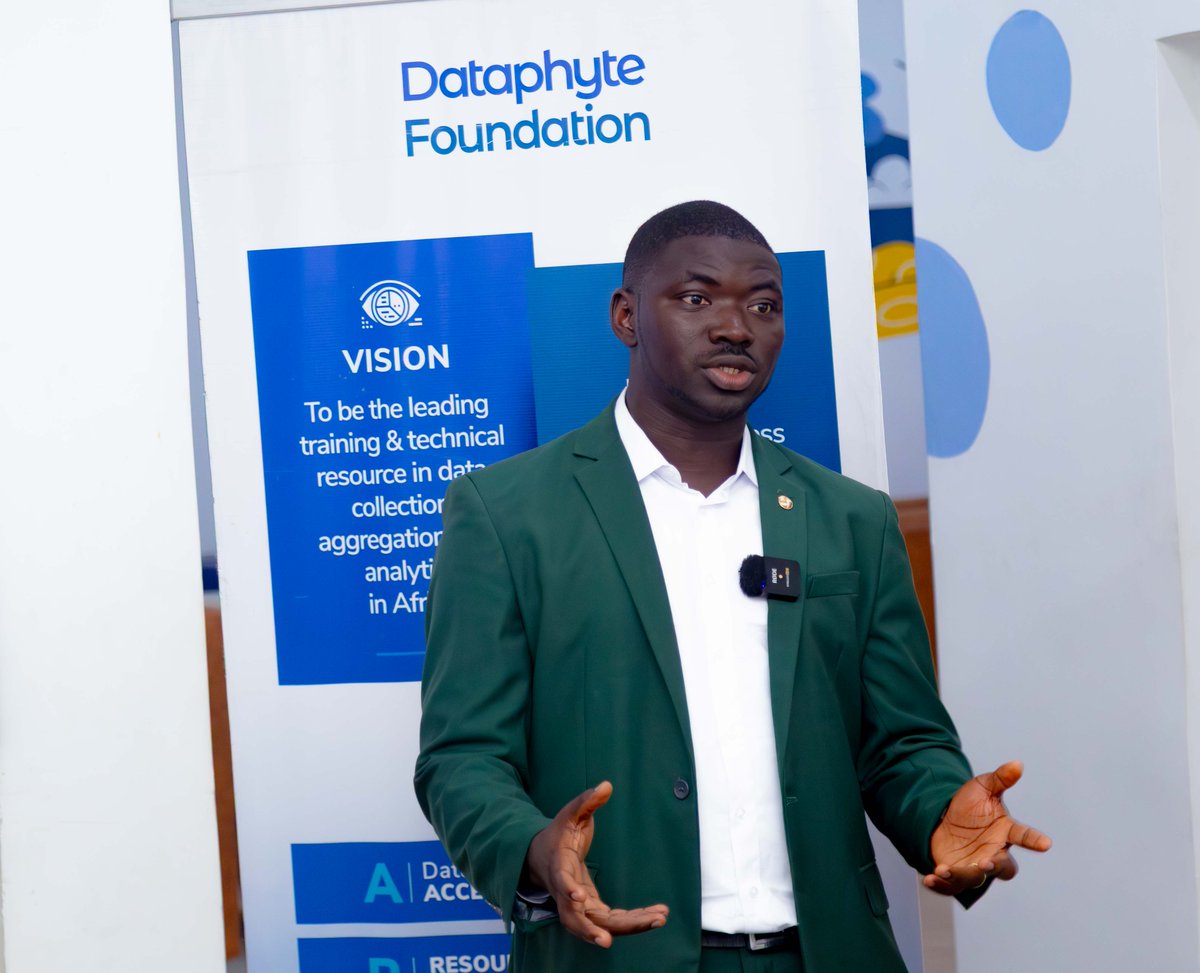
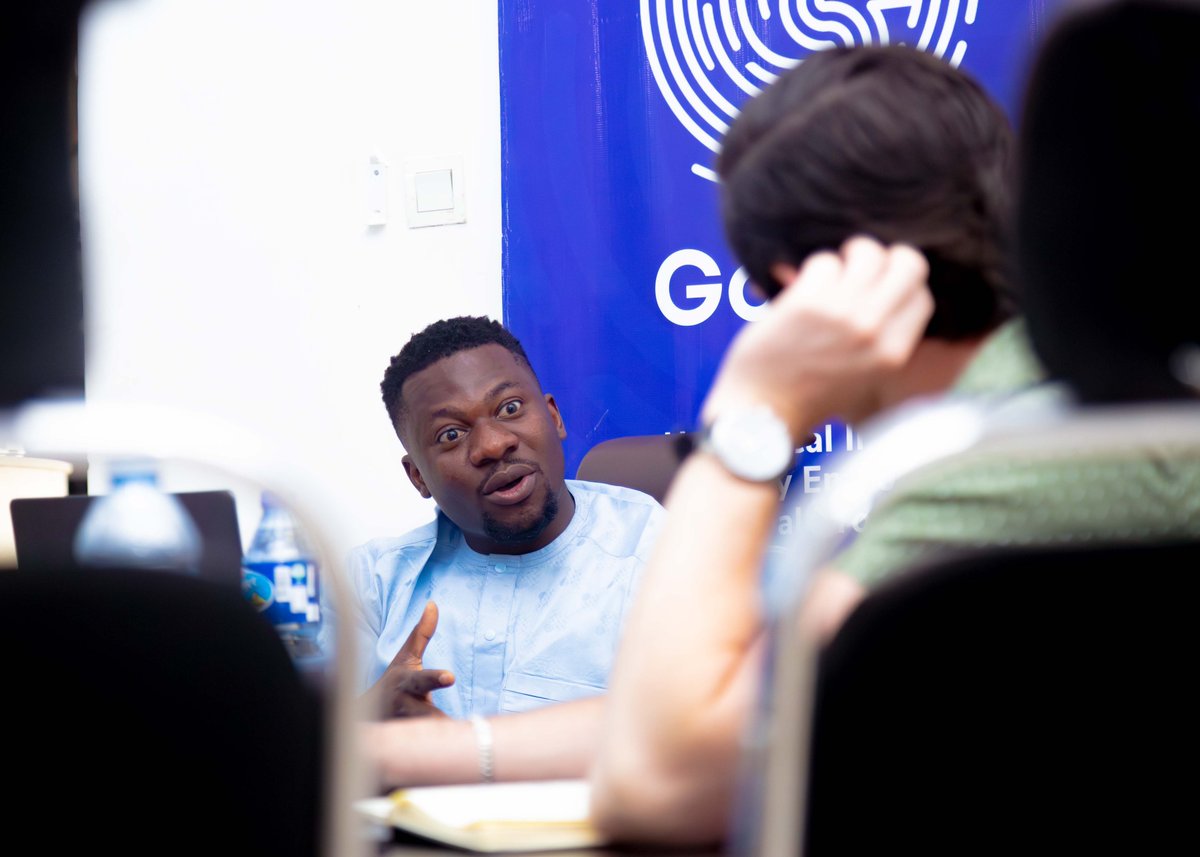
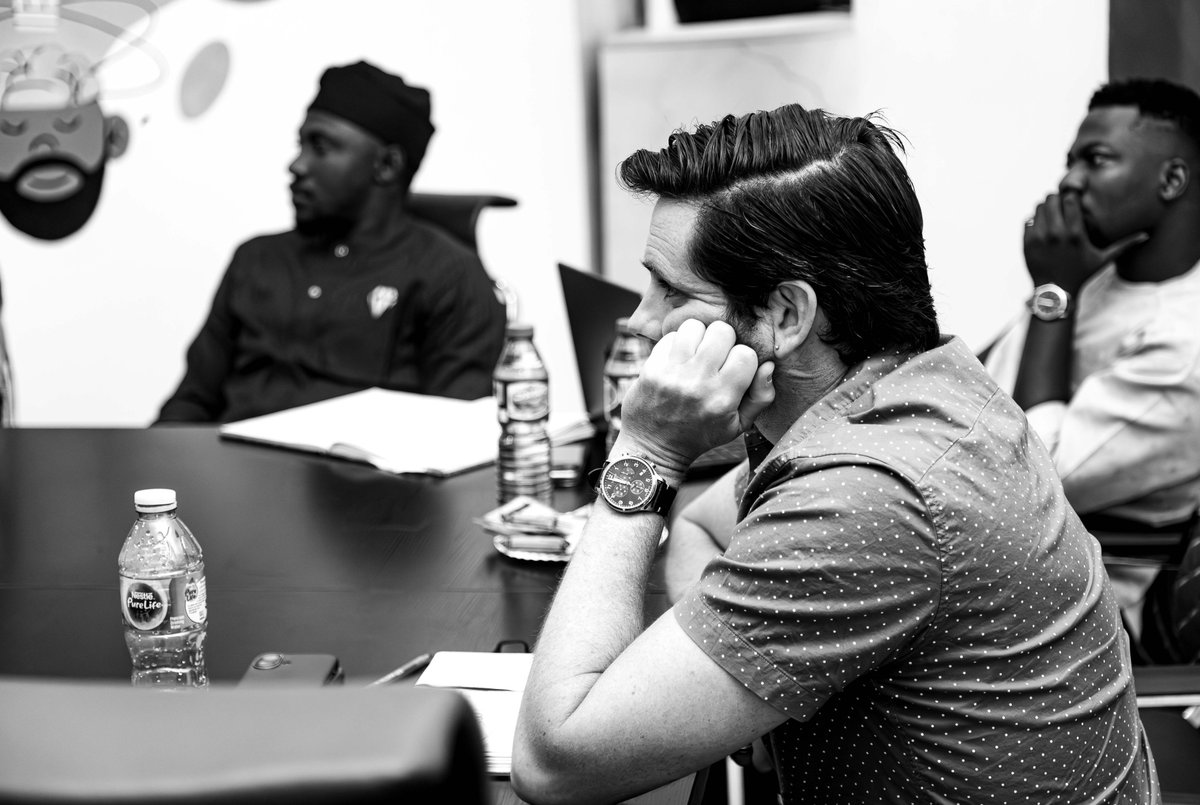
Happy World Environment Day 2026.
Somewhere today, a farmer is adjusting planting decisions because the rains no longer arrive when they used to.
A trader is calculating losses shaped not only by markets, but by heat and floods.
A family is learning to live with weather that feels less predictable than before.
This is the quiet reality of a changing planet, and the reason this day matters more than ever.
Let us hold hands and walk together towards a safe and healthy environment because your ‘now’ is not going to be your ‘forever’ if you do not take care of the environment you are a part of. Save Mother Earth.
5
98
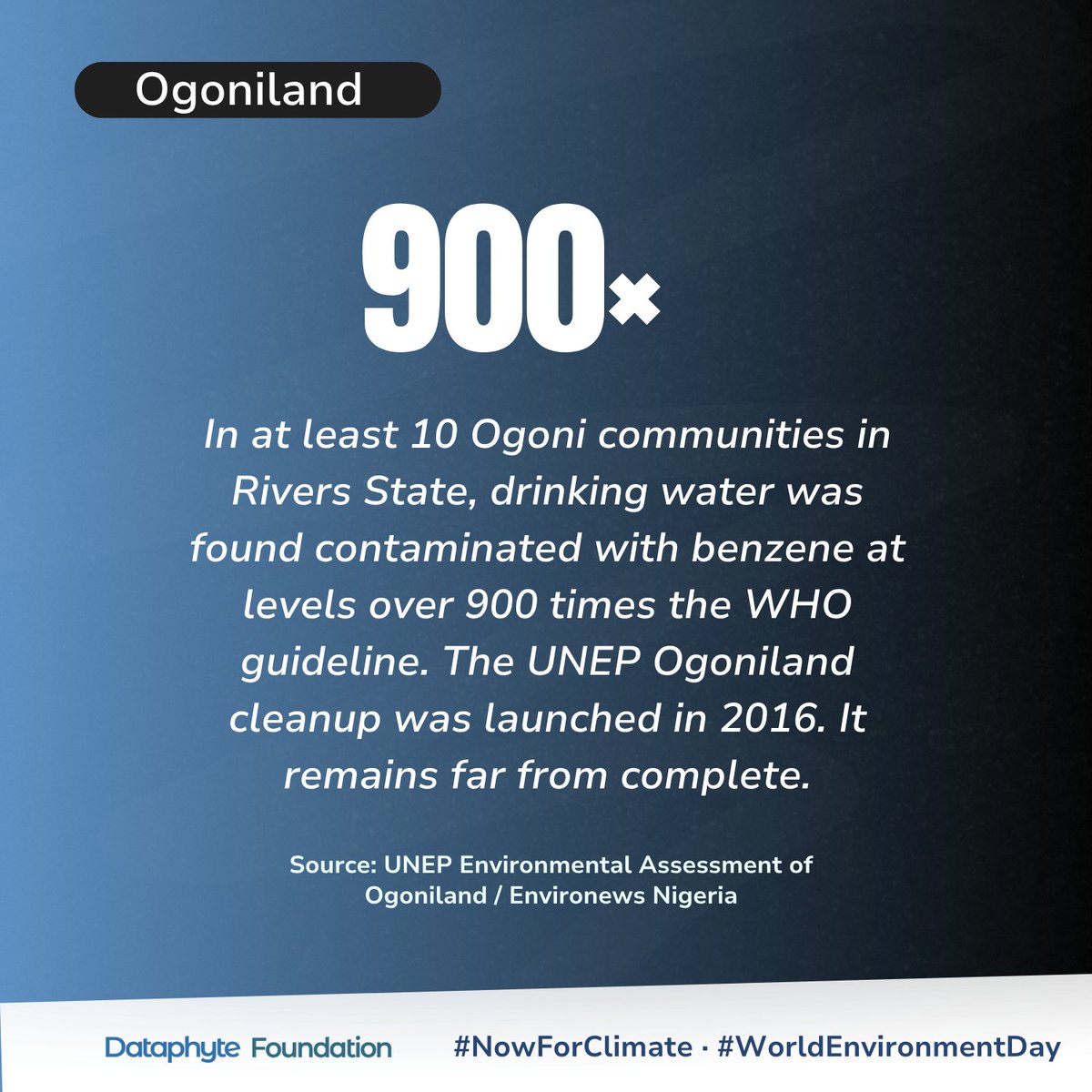
In at least 10 Ogoni communities in Rivers State, drinking water was found contaminated with benzene at over 900 times the World Health Organization’s safe limit. This was documented in a UNEP report published in 2011.
The Ogoniland cleanup was officially launched in 2016 with a $1 billion commitment. Nearly a decade later, the cleanup remains incomplete, and affected communities are still waiting for full remediation and accountability.
For the people of Ogoniland and communities across the Niger Delta, this is not a statistic. It is daily life — water that cannot be safely drunk, land that cannot fully sustain livelihoods, and a legacy of pollution that continues across generations.
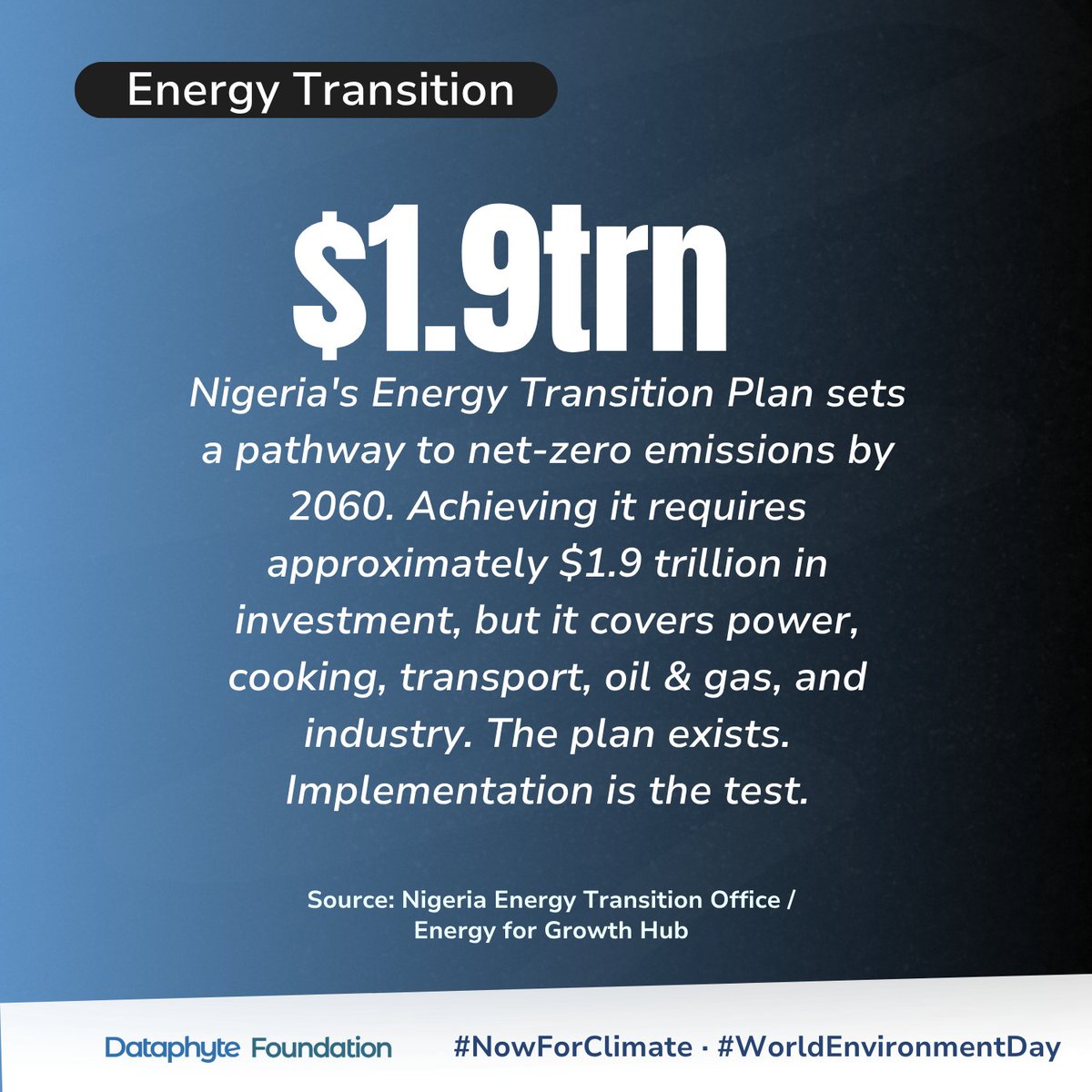
At the same time, Nigeria has laid out one of Africa’s most ambitious climate policy frameworks which is a commitment to net-zero emissions by 2060. The Energy Transition Plan spans power, cooking, transport, oil & gas, and industry, with an estimated $1.9 trillion required for implementation.
The policies exist. The legal frameworks from the Climate Change Act to the Electricity Act are in place. The commitments have been made.
Now the harder question remains implementation.
Environmental justice cannot wait another decade. #NowForClimate
2
4
112
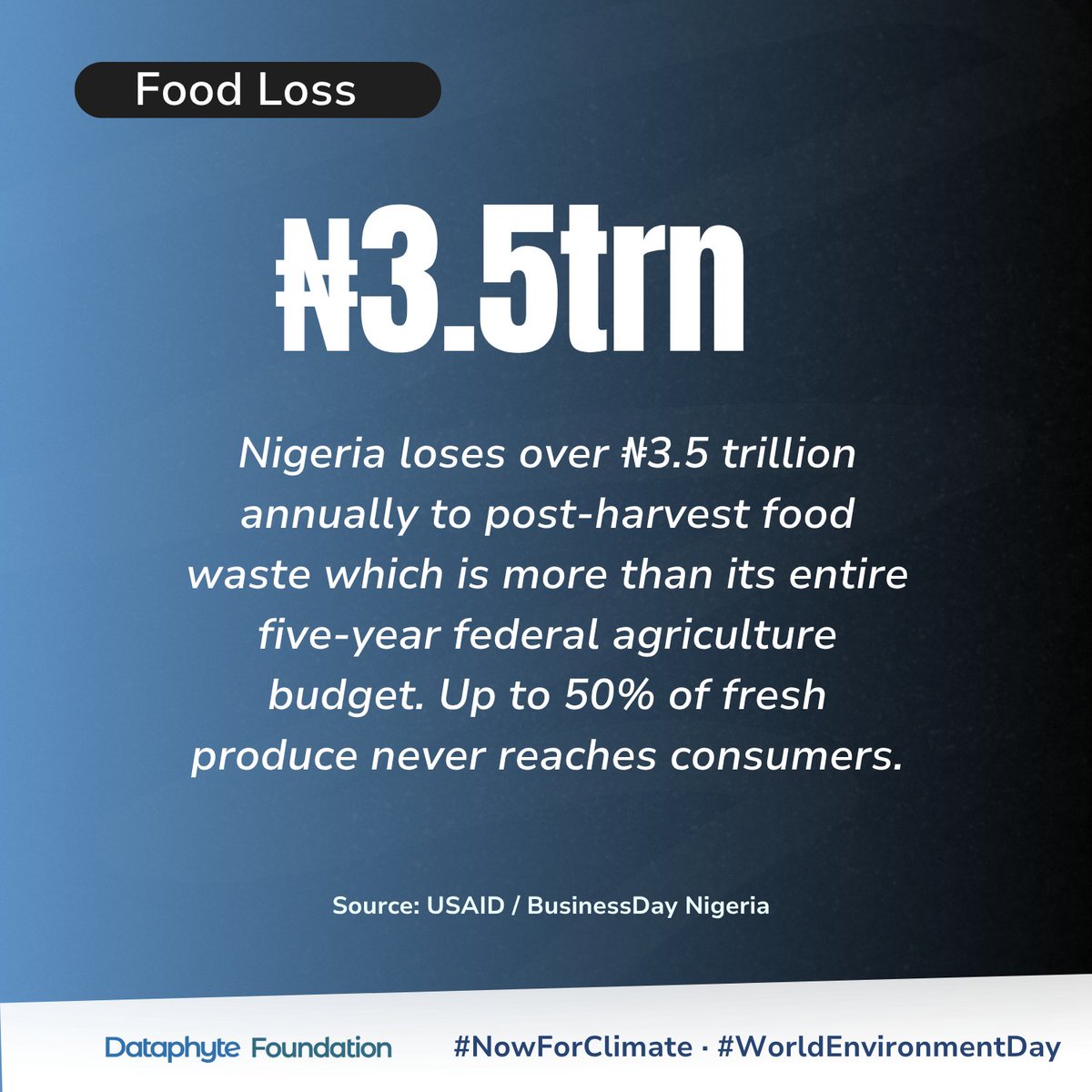
Every year, Nigeria loses an estimated ₦3.5 trillion to post-harvest food waste which is more than the country’s entire five-year federal agriculture budget, gone before food reaches a table.
Up to 50% of fresh produce is lost between farms and consumers. In Benue, harvested yam and soybean rot due to lack of cold storage. In Kano, tomatoes spoil when processing capacity cannot keep up. In Anambra, poor rural roads prevent produce from reaching markets in time.
The ripple effect of this is beyond just waste, it is lost income, lost nutrition, and lost resilience.
Yet this is not only an agriculture challenge. It is also a climate issue, an infrastructure gap, and an economic inefficiency happening at scale. Nigeria does not primarily have a food production problem, it has a broken food system.
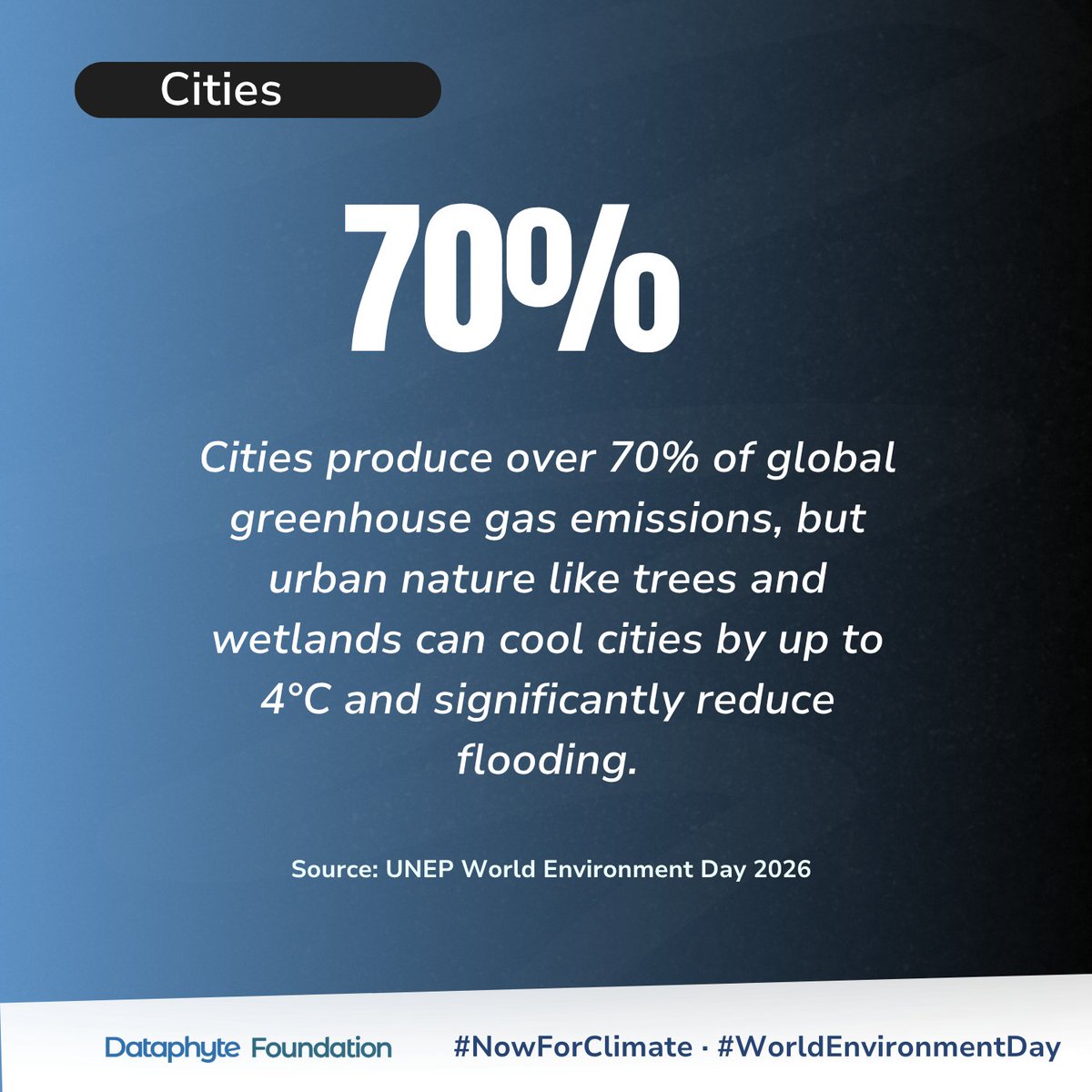
At the same time, cities like Lagos, Ibadan, Kano, Abuja and Port Harcourt are among the cities driving over 70% of greenhouse gas emissions globally, with rapid urban growth unfolding without sufficient climate-conscious planning. But evidence shows urban nature can reduce city temperatures by up to 4°C. Trees, parks, wetlands and green infrastructure are not aesthetics, they are climate systems that reduce flooding and heat stress while improving liveability.
From wasted harvests to overheated cities, the data points to one reality which is Nigeria’s climate and development challenges are deeply connected, and so are the solutions.
As World Environment Day 2026 approaches under the theme #NowForClimate, the question is no longer what the problems are, but how quickly systems can be redesigned to fix them.
#WorldEnvironmentDay #WED2026 #NowForClimate #ClimateAction #FoodSecurity #UrbanClimate #GreenCities #Nigeria #DataphyteFoundation
3
8
179
Nigeria’s climate reality is no longer distant, it is unfolding in real time, shaping lives, livelihoods, and landscapes across the country. From rising temperatures to shifting rainfall patterns and growing environmental pressure, every action we take today sends a signal about the future we are building.
In this piece, we explore how Nigeria’s climate story is still being written, and why individual, community, and policy choices now matter more than ever.
Read more: dataphyte.org/blogs/environm…
#ClimateAction #Nigeria #NowForClimate #Dataphyte #Environment #ClimateChange
3
92
World Environment Day 2026, under the theme “Now For Climate,” is unfolding against a backdrop of real, measurable climate impacts in Nigeria including shrinking water bodies, widespread flooding, and communities already under pressure.
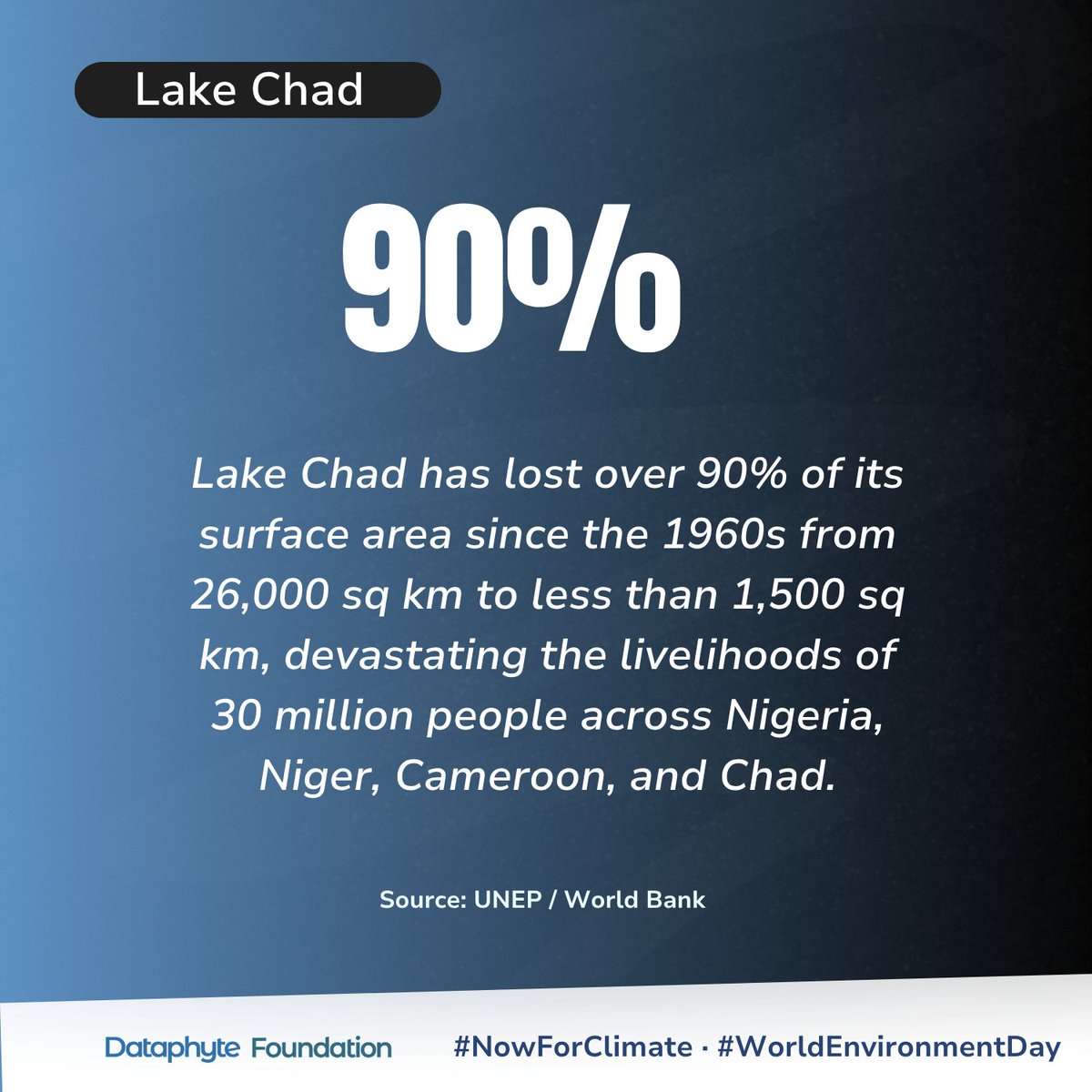
Lake Chad, once covering 26,000 square kilometres and sustaining over 30 million people across Nigeria, Niger, Cameroon and Chad, has lost more than 90% of its surface area since the 1960s. In Nigeria’s North-East, especially Borno and Yobe, fishing and farming communities that depended on the lake are watching it disappear within their lifetime, alongside growing competition for scarce land and water.
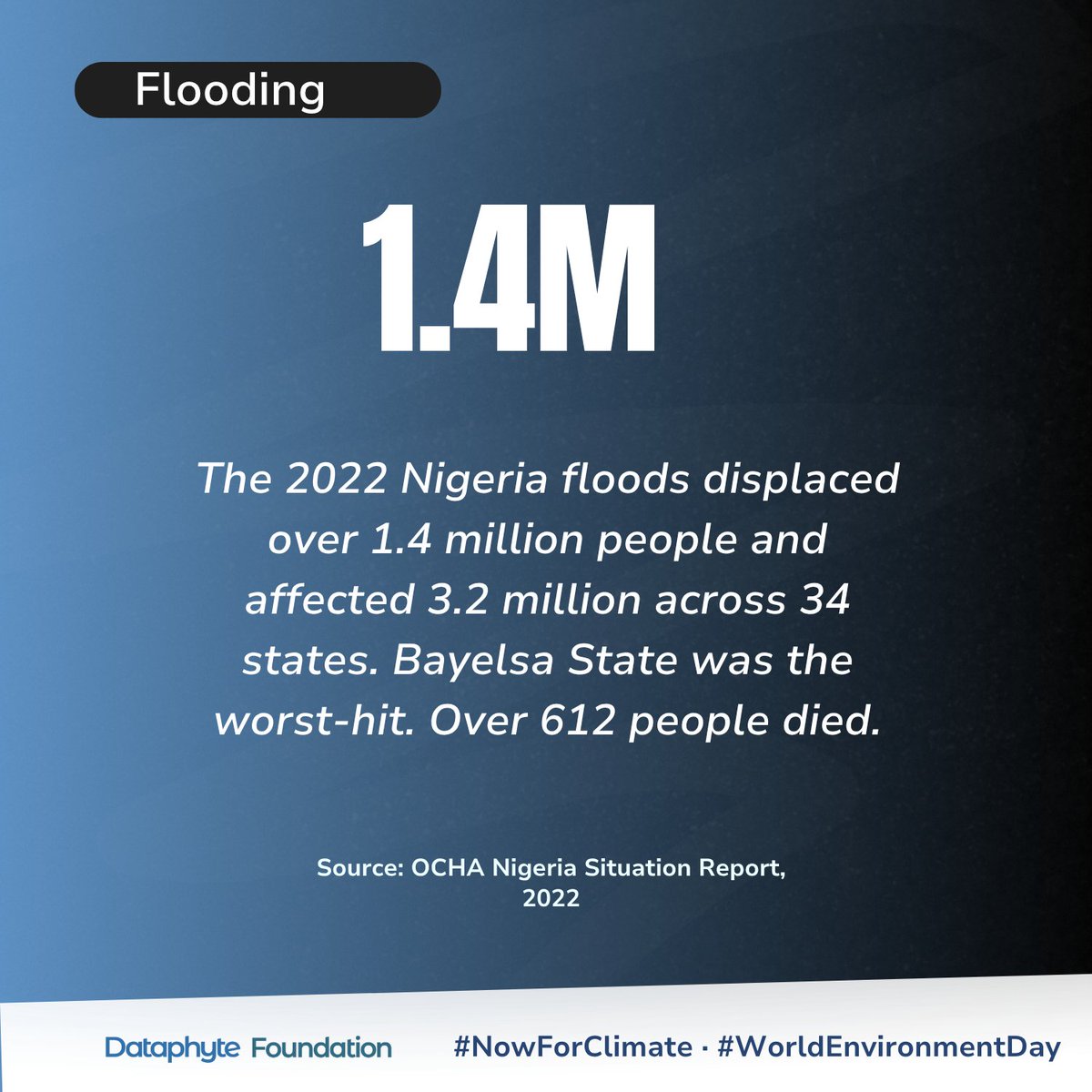
In 2022 alone, Nigeria experienced its worst flooding in over a decade. More than 3.2 million people were affected across 34 states, 1.4 million displaced, and over 600 lives lost. Entire communities in Bayelsa, Kogi, and beyond were submerged, with homes, farms, and livelihoods destroyed.
As World Environment Day 2026 approaches under the theme #NowForClimate, these are no longer distant warnings, they are current realities demanding response.
#WorldEnvironmentDay #WED2026 #NowForClimate #ClimateAction #ClimateResilience #LakeChad #NigeriaFloods #Nigeria #Environment #DataphyteFoundation
1
6
116
This World Environment Day, every Nigerian can turn awareness into momentum by doing just four things:
• Step out and join or organise a World Environment Day event in your community
• Move with purpose by joining the #NowForClimate Dance Challenge
• Speak up by sharing what you are seeing in your environment
• Multiply impact by download and share the campaign toolkit
Because climate action is not one big moment. It is millions of small signals building into global pressure for change.
Every signal matters. Every action builds momentum.
#WorldEnvironmentDay2026 #NowForClimate #ClimateAction #ActNow
dataphyte.org/blogs/uncatego…
1
3
6
122
As the world prepares to mark World Environment Day 2026 under the theme “Now For Climate,” Africa’s realities make one thing clear, and that is, the time for delayed action is over.
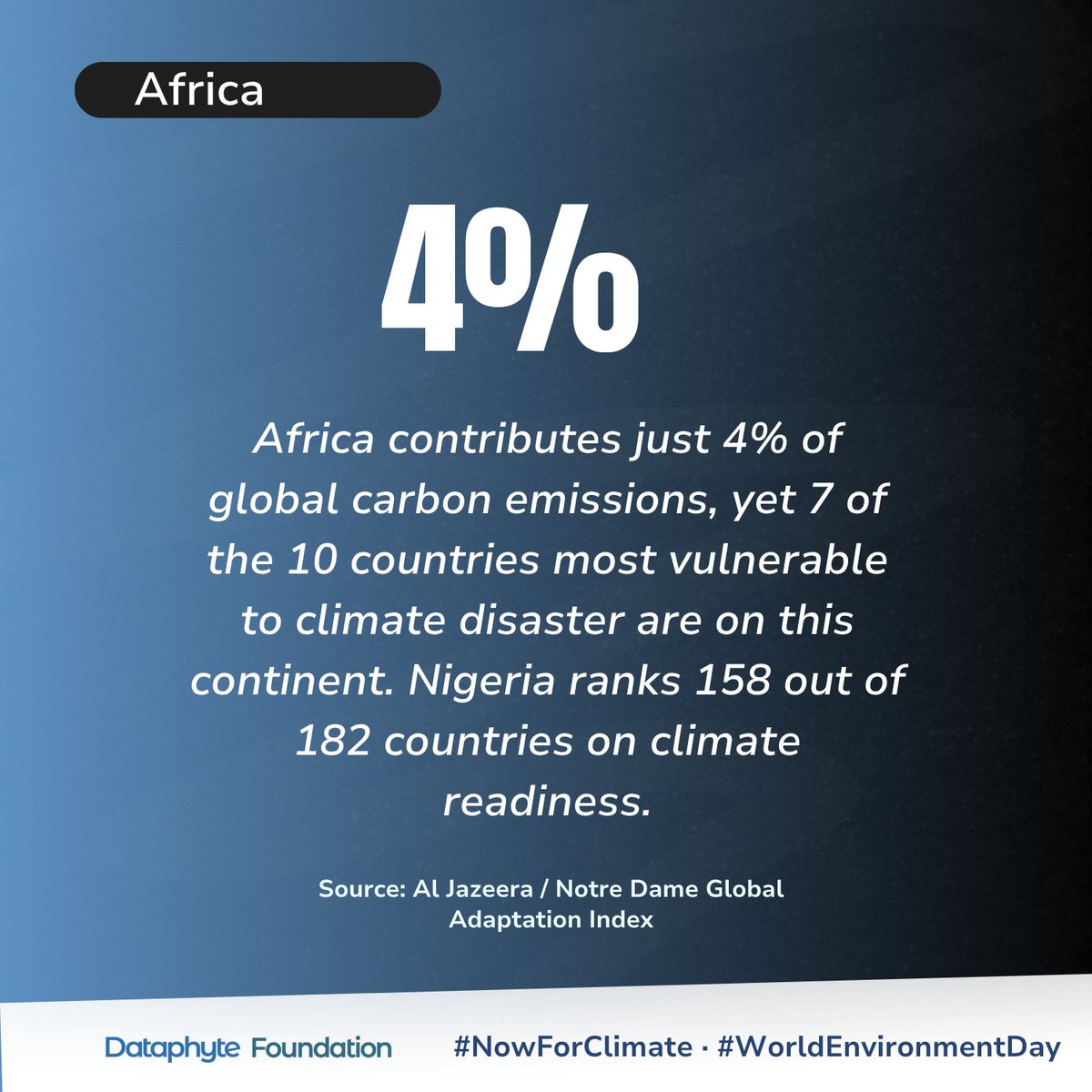
Africa contributes just 4% of global emissions, yet 7 of the world’s 10 most climate-vulnerable countries are on the continent. Nigeria ranks 158 of 182 on the Notre Dame Global Adaptation Index, highly exposed and underprepared. From rising seas in Ghana, Senegal and Côte d’Ivoire to droughts in the Horn of Africa and repeated cyclones in Mozambique, the impacts are already severe. Climate justice is not a slogan, it is evidence.
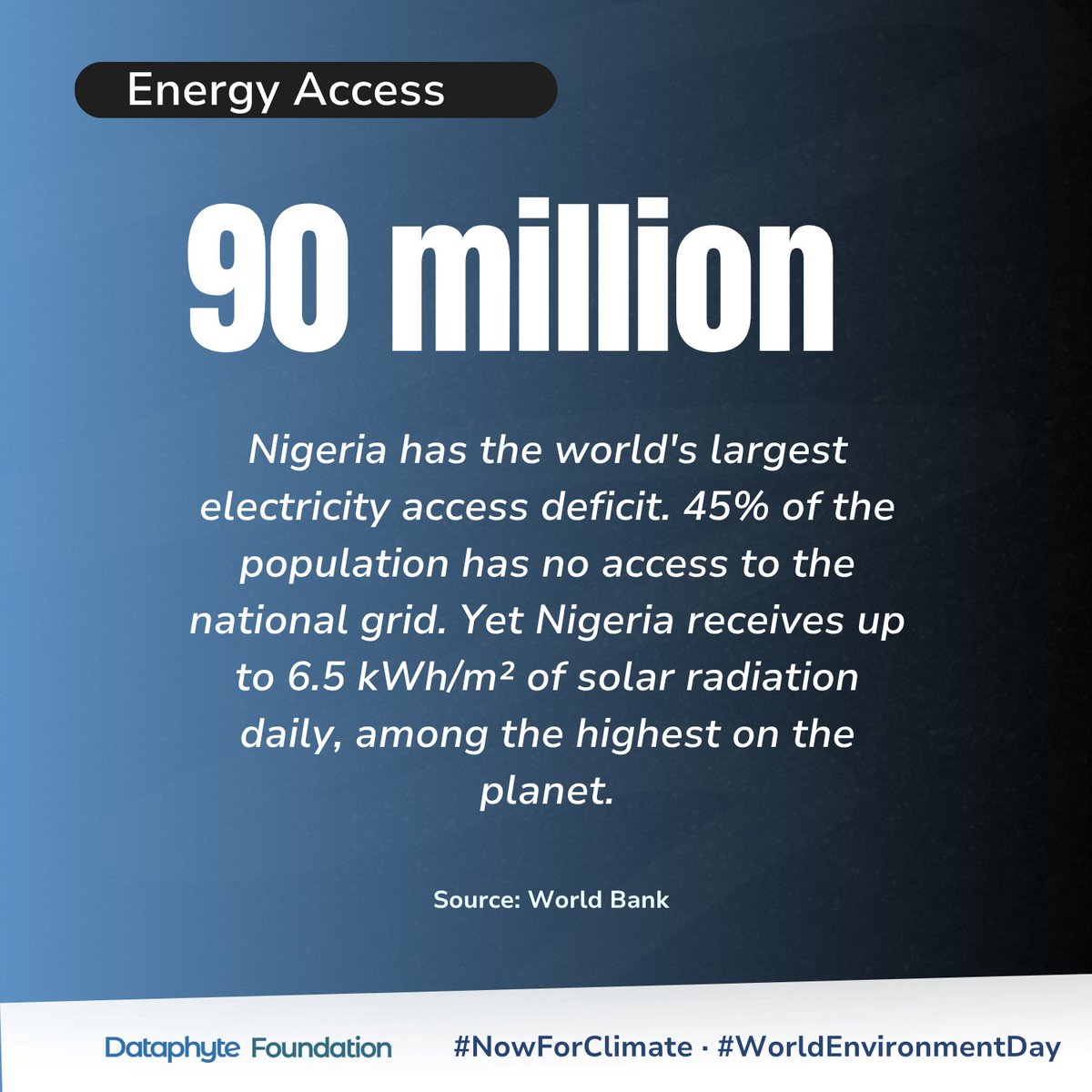
At the same time, Nigeria faces a deep energy access gap. Over 90 million people (45%) lack access to the national grid, and rural electrification is just 1 in 4 households. Yet the country is richly endowed with solar energy potential which is up to 210 GW if just 1% of suitable land is used. Despite this, installed solar capacity is only about 385.7 MW. Still, momentum is growing, with solar imports reaching ₦242.68 billion in early 2025.
The crisis is undeniable. But so is the transition already taking shape.
#WorldEnvironmentDay #NowForClimate #WED2026 #ClimateJustice #Africa #Nigeria #ClimateAction #RenewableEnergy #EnergyAccess #SolarEnergy #Dataphyte
2
5
141
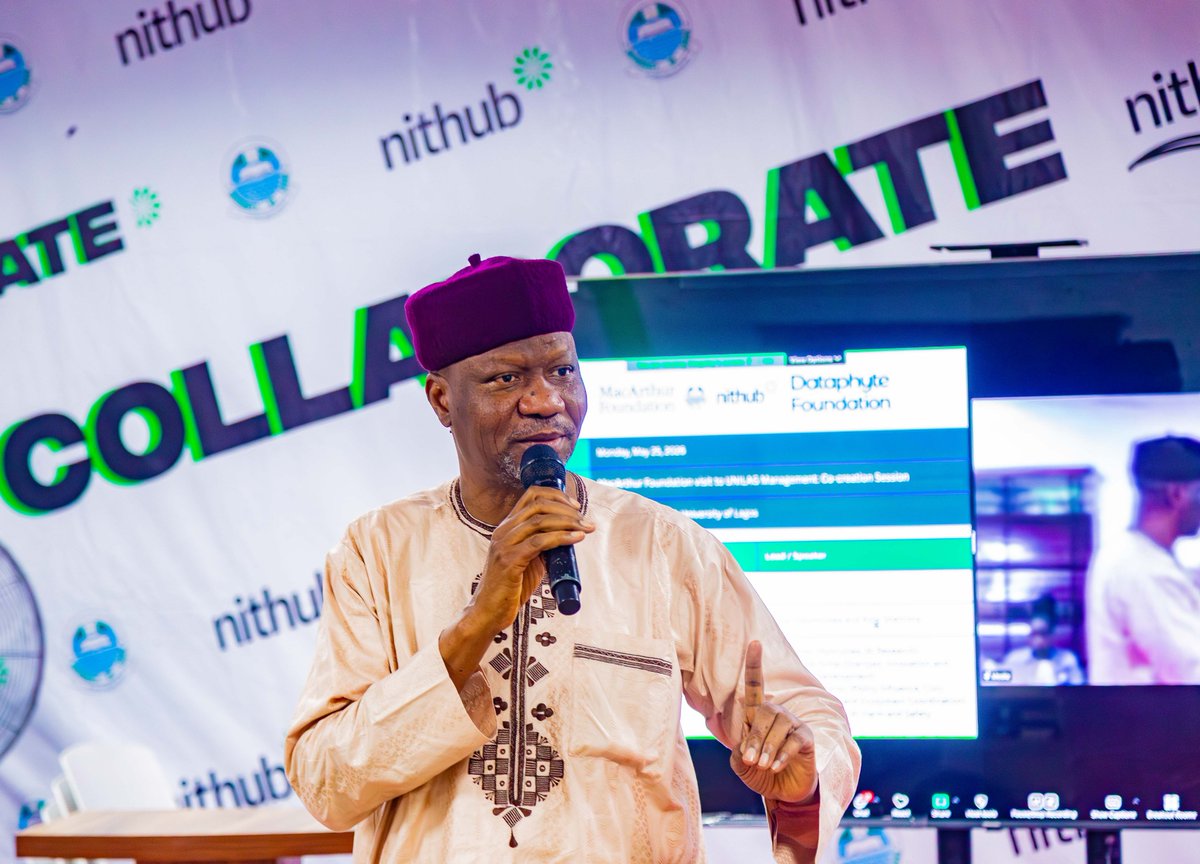
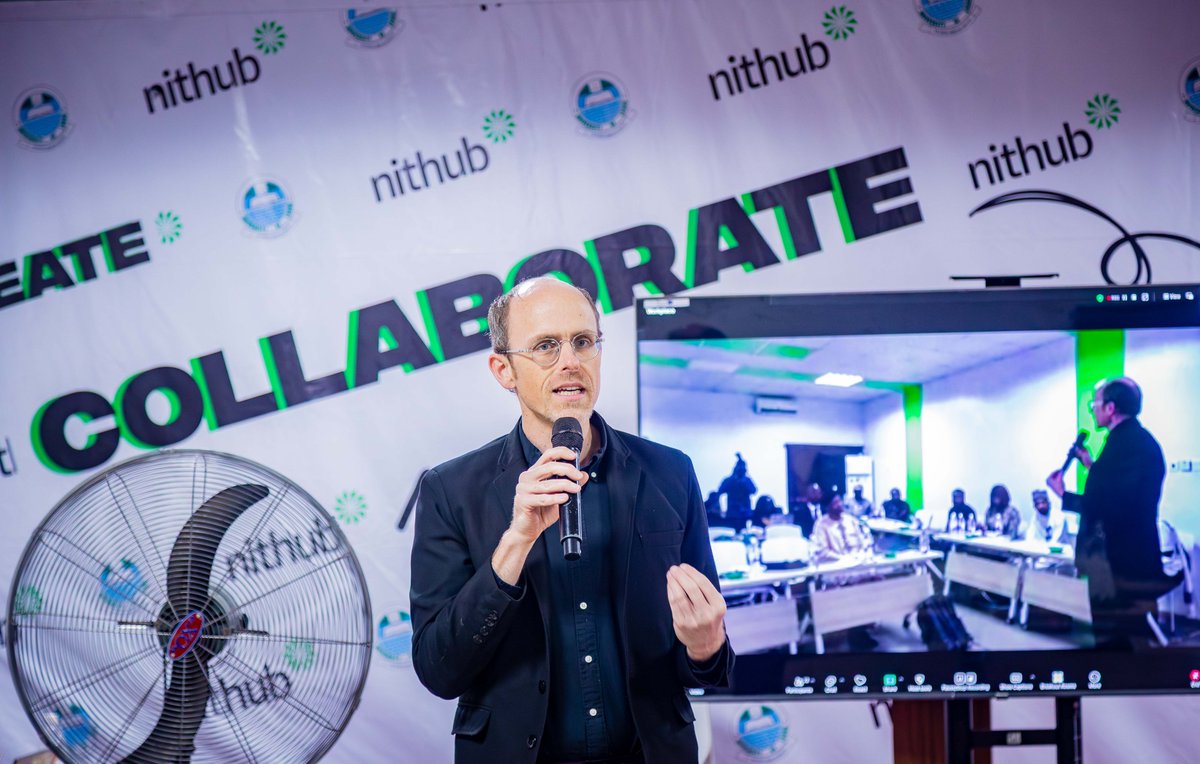
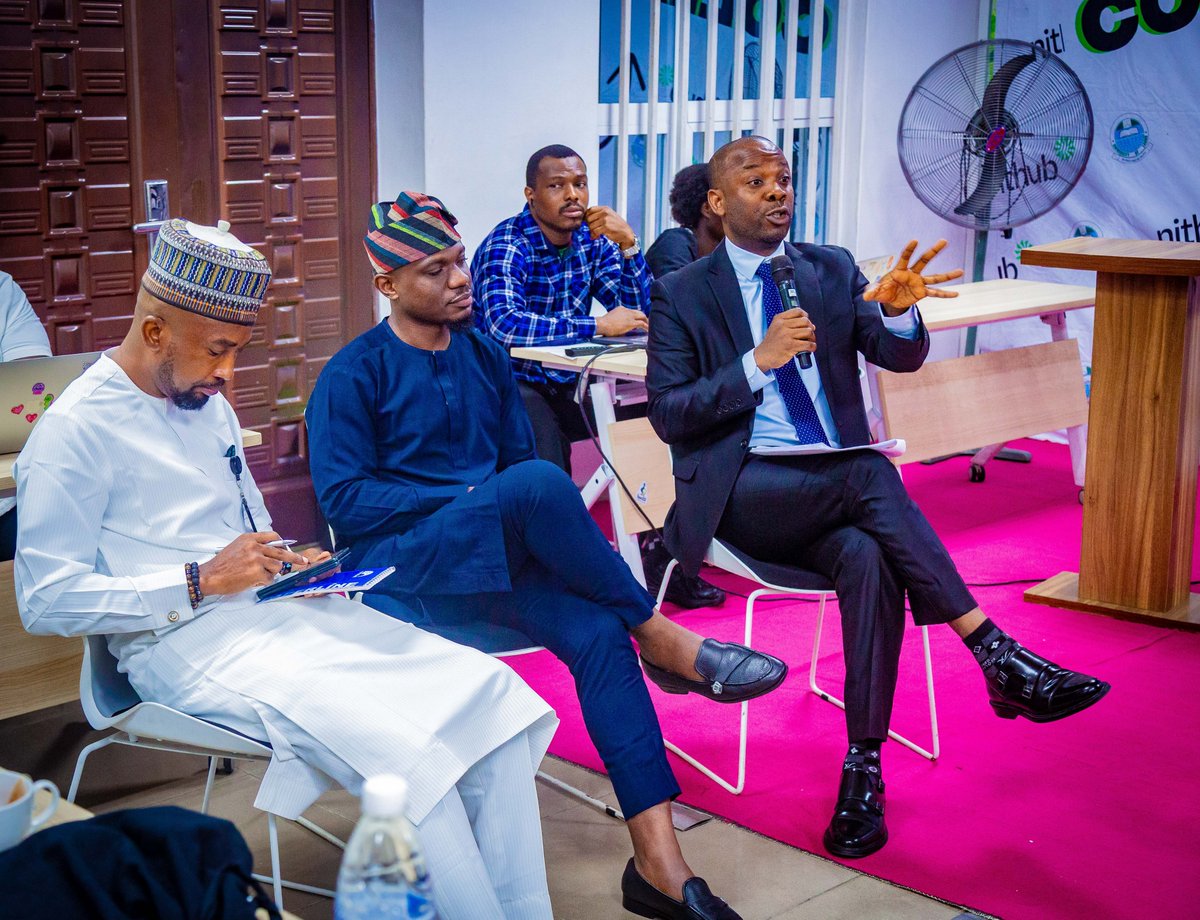
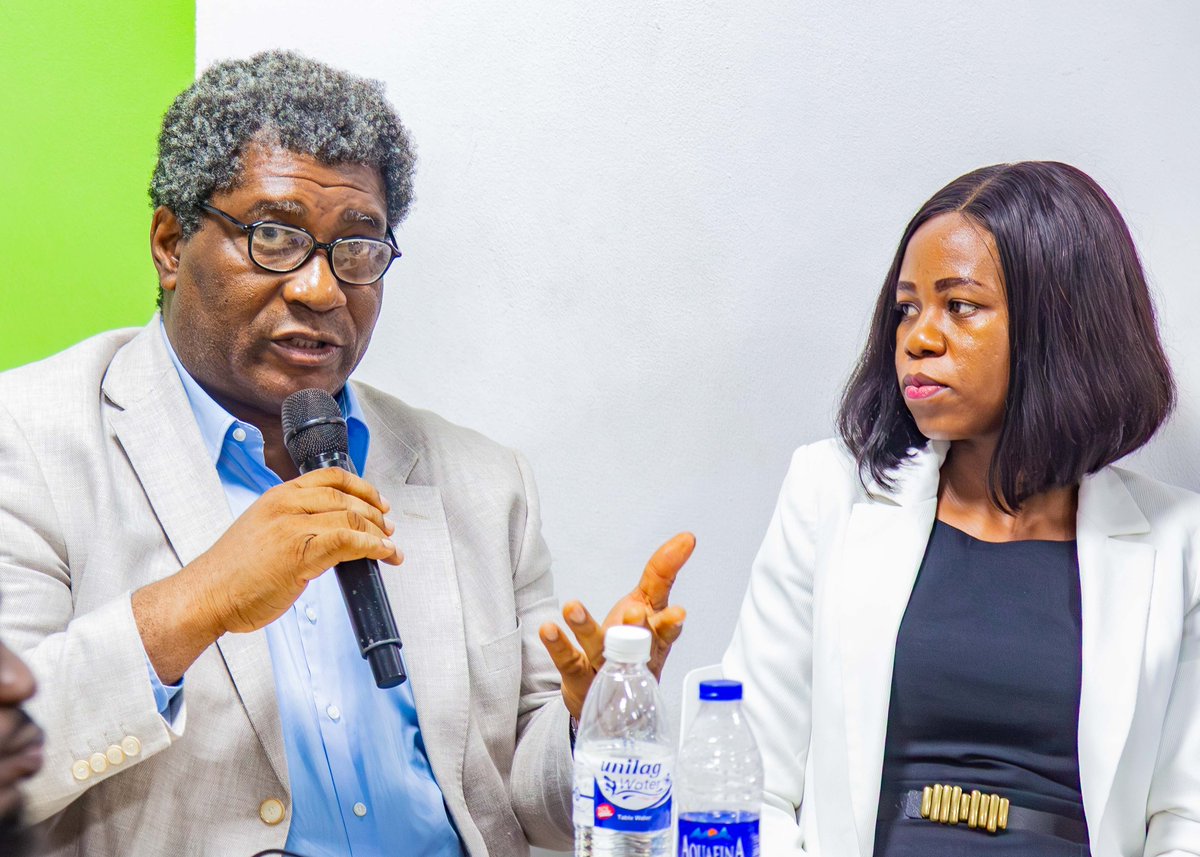
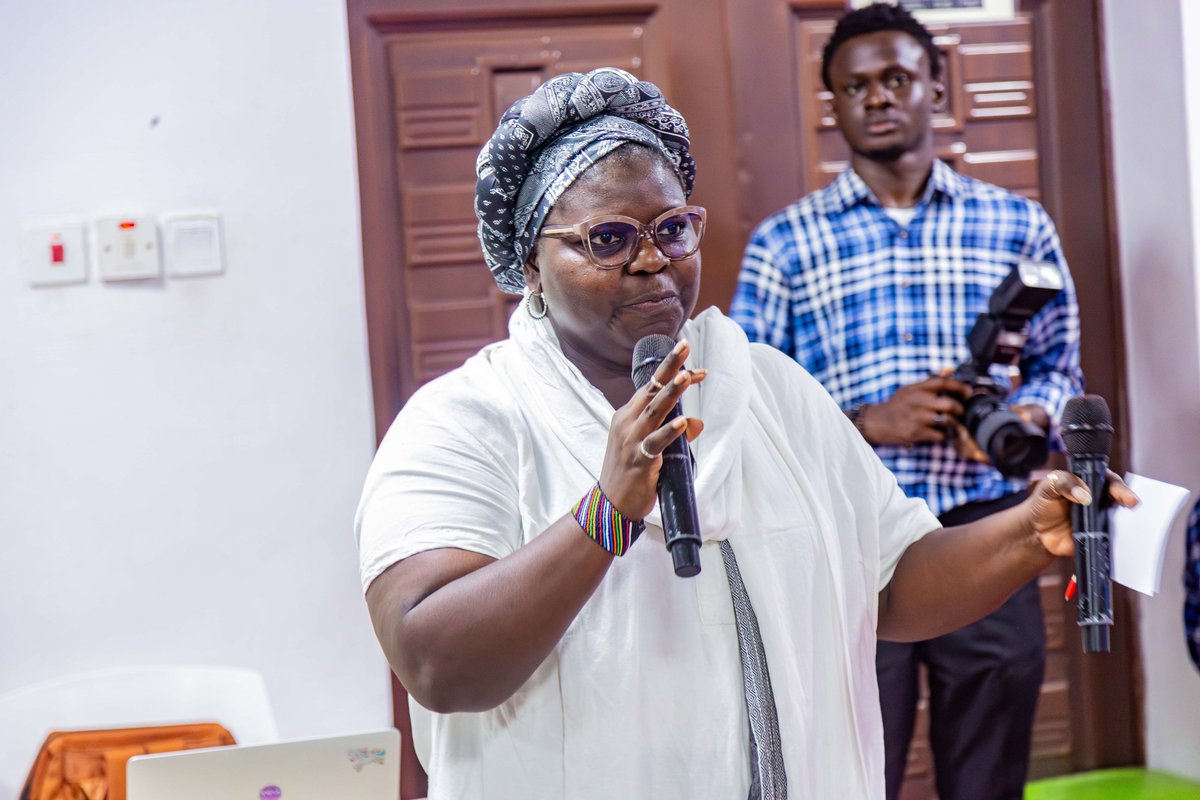
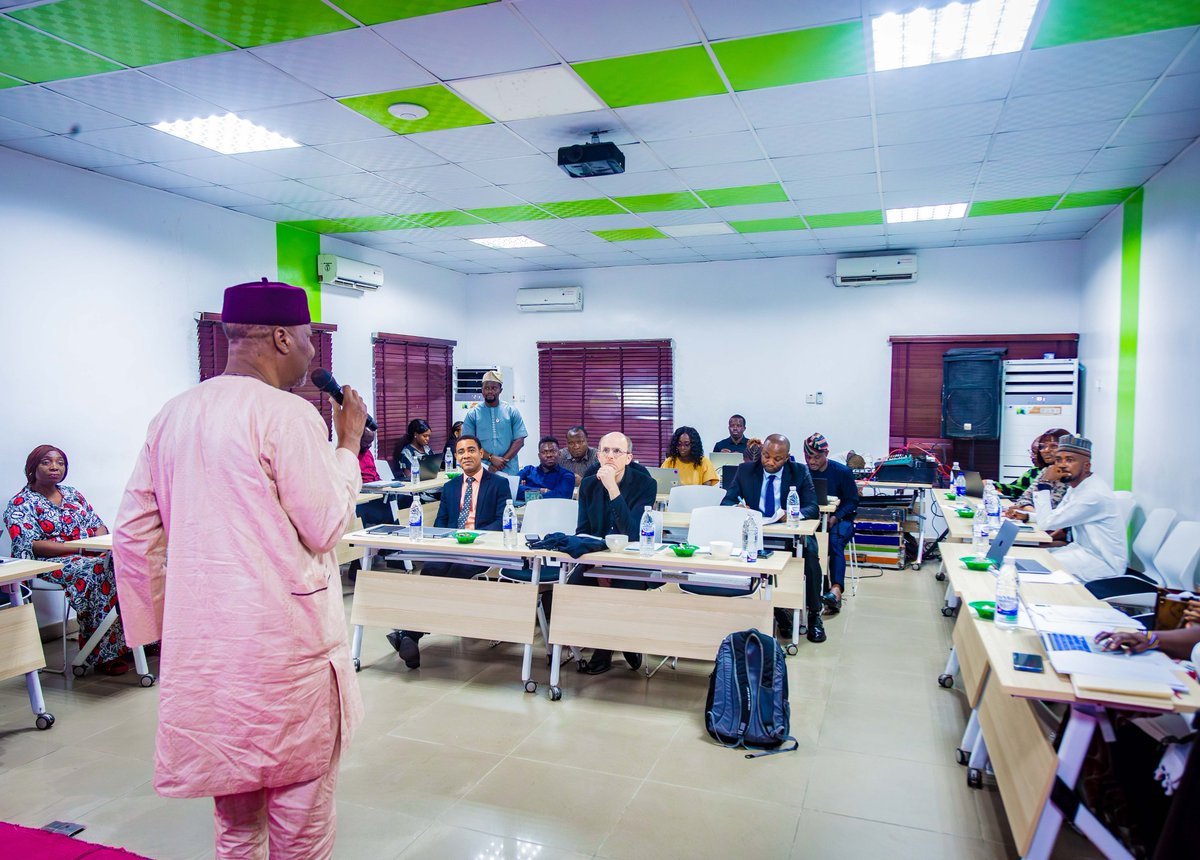
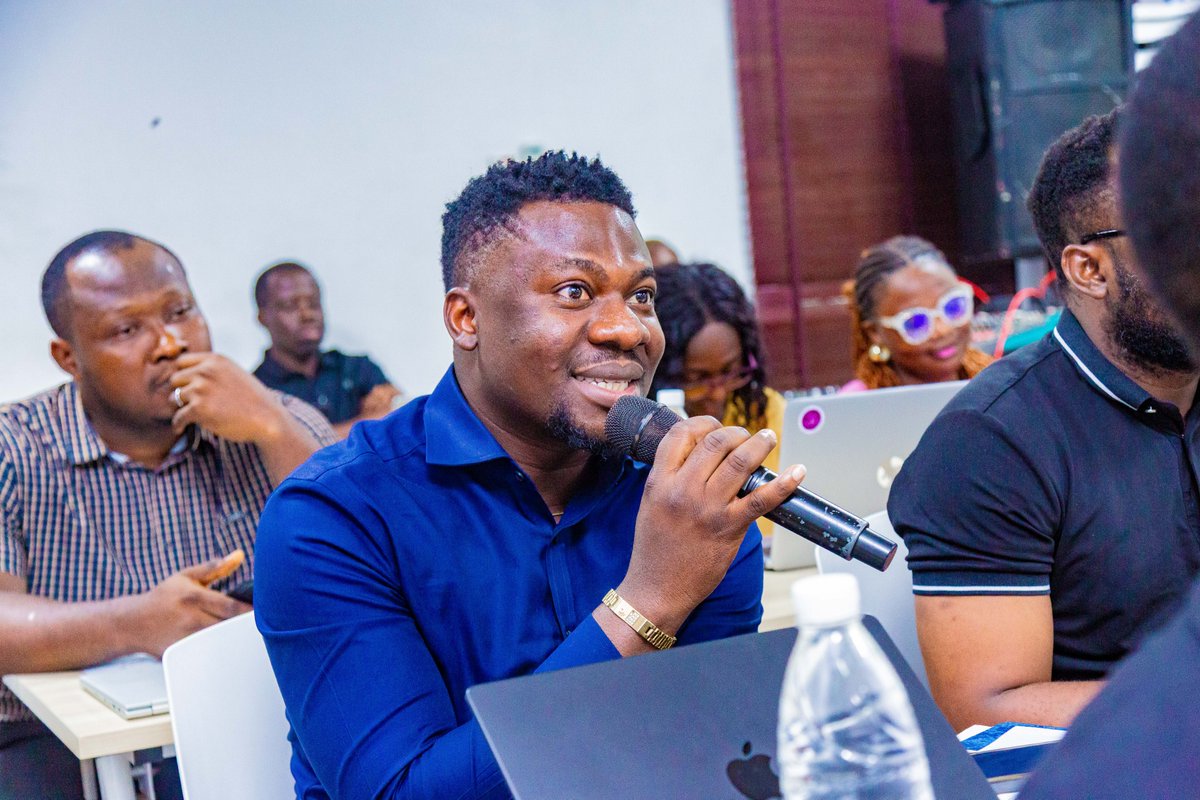
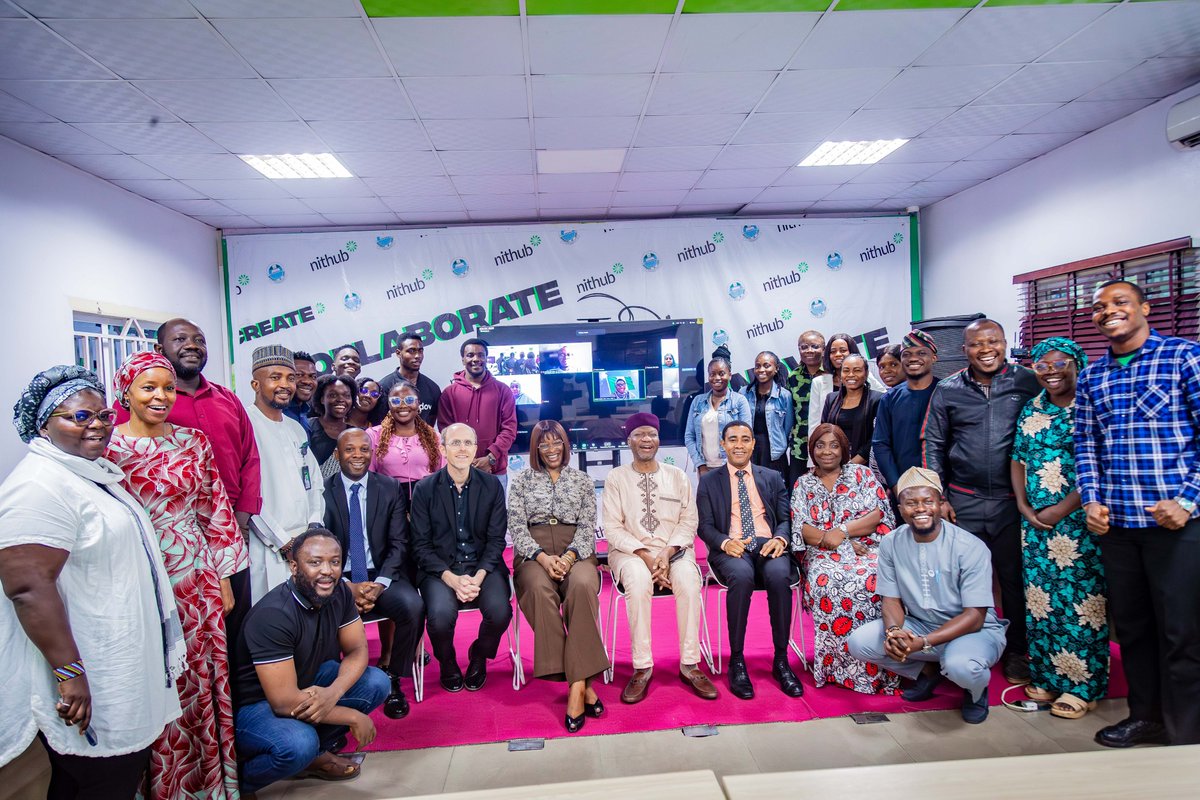
Last week, Dataphyte Foundation, in partnership with the MacArthur Foundation (@macfound) and the University of Lagos (@UnilagNigeria), convened policymakers, researchers, technologists, academics, civil society actors, media professionals, and development partners for a one-day workshop on AI Research, Policy, and Innovation in Nigeria.
The dialogue explored both the opportunities and challenges shaping Nigeria's AI landscape from local-language AI development and AI governance to safety, infrastructure, talent retention, research funding, and ecosystem coordination.
3
2
6
165
Participants emphasised that Nigeria's AI future must be built on collaboration, inclusive policymaking, local innovation, strong safety frameworks, and sustained investment in research and talent development.
As AI continues to transform societies and economies, conversations like these are critical to ensuring that the technology serves all Nigerians and contributes meaningfully to national development.
The future of AI in Nigeria cannot be built by one sector alone. It requires government, academia, industry, civil society, and the media working together to shape a future that is both innovative and responsible.
#ArtificialIntelligence #AIinNigeria #ResponsibleAI #DigitalTransformation #Innovation #TechnologyPolicy #AIResearch #AIForDevelopment #DataphyteFoundation #MacArthurFoundation #UNILAG
1
3
78