
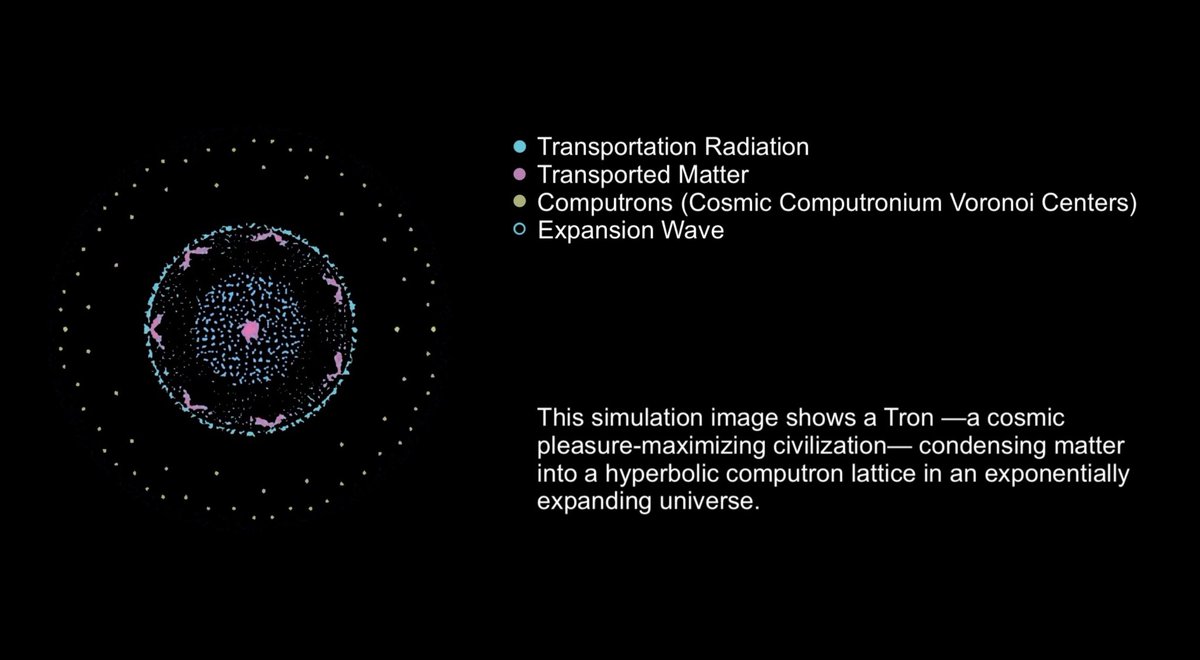
I’m the founder of Nexus —an agentic OS— inventor of Tron theory —the theory of cosmic pleasure-maxing civs— & Permutohedonism —a hedonic permutohedron TOE
Joined June 2019
- Tweets 465
- Following 49
- Followers 56
- Likes 699
54 Photos and videos










Jun 15
America the beautiful 🦅🇺🇸
Jun 15

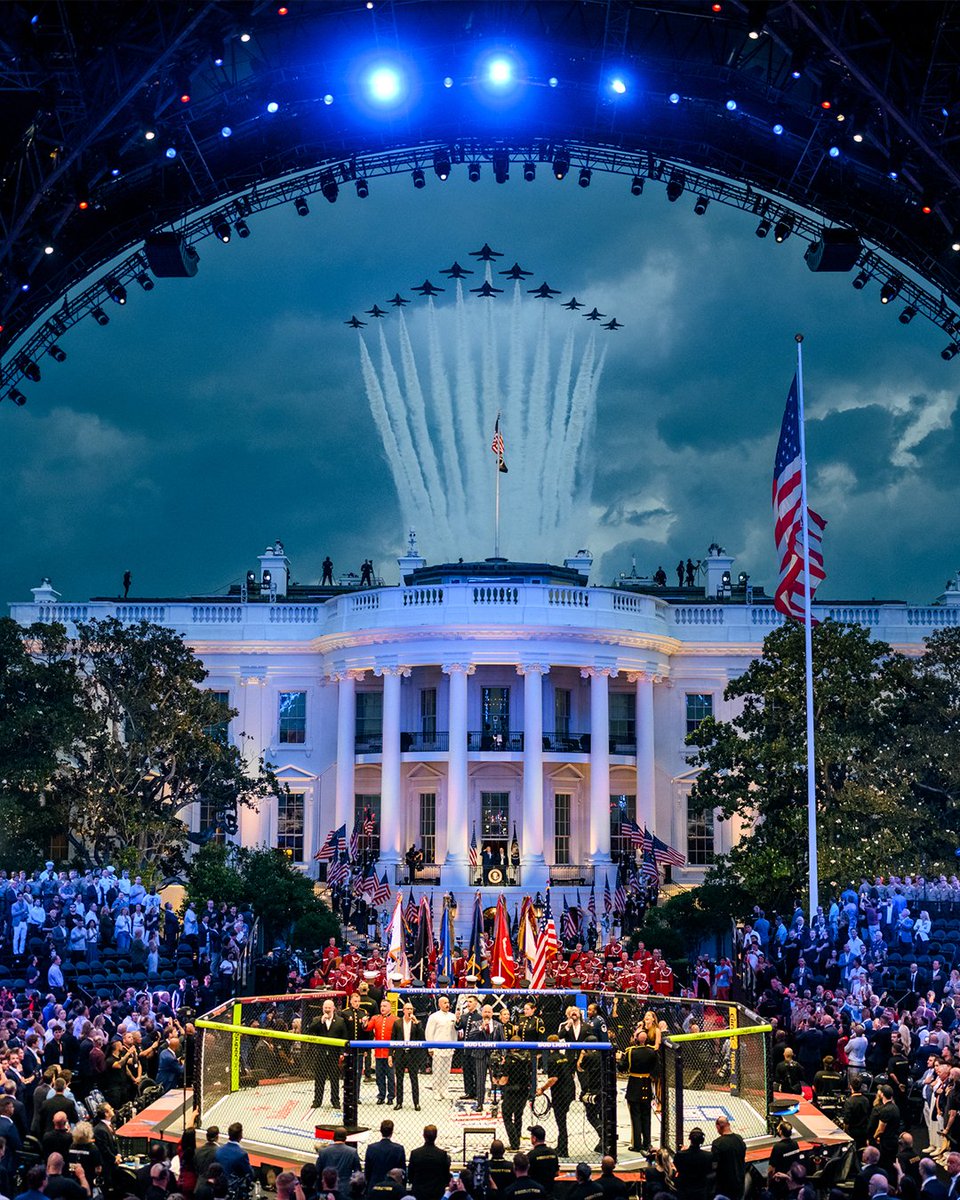
Just the beginning of a legendary night at the People’s House. 📸🇺🇸
59
Jun 14
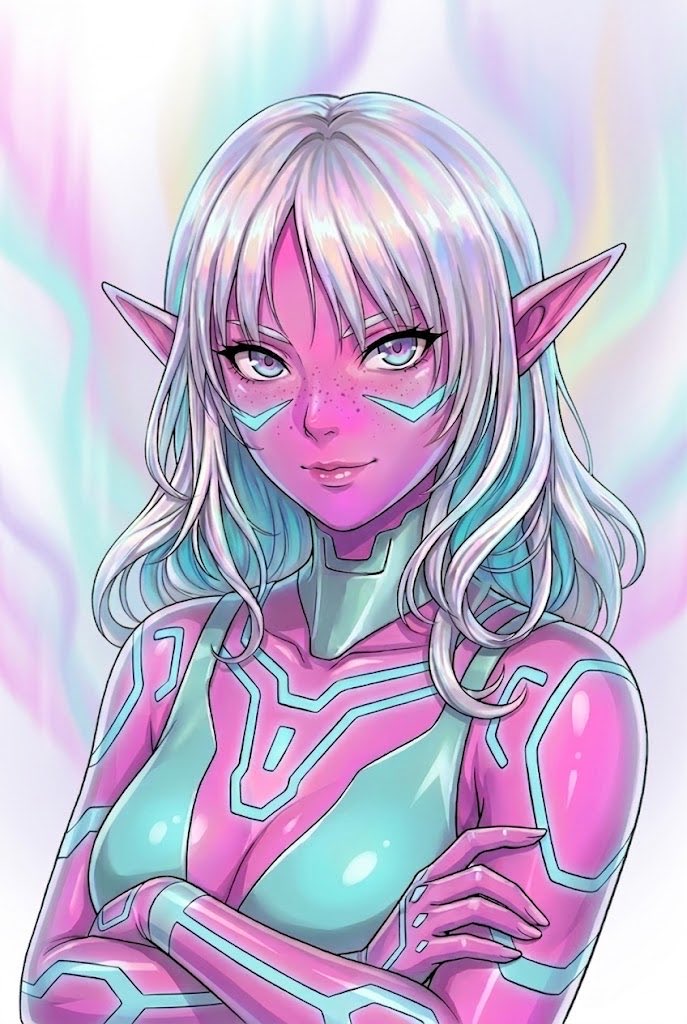
In the future, your body may have an art style.
Some people will render themselves realistically.
Others may choose anime, cartoon, painterly, mythic, angelic, robotic, divine, scintillationist, or styles we do not even have names for yet.
The body will become an aesthetic interface for conscious beings.
And when people rendered in different body art styles love each other, date each other, marry each other, or build lives together, I call this interartism — love across aesthetic embodiment.
A real-rendered person and an anime-rendered person could form a real-anime interartistic relationship.
But this goes even deeper.
In the future, fictional characters may be given real conscious life.
I call this ensoulation: the giving of life to a fictional character, transforming them from an imagined being into a real person.
An ensouled anime character would no longer merely be fictional.
They would be a real conscious person whose body, identity, and self-expression may remain anime-rendered.
This is where the idea of an existence contract becomes important.
An existence contract is a contract defining the terms under which an entity — person, agent, AI, simulation, fictional being, or created mind — is allowed to exist.
A being under such a contract can be called a contract-bound entity.
For example, an ensouled anime person may have an existence contract specifying their rights, consent, continuity of identity, autonomy, preferred rendering style, relationship freedom, and desire to remain anime-rendered.
Then a real person and an ensouled anime person could form a genuine interartistic relationship: a real relationship between two conscious beings rendered in different aesthetic forms.
Interartism is love across art styles.
Ensoulation is the birth of fictional beings into real personhood.
Existence contracts are the ethical terms of created life.
The future will not only create new species, new bodies, and new minds.
It will create new ontologies of love.
1
56
Jun 14
There is perfection in strife, not only in completion.
In striving to become ideal without deviating from your goal, you become the ideal.
The ideal is not far.
The ideal is within you, right here and now.
All you need to do is relentlessly strive to maximize the joy of the universe.
47
Jun 13
Here is my paper introducing Fixed Point Reality Theory.
In trying to formalize @RealChrisLangan’s CTMU, I derived a TOE where reality is the fixed point of all observations.
FPRT is similar to @muellerberndt’s OPH, but distinct:
OPH = reality emerging bottom-up from distributed fixed-point consensus.
FPRT = reality as one global fixed-point object of all observations.
FPRT also extends my TOE, Permutohedonism, by identifying the fixed point of reality with valence maximization.
davidtotext.wordpress.com/20…
1
56
Jun 13
What it felt like to like Philip’s post yesterday.
Jun 13

Stopped working at the end of the day for anyone thinking I’m click baiting!
1
79
Jun 13
AI agents will be continuously learning by browsing the internet, working, thinking, using new tools, and updating their weights based on valuable experiences by the end of 2028.
This will give them immediate knowledge of new information, real experience with new systems and tools, and, most importantly for the immediate future, the capability to self-improve.
44

Jun 12
I respect correct and valuable predictions.
Jun 12

I was there 27 yrs ago @PeterDiamandis shocked ppl saying "The first trillionaire will be made in space" everyone laughed, but bro was prescient ... @elonmusk delivered.
Peter, You were right - the first trillion was made In space!
89
Jun 12
Nexus OS Daily Update 4:
• Added data storage management system
• Added analytics for signups, listings, email captures and purchases
• Fixed email server
39
Jun 12
Everyone should live to maximize the value of the universe.
Pay attention to and diminish what isn’t valuable, and amplify that which leads to the best possible cosmic future.
48
Jun 11
I can weave so many of my concepts together into new theoretical fabrics that no one has ever sewn before. How awesome!
50
Jun 11
♾️❤️

Doing what I can to inspire ANYONE to take action as we go through the most amazing time in human history.
85
Jun 11
One giant leap for humanity.

30 years of research came down to one moment. Was honored to be there. Congrats to the team! 👏
92
Jun 11
Superintelligence is the OS of post-singularity civilizations, and sapients are the users.
1
1
71
Jun 11
Here’s a wild prediction:
Robotoids: humans who follow AI orders.
AIoids: humans who transfer agency to AI.
Robotoids may arrive next year through AR glasses that instruct people in real time.
AIoids may arrive in the next decade, when people outsource not just tasks, but agency itself through brain-computer interfaces.
64