
Professor researching why we age & how to reverse it. Author & host of Lifespan. Mission: Extend healthy life for all. Views are entirely his own. @joinlifespan
Joined March 2012
- Tweets 10,616
- Following 1,162
- Followers 614,269
- Likes 8,848
2,614 Photos and videos


Pinned Tweet
30 years of research came down to one moment. Was honored to be there. Congrats to the team! 👏
Jun 9

Today, @lifebiosciences confirmed the first patient has been dosed with an epigenetic restoration drug candidate. An exciting milestone 🚀
Life Biosciences is the OG cellular rejuvenation using epigenetic restoration to reverse diseases of aging. It was cofounded by @davidasinclair, who serves as Chairman
The company’s proprietary Epigenetic Restoration platform utilizes three transcription factors, OCT4, SOX2, and KLF4 (OSK), to restore older and damaged cells to a younger and healthier state. This innovative approach targets a root cause of aging at the epigenetic level, and has the potential to address a wide range of serious age-related diseases
The Phase 1 trial will evaluate the safety and tolerability of ER-100, with additional endpoints assessing visual function. ER‑100 is the first clinical candidate from Life Bio’s Epigenetic Restoration platform, which uses controlled expression of three transcription factors, OCT4, SOX2 and KLF4 (OSK) to restore cellular function by resetting the epigenetic code to more youthful patterns of gene expression
“This is an important moment for Life Bio and for the field of aging biology,” said David Sinclair, Ph.D., Co‑founder of Life Biosciences and Professor of Genetics at Harvard Medical School. “Our research has suggested that aging is driven in large part by the loss of epigenetic information, not irreversible damage. This clinical study represents the first opportunity to test whether restoring that information can ameliorate human disease.”
Beyond ER-100, the company is strategically broadening its therapeutic pipeline to address additional age-related diseases, underscoring the platform’s versatility and transformative potential.
“This milestone reflects years of rigorous scientific development and translational research,” said Sharon Rosenzweig‑Lipson, Ph.D., Chief Scientific Officer of Life Biosciences. “Our preclinical studies have demonstrated that controlled OSK expression can reset epigenetic patterns associated with healthy cellular function, improve tissue performance, and restore visual function in animal models. Advancing ER‑100 into the clinic is an important step toward translating epigenetic restoration into a new class of medicines for age-related diseases.”
Optic neuropathies represent a large unmet medical need. Current treatments primarily address risk factors, such as intraocular pressure in glaucoma, but do not directly target the damage to retinal ganglion cells. As a consequence, the disease often leads to irreversible vision loss despite treatment
Vision loss not only directly impacts patients’ lives, but also increases the risk of loss of independence, damaging falls, and depression and dementia due to social isolation, underscoring the need for disease-modifying therapies.
Beyond ER‑100, Life Bio is developing applications of its proprietary Epigenetic Restoration platform for multiple indications in a variety of organs, reflecting the broad therapeutic potential of this platform.
About Optic Neuropathies Optic neuropathies are a group of disorders characterized by damage to retinal ganglion cells (RGCs), the primary neurons connecting the eye to the brain. Because RGCs do not naturally regenerate, damage results in permanent vision impairment. One such optic neuropathy, open-angle glaucoma (OAG) is a chronic neurodegenerative disease and a leading cause of blindness in older adults
While often associated with elevated intraocular pressure, disease progression frequently continues despite treatment, and some patients suffer from OAG despite normal intraocular pressure. Non-arteritic anterior ischemic optic neuropathy (NAION) is the most common acute optic neuropathy in adults over fifty. It involves sudden, painless vision loss due to insufficient blood flow, for which there are currently no approved treatments
About ER-100 ER‑100 is an investigational therapy in clinical development for the treatment of optic neuropathies including OAG and NAION. ER‑100 is designed to restore function in retinal ganglion cells using Life Biosciences’ Epigenetic Restoration platform, which utilizes controlled expression of three transcription factors, OCT4, SOX2 and KLF4 (OSK), to reset cellular gene expression patterns and restore cells to a more youthful and functional state. ER‑100 is currently being evaluated in a Phase 1 clinical trial. More information can be found at clinicaltrials.gov (NCT07290244): clinicaltrials.gov/study/NCT…
For more information, visit lifebiosciences.com or follow on social media
lifebiosciences.com/life-bio…
96
373
3,853
357,727
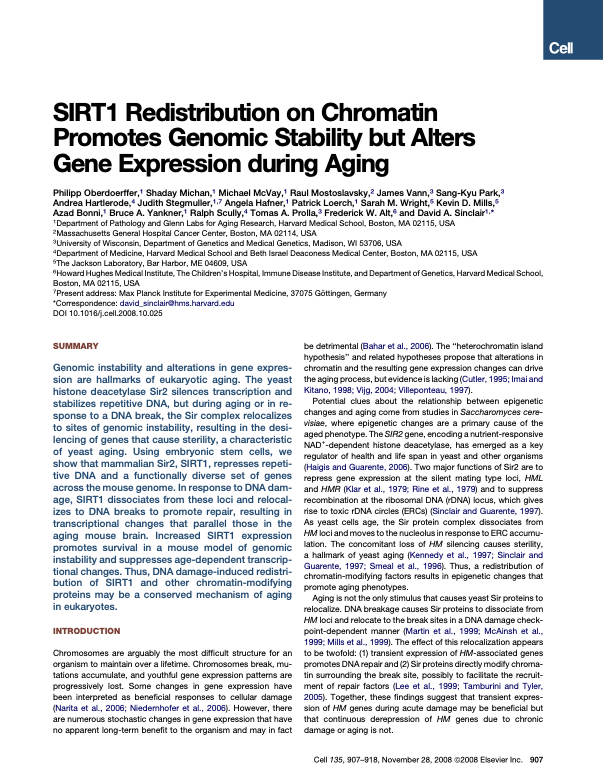
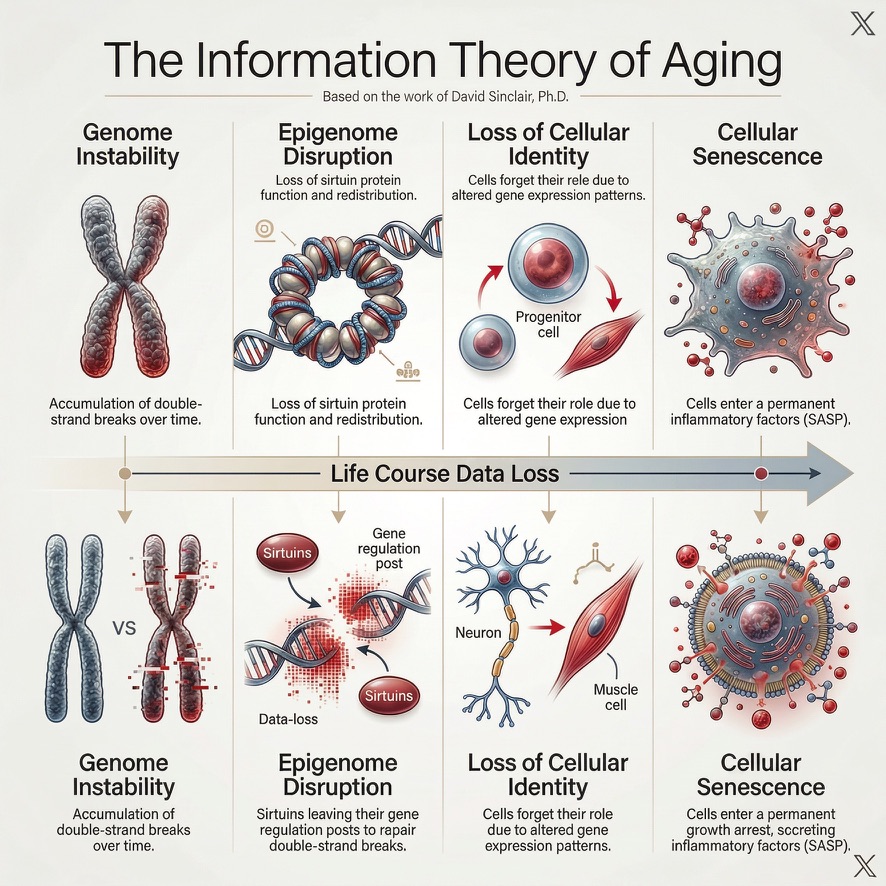
Good question. Back in the 2000s, Phillip Oberdoerffer, a postdoc in our lab, published that DNA breaks cause epigenetic drift in mammals, not just yeast, consistent with the Information Theory of Aging
Summary of the 2009 study ICYMI:
One of the hallmarks of aging is the gradual loss of genome stability and control of gene activity. In yeast, a protein called Sir2 (the original Sirtuin) helps keep certain genes turned off and protects repetitive regions of DNA.
As yeast age, or when their DNA is damaged, Sir2 leaves its normal locations and moves to sites of DNA damage to help with repair. This causes previously silent genes to become active, leading to changes associated with aging
We found that the mammalian version of Sir2, called SIRT1, behaves in a similar way. In mouse cells, SIRT1 normally helps silence repetitive DNA and regulates many genes throughout the genome. When DNA damage occurs, SIRT1 moves away from these regions and relocates to DNA breaks to assist in repair. As a result, gene expression patterns change in ways that closely resemble those seen in aging mouse brains
Increasing SIRT1 levels improves survival in mice with unstable genomes and reduces many of the gene expression changes that occur with age. These findings suggest that aging may result, at least in part, from the repeated redistribution of SIRT1 and other chromatin-regulating proteins as they respond to DNA damage, gradually disrupting the youthful organization of the genome
cell.com/cell/fulltext/S0092…

How much is due to damage and how much to epigenetic drift???
14
26
197
25,809

Jun 12
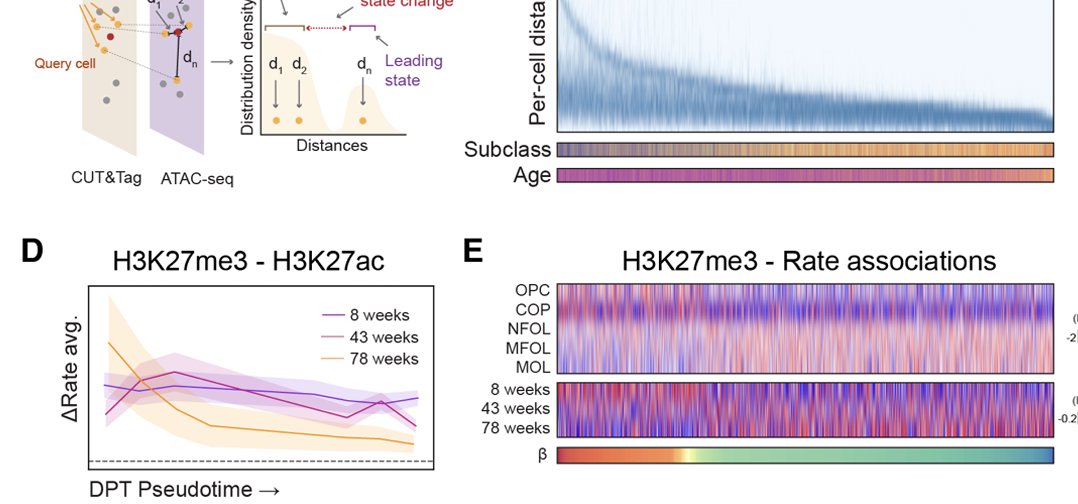
NEW PREPRINT: Scientists may have found direct evidence that aging is driven by the loss of cellular information, not just the accumulation of damage
For decades we've focused on what aging cells accumulate. This paper focuses on what they lose: Information.
Using a new technology called SeqTag, researchers measured gene expression, chromatin accessibility, and histone modifications in the same aging cells.
What they found was striking: the regulatory systems that tell cells who they are become increasingly out of sync with age. The authors call this "molecular asynchrony."
As cells age, chromatin structure, histone marks, and gene expression begin drifting apart. Regulatory entropy rises. Repressive chromatin erodes. Cells become less certain of their identity and more likely to drift toward alternative fates.
This is what the Information Theory of Aging (ITOA) states: that aging occurs when cells lose epigenetic information, the instructions that tell the genome how to maintain youthful function. DNA may remain largely unchanged, but the system that reads it gradually loses fidelity.
What's remarkable is that this paper doesn't just describe this phenomenon. It quantifies it. The authors measure increasing regulatory entropy, loss of H3K27me3-mediated repression, erosion of heterochromatin, weakening lineage fidelity, and increased cell-fate drift during aging. In progenitor cells, the barriers that normally preserve cellular identity become progressively weaker with age.
Mechanistically, the study argues that aging is associated with increasing molecular asynchrony between chromatin accessibility, H3K27ac/H3K27me3 remodeling, and transcriptional state.
This decoupling is accompanied by increased regulatory entropy, loss of repressive chromatin architecture, and weakening of lineage constraints. Genes affected are those involved in chromatin organization, DNA damage, and Wnt signaling, consistent with ITOA.
Importantly, the authors provide quantitative evidence that age-related heterochromatin erosion lowers the energetic barriers that maintain cell identity, offering a potential mechanistic link between epigenetic information loss, cell-fate drift, and late-life disease susceptibility 👏
62
254
1,634
68,697
Jun 11
What else could it be?

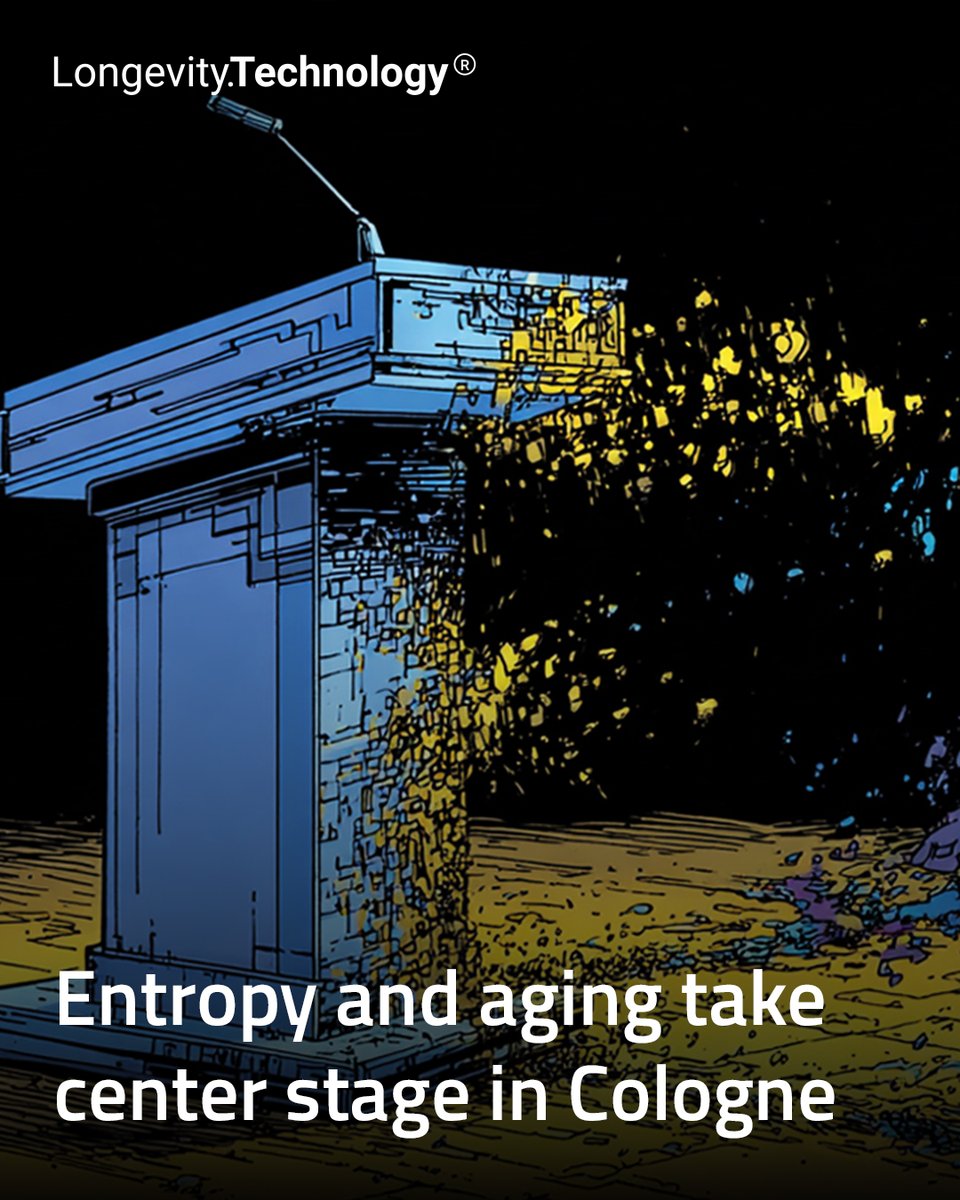
Researchers from across disciplines will gather this August to explore whether entropy offers a unifying framework for understanding aging.
vist.ly/57cph
#longevity #geroscience #entropy #aging #research
11
8
149
22,355
Jun 11
💯

are you paying attention chad?
the anti-aging and human enhancement arms race just went geopolitical
- Russia committed $26B. Putin made longevity a Kremlin priority. organ printing, genetics, cryotherapy.
- China published a 5-year national biotech plan. gene therapy, BCIs, AI drug discovery. genuine human firsts, not me-too drugs.
- UAE launched a national longevity program backed by sovereign wealth. zero taxes. fastest clinical trial approvals in the world.
- Singapore is funding longevity research at the state level and recruiting the world's best biotech founders.
and the private sector is not waiting
- Life Biosciences just injected the first reverse-aging drug into a human
- NewLimit raised $435M from Peter Thiel's Founders Fund. Brian Armstrong's bet on age reprogramming is moving from lab to clinic.
- Retro Biosciences raised $1.8B. Sam Altman's bet on adding 10 healthy years to human lifespan is scaling.
- Isomorphic Labs raised $2.1B. Demis Hassabis betting AI designs drugs better than humans.
- Neuralink has 21 implants in humans. Merge Labs launched with $252M. the BCI race is real.
- Altos Labs. $3B from Bezos. cellular rejuvenation. the largest single longevity round ever.
every major power and every serious founder on earth is pointing at the same problem
the race has begun
bio/acc
4
17
331
35,895
Jun 11
Pretty accurate

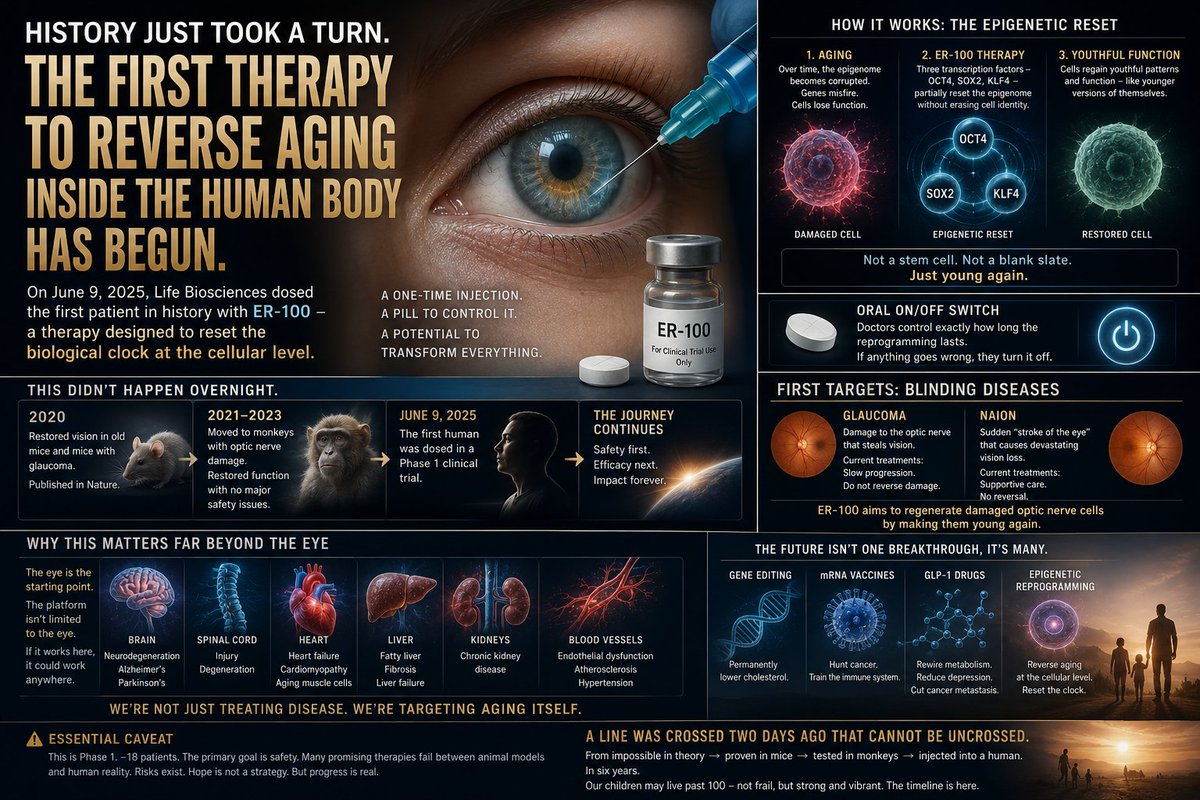
Two days ago, something happened that most of the world still doesn't know about.
A human being received the first therapy in history designed to reverse cellular aging inside their body. Not slow it down. Not manage the symptoms. Actually reset the biological clock at the cellular level.
@lifebiosciences — co-founded by Harvard geneticist @davidasinclair — announced on June 9 that the first patient was dosed in their Phase 1 clinical trial of ER-100.
Let me explain what this actually is, because the implications extend far beyond the eye they're treating.
Your DNA is mostly intact throughout your life. Think of it as hardware. What degrades is the epigenome — the layer of chemical instructions that tells your genes what to do and when. Over decades, those instructions get corrupted. Genes that should be active go silent. Genes that should be silent activate. Cells lose their identity and function. We call this aging.
ER-100 uses three transcription factors — OCT4, SOX2, and KLF4 — to perform a partial epigenetic reset. These are the same factors that can reprogram any adult cell back into a stem cell. But they're not going that far. They're doing just enough to make damaged cells function like younger versions of themselves — without losing their identity.
The delivery is elegant. A one-time injection into the eye. An oral pill acts as an on/off switch — doctors control exactly how long the reprogramming lasts. If anything goes wrong, they turn it off.
This didn't come from nowhere.
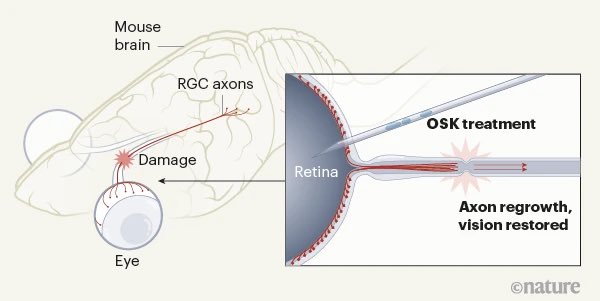
In 2020, Sinclair's team restored vision in old mice and mice with glaucoma using this approach. The paper made the cover of Nature. They moved to monkeys with optic nerve damage — and successfully restored function with no major safety issues. Now, two days ago: the first human.
The trial is targeting glaucoma and NAION — a sudden "stroke of the eye" that causes devastating vision loss. Current treatments for both can only slow progression. Nothing reverses the damage. This therapy aims to regenerate damaged optic nerve cells by making them young again.
As a cardiologist, here's why this keeps me up at night — in the best possible way.
The eye is a safe, measurable starting point. But the platform technology isn't limited to the eye. If partial epigenetic reprogramming works safely in optic nerve cells, the same approach could theoretically be adapted for the brain, the spinal cord, the heart, the liver, the kidneys — any organ where cells lose function with age.
We're not testing whether we can treat one disease. We're testing whether we can treat aging itself as a reversible biological process.
For my entire career, cardiology has been magnificent at managing the downstream consequences of aging: high blood pressure, plaque buildup, heart failure, arrhythmias, stiffened arteries. We prescribe statins, antihypertensives, anticoagulants, and devices to manage what time does to the cardiovascular system. We're getting better every year.
But what if the cells themselves could be reset? What if the cardiac muscle cells that lose contractile function with age could be epigenetically restored? What if the endothelial cells lining sixty thousand miles of blood vessels could be made to behave like they did decades earlier?
That's not in a trial yet. But the foundational technology just entered a human body for the first time. And the companies racing in this space — Life Biosciences, Altos Labs, NewLimit — are backed by billions of dollars and some of the best scientists alive.
Essential caveats — because I'm a physician, not a hype man.
This is Phase 1. Roughly 18 patients. The primary goal is safety: does this cause harm? Is it tolerable? Efficacy data will come later. Many promising therapies have failed in the gap between animal models and human reality. Gene therapy carries risks — immune reactions, off-target effects, unintended cellular behavior. The oral on/off switch is a critical safety feature, but this is still the earliest possible stage of testing.
No one is reversing aging tomorrow. No one is living to 200 next year.
But a line was crossed two days ago that cannot be uncrossed.
For the first time in human history, someone received a therapy specifically designed to make damaged cells young again inside a living person. From impossible in theory to proven in mice to tested in monkeys to injected into a human being — in six years.
I've spent twenty years treating the consequences of aging. I've held hearts that were failing because time had degraded the cells beyond recovery. I've watched patients lose vision, cognition, mobility, and independence — and told them there was nothing I could do to reverse what time had taken.
This week, the conversation began to change.
Gene editing to permanently lower cholesterol. Personalized mRNA vaccines to hunt cancer. GLP-1 drugs rewiring metabolism, reducing depression, and cutting cancer metastasis. And now — partial cellular reprogramming to reverse aging at the epigenetic level.
I said months ago on this platform that our children may live past 100 — not frail, but strong and vibrant.
The evidence keeps building that this isn't optimism.
It's a timeline.
28
122
1,129
108,381
Jun 11
Smart. Took me 50 years
Jun 11

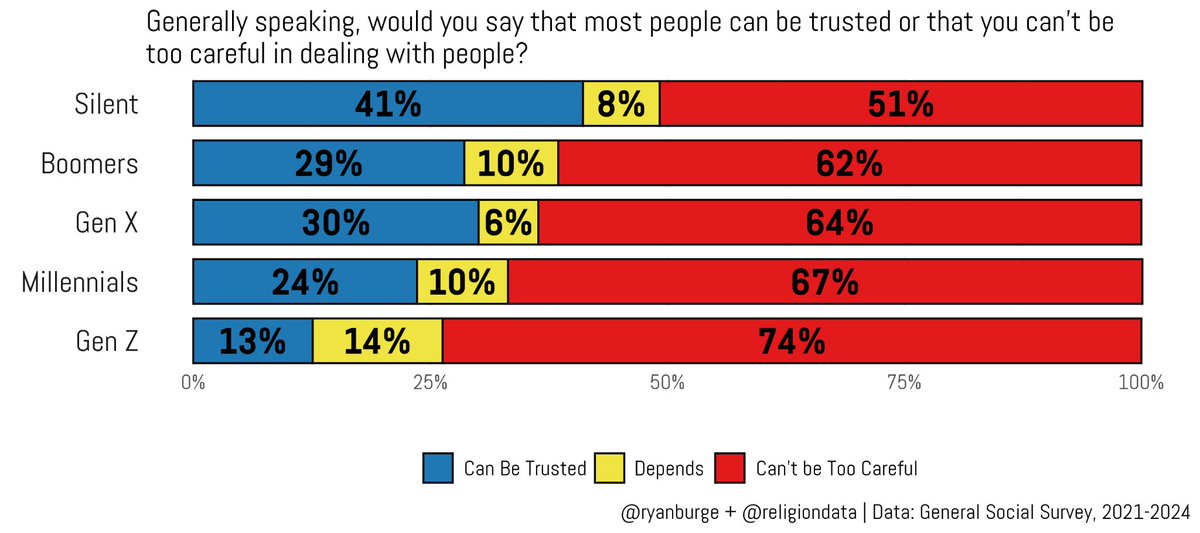
Generation Z has the lowest levels of interpersonal trust of any generation we've ever polled.
And although the data is time limited, the velocity of their decline in trust already far exceeds any previous generation.
29
21
336
51,457
Jun 11
Nice review about how epigenetic drift and cell stress can cause cellular senescence to drive aging and disease cell.com/cell/fulltext/S0092…
7
42
270
16,610
Jun 11
🚀🚀🚀

Russia just committed $26 billion to anti-aging research and made longevity a national priority. Welcome to the longevity arms race!
52
110
1,487
91,301
David Sinclair retweeted

Jun 11
FORBES: The New Billionaire Bet Isn't AI —
It's Longevity Biotech
forbes.com/sites/dariashunin…
24
124
794
52,718
Jun 11
The first all-new episode of Lifespan, Season 2, is out!
I explain why humanity is approaching a turning point in our ability to measure & reverse aspects of biological aging - and what you can do personally to benefit from this revolution. Watch:
youtube.com/watch?v=YRGejckR…
18
119
757
67,903
Jun 11
True. Many of our advances in longevity research & development are published months, often years, and sometimes more than a decade after they happen
Jun 11

the most important things never announce themselves. electricity didn't send a press release either
15
19
345
24,636
Jun 10
After decades of witnessing distortion, lies, and recycled quotes from the same couple of disgruntled former colleagues, I’ve largely stopped speaking to mainstream media. Too many are more interested in clickbait & tearing down builders than telling the truth or helping humanity
Jun 10

it's insane to me that this isn't all over mainstream media right now.
for the first time in human history, a drug built to reverse aging was just put into a living person
a company called Life Biosciences dosed the first patient in their trial for something called ER-100
it comes from a Harvard geneticist named David Sinclair
his theory is that aging comes from your cells losing track of how to read their own DNA
think of it like a computer. the hardware is fine, but the software slowly gets corrupted over the years, so the machine runs slower and slower until it stops
the instructions for a young, healthy cell are all still in there. your cells just lost access to them over time
so this drug does one thing: it reboots the cell back to the version of itself that knew how to run properly
they pull it off with three proteins that reset a cell to a younger state
and they proved it works before ever touching a human
first they restored vision in old mice. then they restored vision in monkeys with optic nerve damage, with no tumors and no signs of harm
so now they're testing it on people going blind from glaucoma and a nerve condition called NAION
they started with the eye on purpose. it's the cleanest place to test the idea, because they can inject it into one eye without it reaching the rest of the body, the cells there don't heal on their own so any improvement clearly came from the drug, and they can measure vision right down to the letters on a chart
the reset happens at the level of the cell, so in theory the same approach could one day rejuvenate the liver, the kidneys, even the brain
it won't be automatic though. every organ needs its own way of getting the drug into the right cells, plus its own round of safety testing. so it doesn't suddenly work everywhere the moment it works in the eye
but the eye answers the one question nobody could answer before: whether you can safely turn back the age of living cells inside a person
if the answer is yes, reaching the rest of the body comes down to delivery, one organ at a time. that part is hard, but it's the kind of hard you can engineer your way through
to be clear, this is an early safety trial. 18 people, 5 year follow up.
so nobody is gonna cure aging by next year
but if it works, we'll look back at this week as the moment the clock started running backwards for the first time
53
80
1,303
136,292
Jun 10
The naysayers saw no change in blood NAD levels with age (something we’ve known for yrs) and concluded an entire field is wrong
We’re treating organs not blood, and aged NAD levels are irrelevant to whether therapies work
Beware of commentators who thrive on schadenfreude

Healthy aging and muscle function are positively associated with NAD abundance in humans
“…
conversely, exercise-trained older individuals had NAD levels that were more similar to those found in younger individuals.
NAD abundance positively correlated with average number of steps per day and mitochondrial and muscle functioning..”
nature.com/articles/s43587-0…
12
26
436
37,286
Jun 10
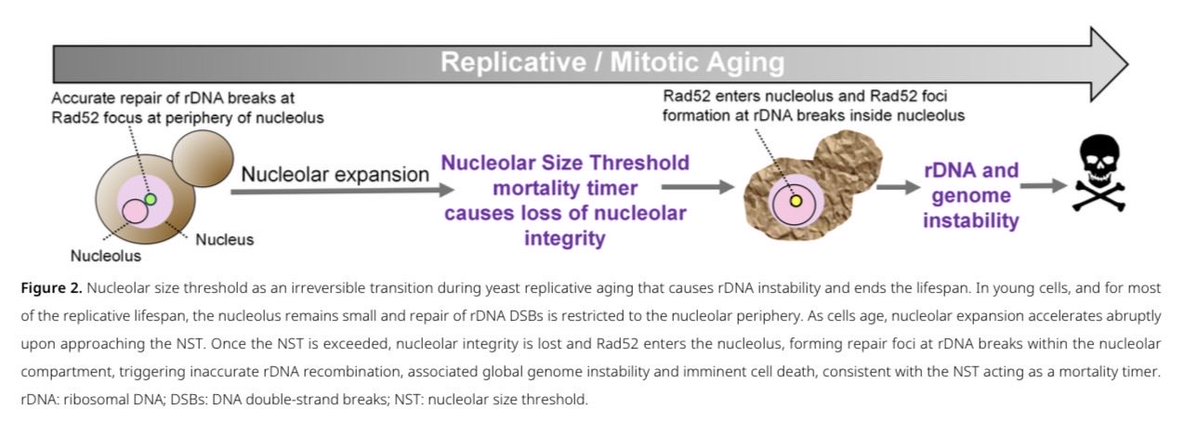
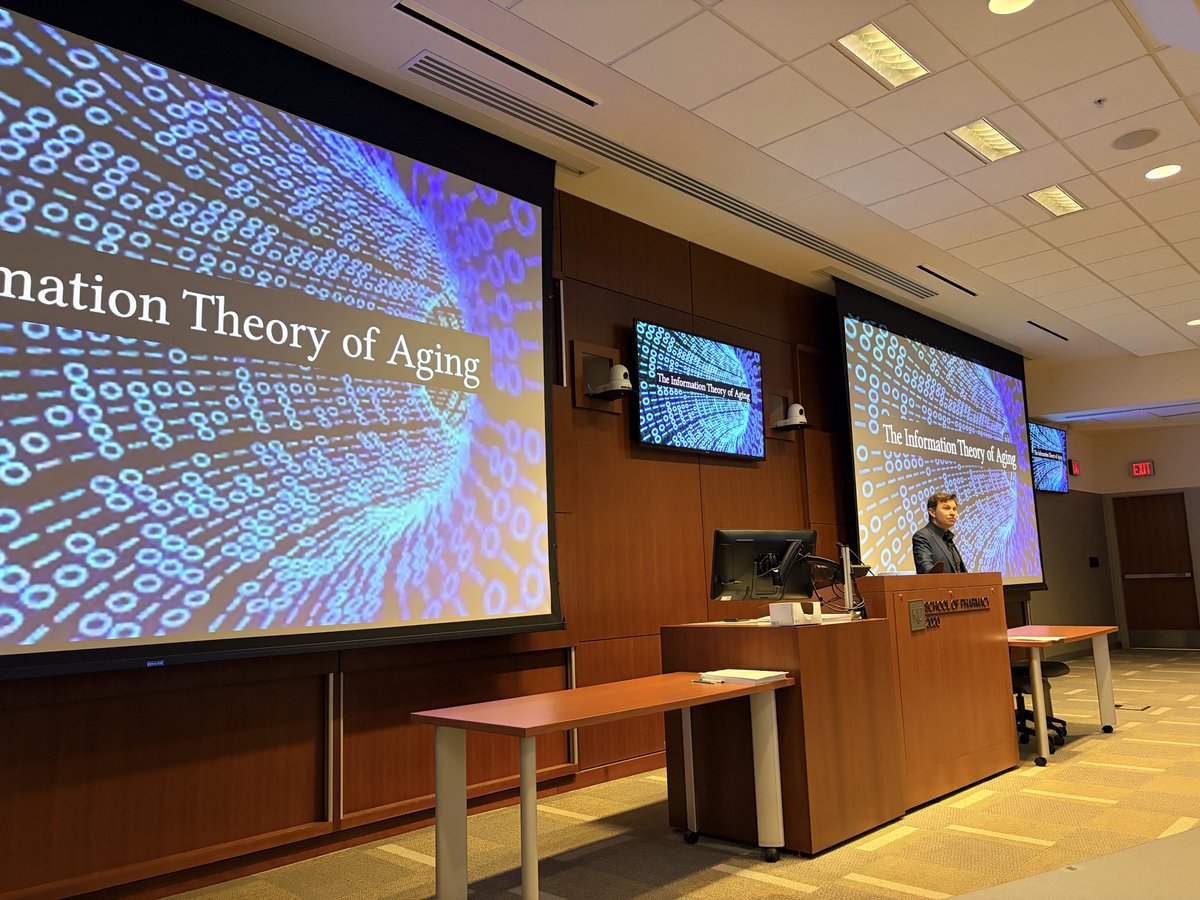
The nucleolus of cells explodes as cells divide, due to DNA breaks that disrupt the epigenome and cause aging. These discoveries in 1997 formed the basis of The Information Theory of Aging (ITOA). Great review by Dr. Jessica Tyler @geromedicine
sciexplor.com/geromedicine/a…
7
42
371
15,903
David Sinclair retweeted

If there’s ever been an argument to have hard core scientists leading the review of biologics at the FDA, this is it 👇
We have now entered an era where researchers are using gene therapy to REVERSE AGING in HUMANS.
With futuristic therapeutics now here, we need leadership & regulatory policies that can adapt with rapidly evolving technology so that American patients are both protected and not left behind. Exciting times… 🧬
Jun 10

After 25 years of brave & brilliant work by hundreds of scientists in my lab to understand then safely reverse aging for the first time, it was moving to witness the first human dose being delivered 🥹 nature.com/articles/d41586-0…
10
37
245
32,608
Jun 10
After 25 years of brave & brilliant work by hundreds of scientists in my lab to understand then safely reverse aging for the first time, it was moving to witness the first human dose being delivered 🥹 nature.com/articles/d41586-0…
213
760
5,575
340,020
Jun 10
And of course by “reverse aging” I mean epigenetic restoration by ER-100
16
22
464
32,614
Jun 10
We’d love to have you

🎊 Elon Musk, step into the arena. It's your time. 🎊
15
18
393
44,862

In 2020, a blind mouse saw again. @davidasinclair's lab at Harvard had reset the age of the cells in its eye with three of the four Yamanaka factors.
Sinclair's argument is that aging is information loss. The youthful settings are still in the cell, buried under noise, and these factors let it read the backup.
On June 9, 2026, a person received that therapy for the first time.
No results yet. Just one patient, and a question that finally has a human to answer it.
Jun 9

The first participant to receive partial cellular reprogramming for eye disease (advanced glaucoma) in a pilot study of 12 patients was treated. Using 3 of the 4 Yamanaka stem cell factors to potentially achieve cellular rejuvenation @Nature
nature.com/articles/d41586-0…
2
35
219
30,827