
Joined May 2022
- Tweets 10,140
- Following 639
- Followers 270
- Likes 59,855
20 Photos and videos








Pinned Tweet

Feb 19
We need to discuss, every time it´s possible, the meaning of words. Fascism is the main one. What is Fascism? It´s a colectivist ideology predicated on the notion that nations fight in a darwinistic way and the besy nations rise to the top. The way to achieve victory is to close ranks, kill individualism and free enterprise in favour of colectivism and directivism, and coalesce around a strong figure that is going to lead the nation to greateness. Because of it´s darwinistic vein, it believes that might makes right, so if it manages to force, bully or strongarm it´s position against any opposition, that´s a sign it´s right all along. It believes in the blank slate and that human beings can and should be social engineered towards the goal of the party. The party, and it´s leader, and the state are merged into the nation, making for the saying: “All within the state, nothing outside the state, nothing agaisnt the state"
1
2
373
David Bacon retweeted

Jun 17
“What do you call 100,000 dead Canadians? A good start!”
“Whoa whoa whoa that’s joke’s hate speech!”
“What? No, I’m Canadian, that’s official government policy.”
Jun 16

In the first 10 years of MAID, more than 100,000 Canadians have averted unnecessary suffering at end-of-life. That's cause for celebration. Assisted death has become a significant ritual, not a 'slippery slope,' by @picardonhealth theglobeandmail.com/gift/0fc… via @GlobeDebate
14
509
4,559
69,331
David Bacon retweeted

When I was 9 or 10 I was sent to the corner shop with my cousins for eggs and rolls.
Our mums told us to keep the change and get a sweet.
Shop owner short changed us considerably.
We protested.
He got violent, manhandled us out of the shop.
We shouted “rip off” and “thief”, then left.
He knocked on my auntie’s door the next day.
Said I called him a “paki bastard” and that he was hurt and offended by this.
She told my mum.
I absolutely categorically did not say this and told my mum that I didn’t.
“The man said you did”
This was the start of the summer holidays, I was grounded for the entire holiday, not allowed to leave the house.
He lied.
I’ve never forgotten.
He was a Pakistani Muslim, which I knew because I knew his son and daughter.
I could never ever understand why he lied.
Still don’t.
I was punished for being “racist” when I didn’t even know the meaning of racism at that age.
False accusations of racism are worse than racism in my opinion.
In my case, I had to spend the summer indoors,
In Henry Nowak’s case, he died a brutal, preventable death.
98
448
6,297
67,827
David Bacon retweeted

What happens when a police officer gets the law completely wrong?
In this video, a UK police sergeant is seen threatening to arrest a driver at a petrol station pump. The issue? The driver filled his car with £60 of diesel and attempted to pay using a genuine, Royal Mint-issued £100 silver commemorative coin. The supermarket staff refused to accept the coin and called the police, leading to the dramatic stand-off caught on camera.
Is it legal? Here is the actual law:
The answer is both yes and no, depending on who you look at:
Could the shop refuse the coin? Generally, yes. While the coin is technically "legal tender" under the Coinage Act 1971, contract law allows a private business to decide which payment methods they prefer. However, because the fuel was already inside the car, a debt had been created. Legally, a business cannot "pick and choose" payment methods after the fact unless they clearly state their exclusions on the pump before you fill up.
Was it a criminal offence? Absolutely NOT. The officer arrested the driver for "Making Off Without Payment" (Theft Act 1978). To commit this crime, a person must dishonestly run away to avoid paying the bill. The driver wasn't running, hiding, or acting dishonestly—he was standing right there actively trying to hand over cash worth more than the fuel!
The Result: Because the police treated a civil contract dispute as a criminal theft, the arrest was entirely unlawful. The driver later took legal action against the police force, winning a formal apology and a £5,000 settlement.
243
921
4,726
289,696
David Bacon retweeted

That's what is so crazy to me about some of the videos we've seen.
Typically, in the US, when a cop is forced to enforce bad laws, they'll admit they don't like it and use a soft touch.
But in the UK, cops act like true-believing stormtroopers. It's nuts.

The UK police have become the political enforcement arm of the Labour Party government, used when social engineering nudges no longer work.
105
582
5,711
79,786
David Bacon retweeted

13h
Extraordinary.
Among the many claims that Al Gore got wrong or grossly overstated were:
(1) An imminent 20-foot sea level rise
(2) The disappearance of snow on Mount Kilimanjaro
(3) Polar bears drowning in "significant numbers"
(4) Hurricane Katrina was a direct result of warming
(5) An influx of fresh meltwater from Greenland could completely halt the Gulf Stream, potentially plunging Northern Europe into a sudden ice age
(6) The drying of Lake Chad was entirely due to global warming
(7) Rising carbon dioxide levels historically directly caused the Earth's temperature to rise in a cause-and-effect relationship
(8) Glacier National Park would lose all (or nearly all) its glaciers soon
(9) Arctic summer sea ice could disappear very soon
(10) Low-lying Pacific atolls/islands were currently being inundated now, causing evacuations due to warming
(11) Coral reefs facing imminent widespread destruction primarily from warming
(12) Increased frequency and severity of floods, wildfires, tornadoes, or general extreme weather directly are tied to warming
(13) Himalayan glaciers melting rapidly and will soon lead to depletion of water supplies

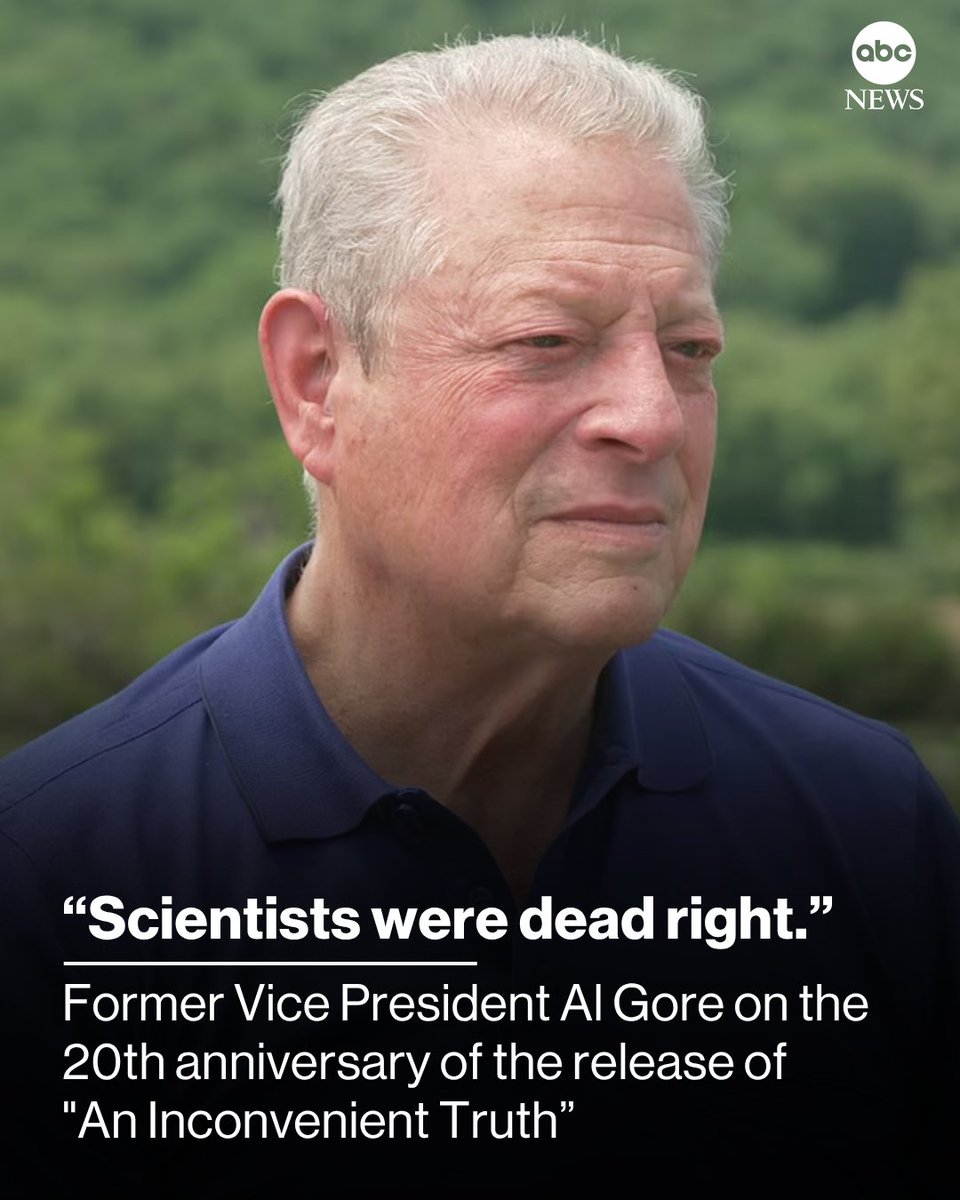
The scientists have been right about climate change all along, says former Vice President Al Gore on the 20th anniversary of the release of "An Inconvenient Truth," the Oscar-winning documentary about Gore's campaign to educate people about climate change.
abcnews.link/n4Ndoqx
111
435
2,882
133,242
David Bacon retweeted

UK Police Officer Brutally Calls Innocent Man a ‘Disease’ – Shocking Aggression Caught on Camera!
Police harass a man lawfully filming in a public space, He was polite, calm, and repeatedly made clear he was not obligated to answer questions about his activities, which is his legal right.
What started as an unnecessary inquiry quickly escalated when a second officer joined in.
Instead of remaining professional, he became visibly aggressive, calling the man “boring” and shockingly a “disease.”
This is not how police officers should conduct themselves when dealing with a member of the public who is breaking no laws. Filming in public, including around government buildings and police, is entirely lawful in the UK.
Name-calling and hostility have no place in policing, they erode public trust and suggest an abuse of authority rather than service.
570
2,697
8,471
192,623
David Bacon retweeted
Beef prices have skyrocketed in Canada. According to farmers I've talked to, the government did this by requiring farmers to bring their cattle to slaughter at a professional slaughterhouses. They then used health and safety regulations to restrict the number of slaughterhouses, and to regularly shut down the ones that remained for minor infractions.
There's no way this is accidental. They tried to force soymeat down everyone's throats "for the planet". The body politic gagged it up, so now they're trying to make meat unaffordable.

Beef remains expensive and scarce.
Free markets don't do that. For example, beef herds and prices recovered quickly from the drought of 2011, which was more severe than the drought of 2022.
So I know the government is obstructing the beef industry. Grok says the US beef herd is now the smallest it has been since the 50's, despite record high prices.
In Europe, governments openly admit they are trying to crush beef ranchers to save the planet. They have no shame.
The US government is infested by the same malign leftists, though I suspect that instead of global warming, here they pretend their motive is some form of safetyism.
I don't know the details, but maybe you do. Somehow, the government is jacking up the cost of ranching or slaughter.
Grok says I'm wrong, that the persistent high prices are caused by high feed costs and the long lead time for calves.
But Grok sucks at that kind of question, trying to perceive root causes through the smog of leftist obfuscation.
Every system delivers what it rewards. Capitalism rewards production, so that's what it delivers. Socialism rewards excuses, so that's what it produces.
Capitalism finds a way to succeed, while Socialism finds excuses for failing.
39
213
1,724
27,225
David Bacon retweeted

23h
Der Mann im Interview berichtet, seine Tochter ist von einer pakistanischen Grooming-Gruppe entführt und missbraucht worden.
Als er das Gebäude betrat, um sie zu befreien, ist die Polizei eingetroffen. Statt die Täter festzunehmen, haben sie ihn verhaftet.
Laut seiner Aussage wurde er auf die Wache gebracht und später gewarnt, das Grundstück erneut zu betreten, andernfalls drohe eine Festnahme wegen Stalking. Die Polizei hat seine Fragen nach dem Verbleib seiner Tochter nicht beantwortet.
Das Gesicht des Vaters ist unkenntlich gemacht, sonst würde er bald nicht mehr leben.
Solche Vorfälle sind Teil der seit Jahren dokumentierten Grooming-Gang-Skandale in Großbritannien, bei denen britische Behörden wiederholt aus Angst vor Rassismusvorwürfen nicht entschieden genug gegen Tätergruppen mit Migrationshintergrund vorgegangen sind.
177
3,439
10,172
114,246
David Bacon retweeted
I noticed this too. The report also described how Sikh and Hindu communities formed their own ad hoc defensive groups, which successfully discouraged Pakistani sexual predators. The British occupation government was happy to look the other way on that, but shutting down the EDL was a top priority for the security state.

Element from Rape Gang Inquiry I haven't seen mentioned yet: the Pakistani gangs seemed to fear only the English Defense League.
18
461
4,662
85,085
David Bacon retweeted

2 yrs ago when I had surgery for cancer, the lady in the next bed was visited by a hospital administrator she had not met before, not her doctor, who stood at the end of her bed and said she had no option but to have MAID. The woman said “Absolutely not! I plan to get up and dance again”. The administrator then started to argue with her saying she had no choice but MAID without explaining why. The woman said “Well I’ll talk to my family when they come on Monday.” The administrator replied “They’re coming on Monday? Good, I’ll talk to them”. She headed off the family on Monday before they saw her and they came to our room primed to convince her she had to have MAID according to the hospital. She then argued with the family that she didn’t want it. During the day she was firm but at night when they weren’t there she cried. Ultimately they convinced her and started preparing a party for her to say goodbye to all her friends. So sad. And it has made me more skeptical about MAID procedures.
Jun 16
In the first 10 years of MAID, more than 100,000 Canadians have averted unnecessary suffering at end-of-life. That's cause for celebration. Assisted death has become a significant ritual, not a 'slippery slope,' by @picardonhealth theglobeandmail.com/gift/0fc… via @GlobeDebate
1,080
2,226
13,884
1,039,460
David Bacon retweeted

Existe um vídeo, se alguém o achar peço que poste nos comentários. Uma socialista nos EUA assume a inveja que os esquerdistas têm de que produz e lucra com o fruto do seu labor.
O interlocutor fazendo gestos com a mão, pergunta a ela: "O que você prefere, uma sociedade onde algumas pessoas tenham vários milhões de dólares e a maioria das pessoas ganha US$ 5000,00 por mês, ou outra onde ninguém seja rico, mas todo mundo seja nivelado por baixo, ganhando US$ 600,00 por mês."
Ela responde que prefere a última, onde todo mundo ganhe menos.
Em suma, o esquerdista não quer conforto material, tampouco quer sair da merda; ele só quer que os outros vivam na mesma merda que ele.
12
19
146
4,288
David Bacon retweeted

Jun 16
UK Police earning more Hate! 😡🇬🇧
Police “Bullies” attack young lad for not moving when he is doing nothing wrong 👮♀️😡
Sheffield 🏴
100s of Pro Palestine and lefties block a main road to protest in Sheffield…a young lad pulls up on the pavement next to them to watch and is pushed and shoved for “being there” he protests against the police and they push him in the “Neck” causing him to fall to the ground ,we try and film all of it but the police make up “lies” and throw the “breach of the peace” card about..this is appalling and aggressive policing…👮♀️😡 @TRobinsonNewEra @GBNEWS @syptweet
251
1,558
3,867
57,285
David Bacon retweeted

Jun 16
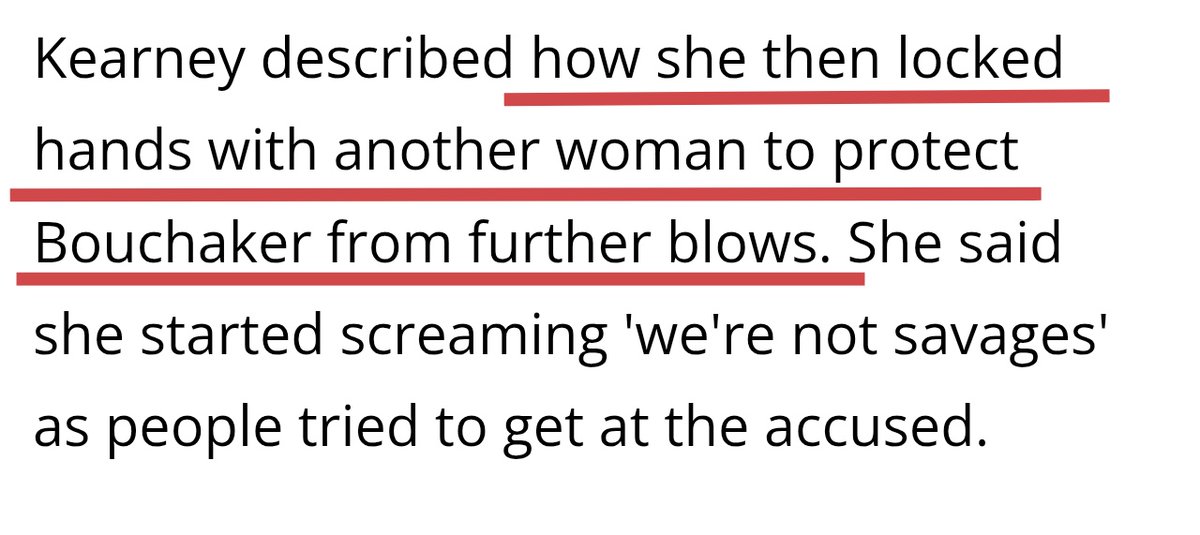
This is one of the most disturbing things I've ever read, but it perfectly encapsulates modern Ireland.
As men moved to neutralise an Algerian migrant who was stabbing kids outside a creche in Dublin, women on scene locked hands to protect him.
1,055
3,203
25,463
702,182
David Bacon retweeted

Jun 15
SHOCKING 😱 — A British man put on a full burqa and walked past police officers to demonstrate a loophole in facial recognition and stop-and-search enforcement. He revealed anyone wearing a burqa in the UK gets the “Infinite Freedom Glitch.”
361
7,666
37,683
623,868
David Bacon retweeted

Jun 16
Want to save the West? Start by telling your children the truth.
A society that teaches its children to hate their inheritance shouldn't be surprised when they fail to preserve it.
Teach your children gratitude. Teach them why freedom matters. Teach them what made the West successful.
Because if you don't tell them the truth about their civilisation, someone else will tell them a lie.
259
4,850
21,914
263,930
David Bacon retweeted

Jun 15
I’m actually a child online safety expert and was one of the pioneers in this space with Club Penguin and so I feel uniquely positioned to critique this.
The groomer problem is real but it’s also vastly overstated. The far larger issue we saw at Penguin was suicidality or reports of sexual abuse in the home.
There is no solution for lazy/bad parenting. You can implement all the ID laws you want but if parents are going to just hand kids their phones unlocked, those kids will have access to all the same things the parents have unfettered.
What I found is that these draconian safety laws actually make it harder to be an honest operator of kids apps because on one hand it’s so much legal risk and so much user friction that it simply becomes uninvestible as a business.
Parents will just lie to let their kids use the unfettered internet. For example, I have a friend who works in mobile gaming who has two kids, one above and one below the age limit but separated by just 2 yrs, and the two wanted to play and chat together on Roblox - which is reasonable. To do this, he just verified that his younger kid is old enough for the chat feature when he’s not.
This happens all the time and will happen with these laws to. How far do we want to go with this? Scan the face of the user in real-time to make sure it’s not a kid using the device? We could do that but it feels like a massive unwanted intrusion of privacy.
That’s how you know this law isn’t about kids. COPPA and GDPR-K and so forth already make it illegal to allow chat and other grooming vectors to kids.
What’s really being done here is trying to eliminate online anonymity. And this is a far bigger issue that goes to core speech rights because if you cannot criticize the govt anonymously and if wrong speech is a crime then it becomes easy to identify all the detractors of the govt in power, and ban, fine or jail them for speech crimes.
Starmer has already been doing this and he wants to do it at a much bigger scale. Starmer won’t even acknowledge the problem of actual grooming gangs in Britain’s neighborhoods but he’s worried about online grooming?
No he’s not, and this hypocrisy gives away the game. What he wants is to kill online anonymity so he can enforce censorship of his unpopular policies. No politician should have this power.
Jun 15

My first instinct was to support the UK’s social media ban for under 16s.
Protecting children from grooming, exploitation and harmful content seems like common sense.
But I’m seeing a lot of opposition to it, so I’m genuinely curious as to why?
One thing making me second guess is that platforms like bluesky are exempt, while at the same time there’s a push to let 16 year olds vote. To me that looks less like child protection and more like controlling where young people get their information.
Interested to hear other perspectives.
155
5,392
21,099
835,124
David Bacon retweeted

Jun 16
Arrested for screaming too loud while being raped. Genuinely sounds like something American right-wingers would come up with as a parody of Britain, grim.

A woman was arrested in Nottinghamshire for breaching the peace because she was screaming too loudly. She’d just been gang-raped, but the cops didn’t care.
177
4,220
31,709
471,652
David Bacon retweeted

You solve it by accepting that all politics is theological and someone's worldview will always be promoted, so it may as well be ours.
Wokeism is a religion that evolved to circumnavigate the First Amendment's ban on state religions. It's an ideological virus that could overcome the immune system the Founders constructed.
Understanding that means that we can never go back to the old myth of neutrality. As John Adams warned over 200 years ago, the system only worked for a moral and religious people.
The entire concept of "separation of church and state" only functioned so long as 90% of the population were devout Anglo-Protestants. It was never designed to work in a multi-cultural state where one side of the political divide can weaponize their political theology without ever admitting that they have a theology at all.
Jun 15

One of the great power imbalances between conservatives and Leftists is the fact that our religion is religion, while their religion masquerades as politics.
As such, we are governed by SCOTUS-determined “separation of church and state” and the Leftists are not.
Case in point: “Pride Month.”
This is a month-long celebration of the Left’s religion, but because it is not treated as a religion, federal/state/local governments everywhere can indulge in it.
However, if we were to try and have governments celebrating “Jesus Month,” the lawsuits would be so thick you couldn’t cut through them with a rainbow chainsaw.
I’m not sure how to solve this.
32
275
1,687
28,924
David Bacon retweeted

Jun 15
"We banned kids from social media and forced everyone else to give the government their ID if they wanted to use social media and now no one criticizes the government's policies."
Huh.
Jun 15

For anyone wondering, it’s only been a positive thing in Aus. No one even talks about it anymore which can only mean the kids don’t care.
The ones desperate for it will find workarounds, but the majority have found better things to do with their spare time.
Community note
Research shows 61% of Australian 12-15 year-olds who used restricted social media before the ban still have access to accounts, contradicting claims that most have stopped using it. mollyrosefoundation.org/more-than-60-o…
22
442
4,017
51,988
David Bacon retweeted

Jun 15
Don’t make me tap the sign
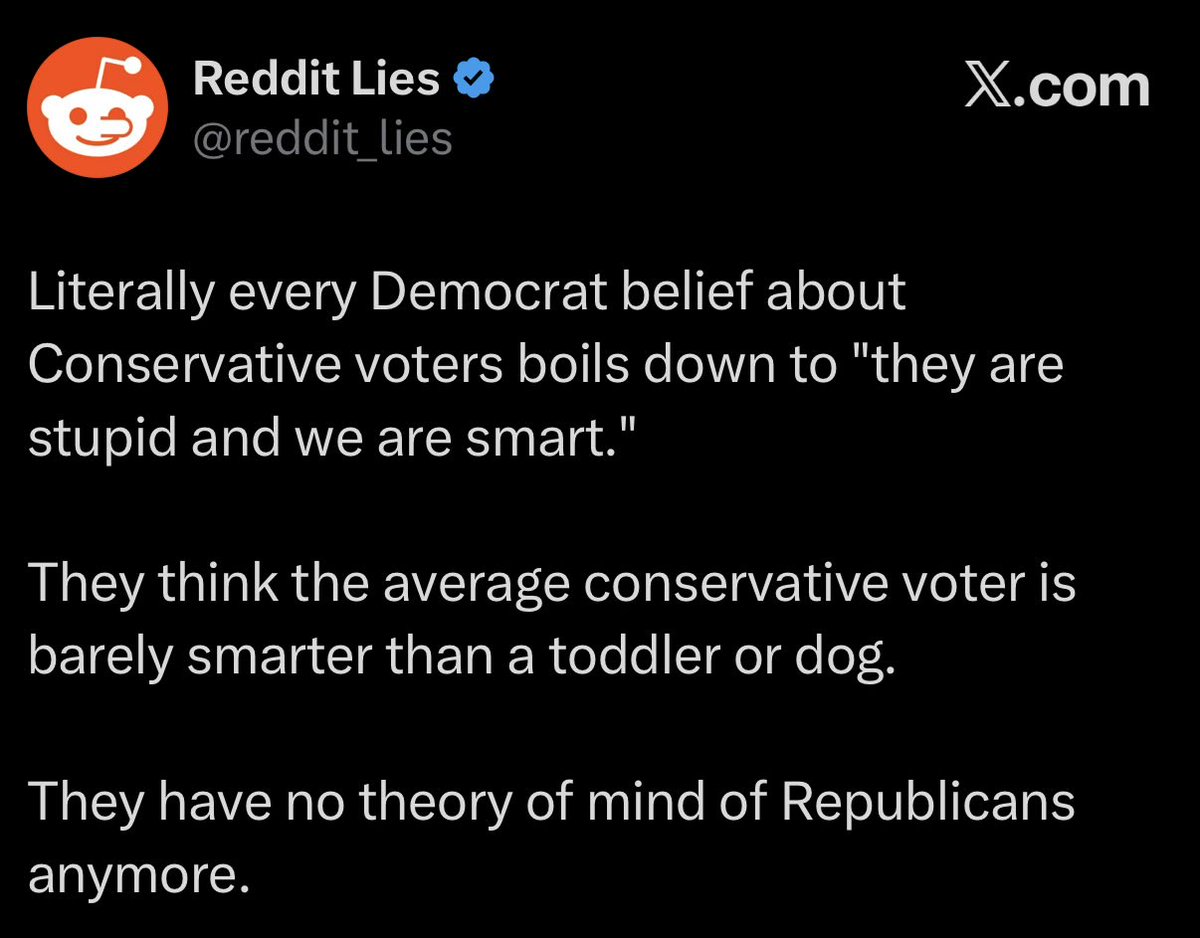

It is not just that liberals don’t know what conservatives think. Not knowing what other people think would be like, you think they support immigration, but it turns out they’re against immigration. Liberals know that conservatives are against immigration. They’re not confused or uneducated about *what* conservatives think.
What they lack is a model of how and why conservatives think as they do. What most of them cannot do is take the other side of the argument in a debate. When they model conservatives it basically reduces to, “well, I guess I’m just a big dumb idiot racist.” If you point this out, they do long threads about how you’re desperate for their approval, which is just another demonstration of the same phenomenon.
The term that people use for this kind of understanding is, “theory of mind.” It’s not my term. I didn’t invent it. We could use some other term. But you need *some* term for this to distinguish it from merely not understanding what other people think.
I don’t really see the utility of finding some other term. This term captures it pretty well. People know what it means. It seems to be working just fine.
12
42
890
19,740