
National Environmental Correspondent @CBS News and Stations. Host of #OnTheDotCBS.
Joined March 2009
- Tweets 9,620
- Following 2,557
- Followers 10,849
- Likes 3,195
1,307 Photos and videos




David Schechter retweeted

23 Apr 2025
Brian Shepherd is teaching visitors how to fish on the historic waters of the Beaverkill River in New York’s Catskill Mountains — but, as he says, it's not just about catching fish. It’s about preservation. Climate change is putting the river at risk. Recent research shows that 87% of rivers across the U.S. and Europe are warming, with many, like the Beaverkill, losing vital oxygen. For the $1.2 billion fly fishing industry, warming waters mean fewer fish, fewer tourists and an economic toll on local communities. Efforts are underway to restore the river’s flow and support the local economy, but the future of the Beaverkill hangs in the balance. @DavidSchechter reports.
4
3
5
2,552
David Schechter retweeted
15 Apr 2025
A major issue facing U.S. rivers is contamination by sewage and other pollution, but a @CBSNews investigation found some minority communities are impacted twice as much. While rebuilding can be cost-prohibitive, @DavidSchechter looks at a natural solution in Philadelphia.
17
18
27
16,043
David Schechter retweeted
22 Feb 2025
A new study found that mountain glaciers are melting more than twice as rapidly as in the early 2000s. CBS News' @DavidSchechter traveled to Norway to meet with a scientist tracking their decline.
42
13
29
16,750

"No president in history has done more to tackle climate change and cut the nation's greenhouse gas emissions," says CBS News' @DavidSchechter of President Biden's climate legacy, as President-elect Donald Trump promises to slash the Biden administration's climate regulations.
263
60
181
36,462
David Schechter retweeted

30 Nov 2024
If you're traveling this holiday season you may notice some airports branding themselves as sustainable and environmentally friendly. @DavidSchechter looks into the role of airports and airplanes to reduce carbon emissions and improve renewable energy.
6
8
13
18,313
David Schechter retweeted
23 Sep 2024
In Georgia, solar installer Clay Copeland sees economic opportunity in renewable energy as the Inflation Reduction Act fuels growth, despite Republican Congressman Buddy Carter voting against it. With 70% of Americans concerned about climate change, questions arise about whether elected officials are listening to their constituents.
11
20
38
23,712

9 Sep 2024
My fellow journalist, you may be interested in this…The nexis of politics and climate change and how to cover it.

📣Journalists! Join us for our Climate on the Ballot virtual summit, featuring a variety of panels and interactive roundtable discussions for international, national and local journalists covering the 2024 US election. coveringclimatenow.org/event…
🧵Learn more about the panels below ⤵️

ALT Climate on the Ballot: A Virtual Summit for Journalists How to cover the story of our time in this unprecedented election year...
3
2
3
818
24 Aug 2024
Some other things I learned… The BLT is underrated. The number one ingredient in mayo is soybeans. Who knew?!?!?
3
490
17 Aug 2024
It’s the hottest part of summer in Texas and across the South. Why don’t more ambulance services follow the gold standard of treating overheated patients? @CBSNews @MedStarEMSInfo @K_S_Institute @zachmfoundation
17 Aug 2024

National recommendations call for cooling heat stroke patients before transporting them to the hospital, but as @DavidSchechter found out, only 11 states require ambulance services to follow this life-saving protocol.
1
12
17
2,008
18 Jul 2024
The best of climate reporting! Congratulations to all the winners.
🥁 📣 We are THRILLED to announce the 2024 CCNow Journalism Award winners! 👀 this thread to see this year’s best of the best in climate journalism. We’re starting off strong with our esteemed Journalists of the Year...
1
6
759
David Schechter retweeted

13 Jun 2024
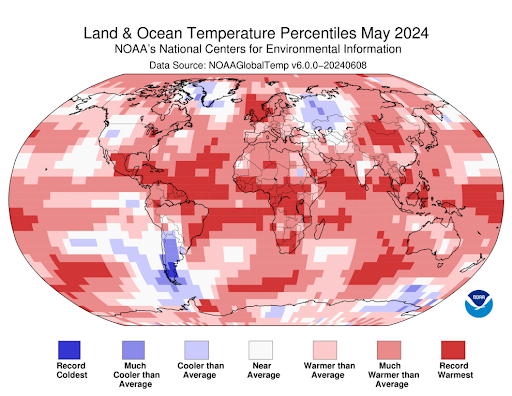
.@NOAA: May 2024 was Earth’s warmest May on record. It was also the globe's 12th month in a row of record-high temperatures. Get the latest global May 2024 #climate report: bit.ly/3xqwxca #StateOfClimate
7
39
56
21,204
11 Jun 2024
I hope they don’t need that pill back.
8 Jun 2024
How hot is too hot for humans? Researchers at @penn_state have discovered that heat and humidity can be dangerous to our bodies at much lower temperatures than previously thought. @DavidSchechter has more on how experts say the heat is damaging our bodies.
2
4
687
David Schechter retweeted

21 May 2024
.@CBSNews national climate correspondent @DavidSchechter talks about climate change, plus how CBS’s approach to storytelling is unique and strives not to bore or distract viewers through a team and multi-platform effort.
thewellnews.com/fourth-estat…
1
3
5
964
8 May 2024
The Mauna Loa Observatory, in Hawaii, which has recorded #carbon dioxide levels in the atmosphere for more than 60 years, just reported the highest one month jump in CO2 ever -- due to consumption of #fossilfuels. bit.ly/3WtrYIo @Scripps_Ocean @NOAAClimate #climate
1
4
555
David Schechter retweeted

🗓️ Tune in tomorrow at 12pm ET for a master class in local climate reporting from @KaitlynMcGrath, @HeyHelina, @sfkale and @DavidSchechter. RSVP here: bit.ly/4diXXBb

1
7
16
3,858
1 May 2024
Looking forward to this one.
👩🏽💻 Calling all local journos!
Join us May 7 at 12pm ET for a webinar on effectively covering climate change for your local audiences.
@DavidSchechter will moderate the discussion with panelists @HeyHelina and @sfkale.
RSVP: bit.ly/4dkJCEc

1
3
496
27 Apr 2024
Thanks for sharing, Andy. It’s a story that I can’t quite shake.
26 Apr 2024

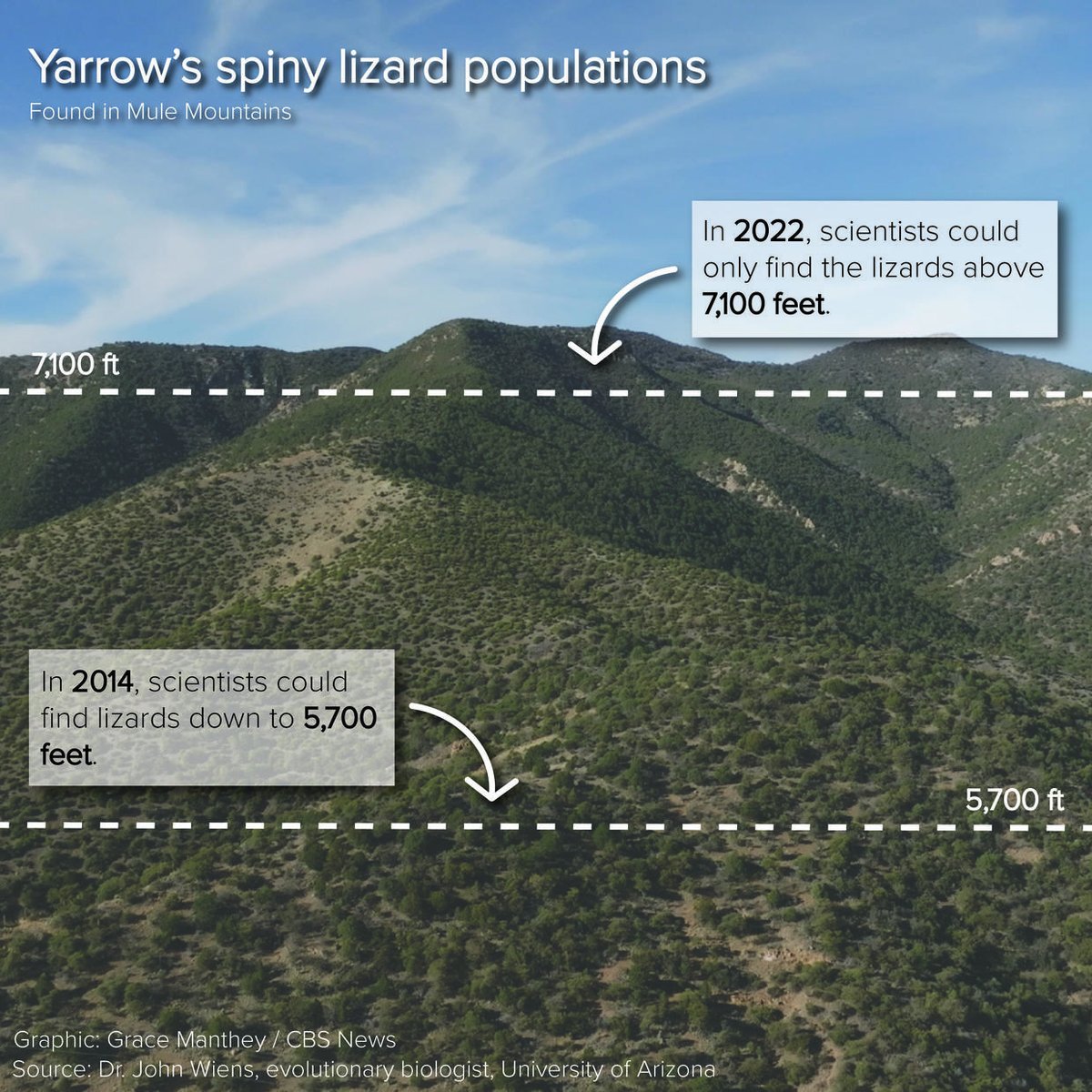
What a valuable and sobering @CBSNews story on the "elevator to extinction" for species experiencing #climatechange in ecological cul-de-sacs (some vertical, others horizontal, all hemmed in). Team: @DavidSchechter, @GraceMarie_35, @HaleyRushNews, @TWholf, @chancehorner. As @jeffgoodell says, adaptation definitely has its limits, particularly if species' paths are constrained. 1/2
1
3
624
27 Apr 2024
When I got to the top of the mountain with Dr. John Wiens, who’s been studying these lizards for a decade, I didn’t really have words for the finality — this population ceases to exist after 3 million years! There aren’t words.
Thank for sharing @jeffgoodell.
26 Apr 2024

To escape the heat, these lizards slowly migrated to higher, cooler elevations (aka sky islands).
That worked for a while. But when the sky islands got too hot, they died.
Moral of the story: adaptation has limits -- for lizards, and for humans.
cbsnews.com/news/lizard-popu…
1
4
12
2,102
19 Apr 2024
As a reporter, I’ve never experienced anything quite like this. A tiny lizard with a big story to tell us about climate change — and our future. #climate
19 Apr 2024

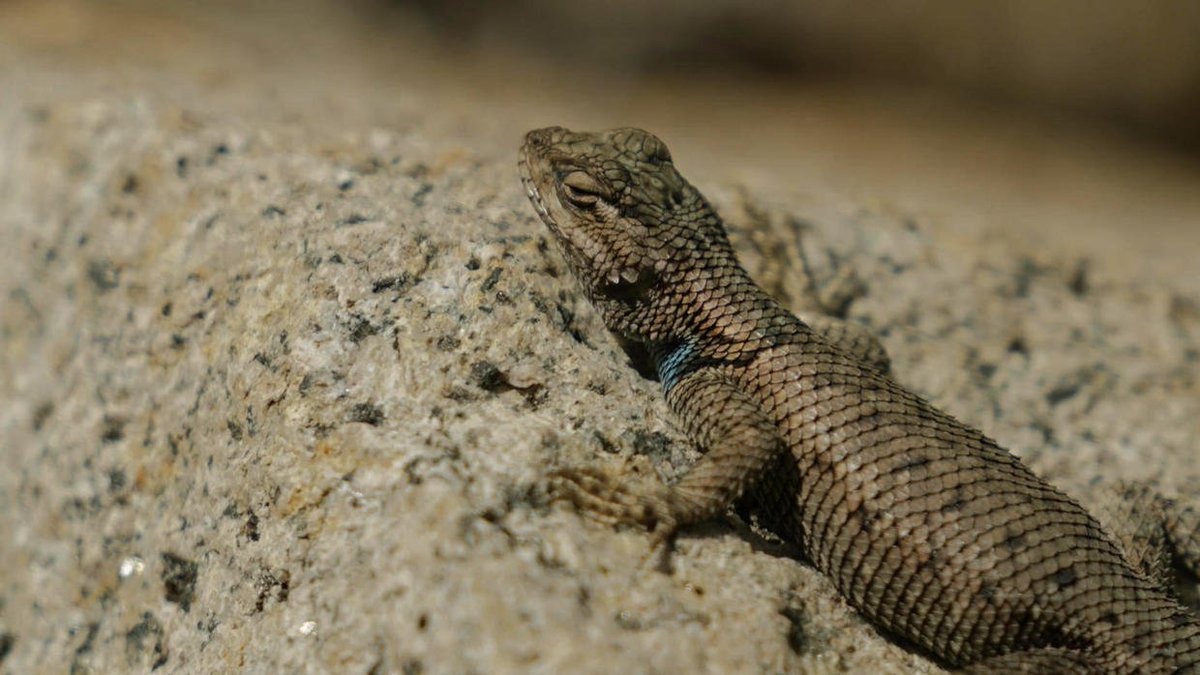
Just outside the town of Bisbee, Arizona, a sub-population of Yarrow’s spiny lizards has lived in the mountains for 3 million years.
But rising temperatures caused by climate change may have pushed this group of lizards into extinction, a scientist told @DavidSchechter.
2
2
7
1,268
19 Apr 2024
See you there!
18 Apr 2024
Despite this lizard’s tiny size — it has a huge story to tell about climate change and the very future of the planet.
@DavidSchechter shares how these unique lizards are getting forced out of their home in the Arizona mountains, tomorrow on CBS Mornings.
1
2
615