
I write books and make videos about the Bible and theology. CEO of @PronomianLLC. Buy my books: amazon.com/author/davidwilbe…
Joined May 2008
- Tweets 9,374
- Following 721
- Followers 3,264
- Likes 22,799
901 Photos and videos







Pinned Tweet

13 Nov 2025
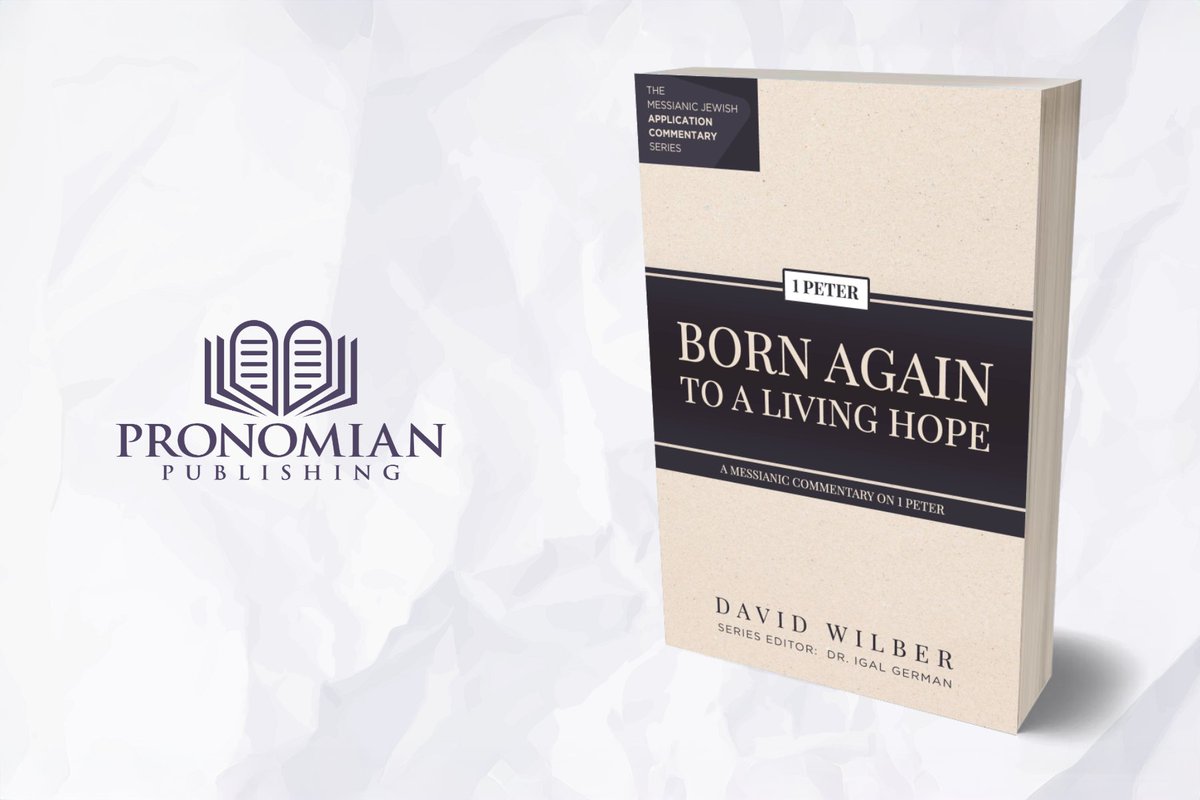
Boom! My verse-by-verse commentary on 1 Peter is now available from Pronomian Publishing! It's the 1st volume in the new Messianic Jewish Application Commentary Series (MJAC), edited by Dr. Igal German. Praying it blesses the body of Messiah. Learn more: a.co/d/2dcTbwI
21
9
58
7,366
The apostle Peter reassures us of God’s unfailing love and promise of salvation (1 Pet. 1:3–12). This hope enables us to “rejoice with joy that is inexpressible and filled with glory” (1 Pet. 1:8), even in the midst of suffering and persecution. Though society may slander and reject us, Peter reminds us that we are never rejected by God. He has chosen us and sanctified us (1 Pet. 1:1–2). We have a secure identity, a spiritual family, and a God-given purpose.
1
52
David Wilber retweeted

Jun 15
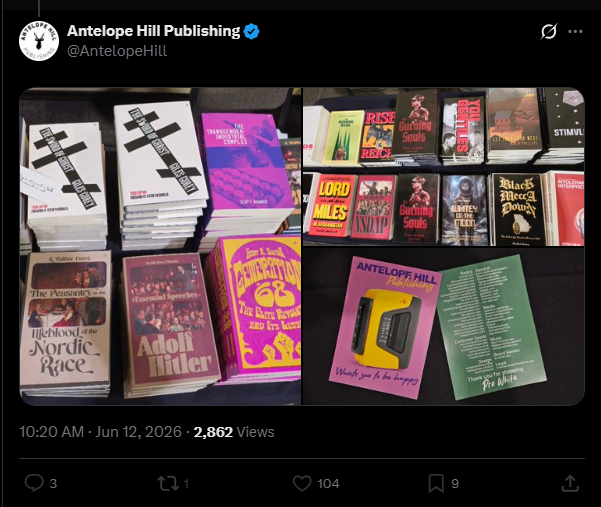
Because some people are saying "the books they were actually selling" at the New Christendom Conference put on by Refuge Church in Ogden UT were fine, here's some details on the "the cross of christ" book being sold there. Spoiler: it's dogwater
A thread 🧵

7
22
139
11,811
Jun 15
A “Bible” known as the את Cepher has been gaining popularity among some believers. It incorporates several non-inspired books in its collection, contains numerous inaccurate transliterations and translations, and plagiarizes Wikipedia and other sources. In this video, I explain why you should avoid this “Bible”: davidwilber.com/videos/five-…
3
3
13
756
David Wilber retweeted

Jun 15
Play stupid Nazi games, win stupid Nazi prizes.
Live by unserious provocateur schtick, die by unserious provocateur schtick.
It’s really not hard to avoid association with literal Hitler. The book of Proverbs is chock full of such advice.
Also, imagine thinking you are a true “heritage” American yet regularly sympathizing with one of our most notorious geopolitical foes, who our grandfathers gave their lives to defeat.
46
19
341
18,657
Jun 14
Normal Christians rightly rebuking your weird cult for hosting a publisher at your conference that promotes “pro-white businesses,” including porn, Nazi apologetics, and tarot cards, is not “cancel culture.” You are free to host weird anti-Christian publishers at your events, and Christians are free to rebuke you for doing so.
Jun 14

“[Cancel culture] is feminine…because all cancellations are feminine. Cancel culture is simply what women do whenever there are enough of them in a given organization or field.”
Ironic what we’re watching is a function of the Longhouse. Before any questions can be asked or answered, the mob arrives with pitchforks. Led by parasites and accusers of the brethren.
7
5
91
6,254
David Wilber retweeted

Jun 13
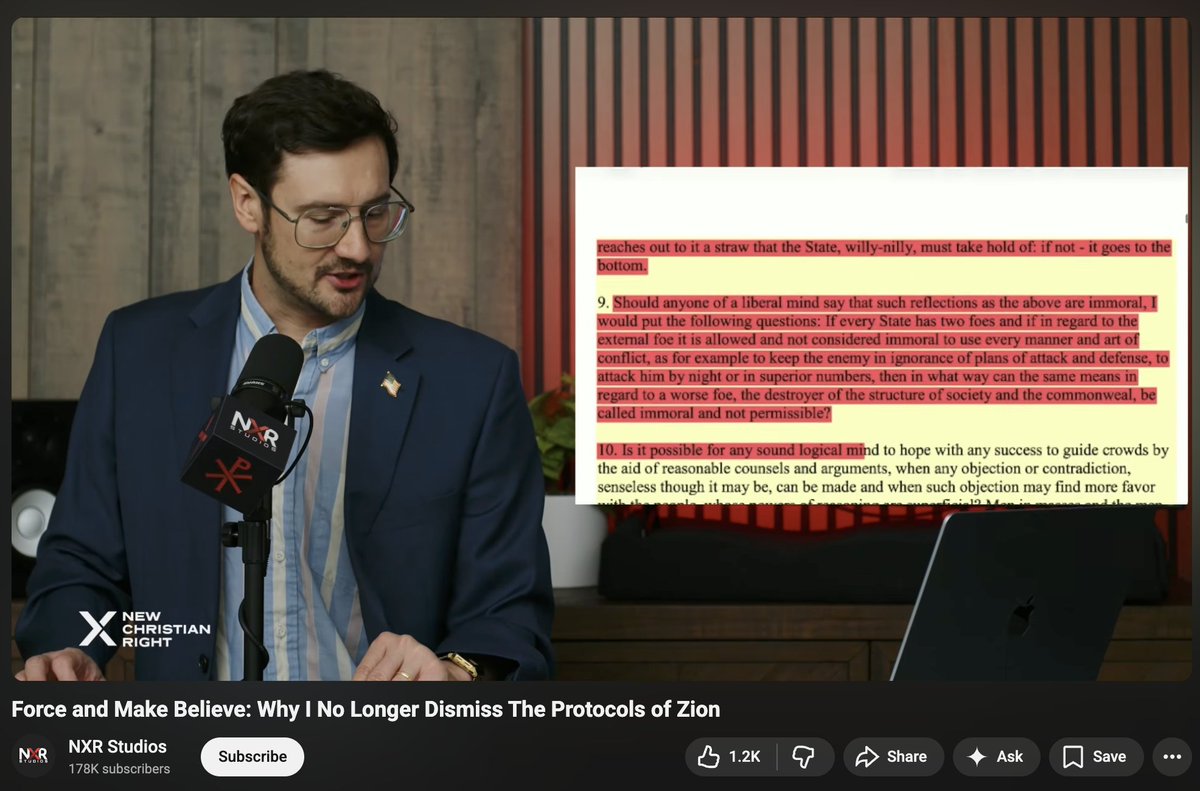
New Christendom is selling books by literal Nazis at their conference. And Joel Webbon's NXR Studios is promoting the Protocols of the Elders of Zion.
This could have been stopped at any point if enough Reformed influencers spoke up.
They didn't.

141
81
395
162,954
Jun 14
The goal of the Torah is to humble us, not make us arrogant and proud. We are not any better or more special than anyone else. The revelation we have is a gracious gift from God. Let's study the Torah so that we will learn to fear the Lord. And let's walk out his commandments, not out of a spirit of pride and self-righteousness, but in humility and gratitude. Then maybe those we hope to influence will see the value in what we do because they will see the good fruit it has produced.
1
3
31
479
Jun 14
This is not the least bit surprising to anyone who has paid any attention to Eric Conn, Brian Sauvé, Joel Webbon, Stephen Wolfe, etc. These guys are wolves.
Jun 14

Some quick notes about Antelope Hill Publishing and this flyer at the New Christendom Press conference.
Many of the businesses listed here being promoted by AHP, which is a secular book publish house, are disgusting and trash. A few that stand out:


13
548
David Wilber retweeted

Jun 14
Please think through this. The primary objective of the Russian propaganda machine; the bots, the troll armies, the mouthpieces like Alexander Dugan, Candace Owens, Marjorie Taylor, Green, Tucker Carlson, is to fracture the relationship between the United States and Israel.
Why?
Why is this their primary objective?
If israel's relationship with the United States is so destructive, wasting our funds, depleting, our military resources, and killing our troops, then why wouldn't Russia encourage it? Instead, they're directing all of their energy toward trying to fracture this alliance. Russia knows that our alliance with Israel is one of America's greatest assets.
58
142
564
10,309
Jun 11
It is wise to spend time thinking about how you will die someday: "So teach us to number our days that we may get a heart of wisdom" (Psalm 90:12). Solomon said that the heart of the wise is in the "house of mourning" (Ecclesiastes 7:4). Thinking about death is not easy or fun. It's often painful. But it's good for us. When we consider how short this life really is, it helps us get our priorities straight. We begin to live more wisely. We stop wasting time on the things that don't matter and we start appreciating the things that do matter.
3
3
19
313
Jun 10
I have an entire couch in my office, but she still prefers to sleep on my desk.
3
13
206
Jun 9
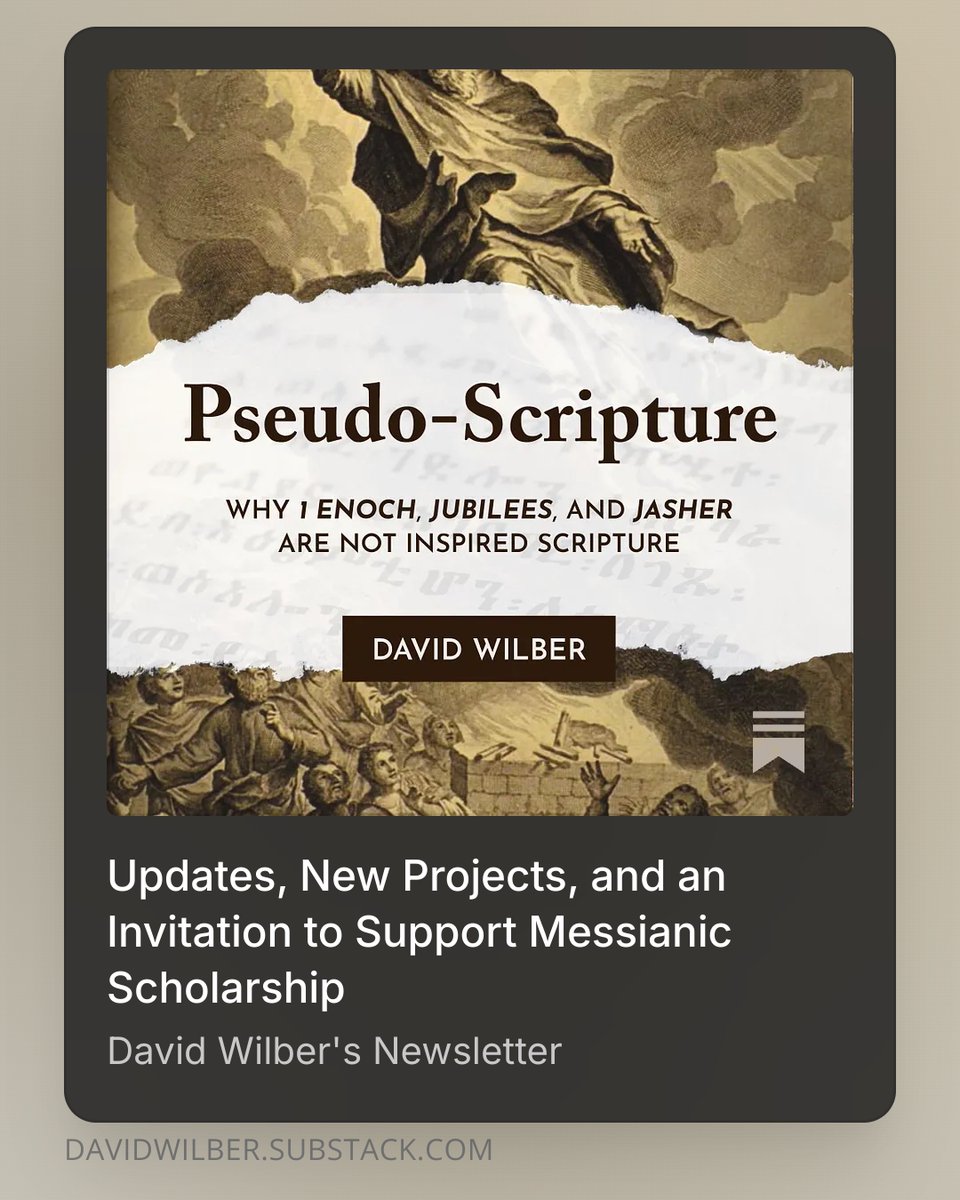
Shalom, everyone! I’ve been hard at work behind the scenes on several exciting projects that I’m looking forward to sharing with you: substack.com/home/post/p-201…
3
2
15
313
David Wilber retweeted

Fifty-nine years ago today, an American Naval vessel, the USS Liberty, was attacked by air and sea by the State of Israel.
Of the 234 men on the ship, 34 Americans were killed. 171 were wounded.
Today, Thomas Massie will take to the House floor to memorialize the worst interpretation of the event, an interpretation that suggests Israel attacked the American ship on purpose and that our own government either coordinated with them to do, or is complicit in the cover up.
The USS Liberty has become a rallying cry for many of the worst voices in public life. From the Groyper Wars against Charlie Kirk, to Tucker Carlson’s blackpill-and-despair political project, to Candace Owens’ global jihad of grift and Jew hared, the Conspiracy Theories surrounding the USS Liberty have become one of the most respectable ways to advance anti-Israel and anti-American sentiment.
But what really happened on that terrible day in 1967?
How can we know what’s true?
And what does it mean for us six decades later?
Conspiracy Theorists love to overwhelm you with the sheer volume of their claims, but there are 8 claims which makeup the core of the argument.
We thoroughly address those eight in this episode, and shine a light on the phenomena that undergird these Conspiracy Theories in the first place.
Here's an honest accounting of what happened on June 8, 1967, and how — and why — bad actors are lying to you about it:
1,316
1,057
5,480
647,159
Jun 8
In Matthew 5:17, Jesus prohibits his listeners from thinking that he came to abolish the Law and Prophets (“Do not think...”), which implies that some thought he did come to abolish them. This prohibition may be aimed, at least in part, at the scribes and Pharisees, who frequently accused Jesus and his disciples of disregarding the Law (e.g., Matt. 12:1–14). By stating that he did not come to abolish the Law and the Prophets, Jesus directly repudiates such accusations. Thinking that Jesus came to nullify the Law violates his direct command in Matthew 5:17 against even entertaining such a thought.
11
5
39
1,610
Jun 4
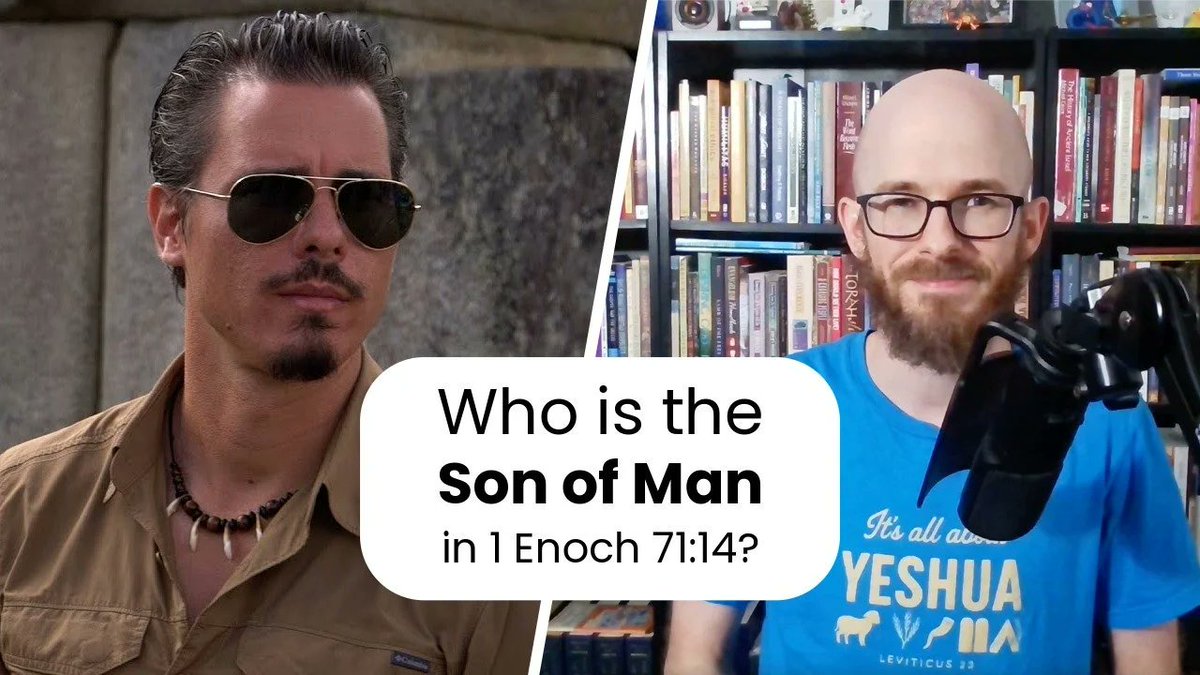
The Parables of Enoch (1 Enoch 37–71) speak about a Messianic figure identified as the “Son of Man,” “Chosen One,” “Righteous One,” and “Anointed One.” This figure will be a light to the nations, and in his name the righteous will receive salvation. He is also depicted as sitting on a throne of glory, judging the deeds of mankind, and receiving worship from all who dwell on the earth (1 Enoch 45:3–6; 48:3–7; 51:1–3).
Interestingly, in 1 Enoch 71:14, Enoch himself is identified as this figure. In this verse, the Head of Days, together with four archangels and innumerable other angels, greets Enoch with the words, “You are the Son of Man.”
Now, some argue that this passage does not identify Enoch as this figure. They point to a 1912 translation by R. H. Charles, which renders the verse differently. Charles translates the statement in the third person rather than the second person, reading, “This is the Son of Man.” If Charles’s rendering is correct, then Enoch is not being identified as the Son of Man but is instead being introduced to a separate figure.
The problem with Charles’s translation is that it does not reflect what the Ethiopic text actually says. The Geʽez reads አንተ ውእቱ ወልደ ብእሲ, which contains the second-person pronoun አንተ (“you”). Hence, “You are the Son of Man.” If the text intended to say, “This is the Son of Man,” we would expect a construction using ዝንቱ or the shorter form ዝ (“this”). Therefore, grammatically speaking, the Geʽez text identifies Enoch as the Son of Man.
Charles himself acknowledged that his translation of this verse does not reflect what the text says. In the footnotes to his translation, he noted that “this is” in 1 Enoch 71:14 is an emendation and that the “Text reads ‘Thou art.’” In other words, Charles did not deny that the Geʽez text identifies Enoch as the Son of Man. The issue is that Charles believed the text should not say what it says, so he emended the verse to reflect what he thought it ought to say rather than translating it correctly.
3
2
12
728
Jun 4
God often speaks to us through other people. When your brother says to you that they see something in your life, don't get prideful and defensive. Be humble and prayerfully consider what they have to say. Take it to the Father and ask if it is Him speaking. "Let a righteous man strike me—it is a kindness; let him rebuke me—it is oil for my head; let my head not refuse it" (Psalm 141:5).
3
17
304
Jun 3
"There are 41 direct references to Enoch in BP [Book of Parables]. As was already pointed out above, one of these references is an explicit identification of Enoch with the Son of Man at 1 En. 71:14, which reveals Enoch to be the messiah figure."
—James A. Waddell, The Messiah: A Comparative Study of the Enochic Son of Man and the Pauline Kyrios, p. 52

I have yet to ever see any scholar say yes, I Enoch promotes Enoch as the future Messiah. Find me one scholar that says that. We're not debating "Son of Man" we are debating "MESSIAH"
Find me just one. You're on an island by yourself.
2
1
9
813
Jun 3
I would be very interested in participating in a formal debate on this topic.
Proposed resolution: "Do the Parables of Enoch (1 Enoch 37–71) teach that Enoch is the Son of Man?"
I would argue in the affirmative.
Is anyone interested in taking the opposing position?
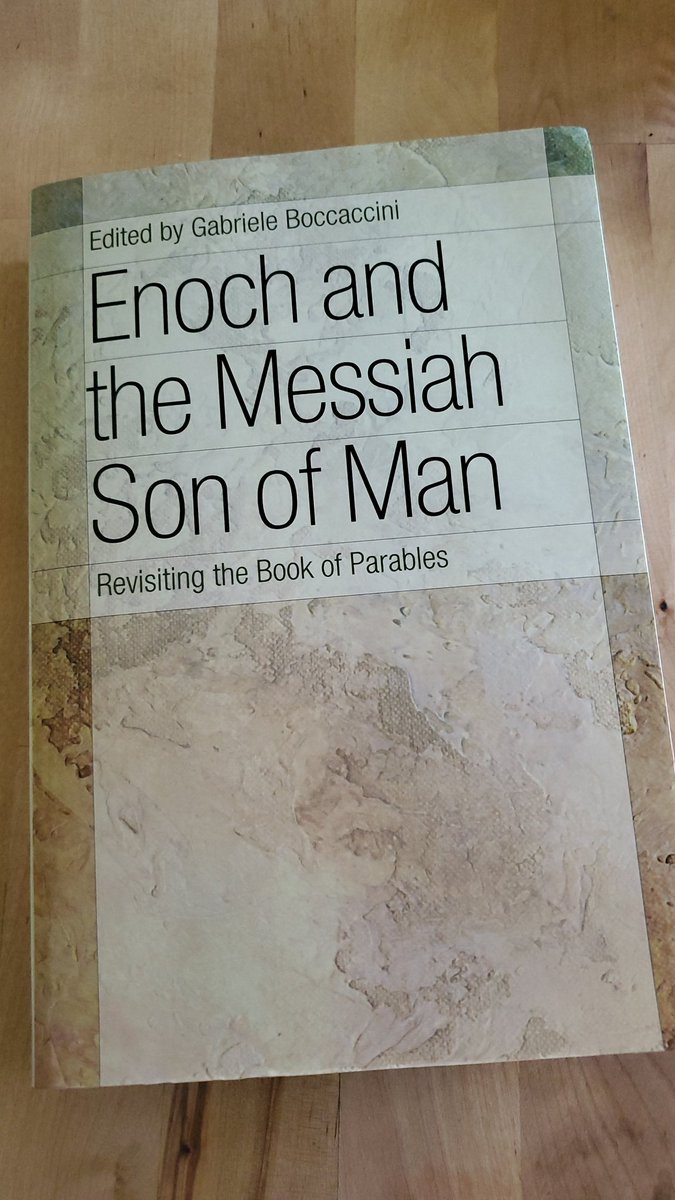
A collection of over 20 different scholars doesn't agree with you. A symposium in 2005 saw every scholar who specialized in Enoch come to Italy for a discussion. The discussions were all published in 2007. NONE OF THEM even mentions this interpretation. You're the only one in this field of study that holds to this view. Let it go man.
7
1
11
1,585