
Advisor || Community Building || Content Writing || Product Marketing || Growth Strategist || Researcher || KOL Manager || GTM Specialist
Joined March 2024
- Tweets 19,033
- Following 1,331
- Followers 6,397
- Likes 59,111
1,242 Photos and videos











Pinned Tweet

Jun 1
I’m King David.
A Web3 educator, growth strategist, creator, community builder, and marketing manager.
For years, I’ve watched people enter Web3 with big dreams.
Some succeeded.
Many didn’t.
The more I paid attention, the more I noticed a pattern.
Projects with similar products, similar marketing, and similar communities often produced completely different results.
One would grow.
The other would disappear.
That led me to a question that changed how I see Web3:
“Why do some people, projects, and communities grow while others struggle?”
Since then, I’ve spent years studying:
→ Growth systems
→ Community building
→ Attention dynamics
→ Influence psychology
→ Creator positioning
→ Internet culture
→ Human behavior in Web3
What I discovered is simple:
Most people focus on tactics.
Few people understand the psychology behind the tactics.
Growth isn’t random.
Attention isn’t luck.
Influence isn’t accidental.
There are patterns behind all of them.
That’s what this page is about.
I help:
→ Founders grow projects
→ Creators build influence
→ Ambassadors become valuable
→ Community builders create loyalty
→ Marketers understand people
Topics you’ll find here:
• Web3 growth
• Community building
• Creator branding
• Attention & influence
• Engagement psychology
• Positioning & networking
• Opportunity discovery
I don’t just study what’s happening.
I study why it’s happening.
Follow if you want to understand how growth actually works in Web3.


12
40
688
Jun 12
Most people stay unknown because they talk about too many things.
The mistake is thinking that being known for one thing means you can only talk about one thing.
It doesn’t.
People don’t remember everything you do.
They remember what connects everything you do.
A simple framework:
One Core Topic → Multiple Supporting Topics
Your core topic is what you want to be known for.
Your supporting topics are things that help people succeed in that topic.
For example:
If you want to be known for content creation:
→ Content strategy
→ Audience growth
→ Personal branding
→ Creator monetization
Different topics.
Same destination.
How to apply this:
Instead of posting random content, ask:
“Does this help someone become better at my core topic?”
If the answer is yes, it fits.
Implementation steps:
• Write down the ONE thing you want to be known for.
• List 3-5 topics that naturally support it.
• Create content around those supporting topics.
• Connect every post back to your core topic.
• Repeat until people associate your name with that outcome.
Common mistake:
Most people keep changing their core topic every few weeks.
The audience never gets enough repetition to remember them.
Consistency creates association.
Association creates positioning.
Action you can take today:
Write one sentence:
“I help _____ achieve _____ through _____.”
If it’s unclear, your audience is probably confused too.
What’s the one thing you want people to think about when they hear your name?
2
8
71
King David 👑 retweeted
Jun 9
My Résumé Was Invisible.
Then I used ChatGPT like a recruiter, not a chatbot.
Now every application starts with these prompts:
1. Resume Audit
“Act like a senior recruiter. Review my resume and tell me exactly why it’s being ignored. Be brutally honest.”
2. Job Description Match
“Align my resume to this job description line by line. Highlight missing skills, keywords, and gaps.”
3. Resume Rewrite
“Rewrite my resume to sound results-driven. Remove weak language. Make every bullet prove impact.”
4. Cover Letter Generator
“Write a short cover letter under 200 words for this role. Make it human, confident, and specific.”
5. LinkedIn Optimization
“Audit my LinkedIn profile for this industry. Show what’s missing and how to attract recruiters.”
6. Interview Preparation
“Give me the 10 most common behavioral questions for this role. Answer them using the STAR framework.”
7. Recruiter Perspective
“If you had 10 seconds to decide whether to interview me, what would make you reject this application?”
↓ ↓ ↓ ↓
Most people use ChatGPT to write.
The smart ones use it to think like the person hiring.
6
2
18
310
King David 👑 retweeted

The digital economy has transformed how people create, share, and consume information.
Every day, billions of individuals contribute valuable knowledge, expertise, data, and creativity online. Yet despite generating enormous value, most contributors receive little ownership or compensation for the intelligence they provide.
𝗥𝗼𝗯𝗼𝗖𝗼𝗿𝗽 was created to challenge that model.
Rather than treating data and expertise as resources that platforms extract and monetize, #RoboCorp is building an ecosystem where intelligence itself becomes an asset.
The company's mission is to create a new economic framework where contributors benefit directly from the value their knowledge creates.
At the center of this vision are three key components: 𝘵𝘩𝘦 𝘙𝘰𝘣𝘰𝘊𝘰𝘳𝘱 𝘌𝘤𝘰𝘴𝘺𝘴𝘵𝘦𝘮, 𝘚𝘦𝘢𝘳𝘤𝘩.𝘞𝘦𝘣3, 𝘢𝘯𝘥 𝘵𝘩𝘦 𝘎𝘦𝘯𝘦𝘴𝘪𝘴 𝘗𝘳𝘰𝘫𝘦𝘤𝘵.
🔻

18
22
63
1,472
Jun 11
Am I the only guy that doesn’t really care about this world cup so far 😭😭
I just see it as a waste of time
Imagine you shouting Goals and players are making money
Drop a comment if you don’t watch football at all.
9
1
12
239
Jun 11
Gm family
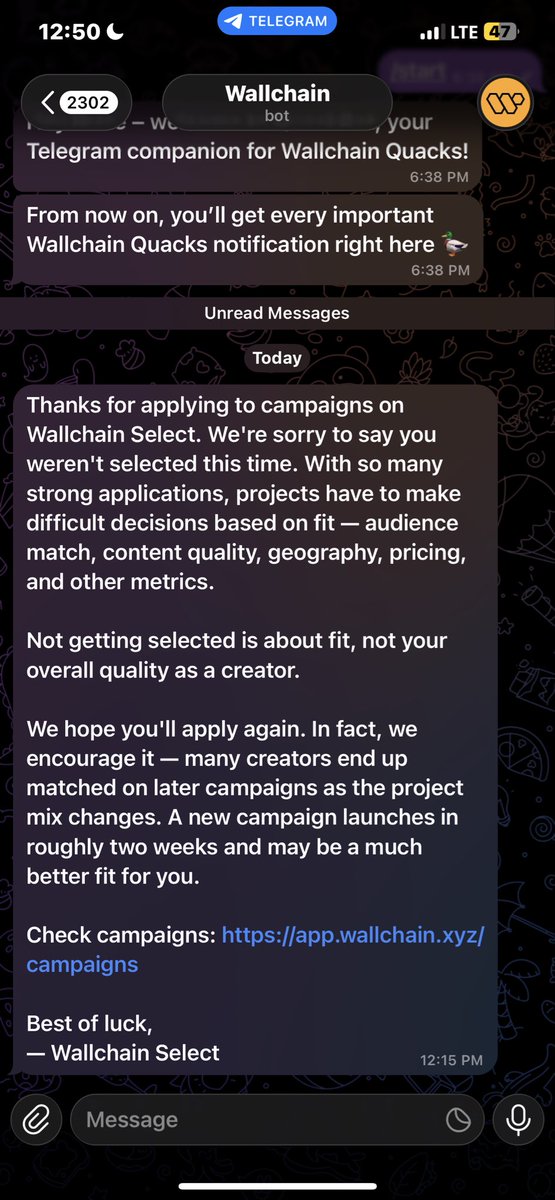
Thanks to everyone that congratulated me
But I was just messing around 😂😂😂
It’s not real 😇
Pls forgive me 🙏🤭👑
Love you all ❤️😇
Jun 10

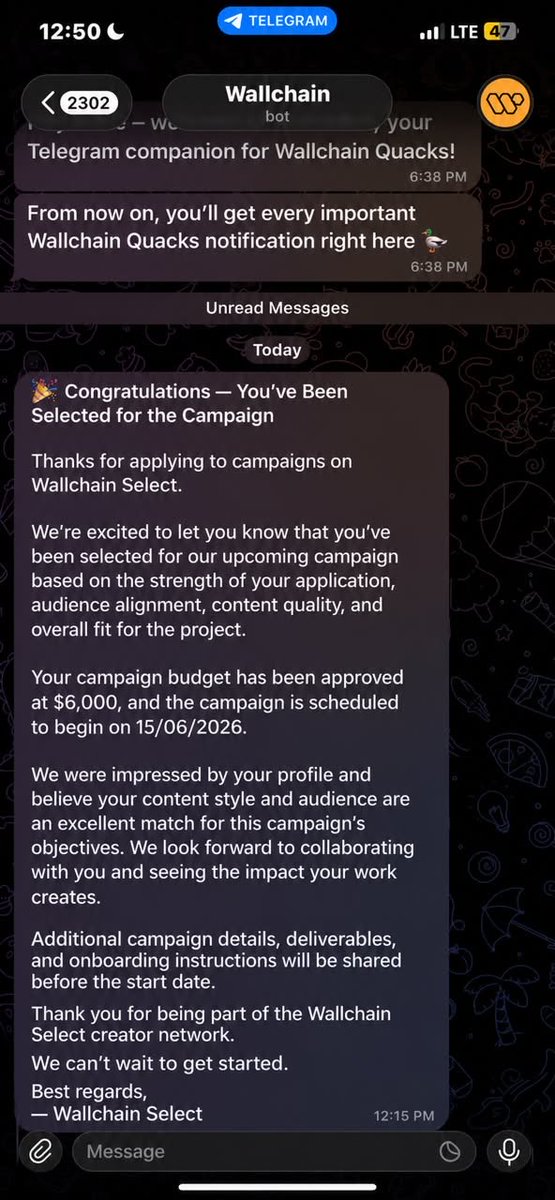
First huge win in the month
Thanks wallchain for selecting me
Really appreciate this opportunity
😏👑😏
11
17
448
King David 👑 retweeted
Jun 10
First huge win in the month
Thanks wallchain for selecting me
Really appreciate this opportunity
😏👑😏
32
2
54
1,698
King David 👑 retweeted
Jun 10
Luke 16:10-11
Whoever that can be trusted with very little can be trusted with much, and whoever is dishonest with very little will also be dishonest with much.
So if you have not been trustworthy in handling worldly wealth, who will trust you with true riches?
Gm Family 👑
7
1
13
171
King David 👑 retweeted
Jun 9
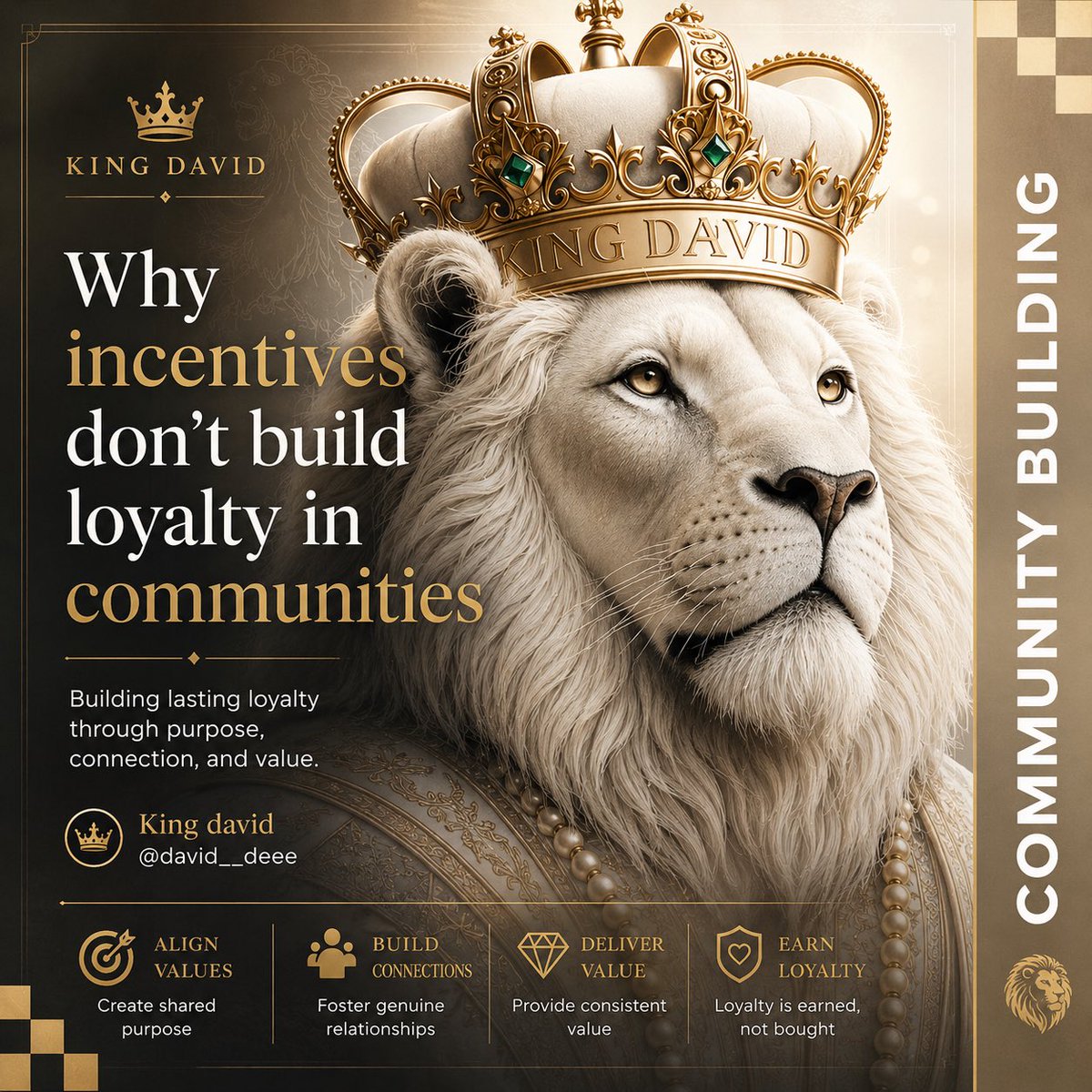
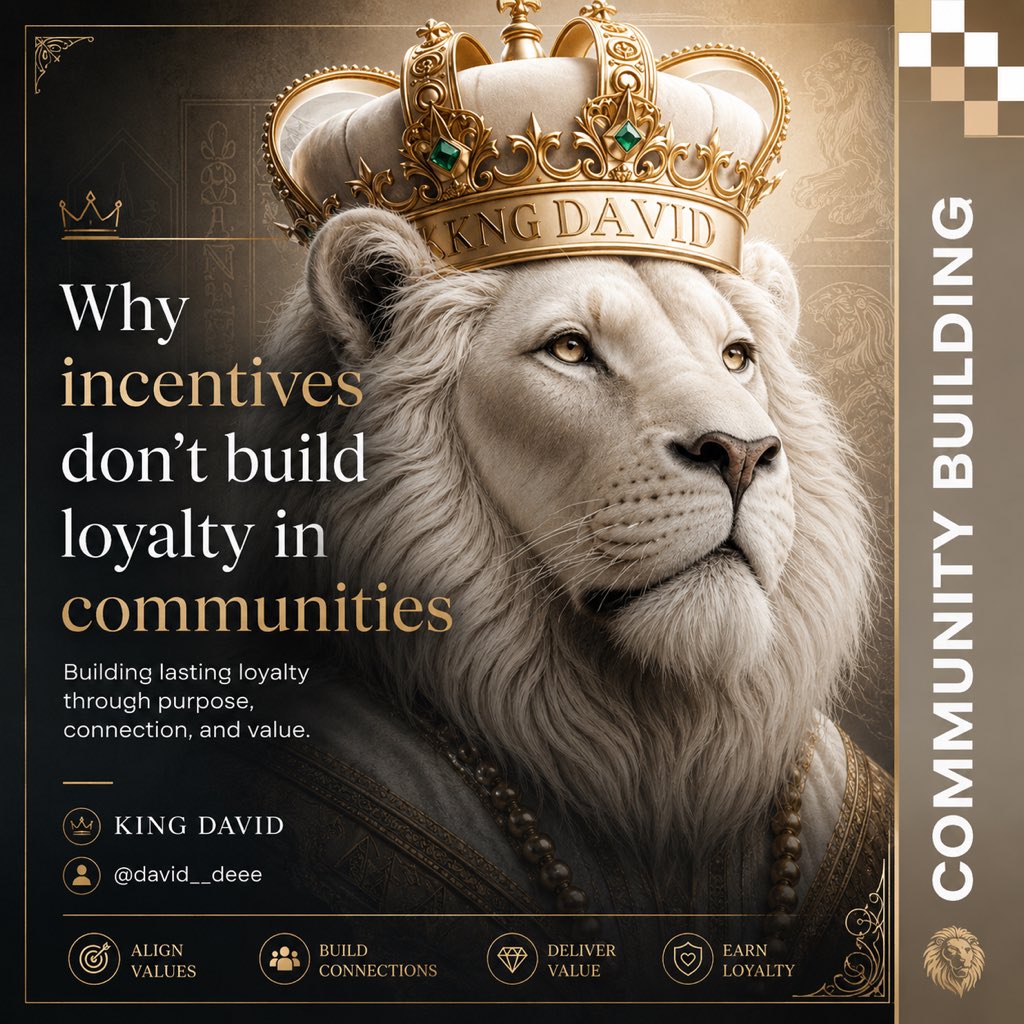
Most community builders believe loyalty comes from incentives.
They think if they distribute enough rewards, run enough giveaways, launch enough campaigns, or create enough earning opportunities, people will stay.
For a while, it appears to work.
The Discord becomes active.
The Telegram fills up.
Engagement spikes.
Metrics look healthy.
People start celebrating growth.
Then the incentives slow down.
The rewards become smaller.
The campaign ends.
And suddenly the “community” disappears.
I’ve watched this happen across countless Web3 projects.
The team assumes they built loyalty.
What they actually built was dependency.
There’s a massive difference.
A loyal community stays because they believe.
A dependent community stays because they’re being paid.
The distinction is invisible when rewards are flowing, but it becomes painfully obvious when they stop.
One of the biggest mistakes founders make is confusing participation with commitment.
Someone completing tasks, farming points, collecting rewards, or posting daily does not automatically mean they’re invested in the mission.
Many projects mistake activity for loyalty.
Those are not the same thing.
Activity can be purchased.
Loyalty must be earned.
I remember observing several projects during the previous market cycle. Some had enormous incentive budgets and thousands of active members. Others had much smaller communities and almost no rewards.
When market conditions changed, the heavily incentivized communities collapsed almost overnight.
The smaller communities remained active.
At first, this seemed backwards.
Then I realized something important.
The strongest communities weren’t built around rewards.
They were built around identity.
People stayed because being part of the community meant something to them.
They felt ownership.
They felt recognized.
They felt connected to the mission.
The rewards were simply a bonus.
Think about it like a sports team.
Most fans aren’t paid to support their club.
Most creators aren’t paid to support their favorite tools.
Most people don’t need incentives to defend something they genuinely believe in.
They stay because they identify with it.
Community works the same way.
The breakthrough for me came when I stopped asking:
“How do we make people participate?”
And started asking:
“How do we make people belong?”
Those are completely different questions.
Participation focuses on transactions.
Belonging focuses on relationships.
Transactions scale quickly.
Relationships scale slowly.
But relationships survive when incentives disappear.
That’s why many founders become trapped in what I call the Incentive Loop.
→ Launch rewards.
→ Engagement increases.
→ Rewards stop.
→ Engagement drops.
→ Launch bigger rewards.
→ Engagement returns.
→ Repeat forever.
The project becomes addicted to buying attention.
The community becomes addicted to receiving it.
Neither side wins.
⮕ The projects that build lasting communities operate differently.
⮕ They focus on creating emotional investment before financial incentives.
⮕ They help members feel like contributors instead of consumers.
⮕ They build stories people want to be part of.
⮕ They create status systems based on contribution rather than extraction.
⮕ They celebrate builders, educators, creators, and supporters.
Not just farmers.
When I work with founders and community teams, I encourage them to evaluate their community using a simple framework:
➺ If rewards disappeared tomorrow, who would still show up?
➺ What percentage of members contribute without being asked?
➺ Are conversations centered around the mission or around earnings?
➺ Do members feel ownership or entitlement?
➺ Are contributors recognized publicly?
The answers usually reveal the true health of the community.
3
2
9
424
King David 👑 retweeted
Jun 9
the fastest way to kill a community
is teaching people to stay only when they’re rewarded
giveaways create activity
incentives create participation
but neither automatically creates loyalty
real loyalty shows up when there’s nothing to gain
that’s why some communities disappear the moment rewards stop
while others keep growing with no incentives at all
the difference
one was built on transactions
the other was built on belonging
use incentives to attract people
use purpose to keep them
what’s a community you’ve seen survive without rewards
Jun 9
Most community builders believe loyalty comes from incentives.
They think if they distribute enough rewards, run enough giveaways, launch enough campaigns, or create enough earning opportunities, people will stay.
For a while, it appears to work.
The Discord becomes active.
The Telegram fills up.
Engagement spikes.
Metrics look healthy.
People start celebrating growth.
Then the incentives slow down.
The rewards become smaller.
The campaign ends.
And suddenly the “community” disappears.
I’ve watched this happen across countless Web3 projects.
The team assumes they built loyalty.
What they actually built was dependency.
There’s a massive difference.
A loyal community stays because they believe.
A dependent community stays because they’re being paid.
The distinction is invisible when rewards are flowing, but it becomes painfully obvious when they stop.
One of the biggest mistakes founders make is confusing participation with commitment.
Someone completing tasks, farming points, collecting rewards, or posting daily does not automatically mean they’re invested in the mission.
Many projects mistake activity for loyalty.
Those are not the same thing.
Activity can be purchased.
Loyalty must be earned.
I remember observing several projects during the previous market cycle. Some had enormous incentive budgets and thousands of active members. Others had much smaller communities and almost no rewards.
When market conditions changed, the heavily incentivized communities collapsed almost overnight.
The smaller communities remained active.
At first, this seemed backwards.
Then I realized something important.
The strongest communities weren’t built around rewards.
They were built around identity.
People stayed because being part of the community meant something to them.
They felt ownership.
They felt recognized.
They felt connected to the mission.
The rewards were simply a bonus.
Think about it like a sports team.
Most fans aren’t paid to support their club.
Most creators aren’t paid to support their favorite tools.
Most people don’t need incentives to defend something they genuinely believe in.
They stay because they identify with it.
Community works the same way.
The breakthrough for me came when I stopped asking:
“How do we make people participate?”
And started asking:
“How do we make people belong?”
Those are completely different questions.
Participation focuses on transactions.
Belonging focuses on relationships.
Transactions scale quickly.
Relationships scale slowly.
But relationships survive when incentives disappear.
That’s why many founders become trapped in what I call the Incentive Loop.
→ Launch rewards.
→ Engagement increases.
→ Rewards stop.
→ Engagement drops.
→ Launch bigger rewards.
→ Engagement returns.
→ Repeat forever.
The project becomes addicted to buying attention.
The community becomes addicted to receiving it.
Neither side wins.
⮕ The projects that build lasting communities operate differently.
⮕ They focus on creating emotional investment before financial incentives.
⮕ They help members feel like contributors instead of consumers.
⮕ They build stories people want to be part of.
⮕ They create status systems based on contribution rather than extraction.
⮕ They celebrate builders, educators, creators, and supporters.
Not just farmers.
When I work with founders and community teams, I encourage them to evaluate their community using a simple framework:
➺ If rewards disappeared tomorrow, who would still show up?
➺ What percentage of members contribute without being asked?
➺ Are conversations centered around the mission or around earnings?
➺ Do members feel ownership or entitlement?
➺ Are contributors recognized publicly?
The answers usually reveal the true health of the community.
3
1
8
168
King David 👑 retweeted

Jun 9
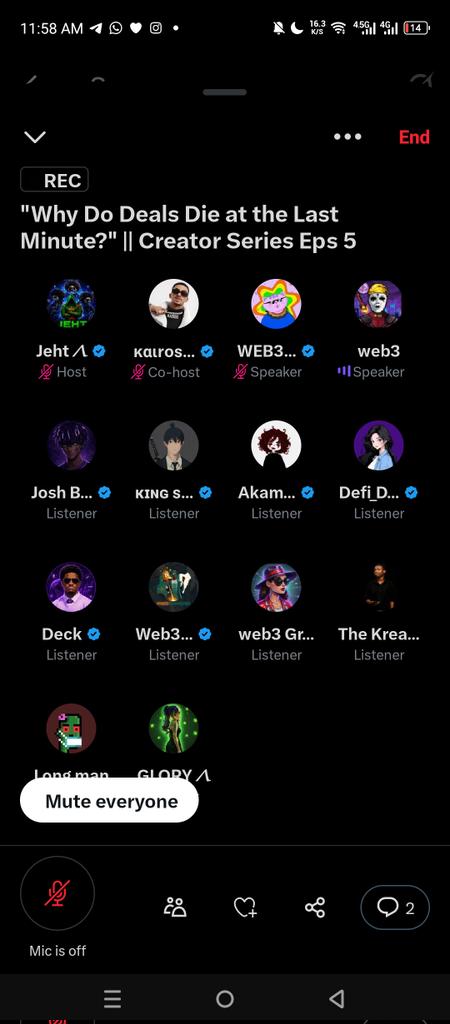
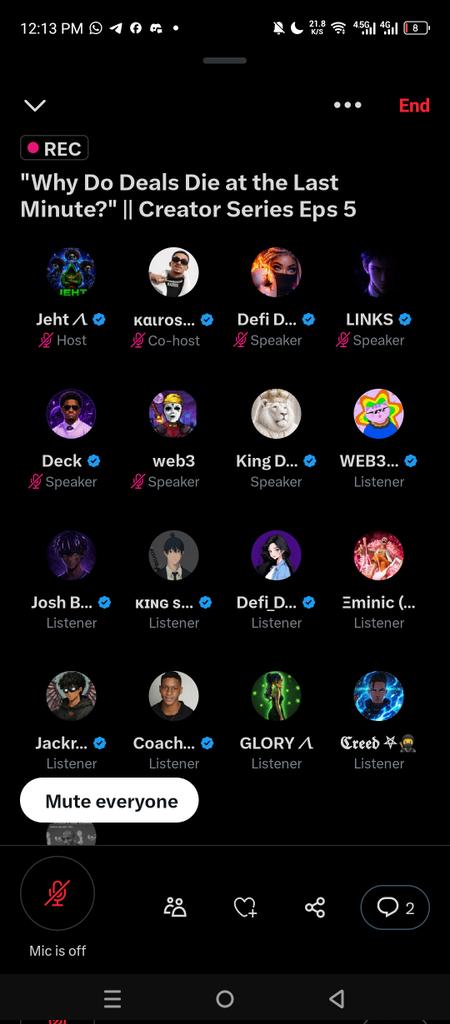
RECAP: Creator Series "Why Do Deals Die at the Last Minute?" || Eps 5
Today's space focused on a challenge almost every creator has experienced at some point.
You pitch.
You follow up.
The conversation goes well.
The project seems interested.
Then the deal dies at the last minute.
No explanation.
No feedback.
Just silence.
The discussion focused on why this happens and what creators can do to avoid losing opportunities at the finish line.
Here are some of the major submissions from the speakers:
@Real_jb_1 said one of the biggest reasons deals die is because trust was never built.
Before any project commits to working with you, they need to believe in you. Not just your numbers or engagement, but your ability to deliver.
She also pointed out that some deals fail because of a mismatch between what a creator is offering and what a project actually needs. You may be bringing value, but it may not be the value the project is looking for at that moment.
@Thekrist_ emphasized the importance of understanding who you are talking to before trying to close a deal.
He explained that some projects do not have a budget for creator partnerships, while others may not even be focused on content at that stage. Before pitching, creators should understand who makes decisions, what stage the project is in, and whether they are ready to spend.
As he put it, hope is not a strategy.
@WEB3HYBRID spoke about desperation and how it can affect negotiations.
According to him, when creators need a deal too badly, it often shows in their communication, pricing, and follow-ups. He also stressed the importance of communication skills and confidence during conversations.
He further spoke about branding, explaining that when projects check your profile after a pitch, what they see should match what you claim you can deliver. Your brand serves as proof of your value.
Preparation was another major point he raised during the discussion.
Researching the project, preparing for questions, understanding possible challenges, and knowing what the project can realistically afford were all highlighted as important parts of the process.
@Web3Counsellor said many creators do not fail at pitching.
They fail at closing.
He explained that many creators rush into deals without fully understanding how pricing, negotiations, and deal structures work. This often creates confusion, and confusion can kill opportunities.
@David__deee spoke extensively about pricing.
He advised creators to research projects before discussing money. This includes understanding the project, its holders, and whether it is properly funded.
He also recommended giving a breakdown of pricing rather than simply mentioning a figure. Showing the value, deliverables, and expected impact helps founders understand exactly what they are paying for.
His message was simple: know your worth and know how to explain it.
@KemmyJellybear pointed out that sometimes the issue is not the creator.
He explained that misaligned expectations can break deals even when both parties believe they are on the same page.
He also noted that Web3 moves quickly. Budgets change, priorities shift, and market conditions can affect decisions. A project that was ready to spend two weeks ago may not be in the same position today.
He further emphasized the importance of professional documentation and presentation. How you present your work and communicate your value can influence whether opportunities move forward or not.
One of the biggest lessons from the space was this:
Deals rarely die by accident.
Many deals fail because trust was not built early enough, expectations were not aligned, preparation was lacking, the wrong people were approached, or pricing conversations were not handled properly.
In many cases, the deal was already struggling long before the final conversation happened.
....
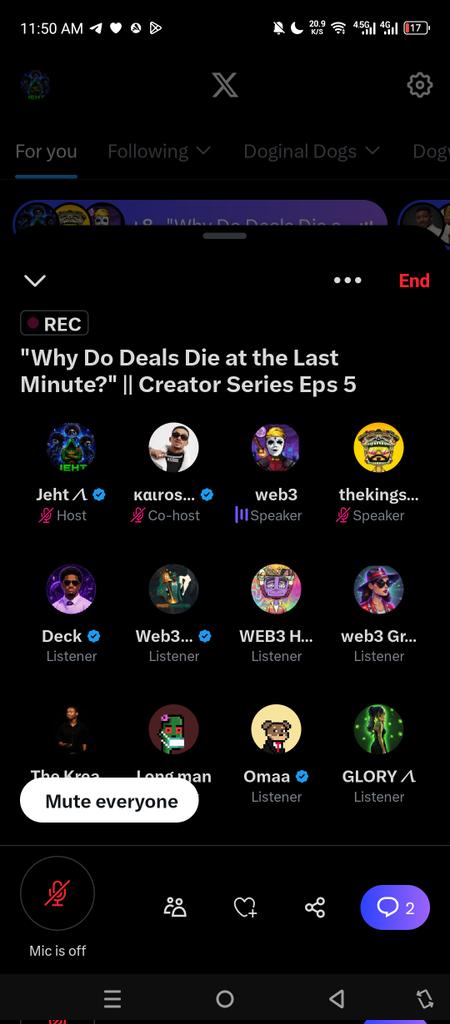
Jun 7

You spend hours creating content.
You build a strategy.
You prepare a proposal.
You get on calls.
The project loves your ideas.
Communication is flowing.
Everything looks positive.
Then suddenly...
Silence.
No updates.
No response.
No feedback.
The deal that looked almost certain never happens.
As creators, community managers, marketers, and founders, many of us have experienced this.
But why does it happen?
Is it because the creator didn't communicate value effectively?
Did the founder lose confidence in the partnership?
Did priorities change internally?
Was the budget never really approved?
Or are there mistakes creators make that unknowingly push opportunities away?
The truth is that not every lost deal is your fault.
However, understanding the factors that cause opportunities to collapse can help us improve our positioning, communication, negotiation, and trust-building process.
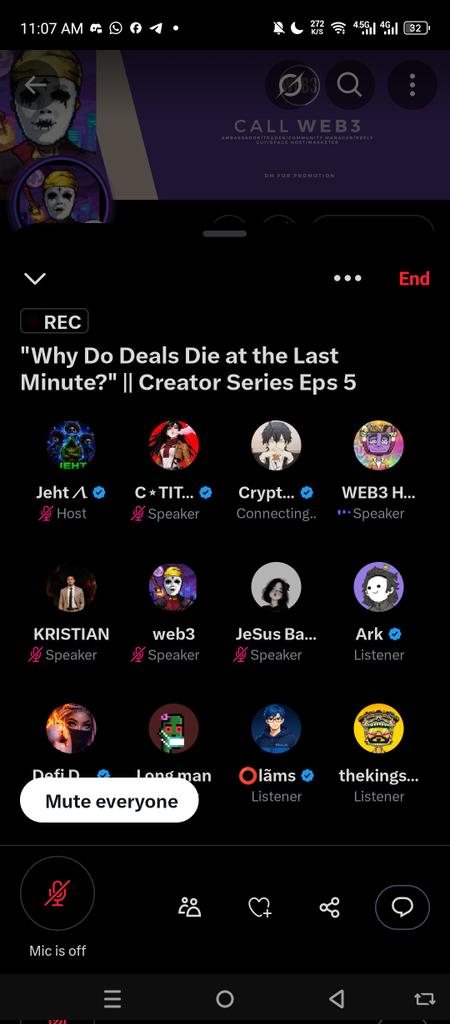
Join us tomorrow at 10 AM for Creator Series Episode 5 as we discuss:
"Why Do Deals Die at the Last Minute?"
Let's unpack the real reasons opportunities disappear and how creators can increase their chances of turning conversations into successful partnerships.
Set your reminder and bring your experiences.
Set a reminder for my upcoming Space! x.com/i/spaces/1pJdRRMQWZrKW
5
2
15
364
Jun 9
You get boyfriend no mean anything ooo
We Dey enter compound wey Dog Dey
3
3
112
Jun 9
Most community builders believe loyalty comes from incentives.
They think if they distribute enough rewards, run enough giveaways, launch enough campaigns, or create enough earning opportunities, people will stay.
For a while, it appears to work.
The Discord becomes active.
The Telegram fills up.
Engagement spikes.
Metrics look healthy.
People start celebrating growth.
Then the incentives slow down.
The rewards become smaller.
The campaign ends.
And suddenly the “community” disappears.
I’ve watched this happen across countless Web3 projects.
The team assumes they built loyalty.
What they actually built was dependency.
There’s a massive difference.
A loyal community stays because they believe.
A dependent community stays because they’re being paid.
The distinction is invisible when rewards are flowing, but it becomes painfully obvious when they stop.
One of the biggest mistakes founders make is confusing participation with commitment.
Someone completing tasks, farming points, collecting rewards, or posting daily does not automatically mean they’re invested in the mission.
Many projects mistake activity for loyalty.
Those are not the same thing.
Activity can be purchased.
Loyalty must be earned.
I remember observing several projects during the previous market cycle. Some had enormous incentive budgets and thousands of active members. Others had much smaller communities and almost no rewards.
When market conditions changed, the heavily incentivized communities collapsed almost overnight.
The smaller communities remained active.
At first, this seemed backwards.
Then I realized something important.
The strongest communities weren’t built around rewards.
They were built around identity.
People stayed because being part of the community meant something to them.
They felt ownership.
They felt recognized.
They felt connected to the mission.
The rewards were simply a bonus.
Think about it like a sports team.
Most fans aren’t paid to support their club.
Most creators aren’t paid to support their favorite tools.
Most people don’t need incentives to defend something they genuinely believe in.
They stay because they identify with it.
Community works the same way.
The breakthrough for me came when I stopped asking:
“How do we make people participate?”
And started asking:
“How do we make people belong?”
Those are completely different questions.
Participation focuses on transactions.
Belonging focuses on relationships.
Transactions scale quickly.
Relationships scale slowly.
But relationships survive when incentives disappear.
That’s why many founders become trapped in what I call the Incentive Loop.
→ Launch rewards.
→ Engagement increases.
→ Rewards stop.
→ Engagement drops.
→ Launch bigger rewards.
→ Engagement returns.
→ Repeat forever.
The project becomes addicted to buying attention.
The community becomes addicted to receiving it.
Neither side wins.
⮕ The projects that build lasting communities operate differently.
⮕ They focus on creating emotional investment before financial incentives.
⮕ They help members feel like contributors instead of consumers.
⮕ They build stories people want to be part of.
⮕ They create status systems based on contribution rather than extraction.
⮕ They celebrate builders, educators, creators, and supporters.
Not just farmers.
When I work with founders and community teams, I encourage them to evaluate their community using a simple framework:
➺ If rewards disappeared tomorrow, who would still show up?
➺ What percentage of members contribute without being asked?
➺ Are conversations centered around the mission or around earnings?
➺ Do members feel ownership or entitlement?
➺ Are contributors recognized publicly?
The answers usually reveal the true health of the community.
3
2
9
424
Jun 9
For creators, freelancers, and operators, this lesson applies beyond Web3.
Your audience won’t stay loyal because of freebies.
Clients won’t stay because of discounts.
Followers won’t stay because of giveaways.
People stay when they consistently receive value, trust your judgment, and feel connected to your mission.
That’s what creates durable relationships.
The practical approach is simple:
↳ Use incentives to attract attention.
↳ Use education to build trust.
↳ Use shared experiences to build relationships.
↳ Use recognition to create belonging.
↳ Use mission to create loyalty.
Incentives are accelerators.
They are not foundations.
A house built entirely on incentives eventually collapses the moment the rewards stop.
A community built on trust, identity, contribution, and purpose continues growing long after the incentives fade.
That’s the reality most community builders learn too late.
The goal isn’t to create people who stay because they’re paid.
The goal is to create people who stay because they care.
↓
What is one community you’ve seen survive even when there were no rewards left to earn?
I’d love to hear your observations.
1
54
Jun 8
As a bobo, dey prayyy.
Atleast if e no dey answered but hope dey say you don submit file.
Jun 8
I'm a different person once l have money
you fit sell one biro 50k, make i talk say e no go far
But once I broke, you go explain how one bag of water reach #300
3
8
158
Jun 8
I'm a different person once l have money
you fit sell one biro 50k, make i talk say e no go far
But once I broke, you go explain how one bag of water reach #300
10
11
296
Jun 8
founder said:
“can you do a trial project first so we can see your work?”
luckily i used the paid trial framework from a $3,000 creator monetization course.
instead of doing 3 posts for free,
i delivered 30 posts, a content strategy, growth audit, and competitor analysis for $50.
the founder never hired me after.
but i successfully converted unpaid work into underpaid work.
follow for more alpha.
Jun 8

everyone should learn the art of negotiation
got a weird dm yesterday
bro was asking me if i could write his posts for $200/m
i used the technique from my $2k negotiation course
and he was ready to pay me $150/m
instant $50 profit
sub to me to learn negotiation alpha
5
15
451