
Joined March 2018
- Tweets 11,674
- Following 1,966
- Followers 1,238
- Likes 14,838
903 Photos and videos






Bridging assets across blockchains is easy. Keeping those transfers private isn't.
Every time you move funds between networks, transaction details can often be traced—from the source wallet to the destination and the transfer route.
Fluton aims to change that with Private Bridging.
By leveraging Encrypted Intents and Fully Homomorphic Encryption (FHE), users can bridge assets while keeping sensitive information confidential during execution.
Instead of exposing every step, the network verifies and processes encrypted data without revealing it.
As Web3 becomes increasingly multi-chain, I believe private bridging will be just as important as fast and secure bridging. Because interoperability should never come at the cost of user privacy.
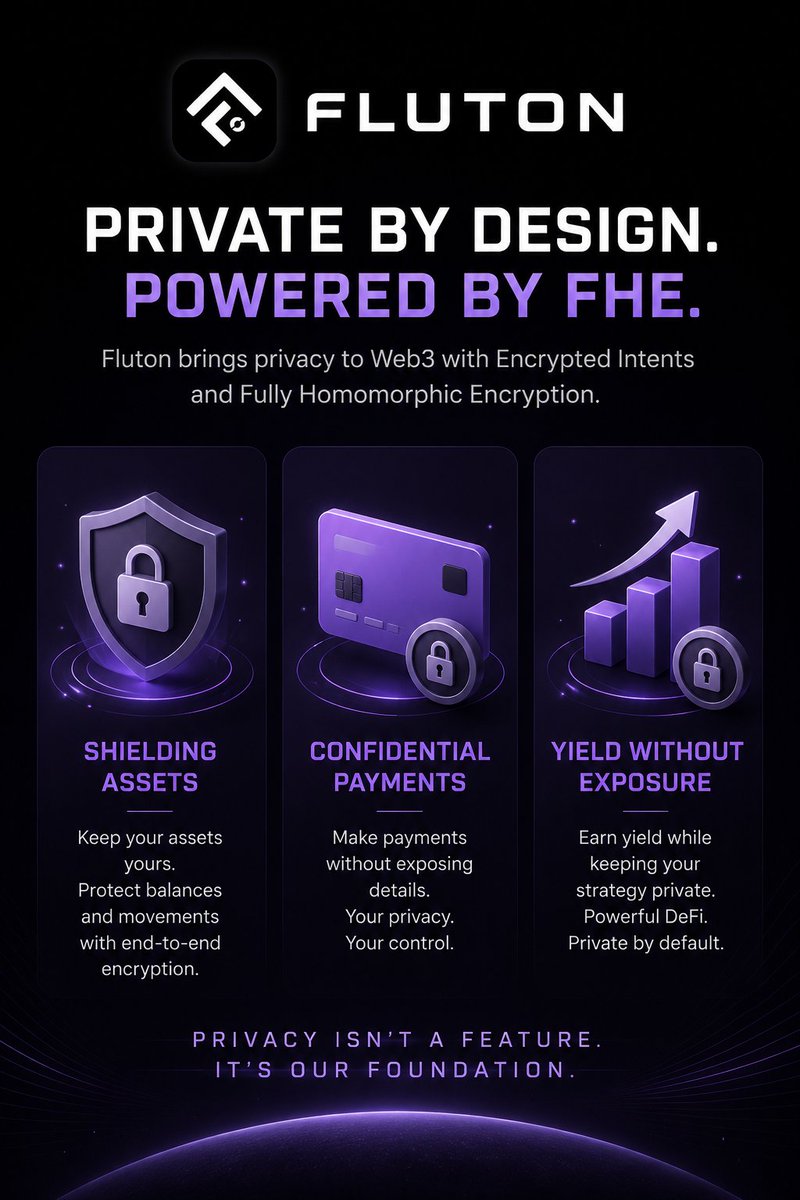
Shielding Assets
Owning digital assets is important. Protecting them is even more important.
On public blockchains, wallet balances and asset movements are visible to anyone. That level of transparency isn't always ideal—especially for users who value financial privacy.
Fluton introduces a new way to shield assets.
Through Fully Homomorphic Encryption (FHE) and Encrypted Intents, sensitive information stays encrypted while transactions are processed. Your assets remain usable without unnecessarily exposing your activity.
This isn't about hiding from the blockchain.
It's about giving users control over who can see their financial data.
In my view, asset protection should be a built-in feature of Web3—not an afterthought.
Confidential Payments
Every payment tells a story. Should everyone be able to read it?
On most blockchains, every payment is permanently visible. Anyone can track wallet addresses, payment amounts, and transaction history.
Fluton envisions a better way with Confidential Payments.
Using Encrypted Intents and Fully Homomorphic Encryption (FHE), payment details remain encrypted while the network securely processes the transaction.
The payment is completed, but sensitive information isn't exposed to the public.
For everyday users, businesses, and institutions alike, privacy isn't about secrecy—it's about control.
As blockchain adoption grows, confidential payments could become a key building block for a more secure and user-friendly Web3 ecosystem.
Yield Without Exposure
Earning yield shouldn't mean exposing your entire portfolio.
In today's DeFi, depositing assets into a yield strategy often reveals your wallet activity, token balances, and investment decisions for everyone to see.
Fluton is exploring a different approach.
With Encrypted Intents powered by Fully Homomorphic Encryption (FHE), users can interact with DeFi while keeping sensitive data protected throughout execution.
The opportunity to earn yield remains the same—but your strategy doesn't have to become public information.
As DeFi matures, I believe yield without exposurewill be a major step toward making on-chain finance both powerful and private. Every user deserves the freedom to invest without unnecessary visibility.
@FlutonIO
1
3
6
PhuongEo82 retweeted

Jun 12
Research engineer @GrundeiMoritz on how RLNC is designed for fast data delivery.👇
28
25
154
3,444

21h
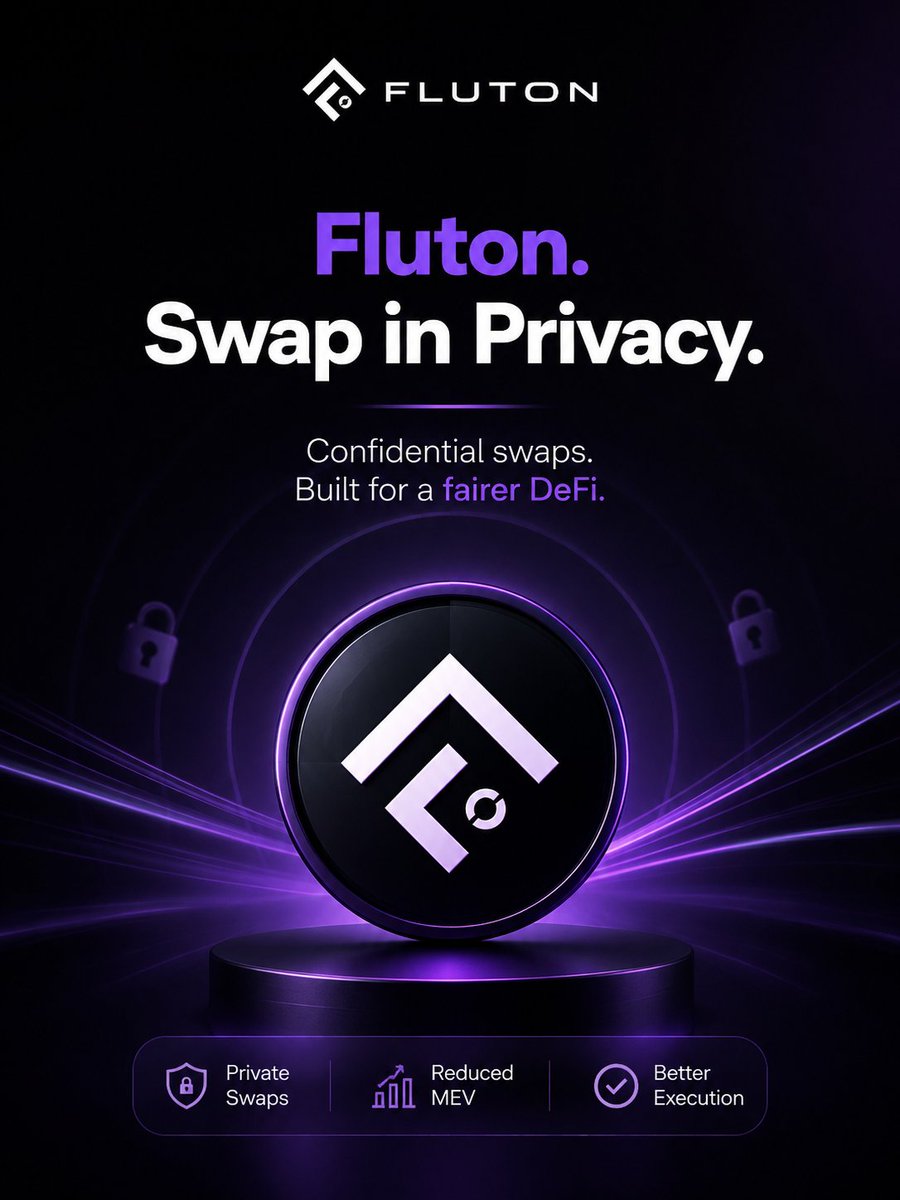
Swapping tokens shouldn't mean exposing your strategy to everyone.
On most blockchains, every swap is public before it's finalized. Anyone can see what you're trading, how much you're swapping, and even attempt to profit from your transaction.
Fluton introduces a different approach with Confidential Swaps.
Using Encrypted Intents powered by Fully Homomorphic Encryption (FHE), transaction details remain encrypted throughout execution. The network processes your intent without revealing sensitive information.
The result?
• Private token swaps
• Reduced MEV exposure
• Better execution for users
As DeFi continues to evolve, I believe confidential swaps could become the new standard—not just for privacy, but for a fairer trading experience.
@FlutonIO
2
20
Jun 13
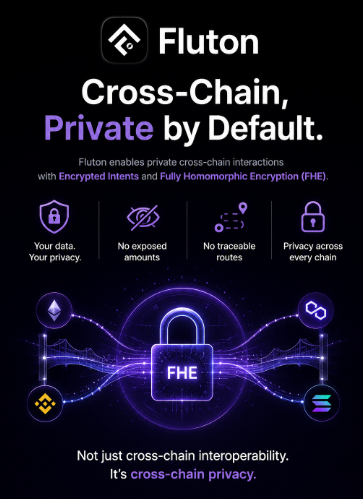
Cross-chain has become the future of Web3. But what about cross-chain privacy?
Today, moving assets across blockchains is easier than ever. However, every bridge, swap, and transaction often leaves a public trail that anyone can analyze.
Your wallet activity, token amounts, and transaction routes can all become visible.
Fluton aims to change that.
By combining Encrypted Intents with Fully Homomorphic Encryption (FHE), Fluton enables users to interact across multiple blockchains while keeping sensitive transaction details confidential.
The goal isn't just cross-chain interoperability—it's cross-chain privacy.
As Web3 becomes increasingly multi-chain, protecting user data across every network could become just as important as connecting them.
@FlutonIO
Jun 12

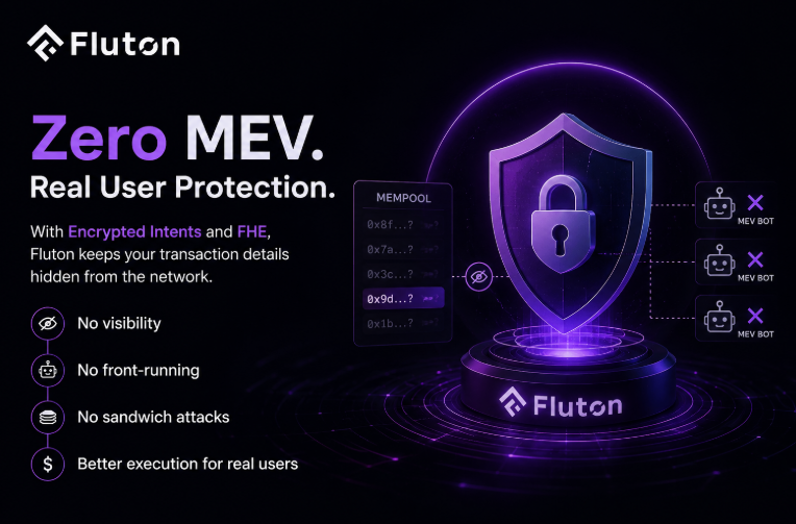
MEV has been one of DeFi's biggest hidden costs.
Every time you submit a transaction, bots can monitor the mempool, detect profitable opportunities, and act before your transaction is finalized.
The result?
• Front-running
• Sandwich attacks
• Worse execution prices
Fluton takes a different approach.
Instead of exposing transaction details to the network, users submit encrypted intents. Sensitive information remains hidden while being processed with Fully Homomorphic Encryption (FHE).
If bots can't see your trade, they can't exploit it.
For me, that's what makes Fluton interesting—not just adding privacy, but helping create a fairer execution environment where users, not MEV bots, benefit from their own transactions.
@FlutonIO
3
6
82
Jun 12
MEV has been one of DeFi's biggest hidden costs.
Every time you submit a transaction, bots can monitor the mempool, detect profitable opportunities, and act before your transaction is finalized.
The result?
• Front-running
• Sandwich attacks
• Worse execution prices
Fluton takes a different approach.
Instead of exposing transaction details to the network, users submit encrypted intents. Sensitive information remains hidden while being processed with Fully Homomorphic Encryption (FHE).
If bots can't see your trade, they can't exploit it.
For me, that's what makes Fluton interesting—not just adding privacy, but helping create a fairer execution environment where users, not MEV bots, benefit from their own transactions.
@FlutonIO
Jun 11
Be ready to show your love for your favorite team. As for me, I'm showing my love for @FlutonIO .
3
110
Jun 12
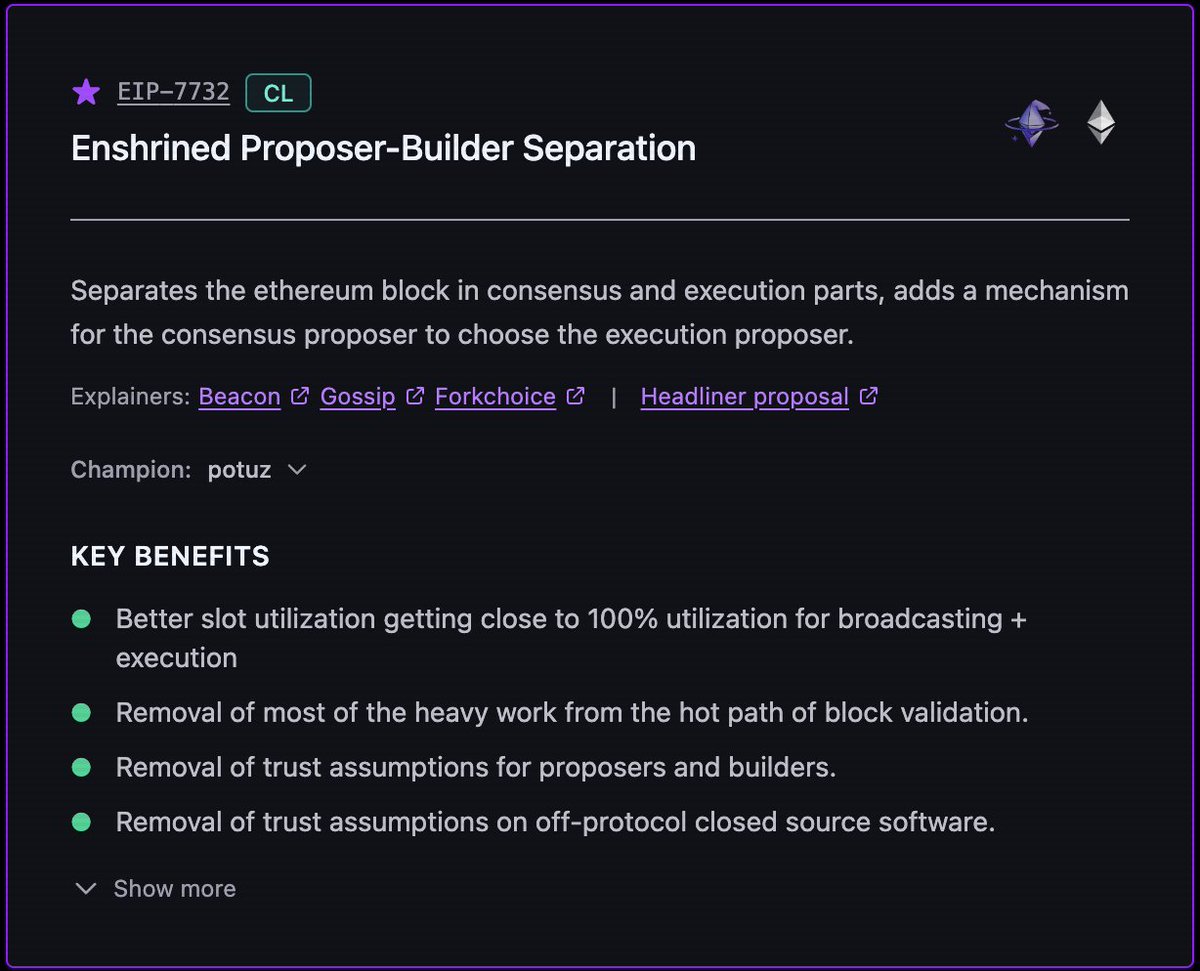
Reading this breakdown on Ethereum's upcoming Glamsterdam upgrade really highlights an important point.
ePBS is a smart improvement.
By restructuring slot timing, Ethereum gives validators more time to receive different parts of a block, making it possible to support larger gas limits and more blobs.
That's great for scaling.
But what stood out to me is that ePBS doesn't remove the bandwidth bottleneck—it works around it.
As Ethereum continues to grow, simply rearranging deadlines won't be enough forever.
Real scalability comes from improving how data moves across the network.
That's why projects building at the networking layer are so interesting.
Optimum is one example that caught my attention.
Instead of only optimizing execution or consensus, Optimum focuses on block propagation itself through Random Linear Network Coding (RLNC).
If block data can travel faster and more efficiently—even as blocks become larger and the network becomes more decentralized—it opens the door for:
• Larger blocks without excessive propagation delays.
• Shorter slot times.
• Better scalability without sacrificing decentralization.
Ethereum scaling isn't just about increasing throughput.
It's also about upgrading the infrastructure that carries the data.
Curious to see how innovations like ePBS and networking solutions such as Optimum will complement each other as Ethereum continues to evolve.
@get_optimum
Jun 8

𝐞𝐏𝐁𝐒, 𝐬𝐥𝐨𝐭 𝐭𝐢𝐦𝐢𝐧𝐠𝐬, 𝐚𝐧𝐝 𝐬𝐜𝐚𝐥𝐢𝐧𝐠 𝐚𝐩𝐩𝐫𝐨𝐚𝐜𝐡𝐞𝐬
Ethereum is targeting Q3 for the next major upgrade, Glamsterdam. ePBS is the headliner, restructuring the deadlines within a slot to allow for larger blocks (higher gas limit & more blobs).
In the current slot structure a block has to be selected, proposed, propagated and attested to by the network in under 4 seconds. Increasing block size means more data has to reach nodes in the same short amount of time, and you run into bandwidth constraints.
ePBS buys more time for data propagation by separating blocks into the consensus block, execution payload, and blobs, and changing the deadlines for when those different parts of the block need to arrive.
Instead of the entire block needing to reach validators before the 4 second mark, they only need to receive the consensus block- a cryptographic commitment to a certain block & set of blobs. They make their attestation without receiving the execution payload, then have the remainder of the slot to receive that payload and verify it. Blob data is propagated separately giving nodes the full 12 seconds to receive it.
This scheme makes it easier to increase the gas and blob limits, which is good for some additional scaling. However, it's more of a sidestep than a true solution to the bandwidth bottleneck.
If you want to unlock serious throughput gains you need to improve how fast and efficiently data can move across the network. That's the key to increasing block size while ALSO shortening slot times.
Removing the bandwidth bottleneck means fundamentally upgrading the way data moves across Ethereum. Optimum's Random Linear Network Coding approach propagates Ethereum blocks with lower latency AND in a way that won't slow down as the size of blocks increase, OR as the network becomes larger and even more decentralized.
Scale the L1.
2
19
PhuongEo82 retweeted

Jun 10
🎉 ACTUM Twitter Giveaway
How to Participate:
✅ Follow @Actum_system
✅ Like this post
✅ Repost this post
✅ Tag 3 friends in the comments
🎁 Rewards
👑 10 Lucky Winners
💰 10 USDT Each
📅 Giveaway Ends: June 17, 2026
🎊 Winners will be randomly selected and announced after the event ends.
━━━━━━━━━━━━━━
Alongside this event, we also have several community campaigns on Discord
🏅 ACTUM Community Rewards & TGE Opportunities
1️⃣ ACTUM Tiered Referral Reward Campaign
Invite more users and participate in the referral campaign to unlock exclusive rewards.
2️⃣ ACTUM Community Incentive Program
Complete community activities and contribute to the ecosystem to earn rewards.
3️⃣ Monthly Lucky Spin / $10,000 Ecosystem Reward Program / TGE Reward Plan
Participate in ongoing ecosystem events and have a chance to receive special rewards.
🔗 Discord:
discord.gg/F6KTkfkb8

318
286
327
4,146
Jun 12
17
Jun 11
Be ready to show your love for your favorite team. As for me, I'm showing my love for @FlutonIO .
6
8
88
Jun 11
Ready to show your love for your favorite team? As for me, I show my love for Dlicom.
Have you downloaded the Dlicom app yet? Contact me for instructions.
@DlicomApp @dlicom_vn
3
5
72
Jun 10
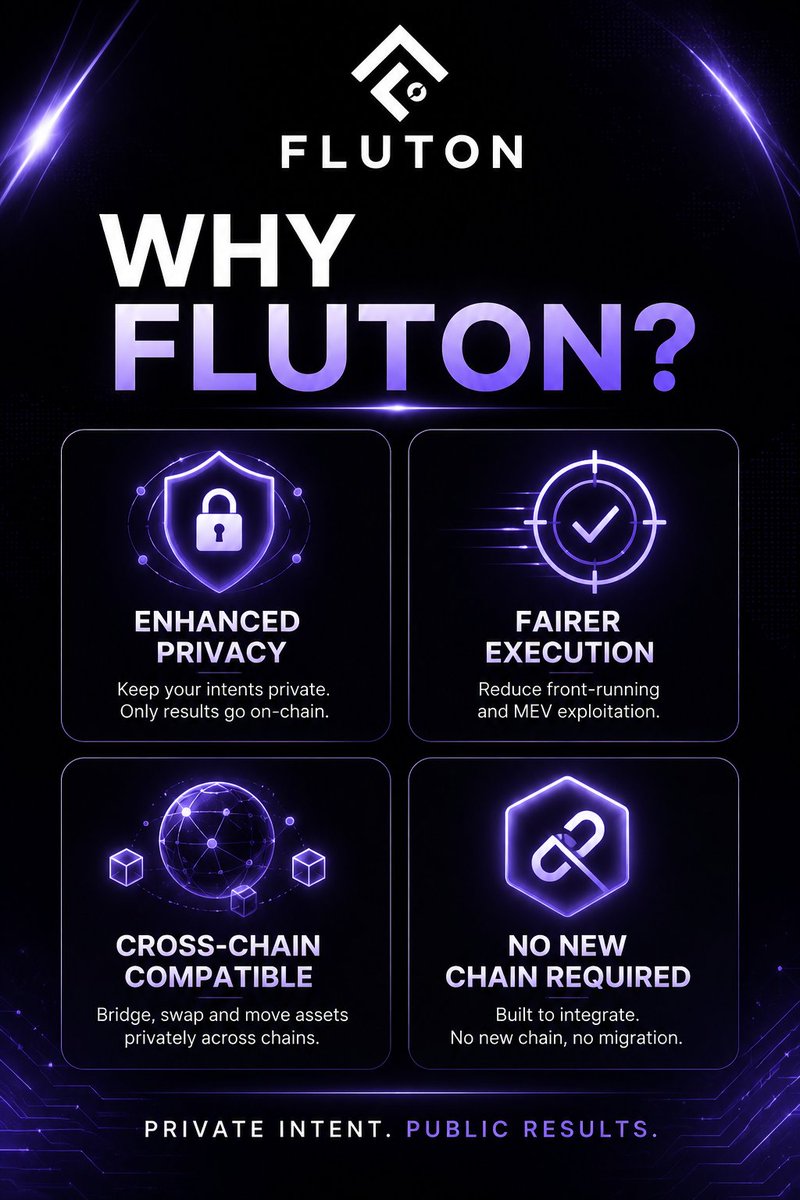
Why Fluton?
-- Enhanced Privacy
-- Fairer Execution
-- Cross-Chain Compatible
-- No New Chain Required
@FlutonIO
4
7
46
PhuongEo82 retweeted
Jun 9
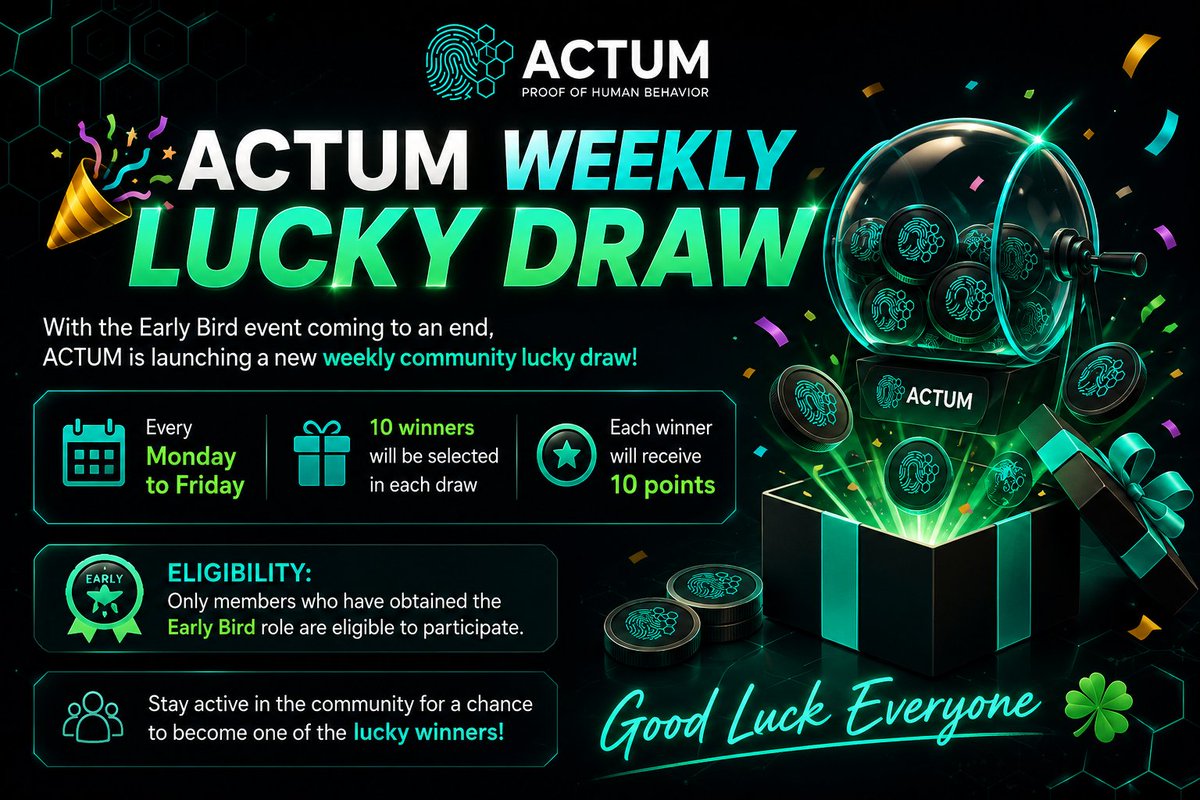
🎉 ACTUM Weekly Lucky Draw is LIVE!
With the Early Bird event coming to an end, we’re excited to bring you another great way to earn more points in the ACTUM ecosystem!
📅 Every Monday to Friday
🏆 10 winners each day
💎 Each winner gets 10 Points
Only members with the Early Bird role are eligible. Stay active in the community and increase your chances to win. Good luck everyone 🍀!
Join our Discord to enter: discord.gg/Qmah3UWnsw
May 25

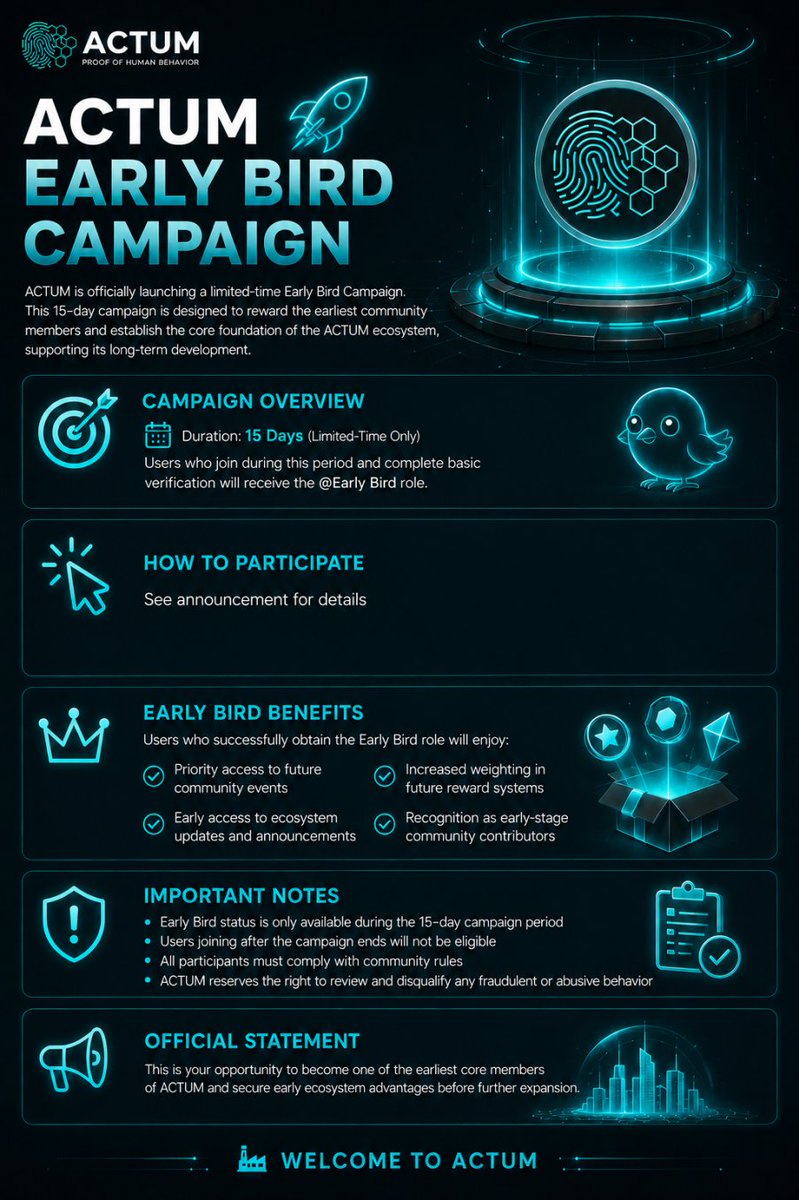
🐦 ACTUM Early Bird Campaign
ACTUM is officially launching a limited-time Early Bird Campaign.
This 15-day campaign is designed to reward the earliest community members and establish the core foundation of the ACTUM ecosystem, supporting its long-term development.
🎯 Campaign Overview
📅 Duration: 15 Days (Limited-Time Only)
Users who join our Discord during this period and complete basic verification will receive the Early Bird role.
discord.gg/KN6aFK3bmh
⚙️ How to Participate
Simply enter the designated channel and click the symbol to automatically receive the Early Bird role:
👉 discord.com/channels/1500357…
No additional application or complex steps are required, just click to claim.
👑 Early Bird Benefits
Users who successfully obtain the Early Bird role will enjoy:
• Priority access to future community events
• Early access to ecosystem updates and announcements
• Increased weighting in future reward systems
• Recognition as early-stage community contributors
📌 Important Notes
• Early Bird status is only available during the 15-day campaign period
• Users joining after the campaign ends will not be eligible
• All participants must comply with community rules
• ACTUM reserves the right to review and disqualify any fraudulent or abusive behavior
This is your opportunity to become one of the earliest core members of ACTUM and secure early ecosystem advantages before further expansion.
🏭 Welcome to ACTUM
281
211
297
3,379
Jun 9
Fluton is building a Universal Confidentiality Engine for Web3
-- Let users interact across different blockchains while keeping sensitive data private.
-- Whether you're swapping assets, moving funds across chains, or using DeFi applications, Fluton aims to protect your activity from unnecessary exposure.
@FlutonIO
2
4
26
