
Haematology Specialist Registrar. Wellcome-HRB ICAT Fellow 🇮🇪
Joined March 2021
- Tweets 21
- Following 186
- Followers 158
- Likes 382
Photos and videos
Dearbhla Doherty retweeted

30 Apr 2024
📢📢📢O-glycans play a significant role in VWF biology! If you're interested for more have a look in our newly published paper in Blood Advances. Special thanks to all the co-authors and funding agencies. @ProfJSODonnell @RCSI_Irl @IrishCtrVascBio ashpublications.org/bloodadv…
9
16
1,708
Dearbhla Doherty retweeted

5 Apr 2024
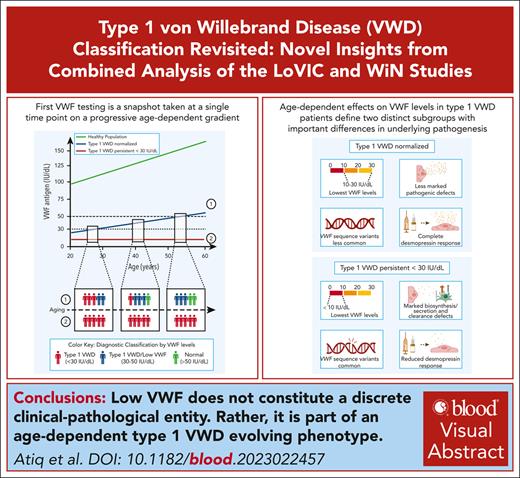
Age-dependent effects on plasma VWF levels in type 1 VWD define distinct subgroups with important differences in underlying pathogenesis. ow.ly/YWcQ50R8J2x #thrombosisandhemostasis
11
21
3,235
Dearbhla Doherty retweeted

30 Jan 2024
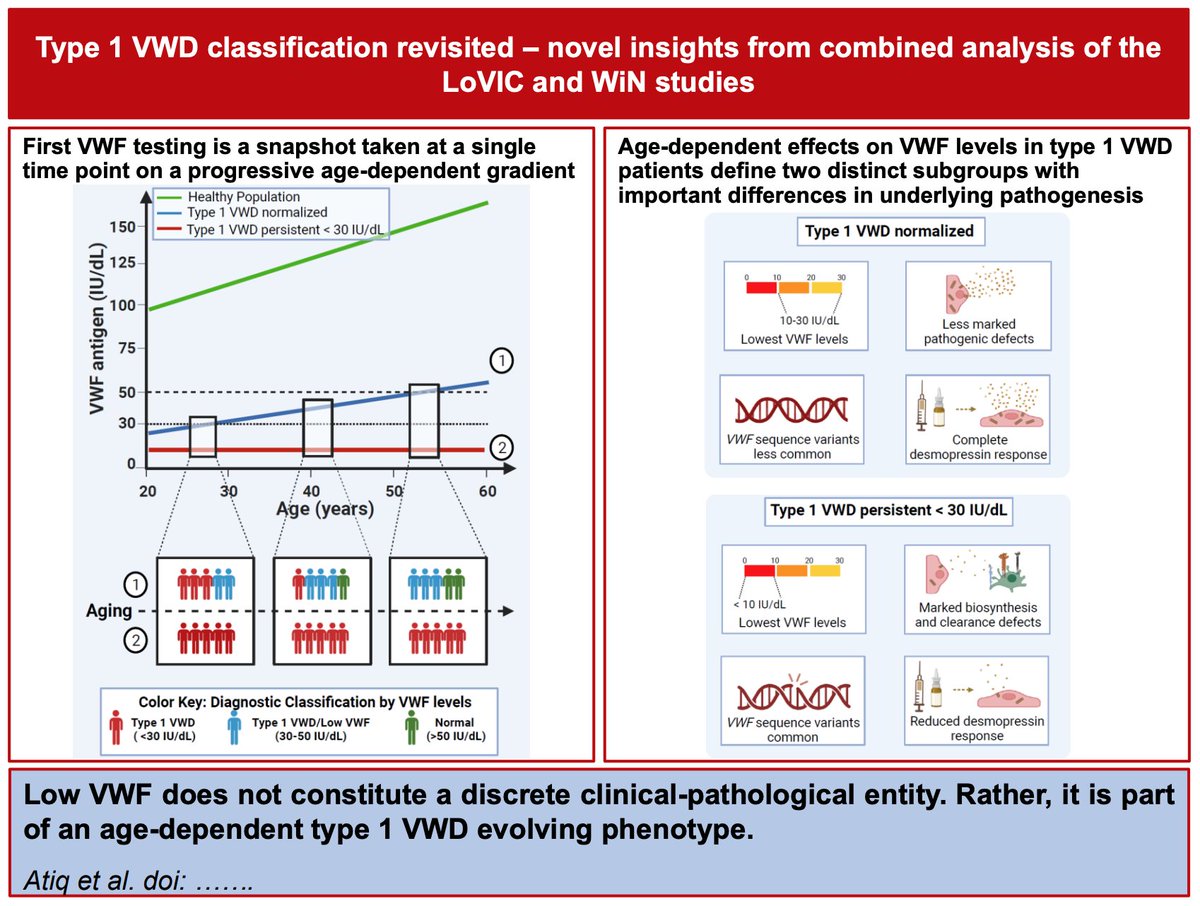
Important paper in press in @BloodJournal. There are two groups of type 1 VWD, those that increase with age and those whose levels do not change. Diagnosis of type 1 VWD depends on age when the person was tested and later their levels are likely to be higher and often normal. tinyurl.com/yuhf9xn2 #VWD #Willebrand
3
37
87
9,317

12 Dec 2023
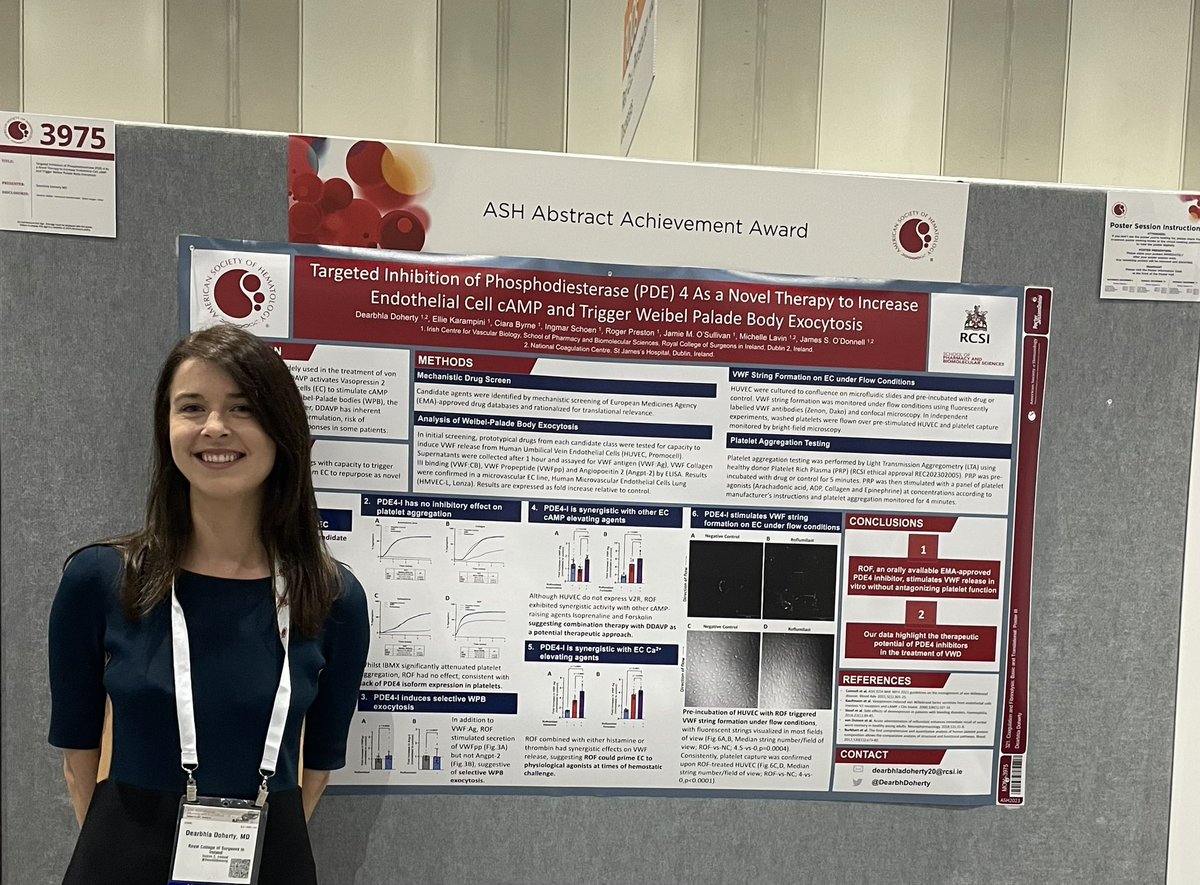
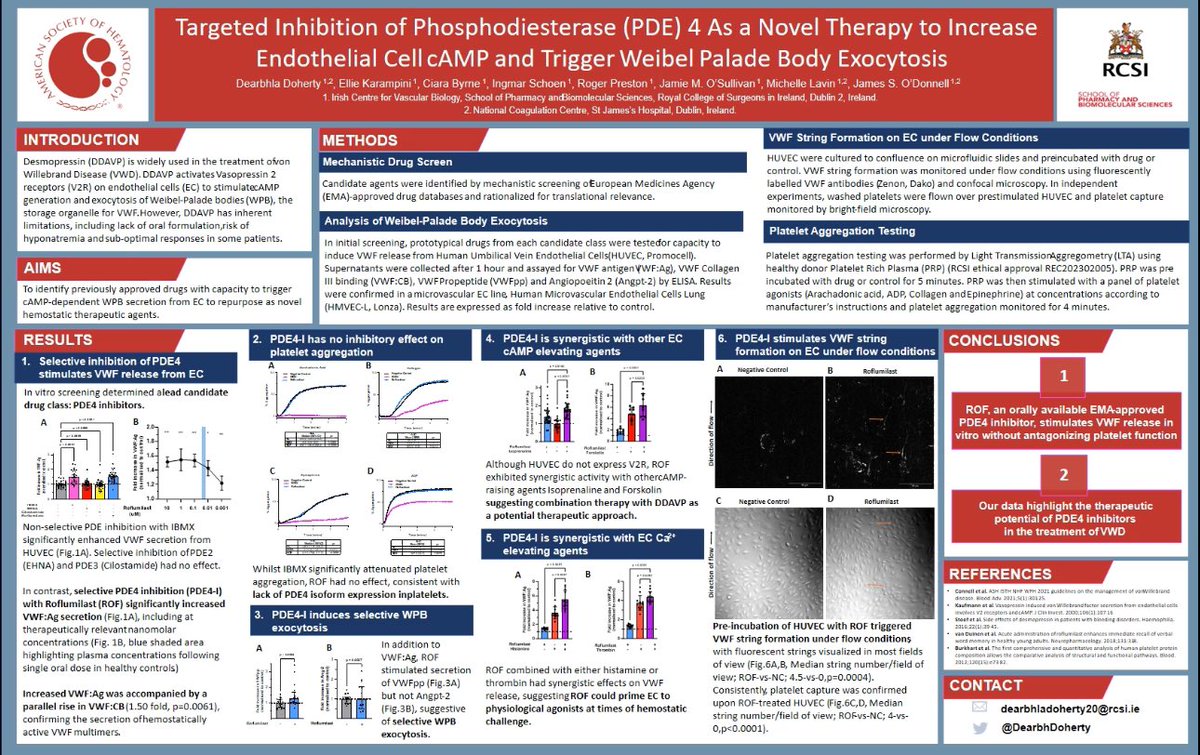
Delighted to present my PhD research identifying PDE4 inhibitors as a potential novel therapy for von Willebrand Disease at #ASH2023! @ICATProgramme @RCSIPharmBioMol @ProfJSODonnell
1
6
75
4,517
Dearbhla Doherty retweeted

12 Dec 2023
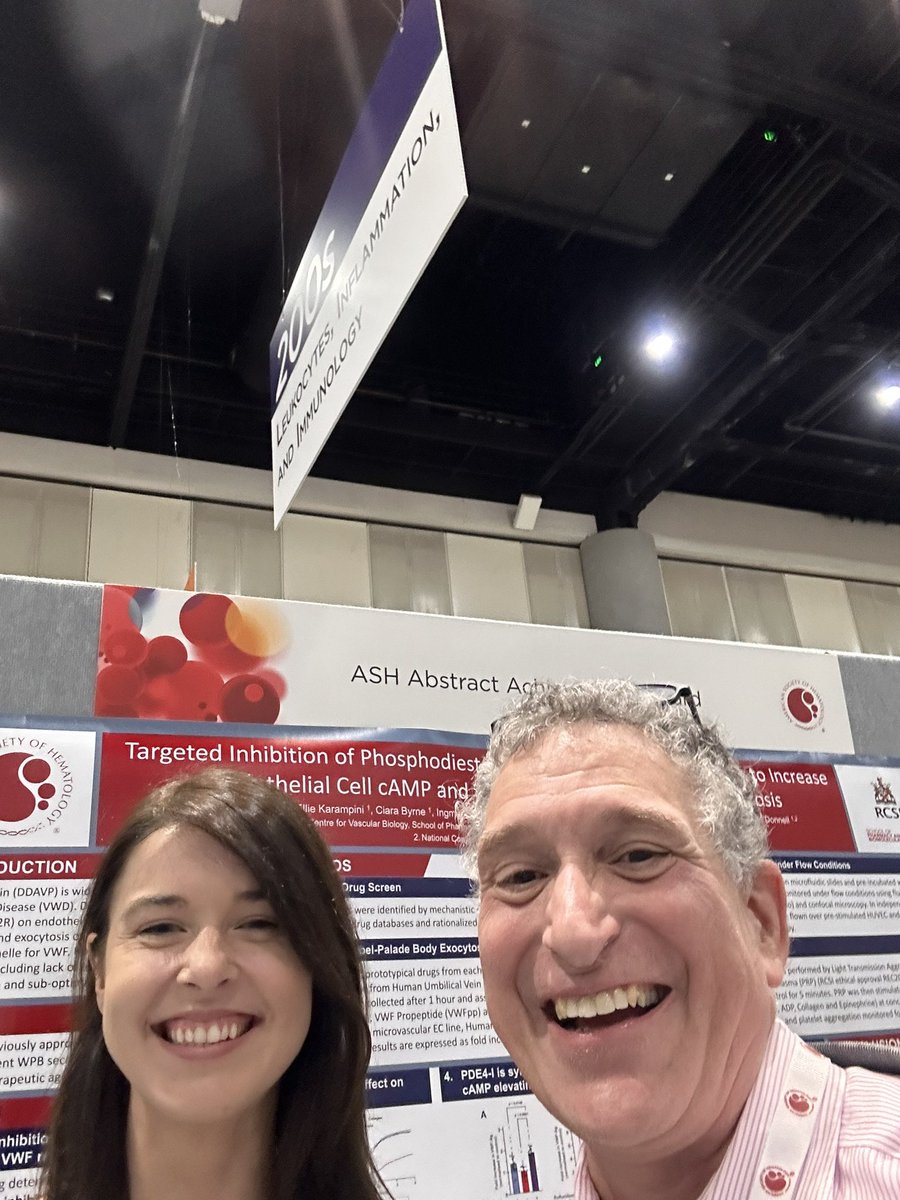
Missing my fellow VWD nerd @sortoutbleeding but at least St. James Dublin is still well represented!…@DearbhDoherty with a phenomenal provocative preclinical study that may someday force DDAVP into retirement !! #ASH2023 Shoulda been an oral abstract!!!
2
19
1,538
Dearbhla Doherty retweeted

7 Sep 2023
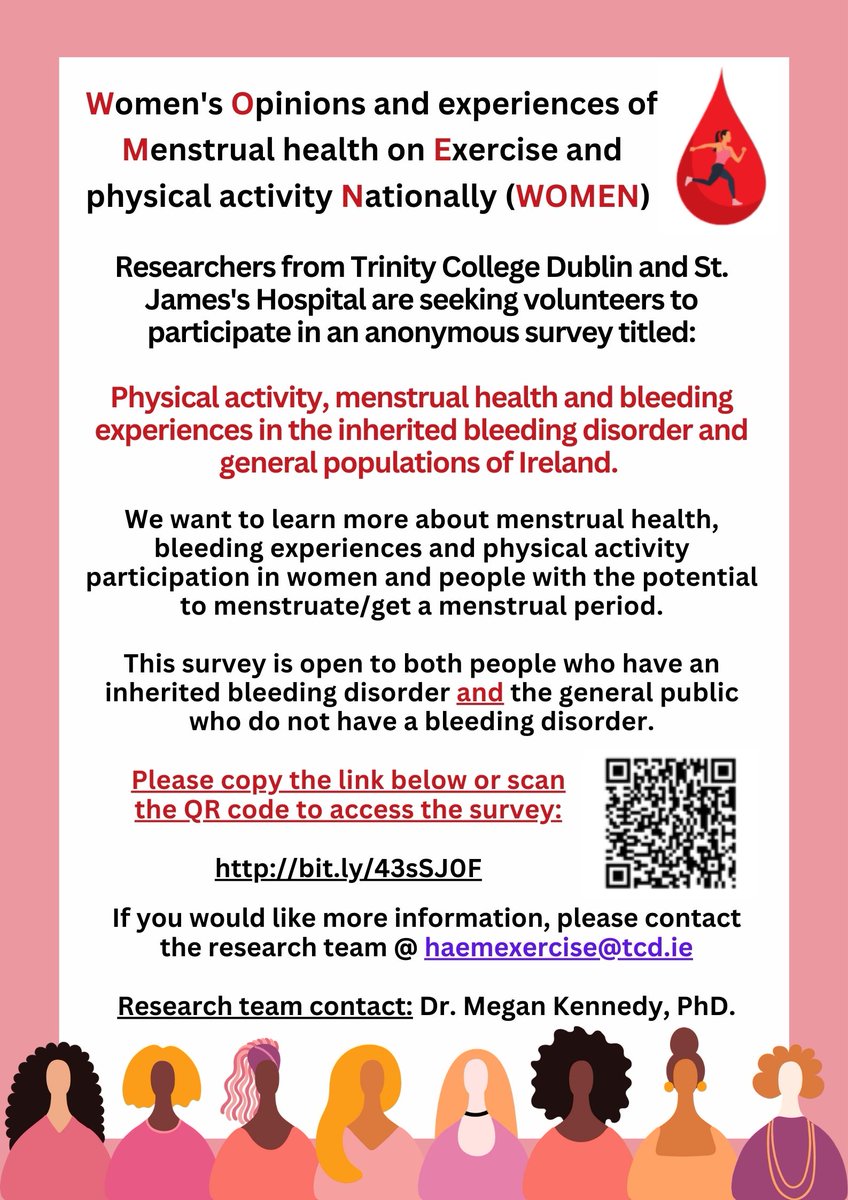
CALL FOR RESEARCH PARTICIPANTS:
WHO? Women/people with potential to menstruate aged 18
WHY? To learn about menstrual health, bleeding experiences and physical activity. Survey open to both people who have a bleeding disorder and the general public.
Link: bit.ly/43sSJ0F
1
16
14
8,854
Dearbhla Doherty retweeted

19 Jul 2023
Looking for a new research challenge? Come join us in the heart of Dublin City @RCSI_Irl for a cross-disciplinary research project examining the crosstalk between #cancer and #coagulation details in the link below @PostdocRcsi #JobAlert #postdoc
my.corehr.com/pls/coreportal…
22
33
4,987
29 Jun 2023
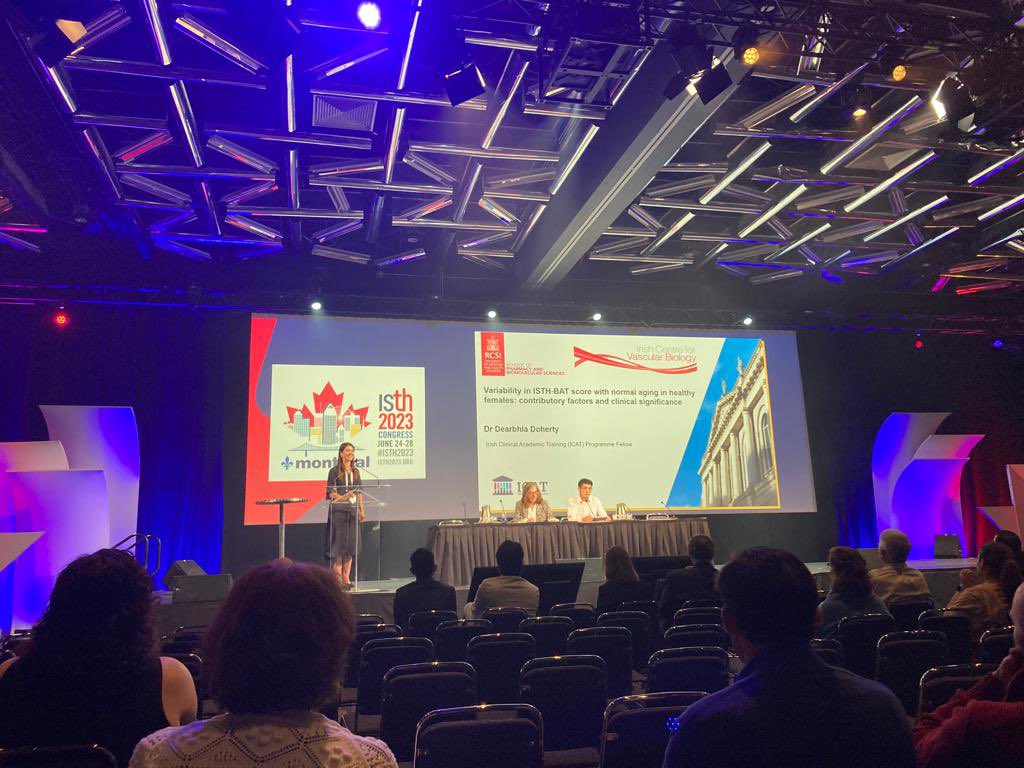
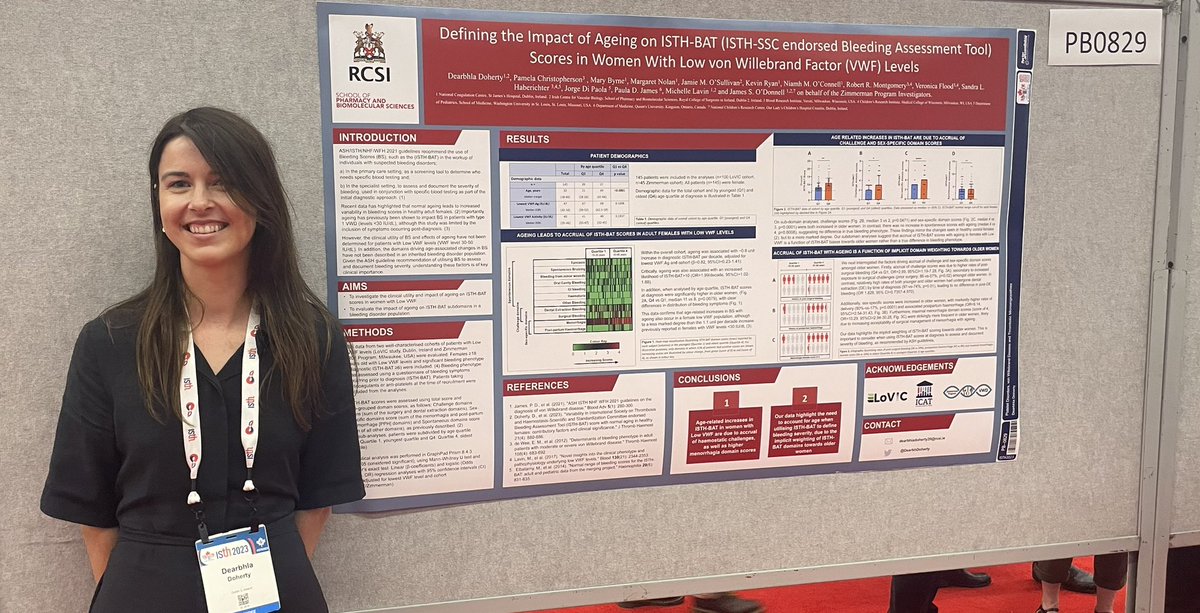
Fantastic to speak at the #ISTH SCC session amongst such an esteemed lineup of speakers! And to present our recent work on Low VWF and bleeding 🇨🇦
4
45
2,530
Dearbhla Doherty retweeted

26 Jun 2023
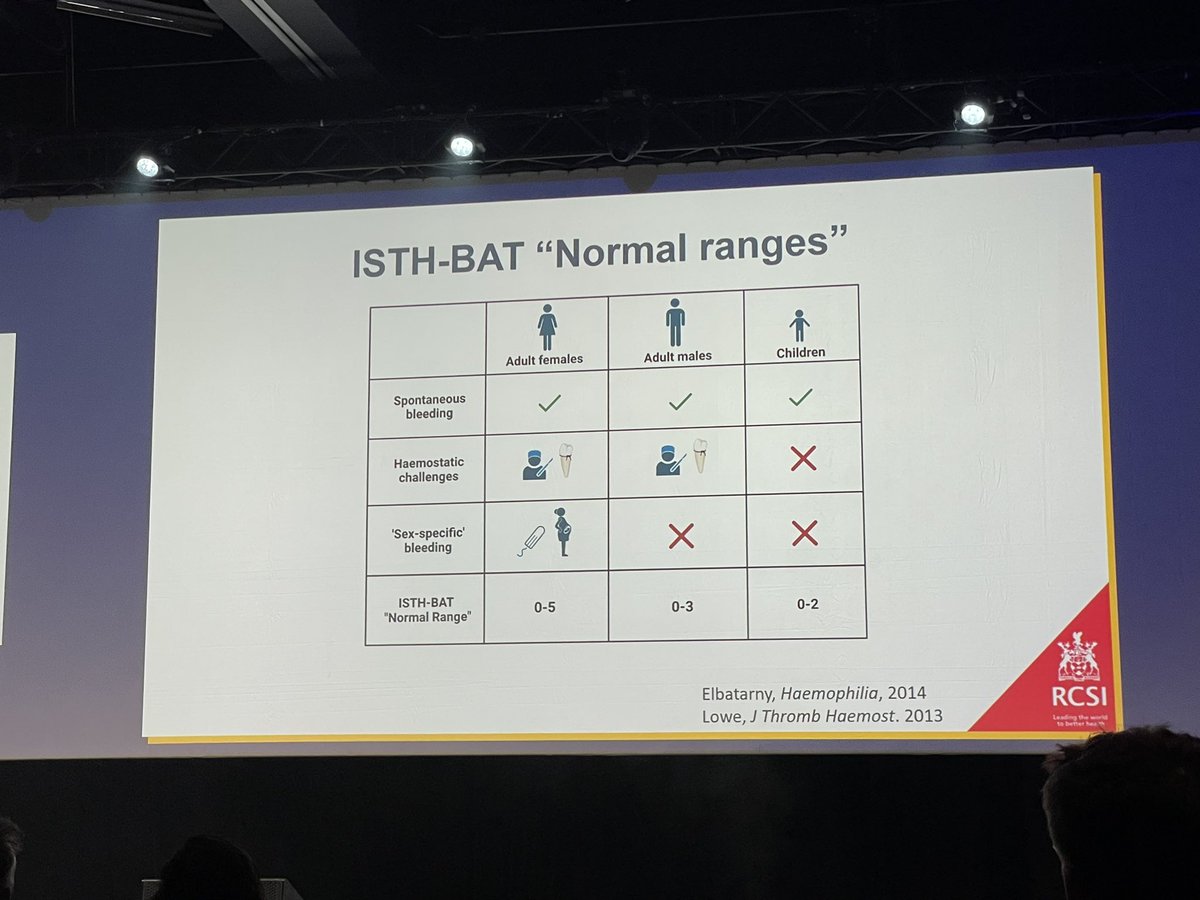
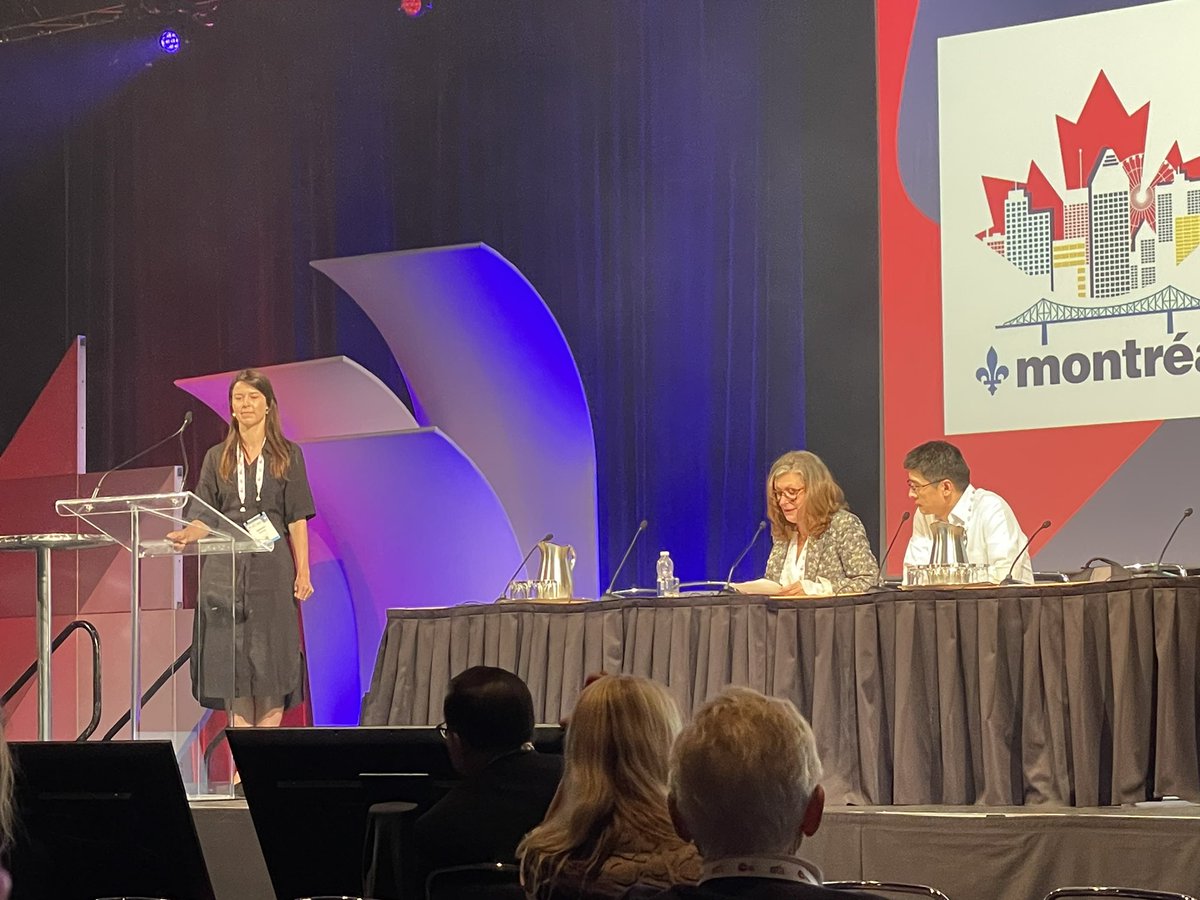
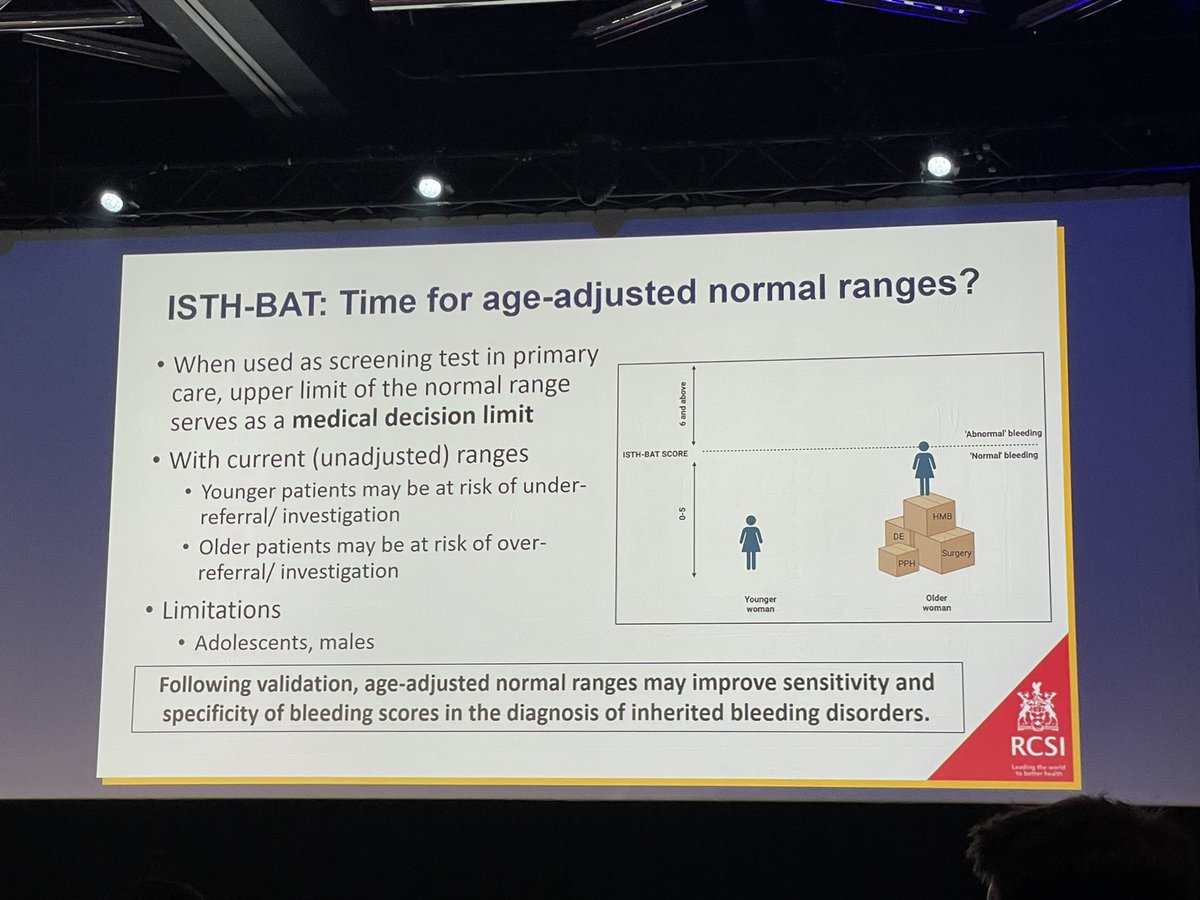
Compelling arguments by @DearbhDoherty in favor of age-adjusted BAT normal ranges for the diagnosis of inherited bleeding disorders #ISTH2023
5
18
781
21 Feb 2023
Great to see our manuscript in the latest edition of @BloodAdvances @ProfJSODonnell @RCSIPharmBioMol
20 Feb 2023

Subtle enhanced VWF clearance is present in 20% of patients with low VWF and is associated with an attenuated bleeding phenotype. loom.ly/dt5033U #stimulusreport

1
3
28
2,848
Dearbhla Doherty retweeted

17 Feb 2023
T1/2 FVIII in #hemophilia pts is influenced by plasma VWF:antigen levels, ABO blood group &age. @EinasElsheikh et al show heterogeneity in clearance endogenous plasma VWF is 🔑determinant variable FVIII half-life in pts.
@sortoutbleeding @ProfJSODonnell
bit.ly/3RU4PKH
8
7
1,647
Dearbhla Doherty retweeted
4 Jan 2023
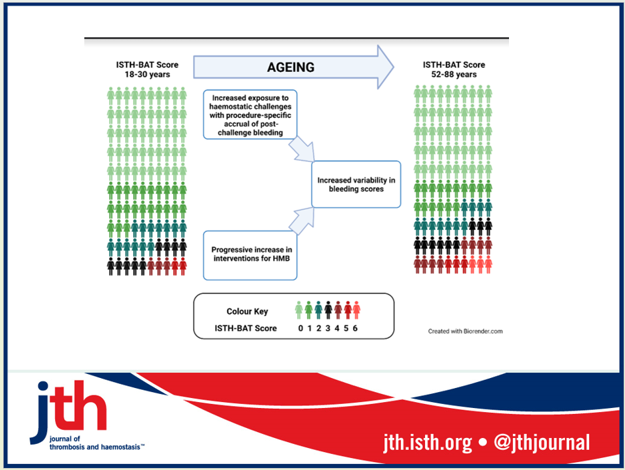
Normal ageing ▶️📈variability in #bleeding scores amongst healthy women, related both to step-wise increases in menorrhagia domain scores and accrual of post-procedural bleeding with increasing exposure to procedures.
▶️bit.ly/3CmYNMd
1
12
17
14,239
4 Jan 2023
Great start to 2023 seeing our @JTH paper published, highlighting variability in ISTH-BAT with normal ageing. Fantastic to collaborate with @james_paulad &other #Zimmerman investigators! @ProfJSODonnell @sortoutbleeding @pamchristophers @RCSIPharmBioMol
authors.elsevier.com/sd/arti…
1
9
36
3,082
Dearbhla Doherty retweeted

7 Dec 2022
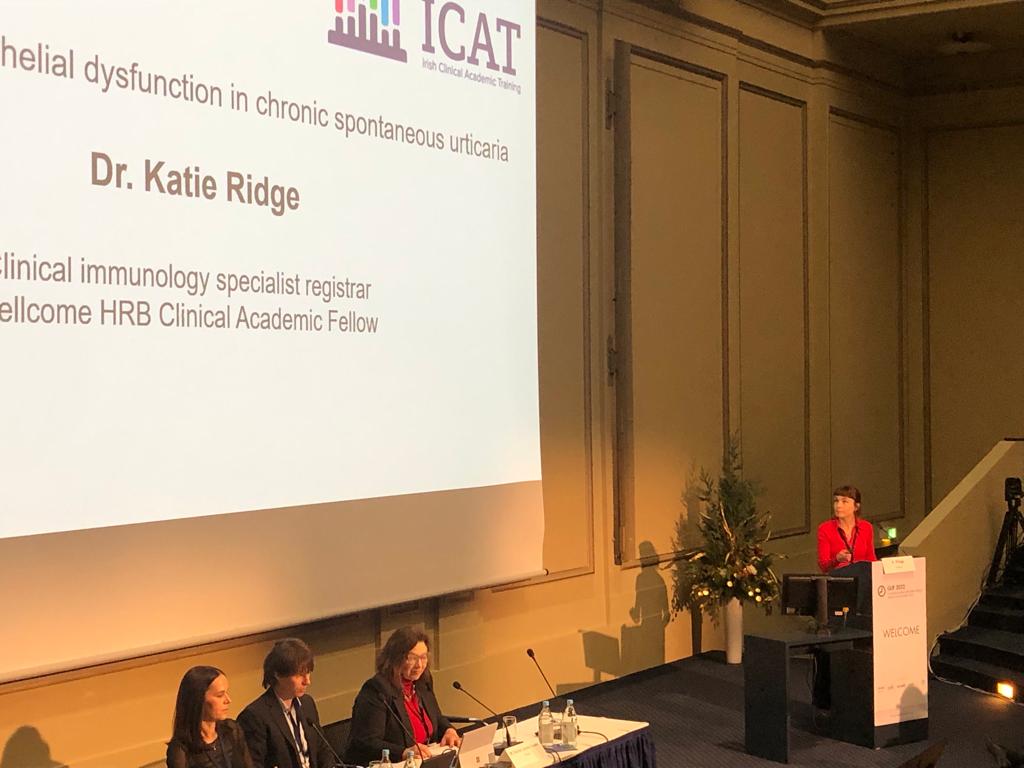
Delighted to present at the Global Urticaria Forum in Berlin.A HUGE thanks to @HelenFogarty14 & @DearbhDoherty for collaborating on this project.Our findings describe endothelial dysfunction in CSU. ICAT collabs!@UCARE_4U #GUF2022 @npc909 @ClionaOfarrelly @tcdflow @ICATProgramme
2
6
35
Dearbhla Doherty retweeted

30 Nov 2022
People with von Willebrand Disorder often don’t know they have it.
If you get heavy nosebleeds or bleed for longer than normal you could have VWD.
Learn more through our #FindingvonWillebrand campaign.
8
8
15 Oct 2022
15 Oct 2022

Great news here at HAI, @HelenFogarty14 wins the President's prize, @DearbhDoherty wins best clinical talk and @AislingRehill wins best scientific talk. Runner up HAI grant is awarded to @CiaraCoag! Amazing achievement for ICVB, well done all 🏆💪👩🔬👩🏻🔬
@RCSI_Irl @RCSIPharmBioMol
3
1
29
Dearbhla Doherty retweeted

14 Oct 2022
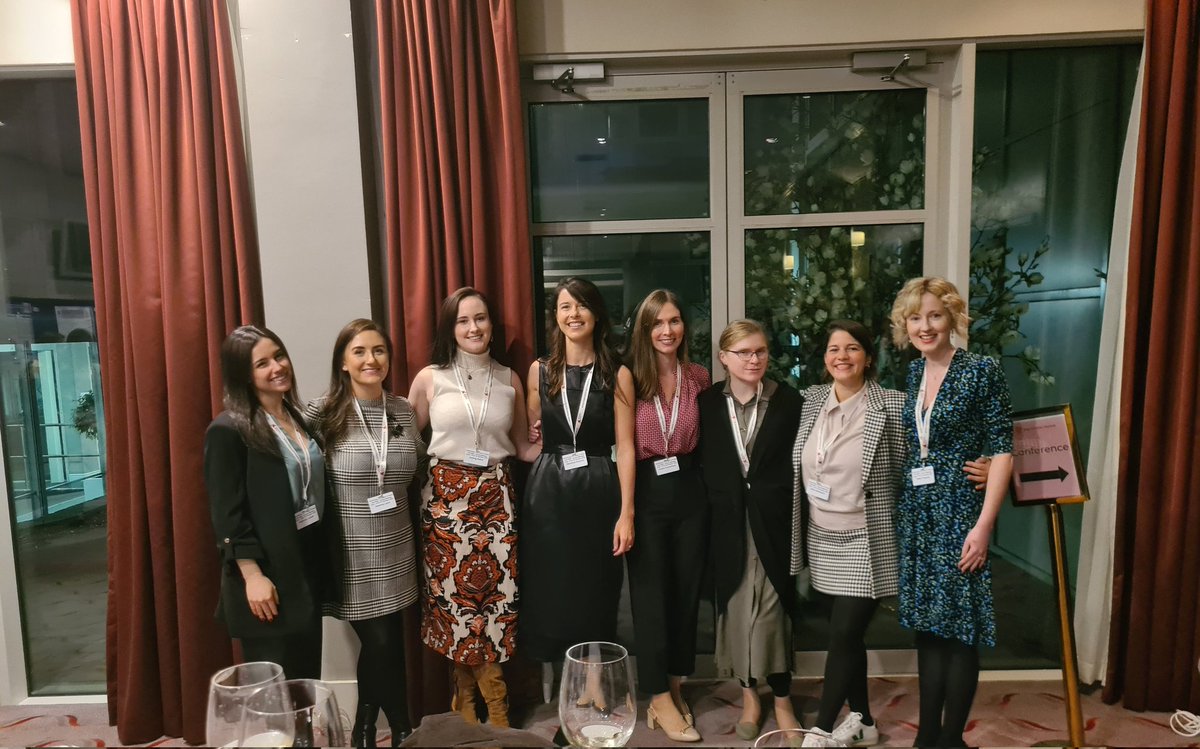
Congrats to all the ICVB researchers who presented at HAI, an amazing representation for our centre! Now to enjoy a few well deserved drinks 🍷
#WomenInSTEM #WomeninScience
@patylopes013 @CiaraCoag @ElKarampini @DearbhDoherty @AislingRehill @Clair_Comerford @HelenFogarty14
12
22
Dearbhla Doherty retweeted

23 Aug 2022
RCSI research finds blood-clotting imbalance persists in Long Covid @RCSI_Irl @IrishCtrVascBio @ProfJSODonnell @HelenFogarty14 @JTHjournal
#LongCovid #Covid19 #research #MedNews
medicalindependent.ie/in-the…
8
11