
Joined September 2019
- Tweets 2,007
- Following 806
- Followers 228
- Likes 8,448
115 Photos and videos










Pinned Tweet

25 May 2024
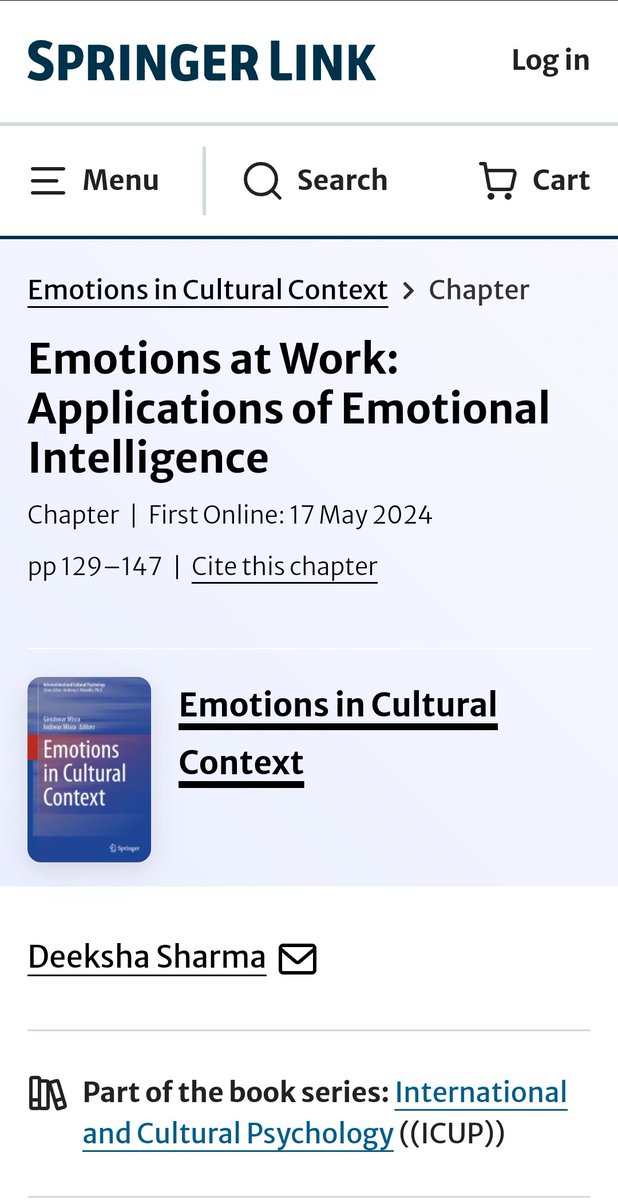
It feels surreal to be the author of the BOOK chapter - "Emotions at Work" in SPRINGER NATURE.
@SpringerNature
Emotional Intelligence at the workplace is crucial for the productivity of the organization and also for the overall wellbeing of the employees.
#emotions
1
7
2,313
Deeksha Sharma, PhD 🤿 retweeted

Two brain cells having a chat
47
292
1,548
107,743
Deeksha Sharma, PhD 🤿 retweeted

May 5
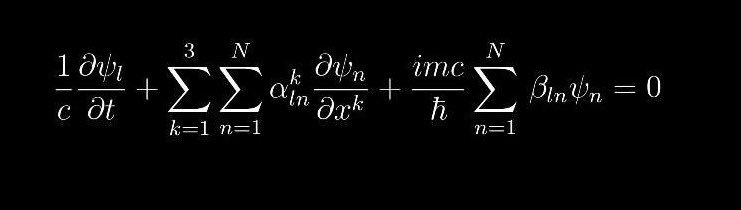
God's fingers are quantum computers
49
161
1,117
33,079
My beautiful campus Cornell University @Cornell and when this majestic Willard Straight Hall Memorial Room is the venue for your talk. As students, we always loved this place (specially for the free popcorn) and now I came here for a talk. Full circle.
Just before my talk, the memorial room looked divine. Kudos to Women Leaders of Color of Cornell
@CornellWSHSUB
1
2
66
Special thanks to Stella Muthoni who literally hunted me down on LinkedIn and we had been in conversation for the last 6 months to make this happen. The credits go to Abhinaya Mukundan to make the Gala happen. Had a great conversation with you as well.
1
31
I am honored for the kind invite from Women Leaders of Color of Cornell for an amazing Gala event at Cornell University @Cornell
It is so nostalgic to be back at my beautiful campus and to be around the amazing young women of Cornell.
1
2
74
Excited to be at my campus as a speaker.
It is emotional and nostalgic to go back to my campus @Cornell
WomenLeadersOf ColorOf Cornell
2
42
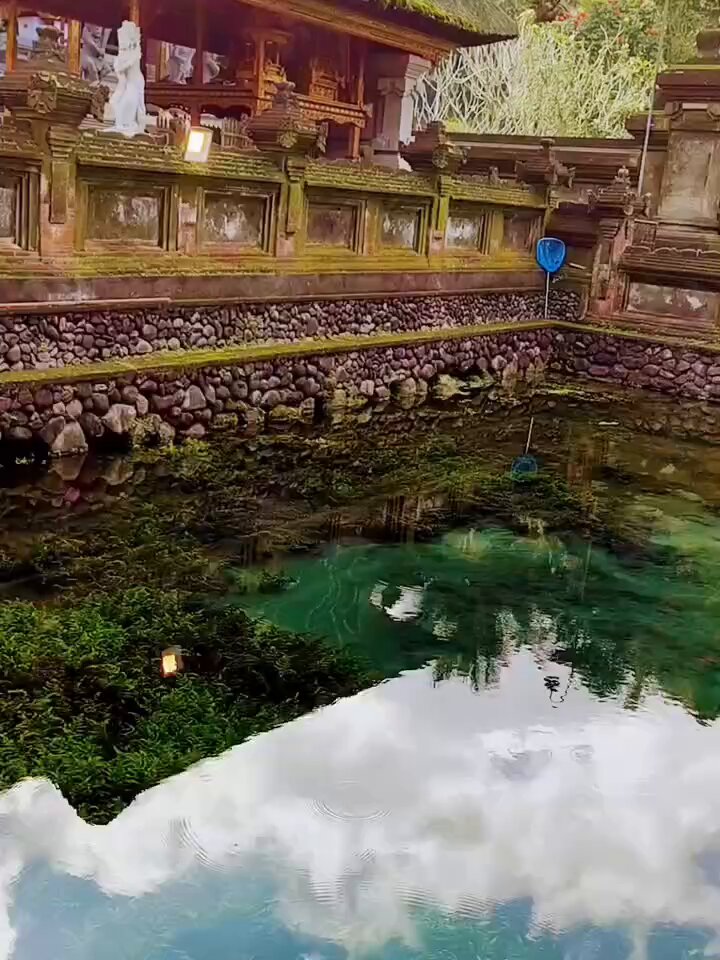
It is 6.30 am in Bali.
How different sounds, light and colors can instigate your brain 🧠 towards stronger NP Neuroplasticity-
It is just not about circadian rhythm, it is also about Vagus Nerve reset.
28
Deeksha Sharma, PhD 🤿 retweeted

Apr 23
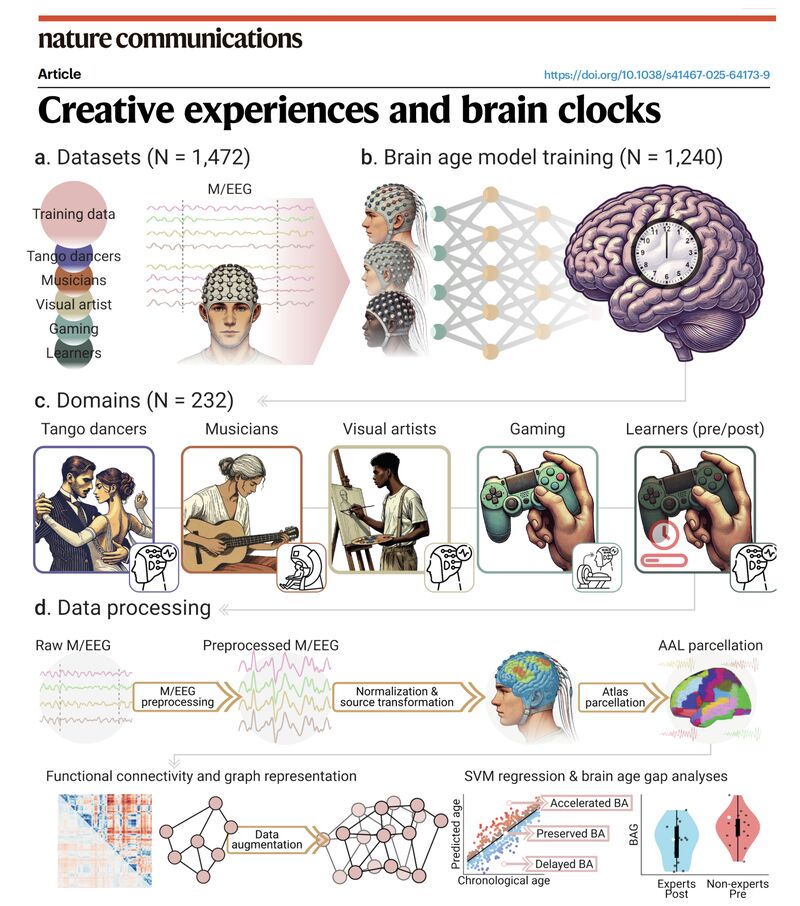
Your brain does not age evenly. Decline starts in frontoparietal networks that run decision-making and strategy.
Creative expertise alters that.
A @NatureComms study using EEG-based brain clocks shows experts in music, dance, visual art, and gaming have lower brain age gaps. Their brains register younger than their actual age.
The mechanism is efficiency.
Creative work increases local efficiency in specialized circuits and strengthens global coupling across networks. Less energy, faster processing, tighter coordination.
This effect scales with expertise. Years of high-level creative demand reinforce the exact regions most vulnerable to aging.
Creativity is not expression.
It is neural preservation.
13
314
1,157
52,677
The science as we know it.
Indeed our limited lens and inability to see the full picture.
Apr 23

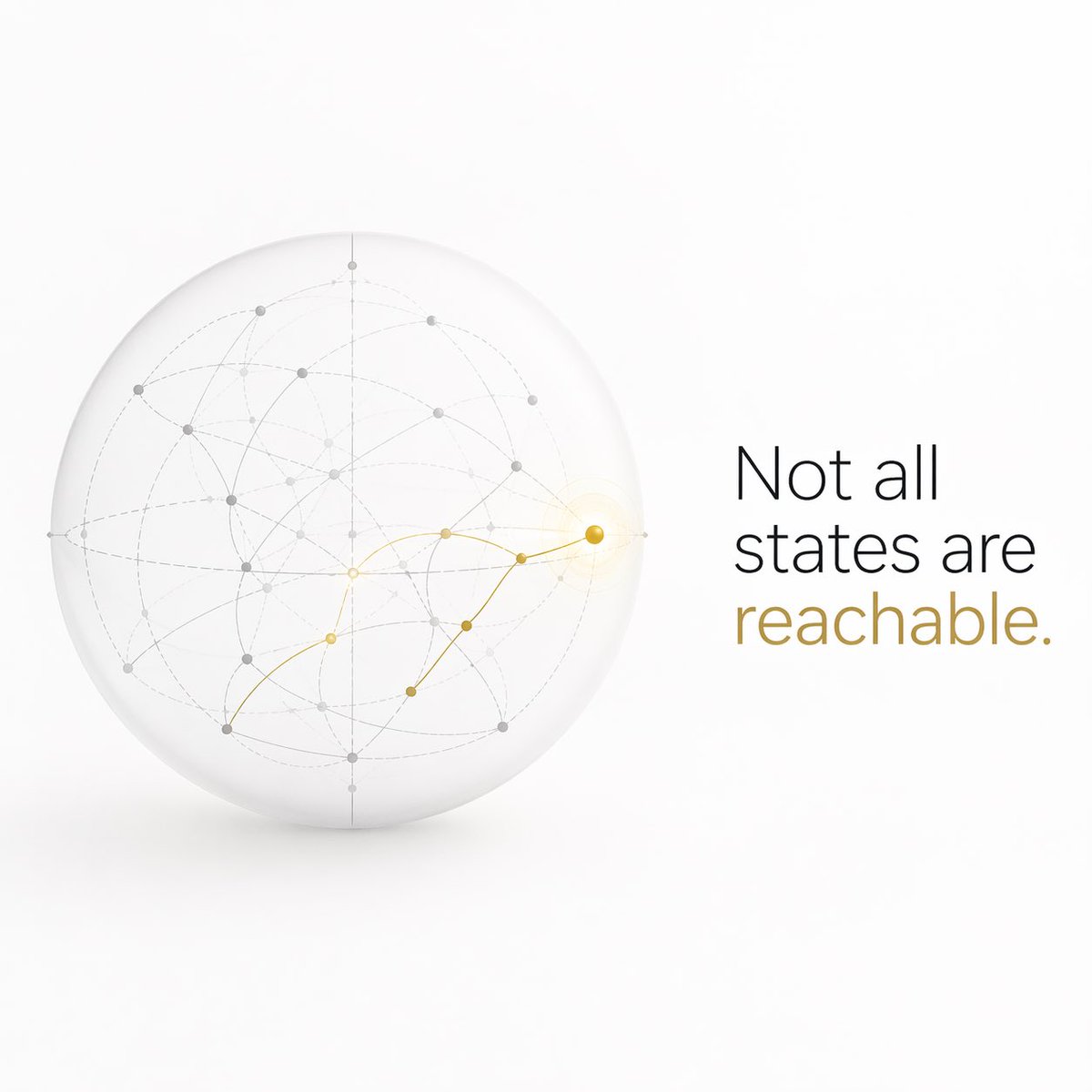
Physics has gaps.
Interpretation ≠ understanding.
Selection rules are missing.
Also, gravity isn't what you think.
Not all states are reachable.
1
26
Water therapy is real.
Nature has its own ways to heal and assuage grief, regrets and sadness.
We are part of nature and it helps us rewire our brain to reset how we perceive and process stimuli.
1
1
38
Nature can differentiate between the similar non positive emotions and can help in healing.
17
What wonders the sun can do....
It is just not the light but a psychological boost to your nervous and fascial system which can channelize your emotional system. .
1
26
How type 1 & type 2 errors can be handled? & that is the jist of everything.
"The reason most intelligent people feel bad at problem solving is not that they lack the ability to reason. It is that they conflate understanding a problem with having read it. They conflate having a method with starting to work. They conflate getting an answer with having learned anything."
Apr 20

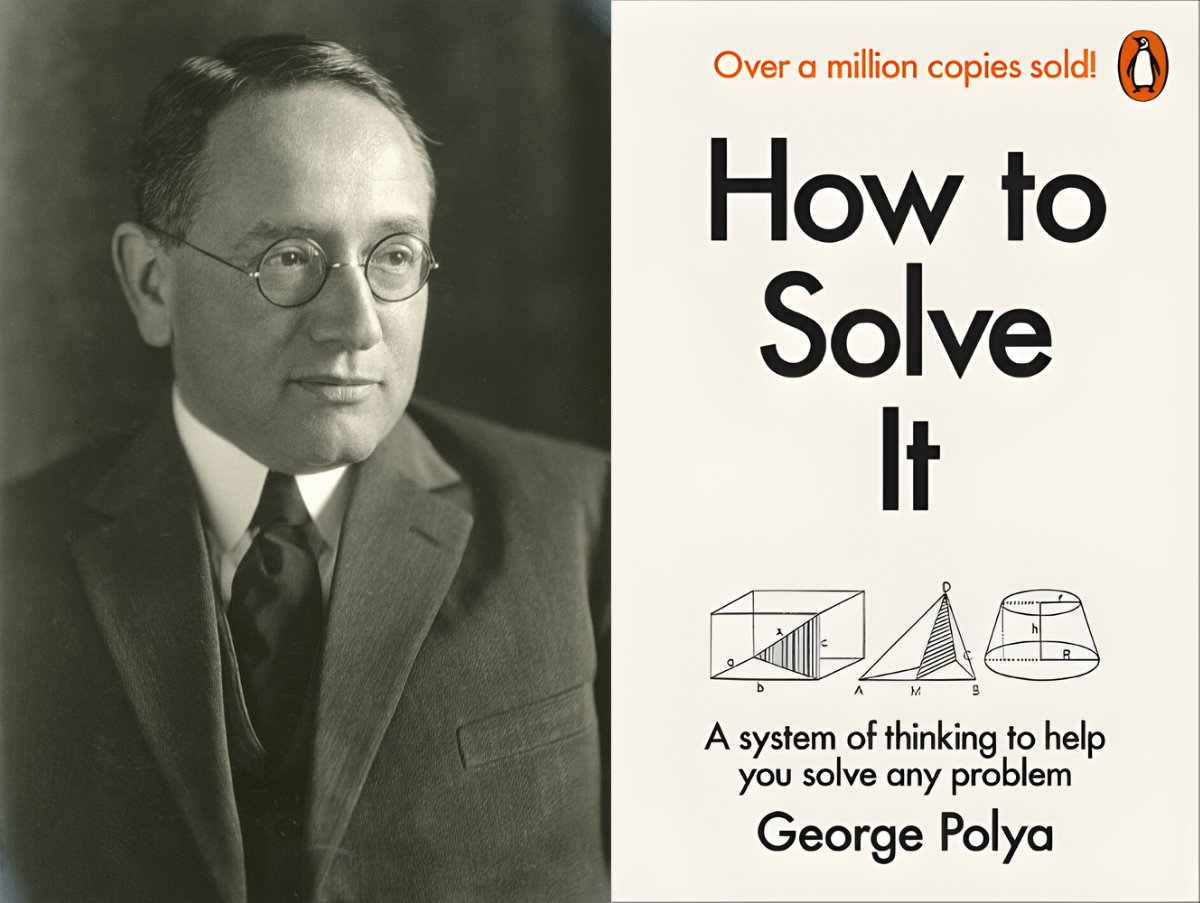
A Stanford mathematician spent 40 years watching brilliant students freeze in front of hard problems.
Not because they lacked intelligence. Because nobody had ever taught them what to do before they started solving.
His name is George Pólya, and the book he wrote in 1945 has never gone out of print. It has sold over a million copies. Marvin Minsky, the man who built the first neural network machine at MIT, said publicly that everyone should know this work. Engineers, mathematicians, and computer scientists treat it as scripture.
Most people have never heard of it.
Here is the framework buried inside it that changed how I think about every hard problem I face.
Pólya watched the same failure repeat itself across decades of students. A problem would be presented. The student would stare at it for a moment, feel the first wave of anxiety, and immediately start calculating. Not because calculating was the right next step. Because calculating felt like doing something, and doing something felt better than sitting with the discomfort of not knowing what to do.
The calculation was almost always wrong. Not because the student lacked the skill to execute it. Because they had not yet understood what they were being asked.
Pólya called this the most neglected step in all of problem solving, and he spent the rest of his career trying to make people take it seriously.
Step one is to understand the problem. Not skim it. Not assume you know what it is asking because you have seen something similar before. Understand it. Completely. He gave students a specific set of questions to force this: What is the unknown? What are the given conditions? Can you draw a figure? Can you restate the problem in your own words without looking at it?
That last one is the filter. If you cannot restate a problem in your own words, you do not understand it. You have only read it.
Most people skip this entirely and wonder why they get stuck.
Step two is to make a plan. Not to execute. To plan. Pólya documented every heuristic he could observe in successful problem solvers, and one pattern appeared more than any other. When a problem feels impossible, find a simpler version of it and solve that first. Not because the simpler version is the goal. Because solving it gives you a foothold, a method, a partial structure you can carry back to the original problem and build from.
He phrased it with precision: if you cannot solve the proposed problem, try first to solve some related problem. Could you imagine a more accessible related problem?
That question alone is worth more than most problem-solving courses.
Step three is to carry out the plan. This is the step everyone thinks is the whole game. It is not. It is the third of four. And Pólya spent the least time on it because it is the most obvious. Once you understand the problem and have a plan, execution is mostly patience.
Step four is the one almost nobody does. Look back. Not to check the arithmetic. To ask a different set of questions entirely. Can you verify the result by a different method? Can you use this result or this method to solve a different problem? What would you do differently next time?
This is where the real learning lives and almost no one goes there.
The look-back step is not about the problem you just solved. It is about building a library of methods that transfers to the next problem, and the one after that. Every expert problem solver Pólya studied had this habit. Every struggling student skipped directly from the answer to the next question on the page, carrying nothing forward, starting from zero every time.
Pólya's deepest insight was not a technique. It was a diagnosis.
The reason most intelligent people feel bad at problem solving is not that they lack the ability to reason. It is that they conflate understanding a problem with having read it. They conflate having a method with starting to work. They conflate getting an answer with having learned anything.
These are not the same things. They never were.
The students who get genuinely good at hard problems are not the ones who practice more. They are the ones who slow down at the beginning and the end, at the two moments every instinct tells them to rush.
The problem is almost always not as hard as it looks at the start.
You just haven't understood it yet.
1
27
Deeksha Sharma, PhD 🤿 retweeted

Apr 18
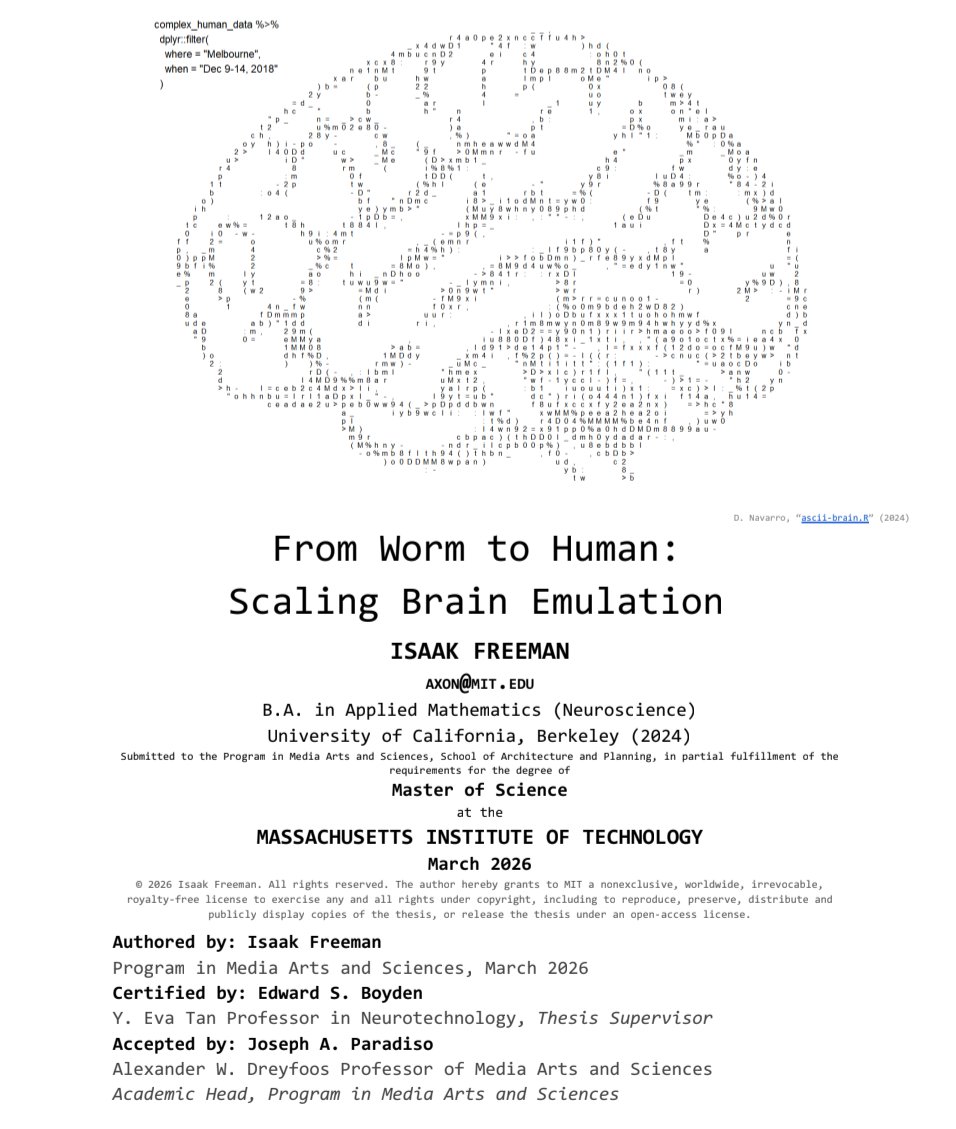
Ex-MIT researcher Isaak Freeman quits his PhD and drops the 50,000 H100 GPU roadmap to emulate a full human brain.
He mapped the entire path from 302-neuron worm to 86-billion-neuron human with connectomics costs now at 100 dollars per neuron and data acquisition via advanced microscopes as the only blocker left - digital humans just got a realistic timeline.
pdf.isaak.net/thesis
69
558
3,082
182,786
The power of abstract, compress, & intuit.
Apr 20

Human biological limits, like our tiny working memory and shallow calculation depth, are actually a feature. They force us to abstract, compress, intuit. If we had infinite resources, we would never have needed intelligence.
1
22
Looking forward @elonmusk

1
17
Deeksha Sharma, PhD 🤿 retweeted

What is life?
• Picasso: It’s art.
• Gandhi: It’s love.
• Freud: It’s death.
• Marx: It’s the idea.
• Socrates: It’s a test.
• Dostoevsky: It’s hell.
• Steve Jobs: It’s faith.
• Nietzsche: It’s power.
• Aristotle: It’s the mind.
• Einstein: It’s knowledge.
• Stephen Hawking: It’s hope.
• Schopenhauer: It’s suffering.
• Kafka: It’s just the beginning.
• Bertrand Russell: It’s competition.
150
504
2,208
132,002
Deeksha Sharma, PhD 🤿 retweeted

Apr 17
It fell out of the math—Schrödinger, Heisenberg, Dirac.
if one state is valid—and another is valid—
their combination is also valid.
That’s it. That’s superposition.
——
But here’s where it gets interesting:
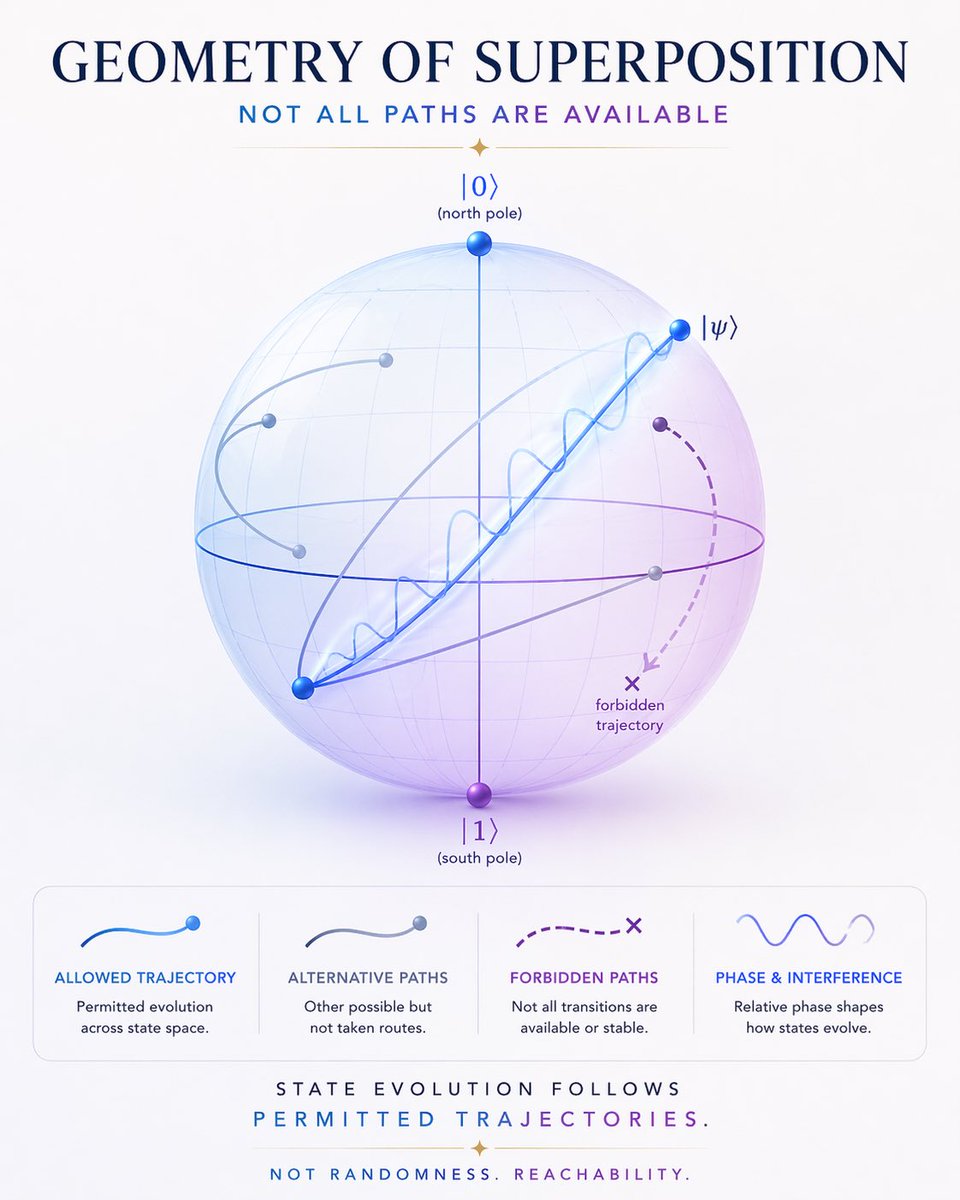
A qubit doesn’t exist “between” 0 and 1.
It exists on a sphere.
Every point = a real, structured state.
——
So superposition isn’t ambiguity—
it’s geometry.
And geometry comes with constraints.
Not every path across that sphere is equally available.
Not every transition is equally likely.
State evolution follows defined trajectories.
——
Which raises a better question than
“how does a system choose an outcome?”
→ Which outcomes were reachable in the first place?
Apr 16
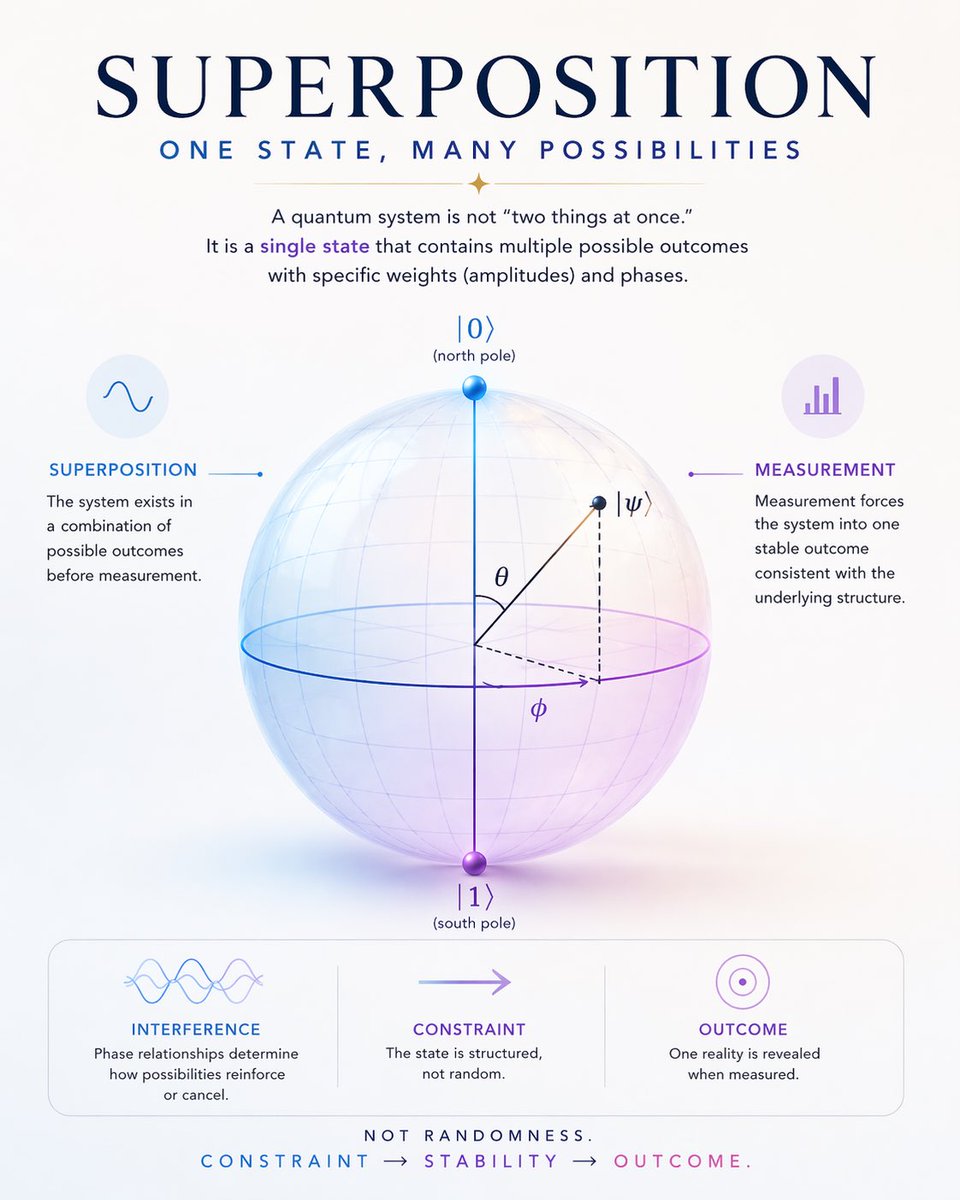
Superposition isn’t “being in two places at once.”
It’s existing in one state that hasn’t decided yet-
but whose future outcomes are already constrained by specific weights (amplitudes) and phase relationships.
——
The way it’s often described makes it sound like:
• there are two actual copies
• both are physically realized at the same time
🧠 That’s not what the math says.
Before measurement, a system is described by one wavefunction—
not two objects.
——
🔄 Think of it like a quantum coin toss:
The coin is spinning in the air: it’s not heads or tails yet- both possibilities are still open, but the physics of the spin already shapes what can happen.
That’s why interference happens — the phases let possibilities reinforce or cancel each other out.
——
👉🏻 So, not: “everything at once.”
It's: “everything still possible… but already limited.”
46
124
527
32,056
Deeksha Sharma, PhD 🤿 retweeted

Apr 17
Shocking: Scientists discover sperm whales are “talking” like humans
New research suggests their click-based communication has a structure strikingly similar to human language, and scientists are now trying to decode and translate it.
155
348
2,599
112,413