
I trade structure. Multi-TF structure & liquidity. Risk-first execution. Pure process. Trading hard. Laughing harder. 8–9 AM NY | 9–10 AM EU
Joined February 2020
- Tweets 994
- Following 88
- Followers 124
- Likes 152
Photos and videos

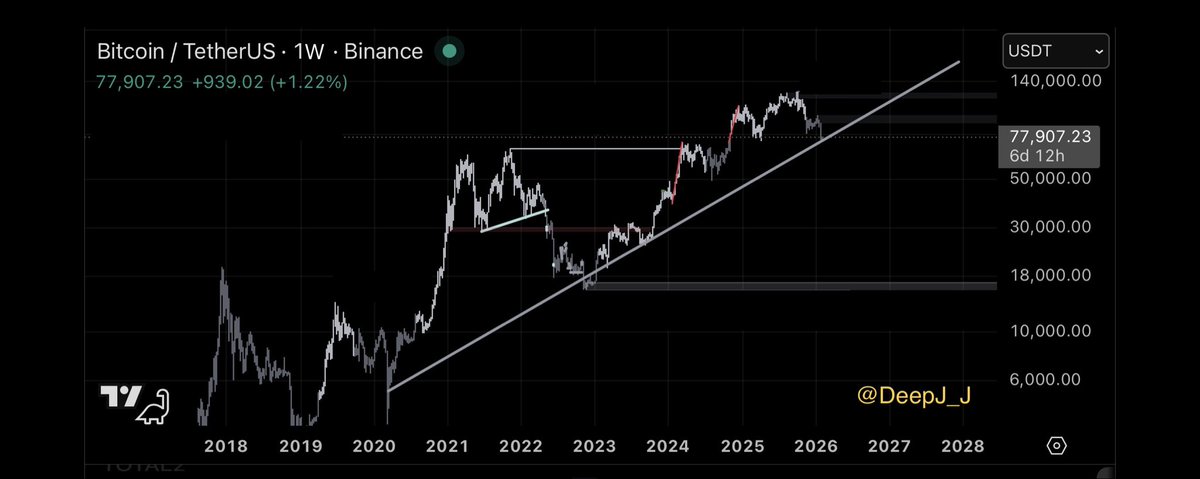
$BTC has been correcting from ~$97K (early 2026 high) for over 2 months now.
Weekly chart view:
→ Bulls showing strong upside momentum
→ Clear pullback/retest patterns with solid buying support
→ Higher lows forming, but no confirmed structural shift yet
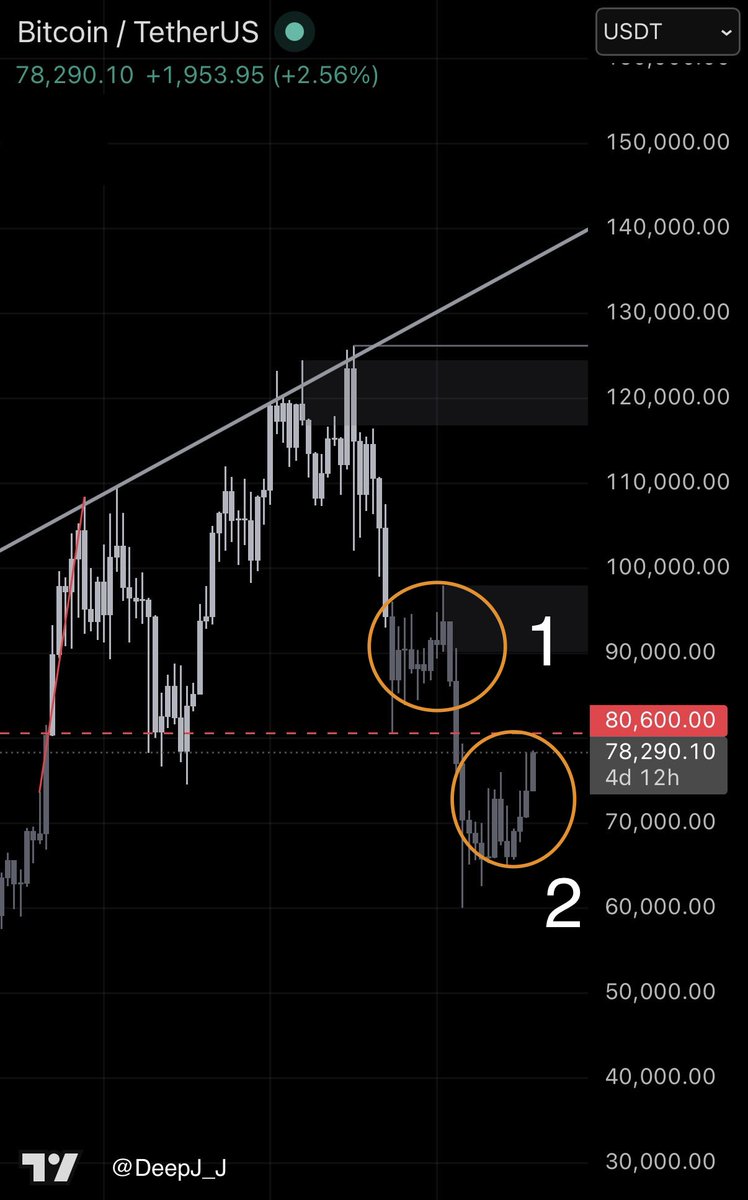
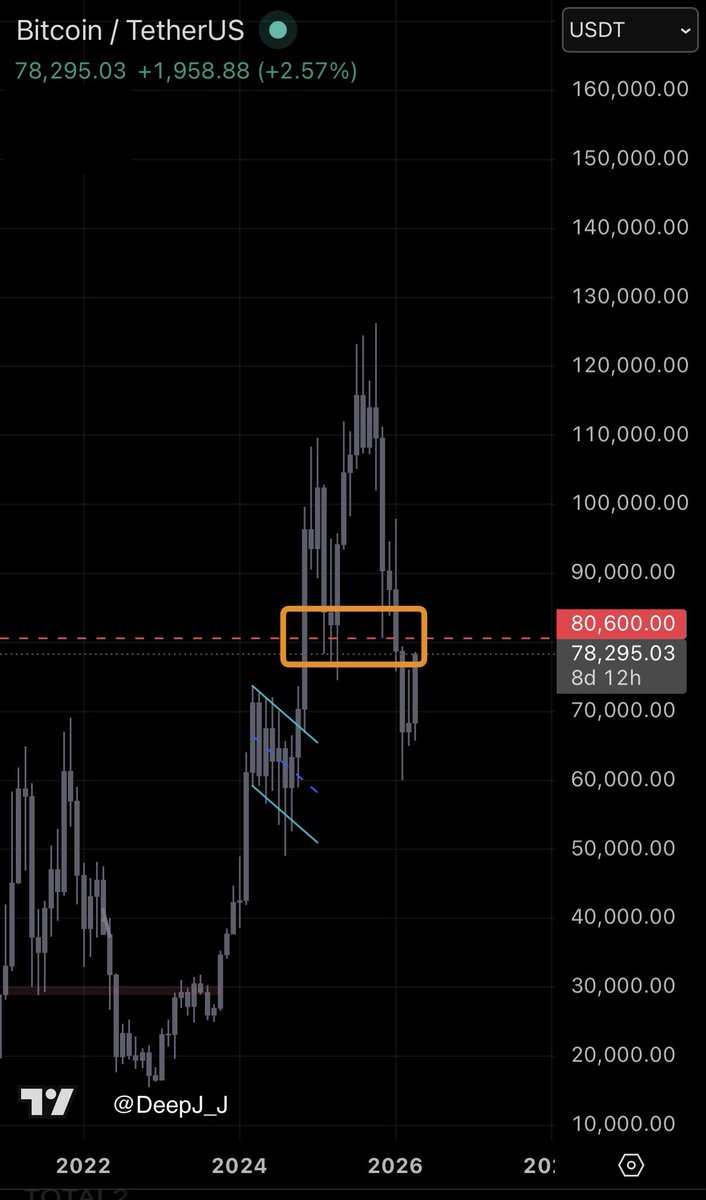
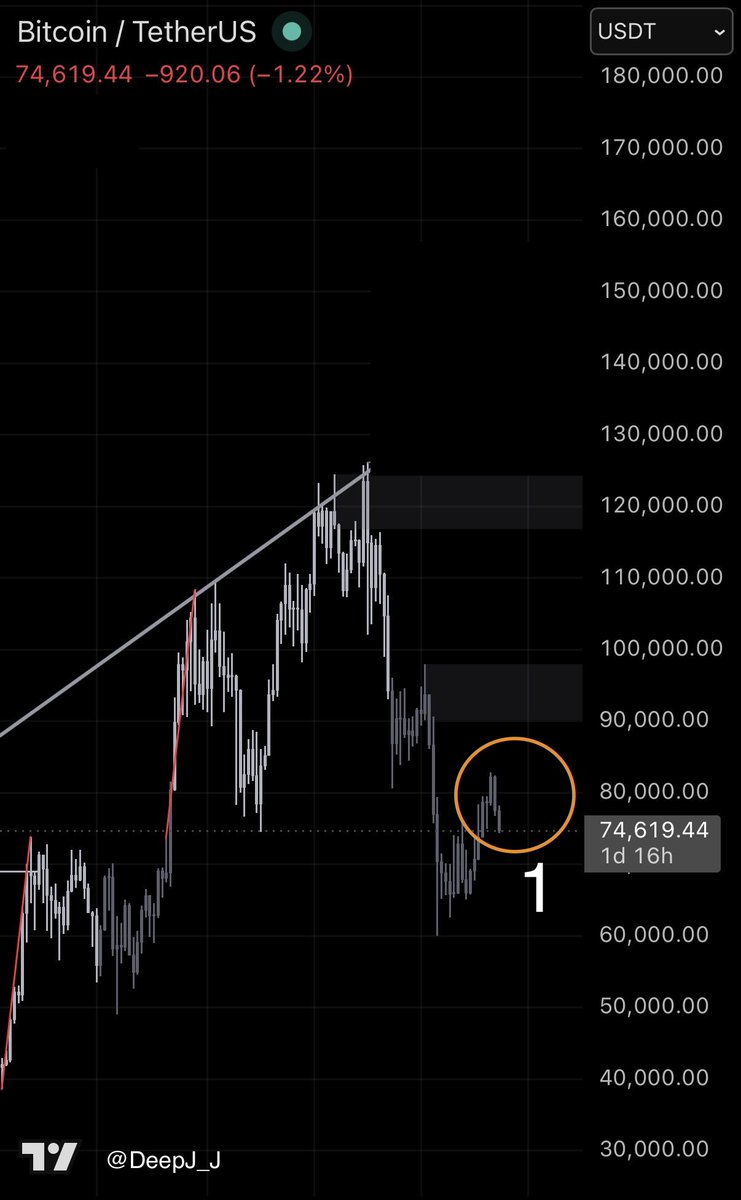
$80K is the critical zone right now.
If we push and form a second high here, it could become the perfect spot for bears to counterattack.
Monthly chart still shows this as a mid-cycle recovery — not a full trend reversal.
Institutions are accumulating (Coinbase premium positive 14 straight days ETF inflows), but macro risks remain.
$80K break or rejection will decide: continuation or second leg down?
What do you see on the charts? 👀
#Bitcoin #BTC
1
2
117
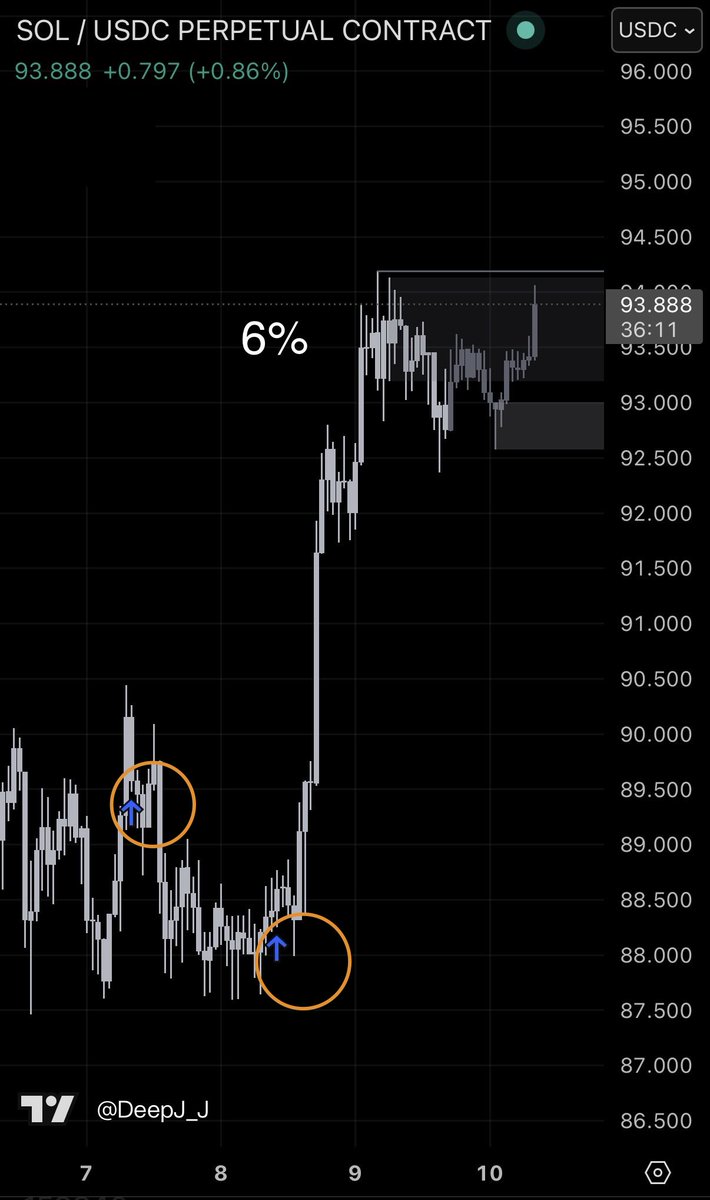
$SOL 1H chart update. |5.10
Since May 7, Solana bulls have shown very strong momentum. It feels like big upside is brewing.
Entered long at the yellow circle on the 7th position is currently in profit.
Looking at the weekly chart from May 7, there’s still solid target room to the upside. Whether it plays out in stages is still under observation, but multiple signs point to bulls building energy.
Supporting catalysts:
• Institutional ETF inflows: Spot Solana ETF saw nearly $33M net inflow this week (~$6.7M daily). Total ETF holdings now approach 2% of Solana’s circulating supply.
• Alchemy $20M Developer Fund: Web3 infrastructure giant Alchemy just launched a $20 million Solana developer fund to provide infra support, API credits, and tools for ecosystem projects.
Watching closely for continuation.
#SOL #Solana #Crypto #EthereumETF #Altcoins
3
109
🧵 XRP LEDGER MILESTONE THREAD
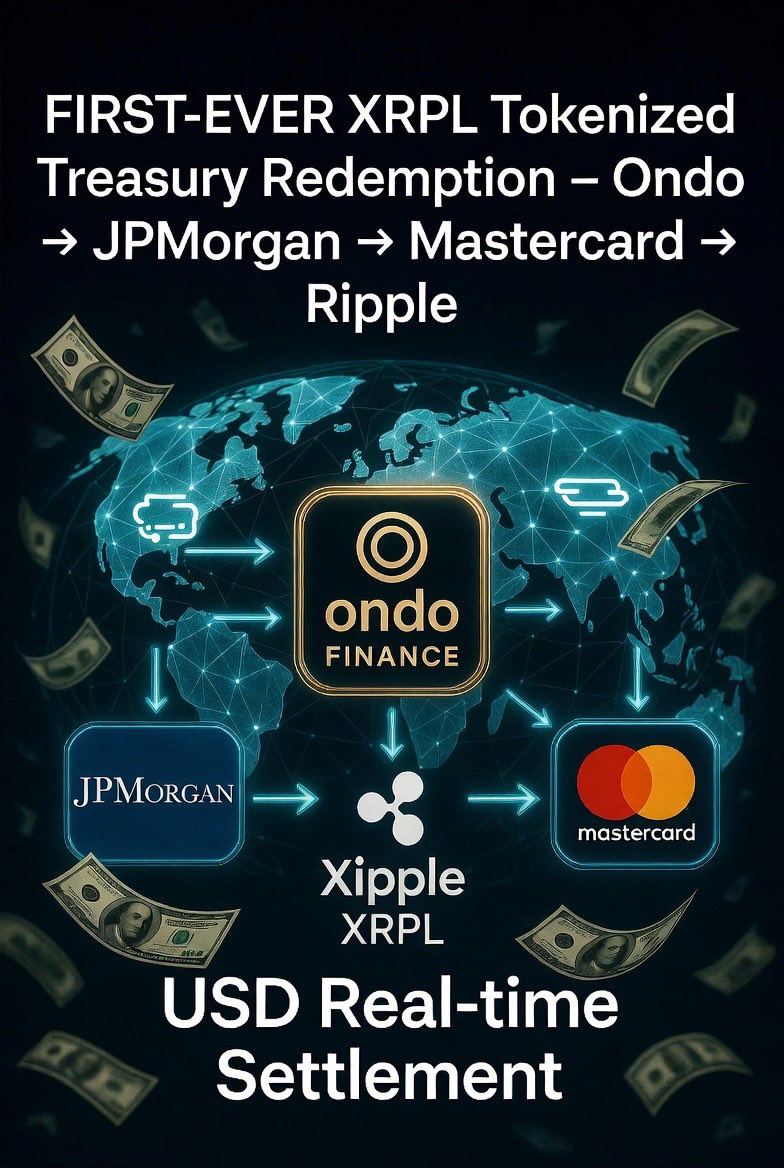
1/ 🚨 HISTORIC FIRST: JPMorgan, Mastercard, Ripple & Ondo Finance just pulled off the first-ever near real-time cross-border, cross-bank redemption of tokenized U.S. Treasuries on the XRP Ledger (XRPL).
Public blockchain meets traditional banking — huge leap for institutions and 24/7 global settlement. 🏦🔗
2/ How it actually went down step-by-step:
- Ripple redeemed part of its Ondo Short-Term U.S. Government Treasuries (OUSG) tokenized on XRPL.
- Ondo handled the on-chain redemption.
- Fiat instructions went through Mastercard’s Multi-Token Network.
- Landed on Kinexys by J.P. Morgan.
- JPMorgan settled USD straight into Ripple’s Singapore bank account via correspondent network.
Whole thing took under 5 seconds — even after banking hours.
3/ Why this is massive:
- First cross-border, cross-bank tokenized Treasury redemption on a public ledger in real time.
- XRPL just proved it can plug directly into Wall Street giants for RWA settlement.
- Unlocks true 24/7 global liquidity — goodbye T 2 delays.
- Ripple called it a real step toward 24/7 financial infrastructure.
4/ XRP popped on the news. Analysts say this is the strongest proof yet that XRPL is built for tokenized Treasuries and cross-border payments. Trillions in RWA volume could flow through public chains like this.
5/ Official partners (announced May 6):
• Ondo Finance
• Kinexys by J.P. Morgan
• Mastercard Multi-Token Network
• Ripple / XRPL
Covered by The Street, CoinDesk, AMBCrypto, CryptoBriefing, Yahoo Finance — all details match perfectly.
What’s your take? Tokenized Treasuries finally going mainstream on public rails? More banks incoming? 👇
#XRP #XRPL #Ripple #JPMorgan #Mastercard #OndoFinance #TokenizedTreasuries #RWA
2
116
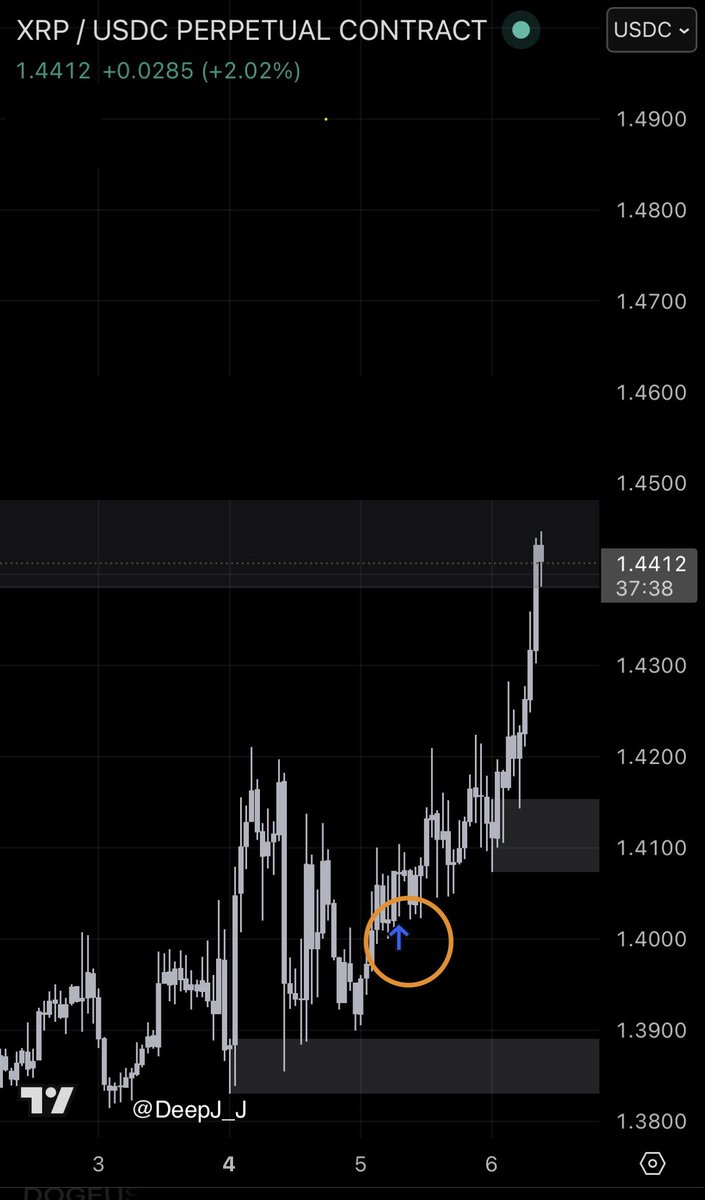
$XRP 1H update. |5.6
Bulls surging strong with clean momentum. Entered at the yellow circle zone.
Today's volume hit $74.6M with concentrated spike — Binance liquidity at its lowest since 2020 per CoinDesk. Historically, this setup has often preceded major breakouts.
Chart showing strong push toward previous highs.
Risk-managed. Watching for continuation.
1
2
115
🧵 SOL WHALE THREAD – Update (May 7, 2026)
1/ 🚨 MAJOR SOL WHALE MOVE JUST CONFIRMED! 🐳 After 3 months of complete silence, a large whale deposited $4.1 MILLION USDC into Hyperliquid and opened a 2x leveraged LONG position on 92,161 SOL worth approximately $8 MILLION.
The same whale is also holding 5,992 ETH in long positions valued at roughly $14 MILLION.
Data tracked live by Onchain Lens. This is big-money conviction.
2/ FAST-FORWARD TO TODAY (May 7): SOL just exploded short-term to $90 — driven by a massive $16 MILLION short squeeze that liquidated bears in minutes.
Current price action: trading in the $84 – $89 range, with 24-hour gains of 1.5% to 3% (peaked near 5% intraday).
The whale opened near $86 and is now clearly in profit as SOL pushes toward $90.
3/ Market context making this even hotter:
•SOL Open Interest (OI) up 10% to $5.55 BILLION
•Options volume surged 194%
•Hyperliquid whale total holdings now ~$4.279 BILLION with long/short ratio near 1.02:1 (bullish bias)
This SOL whale is riding the exact momentum wave.
4/ Bigger picture: Solana’s upcoming Alpenglow upgrade is generating huge hype for faster confirmations and ecosystem growth. Multiple outlets are linking this whale entry directly to upgrade anticipation and potential breakout toward $95–$96.
5/ Sources (no discrepancies):
• Onchain Lens (on-chain data)
• Bitget News
• PANews
• AMBCrypto
• MEXC News
• Coinglass (liquidations & derivatives)
• Yahoo Finance
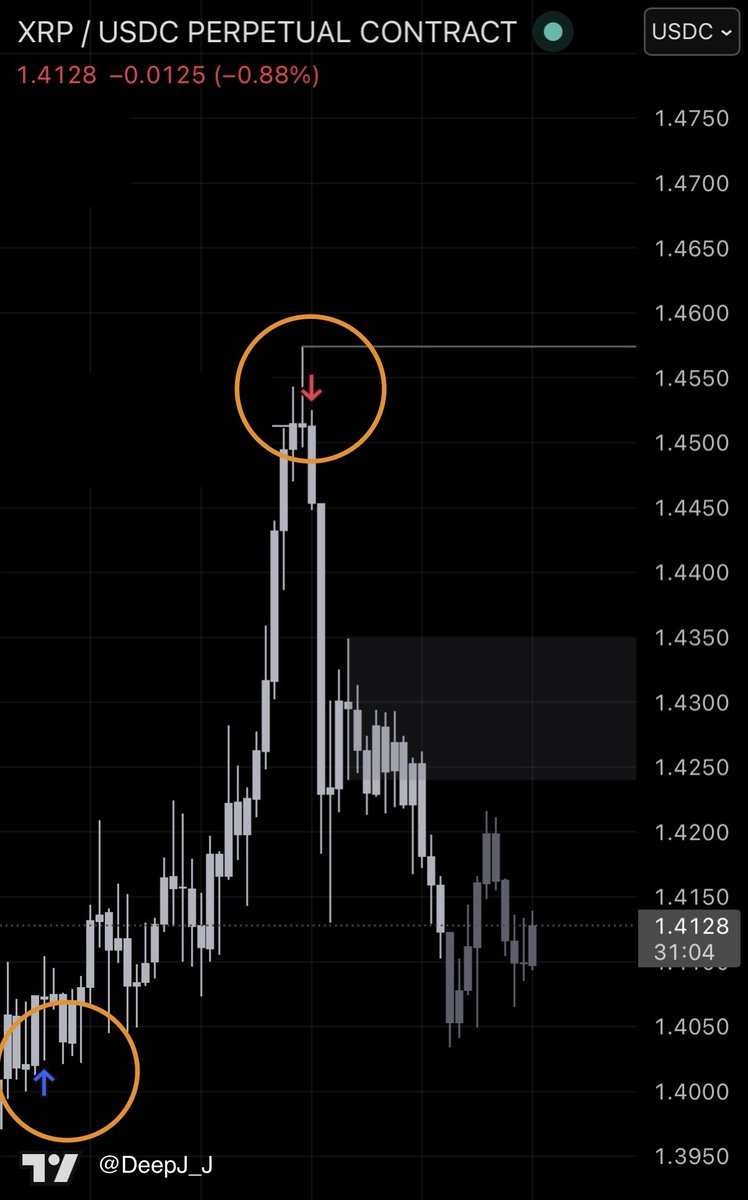
📊 TECHNICAL CHART UPDATE (1H Timeframe – May 7)
Second 1H chart: Went long on $SOL. Entry position wasn’t ideal, but we’re now sitting on some floating profit.
4H structure confirmed with today’s lower probe.
First weekly chart: Continued small-range sideways inside the descending channel, forming higher lows.
Best long opportunity = next dip with a clear lower wick.
Upside target ~$136. Staying patient and waiting for the setup.
This is a high-conviction, on-chain driven event — not rumor.
What’s your take? Will this whale push SOL through $90 resistance or is more upside loading? Drop your thoughts below 👇
#SOL #Solana #CryptoWhale #ShortSqueeze #Hyperliquid #Alpenglow
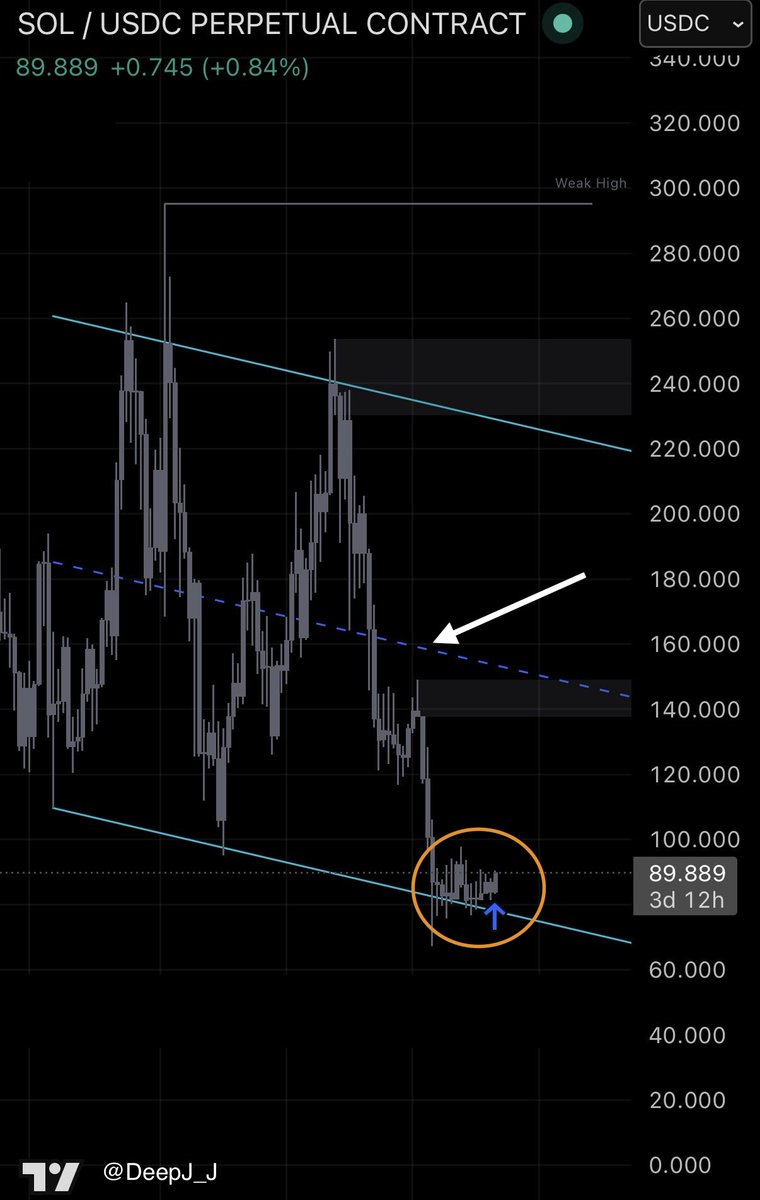
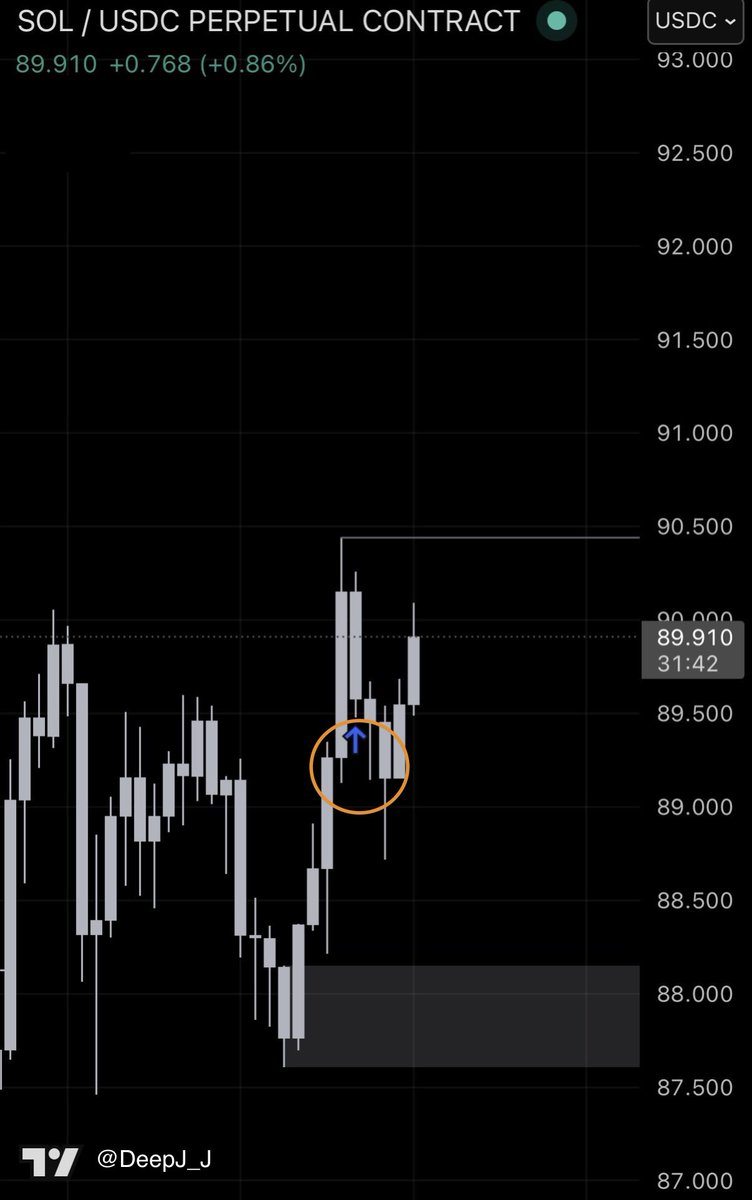
3
81
🚀 Latest Crypto News Deep Dive Analysis (May 6, 2026): OKX Joins the Pre-IPO Frenzy with Perpetual Futures on OpenAI, SpaceX & Anthropic
News Core Summary (Source: CoinDesk today’s report)
OKX has officially announced the launch of perpetual futures contracts tied to private giants including OpenAI, SpaceX, and Anthropic, offering retail traders “synthetic price exposure” before their IPOs. These products do not involve any actual equity ownership or shareholder rights they are pure price speculation tools. OKX’s move directly enters the fierce competition among crypto exchanges for the “Silicon Valley private company pre-IPO gold rush,” building on the trend already pioneered by Bitget and Injective.
Product Mechanism Breakdown
• Perpetual Futures: USDT-margined, no expiry date, enabling long-term long/short positions on the “virtual prices” of these private companies.
• Synthetic Exposure: Settled based on secondary market valuations or predictive price indices. Users receive zero real shares (unlike Robinhood’s SPV equity token attempt last year).
• Purpose: Let average traders bet early on price swings ahead of major listings — SpaceX (June IPO, potential valuation up to $1.75 trillion), OpenAI (Q4 target near $1 trillion), Anthropic (October financing over $60 billion) and other giants.
In its official blog, OKX stresses this is the next step in bringing the $13 trillion private equity market “on-chain.”
Which Sectors Benefit (Sector Linkage Analysis)
1. RWA (Real World Assets) Pre-IPO Trading Sector
This is the core winning sector. Crypto exchanges are evolving from BTC/ETH spot & derivatives into “traditional equity synthetic products,” creating the RWA 2.0 wave (no longer just tokenizing bonds or real estate — now directly mapping Silicon Valley unicorn valuations). Similar products have already powered Bitget’s IPO Prime (SpaceX-linked tokens on Solana via Republic) and Injective’s pre-IPO perpetual futures (covering OpenAI, SpaceX, Anthropic, Perplexity since last year). With OKX now joining, CEX and DEX competition is complete, set to drive massive trading volume and fee revenue.
2. AI × Crypto Crossover Sector
OpenAI and Anthropic are pure AI giants; SpaceX is deeply embedded in AI via the Musk ecosystem. This product tightly fuses AI narratives with crypto derivatives — massively bullish for AI concept tokens, AI Agents, decentralized computing and related sub-sectors. Background context: SpaceX, OpenAI and Anthropic plan combined fundraising exceeding $240 billion from June through year-end, potentially pulling liquidity from tech, AI and crypto markets. This product keeps that liquidity circulating inside crypto to fuel continued hype.
3. Derivatives (Perpetual Futures) Prediction Market Sector
OKX, already a derivatives leader, further cements its dominance in high-leverage speculation. Like Injective’s on-chain pre-IPO futures (viewed as bringing private equity straight on-chain), OKX’s version targets high-leverage retail bets. Regulatory gray area exists (OpenAI previously distanced itself from Robinhood’s similar product), but retail attraction is enormous — expect short-term spikes in OKX open interest (OI) and funding rates.
4. Liquidity & Cycle Sector
Analysts note the three giants’ IPOs could signal the crypto bull market peak. Ironically, this product acts as a “hedge against liquidity outflow,” letting crypto users keep betting on traditional giants on-chain and indirectly supporting BTC/ETH plus overall risk appetite.
1
2
157
Foundation & Institutional Linkages
The article and OKX announcement mention zero direct cooperation with any specific foundations or DAOs.
• No direct foundation linkage: Unlike Bitget’s partnership with Republic to issue Solana tokens, OKX’s product is pure CEX perpetual futures with no crypto project foundations or VC funds jointly issuing or endorsing.
• Indirect institutional ecosystem linkages: These AI/space giants are backed by top Silicon Valley VCs (a16z, Sequoia, etc.) who are also major LPs in crypto funds. OKX’s launch indirectly creates on-chain liquidity exits for their “paper wealth.” It complements Injective (on-chain focus) with centralized high-leverage retail firepower. Broader picture: OKX’s $25 billion valuation (tied to Intercontinental Exchange strategic investment) accelerates its tokenization & RWA roadmap — this product signals the shift from “pure crypto” to “traditional asset synthesis,” opening doors to traditional financial institutions.
Market Impact & Risk Warnings
• Bullish factors: Short-term OKX volume explosion expected; AI/RWA narrative gets fresh fuel; retail gains low-barrier access to “next $1 trillion IPO” bets.
• Risks: Pure speculation with no real equity — prices vulnerable to manipulation or valuation bubbles; IPO delays or valuation cuts could trigger cascading liquidations; SEC stance on synthetic equity products remains uncertain.
• Overall trend: Crypto exchanges are pivoting from “coin-centric” to “full-asset-class derivatives platforms.” RWA pre-IPO is set to be a major 2026 H2 narrative.
#RWA #Crypto #OpenAI #SpaceX #Perps #PreIPO #AIxCrypto
59
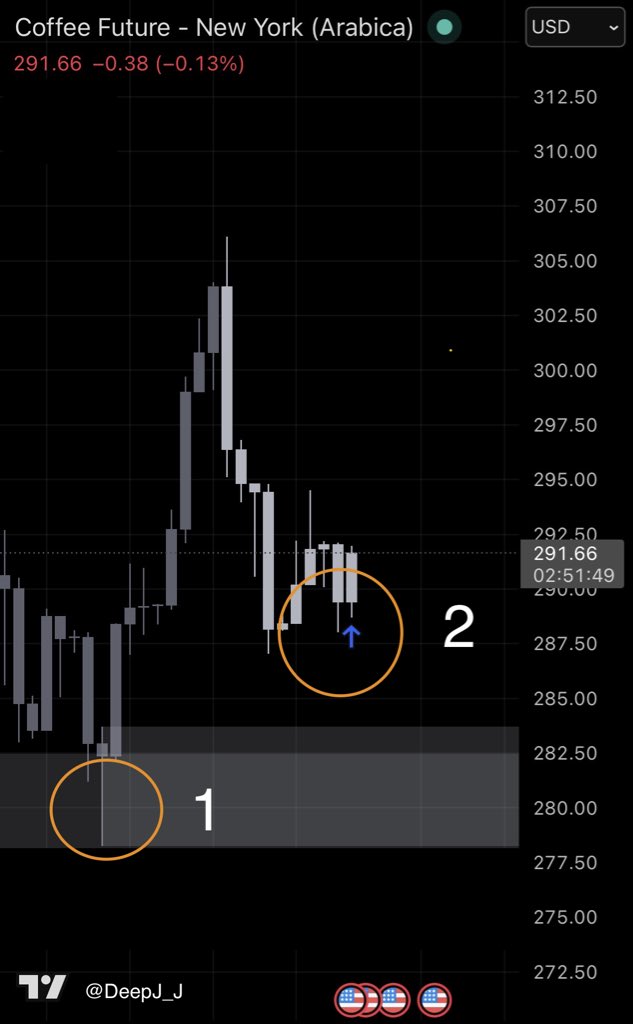
☕ 4.28| Arabica Coffee Futures Rebound! NY May contract 0.76% to 290.70¢/lb as ICE certified stocks hit 2-month low (494k bags). Short-term tightness Hormuz risks lifting prices.
Long-term: Brazil 2026/27 record crop forecast (66-75M bags) → StoneX sees 10M bag global surplus. Watch for pullback on harvest progress.
Long setup update.
15min chart: Entered with confirmed higher low and solid liquidity pool overhead. Clean entry structure.
On the 4H timeframe: Higher lows marked at yellow circles 1 and 2.
Plan is simple — take profit at $299 target zone. Add to position on dip to $283 if it retests.
Risk-managed with clear levels. Watching for continuation.
#CoffeeFutures #Commodities #Trading
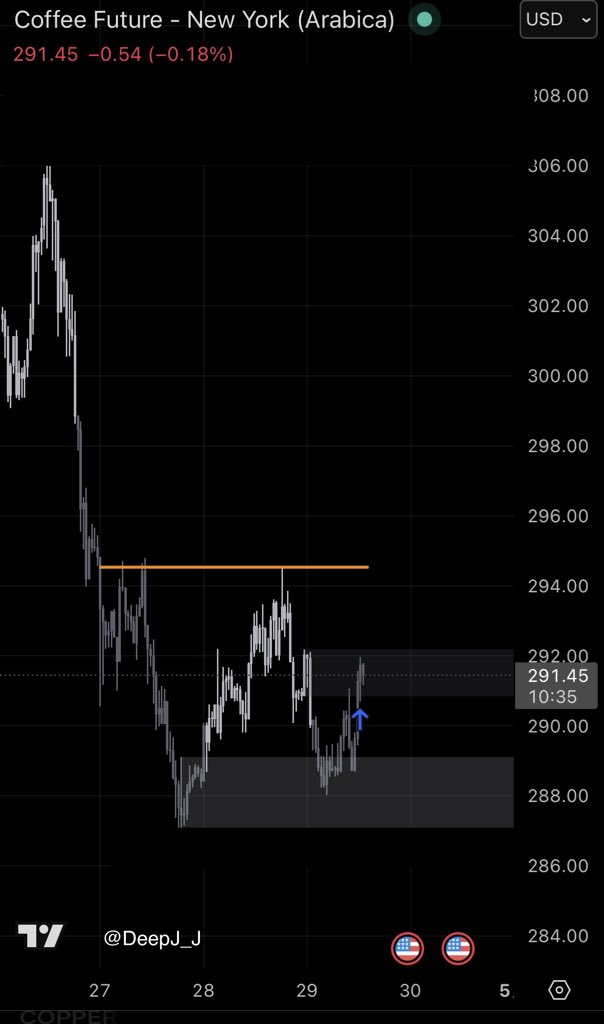
5
145
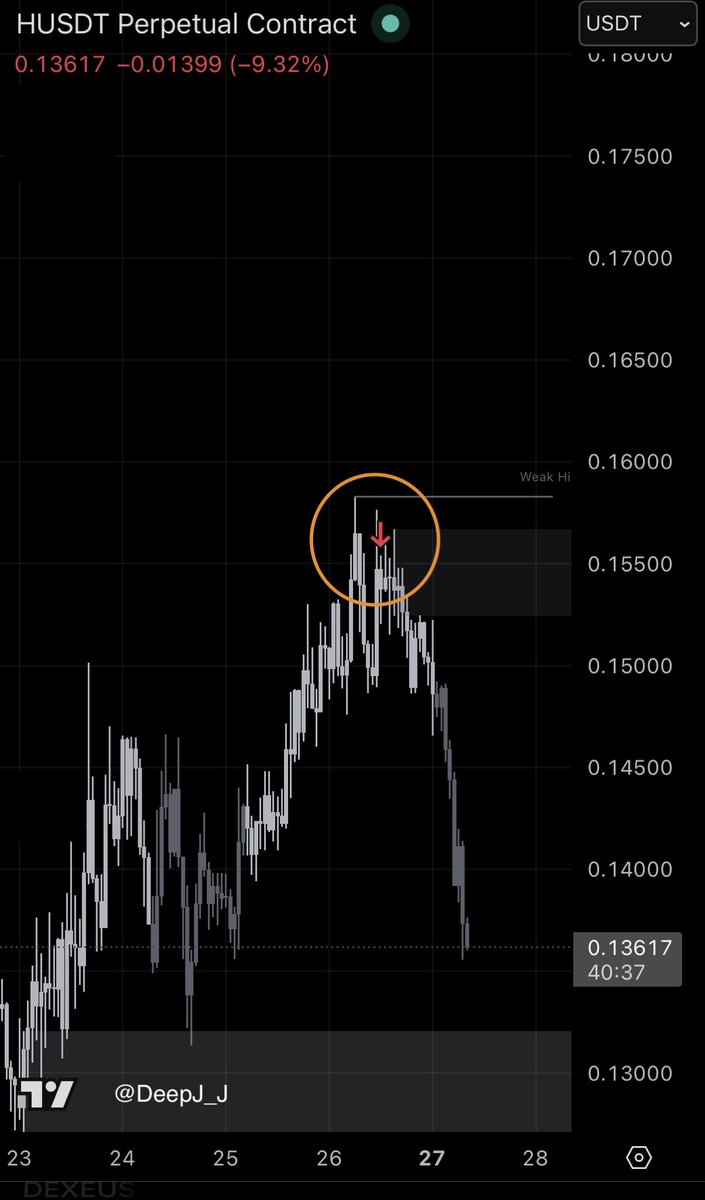
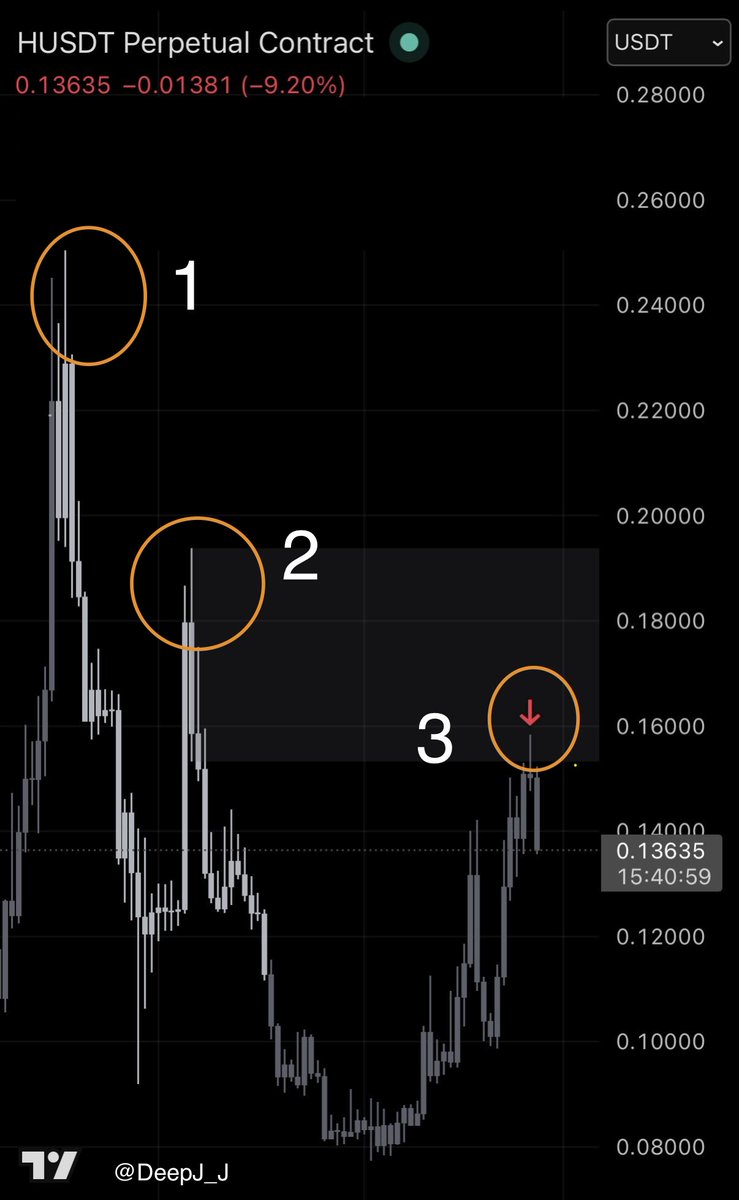
$H(humanity) short setup update.
On the daily chart, entered short at the yellow circle after clear failure to make a new higher high — showing momentum weakening.
On the 1H timeframe: lower highs at 1 and 2, then rejection at 3 where price failed to break prior high. This also matched the April 18 breakout level, confirming a clean structure shift to lower highs.
Took the short right at that rejection. Setup looks solid with good risk management. Watching for continuation now.
2
169
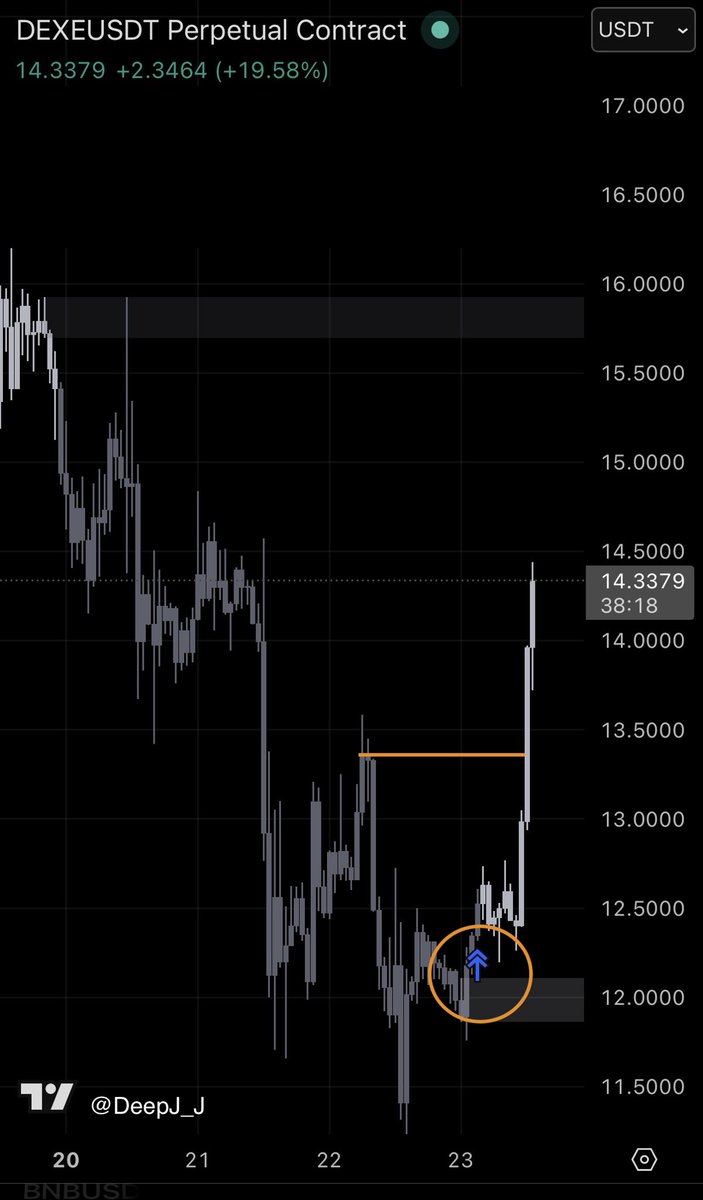
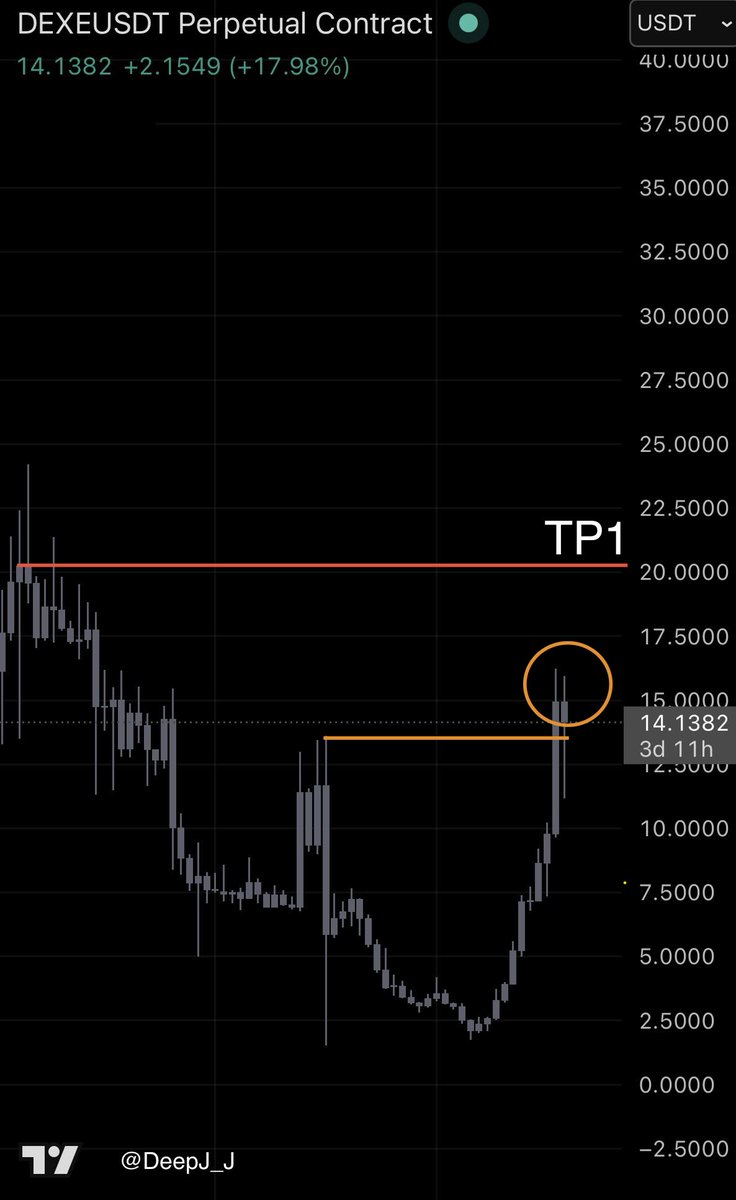
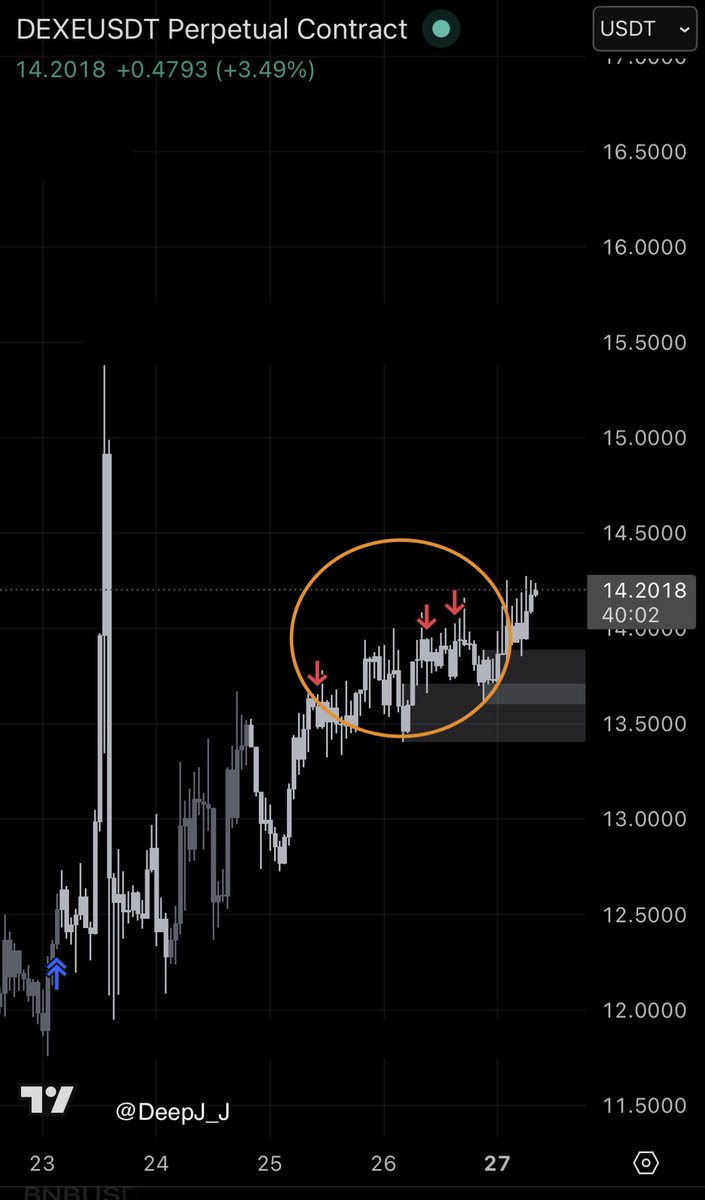
$DEXE 1H Update |4.23
Haven’t taken any trades for a while, just resting.
Entered a long on $DEXE 1H today near a higher low formation. Price has broken above the previous high with solid momentum so far.
On the weekly, after breaking the prior high, this week did a low test but the candle is not closed yet. Target zone around the red line for partial profit taking.
Still observing.
#DEXE #Crypto #Trading
1
4
147
🔥 $BTC Coinbase Premium: 14 Days Positive — Strongest Institutional Signal Since ATH (The technical chart analysis will be released later)
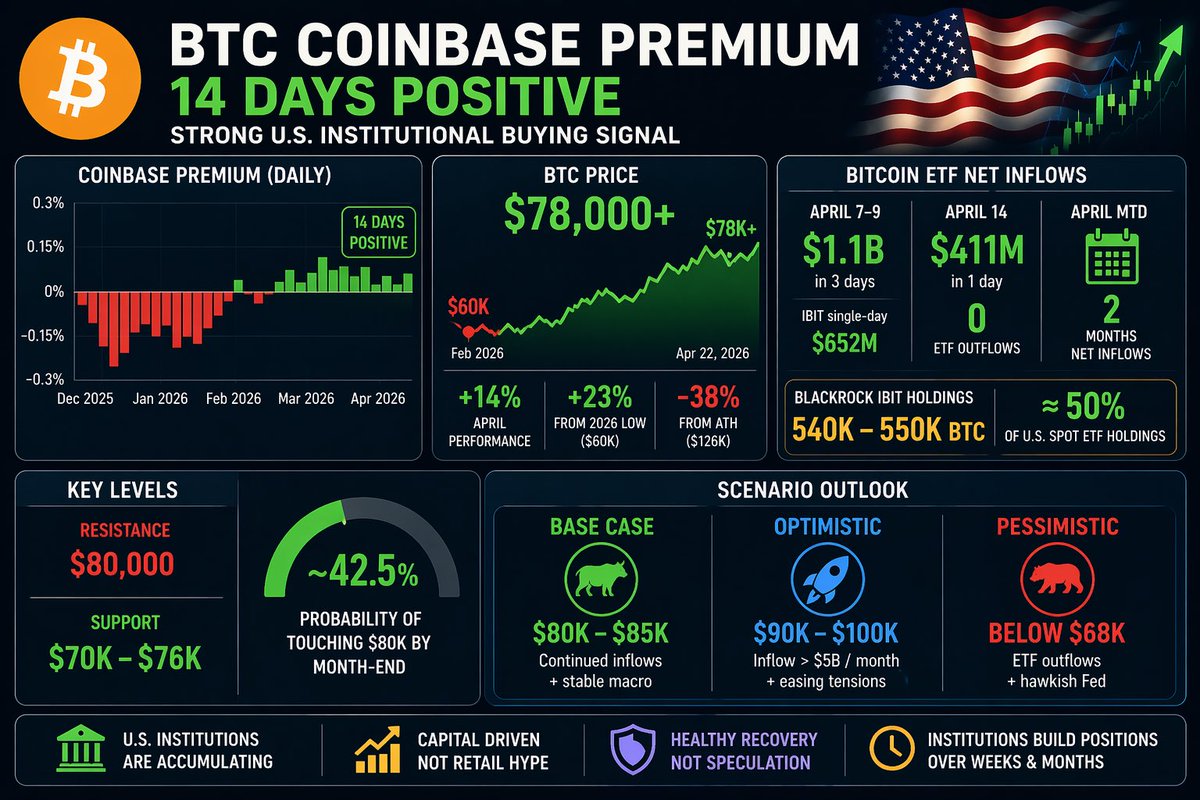
The Coinbase Premium has stayed positive for 14 consecutive days — the longest streak since Bitcoin’s $126K all-time high in October 2025.
This isn’t a random signal. It reflects a clear shift: U.S. institutional capital is stepping back in and driving this market rebound.
The Coinbase Premium measures the price difference between BTC on Coinbase (USD) and Binance (USDT). When Coinbase trades at a higher price, it indicates stronger demand from U.S.-based buyers — primarily institutions like BlackRock, hedge funds, corporate treasuries, and ETFs.
In simple terms:
Positive premium = aggressive institutional buying
Negative premium = weakening U.S. demand
Historically, this metric has been one of the cleanest signals of “smart money” behavior.
Context makes this even more important. From mid-December 2025 to February 2026, the premium stayed negative, and Bitcoin dropped from $100K to $60K. Now, since April 9, the premium has flipped positive and held for two straight weeks — while BTC rebounded to $78K.
Same metric. Same pattern. Different direction.
ETF flows strongly confirm this trend. Between April 7–9, Bitcoin ETFs saw $1.1B in net inflows, including a single-day $652M allocation into BlackRock’s IBIT. On April 14 alone, another $411M flowed in — with zero outflows across all ETFs.
This is not fragmented demand. It’s coordinated institutional accumulation.
Even more important is concentration. BlackRock’s IBIT now holds approximately 540,000–550,000 BTC, accounting for roughly half of total U.S. spot ETF holdings. This level of concentration means institutional flows are increasingly capable of influencing price direction.
As of now, BTC is trading above $78K, up 14% in April and about 23% from its $60K low in February, though still 38% below its $126K ATH. The next major level is clearly $80K — both a psychological and technical resistance zone.
From a structural perspective, several bullish signals are aligning: sustained positive premium, continuous ETF inflows, a higher-low price structure, and improving macro risk sentiment. This is not a weak bounce driven by speculation — it looks more like a controlled, capital-backed recovery.
That said, risks remain. The probability of breaking $80K in the immediate term is not guaranteed. ETF inflows, while strong recently, are still slower compared to 2025 levels. The $70K–$76K support range has been tested multiple times, and broader macro risks — including inflation, Federal Reserve policy, and geopolitical tensions — could still disrupt momentum.
Looking ahead, three scenarios stand out. In a base case, continued steady inflows could push BTC into the $80K–$85K range. In a more optimistic scenario, if monthly ETF inflows exceed $5B and macro conditions improve, Bitcoin could move toward $90K–$100K. On the downside, if ETF flows reverse and macro conditions tighten, a drop below $68K remains possible.
The key takeaway is simple: this rebound is being driven by U.S. institutional capital, not retail speculation or leveraged trading. That aligns closely with the early stages of previous bull cycles in 2019–2021 and 2024.
At the same time, institutional accumulation is a slow process. Positions are built over weeks and months — not days. A strong signal does not mean immediate upside.
Coinbase Premium is telling you that smart money is active again.
What happens next depends on whether that flow continues — and whether the market can sustain momentum above $80K.
#Bitcoin #BTC #Crypto #CryptoMarkets #BitcoinETF #BlackRock #IBIT #Coinbase #Binance #OnChain #SmartMoney #InstitutionalMoney #CryptoInvesting #MarketAnalysis #Trading #Investing #Web3 #DeFi #CryptoNews
3
74
2026 DeFi’s Darkest Weekend: $292M Kelp DAO Exploit — In-Depth Breakdown
The fallout from Saturday’s massive exploit has now turned into DeFi’s darkest weekend of 2026.
Kelp DAO lost $292 million (approximately 116,500 rsETH, representing ~18% of total circulating supply) in a single night. The attack vector was the LayerZero-powered cross-chain bridge.
The incident triggered widespread contagion:
- Aave, the largest lending protocol, saw deposits and TVL plunge by approximately $6 billion (with reports citing $5.4B–$6.6B in ETH withdrawals and overall TVL drop).
- The AAVE token fell sharply, with intraday drops reported around 16–18% amid panic.
- Bad debt estimates on Aave range from $177M to ~$236M in the WETH pool.
**Attack Attribution & Timeline**
- Suspected Actor: North Korea’s Lazarus Group. Security firms have linked the operation to Lazarus / TraderTraitor subgroup.
- Attack Time: April 18–19, 2026 (Saturday into Sunday).
- Protocols Impacted: At least 9 DeFi platforms including Aave, SparkLend, Fluid, Upshift, and others.
**Attack Path – “Targeted Poisoning”**
The technique was a highly targeted operation:
1. Penetration of Kelp’s LayerZero Configuration
2. Exploitation of Ignored Security Recommendations — Kelp reportedly disregarded LayerZero’s advice for a multi-verifier (DVN) setup.
3. Compromise of RPC Nodes — Attackers gained control of key RPC nodes to approve forged cross-chain messages.
4. Mass Minting & Laundering — Forged messages allowed unbacked rsETH to be created and transferred across 20 different chains.
5. Cascading Borrowing — Stolen rsETH was deposited as collateral on lending platforms (primarily Aave) to borrow real WETH/ETH.
Kelp became a “soft target” due to its simplified verifier setup despite warnings. Experts call this “targeted poisoning” — attackers had deep prior knowledge of the architecture.
**Market Impact Summary (as of April 20)**
- Kelp DAO loss: $292 million (116,500 rsETH)
- Aave TVL/deposits drop: ~$6 billion
- AAVE token decline: ~16–18%
- Bad debt on Aave: $177M–$236M
Curve founder Michael Egorov’s warning rings true: “Cross-chain bridges are a systemic vulnerability in DeFi.”
#DeFi #Aave #KelpDAO #LayerZero #LazarusGroup #CryptoHack #DeFiBlackWeekend
2
98
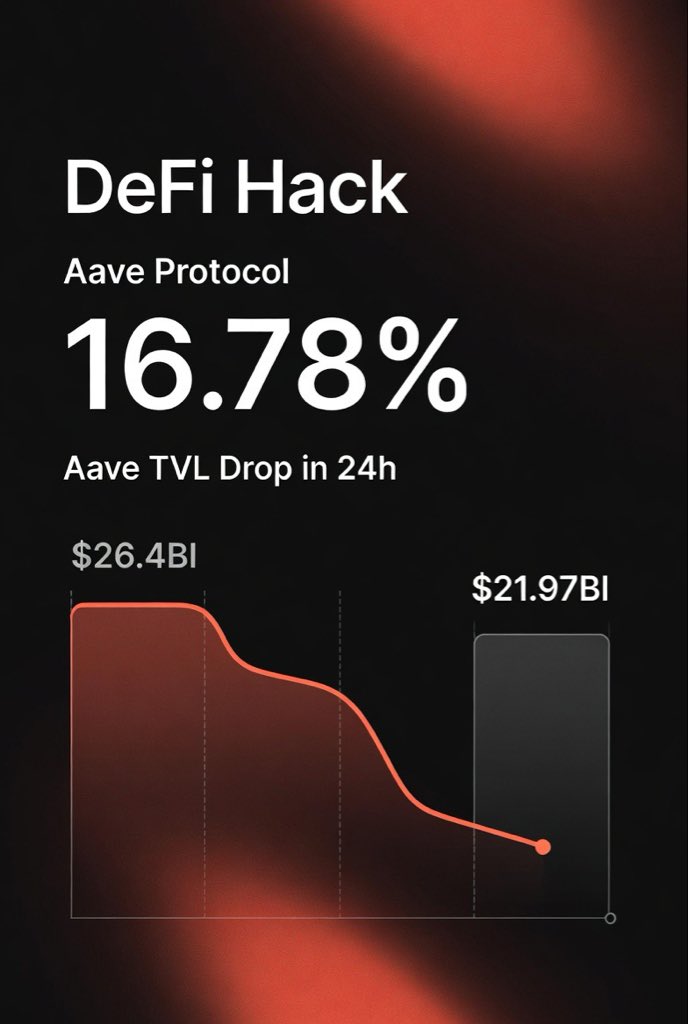
2026’s Largest DeFi Hack: Aave TVL Plunges 16.78% in One Day — $292M rsETH Exploit Marks the Start of a Trust Crisis
On April 18, 2026, DeFi experienced its largest single attack of the year. Kelp DAO’s rsETH (restaked ETH) liquidity re-staking token was hit by a LayerZero cross-chain bridge vulnerability, resulting in approximately 116,500 rsETH (worth $292 million, about 18% of total circulating supply) being instantly drained.
This is not just a "$292 million loss." Aave’s Total Value Locked (TVL) crashed from $26.4 billion to $21.97 billion within 24 hours — a staggering 16.78% drop, equivalent to losing one-fifth of its entire locked assets in a single day.
The attack was textbook-level: Hackers exploited a configuration vulnerability in LayerZero’s Decentralized Verifier Network (DVN) — a 1-of-1 setup where compromised nodes allowed forged cross-chain messages. This enabled the creation of massive amounts of unbacked fake rsETH from Kelp DAO’s bridge contract. These fake tokens were quickly deposited as collateral into Aave V3, V4, Compound V3, Euler, and other lending protocols, allowing attackers to borrow real WETH/ETH. Aave alone saw roughly $196 million in real assets borrowed. The funds were then laundered across 20 different chains, making recovery far more difficult than the Ronin or Mt. Gox incidents.
Aave responded swiftly: @aave announced the freezing of the rsETH market. Founder Stani Kulechov stated clearly, “Aave’s contracts were not exploited — this incident stems entirely from an external vulnerability in rsETH.” SparkLend, Fluid, and other protocols also froze simultaneously to prevent cascading liquidations. However, market panic had already set in: large whales withdrew funds, Aave’s TVL plunged sharply, and the AAVE token dropped nearly 10% intraday.
**Key Data (Real-time Update):**
• Aave TVL: $21.97 billion (down $5.4 billion from the previous day)
• Stolen rsETH: 116,500 tokens (18% of circulating supply)
• Affected chains: 20
• Potential bad debt: Approximately $177–250 million in Aave’s WETH pool (Umbrella safety module covers only part)
This marks the third major incident related to LayerZero projects: Wormhole $320M in 2022, Nomad $190M, and now Kelp DAO $292M in 2026. Cross-chain bridges have repeatedly become “cross-chain graveyards,” exposing the systemic fragility of DeFi in its pursuit of high yields and multi-chain interoperability.
DeFi’s underlying promise has always been “Code is Law.” Yet reality repeatedly shows that hackers move faster than audit teams, and trust is far more fragile than code. Every such event forces the industry to re-examine risk management — from asset collateral verification and cross-chain message authenticity to risk thresholds in lending protocols.
Was Aave a “victim” this time or guilty of “risk control negligence”? Objectively, the contracts themselves were secure, and the quick freeze demonstrated mature risk controls. However, the widespread acceptance of high-yield restaked assets like rsETH as collateral also reflects a shared responsibility among DeFi protocols in asset onboarding. In the long run, this may accelerate the industry’s re-evaluation of “synthetic assets cross-chain collateral” models.
What do you think? Is it time to tighten cross-chain risk exposure, or do you believe technological iterations will ultimately solve these issues? Feel free to share your judgment in the comments. The future of DeFi depends on genuine evolution after every lesson.
(Data sources: DefiLlama, on-chain analytics, Aave official statements; incident is still being tracked.)
#DeFi #Aave #CryptoHack #LayerZero #rsETH #CryptoNews
2
156