
Launched in July 2023, Device is a new Cell Press journal that publishes ground-breaking, multi-disciplinary research on applied technology.
Joined February 2023
- Tweets 359
- Following 80
- Followers 1,773
- Likes 59
179 Photos and videos















Pinned Tweet

19 Jul 2024
The July issue of @Device_CP is live, featuring STEAM-focused contributions from Max Shtein, Bozhi Tian and more, plus a Future Tech in Retrospect by @DrRituRaman and Cecilia Laschi!
Read it now: cell.com/device/issue?pii=S2…
3
5
2,480
Feb 19
Missed our live webinar on Emerging memory technologies?
Now available on demand
Explore breakthroughs in MRAM, memristors, phase-change & ferroelectric devices—and their impact on neuromorphic computing.
Watch now hubs.li/Q043NWGw0
2
116
Feb 13
Our metaphotonics webinar is now available on demand!
Explore how metasurfaces and engineered nanostructures are enabling breakthroughs in quantum devices, compact lasers, and single-photon sources.
hubs.li/Q042_tcc0
2
82
Feb 6
Don’t miss it, Feb 9 at 11:00 a.m. ET
Hear cutting-edge insights on next-generation memory technologies and neuromorphic computing in this Cell Press webinar. Recording available on demand.
Register today.
hubs.li/Q0424TXR0
2
95
Jan 30
Emerging memory technologies | Cell Press Webinar
Feb 9, 2026 | 11:00 a.m. ET
Explore how MRAM, memristors, phase-change, ferroelectric & spin-texture devices are reshaping the future of computing and data storage.
Register now.
hubs.li/Q040_DR-0
2
105
Jan 15
Our metaphotonics webinar is next week! Join us to explore how metasurfaces and nanoscale light–matter interactions are driving breakthroughs in quantum devices, compact lasers, and single-photon sources.
Still time to register!
hubs.li/Q03-KRHW0
1
85
18 Dec 2025
Discover how metasurfaces are reshaping the future of quantum tech. Join our webinar, Metaphotonics revolution, to explore breakthroughs in light–matter interactions, nanoscale lasing & single-photon emission.
Register free to attend!
hubs.li/Q03YBpQd0
2
75
25 Nov 2025
Let’s talk #MaterialsScience! Editor-in-chief @Organometallica will be at #F25MRS next week. Come and say hello and discuss your research with him.
2
171
6 Oct 2025
Join our unique panel discussion exploring the plastics economy, and ask your publishing questions to our experienced Cell Press editors Vjekoslav Dekaris @Chem_CP & Xiaoxiao Qiao @ChemCatalysis @CellSymposia #CSPlastics2025
Register here: hubs.li/Q03Mg4ct0
1
136
15 Sep 2025
⏰ Last chance! Early bird discount for @CellSymposia #CSPlastics2025 ends today. Don’t miss your chance to join the conversation on the future of plastics sustainability! Use code DISCOUNT10 for an extra 10% off
🔗hubs.li/Q03JfJf10
1
120
30 Jul 2025
Read the latest research and perspectives from our journals on the use of #AI in the study of normal #BrainFunction, along with the diagnosis and treatment of #NervousSystemDisorders. hubs.li/Q03zvd_V0
1
104
29 May 2025
Biotechnology plays a crucial role in areas such as healthcare, agriculture, environmental sustainability, and industrial processes. Journals across Cell Press have come together to share exciting papers in this growing field. Visit the collection: hubs.li/Q03mS_KS0
2
153
14 Mar 2025
In an upcoming Focus Issue, we'll provide an up-to-date survey of technological advances with memory devices. We're now welcoming papers that present the latest breakthroughs in the implementation of various types of neuromorphic devices.
Learn more: hubs.li/Q03bTJ3t0
1
261
Device retweeted

17 Jan 2025
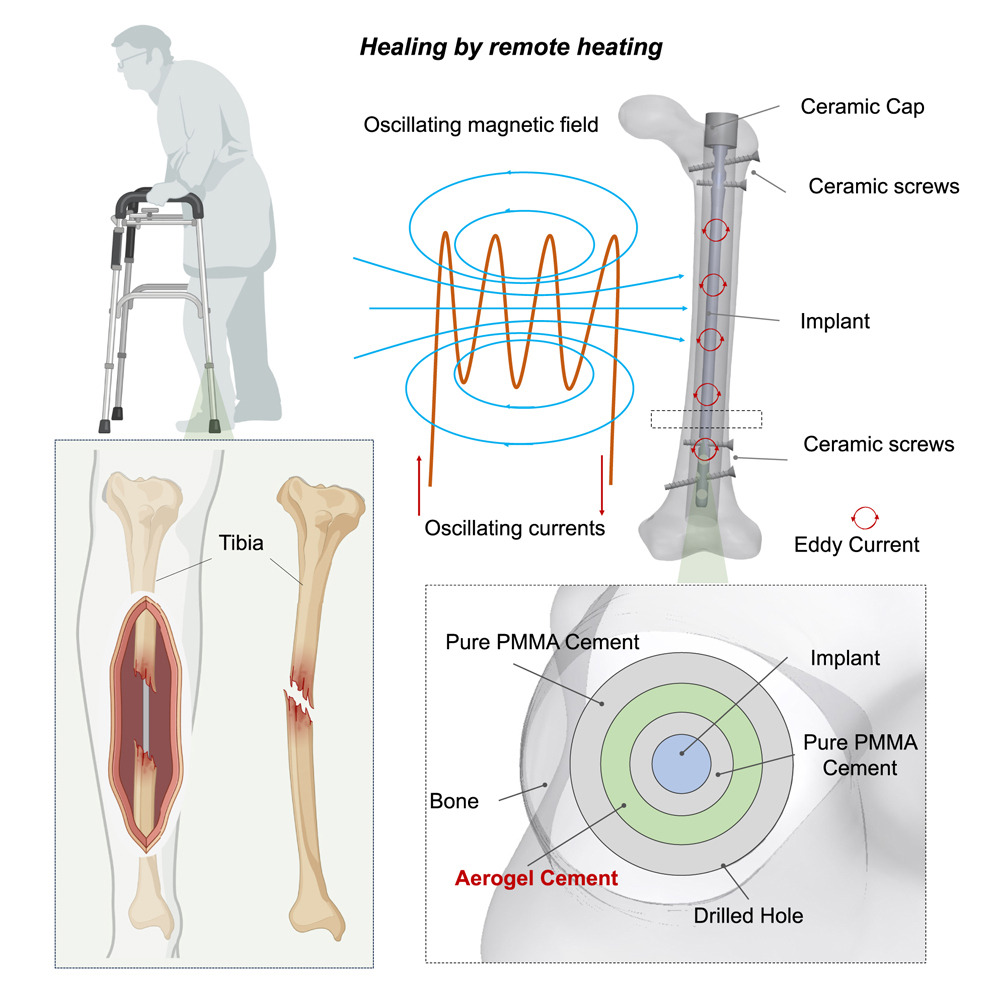
Glad to share that our paper on orthopedic surgery/implant is now published online in @Device_CP by Cell Press! This work is in collaboration with Prof. @yuxiao_zhou from @TAMU. Congratulations to the team @ViseVanderbilt @VanderbiltVinse @VUEngineering! cell.com/device/fulltext/S26…
3
19
1,103
Device retweeted

17 Dec 2024
New paper in @CellPressNews @Device_CP we show
"Full 2π phase modulation using exciton-polaritons in a two-dimensional superlattice" Collab. with @yurilu15 @redwinggroup @2DCCMIP @PennEngineers @ESEatPenn @UPennSinghNano. Funding:@AFOSR @USNavyResearch
cell.com/device/fulltext/S26…
1
3
9
1,089
Device retweeted

6 Dec 2024
Biorobotic hybrid heart as a benchtop cardiac mitral valve simulator. Check out this exciting research by @ellentroche & colleagues in @Device_CP #F24MRS hubs.li/Q02-6TCZ0
1
2
11
2,499
Device retweeted

9 Dec 2024
Battery-like computer memory keeps working above 1000°F
The material transports oxygen ions rather than electrons, creating heat-resistant voltages for both digital memory and in-memory computing
Computer memory could one day withstand the blazing temperatures in fusion reactors, jet engines, geothermal wells and sweltering planets using a new solid-state memory device developed by a team of engineers led by @UMengineering.
Unlike conventional silicon-based memory, the new device can store and rewrite information at temperatures over 1100°F (600°C)—hotter than the surface of Venus and the melting temperature of lead. It was developed in collaboration with researchers at @SandiaLabs.
“It could enable electronic devices that didn’t exist for high-temperature applications before,” said Yiyang Li, U-M assistant professor of materials science and engineering and the senior corresponding author of the study published today in @Device_CP.
“So far, we’ve built a device that holds one bit, on par with other high-temperature computer memory demonstrations. With more development and investment, it could in theory hold megabytes or gigabytes of data.”
There’s a trade-off, however, for devices that aren’t at extreme temperatures full time: new information can be written on the device only above 500°F (250°C). Still, the researchers suggest a heater could solve the problem for devices that must also work at lower temperatures.
The heat-tolerant memory comes from moving negatively charged oxygen atoms rather than electrons. When heated above 300°F (150°C), conventional, silicon-based semiconductors start conducting uncontrollable levels of current. Because electronics are precisely manufactured to specific levels of current, high temperatures can wipe information from a device’s memory. But the oxygen ions inside the researchers’ device aren’t bothered by the heat.
They move between two layers in the memory—the semiconductor tantalum oxide and the metal tantalum—through a solid electrolyte that acts like a barrier by keeping other charges from moving between the layers. The oxygen ions are guided by a series of three platinum electrodes that control whether the oxygen is drawn into the tantalum oxide or pushed out of it. The entire process is similar to how a battery charges and discharges; however, instead of storing energy, this electrochemical process is used to store information.
Once the oxygen atoms leave the tantalum oxide layer, a small region of metallic tantalum is left behind. At the same time, a tantalum oxide layer similarly caps the tantalum metal layer on the opposite side of the barrier. The tantalum and tantalum oxide layers do not mix, similar to oil and water, so these new layers will not revert back to the original state until the voltage is switched.
Depending on the oxygen content of the tantalum oxide, it can act as either an insulator or a conductor—enabling the material to switch between two different voltage states that represent the digital 0s and 1s. Finer control of the oxygen gradient could enable computing inside the memory, with more than 100 resistance states rather than a simple binary. This approach could help reduce power demand.
“There’s a lot of interest in using AI to improve monitoring in these extreme settings, but they require beefy processor chips that run on a lot of power, and a lot of these extreme settings also have strict power budgets,” said Alec Talin, a senior scientist in the Chemistry, Combustion and Materials Science Department at Sandia National Laboratories and a co-author of the study.
“In-memory computing chips could help process some of that data before it reaches the AI chips and reduce the device’s overall power use.”
The information states can be stored above 1100 °F for more than 24 hours. While that level of heat tolerance is comparable to other materials that have been developed for re-writable, high-temperature memory, the new device comes with other benefits. It can run at lower voltages than some of the leading alternatives—namely, ferroelectric memory and polycrystalline platinum electrode nanogaps—and can provide more analog states for in-memory computing.
The research is funded by the @NSF, Sandia’s Laboratory-Directed Research and Development program, and the @UMich College of Engineering. The device was built in the @LurieNanofab and studied at the Michigan Center for Materials Characterization.
The authors have filed a patent based on this work to the U.S. Patent and Trademark Office and are seeking partners to bring the technology to market.
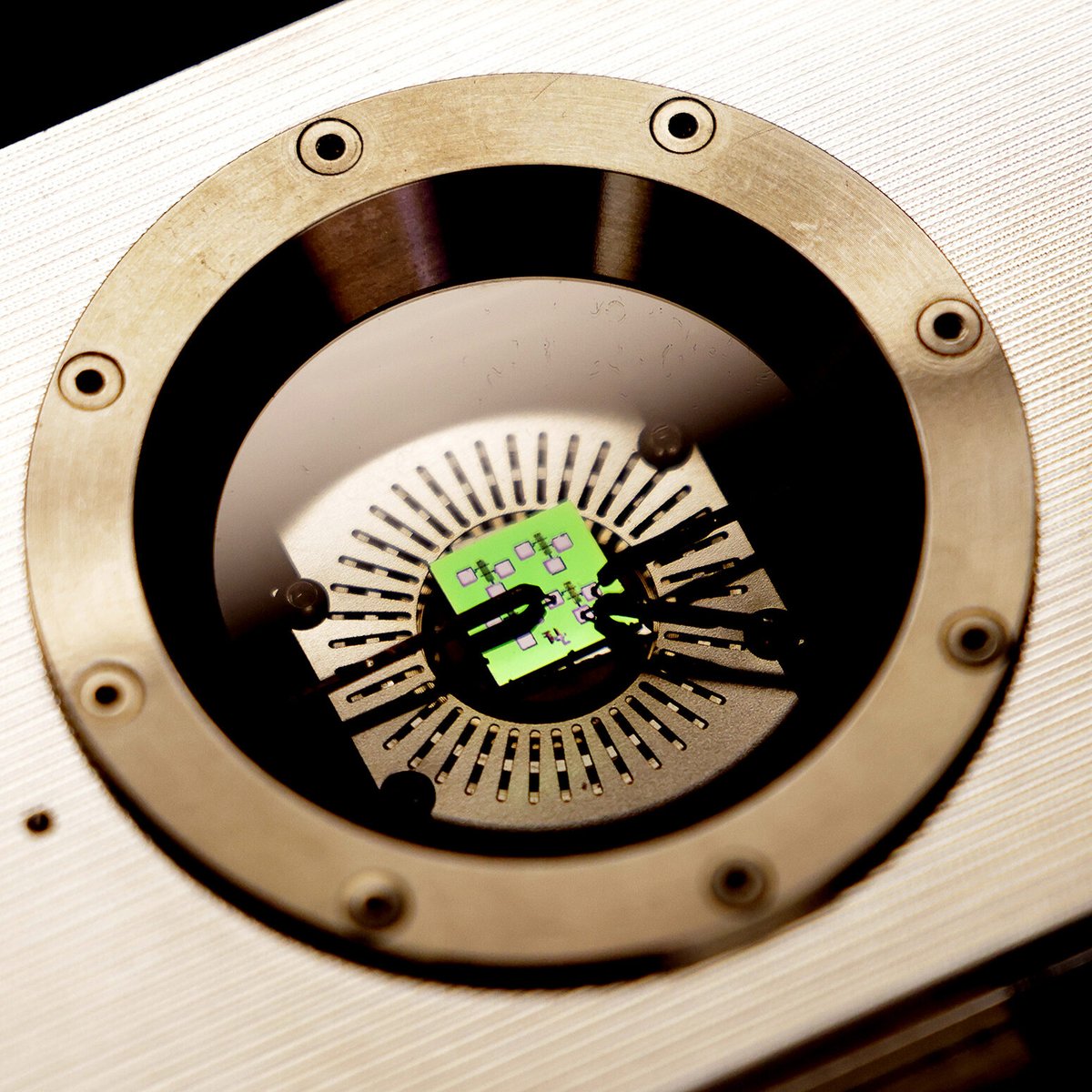
ALT The memory devices fabricated using tantalum oxide on this chip can store data for both conventional memory and in-memory computing above 1000°F. Image credit: Brenda Ahearn, Michigan Engineering
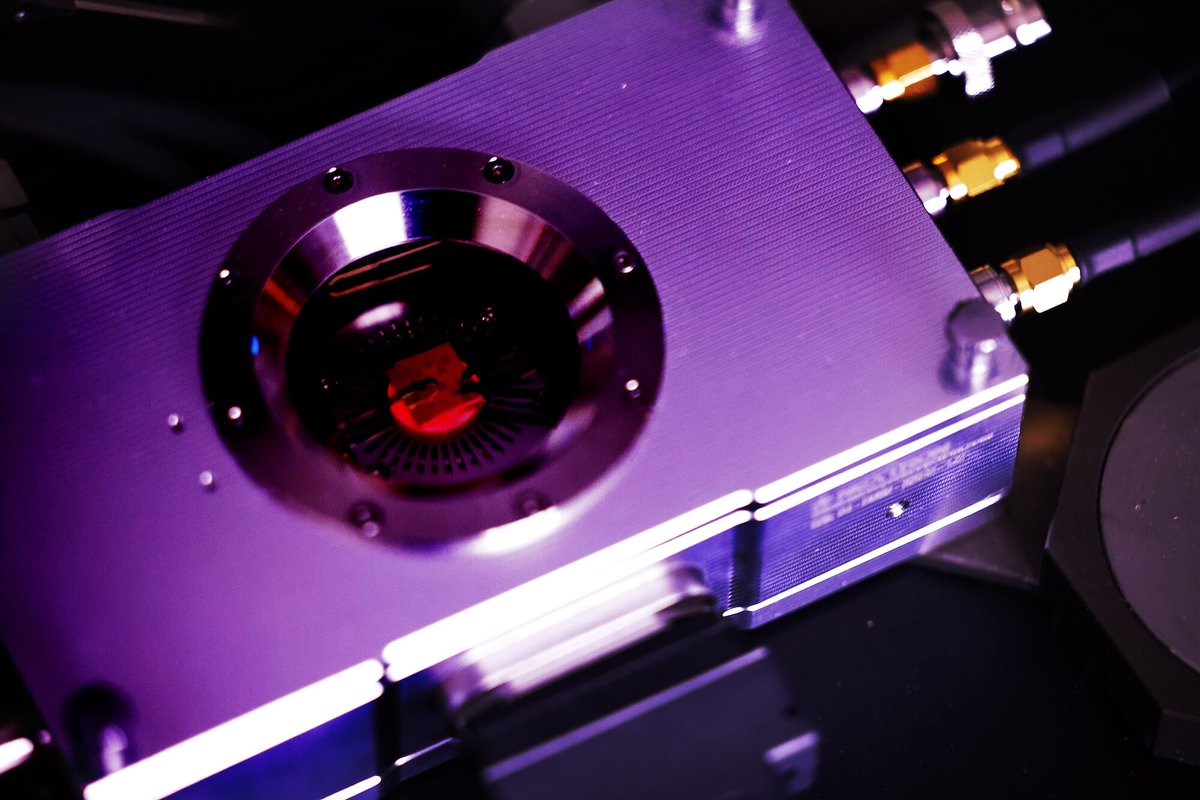
ALT The ceramic heater glows red when brought to high temperatures. Image credit: Brenda Ahearn, Michigan Engineering
1
6
665
Device retweeted
4 Dec 2024
An implantable system for opioid safety. Read the full study led by @MITMechE Giovanni Traverso in @Device_CP #F24MRS hubs.li/Q02-6TCX0
1
2
2,375
Device retweeted
5 Dec 2024
Bioelectronic drug-free control of opportunistic pathogens through selective excitability. A recent study by @UChiChemistry Bozhi Tian & co-workers in @Device_CP #F24MRS hubs.li/Q02-6LQR0
4
6
2,572
Device retweeted
20 Nov 2024
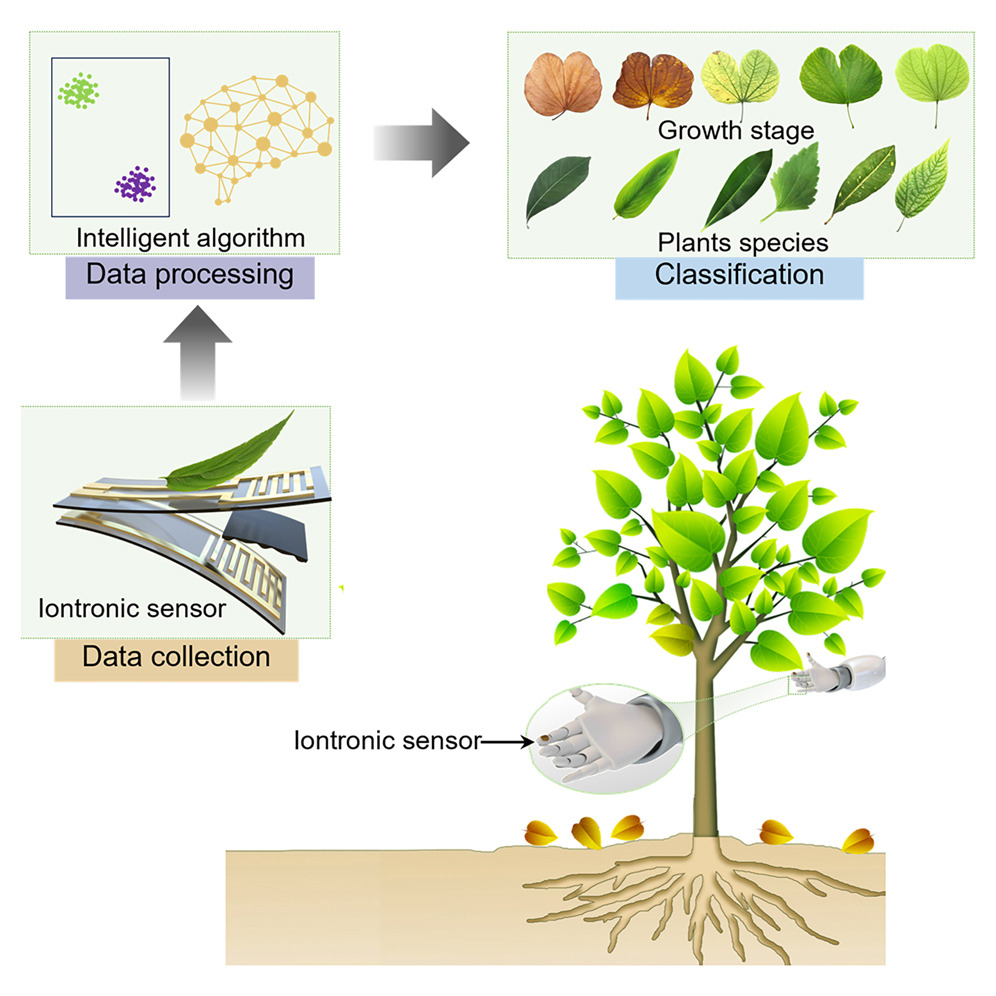
Inspired by human skin, #robot identifies plants and stage of growth by “touching” their leaves. @Device_CP
Learn more: cell.com/device/fulltext/S26…
Sun Yat-sen University Wei Zhang (陈 敏 祺) Li Niu (陈 敏 祺)
2
7
2,227
Device retweeted
8 Nov 2024
A skin patch using imperceptible electric currents can stop bacterial infections without drugs. @Device_CP
Learn more: cell.com/device/fulltext/S26…
@UChiChemistry Bozhi Tian, @ucsdbiosciences Gürol Süel

5
4
3,900