Using #DigitalHumanities to assess & understand European novels in multiple languages. COST Action "#DistantReading for European Literary History" (CA16204)
Joined September 2017
- Tweets 262
- Following 348
- Followers 1,165
- Likes 184
71 Photos and videos
Pinned Tweet

17 Nov 2020
We are proud to announce release v1.0.0 of #ELTeC (European Literary Text Collection), with 884 novels in 10 languages. Heartfelt thanks to all editors and contributors! Full announcement: distant-reading.net/eltec-pu… Access to the collections: github.com/COST-ELTeC/ELTeC ^cs
1
27
48
Distant Reading retweeted

24 Nov 2022
Yes, the first three papers of the Journal for Computational Literary Studies are out! Check out our issue 1 here: jcls.io/issue/84/info/ #CLS #DigitalHumanities #journal #launch #reading #TopicModeling #reception More will come soon! [1/2]
1
21
41
Distant Reading retweeted

31 Oct 2022
Are you interested in the #DigitalHumanities? Familiar with #DistantReading?
Discover the work of recently ended Action @DistantReading & how this diverse network created the game changing #ELTeC tool for cross-language literary analysis ⬇️
#COSTactions cc @christof77
17
19
Distant Reading retweeted

14 Oct 2022
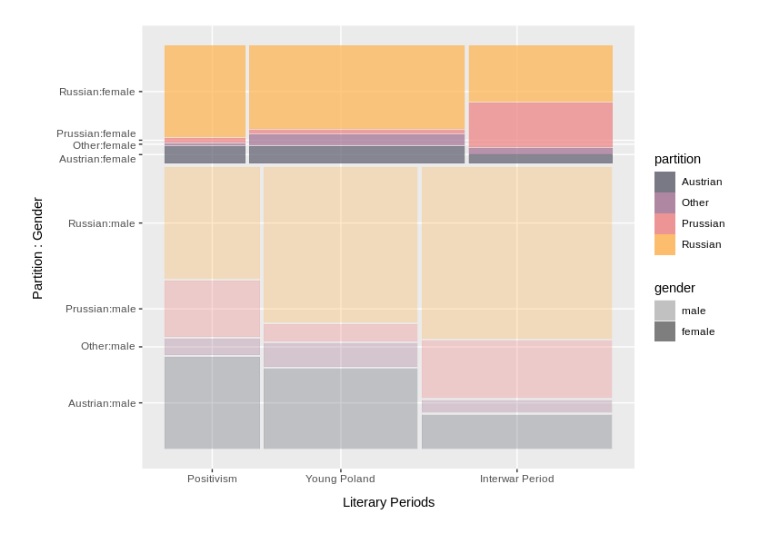
Official premiere of Metadata-enriched Polish Novel Corpus from the 19th and 20th centuries (#1920MetaPNC), first Polish literary corpus balanced not only historically but also geographically we created at @IBLPAN together with @marekkubis and #CLARINPL @bibliodataWG
@DARIAHeu
2
17
28
Distant Reading retweeted

17 Oct 2022
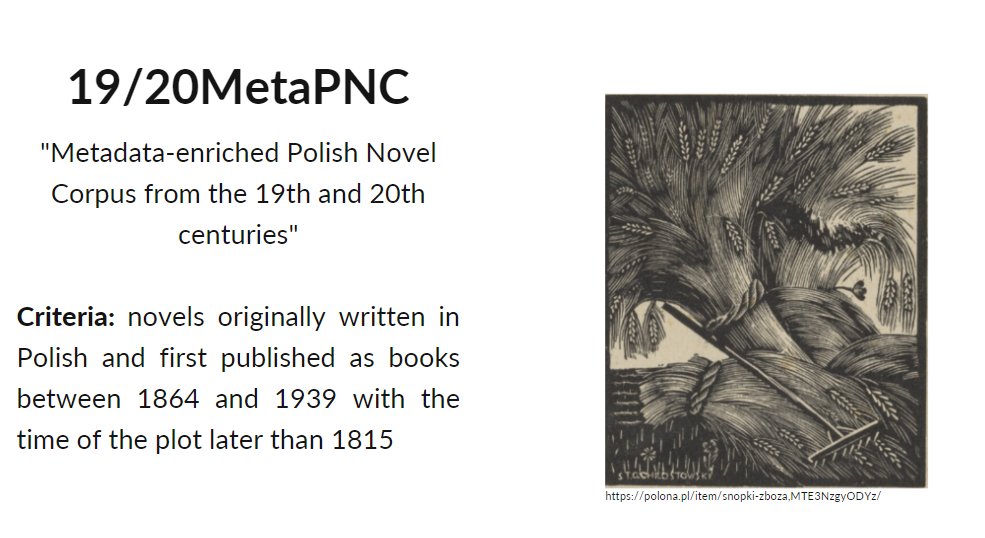
A presentation on the Metadata-enriched Polish Novel Corpus (#1920MetaPNC) is available at tinyurl.com/metacorpus. A text describing the work on the corpus and its use in literary research is available at tinyurl.com/metapnc. We are happy to answer further questions.
9
17
Distant Reading retweeted
15 Sep 2022
Today we're in conversation with @christof77, Chair of recently ended Action @DistantReading.
Discover how a diverse network developed resources & methods to change how European literary history is written ⬇️
#COSTactions #DigitalHumanities #DistantReading #ELTeC
10
19
25 Apr 2022
Learn more about "Sab", one of the first European abolitionist novels, written by Gertrudis Gómez de Avellaneda in the new Distant Reading Recommends article from our Action members @rosarioariasUMA and Borja Navarro Colorado.
distant-reading.net/distant-…
2
5
Distant Reading retweeted
22 Apr 2022
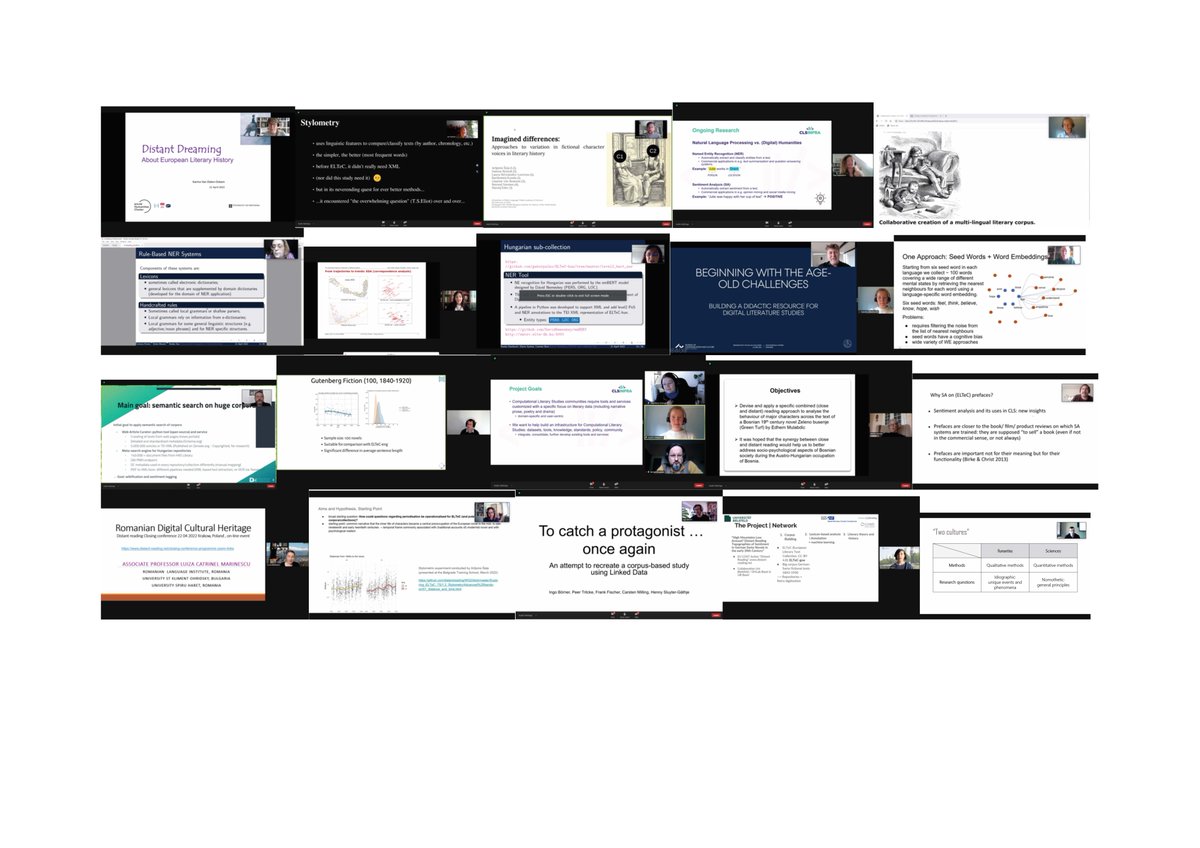
We’ve had the bird’s eye view of latest achievements in DH, up-to date sharings of the most innovative computational methods, a meaningful two day experience. Thank you for attending our closing conference and stay tuned for upcoming events of @CLSinfra.
4
15
Distant Reading retweeted

The @DistantReading closing ceremony is coming to an end and now the project is being handed over to @CLSinfra. To see what this handover means for the #CLS and #DH communities, take a look at this video by @MaciejEder and @christof77:
youtu.be/TGajP8_KFk0
5
4
22 Apr 2022
We are very honoured to have @oleg_sobchuk as our keynote speaker.
3
18
22 Apr 2022
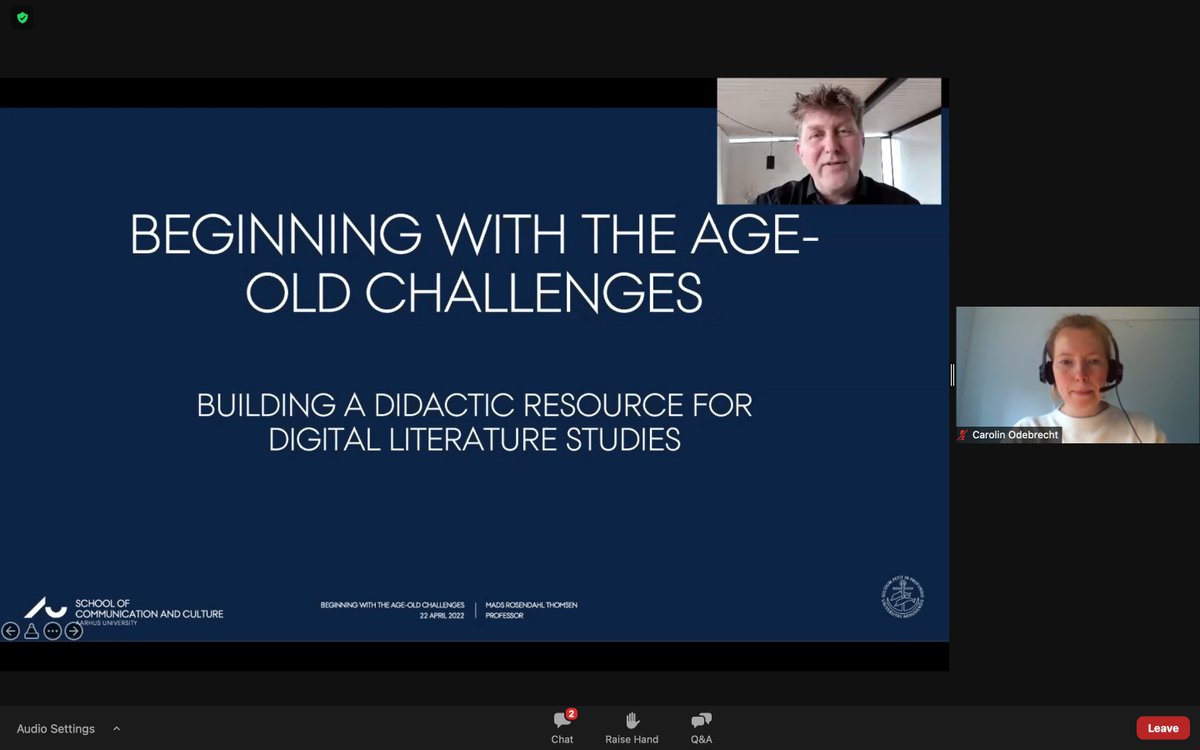
Mads Rosendahl Thomsen (@madsrt) addresses an invitation to scholars and students to consider digital methods as a supplement to their practice, integrating new methods, in order to change the field of literary studies.
3
6
22 Apr 2022
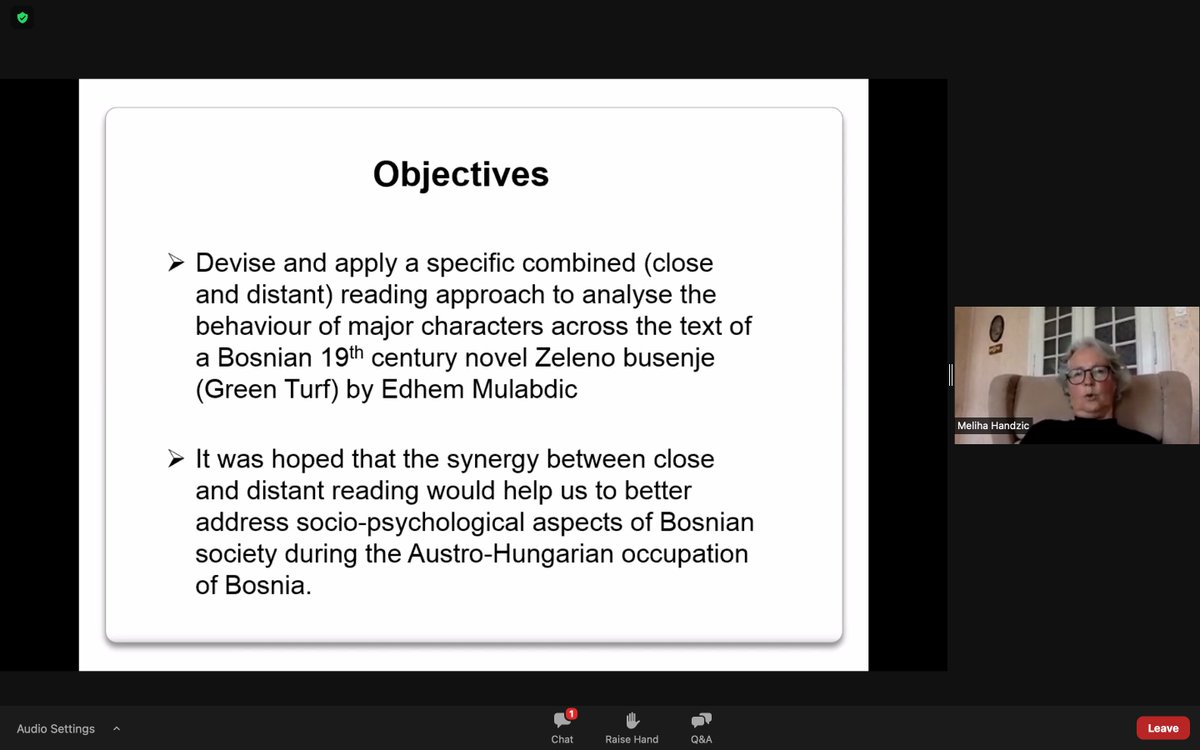
The case study on the 19th century novel Zeleno busenje by E. Mulabdic is valuable fuel for complex interpretations of Bosnian literature, emphasizing the synergy between close and DR, as well as different digital techniques. Listen to M. Handzic and V. Mulavdic.
2
4
22 Apr 2022
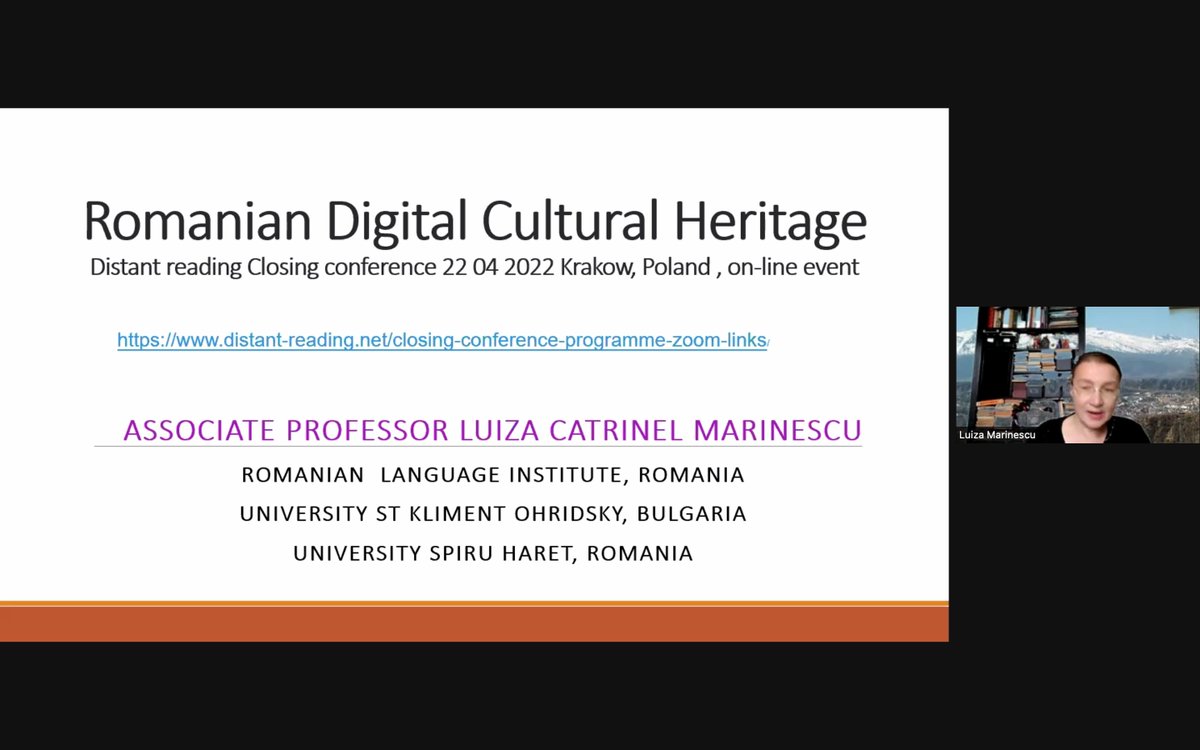
Luiza Catrinel Marinescu takes on the digital context of European novel writing and opens a new perspective on Romanian literature.
3
12
22 Apr 2022
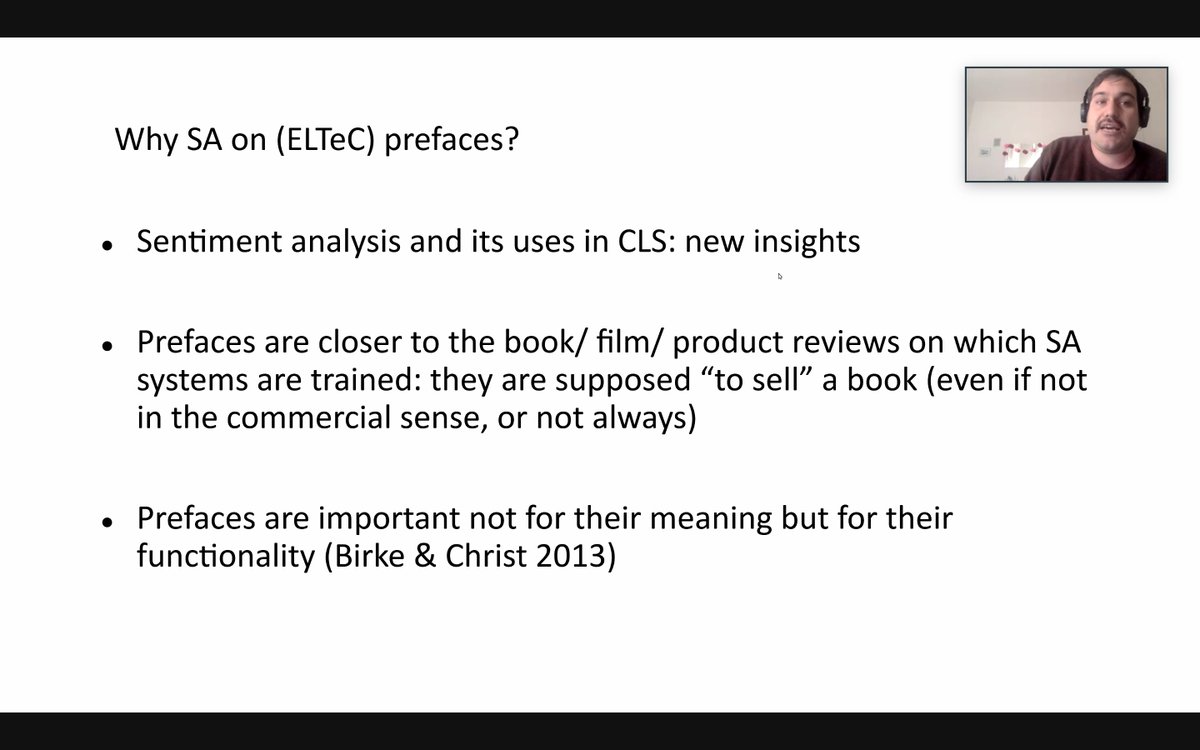
What does sentiment analysis reveal when related to prefaces? A team of researchers invites us to discover more ... @rosarioariasUMA, J. Fernández-Cruz, I. Galleron, M. García-Gámez, F. Mélanie-Becquet, R. Patras, C. Pérez-Hernández, O. Seminck
3
8
22 Apr 2022
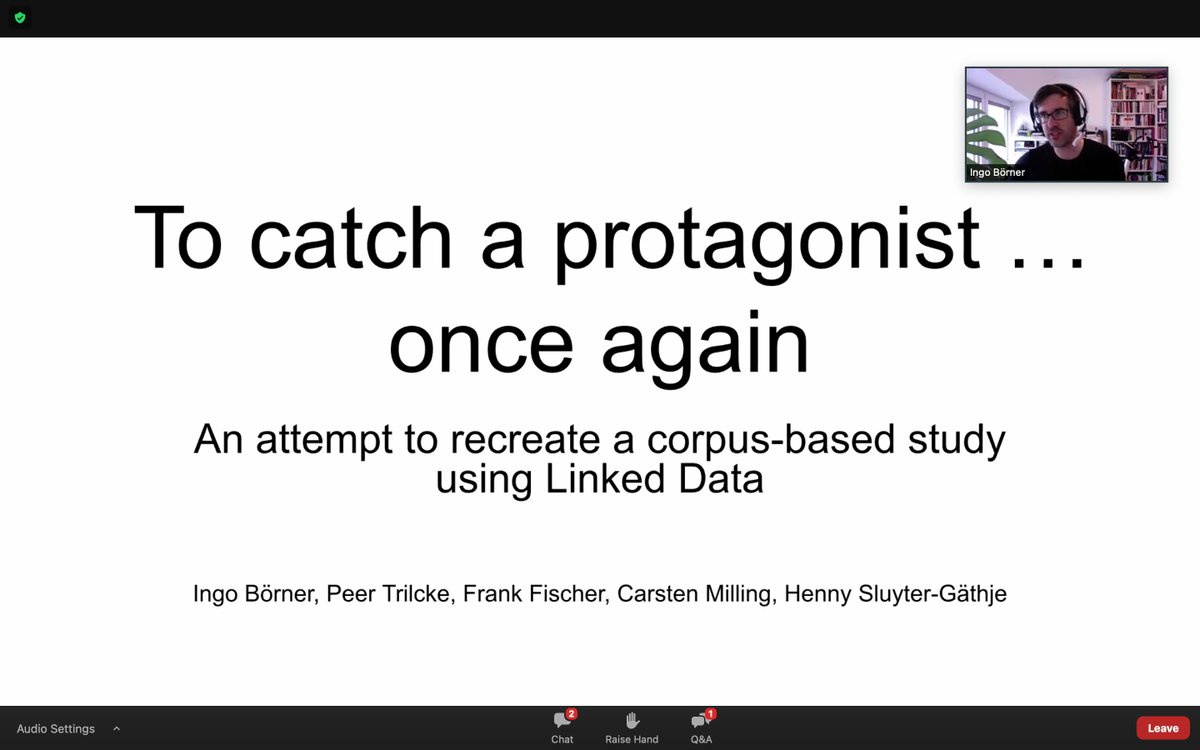
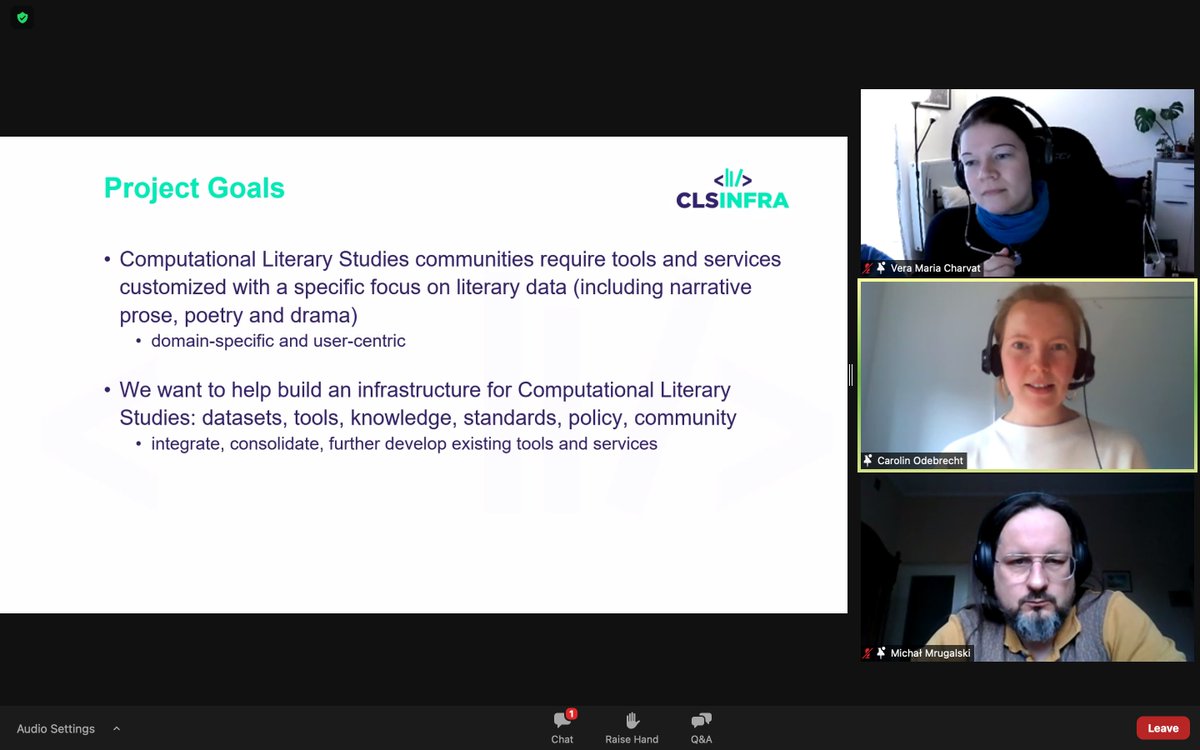
New perspectives for the Computational Literary Studies community! @ingoboerner, Vera Maria Charvat, Matej Ďurčo, Michał Mrugalski, Carolin Odebrecht introduce us to a new data inventory providing access to a wide range of literary resources.
4
10
22 Apr 2022
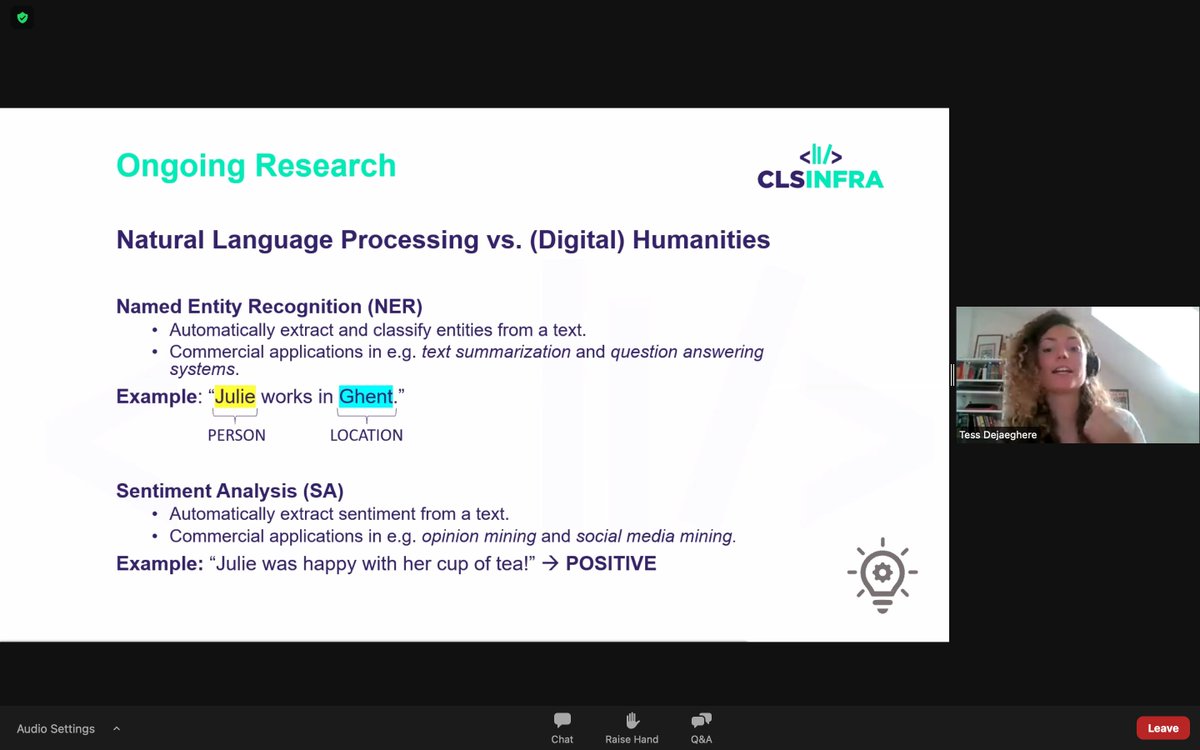
Where Natural Language Processing and Digital Humanities collide Tess Dejaeghere, Julie M. Birkholz, Els Lefever, Christophe Verbruggen feature an integrated approach on how NLP tools can apply to literary-historical research
@DejaeghereTess, @juliebirkholz, @Eslefeve, @cvbrugg
3
10
22 Apr 2022
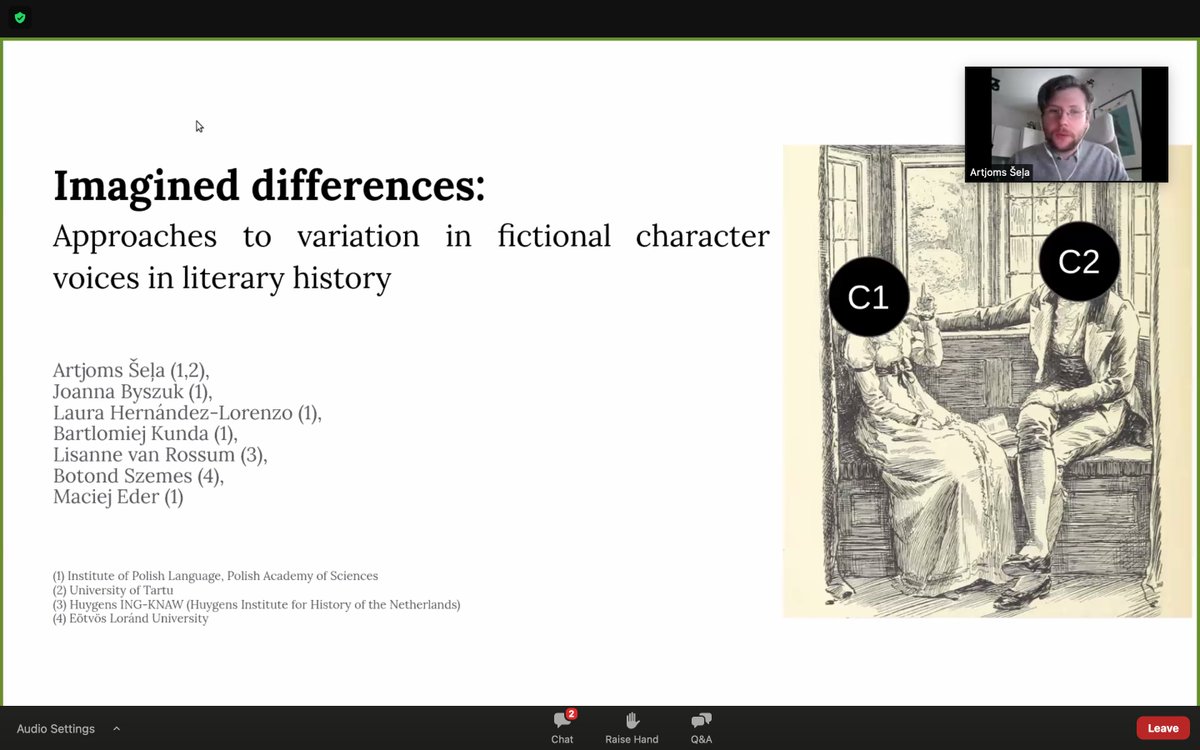
Imagined differences: approaches to variation in fictional character voices in literary history presented by
@artjomshl, @jbyszuk, @BartekKunda, @lamusadecima, @MaciejEder, Botond Szemes and Lisanne van Rossum
7
17
22 Apr 2022
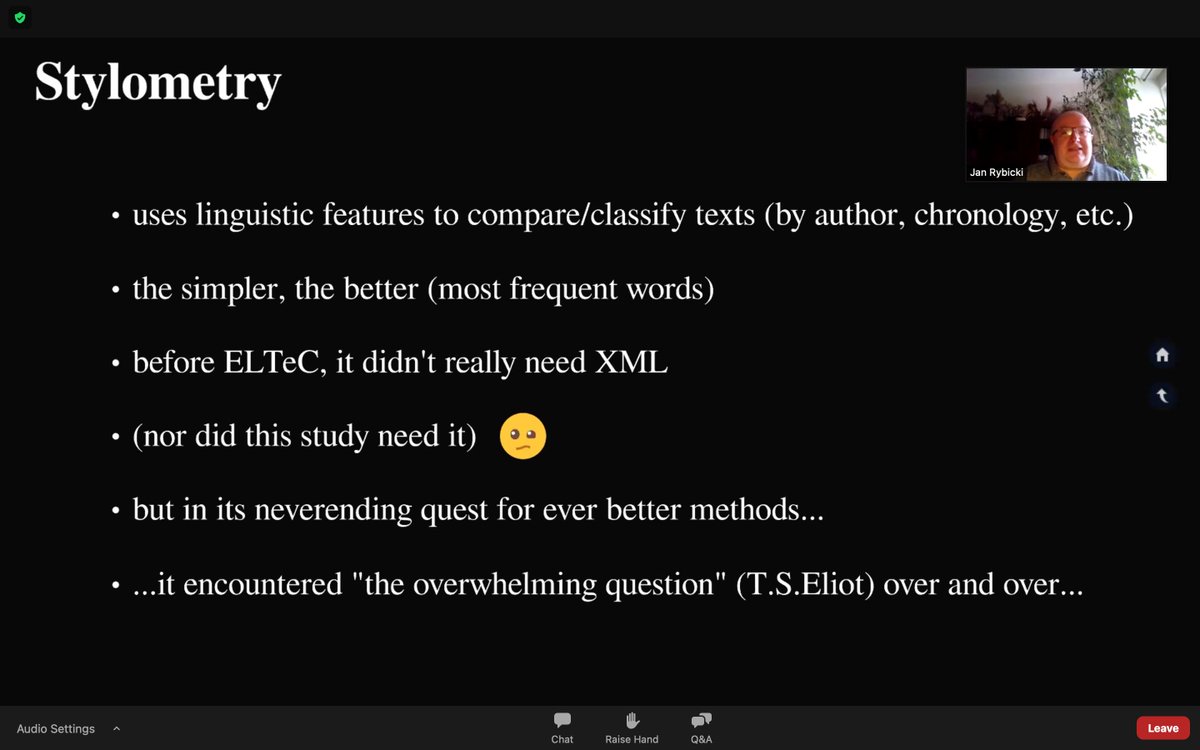
Day 2 of our closing conference. We are delighted to have @Jan_Rybicki presenting his paper ELTeC and Delta in Eleven Languages: Relatively Good News for Stylometrists, which opens the path for a better representation of individual authors.
7
18
21 Apr 2022
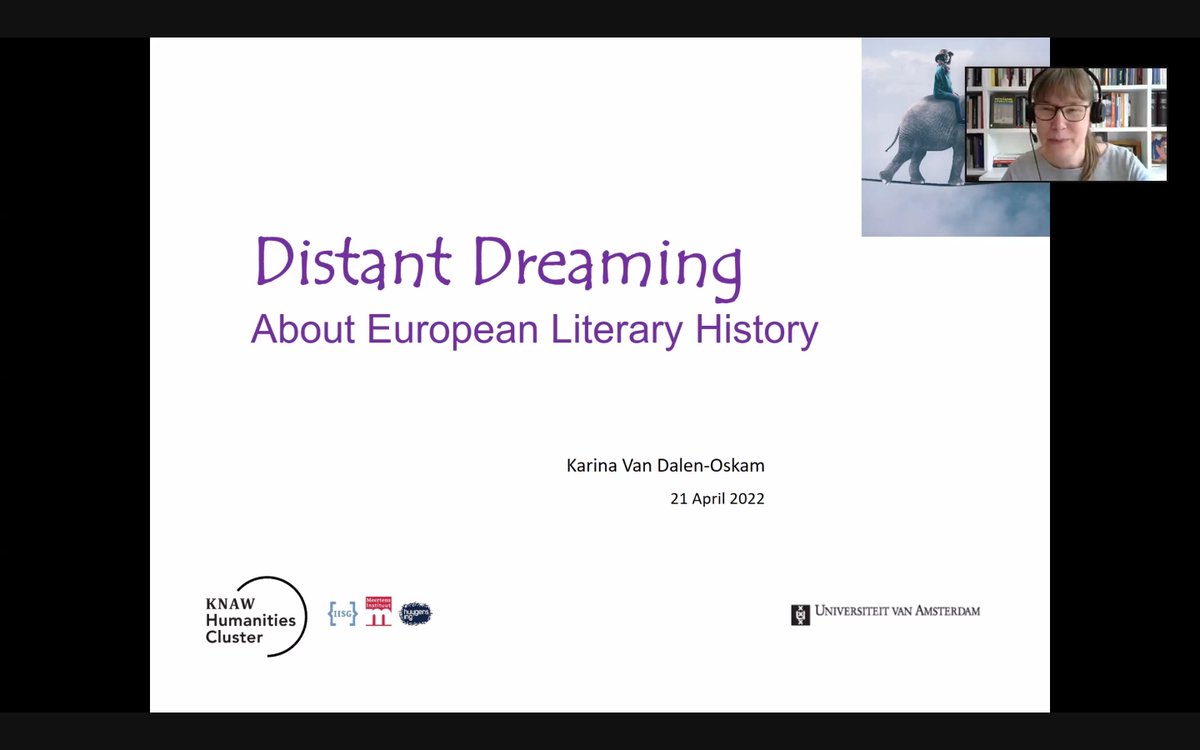
The future of literature in Europe; challenging multilingual European landscape - topics examined by Karina van Dalen-Oskam in her seminal key speech on Distant Dreaming About European Literary History tonight.
6
19
21 Apr 2022
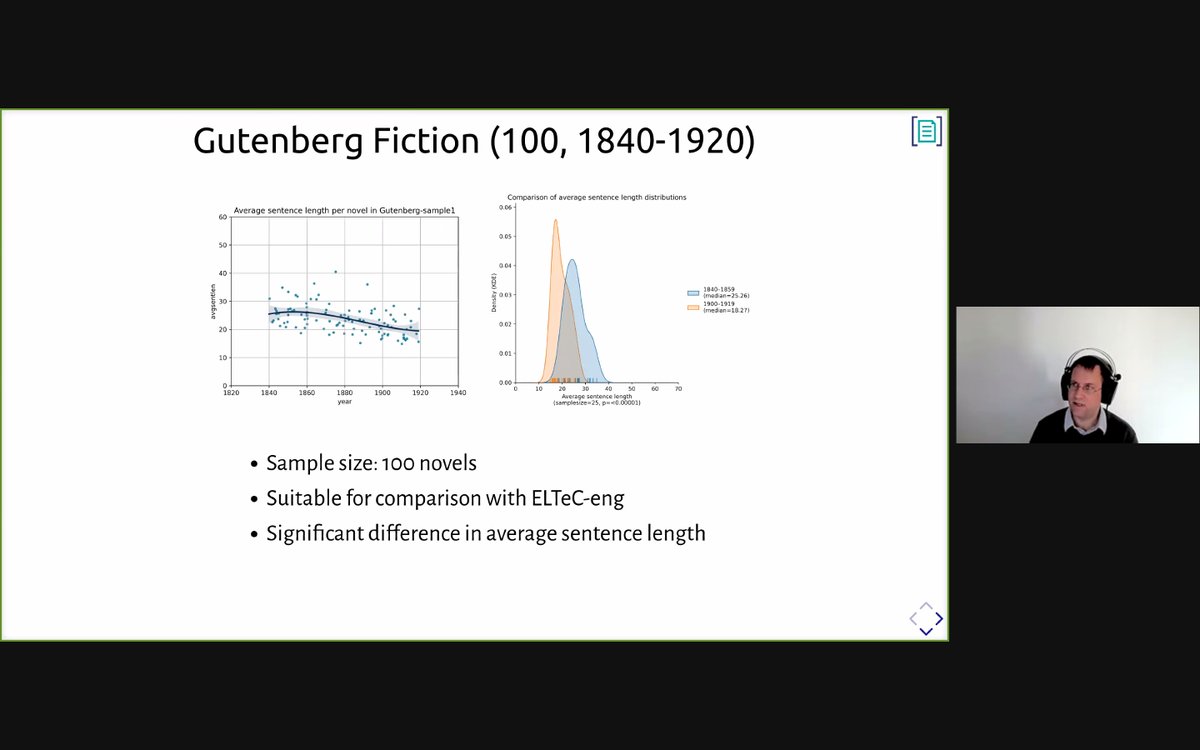
Christof Schöch (@christof77) wondering if sentences in novels get shorter over the course of the nineteenth century ...
3
15