
Joined November 2024
- Tweets 4,207
- Following 128
- Followers 165
- Likes 1,173
131 Photos and videos









Pinned Tweet

Jun 14
Samsung sold me a $2,000 65" Frame Pro that died under their 1-year warranty. Then came a 3-month obstacle course so absurd their system decided I live at a Best Buy — and I had to lie to their phone tree to reach a human. @SamsungSupport @Samsung.
If Samsung has put you through something like this, reply with your story and repost this — there's clearly a pattern, and visibility is the only thing that seems to move them. Here's mine:
March: barely a year old, with just 1,573 hours of use, my $2,000 TV went dark — sound, menu beeps, a working remote, but no picture. Samsung's first move was to treat me as a suspect and as free labor. They turned my phone into a "visual support" camera and made me repeat, live on video, troubleshooting I'd already done and told them hadn't worked — my word wasn't enough. To "prove" I'd unplugged it, they expected me to film myself lifting a 65" TV off a wall mount one-handed, risking dropping the very unit in dispute. Requiring video proof of a task, instead of taking a customer's word, isn't diligence; it's disrespect. And they warned that if the fault was deemed mine, I'd be billed and my warranty voided.
A technician swapped the main board, the panel, the power board, and the wireless One Connect box — every major organ of the TV. Still black. He told me himself he could keep dropping in boards until the next one died. A treadmill, not a repair.
About six weeks later, the identical failure returned. As I told them: "There's something fundamentally wrong with this TV." Every replaced part had never once touched the real problem.
Then came the stonewalling. On May 18 I spent 21 minutes opening a second ticket, and was promised a callback in 24–48 hours. It never came. So I chased it myself. At 24 hours, I was hung up on by the automated system three calls in a row. At 48 hours, twice more — until I gave up on the truth and invented a different reason for calling just to reach a human, another 16 minutes wasted. On May 22, the same wall: disconnected again, then an hour and eighteen minutes on a single call. My case, I learned, had been filed under a procedure Samsung "no longer uses," so each time I entered my case number, the line simply dropped. To reach a person, I had to lie to the menu and say I was calling about a microwave. Be plain about what this is: a multibillion-dollar corporation stonewalling a customer over a $2,000 TV, dead under its own manufacturer's warranty.
On May 28, Samsung's own technician declared the unit unrepairable (determination A13, reference 7006854050). His words: "At this point, they're losing money by not just replacing the whole TV." When the company's own repair tech is on your side, it isn't a hard case — it's a broken process.
So I was "owed" a ~$2,050 voucher (tax not covered) — but only after I waited for a third-party pickup, signed their paperwork, photographed it, and uploaded it. Going on three months with no TV, and I'd become Samsung's unpaid logistics coordinator.
Samsung also ran the refund over text, from a "Tommy, Samsung Exchange Team," who requested my full name, address, email, phone, receipt, and a serial-number photo over plain SMS — then warned me to beware impersonators. Step for step, it was indistinguishable from a phishing scam.
The finale: redeeming the voucher, I chose "in-store pickup" — because after three months with no TV, picking one up the same day sounded like relief. Five minutes later, an email said they'd ship it to a Best Buy instead. Samsung's own order confirmation billed it to my home but shipped it to that Best Buy across town: I'd clicked "pick it up today," and somewhere in their systems that became "this man lives at a Best Buy." The store even had the exact TV in stock — I could have carried one home that day — but Samsung's own scheduled delivery blocked the very pickup its website had offered me. Their rep could only say: "Wao, I didn't know it works like that."
The people I spoke to were often kind. The technician took my side. That's the point. This isn't one rude agent on a bad day — it's a process engineered, intentionally or not, to be so exhausting that a reasonable person gives up. That's not a bug in the process. It is the product.
And it is still happening as I write this. On Friday afternoon I was told I'd get an update within 24–48 hours — I made them confirm they meant actual hours, not business days — on fixing the delivery. That window closed this afternoon. Nothing. I've lost count of the "24–48 hour" and "3–5 business day" promises Samsung has made and broken, every one of them over this same single TV.
@SamsungSupport @Samsung @SamsungUS — I don't want sympathy. I want it made right: deliver the replacement to my home, with a new full warranty from the date of delivery; cover the tax; and fix the IVR, ticketing, and ship-to-Best-Buy failures so the next customer isn't put through this.
A warranty is supposed to be a promise. Samsung's turned out to be a maze — and you don't find out until you're already inside it.
3
7
16
22,466
Doc Holiday retweeted

Jun 14
Man. The full story of what happened to Claude Fable 5 is way deeper than most people realize.
The model was live for 72 hours. In those 72 hours:
→ Stripe migrated a 50 million line codebase in one day
→ Someone built Minecraft from scratch 45K lines of Swift in a single run
→ It beat Pokémon FireRed using only raw screenshots
→ It reverse-engineered Dolby Atmos in Rust over 2 days
Then Amazon Anthropic's own $4 billion investor and cloud host found a jailbreak. CEO Andy Jassy personally took it to the US Treasury Secretary.
The government asked Anthropic to fix it or pull the model. Anthropic refused. The government issued an export control directive.
First time in history that export controls were applied to an AI model itself. Not chips. Not hardware. The model.
Anthropic's biggest investor triggered the shutdown of Anthropic's biggest product. That's the part nobody can wrap their head around.
Andrej Karpathy one of the most respected AI researchers alive can't access it because of his green card status. Locked out not because of his work but because of where he was born.
The two-tier AI world isn't coming. It arrived. Regular users get the safe version. Governments and vetted corporations get the full thing.
100
242
2,047
385,807
Doc Holiday retweeted

Jun 14
Look at what Obama is doing y’all. That Muslim has no respect for American traditions or the beauty of our institutions. That Muslim Obama is racing motorcycles in front of our White House. God, how I wish Trump was president. He wouldn’t do shit like this
571
148
1,543
1,004,908

Doc Holiday retweeted

These hydration breaks at the world cup are shit.
Completely spoils the flow of the game and is just a scam for America advertisers.
35
73
737
10,353
Jun 14
Samsung sold me a $2,000 65" Frame Pro that died under their 1-year warranty. Then came a 3-month obstacle course so absurd their system decided I live at a Best Buy — and I had to lie to their phone tree to reach a human. @SamsungSupport @Samsung.
If Samsung has put you through something like this, reply with your story and repost this — there's clearly a pattern, and visibility is the only thing that seems to move them. Here's mine:
March: barely a year old, with just 1,573 hours of use, my $2,000 TV went dark — sound, menu beeps, a working remote, but no picture. Samsung's first move was to treat me as a suspect and as free labor. They turned my phone into a "visual support" camera and made me repeat, live on video, troubleshooting I'd already done and told them hadn't worked — my word wasn't enough. To "prove" I'd unplugged it, they expected me to film myself lifting a 65" TV off a wall mount one-handed, risking dropping the very unit in dispute. Requiring video proof of a task, instead of taking a customer's word, isn't diligence; it's disrespect. And they warned that if the fault was deemed mine, I'd be billed and my warranty voided.
A technician swapped the main board, the panel, the power board, and the wireless One Connect box — every major organ of the TV. Still black. He told me himself he could keep dropping in boards until the next one died. A treadmill, not a repair.
About six weeks later, the identical failure returned. As I told them: "There's something fundamentally wrong with this TV." Every replaced part had never once touched the real problem.
Then came the stonewalling. On May 18 I spent 21 minutes opening a second ticket, and was promised a callback in 24–48 hours. It never came. So I chased it myself. At 24 hours, I was hung up on by the automated system three calls in a row. At 48 hours, twice more — until I gave up on the truth and invented a different reason for calling just to reach a human, another 16 minutes wasted. On May 22, the same wall: disconnected again, then an hour and eighteen minutes on a single call. My case, I learned, had been filed under a procedure Samsung "no longer uses," so each time I entered my case number, the line simply dropped. To reach a person, I had to lie to the menu and say I was calling about a microwave. Be plain about what this is: a multibillion-dollar corporation stonewalling a customer over a $2,000 TV, dead under its own manufacturer's warranty.
On May 28, Samsung's own technician declared the unit unrepairable (determination A13, reference 7006854050). His words: "At this point, they're losing money by not just replacing the whole TV." When the company's own repair tech is on your side, it isn't a hard case — it's a broken process.
So I was "owed" a ~$2,050 voucher (tax not covered) — but only after I waited for a third-party pickup, signed their paperwork, photographed it, and uploaded it. Going on three months with no TV, and I'd become Samsung's unpaid logistics coordinator.
Samsung also ran the refund over text, from a "Tommy, Samsung Exchange Team," who requested my full name, address, email, phone, receipt, and a serial-number photo over plain SMS — then warned me to beware impersonators. Step for step, it was indistinguishable from a phishing scam.
The finale: redeeming the voucher, I chose "in-store pickup" — because after three months with no TV, picking one up the same day sounded like relief. Five minutes later, an email said they'd ship it to a Best Buy instead. Samsung's own order confirmation billed it to my home but shipped it to that Best Buy across town: I'd clicked "pick it up today," and somewhere in their systems that became "this man lives at a Best Buy." The store even had the exact TV in stock — I could have carried one home that day — but Samsung's own scheduled delivery blocked the very pickup its website had offered me. Their rep could only say: "Wao, I didn't know it works like that."
The people I spoke to were often kind. The technician took my side. That's the point. This isn't one rude agent on a bad day — it's a process engineered, intentionally or not, to be so exhausting that a reasonable person gives up. That's not a bug in the process. It is the product.
And it is still happening as I write this. On Friday afternoon I was told I'd get an update within 24–48 hours — I made them confirm they meant actual hours, not business days — on fixing the delivery. That window closed this afternoon. Nothing. I've lost count of the "24–48 hour" and "3–5 business day" promises Samsung has made and broken, every one of them over this same single TV.
@SamsungSupport @Samsung @SamsungUS — I don't want sympathy. I want it made right: deliver the replacement to my home, with a new full warranty from the date of delivery; cover the tax; and fix the IVR, ticketing, and ship-to-Best-Buy failures so the next customer isn't put through this.
A warranty is supposed to be a promise. Samsung's turned out to be a maze — and you don't find out until you're already inside it.
3
7
16
22,466
Jun 14
Adding a few more who may want to see this: @SamsungNewsUS @SamsungBizUSA — and @elliottdotorg, who helps consumers with exactly this kind of runaround. If Samsung's warranty maze has caught you too, reply here — the pattern only gets clearer with numbers.
1
60
Doc Holiday retweeted

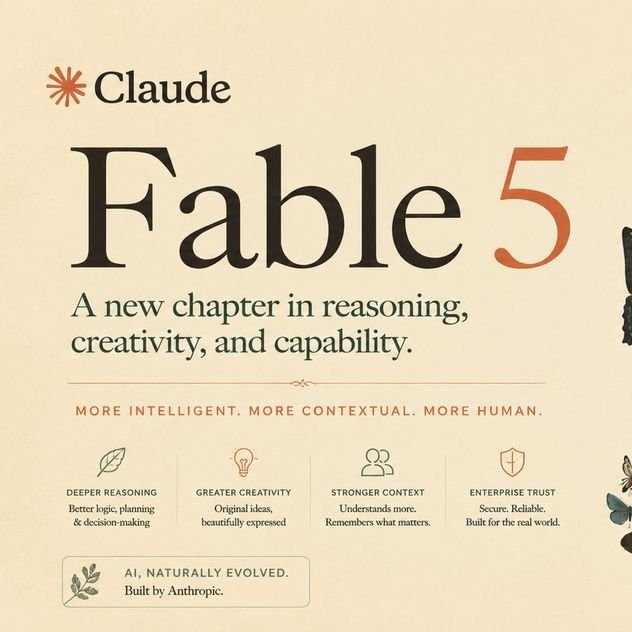
Europeans after hearing they can’t use Anthropic’s AI models anymore.

‼️🚨 BREAKING: Amazon researchers snitched to the US government about jailbreaking Fable 5 and Mythos 5, forcing Anthropic to immediately shut down worldwide access.
A security export control directive from Commerce Secretary Howard Lutnick enforced the action.
Anthropic is fighting the directive and calls it a misunderstanding.
This isn't the first clash. The Trump administration had already tried to get Anthropic to pause the release of its latest models before this directive landed.

22
99
1,149
144,383
Doc Holiday retweeted

Jun 13
Jun 13

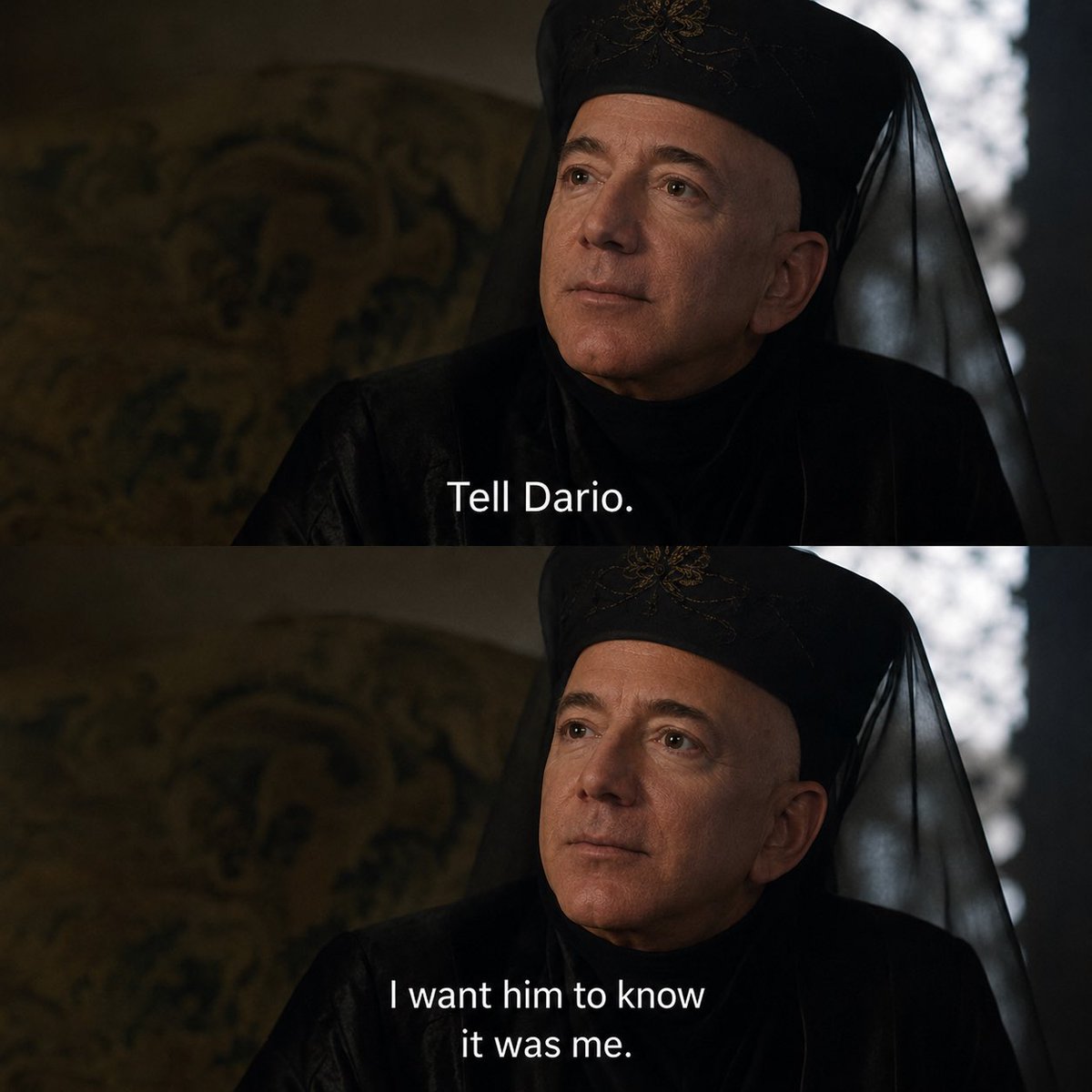
NEW: Amazon researchers are reportedly behind the jailbreak report that led to the U.S. crackdown on Anthropic’s top models.
148
1,607
22,356
960,821
Doc Holiday retweeted

Jun 13
Assuming Anthropic is able to restore Fable in the next few days, there's literally zero point doing any meaningful work until it is back.
What can be done in 100 hours with Opus can be done in 1 with Fable.
Hopefully this is figured out quickly.
Jun 13

The US government, citing national security authorities, has issued an export control directive to suspend all access to Fable 5 and Mythos 5 by any foreign national, whether inside or outside the United States, including foreign national Anthropic employees.
The net effect of this order is that we must abruptly disable Fable 5 and Mythos 5 for all our customers to ensure compliance.
Access to all other Claude models is not affected.
We apologize for this disruption to our customers. We believe this is a misunderstanding and are working to restore access as soon as possible.
Read our full statement: anthropic.com/news/fable-myt…
676
206
5,203
1,142,326
Jun 13
So it’s only dangerous if foreign nationals use it. Everyone else is a-ok. Got it.
Jun 13
The US government, citing national security authorities, has issued an export control directive to suspend all access to Fable 5 and Mythos 5 by any foreign national, whether inside or outside the United States, including foreign national Anthropic employees.
The net effect of this order is that we must abruptly disable Fable 5 and Mythos 5 for all our customers to ensure compliance.
Access to all other Claude models is not affected.
We apologize for this disruption to our customers. We believe this is a misunderstanding and are working to restore access as soon as possible.
Read our full statement: anthropic.com/news/fable-myt…
6
Jun 13
This is a fair characterization
Jun 13

For all those people saying “pump the brakes, it’s Paraguay.”
The USMNT did what they were supposed to do against inferior competition.
Complete domination.
Paraguay is still full of players that play professional soccer.
They didn’t just find them off the street.
5
Doc Holiday retweeted

Jun 12
Today, Elon Musk, a trillionaire, pays the same amount into Social Security as someone making $184,500.
If we end that absurdity and lift the cap on taxable income, we can make Social Security solvent for 75 years and expand benefits by $2,400. My Social Security bill does that.
24,029
17,866
109,103
5,911,311
Doc Holiday retweeted

Jun 11
SpaceX.
Don’t be a fool.
Don’t buy $SPCX tomorrow at IPO.
Wait a few months.
Then accumulate.
It may make 4000 millionaires.
It’s going to make a lot more people lose money.
71
4
178
20,088
Doc Holiday retweeted

Jun 10
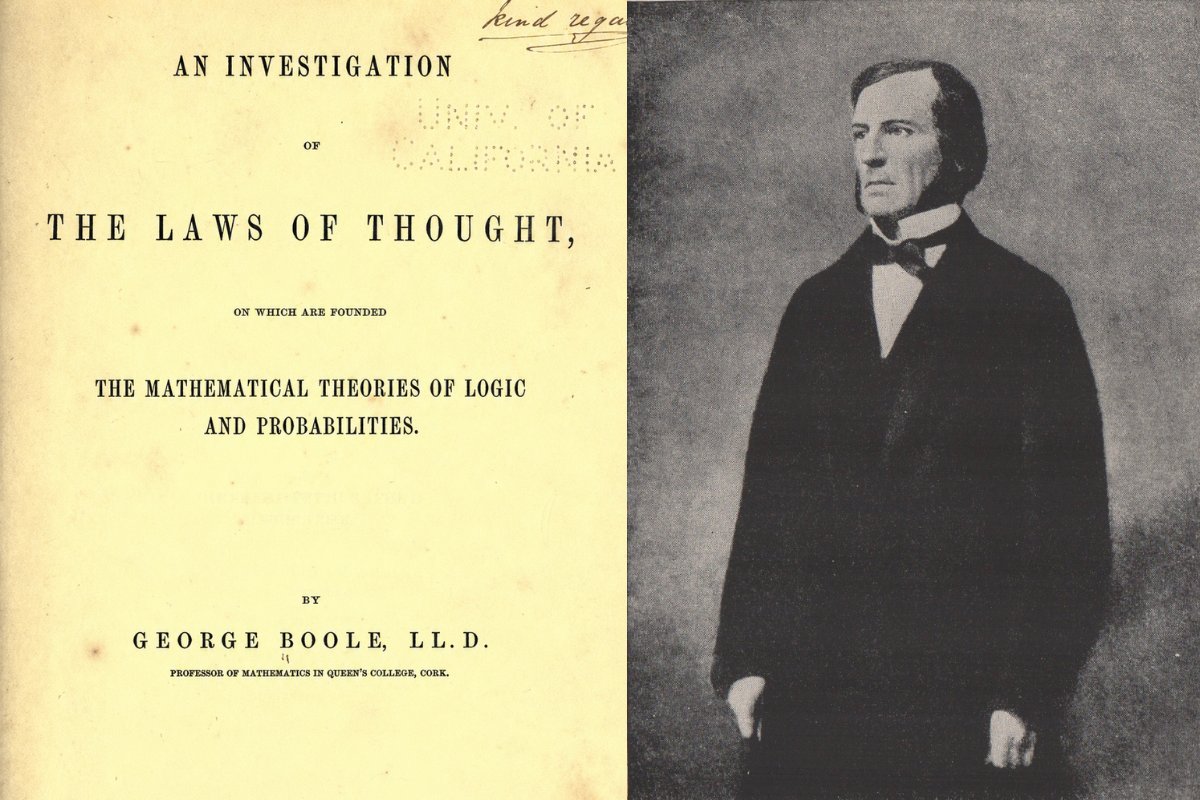
A self-taught Irish schoolteacher wrote a book in 1854 that almost nobody read for 80 years, until a 21-year-old MIT student picked it up and realized it could be used to design every computer in human history.
His name was George Boole. The book is called An Investigation of the Laws of Thought.
Boole was born in 1815 in Lincoln, England. His family was poor. He left school at 16 to support them. He taught himself Latin, Greek, French, German, and Italian.
Then he taught himself mathematics. By 19 he had opened his own school. By 24 he was publishing original papers in the Cambridge Mathematical Journal, competing with men who had spent decades inside the best universities in Britain.
He never had a degree. He never had a mentor. In 1849, Queen's College in Cork hired him as a professor anyway.
In 1854, he published his masterwork. What he built inside it was something nobody had attempted before at this scale. He turned logic into algebra.
Before Boole, logic was philosophy. You argued in sentences. You reasoned in paragraphs. It was powerful and completely impossible to automate, because there was no formal system underneath it, just language.
Boole stripped it down to arithmetic. He showed that every act of human reasoning could be reduced to operations on two values. True or false. One or zero. AND, OR, NOT. If both conditions are true, the result is true. If neither is, the result is false. Every judgment a human mind makes, every decision, every deduction, could be written as an equation following those rules.
Logicians read it. They found it interesting. Engineers building machines had never heard of it.
For 83 years, the book sat there.
Then in 1937, a 21-year-old MIT master's student named Claude Shannon was working on a thesis about electrical relay circuits. Switches that could be open or closed. Current that either flowed or didn't.
He read Boole and understood something nobody had connected before.
An open switch is a zero. A closed switch is a one. A circuit with two switches in series only carries current when both are closed. That is AND. A circuit with two switches in parallel carries current when either is closed. That is OR. Shannon proved that every possible logical relationship Boole had described could be physically built using wire and switches.
That single insight is the foundation of every computer ever made.
After Shannon, chip designers stopped thinking about electricity and started thinking about logic. Every transistor on every processor running right now is implementing a Boolean operation. Every if-statement in every codebase is Boolean logic. Every database query using AND or OR. Every neural network threshold that fires or doesn't fire. All of it is running the algebra of a self-taught schoolteacher from Lincoln who died 160 years ago.
The strangest part is what happened to Boole at the end.
He was walking to class in November 1864 when he got caught in a rainstorm. He lectured for hours in wet clothes. He went home sick. His wife, Mary, believed in homeopathic medicine and thought the cure should mirror the cause. She wrapped him in wet sheets and poured cold water over him repeatedly.
He died a few days later. He was 49.
He never saw a transistor. He never saw a circuit. He never saw a single physical machine run a single one of his rules.
His book is in the public domain. Free to download. Most engineers use the word Boolean dozens of times a week. Almost none of them know who they are saying.
The man whose logic runs inside every phone, every server, and every AI model on Earth died soaking wet in a small Irish town, 83 years before anyone figured out what he had actually built.
128
1,232
4,055
136,729
Doc Holiday retweeted

Jun 10
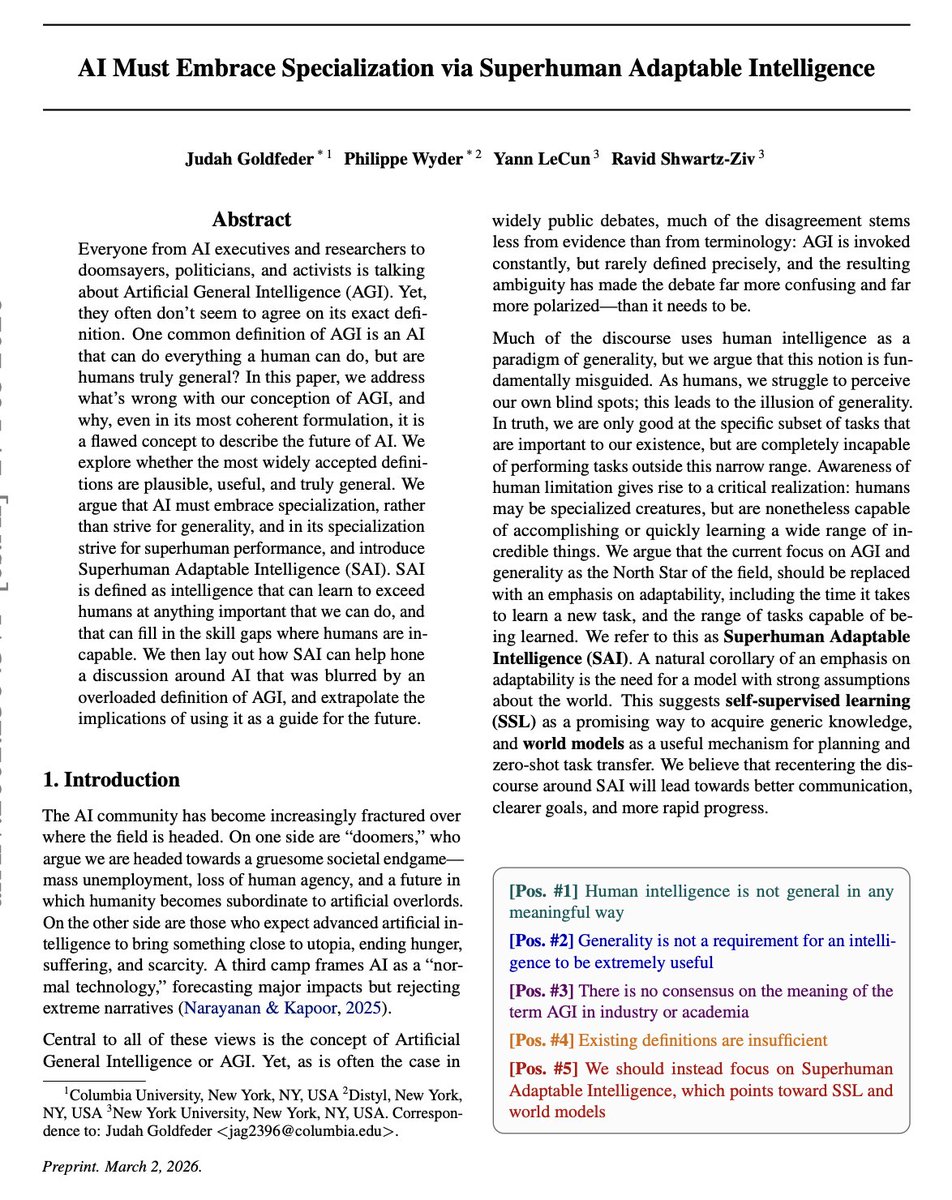
Yann Lecun published the most heretical AI paper of the year.
He opens by arguing Magnus Carlsen isn't good at chess and only gets more unhinged from there.
The Turing Award winner and his co-authors dropped a paper demanding the AI industry abandon its biggest obsession, AGI.
Right now, everyone from Silicon Valley CEOs to politicians assumes AGI is the ultimate goal. A machine that can do everything a human can do.
LeCun argues that this entire concept is a biological illusion.
Humans do not possess "general" intelligence. We are highly specialized biological machines, tuned by evolution simply to survive in the physical world.
We only think our intelligence is "general" because we are completely blind to the millions of cognitive tasks we are incapable of comprehending.
Which brings us to the chess argument.
Magnus Carlsen is the greatest human chess player in history. But compared to a modern computer? He is fundamentally terrible.
Our belief that Carlsen is "good" at chess is pure human-centric bias. He isn't objectively good. He's just better than the rest of us, who are biologically awful at it.
LeCun says we need to stop building AI to mimic human generality.
Instead, he proposes a new North Star: SAI.
Superhuman Adaptable Intelligence.
Instead of trying to build a machine that mimics our flawed, biologically-limited brains, we need to embrace extreme specialization.
SAI is about the speed of adaptation.
It is an intelligence that can learn to exceed humans at any specific, economically important task.
More importantly, it is designed to fill the vast skill gaps where humans are fundamentally incapable.
Things like managing global energy grids in real-time. Or predicting complex molecular structures.
The entire AI industry is obsessed with building a digital reflection in our own image.
LeCun's paper is a brutal wake-up call.
196
641
3,635
324,708
Doc Holiday retweeted

Jun 10
Onboarding experience in RivianOS 2.0. The first handshake between R2 and its owner!
7
19
450
27,130
Jun 10
The U.S. government needs to be the majority share holder of Anthropic and ChatGPT on day 1 and beyond. AI must be a public commodity, not at powerful tool available only to cooperations and vast wealth.
1
9
Doc Holiday retweeted

Jun 9
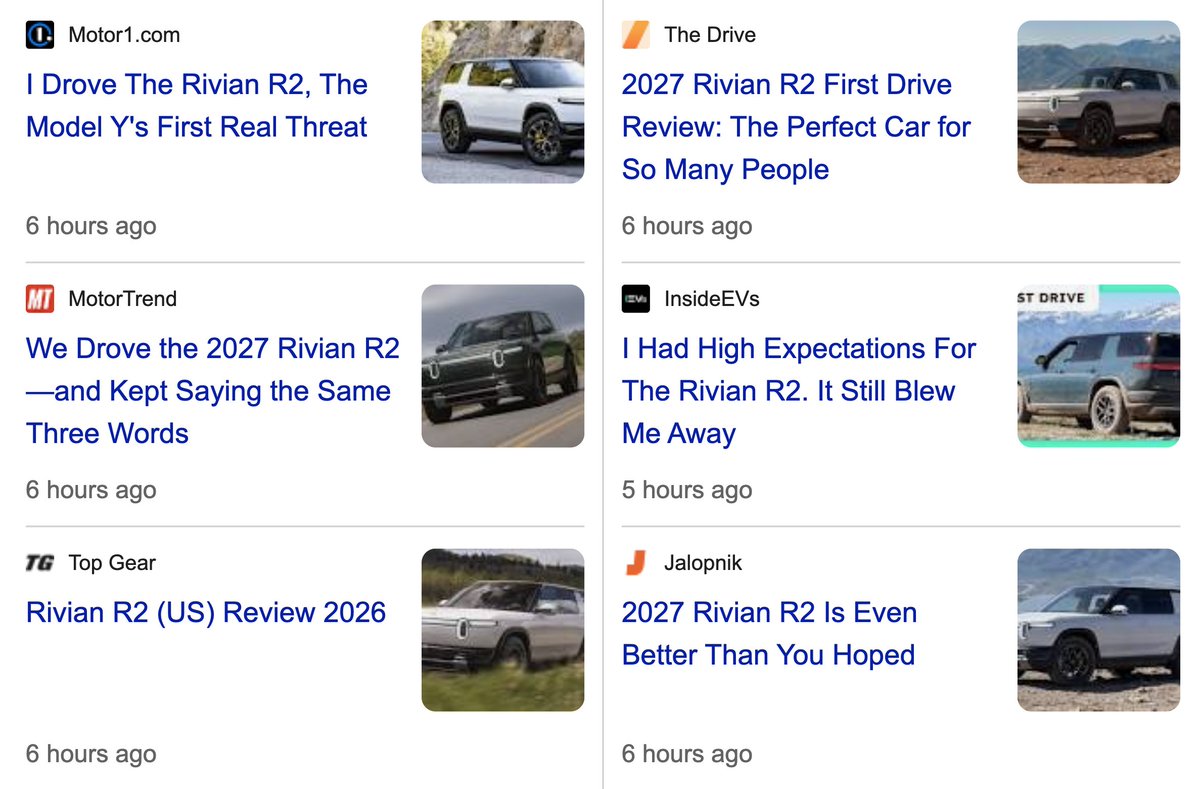
$RIVN R2 review headlines are phenomenal.
The most encouraging part isn't any single review, it's the consistency.
Across nearly every major automotive publication, the takeaway is the same: Rivian appears to have a genuine hit on its hands.

5
20
109
40,268
Doc Holiday retweeted

Jun 8
AI Derangement Syndrome:
Where you think everything is written by AI even when it isn't, because you've become hypervigilant to the patterns and smells of AI, and refuse to believe a human being—a real human—would use long dashes or use contrasts to strengthen their argument.
16
10
68
2,623