
Joined October 2017
- Tweets 2,909
- Following 289
- Followers 898
- Likes 5,770
289 Photos and videos



Jun 12
Picture your happy place.
Notice what's missing?
Goals. Our most cherished memories are often the ones we didn't plan.
In this week's newsletter, I make the case for protecting "goalless time" and having "goalless fun".
Read here: howtoflourish.substack.com/p…
#happyplace #goals
25
Jun 8
Leading a Flow Lab Masterclass tomorrow on how to align the way we spend our time more with what we most value doing.
12-1pm ET over Zoom. Free and open to all. Join here:
flowprone.com/events
1
9
Jun 6
The best way to find more time to read is to reclaim time we’re wasting.
My latest newsletter describes a simple tactic for doing this.
I call it 'book over phone'.
Read it here: howtoflourish.substack.com/p…
#reading #timemanagement #bookoverphone
1
22
Dr. Jon Beale retweeted

May 4
Stressed? Read a book:
"A University of Sussex study found that just 6 minutes of reading cut stress levels by 68%. That beat listening to music (61%), drinking tea (54%), and going for a walk (42%)."
Mar 14

Part 2.
Yale tracked 3,635 people over the age of 50 for 12 years. People who read books for more than 3.5 hours a week lived 23 months longer than people who didn’t read at all. A 20% drop in mortality risk. From sitting on a couch with a book. They controlled for age, sex, race, education, wealth, health status, and depression. The gap held across every single one.
It only worked for books, though. Newspapers and magazines barely moved the needle. The researchers traced it to something specific: books force your brain to hold characters, plotlines, and ideas in memory at the same time and connect them across hours or days. That kind of sustained mental effort builds cognitive reserves that magazines and news articles simply don’t demand.
A University of Sussex study found that just 6 minutes of reading cut stress levels by 68%. That beat listening to music (61%), drinking tea (54%), and going for a walk (42%). The cognitive neuropsychologist who ran it, David Lewis, said it works because reading locks the mind onto a single narrative, which slows heart rate and eases muscle tension. Your brain can’t spiral about your inbox when it’s tracking a plot.
A 2013 study published in Science tested whether reading literary fiction improves your ability to read other people’s emotions. Five experiments. All showed the same thing: people who read literary fiction scored higher on emotion-recognition tests than people who read nonfiction, genre fiction, or nothing at all. The theory is that literary fiction presents complex, unpredictable characters who train your brain to decode real human behavior. Fair caveat: later replication attempts got mixed results, so the single-session effect is still debated. But the broader correlation between fiction reading and social cognition has held up across multiple independent studies.
Reading on physical paper may matter more than you’d expect, too. Six out of seven meta-analyses have found that people comprehend text better on paper than on screens. Researchers call it the “screen inferiority effect.” Scrolling fragments attention and strips away physical cues (page thickness, text position) your brain uses to build a mental map of the material. A Norwegian eye-tracking study caught something unsettling: students reading on screens processed text more shallowly than paper readers. They didn’t even realize they were doing it.
Part 1 covered the brain rewiring. This is the rest of the picture. Books cut stress faster than a walk. They may add nearly two years to your life. They sharpen your ability to read the room. And paper beats screens in 6 out of 7 studies for actually understanding what you read. Six minutes a day is where it starts.
4
47
169
6,633
Dr. Jon Beale retweeted

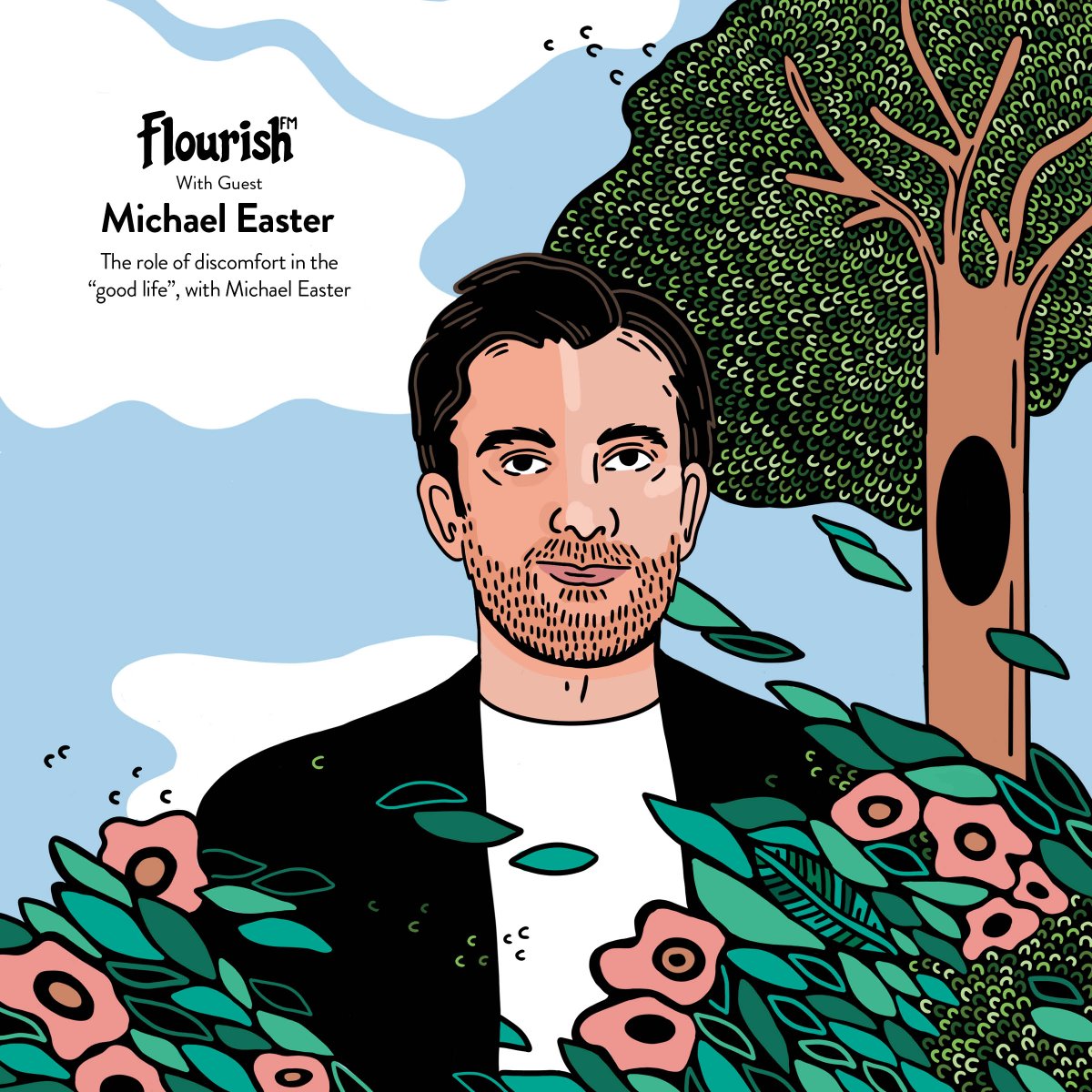
New episode, out now on all podcast channels🎧
We speak to @Michael_Easter - journalist, professor, & bestselling author who writes about how modern environments shape human behavior, health, & performance - about the role of discomfort in flourishing🎙️
flourishfmpodcast.com/michae…
1
3
29
Dr. Jon Beale retweeted

May 4
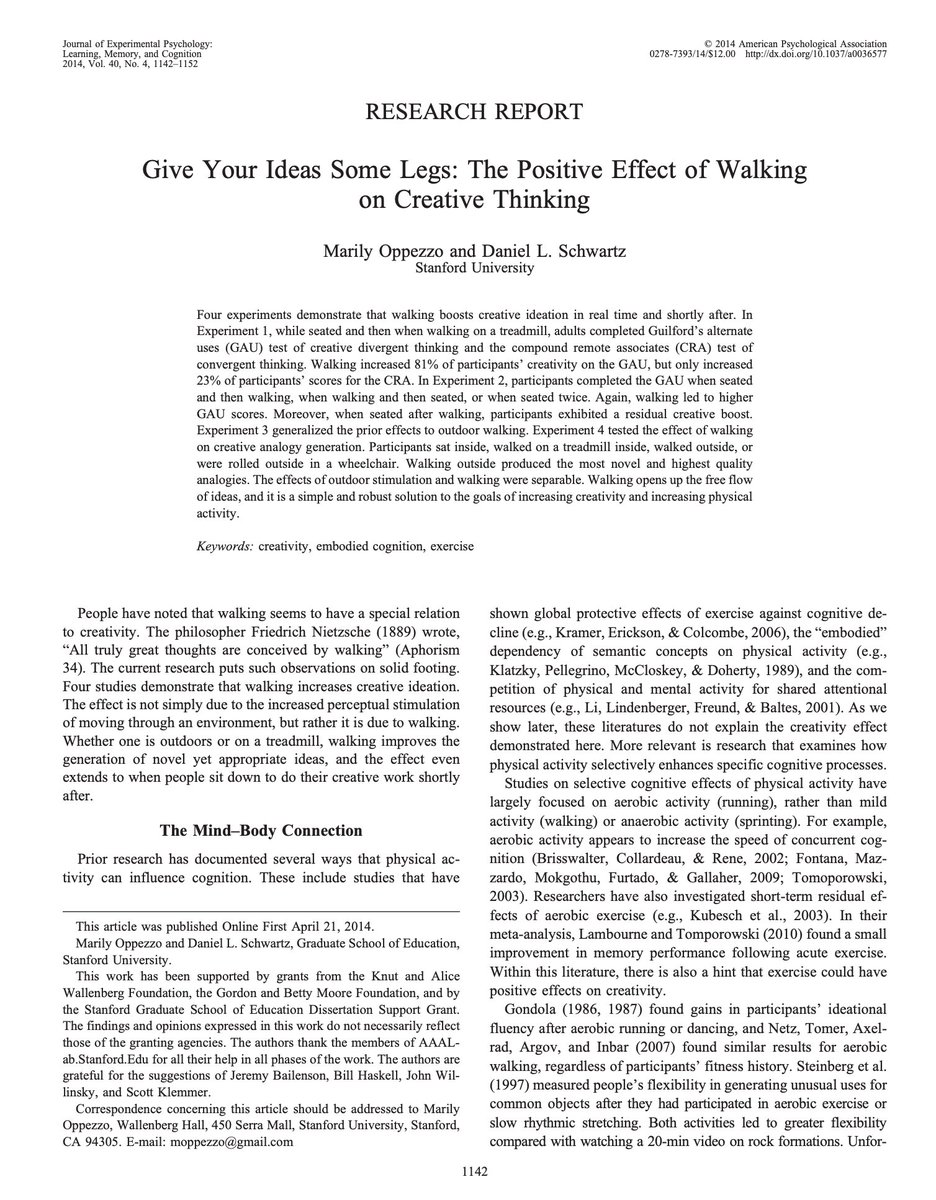
Just 8 minutes of walking increased creative output by 60%.
Stuck on a problem? Go for a walk.
75
1,030
4,941
434,155
Apr 21
The next meeting of @HFHarvard's Flourishing Network is a week today, Tue 28th April, 3-4pm, over Zoom. All welcome!
Wendy Ellyatt will lead the meeting, on 'Beyond the Individual: Towards Eco-Systemic Flourishing'.
Join the Network and learn more:
hfh.fas.harvard.edu/flourish…
50
Apr 14
Leading a free online masterclass today, on "Why Doing Hard Things Makes Life Better". 12-1pm ET over Zoom - all welcome!
To learn more and join today's masterclass, check out my most recent newsletter, linked below ⤵️
#resilience #personalgrowth #frictionmaxxing
Apr 8

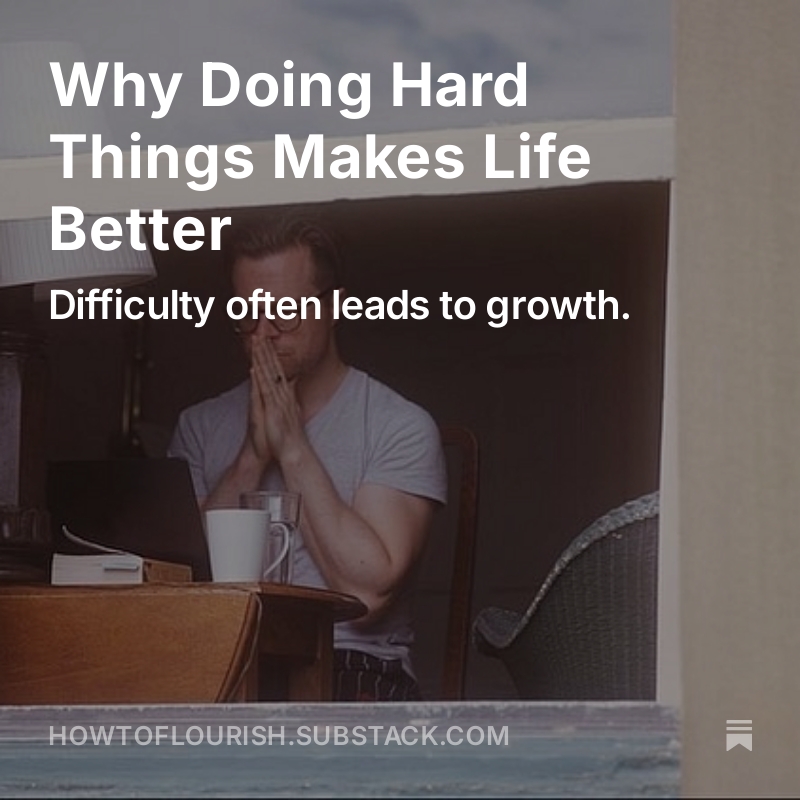
The next time you face #difficulty & feel tempted to make it easier, ask yourself: might the difficulty actually lead to #growth?
My newsletter this week, which includes discussion of @Michael_Easter's excellent work - our next @flourishFMcast guest 🎙️
howtoflourish.substack.com/p…
24
Apr 12
Saying no gets harder as we progress through our working lives.
As our responsibilities grow, so do the worthwhile demands on our time.
Yet our ability to say no is relatively underexplored as a character strength or virtue in its own right.
(Thread 👇)
1
1
30
Apr 12
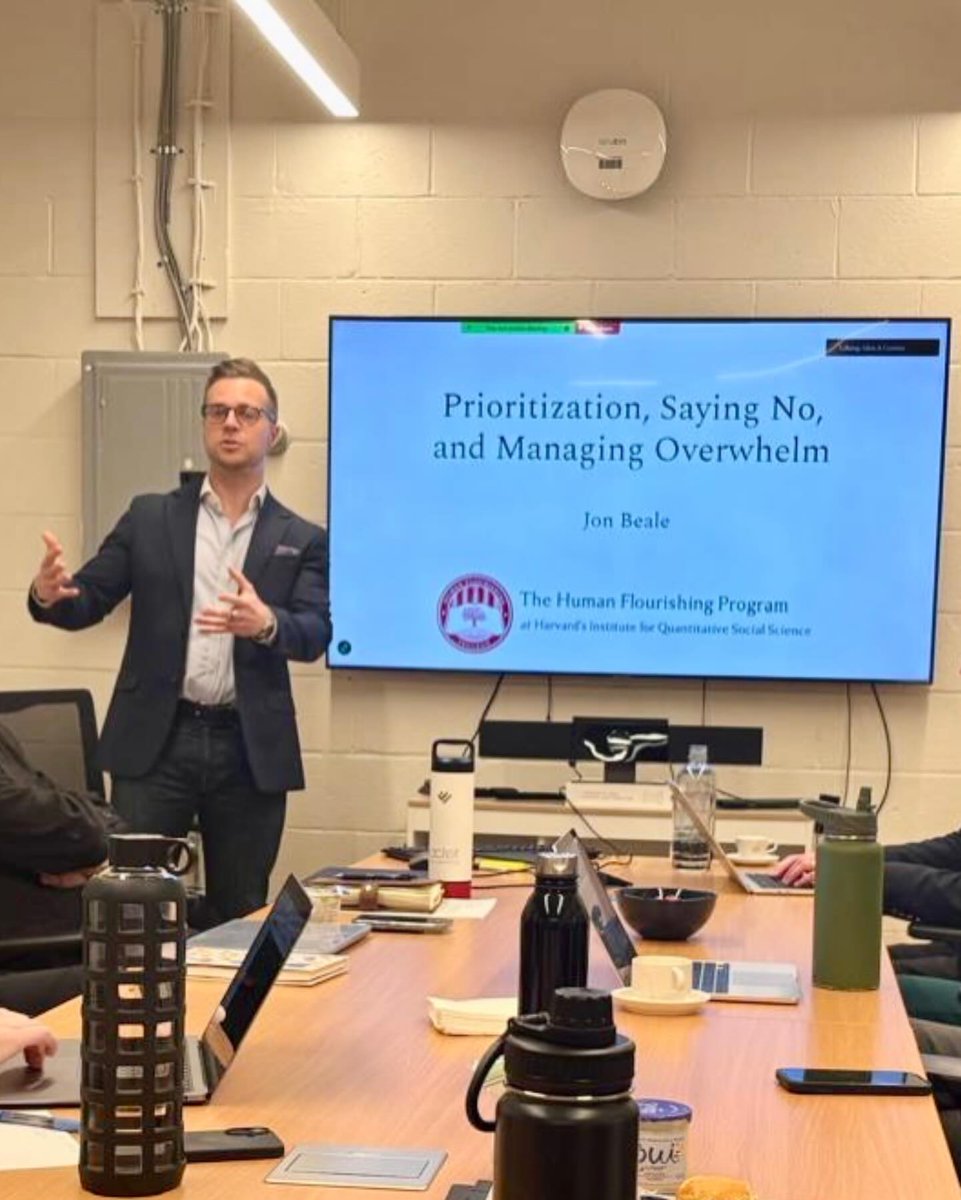
I've been exploring this in a couple of recent talks at Harvard, on "Flow States and Human Flourishing" and "Prioritization, Saying No, and Managing Overwhelm".
I've written on both topics in my newsletter, linked below and in my bio 📰
howtoflourish.substack.com/
1
7
Apr 12
💭 What would you spend more time doing if you got better at saying no?
7
Apr 8
The next time you face #difficulty & feel tempted to make it easier, ask yourself: might the difficulty actually lead to #growth?
My newsletter this week, which includes discussion of @Michael_Easter's excellent work - our next @flourishFMcast guest 🎙️
howtoflourish.substack.com/p…
1
59
Dr. Jon Beale retweeted
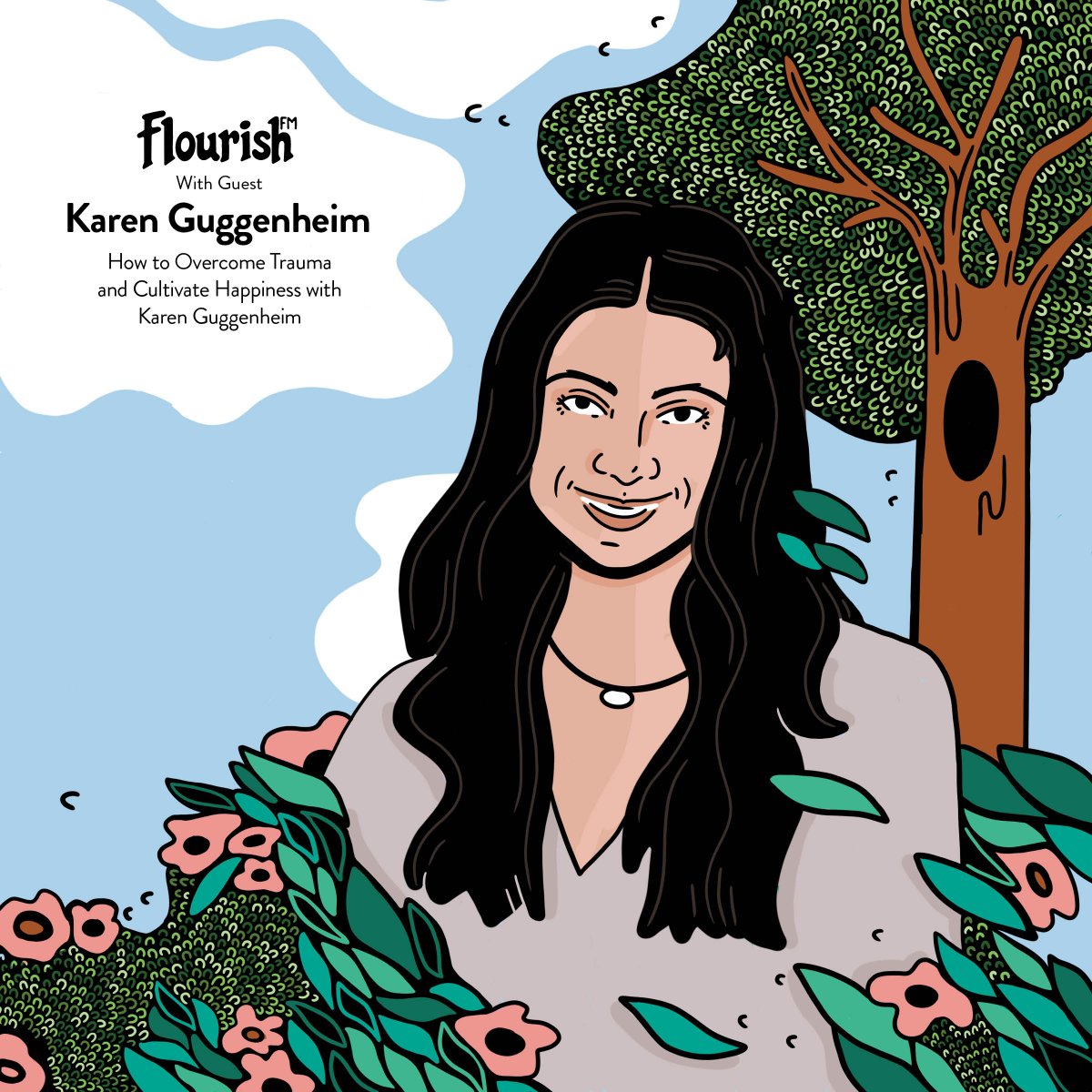
New episode of, out now on all #podcast channels 🎧
We speak to @karenguggenheim, happiness research expert author of Cultivating Happiness (2024), about how to overcome #trauma & cultivate #happiness.
flourishfmpodcast.com/kareng…
1
1
16
Mar 30
The next meeting of @HFHarvard's Flourishing Network is tomorrow, Tuesday, 31st March, 3-4pm ET, over Zoom. All welcome!
Tara Segree (Notre Dame of Maryland University) will lead, on her work on 'Bringing Mindfulness Into the Classroom'.
Info:
hfh.fas.harvard.edu/flourish…
32
Mar 26
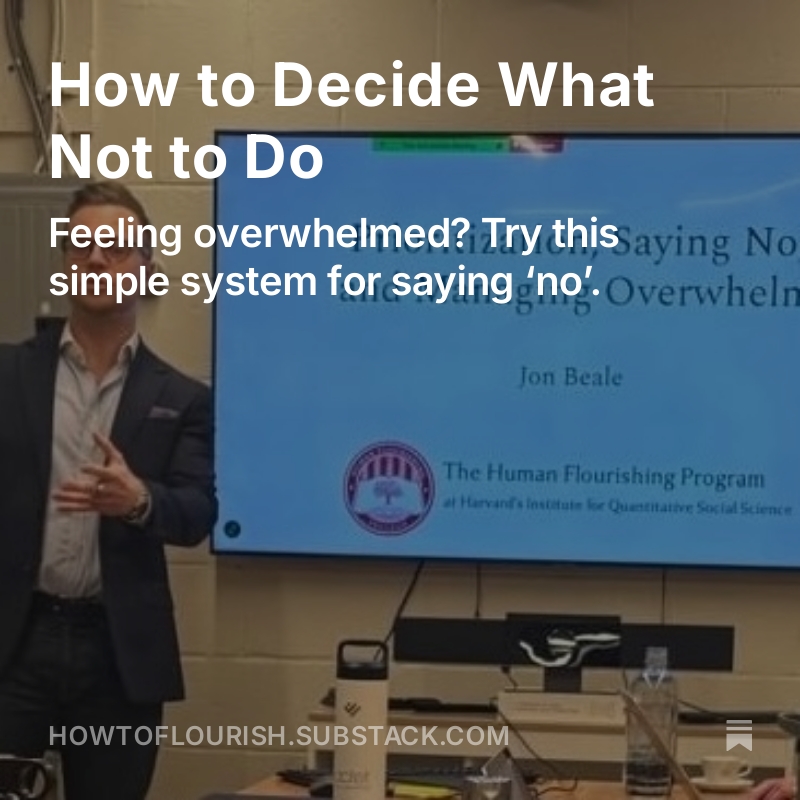
One of the most valuable skills today is deciding what *not* to do.
Saying ‘no’ is much harder when we evaluate every opportunity individually. What we need is a system for making those decisions.
I outline a system in my latest newsletter.
howtoflourish.substack.com/p…
9
Feb 28
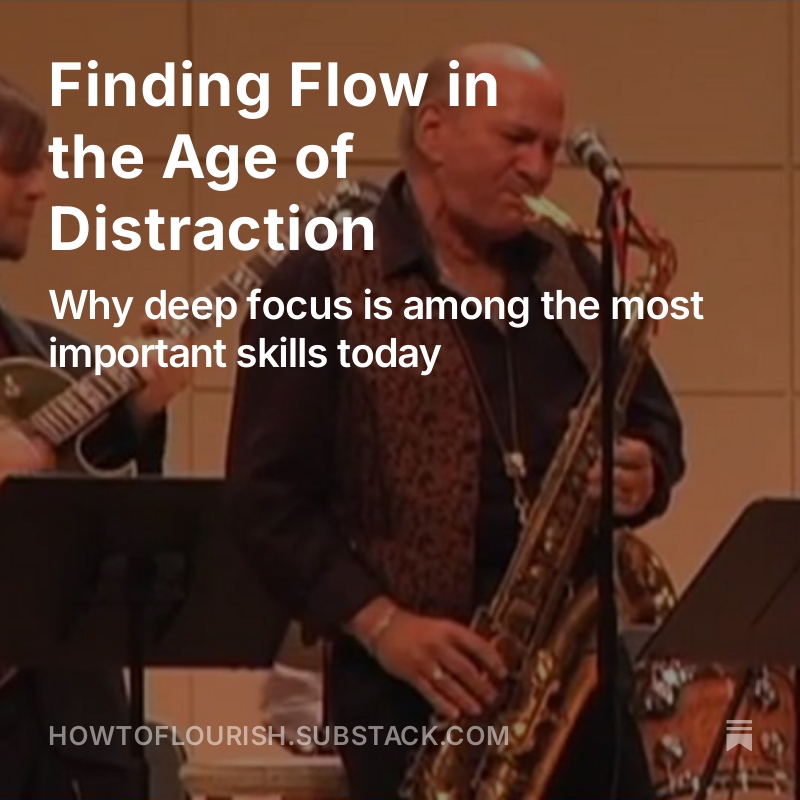
47 seconds.
That’s how long office workers typically focus before switching tasks, as discovered by @GloriaMark_PhD.
Yet, regularly experiencing a flow state improves our health, well-being & performance.
New newsletter, on the importance of #flow ⤵️
howtoflourish.substack.com/p…
40
Feb 24
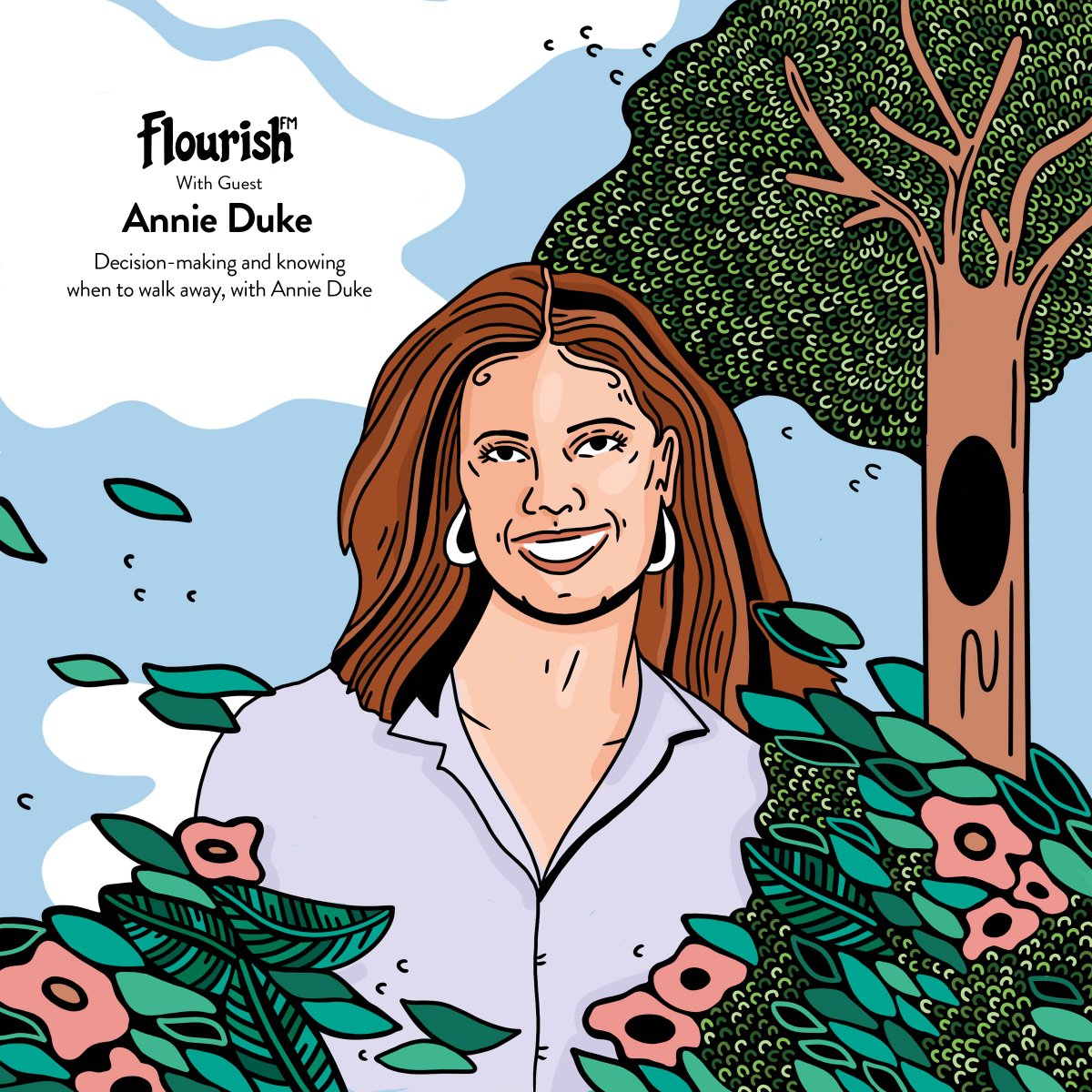
New episode of @flourishFMcast, out now on all #podcast channels 🎧
We speak to Dr. @AnnieDuke, bestselling author, cognitive psychologist, #decisionmaking expert, & former professional poker player, about how to make better decisions 🎙️
flourishfmpodcast.com/annied…
#annieduke

New episode, out now on all #podcast channels 🎧
We speak to Dr. @AnnieDuke, bestselling author, cognitive psychologist, #decisionmaking expert, & former professional poker player, about how to make better decisions 🎙️
flourishfmpodcast.com/annied…
#annieduke
1
5
2,551
Feb 20
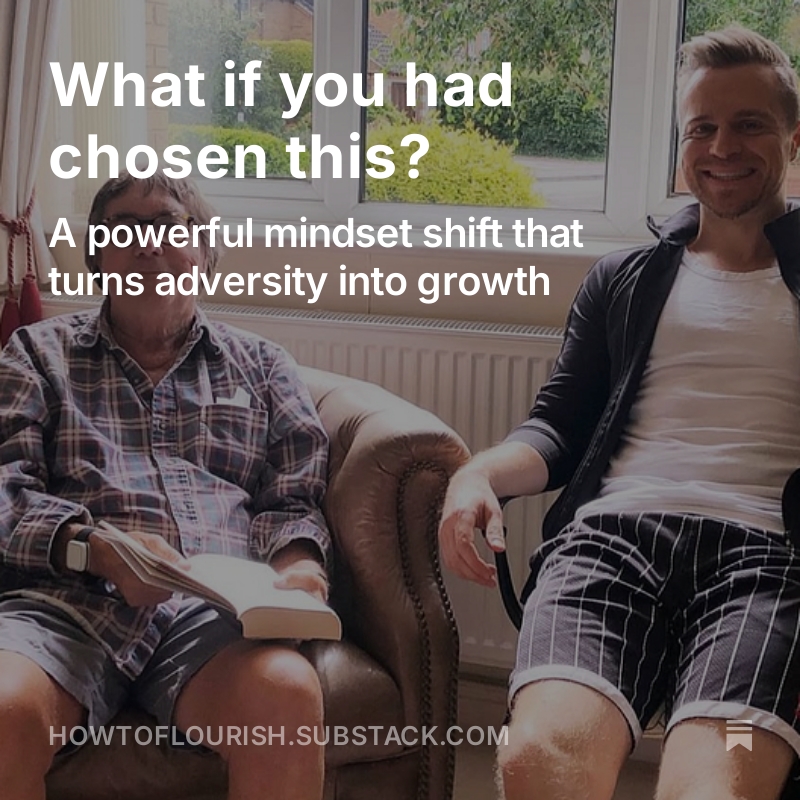
Think of an unwanted event in your life.
Ask: if I had chosen this, why would I have done so?
Notice what changes.
Now ask: how can I live as if I had chosen this?
This #mindset shift has transformed how I respond to #adversity.
Latest newsletter ⤵️
howtoflourish.substack.com/p…
2
3
44