The Dror Lab at Stanford. For all your computational needs: MD, ML, HPC... Applied to biochemistry, cell biology, drug discovery, and more!
Joined October 2019
- Tweets 25
- Following 17
- Followers 1,414
- Likes 6
3 Photos and videos


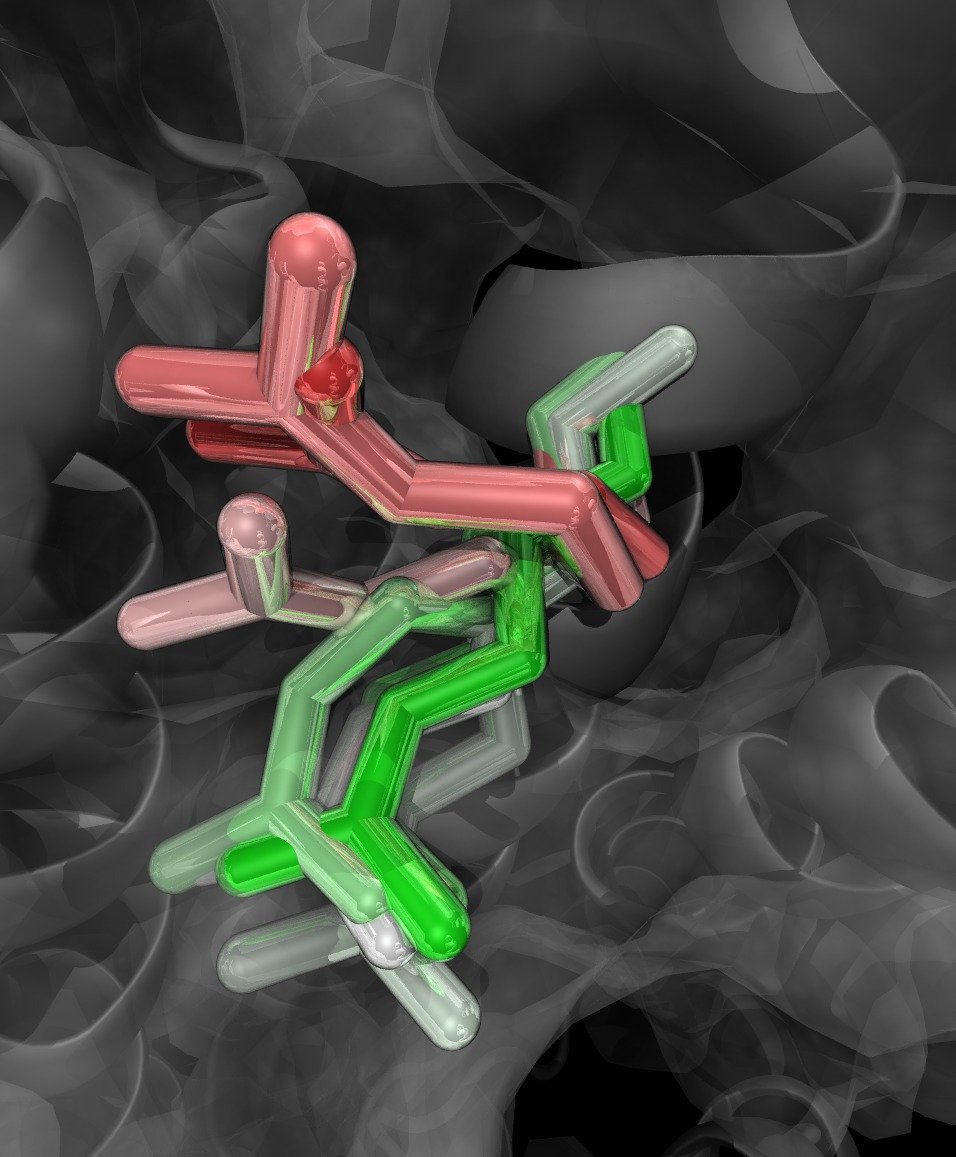
How accurately can one predict drug binding modes using AlphaFold models? New work from our lab reveals AF2's improved accuracy in capturing binding pocket structures, but the results of docking are not a slam dunk. 💥🧐
Check out the preprint:
biorxiv.org/content/10.1101/…
15
64
10,777
A new paper from our lab, @MIPS_Australia, and @KarunaPharma uses atomic-level simulations to reveal a molecular mechanism by which a ligand can achieve selectivity between nearly identical receptors. Open access:
nature.com/articles/s41589-0…
16
75
6,562
Now out on the cover of @ScienceMagazine:
Our work with @RDasLab on predicting 3D RNA structures!
science.sciencemag.org/conte…
Check out the official press release:
news.stanford.edu/2021/08/26…
and our earlier work on protein complexes:
doi.org/10.1002/prot.26033
16
65
Dror Lab retweeted

26 Aug 2021
AlphaFold for RNA? Excited to share our @StanfordAILab
work on deep learning for predicting 3D RNA structure, out today on the cover of @ScienceMagazine!
science.sciencemag.org/conte…
Sound interesting? Join us at atomic.ai to bring this work to life! More news soon!

16
364
1,239
We are excited to present our work on Geometric Vector Perceptrons, an equivariant GNN architecture for residue-level protein graphs, at ICLR! Check out our spotlight talk iclr.cc/virtual/2021/spotlig… and Github repo github.com/drorlab/gvp-pytor….
15
72
Check out our latest paper exploring the effects of GPCR phosphorylation on arrestin signaling with great collaborators @MattMasureel, Kobilka lab, and @Michel_Bouvier!
1
2
14
Looking for new challenges for machine learning in structural biology?
Check out our recent release: ATOM3D, a unified collection of diverse benchmark datasets for biological problems that deal with atom coordinates in 3D space. ⚛️⚛️⚛️
atom3d.ai/ [1/4]
2
29
125
The corresponding code to load, filter, and split the ATOM3D datasets is maintained on @github: github.com/drorlab/atom3d.
We hope this lowers the entry barrier for algorithm developers and promotes 3D atomic data as a “machine learning datatype” in its own right. [3/4]
1
4
We benchmark 3 prototypical architectures - 3D conv. networks, graph networks and equivariant networks - and compare them to 1D/2D baselines. We find that 3D info can strongly improve model performance, but it depends on the choice of architecture for a particular task. [4/4]
1
5
Dror Lab retweeted
18 Aug 2020
Machine Learning in Structural Biology (@workshopmlsb) is accepted at #NeurIPS2020! Come check out the exciting line-up of speakers and dates for the call for papers at mlsb.io (more details coming soon). Register interest at forms.gle/zLyQupP93TDqpAf39
34
95
Dror Lab retweeted
26 Jun 2020
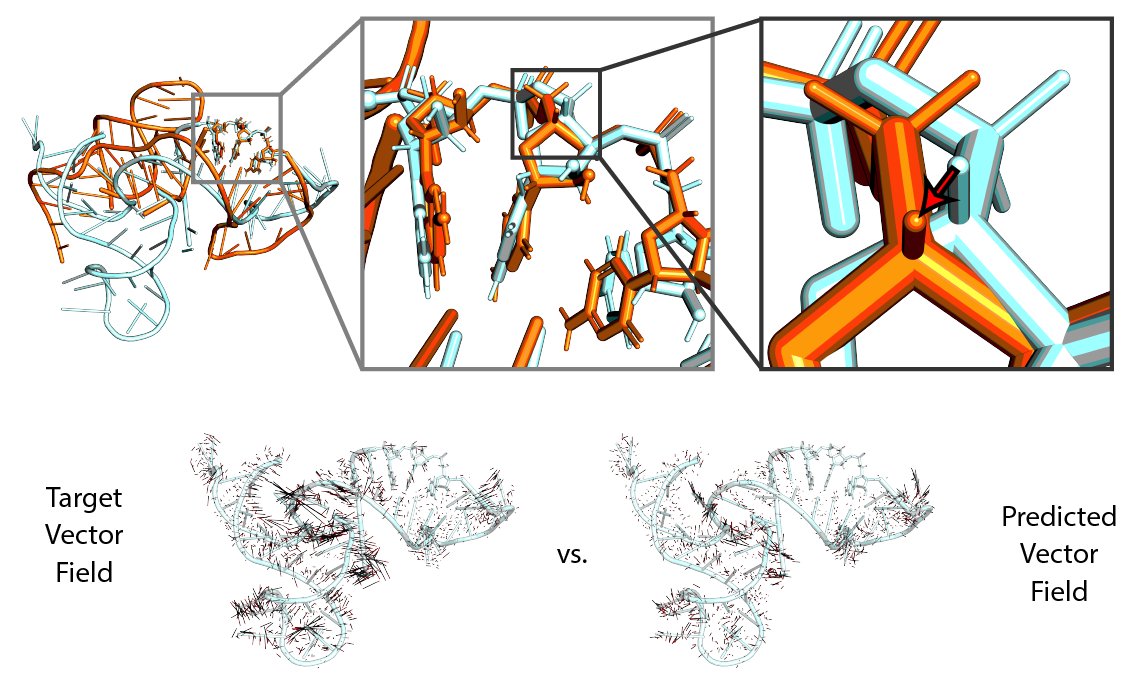
Excited to present our latest work on geometric prediction: the class of prediction problems for (non-scalar) geometric tensors! We show the first real-world demonstration of geometric prediction without the need for scalar approximations. arxiv.org/abs/2006.14163 [1/n]
1
26
78
Dror Lab retweeted

18 Jun 2020
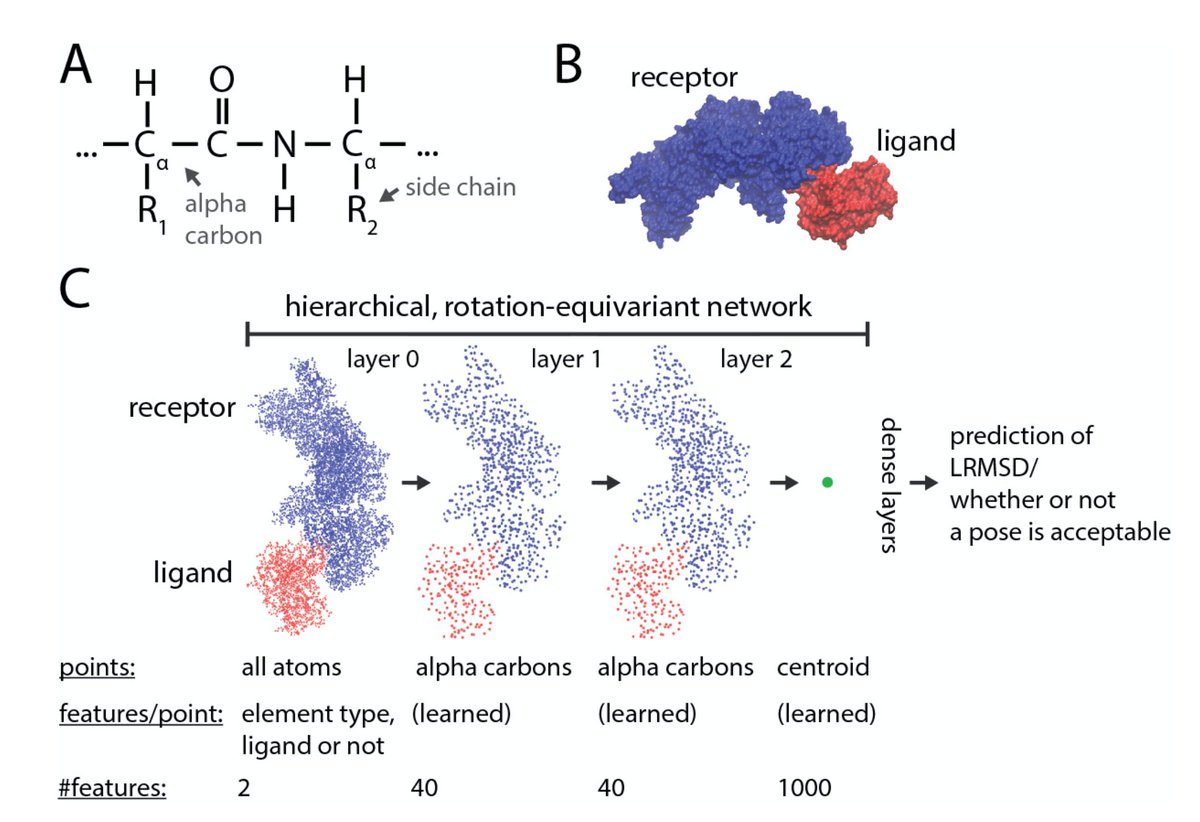
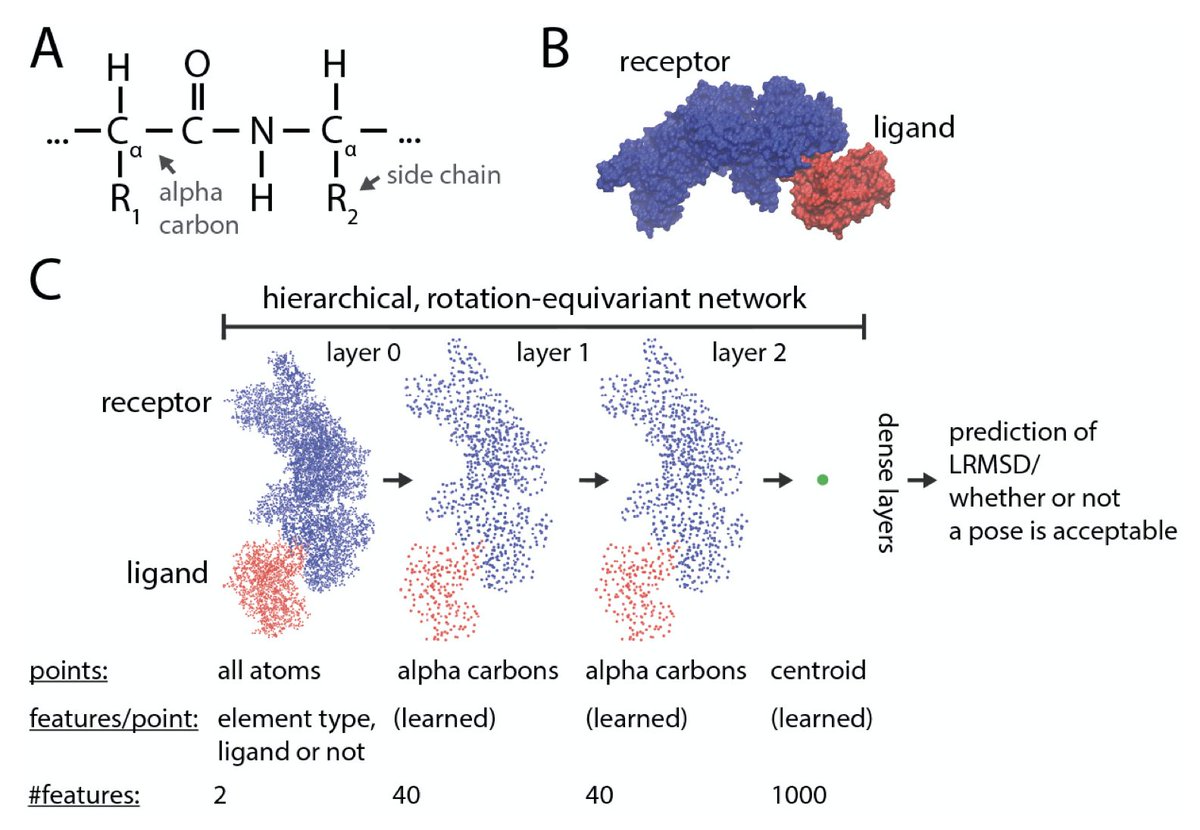
Somehow this slipped my radar. Very cool looking work from the @DrorLab: Hierarchical, rotation-equivariant neural networks to predict the structure of protein complexes. arxiv.org/abs/2006.09275
9
59
Excited to share our work on learning from the 3D structure of macromolecules! Our neural network architecture enables us to learn directly from all atoms in protein complexes containing tens of thousands of atoms: arxiv.org/abs/2006.09275 (1/3)
1
10
45
Excited to present two papers just out in Science on how to create more effective drugs with fewer side effects!
science.sciencemag.org/conte…
1
14
53
Dror Lab retweeted

15 Jan 2020
We have 2 papers published in @nature today! 🎉 One describes AlphaFold, which uses deep neural networks to predict protein structures with high accuracy. AlphaFold made the most accurate predictions at the 2018 scientific community assessment CASP13. 1/4 deepmind.com/blog/article/Al…
13
513
1,380
Dror Lab retweeted

16 Dec 2019
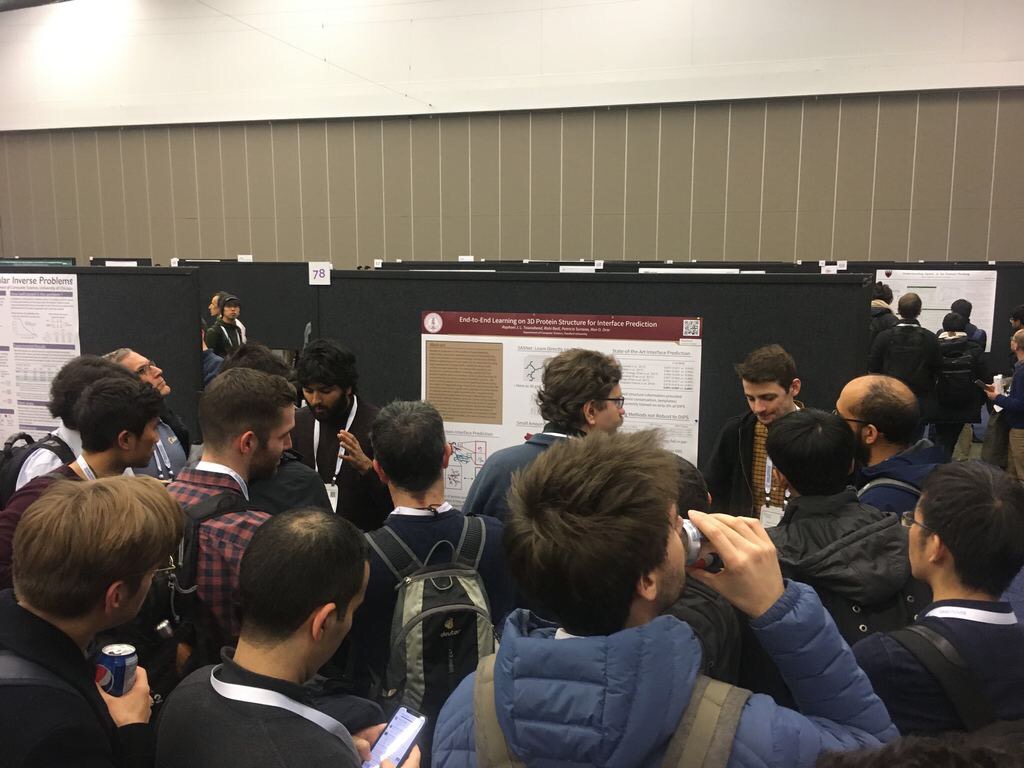
The rebirth of #MLCB2019 was great. Great posters and talks all around. Thanks to the organizers and everyone who came up for making it awesome. Let's make this happen every year---but with coffee during the coffee break in the future.
1
5
31