Representing LGBT students at Durham University, we'll keep you up to date on events, campaigns and all things LGBT ! 🏳️🌈🏳️⚧️ lgbta.society@durham.ac.uk
- Tweets 1,420
- Following 187
- Followers 1,034
- Likes 594





ALT Black and white photo of a student at a laptop. Text over the top reads "Decolonising the Curriculum: Student Internships". In the corner is the Decolonise Durham Network logo with an image of the world.

ALT LGBT ASSOCIATION Welfare wednesdays 17-03-2021 - welcome to week 10! - signposting: switchboard lgbt - signposting: more lgbt charities - Pet of the week! - this week's drop-in
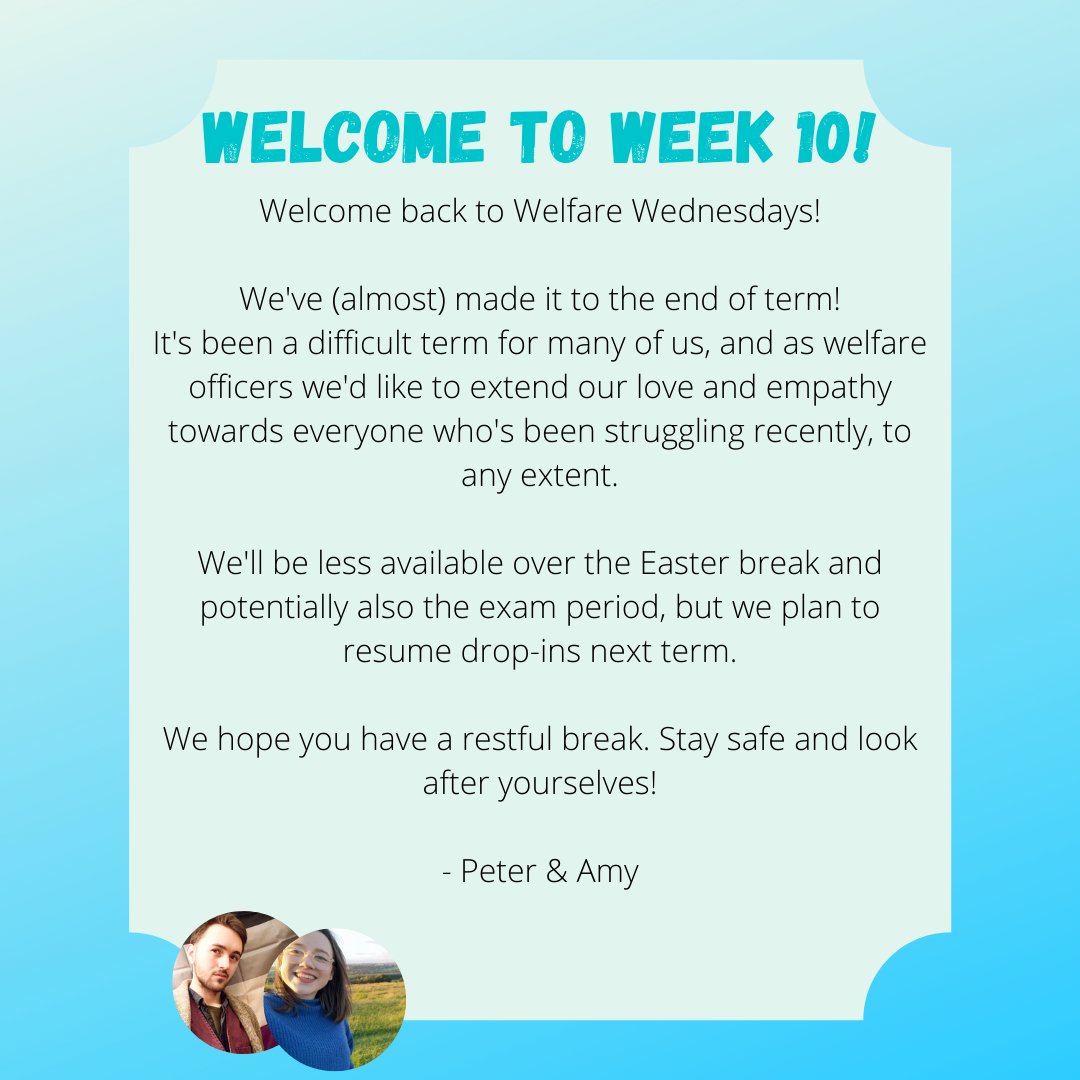
ALT WELCOME TO WEEK 10! Welcome back to Welfare Wednesdays! We've (almost) made it to the end of term! It's been a difficult term for many of us, and as welfare officers we'd like to extend our love and empathy towards everyone who's been struggling recently, to any extent. We'll be less available over the Easter break and potentially also the exam period, but we plan to resume drop-ins next term. We hope you have a restful break. Stay safe and look after yourselves! - Peter & Amy
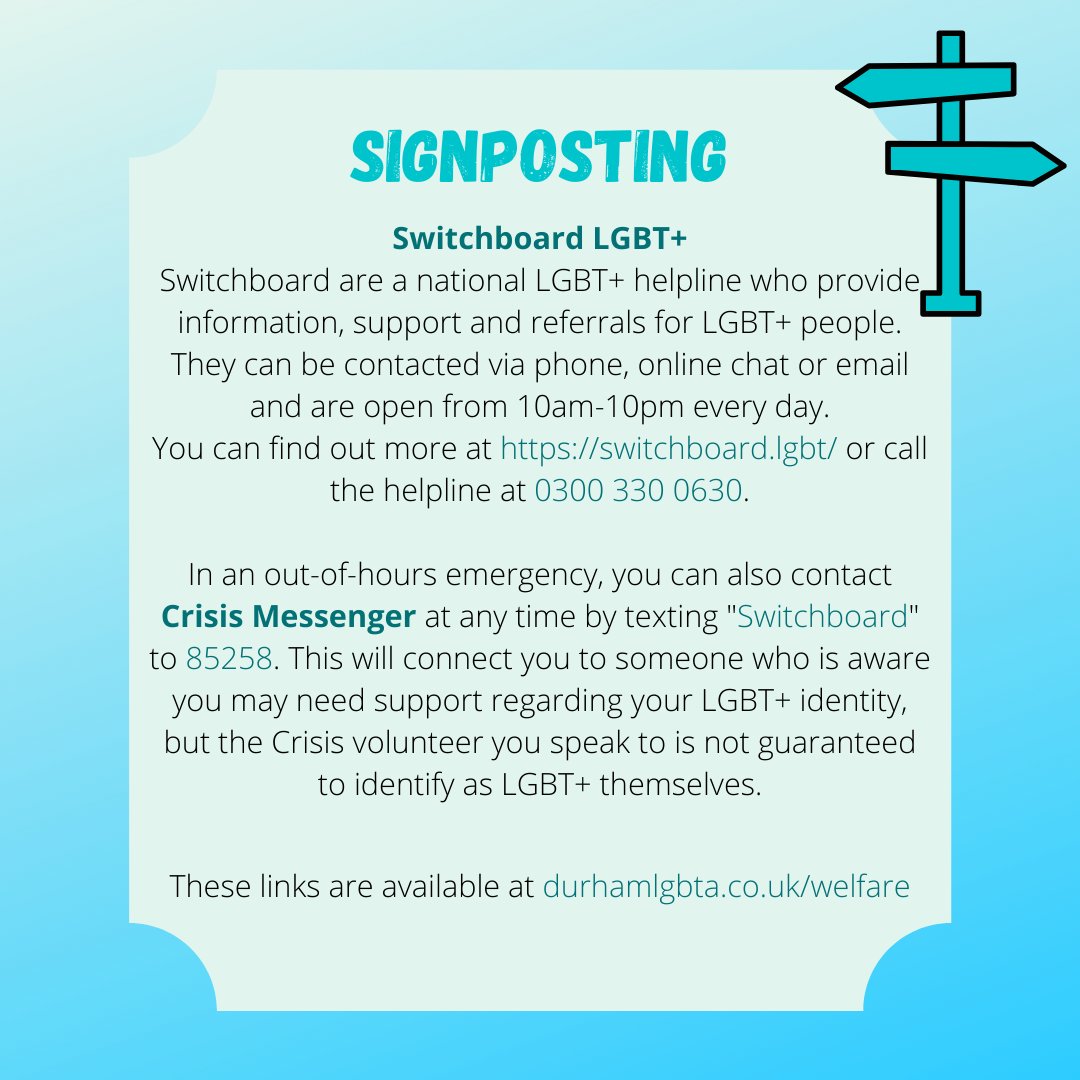
ALT SIGNPOSTING Switchboard LGBT Switchboard are a national LGBT helpline who provide information, support and referrals for LGBT people. They can be contacted via phone, online chat or email and are open from 10am-10pm every day. You can find out more at https://switchboard.lgbt/ or call the helpline at 0300 330 0630. In an out-of-hours emergency, you can also contact Crisis Messenger at any time by texting "Switchboard" to 85258. This will connect you to someone who is aware you may need support regarding your LGBT identity, but the Crisis volunteer you speak to is not guaranteed to identify as LGBT themselves. These links are available at durhamlgbta.co.uk/welfare
ALT SIGNPOSTING LGBT Foundation LGBT Foundation are another LGBT charity based in the UK who provide support and resources for LGBT people. They are open from 9am-9pm from Monday-Friday and 10am-6pm on weekends. You can find out more at https://lgbt.foundation/ or call their helpline at 0345 3 30 30 30. Stonewall Stonewall are an LGBT charity providing information and resources for LGBT people. They have an information service which is open from 9:30am-4:30pm Monday-Friday. You can find out more at stonewall.org.uk. These links are available at durhamlgbta.co.uk/welfare
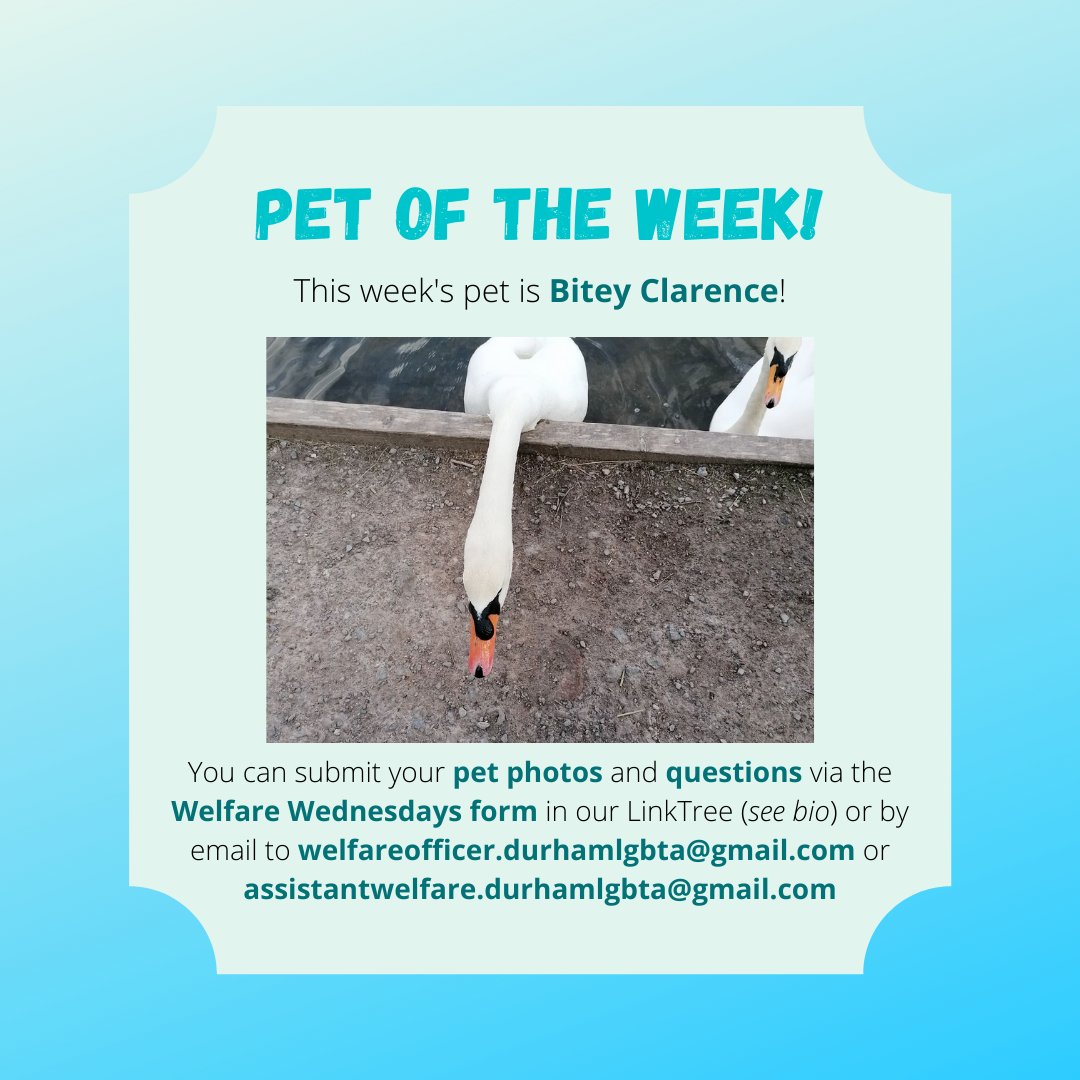
ALT PET OF THE WEEK! This week's pet is Bitey Clarence! [image description: a swan, photographed from above, with his neck stretched out as though reaching to bite someone] You can submit your pet photos and questions via the Welfare Wednesdays form in our LinkTree (see bio) or by email to welfareofficer.durhamlgbta@gmail.com or assistantwelfare.durhamlgbta@gmail.com
ALT DROP-IN DETAILS This week's drop-in will be with Amy on Friday, 19th March from 2:30-4:30pm on Zoom, at Meeting ID: 987 2373 5965 Passcode: 649169 or you can contact Durham LGBT Association Welfare on Skype for our instant messaging option. There will be a waiting room in Zoom to ensure that there is only one person attending the drop-in at a time. You will need to be logged into your Durham University Zoom account in order to access the Zoom meeting.
ALT WELFARE DROP-INS Association welfare drop-ins, much like college drop-ins, are run by students, and are non-judgemental, non-advisory spaces where we can lend a listening ear, help to talk through your feelings and provide signposting towards people and organisations who might be able to help. You can talk to us about any issue that's on your mind, or just come for a friendly chat. If you have any questions, just send us an email: Peter Kissack (he/him) - welfareofficer.durhamlgbta@gmail.com Amy Rees (she/her) - assistantwelfare.durhamlgbta@gmail.com See you soon ! Amy and Peter
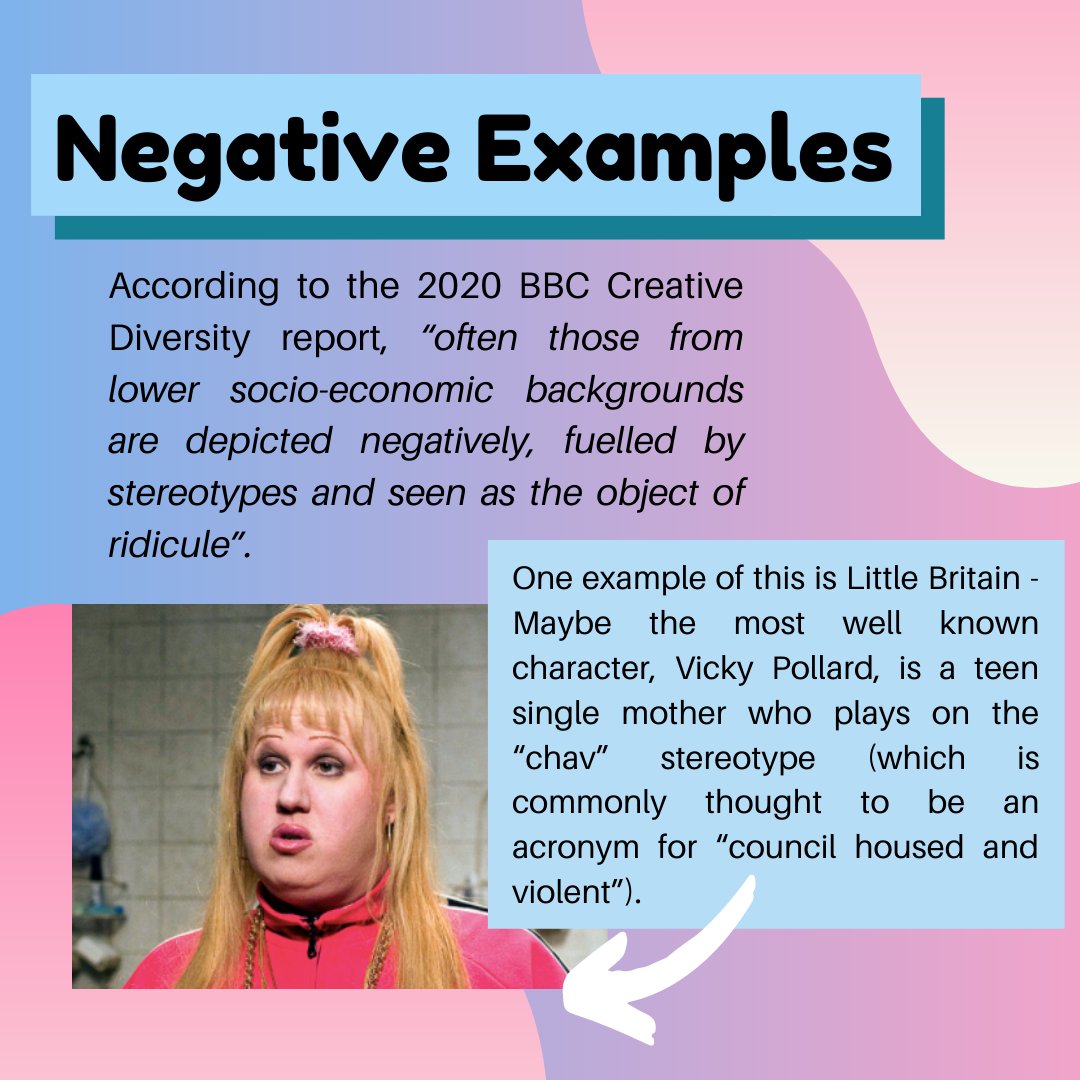
ALT According to the 2020 BBC Creative Diversity report, “often those from lower socio-economic backgrounds are depicted negatively, fuelled by stereotypes and seen as the object of ridicule”. One example of this is Little Britain. Maybe the most well known character, Vicky Pollard is a teen single mother, who plays on the “chav” stereotype, which is commonly thought to be an acronym for “council housed and violent”.
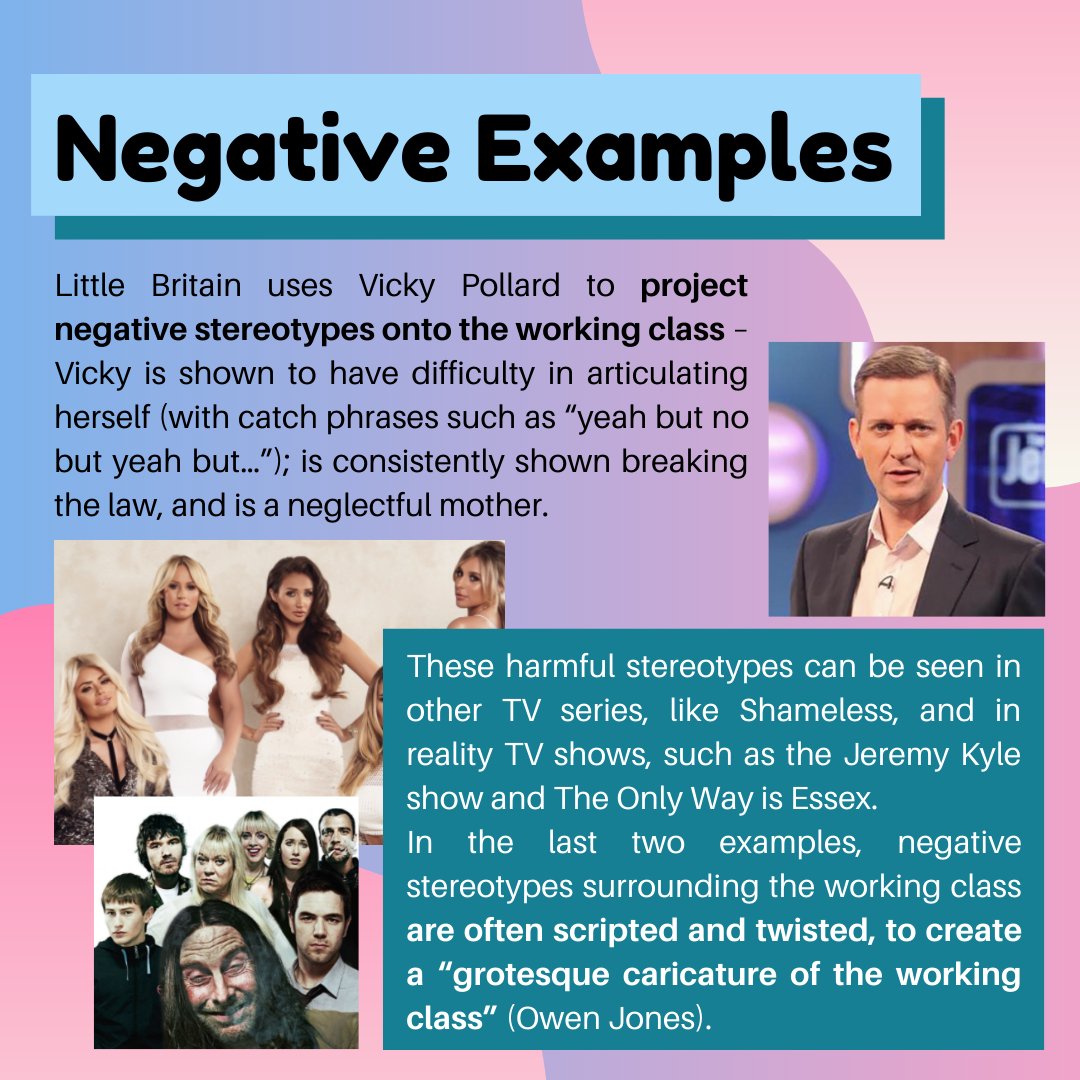
ALT In addition to this, Vicky is shown to have difficulty in articulating herself (with catch phrases such as “yeah but no but yeah but…”), is consistently shown to be breaking the law and also being a neglectful mother. Little Britain uses Vicky Pollard to project these negative stereotypes onto the working class. These harmful stereotypes can be seen in other TV series, like Shameless, and in reality TV shows, such as the Jeremy Kyle show and The Only Way is Essex. In both of these last two examples, negative stereotypes surrounding the working class are not only showcased but often scripted and twisted, to create a “grotesque caricature of the working class”(Owen Jones).
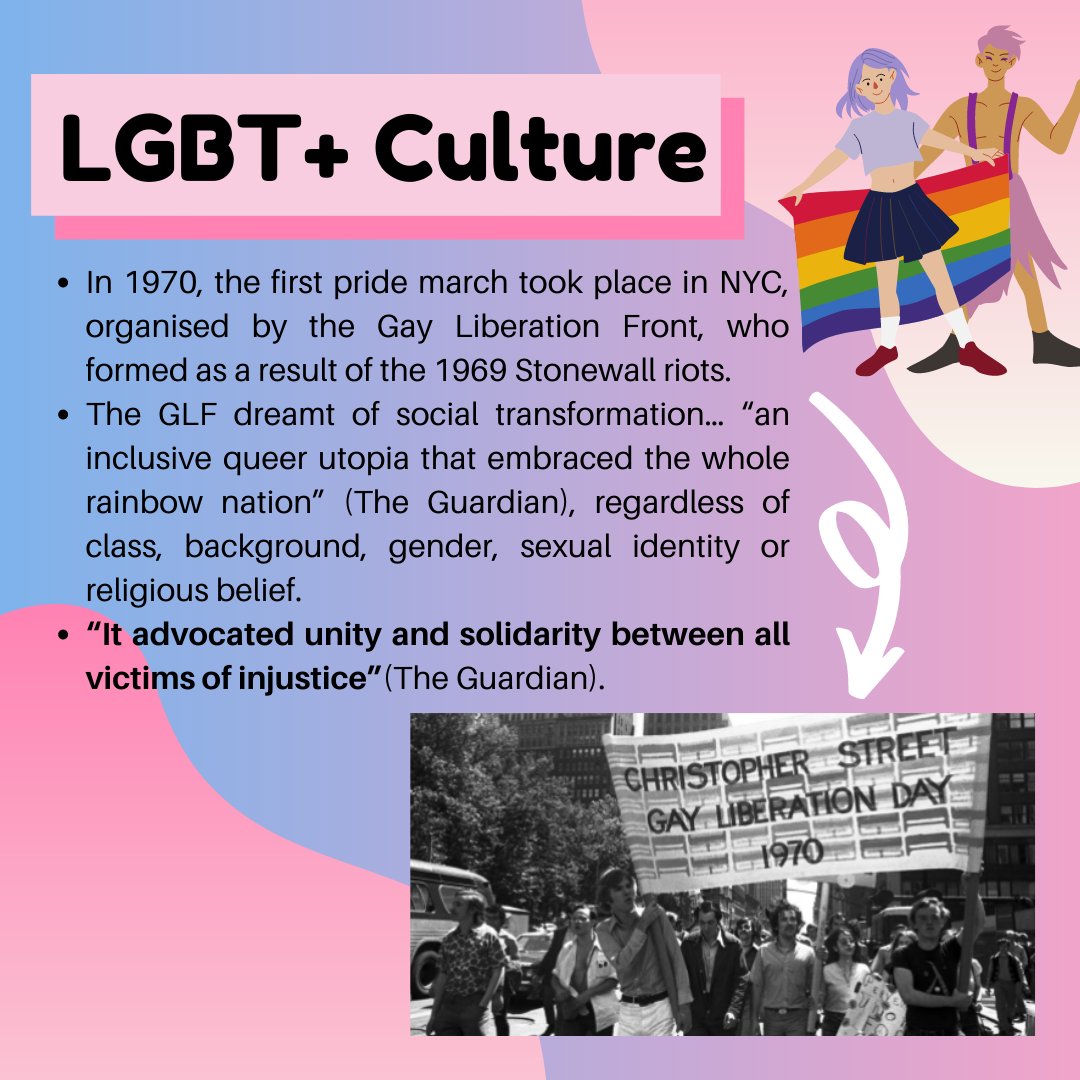
ALT In 1970, the first pride march took place in NYC, organised by the Gay Liberation Front, who formed as a result of the 1969 Stonewall riots. The GLF dreamt of social transformation… “an inclusive queer utopia that embraced the whole rainbow nation” (The Guardian), regardless of class, background, gender, sexual identity or religious belief. “It advocated unity and solidarity between all victims of injustice” (The Guardian).
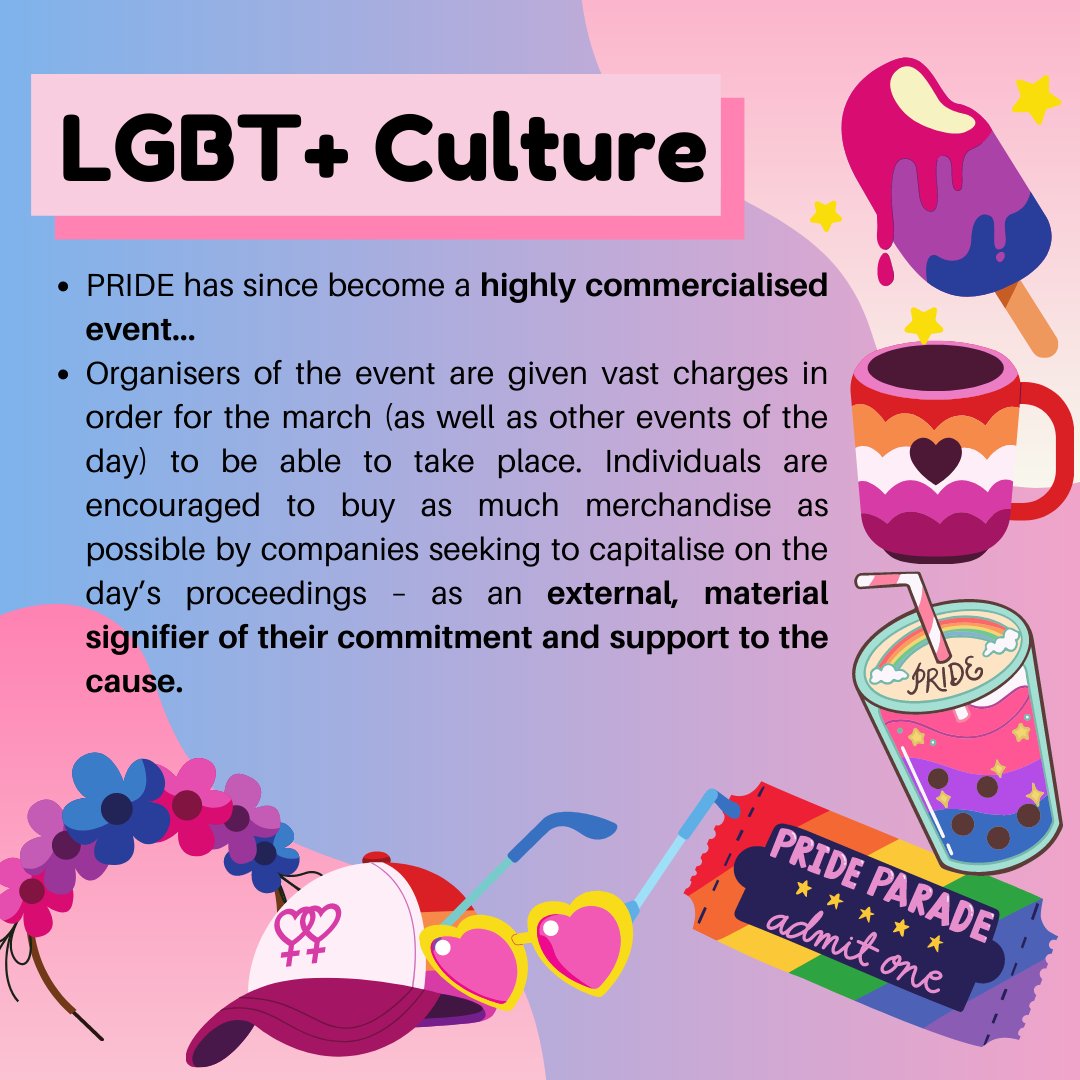
ALT Since then, PRIDE has very much become a commercialised event. Organisers of the event are given vast charges in order for the march as well as other events of the day to be able to take place, and individuals are encouraged to buy as much rainbow merchandise as possible by companies seeking to boost their brand image and capitalise on the day’s proceedings, as an external, material signifier of their commitment and support to the cause.
ALT This shift in the original agenda is harmful in so many ways in the day to day lives of LGBT individuals. One example of this is the pressure put on transgender individuals by society to “pass”… ie to fit into one of two set boxes of gender, male or female. Aside from the fact that many trans individuals may have no desire to conform (as their external presentation is in no way linked to the gender or genders they identify with), the act of trying to “pass” can be an extremely expensive one. Even without the costs of surgery, the cost of items such as binders, make up, wigs, new clothes, any material expression of traditional gender adds up – and is a luxury not available to all. What is needed much more than LGBT -themed merchandise is representation, both in the media and in positions of power in our real lives.
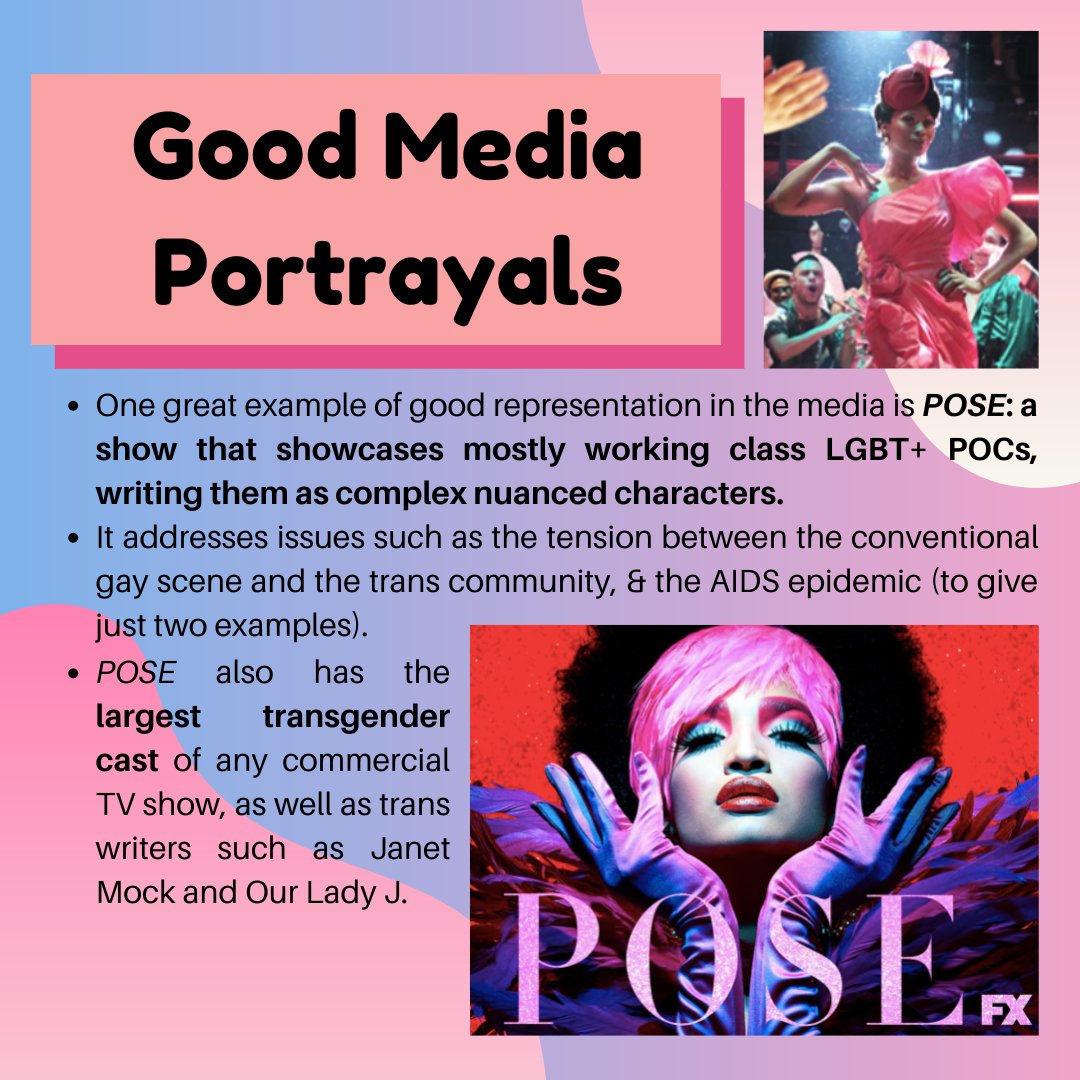
ALT One great example of good representation in the media is POSE: a show that showcases mostly working class LGBT POCs, writing them as complex nuanced characters. It does not avoid issues such as the tension between the conventional gay scene and the trans community or the AIDS epidemic (to give just two examples). POSE also has the largest transgender cast of any commercial TV show, as well as trans writers such as Janet Mock and Our Lady J.
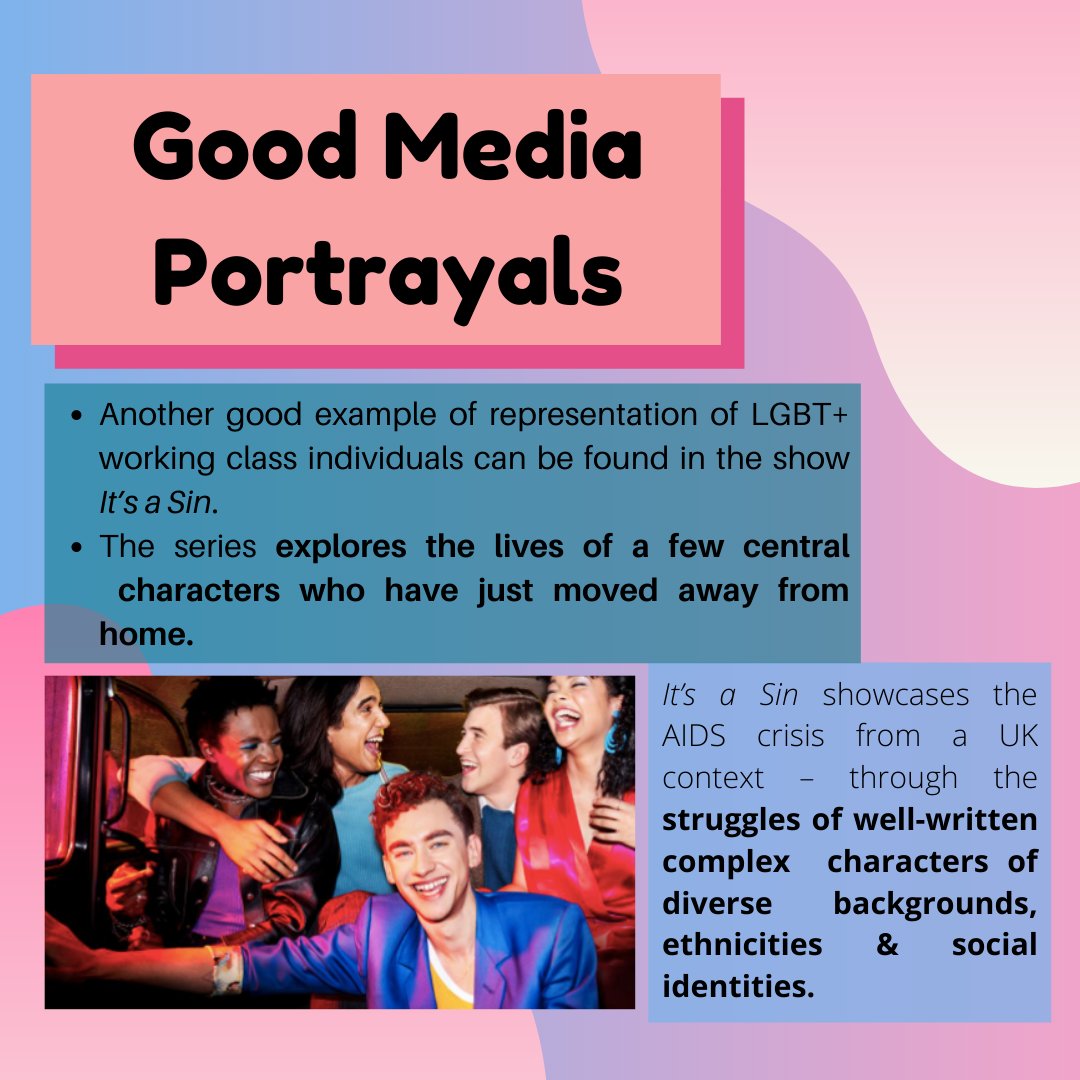
ALT Another good example of representation of LGBT working class individuals can be found in the show It’s a Sin. The series reflects overall reflects on the lives of a few central characters who have just moved away from home. It’s a Sin comes to reflect on the AIDS epidemic from a UK context - through the struggles of well-written characters of diverse backgrounds, races or social identities.
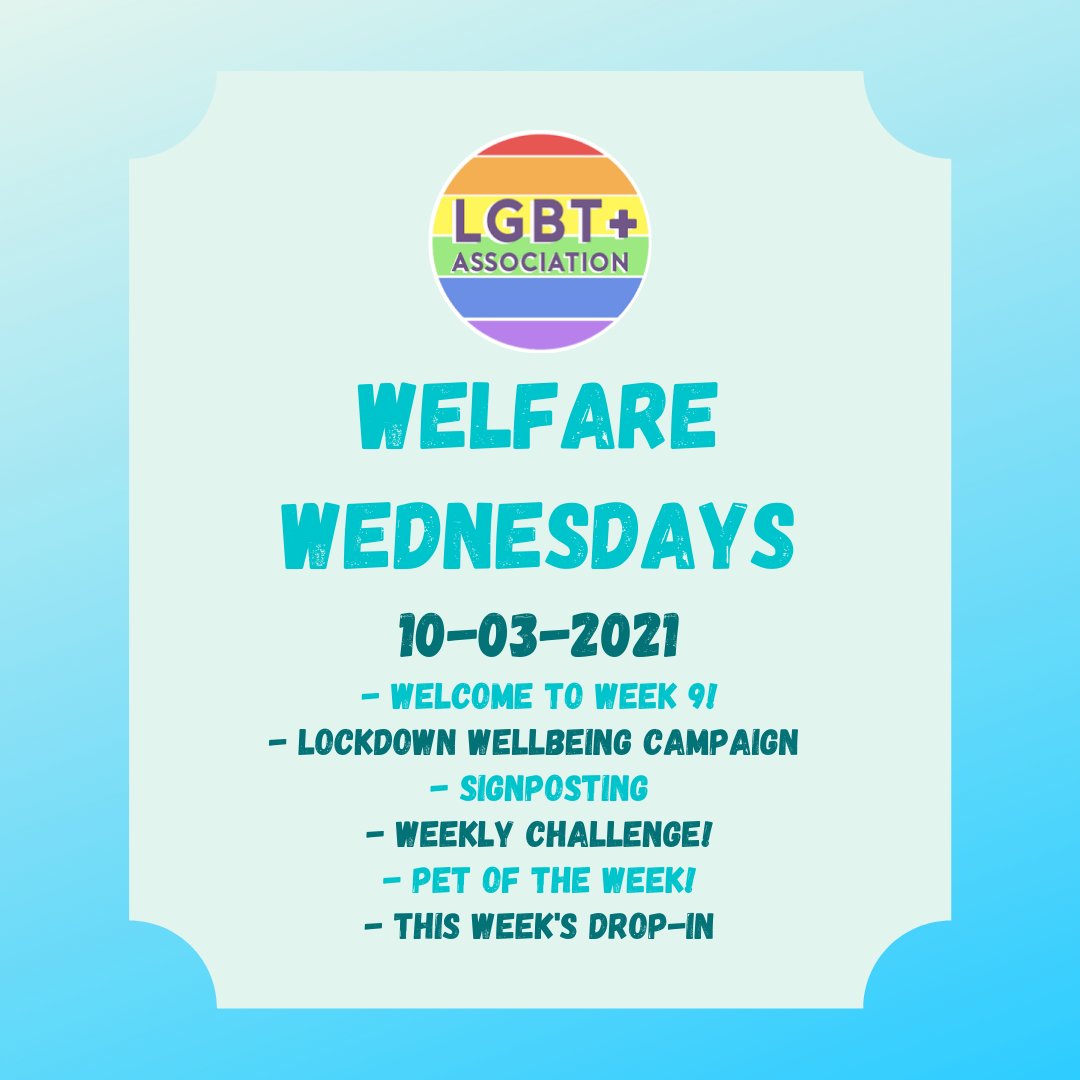
ALT LGBT ASSOCIATION Welfare wednesdays 10-03-2021 - welcome to week 9! - lockdown wellbeing campaign - signposting - weekly challenge! - Pet of the week! - this week's drop-in
ALT WELCOME TO WEEK 9! Welcome back to Welfare Wednesdays! There's not long left now until term ends and we can take a bit of a break! This Monday was International Women's Day - a perfect time to check out our new LGBT women's community (now on instagram @dulgbtwomen) - one of the wonderful communities run by our identity reps. This week we're going to talk a bit about COVID-19 risks that are associated with the LGBT community and signpost one or two charities which we haven't mentioned as much over the last term! - Peter & Amy
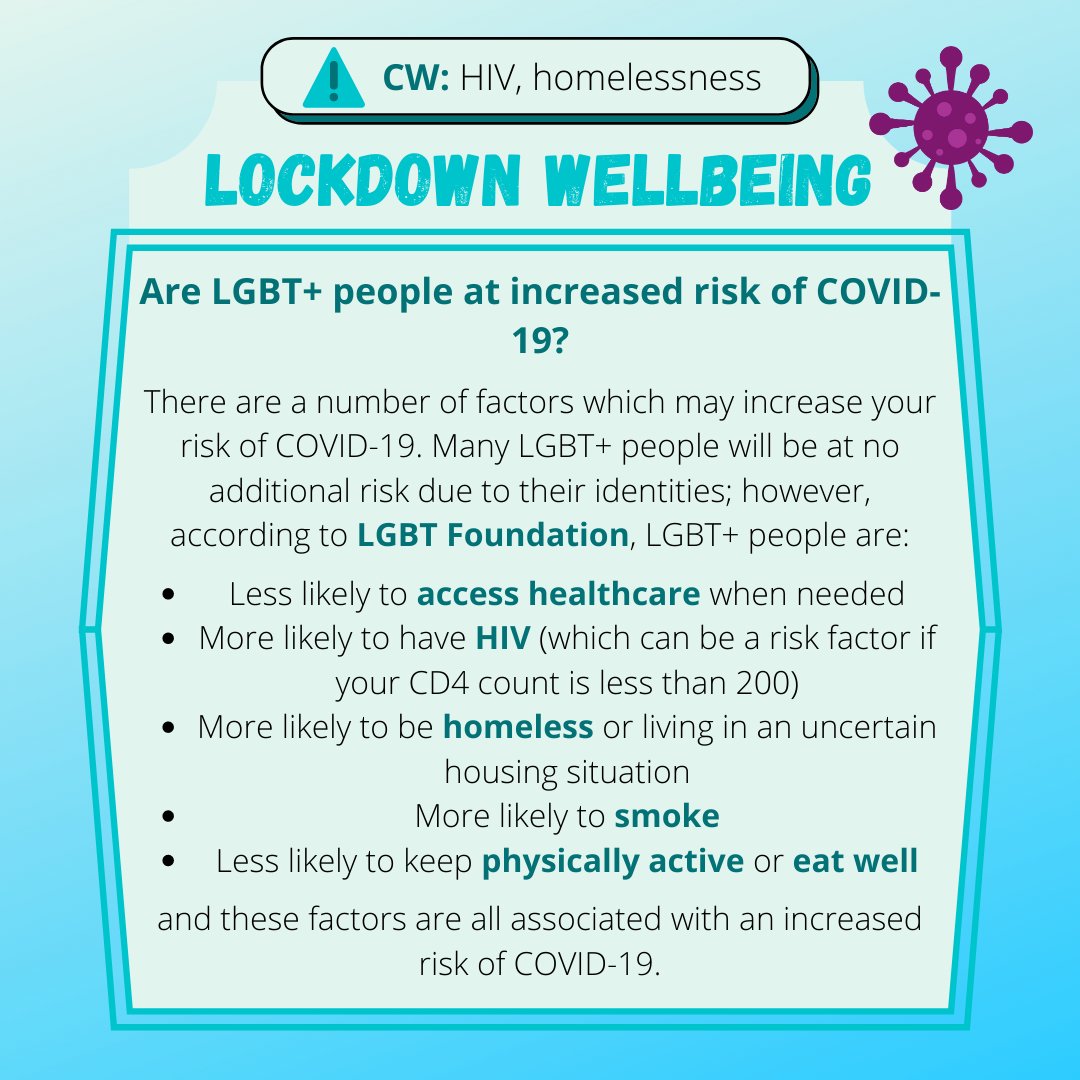
ALT LOCKDOWN WELLBEING Are LGBT people at increased risk of COVID-19? There are a number of factors which may increase your risk of COVID-19. Many LGBT people will be at no additional risk due to their identities; however, according to LGBT Foundation, LGBT people are: * Less likely to access healthcare when needed * More likely to have HIV (which can be a risk factor if your CD4 count is less than 200) * More likely to be homeless or living in an uncertain housing situation * More likely to smoke * Less likely to keep physically active or eat well and these factors are all associated with an increased risk of COVID-19.
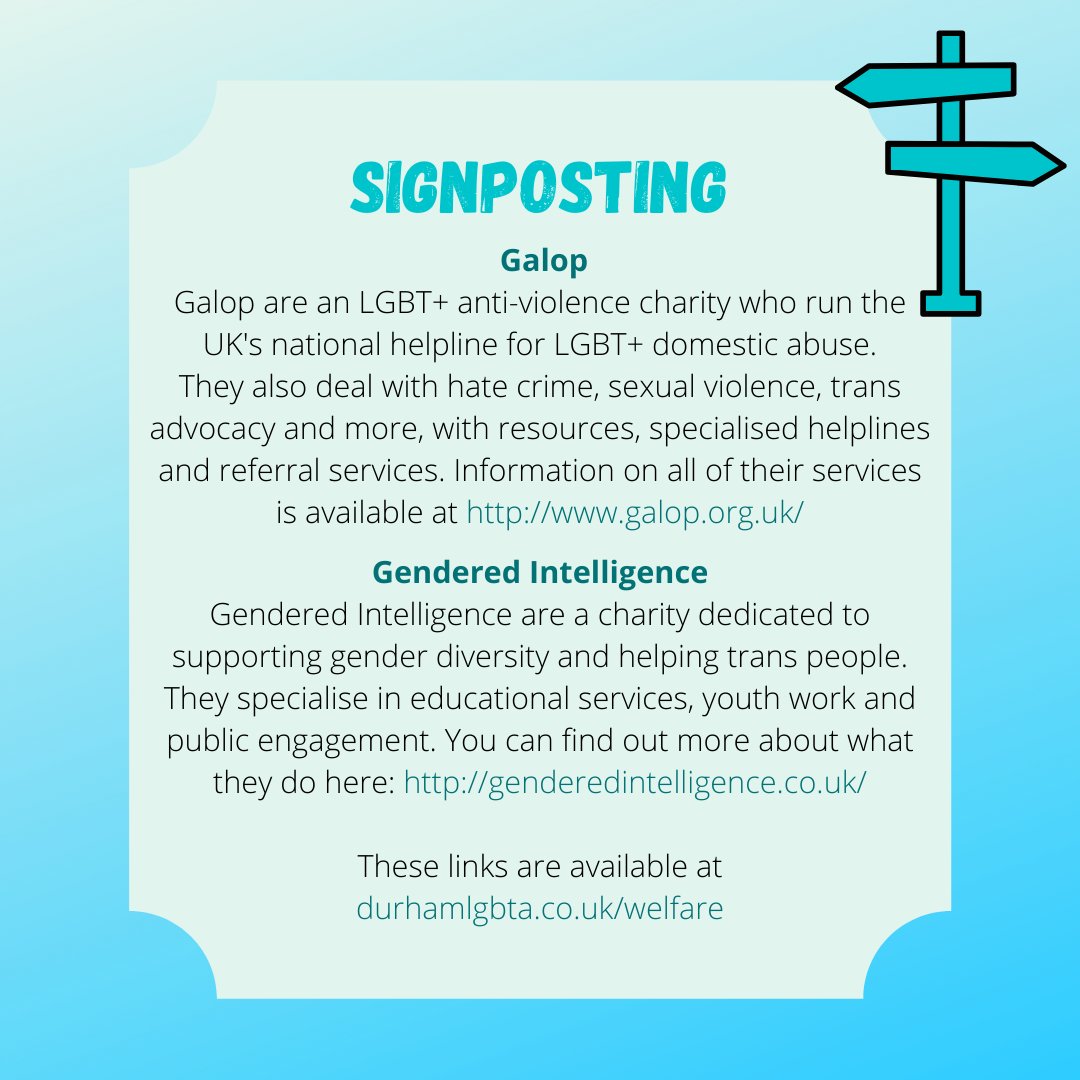
ALT SIGNPOSTING Galop Galop are an LGBT anti-violence charity who run the UK's national helpline for LGBT domestic abuse. They also deal with hate crime, sexual violence, trans advocacy and more, with resources, specialised helplines and referral services. Information on all of their services is available at http://www.galop.org.uk/ Gendered Intelligence Gendered Intelligence are a charity dedicated to supporting gender diversity and helping trans people. They specialise in educational services, youth work and public engagement. You can find out more about what they do here: http://genderedintelligence.co.uk/ These links are available at durhamlgbta.co.uk/welfare
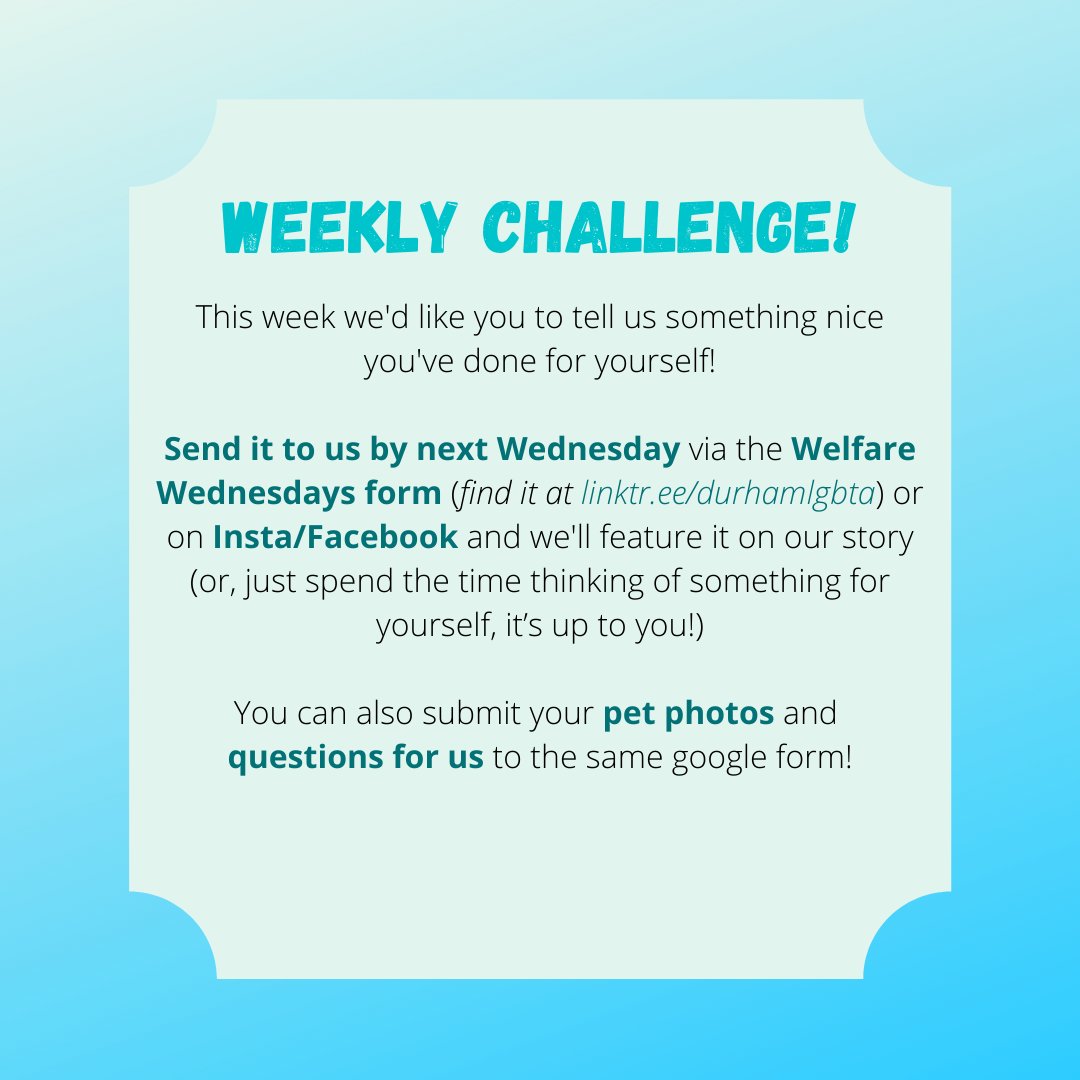
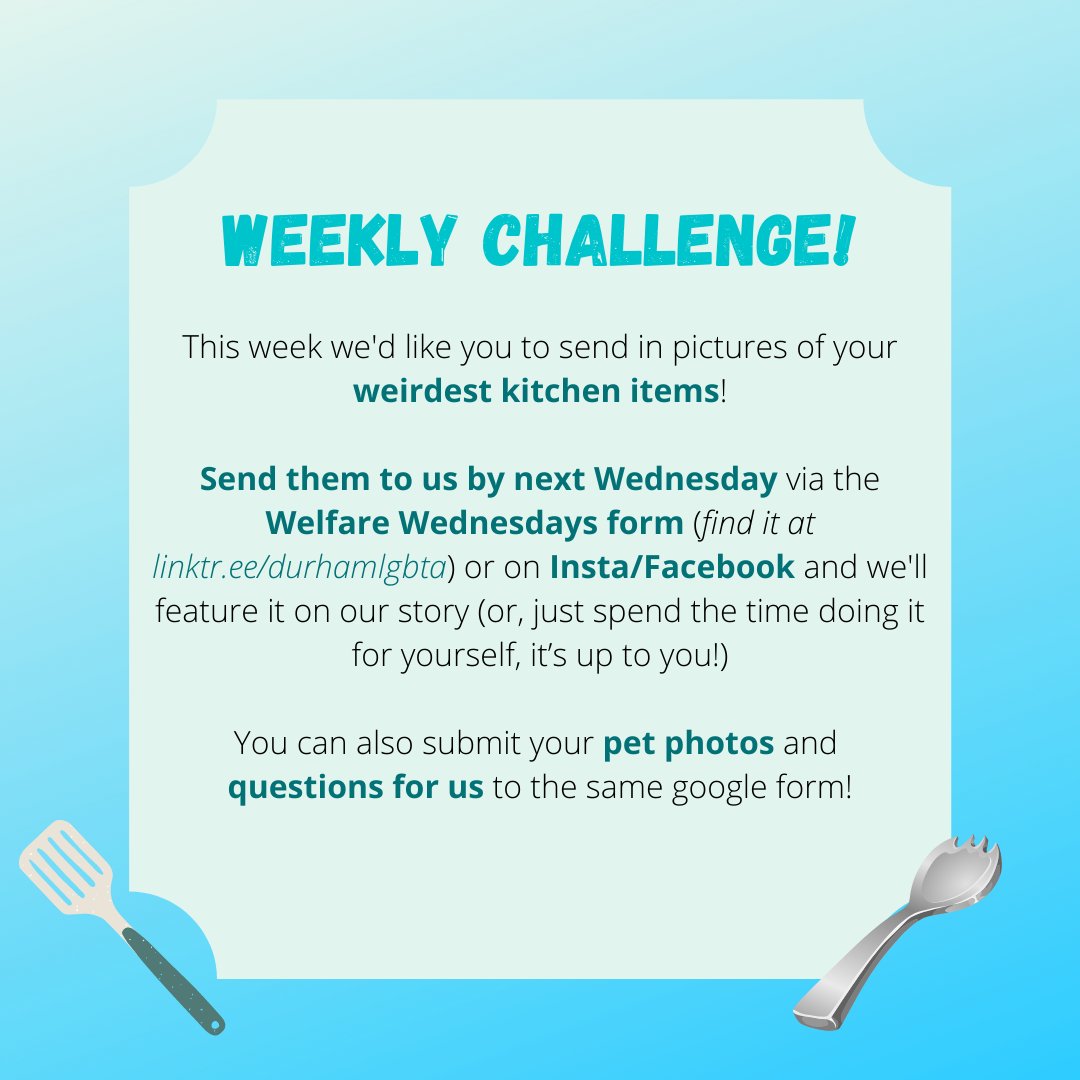
ALT WEEKLY CHALLENGE! This week we'd like you to tell us something nice you've done for yourself! Send it to us by next Wednesday via the Welfare Wednesdays form (find it at linktr.ee/durhamlgbta) or on Insta/Facebook and we'll feature it on our story (or, just spend the time thinking of something for yourself, it’s up to you!) You can also submit your pet photos and questions for us to the same google form!
![PET OF THE WEEK!
This week's pet is Chas!
[image description: a light brown and white cavalier King Charles spaniel with his tongue out, on a path through some trees]
You can submit your pet photos and questions via the Welfare Wednesdays form in our LinkTree (see bio) or by email to welfareofficer.durhamlgbta@gmail.com or assistantwelfare.durhamlgbta@gmail.com](https://venexa.site/media/EwDmzvwXAAEd553.jpg)
ALT PET OF THE WEEK! This week's pet is Chas! [image description: a light brown and white cavalier King Charles spaniel with his tongue out, on a path through some trees] You can submit your pet photos and questions via the Welfare Wednesdays form in our LinkTree (see bio) or by email to welfareofficer.durhamlgbta@gmail.com or assistantwelfare.durhamlgbta@gmail.com
ALT DROP-IN DETAILS This week's drop-in will be with Peter on Thursday, 11th March from 10:30am-12:30pm on Zoom, at Meeting ID: 987 2373 5965 Passcode: 649169 or you can contact Durham LGBT Association Welfare on Skype for our instant messaging option. There will be a waiting room in Zoom to ensure that there is only one person attending the drop-in at a time. You will need to be logged into your Durham University Zoom account in order to access the Zoom meeting.
ALT WELFARE DROP-INS Association welfare drop-ins, much like college drop-ins, are run by students, and are non-judgemental, non-advisory spaces where we can lend a listening ear, help to talk through your feelings and provide signposting towards people and organisations who might be able to help. You can talk to us about any issue that's on your mind, or just come for a friendly chat. If you have any questions, just send us an email: Peter Kissack (he/him) - welfareofficer.durhamlgbta@gmail.com Amy Rees (she/her) - assistantwelfare.durhamlgbta@gmail.com See you soon ! Amy and Peter
ALT class outside the uk
ALT Over the last few weeks, we’ve covered several important aspects of classism, ranging from Durham-specific experiences of classism to accent discrimination and stereotypes. These aspects, while invaluable to conversations around not only class but also its intersection with other marginalised identities, have largely centred around UK culture. As this is the one of the last weeks of the classism segment of the CIA, we want to highlight the differences in class structures globally, as well emphasise the fact that this post is simply a tiny reflection of a much larger issue, of which we have only managed to scratch the surface.
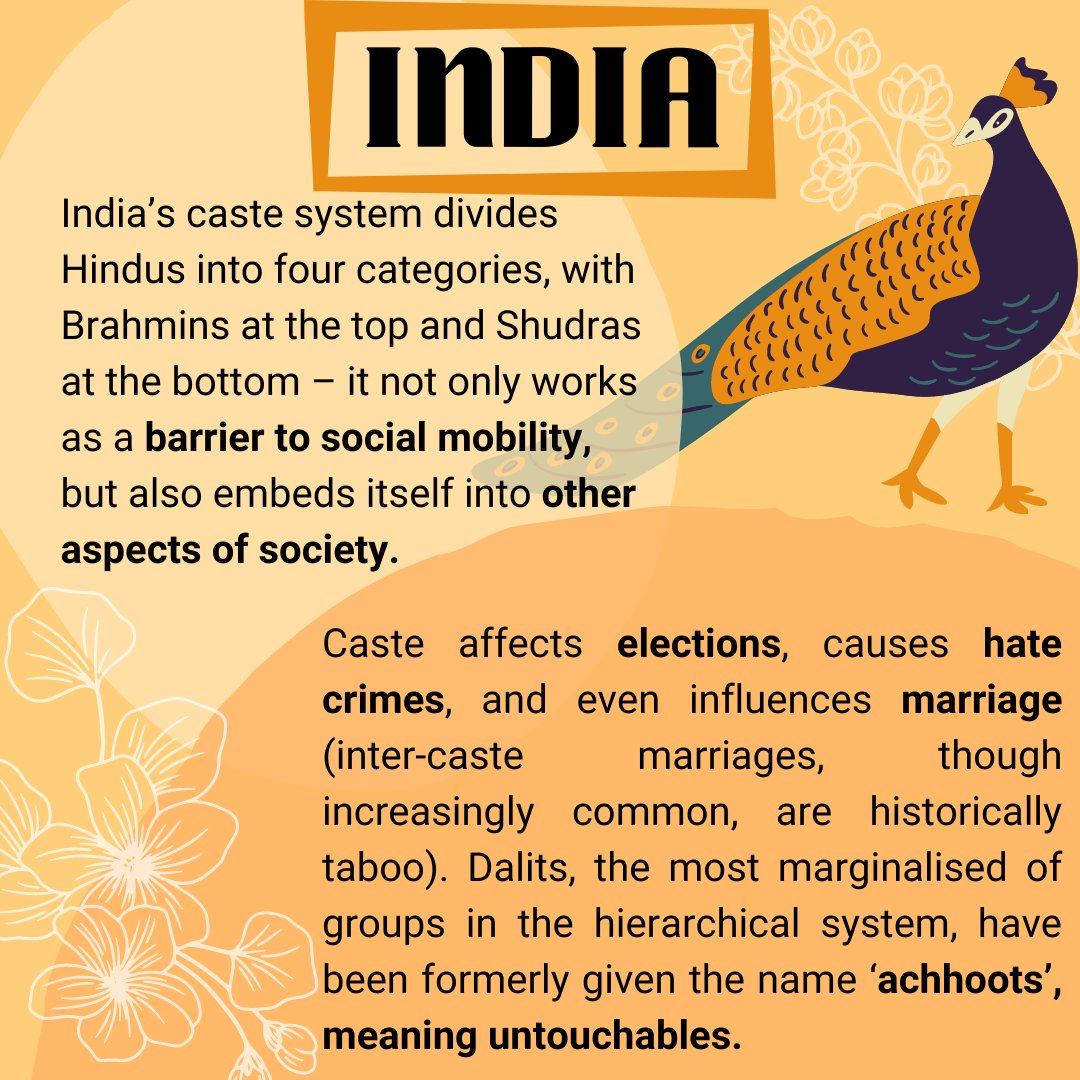
ALT India India’s caste system divides Hindus into four categories, with Brahmins at the top and Shudras at the bottom – it not only works as a barrier to social mobility, but also embeds itself into other aspects of society. Caste affects elections, causes hate crimes, and even influences marriage (inter-caste marriages, though increasingly common, are historically taboo). Dalits, the most marginalised of groups in the hierarchical system, have been formerly given the name ‘achhoots’, meaning untouchables.
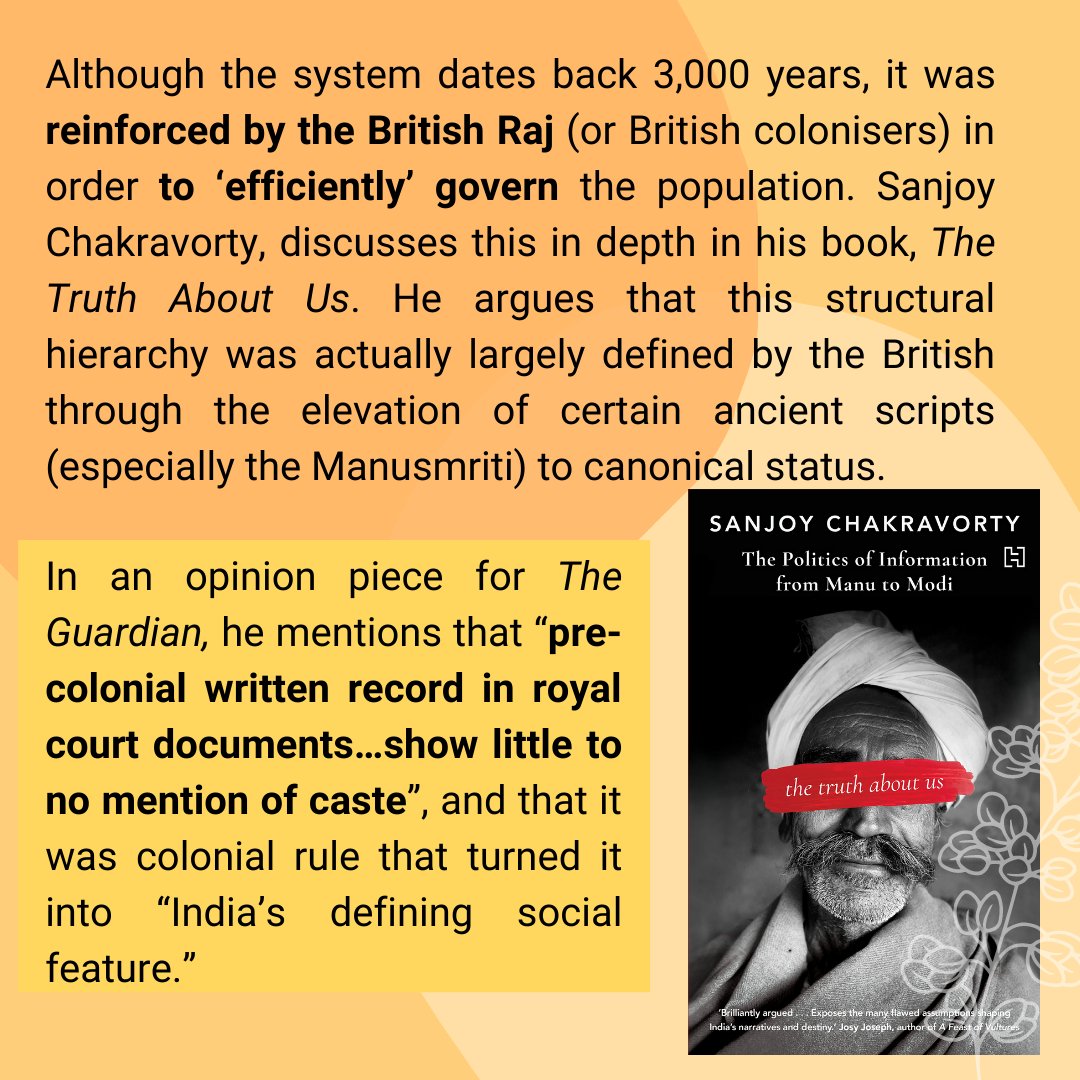
ALT Although the system dates back 3,000 years, it was reinforced by the British Raj (or British colonisers) in order to ‘efficiently’ govern the population. Sanjoy Chakravorty, discusses this in depth in his book, The Truth About Us. He argues that this structural hierarchy was actually largely defined by the British through the elevation of certain ancient scripts (especially the Manusmriti) to canonical status. In an opinion piece for The Guardian, he mentions that “pre-colonial written record in royal court …show little to no mention of caste”, and that it was colonial rule that turned it into “India’s defining social feature.”
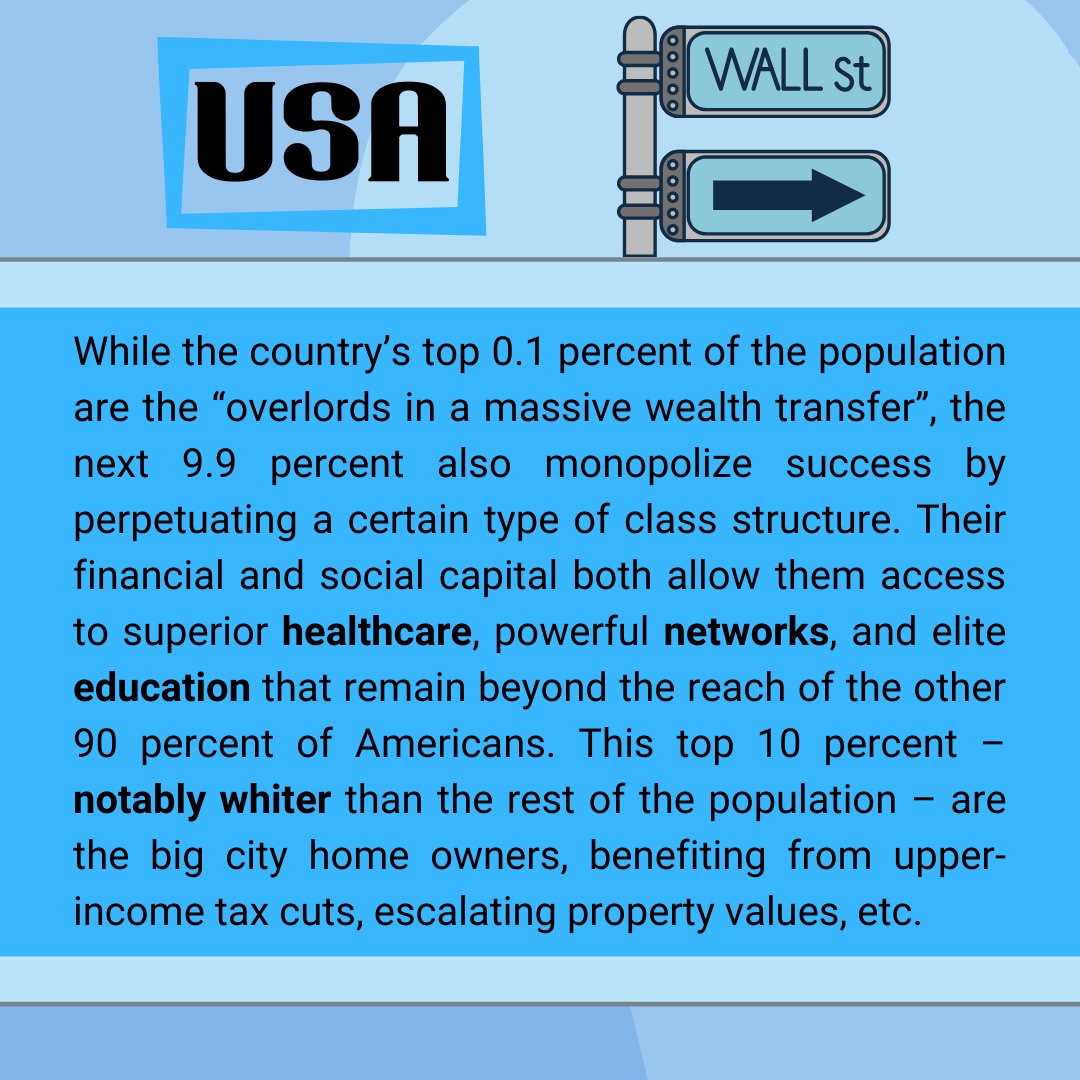
ALT USA While the country’s top 0.1 percent of the population are the “overlords in a massive wealth transfer”, the next 9.9 percent also monopolize success by perpetuating a certain type of class structure. Their financial and social capital both allow them access to superior healthcare, powerful networks, and elite education that remain beyond the reach of the other 90 percent of Americans. This top 10 percent – notably whiter than the rest of the population – are the big city home owners, benefiting from upper-income tax cuts, escalating property values, etc.
ALT Another article for The Guardian (written by Robert Reich) examines four major class divisions in American society – the remotes, the essentials, the unpaids, and the forgottens, the last 3 of which are “disproportionately poor, black, and Latino”. This is truly indicative of the intersection of class and race in a place with perceptibly higher rates of child poverty and homelessness than other Western countries.
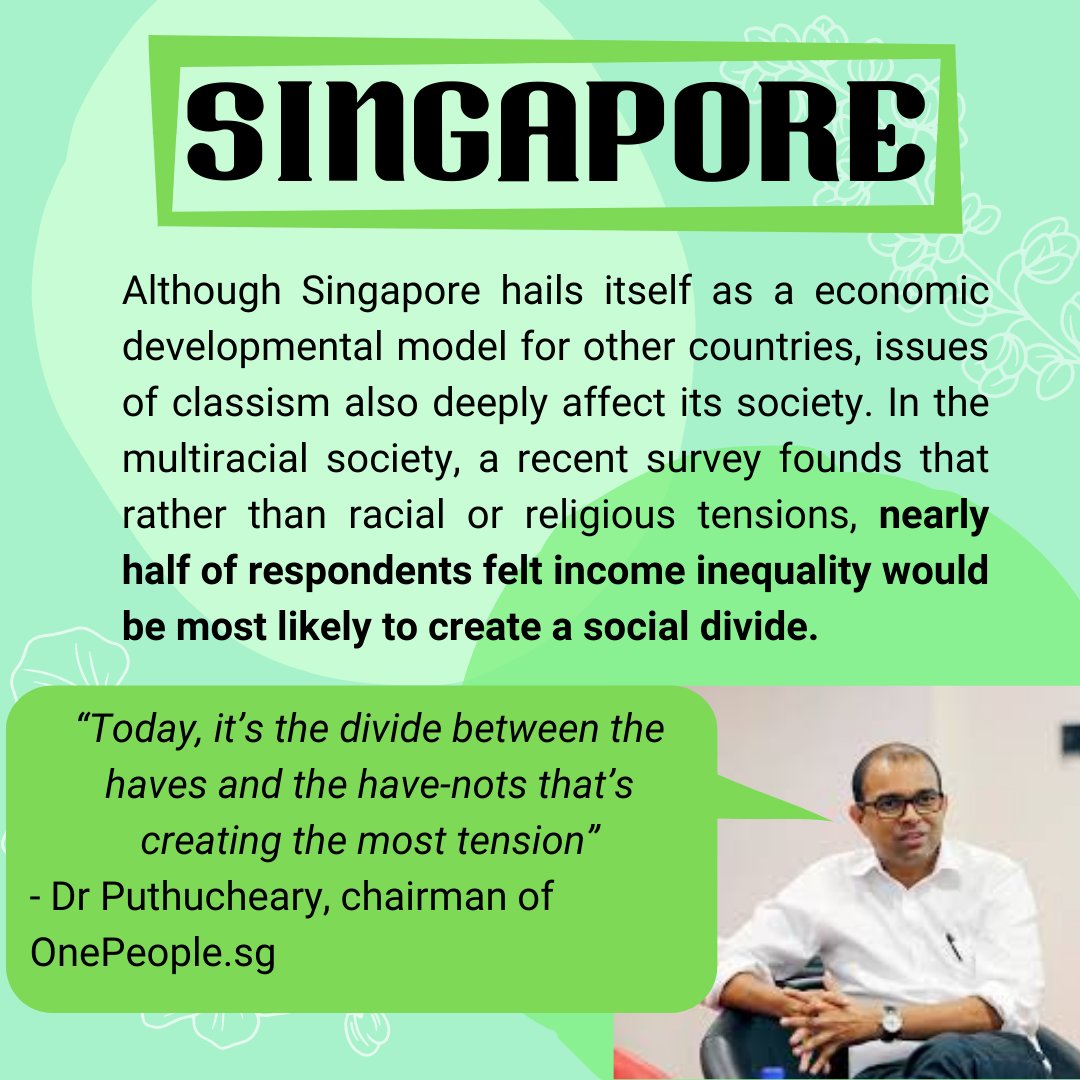
ALT Singapore Although Singapore hails itself as a economic developmental model for other countries, issues of classism also deeply affect its society. In the multiracial society, a recent survey founds that rather than racial or religious tensions, nearly half of respondents felt income inequality would be most likely to create a social divide. “Today, it’s the divide between the haves and the have-nots that’s creating the most tension” - Dr Puthucheary, chairman of OnePeople.sg
ALT Class divisions pervade all ages in Singapore, as familial, cultural and financial resources dictate the head start children may receive from their parents. As differences and attitudes become more entrenched, the survey has found class divisions affect people's feelings for the country. 70% of the higher classes felt a strong sense of belonging, compared with 46% of the lower classes - the class gap isn't just about socioeconomic status but a matter of inclusion and national identity