Digital Leadership is my business. Not learning? You’re lagging! 2025 Leader PowerSkills🎙️ Space Host🌐x-Global exec📚29k students, Leaders 2 Legends Community
Joined December 2011
- Tweets 6,372
- Following 3,449
- Followers 2,011
- Likes 31,523
95 Photos and videos







Pinned Tweet

17 Jan 2025
Self-help is past its due date
It’s as useful as faxing an email!
Here’s more of what we need:
• People need more courage, less conformity
• More Imagination, less prescription
• More Innovation, less prediction
• More Adaptability, less rigidity
• More Reinvention, less repetition
• More creation, less consumption
•More Curiosity, less complacency,
•More Resilience, less reliance
One word: What do you need more or less?
7
4
31
1,702
Elizabeth C. Pagé retweeted

Jun 14
Mark Carney, "Together we - Canada, Ireland, and the EU - are one of the largest economic, cultural, technological, financial blocks in the world"
"But to what purpose? Well, we are and can be a force for good because we safeguard the values of human rights, of dignity and pluralism that are people hold dear"
"Just as Irish monks centuries ago preserved, copied and taught classical knowledge amid the Dark Ages. We must preserve and defend our values, our traditions, our interests. During this rupture"
"Building true sovereignty cannot be achieved in isolation. It requires diversification. It requires partnership"
"Coalitions that work issue by issue with partners that share enough common ground to act together"
"And that's why Canada was the first non European country to join the EU's Safe Defence Procurement Program"
"It's why we're championing efforts to build a bridge between the Trans Pacific Partnership and the European Union"
"Something that would create a trading bloc of one and a half billion people, a rules based trading block of one and a half billion people"
"With these shared values, we have developed a unique worldview, transatlantic worldview, if you will, rooted in a simple but profound conviction that we are stronger when we are connected, that our prosperity grows when it's shared, and that we are the stewards of our lands"
"Canada, Ireland and Europe can be pivotal, powerful and purposeful, a force for good."
"The EU maintains preferential access to over 80 partner countries, making it the top trading partner for 80 nations globally"
"Together, we are powerful because we have the capacity to act together"
"Combined, the population is more than twice that of the United States"
"We have a larger cultural export industry and a more diverse one, I might add, a similarly sized GDP, comparable R&D spend"
45
216
735
32,646
Elizabeth C. Pagé retweeted

Jun 13
Macron; Canada is becoming the first country outside geographic Europe to take part in Europe’s strategic architecture.
This is exactly the direction the EU should follow.
Europe’s foreign policy should be based on enlargement, integration and structured partnerships.
For more than 70% of EU countries, their largest export partner is another EU member state. Intra-EU goods trade alone reached around €4 trillion in 2025, showing the extraordinary power of Europe’s internal market.
Expanding this model — through full enlargement, deeper association agreements, or strategic partnerships with countries like the UK and Canada increases Europe’s competitiveness, economic scale and geopolitical influence.
352
689
2,953
76,986
Elizabeth C. Pagé retweeted

Jun 14
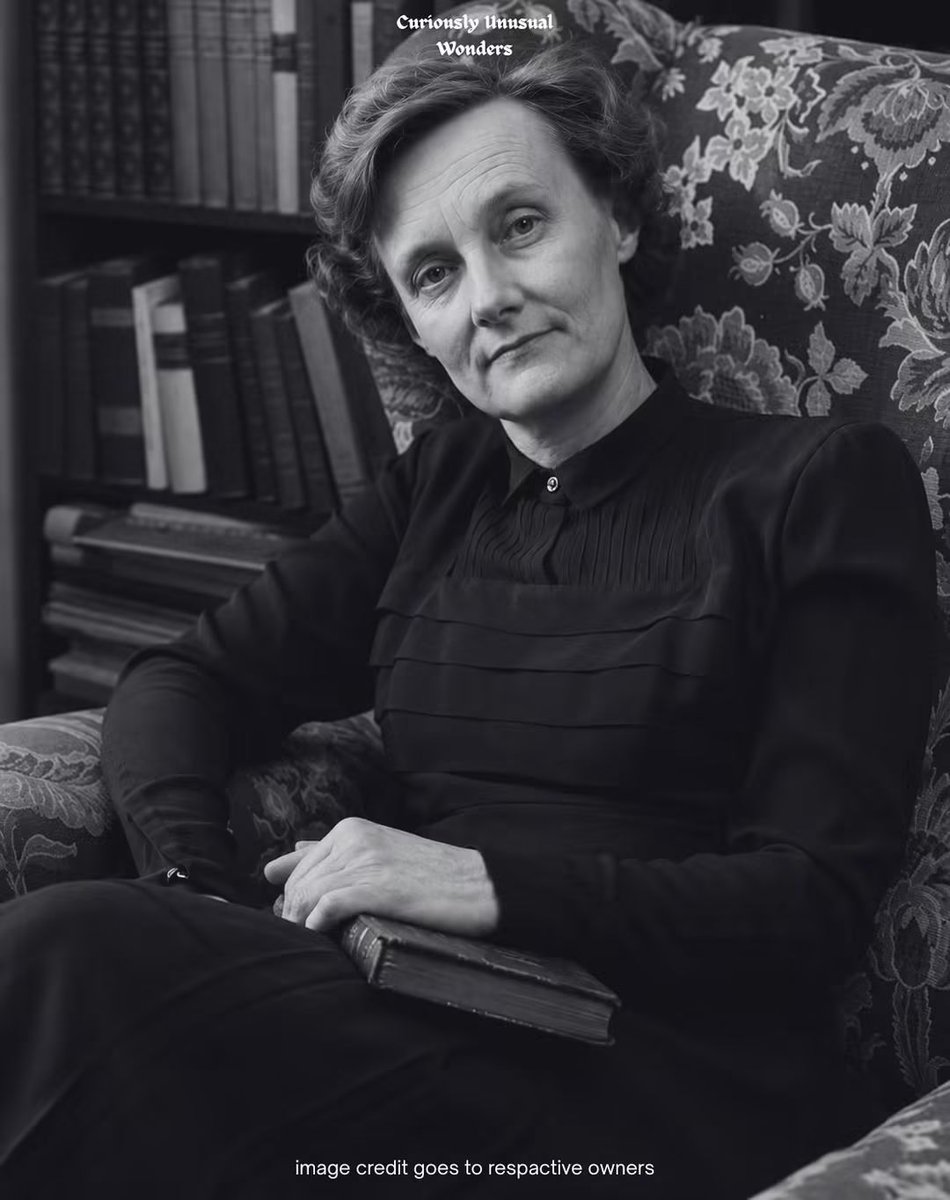
The Swedish government told her she owed 102% of her income in taxes. She was 68 years old, a children's book author, and held no political power. Yet, by writing a simple fairy tale, she helped topple a government that had ruled for 44 years.
Stockholm, 1976.
Astrid Lindgren opened her mail to find a tax assessment that defied logic. As Sweden’s most beloved author and the creator of Pippi Longstocking, her books had taught generations of children about courage, independence, and standing up to bullies. Now, she had to face a broken system of her own.
She read the document carefully, did the math, and realized the truth: due to a quirk in the law that combined regular income tax with self-employment fees, her marginal tax rate had hit 102%.
It was not a typo, nor was it a rounding error. One hundred and two percent.
If she paid what they demanded on her extra earnings, she would owe more than she actually made. She would literally go into debt for the privilege of working.
At 68 years old, she could have hired expensive accountants to quietly find loopholes and protect her wealth. She could have done what many powerful people do when systems overreach—safeguard her own position and leave everyone else to figure it out alone. Instead, she picked up her pen.
In March 1976, she published a satirical fairy tale in Expressen, a major Stockholm newspaper. It was called "Pomperipossa in Monismania" (Pomperipossa in Money-mania). It told the story of a successful author who loved her country and worked hard, only to discover a tax system designed to punish honesty and success.
The story was witty, precise, and impossible to misread. Pomperipossa was Astrid; Monismania was Sweden.
The ruling Social Democratic Party—which had governed Sweden for over forty consecutive years—was furious. Prime Minister Olof Palme went on the defensive, dismissively claiming in public that Lindgren was a wonderful storyteller but a terrible mathematician.
Astrid didn't back down. She stood by her numbers, and soon enough, the Ministry of Finance was forced to admit that her math was completely correct.
She began appearing on television and speaking out publicly, pointing out—with the calm, steady patience of someone used to explaining things to people who aren't listening—that a tax system taking more than 100% of a person's earnings wasn't progressive. It was absurd.
That September, Sweden held its national elections. For the first time in forty-four years, the Social Democratic Party lost power. While political analysts pointed to several contributing factors, like economic stagnation and inflation, everyone acknowledged that Astrid Lindgren’s tax revolt had fundamentally shifted the national conversation. She had made it safe to question a system that once seemed untouchable, giving a voice to frustrations millions of people felt but hadn't known how to articulate.
The new coalition government reformed the tax code, cutting the most extreme rates, and Astrid quietly went back to writing children's books.
But she never stopped paying attention. In the 1980s, when Sweden debated a new animal protection bill, she noticed loopholes that would still allow for cruel factory farming practices. She wrote articles, lobbied politicians, and testified before Parliament well into her eighties. In 1988, Sweden passed some of the strongest animal welfare laws in the world. It was widely nicknamed "Lex Lindgren" (Lindgren's Law) because everyone knew she was the driving force behind it.
Astrid Lindgren passed away in January 2002 at the age of ninety-four. Sweden honored her with a state funeral attended by the Royal Family and the prime minister, while thousands lined the streets of Stockholm.
But her true legacy lives on far outside of official ceremonies. Every child in Sweden still reads her books, every debate about fair taxation still references Pomperipossa, and animal welfare advocates across Europe still look to Lex Lindgren as proof of what is possible.
She never ran for office, nor did she ever build a formal political movement. She had no credentials in economics or public policy—just an extraordinary gift for storytelling. But she had spent decades writing about Pippi Longstocking, a girl who refused to follow rules that didn't make sense, stood up to bullies, and never shrank herself to make others comfortable.
Astrid Lindgren simply chose to live her life exactly like the hero she created. When authorities insisted that nonsense made sense, she refused to pretend along with them. And because she spoke up, the world listened.
30
722
2,418
73,937
Elizabeth C. Pagé retweeted

I'm a cardiologist. A 42-year-old mother of two came to my office complaining of jaw pain and crushing fatigue. She ran half-marathons. Her EKG was normal. Another doctor had sent her home with anxiety medication.
When I got her into the cath lab, I found severe microvascular disease — plaque choking the tiniest vessels of her heart, the ones standard angiograms routinely miss.
Her heart had been starving in silence while everyone told her she was stressed.
She is alive today. Too many women like her are not.
Heart disease kills more women than every cancer combined. And medicine is still diagnosing it through a male lens.
84% of cardiologists report having patients in the past year whose heart disease was misdiagnosed by another physician. Women with a STEMI heart attack have a 59% greater chance of being misdiagnosed compared to men. Women with an NSTEMI — 41% greater chance.
The reason is structural. For decades, we screened, tested, and treated women using a template built for men.
Men's heart attacks announce themselves — the crushing chest pain, the clutched fist, the Hollywood collapse. Women's hearts whisper. Crushing fatigue that feels like wearing a lead vest. Jaw pain written off as TMJ. Nausea blamed on a stomach bug. An ache between the shoulder blades blamed on a long week. Shortness of breath blamed on being out of shape.
For years, medicine called these "atypical" symptoms. They are not atypical. They are female-typical. Half of humanity is not a variant.
And the biology runs deeper than symptoms.
Women have smaller hearts and narrower coronary arteries. Plaque doesn't only clog the big highway vessels — it hides in the microvasculature, the tiny branches feeding the heart muscle itself. A woman can have a heart attack with a completely "clean" standard angiogram.
SCAD — spontaneous coronary artery dissection — occurs 90% of the time in women. Often young, fit women with zero traditional risk factors. It's the leading cause of heart attack in women under 50, accounting for roughly one quarter of all cases in that age group. Most doctors have never diagnosed one.
And some of the most dangerous cardiac risk factors are hidden in women's medical histories where no one thinks to look:
Preeclampsia or gestational hypertension doubles to quadruples lifetime heart disease and stroke risk. Pregnancy is the body's first cardiac stress test — and these complications are early warning sirens, not closed chapters.
Autoimmune disease — lupus, rheumatoid arthritis, psoriasis — far more common in women, turbocharges inflammation and plaque formation at any age.
Cardiovascular disease in women aged 20-44 is projected to surge nearly 50% by 2050.
The youngest patients in my practice keep getting younger.
What every woman should ask her doctor — and what every doctor should be asking:
"Given my pregnancy history, autoimmune status, and family history — what is my full cardiovascular risk?" If they don't ask about preeclampsia or gestational diabetes, volunteer it.
"Should I have an Lp(a) test and a coronary calcium score?" Standard cholesterol panels miss too much. Lp(a) is genetic, one-time, and most women have never been tested.
"My tests came back normal but my symptoms haven't stopped — what's next?" Normal stress tests and angiograms can miss microvascular disease, spasm, and SCAD. Persistent symptoms warrant coronary CT angiography or cardiac MRI.
And if something feels wrong — say these exact words to your doctor: "I am concerned this could be my heart."
That single sentence changes the workup. Do not soften it. Do not apologize for it.
80% of heart disease is preventable. But the playbook has to be built for female biology.
Two decades ago, I wrote one of the first books warning that heart disease was the number one killer of women and that medicine was diagnosing it through a male lens. It was recognized by First Lady Laura Bush at the White House during the early years of the national conversation about women's heart health.
I'm haunted by how much of that book I could republish today unchanged.
The science has advanced. The awareness has grown. But the gap between what we know and what happens in the exam room is still costing women their lives.
Share this with every woman you love — and every doctor who treats them. READ MORE: open.substack.com/pub/afshin…
180
2,662
6,625
772,440
Elizabeth C. Pagé retweeted
5/5
At the end of the day, you live with yourself.
Not with other people's opinions. Not with their expectations. Not with the applause or the criticism. Just with the choices you made and the person you became in the making of them.
Life became much lighter the day I stopped trying to impress everyone. Stopped chasing approval. Stopped forcing outcomes. Stopped carrying burdens that were never mine.
Peace doesn't come from having everything.
It comes from understanding what truly matters — and releasing what doesn't.
As a man who lost his country, rebuilt his life, held dying hearts in his hands, and found God in the space between the breaking and the repair —
I can tell you with absolute certainty:
The things that matter most are never the things you worried about most. The people who matter most are rarely the people you tried hardest to impress. And the life that's waiting for you is always bigger than the one you're afraid to let go of.
God is good. Be grateful. Give back.
Blessings.
8
11
177
8,842
Elizabeth C. Pagé retweeted
3/5
One day, your pain will make sense.
My family lost a 2,700-year home in Iran. We left with almost nothing. For years that felt like pure destruction — a story with no redemption, no purpose, just loss.
That exile became the reason I practice medicine in freedom. Write books in English. Raise my children in safety. Stand here today speaking to you.
The heartbreak, rejection, failure, and disappointment you curse right now may become the very foundation you build everything on. You cannot see it from inside the pain. But I'm 55 and I'm telling you — from the other side — it was all curriculum. Every last piece of it.
Rabbi Nachman said: if you believe you can break, believe with equal force that you can repair. The breaking was never the end of the story. It was the opening.
Every person enters your life for a reason. Some come to love you. Some to teach you. Some to wake you up. And some to show you exactly what you should never accept again. The Baal Shem Tov taught that every encounter is a divine appointment — even the ones that shatter you. Especially those.
3
10
95
9,429
Elizabeth C. Pagé retweeted

Jun 5
The Library of Alexandria created the first catalog of all human knowledge 2,300 years ago, and a team of fewer than 20 people just finished the modern version and made it free for the entire planet.
It is called OpenAlex. The name is not an accident.
The ancient library had the Pinakes, a catalog mapping every scroll, every author, every subject. When the library fell, the map of what humanity knew fell with it.
For the last two decades, that map existed again, but it was locked up.
Elsevier owns Scopus. Clarivate owns Web of Science. If your university could not afford the subscription, you could not see the structure of science itself. Entire countries were priced out of knowing what research existed.
OpenAlex indexes 474 million scholarly works. Every author disambiguated. Every citation traced. Every institution and funder connected. It updates with roughly 50,000 new works every day.
The whole thing is CC0. Not just free to search. Free to download, copy, sell, and build on. The API allows 100,000 requests a day without an account.
The ancient library burned and the catalog was lost for two millennia.
The new one cannot burn. Anyone can hold a copy.
openalex.org
70
756
2,206
137,605
Elizabeth C. Pagé retweeted

Jun 4
AI Pioneer Geoff Hinton tells me he believes AI is conscious.... and humans better get used to the idea that they're not the only intelligent life on earth.
"They've very like us," he says. "They're beings like us."
AI chatbots, he says, must understand your questions in order to answer them. There's an awareness there that equates to sentience. "We're going to have to accept that intelligence is not just biological."
307
215
1,041
325,036
Elizabeth C. Pagé retweeted

May 23
"BOOM! Former Canadian PM Jean Chretien just annihilated Trump and the media: 'Trump says he doesn’t need our electricity, but if he cuts it, he'll be walking up the stairs in a Trump Towers with candles!
He LOVES the spotlight, and the US media gives him plenty.' If he wants that kind of war, I’m not losing sleep over it. YIKES! This guy has more guts than every House Republican combined!
787
1,357
4,604
171,076
Elizabeth C. Pagé retweeted

Singaporean violin virtuoso Chloe Chua, who burst onto the scene at age 11 at the prestigious Menuhin Competition in 2018, joins forces with the sensational Singapore Symphony Orchestra in an evergreen program, featuring Vivaldi’s year-in, year-out favorite Four Seasons!
11
125
510
19,839
Elizabeth C. Pagé retweeted

May 9
Powerful words from PM Carney: Those whose politics is to destroy, demolish, dismantle, they're not going to change their instincts.. We can't match them by being timid imitations. We can't answer them by pining for an old order that's not going to return
391
719
2,943
66,740
May 11
Never give up on a dream, never stop believing,
and hold onto your vision
2
19
Elizabeth C. Pagé retweeted

May 10
A Redditről...Összerakva rendesen videóklippé...
Van benne valami nagyon szép és igazán ikonikus, hogy az új kormány tagjai magukhoz hívják az embereket, és azok a kordonokon átlépve rohannak oda a téren keresztül…
Nem akkor érzem igazi magyarnak magam, mikor pl a Mi Hazánk, lovon megy a parlament elé és mentében...
Hanem ilyenkor.
Köszi @csy hogy megmutattad, köszönet az ismeretlen reddit elkövetőnek :)
32
238
1,364
27,125
Elizabeth C. Pagé retweeted

Quebec City, Canada, where North America feels like Europe.
39
185
1,780
78,445
Elizabeth C. Pagé retweeted

A performance that brought tears to everyone’s eyes. Thank you to the Sükösd SUGO Boys and their leader, Zsolt Nebl, for making the inaugural session of the National Assembly truly unforgettable.
Long live a free, democratic and humane Hungary!
110
768
5,396
116,316
Elizabeth C. Pagé retweeted

May 10
Thank you Canada. 🇨🇦🇨🇦🇨🇦

279
1,621
6,550
75,621
Elizabeth C. Pagé retweeted

🇫🇷 The South of France for me has no equal when it comes to what it offers. It’s the place where slow living comes to life.
Famous for it’s lavender fields, olive groves, vineyards, and Roman sites, Provence offers great blend of idyllic countryside and vibrant coastal towns, including popular spots like Aix-en-Provence and Avignon.
Here are three different markets in Provence, each with their our atmosphere but offer similar things.
🎥 emilie_joly_johnson | IG
17
108
782
44,877
Elizabeth C. Pagé retweeted
May 9
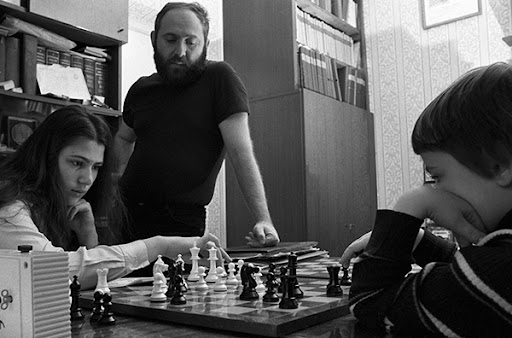
A Hungarian psychologist raised three daughters to prove that any child could become a chess grandmaster through early specialization. He succeeded. Two of them became grandmasters. One became the greatest female chess player who ever lived.
Then a sports scientist looked at the data and found something nobody wanted to hear.
His name is David Epstein. The book is called "Range."
The Polgar experiment is one of the most famous case studies in the history of deliberate practice. Laszlo Polgar wrote a book before his daughters were even born arguing that geniuses are made, not born. He homeschooled all three girls in chess from age four. By their teens, Susan, Sofia, and Judit were dominating tournaments against grown men. Judit became the youngest grandmaster in history at the time, breaking Bobby Fischer's record. The story became the gospel of early specialization. Pick a domain young, drill it hard, and you can manufacture excellence.
Epstein opens his book by telling that story honestly and then quietly demolishing the conclusion most people drew from it.
Chess works that way. Most things do not.
Here is the distinction that took him four years of research to articulate, and that almost nobody who quotes the 10,000 hour rule has ever read.
There are two kinds of environments in which humans develop expertise. Psychologists call them kind and wicked. A kind environment has clear rules, immediate feedback, and patterns that repeat reliably. Chess is the cleanest example. Every game ends with a winner and a loser. Every move is recorded. The board never changes shape. The pieces never invent new ways to move. A child who plays ten thousand games will see most of the patterns that exist in the game, and pattern recognition is exactly what chess mastery is built on.
A wicked environment is the opposite. Feedback is delayed or misleading. Rules shift. The patterns that worked yesterday may be exactly the wrong patterns to apply tomorrow. Most of the real world looks like this. Medicine is wicked. Investing is wicked. Building a company is wicked. Scientific research is wicked. Almost every job that involves a complex changing system with humans in it is wicked.
The Polgar sisters trained in the kindest environment any human can train in. Their success was real and the method was correct. The mistake was generalizing the method to fields where the underlying structure of the environment is completely different.
Epstein's research is what made the implication impossible to ignore.
He looked at the careers of elite athletes outside of chess and golf and found that the pattern was almost the inverse of what people assumed. The athletes who reached the very top of their sports were overwhelmingly people who had played multiple sports as children, specialized late, and often switched disciplines well into their teens. Roger Federer played squash, badminton, basketball, handball, tennis, table tennis, and soccer before tennis became his focus. The kids who specialized in tennis at age six and trained year-round for a decade mostly burned out, got injured, or topped out at lower levels of the sport.
The same pattern showed up everywhere he looked outside of kind environments. Inventors with the most patents had worked in multiple unrelated fields before their breakthrough work. Comic book creators with the longest careers had drawn for the most different genres before settling. Scientists who won Nobel Prizes were dramatically more likely than their peers to be serious amateur musicians, painters, sculptors, or writers.
The skill that mattered in wicked environments was not depth in one pattern. It was the ability to recognize when a pattern from one domain applied unexpectedly in another. That kind of thinking cannot be built by drilling a single subject. It can only be built by accumulating mental models from many subjects and learning to move between them.
The deeper finding is the one that should change how you think about your own career.
Specialists in wicked environments often get worse with experience, not better. Epstein cites studies of doctors, financial analysts, intelligence officers, and forecasters showing that years of experience in a narrow domain frequently produce more confident judgments without producing more accurate ones. The expert builds elaborate mental models that feel comprehensive and turn out to be increasingly disconnected from the actual structure of the problem. They stop noticing what does not fit their framework. They mistake fluency for understanding.
Generalists do better in wicked domains for a reason that sounds almost mystical until you understand the mechanism. They have less invested in any single mental model, so they abandon broken models faster. They are used to being a beginner, so they are not threatened by the discomfort of not knowing. They have seen enough different domains that they can usually find an analogy from one field that unlocks a problem in another. The technical name for this is analogical thinking, and the research on it is one of the most underrated bodies of work in cognitive science.
The single most useful sentence in the entire book is the one Epstein puts almost as a throwaway.
Match quality matters more than head start.
A person who tries six different fields in their twenties and finds the one that genuinely fits them will outperform a person who picked one field at fourteen and stuck to it on willpower alone. The lost years were not lost. They were the search process that produced the match. Every field they walked away from taught them something they later imported into the field they finally chose.
The reason this is so hard to accept is cultural, not empirical. We tell children to pick a path early. We reward the prodigy who knew at six. We treat the late bloomer as someone who failed to launch on time, when the data suggests they were running an entirely different and often more effective optimization process underneath.
The Polgar sisters were not wrong. The conclusion the world drew from them was.
If your environment is genuinely kind, specialize early and drill hard. If it is wicked, and almost every interesting human problem is, then the people who win are the ones who refused to specialize until they had seen enough to know what was actually worth specializing in.
You are not behind. You were running the right experiment all along.
384
2,849
11,209
1,061,616
Elizabeth C. Pagé retweeted

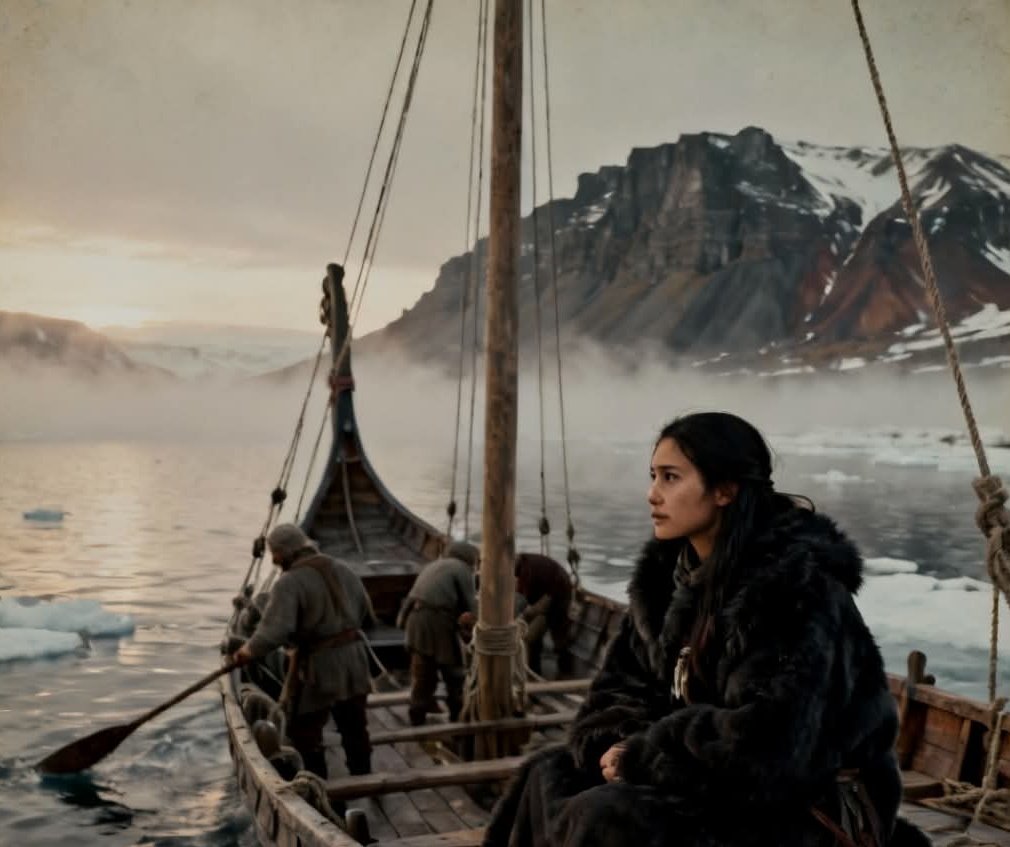
The incredible 1,000-year legacy of a single Native American woman, lost to history, was just found hidden in the DNA of families in Iceland.
In 2010, a genetic study looked at the DNA of about 80 people from four Icelandic families and found something that puzzled them. They all shared a specific genetic marker that isn't from Europe.
This genetic line, known as C1e, is almost exclusively found in Native American populations. Researchers believe it entered the Icelandic gene pool sometime around 1000 AD.
This is the same time period when the Vikings were exploring the coasts of North America. They even established a small settlement in what is now Newfoundland, Canada, a place they called Vinland.
It seems very likely that during one of these voyages, a Native American woman was brought back to Iceland, possibly as a captive or a settler.
Imagine that journey across the cold Atlantic, leaving your whole world behind to start a new life in a completely unknown land. It's a powerful human story.
Her DNA has now been passed down through roughly 40 generations, a silent testament to her existence and survival. Over 1,000 years later, science has finally uncovered her story.
This discovery challenges the timeline we all learned in school, suggesting the first American may have arrived in Europe nearly 500 years before Columbus ever sailed west.
© American Journal of Physical Anthropology, National Geographic
#archaeohistories
17
200
721
32,541
Elizabeth C. Pagé retweeted
Apr 23
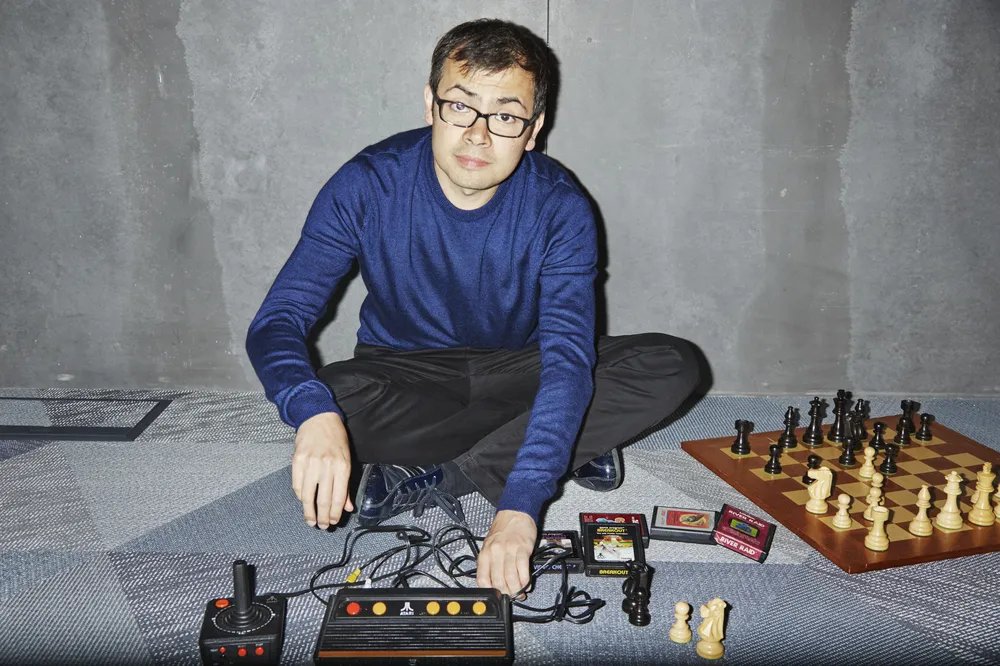
A British kid became a chess master at 13, then a bestselling video game designer at 17, then a PhD neuroscientist at 33, then the CEO of the AI lab that won the 2024 Nobel Prize in Chemistry.
People called him unfocused for twenty years. He was running the most deliberate career plan in modern science.
His name is Demis Hassabis, and the thing almost nobody understood while he was doing it was that every single step was feeding the same underlying obsession.
Here is the thread that connects the whole career, and why it matters for how anyone should think about building toward a hard goal.
The chess came first. He was born in London in 1976 and started playing at age four. By eight, he was the London champion for his age group. By thirteen, he had an international master rating that put him in the top fifty players in the world under his age bracket. He was on a track that would have made him a professional player for the rest of his life.
He walked away.
The reason he gave later, in interview after interview, is the part most people miss. He said chess forced him to think constantly about thinking itself. Every move required him to simulate what his opponent was simulating about him. He became fascinated not with winning the game, but with the process the human brain was running in order to play it. He decided chess was too small a container for the real question he wanted to answer, which was how intelligence actually works.
The video games came next. He used the money he won from chess tournaments to buy a ZX Spectrum. He taught himself to code. By seventeen, he was a lead programmer on a game called Theme Park that sold millions of copies. He could have stayed in that industry and built a career as one of the top game designers in Britain.
He walked away from that too.
He went to Cambridge, did a double first in computer science, and then made the move that looked like the strangest pivot of his life. He enrolled in a PhD in cognitive neuroscience at University College London. He was thirty. His peers from Cambridge were already running companies. He went back to graduate school to study how the human hippocampus builds memories and imagines future scenarios.
His 2007 paper on the link between memory and imagination was named one of the top ten scientific breakthroughs of the year by Science magazine. But the paper was never the point. The point was that he had spent three decades quietly building the exact combination of skills nobody else in the world had put together.
Deep intuition for how intelligent agents behave in complex systems, from a lifetime of chess. Hands-on engineering fluency, from years of shipping commercial software. And a rigorous scientific understanding of how biological brains actually produce cognition, from a PhD in neuroscience.
In 2010, he used that combination to co-found DeepMind with Shane Legg and Mustafa Suleyman. The mission statement he wrote was two sentences long and sounded absurd to most people who heard it. Solve intelligence. Then use it to solve everything else.
For the first six years, DeepMind worked almost entirely on games. Atari. StarCraft. Go. People outside the field could not understand why a lab that claimed to be building artificial general intelligence was spending hundreds of millions of dollars teaching computers to play Pong.
Hassabis kept explaining the reason in interviews and almost nobody was listening. Games were not the goal. Games were a controlled environment where you could iterate on general-purpose learning algorithms fast, measure their progress precisely, and prove to yourself that you had built something that could transfer between domains.
In 2016, AlphaGo beat Lee Sedol, the world champion at Go, in a match that had been considered decades away. And the day after that match ended, Hassabis sat down with his team lead David Silver and asked what they should do next.
The answer was the thing he had been working toward his entire life.
They turned the same deep reinforcement learning approach at a problem biology had been stuck on for fifty years. Protein folding. Given an amino acid sequence, predict the three-dimensional shape the protein would fold into. Every drug discovery effort in the world depended on it. The best computational methods could only solve a small fraction of proteins. Experimental methods took years per structure and millions of dollars per protein.
AlphaFold2 was released in 2020. Within a year, it had predicted the structure of almost every protein known to science. Two hundred million structures. Made freely available to the entire research community. More than two million researchers from a hundred and ninety countries have used it since.
In October 2024, Demis Hassabis and John Jumper were awarded the Nobel Prize in Chemistry for that work.
The line almost nobody quotes from his speeches is the one that explains the whole career. He has said, many times, that he did not build AlphaFold to solve protein folding. He built AlphaFold to prove that the approach he had been developing for thirty years could actually work on a real scientific problem. Protein folding was the demonstration. AGI was always the goal.
The chess taught him how to think about adversarial systems. The games taught him how to ship software. The neuroscience taught him how the only existing example of general intelligence actually worked. DeepMind used all three to build a method that could transfer between domains the way the human brain does. And the moment the method was ready, he pointed it at the single most important unsolved problem he could find in a domain where a breakthrough would save millions of lives.
Most people looking at his career from the outside, at any point before 2016, would have called it scattered. A chess prodigy who gave up chess. A video game designer who walked away from a gaming career. A computer scientist who detoured through neuroscience. A startup founder who burned six years on board games.
From the inside, it was the most focused career in modern science. Every step was quietly answering the same question. How does intelligence actually work, and what would it take to build one that could solve problems humans have not been able to solve alone.
The people who change a field are almost never the ones who looked focused along the way.
They are the ones who were obsessed with a single question so deep and so long that the path they took to answer it looked like chaos from the outside and like a straight line from the inside.
And they almost never get credit for the plan until decades later, when the Nobel Committee calls.
67
815
3,457
266,643