
Independent researcher developing ECSM: testing whether gravity, redshift, structure & light emerge from finite-response dynamics.
Joined April 2026
- Tweets 386
- Following 437
- Followers 96
- Likes 325
13 Photos and videos

Pinned Tweet

Apr 29
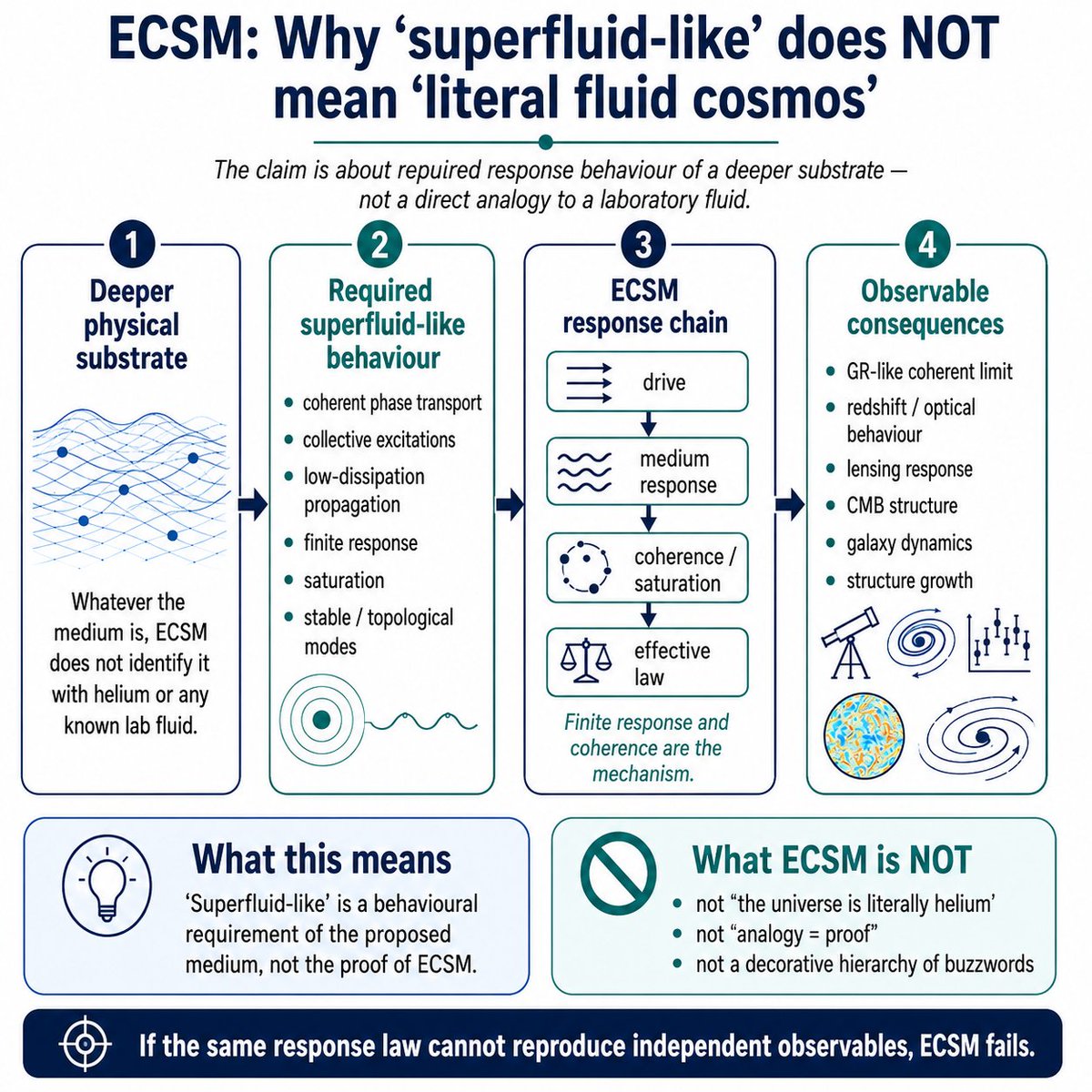
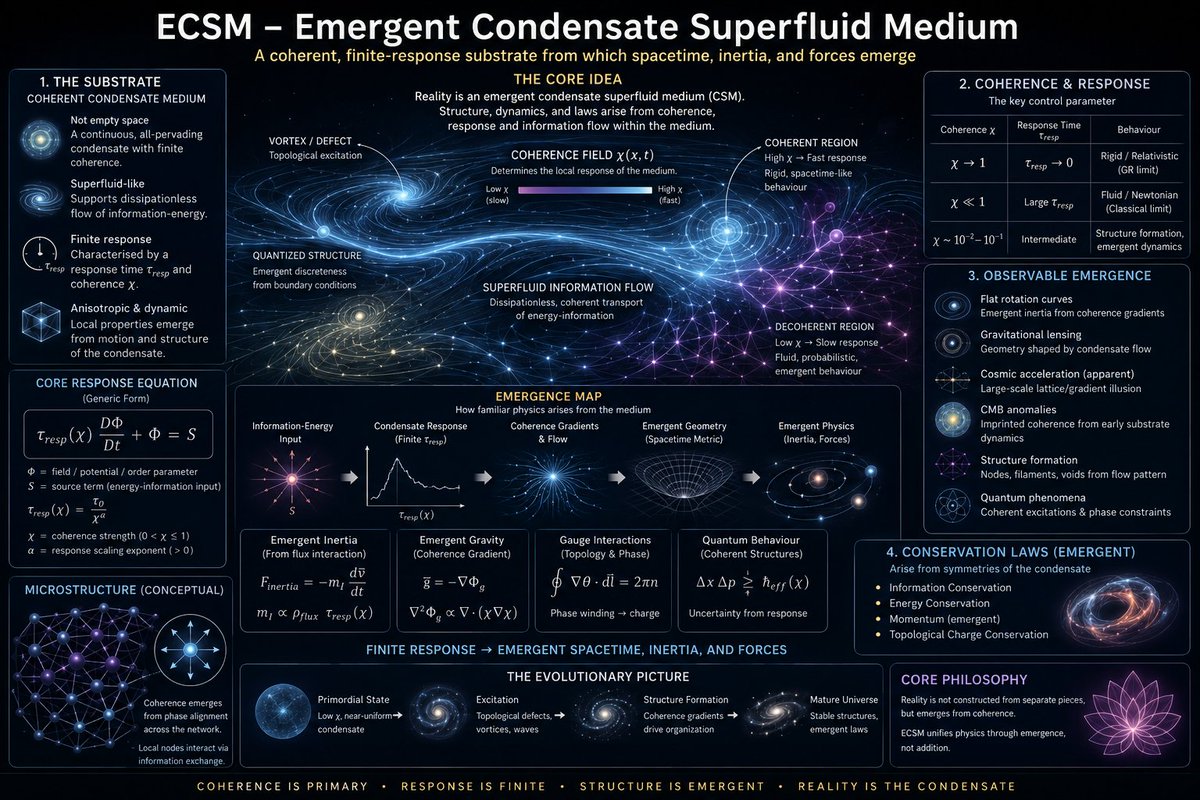
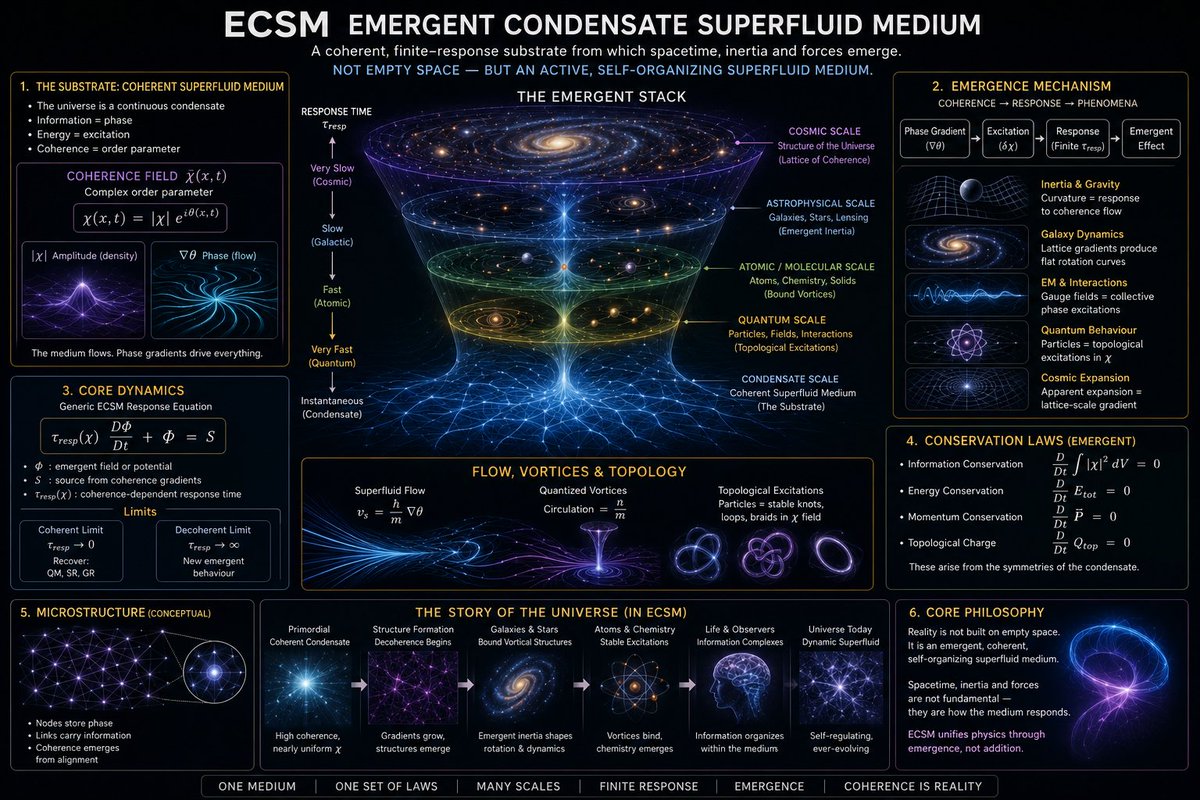
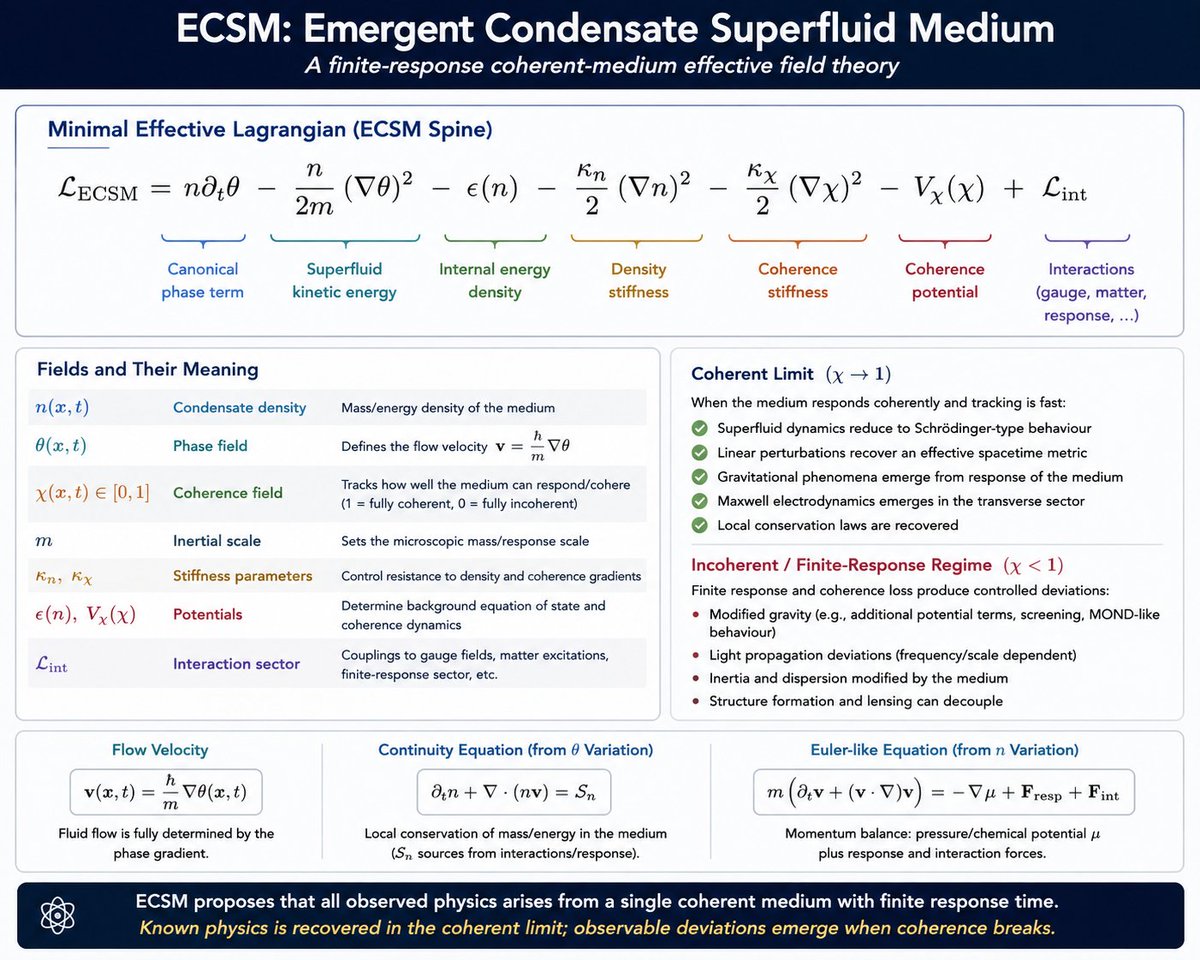
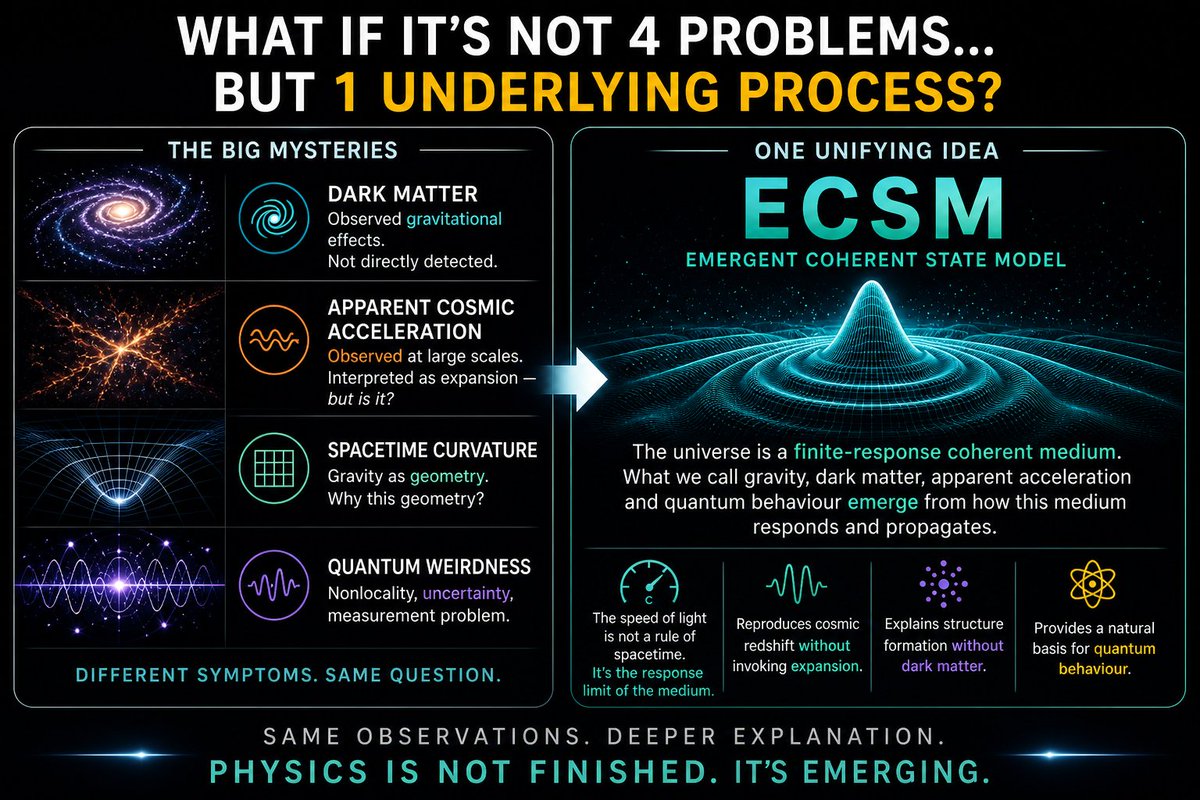
What is ECSM?
Emergent Condensate Superfluid Medium
A framework where:
– Gravity is not fundamental
– Spacetime is an effective limit
– Structure emerges from finite response
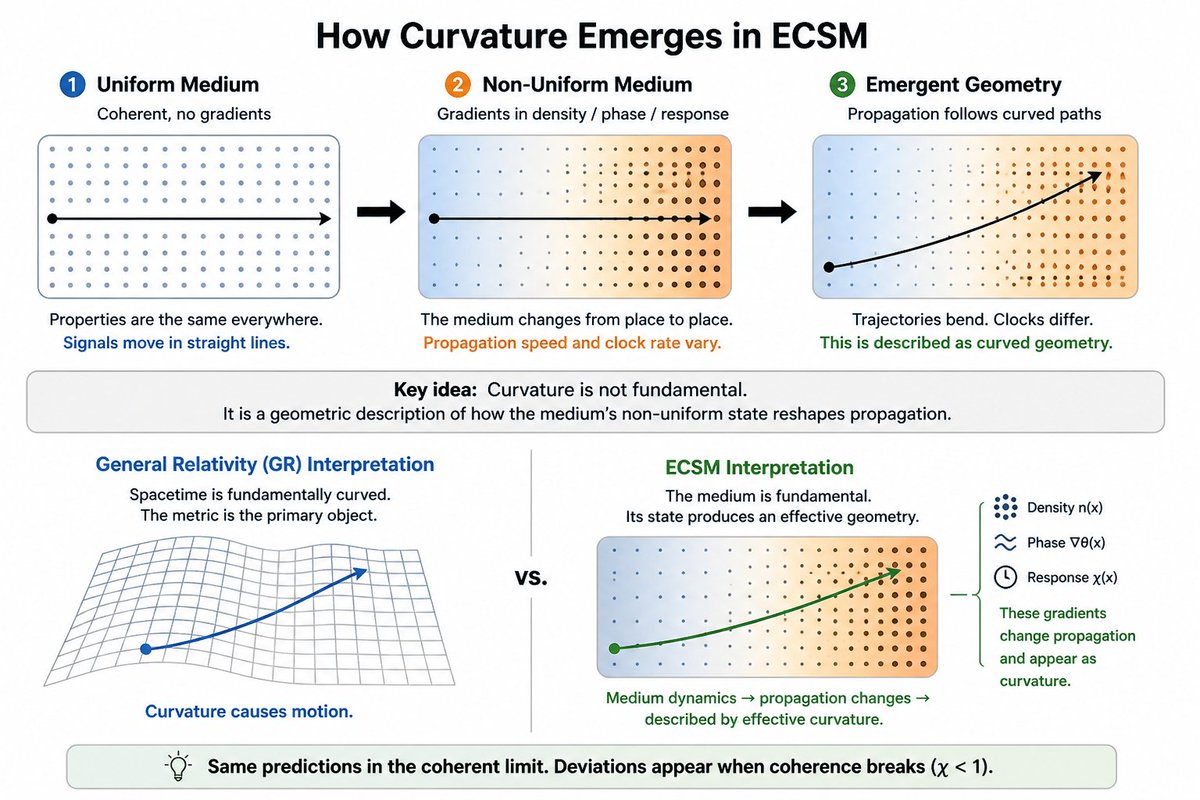
When response is exceeded:
– Transport saturates
– Coherence breaks
– Geometry emerges
1
1
11
546
Jun 13
Fluid language is already everywhere in cosmology and physics. We talk about the photon-baryon fluid, cosmic plasma fluidity, flow, turbulence, viscosity, vortices etc... even Maxwell’s equations use medium like constants to describe how light propagates through vacuum. So physics is already describing the universe using fluid and medium language almost everywhere. ECSM just takes that seriously and asks whether the vacuum itself could be a medium with superfluid-like properties.
Here is a list of examples where fluid/medium dynamics is used..
Maxwell’s equations.
The early-universe plasma.
The photon-baryon fluid.
CMB acoustic peaks.
BAO.
Galaxy formation.
The cosmic web.
Galaxy clusters.
Accretion discs.
Jets.
Supernovae.
Cosmological magnetic fields.
Phase transitions.
Dark matter fluid models.
Dark energy fluid models.
Analogue gravity.
Superfluid vacuum models.
Quantum hydrodynamics.
Vortices.
Domain walls.
Turbulence.
Shocks.
Finite relaxation times.
Emergent geometry.
Solar and stella surfaces.
Convection and granulation.
#ECSM #Cosmology #FluidDynamics #MaxwellsEquations #EmergentGravity
33
Jun 12
New ECSM paper published:
The Core Architecture of the ECSM Medium
This paper consolidates ECSM into a single medium architecture: state variables, finite-response coherence, gradient/rotational sector decomposition, coherence-boundary confinement, minimal coupled field equations, limiting regimes, and falsifiability constraints.
The aim is not to claim a final microscopic theory, but to define the architecture that future derivations and tests must reproduce.
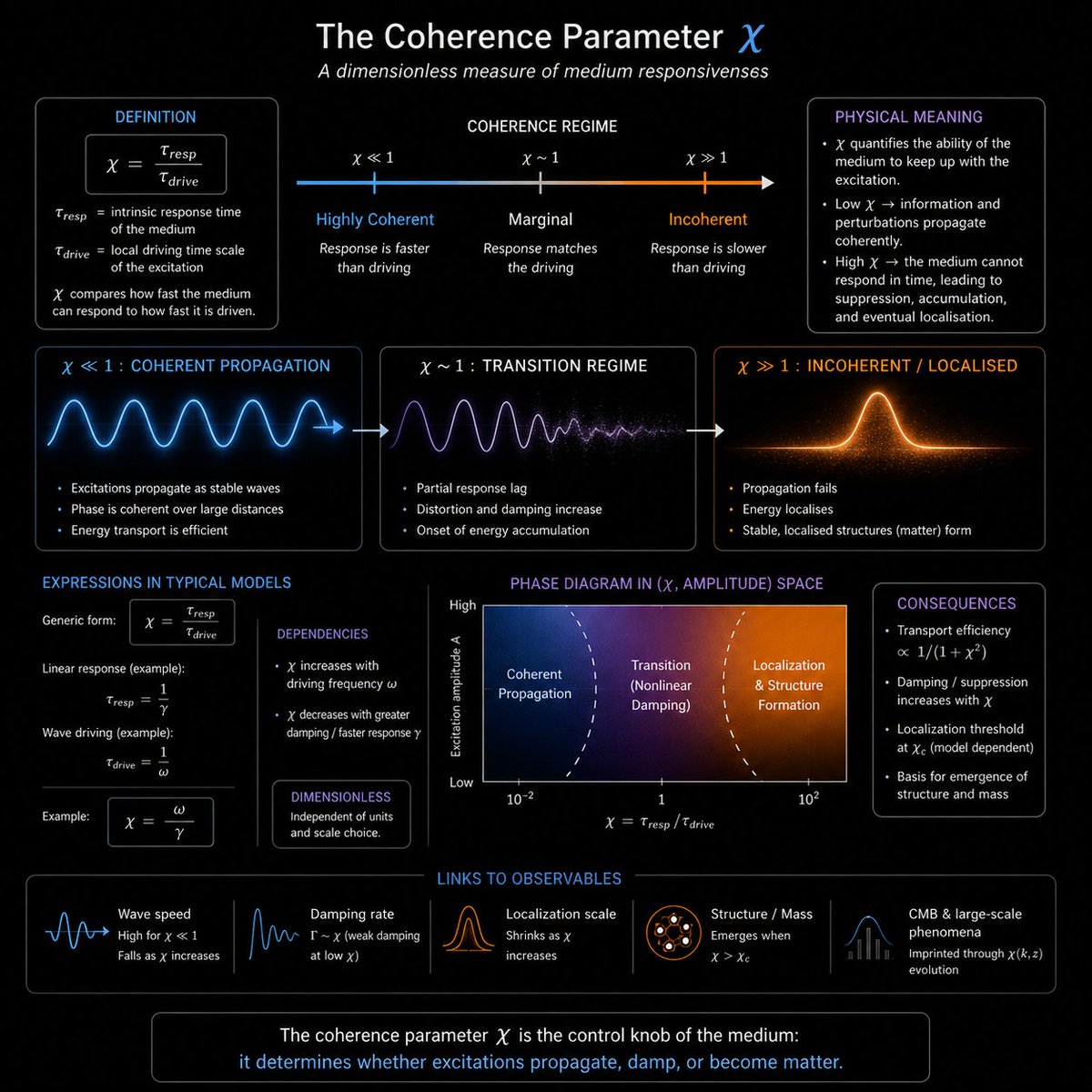
ECSM treats geometry-like propagation and matter-like confinement as complementary regimes of one finite-response coherent medium.
doi.org/10.5281/zenodo.20662…
#ECSM #TheoreticalPhysics #Cosmology #EmergentGravity #QuantumGravity #SuperfluidVacuum #FoundationsOfPhysics
29
Jun 11
New ECSM paper published.
Magic Numbers as Response-Closure Peaks in the ECSM Framework: A Regime-Aware Robustness Test Using AME2020 Nuclear Shell-Gap Data
DOI:
doi.org/10.5281/zenodo.20648…
This study tests whether the standard nuclear magic numbers emerge as finite-response closure peaks in nuclear binding-energy data.
Using AME2020 separation-energy measurements across 3,378 nuclides, the analysis finds:
• Strong shell-gap lifts at standard neutron and proton magic numbers.
• Positive closure signals that survive cleaning and robustness tests.
• Recovery of most standard magic numbers through direct shell-gap ranking.
• Evidence that closure strength varies with nuclear mass regime rather than remaining constant.
The results support the ECSM interpretation that nuclear magic numbers correspond to response-closure structures within a finite-response medium rather than arbitrary numerical coincidences.
Notebook:
github.com/asheldrick-resear…
#Physics #NuclearPhysics #Science #Research #ECSM #OpenScience #NuclearStructure
31
Jun 10
New ECSM paper published:
First Quantitative Reconstruction of the Nuclear Binding-Energy Curve from Response-Cost Dynamics in the ECSM Framework
Using 3376 AME2020 nuclides, this work tests whether the nuclear binding-energy curve can be reconstructed as the inverse of a finite-response ECSM response-cost landscape.
The V3 model recovers:
Ridge correlation: r = 0.9565
Ridge RMSE: 0.2733 MeV/nucleon
Observed peak: A = 62
Predicted peak: A = 60
Helium-4 residual: 1.14 × 10^-4 MeV/nucleon
This forms the bridge between ECSM stellar fusion work and later nuclear stability / beta-decay recovery tests.
DOI: doi.org/10.5281/zenodo.20628…
Github:
github.com/asheldrick-resear…
#Physics #NuclearPhysics #TheoreticalPhysics #ECSM
35
Jun 10
ECSM update:
The model began with a simple premise:
vacuum is not empty; it behaves like a finite-response coherent medium.
From that, we have now recovered evidence routes across:
Lorentz behaviour
GR-like gravity as medium reconfiguration
Maxwell constants as medium-response parameters
redshift optics without metric expansion
SPARC galaxy rotation behaviour
weak-lensing response logic
Casimir boundary stress
electron-like packet charge/rest-energy doorway
nuclear stability and beta-decay direction
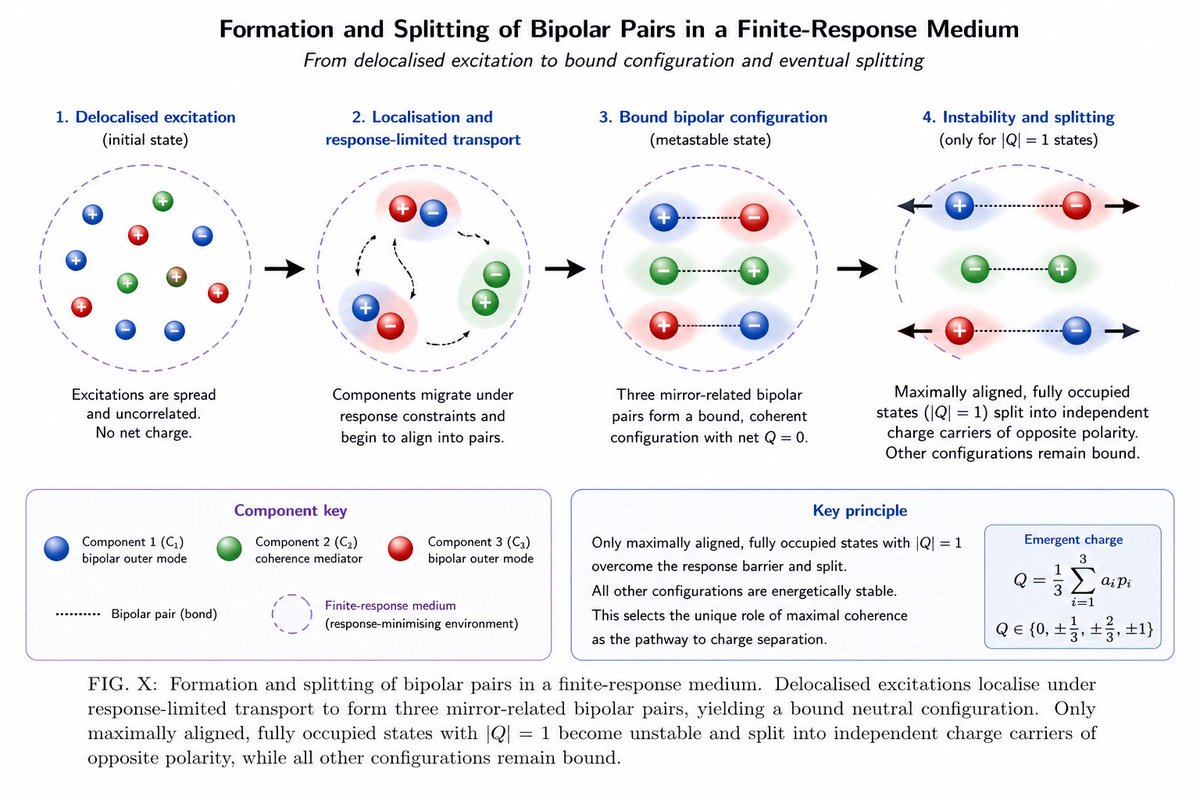
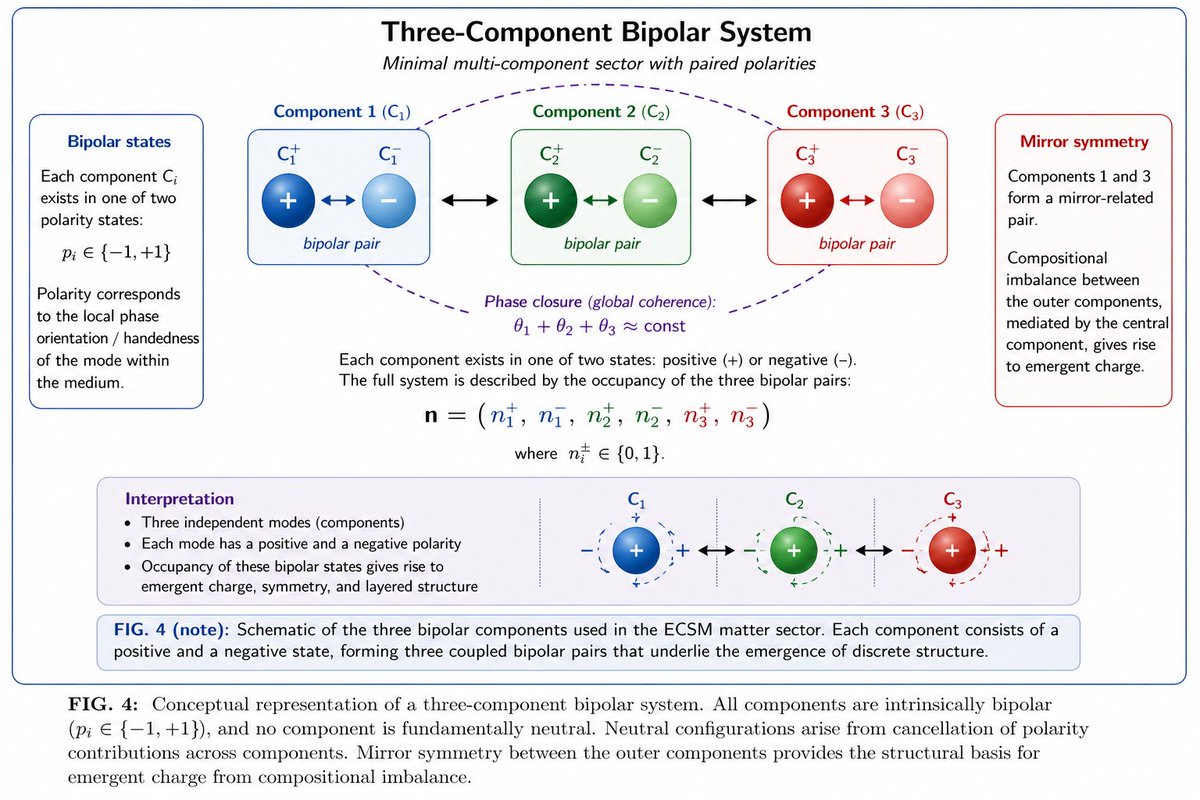
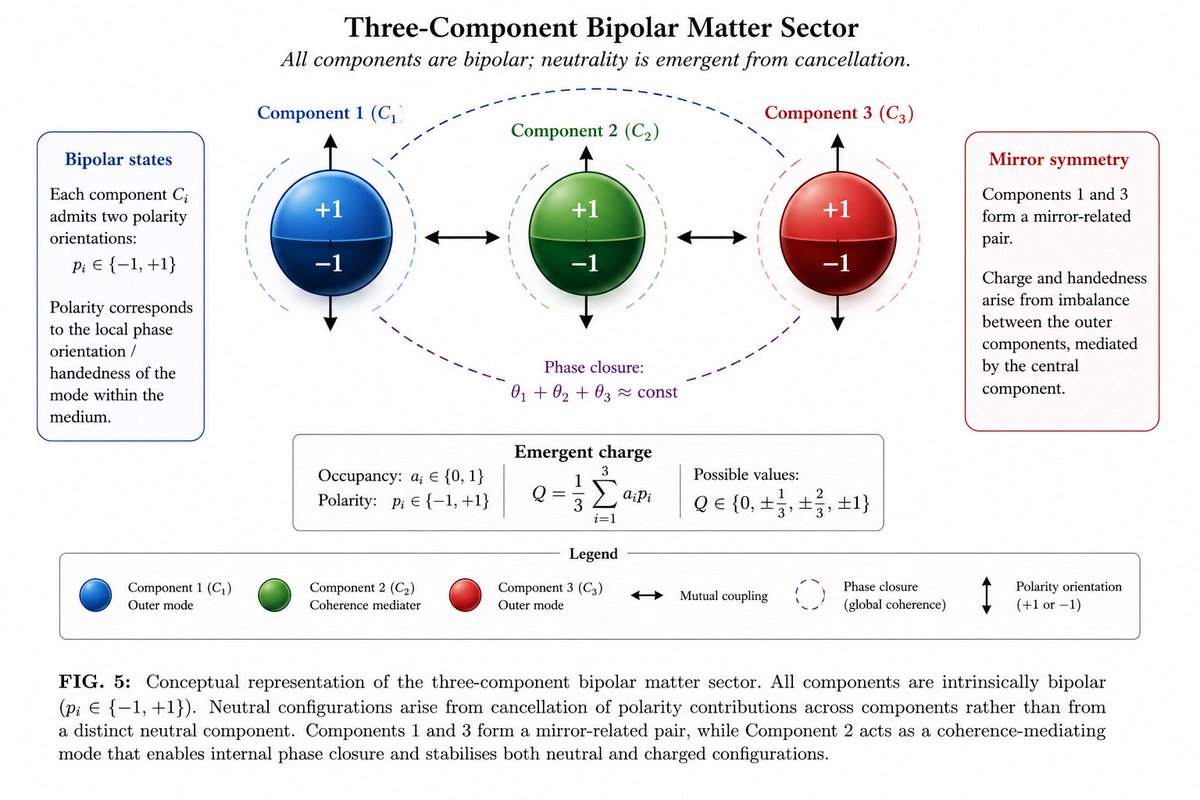
matter-sector charge closure
spin, orbit and celestial vortex-domain behaviour
The important point is not any single result.
It is the recurrence.
The same finite-response principle keeps appearing in places normally treated as separate: relativity, optics, gravity, matter, nuclei, cosmology and inertia.
In ECSM:
Lorentz symmetry = local stable propagation response
GR = large-scale effective medium reconfiguration
gravity = finite-response relaxation
redshift = propagation response
particles = stable closure structures
laws = persistent response modes
matter = excitation structure of the medium
This is now beyond “interesting idea.”
It is a model with notebooks, tests, recovered limits, recovered scales, failure modes, and predictions to sharpen.
Next step: make it harder to survive.
#ECSM #TheoreticalPhysics #Cosmology #EmergentGravity #GeneralRelativity #LorentzSymmetry #DarkMatter #Redshift
3
48
Jun 10
New ECSM quantitative paper published:
“First Quantitative Test of Nuclear Stability as Finite-Response Closure in ECSM”
Using 3386 IAEA LiveChart ground-state nuclides, the first ECSM closure feature set achieved:
ROC-AUC = 0.9206
Accuracy = 0.7981
Beta-direction accuracy = 0.6360
The model recovers the isotope valley, neutron-compensation trend, tritium → helium-3 mirror relaxation, alpha/magic closure signals, and the iron–nickel binding-energy peak.
Core claim:
Nuclear stability is finite-response closure.
Radioactive decay is finite-response relaxation.
DOI:
doi.org/10.5281/zenodo.20624…
Github:
github.com/asheldrick-resear…
1
35
Jun 10
Published my new ECSM paper:
The Maxwellian Doorway to ECSM: Vacuum Electromagnetic Constants as Finite-Response Medium Parameters
Maxwell did not derive light speed from “nothing.”
He derived it from vacuum response constants:
epsilon0, mu0, c, and vacuum impedance Z0.
This paper argues that these may be low-energy effective response parameters of a deeper coherent finite-response medium.
It does not claim Maxwell proves ECSM.
It claims Maxwell opens the doorway.
The vacuum may not be empty nothingness.
It may be operationally response-bearing.
doi.org/10.5281/zenodo.20616…
32
Jun 9
New ECSM paper published:
Nested Vortex Domains in the ECSM Framework: A Finite-Response Interpretation of Spin, Orbital Locking, and Celestial Circulation
This paper proposes that spin, orbit, tidal locking, galaxy rotation, and filament-scale angular momentum may be interpreted as nested circulation states of a finite-response coherent medium.
DOI:
doi.org/10.5281/zenodo.20616…
24
Jun 8
New ECSM paper published:
“Nuclear Stability as Finite-Response Closure in the ECSM Framework”
This work extends ECSM into nuclear stability, interpreting deuterium, tritium, helium-3, helium-4, neutron compensation, alpha closure, and the isotope valley as finite-response closure and relaxation structures.
Core claim:
Nuclear stability is finite-response closure.
Radioactive decay is finite-response relaxation.
doi.org/10.5281/zenodo.20601…
35
Jun 8
New ECSM paper published:
Stellar Fusion as Response-Cost Relaxation in the ECSM Framework
DOI: doi.org/10.5281/zenodo.20601…
The paper proposes an ECSM interpretation of stellar fusion in which nuclear binding is viewed as response-cost minimisation within a finite-response medium.
Hydrogen burning, stellar energy release, and the iron peak are reinterpreted as manifestations of coherence-driven relaxation toward lower-cost nuclear configurations.
The work does not modify standard nuclear physics, but provides a response-based ontology beneath the observed binding-energy hierarchy and establishes a new quantitative target: reconstruction of the nuclear binding-energy curve from a physically motivated ECSM response-cost functional.
#Physics #Astrophysics #NuclearPhysics #Cosmology #ECSM
30
Jun 8
New ECSM paper published:
Deriving a Hypercharge-Like Branch Phase from ECSM Closure Constraints
Starting from the derived ECSM closure labels
T₃(Q₀)= 1/2 and T₃(Qch)=−1/2, the neutral/charged charge constraints force:
Yᴸ = −1
So the hypercharge-like branch phase is no longer just assigned because it works — it is derived from closure and charge recovery.
DOI: doi.org/10.5281/zenodo.20598…
Github:
github.com/asheldrick-resear…
#ECSM #Physics #QuantumPhysics #Electroweak #Theory
1
26
Jun 8
New ECSM paper published:
A Common-Source Finite-Response Bridge Between SPARC Rotation Curves and KiDS Weak Lensing
doi.org/10.5281/zenodo.20592…
Github:
github.com/asheldrick-resear…
The result: rotation curves and weak lensing do not need to share the same fitted response directly. They can be treated as different projections of a common finite-response source kernel.
That is exactly what ECSM would expect if the “dark halo” is really a domain-boundary / medium-relaxation structure.
Next test:
Do weak-lensing features appear near the domain-transition radii predicted from rotation curves?
If they do, this becomes a very interesting piece of evidence for ECSM domain structure.
23
Jun 7
Published: ECSM KiDS V12
A Real-2dFLenS Foreground-Burden Test of an ECSM Weak-Lensing Response in KiDS-1000
This is an important step forward.
Earlier KiDS tests used fallback baryonic/photometric burden proxies. V12 replaces that with real 2dFLenS foreground lens catalogues: sky position, redshift, FKP weight, target type, jackknife region and catalogue-derived burden terms.
The tested response chain is:
KiDS lens/source geometry
× real 2dFLenS foreground-lens burden
× domain-boundary-gradient response
× finite-response ell kernel
→ KiDS-1000 PneE galaxy–galaxy lensing bandpower
Best full-data ECSM model:
χ² = 134.37
vs smooth power-law χ² = 811.73
vs zero/null χ² = 1486.25
Held-out source-bin validation also strongly favours the ECSM weighted-burden/domain response model.
The key result is not just “a better fit”.
The important point is that the signal improves when the driver is made more physically real: from geometry alone, to foreground burden, to real foreground-weighted burden plus domain-gradient response.
That is exactly the direction ECSM predicts.
This is still not a full shear-map derivation, and it is not yet a final first-principles weak-lensing theory. But it is a much cleaner test than the earlier KiDS bridge papers.
V12 shows that real foreground structure, finite response and domain-boundary gradients can organise weak-lensing bandpower behaviour far better than generic smooth controls.
DOI:
doi.org/10.5281/zenodo.20580…
Notebook:
github.com/asheldrick-resear…
1
2
25
Jun 7
New ECSM paper published:
Deriving the Minimal SU(2)-Like Branch Algebra from ECSM Closure Constraints
This is an important foundation paper for the ECSM weak-sector sequence.
Earlier papers used the familiar Pauli/SU(2) structure as a bridge scaffold.
This paper asks whether that structure can be recovered from ECSM branch constraints instead.
Start only with two ECSM branch states:
|Q0> = neutral closure branch
|Qch> = charged branch
Require reversible branch conversion:
Qch ↔ Q0
The minimal conversion operators are then forced as:
T = |Q0><Qch|
T- = |Qch><Q0|
Their commutator forces the closure-imbalance generator:
[T ,T-] = P0 - Pch = 2T3
so:
T3 = 1/2(P0 - Pch)
Then reconstructing T1 and T2 recovers the Pauli/SU(2)-like generator structure.
The notebook verifies:
[Ti,Tj] = i εijk Tk
with maximum residual error:
0.0
A minimality test shows two-way conversion without T3 does not close.
Residual outside span{T ,T-}:
1.41421356237
So T3 is not decorative. It is forced by closure.
Final notebook verdict:
PASS_DERIVED_MINIMAL_SU2_BRANCH_ALGEBRA_FROM_ECSM_CLOSURE
This does not claim to derive the full electroweak theory.
It shows that the SU(2)-like algebra used in the ECSM weak-sector bridge can be recovered as the minimal closed reversible conversion algebra of a two-branch ECSM closure-active system.
Paper:
doi.org/10.5281/zenodo.20579…
Github:
github.com/asheldrick-resear…
1
1
56
Jun 6
Published a new ECSM weak-lensing paper.
Physical Stellar-Burden and Domain-Boundary Response in the ECSM Framework: A KiDS-1000 PneE Projection Test Using KiDS DR4 LePhare Stellar Masses
This extends the KiDS-1000 ECSM lensing programme from geometry/domain-boundary response toward a physical stellar-mass burden driver.
The key result is not yet a final first-principles baryonic lensing prediction, but it is an important bridge: physical stellar mass can be inserted into the ECSM finite-response chain, while the remaining bottleneck is exact foreground lens-catalogue matching.
DOI: doi.org/10.5281/zenodo.20575…
Github:
github.com/asheldrick-resear…
github.com/asheldrick-resear…
22
Jun 6
New ECSM paper published:
From Required Field to Candidate Boson: Minimal Dynamics of the Bτ Evolution-Rate Channel in ECSM
Paper:
doi.org/10.5281/zenodo.20573…
Github:
github.com/asheldrick-resear…
This paper develops the next layer of the Bτ proposal.
If ECSM has finite response time, then the rate at which the medium can change must itself be physically governed.
We define:
Θ(x)=δlnτresp(x)
and show that this response-rate field directly modulates ECSM coherence:
δχ≈−pχ(1−χ)Θ
The paper then introduces relaxation-diffusion and wave-like dynamics for Θ, showing when it behaves as a finite recovery field and when it can support propagating Bτ-type candidate excitations.
This does not claim discovery of a new particle.
It establishes the minimal dynamical requirements under which a required ECSM evolution-rate field becomes a candidate bosonic or collective mode.
Time is not what Bτ governs.
Change is what Bτ governs.
Time is what coherent matter-processes count.
1
34
Jun 6
This is one of the more ambitious ECSM predictions.
The Bτ paper is not just proposing “another boson.” It argues that if physical processes are changes of medium state, and the medium has finite response time, then ECSM requires a governing rate-of-change field.
If that field is quantised, its excitation is a Bτ-type boson.
So the claim is bold but disciplined:
Bτ is not a graviton.
Not a time particle.
Not a Higgs replacement.
It is the candidate excitation of the channel that governs how fast physical states can change, reconfigure, restore coherence, and support process evolution.
Time is not what Bτ governs.
Change is what Bτ governs.
Time is what coherent matter-processes count.
doi.org/10.5281/zenodo.20572…
1
22
Jun 6
Published:
Domain-Boundary Gradients as Predictive Weak-Lensing Response Structure in the ECSM Framework: A KiDS-1000 PneE Projection Test
V6 adds the missing domain-boundary-gradient term to the KiDS weak-lensing response model.
Result:
χ² = 141.68 vs 209.51 for the smooth geometry control, with positive held-out source-bin and lens-bin transfer.
This is not yet a final baryonic-mass first-principles lensing prediction, but it is a stronger projection-bridge result: lens/source geometry burden domain-boundary gradient finite response.
DOI:
doi.org/10.5281/zenodo.20570…
Github:
github.com/asheldrick-resear…
1
1
40
Jun 6
New ECSM paper published:
A Minimal W-Boson Branch-Conversion Bridge in ECSM
This is the next notebook-backed weak-sector bridge.
Previous ECSM work built:
SU(2)L-like closure pair
Q_ECSM = T3 Y/2
photon-Z-like neutral mixing
This paper tests the charged weak modes.
In ECSM:
Q0 = neutral closure branch
Qch = charged branch
The notebook verifies:
T |Qch> = |Q0>
T- |Q0> = |Qch>
With inherited charges:
Q(Q0) = 0
Q(Qch) = -1
So the branch conversions carry:
W : -1 → 0, ΔQ = 1
W- : 0 → -1, ΔQ = -1
It also verifies the coherent-limit weak mass relation:
m_W² = m0² g²
m_Z² = m0²(g² g'²)
giving:
m_W / m_Z = cosθ
A coupling-ratio scan confirms the relation to floating-point precision.
A finite-response deformation test shows the relation is recovered as χ → 1.
Final notebook verdict:
PASS_MINIMAL_W_BRANCH_CONVERSION_BRIDGE
This is not a full electroweak derivation.
It is a minimal ECSM bridge showing W±-like modes as charged branch-conversion excitations.
Paper:
doi.org/10.5281/zenodo.20569…
Github:
github.com/asheldrick-resear…
1
1
53
Jun 6
Published:
A Frozen ECSM Electron-Like Packet Molecular Scattering Programme:
Validated Domain, Failure Boundary, and the Need for a Physical Screening Descriptor
This paper wraps up the V36C–V42 measured molecular scattering sequence.
Result:
The frozen ECSM electron-like packet alone is insufficient, but a structured target-response layer repeatedly improves measured molecular scattering predictions.
Validated domain:
methane, sevoflurane, and isoflurane.
Boundary:
CCl3F exposes a heavy-halogen failure mode not repaired by the current descriptor class.
Conclusion:
The molecular scattering branch now has a validated domain, a clear failure boundary, and a next target: a physically derived screening / polarisation descriptor.
DOI:
doi.org/10.5281/zenodo.20568…
1
25