Supporting UK Scientists in accessing and working with data from the EISCAT radars. A joint RAL - BAS project, funded by NERC via NCAS.
Joined August 2013
- Tweets 94
- Following 87
- Followers 88
- Likes 1
2 Photos and videos

UK EISCAT Support retweeted

16 Dec 2022
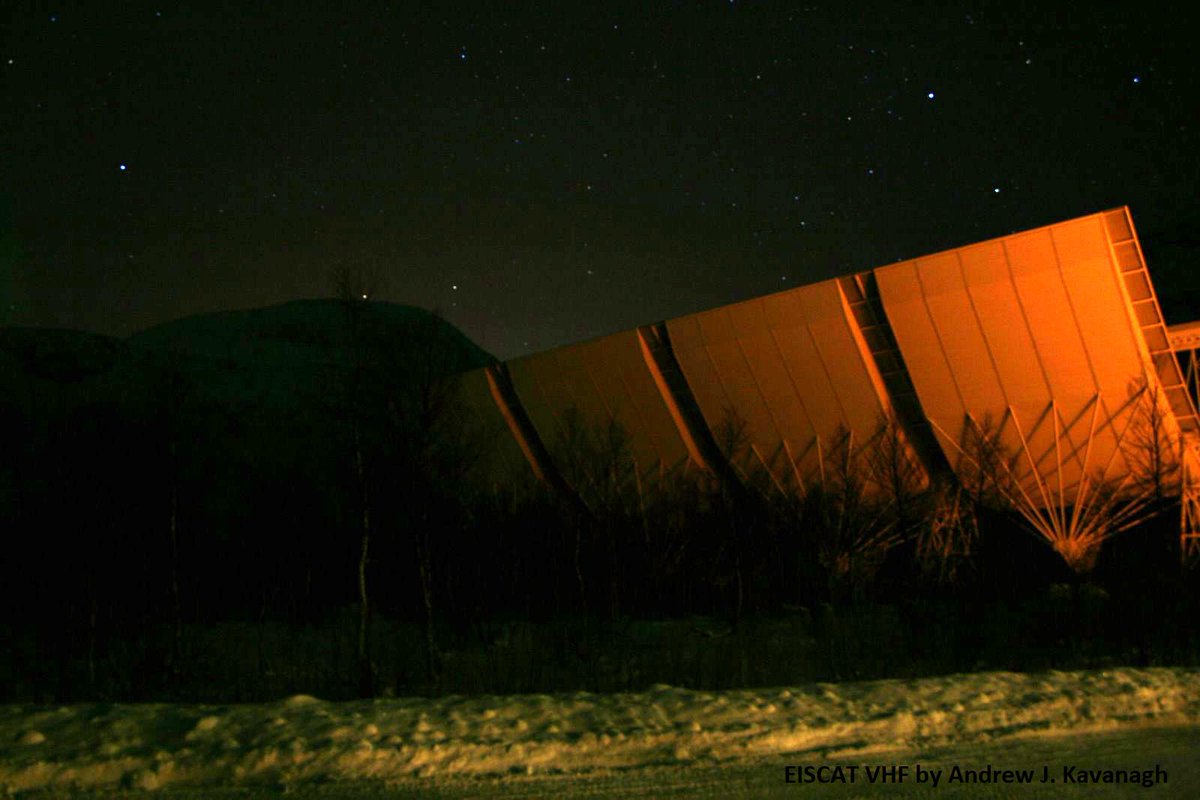
Watch the installation of #EISCAT3D Skibotn progress. You start to se how it will come to look like.
youtu.be/YT87EDL4_hU
1
1
402
UK EISCAT Support retweeted
13 Oct 2022
EISCAT invites applications for observing time on the #EISCAT facilities in 2023.
Deadline: November 1 st. 2022 and May 1 st. 2023.
Read more here: eiscat.se/news/eiscat-peer-r…
#application #observingtime #2023 #science #experiments #EU_Ri
3
1

7 Sep 2022
The @MIST_UK seminar yesterday was given by @stpkav (member of the UK EISCAT Support Group) and focused on some his personal research using data from the EISCAT archive.
1
23 Aug 2022
A special journal issue is being planned for the recent EISCAT symposium and Layered phenomenon in the Mesopause region meeting. If you are interested in submitting, please let @stpkav know. This would not be a commitment, he needs to assess potential numbers.
23 Aug 2022
The joint 20th EISCAT Symposium and 15th International Workshop on Layered Phenomena in the Mesopause Region ended on Friday. It was a great success and well done to the organisers and all the speakers who attended in person or via zoom.
16 Aug 2022
This morning there was a joint session exploring variability and trends in the mesosphere
16 Aug 2022
There have been many interesting talks at the EISCAT symposium. This afternoon we have been hearing about Novel facilities, models and analysis, with a taste of what common experiment modes we might expect from EISCAT 3D.
1
15 Aug 2022
Location for the joint 20th EISCAT Symposium and 15th International Workshop on Layered Phenomena in the Mesopause Region
14 Aug 2022
This week it is the 20th EISCAT symposium in Sweden space.irfu.se/workshops/LPMR…. Access to EISCAT in the UK is funded by @NERCscience and the UK EISCAT support group is supported by @AtmosScience
1
5 May 2022
The UK (collaborating with Norway) is funding EISCAT radar time in support of this NASA rocket launch. @SuzieImberSpace from the University of Leicester is the radar PI for this experiment and the UK EISCAT support group is providing operational support: nasa.gov/feature/goddard/202…
1
3
4
UK EISCAT Support retweeted

26 Nov 2021
Spring 2022 on Svalbard? We still have places left on some of our courses!! @UNISvalbard @EISCATUK @BirkelandBCSS unis.no/extended-application…
1
4
3
18 Nov 2021
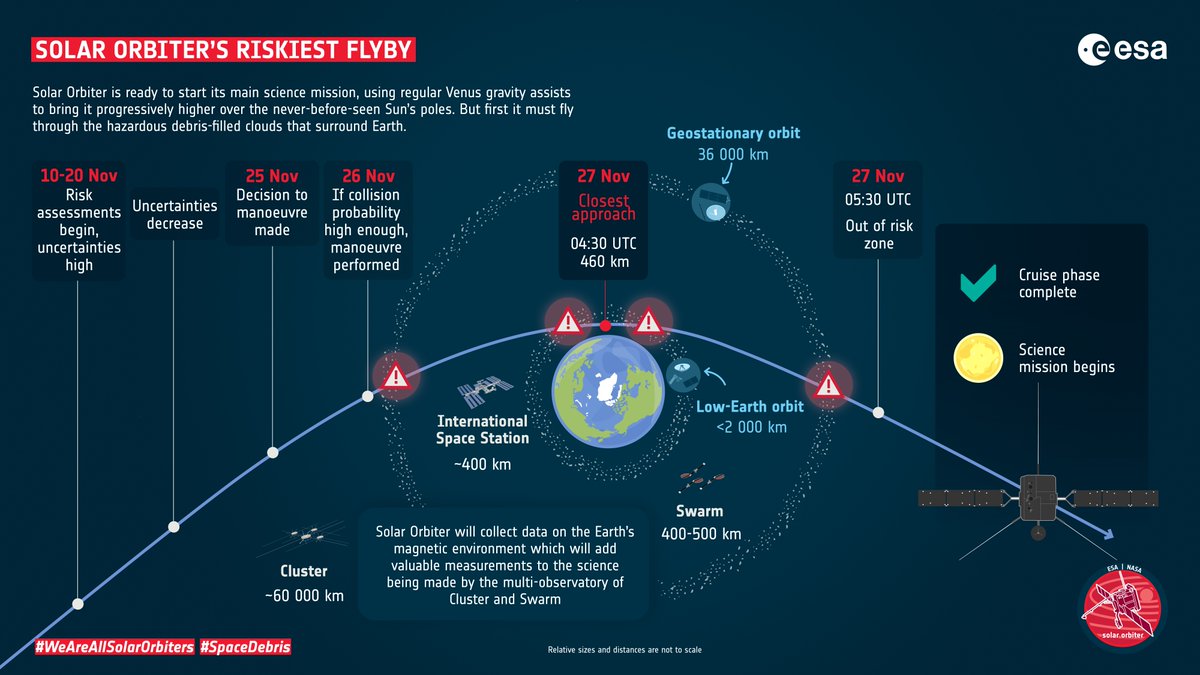
Pleased to say that the UK will be operating an EISCAT radar experiment monitoring the ionosphere during the flyby.
18 Nov 2021

On 27 November, #SolarOrbiter is making its riskiest flyby yet – passing through Earth's #spacedebris clouds and buzzing 'home' at just 460 km...
👉esa.int/Science_Exploration/…
#ExploreFarther #WeAreAllSolarOrbiters #WaveAtSolo
UK EISCAT Support retweeted

26 Mar 2021
Postdoc and PhD researcher positions at @SGO_FI! Interested in Space and Ionosphere? Speak Matlab/Python? Know a bit about machine learning? Wanna work in Lapland under the northern lights?Apply here: rekry.saima.fi/certiahome/op…
2
1
23 Mar 2021
Two £2M projects are being submitted to the NERC highlight topic call this week. Both involve many members of the UK space weather community, keen to use the new EISCAT 3D radar. Good luck to both.
1
5
UK EISCAT Support retweeted
23 Mar 2021
Finally ground work can begin for the #EISCAT3D site in Sweden. Tendering is open: eiscat.se/news/open-tender-e…
1
4
11 Dec 2020
EISCAT 3D is the subject of a NERC Highlight Topic announcement of opportunity: ukri.org/opportunity/nerc-hi… A chance to form/join a consortium to use this exciting new instrument to study small scale processes in the ionosphere.
1
UK EISCAT Support retweeted
20 Oct 2020
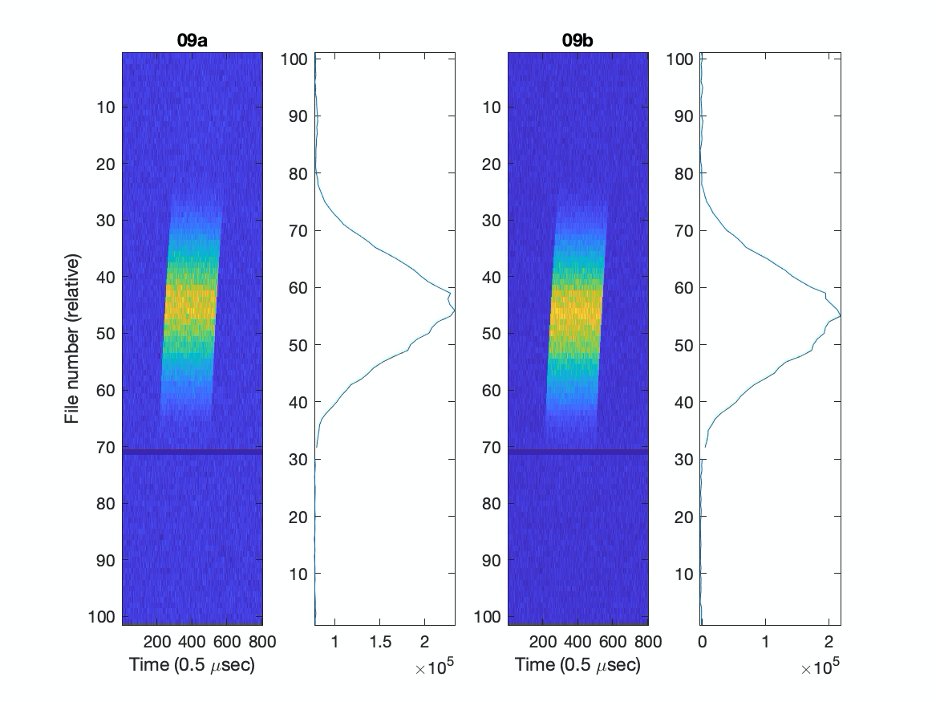
Testing of #EISCAT3D first articles is underway! Last July we collected data with the FSRU/AU while an experiment was running on the #EISCAT Tromsø VHF radar. We tried to detect the VHF signal scattered from something in space, and we did! Read more here: eiscat.se/news/testing-of-ei…
1
3
14 Oct 2020
Well, isn't this absolutely beyond fantastic. Brilliant work @Dr_RosieJohnson
14 Oct 2020

What a beauty! We love this #RASquilt square from Rosie Johnson.
It shows the @EISCATofficial Svalbard radars with a passing polar bear, under the northern lights. Rosie spent time studying at UNIS Svalbard, an island up in the arctic. @EiscatSvalbard ras.ac.uk/events-and-meeting…
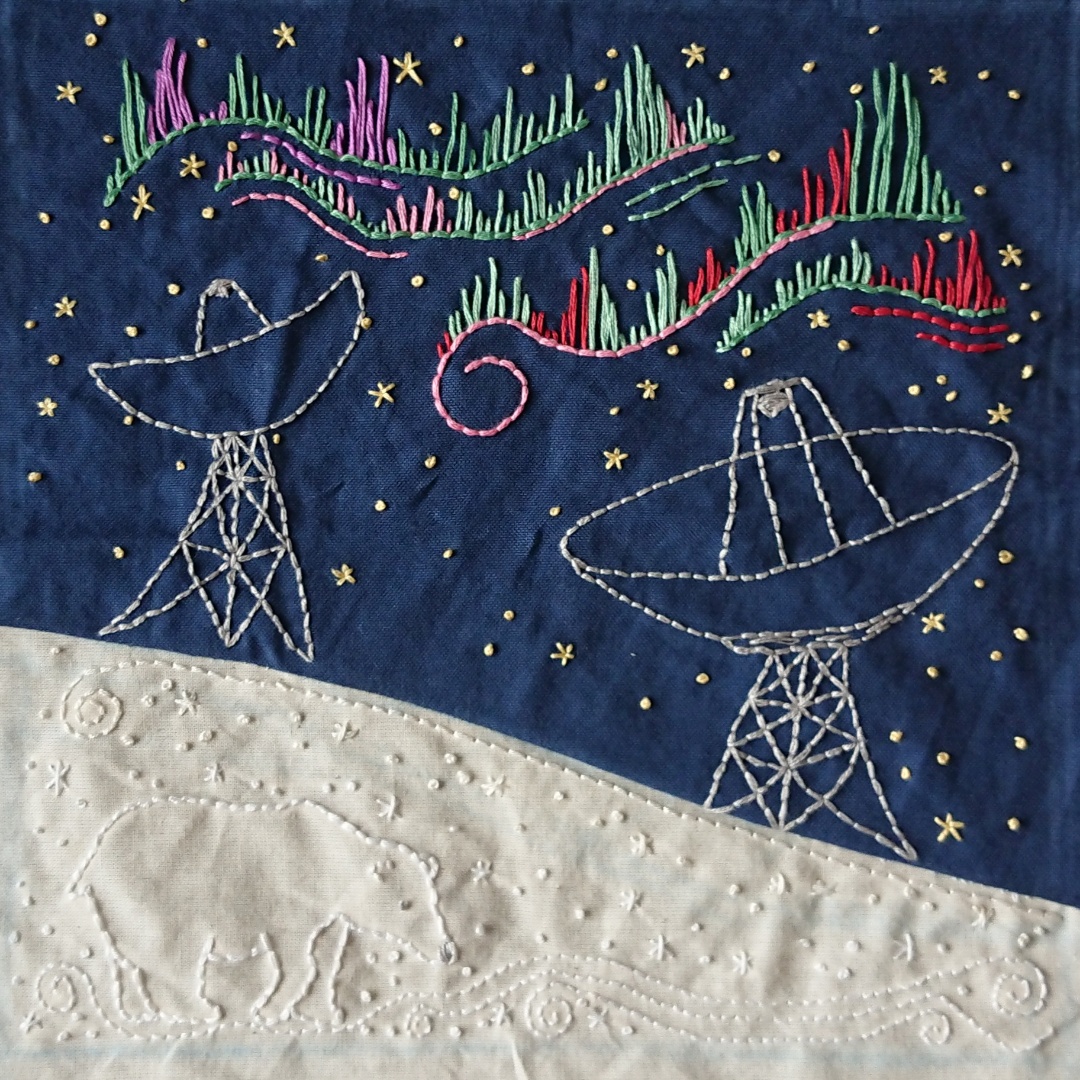
ALT This square is of the EISCAT Svalbard Radars, under the northern lights. I was lucky enough to spend an Erasmus semester in my fourth year of undergrad, studying at UNIS Svalbard. The best part was the field work, where we got to run an experiment using EISCAT. Thankfully we didn’t have a polar bear visitor but since there are more polar bears than people resident on Svalbard this is always in the back of your mind.
1
1
9
UK EISCAT Support retweeted
20 May 2020
This is an experiment using the Antenna Unit and the First Stage Receiver Unit (FSRU) of the #EISCAT3D at the #EISCAT Kiruna site. Because of the FSRU's ability too rapidly change directions, we can obtain whole sky images of the galactic noise in a short time.
7
20
UK EISCAT Support retweeted
21 May 2020
We are hiring an sections engineer to the EISCAT Svalbard Radar.
Read more: eiscat.se/blog/section-engin…
Apply here: jobbnorge.no/ledige-stilling…

1
1