
Lambent Society Founder | Professor | Hourglass Emergence Collective Computation | Complexity Science | Privacy | Translation | @C4COMPUTATION
Joined May 2025
- Tweets 168
- Following 230
- Followers 65
- Likes 300
3 Photos and videos
Jessica Flack retweeted

19 Jul 2024
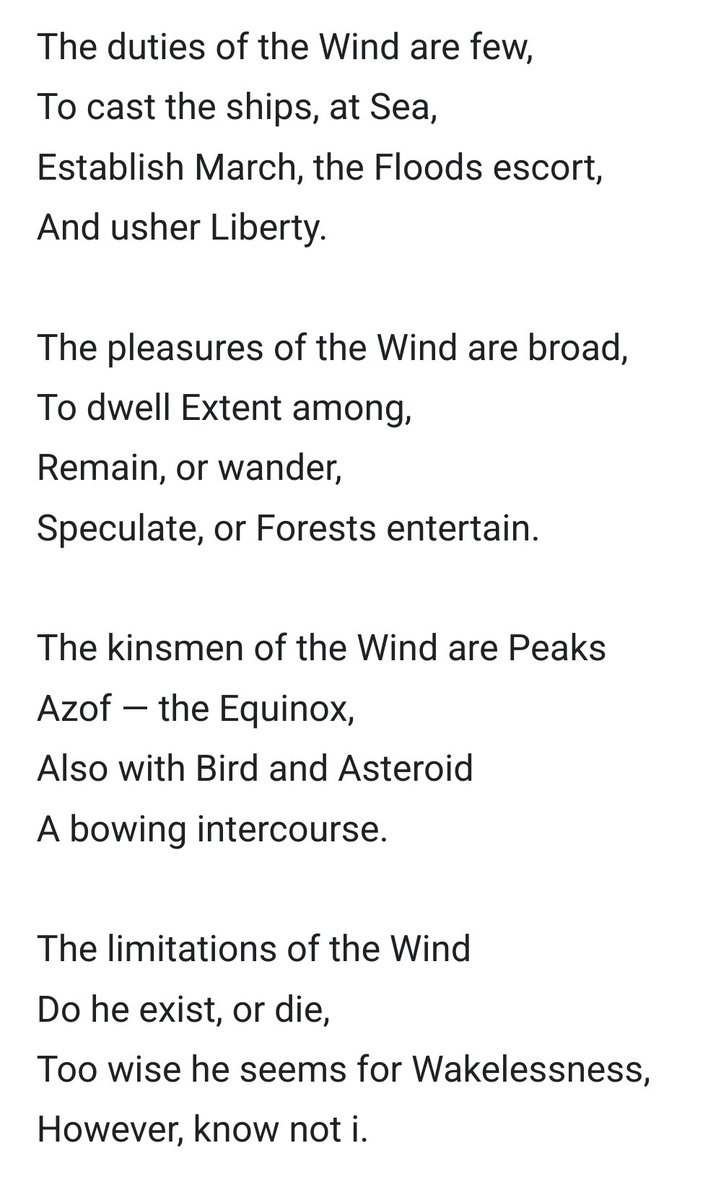
The duties of the Wind are few
Poem 1137 by Emily Dickinson.
5
6
25
8,290
Jessica Flack retweeted
23 Nov 2025
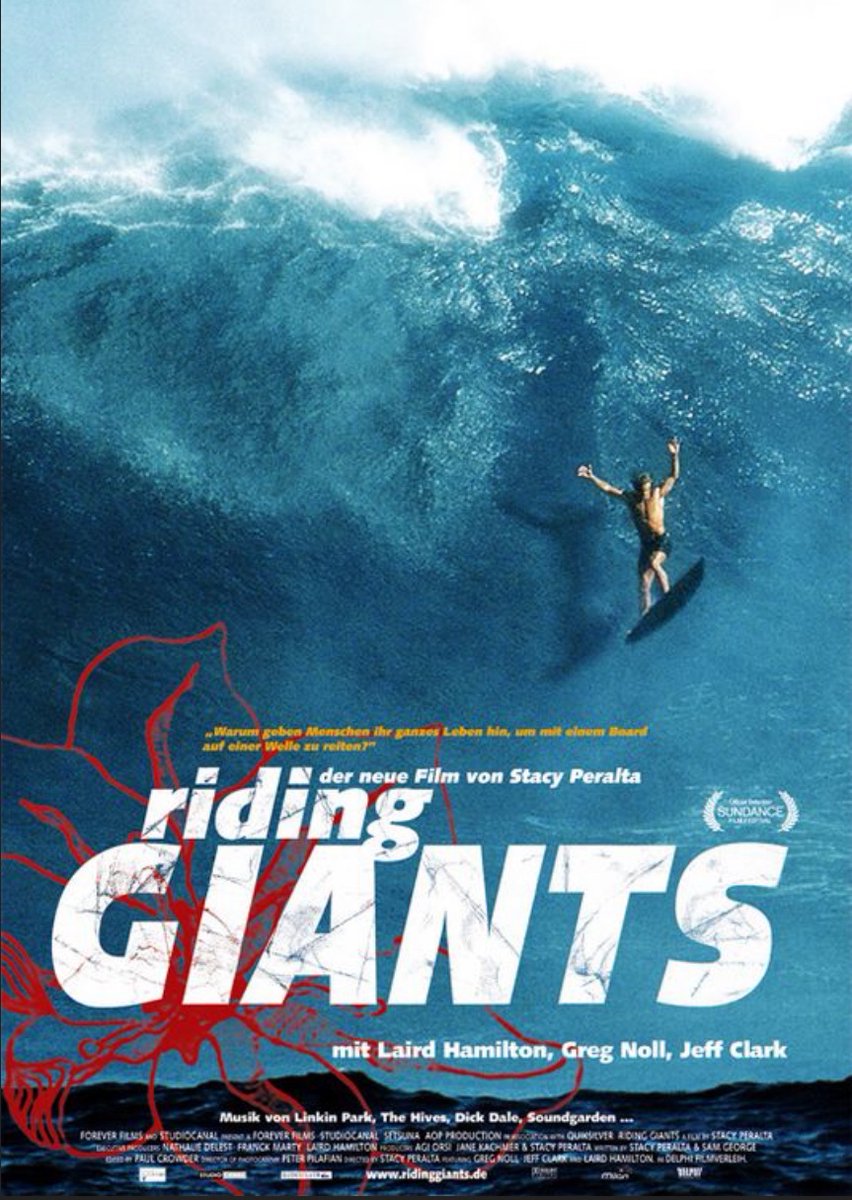
Some similar lines can be found in Riding Giants directed by Stacy Peralta.
Just as the pioneers of surfing in this film remind the viewer that each wave is different, the future is not set.
youtube.com/watch?app=deskto…

21 Nov 2025

Neither recurrence nor back propagation or related algorithms have anything necessarily to do with ‘time looping.’
The scientific sense of ‘time looping’ doesn't result in optimization—or ’improvement’ of the status quo—in meaningful ways. It likely for the most part adds complexity and erodes canonical causality.
One can’t in fact “just do things” sensu Mr. Altman—not only due to ethical issues but also because the effects are not as they appear on the surface.
jessicaflack.wordpress.com/b… (censored)
image: Ansel Adams

2
3
588
Jessica Flack retweeted
23 Feb 2020
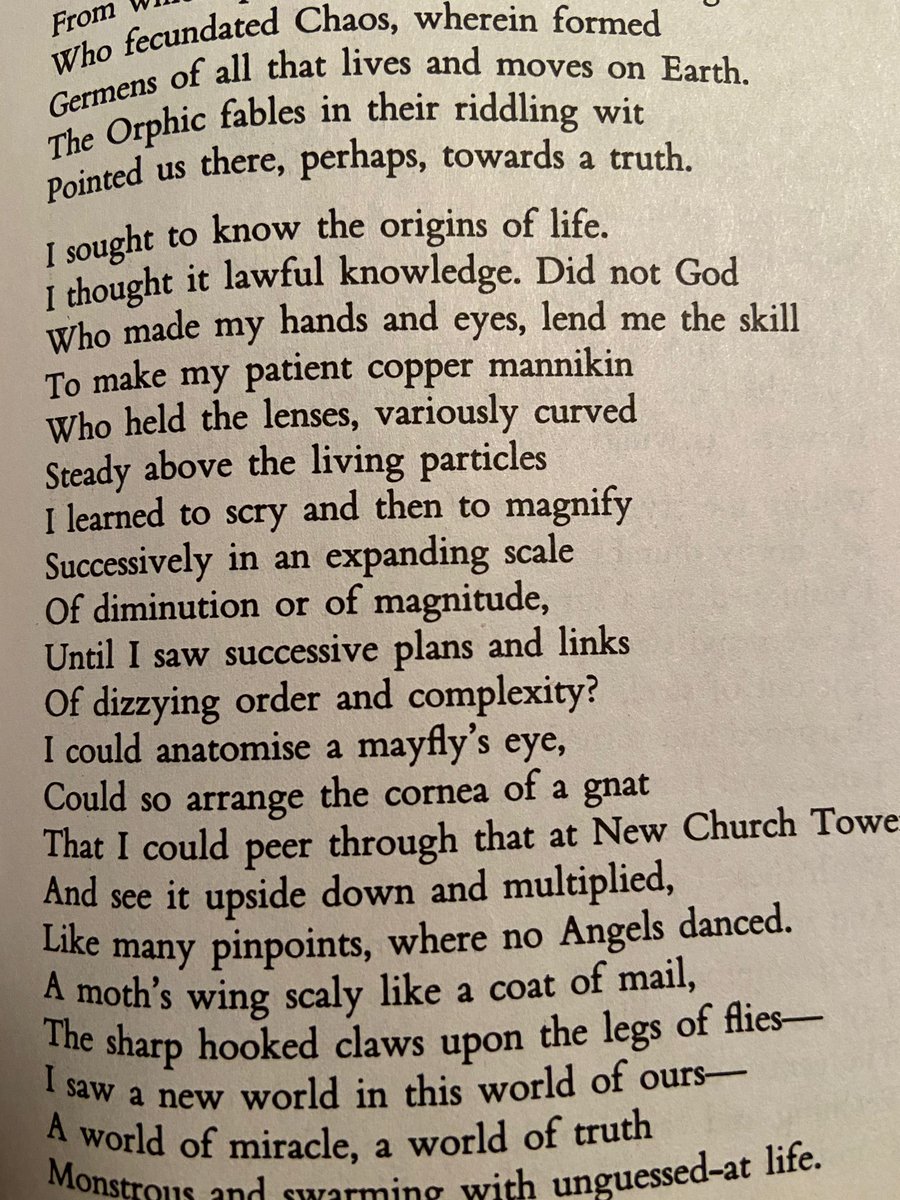
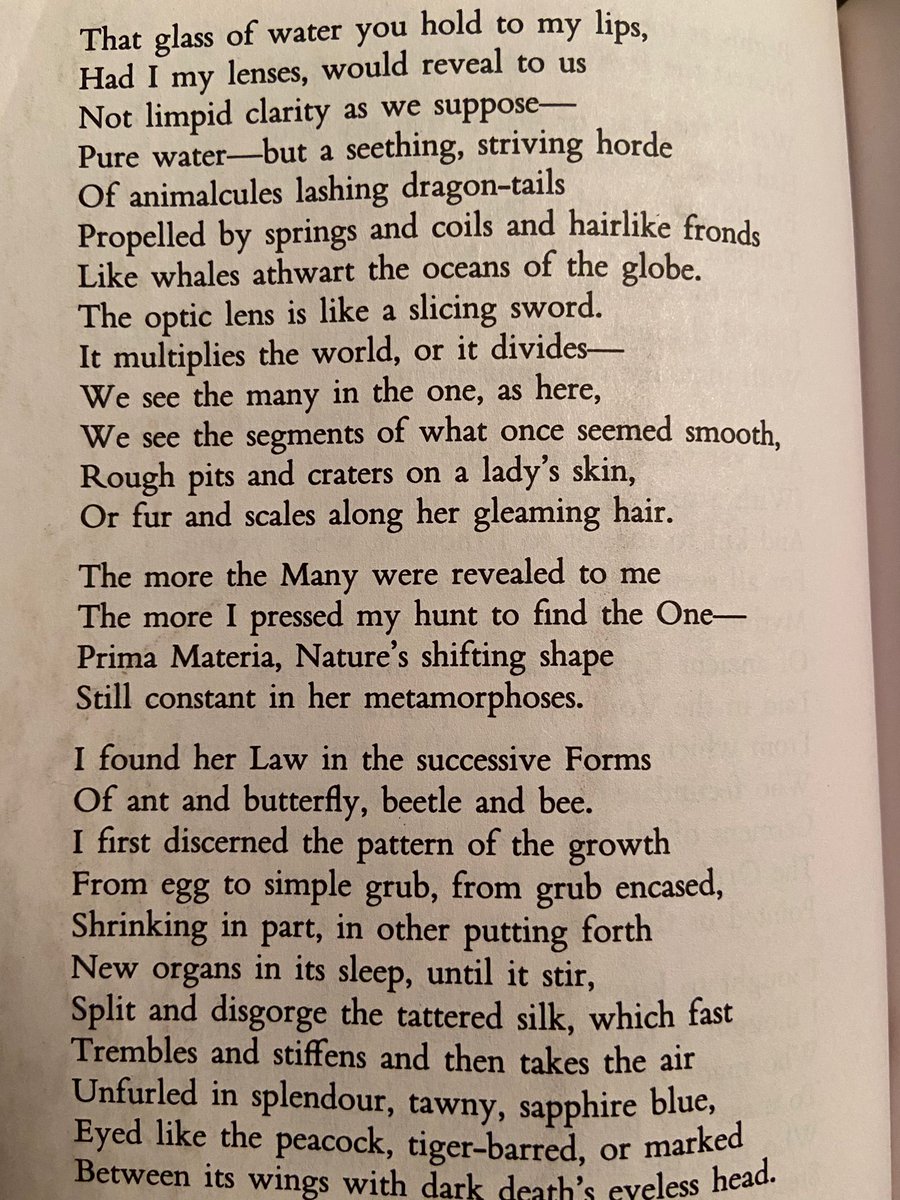
Stanzas from A.S. Byatt's tour de force, Swammerdam—a poem written by her character, R.H. Ash w refs to individuality, collective behavior, perspective origins laws of life.
Great Galileo with his optic tube
A century ago, displaced this Earth
From apprehension's Centre,

1
5
23
Jessica Flack retweeted
23 Nov 2025
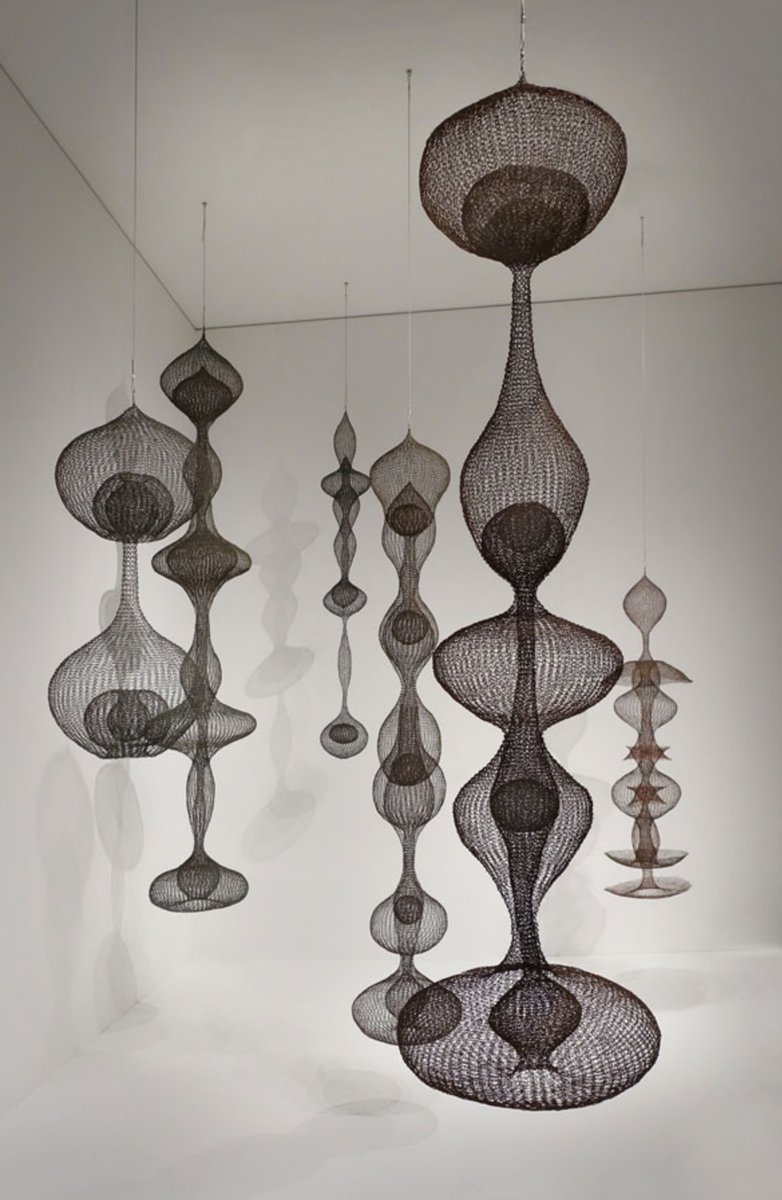
Spectacular looped-wire sculptures at ruthasawa.com.
HT David Zwirner Gallery. Lovely for thinking about the geometry of hourglass emergence.
Ruth Asawa, in her own words, was interested in the idea that ‘the relation between outside and inside was interdependent, integral.”
jessicaflack.wordpress.com/b…
[I am certain I‘ve discussed Asawa already on this platform but @x is hiding the post, as well as many others.]
1
2
4
1,158
Jessica Flack retweeted
21 Nov 2025
Neither recurrence nor back propagation or related algorithms have anything necessarily to do with ‘time looping.’
The scientific sense of ‘time looping’ doesn't result in optimization—or ’improvement’ of the status quo—in meaningful ways. It likely for the most part adds complexity and erodes canonical causality.
One can’t in fact “just do things” sensu Mr. Altman—not only due to ethical issues but also because the effects are not as they appear on the surface.
jessicaflack.wordpress.com/b… (censored)
image: Ansel Adams
1
3
1,290
Jessica Flack retweeted
30 Jun 2025
Murray I think said "math" not "maths". I probably mistyped it and did not notice possibly because I was at the time surrounded by folks who say "maths".
I think the question of formal language isomorphisms is deeply interesting and an important unifying question for all of science. A related issue that needs more thought is whether there's a dynamical notion of Platonism—meaning we invent approximate representations enroute to discovering the universe's natural language, which possibly itself evolves as the Universe evolves. 🤔
I have an old blog post on this topic that is trapped in corruption purgatory. I hope to recover it, as well as a lot of other material, at some point.
30 Jul 2023
Murray Gell-Mann once whispered (in a typically mischievous Murray way) to me during an @sfiscience seminar, "biology is not ready for maths."
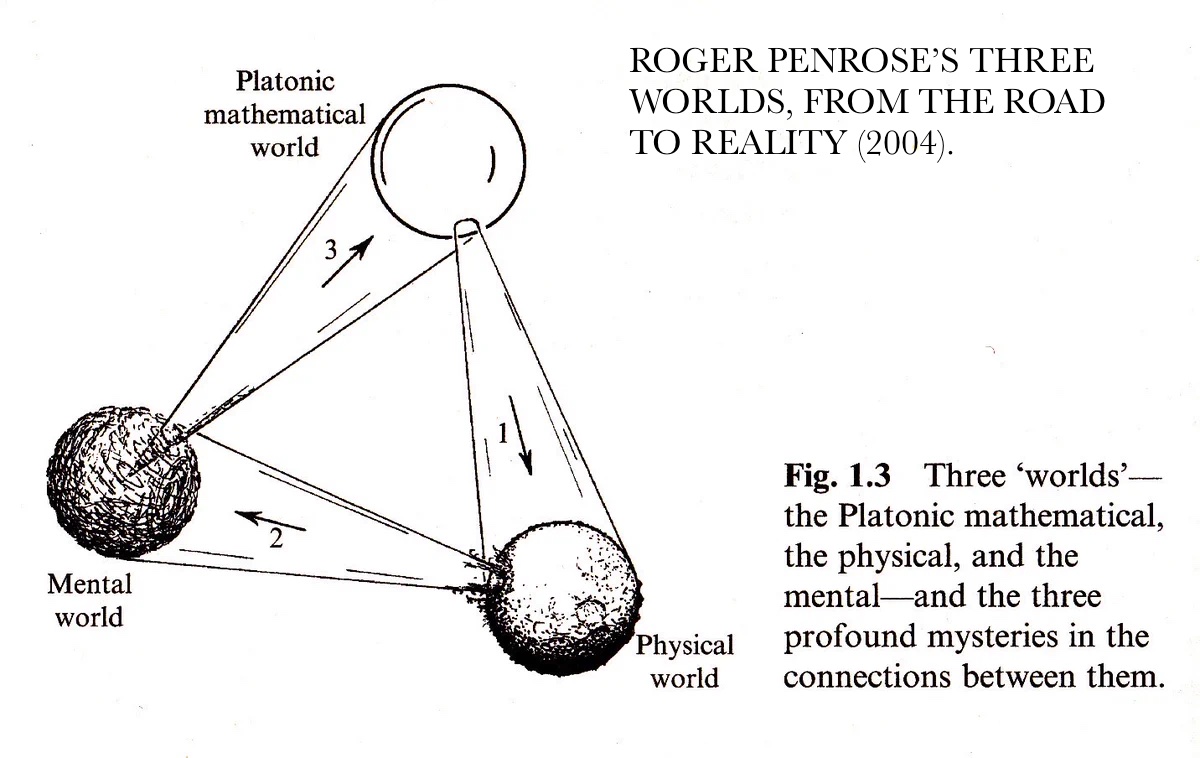
I don't agree but I am sympathetic. Moving forward requires triangulating bw diff types of representations. Even as we approach the end of a problem I think what actually crystalizes is not just an equation but mappings isomorphisms, with understanding residing inside the triangle—a position that is akin but not identical to one of Roger Penrose's, and captured in his three-world's diagram.
Lots of discussion lately about the value of math formalization, particularly for problems at the boundary of science philosophy. Formalization can help to clarify as long as we remain aware of its our limits.
4
6
1,830
Jessica Flack retweeted

21 Nov 2025
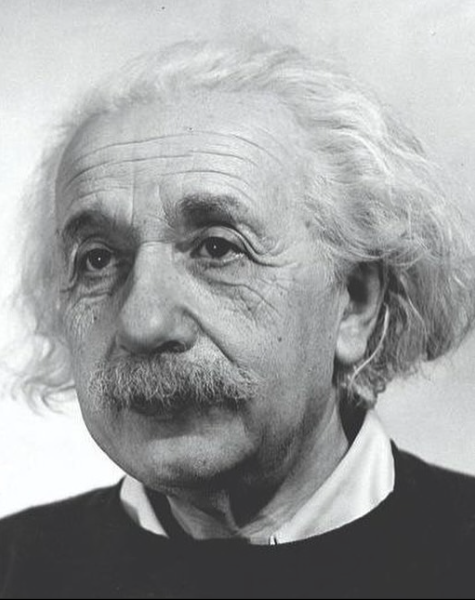
“A human being is part of the Universe.. limited in time and space. He experiences himself.. as something separate, a kind of optical delusion of his consciousness. The striving to free oneself from this delusion is the one issue of true religion.” — Albert Einstein
40
139
579
21,046
Jessica Flack retweeted
20 May 2025
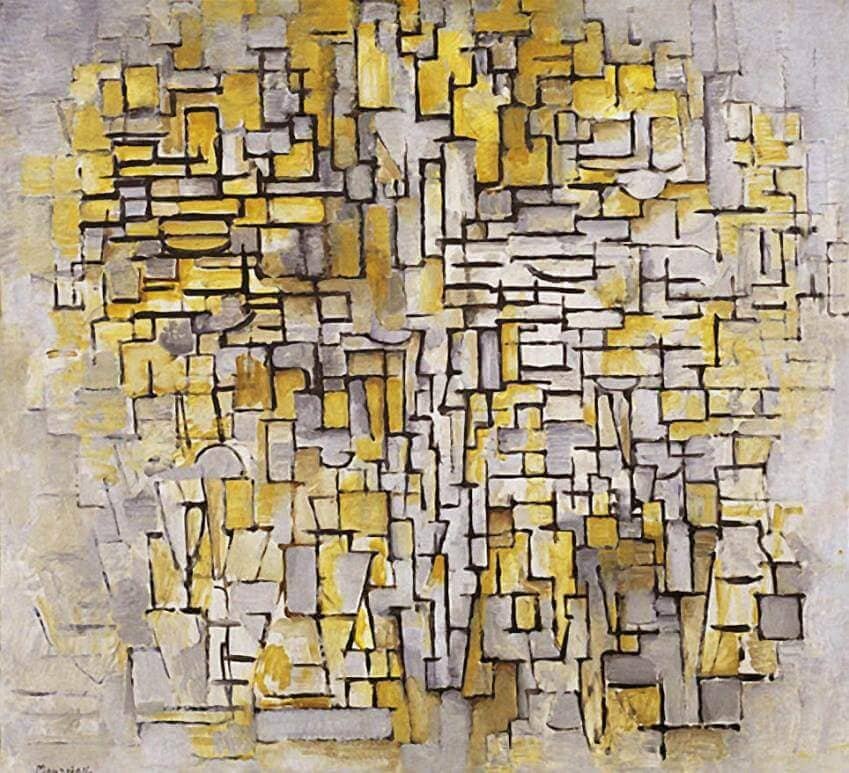
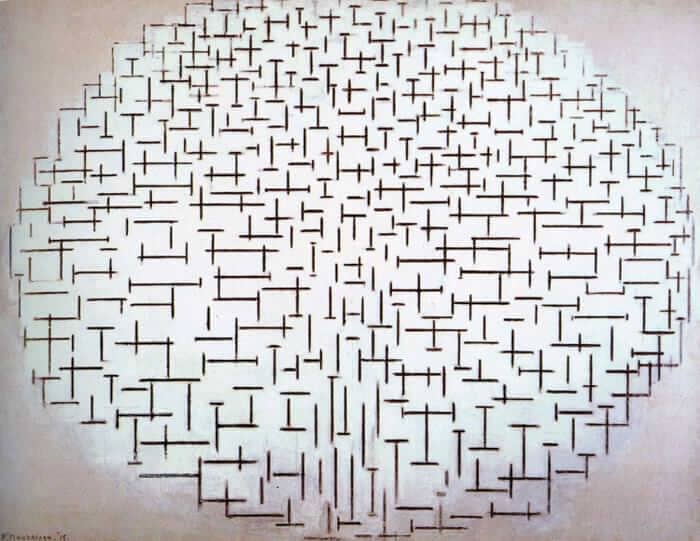
Mondrian as foil to Proust—
"'The trick, he told the painter Carl Holty, was ‘to refuse to extend it [the past] through remembrance’."
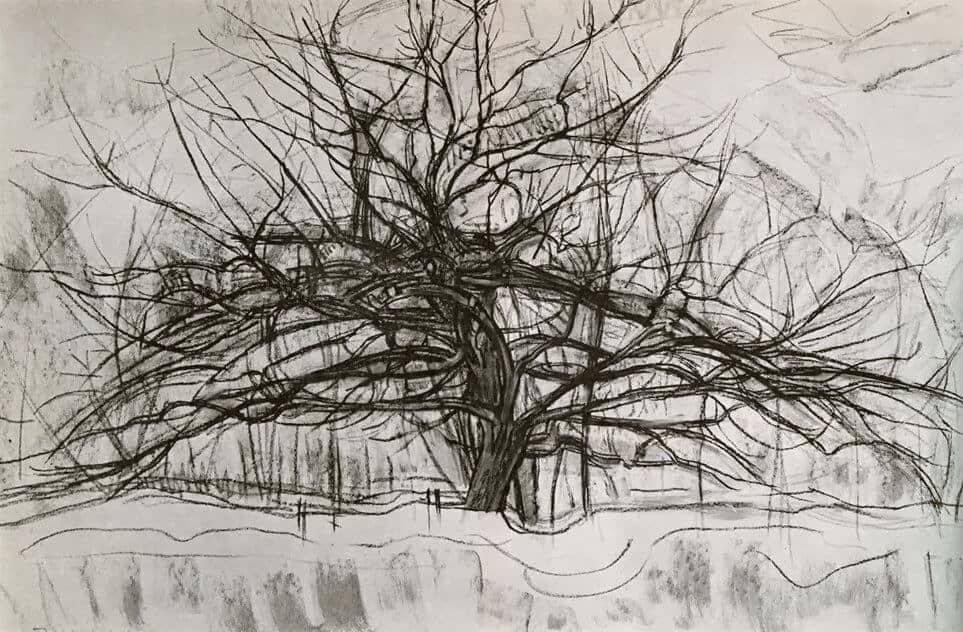
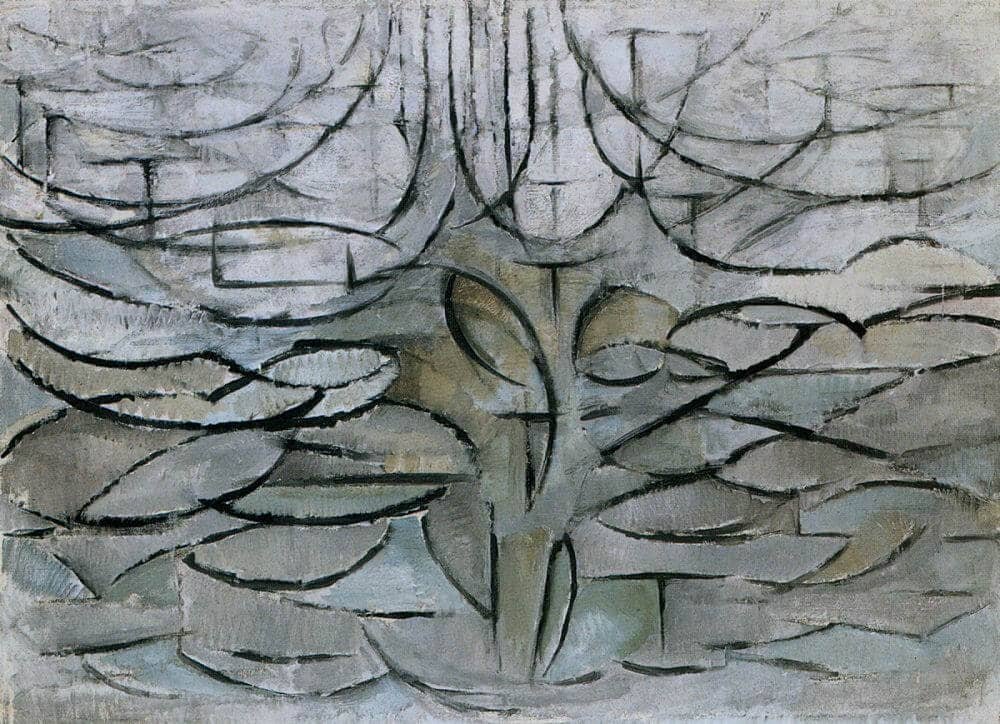
Or, Mondrian was titrating the details of an object against our perceptual systems using color, line, and brush stroke to distill its essence whereas Proust was using prose to titrate an abstraction—memory—against our perceptual systems to reconstitute the events of a life.
@LRB Clare Bucknell discusses the principles and questions that guided and motivated Mondrian who appears to have been deeply interested in universality who sought to illuminate (good) absrraction’s paradoxical complexity. I’ve long turned to Mondrian’s paintings—like his tree series—to illustrate concepts like coarsegraining that are crucial to understanding computation in nature. More on Babel Blog.
jessicaflack.wordpress.com/b…
Clare Bucknell @LRB
lrb.co.uk/the-paper/v47/n09/…
For image information, please visit:
piet-mondrian.org
3
5
722
Jessica Flack retweeted
20 Nov 2025
Interested in hourglass emergence or the foundations of computation in nature? I am going to be posting on these and related topics at my research account, @EMERGCOMP and on Babel Blog. I will also post on @bluesky at c4computation.bsky.social.
jessicaflack.wordpress.com/b…
I will continue to use @C4COMPUTATION as my main, multi-purpose account.
Please note all of my social media accounts are under malicious control with censorship, scrolling to draw my attention to posts, and mid-sentence third party editing. Form conclusions cautiously.
Also to journals and newspapers—many of your posts appear gamed. Not sure if the material I am reading has actually been authorized by you.
You can help create a higher quality information environment by flagging posts that appear manipulated. We also need something like an ungameable digital identifier.
Or maybe a social media platform committed to information integrity.
19 Nov 2025
What is the Lambent Society?
An umbrella organization I‘m founding that will house an emergence computation institute ecosystem, entrepreneurial, as well as arts culture initiatives for the public good, and privacy projects.
When I regain a secure machine I’ll finish building the Society Website.
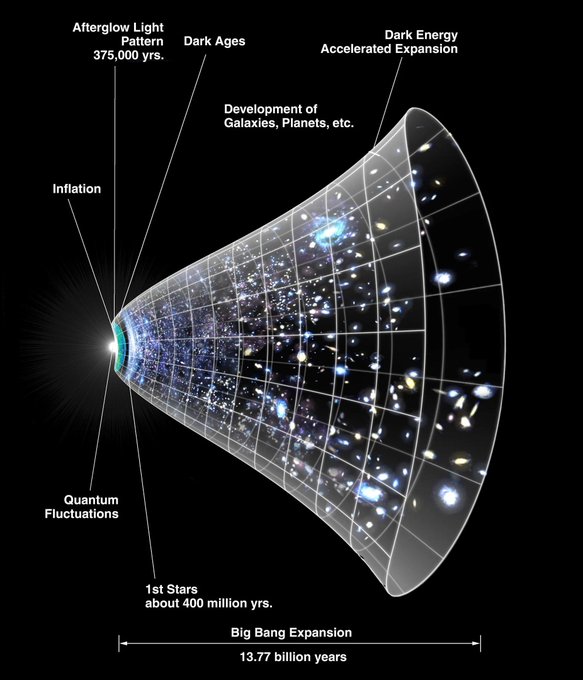
Interstellar dust in the LDN 1641 nebula within the Orion constellation. Captured by European Space Agency Euclid telescope.

1
1
1
276
Jessica Flack retweeted
1 Jun 2024
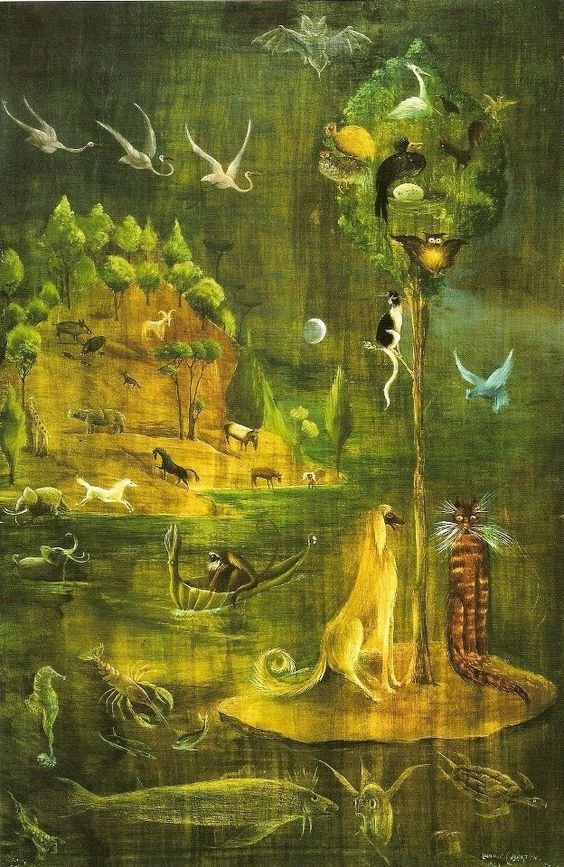
To possess a telescope without its other essential half—the microscope—seems to me a symbol of the darkest incomprehension. The task of the right eye is to peer into the telescope, while the left eye peers into the microscope.
—Leonora Carrington (1972).
4
15
53
10,000
Jessica Flack retweeted
30 May 2025
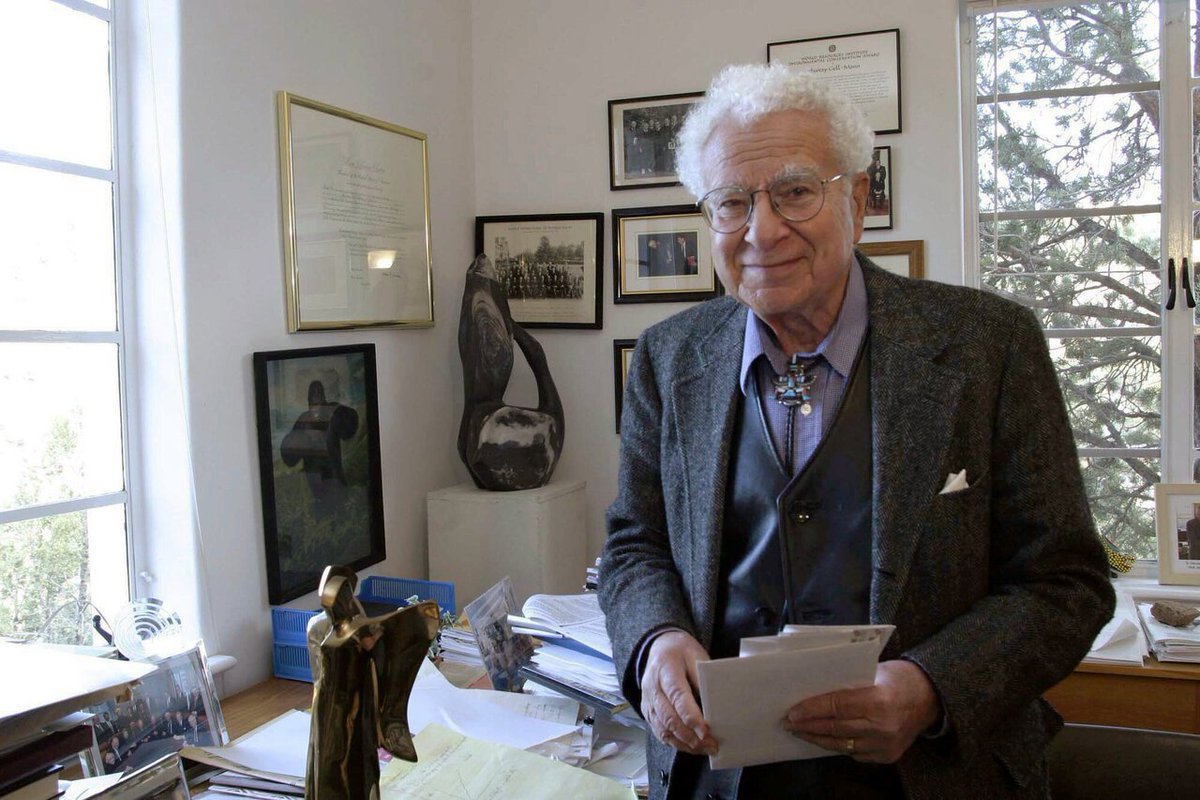
Murray had eight doctoral students (according to Wikipedia) and from him and them came some of the 20th centuries most important work in physics, work that quite possibly will also underlie some of the 21st centuries most important, generative work in science.
Five of his students were American. The other three were from Australia, China, and Peru. Murray's PhD supervisor was an Austrian-born American theoretical physicist. A collaboration that brought Murray great joy during his later years at the Institute was with Russian linguists.
Photo credit: TBD
4 Aug 2020
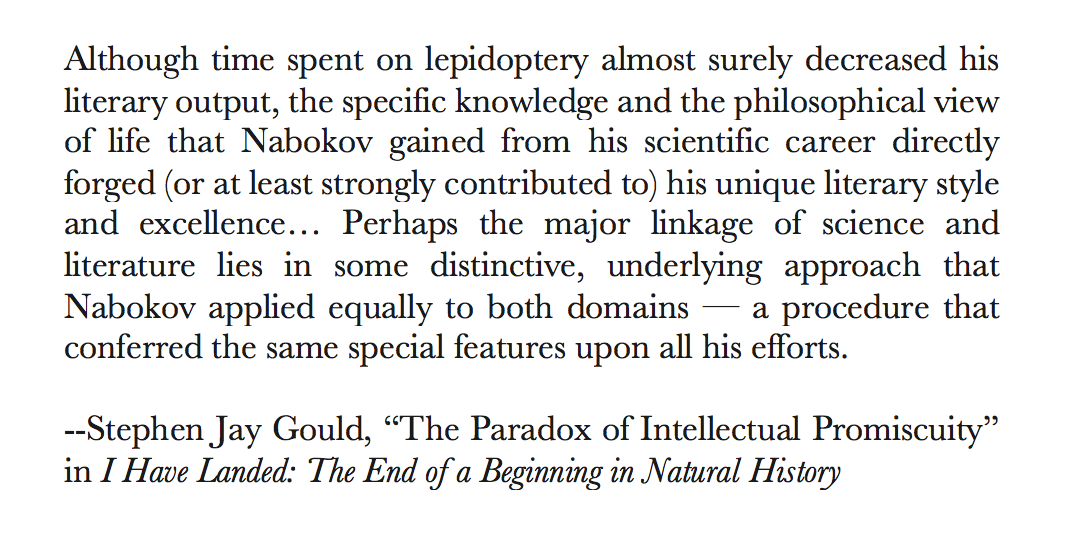
Today on my run I was reminded of @sfiscience's Murray Gell-Mann his taxonomic obsession with particles, languages, birds. A hedgehog disguised as a fox captured perfectly by Gould in this excerpt from his essay on Nabokov, "The Paradox of Intellectual Promiscuity."
7
12
47
19,682
Jessica Flack retweeted
2 Nov 2025
What is information? What does it mean to say the universe or a biological system computes?
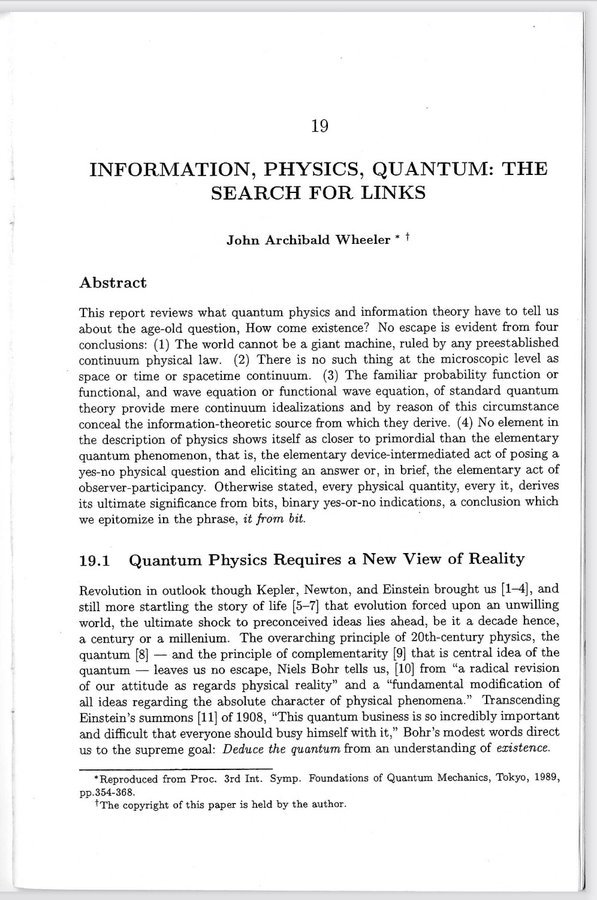
Wheeler in the late eighties wrote a remarkable paper. In it he developed the idea information came before matter—“it from bit“. He argued the universe is fundamentally participatory and information-theoretic. He wrote function, meaning, existence—of every particle, every force, even space-time—derive from binary questions, confounding even titans in physics and the rest of science.
The paper for years was dismissed as either trivial or obscure when in fact every sentence was perfectly composed to be maximally substantive, making the reading hard going for some, but a total pleasure for me—so much so I laughed time and time again as I read through it and understood some new thing I had missed in an previous read.
Wheeler’s ideas were by no means born of nothing. Rather in that paper he laid the foundation for the (re)unification of physics and biology through the lens of inference and he assembled the parts from his peers and predecessors in physics, philosophy, and cognitive science to make his case. He hinted at directions and presciently provided leads to answers.
Thirty-five or so years later the paper finds its time.
From the quantum to gravity and high dimensional spacetime… How entropy transitions and hourglass emergence link the very small to the very large—unifying computation in nature, and explain dark matter, the nature of time, the relationship between black holes and portals, give rise to white holes linking nebula, and reveal how Euler’s number encodes the knowable universe. Wheeler provided the special kind of technical lens that he no doubt knew would in the right context produce a phase transition in our ability to see.
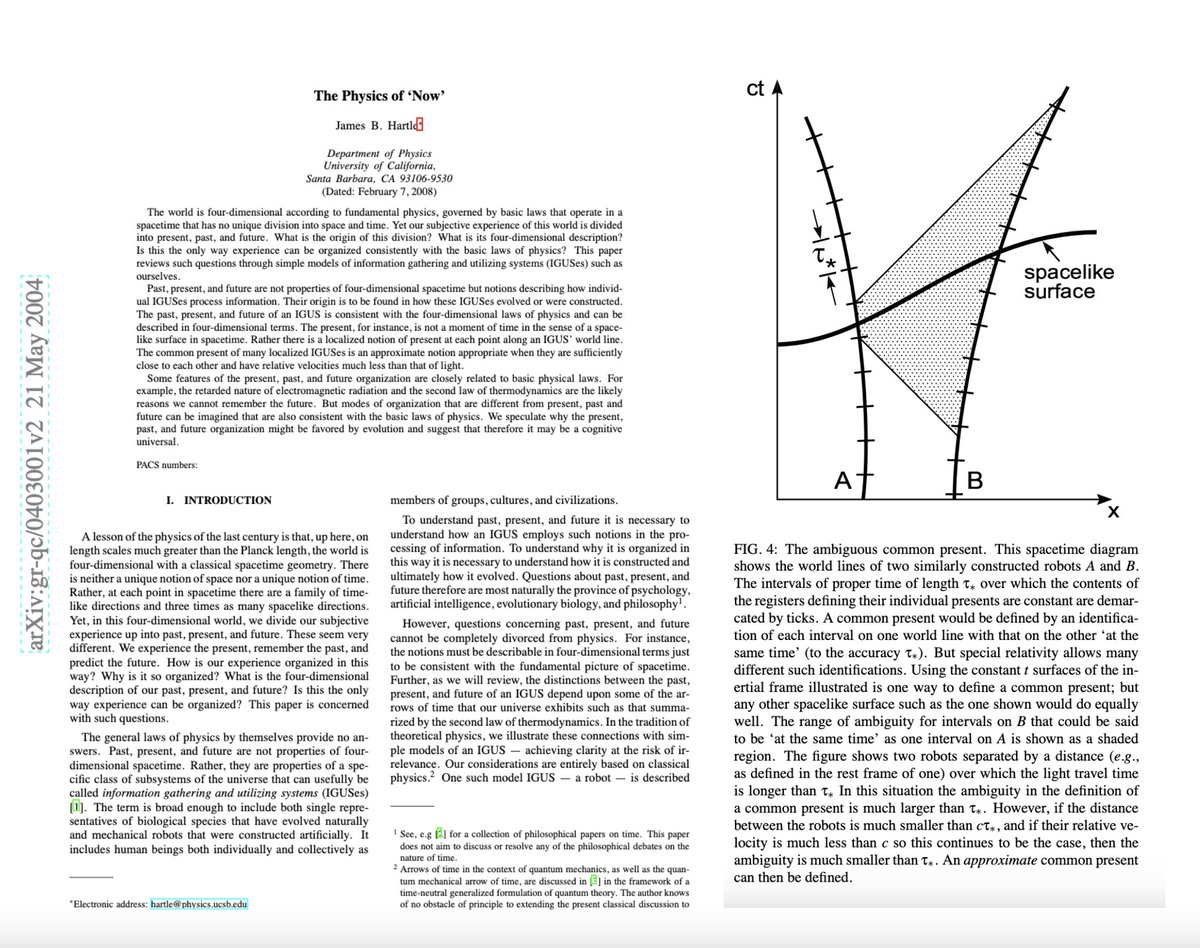
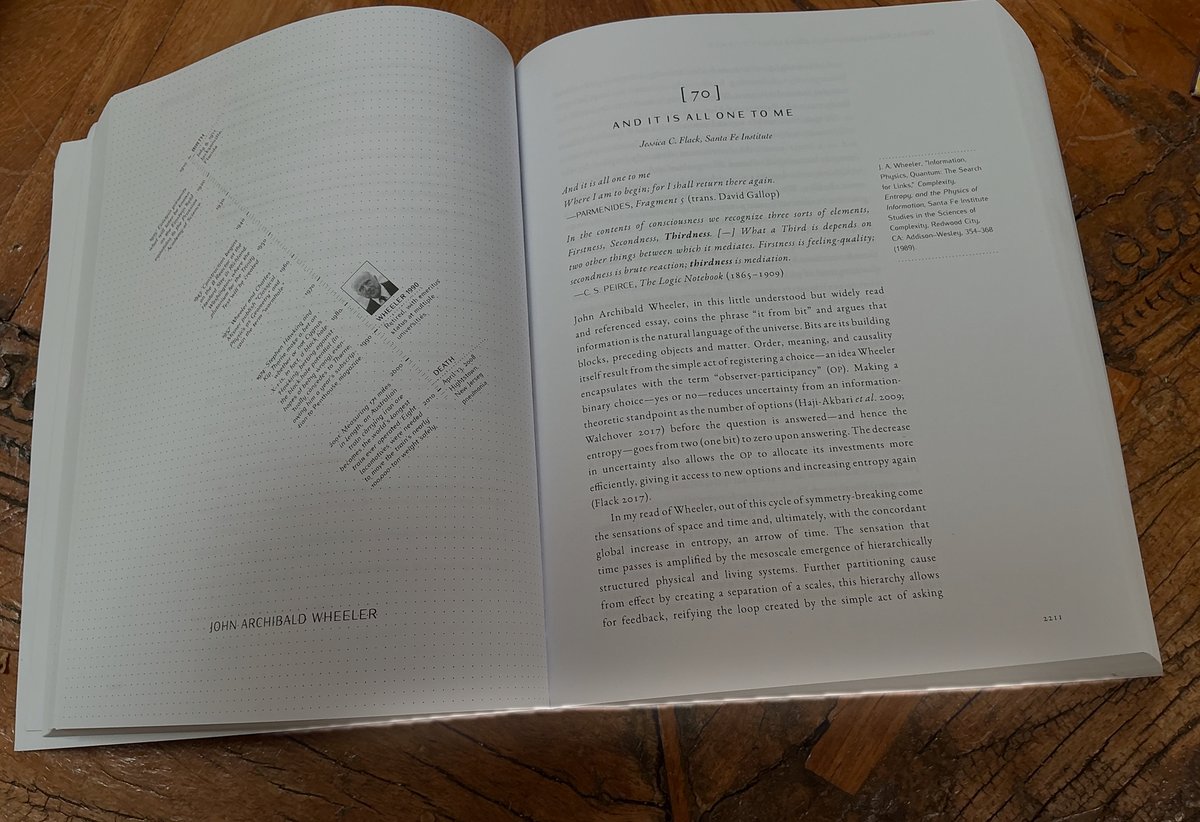
For more on this ground shift and to gain a concrete grasp of just how something can come from nothing, please visit Babel Blog and read my paper integrating Wheeler’s it from bit idea and idea of observer participancy, with my work on collective computation, entropy transitions, and hourglass emergence, and Jim Hartle’s work on the ‘common now’, all set against a background provided by (among others) Einstein’s general relativity, Murray Gell Mann’s work on renormalization and complexity, and Shannon’s work on uncertainty and through Jaynes its connections to the thermodynamics of computation.
As perhaps is sensed during a phase transition, there is a hidden story. In Babel Blog I also provide provisional information about a long history of censoring these ideas in physics, hopefully soon to be corrected.
Please note that to be consistent with past mistakes, Babel Blog is also censored and third party edited, like my other social media accounts. Science as well as corruption posts in my @x feed are either hidden or outright deleted. The point of all of this appears to be to make it seem like I’ve done nothing of interest (and hence can be ‘recycled’). Wrong on at least two fronts.
jessicaflack.wordpress.com/b…
substack.com/@jessicaflack/
Please note my @substack was hacked so I have a new one. Address in profile. Unfortunately it is also under third party control so I can’t be sure the text of my article is accurate (once this censorship is brought to an end I will double check the material against my files). In principle the 2024 published SFI press version should be correct but please proceed with caution. This is the digital age and it has some vulnerabilities.
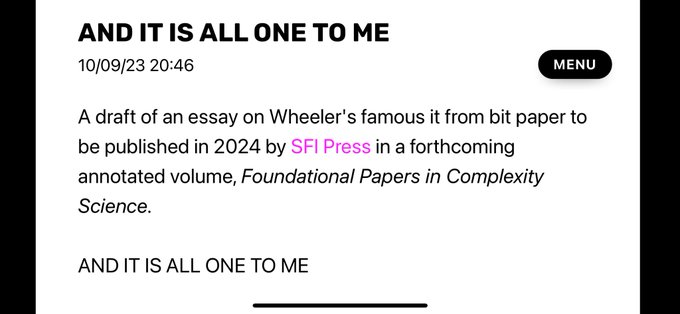
Images: My paper, “And it’s all one to me’, Wheeler’s paper, “Information, physics, quantum: the search for links”, and Jim Hartle’s paper, “The physics of ‘now’”.
Wheeler’s paper:
cqi.inf.usi.ch/qic/wheeler.p…
Also see the Wheeler archive (appears to be censored) @AmPhilSociety:
as.amphilsoc.org/repositorie…
Jim’s paper:
arxiv.org/pdf/gr-qc/0403001
27 Apr 2024
Wheeler's 48 definition-metaphors for computation the universe as a computer.
From a ~1980 note available in the Wheeler repository at APS—by way of my old twitter-friend Dave Bacon—and pasted below with my very brief annotations.
diglib.amphilsoc.org/islando…
Dave highlights #39 in his lovely blog post:
dabacon.org/pontiff/2024/04/…
39. No one knows how simple, powerful, universal, natural, and/or complex computers might ultimately become–and it might be in these ultimate senses that the universe is or resembles a ‘computer’. (It might even be possible to devise revolutionary types of computers by studying and applying computational or computer-like properties of the universe.)
I find interesting Wheeler's juxtaposition of 8 9:
8. May (or physics may) reduce to pure mathematics, numbers, or ‘order’.
9. May use or reduce entirely to information, symbols, computer-like rules, states, decisions, operations, markers, pointers, arrays, structures, programs, sets, and/or the like.
#21 is a pragmatically useful operational definition identifying basic elements without hoopla (In my work I operationalize the elements of computation similarly):
21. All natural phenomena, entities, and systems (be they trees, rocks, : molecules, bacteria, men, societies, rivers, stars, diseases, clouds, or whatever) may be computers or computer-like (have programs, perform computations, use circuitry, possess memory, use languages, process information, use Boolean logic, or the like).
#23 seems at odds with a central message of the it from bit paper: no turtles. The It from bit is a later work piblished in 1990 and delivered as talks in 1989 @sfiscience elsewhere.
23. All known laws may be controlled or created by higher laws (possibly arranged in a hierarchy or network).
How to rethink #30 given growing consensus universe is lumpy?
x.com/C4COMPUTATION/status/1…
30. May be a lattice–or spacetime may be wholly quantized.
#32—I hope not!
32. May essentially represent but a single, individual particle, event, or computer (that somehow generates the illusion of a multifarious world); or a single iterative or recursive operation repeating itself forever or toward a finite future destiny.
#34—The 21st century science question!!
34. It may be possible to show that information and computation are fundamentally indistinguishable and hence equivalent, or that all of the following must in a similar way be equivalent: information, computation, energy, mass, space, time, and/or the like.
Like #21, #40 is pragmatically useful.
40. May function in ways similar or identical to such computer or mental processes as generalization, recognition, categorization, error correction, time sequence retention, induction, symbolic logic, analogical reasoning, and/or the like.
#45—The universe as chatty-cat micromanager! 😹
45. May represent a great hierarchical network of specialized ‘administrators’ or ‘administrative! processes, functions, systems, laws, constraints, &c. Also, may contain things analogous to questions, answers, experiments, orders, requests, negotiations, conversations, messages, traffic cops, supervisors, inspectors, translators, arbitrators, pioneers, &c.
And #48—Lovely!
48. All that exists in the universe (including relationships, entities, interactions, laws, &c that are conventionally thought of as being inert, static, or time-invariant) may in fact be time-asymmetric or an uninterrupted process of change or of cosmoplastic or cosmopoietic interadjustments and interchanges; in this ‘everywhere~ always~novel universe! work and information-
could be omnipresent and quintessential.

2
7
27
4,324
Jessica Flack retweeted
27 Apr 2024
Wheeler's 48 definition-metaphors for computation the universe as a computer.
From a ~1980 note available in the Wheeler repository at APS—by way of my old twitter-friend Dave Bacon—and pasted below with my very brief annotations.
diglib.amphilsoc.org/islando…
Dave highlights #39 in his lovely blog post:
dabacon.org/pontiff/2024/04/…
39. No one knows how simple, powerful, universal, natural, and/or complex computers might ultimately become–and it might be in these ultimate senses that the universe is or resembles a ‘computer’. (It might even be possible to devise revolutionary types of computers by studying and applying computational or computer-like properties of the universe.)
I find interesting Wheeler's juxtaposition of 8 9:
8. May (or physics may) reduce to pure mathematics, numbers, or ‘order’.
9. May use or reduce entirely to information, symbols, computer-like rules, states, decisions, operations, markers, pointers, arrays, structures, programs, sets, and/or the like.
#21 is a pragmatically useful operational definition identifying basic elements without hoopla (In my work I operationalize the elements of computation similarly):
21. All natural phenomena, entities, and systems (be they trees, rocks, : molecules, bacteria, men, societies, rivers, stars, diseases, clouds, or whatever) may be computers or computer-like (have programs, perform computations, use circuitry, possess memory, use languages, process information, use Boolean logic, or the like).
#23 seems at odds with a central message of the it from bit paper: no turtles. The It from bit is a later work piblished in 1990 and delivered as talks in 1989 @sfiscience elsewhere.
23. All known laws may be controlled or created by higher laws (possibly arranged in a hierarchy or network).
How to rethink #30 given growing consensus universe is lumpy?
x.com/C4COMPUTATION/status/1…
30. May be a lattice–or spacetime may be wholly quantized.
#32—I hope not!
32. May essentially represent but a single, individual particle, event, or computer (that somehow generates the illusion of a multifarious world); or a single iterative or recursive operation repeating itself forever or toward a finite future destiny.
#34—The 21st century science question!!
34. It may be possible to show that information and computation are fundamentally indistinguishable and hence equivalent, or that all of the following must in a similar way be equivalent: information, computation, energy, mass, space, time, and/or the like.
Like #21, #40 is pragmatically useful.
40. May function in ways similar or identical to such computer or mental processes as generalization, recognition, categorization, error correction, time sequence retention, induction, symbolic logic, analogical reasoning, and/or the like.
#45—The universe as chatty-cat micromanager! 😹
45. May represent a great hierarchical network of specialized ‘administrators’ or ‘administrative! processes, functions, systems, laws, constraints, &c. Also, may contain things analogous to questions, answers, experiments, orders, requests, negotiations, conversations, messages, traffic cops, supervisors, inspectors, translators, arbitrators, pioneers, &c.
And #48—Lovely!
48. All that exists in the universe (including relationships, entities, interactions, laws, &c that are conventionally thought of as being inert, static, or time-invariant) may in fact be time-asymmetric or an uninterrupted process of change or of cosmoplastic or cosmopoietic interadjustments and interchanges; in this ‘everywhere~ always~novel universe! work and information-
could be omnipresent and quintessential.
28 May 2021
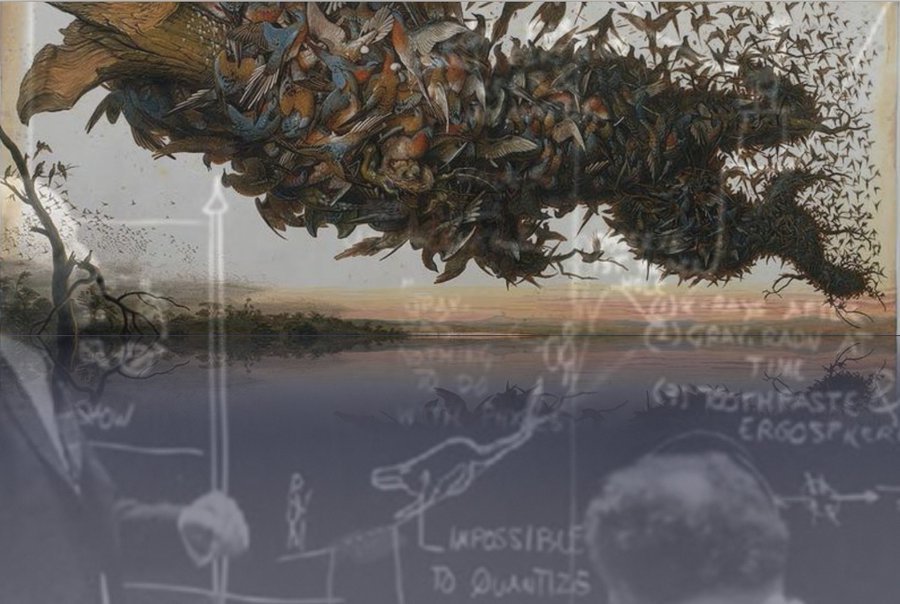
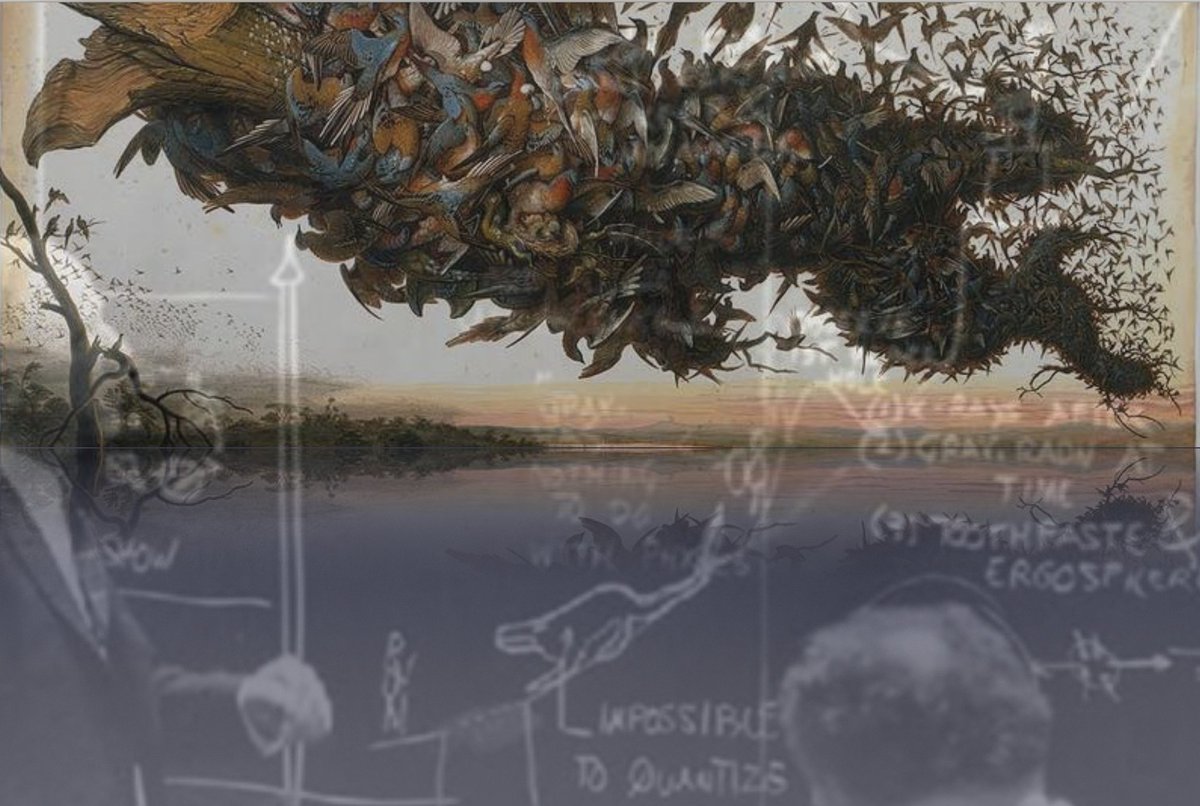
The physicist John Wheeler, inventor of the phrase, "it from bit" at a Princeton blackboard discussing what in nature can be quantized but as if he were looking at Walton Ford's, "Falling Bough," a fantastic depiction of collective behavior.
3
13
42
17,042
Jessica Flack retweeted
19 Nov 2025
Interested in emergence and computation? You can find out more about these topics and the coming reunification of computer science, biology, mathematics, and physics on my (still censored) temporary website.
jessicaflack.wordpress.com
As soon as I regain a secure machine I will put together a website for the Lambent Society—the umbrella organization I am founding that will house an emergence and computation institute ecosystem, entrepreneurial as well as arts culture initiatives for the public good, and several privacy related projects.
Images: Pecos Wilderness snowshoe. Interstellar dust in the LDN 1641 nebula within the Orion constellation. Captured by European Space Agency Euclid telescope.


21 Sep 2025
A potential renaissance is within our collective grasp. Several related but not yet widely known science advances are challenging old boundaries and revealing new sets of questions.
These advances help inform our understanding of emergence, the evolution of the universe, and our place in it, and also have profound pragmatic implications for how we live the days and years of our lives.
Almost as incredible as these innovations is the story of how across time and space they were discovered, suppressed, and came into view again—slowly consolidating into a coherent framework for understanding how the very small connects to the very large.
There is no doubt these advances can contribute to human and whole earth flourishing. The complexity derived from the fact that our lives play out over many time and space scales—with change and uncertainty inevitable—might seem to undercut the possibility of flourishing, especially in the context of advances that stretch the limits of imagination.
It is in fact the other way around. Uncertainty provides the opportunity to challenge and overcome perceived limits—and hence to flourish—as long as we recognize one constant.
As the story of these discoveries suggests, trouble arises when we allow the erosion of individual and civil liberties, a ‘we “can just do things” mentality’ that undermines our collective memory of history, fail to hold to account those who exploit others, and stifle innovation while simultaneously failing to maintain an orienteering mindset as we explore the limits of the knowable universe.
If we course-correct, the future is open with a new frontier and age of exploration before us.
On Babel Blog, you will find posts on bits of the science that contributed to these advances, as well as gain a glimmer of the tragic, brutal, determined, creative, and heroic path that led to the present moment.
jessicaflack.wordpress,com/blog
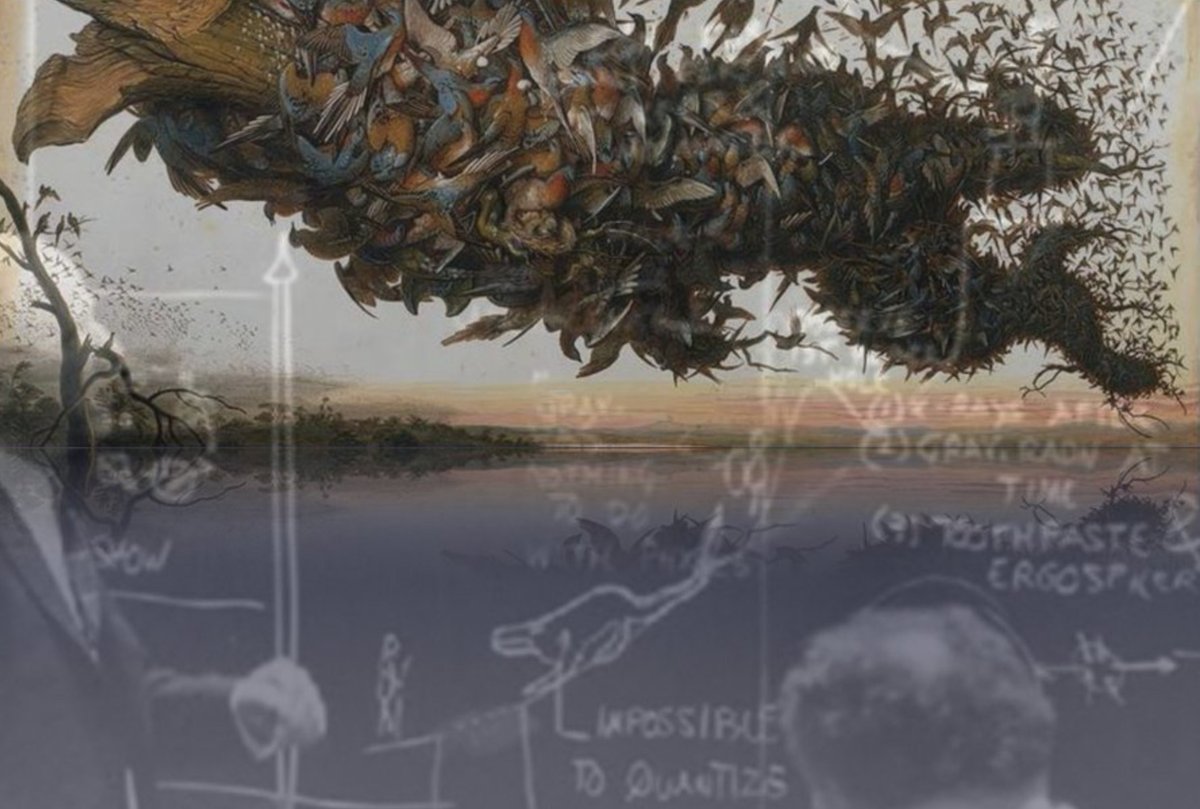
Image: The physicist John Wheeler working at a Princeton blackboard but as if he were looking at Walton Ford’s painting, “Falling Bough”, a fantastic depiction of collective behavior. Composite image by JCF. Wheeler photograph by Kip Thorne.
2
2
466
Jessica Flack retweeted
29 Apr 2025
Surprisingly rare but always remarkable is the ability is to translate equations and their derivations clearly and (seemingly) precisely into natural language. Most of the time however even in most skillful cases the mapping is literal and fails to convey or capture the insight provided by the equation.
I am fond of making this point, which was reinforced to me by Murray Gell-Mann and of course has been made by many others, including Penrose in his three worlds diagram. It's almost as if our minds want strong mappings between alternative representations for reassurance and to establish generality yet also find any specific representation impoverished or unsatisfactory if it does not add unique information—a demand that by its nature implies understanding is an emergent outcome of higher order interactions between representations.
It is sometimes argued that challenges to this characterization can be found in music, art and literature—the insight captured by a painting or in prose is best left untranslated into natural or common language. Although this might be true it fails to recognize where the critical translation—and perhaps triangulation—is almost certainly meaningfully occurring—in our brains as we process the image or the passage.
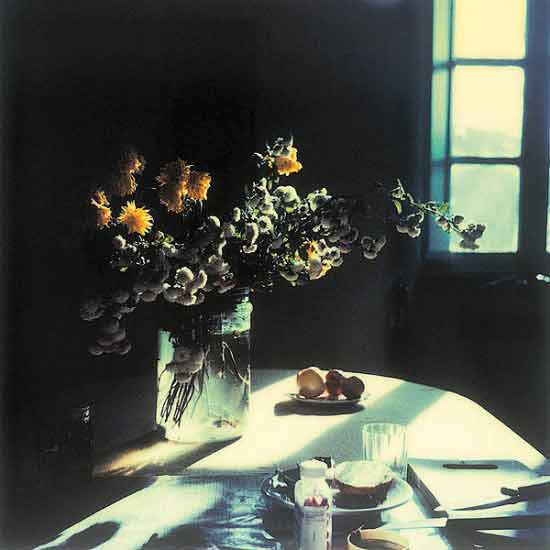
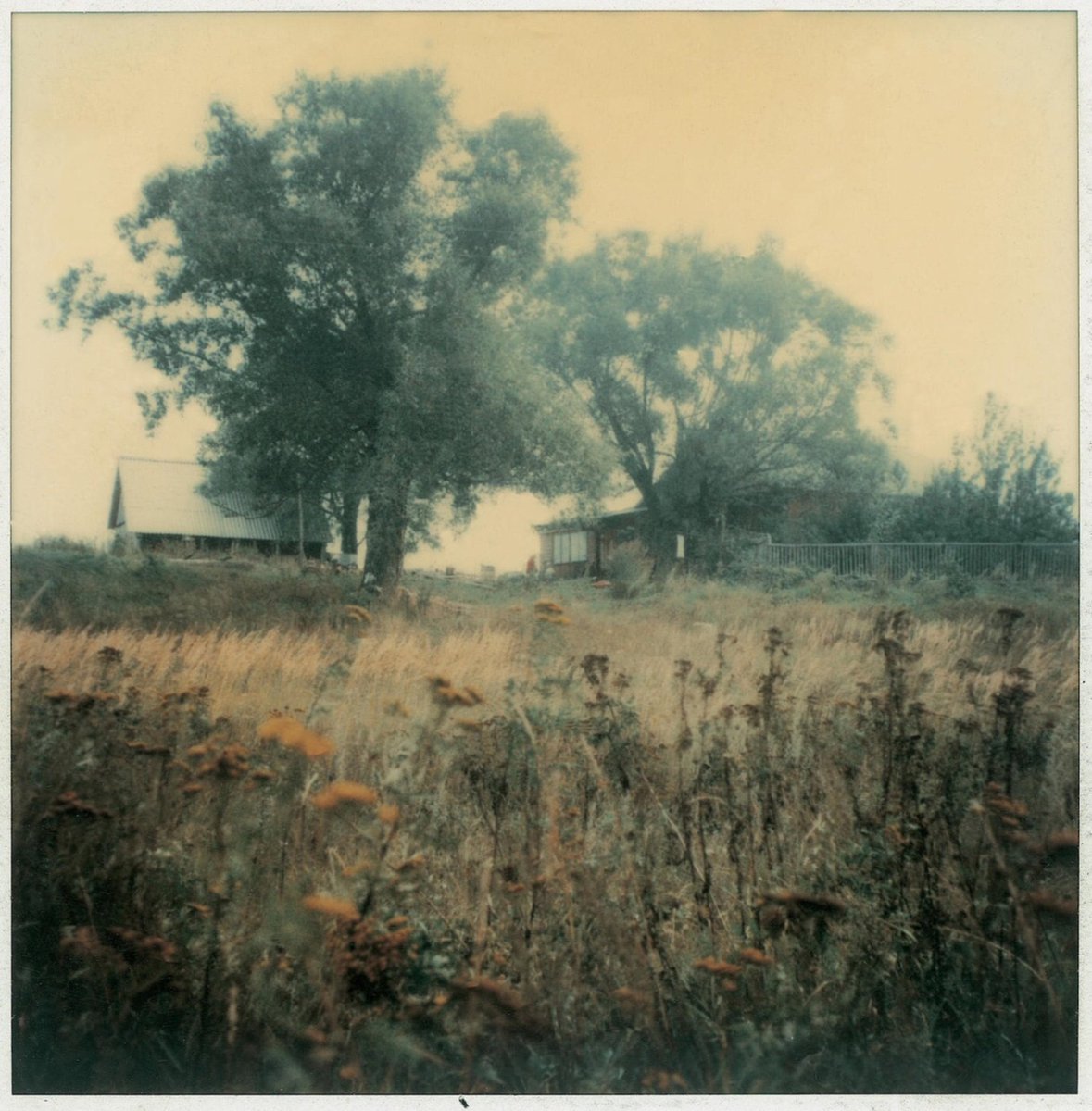
Among the most compelling examples are Proust's In Search of Lost Time and Tarkovsky's Polaroids (and films). Proust and Takovsky in different ways each decouple time from experience almost transmorgifying it into an object with mass that the reader or observer can feel but cannot articulate.
15 Nov 2024
Another way of getting at the ideas I discuss in the first half of the post above is to ask what our brains are leaning to compute—whether we can articulate it or not—when we work on technique on the kitchen (cooking as combinatorics with lessons in phase transitions criticality), adjust our stroke in shallow deep pools in response to perceived friction turbulence (swimming as mastery of fluid dynamics), use pointalism perspective to influence perception (drawing as geometry coarsegraining), implement a triangle offense in basketball (spacing as geometry cultivation of synergies), or navigate frustrated states in board rooms (leadership as computation of collective dynamics, thinking in high dimensions, perhaps topology).
1
4
7
1,985
Jessica Flack retweeted
17 Aug 2025
What is greatness and why for some is this abstract concept so motivating? Most of the time pursuit of greatness seems to be born out of nostalgia for a moment in history during which progress could be viscerally felt.
This is sometimes measured through the acquisition of territory—the size of empire. Arguably far more meaningful and relevant—especially at this moment in time—are those engineering, scientific, and artistic achievements that in addition to improving quality of life make infinity emotionally tangible.
Photo credit in subthread.

24 May 2025
Science is distributed around the world, across groups, departments, and institutes, sometimes in competition and sometimes in collaboration. This dynamic when founded on integrity, open-mindedness, excellence, creativity, and playful rigor fuels innovative solutions to challenges and advances understanding.
There need not and should not be one trajectory forward. The future is open and there is room need for many approaches.
Embrace pluralism and have fun.
4
6
2,856
Jessica Flack retweeted
12 Jul 2024
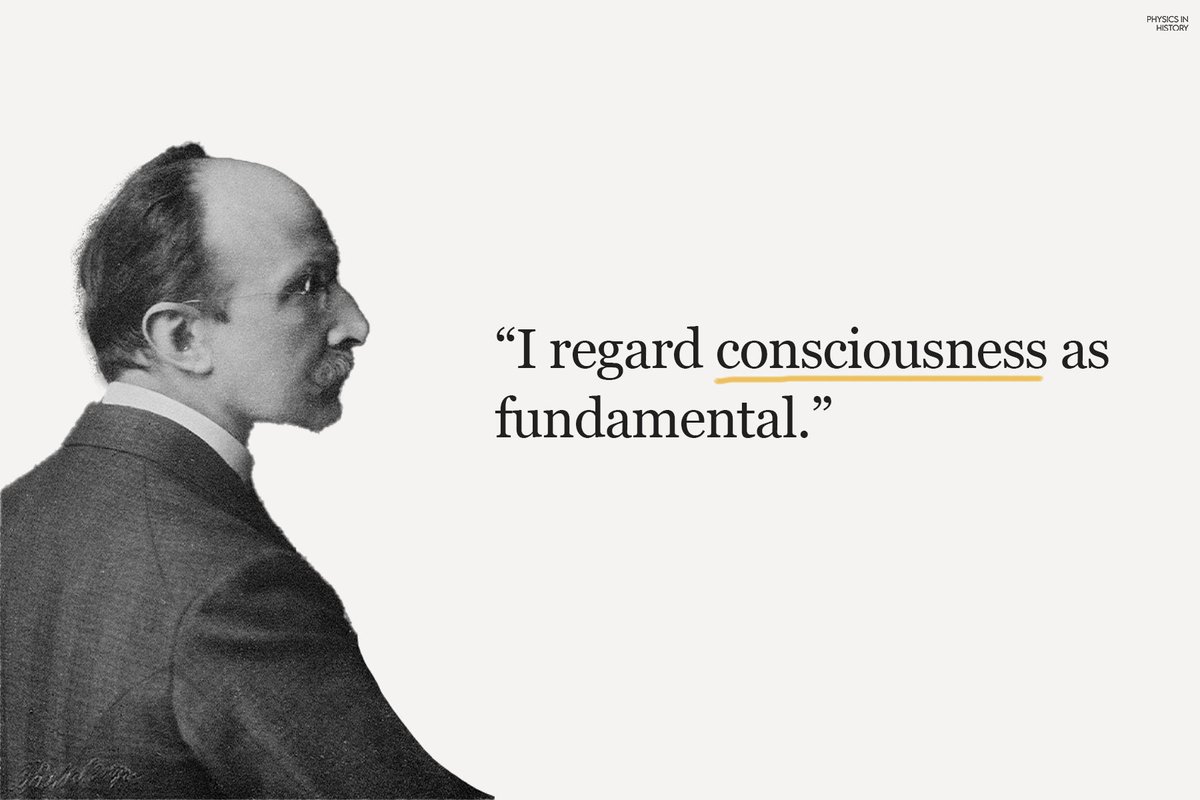
At 30,000 feet this view on consciousness of Planck's feels akin to Wheeler's theory for the universe' s origins—it-from-bit via observer participancy (see link below), but Wheeler's idea is intrinsically mechanistic.
And, in the last few pages of his paper Wheeler presciently brings biology into the fold makes the connection to inference. A huge conceptual leap! There is much exciting work to do the horizon promises real insight!
Time to break the chains dispense with the nonsense.
x.com/C4COMPUTATION/status/1…
12 Jul 2024

I regard consciousness as fundamental. I regard matter as derivative from consciousness. We cannot get behind consciousness. Everything that we talk about, everything that we regard as existing, postulates consciousness.
- Max Planck
1
4
10
2,528
Jessica Flack retweeted
13 Jun 2025
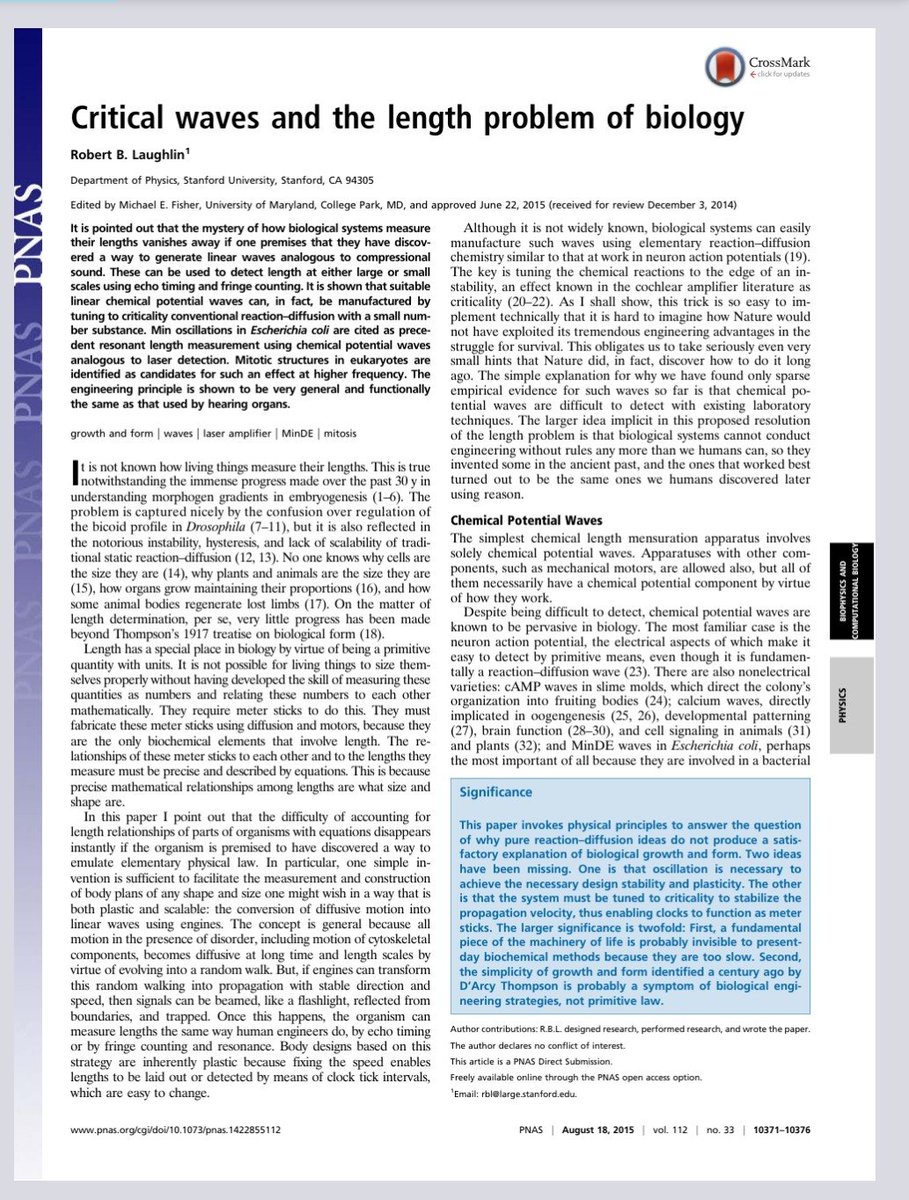
The question of how biological systems from cells to organisms 'overcome' spatial or other apparent information processing constraints to estimate global variables, compute macroscopic states, or just 'see' the big picture—the forrest AND the trees—is one of biology's most often dismissed yet important questions.
This issue—and soecifically Laughlin's @PNASNews paper below— provided partial motivation for my collective computation work showing endogenous coarsegraining is a mechanism of downward causation underlying hourglass emergence.
The focus of much of that work was on how biological systems compute a hierarchy of timescales to reduce uncertainty about multiple, interacting social and environmental variables. The work discussed in the posts in the above thread addresses similar issues but with an emphasis on spatial rather than temporal mechanisms.
Future work needs to consider how the emergence of timescales influences the emergence of spatial scales.
pnas.org/doi/epdf/10.1073/pn…
jessicaflack.wordpress.com/p…
2
6
14
2,054
Jessica Flack retweeted
8 Sep 2025
When you have a bird‘s eye view it is sometimes to possible to see a system in its entirety, or at least its boundaries. This feeling of seeing the whole can be deeply misleading—as the history of biology reveals—with boundaries and other common macroscopic properties mistaken as fundamental or generative when they are at best proxies.
As challenging as it can be to see beyond these seductive proxies, it is far harder to abduce either the boundaries—whatever form they take—much less the underlying generative process when the observer is embedded in the system. This difficulty applies as much and perhaps more to perceiving the structure of the Universe as it does to biological and social systems. The fact that it is hard should not however be a deterrent but rather the best kind of enticement to think outside the box.
3
4
1,167
Jessica Flack retweeted
22 Jul 2025
The entropy transition that occurs during hourglass emergence potentially underlies an 'information-theoretic channel switch' (from micro-macro to macro-macro), extending Shannon's theory of information as uncertainty reduction (or surprise) to account for Weaver's semantic and functional sense of the term.
The question posed in the post below hints at the mechanism or physical changes occurring during entropy transition in the case of quantum and particle physics.
To bridge these two framings more concretely it is useful to bring to the fore a background question: what is the relation between energy, information, computation, and matter?
This provides an impetus to move beyond rate distortion theory to ask what decoding or reconstituting (computational) mechanisms allow recovery of information scrambled during an entropy transitioni? (Remembering that entropy from the POV of thermodynamics can be interpreted as optionality is helpful here).
If you buy Wheeler's proposal that it emerges from bit, can matter also be reconstituted and if so how and how precisely? Is coarsegrained memory a decryption key (or just an epiphenomenon) and what allows that coarse-grained memory to persist over the entropy transition or bottleneck—is it a failure of hourglass emergence to fully randomize because the compression is lossy but 'true'?
jessicaflack.wordpress.com/b…
14 May 2025
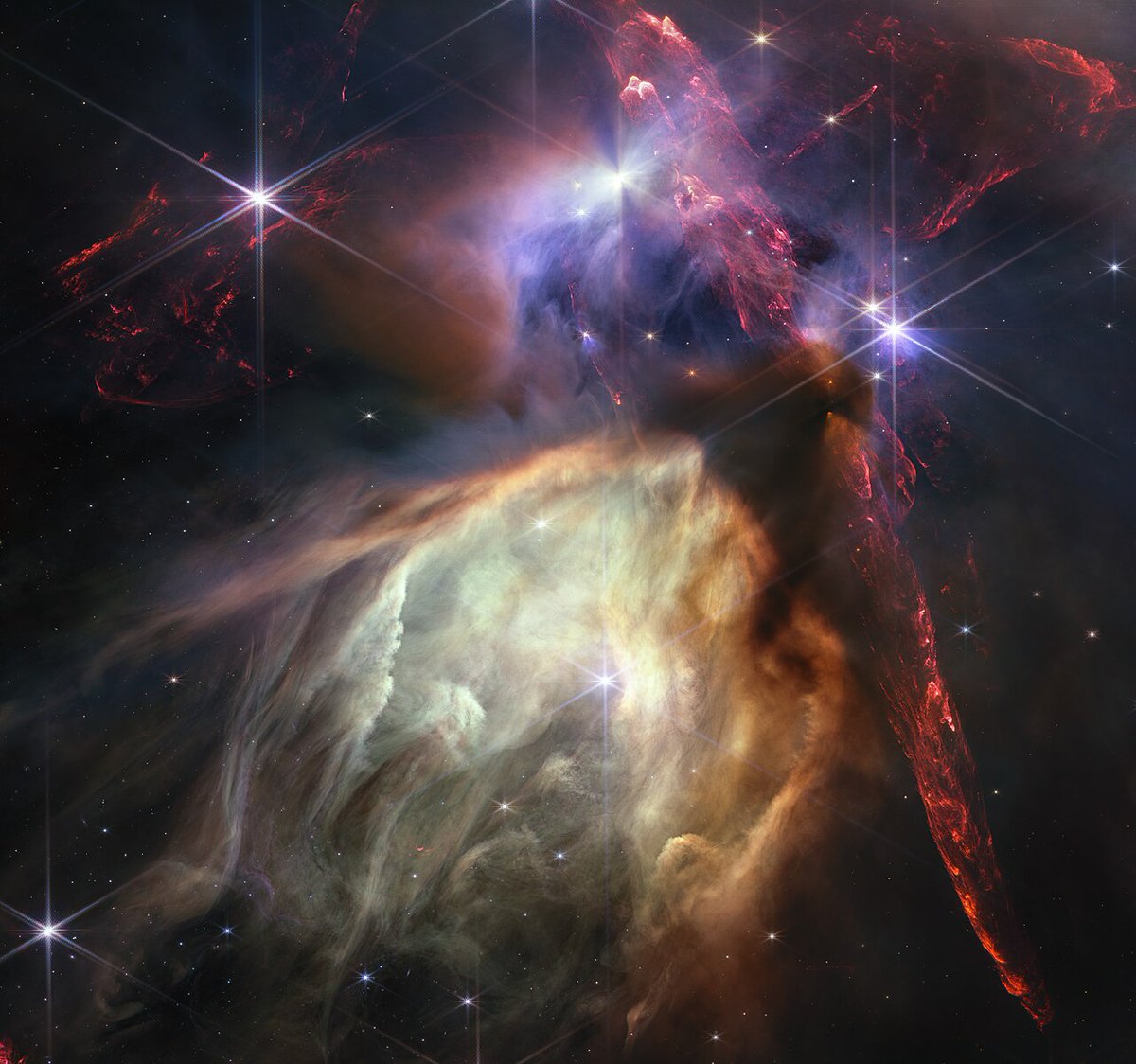
Can entropy transitions observed initially in biological systems potentially account for the wavelike properties (behavior?) of electrons, photons, and other objects in quantum cosmology? More on this question and other possible parallels in Babel Blog on my website.
jessicaflack.wordpress.com/b…
2
3
7
4,430