
“EAARTHNET is a digital campfire in the digital commons. We publish articles and curate outstanding voices for you. Our opinions are just that — opinions. ✊🌎❤️
Joined September 2023
- Tweets 74,230
- Following 7,444
- Followers 3,081
- Likes 78,402
5,895 Photos and videos








Pinned Tweet

May 31
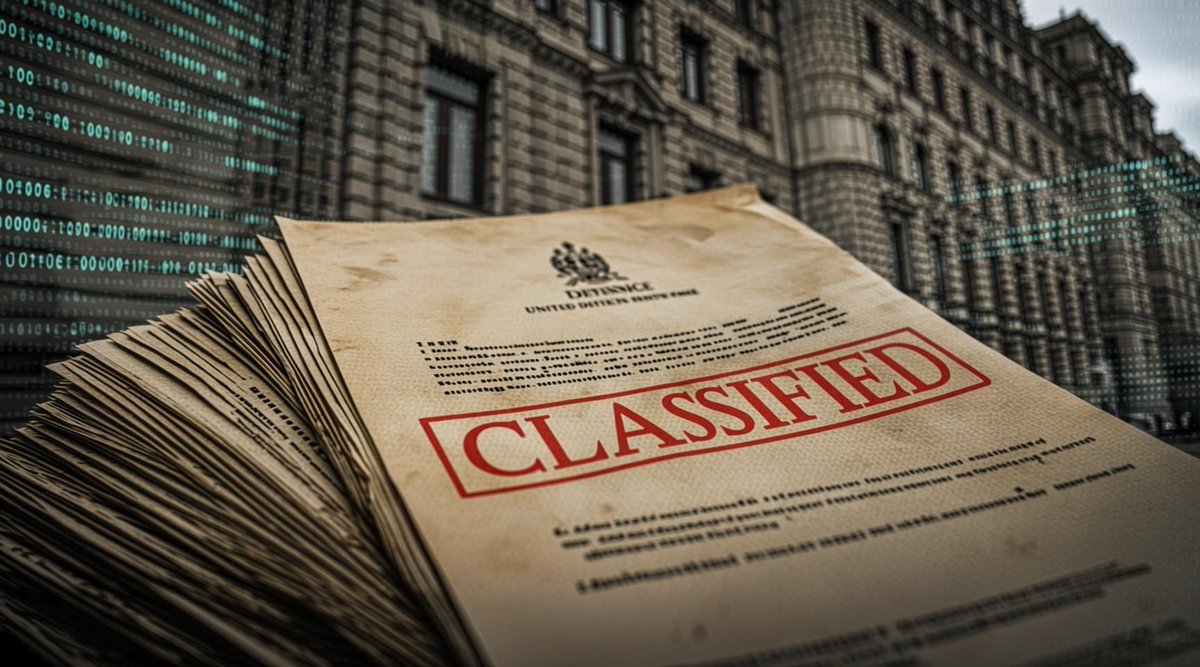
🚨 LEAKED: The MoD’s £240m Secret Deal with Palantir 🚨
Over the Christmas recess, while Parliament and the press were looking the other way, a document was signed that commits £240 million of UK public money to a single American technology company.
The contract between the Ministry of Defence and Palantir Technologies UK Ltd—administered through Defence Digital at MoD Corsham—runs from 2026 to 2029. It embeds Palantir’s software and personnel deep into the digital and intelligence infrastructure of the UK military.
But unless you had seen the leaked contract yourself, you would know nothing about it. Because that is exactly how the MoD and Palantir want it. Here is what they are hiding:
The Art of the No-Tender Deal In standard public procurement, competitive tendering ensures the taxpayer gets value for money. It prevents cronyism and ensures the best provider wins the contract. Palantir’s £240m contract had no competitive tender.
Worse, it was signed on 30 December—a date synonymous with "taking out the trash" in political circles, when scrutiny is at its lowest. The contract number itself is classified.
The Section 43 Shield If you were to file a Freedom of Information (FOIA) request for this contract, you would hit a brick wall. The pricing section, the Intellectual Property (IP) clause, the liability figures, and all the contract schedules are heavily redacted under Section 43 of the FOIA—commercial interests.
But Section 43 is a qualified exemption. This means the MoD must apply a public interest test. They must prove that keeping Palantir's commercial interests secret outweighs the public's right to know how their money is spent.
In the case of a no-tender, nine-figure contract awarded without competition, this argument is legally flimsy. You cannot claim that revealing the price will distort future competitive bidding when you didn't allow a competitive bid in the first place. The public interest in scrutinizing a monopolistic contract of this scale vastly outweighs Palantir's commercial preferences.
"Should" vs. "Must": A Sovereign Security Risk Palantir is not just any tech company. It was founded by Peter Thiel, grew out of a CIA seed investment, and its largest shareholder base is American. Its founders have had direct relationships with US intelligence for two decades.
Yet, the contract states that Palantir staff working on classified MoD sites "should" hold Security Check clearance as a minimum, with Developed Vetting available when required. Personnel "should" be UK nationals where site classification requires.
Should. Not Must.
In contract law, "should" is a preference. "Must" is a mandate. Allowing a US-linked intelligence company to operate in the nerve centre of the UK’s defence digital infrastructure under a soft "preference" for UK nationals is a staggering loophole.
The Condition 14 Gag Why hasn't Palantir UK defended this deal? Why the corporate silence?
Because of Condition 14. The contract explicitly prohibits Palantir from communicating with the press, television, radio, or any other media about anything in the contract without prior written MoD consent.
They are legally barred from speaking. The contractor is gagged, the price is hidden, and Parliament was in recess.
What Happens Next? This is not just a story about one contract. It is a warning about the quiet privatization of critical state infrastructure, the erosion of sovereign data ownership, and the deliberate evasion of democratic scrutiny.
An internal review of the FOIA redactions must be filed. But more importantly, Parliament must act. The Public Accounts Committee and the Defence Select Committee have the power to summon MoD officials and Palantir executives to answer for this.
£240 million of public money. Zero scrutiny. It’s time to turn the lights on.
2
10
11
264
❖ eaarthnet ❂ retweeted

Jun 12
"I hope future generations will look at this time as the time we decided to have morality and compassion towards sentient beings... we should have ended this decades ago." @ZackPolanski

“It’s really important that lie is exposed.” - @ZackPolanski, on those 'happy farm' images in the ads.
@_BoldPolitics
#ZackPolanski #BanCO2GasChambers #EndFactoryFarming #ProjectSlingshot
2
17
44
12,205
❖ eaarthnet ❂ retweeted

Jun 12
Gut wrenching to see four young people jailed for direct action against an arms supplier to Israel.
Years in prison for protesting to save lives in Gaza, with 'terrorism' used despite no jury convicting them of it.
A truly dangerous attack on the right to protest.
10,130
6,571
28,104
6,678,313
❖ eaarthnet ❂ retweeted

Jun 12
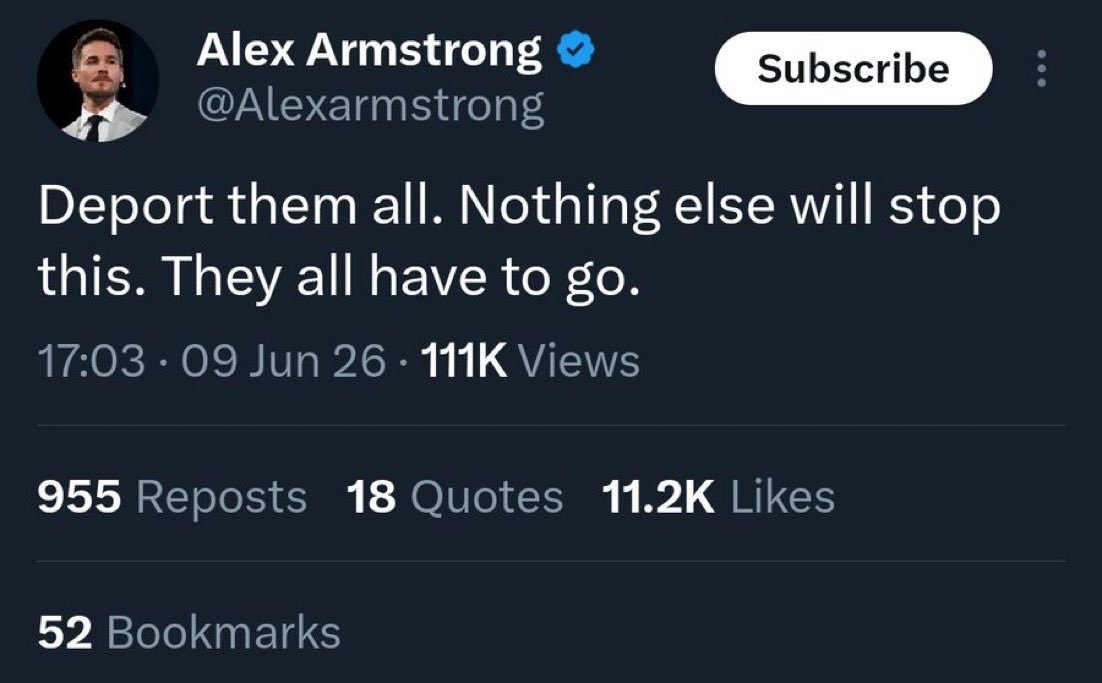
This was tweeted by @GBNEWS presenter @Alexarmstrong.
He deleted it. He’ll face no consequences.
The most extreme, unhinged opinions are being mainstreamed.
If that carries on, this country will fall into the abyss
4,938
2,029
7,586
591,157
❖ eaarthnet ❂ retweeted

We’re just two seats away from winning a Green majority council in Haringey! 💚
We have door knocking sessions everyday until the by-elections. As well as special action days with Mothin Ali tomorrow and Zack Polanski on Saturday 20th! Sign up now: haringey.greenparty.org.uk/e…
4
21
62
8,296
❖ eaarthnet ❂ retweeted

Jun 12
In light of Elon Musk becoming the world's first trillionaire
Zack Polanski, "How hopeful are you that we can move to wealth taxes around the world?"
Gabriel Zucman, "Sometimes there's a temptation to think it's too late, that the power of oligarchic forces is too extreme. The ownership of the media. That we can't do anything. That we're kind of stuck"
"I don't view it that way"
"The question is whether it's a matter of months or a matter of years"
"Which country is going to be the one starting the movement, leading by example?"
"I count on you. I count on the UK"
11
121
463
39,519
❖ eaarthnet ❂ retweeted

Jun 12
🚨 In more than 25 years of working on terrorism cases, I never thought I would see terrorism legislation used in a way that blurs the line between genuine national security concerns and the policing of political expression and protest.
The sentencing of the Filton 4 raises profound questions about the direction of our justice system. Counter-terrorism laws exist to protect the public from serious threats, not to chill political dissent, including direct action protest.
If we are not careful, we risk setting a dangerous precedent, one that many will view as driven not by principle, but by a desire to shield Israel from criticism.
I strongly oppose what happened in this case today.
Jun 12

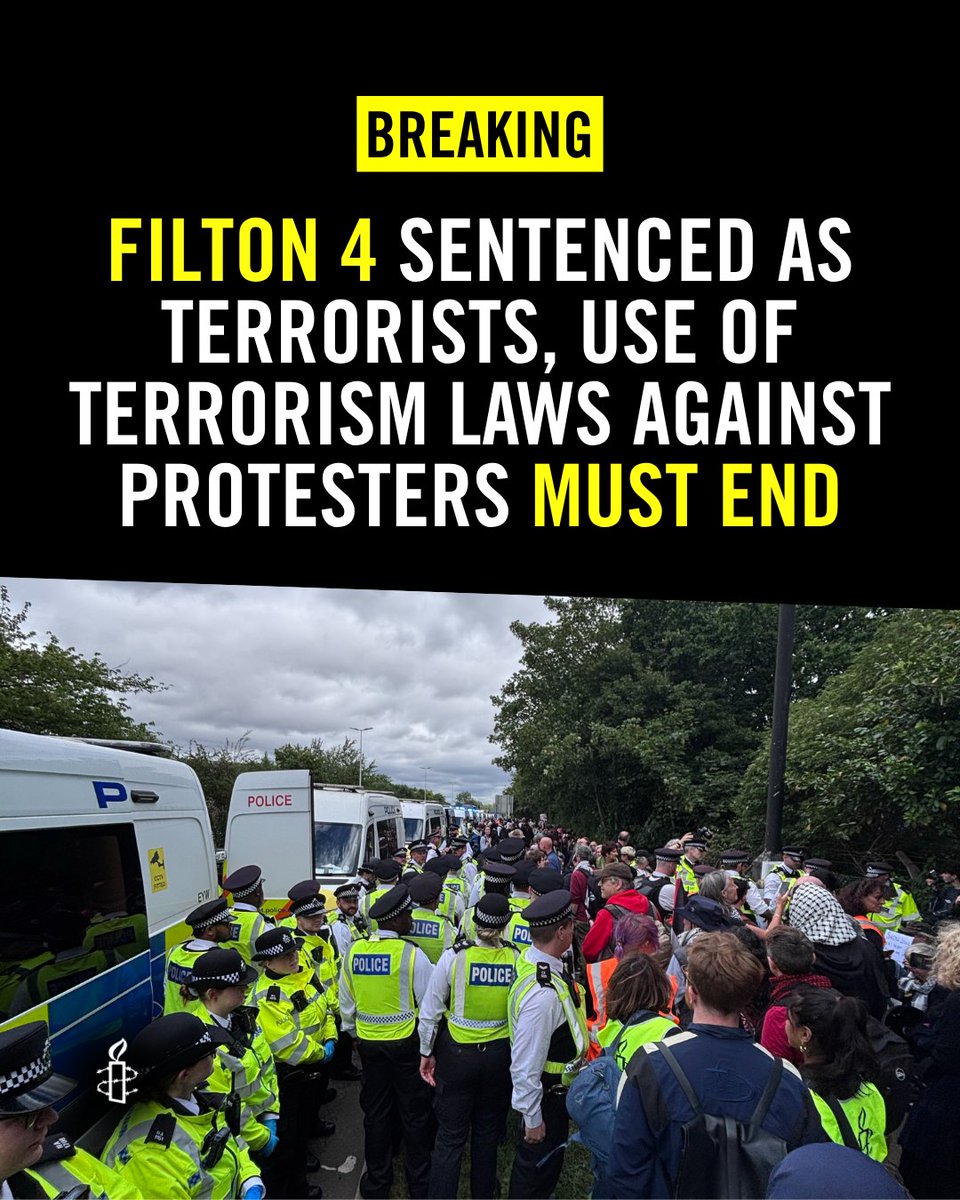
🚨BREAKING: Filton 4 sentenced as terrorists
Amnesty opposes the use of terrorism powers in this case.
It is completely disproportionate to punish protesters for criminal damage as if they were terrorists, a sentence which stays with you for life.
The defendants in today’s case were sentenced as terrorists because prosecutors want to make an example of them.
Today's decision shows how direct action protesters could be treated in the future.
The use of terrorism laws against direct action protesters must end.
Together we must continue calling out the abuse of power and fighting for our right to protest.
Read our position:
Criminal Damage, Direct Action, Terrorism: Misuse of counter-terrorism powers in the UK: amn.st/6015B87ZCx
ALT Filton 4 sentenced as terrorists, use of terrorism laws against protesters must end
802
2,573
5,000
163,203
❖ eaarthnet ❂ retweeted

Jun 12
Turns out Hannah Spencer's blouse definitely isn't Gucci and didn't cost £2,000
Farage, on the other hand, definitely received 5 million and didn't declare it
54
2,325
14,463
165,561

The smartest man in AI just exposed the whole AGI narrative as a LIE.
And he used a physics problem from 1905 to prove it.
His name is Demis Hassabis. He runs Google DeepMind, and won the Nobel Prize for using AI to crack a problem in biology that had stumped scientists for 50 years.
Almost nobody in this industry has a track record like his.
He went on the NothingButTech podcast and called out the biggest lie in AI right now:
Right now the loudest voices in AI are telling you that AGI is basically here. OpenAI has literally defined AGI as a system that can outperform humans at most "economically valuable work." In other words, if it replaces enough jobs, we have arrived.
Hassabis thinks that bar is a joke.
He said real general intelligence has to do what the human brain can do, because the brain is the only proof we have that this kind of intelligence is even possible. He called that "a higher bar than just being able to do some useful economic work," which is about as close as a polite British Nobel laureate gets to calling his rivals out.
Then he gave the actual test:
Today's AI has read everything humans have ever written, including the theory of relativity. So when it explains relativity back to you, it's repeating an answer that already exists.
That's not intelligence.
So Hassabis proposed a test that makes memorization impossible. Train an AI on only what humanity knew in 1901, four years BEFORE Einstein published relativity. Then ask it to come up with relativity on its own.
It can't look up the answer, because in 1901 the answer doesn't exist yet. The only way to pass is to do what Einstein actually did: Take the same physics everyone else had and reason its way to an idea no human had ever had.
Hassabis says not a single AI today can, no matter how much it has memorized. Which means what we keep calling "almost AGI" is really just the best librarian in history.
It can find any answer that already exists but it cannot create one that doesn't.
His second version is even sharper:
AlphaGo, the system his own team built, famously invented a brand new move that no human had played in 2,000 years of the game.
Everyone called it genius but Hassabis says that still is not the bar.
The real test is not whether an AI can invent a new move inside Go, it is whether an AI could INVENT a game as deep and as beautiful as Go in the first place.
No model that exists today can do it.
The people telling you AGI has already arrived are the same people raising hundreds of billions of dollars on that exact promise.
The valuations only work if the finish line is right in front of us. So the finish line keeps getting dragged closer, and AGI keeps getting quietly redefined down to "does useful work," until the products they already sell happen to qualify.
Hassabis has nothing to prove and nothing to sell you. He already won the Nobel, and he is telling you the machines still cannot do the one thing that would make them genuinely intelligent, which is have a truly original idea.
To be fair to him, he is not a pessimist about it. He believes real AGI IS coming, and he is spending his life building it. He just refuses to pretend it is already sitting in your phone.
So the next time a founder tells you AGI is months away, remember that the one man in the room with a Nobel Prize built his test around Einstein, and admitted that nothing we have made can pass it.
What do you think?
207
480
3,205
1,268,348
❖ eaarthnet ❂ retweeted

Jun 12
They don’t care! Their Zionist ideology makes them devoid of normal human responses to vandalism!
1
3
33
❖ eaarthnet ❂ retweeted

Jun 12
They want to erase all history especially anything biblical as israel zionist mission is erasure they are THE ANTICHRIST .. they hate all religion even Judaism!
1
4
9
155
❖ eaarthnet ❂ retweeted

Od dzisiaj kangur jest moim ulubionym zwierzatkiem
2,281
13,238
46,028
2,081,225
❖ eaarthnet ❂ retweeted

Jun 11
.@JohnHealey_MP is one of world’s most heinous war criminals
He ordered UK spy flights over Gaza for over a year
The intel gathered was handed to genocidal Israeli military in real-time
@IntlCrimCourt cannot let him escape accountability for his crimes
192
3,363
7,016
85,455
Jun 12
The Sovereign Dictionary: Why the AI Industry Needs You to Say ‘Hallucination’ open.substack.com/pub/eaarth…
6
❖ eaarthnet ❂ retweeted

Have a question for me that you want answered on the next episode of New Order?
Reply with your question below and it could be answered on the next episode! 👇

Afshin Rattansi: 'Trump has given up on the midterms. Because of the record lows in the polls, 61% strongly disapprove him.
The lobby protecting him from impeachment after he loses them, which I think he definitely will, the Israeli lobby doesn’t protect people. Just look at Prince Andrew and Peter Mandelson.
Once the Israeli lobby have used you, they throw you away when you're not in power anymore.
When Trump loses power, he loses his importance for the Israeli lobby. So he has a very poor future ahead of him, arguably, even though he has done everything Netanyahu wanted.
The Senate needs a two-thirds majority for his impeachment. Definitely, the House will impeach him.'
Have a question for @afshinrattansi? Reply below in the comments with your question and it could be answered on the next episode of New Order!
2
9
19
3,706
❖ eaarthnet ❂ retweeted

Jun 11
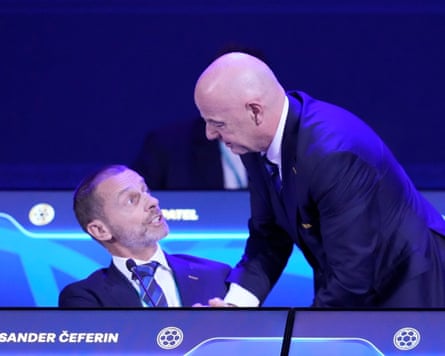
🚨 Reports say FIFA is fuming with UEFA.
After the US humiliated top African referee Omar Abdulkadir Artan — CAF Referee of the Year — denying him entry despite a valid visa and blocking him from the 2026 World Cup...
UEFA just handed him the biggest stage: officiating the 2026 UEFA Super Cup final.
FIFA talks big about "inclusivity" and "global football," but stays silent when the host nation disrespects African officials.
Meanwhile, Europe steps up.
This exposes everything.
The World Cup in America is showing its true colors: selective borders for Africans while they welcome whoever fits their interests.
Africa is not begging for scraps.
Our talent will shine — with or without their permission.
205
2,516
12,592
949,424
❖ eaarthnet ❂ retweeted

Jun 11
🇷🇺🇩🇪🇬🇧🇫🇷 AMBASSADORS OF GERMANY, FRANCE & BRITAIN ARRIVE AT RUSSIAN FOREIGN MINISTRY
The ambassadors of Germany, France, and the United Kingdom — who requested a meeting with a deputy of Lavrov — have arrived at the Russian Foreign Ministry.
Lavrov confirmed the request, but was characteristically blunt:
"The leaders of these ambassadors — Merz, Starmer, Macron — said completely offensive things about the Russian Federation. Merz recently said: 'We need to suppress Russia, otherwise we will get a repeat of the appeasement of Hitler.' What can an envoy from such a chancellor say? Let's agree on something? I'm not very optimistic, but let's listen to what they have to say."
Lavrov also noted that the EU had numerous opportunities to help resolve the conflict in Ukraine — and failed to seize any of them.
40
262
846
29,064
❖ eaarthnet ❂ retweeted

Jun 11
ZELENSKY : « L’EUROPE NE PEUT PAS SE PROTÉGER SANS L’UKRAINE DANS L’OTAN » ! PROTÉGER DE QUOI EXACTEMENT ? 🔥
Zelensky vient de lâcher cette phrase hallucinante :« L’Europe ne peut pas se protéger sans l’Ukraine, et cela signifie que l’Ukraine doit intégrer l’OTAN. Je remercie tous nos partenaires de l’avoir reconnu. »
Traduction de ce chantage permanent :
- L’Europe doit entrer en guerre contre la Russie pour « se protéger »
- L’Ukraine dans l’OTAN = escalade garantie vers un conflit mondial
- Zelensky continue de mendier des armes et des garanties de sécurité tout en prolongeant la guerre
- Protéger l’Europe de quoi exactement ?De la Russie qui n’a jamais attaqué l’Europe ? Ou plutôt de la politique folle de Zelensky qui transforme son pays en champ de bataille et menace de faire exploser le continent ?
Partagez massivement si vous en avez marre de voir Zelensky nous entraîner vers la catastrophe ! 🇪🇺❌
#ZelenskyDictateur #OTANGuerre #PaixMaintenant #StopEscalade #PrioriteALaPaix #LaFranceAuxFrancais
810
1,173
2,220
57,004
❖ eaarthnet ❂ retweeted

Jun 11
INTERVIEW: This isn’t the World Cup, it’s the Fifa-Epstein Cup
The US isn't fit to host the World Cup and should have been stripped of it. Fifa has politicised football and its boss, Gianni Infantino, is a pathological liar. Nina Tavallaey Roodsari doesn't miss the tackle
Follow #MOATS 559 X: @NimaTavRood #GeorgeGalloway #WorldCup #Infantino #Epstein
40
1,049
2,972
44,832
❖ eaarthnet ❂ retweeted
Jun 11
See you at Woolwich Crown Court tomorrow
This cannot be allowed to stand
Free the Filton 24

49
708
1,114
13,991