138 Photos and videos

Edwin M. Lee Asian Pacific Democratic Club retweeted
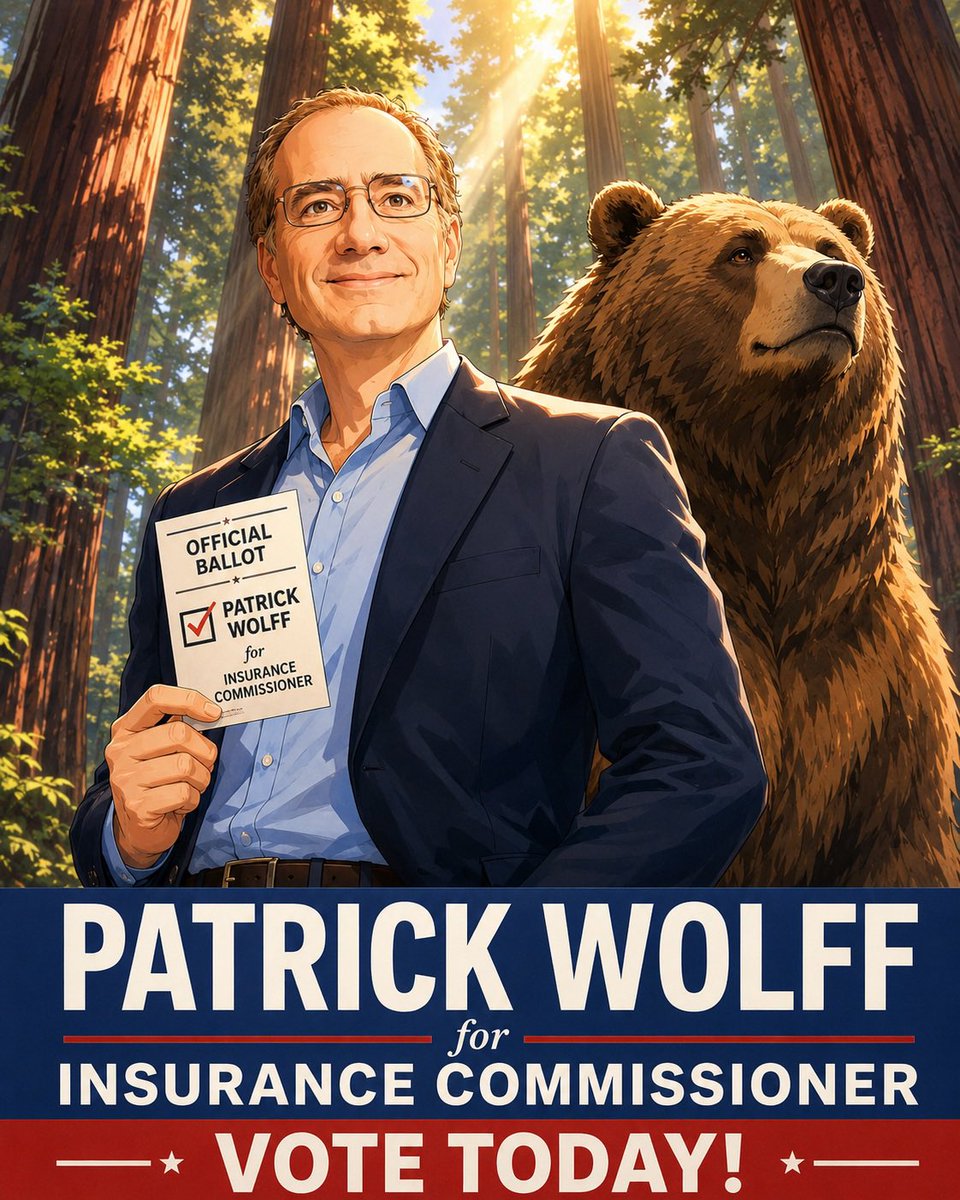
It’s Election Day! Be sure to vote, and vote Patrick Wolff for Insurance Commissioner!
2
10
54
6,046
Edwin M. Lee Asian Pacific Democratic Club retweeted

May 31
The 5 biggest home insurers in the US didn’t pay out on >44% of claims resolved last year. Unacceptable! “Customers are typically told little, if anything, about an insurer’s record on claims when buying a policy.” That’s why I will publish a report card on claims payment!
There is a big difference between different insurance companies. You deserve to know how well an insurer fulfills its responsibilities to pay claims BEFORE you buy. The CA Dept of Insurance collects the data but keeps it private. I will make it public.
California has one of the highest rates of claims closed without payout. As Insurance Commissioner, I will grade every company on how well they fulfill their claims and make that available to Californians when you are deciding whether to buy or renew an insurance policy.
I will also improve transparency, because one tactic used by insurance companies to reduce payouts is to increase deductibles. Customers need full transparency so you know exactly what you are buying – and how much you can trust the insurer if you file a claim.
#Insurance #WolffOnYourSide
wsj.com/finance/the-home-ins…
2
7
27
535
Edwin M. Lee Asian Pacific Democratic Club retweeted

The CA Supreme Court just issued a major new ruling (In re Kowalczyk) that mandates that “attainable” bail be given to everyone not accused of a violent crime - including drug dealers, repeat offenders, and armed felons. It essentially guarantees their release back onto the street before trial.
A number of dangerous repeat offenders have already been released, including those who have been charged with hate crimes.
Join our zoom town hall on June 9th with @BrookeJenkinsSF to learn more this dangerous precedent and what we can do about it.
RSVP: us02web.zoom.us/meeting/regi…
8
17
83
44,248
Edwin M. Lee Asian Pacific Democratic Club retweeted
May 28
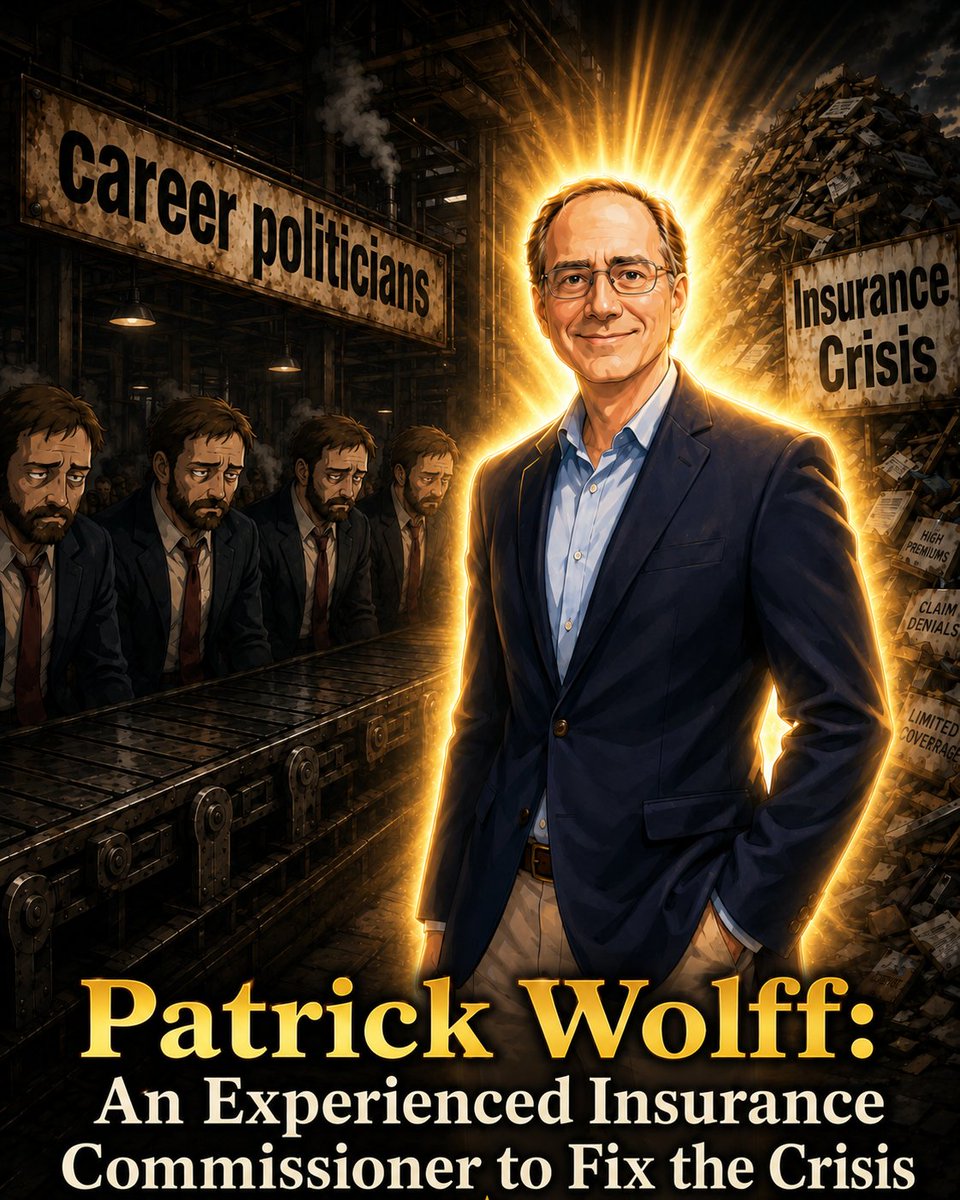
California has had an assembly line of career politicians as Insurance Commissioner. What has that gotten us?
An insurance crisis.
It’s time for an experienced insurance commissioner to fix our crisis. I have over 20 years of insurance experience and a real plan to fix our insurance system. Check it out here: patrickwolff.com/my-plan
6
29
1,006
Edwin M. Lee Asian Pacific Democratic Club retweeted
May 27
Who can best answer the call for help in the wake of a wildfire?
@SpencerPratt playing a super hero? Three career politicians?
Or an insurance nerd?
You decide. :)
11
9
50
2,793
Edwin M. Lee Asian Pacific Democratic Club retweeted
May 26
The current Insurance Commissioner Ricardo Lara is a career politician who has taken thousands of dollars in corporate gifts while in office. My opponents are career politicians who have taken thousands of dollars in corporate gifts while in office. I'll never take a dime in corporate gifts. As Insurance Commissioner, I'll be a Wolff on your side.
10
21
90
22,713
Edwin M. Lee Asian Pacific Democratic Club retweeted
May 24
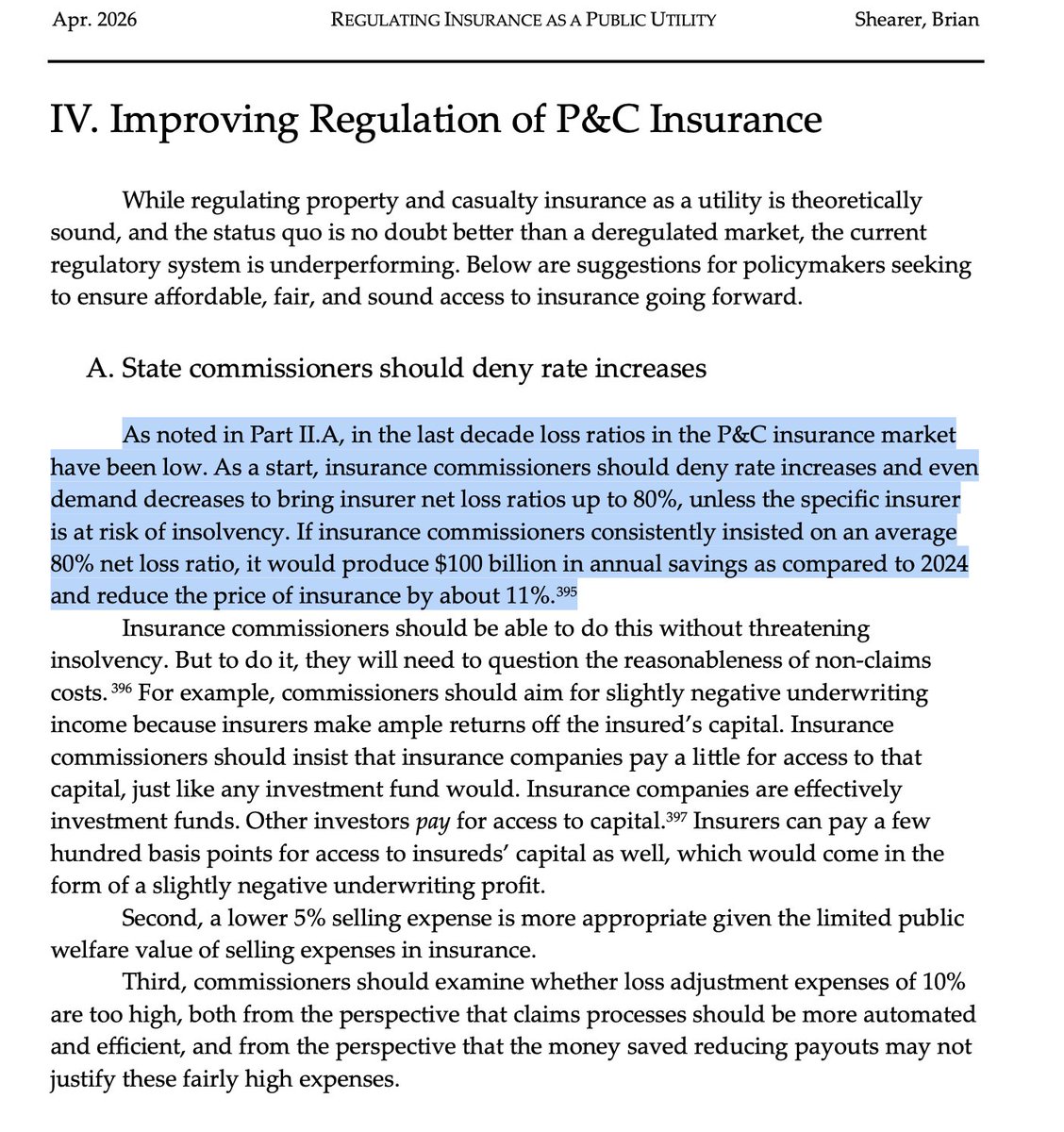
I agree with @kylascan that it doesn’t have to be this way. But respectfully, I have some disagreements with @brianJshearer’s paper.
What is the right way to regulate insurance, especially a broken system like California? (Warning: Long, detailed, technical post ahead.)
Brian Shearer’s paper raises critical issues at the heart of California’s insurance crisis and what is the right way to regulate insurance. But I respectfully disagree with Brian on some key points, which I explain below. Tagging @Dschwarcz, who has advised and consulted with me on policy, although what follows (most notably any errors) is my own work.
I found two notable errors/omissions that pertain to important issues in California’s insurance market, specifically: (1) claiming the FAIR Plan’s financial position was not due to inadequate pricing; and (2) not addressing recent research that rebuts the contention that Proposition 103 provided Californians substantial savings on auto insurance since inception.
(1) Start with the FAIR Plan. Brian seems to claim the FAIR Plan would have been solvent in 2025 if the participating insurance companies had not made any distributions and kept all capital in place. He makes the case purely with words, but this is a quantitative claim so we need to run through some numbers.
The FAIR Plan assessed the insurance companies $1 billion, and even after that capital infusion the FAIR Plan had a deficit of $352 million. Can we plausibly have made up at least $1 billion or maybe $1.35 billion by retaining all distributions and investing those retained distributions?
From 1995 (the last year there was a capital INFUSION) to 2025, there were cumulative distributions of $227 million. I created a spreadsheet to model out returns of 5%, 6% or 7% per year. Of course you can assume any return you want. The bottom line: no, you can’t reach even $1 billion of extra capital through retaining all distributions and investing at plausible rates of return. (Remember, you don’t want to invest in assets that are too risky!)
Check my work and your mileage may vary with different assumptions. But the larger point is you can’t make a mathematical argument without rubbing some numbers together in a useful way.
(2) A key argument Brian makes is that, as he writes, “the evidence shows that rate regulation leads to cheaper rates without countervailing loss in access.” Here in California, we have had robust rate regulation and we have a crisis of access, so that’s a bold claim to make right now.
Brian’s key evidence to bolster this claim, which he cites over and over, is a 2019 analysis by Hunter and Heller from the Consumer Federation of America about the results of auto insurance regulation. They claim that more rigid regulation leads to greater savings. And the key state for this claim is California after Proposition 103.
It is surprising that Brian repeatedly cites this paper without even mentioning – let alone considering – the more recent 2024 paper by Powell, Lehmann and Adams, published in the prestigious and peer reviewed Connecticut Law Journal (Volume 31, Number 1, 2024-2025).
In this paper, the authors present strong evidence that Proposition 103 did NOT lead to lower auto rates for Californians. A (very) brief summary of their argument is as follows:
(a) CA auto insurance rates started in 1989 at a very high level due to a 1979 CA Supreme Court ruling that expanded liability – thereby raising cost
(b) This ruling was overruled in 1988, the same year Proposition 103 passed, which contracted liability and thereby lowered cost
(c) Freezing auto insurance rates after Proposition 103 passed did not lead to lower prices; it was lower costs that allowed prices not to rise – and the authors even claim that prices should have fallen instead of stayed flat
(d) The lower rate of increase for auto insurance in California from 1989 is due to starting at a higher level with a subsequent positive supply side shock, not due to the passage of Proposition 103.
To be sure, one can certainly take issue with this analysis. Maybe it is incorrect. But you can’t just ignore it!
Standing back, I believe Brian does not grapple with the key argument for having more market based pricing rather than more regulatory based pricing in P&C. Nobody should dispute that we need robust regulation in P&C insurance! Smart regulation makes the market much more efficient, transparent and fair.
However, in my opinion, Brian does not meaningfully engage with the core issue of why we would want more market based pricing in P&C insurance. Although we certainly want to avoid excess profits or elevated selling costs, I believe there are (at least) two key reasons we want regulations to harness, rather than control, market pricing in P&C insurance.
Reason #1 is having insurance companies compete to price risk can lead to more accurate price signals. And those price signals are incredibly valuable for identifying and quantifying risk. In other words, the value of P&C insurance to society is not just the insurance itself; it is also the price signals the insurance generates.
Reason #2 is having insurance companies compete to lower risk locally can both align incentives and identify technology to reduce risk society-wide. In other words, competition in P&C insurance can lead not just to more accurate price signals but also innovation that improves social welfare.
To be clear, none of this is easy or automatic. Insurance regulation is a complicated topic and there is lots of room for principled disagreement. I enjoyed reading Brian’s paper and I think it makes a useful contribution.

1
5
21
14,107
Edwin M. Lee Asian Pacific Democratic Club retweeted
Apr 13
7
28
204
99,793
Edwin M. Lee Asian Pacific Democratic Club retweeted
May 21
What this ad really highlights is the difference between slogans and qualifications. California’s insurance crisis requires real expertise and a real plan. I’ve spent 25 years in insurance working on these issues, because this job is too important for fantasy solutions.

1
7
35
1,928
Edwin M. Lee Asian Pacific Democratic Club retweeted
May 21
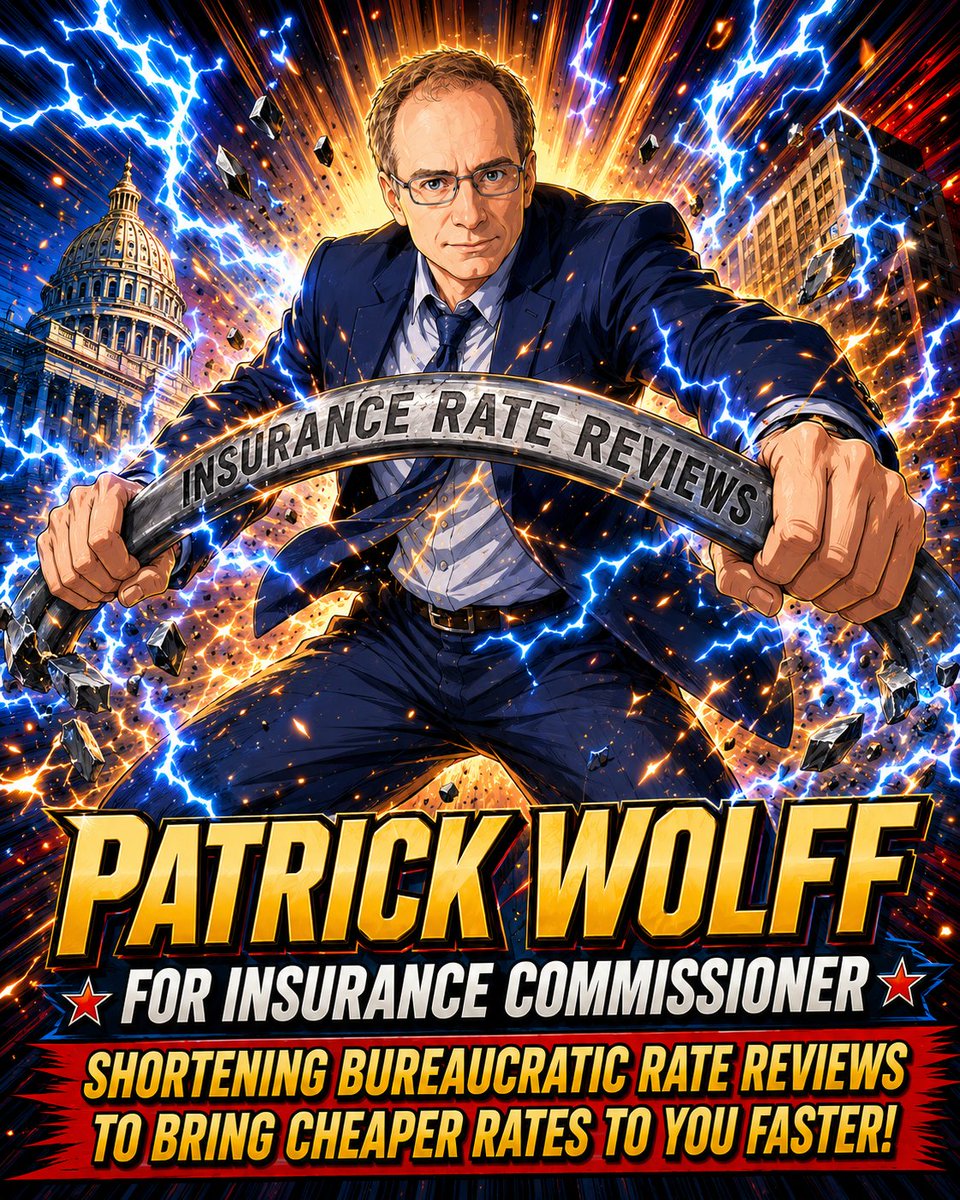
The national average to approve new insurance rates is 60 days.
In California, it’s 300 days.
That’s right - it’s 5x longer in CA to get you a new rate than the rest of the country.
This bureaucracy pushes insurance carriers out of the state. It makes less insurance options available to homeowners. It makes it 5x longer for us a better rate.
Not when I’m Insurance Commissioner. We’re going to fix our bureaucratic rate review system and streamline it to the national average - getting you a better rate, faster.
5
28
338

It’s Election Day everywhere and it’s an important one in SF
I endorse Farrell and Breed for mayor and recommend you use the @GrowSF voter guide. Rank Lurie #3, Yes on D
We will retake the board of supervisors, defund the corrupt nonprofits and build prosperity for all of SF 🚀

33
30
351
56,306
Edwin M. Lee Asian Pacific Democratic Club retweeted

5 Nov 2024
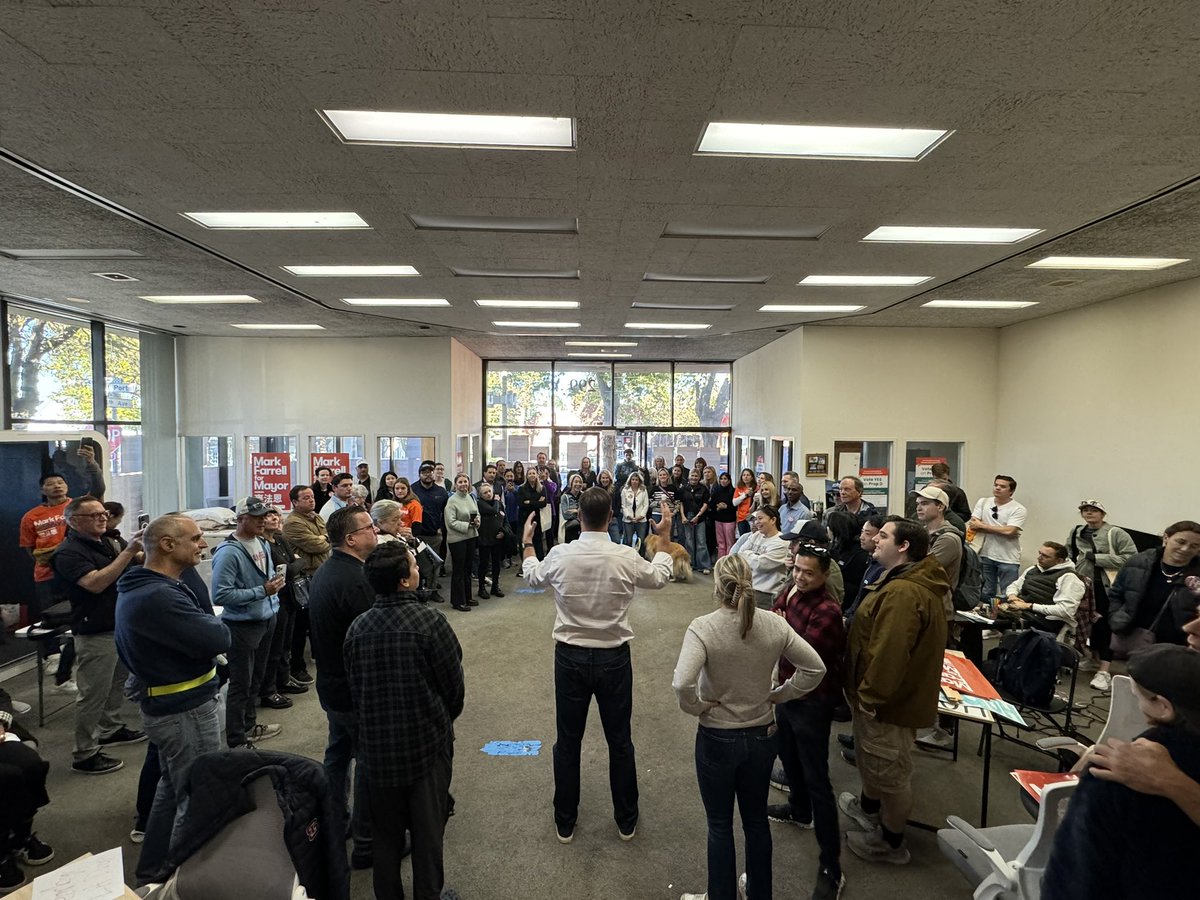
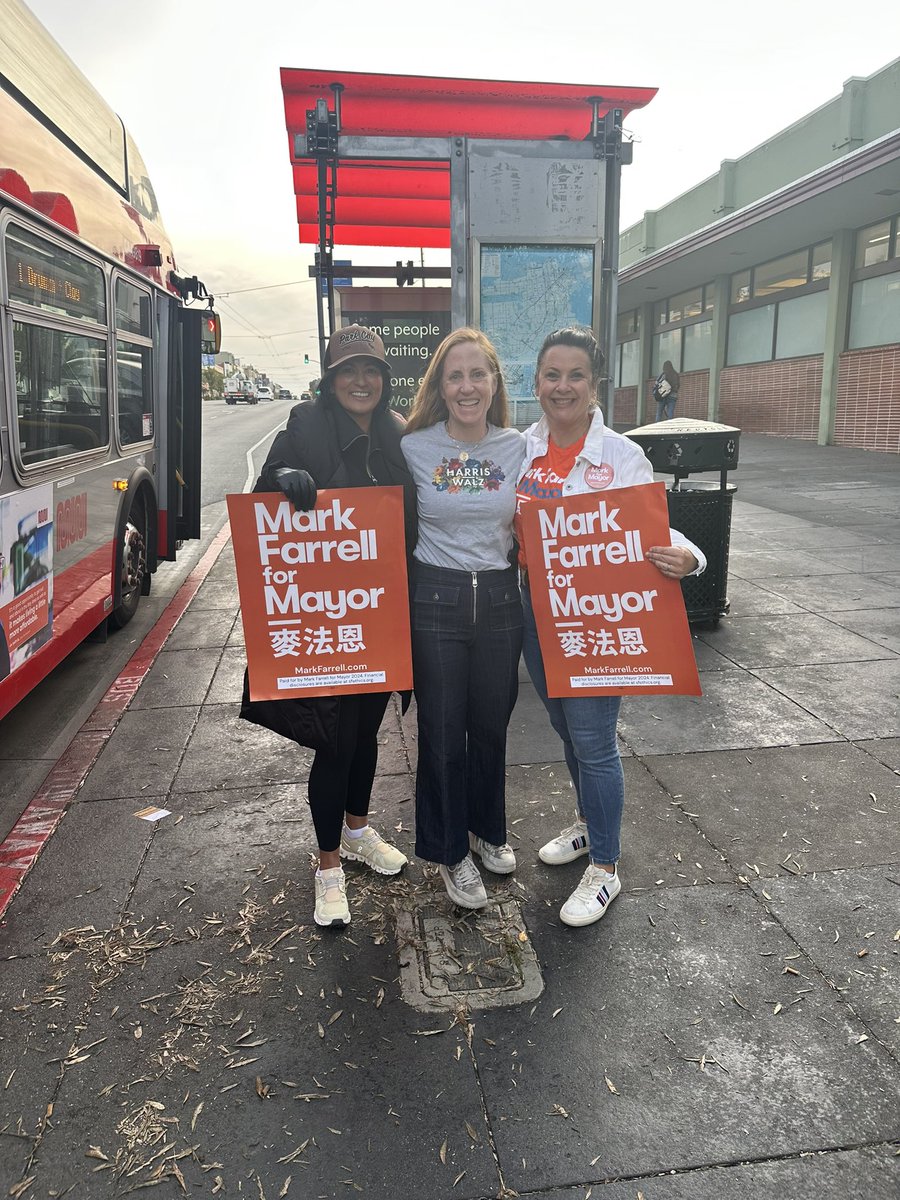
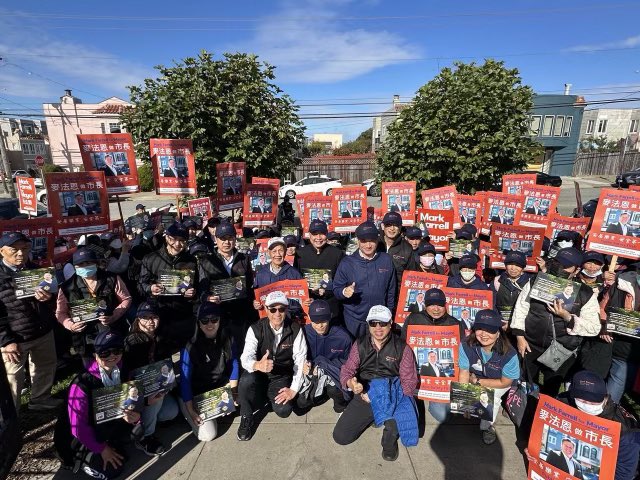
Money can’t buy you grassroots support or volunteers.
We have felt a real enthusiasm gap in our favor because of the hard work of our volunteers to grow our movement in every single neighborhood.
We will not be beat on the ground thx to our volunteers Team Farrell!!
5
13
129
6,117
Edwin M. Lee Asian Pacific Democratic Club retweeted
5 Nov 2024
I will be a Mayor who puts in the work.
There’s no rest until the job is done—that’s how we’re running this campaign, and it’s how we’ll run City Hall.
Thank you to the 100s of volunteers out with us today & who are joining us tomorrow to help change our City for the better!
14
26
274
9,336
Edwin M. Lee Asian Pacific Democratic Club retweeted
4 Nov 2024
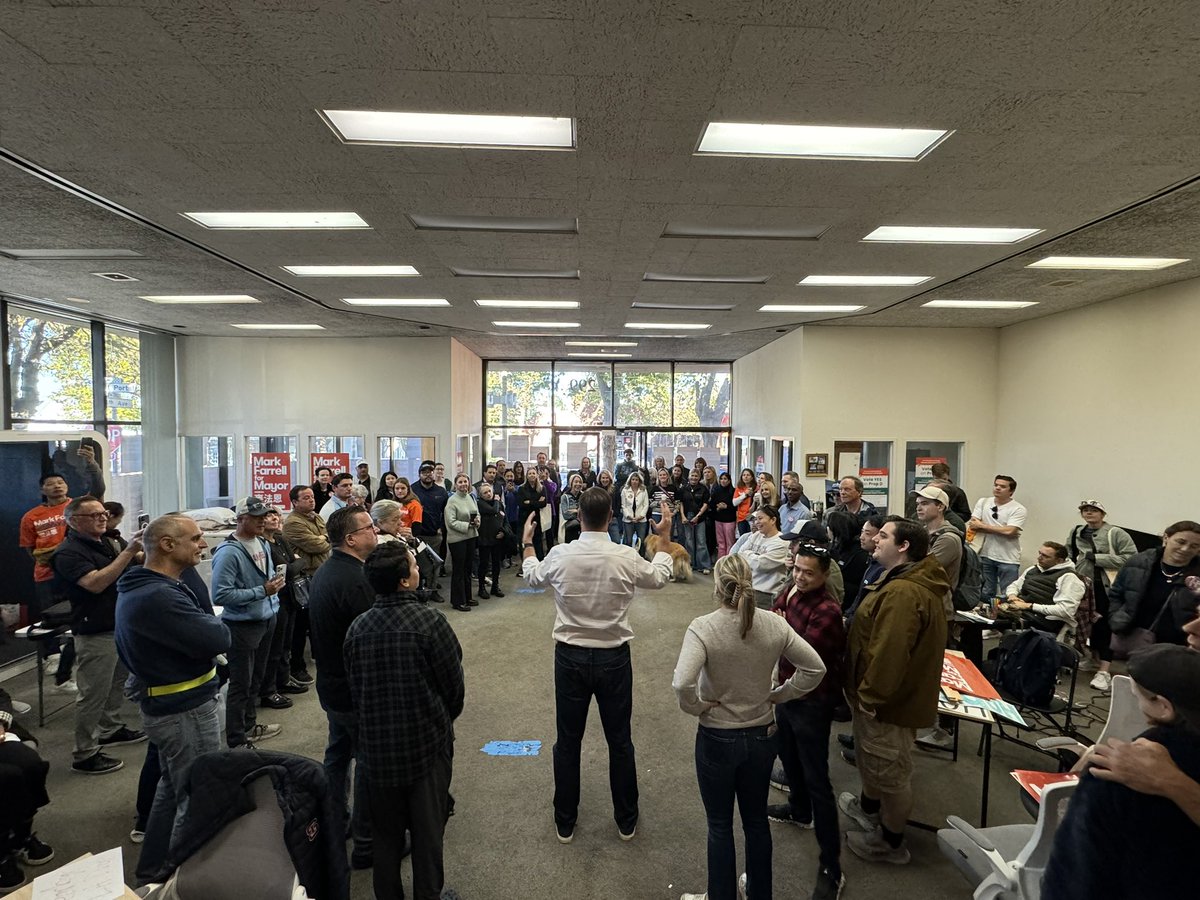
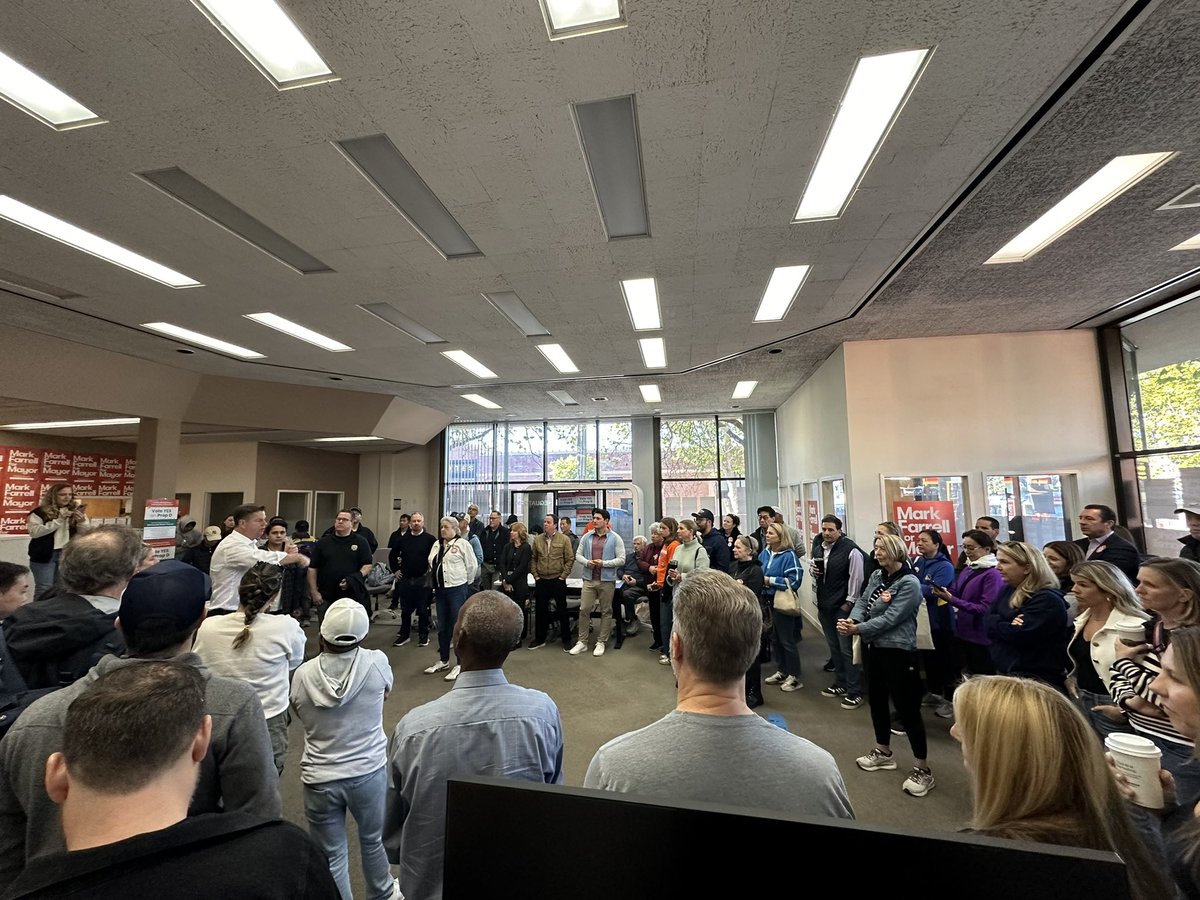
The energy and turnout at our HQ this morning for one of our final mobilizations was unreal.
San Franciscans from every neighborhood are joining our movement because they know we deserve better from City Hall and will deliver real change.
9
48
341
19,605
Edwin M. Lee Asian Pacific Democratic Club retweeted

4 Nov 2024
I stand by @MarkFarrellSF. As someone being smeared repeatedly in my 15yr advocacy, I know our voice is pushed out, misinterpreted & hit just to take our reputation down. I know Mark for 12yrs. I stand by his character unconditionally. Our fight continues & WILL be heard!
4 Nov 2024

We agreed to a settlement for an accounting error that we corrected and publicly disclosed months ago, and over a disagreement about staff time allocation during the campaign, which led us to terminate our prior legal counsel for this matter.
As the person responsible for both campaigns, I take full ownership of these issues–this is kind of accountability I am modeling for my children.
Currently, no clear local rules exist regarding shared expenses for campaign committees. I am calling for the Ethics Commission to establish clear guidance in this area because candidates the public deserves certainty and transparency. As Mayor, I will fix these problems by demanding clearer rules that strengthen the integrity of our election process.
I take pride in following the law at all times and setting an example of accountability for my staff and my three children by taking 100% ownership of my actions and decisions. I will continue this same commitment as Mayor.
2
6
72
5,565
Edwin M. Lee Asian Pacific Democratic Club retweeted
4 Nov 2024
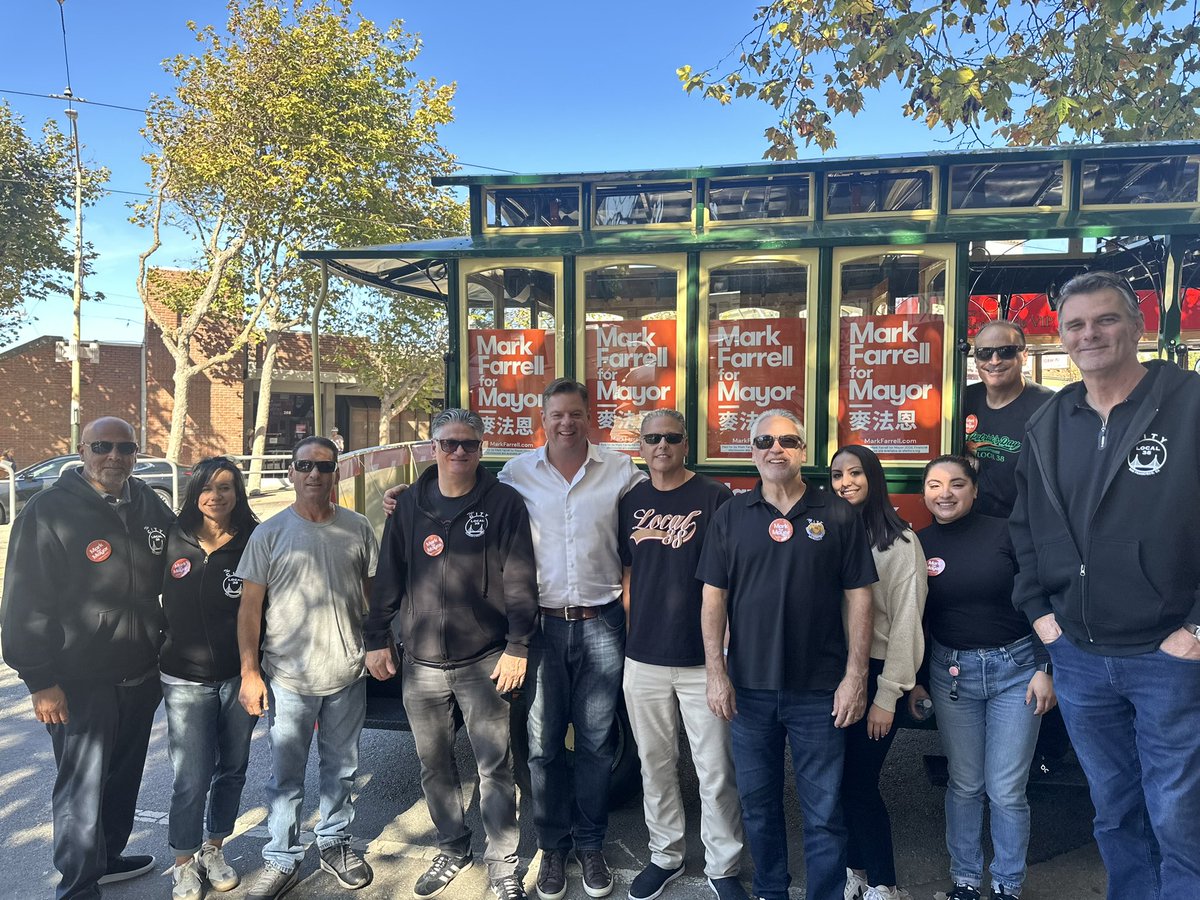
The political establishment machine is afraid of the movement we built momentum we have.
Our blue collar workers, fire fighters, sheriffs, residents from every neighborhood are backing us because they know we will make the tough choices to deliver real change.
9
16
142
5,338
Edwin M. Lee Asian Pacific Democratic Club retweeted

4 Nov 2024
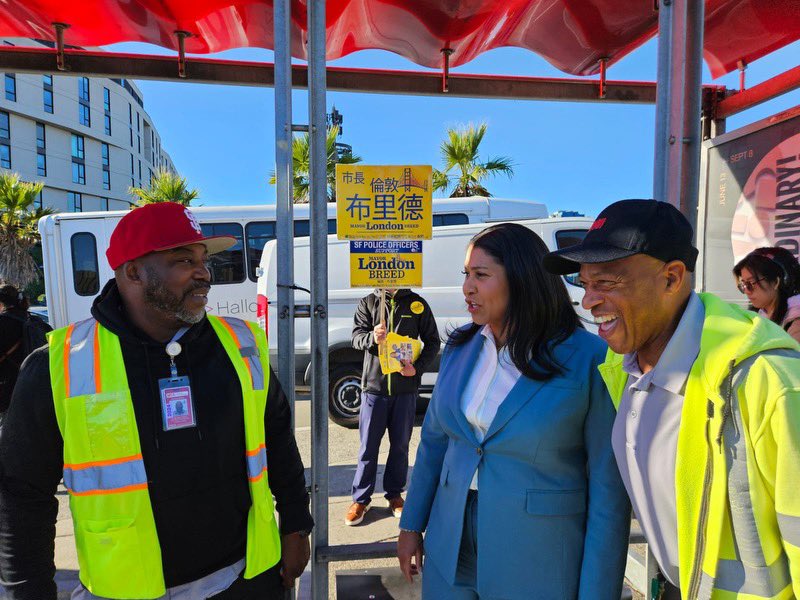
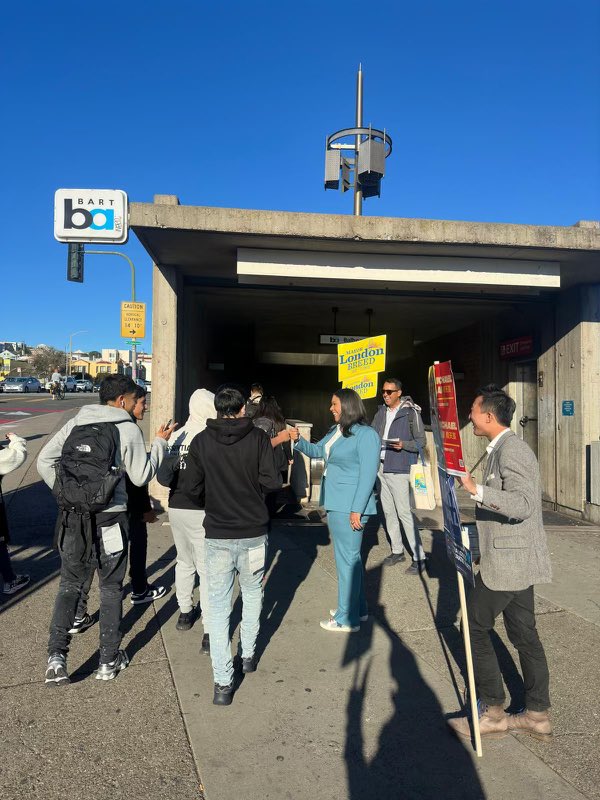
We had an early start this morning meeting with commuters and residents at Balboa BART, but our day is just getting started!
You can really feel the energy and I am so happy to kick off my Monday connecting with community.

3
6
27
3,899
Edwin M. Lee Asian Pacific Democratic Club retweeted
4 Nov 2024
Thank you District Attorney @brookejenkinsSF for your support. I’m proud of the work we’ve done together and the progress we’ve made toward making every neighborhood in San Francisco safer. #TeamLondonBreed
8
6
36
6,264
Edwin M. Lee Asian Pacific Democratic Club retweeted
4 Nov 2024
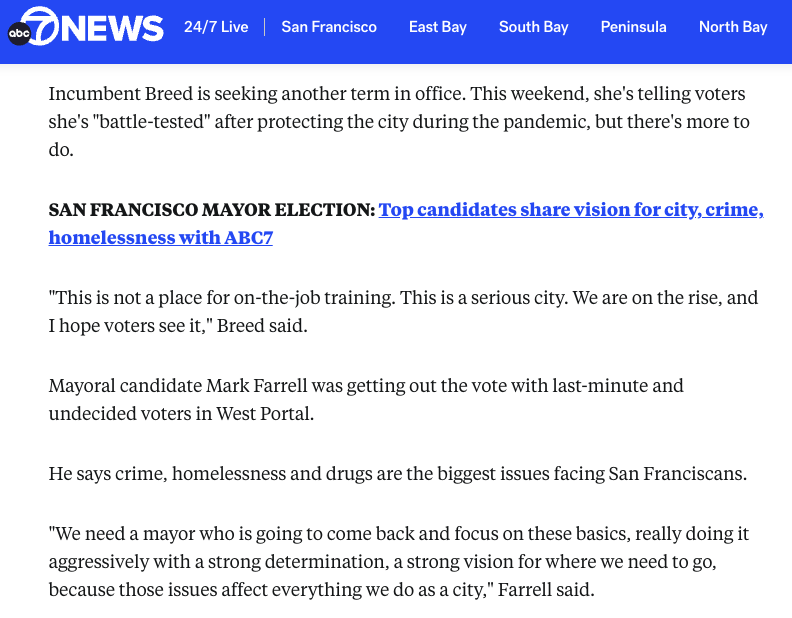
It is definitely a choice for Mayor Breed's closing message to be "San Francisco is starting to rise" after six years in office.
I don’t want San Francisco to rise.
I want San Francisco to soar.
Let’s turn the page on six years of failed leadership.
Vote accordingly.
3
10
156
7,263
Edwin M. Lee Asian Pacific Democratic Club retweeted

3 Nov 2024
One of Daniel Lurie's top donors—WhatsApp cofounder Jan Koum, who's given the pro-Lurie PAC $500K—has gone full MAGA.
Koum gave $5M to MAGA Inc., a pro-Trump super PAC. He gave $7M to a pro-Israel PAC that spent millions to unseat Dems.
Read more:
missionlocal.org/2024/11/sf-…

7
62
91
28,875