
Joined June 2013
- Tweets 65,506
- Following 1,105
- Followers 8,887
- Likes 102,789
8,434 Photos and videos









Pinned Tweet

26 Aug 2023
1) I was close friends with Clifford for the last 10 years of his life. He was one of the kindest people I've ever known and the real deal. He was part of #UFO crash retrievals. He had the largest private collection of official gov. documents on this matter. #UFOtwitter #UFOX
26 Aug 2023

Just Remembering.. Sgt. Clifford Stone claimed he participated in missions to recover UFOs that crashed on Earth."The US Government Has More Than 50 Alien Species Cataloged!"
#UFOtwitter #UAPtwitter #UAPs #UAP #UFOX #uapX
23
25
230
97,166
Ed n'Stuff retweeted
Jun 11
I had a nice chat with Pete after all these years recently. We covered a number of things, including my chats with others in our community from rank and file community members to leaders at our major entities in regards to this abd other core issues, but one area was how we do governance and engage on #Cardano $ADA.
For my part, I made the case in more detail than I will here, about how I think "Governance" should be reduced and streamlined down to voting yearly or every other year on elected paid panelists who are in charge of a reimagined intersect that should become our core "org" that is also in charge of the treasury budget along the lines of my org idea I've discussed publicly, and that's about it ostensibly. It tackles most of his concerns too.
No more growing and fragmented proposals in an all you can eat raid on the treasury by everyone. We meet the community where people actually are, and their interest, expertise, and bandwidth actually is vs what we'd idealized it to be. Dreps neither have the time, expertise, bandwidth, nor incentives apart from good will, to engage with this chaotic mess. It leads to the list of issues he mentions in his post.
We can do away with most if not all of it by taking this basic approach. We've run the experiment now and we've seen the results. We should pivot accordingly. We need one center point of *gravity* rather than centralization for coordination and direction. Just about everyone I've shared this idea with loved the basic spirit and directionality of it. That's worth noting in and of itself.
Charles often spoke of how web 2.5 is winning. Not web2, but also not quite web3. I'd apply the same lense for governance. The genesis keys are burned and we can't go back to top down control via orgs we have no say over ala governance 1.0. But so too can we not go full fragmented chaos as we have now via governance 2.0.
We should strike a reasonable compromise with governance 1.5 by having a more streamlined and reimagined intersect as our core org without the committees and nonsense most do not want to engage with anymore. The founding entities can work with them as it makes the most sense for them. As they all have differently remits, structures, and needs as their own orgs.
A yearly vote on the paid panelists made of expert cardano people and outside top tier talent (biz dev, marketing, etc) that run a responsive org that can grow over time in what it handles, that we have say over, that gives quarterly reports, with a dashboard of kpis/goals so dreps and community people can track progress and make an informed vote. That's it. That's governance, apart from maybe some minor adjustments. It sounds like a sigh of relief to just about everyone that considers it.

Solicitation and begging: Constant DMs, messages, and pressure from proposers/projects asking (or begging) for votes.
Conflicts of interest: Difficulty voting objectively when proposals involve projects, people, or ecosystems you're connected to, risking accusations no matter what.
Being labelled a shill: Accusations of bias or being "paid" just for neutrally mentioning or supporting a project with a governance proposal.
Scrutiny and backlash: Votes are heavily criticised regardless of direction, with accusations of poor judgment, favouritism, or incompetence from delegators, community members, or rival groups.
Time and review burden: Properly evaluating proposals requires deep dives into complex details (tech, business models, budgets, risks, team credibility). Without talking to all proposers or fully understanding everything, it feels irresponsible to vote on behalf of others. Many proposals demand significant research time.
Lack of time/energy/commitment: The ongoing responsibility drains personal bandwidth, especially when combined with work, life, or other Cardano contributions. It's a voluntary role with no (or limited) compensation for most.
Burnout and fatigue (DRep/Voter fatigue): The volume of proposals (e.g., dozens in budget cycles such as the 2026 process), combined with meetings, debates, time zone issues, and constant community engagement, leads to exhaustion. Governance isn't a part-time hobby for active DReps. It's a serious time sink.
Lack of compensation or incentives: Many DReps invest hours reviewing, rationalising votes, and communicating with delegators, but rewards are indirect or absent for smaller ones. Discussions often focus on whether DReps should be paid, since the work resembles unpaid, high-stakes volunteer labour. I was originally told 1 hour a month at the most.
Low or inconsistent participation pressure: Delegators expect high activity and clear rationales, but real life intervenes. Inactive DReps face criticism, and even active ones deal with accountability demands (e.g., public explanations for every vote). Some feel the social pressure or "performance" expectations aren't sustainable. I built a website and published all my rationales on-chain or on X, but that still isn't good enough.
Toxicity and community dynamics: Harsh criticism, conspiracy accusations, double standards in judging proposals, or polarised debates make the role unpleasant. Inconsistent voting rationales across DReps highlight broader governance growing pains.
3
2
11
1,597
Ed n'Stuff retweeted
Jun 10
I think #Cardano should launch a treasury-backed liquidity acceleration program that can deploy targeted incentives to seed deep stablecoin and other pools, reward LP providers, lenders, and active traders, and attract external capital from Ethereum, Solana, and beyond. I would support such an initiative and it would be worth the sizeable spend it would likely take.
Done right, with clear KPIs and strong ROI thresholds, this creates a powerful flywheel with more TVL, deeper DeFi, and sustainable value flowing back to the treasury and $ADA holders, and can eventually lead to buy backs/sovereign wealth fund.
10
22
199
5,080
Jun 10
The "AI" bubble will exceed anything remotely seen in crypto. These are LLMs/machine learning models matching inputs to outputs at increasingly expensive and unsustainable scale, not genuine artificial intelligence. The myopic US tech companies are doing us all a disservice.

Big Tech just ran out of money building AI and what they're doing to cover it up should be illegal.
Google, Amazon, Microsoft, and Meta are spending a combined $700 BILLION this year on AI infrastructure.
This eats up 94% of their total operating cash flow.
The richest companies in human history are almost broke. And instead of slowing down, they're covering it up with the biggest financial engineering operation since 2008:
Google just sold $80 billion in stock to fund AI infrastructure. That was their first equity raise in 20 YEARS.
The last time Google needed to sell stock, YouTube didn't even exist. Sundar Pichai admitted the thing keeping him up at night is "compute capacity."
The company that prints $100 billion a year in ad revenue just told Wall Street it isn't enough anymore.
Amazon's free cash flow is projected to go NEGATIVE this year for the first time ever. Morgan Stanley estimates a $17 billion deficit and Bank of America says $28 billion.
The most profitable logistics machine on Earth is about to burn more cash than it generates, and they quietly filed with the SEC saying they may need to raise even more debt and equity to keep building.
All four hyperscalers are now borrowing hundreds of billions in bonds to keep the AI buildout alive. These were the most cash-rich companies in human history, and they're leveraging themselves to the teeth to build infrastructure that nobody has proven will generate enough revenue to pay for itself.
And the cracks are already starting to show:
Broadcom makes the custom AI chips that power Google, Meta, OpenAI, and Anthropic. This week their AI revenue TRIPLED year over year, sales grew 48%, and profits smashed every Wall Street estimate.
The reward for all of that was $320 billion in value erased in a single trading session.
Their CEO Hock Tan went on the earnings call and exposed three things about the AI industry:
Google is already shopping for cheaper AI chip alternatives, broadcom abandoned its strategy of selling complete AI systems and is now retreating to selling bare chips at lower margins.
And despite supposedly "unprecedented demand," Tan refused to raise his full-year forecast, which tells you everything about what he's actually seeing behind the curtain.
Wall Street heard all three and hit the sell button so hard it dragged AMD, Intel, and the entire chip sector down with it.
When a company triples its AI revenue and gets punished because tripling isn't fast enough, the expectations have left the atmosphere entirely.
And here's the really scary part...
These companies ARE your retirement account. Apple, Microsoft, Amazon, Google, Meta, and Nvidia make up roughly 30% of the S&P 500. If you have a 401k or an index fund, you are already exposed to this bet whether you chose to be or not.
Every single one of these companies is telling you AI will generate trillions in revenue. But right now the math says they're spending trillions FIRST and hoping the revenue shows up later.
If the revenue catches up, this becomes the greatest infrastructure buildout in human history. Bigger than railroads and bigger than the internet.
If it doesn't, the companies that make up a third of the American stock market just leveraged their balance sheets into the largest write-down cycle since 2000.
And unlike the dot-com crash, this time the bubble companies aren't random startups with no revenue. They're the backbone of the entire global economy.
2
365
Ed n'Stuff retweeted

Jun 9
The deal is signed. @FireblocksHQ is coming to Cardano. 🤝
More details coming shortly.

66
256
1,193
71,902
Ed n'Stuff retweeted

Jun 9
Fighting together against external narratives > internal bickering...
Can we cut the drama off at the knees and agree that Iagon brought Fireblocks to Cardano (with a couple provisions) and Pentad is working to further expand the capabilities so we don't get into another round of squabbling semantics and name calling?
🙏🤞🙏🤞🥺
40
71
446
18,610
Ed n'Stuff retweeted

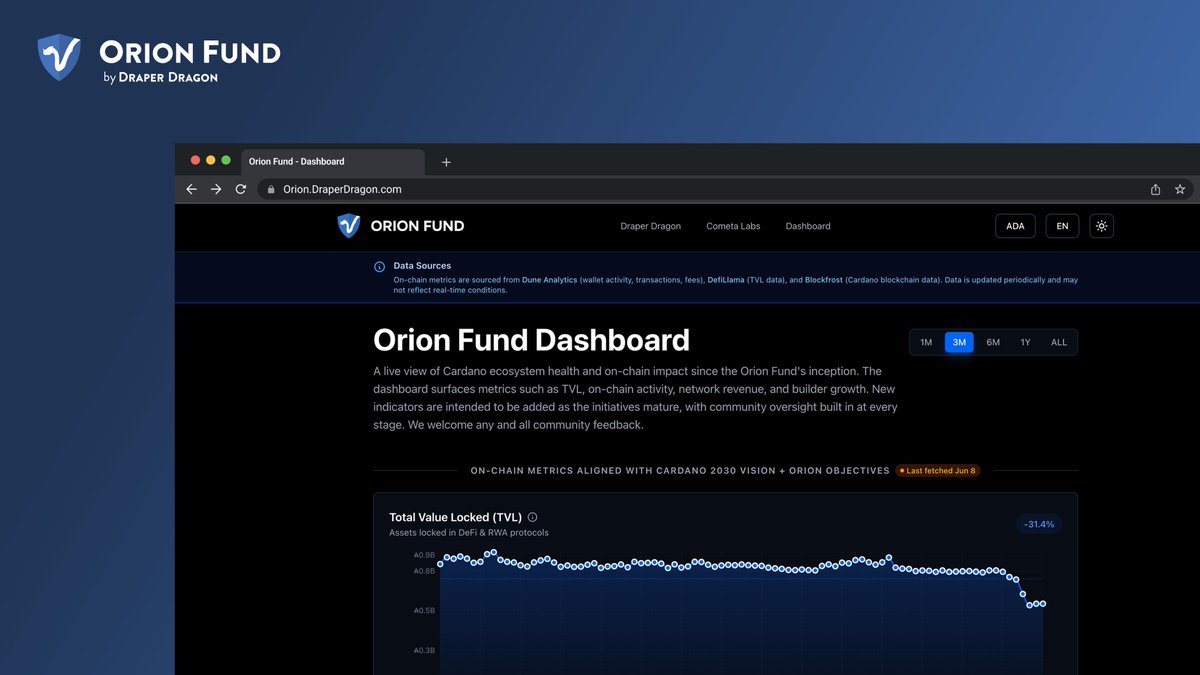
We've built the first iteration of the Orion Fund dashboard to track key performance metrics, including TVL, on-chain activity, and portfolio distribution.
These metrics will be available for the entire community to monitor as the Fund progresses, and we'll keep improving the dashboard based on your feedback.
View the dashboard here: Orion.DraperDragon.com
15
37
165
9,292
Ed n'Stuff retweeted

Jun 8
Crypto's next phase will not be won by isolated ecosystems.
The largest interoperability deployment in Cardano's history is coming. Earlier this year, we announced that all of crypto would be connected to Cardano via LayerZero, creating a path for over 800 tokens to natively expand into the Cardano ecosystem.
The complex technical work will roll out in phases, from testnet and mainnet endpoints, to Stargate, to developer tooling that makes it easy for anyone to deploy, to product integrations across the entire LayerZero stack. By the end of this year, any asset will be able to deploy on Cardano.
While this work is in flight, we'll be teaming up with the Cardano teams to share more behind the scenes: a detailed roadmap, a deep dive on our partnership, and co-hosted digital and IRL events for the community.
We're excited for what this work means for both LayerZero and Cardano, and can't wait to share more in the coming weeks.
A connected Cardano. Done right.
iog.io/news/cardano-is-conne…
61
190
900
58,917
Ed n'Stuff retweeted

Jun 8
Markets move in cycles. Building doesn't stop.
The largest interoperability deployment in Cardano's history is underway. LayerZero connects Cardano to the broader crypto economy, bringing over 800 tokens and every major chain into one unified network.
It rolls out in phases: testnet, mainnet, Stargate, and developer tooling, culminating in one simple truth: by end of year, any asset deploys on Cardano.
The barriers are coming down, more soon.
iog.io/news/cardano-is-conne…
16
143
630
42,125
Ed n'Stuff retweeted
Jun 6
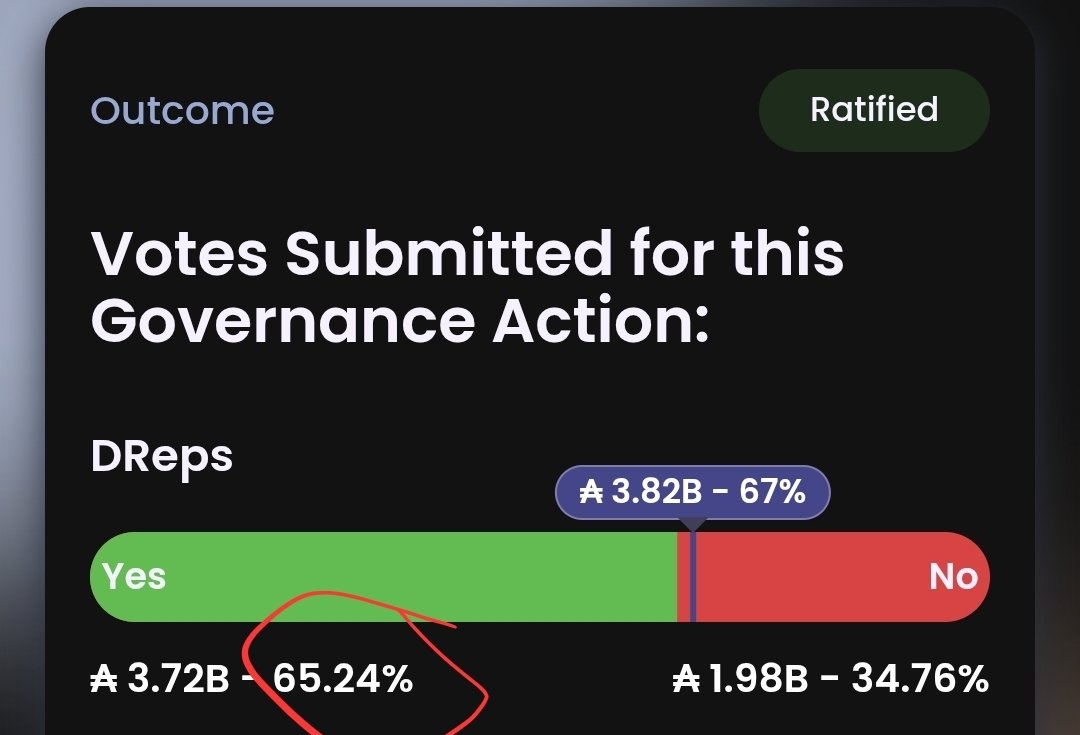
Let's get this one over the hump. So we at least have our core stuff covered for #Cardano as we move towards changing how we do things going forward. The proposal is at 53.50% with two days left.
gov.tools/governance_actions…
5
10
52
1,820
Ed n'Stuff retweeted

📢Reaching Entrepreneurs
Are you either:
1. An existing project trying to survive the bear market?
2. A new entrepreneur thinking of launching a project?
If you think I can help, please schedule sometime on my calendar
calendar.app.google/9oefEfuo…
16
75
324
14,017
Ed n'Stuff retweeted

Jun 6
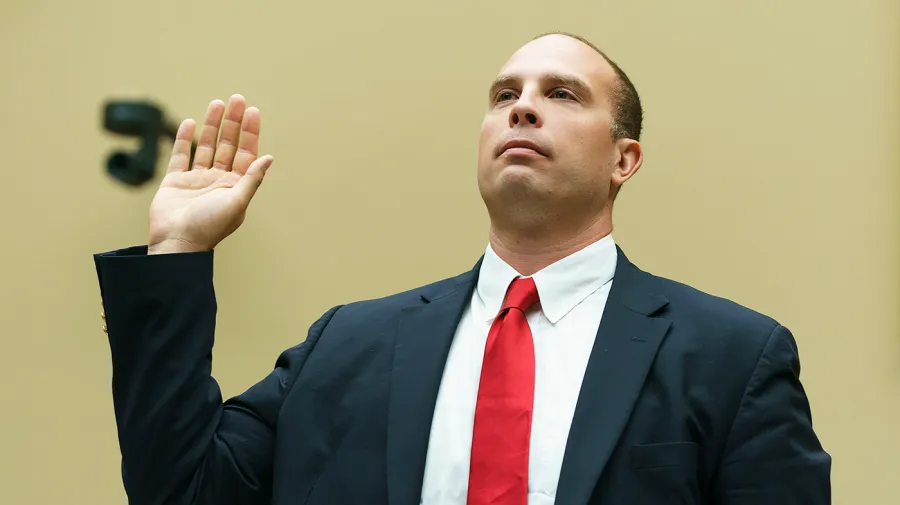
MAJOR UAP NEWS: James Fox and Leslie Kean join forces with members of Congress and whistle blower David Grusch in an unprecedented call to action directly to the President this Tuesday, June 9th. Major news media have committed to attend the Press Conference which will push for the passage of disclosure related legislation and release of ground breaking conclusive files.
#UAP, #UAPX, #UFO, #UFOX, #UFOTWITTER, #OVNI, #disclure, #disclusureday
263
562
2,826
230,073
Ed n'Stuff retweeted
Jun 6
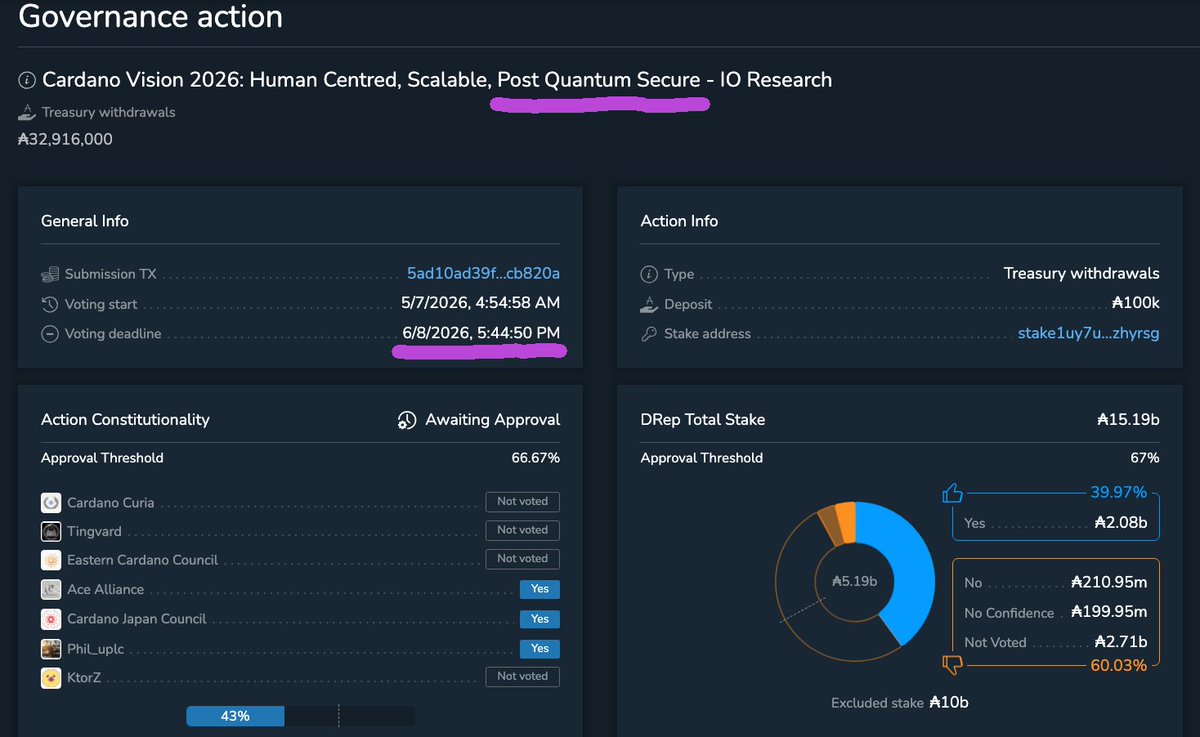
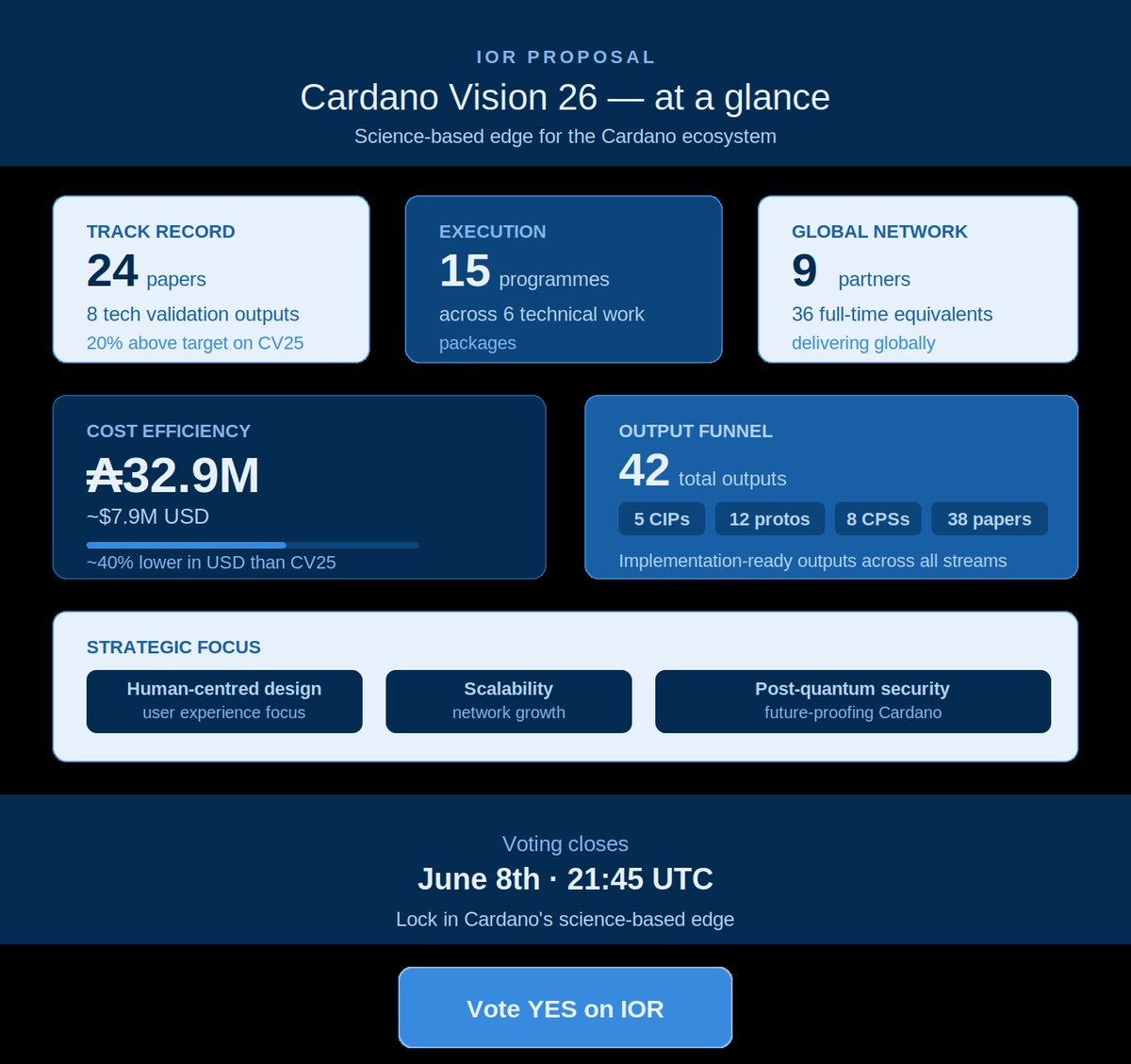
The IOR proposal for Cardano Vision 26 at a glance:
📈 Proven track record: Builds on CV25: 24 papers and 8 technology validation outputs (20% above target)
⚙️ Structured execution: 15 market-oriented programmes across 6 technical work packages
🌐 Global network: Delivered by a consortium of 9 partners and 36 FTEs
💰 Cost efficient: Budget: ₳32.9M (~$7.9M USD), approximately 40% lower in USD terms than CV25
⏳ Output funnel: Innovation funnel with 42 outputs: 5 implementation-ready CIPs, 12 prototypes, 8 CPSs, 38 papers / reports
🎯 Strategic focus: Human-centred design, scalability, and post-quantum security
⏳ Voting closes June 8th at 21:45 UTC. Let's lock in Cardano's science-based edge. Vote YES on the IOR Proposal!
Vote here: voting.cardanofoundation.org…
16
45
237
6,696
Ed n'Stuff retweeted

Jun 5
This week is sentiment, not substance. The macro backdrop is hitting nearly every risk asset at once, and that says very little about what's being built here.
Cardano's greatest strengths remain unchanged: security, reliability, and a community capable of taking the long view when we cut through the noise.
Significant improvements are in active development and closing in on delivery. Midnight is a huge value-add to Cardano for many reasons. RealFi is real. Parameter changes, proposals, and solutions are being voted on now. Stablecoin adoption is growing. DeFi activity is picking up. All of this is happening regardless of market sentiment.
But there are real challenges to address. We should (and we do) acknowledge them.
From my POV, Cardano needs to consolidate around the areas where we can genuinely win and where we find alignment with many of the reasons we wanted to be here in the first place. Banking the unbanked. Connecting the unconnected. These remain powerful reminders of why we show up.
We also have to take more deliberate action today. We need to back builders who are already creating value, while giving promising teams the support and opportunity to prove what's possible. We need to support our KOLs and voices helping tell Cardano's story and bringing people in to take another look. We need to create a white-glove experience for the best teams, founders, and contributors who choose to build here.
The best founders and teams should feel that Cardano is the easiest ecosystem in which to succeed, and we have everything in our power to make that true.
All of this requires capital, and there's no getting around it. One of the strongest signals any ecosystem can send is confidence in itself. We need to be prepared to invest in our builders, our teams, and the opportunities in front of us.
We also have to find alignment on how we fund growth and development over the next five years, where we concentrate our efforts, where we need to rescope and consolidate, and how we better equip builders and teams to succeed. I think it's fair to say we need to make changes, be that constitutional or structural. These decisions will do more to shape Cardano's future than any market cycle ever will.
Taking my own advice, I'm actively working on Intersect's long-term role, what needs to evolve and change, and how we can best support the ecosystem through its next phase.
These are not small conversations, and no single person or organization has all the answers. But there is far more that unites us than divides us, and the progress being made across the ecosystem proves it.
10
22
98
3,407
Ed n'Stuff retweeted
Jun 4
We are going to transition as needed with our governance & comms here in #Cardano $ADA land. That said, we need quantum resistance as that tech rapidly accelerates with Microsoft shooting for 2029. We need to get this R&D proposal over the line for now. Yes, even in this market.
2
8
66
3,194
Ed n'Stuff retweeted

Rare Evo 2026 is bringing the brightest minds in blockchain together in Las Vegas.
Our stage is packed with the regulators, global asset managers, innovators, and protocol teams building the infrastructure that the world is adopting.
This July 28-31.

2
5
37
1,326