
A community of entrepreneurs building the next generation of owners by showing wins from others in business and content creation
Joined January 2021
- Tweets 151,658
- Following 358
- Followers 97,092
- Likes 254,437
5,183 Photos and videos





Pinned Tweet

2 Jun 2024
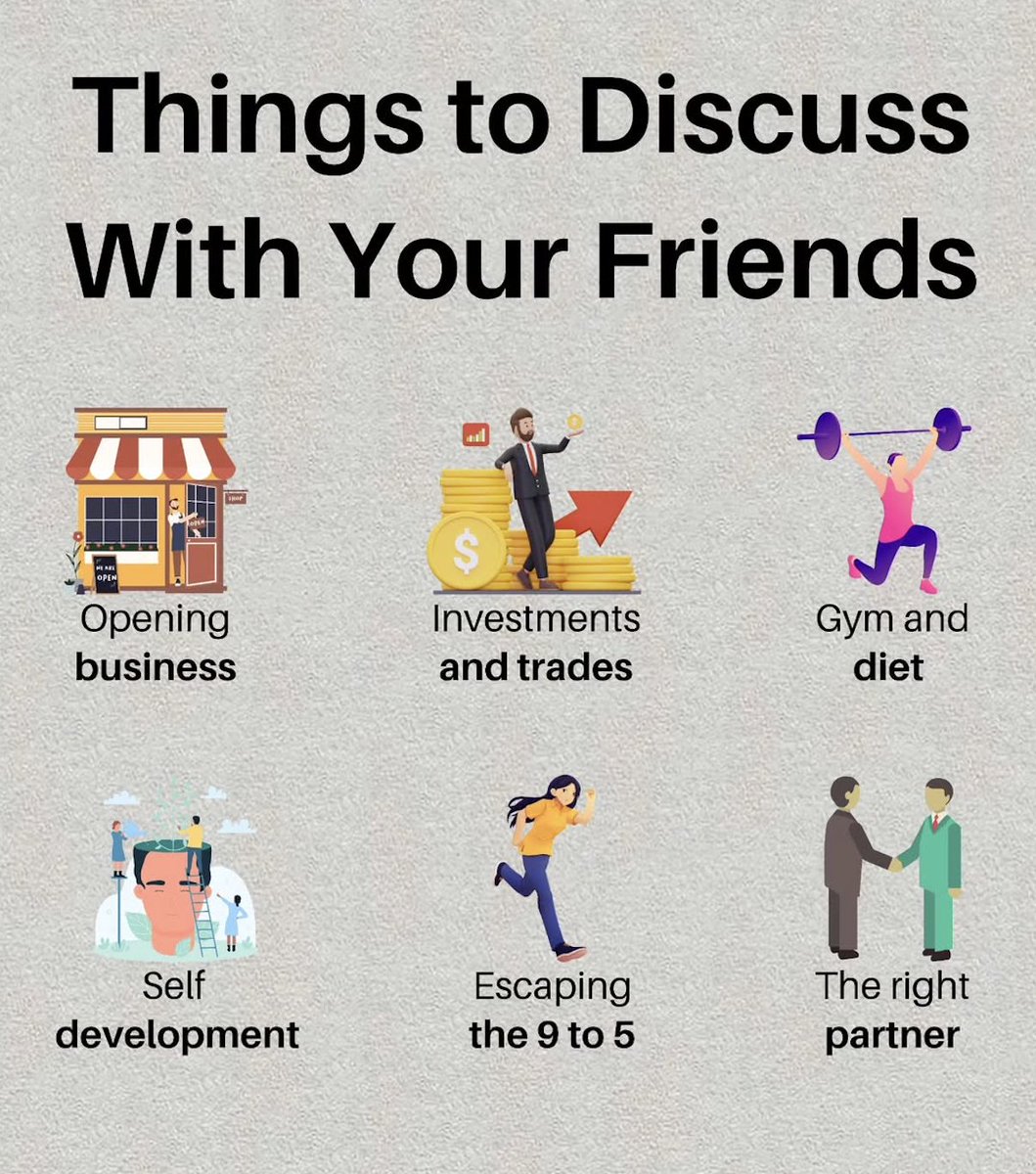
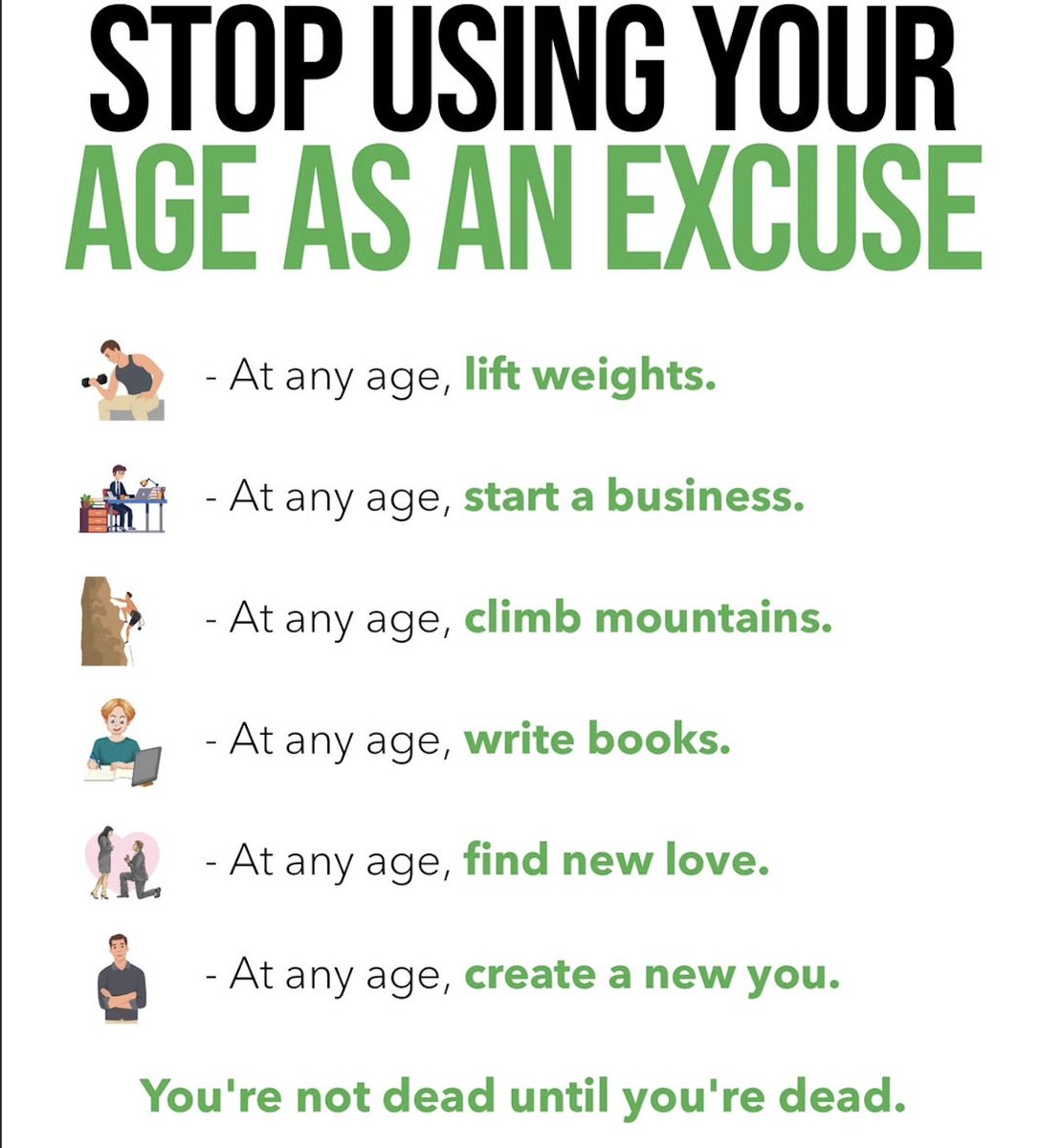
It's either 3 years of sacrifice or 30 years of struggle.
Here's how to transform your life:
24
123
587
185,482

EntrepBuilder retweeted

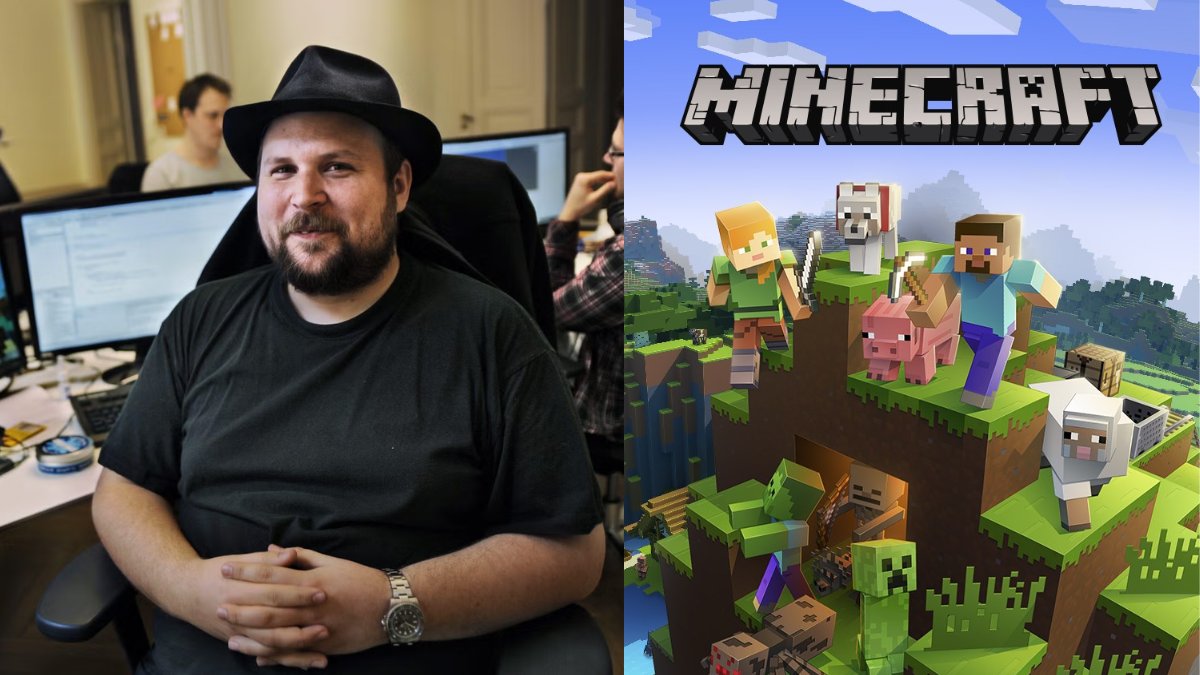
A seven-year-old in a small town in central Sweden started programming on his father's Commodore 128. By eight he had written his first game, a text-based adventure. He never finished high school. At 30 he was working at a photo album company in Stockholm, coding games alone in his apartment after work.
One of those games, built in less than a week, became the best-selling video game in human history. He sold it for $2.5 billion in cash. Then he bought the most expensive house in Beverly Hills and told the internet he had never felt more alone.
His name is Markus Persson. Most people call him Notch.
Here is the story.
Markus was born on June 1, 1979 in Stockholm to a Swedish father and a Finnish mother. He spent his first seven years in Edsbyn, a small town in central Sweden, before moving back to Stockholm with his family. When his father brought home a Commodore 128, everything changed. By seven he was writing code. By eight he had made his first game. By eighteen he had landed a programming job without finishing high school.
In 2004 he joined Midasplayer, the company that later became King and built Candy Crush. He stayed for over four years. He befriended a fellow developer named Jakob Porsér. The two of them started writing their own games on the side. Their bosses at King did not like the attention the side projects were getting.
In 2009 Markus left King for jAlbum, a Stockholm photo album company. The day job paid the bills. The real work happened at night.
He had been experimenting with a block-based building game called RubyDung, inspired by Dungeon Keeper. He was also influenced by a game called Infiniminer. On May 10, 2009 he uploaded a short video to YouTube titled "Cave Game." Within days he renamed it Minecraft. He posted it on TIGSource, an indie game developer forum. People started playing.
He wrote the original version alone in his apartment in about a week. The blocky graphics were not an artistic choice. They were a result of impatience. He told Rolling Stone later, "I just wanted to make a game that could make enough money to make another game."
The game spread without marketing, without a publisher, without a budget. Players built castles, survived zombie attacks, mined resources, and collaborated in a procedurally generated world made entirely of blocks. The simplicity was the point. Anyone could understand placing a block on top of another block. Anyone could build anything.
By the end of 2009 Markus had founded Mojang with Jakob Porsér and Carl Manneh. Valve flew him to Seattle and offered him a job. He turned it down. He told people he saw an opportunity to build something himself.
The alpha version went viral. Before the official retail release in November 2011, Minecraft had already sold over four million copies. The game had no traditional marketing campaign. It grew entirely through word of mouth, YouTube videos, and a community that treated the game as a platform for creativity rather than just entertainment.
In December 2011 Markus stepped down as lead designer and handed creative authority to Jens Bergensten. Mojang grew to 35 employees. Markus found himself caught between being a coder and being a CEO. He was deeply hands-on in development but withdrawn from the politics of running a business.
In September 2014 he announced his intention to leave Mojang. In November Microsoft acquired the company for $2.5 billion in cash. Markus walked away with a fortune that made him one of the wealthiest people in Sweden.
He bought a $70 million mansion in Beverly Hills, the most expensive house ever sold in the neighborhood at the time. He threw lavish parties. He traveled the world. He posted on Twitter about feeling isolated. He wrote that he had never felt more alone.
Minecraft kept growing without him. It has now sold over 300 million copies. It is the best-selling video game in history. A live-action film, A Minecraft Movie, was released in 2025. The game is played in schools, used as an architecture tool, and runs on every platform from phones to VR headsets.
A kid in central Sweden who learned to code on his father's computer wrote a game in a week in his apartment.
It became the biggest game ever made.
He sold it for $2.5 billion and discovered that was not the hard part.
1
10
11
329
EntrepBuilder retweeted

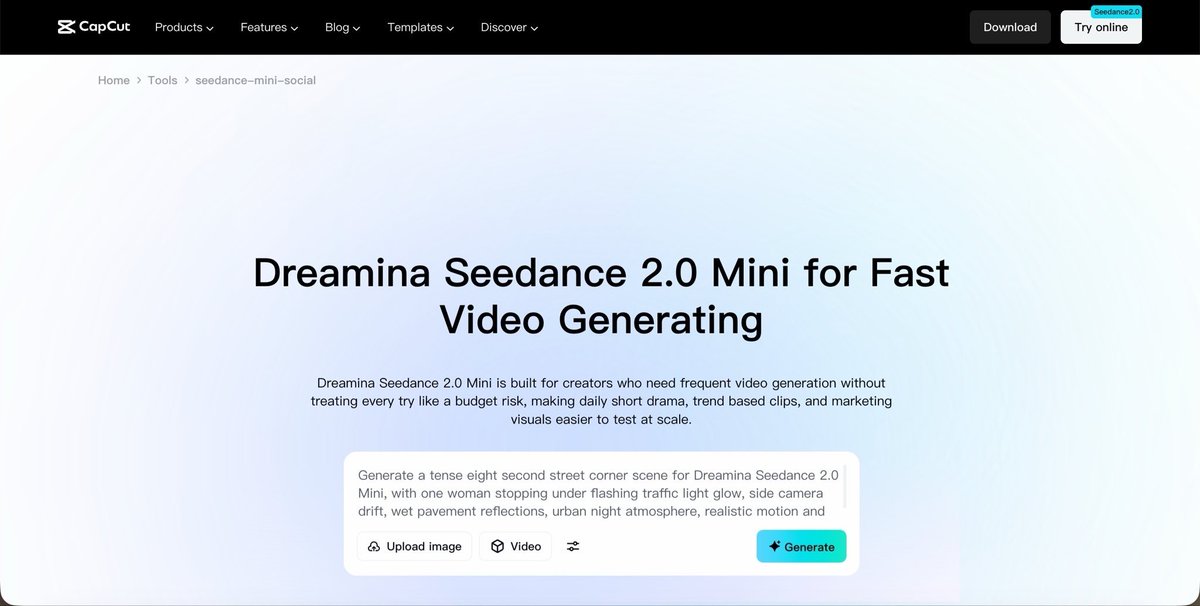
Breaking: Looks like CapCut is preparing to introduce a new Seedance 2.0 model.
What stands out to me:
• Faster generation speeds
• Lower costs
• High-quality video output
For people creating trend content, short-form videos, or marketing assets every day, that combination could make a noticeable difference.
Definitely keeping an eye on this one.
8
33
41
4,514
EntrepBuilder retweeted

Juan Hernandez joined SpaceX as a welder in 2015 earning $28/hour, and a decade later his 6,500 shares are worth around $880,000 at IPO.
1
12
19
958
EntrepBuilder retweeted

George Lucas explains the contract detail that made Star Wars bigger than a movie:
"I could have asked for a million dollars for the film. And I did not do it."
"They were giving away things that did not mean anything to them."
"Sequel rights... licensing... there is no money there."
5
5
131
EntrepBuilder retweeted

56m
Sam Altman just said it out loud.
"We're going to see 10-person billion-dollar companies pretty soon."
"If I were 22 right now, I'd feel like the luckiest kid in history."
Most people will read this, feel inspired for 4 minutes, and go back to the spreadsheet.
The ones who actually move will build an app studio this weekend.
One tool. 10 minutes. $10K/month.
Here is exactly how.

8
9
493
EntrepBuilder retweeted

A Chinese mathematician spent 7 years making sandwiches at Subway after his PhD, and at 58 solved a 150-year-old math problem nobody thought was solvable.
His name is Yitang Zhang. The problem is called the Twin Prime Conjecture.
He was born in Shanghai in 1955 and knew he wanted to spend his life on mathematics by the time he was nine years old. That year he found his own proof of the Pythagorean theorem. Nobody taught it to him. He just worked it out.
Then the Cultural Revolution arrived and took everything.
The Chinese government closed the schools. Zhang's father had political troubles with the Communist Party, so Zhang was sent to the countryside with his mother to work in the fields. He spent 10 years as a farm laborer. No high school. No classroom. No teacher.
He read math books in the fields when he could find them.
When the revolution ended, Zhang was 23. He sat the university entrance exam and got into Peking University, one of the most competitive mathematics programs in China. He finished his bachelor's degree, then a master's. The president of Peking University personally recommended him for a full scholarship at Purdue University in the United States.
He arrived at Purdue in 1985. He earned his PhD in 1991.
Then the second wall hit.
His relationship with his doctoral advisor collapsed. The advisor did not write him letters of recommendation. Without those letters, the academic job market was closed. Zhang applied. Nothing came back. He spent the years after his PhD working as an accountant, doing delivery work, sleeping in his car during the stretches when nothing else was available.
A friend eventually opened a Subway sandwich restaurant in Kentucky and offered him a job. Zhang took it. He kept the books and made sandwiches. A man with a PhD in mathematics from Purdue, working a Subway counter because the academic world had no place for him.
He did this for seven years.
He was finally hired as a lecturer at the University of New Hampshire in 1999. Not a professor. A lecturer. The lowest rung of the academic ladder, with no research funding, no graduate students, and no institutional support. He taught calculus to undergraduates and worked on mathematics alone in whatever time was left.
Most people would have stopped believing by then.
Zhang did not stop.
The Twin Prime Conjecture is one of the oldest unsolved problems in number theory. Twin primes are pairs of prime numbers separated by exactly two: 5 and 7, 17 and 19, 41 and 43. The conjecture predicts that these pairs never stop appearing no matter how far you go along the number line. Mathematicians had believed this for over 150 years. Nobody had been able to prove it.
The deeper version of the problem asks something slightly different. Not whether twin primes are infinite, but whether there is any finite gap between prime numbers that appears infinitely often. This is called the bounded gap problem. The best mathematicians in analytic number theory had been attacking it for decades. A landmark 2005 paper by three researchers came agonizingly close and still could not close it.
Zhang worked on it alone. No collaborators. No funding. No department seminars where he could road-test his ideas. He once said he would go to a friend's house and think in the garden for hours.
In 2012, during a visit to a friend's home in Colorado, something unlocked.
He submitted his paper to the Annals of Mathematics in April 2013. The Annals is the most prestigious mathematics journal in the world. Papers sit in review for months, sometimes years. The editors read Zhang's submission and immediately knew something was different. They sent it to the leading experts in analytic number theory for review.
It was accepted in three weeks.
The paper proved that there are infinitely many pairs of prime numbers separated by a gap of less than 70 million. Not two. Not the twin prime gap specifically. But a finite gap. For the first time in history, someone had proved that prime numbers keep coming back together, that the universe of numbers never lets them drift apart forever.
Peter Sarnak, one of the most respected mathematicians at the Institute for Advanced Study, said: "He is not a fellow who had done much before. Nobody knew him. His result was spectacular."
Zhang was 58 years old.
Within a year he had the MacArthur Fellowship, the Cole Prize, the Rolf Schock Prize, and a full professorship at UC Santa Barbara. The man who spent seven years at Subway was now one of the most celebrated mathematicians alive.
He said in an interview: "I was not lucky. Maybe it is more important for a person to make himself known to the public. But that was not so easy for me."
He was not complaining. He was just being precise.
The mathematics establishment has a quiet belief that great work happens young. The Fields Medal cuts off at 40. Most mathematicians who change the field do it in their thirties. Zhang proved his most important theorem at 58, after a decade of farm labor, seven years of sandwiches, and a decade of teaching calculus to freshmen with no one watching.
He did not beat the deadline.
He proved there was no deadline to beat.

3
10
20
678
EntrepBuilder retweeted

10 GEMINI PROMPTS THAT SHOW WHY YOUR COMPETITOR IS EATING YOUR LUNCH
Paste their ads, landing page, pricing, and emails into Gemini. It will show you the exact angles they're winning with, the claims they're owning, and the gaps they left wide open. Bookmark this.
1. THE ANGLE AUDIT
"You are a senior strategist who has analyzed 1,000 B2B and DTC competitors. Here is my competitor's landing page copy: [paste it]. What is the single angle they are owning? What emotional trigger is the entire page built around? What would a customer have to believe for this page to convert?"
2. THE CLAIM MAP
"Here are 5 ads from my competitor: [paste them]. List every claim they are making, then sort them into two columns: claims they can prove and claims they cannot. Show me which ones they repeat the most. That repetition is where they think they're winning."
3. THE GAP FINDER
"Here is my competitor's full website copy: [paste it]. List every customer pain point they never mention. Every objection they never handle. Every audience segment they never speak to. These are the gaps they left open. Rank them by how big the market opportunity is."
4. THE PRICING TEARDOWN
"Here is my competitor's pricing page: [paste it]. What psychology are they using? Anchoring? Decoy? Loss aversion? What does their tier structure tell me about who their best customer is? Where are they leaving money on the table?"
5. THE EMAIL SEQUENCE DISSECTION
"Here are 6 emails from my competitor's welcome sequence: [paste them]. Map the logic. What are they trying to make the reader believe by email 6 that they didn't believe on day 1? Where does the sequence go cold? Where does it get desperate?"
6. THE TESTIMONIAL INTELLIGENCE
"Here are my competitor's customer reviews and testimonials: [paste them]. What specific outcomes do real customers mention? What language do they use that never appears in the company's own copy? That gap between customer language and brand language is where their messaging is broken."
7. THE AD FATIGUE SCANNER
"Here are 10 ads my competitor has been running for more than 6 months: [paste them]. Which creative concepts have they killed and which have they kept scaling? What does survival tell me about what actually works for their audience? What angles have they given up on that I could own?"
8. THE OBJECTION LIBRARY
"Here are my competitor's 1-star and 2-star reviews: [paste them]. List every complaint. Group them by category. Rank them by how often they appear. These are the objections their best customers overcame and their lost customers didn't. My next 10 ads address these directly."
9. THE POSITIONING STRESS TEST
"Here is my positioning statement: [paste yours]. Here is my competitor's: [paste theirs]. Where do we overlap? Where do we differ? If a customer read both on the same day, which one would they remember and why? Rewrite mine so it cannot be confused with theirs."
10. THE COUNTER-STRATEGY
"Here is everything I know about my competitor: their angles, their claims, their gaps, their pricing, their audience: [paste your summary]. Now build me a counter-strategy. Not how to copy them. How to make them irrelevant. One positioning move that takes their best customers and makes them mine."
An analyst charges $5,000 to run a competitive teardown. Now you run it in an afternoon.
1
8
9
233
EntrepBuilder retweeted

The CEO of Anthropic just said something about AI and jobs that's slightly terrifying:
"I don't know exactly, but I'm still pretty concerned. I'm still the same order of concerned."
"I think we could have this very unusual combination of very fast GDP growth and high unemployment, or at least underemployment, or a lot of low wage jobs. High inequality."
Then he broke down the mechanics of how it happens:
"We are seeing right now that AI is making people more productive. But that's the usual hump. You automate 90 percent of the job. Great. People are ten times more productive in the other ten percent because they're ten times more leveraged."
"Now the sequel to that is, well, then you have to find something else for them to do."
"Right now AI makes the software engineers more productive even though AI writes all the code or almost all the code. But we're already starting to see the beginning of, you know, there may be some people that it's not..."
He trailed off. The CEO of the company that builds Claude, one of the most advanced AI systems on the planet, couldn't finish the sentence.
70 percent of Americans already think AI will kill jobs. Nearly a third worry theirs will be one of them. The man building the technology just confirmed their fear is the right order of magnitude.
GDP will soar. Unemployment will rise. Both at the same time. That combination hasn't existed in modern history, and the person closest to the technology says it's coming.
— Dario Amodei @DarioAmodei, CEO of Anthropic
1
9
9
324
EntrepBuilder retweeted

You uploaded family photos to Google Drive.
You uploaded tax returns to Dropbox.
You uploaded a scan of your passport to iCloud.
You assumed they were private. They are not, by default.
Google's terms of service authorize content scanning of files in Drive. Dropbox does the same. iCloud does the same. On a valid legal request, any of them hands the files over.
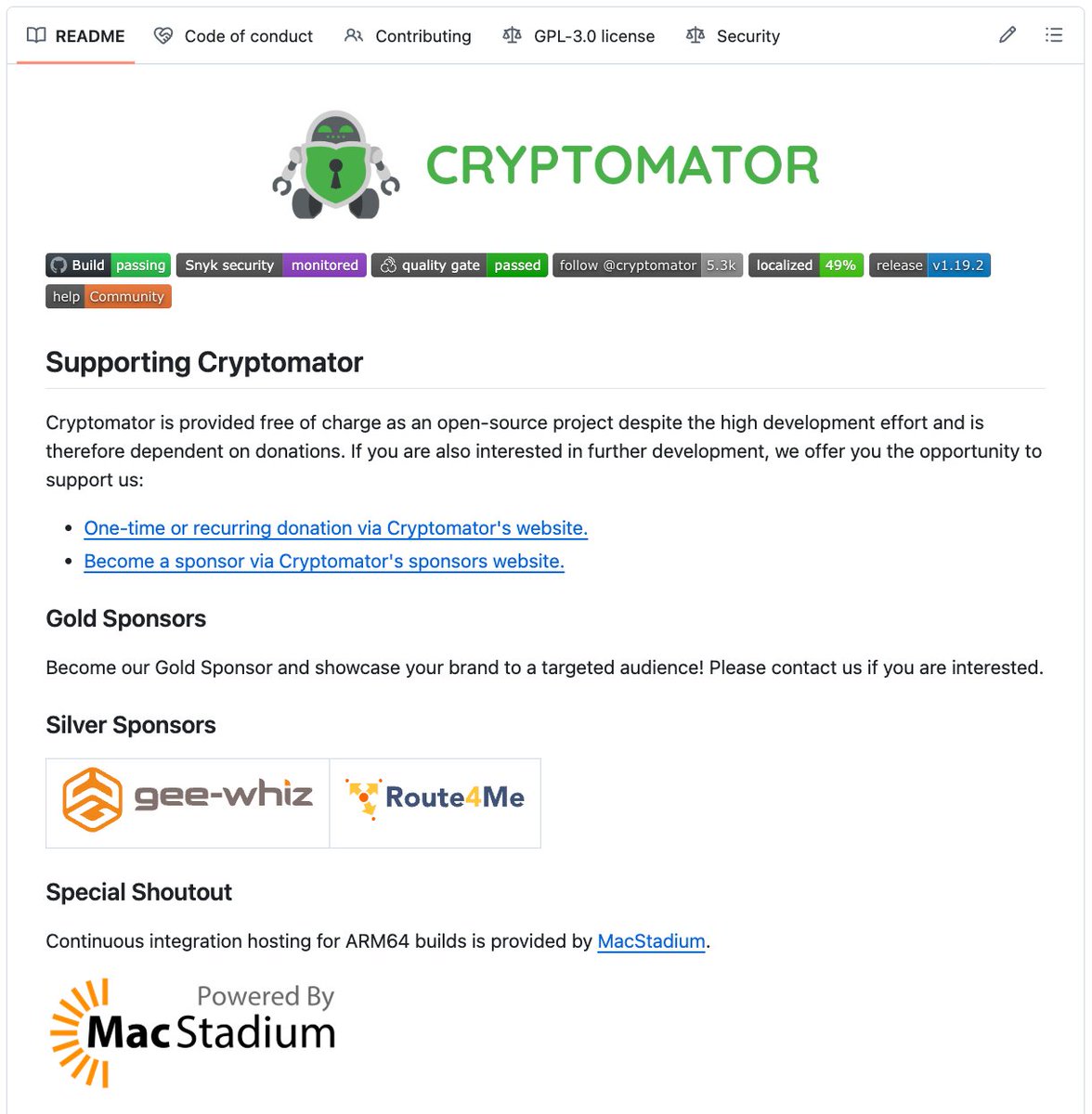
A small team in Germany spent more than a decade building the tool that fixes this.
It is called Cryptomator.
You install it. You point it at your Dropbox folder. It creates a vault. You drop files in. They get encrypted on your computer with AES-256 before they ever leave for the cloud.
Dropbox sees encrypted blobs. Google sees encrypted blobs. iCloud sees encrypted blobs. Only you have the password.
Works with Dropbox, Google Drive, OneDrive, MEGA, pCloud, ownCloud, Nextcloud. Works on Windows, macOS, Linux.
File contents encrypted. File names encrypted. Folder structure obfuscated. No accounts. No telemetry.
Honest disclosure. The cloud still sees the vault exists, its size, and when it syncs. Cryptomator hides what is inside, not the vault itself.
Receipts.
15,245 stars. 1,296 forks. GPL-3.0. Java. Last commit five days ago.
Desktop apps for Windows, macOS, Linux: free forever.
Mobile apps: one-time purchase. No subscription.
Built by Skymatic, near Bonn. Ten years old this March.
You did not buy cloud storage. You rented a glass house.
Cryptomator gives you curtains.
(Link in the comments)
6
13
54
2,514
EntrepBuilder retweeted

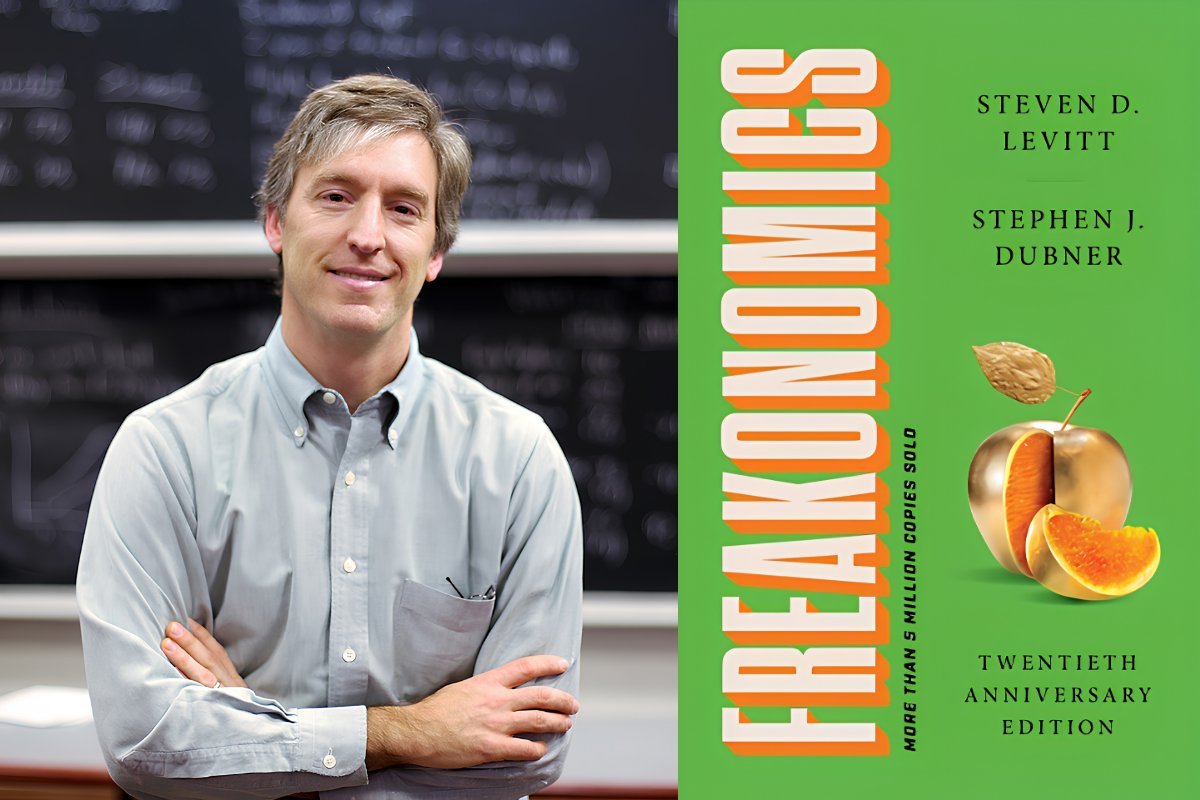
A University of Chicago economist who had never written a book and a New York Times journalist who had never studied economics spent three days together in 2003 and produced a book that sold 4 million copies by asking why drug dealers still lived with their mothers.
Their names are Steven Levitt and Stephen Dubner. The book is called Freakonomics.
I read it years ago and recently went back through it, and the framework underneath it is more useful than the conclusions.
The central argument is not about economics. It is about a single lens you can apply to almost any human behavior to find what is actually driving it.
The lens is incentives.
Levitt's opening claim is blunt. Economics is not the study of money. It is the study of what people respond to. Every human being, in every situation, is responding to a set of incentives. Some are financial. Some are social. Some are moral. The behavior that looks irrational from the outside is almost always rational from the inside once you identify which incentives are actually in play.
The drug cartel chapter is the one that made the book famous, and the data behind it came from one of the most unusual research projects in academic history.
A sociology graduate student named Sudhir Venkatesh walked into a Chicago housing project in the early 1990s with a clipboard and a survey about poverty. The local gang took him hostage overnight. He came back the next day with better questions. He stayed for seven years.
By the end, he had built a relationship close enough that J.T., the gang's leader, let his lieutenants share their financial ledgers. Real accounting records. Monthly revenues, costs, wages, tribute paid upward.
Levitt got the data and ran the numbers.
What he found destroyed one of the most persistent myths in American culture.
The crack trade was structured exactly like a corporation. At the top sat a Board of Directors, which was their actual title, roughly 20 individuals who controlled the entire operation and collected a percentage of every dollar earned beneath them. Below them were regional leaders who functioned as franchisees, paying 20 percent of their revenues upward for the right to operate in their zone. Below that were officers who handled logistics, enforcement, and finance.
And at the bottom, doing the actual street-level dealing, were approximately 20,000 rank-and-file members earning an average of $3.30 per hour.
Not $3.30 per hour as a starting wage. $3.30 per hour as the average across the entire period studied.
A hundred or so people at the top earned six-figure salaries. Everyone else earned less than they would have made working at McDonald's, while taking on a genuine risk of being shot.
The question Levitt asked was the one nobody had asked before. If the economics are this bad, why does anyone join?
The answer was the same answer that explains why people take unpaid internships at prestigious firms and work 80-hour weeks at investment banks for below-market salaries in their first year. They are not responding to their current wage. They are responding to the possibility of the wage at the top.
The gang was not a crime organization. It was a tournament. Everyone at the bottom was betting their present on a small probability of becoming J.T.
This is how Levitt thinks. Not about what people are doing but about what they are responding to.
The teacher cheating chapter worked the same way. Chicago public school teachers faced a high-stakes standardized test where student scores determined promotions and raises. Levitt analyzed the answer patterns across hundreds of thousands of test sheets. He was not looking for confessions. He was looking for statistical signatures.
When a class shows a suspicious cluster of wrong answers changed to right answers on consecutive questions, the pattern does not come from students. It comes from an eraser. Levitt built an algorithm that flagged classrooms where the probability of the answer pattern occurring randomly was essentially zero.
About five percent of Chicago teachers were cheating. They were responding to an incentive structure that rewarded scores and provided almost no mechanism to catch manipulation.
The sumo chapter was the same method applied to Japan's national sport. In a 15-round sumo tournament, finishing with a record of 8 wins and 7 losses preserves a wrestler's ranking. Finishing 7 and 8 drops it severely. When Levitt analyzed over 45,000 match outcomes, he found something the data could not explain by chance.
Wrestlers who entered their final match at 7 and 7 won against opponents sitting safely at 8 and 6 at a rate far above statistical probability. The 8-6 wrestler had almost nothing to lose from losing. The 7-7 wrestler had his entire ranking on the line.
The matches were not always fixed in a room somewhere. The incentive structure was producing the result without anyone having to arrange it, because both wrestlers understood what the other one needed.
Levitt's method is the same in every chapter. Take a dataset. Identify what behavior you are trying to explain. Map the incentive structure around the people producing the behavior. Find where the data deviates from what random chance would predict. The deviation is where the truth lives.
Most people look at a confusing behavior and ask what is wrong with the person doing it. Levitt asks what is right with them, given what they are actually responding to.
The drug dealers were rational. The teachers were rational. The sumo wrestlers were rational. The behavior that looked inexplicable from the outside was completely legible once you asked the right question.
What incentive is this person actually responding to?
That question will explain more human behavior than almost any other tool you can pick up.
What is one system in your life, at work or anywhere else, where you suspect the real incentives are completely different from the stated ones?
5
7
386
EntrepBuilder retweeted

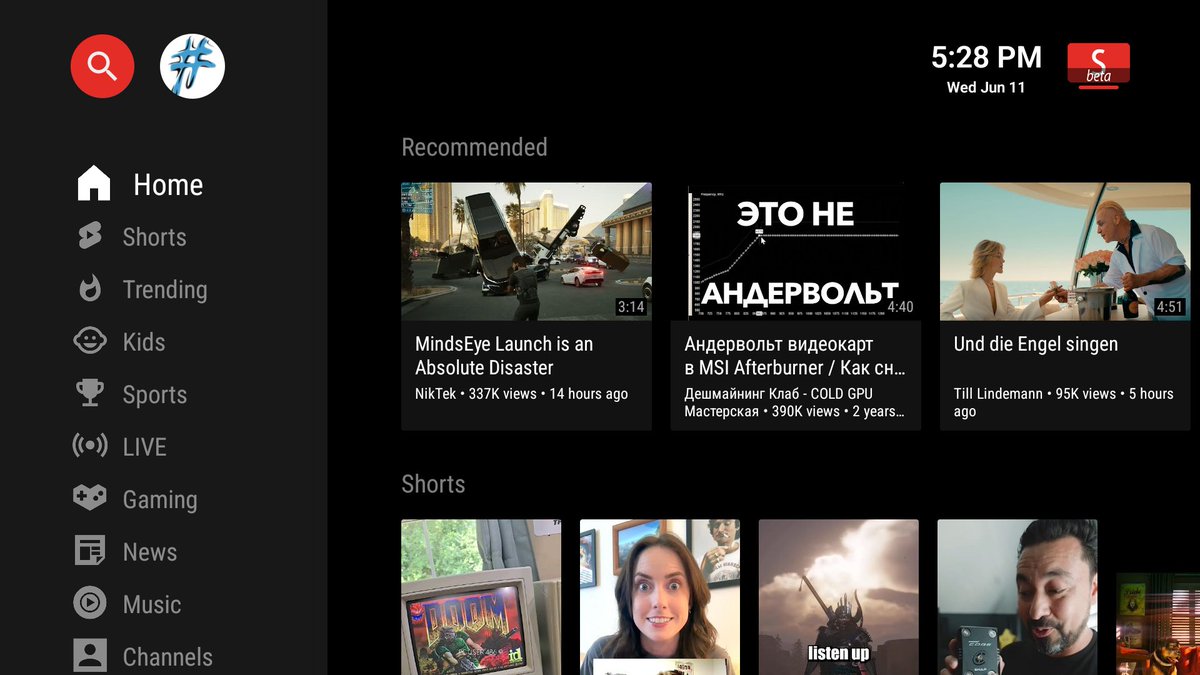
A single developer got tired of ads invading his living room TV, so he built his own Android TV player and gave it to the world for free.
His name is Yurii Liskov. The app is called SmartTube.
There is no company behind it. No team. One person maintaining a clean, ad-free way to watch on the biggest screen in your house.
The feature that wins people over is SponsorBlock. It doesn't just block YouTube's ads. It uses a crowdsourced database to skip the sponsor segments inside the videos themselves, the "this video is brought to you by" reads, the intros, the begging for subscribes. You just glide past all of it.
- No ads and no Google account needed
- 8K, 60fps, and HDR for the devices that support it
- Playback speed control that sticks across videos
- Works on Fire TV, Chromecast, NVIDIA Shield, and most Android TVs
It lives on GitHub, not an app store, and it runs on donations instead of selling your attention.
One person built the calm, ad-free TV experience that a trillion-dollar company decided you should pay for.
100% Opensource.
github.com/yuliskov/SmartTub…
2
8
12
355

EntrepBuilder retweeted

54m
Coding games are the best way to learn coding.
From CSS, Python, JavaScript to Blockchain.
Here are 10 of the BEST online games to learn coding in 2026:

17
10
20
751
EntrepBuilder retweeted

Spotted in China: a Unitree robot working the sidewalk with a WeChat QR code and an LED sign pleading "desperately need electricity fees."
Source: China Insider
14
15
642
EntrepBuilder retweeted

5 BODY LANGUAGE TIPS for Men
1. Don't stand like a child.

3
11
15
2,549
EntrepBuilder retweeted

You're not depressed. You just don't have a quest. you need to be quest maxing.
Here are 25 side quests to start immediately:

1
8
11
1,014
EntrepBuilder retweeted

6 Years in the Gym Taught Me This: The Best Foods to Build Muscle
1. Eggs


1
10
14
1,588

EntrepBuilder retweeted

ChatGPT has quietly built a file on you. You've never seen most of what's in it.
Every message you send feeds it. It studies your patterns to map your personality and habits, things you never actually told it.
Here are 15 prompts to pull up everything it has on you, and wipe what you never agreed to:
1
9
9
727