
Unify scattered project & portfolio data into one source of truth, detect delivery risks early, automate the admin tax & connect execution to business outcomes.
Joined November 2025
- Tweets 56
- Following 16
- Followers 2
- Likes 74
Photos and videos
ExecuteIQ retweeted

Walking the floor of the @Microsoft AI Tour,
one truth kept landing harder with every conversation.
The demand exists. The solutions do not.
Delivery leaders want AI to detect risks earlier. They want real-time insights. They want data-driven foresight.
The numbers are not subtle:
► 87% want early risk detection. Only 16% have it.
► 85% want data-driven insights. Most cannot get them.
The gap between what executives need and what their delivery stack can deliver is not narrowing.
It is widening.
And the reason is not effort.
It is that the systems leaders rely on were never built to give them what they need.
► Siloed tools
► Scattered context
► No memory across programs
► Dependencies invisible until they explode
► Valuable insights trapped in conversations, meetings, and unstructured sources no system ever captures
Green on the outside. Red underneath.
This is the gap we are working on at @ExecuteIQ
Not another tool to babysit.
An intelligence layer that works on top of what your teams already use. Built on a human and AI partnership. Designed for foresight, not firefighting.
The future of execution will not be defined by who adopts AI fastest.
It will be defined by who can finally see across what their current systems were never built to show them.
For the executives and delivery leaders reading this:
👉🏽 How much of your portfolio’s most important context lives somewhere that no dashboard, status report, or AI assistant can actually see?
Foresight, not firefighting.
#ExecutionLeadership #MicrosoftAITour #ExecutionIntelligence #PredictiveExecutionIntelligence #EnterpriseAI #AIinProjectManagement #PortfolioManagement #PredictiveAnalytics #Microsoft

1
3
50
ExecuteIQ retweeted
Most “execution problems” are actually visibility problems.
By the time the red status hits your inbox, the window to course-correct has already closed.
► The capital is spent.
► The commitment to the board is public.
► The customer escalation is in motion.
You are not steering anymore. You are firefighting.
And here is the harder truth: the signal is not just late.
It is softened.
“Working through it.”
“Plan to mitigate.”
“Slight impact on timeline.”
None of these are lies.
They are also not the truth.
They are what status culture produces when nobody wants to be the messenger of red.
Meanwhile, the real signal lives somewhere else entirely. In the workarounds, side conversations, and manual interventions that never make it into any status report.
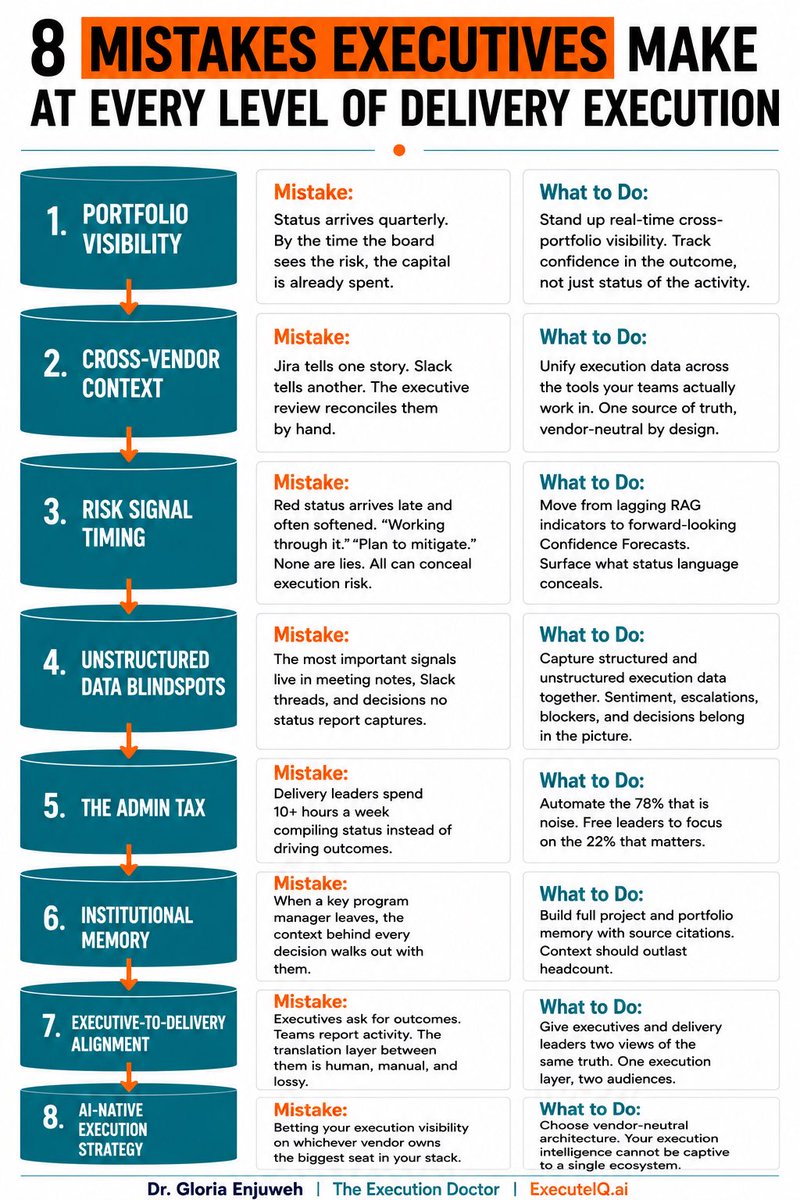
The pattern repeats at every level of delivery execution:
► Portfolio visibility arrives quarterly
► Cross-vendor context is reconciled by hand
► Risk signals arrive late and softened
► The most important context lives in meeting notes no report captures
► Institutional memory walks out the door when a key leader leaves
Eight common mistakes.
Eight better moves.
Mapped to the layers of delivery execution your teams are running today.
This is the gap we are working on at @ExecuteIQ.
We are building the vendor-neutral predictive execution intelligence layer that helps leaders see earlier, decide faster, and protect outcomes across the tools their teams actually work in.
That is where AI earns its place in a PMO.
Not summarizing status reports.
Interrogating them.
Because the value of any signal is not the signal.
It is the runway it buys you.
👉🏽 Where does your delivery organization lose the most visibility today?
► Portfolio reporting
► Cross-vendor context
► Risk signal timing
Something else
Foresight, not firefighting.
#Leadership #ExecutionIntelligence #Executives #CIO #PredictiveAnalytics #PredictiveExecutionIntelligence #COO #DeliveryExecution #EnterpriseAI #CTO #AIinPM #PMO #AIinProjectManagement
#PortfolioManagement
.
.
1
2
34
ExecuteIQ retweeted
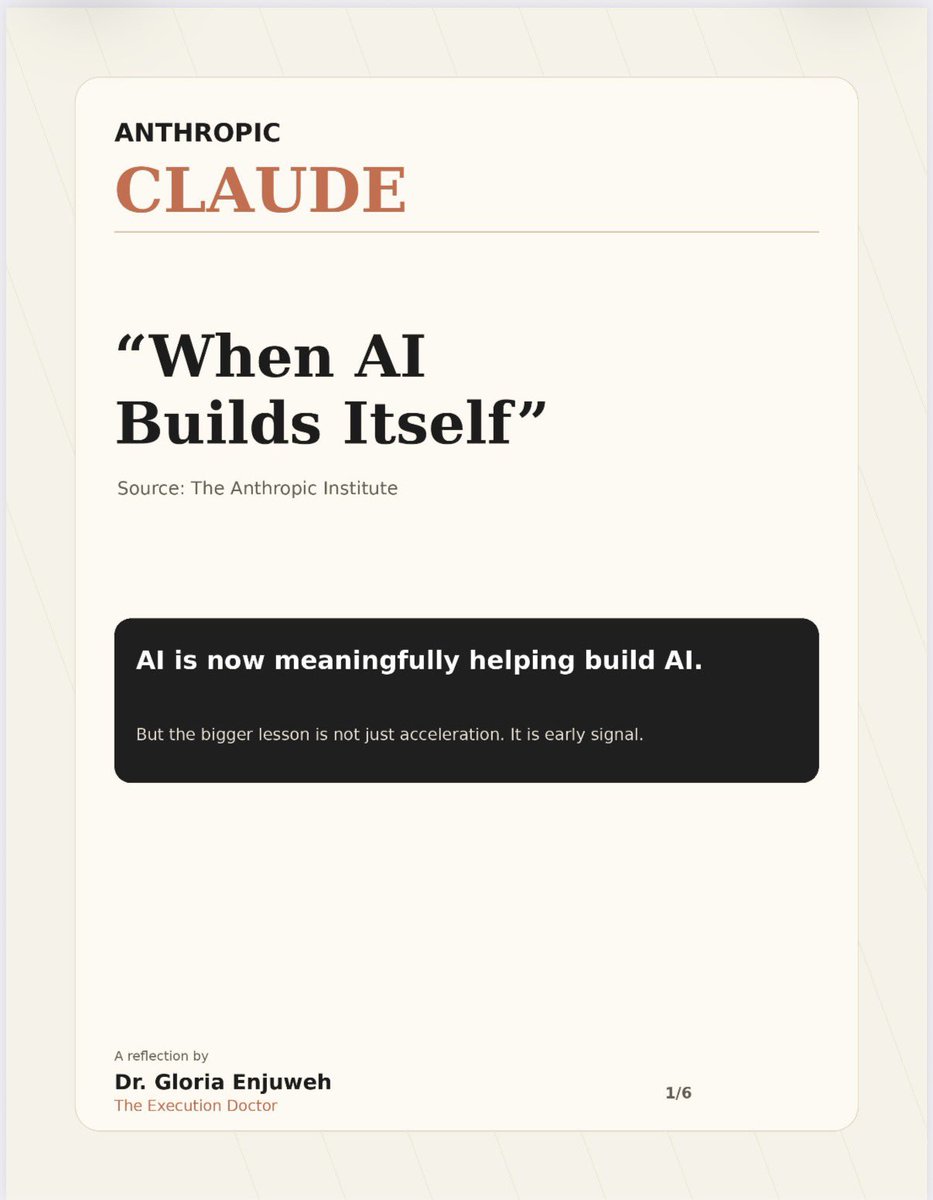
@AnthropicAI just published one of the most important AI pieces of the year: “When AI Builds Itself.”
The headline numbers are hard to ignore:
► Claude writes 80% of the code merged at Anthropic.
► Anthropic engineers are shipping 8x more code than they did before Claude became deeply embedded in their workflow.
► On the hardest tasks, Claude’s success rate jumped 50 points in six months.
But what stayed with me was not the capability claim.
It was the posture.
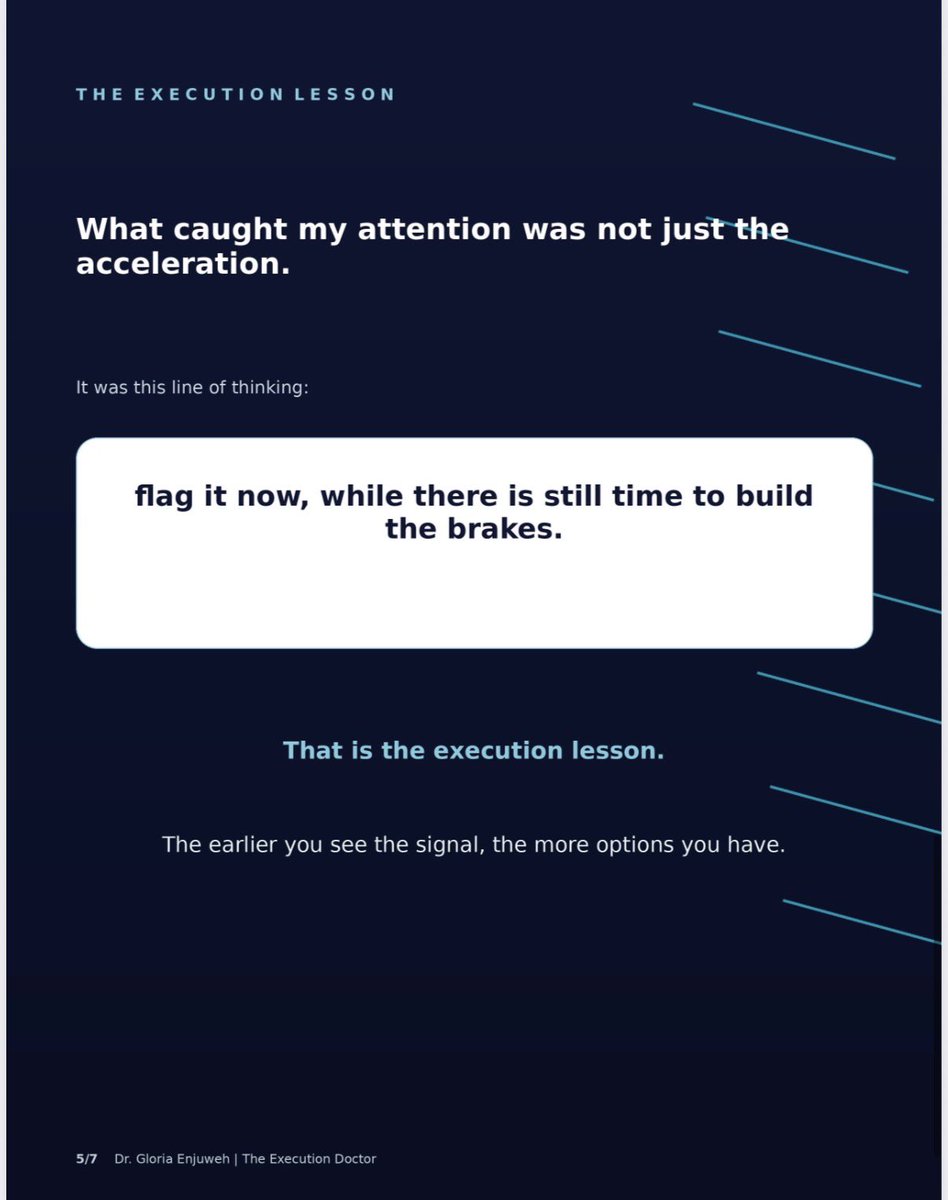
They flagged the risk now, while there is still time to build the brakes.
Not after the acceleration forces the decision.
Before.
The mechanism to course-correct has to exist before you need it.
Once you need it, it is already too late to start building.
📌 That is the execution lesson.
The value of any signal is not the signal.
It is the runway it buys you.
Most delivery organizations operate the opposite way.
They wait for:
► The status meeting.
► The missed milestone.
► The executive escalation.
By the time the risk is visible, many of the best options are already gone.
This is why the next era of execution requires:
► Cross-vendor context
► Early risk signals
► Confidence forecasts
► Full project and portfolio memory
That is the layer we are building at @ExecuteIQ.
✔️ Anthropic is building brakes at the model layer.
✔️ We are building foresight at the delivery layer.
Different altitudes.
Same principle.
📌 See it early, or fight it late.
📌 Foresight, not firefighting.
Reference: “When AI Builds Itself” - The Anthropic Institute (link in the comments)
Link to the @LinkedIn reflection post here 👉🏽
linkedin.com/posts/dr-gloria…
#ExecutionIntelligence #EnterpriseAI #PredictiveExecutionIntelligence #AINative #AI #Anthropic #DeliveryLeadership #PMO #PortfolioManagement @claudeai #Anthropic #Claude
.
.
1
1
2
65
ExecuteIQ retweeted
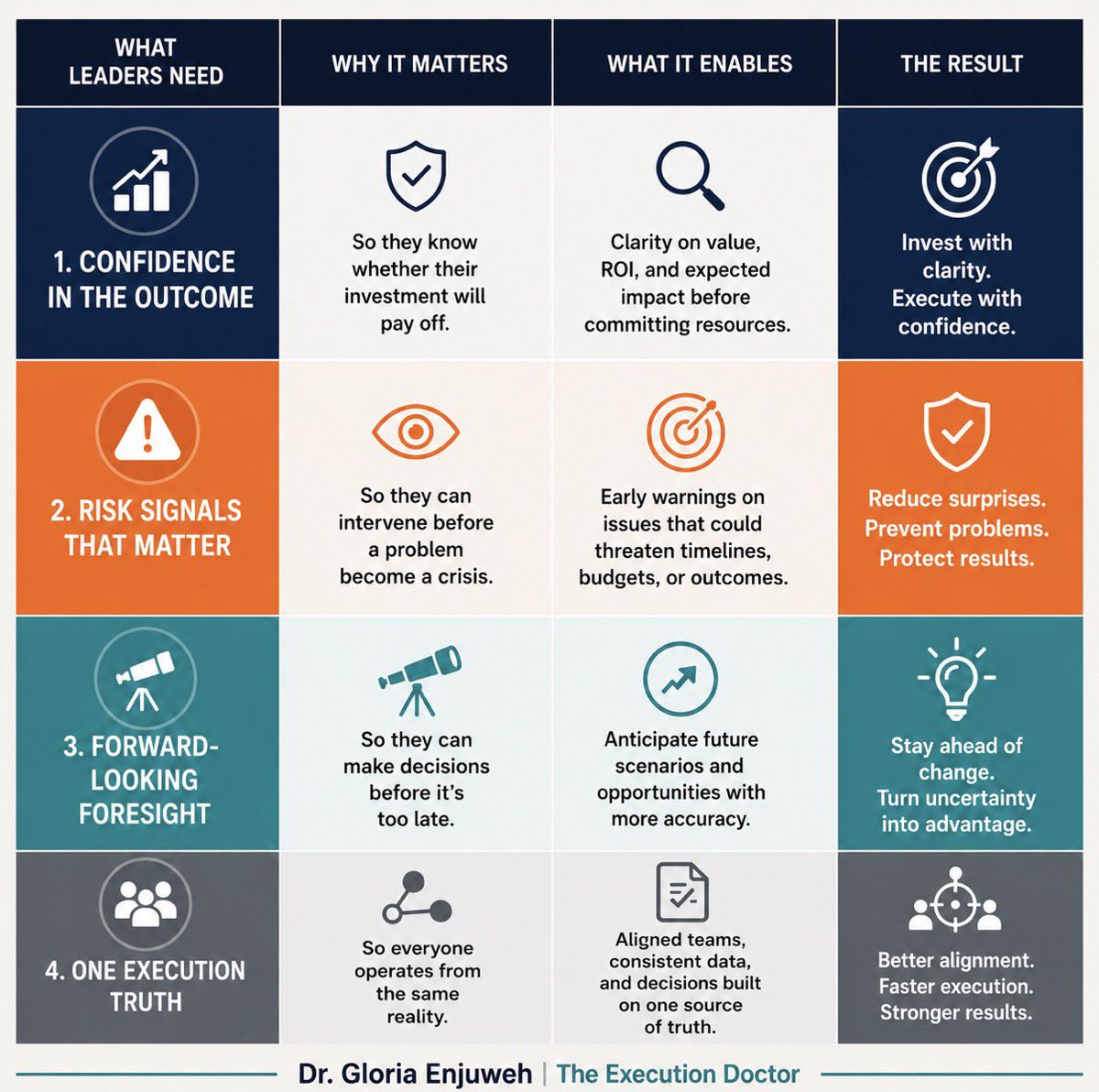
Everything on this list helps leaders shift from reactive reporting to confident, data-driven decision making.
1
2
38
ExecuteIQ retweeted
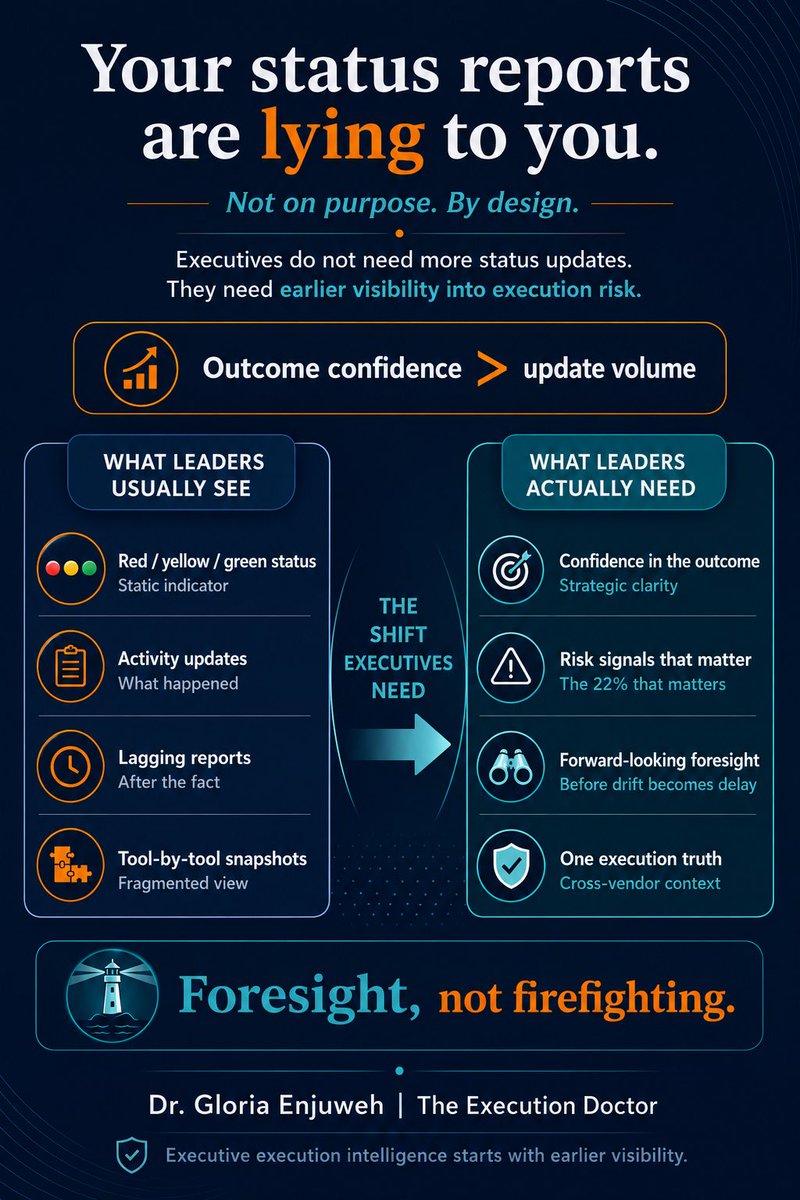
Your status reports are lying to you.
Not on purpose. By design.
Most leadership teams are not short on information.
They are surrounded by it:
► Project plans
► Jira tickets
► Teams updates
► Slack threads
► Meeting notes
► Status reports
► Executive summaries
The problem is that the signal is buried inside the noise.
And by the time execution risk becomes clear at the executive level, the delay has already cost the organization time, options, and sometimes trust.
That is why red / yellow / green reporting is not enough.
► Green can hide dependencies.
► Yellow can miss the real driver.
► Red often arrives after the window to act has already started closing.
The executive question is not:
“What is the status?”
The better question is:
“Are we still confident in the outcome, and what is changing that confidence?”
That is the shift delivery leadership has to make:
► From activity updates to outcome confidence.
► From lagging reports to forward-looking foresight.
► From tool-by-tool snapshots to one execution truth.
That is the gap @ExecuteIQ is built to close, helping leaders see the execution signals that matter before strategic priorities slip.
Because execution leadership is not about having more reports.
It is about seeing earlier, deciding faster, and protecting outcomes.
Foresight, not firefighting.
For executives and delivery leaders:
👉🏽 Where does your organization lose the most visibility today, status reporting, tool fragmentation, or decision latency? Something else?
#ExecutionLeadership #ExecutionIntelligence #Executives #CIO #PortfolioManagement #CTO #PredictiveExecutionIntelligence #COO #EnterpriseAI #PMO
.
.
1
1
2
97
ExecuteIQ retweeted
Most delivery failures do not start as failures.
They start as signals.
➤ A blocker mentioned in Teams or Slack.
➤ A dependency buried in Jira.
➤ A decision made in a Teams meeting.
➤ A risk sitting inside a project document.
➤ A concern raised once, then lost in the noise.
By the time the issue shows up in a status report, the organization has usually already lost time.
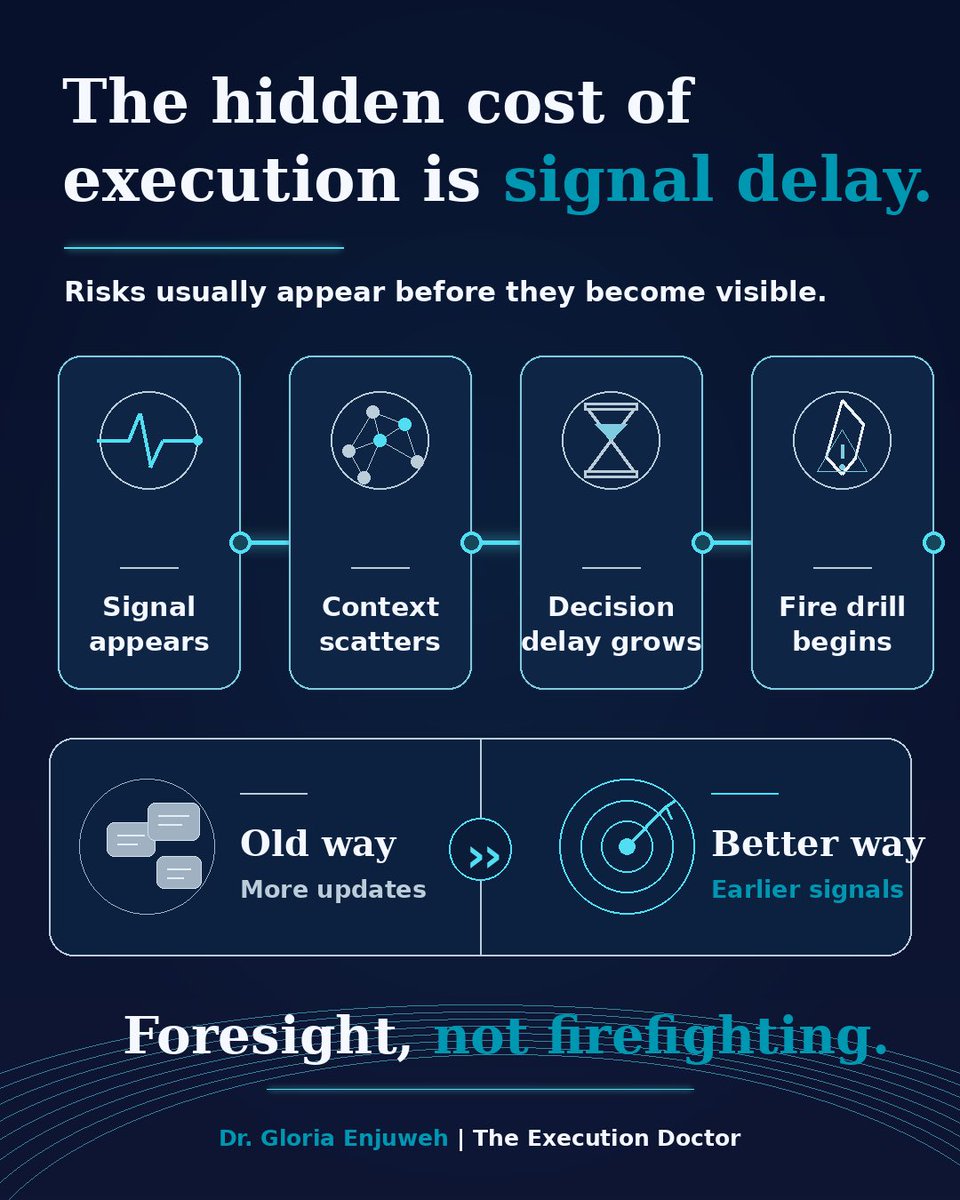
That is the hidden cost of execution:
Signal delay.
It is the gap between when a risk first appears and when the right people can see it clearly enough to act.
➤ Delivery leaders feel it when they spend hours reconstructing what changed across tools.
➤ Executives feel it when risks surface too late to protect timelines, outcomes, or strategic priorities.
➤ Teams feel it when preventable issues turn into fire drills.
The next era of execution leadership will not be defined by who creates the most updates.
It will be defined by who sees the right signals early enough to act.
That is why we are building @ExecuteIQ: to help organizations move from scattered updates to predictive execution intelligence.
Because high-performing execution is not about more noise.
It is about better foresight.
Foresight, not firefighting.
Where do you see the biggest signal delay in delivery today?
► Tools?
► Meetings?
► Status reporting?
► Decision-making?
► Something else?
#ExecutionIntelligence #PredictiveIntelligence #ProjectDelivery #PMO #CIO #DeliveryLeadership #PredictiveExecutionIntelligence #EnterpriseAI #AIinProjectManagement #ProjectManagement #PortfolioManagement #Agile #Founder #Buildinpublic
.
.
1
2
46
ExecuteIQ retweeted
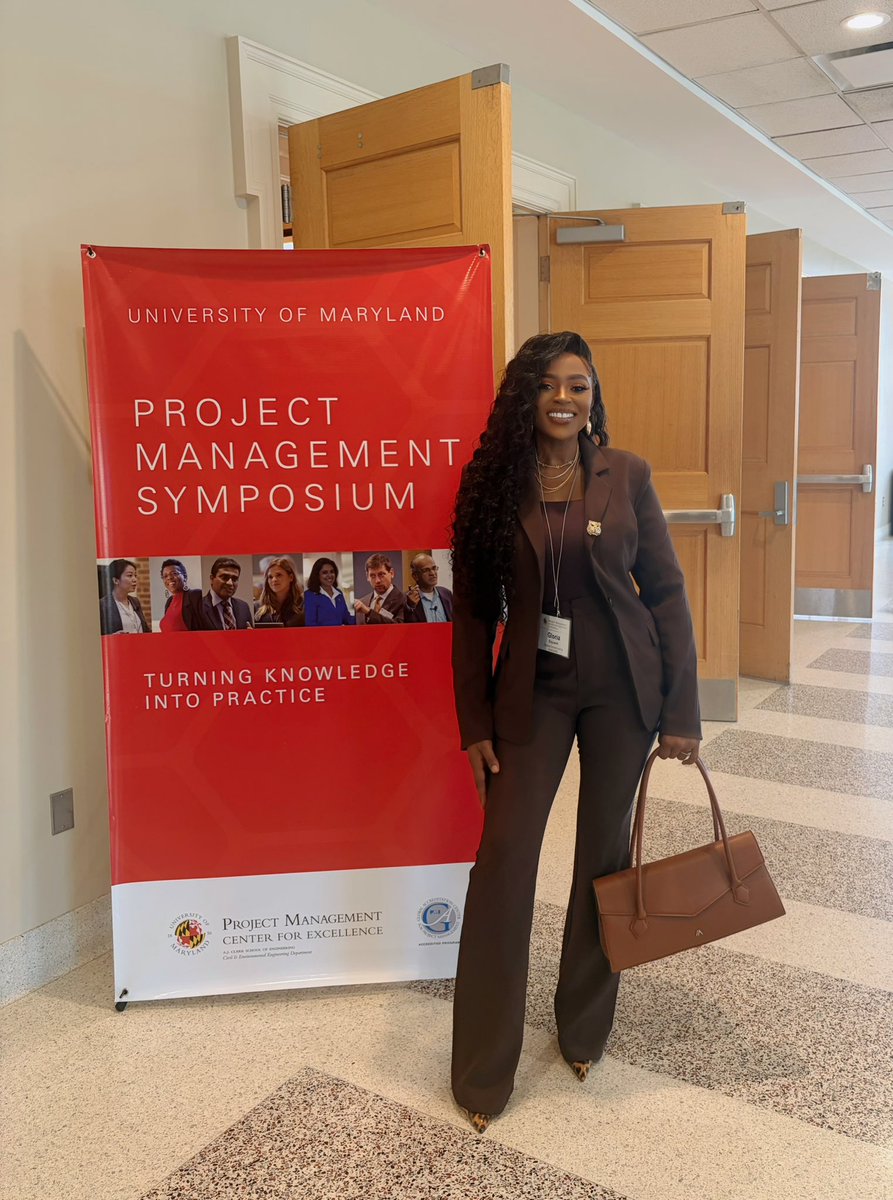
I had the privilege of speaking at the University of Maryland Project Management Center for Excellence -
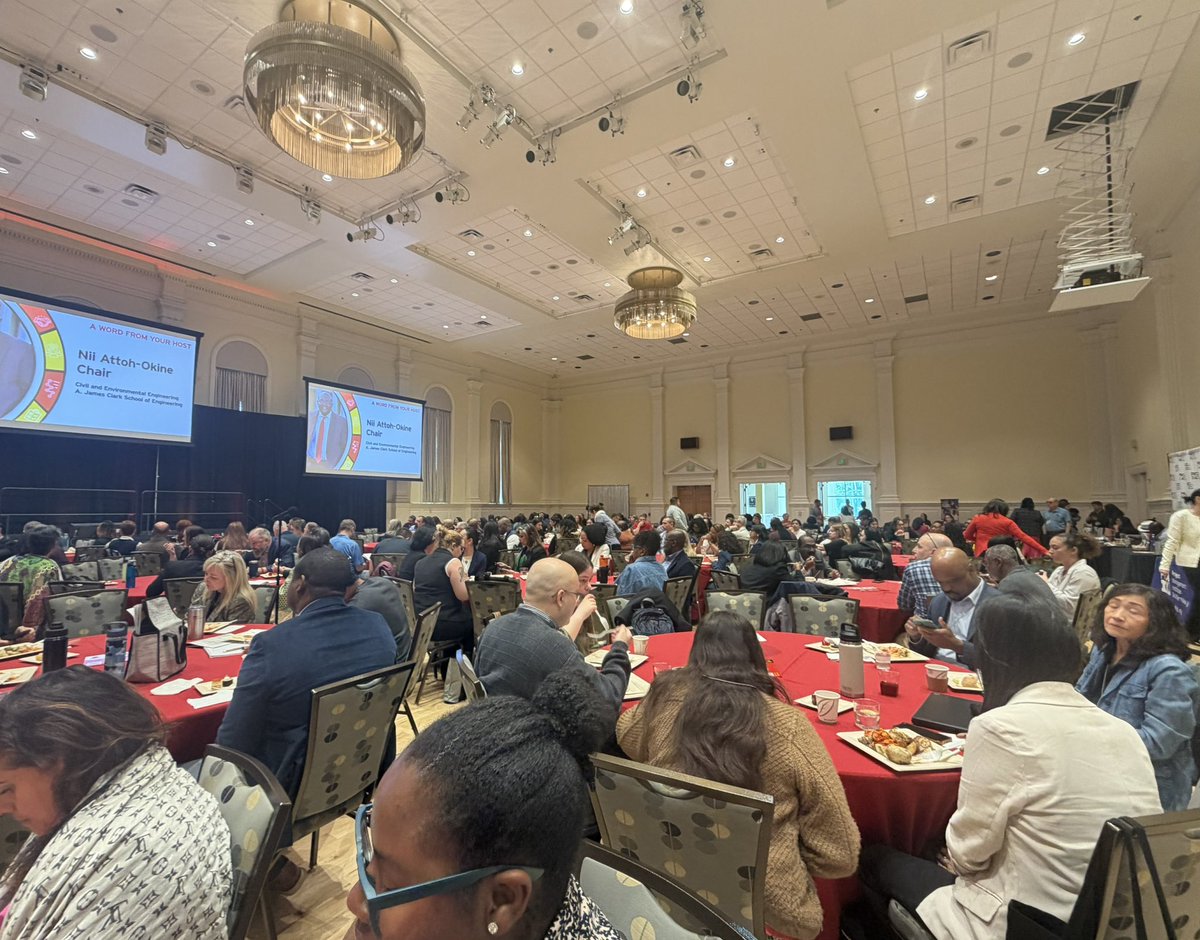
2026 Project Management Symposium in front of a room full of delivery leaders, program managers, executives, and government professionals.
The session was on AI in Project Management: From Reactive to Predictive - AI Agents That Detect Risk and Automate the Noise
But what happened in that room was bigger than a presentation.
The audience asked sharp questions:
→ Scattered context
→ AI governance
→ Data privacy
→ Hallucinations
→ Guardrails
→ RAG
→ Bias
These were not surface-level questions.
These were practitioners paying attention and trying to figure this out in real time.
And the conversations afterward told me everything I needed to know about where the market is right now.
A leader from financial services pulled me aside.
→ Still trying to unify their data
→ Still struggling with fragmented visibility
→ Still at the beginning of the AI journey
Then I spoke with a leader from transportation.
Same story.
Different industry.
Same problem.
→ Scattered data
→ Siloed tools
→ No unified source of truth
And leadership asking:
“Why can’t we just get a clear picture of where things stand?”
That gap is exactly why we are building @ExecuteIQ.
We are not at the finish line yet.
But that room confirmed three things:
✔ The problem is real
✔ The market is ready
✔ The conversation is long overdue
👉🏽 If you are ready to move from reactive to predictive, get on the waitlist at executeiq.ai/#waitlist
👉🏽 Where is your organization on the Data Journey?
Drop your stage below: Scattered, Unified, Remembered, Analyzed, Surfaced, Decided, or Connected.
The Execution Doctor has entered the chat.
#ExecutionIntelligence #AI #ProjectManagement #AIinPM #UMD #Leadership #PredictiveIntelligence #Speaker #ProgramManagement #PortfolioManagement #PMSymposium2026 #AgileProjectManagement #AIinProjectManagement
.
.


1
2
40
ExecuteIQ retweeted
“Do not keep wedging things in,
or the schedule will blow apart.”
Someone said this in a meeting this week.
I didn’t flinch.
Because I’ve lived this cycle more times than I can count.
Here’s how it usually plays out:
→ The templates change. Again.
→ The documentation gets updated. Again.
→ The compliance ask expands. Again.
→ The team absorbs it. Again.
And somewhere in the back of the room, someone quietly realizes the schedule just took a hit.
But nobody wants to say it out loud.
This is the reality of delivery in regulated environments right now.
Compliance requirements shift.
Security frameworks evolve.
Audit expectations expand.
And every “small” change has downstream impacts that land somewhere.
Usually on the people already stretched past capacity.
I’ve sat in these rooms.
I’ve been the person tracking the ripple effects while leadership asks why delivery is slipping.
The answer is almost never:
“The team didn’t work hard enough.”
It’s usually this:
We kept adding without subtracting.
The hard truth?
Every new ask when the team is already at capacity is not just scope creep.
It’s a tradeoff.
And if nobody names what breaks, the schedule names it for you.
What I tell delivery leaders all the time:
→ You need steady workflow.
→ Not chaos dressed up as agility.
→ Not constant firefighting disguised as flexibility.
Predictability is not boring.
It’s how you actually ship.
Stop asking:
“Can we fit this in?”
Start asking:
“What breaks if we do?”
“And who owns that conversation?”
This is execution intelligence.
It’s one of the reasons I’m building @ExecuteIQ.
👉🏽 Delivery leaders, when was the last time someone in your org named what would break before saying yes to a new ask? Drop it in the comments.
#DeliveryLeadership #ExecutionIntelligence #ProjectManagement #PMO #Agile #EnterpriseAI #AIinProjectManagement #Leadership #AIforProjectManagement #CIO #Executives #PortfolioManagement #PredictiveAnalytics #Netflix #Disney

1
2
62
ExecuteIQ retweeted
Most AI tools tell you what happened.
They don’t tell you what’s about to go wrong.
That’s the gap.
And it’s costing delivery organizations weeks they can’t get back.
Every executive is asking:
➜ Is our AI investment actually working?
For delivery and execution, here’s how you answer it:
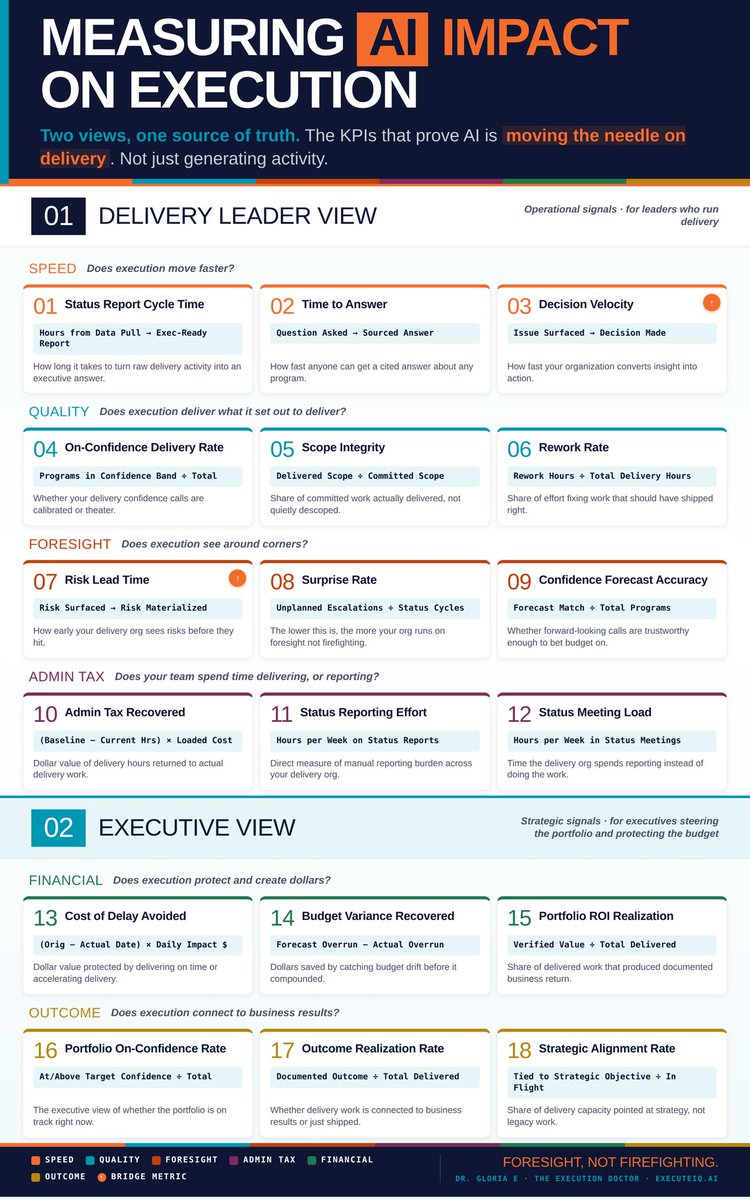
➡️ 18 KPIs
➡️ 2 leadership views
➡️ 1 source of truth
Most delivery orgs measure activity:
• Tickets closed
• Sprints completed
• Status meetings held
But that’s not what the business pays for.
The business pays for:
✔️ Outcomes delivered on time
✔️ Budget protection
✔️ Strategic alignment
✔️ Predictable execution
Here’s what most organizations get wrong:
Delivery leaders and executives should NOT be tracking the same metrics.
━━━━━━━━━━━━━━━
▶ DELIVERY LEADERS OWN:
━━━━━━━━━━━━━━━
• Speed
• Quality
• Foresight
• Admin Tax
The operational health of execution.
━━━━━━━━━━━━━━━
▶ EXECUTIVES OWN:
━━━━━━━━━━━━━━━
• Financial impact
• Portfolio outcomes
• Strategic value realization
The business health of execution.
Two bridge metrics connect both worlds:
➡️ Decision Velocity
➡️ Risk Lead Time
What delivery leaders manage daily is exactly what executives need rolled up strategically.
A few honest checks:
• If your delivery org can’t tell you how early it surfaces risk, it doesn’t have foresight. It has firefighting.
• If your status reports take more hours to produce than the decisions they inform, the reporting became the work.
• If portfolio confidence calls aren’t measured against actual outcomes, they’re theater.
This is the scorecard we’re building toward at @ExecuteIQ:
A vendor-neutral predictive execution intelligence layer that makes every one of these KPIs measurable from one source of truth.
Save this.
Bring it to your next portfolio review.
Question for leaders:
👉🏽 Which of these 18 KPIs can your organization actually measure today?
And which ones are you still flying blind on?
Foresight, not firefighting.
#ExecutionIntelligence #DeliveryLeadership #AIforEnterprise #AIforProjectManagement #PMO #CIO #Executives #PortfolioManagement #PredictiveAnalytics #Founder #BuildInPublic
1
2
33
ExecuteIQ retweeted
Your calendar isn’t full of meetings.
It’s full of decisions nobody wanted to make alone.
Nobody wants to be wrong alone.
So we call a meeting to share the blame.
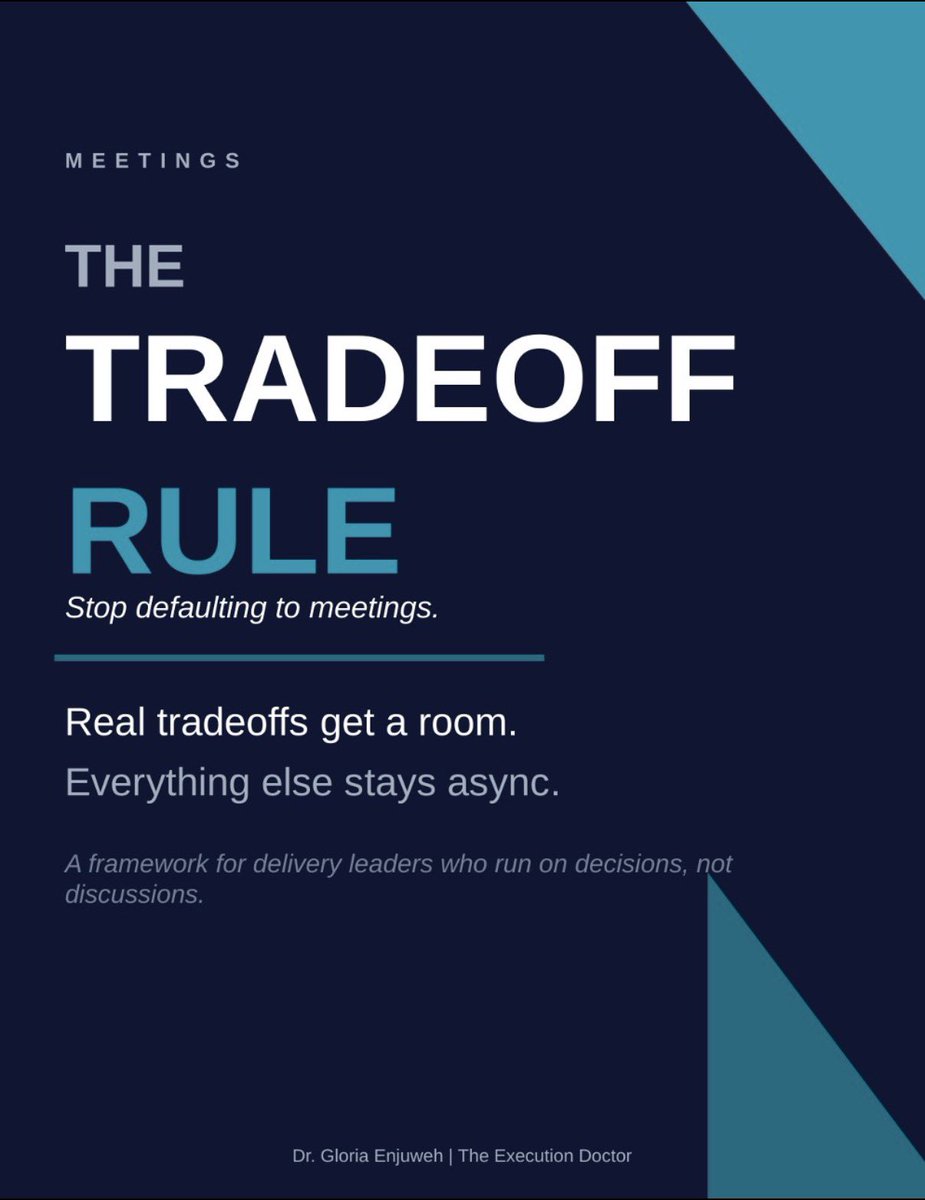
➤ Here’s the rule I use:
Real tradeoffs?
Get in the room.
Data already shows the answer?
Keep it async.
That’s it.
That’s the whole framework.
If your meeting doesn’t have a clear decision on the table:
→ Cancel it
→ Send a Loom
→ Write a doc
→ Respect the calendar
Most meetings aren’t communication problems.
They’re decision-avoidance problems.
How many meetings on your calendar this week are actually just delayed decisions?
Drop your number below. 👇
Connect with Dr. Gloria Enjuweh | The Execution Doctor for more on execution intelligence.
Link to document 👉🏽 linkedin.com/posts/dr-gloria…
Follow us on @ExecuteIQ
#MeetingCulture #DeliveryLeadership #Portfoliomanagement #ExecutionIntelligence #PMO #Agile #scrum #AgileDelivery #AIinProjectManagement #Leadership #projectmanagement #Programmanagement
.
.
1
1
2
36
ExecuteIQ retweeted
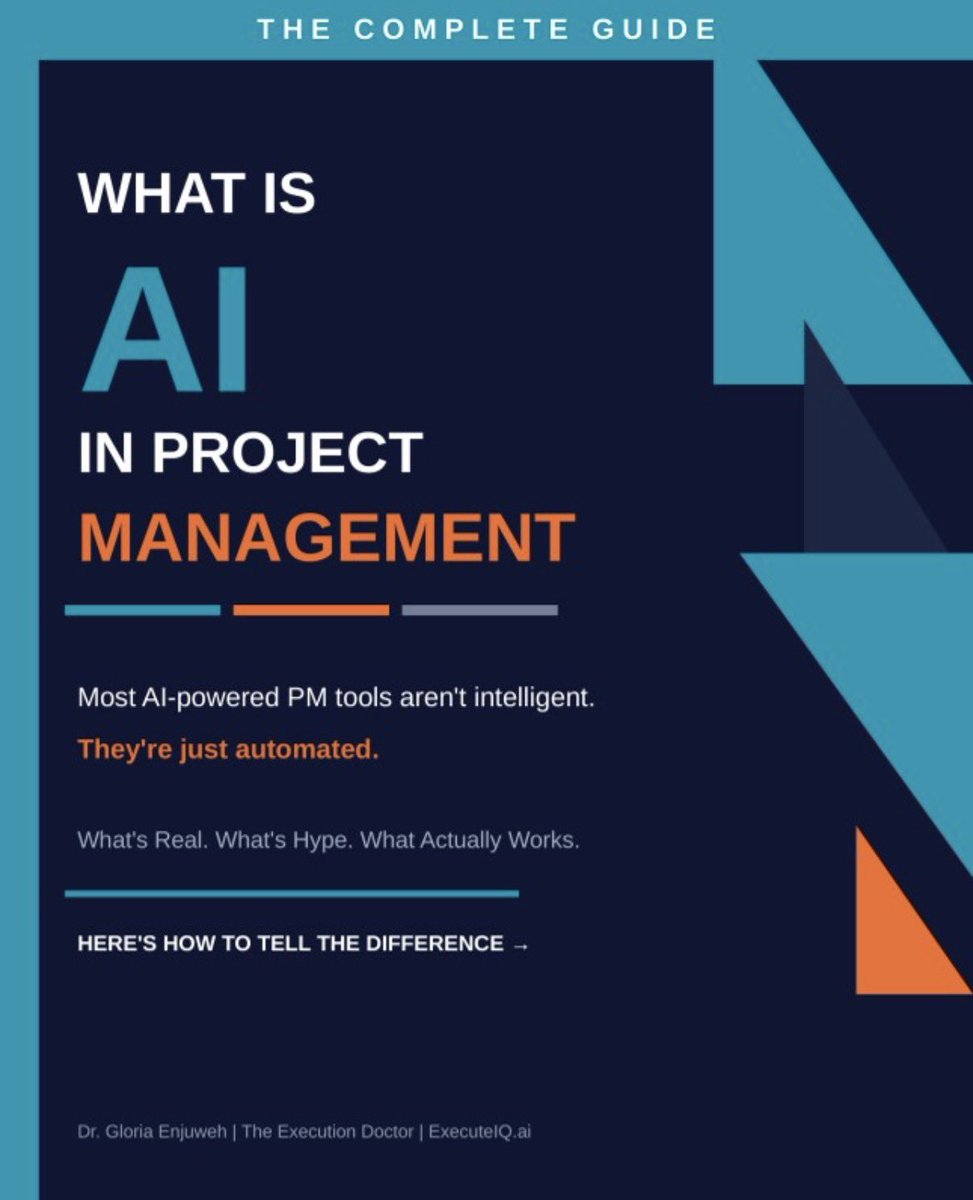
Stop googling “what is AI in project management.” Download the full guide.
I put together a 34 page guide.
👉🏽 Link: Free download at: executeiq.ai/guide
Most “AI-powered” PM tools aren’t intelligent.
They’re just automated.
There’s a difference.
→ AI-generated summaries?
That’s just reformatting what you already have.
→ Chatbots on your docs?
That’s just search with a better interface.
→ Smart automations?
That’s just if-this-then-that with a new label.
None of that is intelligence.
It’s features dressed up as AI.
Real AI in project management looks different:
→ Unifies scattered data
→ Remembers everything
→ Detects risks early
→ Automates the admin
→ Connects execution to business outcomes
That’s not automation.
That’s intelligence.
That’s what we’re building with ExecuteIQ.
I put together a 34-page guide that covers:
→ What’s hype vs. what’s real
→ 7 questions to ask any vendor
→ Red flags and green flags
→ A self-assessment checklist
→ What leaders should do today
👉🏽 Free download at: executeiq.ai/guide
Is your current tool giving you foresight…
or just fancier reports?
#ExecutionIntelligence #AIinProjectManagement #PMO #Agile #ProjectDelivery #DigitalTransformation #CIO #DeliveryLeaders #Executives #COO #Leadership #CTO #VP #PredictiveAnalytics #PortfolioManager #ProjectManager #Scrum #ProgramManager #AIStrategy #AgileCoach
.
.
1
3
59
ExecuteIQ retweeted
Most delivery leaders are using AI wrong.
They’re adding chatbots. Automating status reports. Generating summaries nobody reads.
That’s not transformation. That’s decoration.
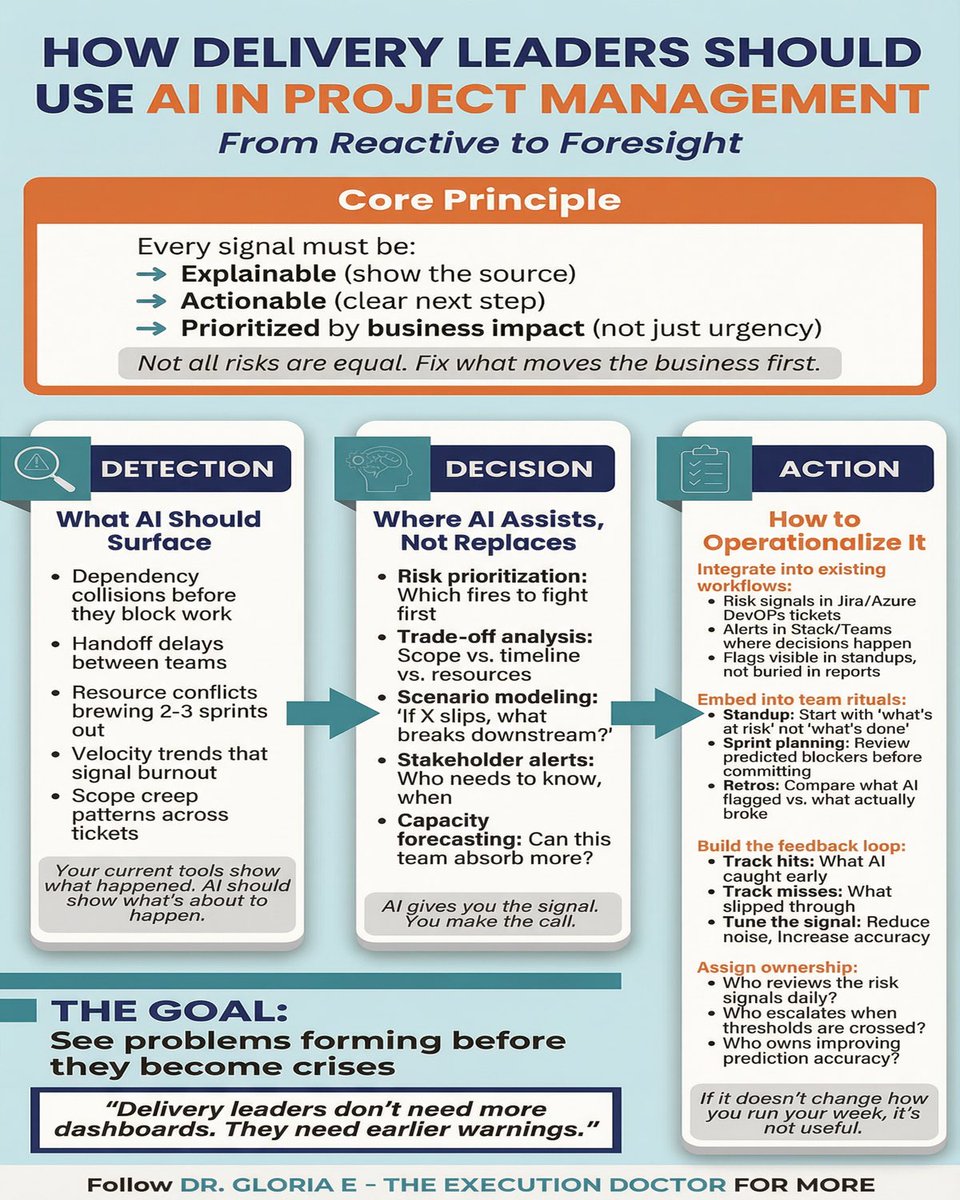
Here’s how AI should actually work in project management:
▶ DETECTION
AI should surface what your dashboards hide:
→ Dependency collisions before they block work
→ Handoff delays between teams
→ Resource conflicts brewing 2-3 sprints out
Your current tools show what happened. AI should show what’s about to happen.
▶ DECISION
AI assists. It doesn’t replace.
→ Risk prioritization: Which fires to fight first
→ Scenario modeling: If X slips, what breaks downstream?
→ Capacity forecasting: Can this team absorb more?
AI gives you the signal. You make the call.
▶ ACTION
If it doesn’t change how you run your week, it’s not useful.
→ Integrate into Jira, Slack, Teams - where decisions happen
→ Embed into standups, sprint planning, retros
→ Build the feedback loop: Track what AI caught vs. what it missed
→ Assign ownership: Who reviews risk signals daily?
📌 And every signal must be:
→ Explainable (show the source)
→ Actionable (clear next step)
→ Prioritized by business impact (not just urgency)
Not all risks are equal. Fix what moves the business first.
The goal isn’t more dashboards.
It’s earlier warnings.
📌 This is the framework behind @ExecuteIQ - helping delivery leaders move from reactive to foresight.
And not just detection, but the ability to ask questions, get actionable recommendations, and connect every decision back to business outcomes. What moves the business? What gets prioritized? That’s where AI stops being a tool and becomes a thinking partner.
What’s the first thing you’d want AI to warn you about before it becomes a crisis?
♻️ Repost to help a delivery leader move from reactive to predictive..
#ExecutionIntelligence #AIinProjectManagement #PMO #Agile #Scrum #ProjectDelivery #CIO #COO #Leadership #CTO #VP #PredictiveAnalytics #PortfolioManager #ProjectManager #ProgramManager #AgileCoach
.
.
1
3
41
ExecuteIQ retweeted
“I spent 12 hours working on Saturday.”
Our lead developer said it like it was a badge of honor.
But when I asked what shipped, the answer was:
Nothing.
It was rework.
Firefighting.
Patching something that should have been caught two iterations ago.
→ Twelve hours of effort
→ Zero hours of value
This is the trap most organizations fall into:
We celebrate the hours.
We celebrate the heroics.
We celebrate the late-night Slack messages.
And then we wonder why:
→ Roadmaps slip
→ Teams burn out
→ Outcomes don’t match the investment
Most organizations don’t have a strategy problem.
They have an execution problem.
The best delivery leaders I work with measure something different:
→ Did it ship?
→ Did it move the metric?
→ Could we have prevented the rework?
Activity is easy to see.
Value is harder to measure.
But the leaders who understand the difference build teams that outperform, without burning people out.
👉🏽 What’s a moment when you confused activity for value?
Drop it in the comment, I’d love to hear what comes up for you.
📌 Learn how we help leaders see problems before they become firefights at @ExecuteIQ .ai
#AIinProjectManagement #DeliveryLeaders #ExecutionIntelligence #PMO #Agile #Scrum #projectmanager #PortfolioManager #CIO #ProgramManager #predictiveanalytics
.
.

1
2
35
ExecuteIQ retweeted
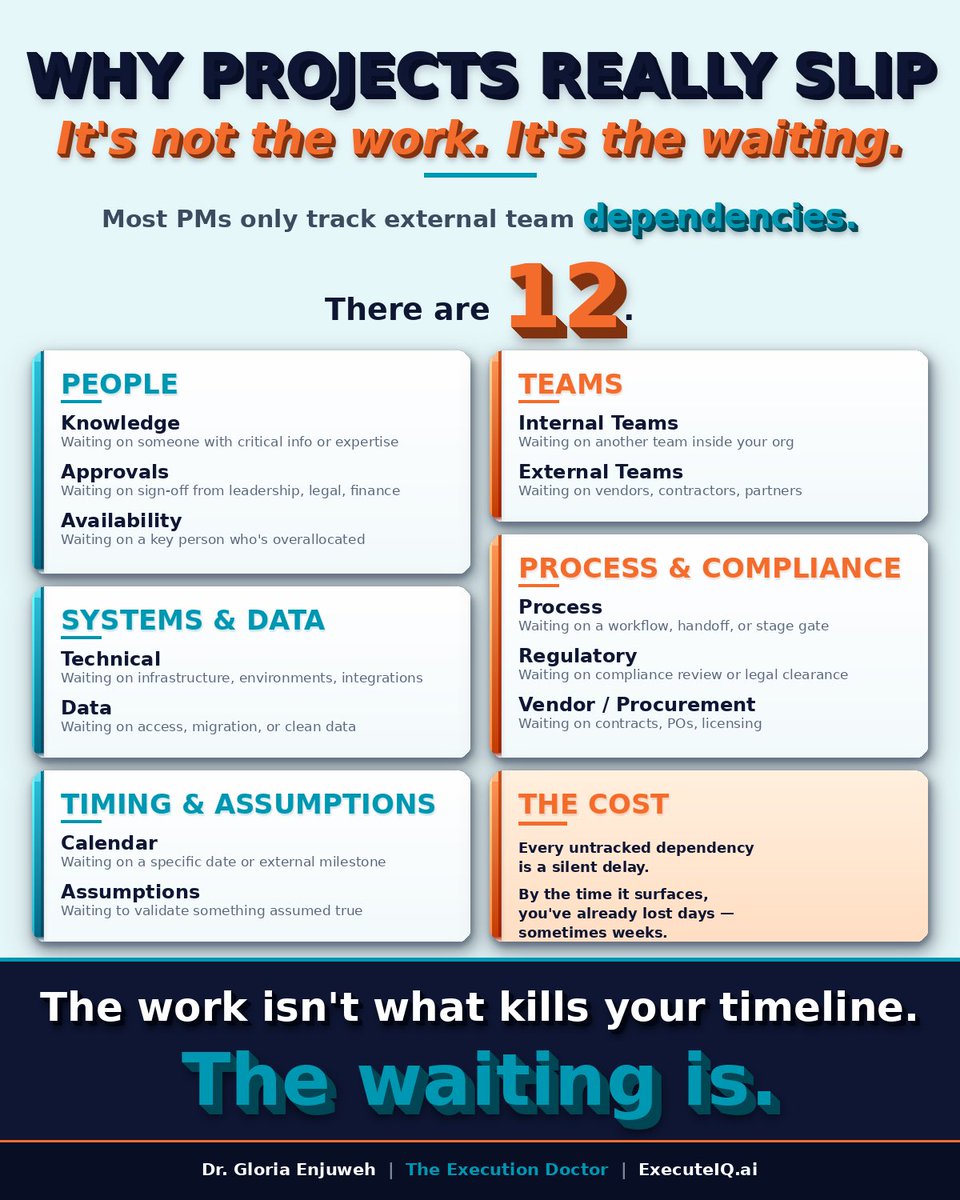
Most delivery leaders track one type of dependency.
There are 12.
That’s why projects slip.
Not because the work is hard.
Because someone is waiting on something nobody saw coming.
→ Waiting on approvals
→ Waiting on data
→ Waiting on a key person who’s overallocated
→ Waiting on compliance review
→ Waiting on assumptions that were never validated
And by the time it surfaces,
you’ve already lost days.
Sometimes weeks.
The best delivery leaders don’t just manage tasks.
They manage the invisible web of dependencies that holds everything together.
✔️ Identify.
✔️ Visualize.
✔️ Act.
Before the wait becomes a delay.
Save this breakdown of all 12 dependency types.
Share it with your team.
This is the kind of signal @ExecuteIQ is designed to surface, before it becomes a fire.
What dependency type burns your team the most? Drop it below 👇
#AIinProjectManagement #DeliveryLeaders #ExecutionIntelligence #PMO #Agile #Scrum #projectmanager #DependencyManagement
#PortfolioManager #CIO #ProgramManager #RiskManagement
.
.
1
2
35
ExecuteIQ retweeted
Dependencies don’t kill projects.
Invisible dependencies kill projects.
The ones no one documented.
The ones “we’ve always just handled.”
The ones someone assumed their teammate was tracking.
I’ve watched entire timelines collapse because of a single dependency that never made it into Jira. It wasn’t that the team was careless, it’s that dependencies hide in three places your project management tool will never see:
1. Tribal Knowledge
“Oh yeah, Sarah always handles that before we can start testing.”
➤ Great. What happens when Sarah’s on PTO?
➤ Or leaves the company?
2. Cross-Team Handoffs
Your team is ready.
But you’re waiting on Legal.
Who’s waiting on Finance.
Who didn’t know you needed their input until yesterday.
➤ This is where 80% of delivery delays begin.
3. Assumptions Disguised as Certainties
“The API will definitely be ready by sprint 3.”
➤ Says who?
➤ Based on what?
➤ And what’s your Plan B?
Here’s the truth most delivery leaders don’t want to hear:
If you can’t map every dependency across teams, tools, and timelines -
you don’t actually know when you’ll deliver.
You’re just guessing with extra steps.
This is why we’re building @ExecuteIQ - AI that surfaces hidden dependencies across your tools before they become blockers. Because the dependency buried in a Slack thread or mentioned once in standup shouldn’t derail your entire timeline.
• The best delivery leaders obsess over dependencies.
• They don’t wait for blockers to surface in standup.
• They hunt for hidden handoffs, challenge assumptions, and force the invisible work into the light.
Because the dependency you don’t see coming is the one that derails your project.
👉 What’s your strategy for surfacing hidden dependencies before they become blockers?
#ExecutionIntelligence #AIinProjectManagement #PMO #Agile #CTO #DeliveryLeaders #Executives #COO #Leadership #CIO #PredictiveAnalytics #PortfolioManager #ProjectManager #ProgramManager #AgileCoach #Scrum
.
.

1
2
28
ExecuteIQ retweeted
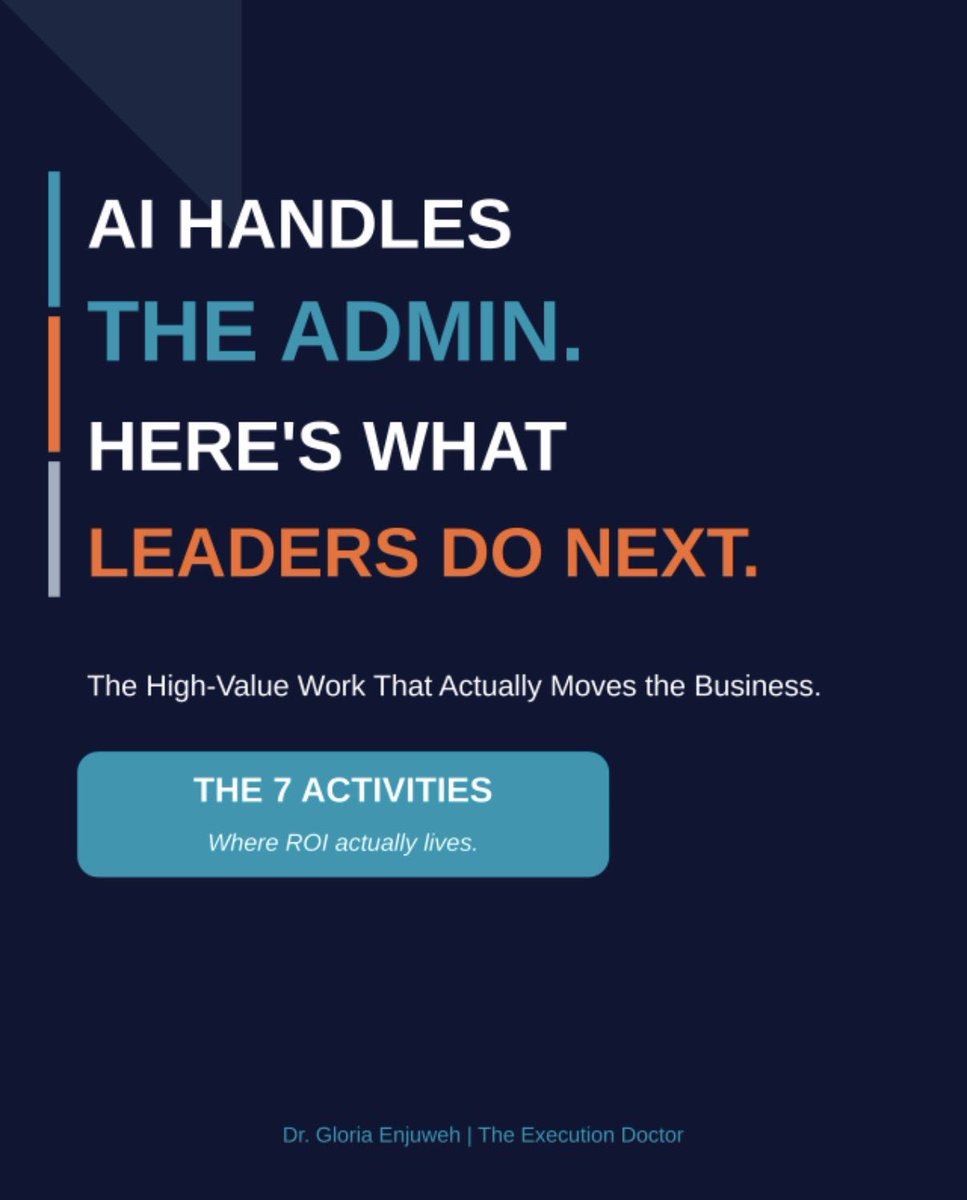
60% of your leaders’ week is gone before they touch the work that actually matters.
Not on strategy.
Not on coaching.
Not on building trust.
On “work about work.”
Get the full document here 👉🏽 linkedin.com/posts/dr-gloria…
→ Chasing updates
→ Tool-hopping
→ Rebuilding context after every meeting
→ Compiling status reports nobody reads
Meanwhile, the work that actually moves the business sits waiting:
→ Strategic decisions that shape outcomes
→ Judgment calls when the data is ambiguous
→ Stakeholder relationships that unlock execution
→ Governance architecture that prevents chaos
→ Creative problem-solving when things go sideways
→ Leading people (not just managing tasks)
→ Coaching the next generation
That’s where ROI actually lives.
The 7 activities inside this document.
Here’s the reframe:
AI doesn’t replace leaders.
It gives them back the bandwidth to actually lead.
When the admin tax is handled,
delivery leaders get their highest-value selves back.
Swipe through →
That’s why we’re building @ExecuteIQ
→ One unified context
→ Full project memory
→ Predictive intelligence
Eliminating the admin tax so leaders can do the work only humans can do.
Save this.
Send it to your lead.
What would you do with 10 hours back per week? 👇
#ExecutionIntelligence #Portfoliomanager #AIinProjectManagement #ProjectManager #Agild #ProgramManager #DeliveryLeaders #PMO #WorkAboutWork #CIO #Executives #Leadership
.
.
1
1
2
33
ExecuteIQ retweeted
Google changed how we search for information.
We’re changing how delivery leaders act on it.
I was at the @Google Reston campus for @PMInstitute a Project Management Institute WDC event on one of the most underrated leadership skills in delivery:
→ Game theory
→ High-stakes decision-making
Whats clear:
The leaders who win aren’t the ones with the most data.
They’re the ones who know:
→ Which move to make
→ When to make it
→ What their opponents are likely to do next🤔
Opponents = delays, dependencies, risk.
Game theory isn’t about being the smartest person in the room.
It’s about:
→ Anticipating what happens next
→ Positioning yourself early
→ Acting before the situation forces your hand
Most delivery leaders are playing checkers with their project data:
→ React
→ Escalate
→ Recover
→ Repeat
The best ones are playing chess:
→ Thinking three moves ahead
→ Reading signals before they become fires
→ Making decisions while options still exist
📌 That’s the gap @ExecuteIQ is building to close.
→ Not just visibility into what happened
→ Intelligence about what’s coming
→ So you can decide before the situation decides for you
Foresight isn’t luck.
It’s a system.
👉 What’s the highest-stakes delivery decision you’ve had to make with incomplete information?
#ExecutionIntelligence #ProjectManagement #Leadership #PMI #AIinprojectmanagement #DecisionMaking #DeliveryLeaders #ProgramManager #PortfolioManager #Agile #PMO #founder #BuildinPublic
.
.

1
2
72
ExecuteIQ retweeted
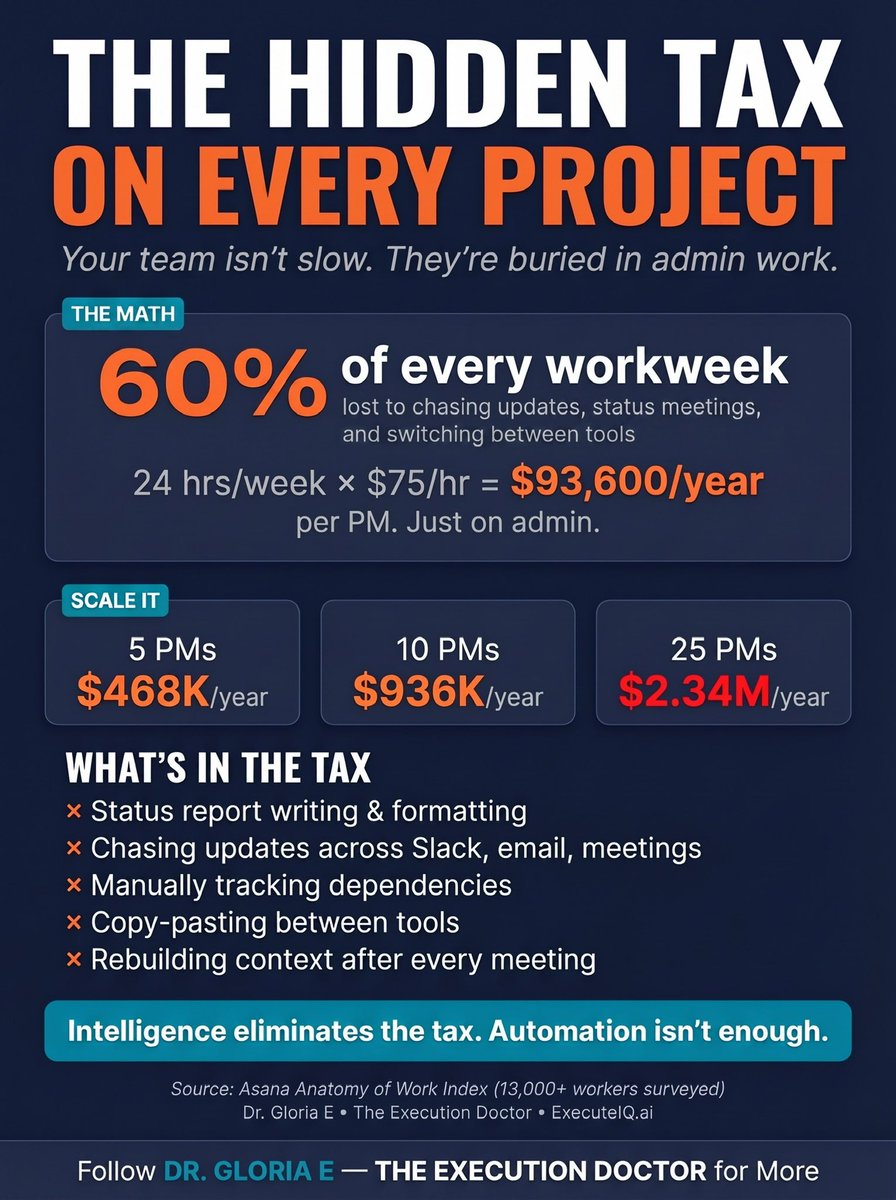
$93,600 per year. Per PM.
Not on delivery. On admin.
Your team isn’t slow. They’re buried.
Let’s talk about the tax nobody budgets for.
@asana (13,000 knowledge workers surveyed):
→ 60% of their time is spent on “work about work.”
→ Not skilled work. Admin.
→ That’s 103 hours/year in unnecessary meetings.
→ 209 hours/year on duplicative work.
→ 352 hours/year just talking about work.
@Wrike (cited by @Forbes):
→ 45% of project managers spend more than one day per week manually reporting status updates.
Wellingtone (State of Project Management Report):
→ 50% spend one day or more each month manually collating project status.
→ 47% don’t even have access to real-time KPIs.
PPM Express:
→ PMs spend 3–4 hours per week just writing status reports.
→ That’s 150 hours per year. Gone.
Add it up.
→ 24 hours a week. Per PM.
→ At $75/hr, that’s $93,600/year per person.
→ 10 PMs? $936,000
→ 25 PMs? $2.34 million
Burned.
Not on delivery. On admin.
This isn’t about laziness.
This is about tools that were never designed to connect.
→ Sure, Jira ‘integrates’ with Slack. But notifications aren’t intelligence.
→ And Slack’s search doesn’t remember what mattered, just what got typed.
→ Your status report is already outdated by the time you hit send.
Automation helps.
But automation without intelligence just does the wrong things faster.
That’s why I’m building @ExecuteIQ
→ One unified context
→ Full project memory
→ Predictive intelligence that eliminates the admin tax, not just speeds it up
👉 Save this. Share it with your CFO.
Then tell me in the comments:
👉 What’s YOUR biggest admin time drain right now?
Because this cost is invisible on every P&L.
But it’s draining every team.
#ExecutionIntelligence #PMO #ProjectDelivery #AIinProjectManagement #DeliveryLeaders #FutureOfWork #PredictiveAnalytics #ProjectManager #ProgramManager #PortfolioManager #Executives #AdminTax #WorkAboutWork #CoordinationWork
.
.
1
2
53
ExecuteIQ retweeted
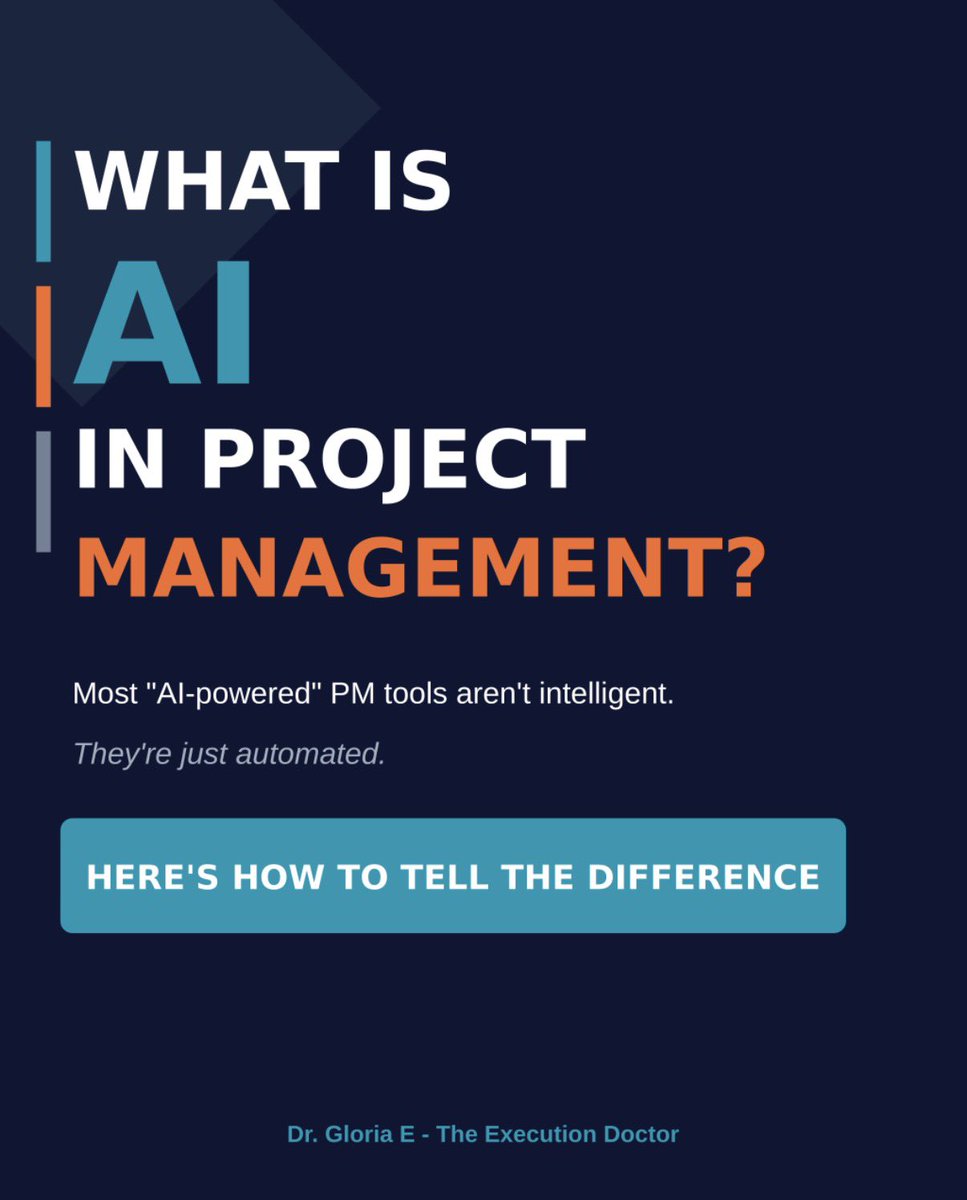
Stop googling “what is AI in project management.” Just save this and move on.
Grab the document here 👉 linkedin.com/posts/dr-gloria…
Most “AI-powered” PM tools aren’t intelligent.
They’re just automated.
There’s a difference.
→ AI-generated summaries?
That’s just reformatting what you already have.
→ Chatbots on your docs?
That’s just search with a better interface.
→ Smart automations?
That’s just if-this-then-that with a new label.
None of that is intelligence.
It’s features dressed up as AI.
Real AI in project management looks different:
→ Unifies scattered data
(Jira, Slack, email, docs, meetings) into one source of truth
→ Remembers everything
Decisions, dependencies, conversations across projects and programs
→ Lets you talk to your projects
Ask questions in plain language. Get answers with full context
→ Detects risks early
Surfaces what’s blocked. Shows what needs attention now
→ Automates the admin
Status reports, dependency tracking, handoffs
→ Connects execution to business outcomes
KPIs, OKRs, revenue impact
→ Provides full traceability
No black box. You see exactly where insights come from
That’s not automation.
That’s intelligence.
That’s what we’re building with ExecuteIQ
Question:
Is your current tool giving you foresight…
or just fancier reports?
Follow for more on execution intelligence.
Save this if you’re evaluating AI tools for your projects and PMO.
#ExecutionIntelligence #AIinProjectManagement #PMO #Agile #ProjectDelivery #DigitalTransformation #CIO #DeliveryLeaders #Executives #COO #CTO #VP #PredictiveAnalytics #PortfolioManager #ProjectManager #ProgramManager
.
.
1
1
2
39
ExecuteIQ retweeted
A senior executive stopped a room full of engineers mid-presentation with ONE question:
“You automated 200 tests. But did it help you deliver capabilities faster to the customer?”
Silence.
Not because the team wasn’t working hard.
Because no one could answer it.
That moment stuck with me.
We’ve become exceptional at measuring activity.
We’re still struggling to measure outcomes.
The automation was real.
The effort was real.
But the connection between the work and the result?
Invisible.
This is the gap that kills delivery at scale:
➤ Teams optimize for speed
➤ Executives ask about impact
➤ Nobody owns the bridge between the two
Speed is the currency of growth.
The executive was right.
But speed without visibility isn’t an advantage.
It’s risk moving faster.
Minimum viable capability only works when you can see if it actually moved the needle.
Otherwise…
You’re just shipping faster into the dark.
This is what @ExecuteIQ is built to solve:
➤ Connect execution signals to business outcomes
➤ Surface whether work is actually driving impact
➤ Eliminate the silence when leaders ask, “Did it help?”
Because the goal was never to automate 200 tests.
The goal was to deliver faster to the customer.
Those are not the same thing.
👉 Has your team ever optimized something that looked great on paper but couldn’t be tied back to a real outcome?
#ExecutionIntelligence #DeliveryLeadership #ProductDelivery #PMO #AgileDelivery #ExecuteIQ #DigitalTransformation #EngineeringLeadership #OutcomesDriven #AIinProjectManagement #ProgramManagement #PorfolioManagement #CIO #COO #CTO #Executive
.
.

1
2
34