Joined May 2009
- Tweets 45,608
- Following 2,096
- Followers 11,073
- Likes 64,086
10,882 Photos and videos





ShadowStock retweeted

Jun 10
SPACEX VALUATION: $1.75T
WALMART VALUATION: $1.05T
SPACEX REVENUE: $18.7B
WALMART REVENUE: $681B
But it is not a bubble, right?
Jun 10

🚨US STOCK MARKET IS ABOUT TO DUMP HEAVILY:
Apple went public at under $2B and 15x revenue
SpaceX goes public at $2T and 100x revenue
I’ve been in the markets for 13 years, and IPO boom we’re seeing now is the biggest red flag I’ve ever seen.
Here’s what will happen & why:
First, let's talk about Apple example, where you got a $2B valuation with $2T here
So basically retails are not just not getting early but buying at the richest valuations, while early investors just exit
Here is more evidence:
- Fidelity cut min investment from $500K to $2K
- SpaceX allocated 30% shares to retail
- Millions of new buyers invited just before listing
All of that while insiders are owning 95% of shares, which means that $1.66T worth of stock is held privately
And even that's only the beginning
Instead of a standard long lockup, we have 60 days, 20% unlock, 30% stock move and another 10%
Days 70, 90, 105, 120, 135 recurring 7% release and after Q3 earnings another 28%
Means that by November, ~93% of insider shares will become sellable
Institutions are already front-running this forced index buying by:
- shortened inclusion timings
- selling current holdings
- raising cash
Based on all of that, you can already say what crash is waiting for us and we are not even talking about current market weakness
Retails are mass-selling assets to fund IPO participation
And as I said before, institutions are selling too to prepare for forced buying later
Another great reminder would be that the company itself, I mean SpaceX is losing money heavily
Q1 2026: $4.3B losses
Total losses are at $41.3B
There are the details that retail don't think about cause IPO docs have 300 pages, most just skip all of this info
Anthropic and OpenAI are the same story - valuations inflated by circular investment flows involving NVIDIA, and priced at levels that make little sense.
But the fact that these IPOs don’t deserve their current valuations because the companies aren’t profitable - and likely won’t deliver the profits investors are pricing in - is only half the problem. That’s just why I expect most of them to trade significantly lower within a year.
The other half is where the money comes from.
Capital flowing into these IPOs doesn’t appear out of thin air. Investors sell existing stocks to free up cash and participate in new offerings. That creates selling pressure across the broader market.
We saw the same dynamic during the dot-com era in the late 1990s and early 2000s, and we’re seeing it again today.
That's why if you read this, you probably get the biggest informational edge in your lifetime.
And now choose whether you want to join IPO and become that exit liquidity or actually make money from it
In the coming days I will tell you more details and my strategy on how I am planning to play this out and make money
So make sure to follow me and turn notifs on
117
311
2,057
306,983
ShadowStock retweeted

Jun 11
Idk who she is but I know Paul Tudor Jones when I see him!

96
322
5,326
463,719
ShadowStock retweeted

Jun 10
Stephen Schwarzman built a $1 trillion machine because he is absolutely terrified of losing money
"most guys risk their cash hoping for a quick 50% gain - we spend 90% of our time in meetings figuring out how to not lose a single dollar"
"the crowd buys 20 random stocks just because a chart moved - we will spend 6 months tearing apart 1 single company until we find the risk everyone missed"
"when a crash hits everyone panics and takes a 40% loss - we wait for the bloodbath and buy entire businesses for 30 cents on the dollar"
Blackstone didn't get to $1 trillion by guessing what the market will do next. they got there by protecting their cash so ruthlessly that losing money becomes almost mathematically impossible
watch him break down exactly how he never loses money
Jun 9

Ron Baron thinks saving your money is the stupidest thing you can do
"regular guys keep their cash in a bank hoping to make 4% - but the government prints money so fast that your savings lose half their value every 10 years"
"normal people trade every single day trying to make a quick buck - we find one absolute monopoly, put a billion dollars into it, and wait 15 years"
"when everyone on wall street laughed at Spacex we didn't care - we gave them $700 million, completely ignored the news, and watched it become a $200 billion company"
watch him explain why he never keeps his money in cash
4
17
134
53,165
ShadowStock retweeted

Jun 11
This was ABSOLUTELY INCREDIBLE.
Just listened to it after hearing the glowing reviews. Unbelievably good. A masterclass in growth investing filled to the brim with insights from an investor with a track record that speaks for itself.

My conversation with Alex Sacerdote, founder of Whale Rock Capital Management.
Alex runs more than $17B and has been one of the best performing tech investors for years, though he keeps a low public profile.
As you'll hear, he is singular in how he thinks about investing through technology cycles.
For over 25 years, he has built his entire investment framework around a single idea, the S-curve.
We discuss:
- The AI L-Curve
- When to buy into an S-curve and when to sell out
- The de-commoditization of data center hardware
- Why he went net short software
- His two models for tech adoption
- Finding alpha
Enjoy!
Timestamps
0:00 Intro
9:55 AI's L-Curve
19:31 Whale Rock's S-Curve Playbook
26:14 Spotting Inflection Points
32:02 Finding AI Winners
40:04 AI vs Software
48:13 The Hardware Renaissance
58:04 Why Investors Miss AI
1:05:18 Whale Rock's Research Machine
13
42
460
138,104
ShadowStock retweeted

Jun 10
$RKT priced an upsized $1.2B senior notes offering split between 2031 and 2034 maturities. The proceeds will primarily refinance existing debt, extending maturities and strengthening the balance sheet rather than funding new spending. A strategic capital structure move.🏠
$SPY
1
1
577
ShadowStock retweeted

Jun 9
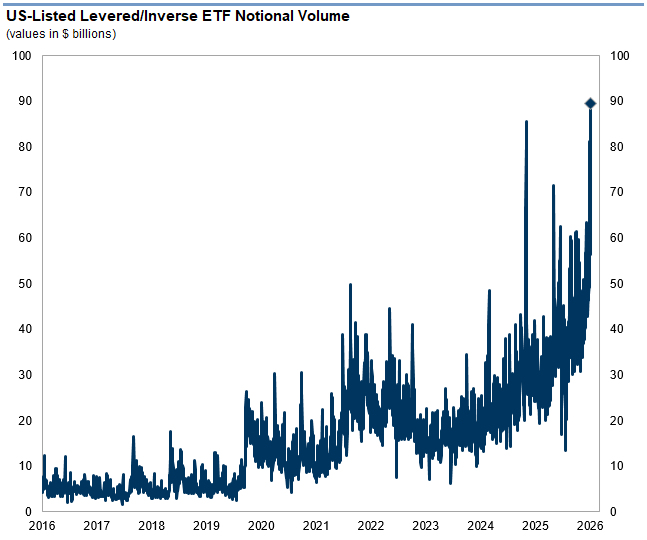
Nobody is trading stocks any more: it's all just options and levered ETFs
Jun 9

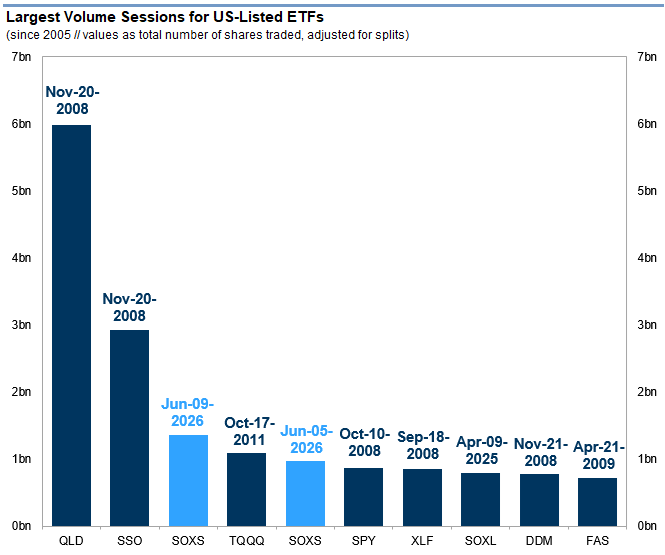
SOXS (-3x Semis) traded more than 1.3 billion shares today, the third largest volume day in terms of shares for a US-listed ETF in data observed over the past two decades: GS
115
418
3,044
456,452

Jun 10
Commented on $PETS - PetMed Express: High-Risk Turnaround, Hidden Assets, Activism. seekingalpha.com/article/490…
2
392
Jun 3
May 27

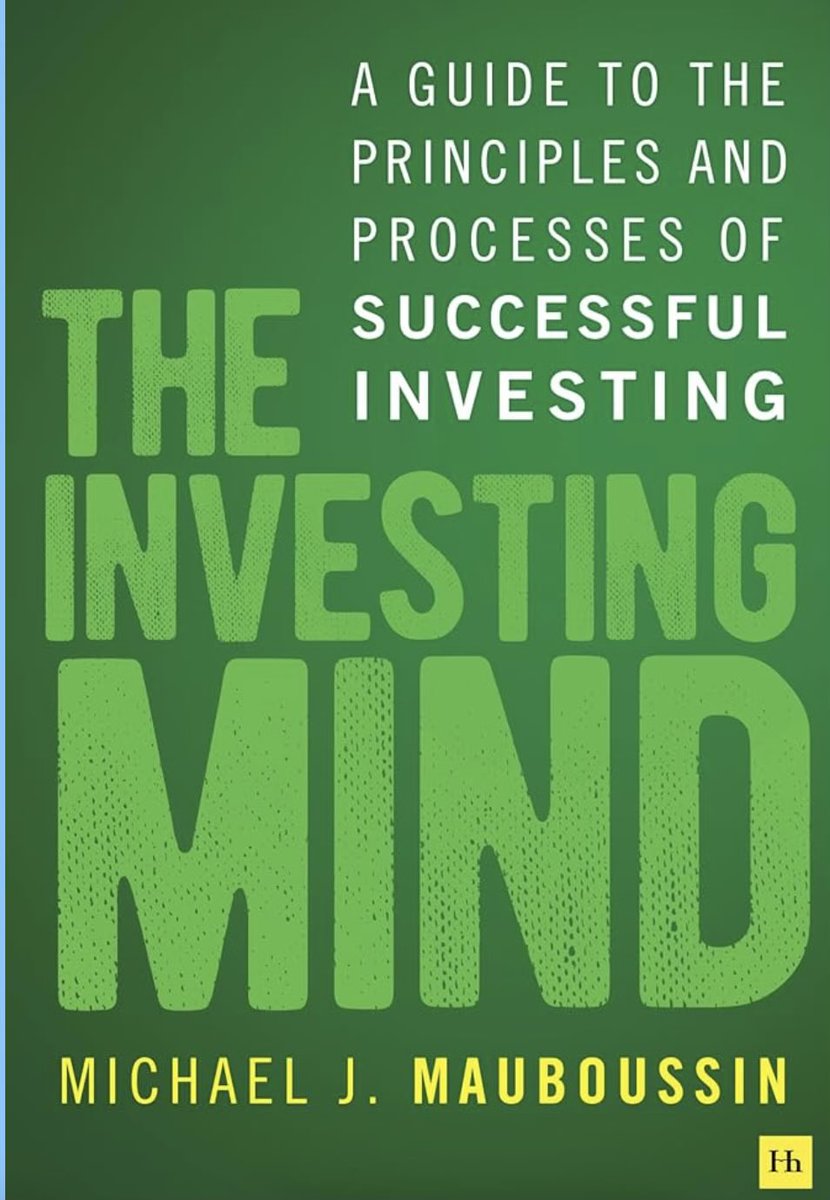
Thank you, Jan. My forthcoming book, The Investing Mind, builds on that report: amazon.com/Investing-Mind-Pr…
2
908
ShadowStock retweeted

Soros argues that financial markets are driven by reflexivity, not pure logic.
Investors don’t just observe reality
They influence reality while interpreting it
👉 Example:
If people believe a stock will rise → they buy → price rises → belief becomes “true”
So markets are a feedback loop, not a mirror of fundamentals.
17
53
8,377
ShadowStock retweeted

Jun 1
John Hussman just published one of the most important pieces of market analysis I have read this year and every serious investor needs to read it.
His warning flag system just triggered at levels only seen THREE other times since 1992.
One of those times was March 24, 2000, the exact peak of the tech bubble. The other clusters preceded significant market drawdowns as well. We are now seeing daily tallies of overextension signals that rival or exceed every prior extreme in the data.
But here's what's really scary:
The S&P 500 Information Technology sector trades at a P/E of 45 on operating profit margins of 30% which is more than THREE TIMES the historical norm. If you normalize those margins to anything resembling what competition and creative destruction have produced in every prior cycle, the effective P/E is north of 135.
And people are calling this a buying opportunity.
10 companies now make up 40% of the S&P 500. Bank of America's latest fund manager survey shows the highest jump in equity exposure on record. This is the same level of crowding we saw right before the market gave up a third of its value in 2022.
The script never changes. Only the names of the stocks and the narrative used to justify paying any price for them.
In the late 1990s it was the internet. In 2007 it was structured credit. Today it is AI.
Every single time the crowd convinces itself that valuations do not matter because THIS TIME the technology is transformational. And every single time the math eventually wins.
Read Hussman's full piece, then look at your portfolio and ask yourself honestly whether you are positioned for what history says comes next:
hussmanfunds.com/comment/mc2…
66
122
550
80,886
ShadowStock retweeted

May 28
$PETS write up by @ExpectedValues
The stock definitely has an “ick” factor to it, but imo it’s unreasonably cheap by a country mile.
shadowstock.blogspot.com/202…
1
5
577
ShadowStock retweeted

11 Dec 2024
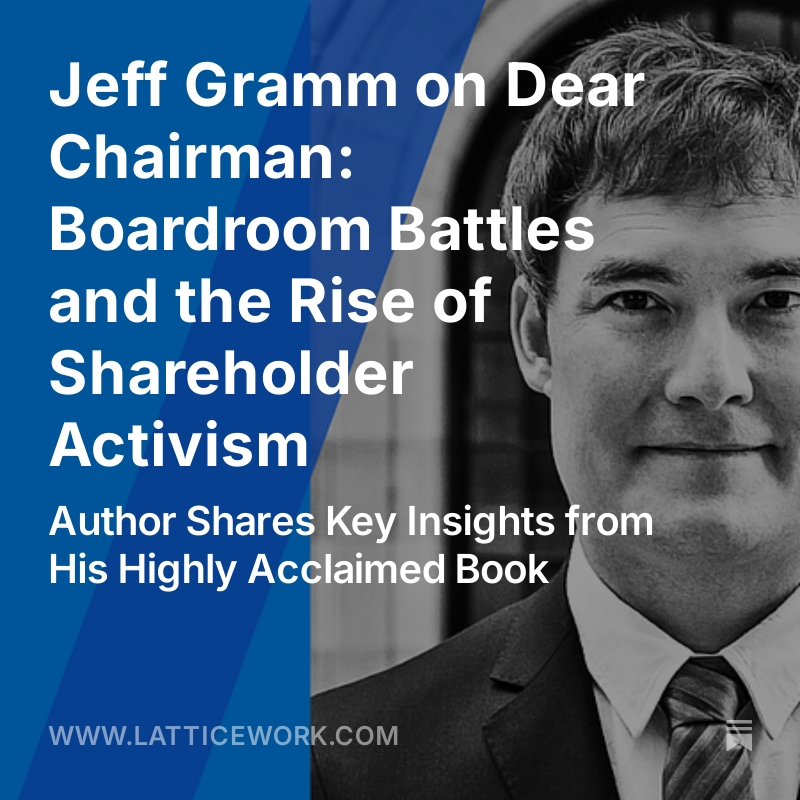
One of my favorite books and one of my favorite author interviews -- @jeff_gramm on Dear Chairman. latticework.com/p/jeff-gramm…
1
3
21
3,902
ShadowStock retweeted

May 14
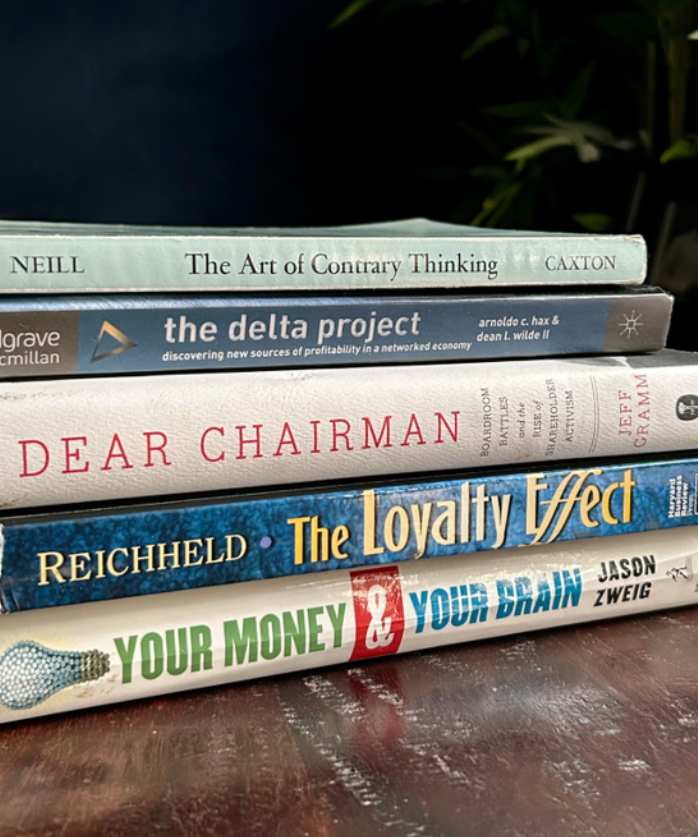
Five underrated books that every investor should read.
2
18
118
5,604
May 19
Sohn Conference: David Einhorn said opportunities are hiding in companies that investors have abandoned.
"While the market appears expensive in the US, we're finding interesting investments where management is repositioning businesses toward more durable, more disciplined, and more cash generative growth."
It is about transitions, management discipline, and capital allocation. The best investments do not begin with perfection, but businesses prove that they can change.
acquirersmultiple.com/2026/0…
2
18
4,332
May 19
$POCI shadowstock.blogspot.com/202…
is risky! But it may be “… we're finding interesting investments where management is repositioning businesses toward more durable, more disciplined, and more cash generative growth."
It is about transitions, management discipline, and capital allocation. The best investments do not begin with perfection, but businesses prove that they can change.
476
ShadowStock retweeted

May 18
ANTHROPIC CEO DARIO AMODEI: “50% OF ALL TECH JOBS, ENTRY-LEVEL LAWYERS, CONSULTANTS, AND FINANCE PROFESSIONALS WILL BE COMPLETELY WIPED OUT WITHIN 1–5 YEARS.”
Community note
This clip is from May 2025 foxnews.com/video/63736017… not a new intervie
341
409
2,579
692,695
ShadowStock retweeted

May 18
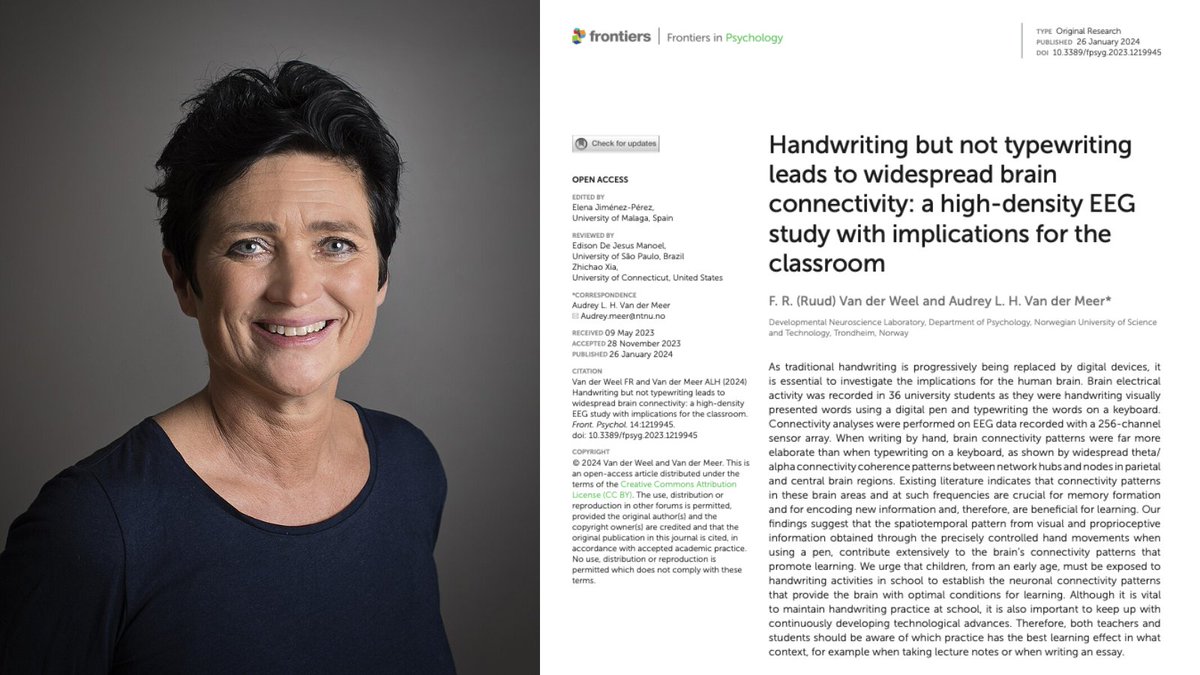
A Norwegian neuroscientist spent 20 years proving that the act of writing by hand changes the human brain in ways typing physically cannot, and almost nobody outside her field has read the paper.
Her name is Audrey van der Meer.
She runs a brain research lab in Trondheim, and the paper that closed the argument was published in 2024 in a journal called Frontiers in Psychology. The finding is brutal enough that it should have changed every classroom on Earth.
The experiment was simple. She recruited 36 university students and put each one in a cap with 256 sensors pressed against their scalp to record brain activity. Words flashed on a screen one at a time.
Sometimes the students wrote the word by hand on a touchscreen using a digital pen, and sometimes they typed the same word on a keyboard. Every neural response was recorded for the full five seconds the word stayed on screen.
Then her team looked at the part of the data most researchers had ignored for years, which is how different parts of the brain were communicating with each other during the task.
When the students wrote by hand, the brain lit up everywhere at once.
The regions responsible for memory, sensory integration, and the encoding of new information were all firing together in a coordinated pattern that spread across the entire cortex. The whole network was awake and connected.
When the same students typed the same word, that pattern collapsed almost completely.
Most of the brain went quiet, and the connections between regions that had been alive seconds earlier were nowhere to be found on the EEG.
Same word, same brain, same person, and two completely different neurological events.
The reason turned out to be something nobody had really paid attention to before her work. Writing by hand is not one motion but a sequence of thousands of tiny micro-movements coordinated with your eyes in real time, where each letter is a different shape that requires the brain to solve a slightly different spatial problem.
Your fingers, wrist, vision, and the parts of your brain that track position in space are all working together to produce one letter, then the next, then the next.
Typing throws all of that away. Every key on a keyboard requires the exact same finger motion regardless of which letter you are pressing, which means the brain has almost nothing to integrate and almost no problem to solve.
Van der Meer said it plainly in her interviews.
Pressing the same key with the same finger over and over does not stimulate the brain in any meaningful way, and she pointed out something that should scare every parent who handed their kid an iPad.
Children who learn to read and write on tablets often cannot tell letters like b and d apart, because they have never physically felt with their bodies what it takes to actually produce those letters on a page.
A decade before her, two researchers at Princeton ran the same fight using a completely different method and ended up at the same answer. Pam Mueller and Daniel Oppenheimer tested 327 students across three experiments, where half took notes on laptops with the internet disabled and half took notes by hand, before testing everyone on what they actually understood from the lectures they had watched.
The handwriting group won by a wide margin on every question that required real understanding rather than surface recall.
The reason was hiding in the transcripts of what the two groups had actually written down.
The laptop students typed almost word for word, capturing more total content but processing almost none of it as they went, while the handwriting students physically could not write fast enough to transcribe a lecture in real time, which forced them to listen carefully, decide what actually mattered, and put it in their own words on the page.
That single act of choosing what to keep was the learning itself, and the keyboard had quietly skipped the choosing and skipped the learning along with it.
Two studies. Two countries. Same answer.
Handwriting makes the brain work. Typing lets it coast.
Every note you have ever typed instead of written went into your brain through a thinner pipe. Every meeting, every book highlight, every idea you captured on your phone instead of on paper was processed at half depth.
You did not forget those things because your memory is bad. You forgot them because typing never woke the part of the brain that would have made them stick.
The fix is the thing your grandmother already knew.
Pick up a pen. Write the thing down. The slower road is the faster one.
2,472
44,650
120,840
10,363,069