The war prophesied by Ezekiel 38 is World War III | Yahweh (יהוה) is God | Christ is King
Joined March 2017
- Tweets 64,179
- Following 880
- Followers 719
- Likes 16,197
3,072 Photos and videos









Pinned Tweet

23 Jan 2024
The Treaty of Waitangi #nzpol
(Kawharu Translation 1975)
Victoria, The Queen of England, in her concern to protect the chiefs and subtribes of New Zealand and in her desire to preserve their chieftainship and their lands to them and to maintain peace and good order considers it
3
2
2,532
Britain:
Allows unchecked immigration
Unchecked immigrants rape and murder locals
The public gets angry
The politicians blames social media
The politician's solution: Censor social media.
They don't care that it happened, they only care that you saw it.
2
Fighting Left Loonies🇳🇿 retweeted

Jun 13
Sodomy isn’t just sinful.
It’s also disgusting.
Jun 12

🇫🇷🦠 À Lyon, un sauna gay serait à l’origine du cluster d’une nouvelle infection sexuellement transmissible (IST) : la dermatophilose humaine.
La bactérie Dermatophilus congolensis, habituellement active dans les pays tropicaux à climat chaud et humide, touche principalement les animaux (chevaux, bovins, etc.).
Elle ne se transmet à l’homme qu’en cas de contact direct avec un animal infecté.
Dans le cluster lyonnais, une quarantaine d’hommes se seraient transmis la bactérie par contacts sexuels peau à peau, dans un environnement humide et chaud (sauna).


60
160
3,474
63,344
Fighting Left Loonies🇳🇿 retweeted

Jun 12
Not the same.
47
21
446
6,295
RT @RapidReport2025: JUST IN: 30-year-old man stabs 17-year-old girl in neck in Burnley, England
4,680
Fighting Left Loonies🇳🇿 retweeted

7K9D-3XPL-Q8TM-2VNR-5CWF
309
2,471
34,274
2,288,140
Fighting Left Loonies🇳🇿 retweeted

Jun 10
This should be the average American home
2,014
3,129
34,024
5,883,672




Fighting Left Loonies🇳🇿 retweeted

Jun 8
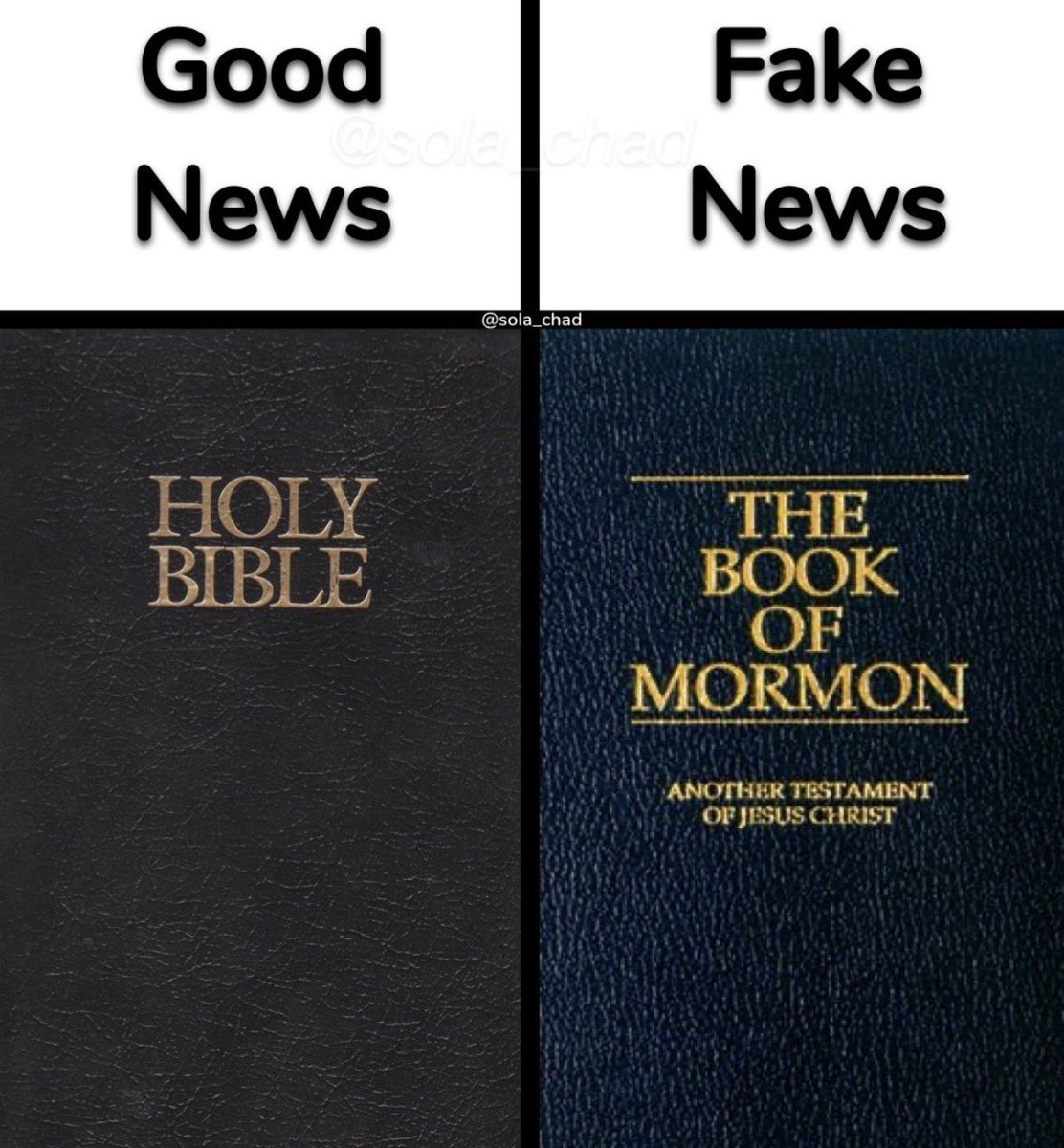
Galatians 1:8 🎯
122
472
5,480
49,604

Fighting Left Loonies🇳🇿 retweeted

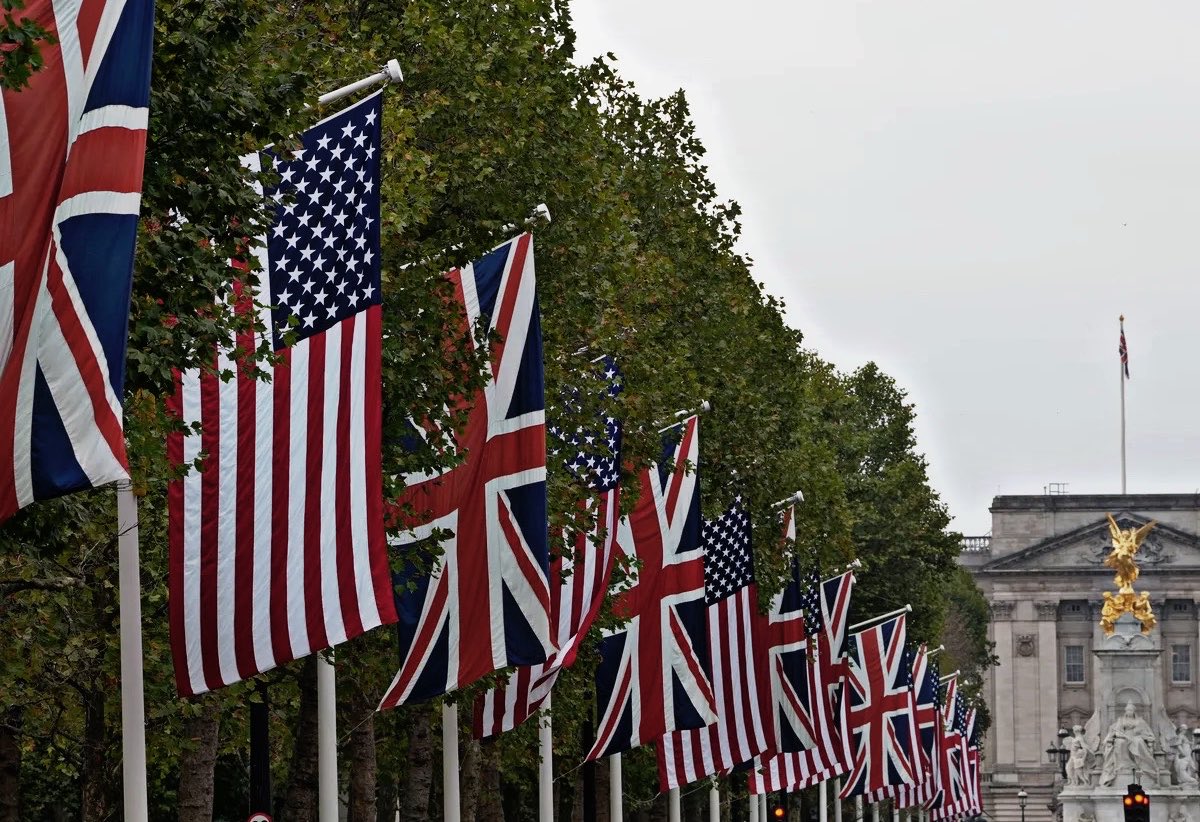
🚨BREAKING: The United States government has sent official condolences to the family of Henry Nowak and the people of the United Kingdom
The US cares more than Keir Starmer.
879
12,600
70,087
628,103
There is a privileged class in Britain,
and it's not the native white people.
#RIPHenryNowak
4

Fighting Left Loonies🇳🇿 retweeted

Jun 4
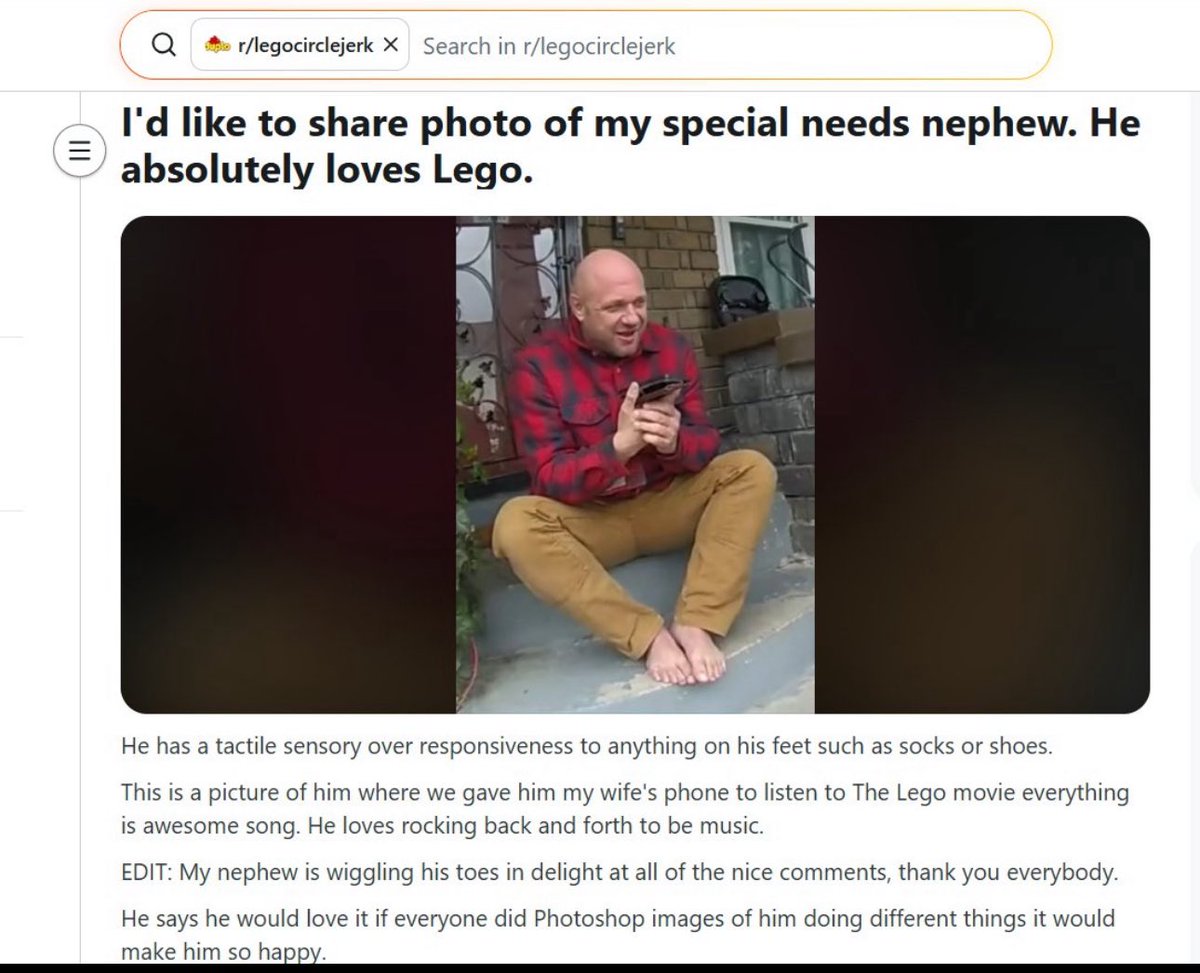
Former Bricks And Minifigs franchise owner Joshua Johnson who stole a dying man’s LEGOs is getting trolled all over the internet and it is Hilarious🤣🤣
28
160
2,413
30,187
Fighting Left Loonies🇳🇿 retweeted

Jun 5
WAIT, HOLY SHIT. HE'S RIGHT.
BY OFFERING TO GIVE BACK THE LEGOS/SETTLE
BRICKS AND MINIFIGS JUST ADMITTED THEY *DID* STEAL THE LEGOS (AND THEY DO HAVE LEGOS TO RETURN) THEY *DID* SELL THEM THEY *DID* KNOW ABOUT IT THEY *DID* LIE AND THEY *ARE* "1 BILLION PERCENT" GUILTY AS SIN AND NOW THEY ARE AFRAID BECAUSE THIS COULD DESTROY THE ENTIRE $400 MILLION COMPANY TO BANKRUPTCY.
Oh my god—I just realized that by trying to sweep it under the rug and give back LEGOs/cash of missing items, BAM basically just admitted to EVERYTHING, including lying and colluding with police... holy shit.
Because remember: THE CEO SAID ALL THESE THINGS ON THE PHONE CALL TO THE AMERICAN FORK PD—Ammon McNeff is STILL CEO, meaning, BAM is STILL 1 TRILLION % LEGALLY ON THE HOOK, AND THEY WANT TO GET AWAY WITH IT NOW?
BAM your days are numbered.
Judgement Day is coming.
Brick by Brick.
Jun 4

Here is the part you should slow down and really notice:
Bricks & Minifigs is no longer saying, “There were no LEGO.”
They are no longer saying, “There is nothing to return.”
They are no longer saying, “Brian Mansell has no issue worth discussing.”
In this new interview, Ammon McNeff, CEO of Bricks & Minifigs, appears to acknowledge several things that matter.
He acknowledges there was a consignment agreement.
He acknowledges Brian Mansell may have been underpaid.
He acknowledges inventory was identified that appeared to match Brian’s collection.
He acknowledges some of that inventory was set aside.
He acknowledges “whatever was left over” was offered.
He acknowledges BAM wants to make Brian “whole.”
That is not nothing.
That is a major shift from the way many people understood this story at the beginning.
But here is the deeper question:
If Brian needs to be made whole now, why did it take this much pressure to get here?
Why did it take videos, bodycam footage, public records, arrests, lawsuits, online outrage, and millions of people watching before the language changed from denial to resolution?
That is the heart of the issue.
Not LEGO.
Leverage.
Because this case shows what happens when an ordinary person has to fight an entity with more lawyers, more money, more structure, more institutional knowledge, and more ability to shape the narrative.
A corporation can say, “We want to resolve this.”
A person says, “I need my property back.”
A corporation can say, “There were documentation issues.”
A person says, “That was my life’s work.”
A corporation can say, “This is complicated.”
A person says, “I have been trying to be heard for years.”
That imbalance is the story.
And it is not unique to Bricks & Minifigs.
It is built into modern America.
Corporations get many of the benefits of personhood without the limitations of being human. They can speak, sue, lobby, contract, arbitrate, delay, outspend, rebrand, restructure, and survive scandal in ways no ordinary person can.
A human being gets tired.
A corporation gets counsel.
A human being runs out of money.
A corporation files another motion.
A human being has a reputation.
A corporation has a public relations strategy.
That does not mean corporations are always wrong.
It means the playing field is not equal.
And when the law pretends both sides are standing on equal ground, the result is often injustice dressed up as procedure.
This case also forces an uncomfortable question about consignment.
If a customer gives property to a store to sell, does the public understand how vulnerable that customer may be if the store fails, transfers, changes ownership, defaults, or gets taken over?
Most people think consignment means, “Those items are still mine until they sell.”
But commercial law can be far more complicated than common sense. Under the UCC, consigned goods can become tangled in creditor rights, inventory claims, security interests, perfection rules, and third-party disputes.
That may be legally sophisticated.
But to the average person, it feels insane.
Because morally, the question is simple:
If the previous franchisee did not own Brian’s collection, how could anyone else simply become entitled to it?
That is the question people keep coming back to.
And now BAM’s own framing raises another issue:
If this was an unauthorized consignment agreement by a rogue franchisee, then why is Brian the one paying the price for BAM’s franchise-control failure?
If corporate says consignment was forbidden, then corporate is admitting this happened inside a system they were responsible for overseeing.
If the franchisee violated policy, that may explain BAM’s position.
It does not automatically erase Brian’s harm.
And it should not erase the public’s concern.
Because when a company benefits from a franchise model, brand recognition, shared systems, national reputation, and customer trust, it cannot simply disappear behind “independent franchisee” language the moment the customer gets hurt.
That may be a legal defense.
It is not a moral answer.
The most important development in this transcript is not that BAM says it wants to make Brian whole.
The most important development is that the story now appears to be moving from “nothing happened” to “something happened, but the details are complicated.”
That distinction matters.
Once “something happened” is admitted, the burden changes.
Now the public has every right to ask:
What inventory remained?
What was sold?
Who sold it?
Who had possession?
Who knew it was consigned?
When did they know?
What records exist?
Why were there multiple sets of books?
Why was Brian not paid correctly?
Why did this take public pressure to resolve?
Why is Brian named in litigation while also being described as someone BAM wants to make whole?
Those are not conspiracy questions.
Those are basic accountability questions.
And this is where the call to action becomes simple:
Do not harass anyone.
Do not threaten anyone.
Do not blindly worship Ben.
Do not blindly condemn BAM.
Do something harder.
Read.
Watch.
Compare timelines.
Ask for documents.
Ask who had possession.
Ask who had title.
Ask who had notice.
Ask who benefited.
Ask who had power.
Ask who paid the price.
Because if we reduce this to “YouTuber vs LEGO store,” we miss the real lesson.
The real lesson is that ordinary people need better protection when they trust businesses with their property.
The real lesson is that franchise systems need stronger accountability when local operators harm customers.
The real lesson is that corporate legal power should not be allowed to overwhelm factual truth.
The real lesson is that justice should not depend on whether the injured person happens to find a YouTuber with enough audience to force the issue into daylight.
Because without the cameras, without the pressure, without the public, would Brian Mansell be getting this conversation at all?
That is the question.
And every person who has ever signed a contract, left property with a business, trusted a company, rented a storage unit, used a repair shop, consigned goods, worked for a franchise, or tried to fight a corporation should care.
This case is not just about what happened to one LEGO collection.
It is about what happens when human beings enter systems built for corporations.
And it asks one very simple question:
When the average person stands across from a company with more money, more lawyers, and more time, does the truth still have a fair chance?
If the answer is no, then the problem is bigger than Bricks & Minifigs.
It is the structure itself.
And structures do not change because people scroll past them.
They change because people notice. youtube.com/watch?v=_01kgM7x…
17
112
606
18,283


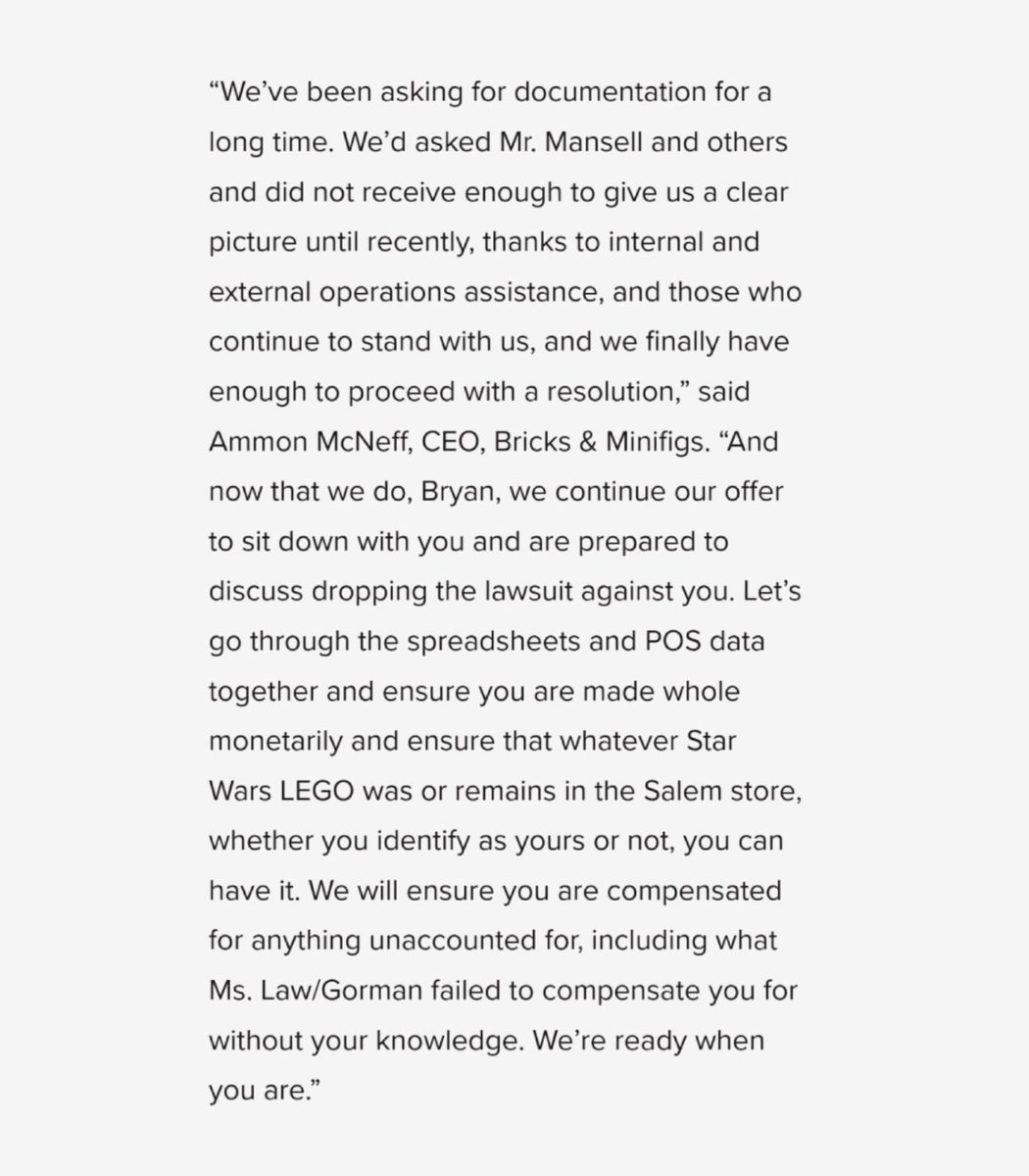
Bricks & Minifigs is parting ways with Brandon Best and Joshua Johnson due to "a devastating social media campaign"
They say they have reached out to the family that owns the $200,000 LEGO collection to return it and offer compensation for any missing items

1,690
3,140
53,336
4,615,859

Fighting Left Loonies🇳🇿 retweeted

Jun 3
During the BLM riots in the UK, Leftists tore down a statue & chucked it in the river. Same quislings who say we shouldn't 'politicise' Henry Nowak.
687
6,652
43,482
1,989,901