
AWS Hero 🚀 / Cloud Expert 🪄 / Engineering Innovator 🤖
Joined October 2010
- Tweets 4,332
- Following 983
- Followers 1,965
- Likes 9,298
588 Photos and videos







Filip Pyrek retweeted

Apr 29
We have partnered with @AnthropicAI to launch the Claude connector for Fusion.
With the Fusion MCP, you can now tap into Claude’s desktop capabilities—speech, vision, web search, and cross-service workflows—right inside your design flow.
Combined with #AutodeskAssistant, this opens up more flexible, customizable agentic workflows for how you build with Fusion Claude.
Learn more here: autode.sk/4mXFaQN

With the Autodesk Fusion connector, designers and engineers can create and modify 3D models through conversation.
34
169
1,742
175,322

Apr 14
Somebody put my throughs into wiring. Check it out!

1
2
337
Filip Pyrek retweeted

Mar 18
Skvělé tipy pro Claude Code (ale většinou aplikovatelné i na OpenCode a jiné)
Nechtěl se mi to číst, tak jsem si o tom nechat udělat podcast v češtině:
fra1.digitaloceanspaces.com/…
Mar 17

45 Claude Code Tips: From Basics to Advanced
github.com/ykdojo/claude-cod…
3
5
62
19,395

Today, we’re evolving @StitchbyGoogle from @GoogleLabs into an AI design canvas transforms natural language prompts into production-ready front-end code.
Some highlights from what’s new:
1. A complete redesign of the Stitch UI, which can now ingest multimodal references (text prompts, images, or code) as creative seeds for your design ideas
2. A brand new, context-aware design agent that can share feedback on builds, generate PRDs, and ask questions to better understand your vision. You can even talk to the agent if you prefer a verbal sounding board
3. A new agent-friendly markdown file, DESIGN.md, which you can use to export or import your design rules to or from other design and coding tools
Whether you’ve been designing for decades or you’re whiteboarding your first software idea, Stitch can help you turn concepts into prototypes in minutes rather than days ➡️ stitch.withgoogle.com
223
466
5,641
20,122,735
Filip Pyrek retweeted

Feb 12
Today, we’re releasing a significant upgrade to our specialized reasoning mode, Gemini 3 Deep Think.
Deep Think is built to drive practical applications, enabling researchers to interpret complex data and engineers to model physical systems through code.
With the updated Deep Think, you can turn a sketch into a 3D-printable reality. Deep Think analyzes the drawing, builds the complex shape, and generates a file so you can create the physical object with 3D printing.
This is rolling out now to Google AI Ultra subscribers. Select the "Deep Think" option in the tools menu to get started.
Learn more here: goo.gle/3MoiifF
606
1,883
16,780
5,049,769

Feb 6
End of an era.

Heroku is transitioning to a sustaining engineering model focused on stability, security, reliability, and support. Heroku remains an actively supported, production-ready platform, with an emphasis on maintaining quality and operational excellence rather than introducing new features. We know changes like this can raise questions, and we want to be clear about what this means for customers.
There is no change for customers using Heroku today. Customers who pay via credit card in the Heroku dashboard—both existing and new—can continue to use Heroku with no changes to pricing, billing, service, or day-to-day usage. Core platform functionality, including applications, pipelines, teams, and add-ons, is unaffected, and customers can continue to rely on Heroku for their production, business-critical workloads.
Enterprise Account contracts will no longer be offered to new customers. Existing Enterprise subscriptions and support contracts will continue to be fully honored and may renew as usual.
Why this change
We’re focusing our product and engineering investments on areas where we can deliver the greatest long-term customer value, including helping organizations build and deploy enterprise-grade AI in a secure and trusted way.
1
262
Filip Pyrek retweeted

Jan 12
I really think there's a huge advantage to vibe coding golang over typescript. Obviously, you wouldn't use golang for frontend. But if your in services land, forgo nodejs and do golang. It's a simple language that has a very consistent ecosystem and AI does well.
12
2
35
4,118
Filip Pyrek retweeted
I missed CDK Aspects when I moved to SST.
Being able to modify all resources at once is a superpower.
Turns out, you don't have to give that up.
You can auto-add alerts to every Lambda function in your stack with a simple transform.
Here is how to auto-monitor your entire stack:
1
4
564

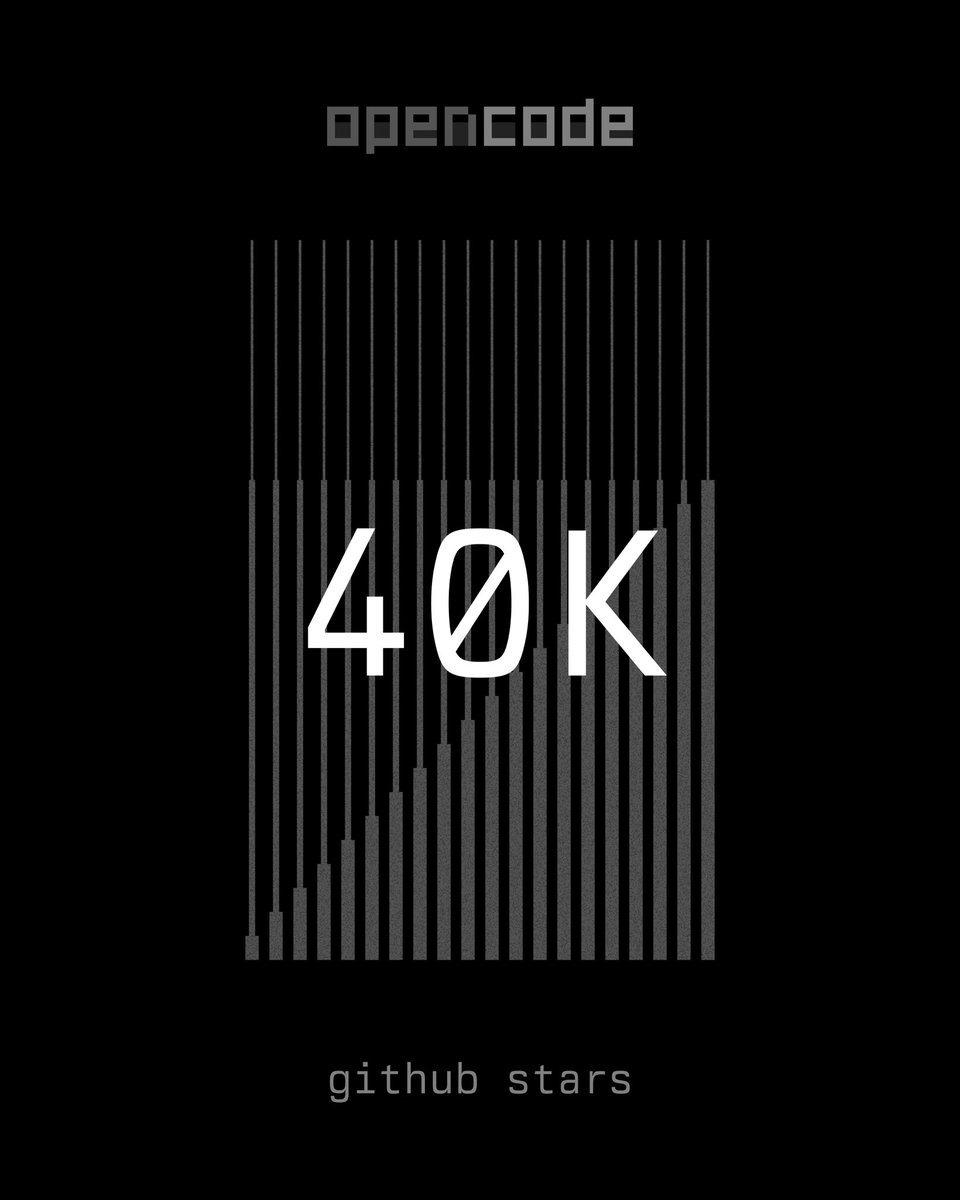
OpenCode
400K monthly active users
40K GitHub stars
400 contributors
2.5M downloads
It took us 5 months
But it’s based on everything we’ve learnt over 5 years
Building consumer apps, open source products, designing SDKs, TUIs, positioning, marketing
77
35
1,212
128,684
Filip Pyrek retweeted

9 Dec 2025
If you're exploring DynamoDB and want a hands-on learning path, this resource can help a lot: learn.dynoconsole.com
1
2
556
Filip Pyrek retweeted

25 Nov 2025
POLYGLOBE JUST GOT ANOTHER MASSIVE UPGRADE 🌐
DeepStateLive’s Ukraine war map is now draped directly onto the globe, live and synced with @Polymarket .
Shaded control zones, shifting frontlines, Russian/Belarusian unit icons and direction of attack arrows all sitting under your markets and OSINT in near real time.
These Ukraine geo markets confuse people constantly. is it the city limits, the oblast, “enter” vs “capture all of”?
Now, when you hover a market, we draw the exact area of operation it resolves on and spell out the rule in plain English.
No more rule debates, no more guessing what actually settles.
The only way to monitor the situation.
576
615
7,170
6,611,878
Filip Pyrek retweeted

19 Nov 2025
AWS finally made centralized logging simple 🎉
Everybody says "you need a central logging account" but creating it was quite a hassle.
Your options before:
🔹 Observability Access Manager (OAM)
Works, but complicated setup.
Requires understanding sinks, sources, and links.
Not exactly plug-and-play.
🔹 Custom Solutions
Log Subscription filters Kinesis Data Streams Lambda.
You're now maintaining infrastructure instead of building features.
🔹 Third-Party Tools
Works great!
Costs more.
Another vendor dependency.
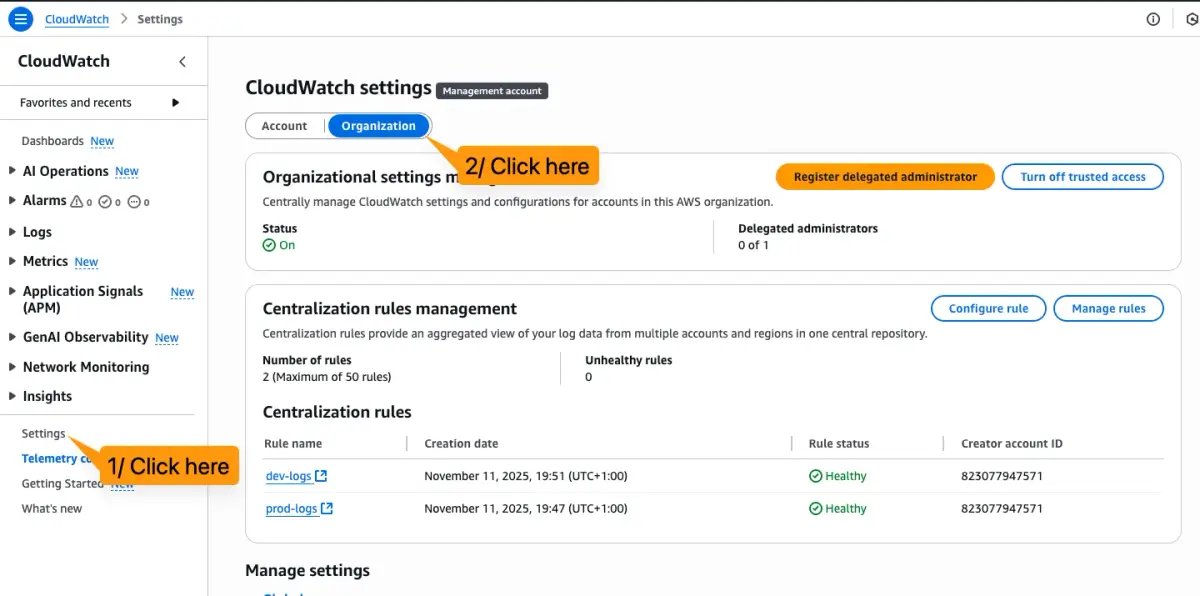
AWS just launched CloudWatch log centralization.
Built into Organizations 🔥
What it does:
Creates rules that automatically copy logs from source accounts to your central logging account.
Cross-account.
Cross-region.
No Kinesis needed.
Setup is three steps:
1️⃣ Delegate your logging account as administrator
2️⃣ Create centralization rules (by account ID, OU, or entire org)
3️⃣ Logs start copying over
You can create up to 50 rules.
Logs include @aws.account and @aws.region fields for filtering.
If you run multiple AWS accounts, this is the simplest path to centralized observability.
---
Hey, I’m Sandro — a full-stack engineer who’s built dozens of production-grade apps on AWS. I share what I learn with 11,000 devs at awsfundamentals.com/newslett….
1
2
19
1,318
Filip Pyrek retweeted

13 Nov 2025
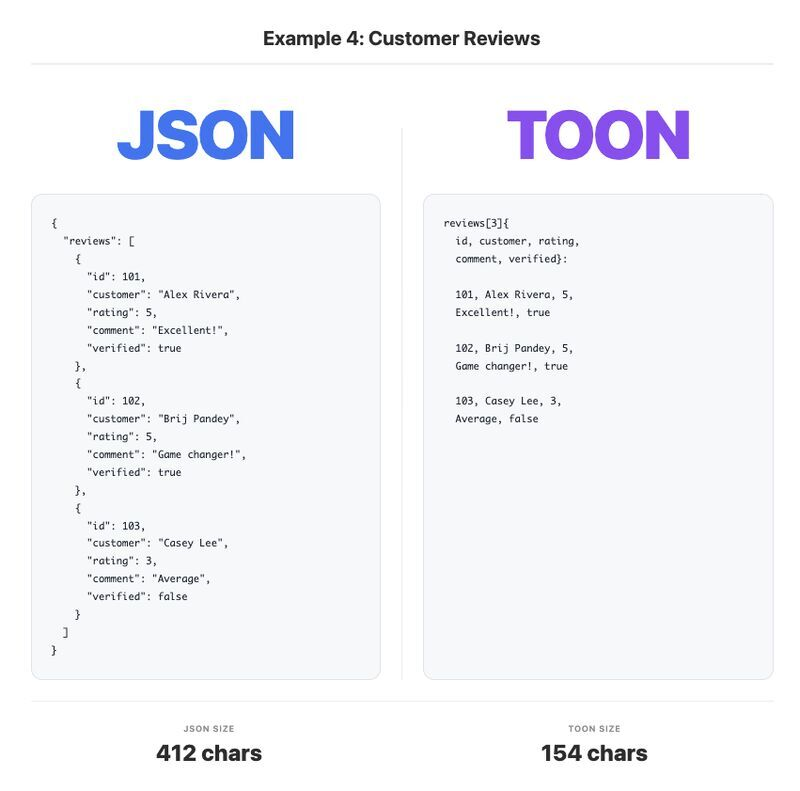
If you’re still sending raw JSON into your LLMs, you’re burning tokens, latency, and budget!
Try TOON (Token-Oriented Object Notation).
Clear like YAML, compact like CSV:
• 30–60% fewer tokens
• Up to 50% lower costs
• Shines for tabular data.
Free and Open source 🧵↓
510
1,135
8,426
2,538,001
4 Nov 2025
This is a big one. As your data teams might have noticed - Jupyter's team is crumbling and it's sad to watch after all the honorable work they have done. That's why we decided to get on a mission at Deepnote to build an open-source successor to #Jupyter. 🚀
Try it out and let me know what do you think 👀👂
4 Nov 2025

We've spent 7 years building the data notebook for AI era. Today, we're open sourcing it.
Deepnote Open Source is successor to the Jupyter notebook. It acts as a drop-in replacement for Jupyter with an AI-first design, sleek UI, new blocks, and native data integrations. Use Python, R, and SQL locally in your favorite IDE, then scale to Deepnote cloud for real-time collaboration, Deepnote agent, and deployable data apps.
Single-player notebooks were great in 2013.
2025 needs reactive, collaborative, AI-ready projects that integrate into your existing stack seamlessly.
That's why we're making Deepnote open source - to offer the community an open standard for AI-native data notebooks and data apps.
We're standing on the shoulders of Jupyter — it changed how the world explores data. But at team scale, the papercuts stack up: brittle reproducibility, no native data connectors, weak collaboration, and bolted-on AI features.
In the enterprise context, this gets very tough to manage - and we're seeing an increasing demand from large companies to move away from Jupyter.
What’s new:
- Reactive execution (downstream block auto-update)
- Powerful blocks beyond code: SQL, interactive inputs, charts, KPIs, buttons
- 100 data integrations
- Code in your favorite IDE: Cursor, Windsurf, or VS Code
- No lock‑in: open standard; export to `.ipynb` whenever you need
Once you're ready to scale in your team, transfer to Deepnote Cloud with one command for beefier compute, powerful data apps from notebooks and agentic data science.
Ty it now:
Repo ➔ vist.ly/4ctcq
Deepnote in VS Code ➔vist.ly/4ctcm
Docs -> vist.ly/4ctcf
CLI ➔ `npx @deepnote/convert notebook.ipynb`
P.S. This only works as an open standard. Tell us what’s missing, file issues, send PRs.
Help define the data notebook for the AI era!
2
1
162
Filip Pyrek retweeted

31 Oct 2025
Microsoft did it again!
Building with AI agents almost never works on the first try.
You spend days tweaking prompts, adding examples, hoping it gets better. Nothing systematic, just guesswork.
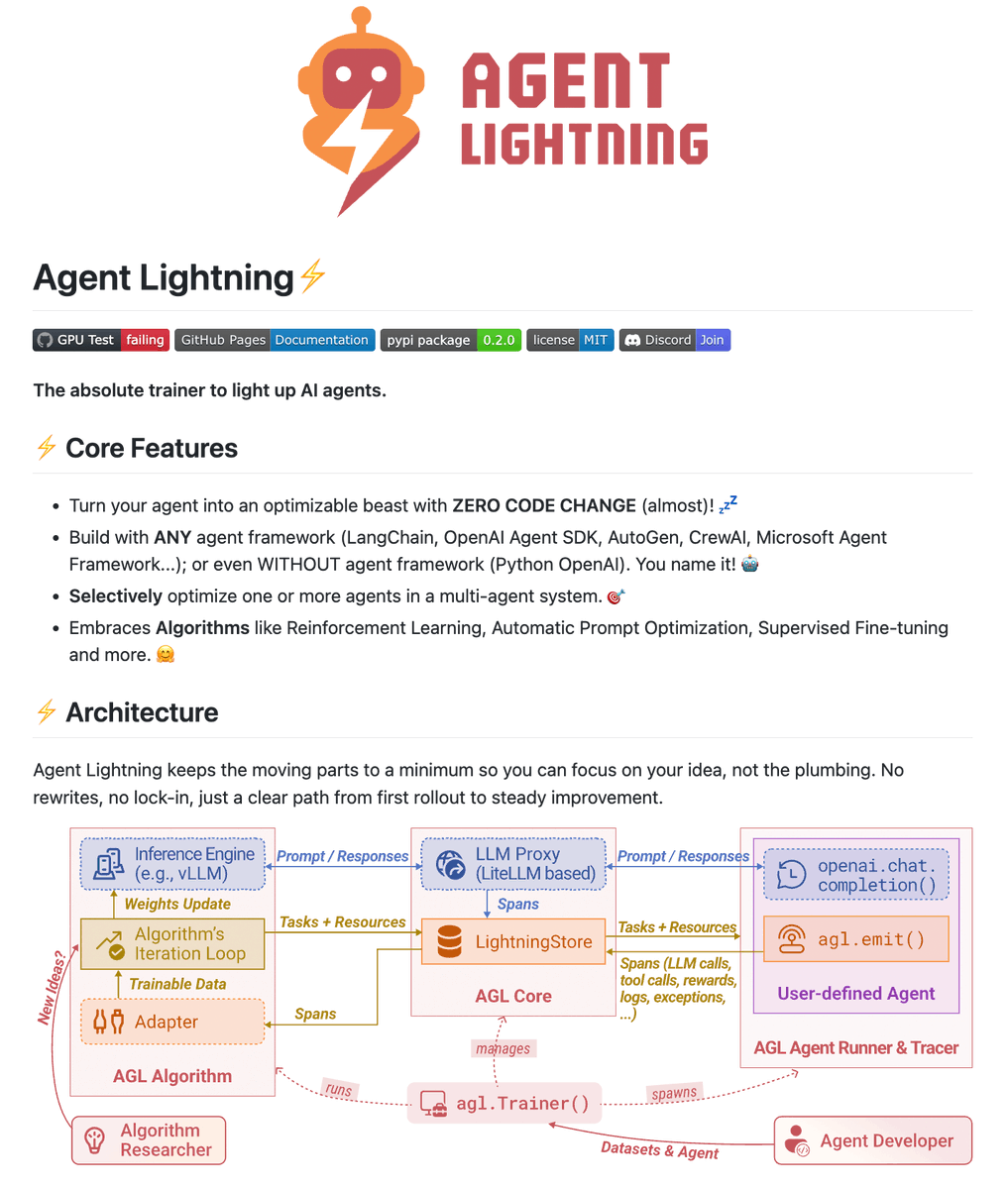
This is exactly what Microsoft's Agent Lightning solves.
It's an open-source framework that trains ANY AI agent with reinforcement learning. Works with LangChain, AutoGen, CrewAI, OpenAI SDK, or plain Python.
Here's how it works:
> Your agent runs normally with whatever framework you're using. Just add a lightweight agl.emit() helper or let the tracer auto-collect everything.
> Agent Lightning captures every prompt, tool call, and reward. Stores them as structured events.
> You pick an algorithm (RL, prompt optimization, fine-tuning). It reads the events, learns patterns, and generates improved prompts or policy weights.
> The Trainer pushes updates back to your agent. Your agent gets better without you rewriting anything.
The best part: you can also optimize individual agents in a multi-agent system.
I have shared the link to the GitHub repo in the replies!
Let me know if I should cover this in a video demo!
58
372
2,484
200,518
Filip Pyrek retweeted
22 Oct 2025
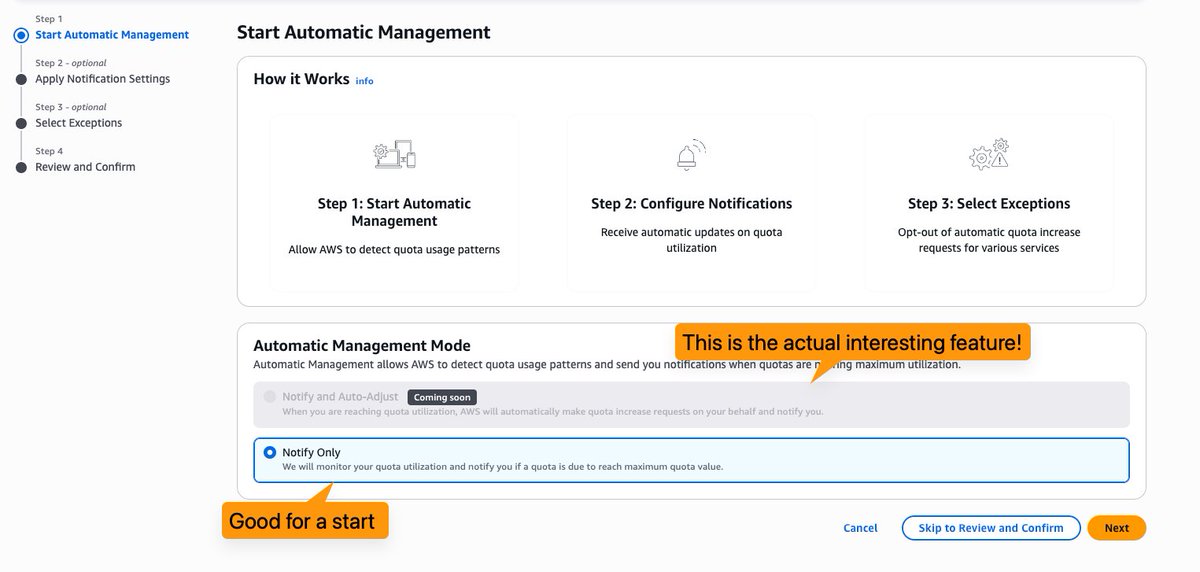
AWS launched "Automatic quota management"
While it is currently only a notification. It seems they are working already on an auto-adjust mode.
And I would love to have some default settings in either IAC or an Account Factory available.
With that it could be much easier to ensure that devs don't need to handle quotas in new accounts.
Since this is typically something you don't know until you debug a weird error for quite some time.
Nice step AWS 👍🏽
1
2
7
1,403
Filip Pyrek retweeted
13 Oct 2025
I got married at 21, started having kids at 23. Obviously that's early for a lot of people. But my focus was always family first, work second. I still worked tons, like really a lot. Now 20 years later can I say that was the best decision. Work is nothing compared to my family.

- fall in love
- get married
- have kids
- work hard
- be faithful
- stay together
- find meaning
- be happy
3
3
129
18,008
Filip Pyrek retweeted

25 Sep 2025
Cloudflare introduces NET Dollar, a new U.S. dollar-backed stablecoin that will enable instant, secure transactions for the agentic web. cfl.re/4msrZWd
360
335
3,142
989,108