
112 Photos and videos














Despawn.io will be the best place to play Hytale multiplayer on launch week.

Despawn is hosting a Day One Hytale Survival Server
• Enterprise grade hardware
• Team with 30 years combined UGC experience
Ready for anything early-access throws at us🫡
🌐 IP: play.despawn.io
🔖 Buying Hytale? Support w/ Creator Code: DESPAWN
#HytalePartner

3
6
777
Hytale is offering an unprecedented level of fairness to builders compared to the rest of the UGC space today.
This is stuff I only thought was possible in my wildest dreams, and I want to do everything I can to help make Hytale the greatest place for people to make and play games.
It's time to build on Hytale. And because our community loves and misses our games, we're starting there.
To everyone from our MC communities: Hytale is enabling us to reimagine everything we've built over the past decade. It's all coming back, and it's going to be bigger and better than ever, in Hytale.🫡

Hytale Modding Strategy and Status Blog is live. Excited to hear what you think about vision we have for modding in Hytale. hytale.com/news/2025/11/hyta…
4
17
1,083
Fluxty retweeted

17 Nov 2025
We did it. Hytale is saved. We have acquired Hytale from Riot Games.
2,154
9,144
87,700
14,970,616
Such a broad statement about tokens is inaccurate imo.
There are governance tokens which can programmatically guarantee dividends and arguably confer better voting rights than traditional equities.
Specifically, governance tokens that give holders control of the treasury/revenue management do this.
4 Nov 2025

"Tokens do not guarantee dividends, confer legal rights, or offer the clarity of earnings metrics. The link between protocol performance and tokenholder value is therefore indirect and often uncertain. In this context, buybacks take on outsized importance as one of the few credible ways a protocol can signal alignment and deliver value back to its holders."
It's just not that hard to understand. Great article by Keyrock keyrock.com/designing-token-…
1
187
Fluxty retweeted

24 Jul 2025
6/8 Ethereum has all the chances of becoming the foundation for that global financial ecosystem. Its design has always prioritized commitment to decentralization, and the neutrality of its infrastructure makes it a suitable choice as the basis for the future worldwide economy that won’t buckle under political or technical pressure.
1
3
41
1,908

The reason for the value compression is that memetic value requires attention, and attention becomes harder to acquire/maintain as market saturation grows.
Long term, 99.99% of assets need to fall back to fundamentals in order to continue to appreciate.
I think this applies to all asset classes in history and L1s won't be an exception.

2
5
452
Fluxty retweeted

25 Jun 2025

499
2,541
14,522
617,445

Fluxty retweeted

10 Jun 2025
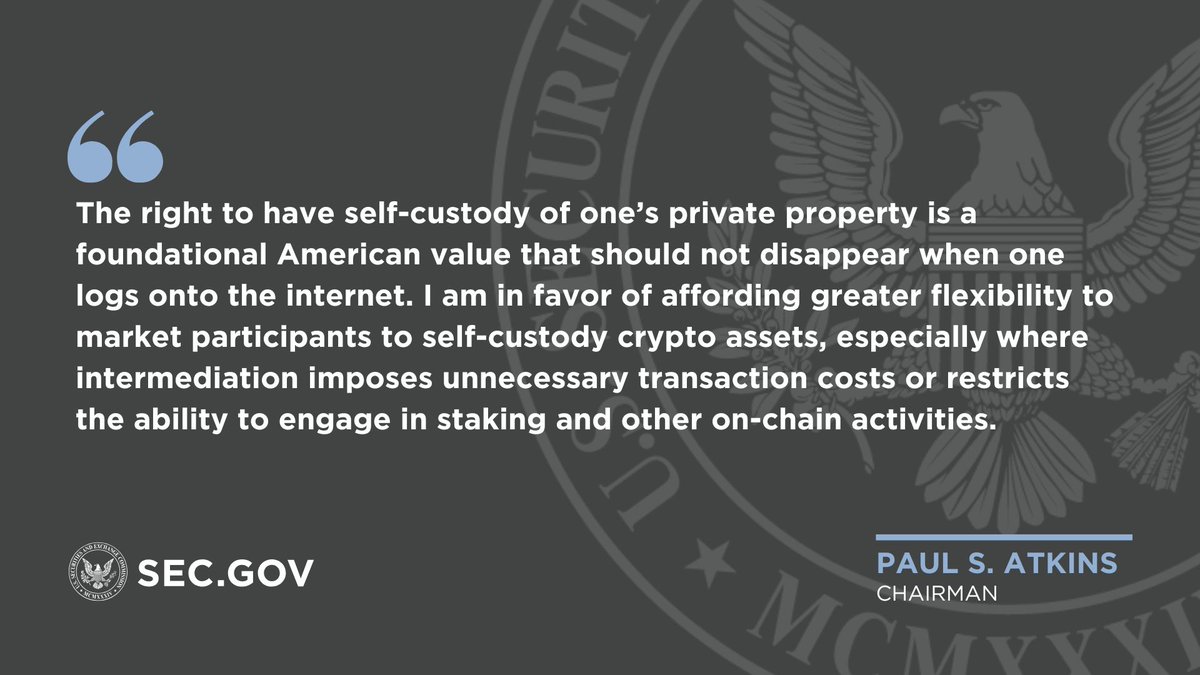
Chairman Paul Atkins’ remarks at the Crypto Task Force Roundtable on Decentralized Finance: sec.gov/newsroom/speeches-st…
114
290
1,219
202,223
(1/3) Bitcoin is currently being priced as an uncorrelated asset, similar to gold, except with key advantages.
But Bitcoin has growth risks that simply aren't being priced in by the institutions buying.
The reality is that BTC is not a mature asset yet. The current economic model is demonstrably faulty and sustainable alternatives are still being worked on with little guarantees of implementation, let alone success.
29 May 2025

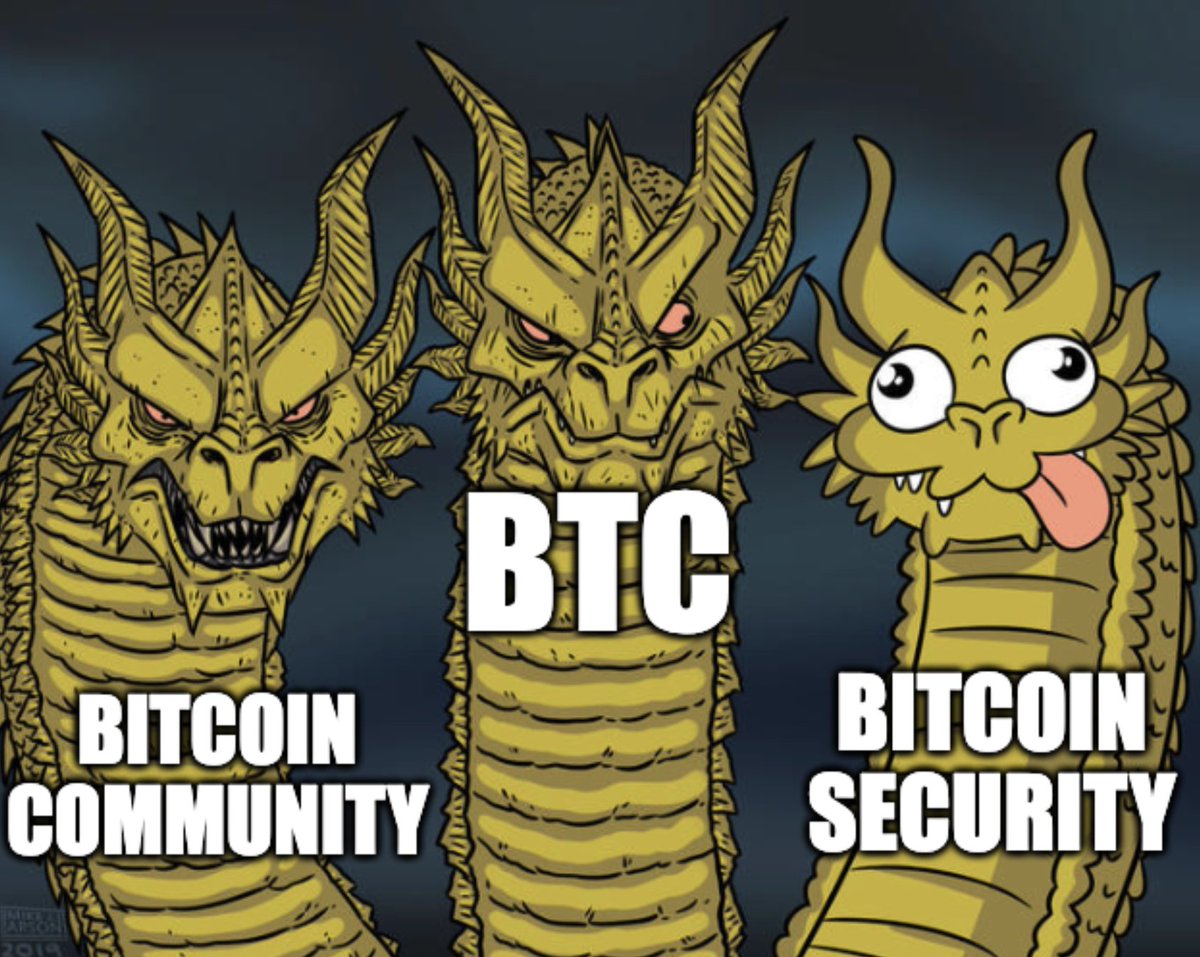
The security of Bitcoin PoW is a ticking time bomb.
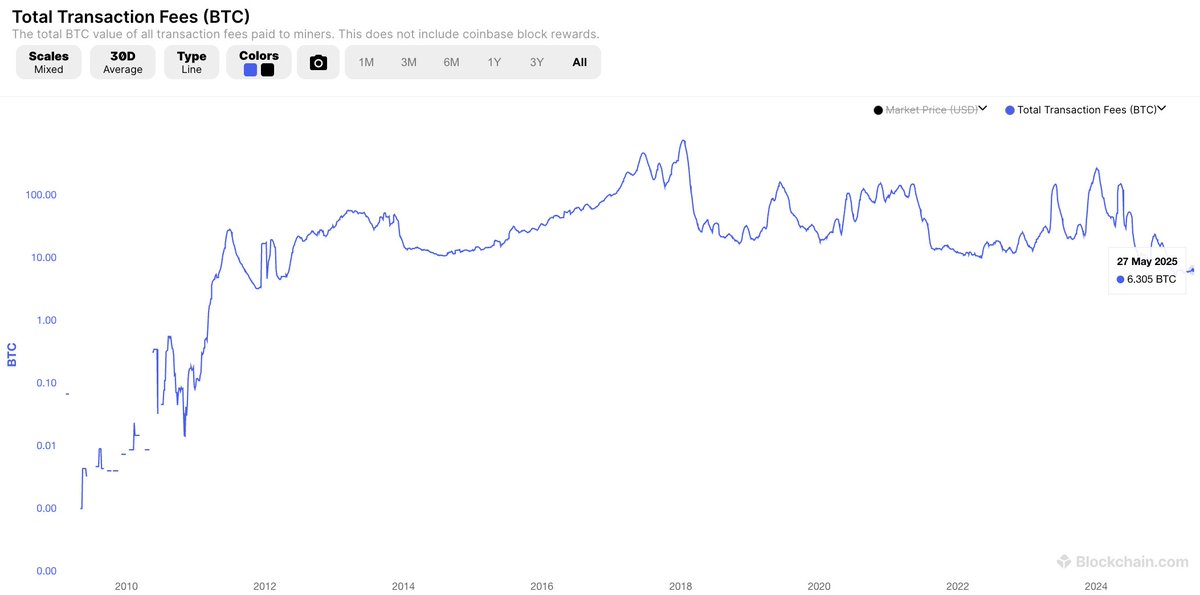
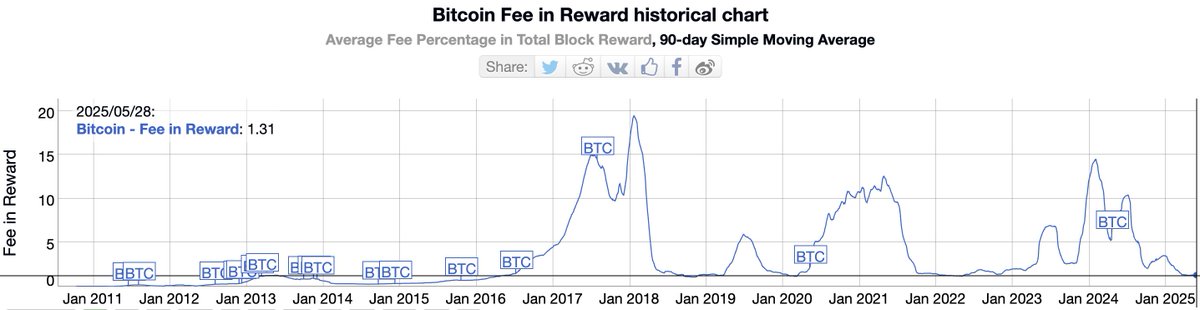
Bitcoin fees are at a 13-year low—less than 10 BTC/day. Despite 2016, 2020, 2024 halvings, miner revenue from fees is at a 9-year low—just 1%.
low fees → low security budget → low security
Bitcoin's security model is broken. If Bitcoin gets taken over, the fallout could take the entire crypto ecosystem with it. The systemic risks can't be ignored.
Below is the 30d moving average of daily transaction volume: now at 6.5 BTC/day, less than the past 13 years.
The story that fees will increase as a fraction of the security budget is not holding up. For a decade now BTC fees have decreased faster than issuance.
Below is the 90d moving average of the security budget contribution from fees. Fees halvened alongside issuance:
→ Mar 2016: 25 BTC/block, 1% from fees
→ Mar 2020: 12.5 BTC/block, 1% from fees
→ Apr 2022: 6.25 BTC/block, 1% from fees
→ Apr 2025: 3.125 BTC/block, still 1% from fees
Imagine fees were the only source of miner revenue today:
→ revenue drops 100x
→ hashing infra decreases 100x
→ 1% of today's infra (1 large farm) can 51% attack Bitcoin
That's the trajectory we're on. The 21M cap breaks security, it's self-destructive. It should be clear now Satoshi made an ooopsie.
As BTC price rises it gets harder to sustain high BTC-denominated fees. Today's 6.5 BTC/day may become 1 BTC/day if BTC goes to $1M or $10M.
Let's be optimistic and say BTC rises to $1M and today's 6.5 BTC/day in fees is maintained:
→ $6.5M/day in fees
→ 10% of today's security budget
Bitcoin would be a $20T asset secured by 1/10th of today's hashing infrastructure.
Today Bitcoin is secured by 20 GW—the equivalent of 10M space heaters. A 90% cut in miner revenue would bring that down to 2 GW of security—1M space heaters. For context, Texas alone produces 80 GW. There's no way a $20T asset can be secured by 2 GW.
Let's dream big and assume BTC goes to $10M per coin. Bitcoin would be a $200T asset—all fiat, all stocks, all gold; combined. Is it secure then?
→ 6.5 BTC/day is $65M/day
→ same security budget as today
→ same 20 GW of security as today
Sounds secure until you calculate the cost of attack. 1 GW of hashing infrastructure costs $1B:
→ $500M for datacenters (land, power, cooling)
→ $500M for rigs (e.g. 50M TH/s; $10 per TH/s; 20J/TH)
So what would a permanent 51% attack cost?
→ $20B for 20GW of hashing infra
→ 0.01% of BTC's hypothetical $200T marketcap
Meanwhile today there's $43B of BTC perp open interest, which is 2% of BTC's marketcap. Getting 0.01% marketcap short exposure is trivial today, and will only get easier as BTC financialises. $10M per BTC won't secure Bitcoin either.
Bottom line: Bitcoin's PoW model is not sustainable. The maths is against it. Without a fix someone will break it.
Can fees magically grow 100x? Maybe. But so far every attempt to produce transactional utility on Bitcoin has failed to drive sustained fee volume. Counterparty, Rootstock, Liquid, Lightning, Omni, Stacks, Ordinals, Babylon—you name it—only produced short-lived fee spikes.
Is BitVM a solution? Bridges relying on it can be drained by 51% attacks. One step forward, two steps back. Covenants or OP_CAT? Maybe, but highly speculative. I witnessed a STARK verified on an OP_CAT testnet—a multi-block monstrosity.
If fees don't magically grow orders of magnitude there are two candidate solutions:
1) add tail issuance, remove the 21M limit
2) switch to proof-of-stake
Both "solutions" seem to be cultural non-starters. Also tail issuance only works proactively, not after a 51% takeover.
Some suggest that Proof-of-authority (PoA) with mining pools could secure Bitcoin. What does that even mean? A multisig controlled by Foundry, AntPool, P2Pool? If you believe PoA could secure the future of money, the burden is on you to explain in detail how that would work.
Bitcoin is meant to be antifragile. Yet the elephant in the room in the room is not being addressed. We can burry our in heads in the sand. But the fundamentals are getting louder. Tick tock, next block—boom.

1
1
7
374
(1/3) Bitcoin is currently being priced as an uncorrelated asset, similar to gold, except with key advantages.
But Bitcoin has growth risks that simply aren't being priced in by the institutions buying.
The reality is that BTC is not a mature asset yet. The current economic model is demonstrably faulty and sustainable alternatives are still being worked on with little guarantees of implementation, let alone success.
29 May 2025
The security of Bitcoin PoW is a ticking time bomb.
Bitcoin fees are at a 13-year low—less than 10 BTC/day. Despite 2016, 2020, 2024 halvings, miner revenue from fees is at a 9-year low—just 1%.
low fees → low security budget → low security
Bitcoin's security model is broken. If Bitcoin gets taken over, the fallout could take the entire crypto ecosystem with it. The systemic risks can't be ignored.
Below is the 30d moving average of daily transaction volume: now at 6.5 BTC/day, less than the past 13 years.
The story that fees will increase as a fraction of the security budget is not holding up. For a decade now BTC fees have decreased faster than issuance.
Below is the 90d moving average of the security budget contribution from fees. Fees halvened alongside issuance:
→ Mar 2016: 25 BTC/block, 1% from fees
→ Mar 2020: 12.5 BTC/block, 1% from fees
→ Apr 2022: 6.25 BTC/block, 1% from fees
→ Apr 2025: 3.125 BTC/block, still 1% from fees
Imagine fees were the only source of miner revenue today:
→ revenue drops 100x
→ hashing infra decreases 100x
→ 1% of today's infra (1 large farm) can 51% attack Bitcoin
That's the trajectory we're on. The 21M cap breaks security, it's self-destructive. It should be clear now Satoshi made an ooopsie.
As BTC price rises it gets harder to sustain high BTC-denominated fees. Today's 6.5 BTC/day may become 1 BTC/day if BTC goes to $1M or $10M.
Let's be optimistic and say BTC rises to $1M and today's 6.5 BTC/day in fees is maintained:
→ $6.5M/day in fees
→ 10% of today's security budget
Bitcoin would be a $20T asset secured by 1/10th of today's hashing infrastructure.
Today Bitcoin is secured by 20 GW—the equivalent of 10M space heaters. A 90% cut in miner revenue would bring that down to 2 GW of security—1M space heaters. For context, Texas alone produces 80 GW. There's no way a $20T asset can be secured by 2 GW.
Let's dream big and assume BTC goes to $10M per coin. Bitcoin would be a $200T asset—all fiat, all stocks, all gold; combined. Is it secure then?
→ 6.5 BTC/day is $65M/day
→ same security budget as today
→ same 20 GW of security as today
Sounds secure until you calculate the cost of attack. 1 GW of hashing infrastructure costs $1B:
→ $500M for datacenters (land, power, cooling)
→ $500M for rigs (e.g. 50M TH/s; $10 per TH/s; 20J/TH)
So what would a permanent 51% attack cost?
→ $20B for 20GW of hashing infra
→ 0.01% of BTC's hypothetical $200T marketcap
Meanwhile today there's $43B of BTC perp open interest, which is 2% of BTC's marketcap. Getting 0.01% marketcap short exposure is trivial today, and will only get easier as BTC financialises. $10M per BTC won't secure Bitcoin either.
Bottom line: Bitcoin's PoW model is not sustainable. The maths is against it. Without a fix someone will break it.
Can fees magically grow 100x? Maybe. But so far every attempt to produce transactional utility on Bitcoin has failed to drive sustained fee volume. Counterparty, Rootstock, Liquid, Lightning, Omni, Stacks, Ordinals, Babylon—you name it—only produced short-lived fee spikes.
Is BitVM a solution? Bridges relying on it can be drained by 51% attacks. One step forward, two steps back. Covenants or OP_CAT? Maybe, but highly speculative. I witnessed a STARK verified on an OP_CAT testnet—a multi-block monstrosity.
If fees don't magically grow orders of magnitude there are two candidate solutions:
1) add tail issuance, remove the 21M limit
2) switch to proof-of-stake
Both "solutions" seem to be cultural non-starters. Also tail issuance only works proactively, not after a 51% takeover.
Some suggest that Proof-of-authority (PoA) with mining pools could secure Bitcoin. What does that even mean? A multisig controlled by Foundry, AntPool, P2Pool? If you believe PoA could secure the future of money, the burden is on you to explain in detail how that would work.
Bitcoin is meant to be antifragile. Yet the elephant in the room in the room is not being addressed. We can burry our in heads in the sand. But the fundamentals are getting louder. Tick tock, next block—boom.
1
1
7
374
Breaking down the problem at a high level:
- Bitcoin pays BTC to miners to secure the network (aka block rewards).
- Every 4 years, the miners have their revenue cut in half (aka the halving).
So far, BTC value has more than doubled every 4 years to offset the revenue cuts, but any fool can see this can't go on forever.
Within the next few halvings, BTC will have to do a value doubling that is simply impossible (market cap will need to reach hundreds of trillions of $, or even quadrillions, in inflation adjusted terms).
When this happens, miner revenue will simply be cut, and miners will cut operations to compensate, reducing security.
Once that inflection point is reached, every halving will mark a massive reduction in security, which will of course beget a massive reduction in price.
AKA the halving trend is going to reverse. Bitcoin's value will erode as fast as it boomed.
2
3
119
So, what's the solution?
Since BTC price increases will no longer compensate for security budget cuts from the halving, network fees (aka gas fees) will have to compensate.
If Bitcoin can generate enough fees, block rewards/halvings will feel irrelevant. This is a good thing.
But the problem is, we have nearly 20 years of data showing that Bitcoin does not generate enough fees. The reason is simple: gas fees are so high that most people refuse to perform transactions.
If Bitcoin can lower its fees, more people will use the network, thus increasing revenue and solving the security budget problem!
But of course, it's not that simple. Lowering fees means making drastic updates to Bitcoin that are against the community's core values.
Bitcoin wants to be a beacon of stability and predictability so it is a perfect hedge against uncertainty.
Making dramatic updates to the protocol to help increase fees introduces considerable uncertainty and makes BTC more like a tech stock or ETH than what it is today.
But it's probably the only way to save Bitcoin. There are varying factions within the Bitcoin community trying to solve this problem by carefully threading the line between meaningful updates and maintaining stability.
OP_CAT is perhaps the most promising example of such an update attempt happening today. I'll probably dive into that in a future musing.
But for now, thanks for reading way too much text for X 😅👋
2
97
Fluxty retweeted

28 May 2025
every consumer crypto app has faced the same problem—how do you retain users when they lose money to the house?—with the same answer:
price in a token that goes up short-term, then crashes and murders your user base
none have tried the other answer—make the thing actually fun
16
3
43
3,412
Occam's razor - the chain pivot.
So many examples of dapps (and NFT projects) failing after they sell the bottom/buy the top by moving to a different chain.
Happens every cycle.
21 May 2025

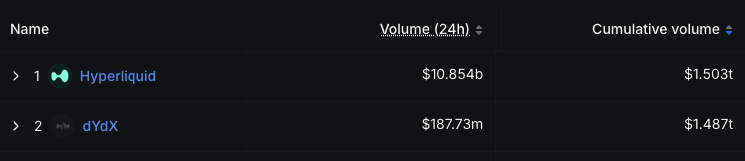
What did @dYdX do wrong? dydx gave a bigger airdrop than Hyperliquid back then ($2b vs $1.6B initial value)
dydx had 5 years to build the most competitive product, and generated more than $530m in revenue
dydx also built its own chain, so it had all the tools to make the best-performing matching engine
What did they miss, and what can they do to become competitive again?
4
90