
just your regular weasel
Joined January 2025
- Tweets 4,970
- Following 318
- Followers 213
- Likes 9,447
102 Photos and videos




rue wesleé retweeted

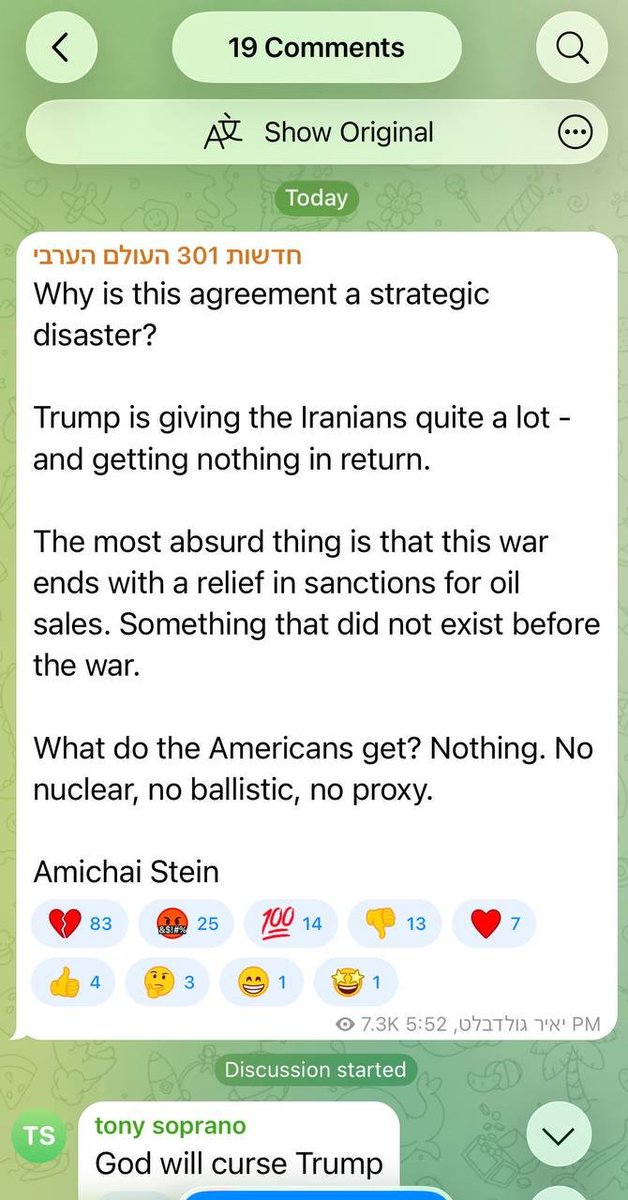
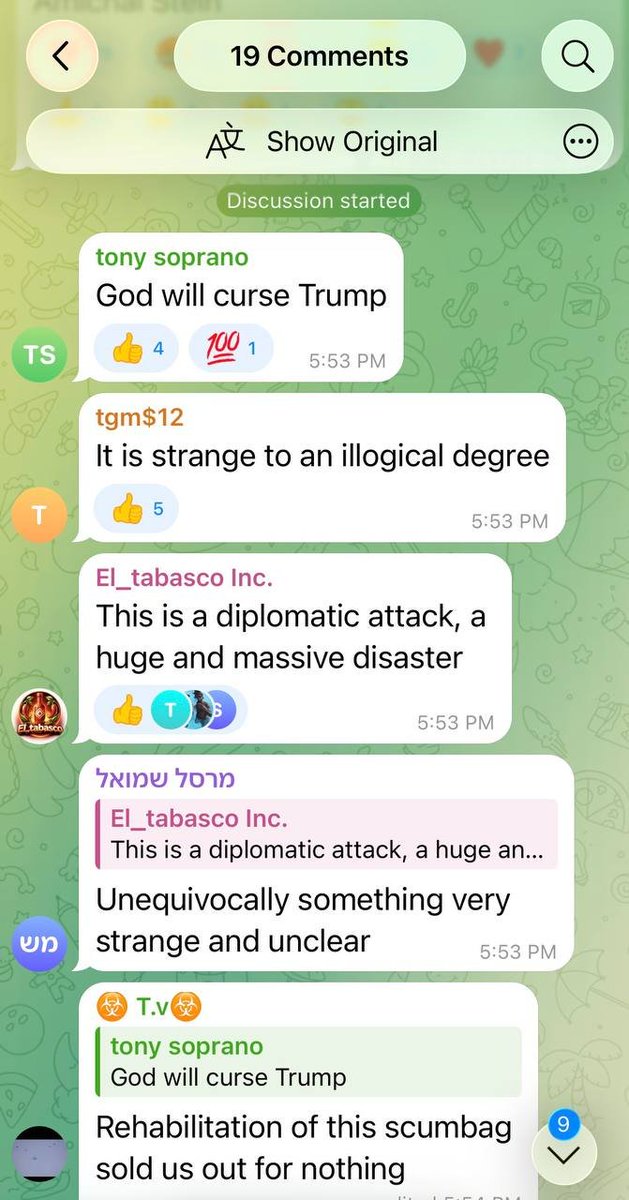
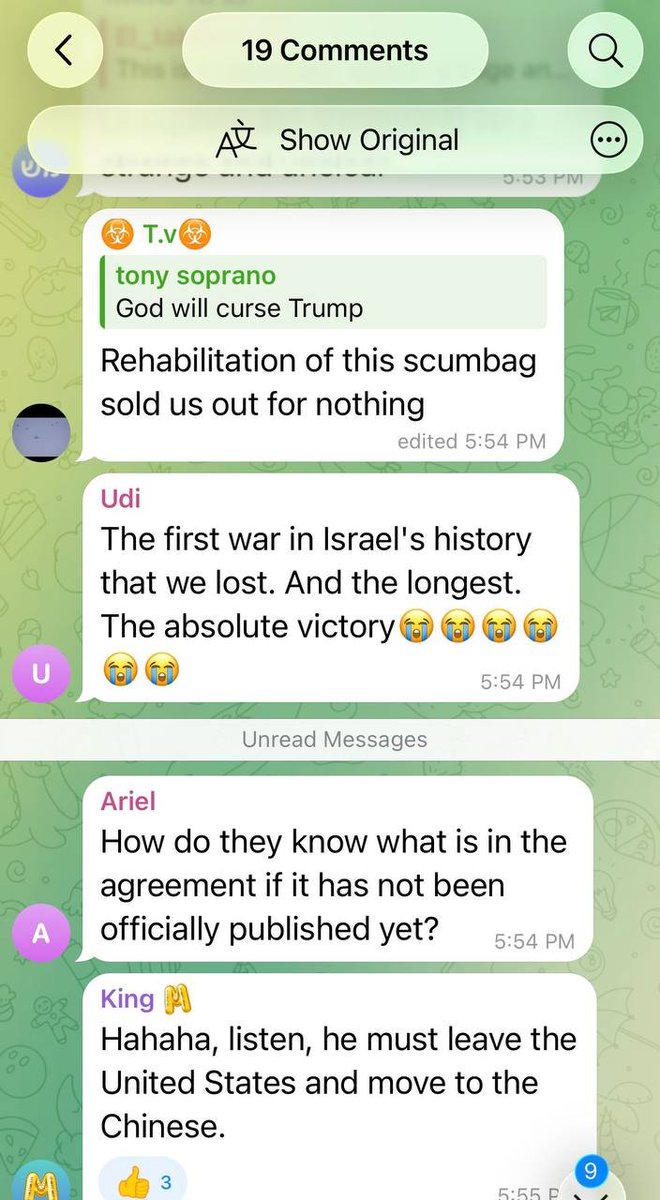
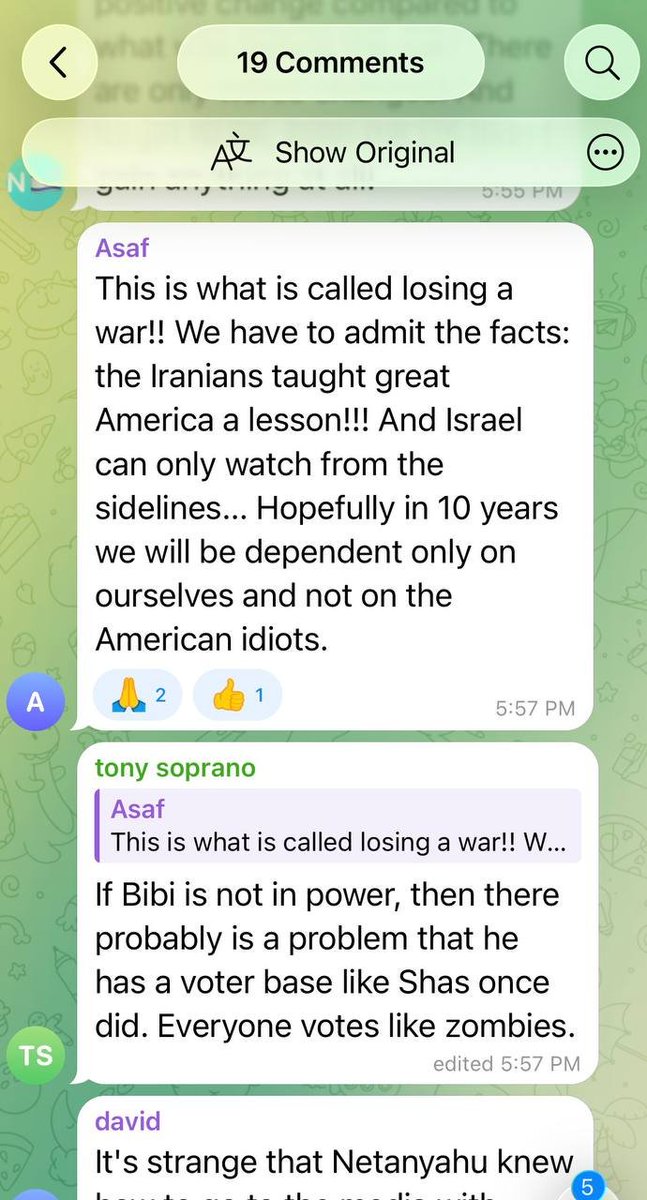
Israeli Telegram channel with 180K members is in mourning and fury:
"God will curse Trump."
"The first war in Israel's history that we lost."
"We have to admit the facts: Iranians taught America a lesson."
"Hopefully in 10 years we won't be dependent on American idiots."
113
721
2,520
166,149
rue wesleé retweeted

I remain skeptical about the prospects for a comprehensive US-Iran agreement, but the signing of the peace deal is a very bullish signal for the future of the Middle East and the prospects for a new flourishing in the aftermath of war.
Given the unprecedented nature of the war in the Gulf, the diplomacy that was necessary to get a peace deal signed, and the mechanics of its implementation, we should consider this the first *regional* peace deal in the history of the Middle East. Every major power in the region had a hand in the deal's formulation and the consensus building necessary for its adoption.
There is a long road ahead, but the logic and framework of this peace deal could underpin a new regional security architecture for the region. If Iran, Pakistan, Saudi Arabia, Turkey, Qatar, Oman, and Egypt continue their engagements on the issues raised by the outbreak of the war, the understandings reached since February (on redlines, vulnerabilities, capabilities, and interdependencies etc.) could become the basis of new norms and institutions. Among the regional powers, the UAE may continue to hedge, but I think they can be convinced about the merits of this approach and the reported steps taken to help shore this deal indicate momentum in that direction.
How this deal came about should completely shift the received wisdom about the sophistication of regional powers when it comes to managing escalation and pursuing diplomacy. Too many policymakers in Washington and European capitals have held their counterparts in the Middle East in low esteem, refusing to listen to them, to recognize their agency, to appreciate their wisdom. It was Arab, Pakistani, Turkish, and Iranian diplomats who got the world out of a crisis, one created by Washington and abetted by European governments all too eager to see their bases, aircraft, and munitions used to wage war in the Middle East, especially in the "defense" of Israel.
For its part, Israel, which has twice instigated war against Iran to avoid a reckoning over the genocide it committed, should be isolated until it abandons its zero-sum approach to security. There is another way. In the past year, every single country in the region has shown itself to be more moderate and responsible than Israel.
The remarkable thing about this war and its conclusion is not that regional powers responded to the threat posed by Iran, but rather that these powers, including Iran itself, were able to manage the chaos created by Trump at the behest of Israel, and that they did so by reaching a consensus position on what an acceptable peace looks like. This is a significant and positive development for the region and it deserves to be celebrated and consolidated.
8
45
153
19,819
Please amuse yourself by looking at @emilykschrader timeline. She’s soiling herself in public over the Iran deal and we LOVE to see it 🍿🥤🤩
25
PREDICTION: Iran’s victory means Iraq will soon demand a renegotiation of the 2003 arrangement where all of Iraq’s oil revenues are held by the US in New York. That will bolster the Iraq-Iran alliance and leave the entire neocon 7-wars strategy in tatters.
27
🥳🎉🍿🥤🥂🍾

I can't tell you how many people, several of whom you'd know, who are contacting me out of grave concern.
29
Once upon a time politicians spoke about voters having INTERESTS not CONCERNS.
This is important—one is grounded in material reality, the other in sentiment.
In a country polluted by the giant sewer of far right billionaire press, chasing sentiment is a hiding to nowhere.

For god’s sake these grifters are STILL saying that politicians ignore concern about immigration. STILL.
STILL.
44
rue wesleé retweeted

14h
The US & Iran are to sign a deal today that not only will end their war but also impose a ceasefire between Lebanon & Israel.
So this is what Israel did to Beirut sabotage Trump's attempt at peace.
And Israel will do more sabotage unless Trump imposes a cost on Israel.
172
1,089
2,619
60,502

Jun 14
Read the wonderful news here. Just exquisite.
Jun 13

Netanyahu has decided to accept the Iranian deal. Security officials are despondent and see it as a disaster. Ynet brings some high level quotes from them:
1) A senior Israeli official said "Nobody is happy with this. We understand it is not good for us, and that it harms Israeli interests. What is troubling is that Israel cannot influence it. Its voice is not being heard."
2) The anger at Trump is palpable.: "Trump screwed us, we took the hit. We're no longer in the loop and can't really influence anything."
3) Israelis fear Iran will be economically revived: "They've blown money on the Iranians, who are getting everything they want. They'll build a missile corps, and we'll have to pour money into interceptors." Israel sees oil revenue flowing back into the exact capabilities the war was meant to degrade.
4) They don't believe a deal will adequately deal with the nuclear issue: "The real test of the deal is removing the uranium and destroying it. If that doesn't happen, the sense of a bad deal will turn into something more concrete."
5) They fear this will embolden Iran: "Iran has smelled that it can achieve things by force, and it will use that against its neighbors and against us."
6) The deepest worry is not military. It is perception. After months of direct fire, Iran is seen across the region as the side that took the pressure and did not fold: "the regional working assumption will be that it was signed under Iranian pressure and American capitulation, rather than the reverse."
Israel is concerned that Iran will be stronger, the US will be weaker and that the future for it will be bleak in the region. This war has been a disaster for Israel.
46
rue wesleé retweeted

I know that Team Starmer aren't exactly reticent when it comes to behaving in a disreputable manner, but sending Agent Mason to Makerfield to try and sabotage Andy Burnham's campaign is a new low.
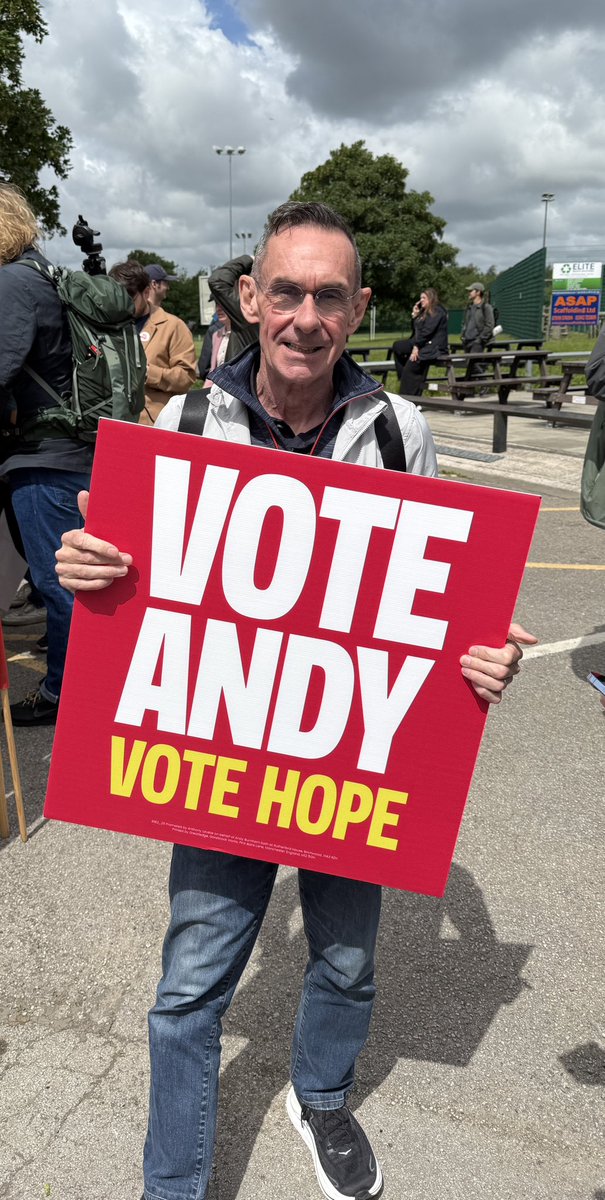
ALT Paul Mason, "campaigning" for Andy Burnham in Makerfield, holding a placard that reads: VOTE ANDY VOTE HOPE https://x.com/paulmasonnews/status/2065769364683399400
1
21
80
625
rue wesleé retweeted

Jun 12
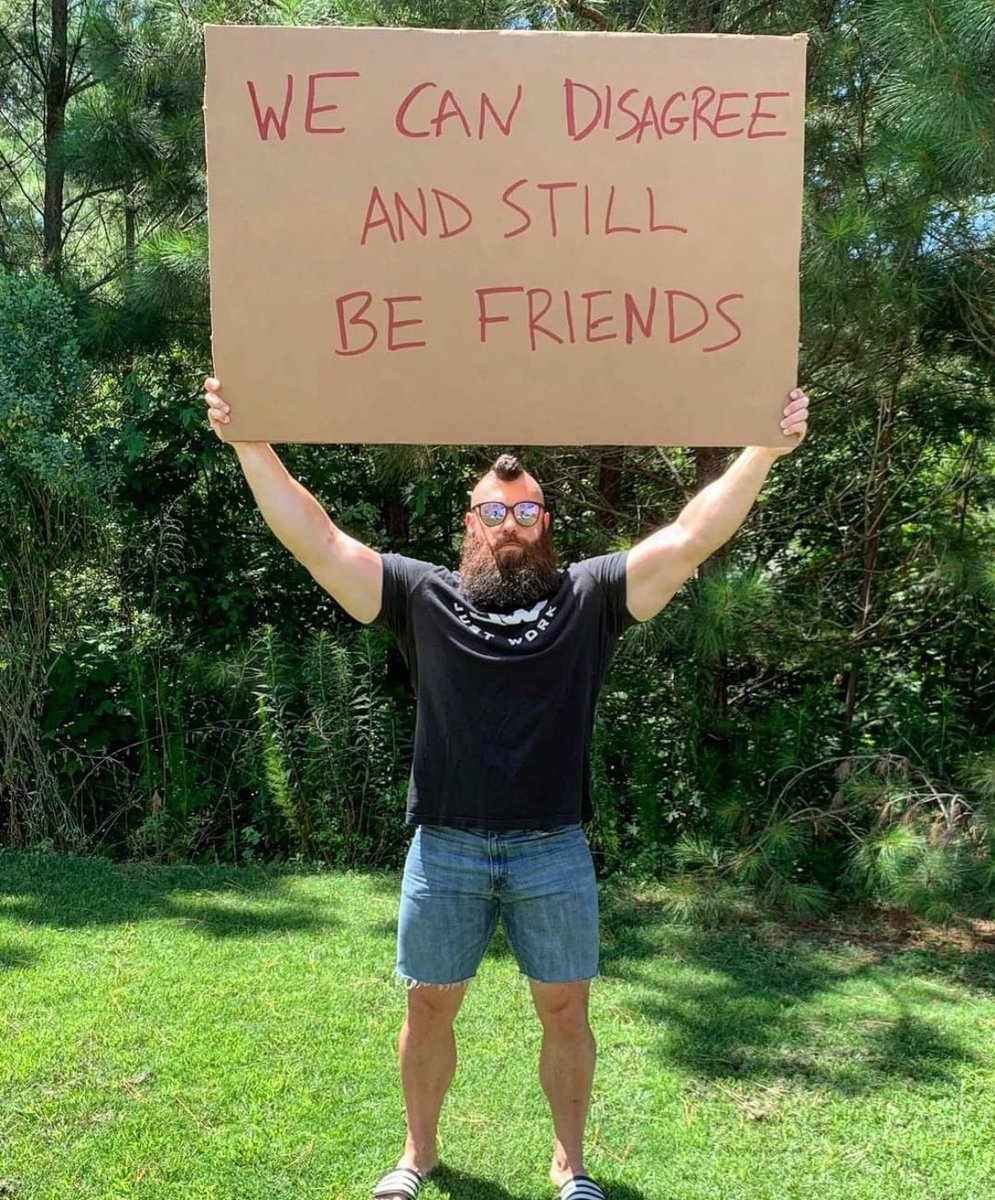
If it’s “pineapple belongs on a pizza” yes
If it’s “burning children alive is worth it so Jews can have an ethnostate” then no

329
16,581
102,674
1,437,218
Jun 13
John Healey and Al Carns are brain dead politicians that pander to the priorities of the right wing press.
Nobody serious should pay any attention to their Cold War scaremongering.
1
1
34
Jun 13
RT @AmirAminiMD: I hope the Iranian leaders know what they’re doing - even if this deal, even if it’s only a temporary MOU, looks to be a h…
7
11
rue wesleé retweeted

Jun 13
Probably worth mentioning that much like basically every single former defence official currently shouting loudly for more billions to be spent on bombs, General Sir Nick works for an arms manufacturer
Jun 13

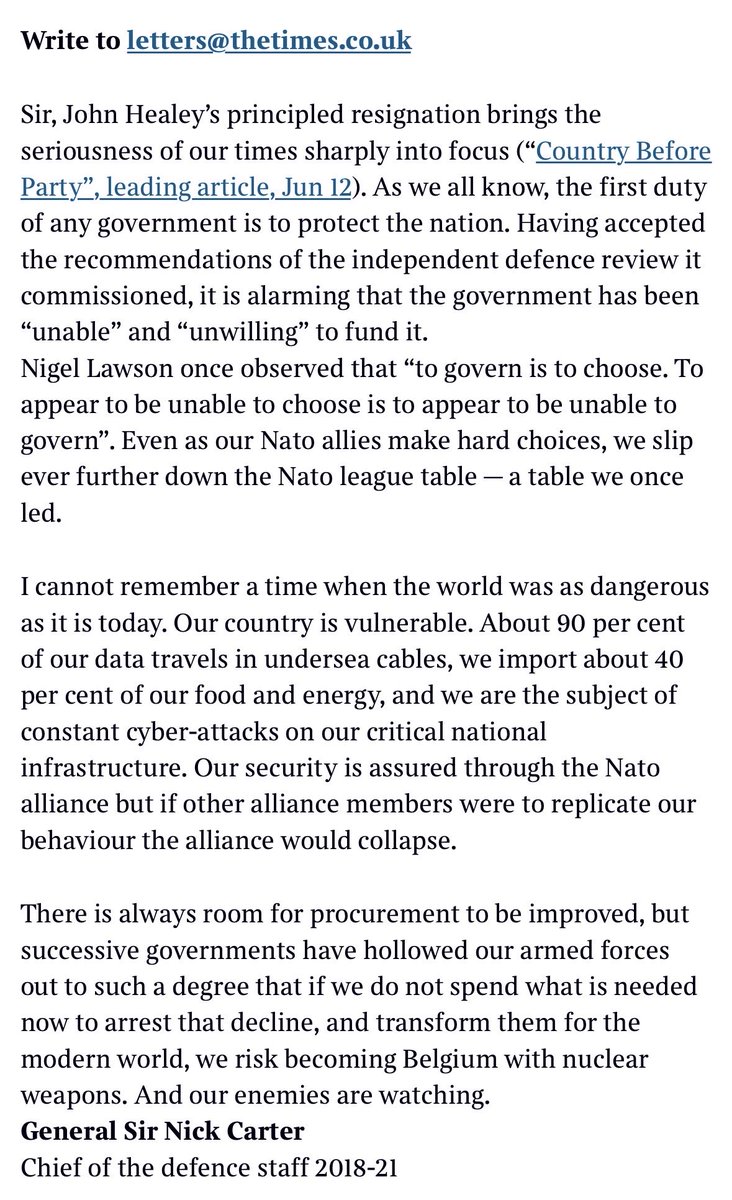
One hell of a letter in The Times today from General Sir Nick Carter, a former head of the armed forces
He warns that Britain risks becoming ‘Belgium with nuclear weapons’ unless it spends more on defence
‘Successive governments have hollowed our armed forces out to such a degree that if we do not spend what is needed now to arrest that decline, and transform them for the modern world, we risk becoming Belgium with nuclear weapons. And our enemies are watching’
Times letters: Britain’s slide down the Nato league table
thetimes.com/article/5c37102…
6
40
71
3,377
rue wesleé retweeted

Jun 12
Judge Johnson who sentenced the Filton 4 to prison today is the same Judge who reduced Tommy Robinson's sentence for contempt of court
182
3,836
12,574
160,562
rue wesleé retweeted

Jun 12
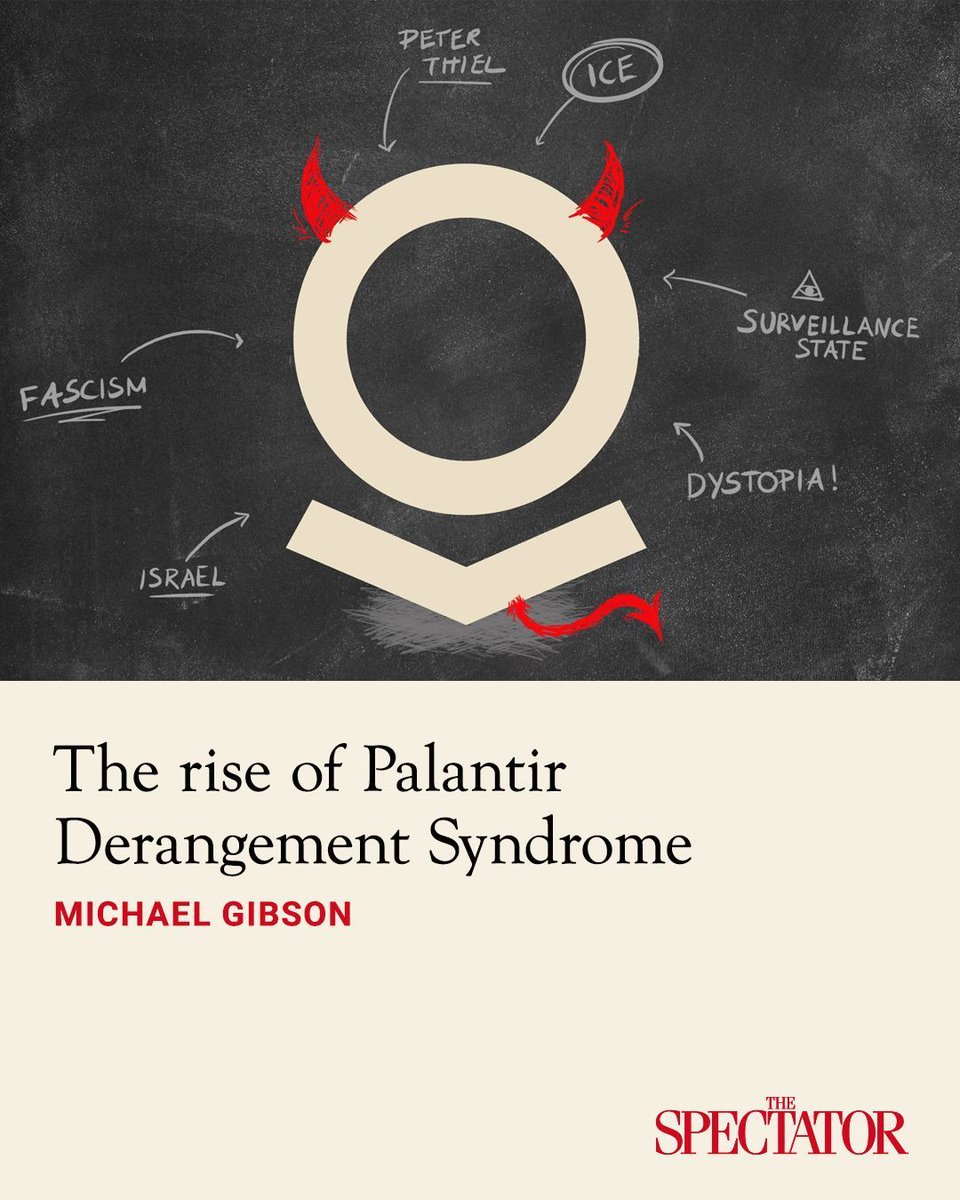
What fresh hell is this? The Spectator goes all in on Palantir, calling its critics victims of "Palantir Derangement Syndrome". What the magazine won't say:
🔺Spectator is owned by Paul Marshall, co-founder of Marshall Wace - which holds some 2.3 million shares worth $380m in... Palantir.
🔺Michael Gibson, who wrote this pro-Palantir screed for The Spectator, co-ran the Thiel Fellowship with Palantir owner Peter Thiel from 2010 to 2015. Thiel then backed Gibson's 1517 fund.
🔺Palantir's primary owner, Peter Thiel, was a happy business partner with convicted serial child rapist Jeffrey Epstein - Epstein's other business partner, former Israeli PM Ehud Barak, described Thiel and Epstein as "co-owners" of their venture fund. Thiel's investment w/Epstein contributed to the single largest asset in Epstein's estate.
🔺We don't need a democracy hating giant surveillance-defence contractor owned by Epstein's business partner and alleged fund "co-owner" to infiltrate the NHS. Estonia, Denmark, and Israel manage complex national electronic health records without reliance on private defence platforms.
🔺There is a war on for your mind being waged by investors and media owners who have benefited directly from Peter Thiel and Palantir.
Maybe Britain doesn't need friends and business partners of child rapists, nor people who would profit from them, running our health and security systems? Who is really deranged here? 👀
Jun 11

A late spring outbreak of righteous indignation is affecting the United Kingdom. It's yet another variant of Palantir Derangement Syndrome.
Virologists tracked this smug neurosis as it jumped across the Atlantic from the American left to British Labour. Symptoms include selective blindness, performative anguish, a hilarious inability to grasp the facts and Tourette's-level outbursts of repetitive left-wing clichés.
Earlier this month, a committee dominated by British Labour MPs who are infected by PDS called for Palantir to be stripped of its £330 million deal to help British hospitals save the lives of patients.
The House of Commons science, innovation and technology committee accused the American tech giant of having a "clear mismatch" with British values. It seems the ghost of fascism can be found in simple efficiency gains.
✍️ Michael Gibson
Article | spectator.com/article/the-ri…
33
1,255
2,717
91,909
rue wesleé retweeted

Jun 13
Apartheid South Africa and Nazi Germany needed compliant judges to provide a legal veneer to their darkest crimes.
Judge Johnson joins their wretched company. He overturned a jury's conviction of four anti-genocide activists for criminal damage and sentenced them as terrorists instead.
As one their barristers pointed out, the four defendants were initially arrested by police on suspicion of involvement in an act of terrorism. But the prosecution decided not to charge them with terrorism offences because it knew no jury would ever convict them based on the evidence.
Instead the Crown held two trials: a sham one for the jury, and the real one conducted in secret by the judge. That is not justice. It is a show trial worthy of the worst tyrannical regimes.
Jun 12

Here’s injustice Jeremy Johnson handing down the sentences at today’s disgusting stitched up Palestine Action trial.
Any faith I ever had in the fairness of the British justice system is completely is dead.
615
6,828
15,731
358,410
Jun 13
It doesn’t matter if the Israelis sabotage the deal. The US has very obviously suffered a colossal strategic defeat. No future American president for 100 years is going to even contemplate another war with Iran. It’s off the table for good. Iran is vastly stronger as a result.
Jun 12
Lebanon is the seam where the US-Iran deal could split open. Everyone is acting as if Hezbollah's southern front is a side issue. It is the most likely thing to break the whole agreement. Five points.
1) Iran is claiming Lebanon is inside the deal. Araghchi said ending the war in Lebanon means an Israeli withdrawal from the territory it seized. The first of 14 clauses pushed by regime-linked agencies calls for a permanent, immediate halt to fighting on all fronts, Lebanon included. This is the "unification of arenas" Israel has rejected for two years.
2) Israel has already said no, on the record. Defense Minister Katz wrote that Israel will not withdraw from security zones in Lebanon, Syria, or Gaza, citing October 7 as the lesson. A security source said the IDF will keep dismantling Hezbollah's infrastructure in the south. There is no version of this where Israel signs onto a withdrawal clause.
3) Trump is already disowning the Iranian text. He called the 14-clause publication "false." But here is the problem: even after he said that, Iranian officials and Hezbollah spokesmen kept insisting Lebanon is in the deal and Israel must withdraw. The two sides are not describing the same agreement.
4) Hezbollah has locked itself to the Iranian script. MP Hussein al-Hajj Hassan told Al Jazeera that Iran informed them Lebanon is covered and Israel will withdraw, that there is no return to the pre-March 2 status, and that Hezbollah will not commit if Israel doesn't. That is a public precommitment to a maximalist position the deal may not deliver.
5) The ground is still hot, which means an accident can trigger everything. A drone exploded near the Lebanon border last night, with alerts across the northern line. The IDF says it killed 10 Hezbollah field commanders recently and more than 1,300 fighters since the ceasefire. Israel's standing threat is explicit: if Hezbollah fires, Israel hits the Dahiyeh, "and then we'll see the Iranians."
Israel fears Washington will pressure it to restrain itself in Lebanon to protect the Iran deal. That is the fault line. The US needs quiet in the south to close with Tehran. Israel refuses to trade its freedom of action for it. This may be where the deal dies.
57
rue wesleé retweeted

Getting longer for criminal damage than GBH. For all the people crying about the "broken spine"
Jun 12
Here’s injustice Jeremy Johnson handing down the sentences at today’s disgusting stitched up Palestine Action trial.
Any faith I ever had in the fairness of the British justice system is completely is dead.
1
6
104
2,185
Jun 12
Jfc you really are a monster. You’re spiritually an Israeli.
Jun 12

Sending infinite food and money to Africa was the greatest evil of my lifetime. The amount of human suffering is 100 times more now that it would have been by allowing Africans to undergo evolutionary selection. Playing God always ends badly.
74
rue wesleé retweeted

Jun 12
If Mark Rowley ever makes a penny from Palantir he should end up in prison for it
Jun 11

'London will be less safe', says Sir Mark Rowley, after London mayor Sadiq Khan blocked a contract between Palantir and the Metropolitan police ⬇️
11
208
1,767
16,718