
A bio-positive publishing initiative from @Co_Biologists - creating, restoring and preserving precious woodland in recognition of our authors and peer reviewers
- Tweets 168
- Following 10
- Followers 264
- Likes 266





ALT Promotional banner for The Forest of Biologists incl. logo and For biologists, for biology - A bio-positive publishing initiative from The Company of Biologists
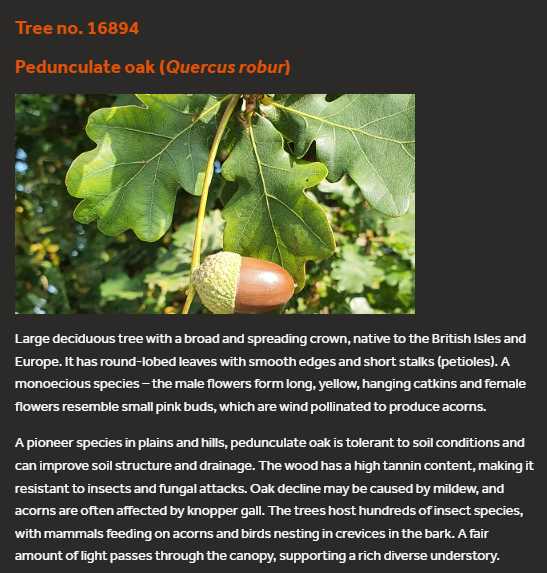
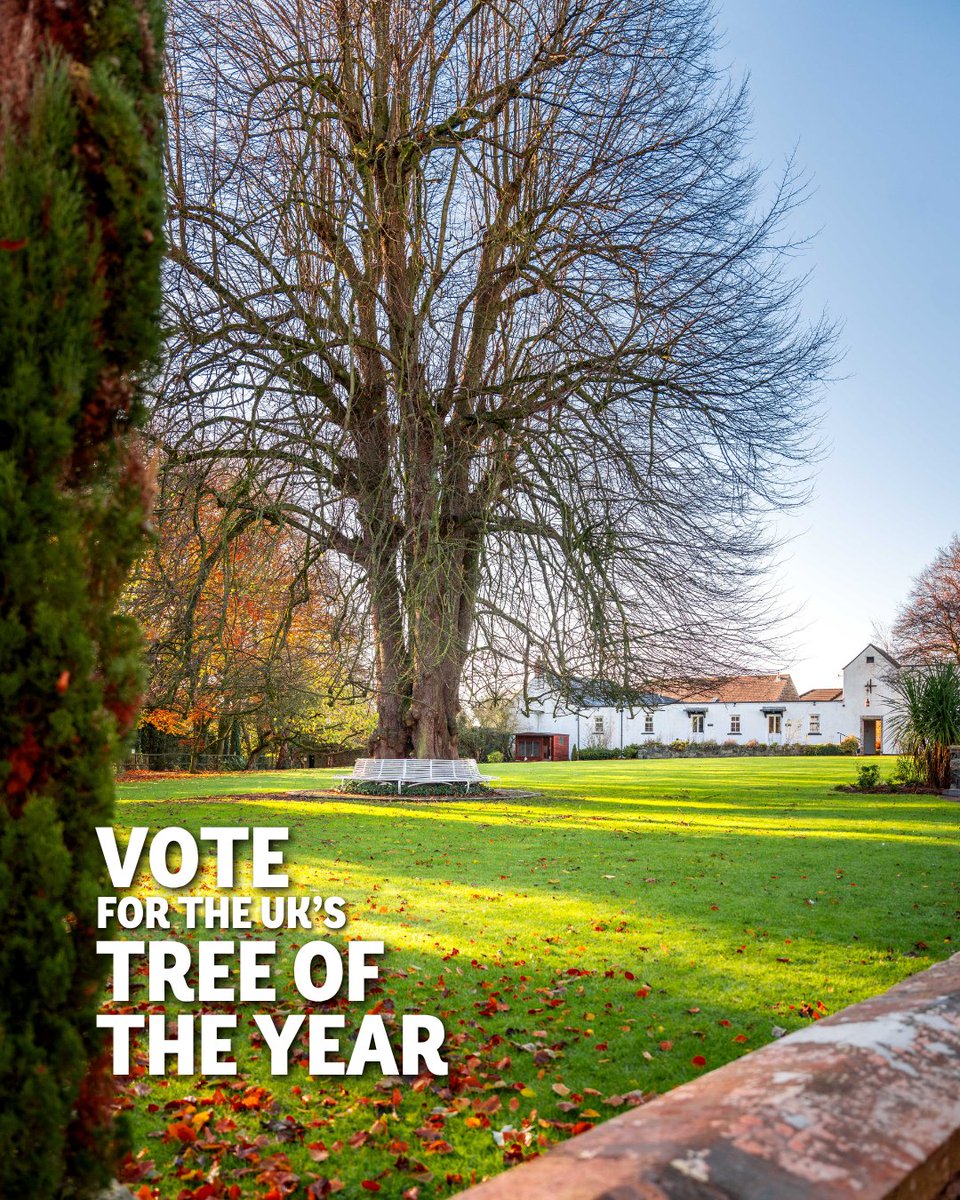
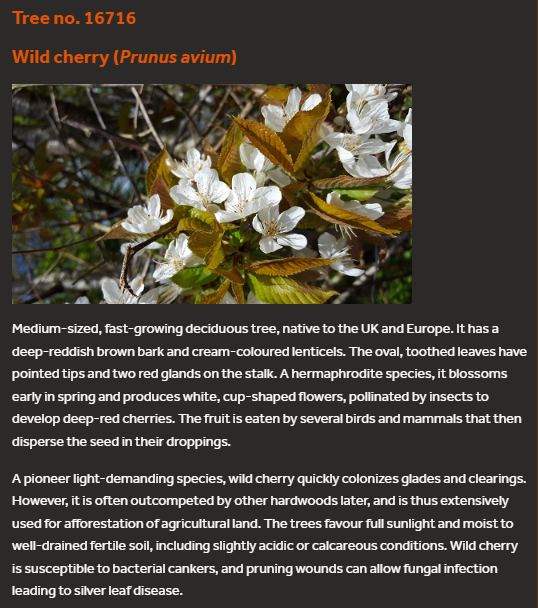
ALT Tree no. 16894 Pedunculate oak (Quercus robur) English oak Large deciduous tree with a broad and spreading crown, native to the British Isles and Europe. It has round-lobed leaves with smooth edges and short stalks (petioles). A monoecious species – the male flowers form long, yellow, hanging catkins and female flowers resemble small pink buds, which are wind pollinated to produce acorns. A pioneer species in plains and hills, pedunculate oak is tolerant to soil conditions and can improve soil structure and drainage. The wood has a high tannin content, making it resistant to insects and fungal attacks. Oak decline may be caused by mildew, and acorns are often affected by knopper gall. The trees host hundreds of insect species, with mammals feeding on acorns and birds nesting in crevices in the bark. A fair amount of light passes through the canopy, supporting a rich diverse understory.
ALT image credit Alan Fletcher WTML

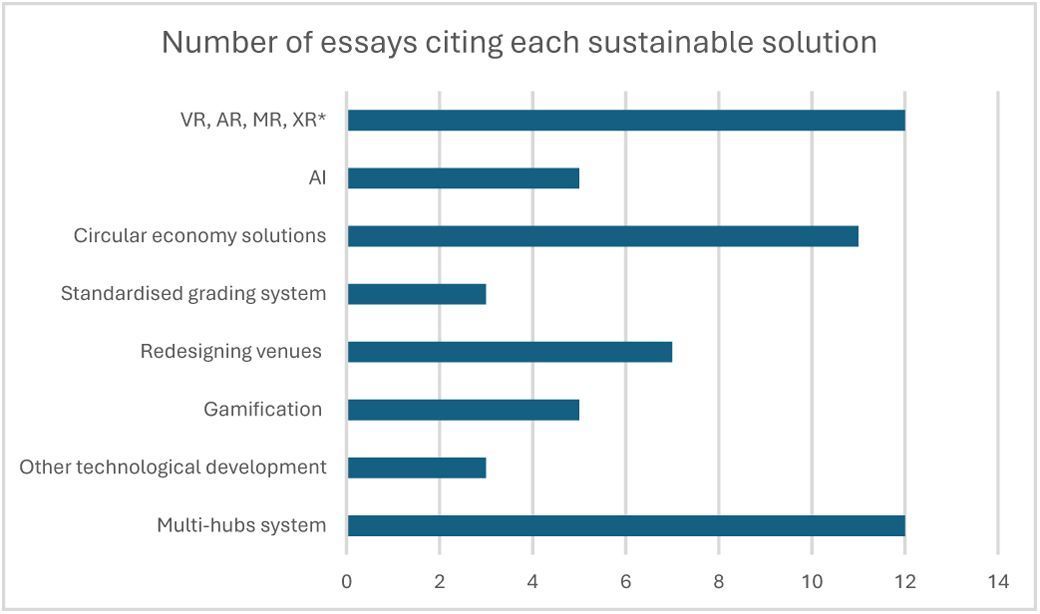
ALT The main categories of sustainable solutions and the number of essays that have cited them. *VR=virtual reality; AR=augmented reality; MR=mixed reality; XR=extended reality.
ALT Enjoy a screen free stroll and let your mind wander. Notice the sights, sounds, smells Make a note of one thing that makes you feel calmer and more grounded Share a walk and talk with a friend, colleague, or family member Pause, close your eyes and take a few deep breaths. Notice how this makes you feel Find something you’ve never noticed before (a tree, a plant, a new walking route) Listen out for birdsong, how many different birds can you hear?


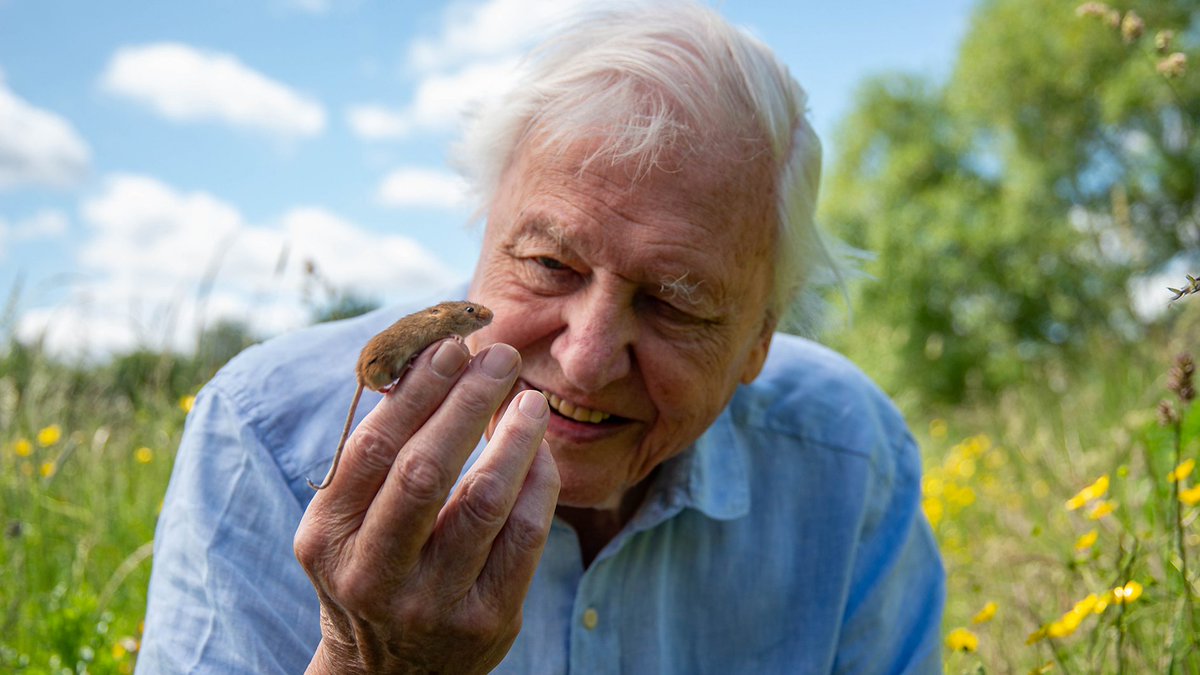
ALT A man in a blue shirt smiles as a little harvest mouse balances on his finger in a grassy area. The man wears a blue shirt and is set amongst green grass and yellow flowers.
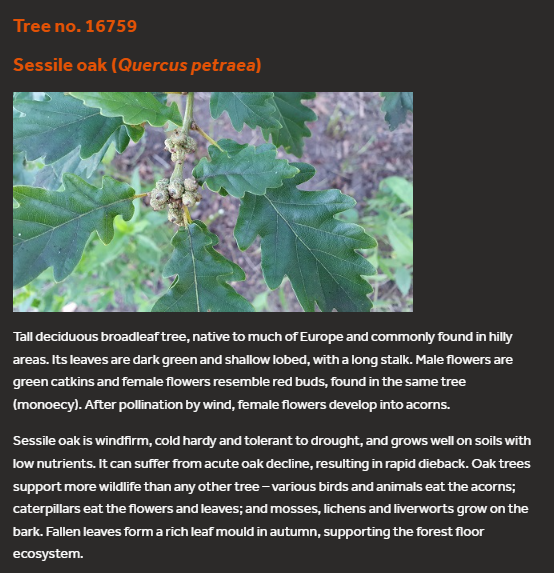
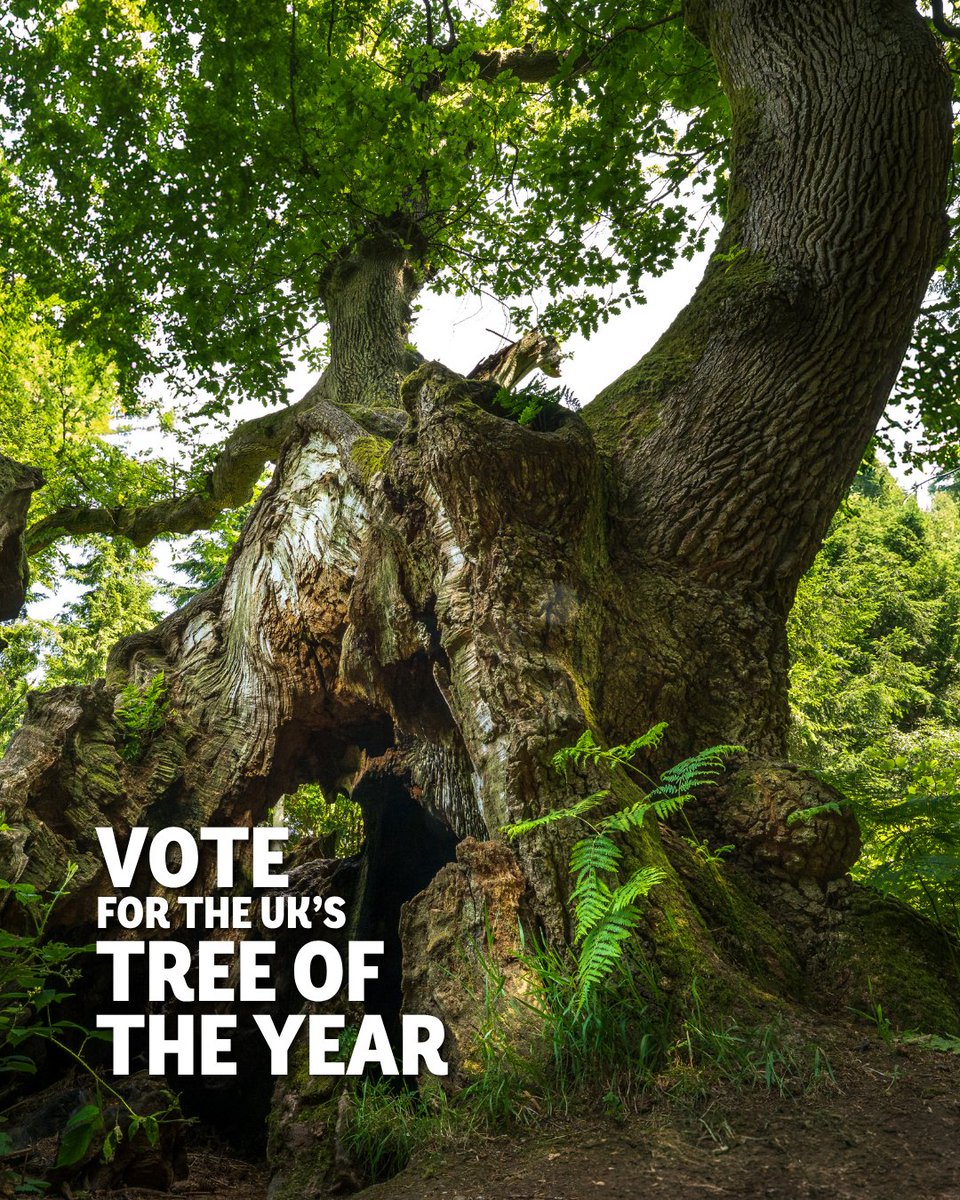
ALT Tree no. 16759 Sessile oak (Quercus petraea) Sessile oak Tall deciduous broadleaf tree, native to much of Europe and commonly found in hilly areas. Its leaves are dark green and shallow lobed, with a long stalk. Male flowers are green catkins and female flowers resemble red buds, found in the same tree (monoecy). After pollination by wind, female flowers develop into acorns. Sessile oak is windfirm, cold hardy and tolerant to drought, and grows well on soils with low nutrients. It can suffer from acute oak decline, resulting in rapid dieback. Oak trees support more wildlife than any other tree – various birds and animals eat the acorns; caterpillars eat the flowers and leaves; and mosses, lichens and liverworts grow on the bark. Fallen leaves form a rich leaf mould in autumn, supporting the forest floor ecosystem.
ALT Image credit: Adam Burton _ WTML
ALT Image credit: Anita Nicholson _ WTML

ALT “Applying for a grant from the Fund for Innovations in Sustainable Conferencing offered by The Company of Biologists helped us structure the conference under a unified vision of environmental responsibility and ensure coherence with our everyday habits throughout the event—something we knew was shared by most attendees, as confirmed by the feedback we received.”
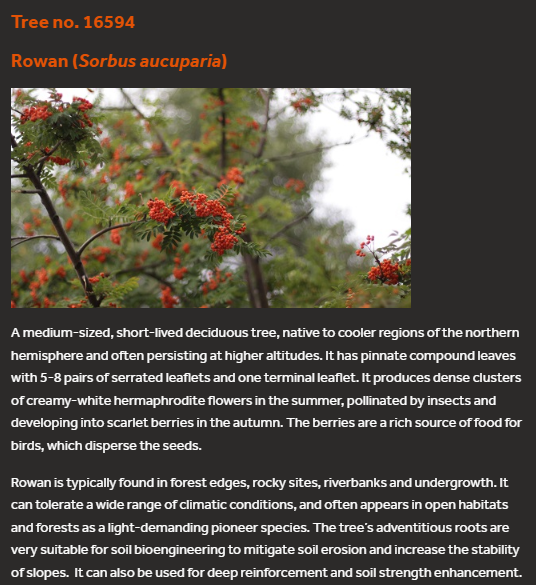
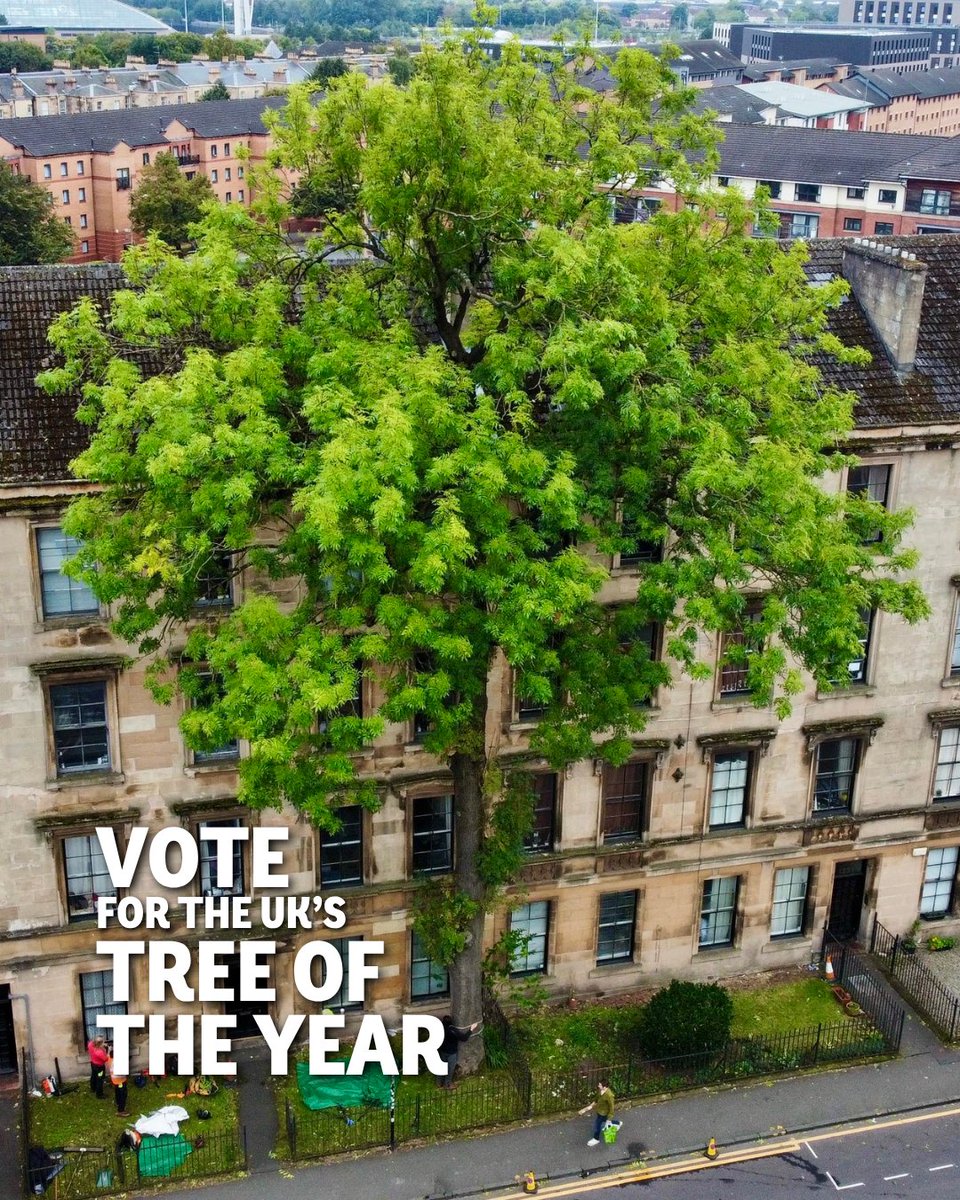
ALT Tree no. 16594 Rowan (Sorbus aucuparia) Rowan A medium-sized, short-lived deciduous tree, native to cooler regions of the northern hemisphere and often persisting at higher altitudes. It has pinnate compound leaves with 5-8 pairs of serrated leaflets and one terminal leaflet. It produces dense clusters of creamy-white hermaphrodite flowers in the summer, pollinated by insects and developing into scarlet berries in the autumn. The berries are a rich source of food for birds, which disperse the seeds. Rowan is typically found in forest edges, rocky sites, riverbanks and undergrowth. It can tolerate a wide range of climatic conditions, and often appears in open habitats and forests as a light-demanding pioneer species. The tree’s adventitious roots are very suitable for soil bioengineering to mitigate soil erosion and increase the stability of slopes. It can also be used for deep reinforcement and soil strength enhancement.
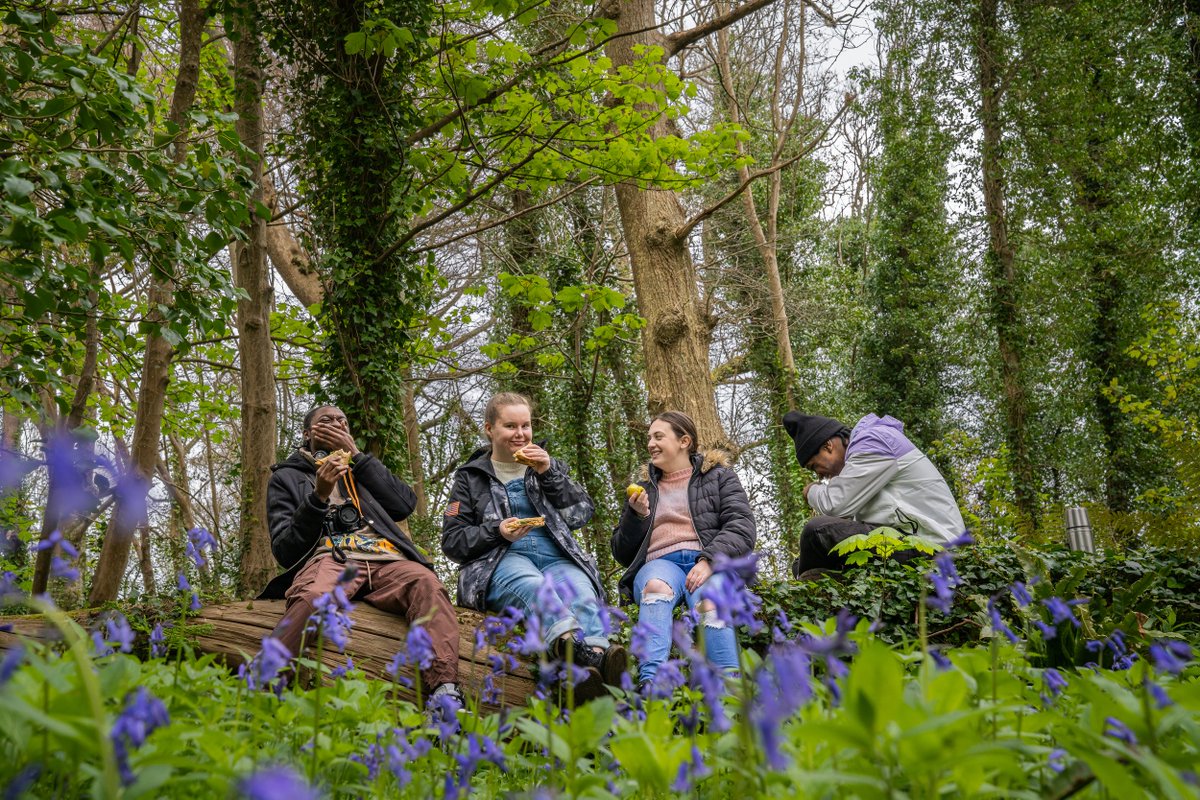
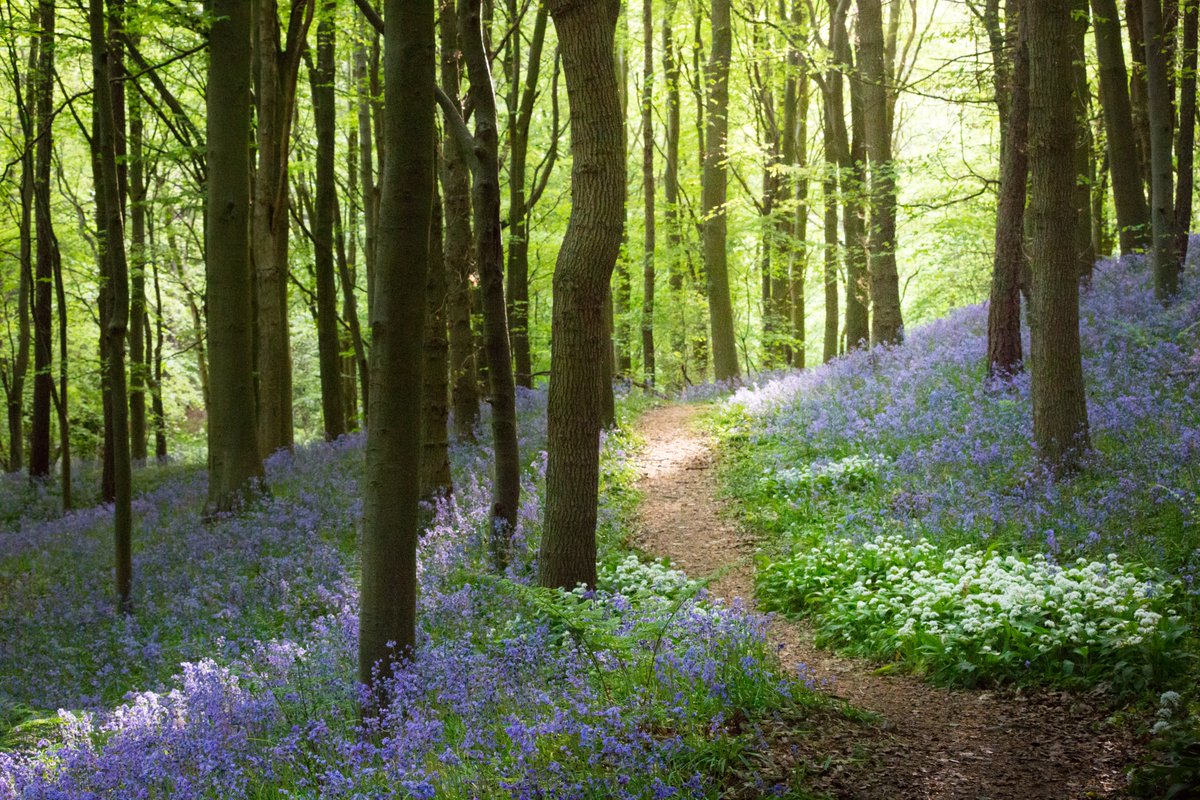
ALT Photo of Forest and bluebells. Image credit: Anita Nicholson/WTML