
Get out of decks and cells and into the trenches of Private Equity to forge value through real operating experience
Joined August 2013
- Tweets 180
- Following 576
- Followers 75
- Likes 575
25 Photos and videos

Forging 🏰 Value retweeted

Jun 12
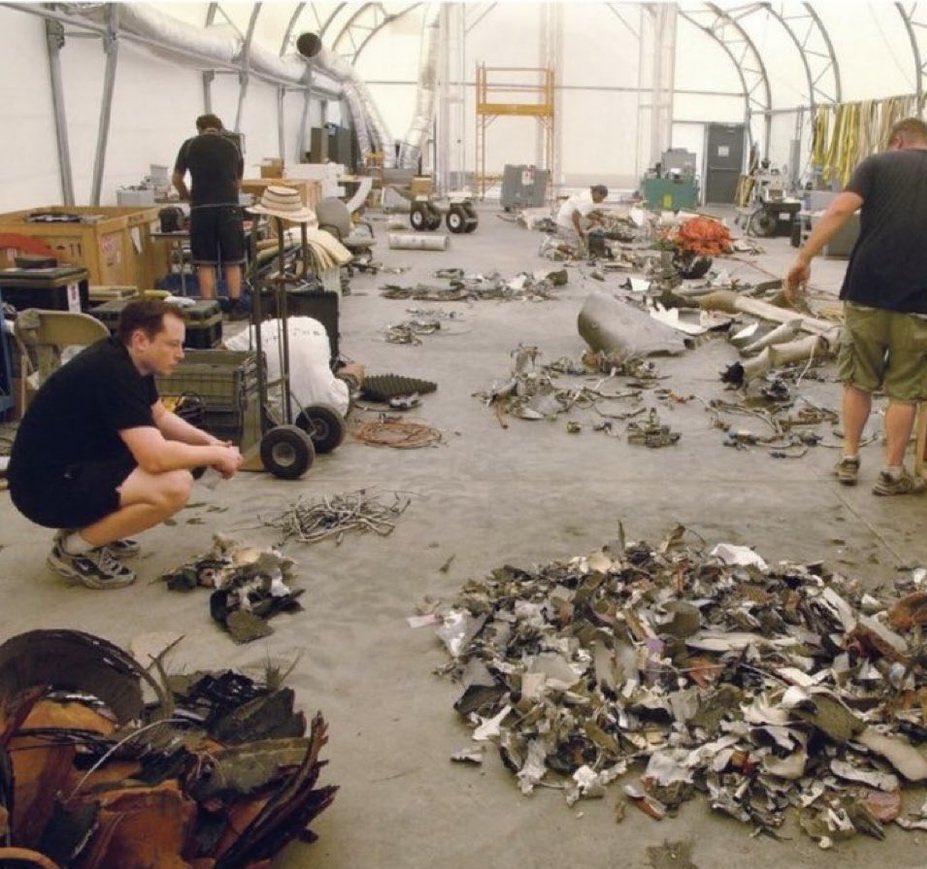
Never give up
Jun 12

> you’ll never start a rocket company
> you’ll never build your own engines
> you’ll never be able to use off-the-shelf parts
> you’ll never survive three launch failures
> you’ll never reach orbit
> you’ll never win NASA’s trust
> you’ll never launch cargo to the ISS
> you’ll never compete with Boeing
> you’ll never compete with Lockheed
> you’ll never make rockets reusable
> you’ll never land a rocket vertically
> you’ll never land one on a drone ship
> you’ll never reuse a booster
> you’ll never fly the same booster 10 times
> you’ll never fly the same booster 20 times
> you’ll never fly the same booster 30 times
> you’ll never recover and reuse the fairing
> you’ll never lower launch costs
> you’ll never launch every month
> you’ll never launch every week
> you’ll never launch multiple times a week
> you’ll never carry astronauts
> you’ll never replace Roscosmos
> you’ll never fly civilians to orbit
> you’ll never manufacture satellites at scale
> you’ll never build the biggest constellation ever
> you’ll never make satellite internet work
> you’ll never make satellite internet fast
> you’ll never make satellite internet affordable
> you’ll never serve rural customers
> you’ll never serve aircraft and ships
> you’ll never build a methane rocket engine
> you’ll never make full-flow staged combustion work
> you’ll never build the most powerful rocket ever
> you’ll never build a rocket bigger than Saturn V
> you’ll never build it out of stainless steel
> you’ll never launch Starship
> you’ll never separate Super Heavy and Starship
> you’ll never relight Raptor in space
> you’ll never bring Super Heavy back
> you’ll never catch a booster with Mechazilla tower arms
> you’ll never launch 85% of mass to orbit worldwide
> you’ll never change the economics of space
> you’ll never force the entire industry to copy you
> you’ll never win
> you’ll never IPO
Congratulations to @elonmusk and the SpaceX team. You did what countless people said was impossible, and you did it time and time again.
Today is your day. You deserve this. May it be a glorious one.
314
2,498
25,553
979,305

May 16
Private Equity exists to create operational change …
May 15

KKR's Pete Stavros believes operational change is the true source of alpha
"Operational improvement, on the other hand, it takes an army to do it. It takes really experienced investors to do it. It's a ton of work, takes years of hard work.”
1
8
Forging 🏰 Value retweeted

May 15
KKR's Pete Stavros believes operational change is the true source of alpha
"Operational improvement, on the other hand, it takes an army to do it. It takes really experienced investors to do it. It's a ton of work, takes years of hard work.”
1
8
75
12,570
May 11
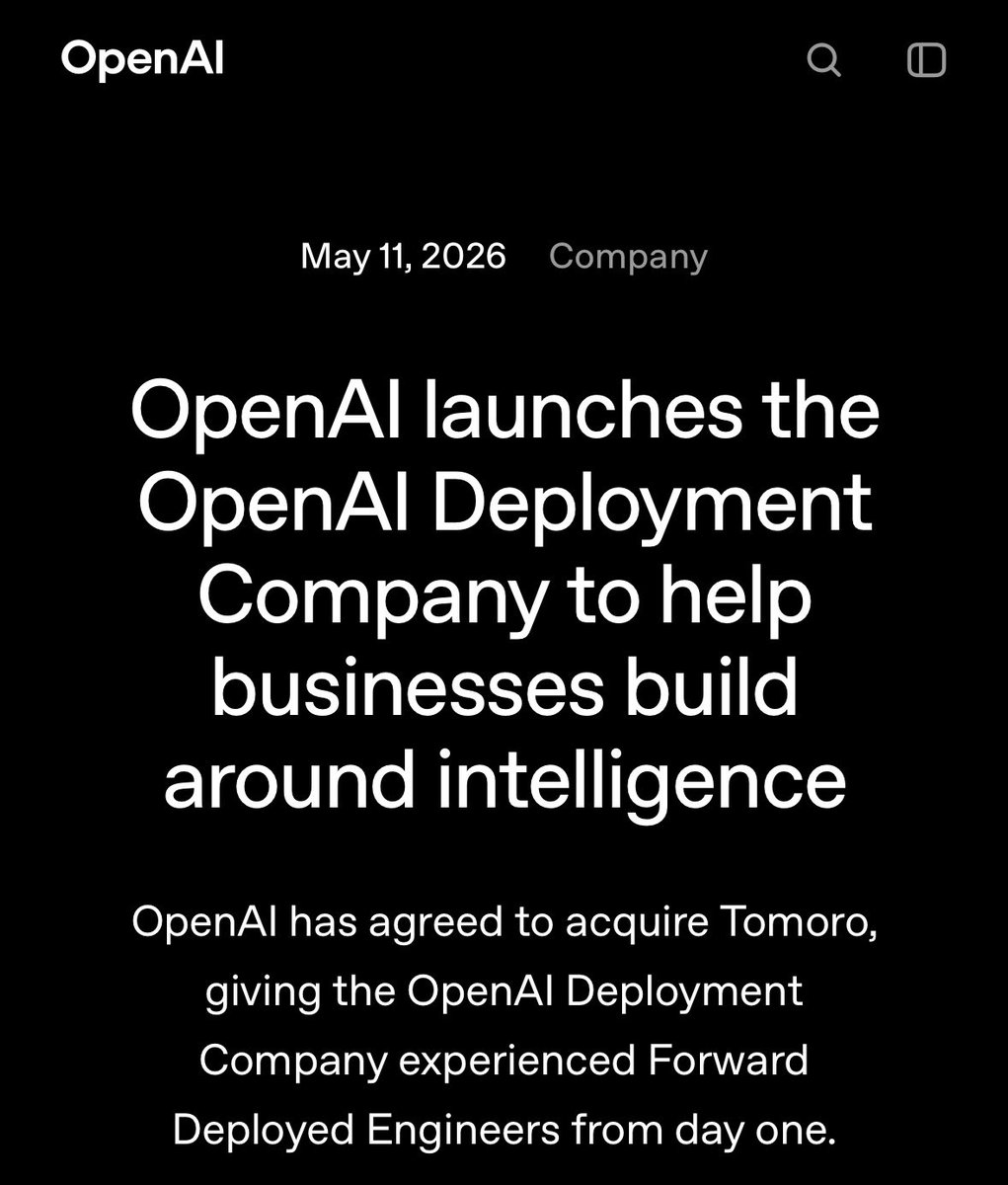
The OpenAI’s DeployCo is now launched with Brookfield, Advent, and BainCap.
1
17
May 11
I will be doing a tear down of this - let me know what is on your mind -
1) Brookfield have “invested” $500m - what does invested really mean … stay tuned
2) How will this work, what needs to be true to make money for all parties …
3) why was this deal really done
10
Forging 🏰 Value retweeted

May 8
.@tobi says schools train people to think there’s one “right answer” but in reality, there are often hundreds of right decisions:
“ The surprising thing about building a business or in decision making in general is—making the right decision is actually child's play.”
“ Most of the time, the bad options in front of you just prune themselves away. They don't make sense. They're too expensive or just off-mission.”
“School unfortunately drills into people that there's one right answer, and once they find a right answer that could plausibly accomplish the goals that they set out, they go with it.”
“But there's probably hundreds of great answers, and one of them is far less work.
“Especially in engineering projects. The best solutions are always modular and components. You build one thing and it will work with everything else you did.”
14
31
288
23,903
Forging 🏰 Value retweeted

May 4
Love this!
"A good culture is like good character — you find out whether you have it when you need it most."
1
1
87
Forging 🏰 Value retweeted
May 6
John Malone series #3
Importance and Limitations of Synergies
Key Point: Realistic and calculable synergies (cost, tax, revenue) drive the value of acquisitions, but “soft” or intangible synergies should be treated skeptically.
Quote:
“Horizontal synergies… usually they're quite calculable… when you get more into things like: it'll help the brand or… intangibles… those are much harder…”

5
3
27
9,406
Culture (and strategy) makes a business for the next buyer or phase of ownership - most Private Equity firms are not consciously setting the culture of the businesses they buy in the first 100 days.
This is a missed opportunity, and easily fixable. The results will compound everyday and through your network of employees.
Recommend watching this from Norges: youtu.be/nC-8QR5JiNU?si=1NMJ…
27
Forging 🏰 Value retweeted

27 Dec 2025
1,001
4,514
25,951
16,356,940
Forging 🏰 Value retweeted

1 Nov 2025
Fred Smith read 4 hours a day. Every day.
Newspapers, magazines, books on management, journals on technology, and histories of American commerce. “Particularly information about change,” he explained, “because from change comes opportunity.”
Reading is such a cheat code for outliers. Charlie Munger put it best: “In my whole life, I have known no wise people who didn’t read all the time—none, zero.”
Smith took this further. He didn’t just read. He synthesized. “The common trait of people who supposedly have vision is that they spend a lot of time reading and gathering information, and then synthesize it until they come up with an idea.”
This constant intake of information convinced Smith that Federal Express needed to evolve or die. “The information about the package is as important as the package itself,” he kept saying. His executives thought he meant better tracking. Smith meant something bigger.
Not only was he a reader, but he was a master at time management. Because he was constantly reading and working, he was in the weeds of everything, which allowed him to process information almost immediately. You never had to wait around for him to decide.
10 Sep 2025

10 Lessons From Fred Smith, the founder of FedEx
1. Not trying guarantees failure: Fred Smith spent his childhood in leg braces. Doctors said he’d never walk normally. Through thousands of hours of excruciating therapy, he didn’t just walk; he became a varsity athlete. “Fear of failure must never be a reason not to try something,” he’d later say. When everyone said overnight delivery was impossible, he remembered the doctors who said he’d never play sports.
2. The power of incentives: The Memphis hub was a nightly disaster. Planes had to land, unload, sort, and reload in hours. Nothing worked until someone noticed the obvious: they paid workers by the hour. The longer it took, the more they earned. FedEx switched to paying by the shift. Same pay, go home when you’re done. The sort suddenly ran like clockwork. Charlie Munger loved this story: “Never, ever, think about something else when you should be thinking about the power of incentives.”
3. Loyalty is earned in the trenches: In Vietnam, Smith learned soldiers don’t fight for politicians; they fight for the person next to them. Years later, when FedEx ran out of money, employees worked without pay. Pilots used personal credit cards for fuel. Not because they had to. Because of the loyalty that was earned in the trenches.
4. Become a learning machine: Fred Smith read four hours a day. Every day. “People who supposedly have vision spend a lot of time reading and gathering information, then synthesize it until they come up with an idea,” he explained. All that reading showed him something nobody else saw: people would soon care more about tracking their package than getting it fast.
5. Take care of your people and they will take care of you. In 1974, investors moved to fire Smith. Every senior officer signed the same letter: fire him, and we all walk. One was even offered the presidency as a bribe. (He refused.) This was People-Service-Profit in action. The order of those words is important. People first, then service, then profit. Not the other way around. Most companies put this stuff on motivational posters. At FedEx, people bet their careers on it.
6. Reliability is rare. Speed without predictability is useless. FedEx guaranteed overnight delivery or your money back, a feat that seemed impossible at the time. The guarantee created trust with customers and accountability internally. There were no excuses.
7. All in or all out. FedEx had $5,000 left. The planes needed $24,000 to fly on Monday. So Smith took the five grand to Vegas and turned it into $27,000 at blackjack. When investors heard this story, they didn't see a gambling problem. They saw a founder who'd already bet his inheritance, his house, everything, and was still fighting. Two weeks later, they gave him $11 million.
8. Trust is built in drips and emptied in buckets. When Smith bought Flying Tigers, he faced a choice: protect the seniority of Tigers pilots or his own FedEx pilots. He chose Tigers. The FedEx pilots—the ones who'd saved his company with their credit cards—called it "treachery." FedEx recovered financially, but the family was dead.
9. Outcome over ego. FedEx lost $629 million in Europe because Smith assumed Europeans wanted overnight delivery. They didn't. Their countries were small enough that regular trucks worked fine. Rather than double down to save face, Smith killed the entire operation. Most CEOs would have thrown another billion at the problem rather than admit they were wrong. They confuse stubbornness with strength. But Smith had learned from military history: sometimes the smartest generals are the ones who know when to retreat.
10. Bounce, but don't break. Smith survived childhood disease, his friend's death, Vietnam combat, near bankruptcy, a coup attempt, and a $629 million failure in Europe. Despite disasters that would have broken most people, he kept going and built an $88 billion empire.
8
55
409
70,346
Forging 🏰 Value retweeted

26 Oct 2025
If you want to be rewarded, you have to be irreplaceable.
If you want to be irreplaceable, you have to be unique.
If you want to be unique, you have to be authentic.
If you want to be authentic, stop listening to everyone and everything else.
It’s drowning “you” out.
@naval
98
583
4,363
198,976
26 Oct 2025
Fantastic conversation.
Highlights;
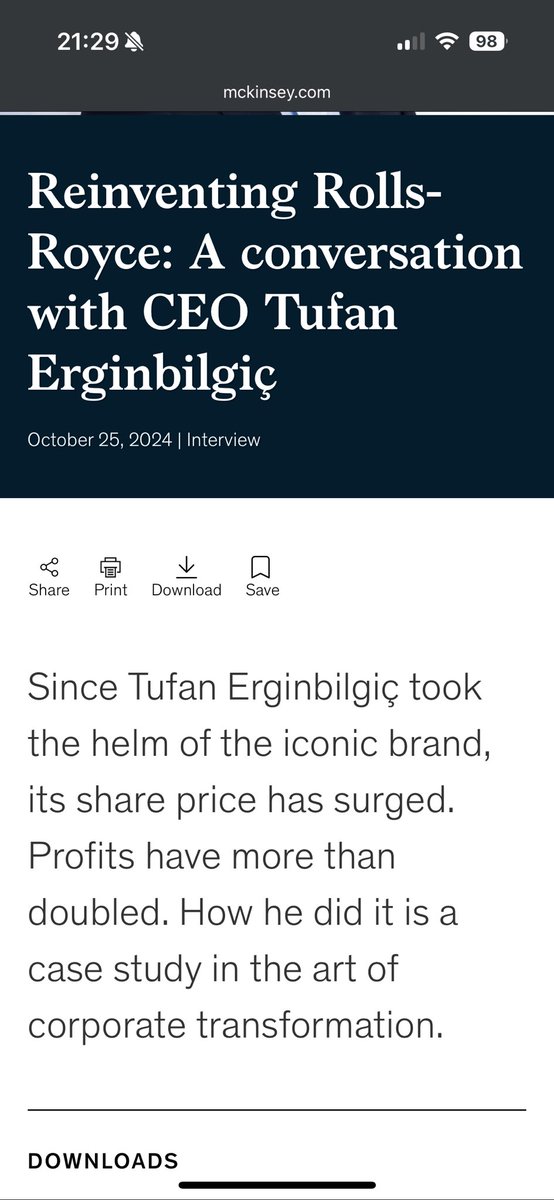
1) European market latency - compared to the US, 🇺🇸 they are slow to price in (and believe) structural company change. Like the Rolls Royce transformation where the stock is up astronomically due to a successful turnaround. Once again Europe continues to be perceived as a place that is a tortoise in the jungle
2) Obsession > Innate Skill Talent - you cannot beat people who are obsessed about their craft, they think about it when they are not paid to do so
3) Pain Tolerance- you will have to learn to cope with a whole spectrum of pain, much of this is psychological
59
Forging 🏰 Value retweeted

26 Oct 2025
"1929"📕a MUST-READ for this market moment
@andrewrsorkin has written a masterpiece—an insanely researched from original letters and documents and interviews with true-life characters that jump off the page into the present
already a best-seller—we sat down to dig in...
5
20
194
38,754
25 Oct 2025
Watching a deal starting to trend “sideways” is so interesting in Private Equity. 📽️
Observing how the original deal team responds can reveal much about the culture of firm…do they start to retreat and hide, or do they run onto the pitch ready to play a position and help…
27